While I grew up surrounded by the bold, fiery flavors of my parents’ Sichuan restaurant , my travels as a chef opened my eyes to the incredible diversity of China’s regional cuisines. I’ve tasted my way across the country, but one of the dishes I come back to again and again for pure comfort is this classic Shanghai Wonton (菜肉馄饨, Cài Ròu Hùntun).

Unlike the spicy red-oil dumplings from my hometown, these Shanghai-style wontons are gentle, plump, and swim in a light, clear, savory broth. They are the quintessential Shanghai comfort food, often eaten for breakfast or a light lunch.
This is a classic homestyle recipe. While many cai rou huntun use pork, this version uses lean chicken breast, fresh bok choy, and earthy shiitake mushrooms. It’s incredibly satisfying, surprisingly healthy, and perfect for a family meal.
The best part? The 10-minute soup base. It’s a classic kitchen trick my mom and dad used on busy restaurant nights —it uses the starchy wonton cooking water to create an instant, savory broth. It’s simple, brilliant, and delicious.
What Are Shanghai Wontons (Cai Rou Huntun)?
In Mandarin, cài ròu hùntun (菜肉馄饨) literally means “vegetable and meat wontons.” They are a beloved staple in Shanghai and the surrounding Jiangnan region.
While these traditional Shanghai-style wontons are the ultimate comfort food when served in a steaming bowl of broth, the versatility of the wonton wrapper doesn’t stop here. If you find yourself with extra wrappers or are simply in the mood for something with a bit more ‘crunch,’ you should definitely check out our Crispy Cream Cheese Crab Rangoon. It’s a fun, American-Chinese fusion twist that uses a similar folding technique but swaps the savory meat filling for a molten, creamy center that is absolutely addictive when fried to a golden crisp!
1Crispy Cream Cheese Crab RangoonA restaurant-style appetizer featuring a creamy, savory crab and cream cheese filling encased in a shatteringly crisp wonton shell.Check out this recipe
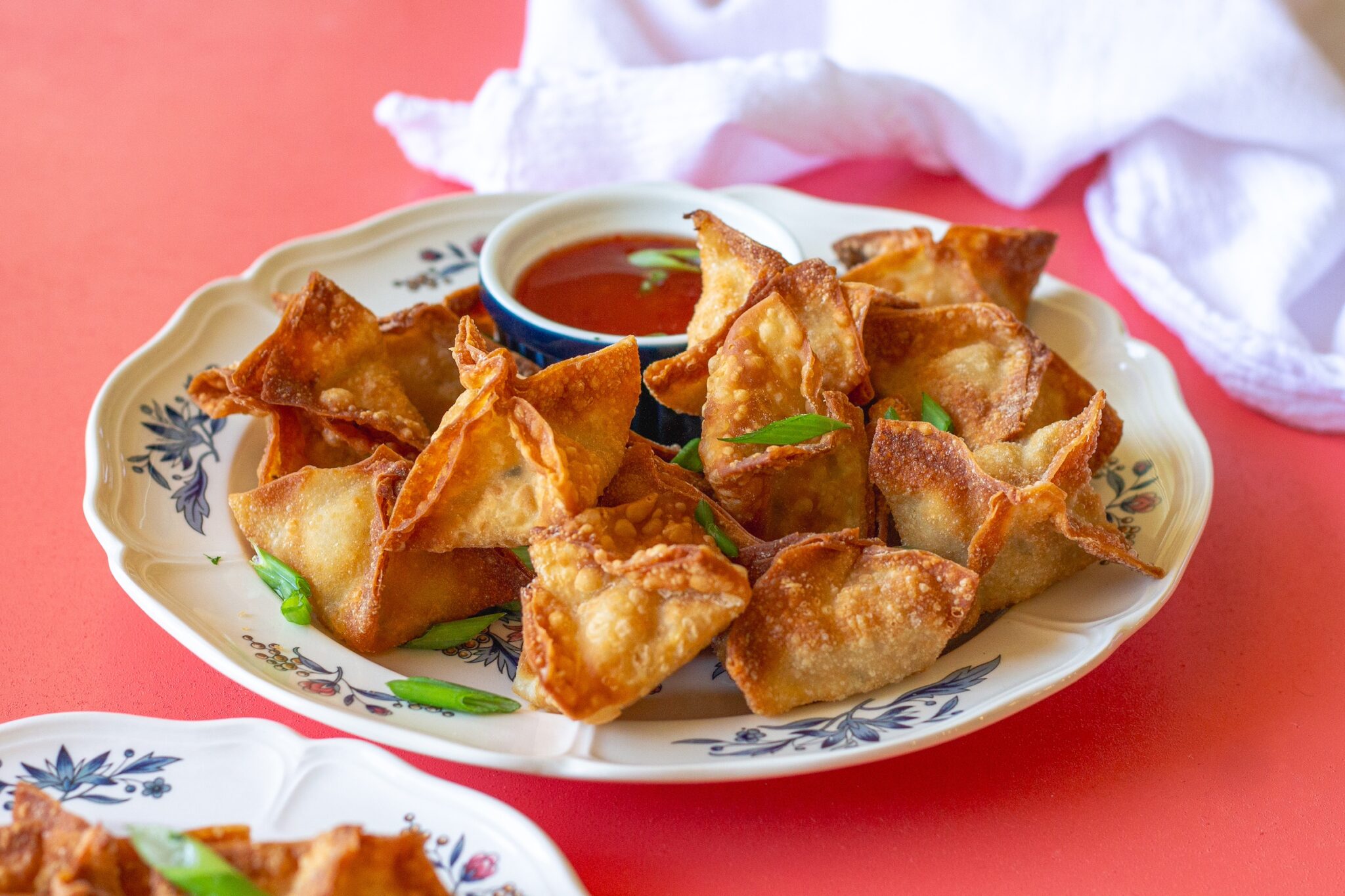
They are typically larger than the delicate shrimp-filled wontons you might find in a Cantonese wonton noodle soup (a fantastic recipe from Serious Eats, by the way) and are defined by their hearty filling. The filling is almost always a combination of minced pork and a hearty amount of greens, like bok choy or shepherd’s purse.
This recipe stays true to that homestyle spirit but uses minced chicken breast for a lighter, healthier twist that’s just as juicy and flavorful.
Why This Recipe Works
- The Juicy Filling: The secret to a juicy, tender filling, even with lean chicken breast, is a Chinese technique called shàng jìn (上劲). By stirring the minced chicken with an egg and seasonings vigorously in one direction, you create a springy, bouncy paste that locks in moisture.
- The Flavorful Greens: Blanching and thoroughly squeezing the bok choy is the most critical step for the vegetables. This process removes the “raw” green taste and excess water, which would otherwise make your filling soggy and bland.
- The 10-Minute Broth: We use the ‘original soup’ method, or yuán tāng (原汤). The starchy, savory water used to boil the wontons becomes the instant soup base. It’s a game-changing shortcut that tastes amazing.
Key Ingredients You’ll Need
Here’s a breakdown of the key ingredients. Don’t worry, they are all simple to find.
- Ground Chicken: The source recipe calls for 2 large chicken breasts, which you’ll mince by hand or in a food processor. Mincing your own gives you better texture control. Of course, you can substitute 1 lb (450g) of ground pork (20% fat is ideal) for the traditional flavor.

- Bok Choy: You’ll need about 2 lbs (1 kg). This looks like a huge amount, but it cooks down significantly. You can substitute Napa Cabbage if needed.

- Dried Shiitake Mushrooms: These add a deep, savory umami flavor. You’ll need to rehydrate them in warm water for about 30 minutes. Don’t throw away that soaking liquid! You can add a splash to your filling for even more flavor.

- Wonton Wrappers: Look for the thin, square, white or pale yellow wrappers in the refrigerated section of an Asian market. They are often labeled “Wonton Skins” or “Shanghai Style.” Note: These are much thinner than the round, thicker “Dumpling Wrappers” used for jiaozi or potstickers.

- Shaoxing Wine: This is a staple for adding complexity and removing any raw smell from the meat. You can find it at any Asian market or substitute with a dry sherry.
- Light Soy Sauce: This is for the soup base. The source recipe mentions ‘Liu Yue Xian’ (六月鲜), which is a brand of fresh, light soy sauce. Any standard light soy sauce (like Kikkoman or Pearl River Bridge) works perfectly.
How to Prep the Wonton Filling (Mise en Place)
This is the most important part of the recipe. Getting the filling right is the key to perfect wontons.
- Prep Aromatics & Mushrooms: Finely grate the ginger and chop the scallions. Rehydrate your shiitake mushrooms in warm water for 30 minutes, then squeeze them out, remove the stems, and mince the caps.
- Mince the Chicken: Mince the chicken breasts by hand or by pulsing in a food processor until you have a fine mince, but not a paste.
- Make the Chicken Paste (The Shàng Jìn): In a large mixing bowl, combine the minced chicken, egg, grated ginger, chopped scallions, Shaoxing wine, corn oil, sesame oil, and salt.

- The Technique: Using chopsticks or your hands, stir the mixture vigorously in one direction (clockwise or counter-clockwise, just don’t switch) for 2-3 minutes. You will feel the mixture change. It will go from a loose mince to a sticky, springy, light-colored paste. This is the secret to a juicy wonton. Let it rest for 15 minutes.
- Prep the Bok Choy (The Squeeze): Bring a large pot of water to a boil. Add the bok choy and blanch for 1-2 minutes, just until the leaves are wilted and bright green.
- Cold Shock: Immediately drain the bok choy and plunge it into a bowl of ice-cold water. This stops the cooking and sets the vibrant green color. Learn more about blanching at The Kitchn.
- The Squeeze (Critical Step): Once cool, grab handfuls of the bok choy and squeeze as hard as you can to remove all the excess water. Finely mince the bok choy.
- The Second Squeeze: Place the minced bok choy in a clean kitchen towel or cheesecloth and squeeze again. You will be shocked by how much more water comes out. This step is essential to prevent a soggy filling.
- Combine the Filling: Add the super-dry minced bok choy and minced shiitakes to the rested chicken paste. Stir again in the same direction until everything is fully combined.

How to Wrap Wontons (Two Classic Methods)
Set up your wrapping station: a small bowl of water, your wonton wrappers (kept under a damp paper towel to prevent drying), the bowl of filling, and a parchment-lined baking sheet for your finished wontons.
Method 1: The Gold Ingot (Yuan Bao)
This is the classic Shanghai shape, meant to look like an ancient Chinese gold ingot, symbolizing wealth.


- Place about 1 teaspoon of filling in the center of a wrapper.
- Dip your finger in water and trace a line along two adjoining edges of the square.
- Fold the wrapper in half to form a triangle, pressing the wet edges firmly to seal.
- Dab one of the two bottom (long) corners of the triangle with water.
- Bring the two corners together, overlapping the wet corner on top of the dry one. Press firmly to seal. It will look like a little nurse’s cap or a tortellini.
Method 2: The “Fast Scrunch” (Homestyle)
This is the super-quick method you’ll see in homes and busy breakfast stalls.

- Place 1 teaspoon of filling in the center of the wrapper.
- Hold the wrapper flat in your non-dominant hand.
- Use your other hand to bring all four corners up to the middle and “scrunch” the wrapper up around the filling, pinching at the top to seal it like a small purse.
Cooking Process: How to Cook Wontons & Make the Soup
This all happens very quickly!
- Prepare the “High Tang” (Soup Base): While your water is boiling, prepare your individual serving bowls. Into each bowl, add: 1 tsp light soy sauce, 1/2 tsp toasted sesame oil, and a pinch of fresh chopped scallions.

- Boil the Wontons: Bring a large pot of unsalted water to a rolling boil. Carefully add the wontons, giving them a gentle stir so they don’t stick to the bottom. Cook in batches to avoid overcrowding the pot.
- Cook Until Done: Boil for 3-5 minutes. The wontons are done when they all float to the surface and the wrappers look slightly translucent.
- Food Safety Note: Since we are using chicken, it’s best to check one. The internal temperature of the filling should be at least 165°F (74°C) according to USDA guidelines.
- Assemble the Soup: Do NOT drain the pot! Ladle about 1-1.5 cups of the hot, starchy wonton cooking water directly into each prepared soup bowl. The hot water will instantly bloom the aromatics and soy sauce, creating a light, savory broth.
- Serve: Use a slotted spoon to transfer the cooked wontons into the soup bowls. Serve immediately!

Tips for Success
- Squeeze That Bok Choy! I cannot say this enough. Watery filling is the #1 mistake. Squeeze, mince, and squeeze again.
- Don’t Overfill: Use only 1 teaspoon of filling. Overstuffed wontons are hard to seal and will burst open when you boil them.
- Cook in Batches: Don’t crowd the pot. This lowers the water temperature and makes the wontons stick together and cook unevenly.
- Keep Wrappers Covered: Always keep your stack of wonton wrappers under a damp paper towel. They dry out and crack in minutes.
How to Serve (Serving Suggestions)
These wontons are a perfect light meal on their own. The best way to serve them is immediately, while the broth is steaming and the wontons are plump.
- Upgrade Your Broth: As the original recipe suggests, you can make the soup even more deluxe by adding:
- Thinly sliced omelet strips (蛋皮, dàn pí)
- Shredded dried seaweed (紫菜, zǐcài)
- Freshly chopped cilantro
- Pairing Suggestions: For a fuller meal, I love to serve these alongside a crisp, refreshing side like my Easy Smashed Cucumber Salad. Or, you could pair this light soup with another light soup for a comforting combo, like a Seaweed Egg Drop Soup.
How to Store and Freeze Wontons
This recipe is perfect for batch-making. Wontons freeze beautifully and make for a 10-minute emergency meal.
- To Freeze (Recommended):
- Place the uncooked, freshly wrapped wontons on a parchment-lined baking sheet in a single layer. Make sure they are not touching.
- Place the entire sheet in the freezer for 1-2 hours, or until the wontons are frozen solid.
- Transfer the frozen “wonton-cicles” to a freezer bag or airtight container. They will keep for up to 3 months.
- To Cook from Frozen: Do NOT thaw them. Boil them directly from the freezer, just adding 1-2 extra minutes to the cooking time.
- Storing Cooked Wontons: Wontons are best eaten fresh. Cooked wontons stored in their soup will become very soggy and absorb all the liquid. If you must store them, keep the (drained) cooked wontons and the broth in separate containers in the fridge for up to 2 days.
Recipe Variations
- Traditional Pork Filling: Swap the chicken for 1 lb (450g) of ground pork. I recommend an 80/20 (meat-to-fat) ratio for the juiciest results. The method is identical.
- Gluten-Free: This can be challenging. You would need to find specialty gluten-free wonton wrappers, which can be delicate. For the soup base, use tamari or a certified gluten-free soy sauce.
- Vegetarian: For a delicious vegetable-only version, you can adapt the filling from my Easy Vegetable Steamed Dumplings recipe and use it with these wonton wrappers.
Afterthought
Every time I make these, I’m reminded of the humble noodle and dumpling stalls all over Shanghai. My dad, who was a professional chef for over 30 years, always told me that the simplest food is often the hardest to get right. This recipe, with its clean, simple broth and perfectly balanced filling, is a beautiful example of that. It’s a taste of home, no matter where you’re from.
And if you’re in the mood for something with a bit more of my Sichuan hometown kick, you have to try my Authentic Mapo Tofu!
Frequently Asked Questions (FAQ)
1. Why did my wontons fall apart while boiling?
This usually happens for three reasons: 1) You overfilled them, 2) You didn’t get a good seal (the wrapper edges were too dry or too wet), or 3) You boiled them too aggressively. Once the water returns to a boil, you can lower it to a strong simmer. A violent, churning boil can tear the delicate wrappers.
2. Why is my filling watery and mushy?
You did not squeeze enough water out of the bok choy. It is the most common and most critical mistake. You must squeeze, mince, and then squeeze again until it’s almost completely dry.
3. Can I use store-bought broth instead of the wonton water?
Absolutely. If you prefer a richer soup, feel free to heat up a low-sodium chicken or vegetable broth to use as your base. But I truly urge you to try the yuán tāng (wonton water) method at least once—it’s a classic technique for a reason!

Shanghai Pork and Vegetable Wontons (with Two Folding Methods)

Equipment
- Large Pot (for boiling)
- Large Mixing Bowl
- Slotted Spoon
- Parchment-lined Baking Sheet (for freezing)
Ingredients
For the Wonton Filling:
- 1 lb Chicken Breast (approx. 2 large breasts or 450g), finely minced Can substitute ground pork
- 2 lbs Bok Choy (approx. 1 kg) Will cook down significantly
- 8 Dried Shiitake Mushrooms Rehydrated in warm water
- 1 large Egg
- 1 tbsp Shaoxing Wine Can substitute dry sherry
- 1 tbsp Corn Oil (or other neutral oil)
- 1 tsp Toasted Sesame Oil
- 1 tbsp Ginger finely grated
- 2 tbsp Scallions finely chopped
- 1 tsp Salt or to taste
- 1 package Square Wonton Wrappers approx. 40-50 wrappers
For the 10-Minute Soup Base (Per Bowl):
- 1 tsp Light Soy Sauce
- 0.5 tsp Toasted Sesame Oil
- 1 tsp Chopped Scallions
Optional Garnishes:
- Thinly sliced omelet
- Dried seaweed (zicai)
- Fresh cilantro
Instructions
- Prep Aromatics: Finely mince the chicken (or pulse in a food processor). Grate the ginger and chop the scallions. Rehydrate shiitake mushrooms in warm water for 30 mins, then squeeze dry, destem, and mince.

- Make the Chicken Paste (Shang Jin): In a large bowl, combine minced chicken, egg, ginger, scallions, Shaoxing wine, corn oil, 1 tsp sesame oil, and salt. Stir vigorously in one direction for 2-3 minutes until the mixture becomes a sticky, springy paste. Let it rest.
- Prep the Bok Choy (Critical Step): Bring a large pot of water to a boil. Blanch the bok choy for 1-2 minutes until just wilted. Drain and immediately rinse under cold water. Squeeze out as much water as possible. Finely mince the bok choy. Place the minced greens in a kitchen towel and squeeze again until almost completely dry.
- Combine Filling: Add the dry minced bok choy and minced shiitakes to the chicken paste. Stir again in the same direction until fully combined.

- Wrap the Wontons: Keep wrappers under a damp towel. Place 1 tsp of filling in the center. Fold using the ‘Gold Ingot’ or ‘Fast Scrunch’ method (see blog post for details), using a dab of water to seal the edges. Place finished wontons on a parchment-lined baking sheet, not touching.

- Prepare Soup Bowls: While you bring a large pot of water to a boil, prepare your serving bowls. Add the ‘Soup Base’ ingredients to each individual bowl: 1 tsp light soy sauce, 1/2 tsp sesame oil, and 1 tsp chopped scallions.
- Boil Wontons: Add wontons to the large pot of boiling water (cook in batches). Stir gently. Boil for 3-5 minutes, or until all wontons are floating and the filling is cooked through (165°F / 74°C for chicken).
- Assemble: Ladle about 1-1.5 cups of the hot, starchy wonton cooking water into each soup bowl. This creates the instant broth. Use a slotted spoon to transfer the cooked wontons into the bowls. Garnish with optional toppings and serve immediately.


Notes
Recipe Notes
- Squeezing the Bok Choy: This is the most important step. Any excess water will make your filling soggy and bland. Squeeze, mince, and squeeze again.
- Freezing Instructions: Place uncooked, wrapped wontons on a parchment-lined baking sheet in a single layer (not touching). Freeze until solid (1-2 hours), then transfer to a freezer bag. Cook directly from frozen, adding 1-2 extra minutes to the boiling time. Do not thaw.
- Gluten Allergy: This recipe contains gluten in the wonton wrappers and soy sauce. Use certified gluten-free wrappers (if available) and tamari or gluten-free soy sauce.












Leave a Reply