There is a whole category of Chinese home cooking that never makes it onto restaurant menus: the ten-minute vegetable-and-egg stir-fry. It is what gets made on a Tuesday night when the fridge is half empty and nobody wants to think hard about dinner. Stir-fried zucchini with eggs, or 西葫芦炒鸡蛋, is one of the best of them — and once you have the method down, it is the kind of dish you stop measuring and start cooking by feel.
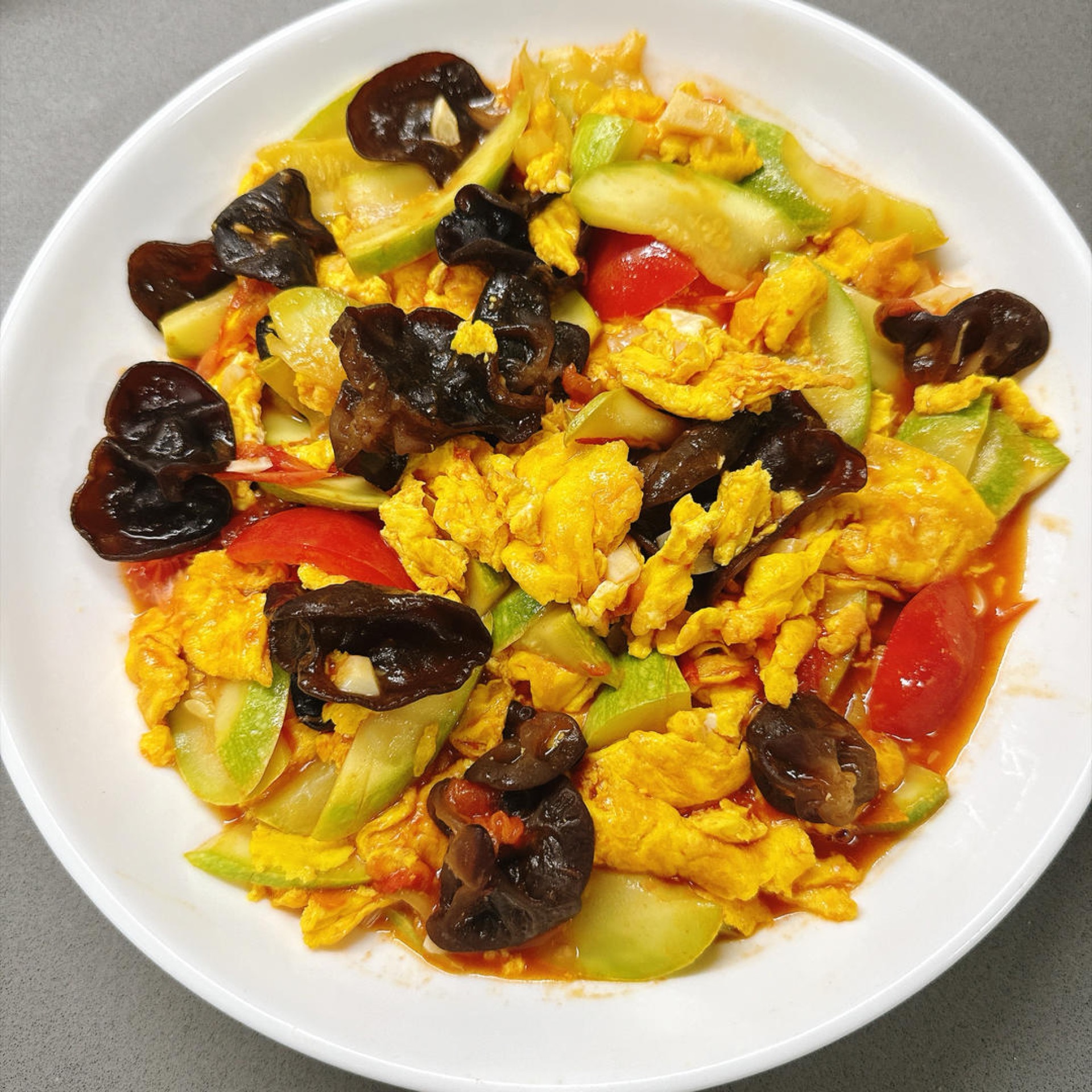
What makes this version worth writing down is that it treats each ingredient with a little respect before they all meet in the wok. The eggs get a spoonful of water starch so they stay custardy instead of turning into dry curds. The zucchini and wood ear take a two-minute dip in boiling water with a few drops of vinegar, which sets their texture and rinses away the earthy funk of the mushrooms. The tomatoes go in early to break down into a light, sweet-tart glaze, and a final splash of water starch pulls everything together so the sauce actually clings to the rice instead of pooling at the bottom of the plate.
The result is a dish that is genuinely hard to stop eating: crisp, tender, springy, and juicy all in the same bite, savory but not heavy, with just enough sweetness to make you go back for more. It comes together in about half an hour, most of which is chopping, and it works equally well as a weeknight main with rice or as one dish among several on a bigger table. If you have ever wondered why your home stir-fries taste flat compared to a good Chinese home cook’s, this recipe is a good place to find out.
What Is Stir-Fried Zucchini with Eggs?
Stir-fried zucchini with eggs is a quick Chinese home-style dish (家常菜) built around two humble ingredients: summer squash and eggs. In northern China the squash is almost always 西葫芦, a pale green, thin-skinned variety closer to a young marrow than to the dark Italian zucchini you find in Western supermarkets — but the two behave nearly identically in a wok, which is why this recipe works with either. The eggs are treated as a main ingredient rather than a binder, scrambled separately until fragrant and then folded back in at the end.
The dish sits in the same family as tomato and egg stir-fry, cucumber and egg stir-fry, and wood ear with egg — the everyday egg-and-vegetable combinations that Chinese families cook far more often than anything you would order in a restaurant. What distinguishes this one is the layering: wood ear mushrooms for a squeaky, springy crunch, cherry tomatoes for a sweet-tart glaze, and a light starch-thickened sauce that ties the whole thing to the rice.
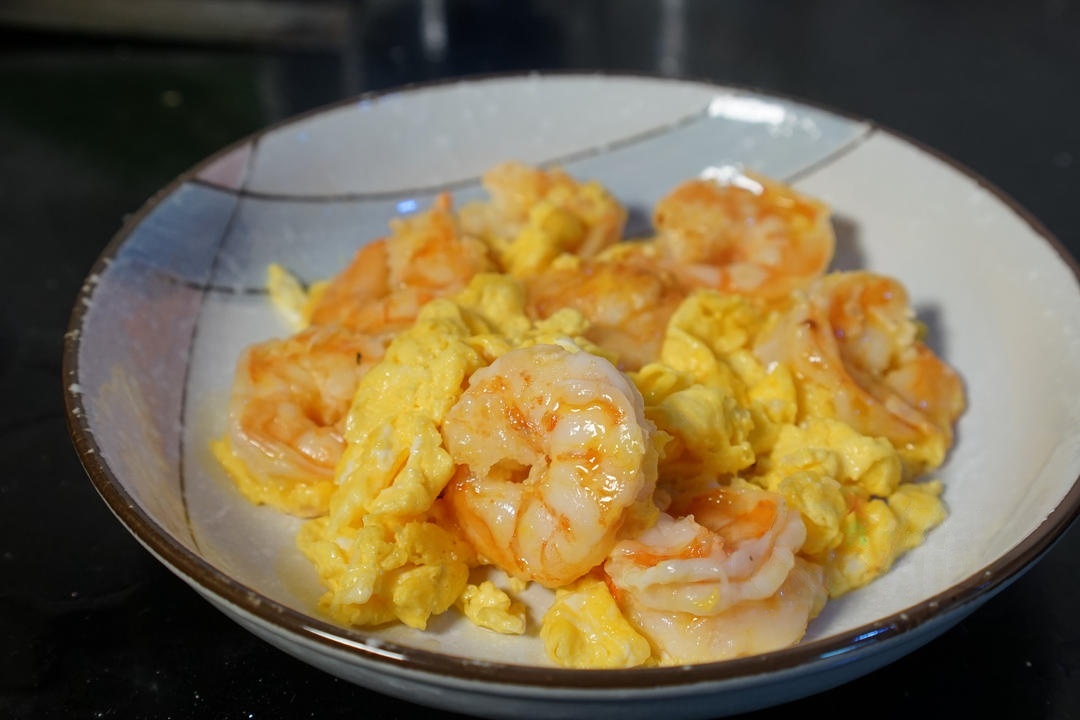
If you enjoy the way this dish treats eggs — barely set, glossy, and seasoned from the inside — then silky scrambled eggs with shrimp is the next one to try, since it uses the same low, gentle heat to keep the curds tender.
If you like this kind of cooking, my silky scrambled eggs with shrimp is the closest recipe on the site — the same technique and the same pantry.
1Silky Scrambled Eggs with Shrimp (Huadan Xiaren)A Cantonese classic featuring tender, glossy scrambled eggs and snappy shrimp. This recipe uses a special yolk-heavy ratio and a residual heat cooking technique to ensure the eggs remain moist and silky, never rubbery.Check out this recipe
Ingredient Notes
Zucchini (西葫芦). Look for a firm, heavy squash with glossy skin and no soft spots. Smaller ones are sweeter and have fewer seeds. You do not need to peel or salt them for this recipe — the brief blanch does the work of firming up the flesh. If your zucchini is large and seedy, scoop out the watery center before slicing.
Eggs. Five large eggs make this a substantial dish rather than a garnish. The water starch — potato starch whisked with a little cold water — is the single most important detail here. It dilutes the proteins slightly and slows coagulation, which is the same principle behind silky steamed egg with milk and pork floss. Skip it and the eggs will still taste fine, but they will be firmer and less glossy.
Dried wood ear mushrooms (木耳). Sold dried in small bags at any Asian grocery. They have almost no flavor of their own but an unmistakable texture — springy, slightly crunchy, almost gelatinous. Soak them in cool water for at least 8 hours (overnight is easiest); hot water speeds it up but gives a softer, less snappy result. Trim off any hard knobby bases before using, and never eat them raw.
Cherry tomatoes. Four small ones is enough to give sweetness and acidity without turning the dish into a tomato stew. Regular tomatoes work too — use about half of a medium one, seeds and all.
Light soy sauce. This is your salt-with-umami base. Dark soy would muddy the pale green color of the zucchini, so keep it light here. If you are building a pantry, our guide to essential Chinese sauces covers the difference between the two.
Sugar. Slightly more than you would expect — a heaped teaspoon. It is not there to make the dish sweet; it rounds off the acidity of the tomato and the saltiness of the soy sauce so the flavors read as one thing rather than three.
White vinegar. Just a few drops in the blanching water. It keeps the zucchini’s color bright and, more importantly, neutralizes the slightly muddy, mushroomy note that wood ear can carry. Rice vinegar is a fine substitute if that is what you keep — see our notes on a substitute for rice vinegar if you are out.
Water starch. Potato starch mixed with cold water, used twice: once in the eggs, once at the end to thicken the sauce. Mix it fresh each time; it settles into a solid block within minutes.
Ingredients
- 1 medium zucchini (about 400 g / 14 oz), halved and sliced on the diagonal
- 4 small cherry tomatoes, quartered
- 5 large eggs (about 250 g), beaten
- 1 small handful dried wood ear mushrooms (about 15 g dried), soaked 8 hours and trimmed
- 1/2 stalk scallion, minced
- 4 cloves garlic, minced
- 2 tbsp neutral oil, for frying
- 2 tsp water starch (potato starch + water), for the eggs
- 1 tbsp light soy sauce
- 1 tbsp water
- 1/2 tsp salt
- 1/4 tsp chicken bouillon (optional)
- 1 heaped tsp sugar
- 1 tsp white vinegar, for the blanching water
- 1 tbsp water starch (potato starch + water), for thickening
Equipment Needed
You do not need much, and you certainly do not need a restaurant burner. A carbon steel or nonstick wok is ideal because its curved sides let you push the eggs around without breaking them into dry scraps, but a wide skillet works perfectly well. Beyond that: a cutting board and a sharp knife for the diagonal zucchini slices, a slotted spoon or spider for lifting the blanched vegetables out of the water, a small bowl for the beaten eggs, and a small cup for mixing the water starch. A pot for blanching is the only extra piece of equipment, and a saucepan is fine.
One thing worth having is everything prepped before the wok goes on the heat. Stir-frying moves fast, and once the aromatics hit the oil you have seconds, not minutes, to get the next ingredient in. That is why the next section matters more than it looks.
Why This Recipe Works
Three small decisions do most of the heavy lifting here.
First, the eggs are diluted with water starch. Egg proteins coagulate in a fairly narrow temperature band, and when they do it quickly they squeeze out water and turn rubbery. Adding a little starch and water raises the temperature at which that setting happens and physically separates the proteins, so the curds stay soft and moist even after they are returned to the pan for a second round of cooking. This is the same reason custards and steamed eggs are so tender.
Starch and water slow the coagulation of egg proteins and hold moisture inside the curd, which is why a splash of slurry keeps scrambled eggs glossy and soft rather than dry — a principle that applies just as much to a wok as it does to a steamer.
Second, the zucchini and wood ear are blanched, not stir-fried from raw. Zucchini is roughly 95 percent water, and if you throw it straight into a hot wok it will release that water into the pan, steam itself, and leave you with a soggy, watery stir-fry. Blanching for two minutes sets the pectin in the squash so it stays crisp, and it gives the wood ear a head start so it is not still tough when the dish is done. The cold-water shock stops the cooking dead.
Third, the dish is thickened at the very end. That spoonful of water starch turns the loose tomato-and-soy liquid into a light glaze that coats every piece. Without it, the flavors sit in a puddle at the bottom of the plate and the vegetables taste under-seasoned. With it, each bite carries the sauce.
Prep & Mise en Place
Soak the dried wood ear mushrooms in a bowl of cool water for at least 8 hours, or overnight. They will expand to several times their size. Drain, rinse well under running water to dislodge any grit, and trim off the hard, knobby bases. Tear or cut the larger pieces into bite-sized florets.
Halve the zucchini lengthwise, then cut it into diagonal slices about 1/4 inch (6 mm) thick. The diagonal cut gives you more surface area, which means better browning and a better bite. Quarter the cherry tomatoes. Mince the scallion and garlic and keep them together in a small pile — they go into the wok at the same moment.
Crack the eggs into a bowl, add 2 teaspoons of water starch, and whisk until completely smooth with no streaks of white. In a separate small cup, mix 1 tablespoon of potato starch with 1 tablespoon of cold water for the finishing slurry, and set it aside — you will need to stir it again right before it goes in.
Finally, line up your seasonings within arm’s reach of the stove: the soy sauce, the water, the salt, the chicken bouillon, and the sugar. Once the wok is hot, this dish cooks in about four minutes, and there is no time to go hunting through a cabinet. If you like, you can also pre-mix the soy sauce, water, salt, bouillon, and sugar into one small bowl, which is the cleanest way to handle it.
Cooking Process
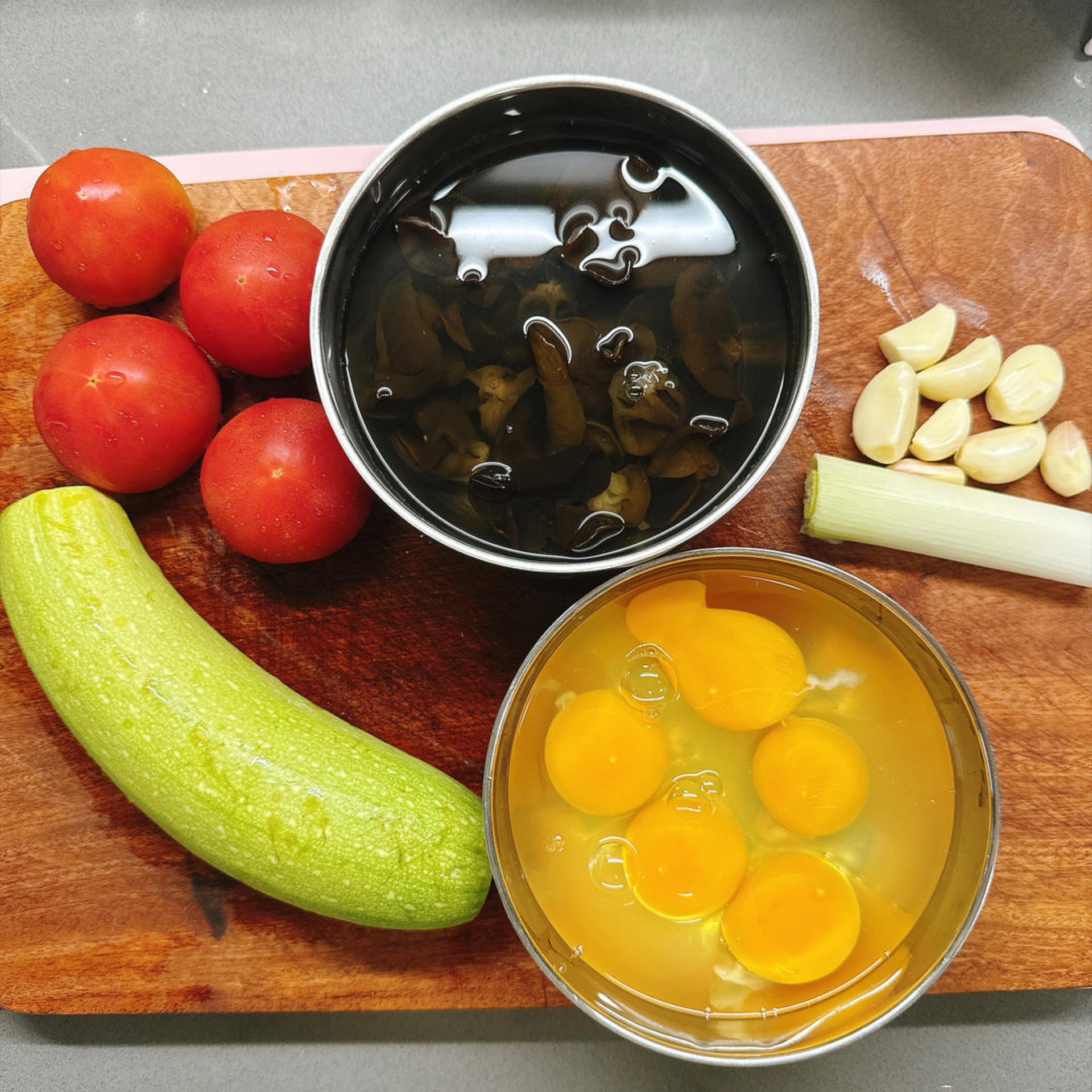
Step 1 — Ready the Ingredients
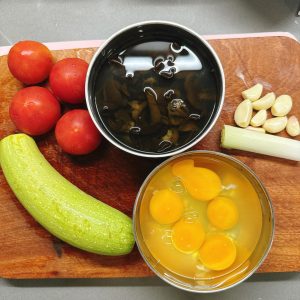
Get all the ingredients ready, and soak the wood ear mushrooms ahead of time.
Step 2 — Beat the Eggs with Water Starch
Crack the 5 eggs into a bowl and add 2 small spoonfuls of water starch — eggs fried with water starch come out silky and tender instead of old and rubbery.
Step 3 — Whisk Until Smooth
Stir everything together until the eggs are evenly blended.
Step 4 — Cut the Vegetables
Halve the zucchini and slice it on the diagonal, cut the tomatoes into chunks, and mince the scallion and garlic.
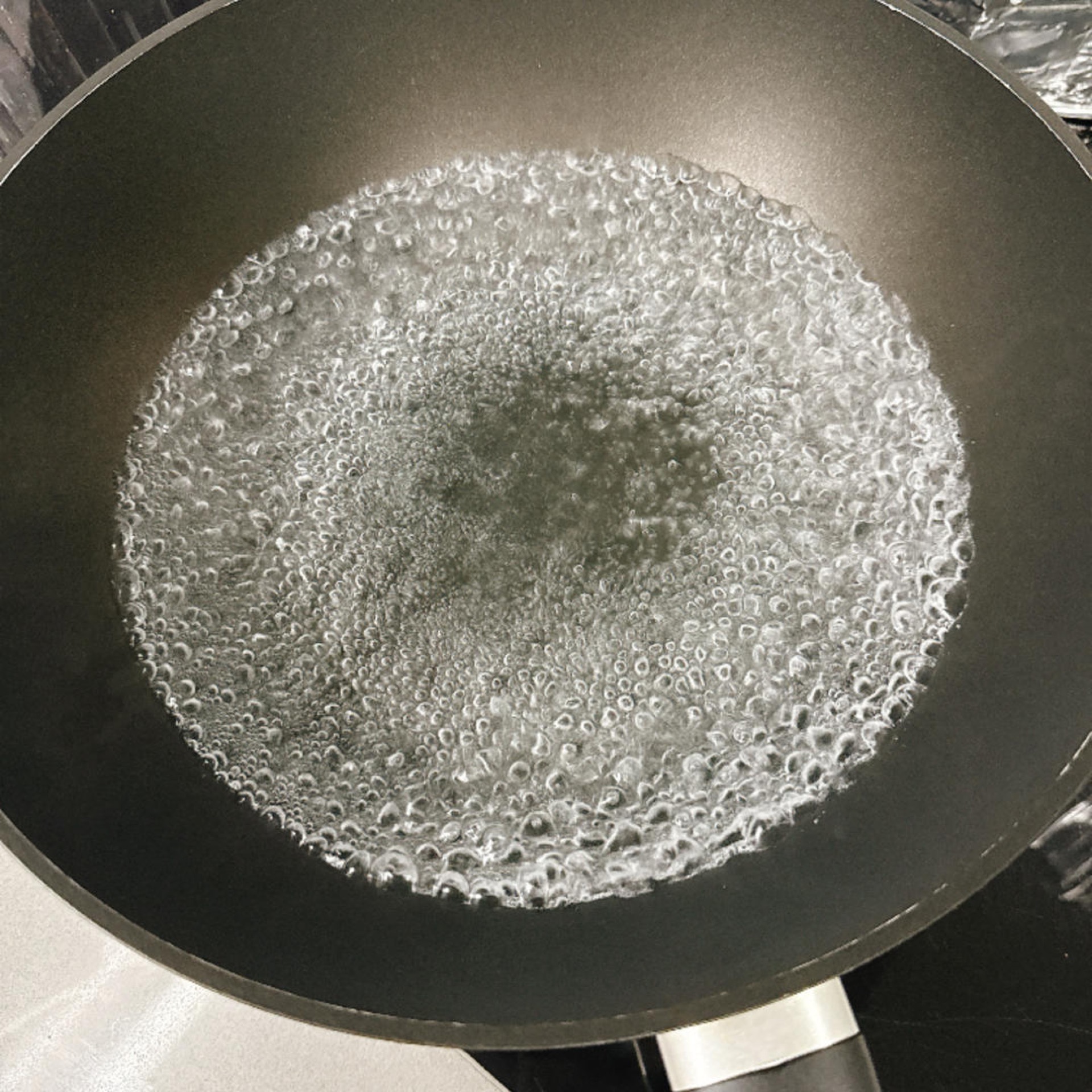
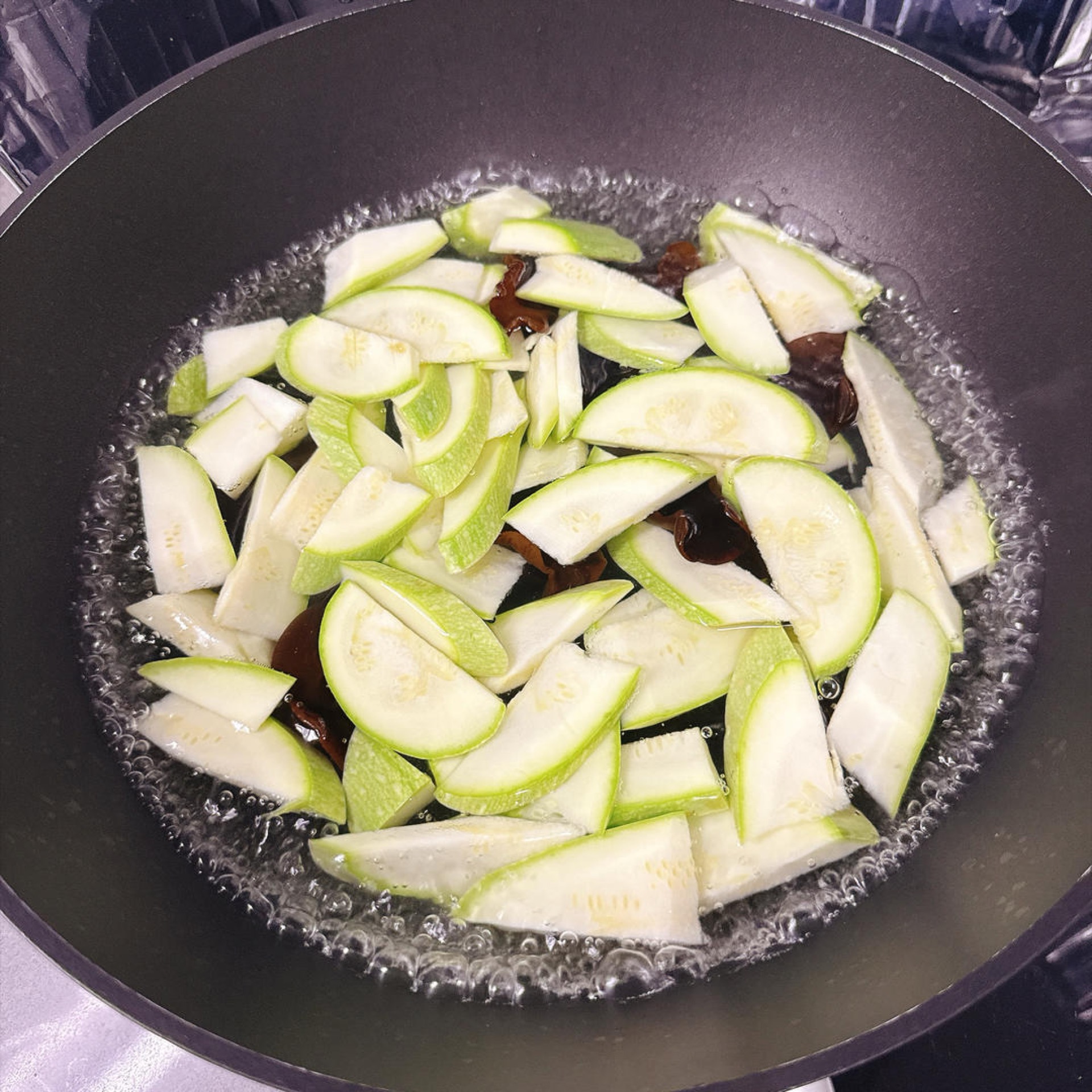
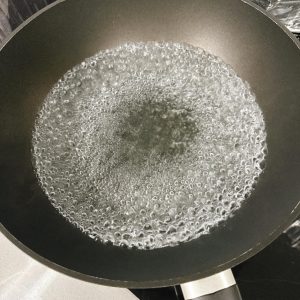
Step 5 — Bring the Water to a Boil
Bring a pot of water to a rolling boil.
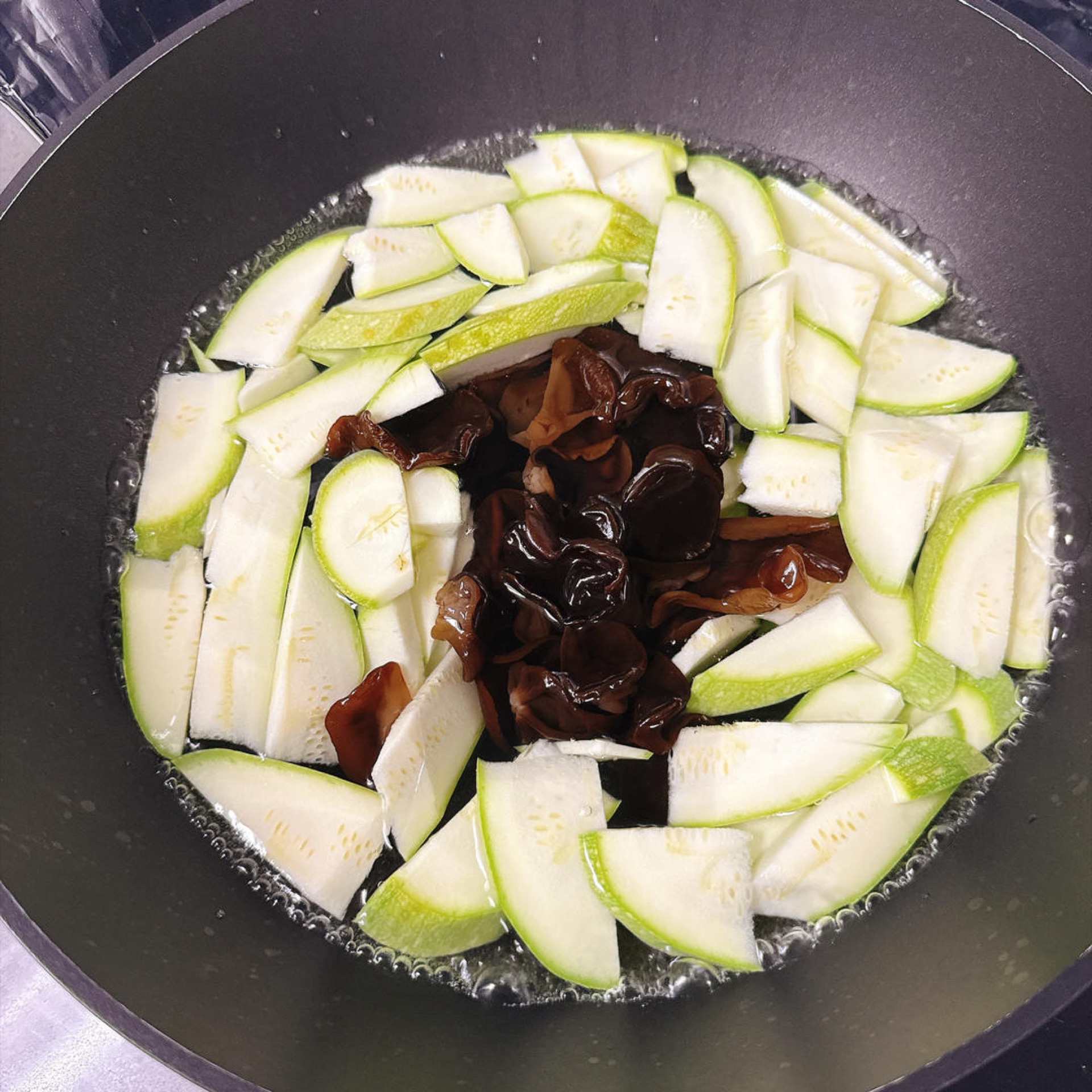
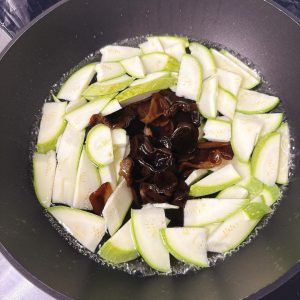
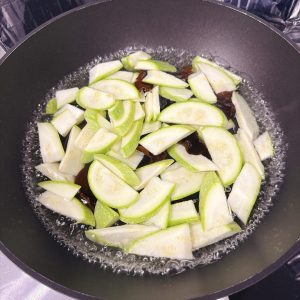
Step 6 — Blanch the Zucchini and Wood Ear
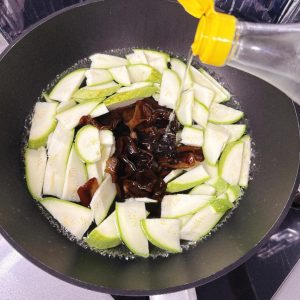
Add the zucchini and wood ear mushrooms to the boiling water for a quick blanch.
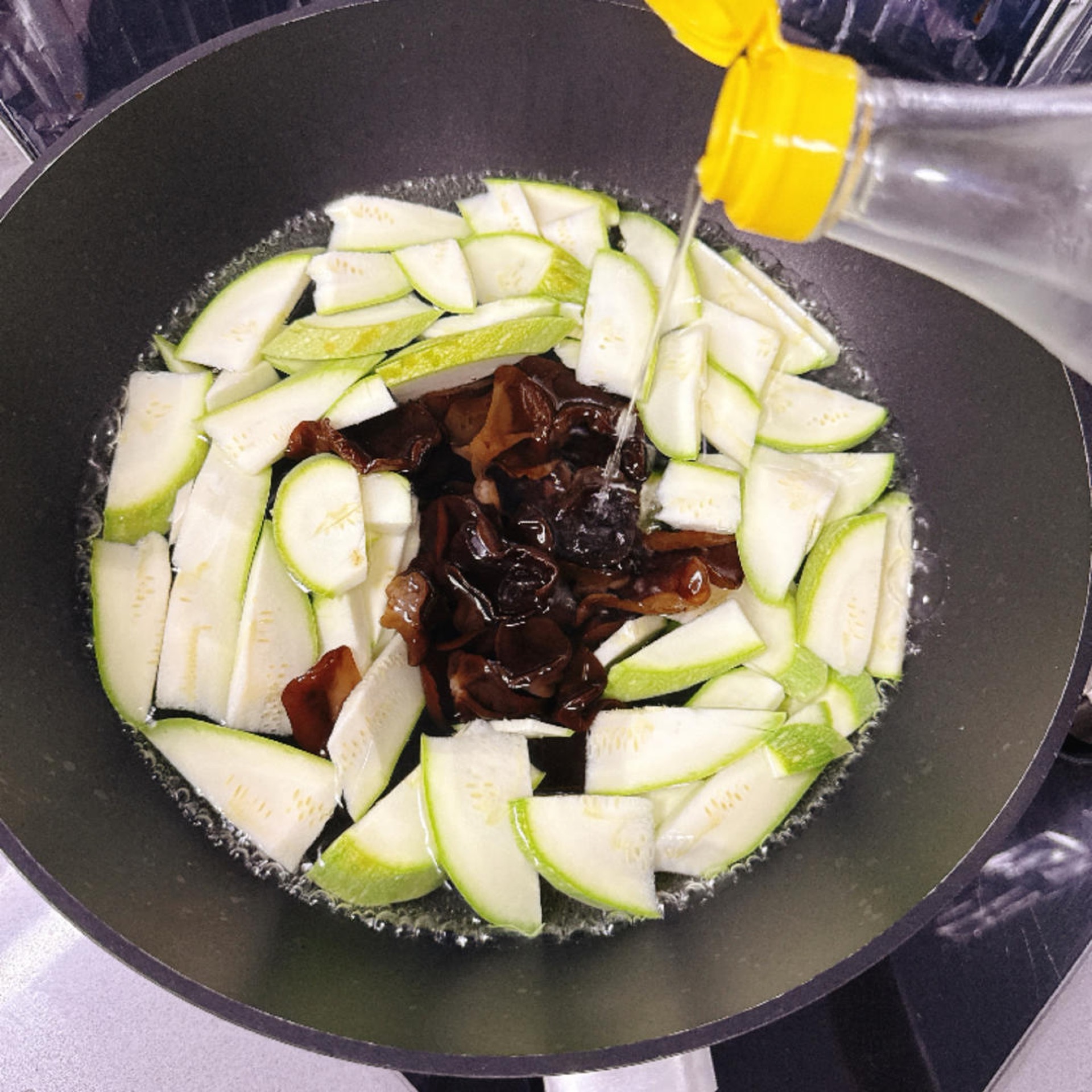
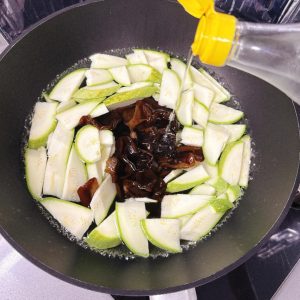
Step 7 — Add a Few Drops of White Vinegar
Add a few drops of white vinegar — it not only improves the texture of the zucchini, but also removes the mushroomy smell from the wood ear.
Step 8 — Boil for About 2 Minutes
Cook for about 2 minutes, until the water comes back to a boil.
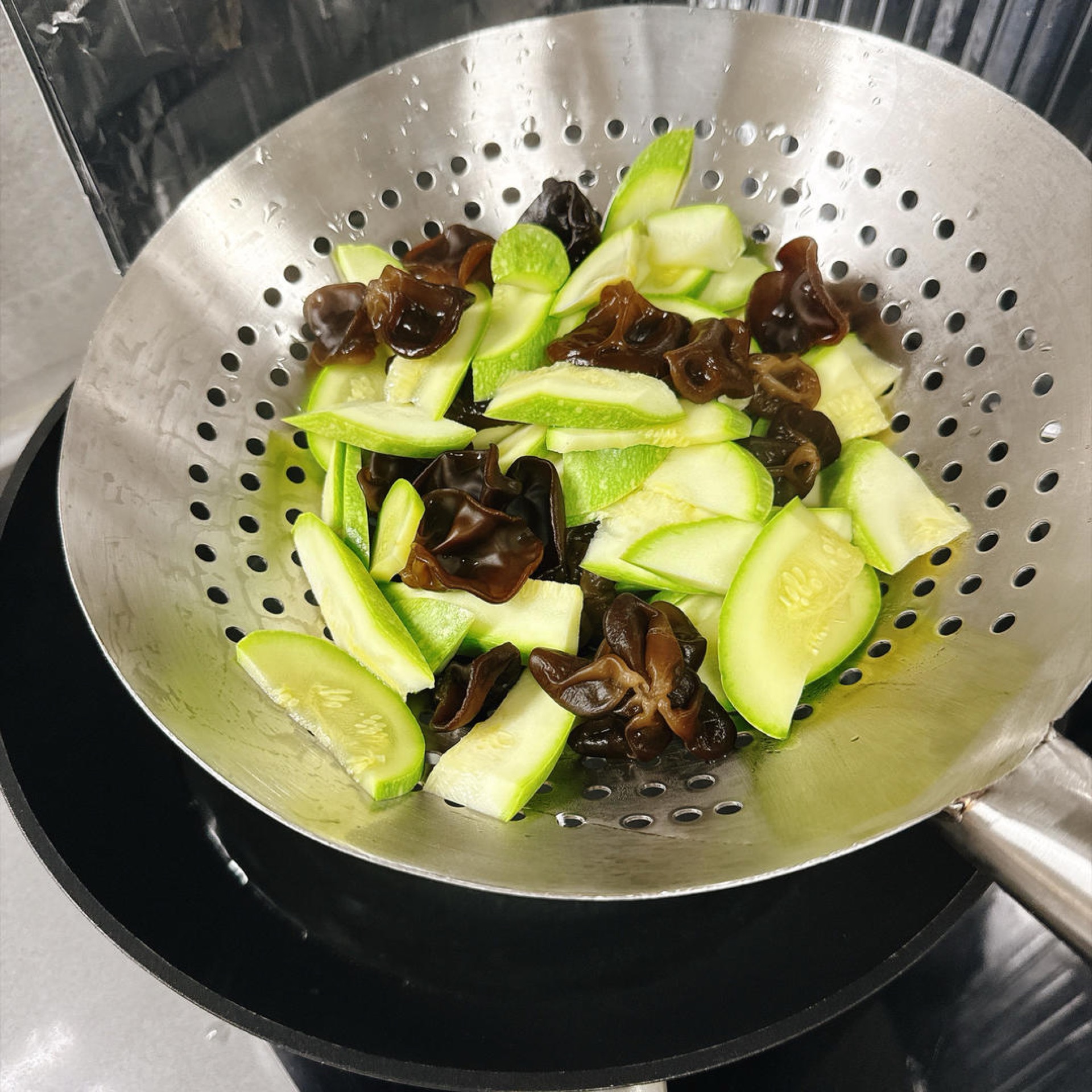
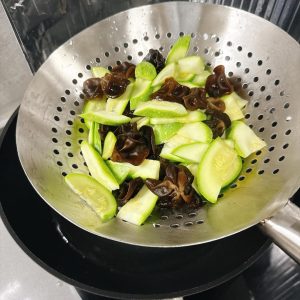
Step 9 — Scoop Them Out
Scoop the zucchini and wood ear out of the pot.
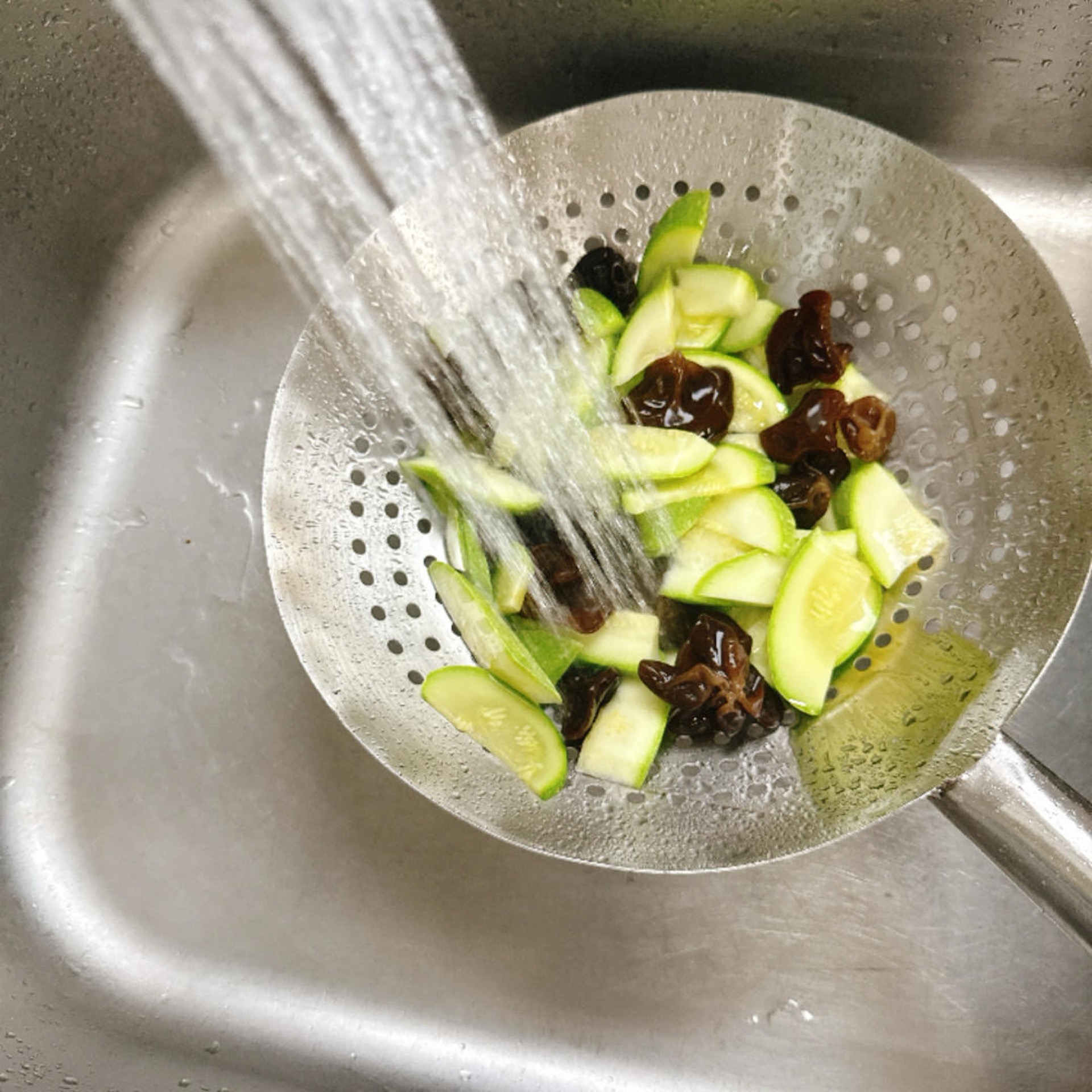
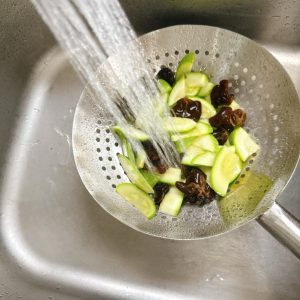
Step 10 — Shock in Cold Water
Run them under cold water to keep their texture crisp.
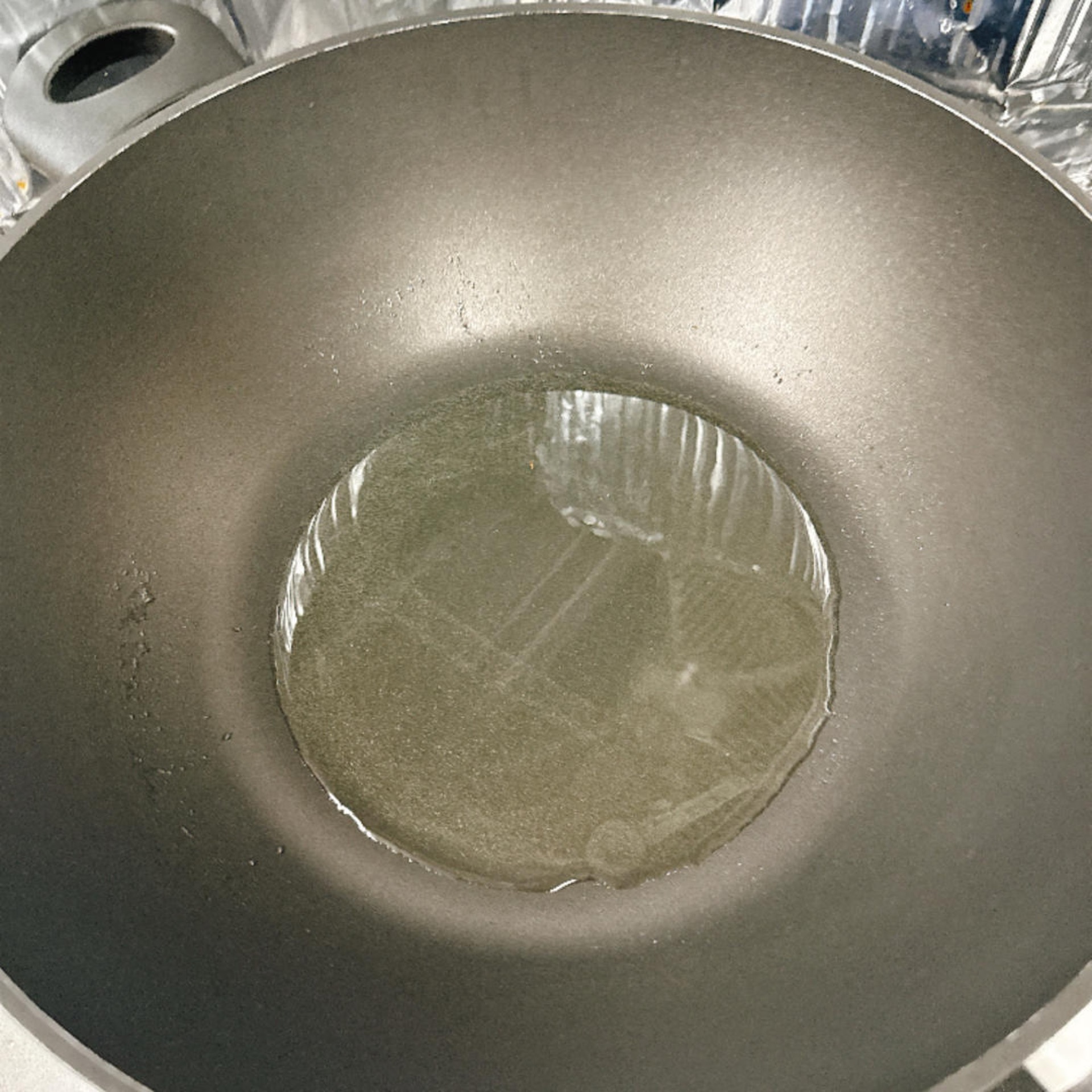
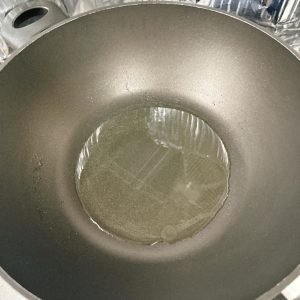
Step 11 — Heat the Oil
Heat oil in the wok.
Step 12 — Pour in the Eggs
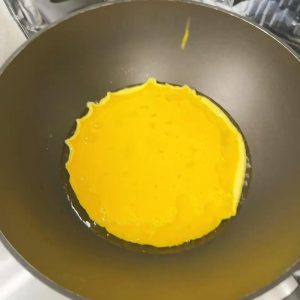
Pour in the beaten eggs.
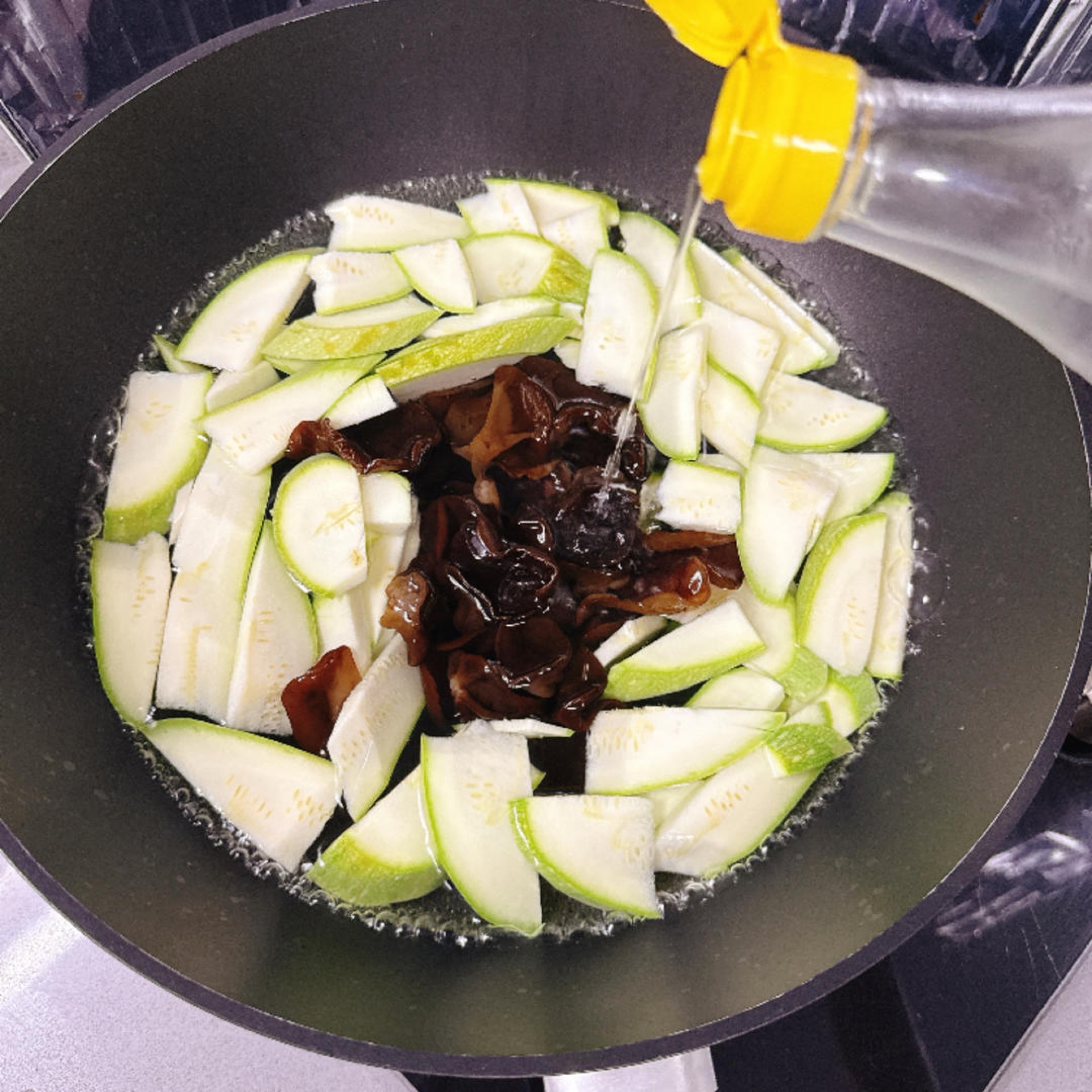
Step 13 — Push the Eggs While They Set
As they cook, push the eggs along with your spatula instead of stirring them hard.
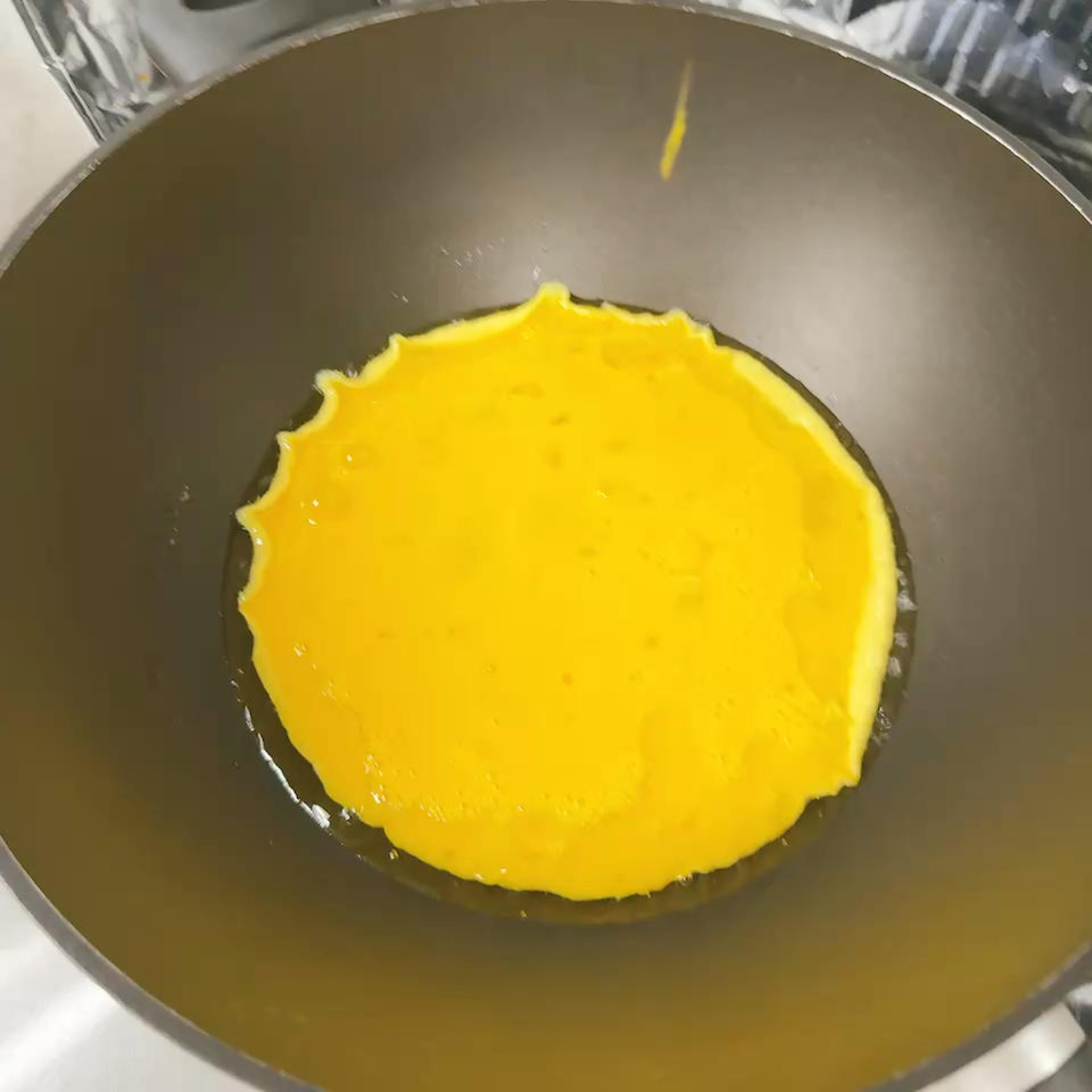
Step 14 — The Egg Liquid Sets
The egg liquid firms up into soft curds.
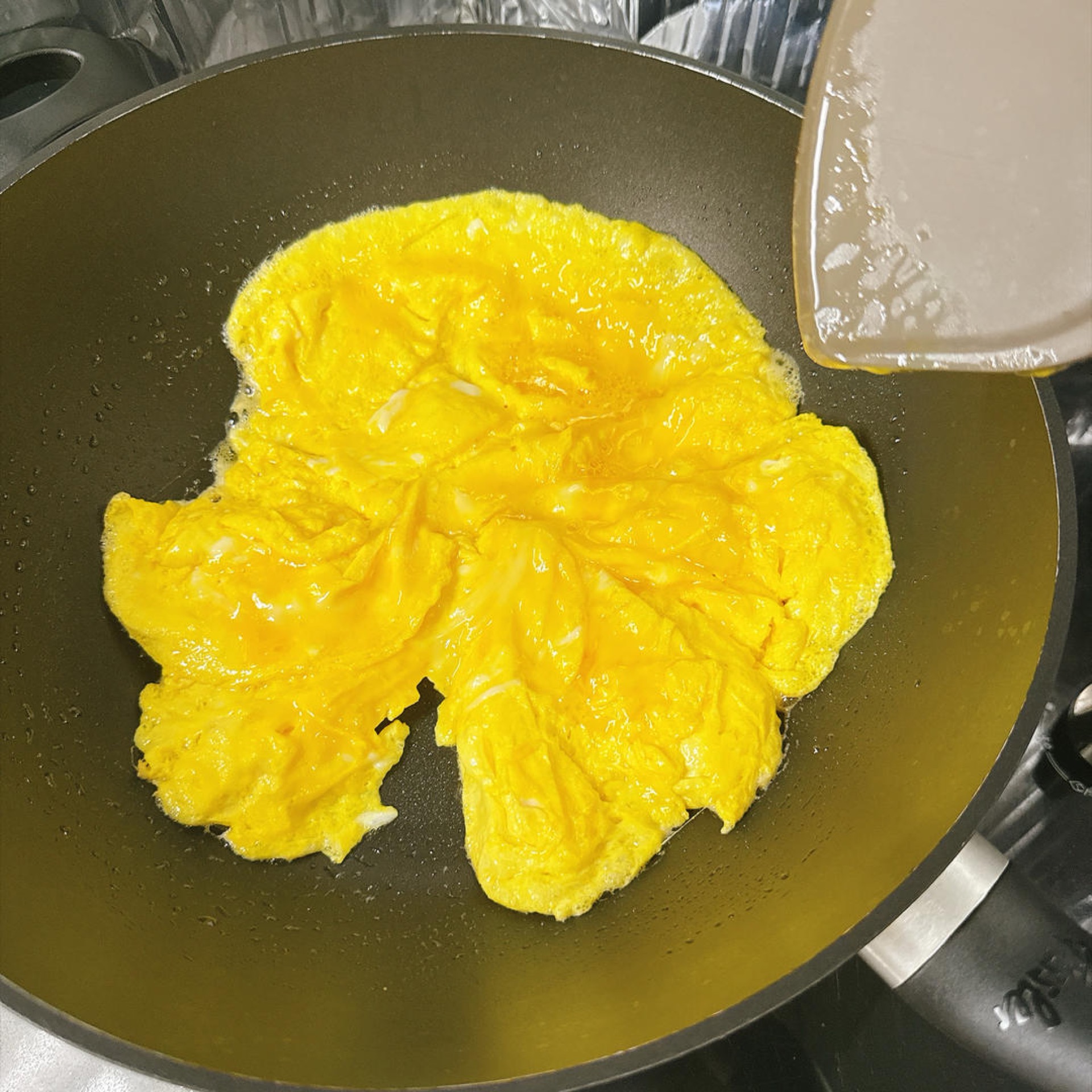
Step 15 — Flip and Fry, Then Set Aside
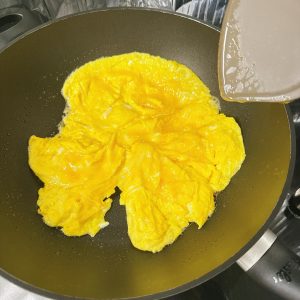
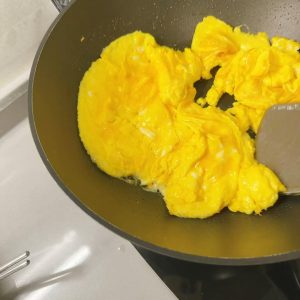
Flip and fry the other side — frying the eggs a little longer makes them more fragrant — then dish them out and set them aside.
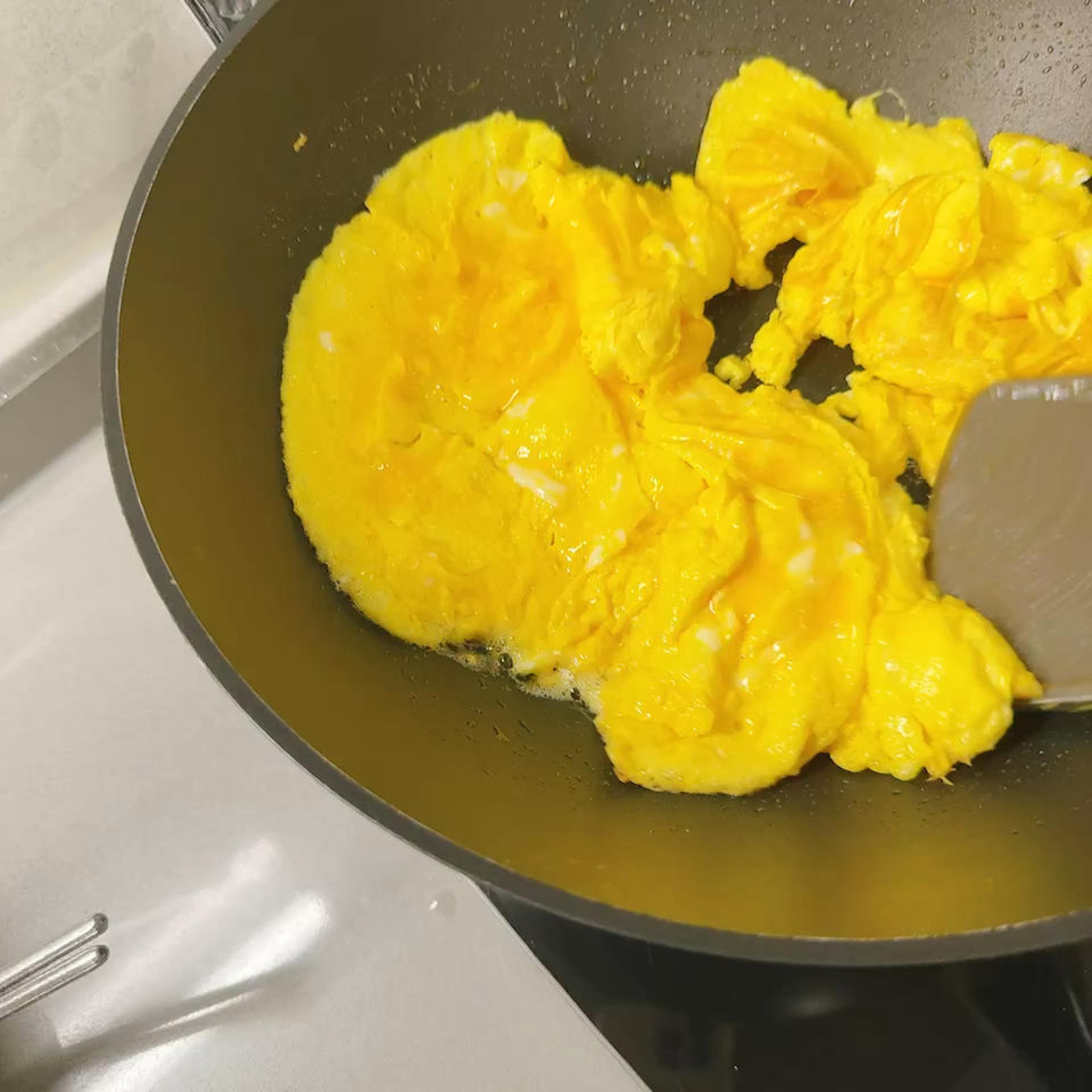
Step 16 — Aromatics and Tomatoes
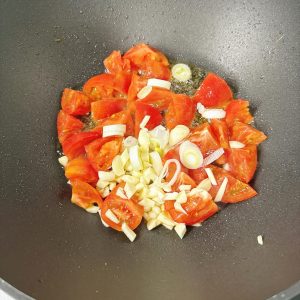
Leave the base oil in the wok, add the scallion and garlic and stir until fragrant, then add the tomato chunks.
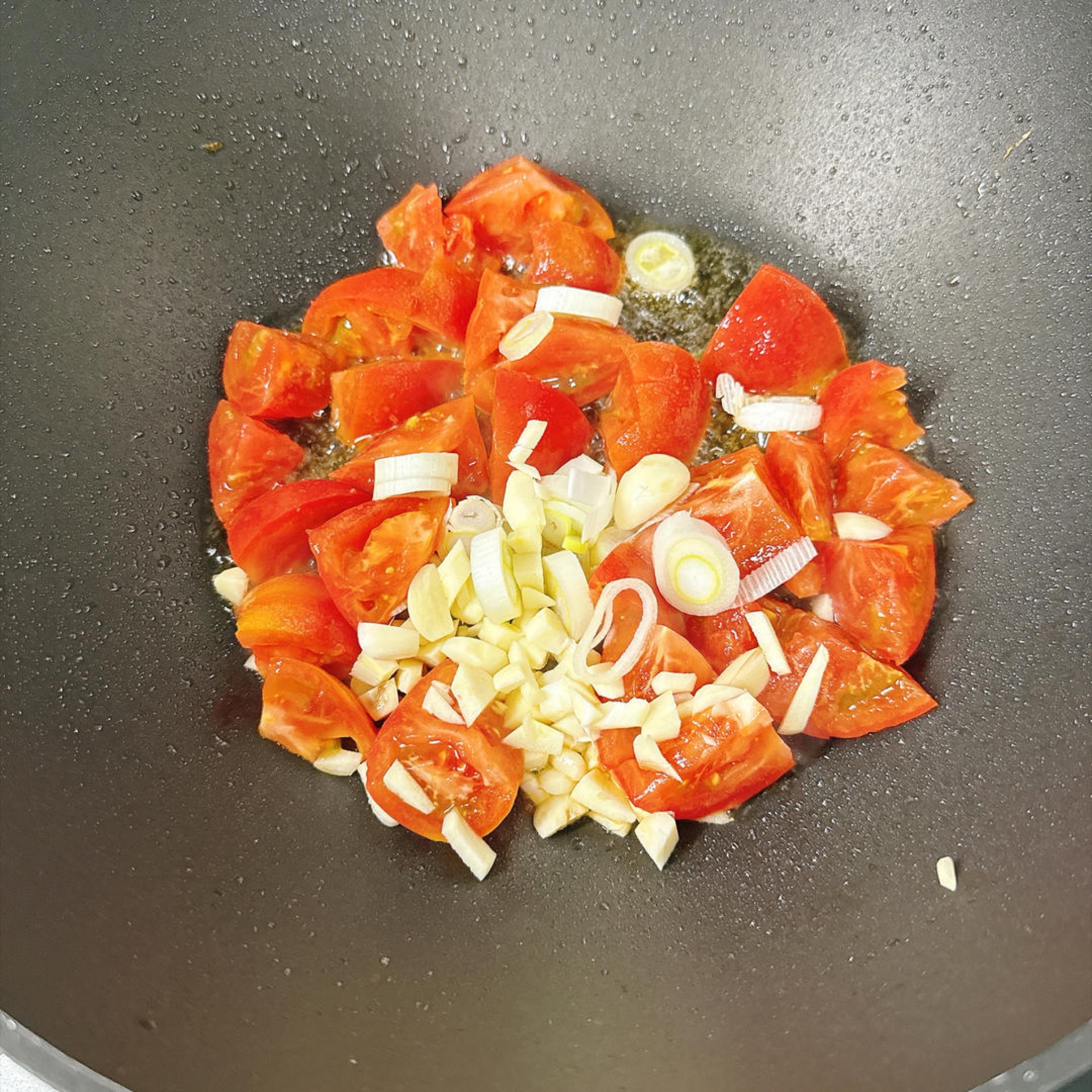
Step 17 — Stir a Few Times
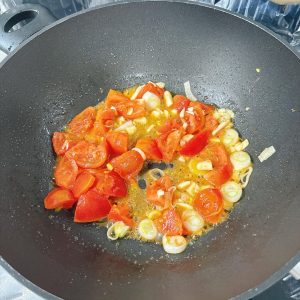
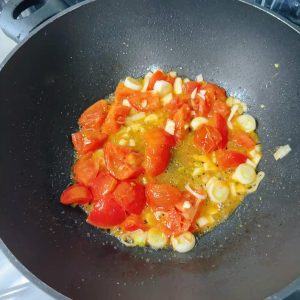
Stir-fry for a few turns.
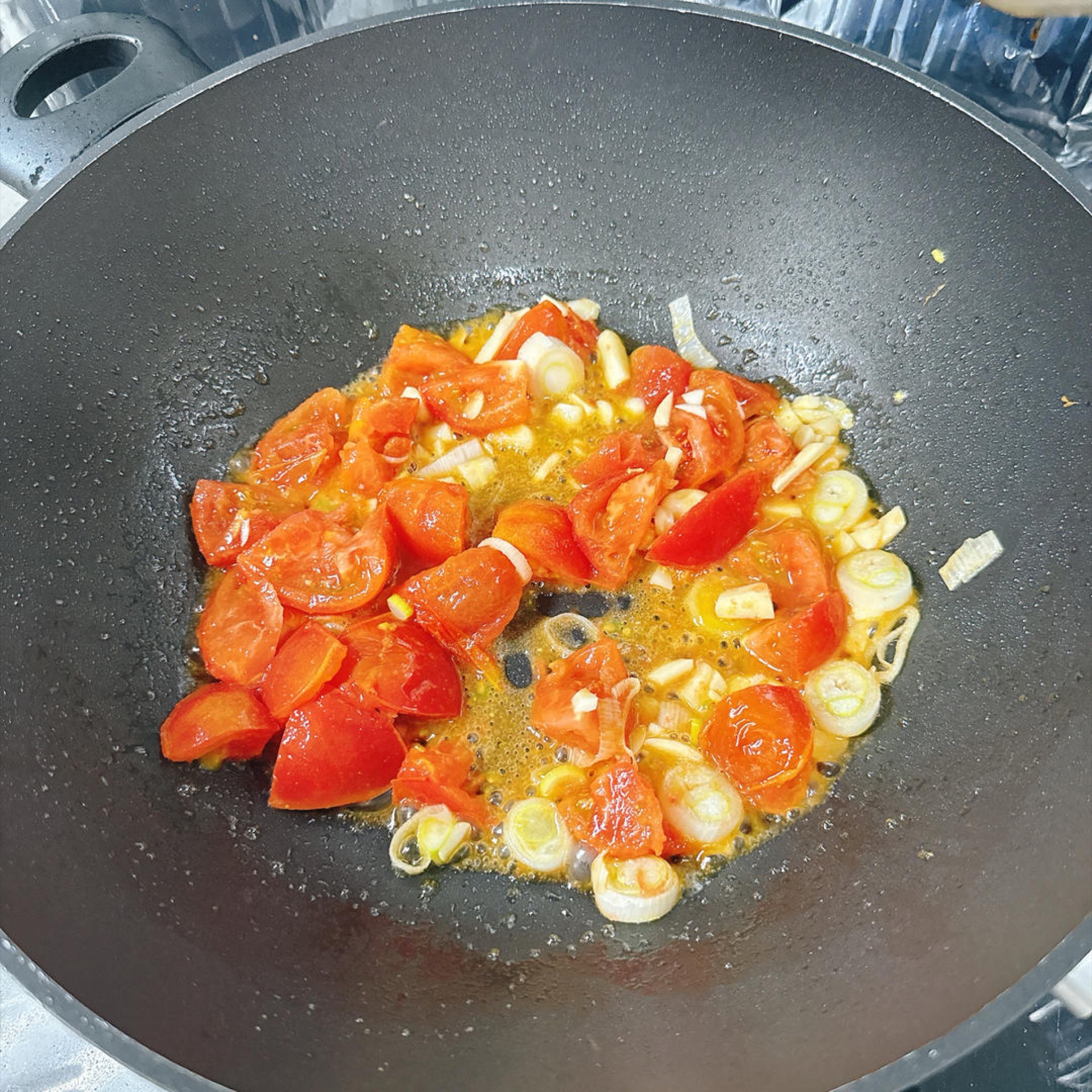
Step 18 — Add the Zucchini and Wood Ear
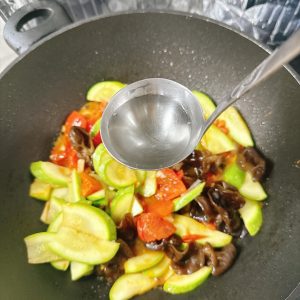
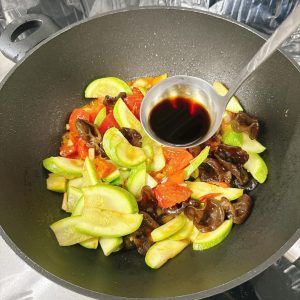
Add the zucchini and wood ear mushrooms to the wok.
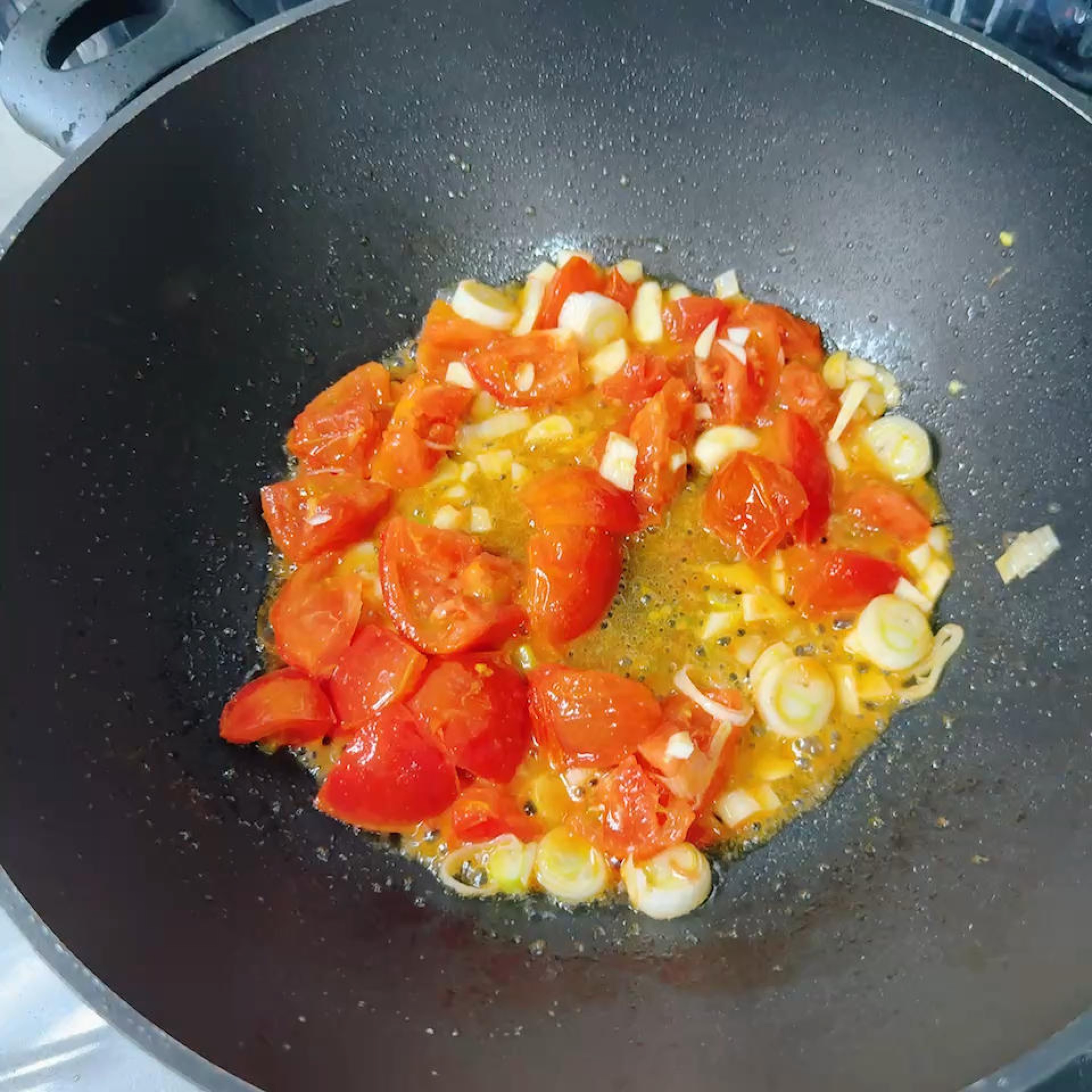
Step 19 — Add the Soy Sauce
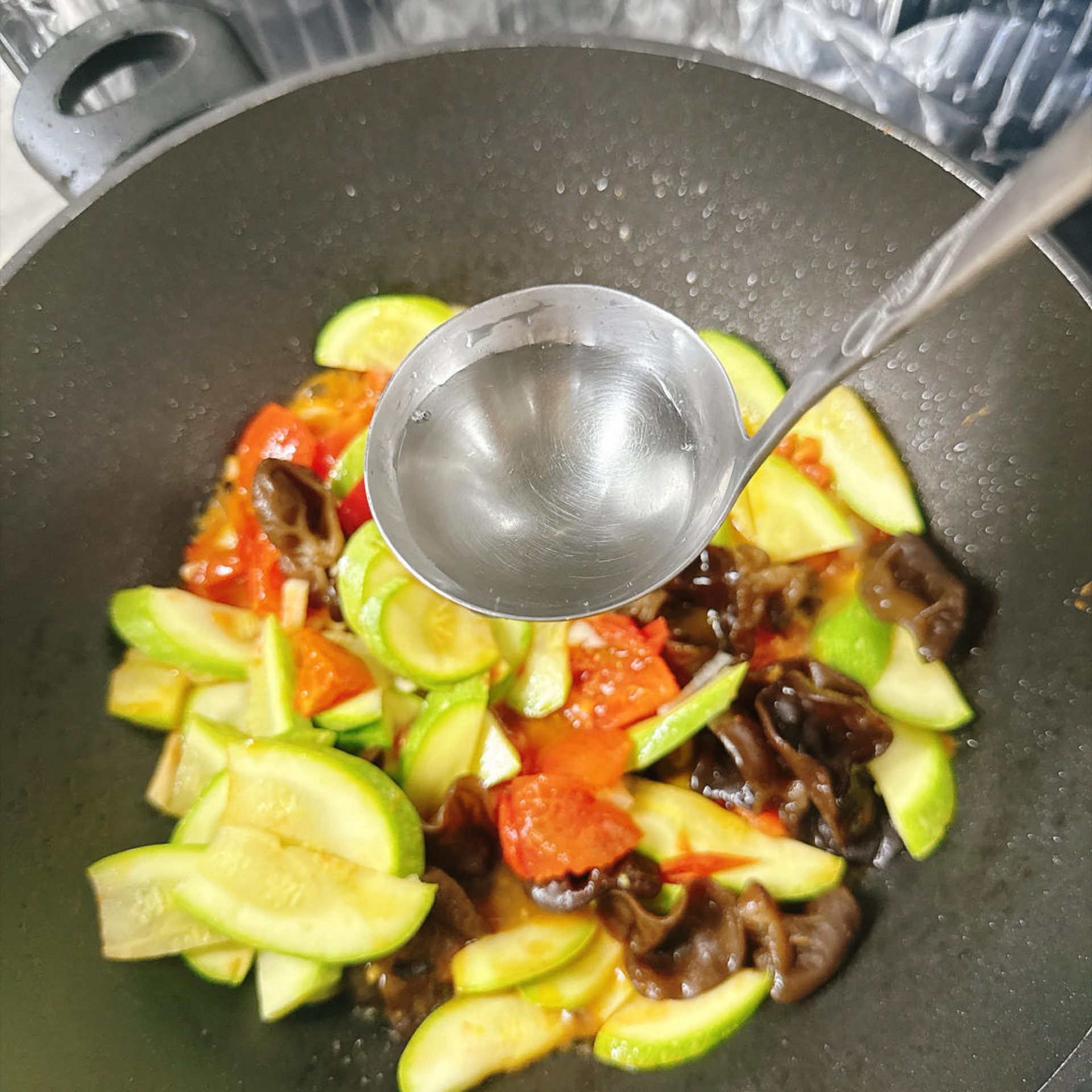
Add 1 spoonful of light soy sauce.
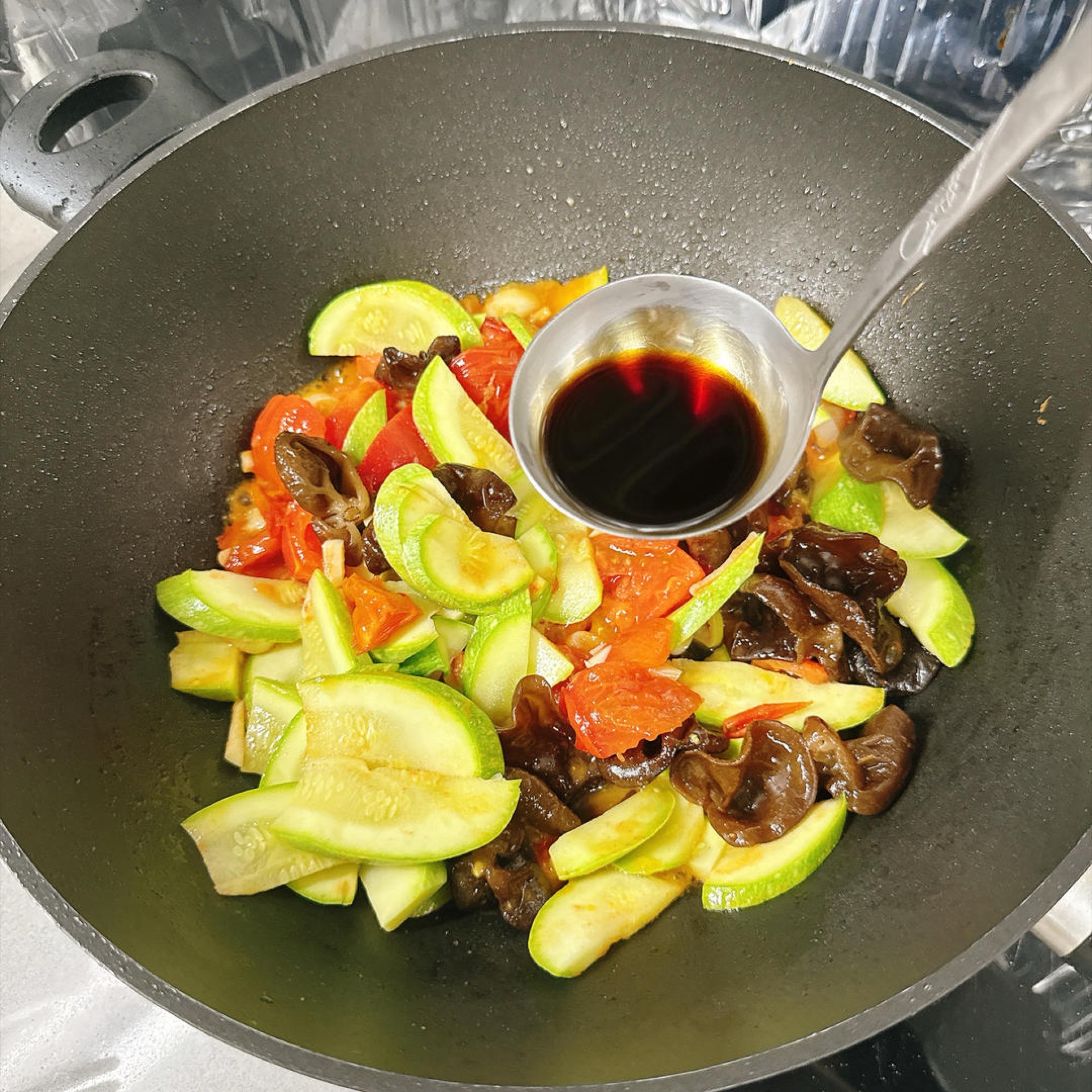
Step 20 — Add the Water
Add 1 spoonful of water.
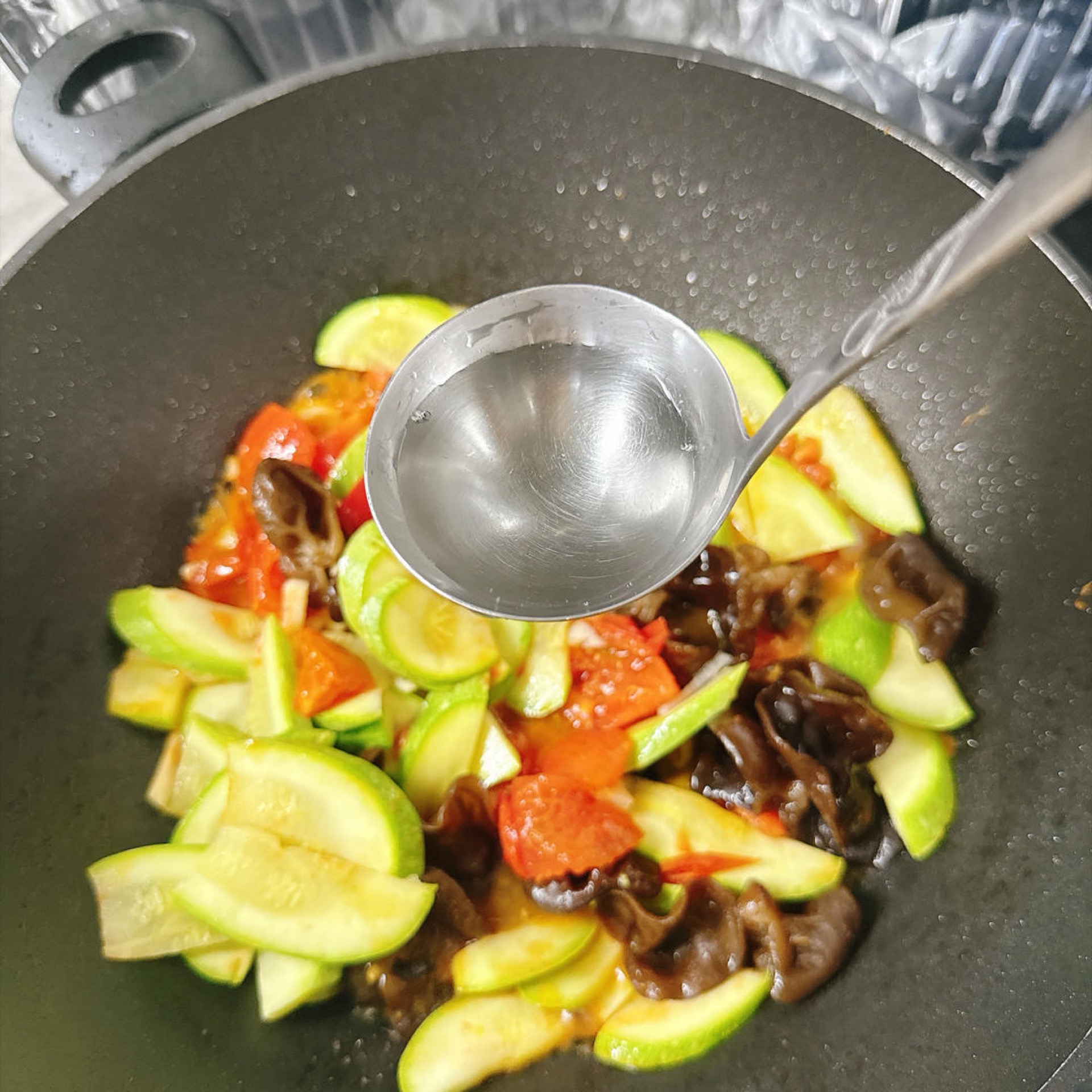
Step 21 — Season with Salt
Season with salt.
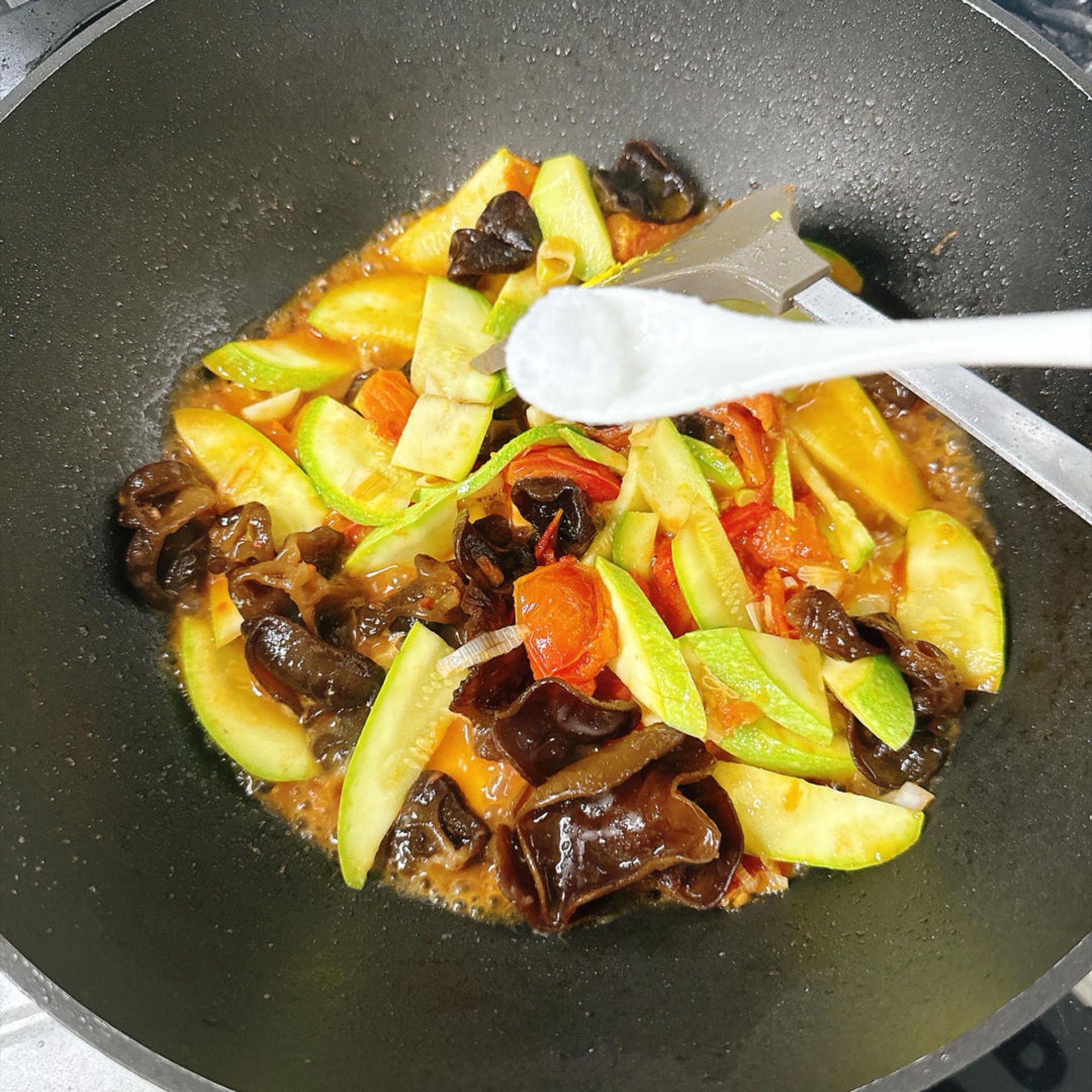
Step 22 — Add Chicken Bouillon
Add chicken bouillon.
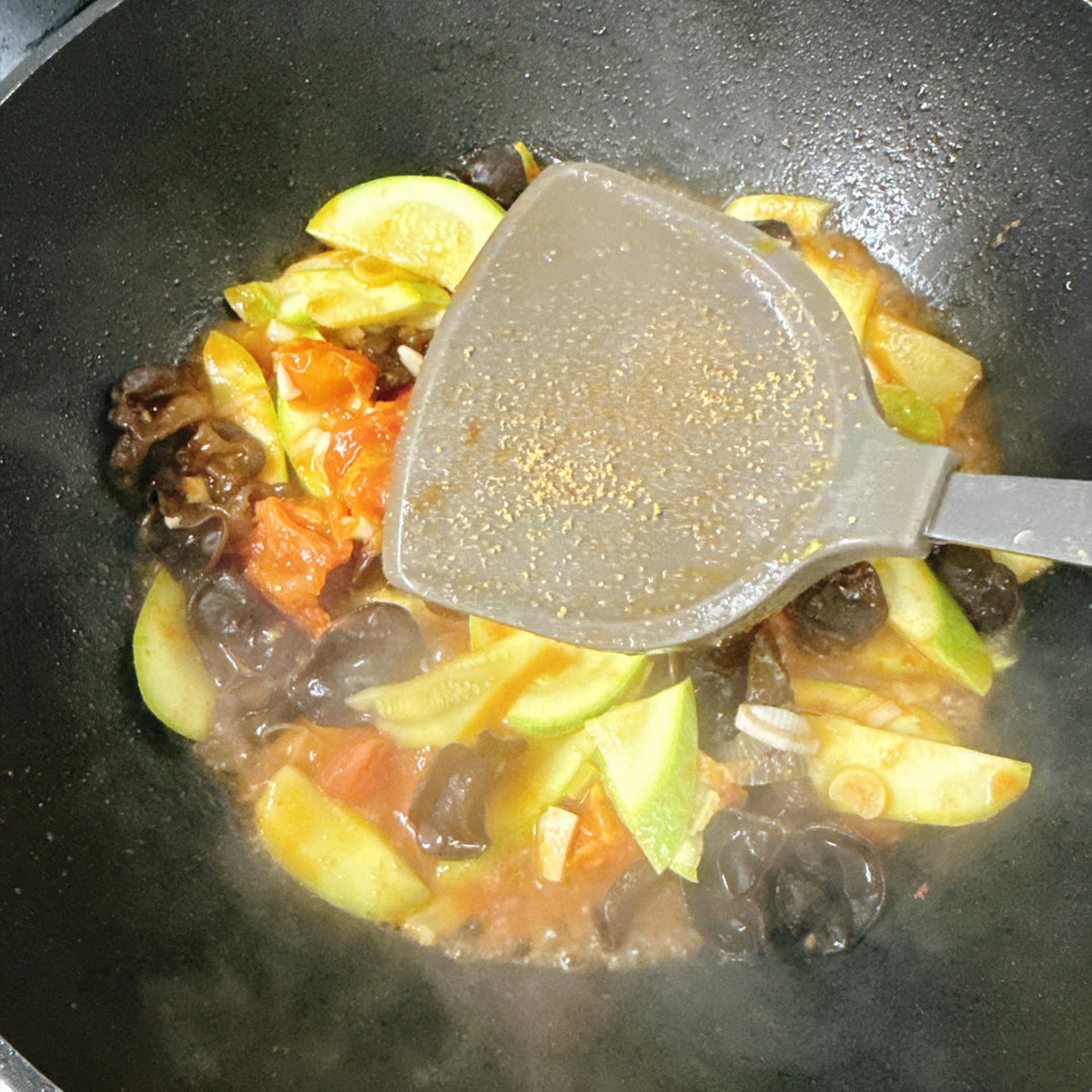
Step 23 — Add a Little Extra Sugar
Add a slightly heaped spoonful of sugar.
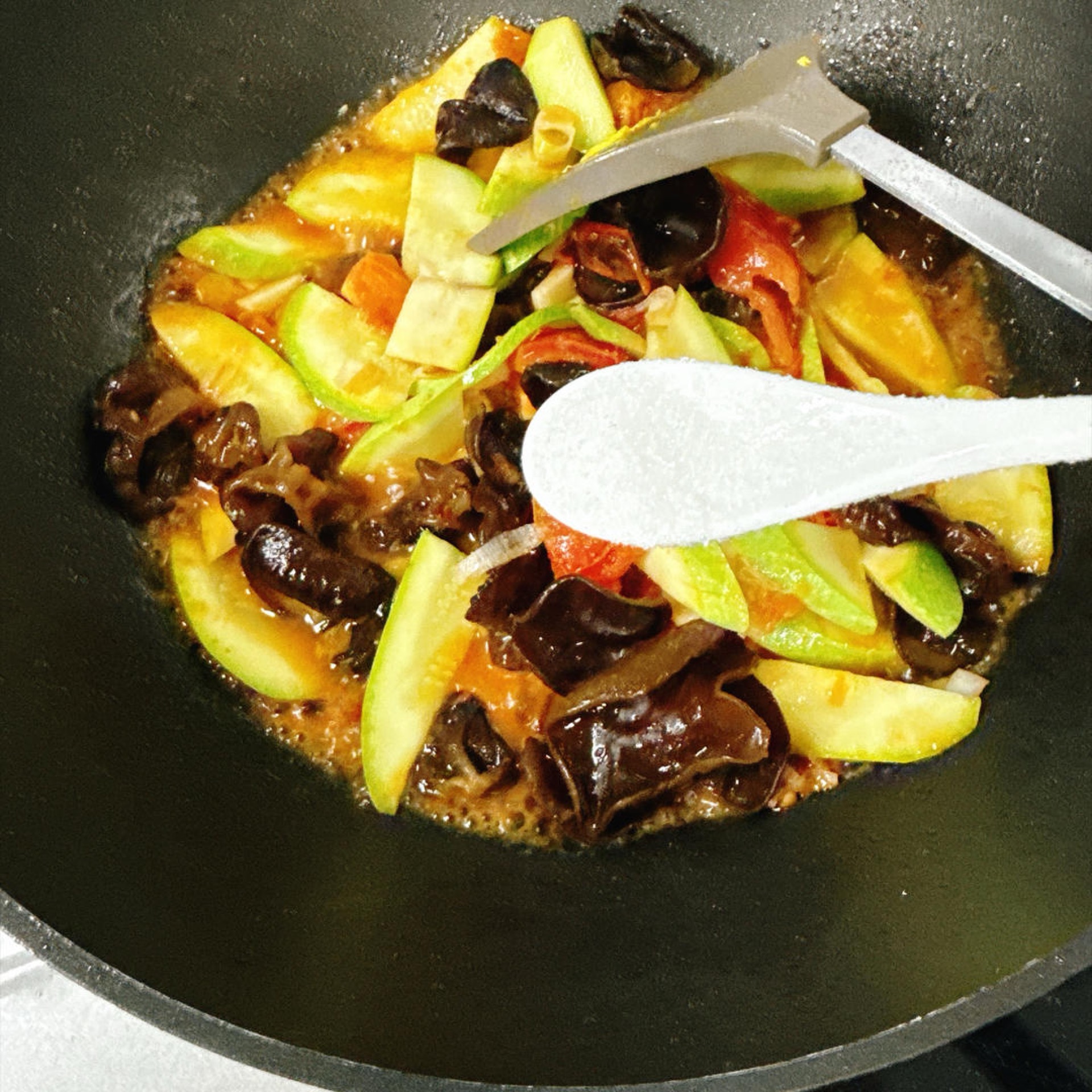
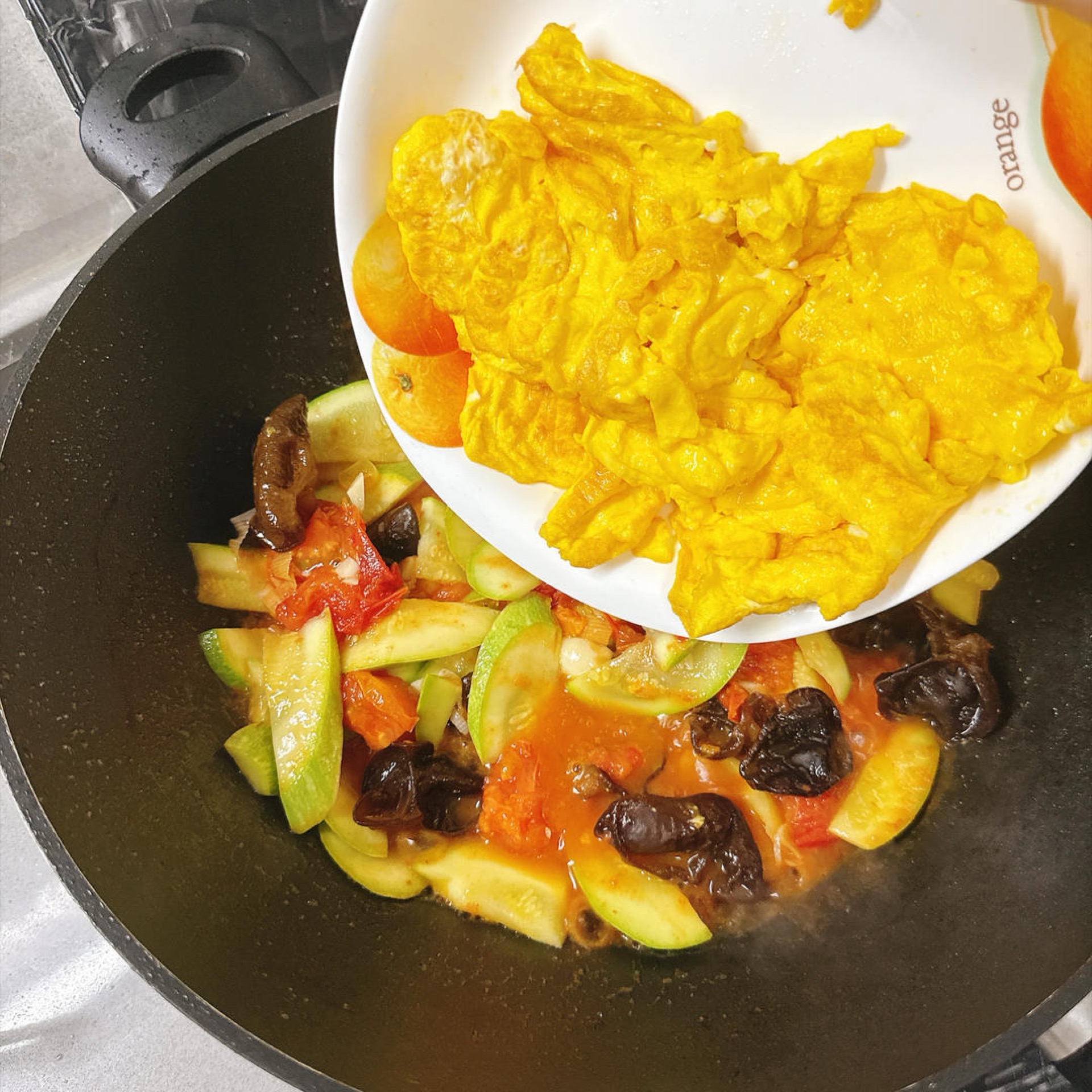
Step 24 — Return the Eggs to the Wok
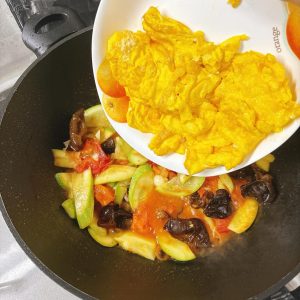
Return the fried eggs to the wok.
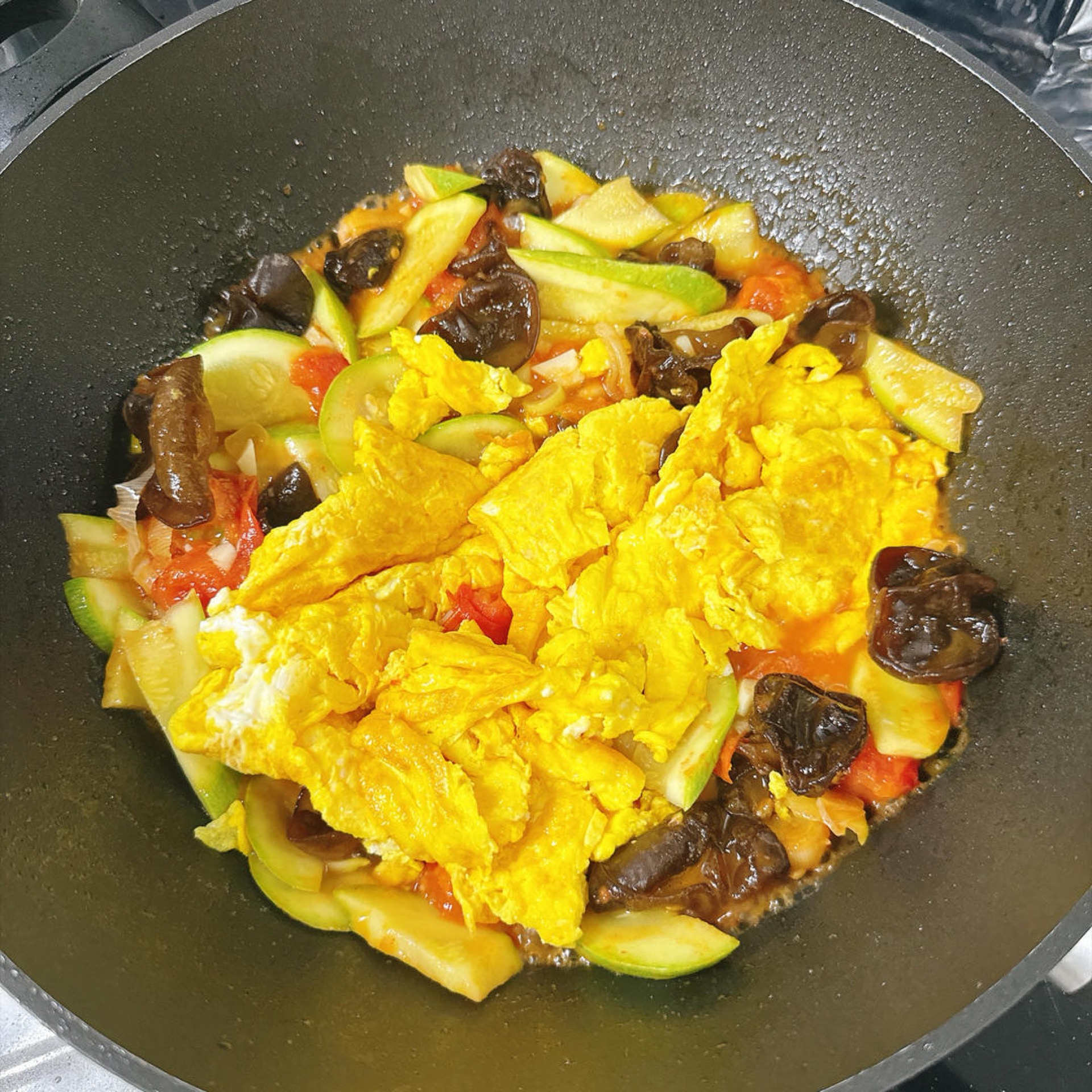
Step 25 — Stir Everything Together
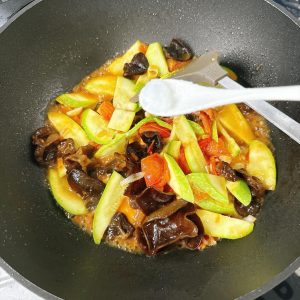
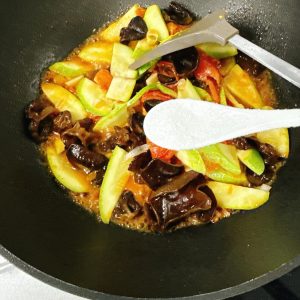
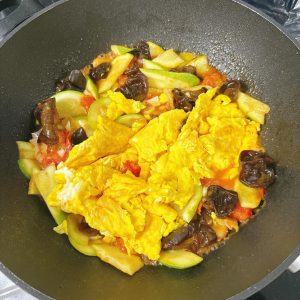
Stir-fry until everything is evenly combined.
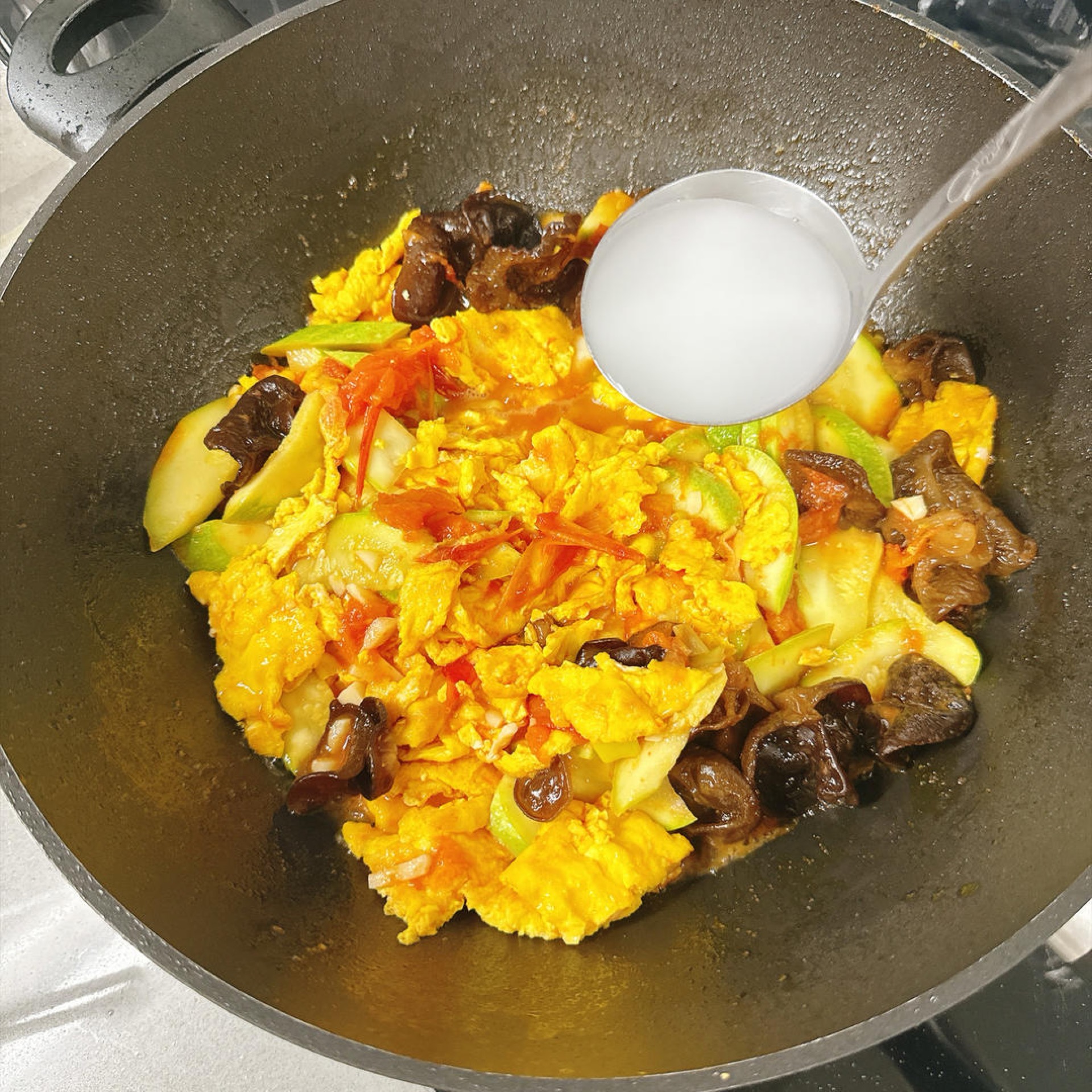
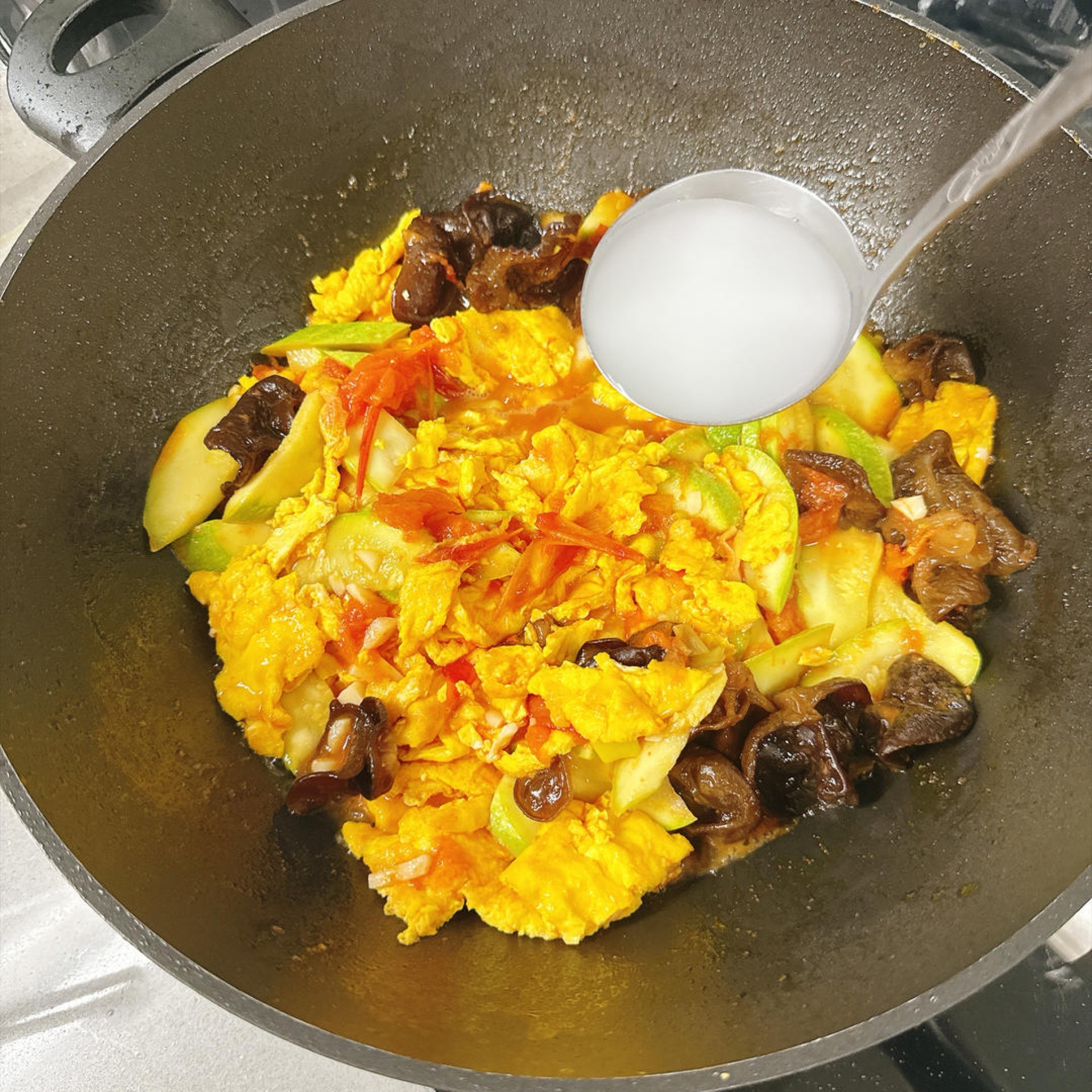
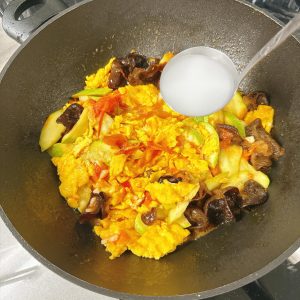
Step 26 — Thicken with Water Starch
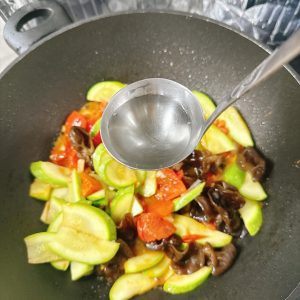
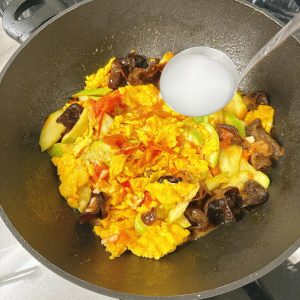
Add a spoonful of water starch.
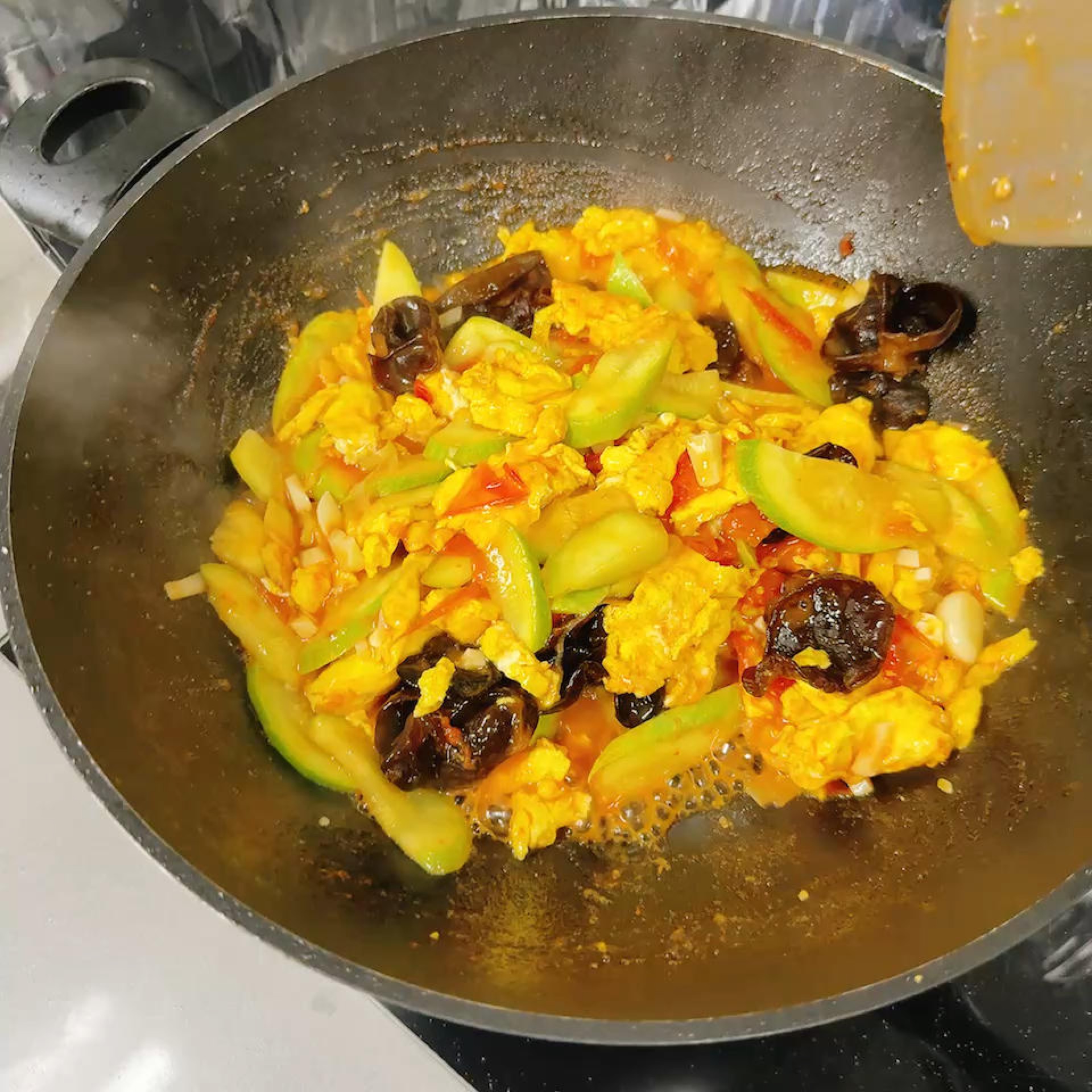
Step 27 — Plate It Up
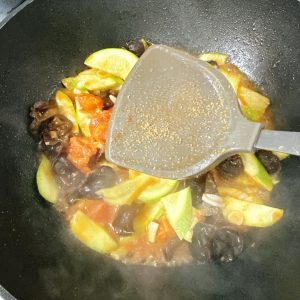
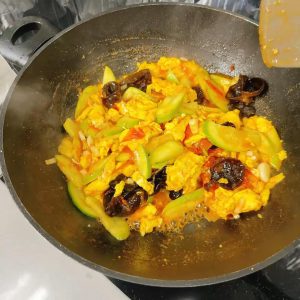
Once the flavors have fully come together, take it off the heat and plate it.
Step 28 — A Pleasing Color
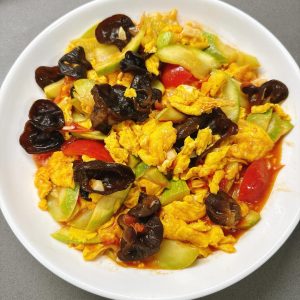
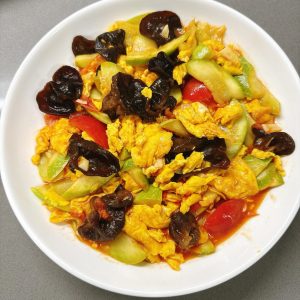
The colors alone are a pleasure to look at.
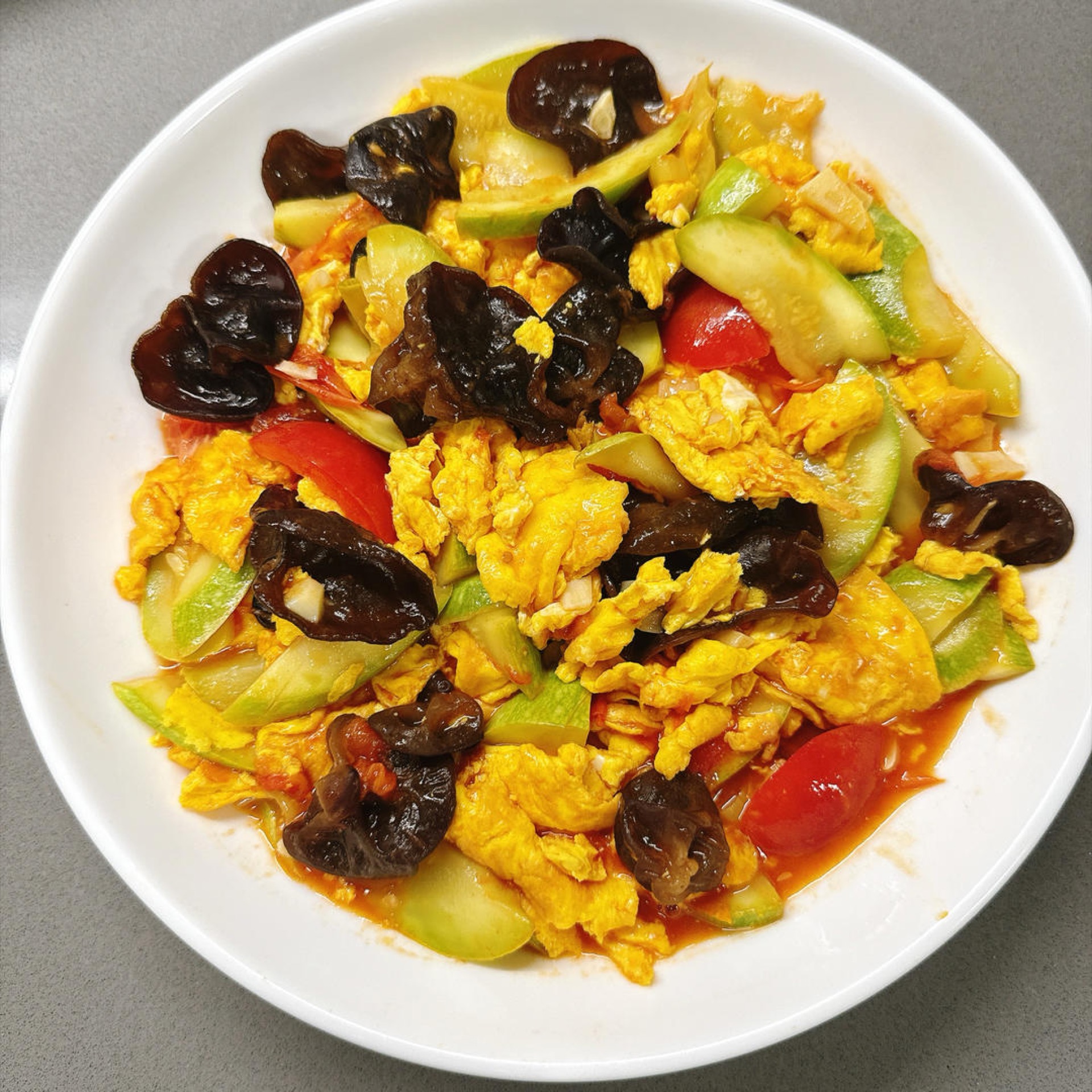
Step 29 — Not Greasy, Not Bland
It is not oily and not bland — savory in exactly the right measure.
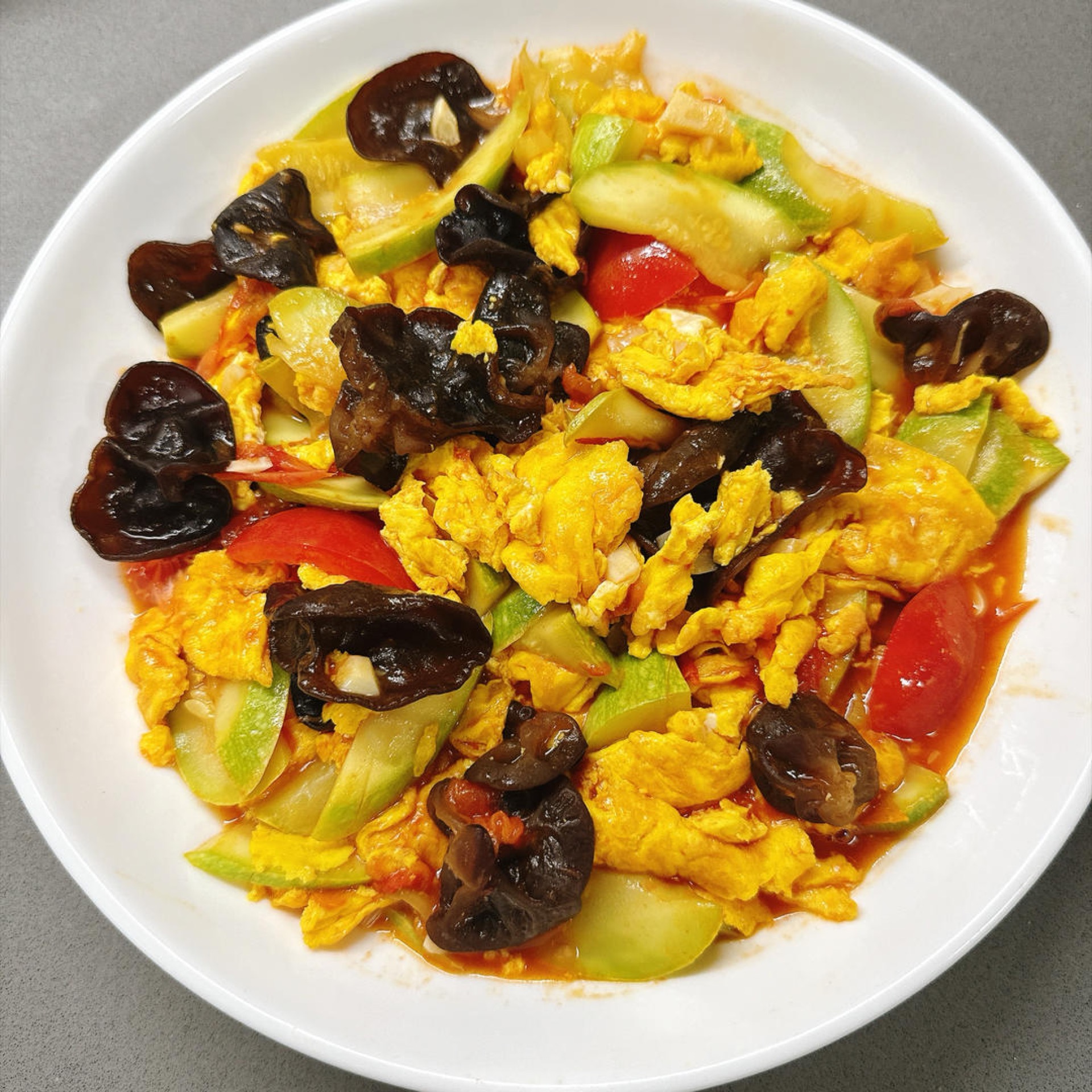
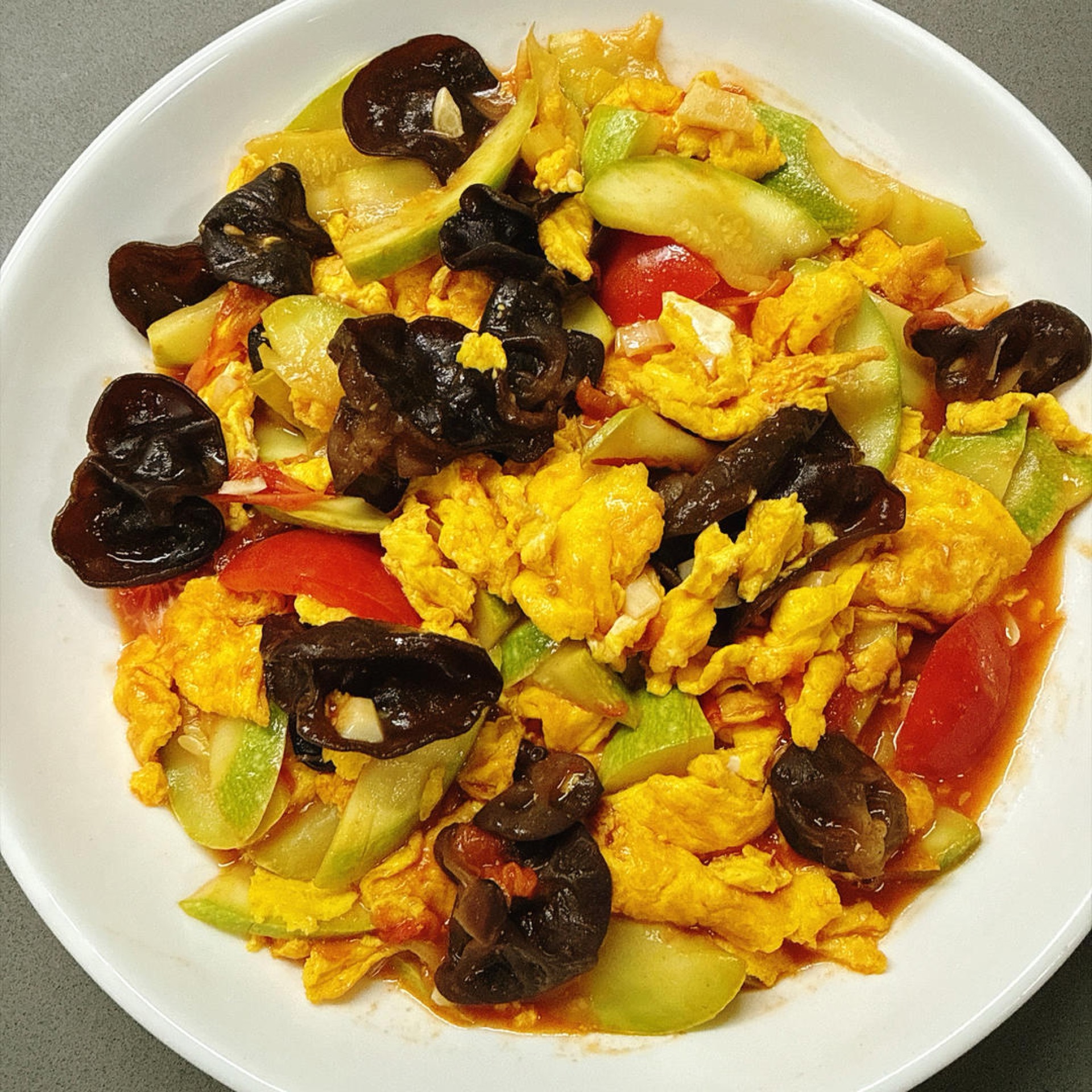
Step 30 — Every Texture in One Bite
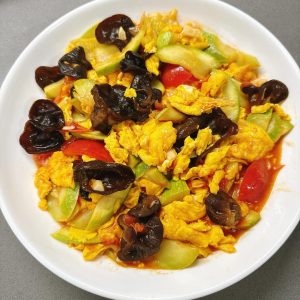
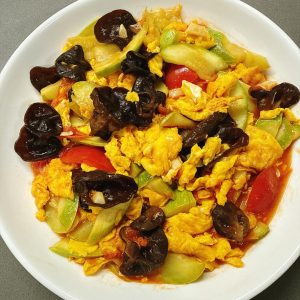
The zucchini is crisp, the eggs are tender, the wood ear is springy, and the tomatoes are sweet and tart.
Step 31 — Perfect with Rice
All of it in one bite, and it is unbeatable with rice.
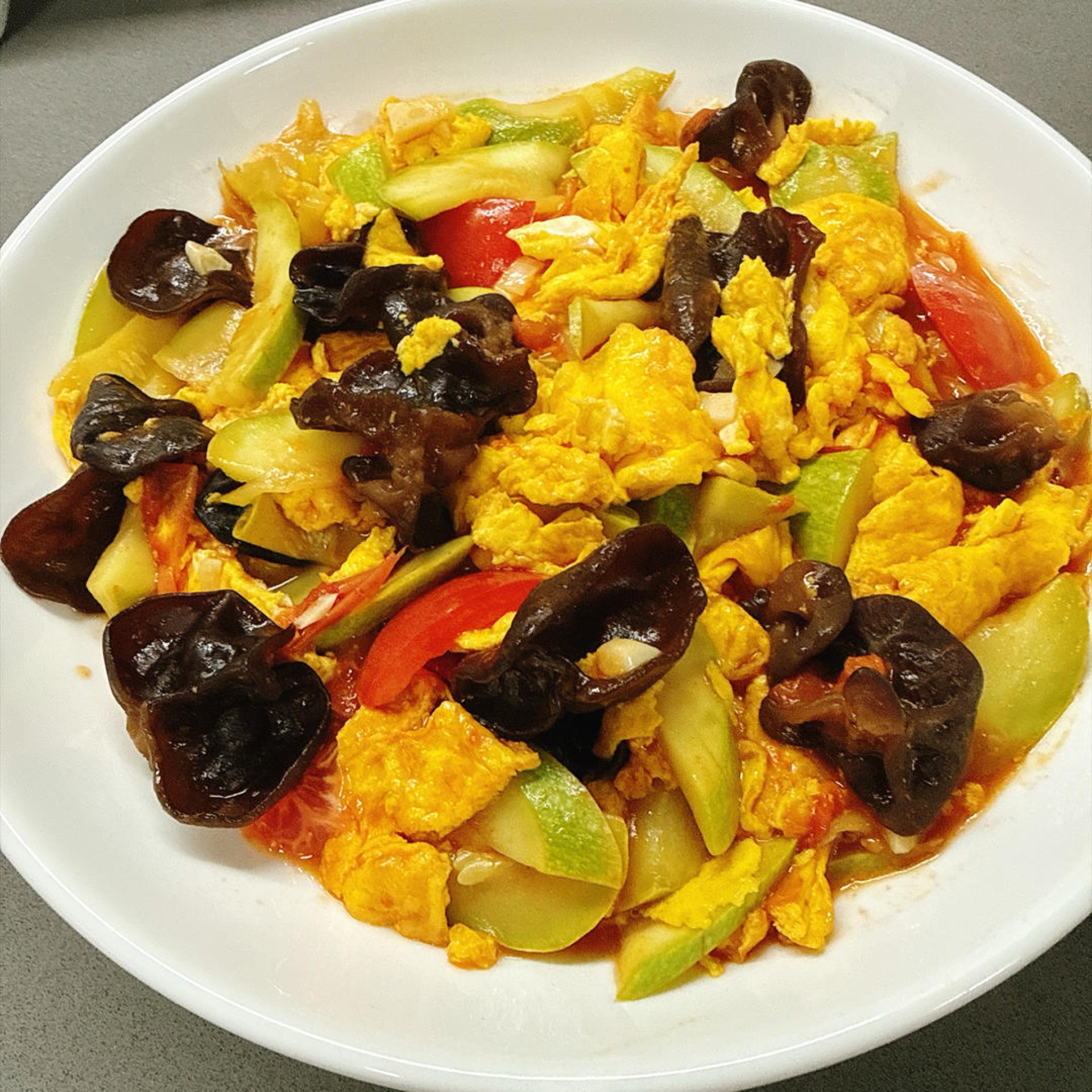
Step 32 — Spoon the Sauce Over Rice
Spoon the sauce over the rice — you will want to wipe the bottom of the bowl clean.
Common Mistakes When Making Stir-Fried Zucchini with Eggs
1. Stir-frying the zucchini raw. Zucchini holds an enormous amount of water, and a home wok simply cannot drive it off fast enough. The squash steams in its own liquid, goes limp, and floods the pan. The fix is the blanch: two minutes in boiling water with a few drops of vinegar, then a cold-water shock. You get crisp, sweet slices that hold their shape in the finished dish.
2. Beating the eggs plain. Eggs with nothing added set fast and firm. If your scrambled eggs come out dry and squeaky, the missing piece is the water starch. Two teaspoons of slurry per five eggs is enough to make a visible difference in texture — the curds come out glossy and soft rather than rubbery.
3. Overcrowding the wok. Five eggs and a whole zucchini is a lot for a small pan. If everything is piled on top of itself, the temperature crashes and you end up steaming rather than frying. Use your widest wok or skillet, and if yours is small, cook the eggs in two batches and the vegetables in two batches as well.
4. Using high heat for the eggs. The instinct with stir-frying is to crank the burner, but eggs want a moderate flame and constant gentle pushing. High heat browns the bottom of the omelet before the top sets, which gives you a tough, leathery layer. Cook them low and slow, pull them out while they are still slightly glossy, and let the residual heat finish the job.
5. Adding the finishing starch to a cold or dry pan. Water starch only thickens in a hot, liquid environment, and it needs to be stirred again right before it goes in — otherwise the starch has settled to the bottom of the cup and you pour in nothing but water. Add it at the very end, with the heat on, and toss for a few seconds until the sauce turns glossy.
6. Skipping the sugar. A heaped teaspoon of sugar looks like a lot for a savory dish, but it is doing real work: it balances the acid from the tomatoes and the salt from the soy sauce so the finished dish tastes round instead of sharp. Leave it out and the stir-fry will read as flat, even if you seasoned it correctly.
Variations
With pork. A handful of thinly sliced pork loin or a few strips of Wenzhou braised pork belly stirred in after the aromatics turns this into a heartier main. Brown the meat first, set it aside, and return it with the eggs.
With dried shrimp or fresh shrimp. Soak a tablespoon of dried shrimp in warm water and add them with the garlic. They bring a deep savory note that plays well against the sweet tomato.
With a hit of sesame. A few drops of toasted sesame oil off the heat, right before plating, adds a nutty finish. If you are out, our notes on what you can use instead of sesame oil cover the closest alternatives.
Spicier. A teaspoon of chili crisp or a couple of dried chilies fried with the aromatics gives the dish a gentle warmth. A pinch of cumin seeds bloomed in the oil first takes it in a northwestern direction, which is excellent with the eggs.
Vegetarian and vegan. The dish is already vegetarian if you swap the chicken bouillon for mushroom powder or simply leave it out. For a vegan version, replace the eggs with firm tofu pressed and torn into bite-sized pieces — but note that the texture will be entirely different, and you will want a little extra soy sauce.
Different squash. Yellow summer squash, pattypan, or even thin-sliced chayote all work with the same blanch-and-toss method. Cooking times for the blanch vary by a minute or so depending on how dense the squash is.
Frequently Asked Questions
Do I really have to blanch the zucchini first? Yes, if you want crisp results. It takes two minutes and it is the difference between a bright, snappy stir-fry and a watery one. If you are truly in a hurry you can skip it, but slice the zucchini thinner and cook it in a very hot wok in a single layer, accepting that it will be softer.
How long do I need to soak the wood ear mushrooms? At least 8 hours in cool water, which usually means overnight. They should be fully plump, flexible, and roughly triple their dried size. Soaking them in hot water works in about 30 minutes but gives a softer, less springy texture.
Can I make this ahead of time? You can blanch the zucchini and wood ear and beat the eggs up to a day ahead, storing everything separately in the refrigerator. The actual stir-frying should happen right before you eat, though — the dish loses its crispness once it sits.
Why did my stir-fry turn out watery? Almost always because the zucchini went into the pan raw, or because the pan was overcrowded. Blanching and shocking the squash solves the first problem; cooking in batches or using a wider pan solves the second. A final spoonful of water starch will also help tighten up any liquid that does appear.
Can I use regular tomatoes instead of cherry tomatoes? Yes. Use about half of a medium tomato, cut into wedges, and add it at the same point. Regular tomatoes are juicier, so you may want to cook them for an extra thirty seconds before adding the zucchini.
How to Serve
This dish is at its best over a bowl of plain steamed white rice, with the sauce spooned over the top so it soaks in. It also works as part of a larger Chinese table — serve it alongside a braised meat dish, a cold-tossed vegetable, and a soup, and it holds its own as the fresh, bright counterpoint. For a breakfast-leaning spread, it sits nicely next to spring pancakes with spinach and eggs, rolled up with a little of the egg and zucchini inside.
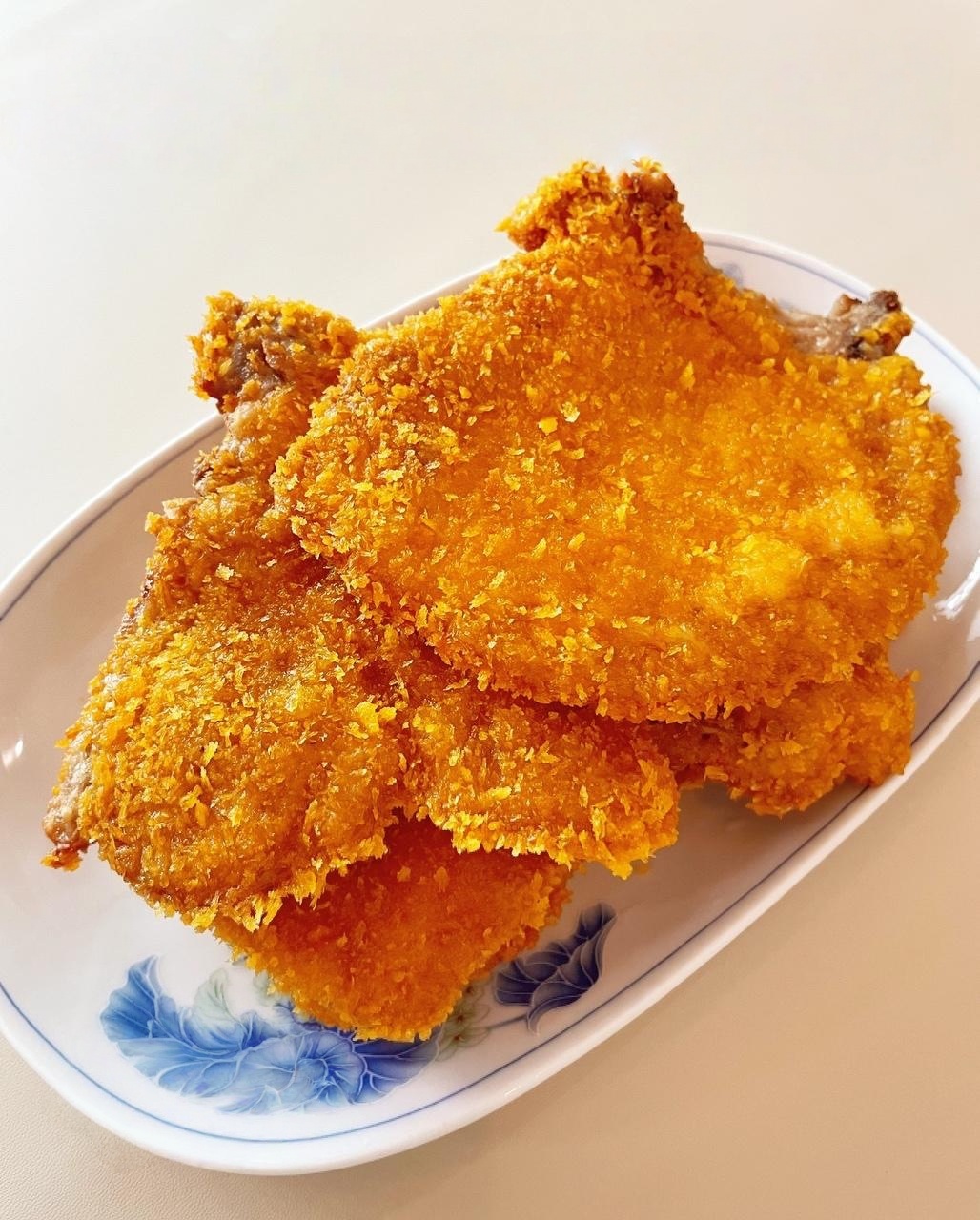
If you are cooking a larger meal and want a richer centerpiece, Shanghai fried pork chops make a natural partner, and a small dish of something fragrant like a green cardamom-scented braise rounds out the table. Keep the rice plain and let the vegetables do the talking.

Storage & Reheat
Leftovers keep in an airtight container in the refrigerator for up to 3 days. The zucchini will soften noticeably on day two, which is normal — the flavor holds up better than the texture. Reheat gently in a covered pan over medium-low heat with a splash of water, or in the microwave in short bursts, until the dish is steaming and reaches 165°F (74°C) throughout. Avoid reheating it in a hot wok, which will toughen the eggs.
This dish does not freeze well. Zucchini turns to mush when frozen and thawed, and the eggs become spongy. If you have a large batch, it is better to eat it within a couple of days than to freeze it.
Allergen Notice
This recipe contains soy from the light soy sauce. It also contains eggs. If you add sesame oil as a finishing touch, that introduces a sesame allergen. Check the labels on your soy sauce, chicken bouillon, and any chili crisp you use, since these can contain wheat, soy, or sesame depending on the brand. To make the dish soy-free, substitute coconut aminos for the soy sauce and verify the bouillon.
Nutrition Disclaimer
Nutrition information is calculated using an ingredient database and should be considered an estimate. In cases where multiple ingredient alternatives are given, the first listed is calculated for nutrition. Garnishes and optional ingredients are not included.
Stir-Fried Zucchini with Eggs (西葫芦炒鸡蛋): Silky Eggs, Tender

Equipment
- Wok
- Cutting Board
- Slotted Spoon
Ingredients
For the Eggs
- 5 large eggs about 250 g, beaten
- 2 tsp water starch potato starch mixed with water, for the eggs
For the Stir-Fry
- 1 medium zucchini about 400 g, halved and sliced on the diagonal
- 4 small cherry tomatoes quartered
- 1 handful dried wood ear mushrooms about 15 g dried, soaked 8 hours
- 1/2 stalk scallion minced
- 4 cloves garlic minced
- 2 tbsp neutral oil for frying the eggs and stir-frying
For the Seasoning
- 1 tbsp light soy sauce
- 1 tbsp water
- 1/2 tsp salt
- 1/4 tsp chicken bouillon optional
- 1 tsp sugar slightly heaped
- 1 tsp white vinegar for the blanching water
- 1 tbsp water starch for thickening the sauce
Instructions
- Get all the ingredients ready, and soak the wood ear mushrooms ahead of time.

- Crack the 5 eggs into a bowl and add 2 small spoonfuls of water starch — eggs fried with water starch come out silky and tender instead of old and rubbery.
- Stir everything together until the eggs are evenly blended.
- Halve the zucchini and slice it on the diagonal, cut the tomatoes into chunks, and mince the scallion and garlic.
- Bring a pot of water to a rolling boil.
- Add the zucchini and wood ear mushrooms to the boiling water for a quick blanch.
- Add a few drops of white vinegar — it not only improves the texture of the zucchini, but also removes the mushroomy smell from the wood ear.
- Cook for about 2 minutes, until the water comes back to a boil.
- Scoop the zucchini and wood ear out of the pot.
- Run them under cold water to keep their texture crisp.
- Heat oil in the wok.
- Pour in the beaten eggs.
- As they cook, push the eggs along with your spatula instead of stirring them hard.
- The egg liquid firms up into soft curds.
- Flip and fry the other side — frying the eggs a little longer makes them more fragrant — then dish them out and set them aside.
- Leave the base oil in the wok, add the scallion and garlic and stir until fragrant, then add the tomato chunks.
- Stir-fry for a few turns.
- Add the zucchini and wood ear mushrooms to the wok.
- Add 1 spoonful of light soy sauce.
- Add 1 spoonful of water.
- Season with salt.
- Add chicken bouillon.
- Add a slightly heaped spoonful of sugar.
- Return the fried eggs to the wok.
- Stir-fry until everything is evenly combined.
- Add a spoonful of water starch.
- Once the flavors have fully come together, take it off the heat and plate it.
- The colors alone are a pleasure to look at.
- It is not oily and not bland — savory in exactly the right measure.
- The zucchini is crisp, the eggs are tender, the wood ear is springy, and the tomatoes are sweet and tart.
- All of it in one bite, and it is unbeatable with rice.
- Spoon the sauce over the rice — you will want to wipe the bottom of the bowl clean.

Notes
About the Author & Recipe Development
Lin grew up in a Chinese household where dinner was usually three dishes and a pot of rice, and the vegetable-and-egg stir-fry was the one that appeared most often. This version of 西葫芦炒鸡蛋 was developed by working backward from the details that make the home version taste better than a rushed one: the water starch in the eggs, the vinegar in the blanching water, and the finishing slurry that turns the tomato juices into a proper sauce. It has been tested with both Chinese 西葫芦 and Western zucchini, with fresh and dried wood ear, and on both a carbon steel wok and a flat nonstick skillet, so the method holds up regardless of what is in your kitchen.
Authoritative References
For safe handling and cooking temperatures for eggs and leftovers, see the FDA food safety guidance for home cooking. For background on egg protein coagulation and why starch and water keep scrambled eggs tender, the Exploratorium’s science of eggs is a clear, readable explainer. For dried wood ear mushroom handling and soaking guidance, the USDA food safety basics covers safe storage and preparation of dried fungi.












Leave a Reply