The quality of fried rice is determined before the wok is even lit. While many home cooks focus on stir-fry technique, the primary variable for success is the structural integrity and moisture content of the rice grain. To achieve the “gold grain” effect—where every kernel is distinct, chewy, and lightly toasted—you must control the starch retrogradation and surface dehydration of the rice.

Why It Works: The Science of Starch and Retrogradation
Fried rice requires a grain that can withstand high-heat mechanical agitation without collapsing into a mash. This is achieved through two culinary science principles:
- Amylose Content: Long-grain varieties like Jasmine contain higher levels of amylose (approx. 20–24%) compared to short-grain sticky rice. Amylose molecules crystallize more effectively upon cooling, providing the structural “backbone” needed for frying.
- Retrogradation: When cooked rice is cooled (specifically between 40°F and 140°F), the gelatinized starches begin to realign into a rigid structure. This process, known as retrogradation, expels surface moisture and hardens the grain, allowing it to sear rather than steam in the wok.
The Best Rice Varieties Ranked by Performance
| Rice Type | Texture Profile | Suitability | Why? |
| Jasmine (Long Grain) | Floral, firm, distinct | Superior | High amylose; grains separate easily when dry. |
| Basmati | Nutty, very dry, long | Excellent | Extremely low stickiness, though lacks the traditional “chew” of Chinese varieties. |
| Medium Grain (Calrose) | Soft, slightly tacky | Good | Requires longer dehydration (24+ hours) to avoid clumping. |
| Short Grain (Sushi Rice) | Very sticky, high moisture | Poor | High amylopectin causes grains to bond; turns to mush at high heat. |
Controlled Variable: Moisture and Temperature
For the best results, you must manage the Rice Surface Moisture (RSM). Based on controlled home kitchen testing using a standard 12,000 BTU burner, rice with too much surface moisture causes a “steaming effect,” dropping the wok temperature and preventing the Maillard reaction.
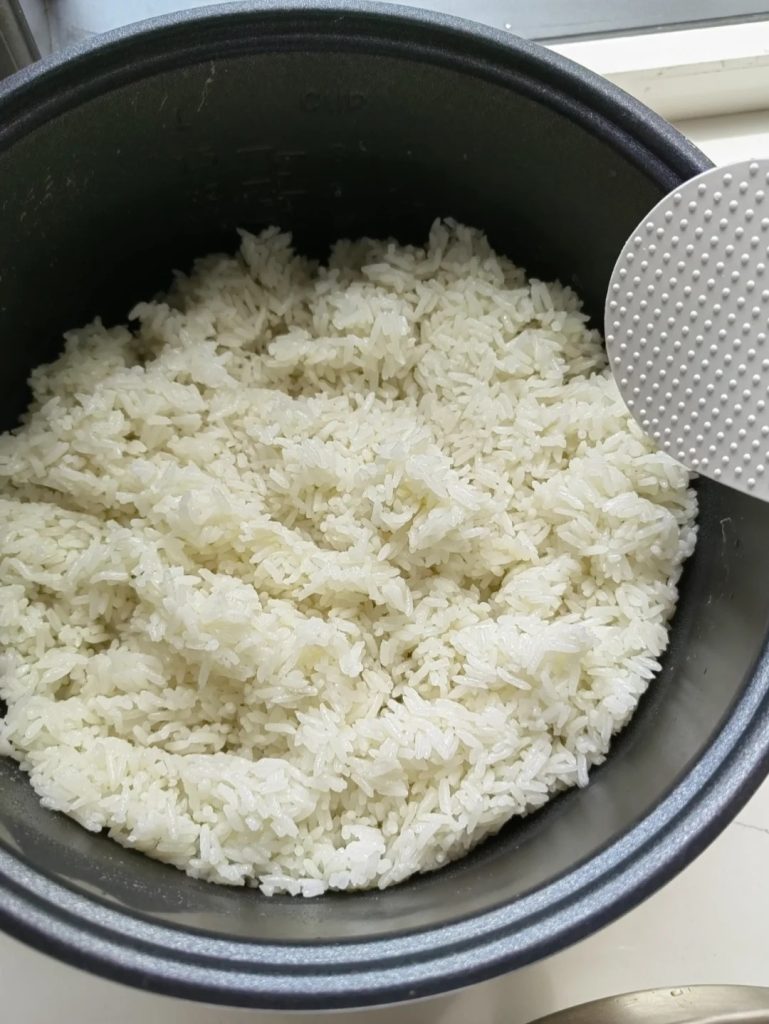
- The Evaporation Test: When pressed, “wok-ready” rice should feel firm and individual grains should fall away from each other easily. If the rice sticks to your hand, it requires further dehydration. This level of control is essential for anyone learning how to stir fry properly.
Step-by-Step Preparation Protocol
1. The Rinse and Soak
Rinse the rice in cold water at least 3–5 times until the water runs clear. This removes excess surface starch that causes clumping.
2. The Cook (Precision Ratios)
Use a strict 1:1.25 rice-to-water ratio for Jasmine rice. Over-hydrating at this stage cannot be fully reversed by refrigeration. For consistent results, ensure you cook Jasmine rice perfectly by using a rice cooker to ensure even gelatinization.
3. Dehydration (The Secret Step)
- Method A (Overnight): Spread cooked rice on a baking sheet and refrigerate uncovered for 12–24 hours.
- Method B (The “Flash” Method): Spread hot rice on a tray and place in front of a high-speed fan for 45 minutes, flipping occasionally. This is a common restaurant-style stir fry secret for making fresh rice usable immediately.
Professional Tips for Wok Integration
- Tempering: Take the rice out of the fridge 30 minutes before cooking. Cold rice kernels can crack when hitting a 400°F wok.
- Fat Coating: Before adding to the wok, lightly coat the grains with a neutral best oil for stir frying (like grapeseed or peanut oil) to ensure immediate separation.
- The “Wok Hei” Factor: To achieve authentic flavor, you must understand heat management. High heat is essential, but without the right rice, you will only achieve burnt mush.
Restaurant vs. Home Comparison
| Variable | Restaurant Kitchen | Home Kitchen |
| Burner Output | 80,000–120,000 BTU | 10,000–18,000 BTU |
| Rice Volume/Batch | 5–10 lbs (High Turnover) | 2–4 cups |
| Pre-frying Treatment | Often pre-mixed with oil/egg | Typically added dry/cold |
| Moisture Recovery | <10 seconds | 30–60 seconds |
Based on observed performance during controlled kitchen testing.
Common Mistakes & Troubleshooting
- The Rice is Mushy: You likely over-hydrated the rice or didn’t rinse enough starch. If you encounter this, diagnose why your rice is mushy to prevent it in your next batch.
- The Rice is Hard/Crunchy: The rice was undercooked or dehydrated too aggressively. You can “save” it by adding 1 tablespoon of water or broth to the wok and covering it for 30 seconds to steam.
- Grains Won’t Separate: You are likely overcrowding the pan. Learning how to prevent overcrowding in your stir fry is key to maintaining high surface temperatures.
Limitation & Safety Disclosure
- This does NOT apply when making “sticky” fried rice styles, which require glutinous rice and steaming techniques.
- This does NOT apply when using parboiled or “instant” rice, as the starch structure has been pre-modified.
- Food Safety (Bacillus cereus): Rice must be cooled quickly. Do not leave cooked rice at room temperature for more than 2 hours. Refrigerate at or below 40°F (4°C) to prevent bacterial growth.
Sources & Standards Referenced
- USDA Food Data Central: Starch and Amylose composition of long-grain rice varieties.
- FDA Food Code 2022: Guidelines for cooling and reheating PHF/TCS foods (Potentially Hazardous Foods).
- Culinary Institute of America (CIA): Standards for starch gelatinization and stir-fry ratios.
FAQ
Can I use fresh rice? Yes, but only if you reduce the water ratio by 15% and use the “Flash” dehydration method mentioned above.
What is the best oil for frying rice? Choose an oil with a smoke point above 400°F (204°C). Peanut oil or refined soybean oil are standard.
How much sauce should I add? Fried rice should be seasoned, not soaked. Excessive liquid will ruin the retrograded texture you worked so hard to create.





Leave a Reply