There is a moment in a good garlic blast fish when the hot oil hits the sauce and the whole kitchen goes quiet for a second — then the smell arrives, sharp and sweet and roasted all at once. That is the whole point of 蒜爆鱼: a gently poached fish, a mountain of raw garlic sauce, and a final pour of smoking chili oil that cooks the sauce in place.
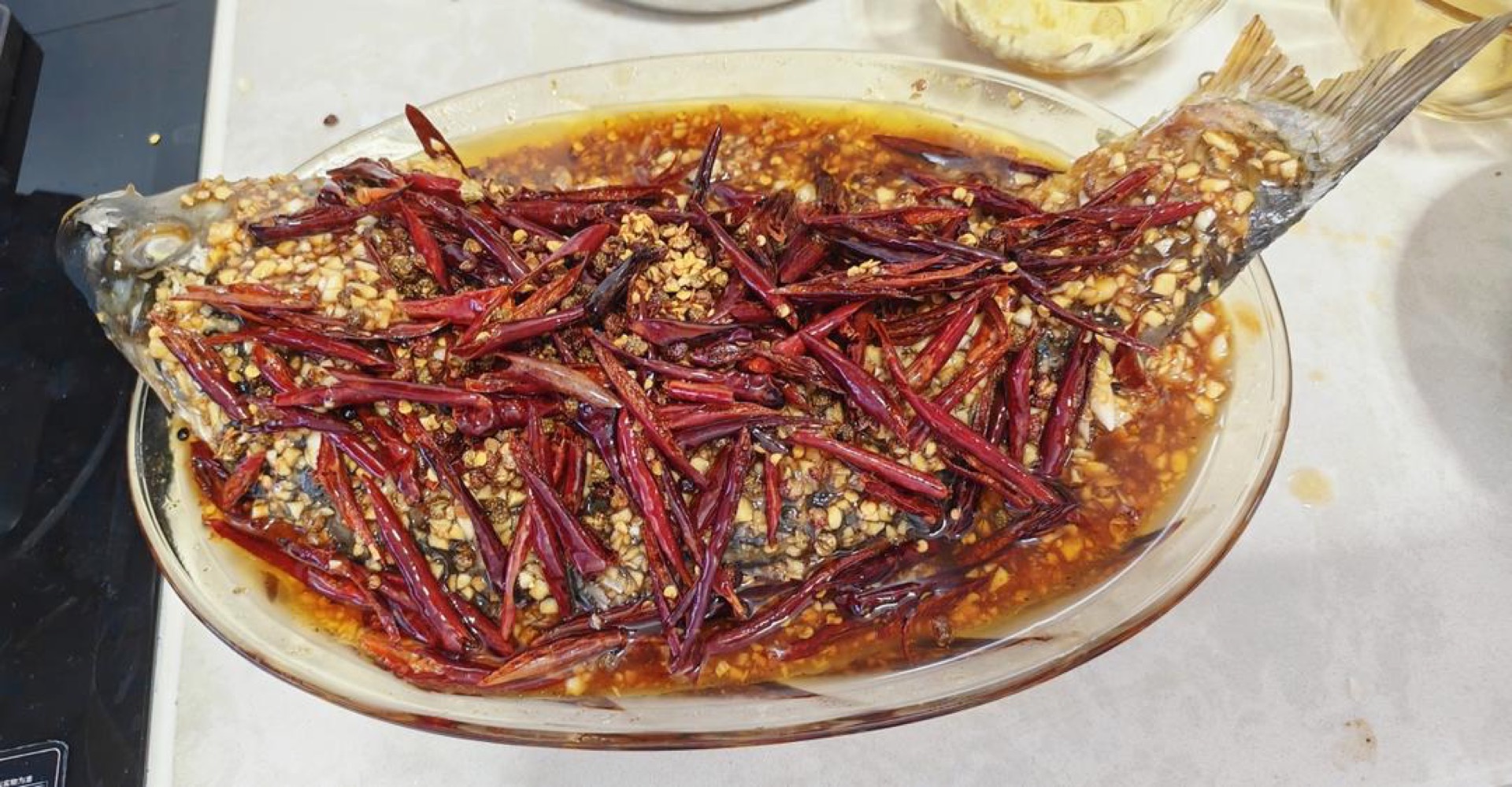
It looks dramatic and tastes even better, but the technique is genuinely weeknight-friendly. The fish poaches in about seven minutes of hands-off time, the sauce is a stir-together affair, and the only thing you have to watch is the oil. Get that pour right and you have a restaurant plate at home.
What Is Garlic Blast Fish?
Garlic blast fish, or suan bao yu (蒜爆鱼), is a Sichuan-style home dish built on contrast. The fish is poached rather than fried, so the flesh stays soft and clean-tasting. On top goes a thick, uncooked sauce dominated by fresh garlic, sharpened with two vinegars and rounded out with oyster sauce and sugar. Then dried chilies and Sichuan peppercorns are fried in oil until they darken, and that oil is poured over the sauce so it sizzles and blooms.
The word “blast” in the English name is a fair translation of the effect: the garlic never really cooks, it gets hit with heat at the last second. That keeps it pungent and bright instead of mellow and sweet, which is exactly why the dish tastes so alive next to plain rice.
The reason the sauce tastes so different from a cooked garlic sauce is temperature. Garlic’s allicin — the compound behind that sharp bite — is created when cells are crushed, and it degrades with sustained heat. A brief hit of hot oil aromatizes the garlic without fully destroying it, so you get the roasted notes and the raw punch at the same time.
Poached pork belly with garlic sauce takes the same idea in a porkier direction: tender slices of belly, a garlicky sauce, and a clean, cold contrast that makes the richness easy to eat. If you like the way this fish balances soft protein against a sharp sauce, that recipe is the natural next one to try.
Garlic black bean sauce is the fermented, savory cousin of the sauce on this fish — deep, salty, and packed with garlic. Make a jar of it and you have an instant upgrade for steamed fish, stir-fries, and noodle bowls.
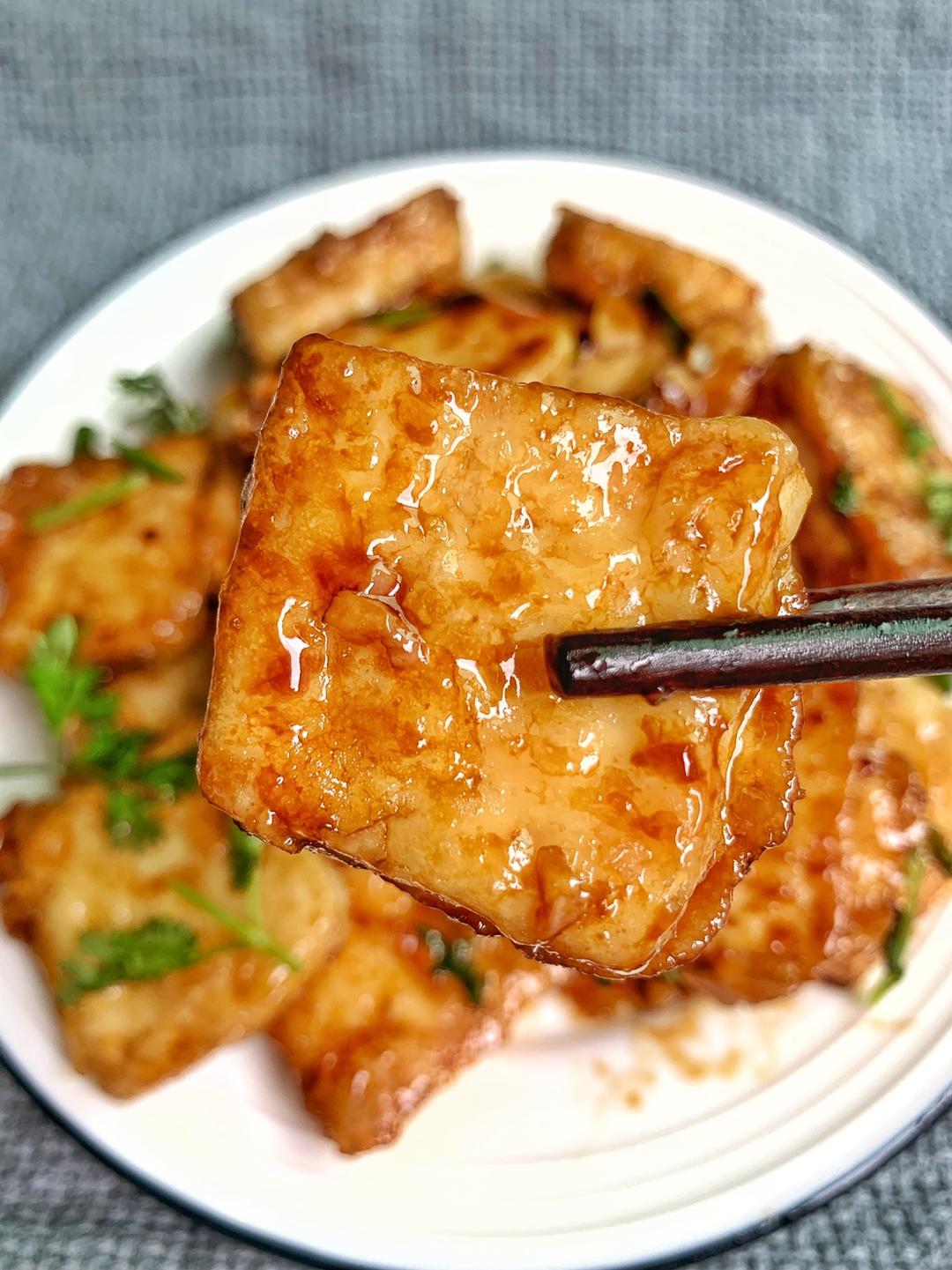
Pan fried tofu with garlic sauce proves the same garlic sauce formula works on anything with a soft, neutral interior. The crisp edges and silky middle make it a great vegetarian counterpart to this fish.
If you already like the garlic-forward side of Sichuan cooking, this dish sits right next to poached pork belly with garlic sauce, which uses the same cool-protein-meets-pungent-sauce logic.
1Easy Poached Pork Belly with Garlic Sauce (蒜泥白肉)Discover the easiest, most comforting version of the Sichuan classic, Suan Ni Bai Rou. Tender, poached pork belly is served with a fiery, savory garlic-chili dipping sauce.Check out this recipe
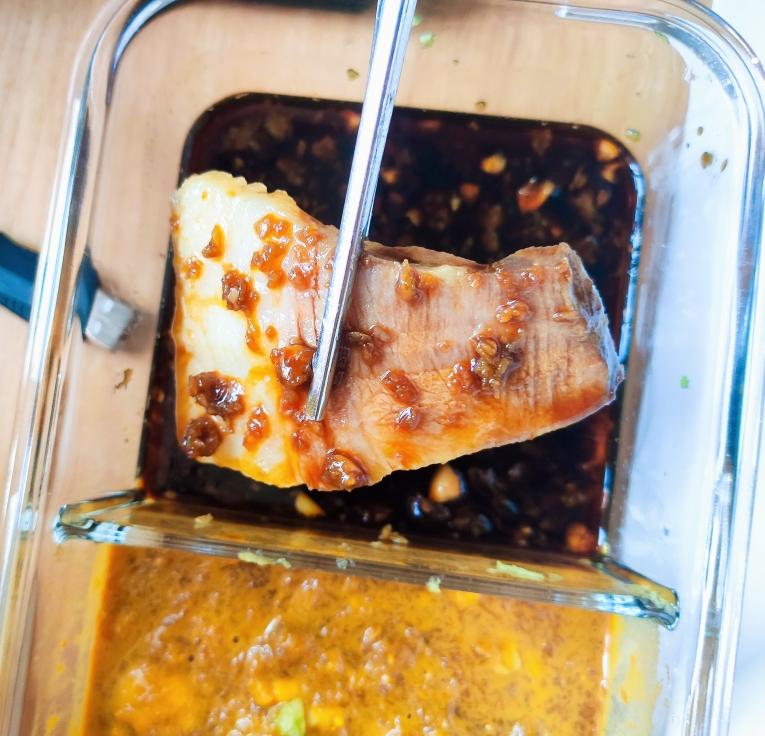
Cooked this way once, you will want the next one too: garlic black bean sauce starts from the same base and the same pan.
2Ultimate Garlic Black Bean Sauce (Suan Rong Jiang)Unlock the secret to Chinese BBQ flavor with this “Gold and Silver” Garlic Black Bean Sauce. Perfect for grilled oysters, steamed scallops, and veggies. Authentic, savory, and easy to make.Check out this recipe
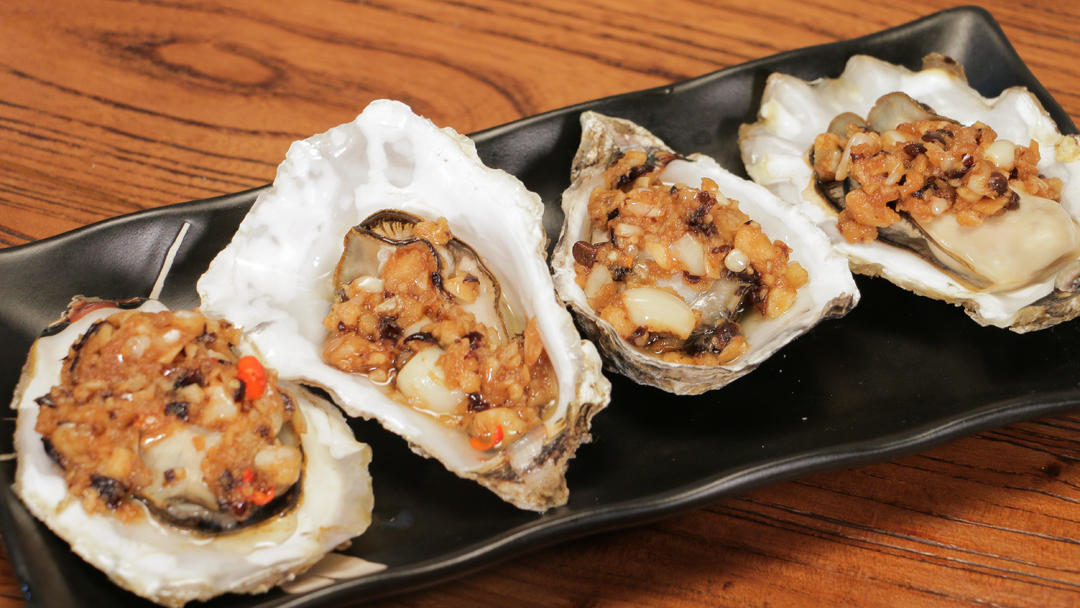
For the next cook from the same playbook, pan fried tofu with garlic sauce is the recipe I point people to.
3Easy Pan-Fried Tofu with Garlic Sauce (香煎豆腐)This 15-minute recipe creates unbelievably crispy pan-fried tofu cubes tossed in a rich, savory, and glossy garlic soy sauce. It’s a homestyle Chinese dish that’s fast, easy, and better than takeout.Check out this recipe
Ingredient Notes
The fish. A whole carp is traditional and gives you the best texture for poaching, but any firm-fleshed freshwater or white fish around 2 pounds works. Tilapia, sea bass, or even thick fillets of cod will do. If you use fillets, cut the poaching time to about three minutes total and skip the resting period.
Fresh garlic, and a lot of it. Two whole heads sounds excessive until you taste it. Use garlic you have just peeled and crush it rather than dicing it into neat cubes — the rough, broken texture releases more juice and gives the sauce body.
Two vinegars. White vinegar brings clean acidity, aged black vinegar (Chinkiang) brings a faintly sweet, malty depth. Skipping the black vinegar leaves the sauce tasting flat and one-dimensional.
Oyster sauce and seasoned soy sauce. Together these carry most of the salt and the glossy body. Seasoned soy sauce for seafood (蒸鱼豉油) is milder and slightly sweeter than regular soy, which is why the recipe does not need much else.
MSG and chicken bouillon. Both are in the original for a reason. They deepen the sauce without adding liquid or salt, and this is a dish where umami matters.
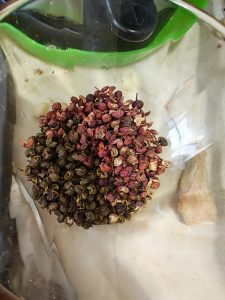
Green vs. red Sichuan peppercorns. Green ones are more floral and citrusy, red ones are warmer and more resinous. Using both gives you a rounder numbing effect than either alone.
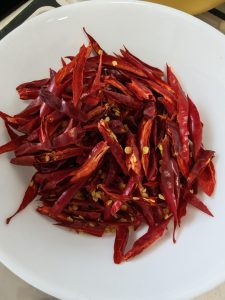
Dried chilies. Use a mild-to-medium variety like erjingtiao or chao tian jiao. Snip them into fine shreds so they release color fast and do not burn before the oil is ready.
Ingredients
Here is everything you need for four servings. The sauce comes together in one bowl, so measure it out before you touch the fish.
- 2 heads garlic, finely minced (about 40 cloves)
- 7 tbsp oyster sauce
- 3 tbsp white vinegar
- 1 tbsp aged black vinegar
- 4 tbsp sugar
- 3 tsp chicken bouillon powder
- 1.5 tsp MSG
- 1 g ground white pepper (about 1/4 tsp)
- 1 g ground black pepper (about 1/4 tsp)
- 2 tbsp seasoned soy sauce for seafood
- 1.5 tbsp toasted sesame oil
- 1 whole carp, about 2 lb
- 1 bunch scallions
- 5 slices ginger
- 3 tbsp Shaoxing wine
- 1 large handful dried red chilies, snipped into shreds
- 1 tbsp green Sichuan peppercorns
- 1 tbsp red Sichuan peppercorns
- 1 cup neutral oil
Equipment Needed
You need less than you would think. A pot big enough to lay the fish flat is the one non-negotiable item.
- A wide pot or deep pan — the fish must sit flat and be fully submerged.
- A wok — for heating the oil. If you cook on an electric stove, our guide to choosing a wok for electric stove covers what actually conducts well.
- A cutting board and knife — for scoring the fish and shredding chilies.
- A slotted spoon or two spatulas — for lifting the fish without breaking it.
- A heatproof bowl — for the garlic sauce.
- A fine-mesh strainer — optional, for skimming the poaching liquid.
Why This Recipe Works
Cold-water start. Lowering the fish into cold water and bringing it up to temperature gradually keeps the outer flesh from overcooking before the center is done. It is the same principle behind gently poached chicken.
Two minutes on, five minutes off. The fish finishes cooking in residual heat with the lid on. That off-heat rest is what gives you flesh that flakes in clean sheets rather than crumbling.
Raw sauce, hot oil. Because the sauce is never cooked on the stove, the garlic stays sharp and the vinegars stay bright. The oil does the cooking for you, right on the plate.
Scoring the back. A few shallow cuts let the poaching liquid penetrate and help the sauce settle into the flesh instead of sliding off.
Both peppers, both chilies. Layering green and red Sichuan peppercorns with shredded dried chilies gives you aroma, heat, and color in one pour.
Prep & Mise en Place
Do all of this before the fish goes in the water, because once poaching starts you have about seven minutes and no time to chop.
- Peel and crush the garlic. Two heads, roughly broken, not minced to a paste.
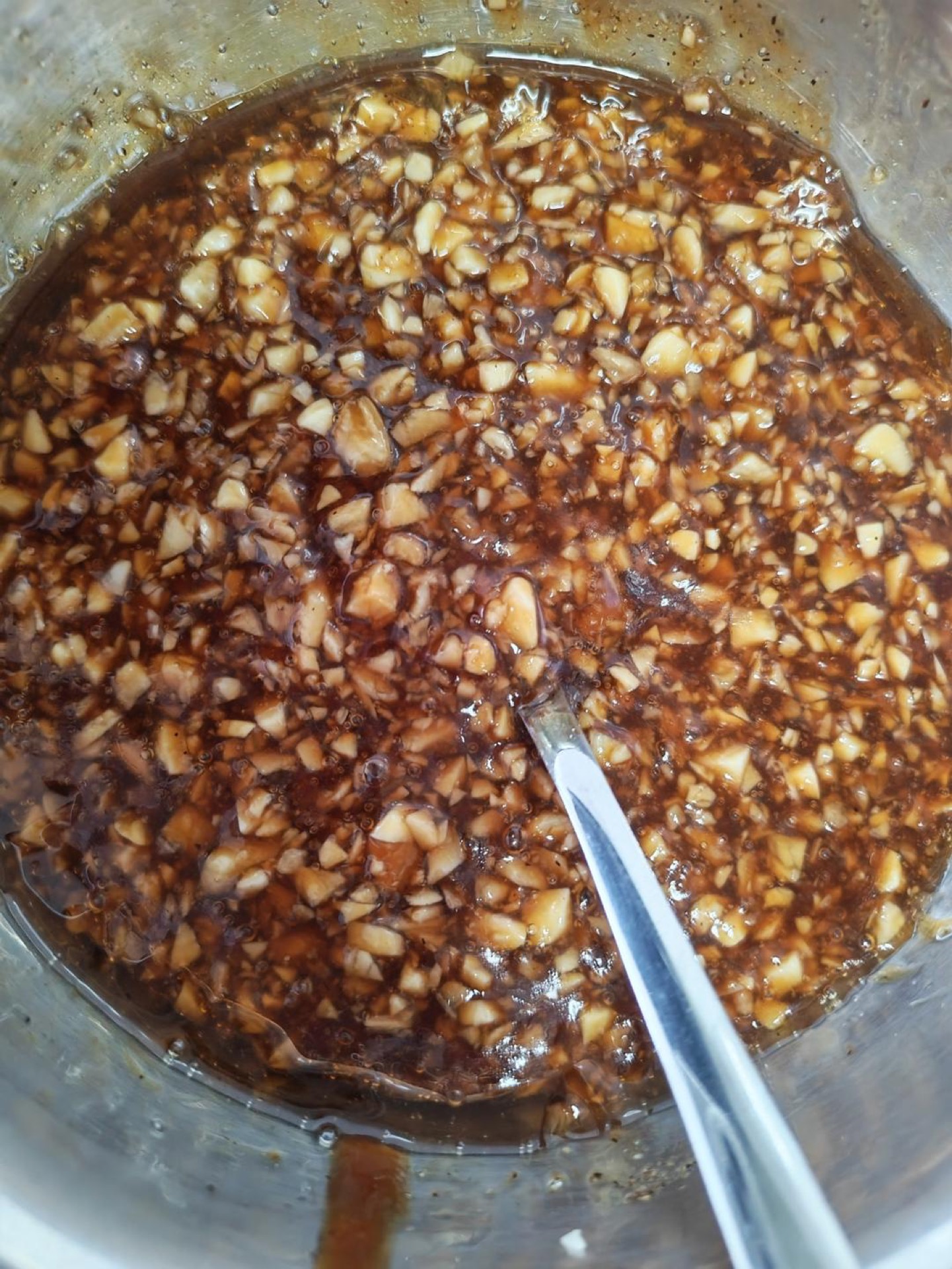
- Mix the sauce. Combine the garlic with the oyster sauce, both vinegars, sugar, bouillon, MSG, both peppers, seasoned soy sauce, and sesame oil. Stir until the sugar dissolves. Taste it — it should be sharp, sweet, and very savory.
- Shred the chilies. Snip them with kitchen shears into fine strips and shake out most of the seeds.
- Smash the aromatics. Bruise the scallion whites and ginger with the flat of your knife so they release more flavor.
- Score the fish. Two or three shallow diagonal cuts along the back, about 1/4 inch deep.
- Set out your serving plate. Have it ready next to the stove so the fish goes straight from pot to plate.
If you want a head start on the sauce base, our Chinese garlic sauce is a good thing to have in the fridge, and it works as a fallback if you are short on time.
Cooking Process
Step 1 — Make the Garlic Sauce
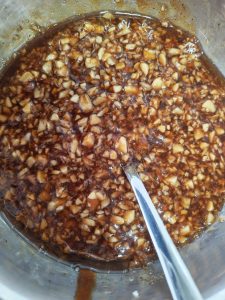
Pound the garlic until broken and fragrant, then stir in the oyster sauce, white vinegar, sugar, aged black vinegar, chicken bouillon, MSG, black pepper, seasoned soy sauce, and sesame oil until smooth, and set it aside.
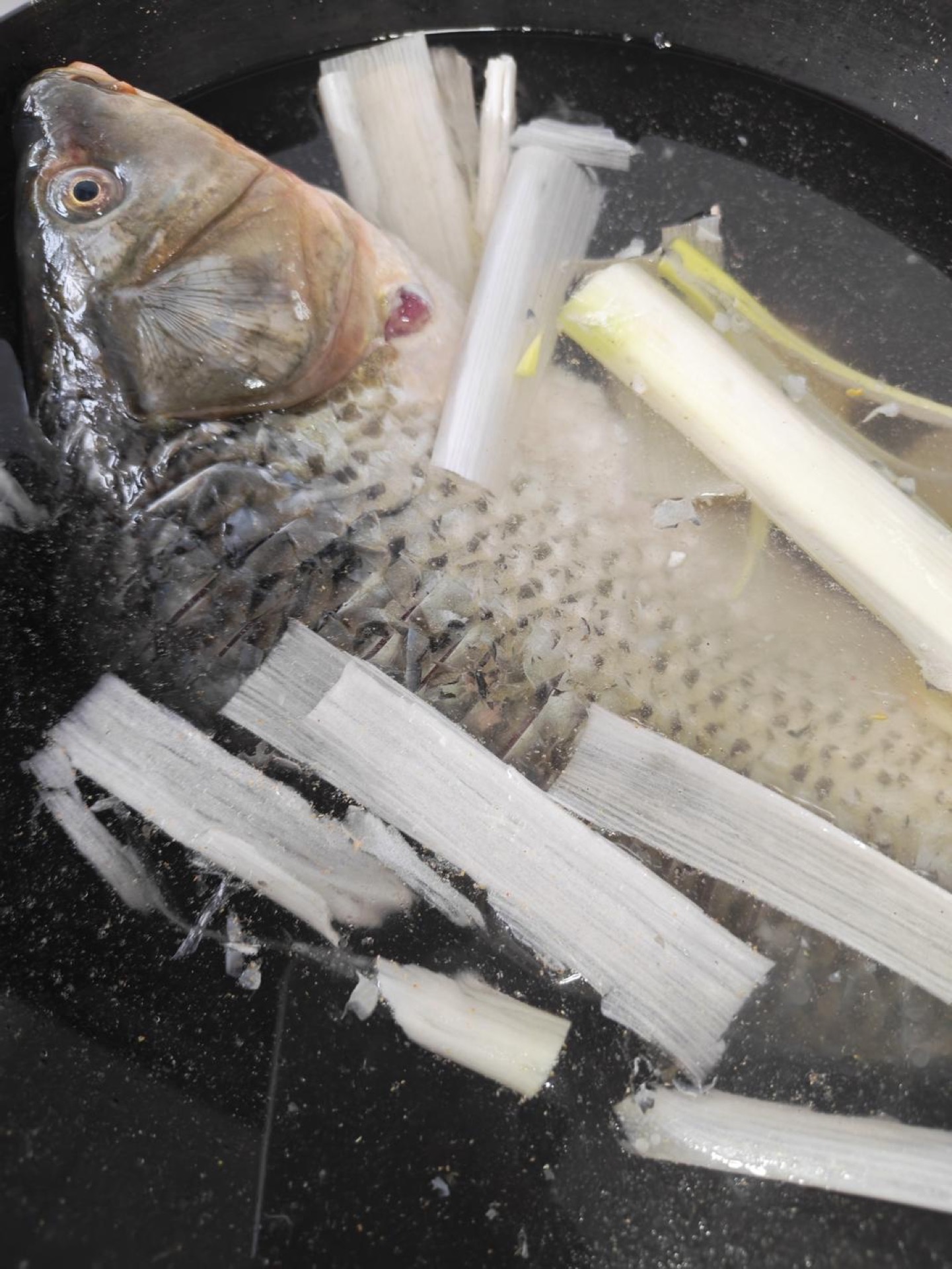
Step 2 — Poach the Fish
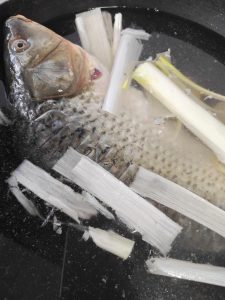
Clean the fish well, score the back with a few shallow cuts, and lower it into a pot of cold water with smashed scallion whites, ginger, Shaoxing wine, and white pepper; once the water boils, cover and cook over low heat for two minutes, then turn off the heat and let it sit covered for five minutes.
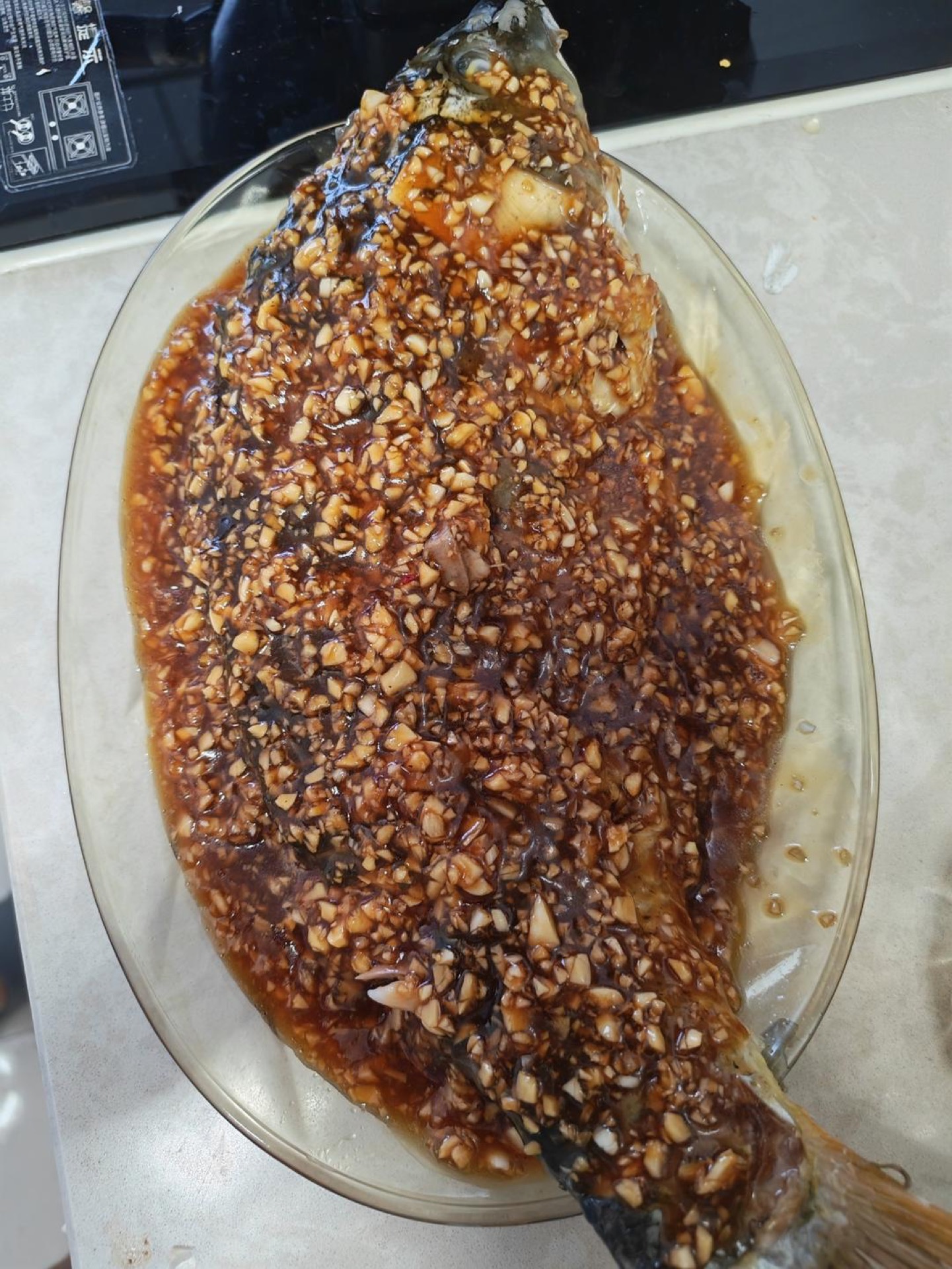
Step 3 — Sauce the Fish
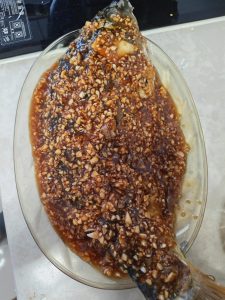
Lift the fish out onto a serving plate and spread the mixed garlic sauce evenly over the whole body.
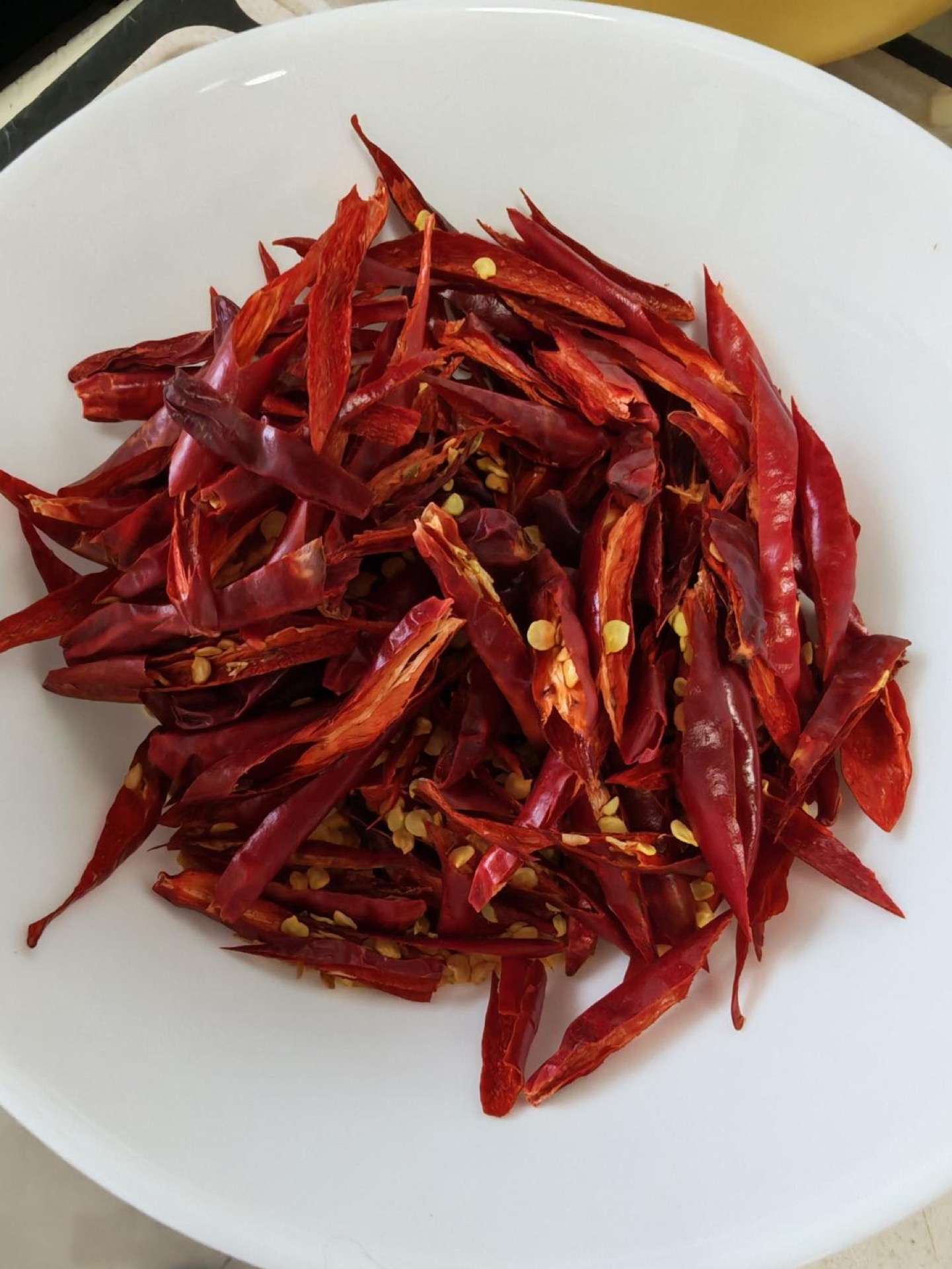
Step 4 — Shred the Chilies
Snip the dried red chilies into fine thin shreds.
Step 5 — Sizzle the Oil
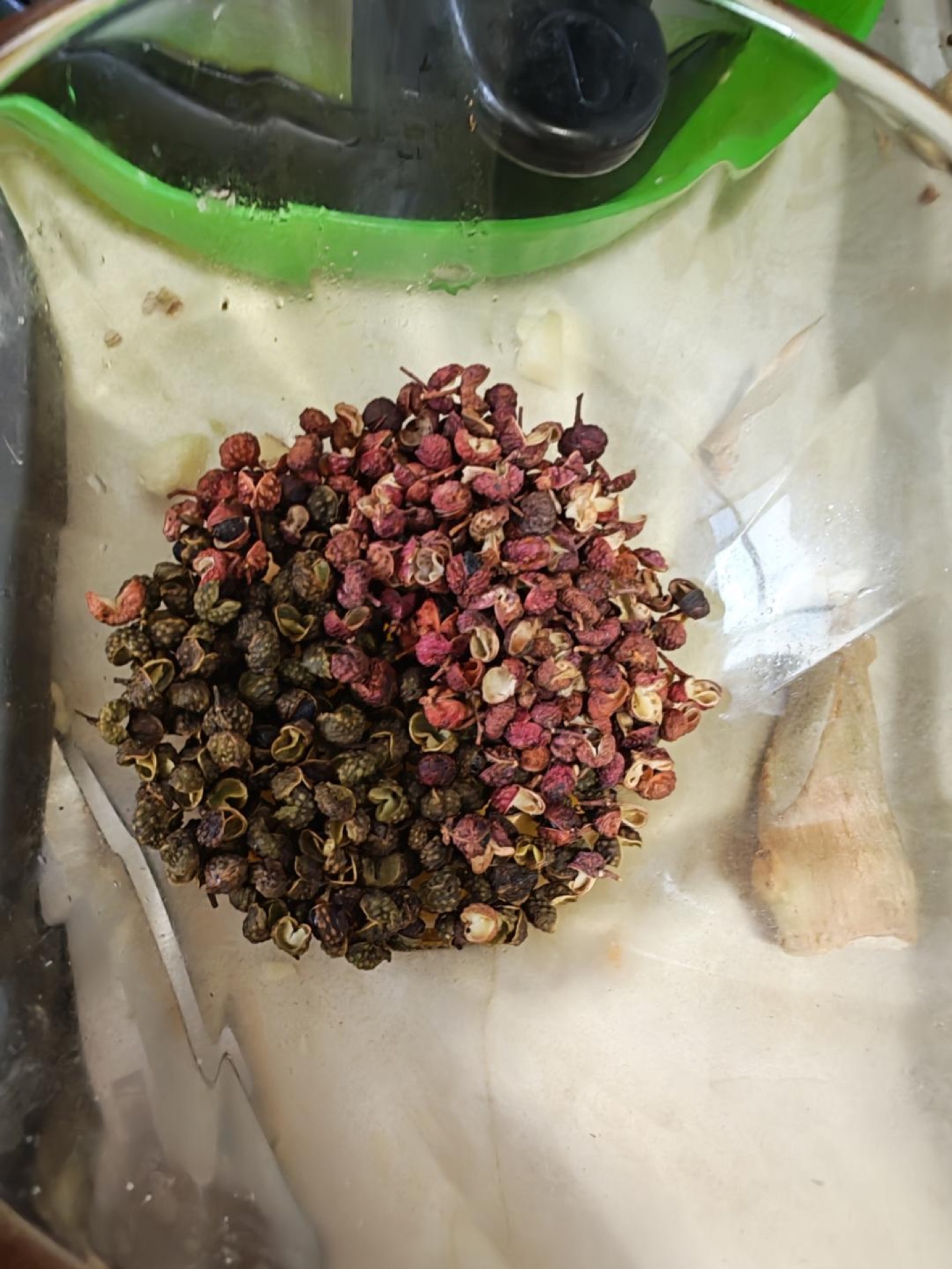
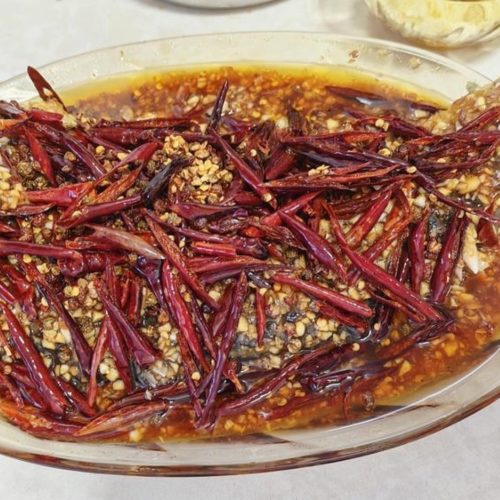
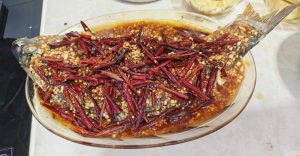
Heat oil in a wok, add the green and red Sichuan peppercorns and the chili shreds, fry until they change color, then pour the hot oil over the sauce on the fish.
Step 6 — Serve
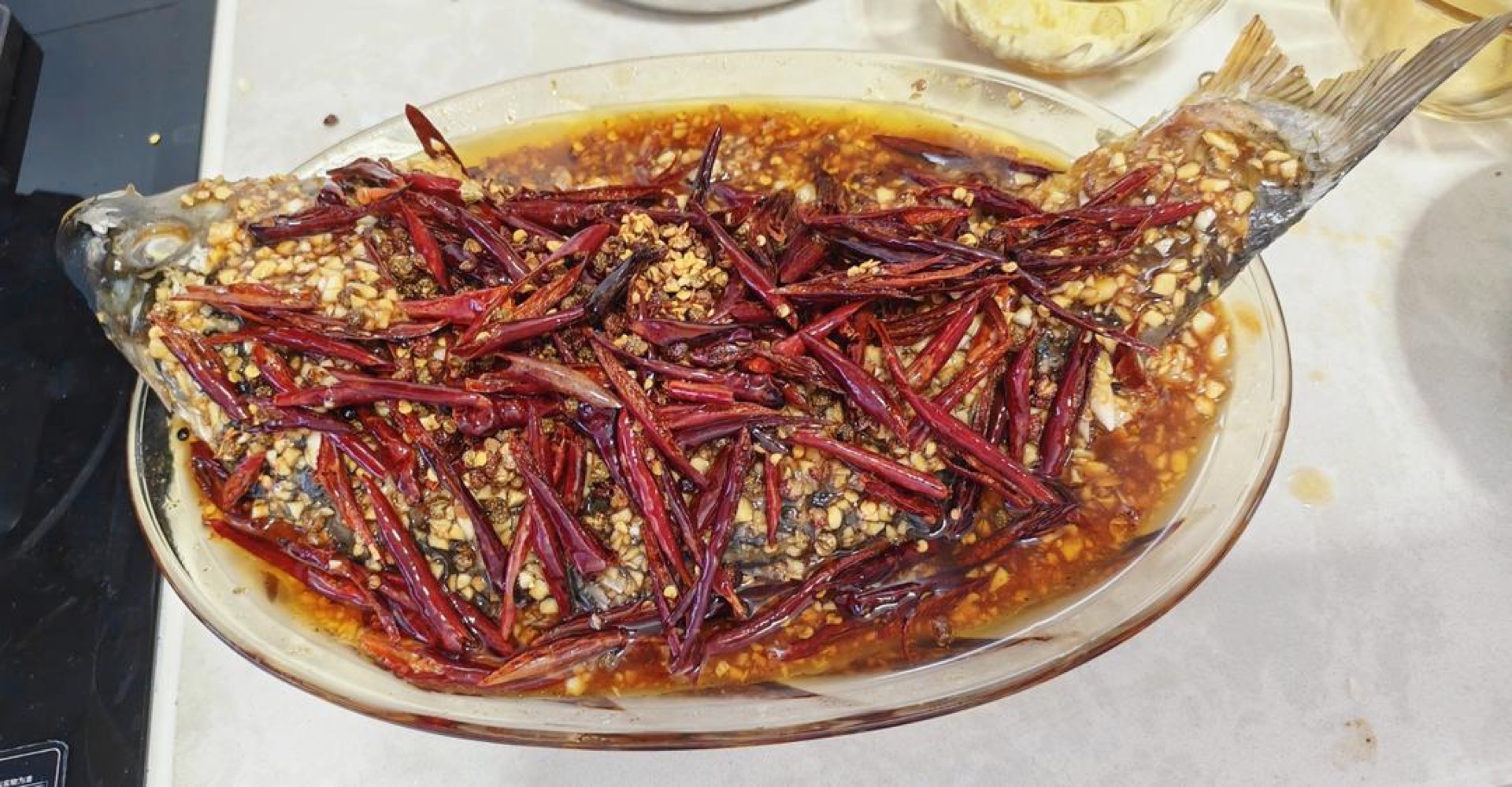
The recreated garlic blast fish turns out especially well — spoon the sauce and oil over the fish at the table and serve right away.
Common Mistakes When Making Garlic Blast Fish
1. Boiling the fish hard. A rolling boil agitates the flesh and makes it tough and chalky. Cause: cranking the heat to speed things up. Fix: once the water boils, drop to the lowest simmer your stove can hold, or turn the heat off entirely after the two-minute mark.
2. Skipping the off-heat rest. Pulling the fish the moment the timer goes means the thickest part near the bone is still translucent. Cause: impatience. Fix: leave it covered in the hot water for the full five minutes; the residual heat does the work.
3. Breaking the fish when lifting it. Poached fish is fragile, especially around the belly. Cause: tongs or a single spatula. Fix: slide two spatulas or a slotted spoon plus a spatula underneath, or lift it in the poaching liquid and slide it onto the plate.
4. Undersalting the sauce. The sauce has to season the whole fish, not just the surface. Cause: tasting the sauce on its own and pulling back. Fix: taste it on a piece of plain fish or rice; it should be assertively seasoned.
5. Oil not hot enough. If the oil is merely warm, the chili shreds go soggy and the garlic never blooms. Cause: pulling the wok off the heat too early. Fix: wait until a chili shred dropped in sizzles immediately and rises, then pour.
6. Burning the chilies. The window between “fragrant” and “bitter” is about ten seconds. Cause: walking away. Fix: have the fish plated and the bowl of sauce ready before the oil goes on, and pour the instant the chilies darken.
7. Using stale garlic. Old garlic that has started to sprout tastes harsh and slightly sulfurous. Cause: whatever was in the basket. Fix: buy firm, tight heads and peel them the same day.
Variations
Steamed instead of poached. Steam the whole fish for 8-10 minutes over high heat, then proceed with the sauce and oil exactly the same way. The texture is a touch firmer and the flavor slightly cleaner.
Fillets for a faster version. Thick white fish fillets poach in three minutes flat. Lay them in a single layer, bring to a bare simmer, then turn off the heat and rest two minutes.
Less heat. Cut the dried chilies to a small handful and use only red Sichuan peppercorns for a milder, warmer version. The sauce itself is not spicy, so all the heat lives in the oil.
More numbing. Double the green Sichuan peppercorns and add a pinch of ground toasted peppercorn to the sauce itself for a ma-la effect that hits on both ends.
Vegetarian swap. Use firm tofu or thick slices of eggplant instead of fish. Tofu benefits from a two-minute blanch first; eggplant is better steamed.
Extra aromatics in the oil. A few slices of ginger or a star anise tossed into the wok with the chilies adds another layer. Pull them out before pouring.
If you want to build the garlic component from scratch, our chili garlic sauce is a good place to start and keeps for weeks.
Frequently Asked Questions
Can I use frozen fish? Yes, but thaw it completely in the refrigerator overnight and pat it dry. Frozen-then-thawed fish releases more water into the poaching liquid and is slightly more prone to breaking, so handle it gently.
How do I know the fish is done? The flesh near the backbone should be opaque and flake easily with a fork, and the dorsal fin should pull out with almost no resistance. If you have a thermometer, look for 63°C (145°F) at the thickest point.
Is this dish very spicy? No — the sauce is garlicky, sweet, and tangy, not hot. All the heat comes from the chili oil on top, and you can control it by using fewer chilies or a milder variety.
Can I make the sauce ahead? Yes. Mix it up to two days ahead and refrigerate it in a sealed jar. Bring it to room temperature before spooning it over the fish, because cold sauce mutes the garlic.
What if I do not have aged black vinegar? Substitute balsamic vinegar in the same amount, or use an extra tablespoon of white vinegar plus a pinch of sugar. The sauce will be a little less complex but still good.
How to Serve
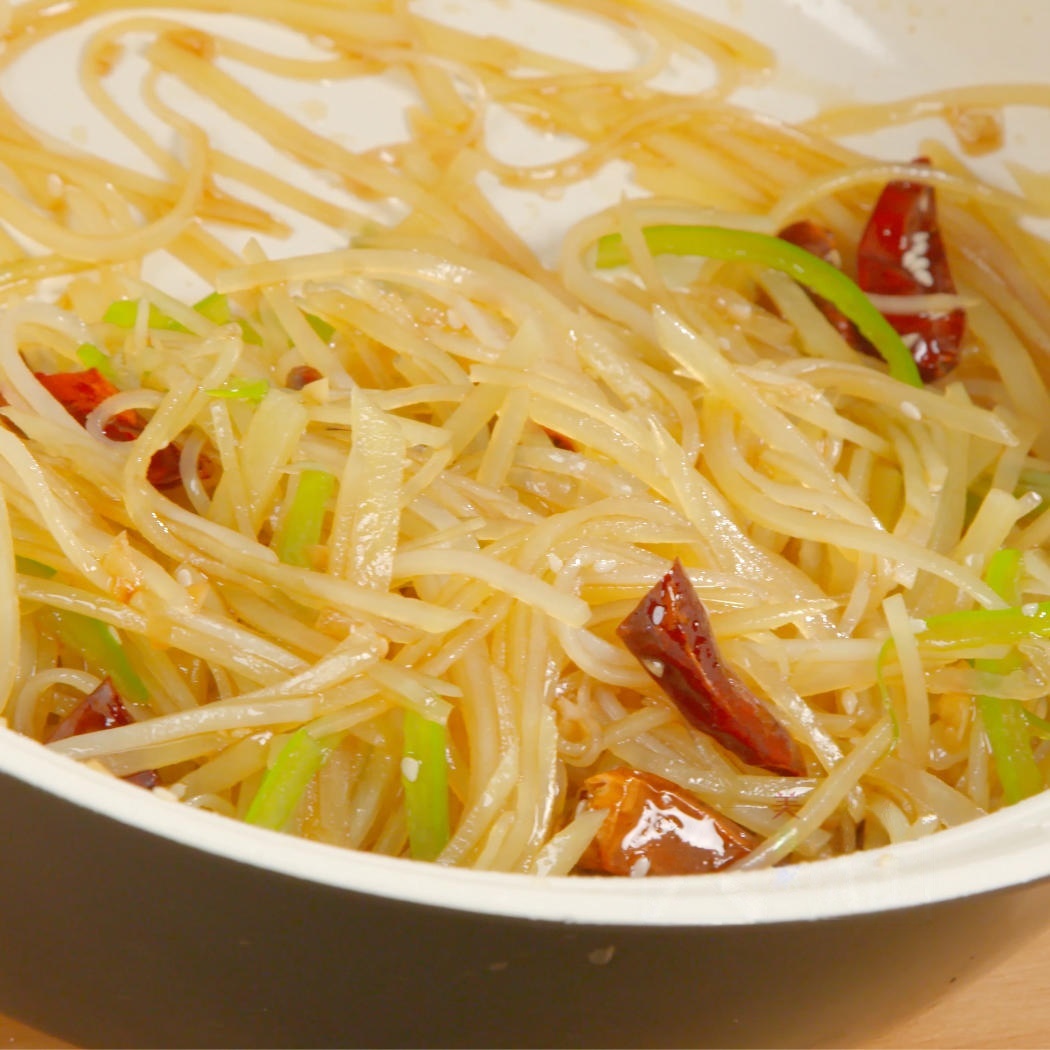
Garlic blast fish belongs on a table with plain steamed rice and something cold and crunchy to cut the oil. A plate of sour and spicy shredded potato salad is the classic move — the chill and the acid reset your palate between bites of rich garlic sauce.
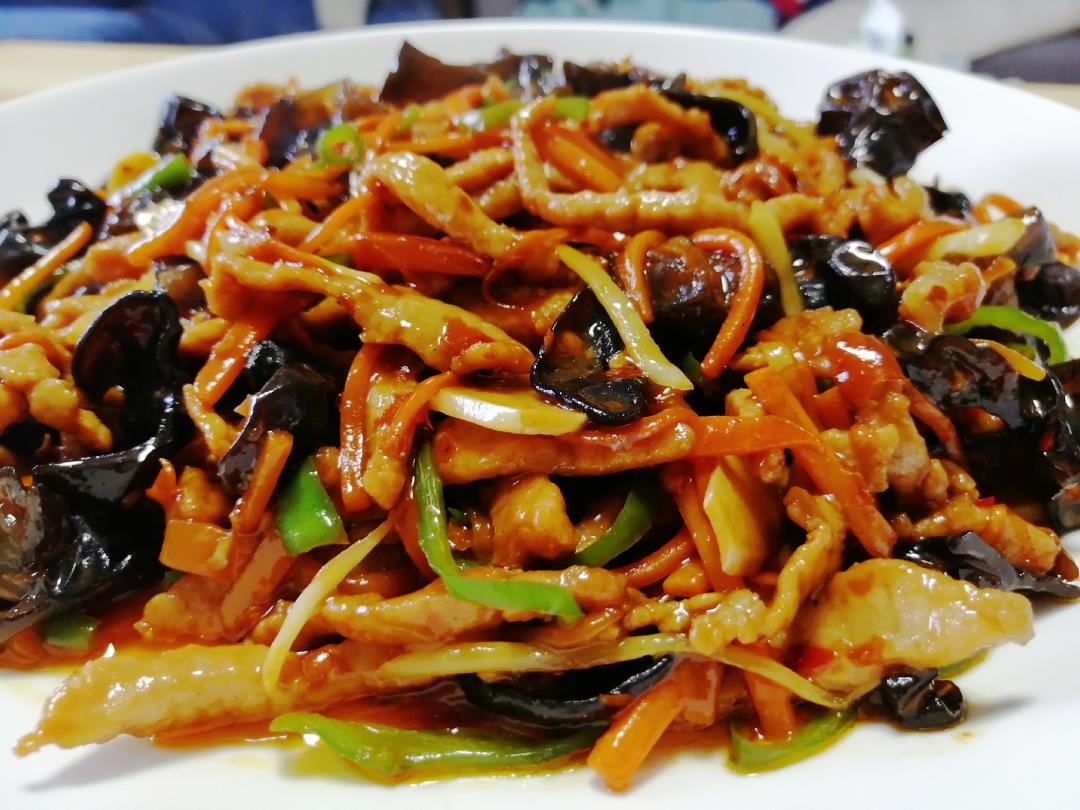
If you want to build the meal out further, a Sichuan fish fragrant pork stir-fry adds a second, sweeter-sour note that plays well against the punchy garlic here. And if you keep a jar of garlic sauce for stir fry base in the fridge, a quick green vegetable on the side takes five minutes.
Serve the fish whole in the center of the table with the sauce and oil still pooling in the plate. Spoon both over each portion as you serve, and keep a small bowl of extra sauce on the side for anyone who wants more.
Storage & Reheat
Poached fish does not keep as well as braised or fried fish, so plan to eat it the day it is made. If you do have leftovers, transfer the fish and sauce to a shallow container, cover, and refrigerate within two hours. Eat within two days.
Reheat gently: cover the plate loosely with a damp paper towel and microwave in 30-second bursts, or steam it for three to four minutes. Do not use a hot pan, which will dry out the flesh. The chili oil will have solidified in the fridge — that is normal, and it melts again as the fish warms.
Do not freeze this dish. The texture of poached fish breaks down badly on thawing, and the sauce separates.
Allergen Notice
This recipe contains fish, soy (oyster sauce, seasoned soy sauce), wheat (soy sauce), and sesame. If you are cooking for someone with a soy allergy, look for a soy-free oyster sauce and a coconut-aminos-based seasoned sauce, and check every bottle, because wheat and soy hide in most commercial Asian condiments.
The chili oil itself is allergen-free, but cross-contamination in a shared wok is always a risk if you have cooked shellfish or peanuts in it before.
Nutrition Disclaimer
Nutrition information is calculated using an ingredient database and should be considered an estimate. In cases where multiple ingredient alternatives are given, the first listed is calculated for nutrition. Garnishes and optional ingredients are not included.
About the Author & Recipe Development
Lin has been cooking and writing about Chinese home food for over a decade at Woks of Love, with a focus on the everyday dishes that do not usually make it into restaurant menus. This version of garlic blast fish was developed from a home cook’s re-creation of the dish, tested repeatedly to pin down the poaching timing and the oil temperature, and adjusted so the sauce works with ingredients you can find in a regular supermarket.
Every recipe on the site is cooked, measured, and photographed in a home kitchen. If you make this one, the notes on oil temperature are the part worth reading twice.
Authoritative References
Safe cooking temperatures and food handling guidance come from the FDA Food Code and the USDA safe minimum internal temperature chart. Background on garlic chemistry and allicin comes from published research on garlic compounds. Sichuan pepper and chili oil technique references are drawn from regional Chinese cooking literature.
Garlic Blast Fish (蒜爆鱼): Tender Fish, Sizzling Garlic Chili Oil

Equipment
- Wok
- Cutting Board
- Slotted Spoon
Ingredients
For the Garlic Sauce
- 2 heads garlic peeled, about 40 cloves, finely minced
- 7 tbsp oyster sauce
- 3 tbsp white vinegar
- 1 tbsp aged black vinegar
- 4 tbsp sugar
- 3 tsp chicken bouillon powder
- 1.5 tsp MSG
- 1 g ground white pepper about 1/4 tsp
- 1 g ground black pepper about 1/4 tsp
- 2 tbsp seasoned soy sauce for seafood
- 1.5 tbsp toasted sesame oil
For the Fish
- 1 whole carp about 2 lb, scaled, gutted, cleaned
- 1 bunch scallions whites smashed, greens reserved
- 5 slices ginger smashed
- 3 tbsp Shaoxing wine
- 1 g ground white pepper about 1/4 tsp
For the Sizzling Oil
- 1 large handful dried red chilies snipped into fine shreds
- 1 tbsp green Sichuan peppercorns
- 1 tbsp red Sichuan peppercorns
- 1 cup neutral oil for pouring
Instructions
- Pound the garlic until broken and fragrant, then stir in the oyster sauce, white vinegar, sugar, aged black vinegar, chicken bouillon, MSG, black pepper, seasoned soy sauce, and sesame oil until smooth, and set it aside.

- Clean the fish well, score the back with a few shallow cuts, and lower it into a pot of cold water with smashed scallion whites, ginger, Shaoxing wine, and white pepper; once the water boils, cover and cook over low heat for two minutes, then turn off the heat and let it sit covered for five minutes.
- Lift the fish out onto a serving plate and spread the mixed garlic sauce evenly over the whole body.
- Snip the dried red chilies into fine thin shreds.
- Heat oil in a wok, add the green and red Sichuan peppercorns and the chili shreds, fry until they change color, then pour the hot oil over the sauce on the fish.
- The recreated garlic blast fish turns out especially well — spoon the sauce and oil over the fish at the table and serve right away.













Leave a Reply