This guide provides a technical analysis of selecting and using a wok on electric ranges, focusing on thermal efficiency, material properties, and physical stability to help you achieve professional results at home.
The Challenge of Electric Heat in Wok Cooking
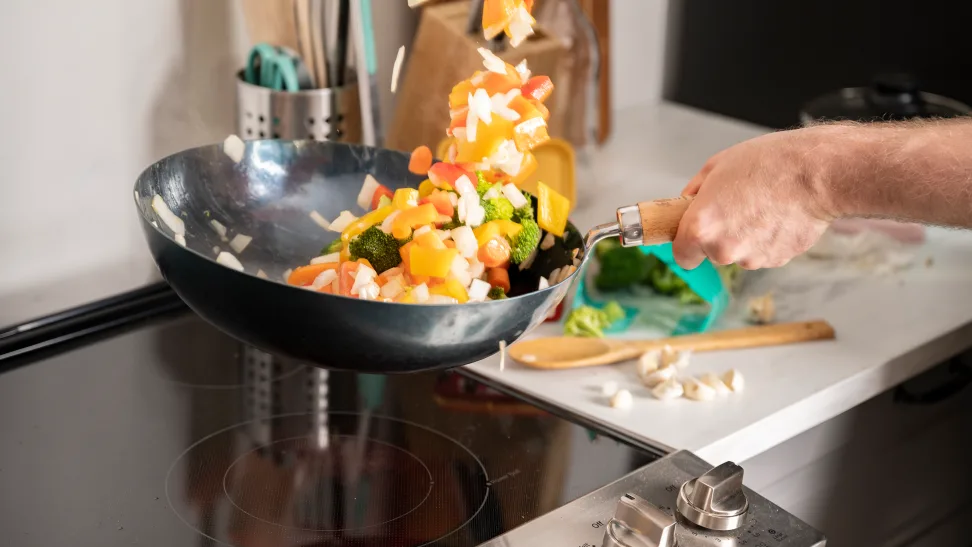
The fundamental challenge of using a wok on an electric stove is the heat transfer method. While gas stoves rely on convective heat (flames licking the sides of the wok), electric stoves—both radiant coil and glass-top—depend almost entirely on conductive heat.
Because the heat source is a flat surface, a traditional round-bottom wok has minimal contact area, leading to poor thermal recovery and “stewing” rather than searing. To master this, you must choose equipment that maximizes surface contact while managing the inherent cycling of electric heating elements.
Material Comparison: Heat Retention vs. Responsiveness
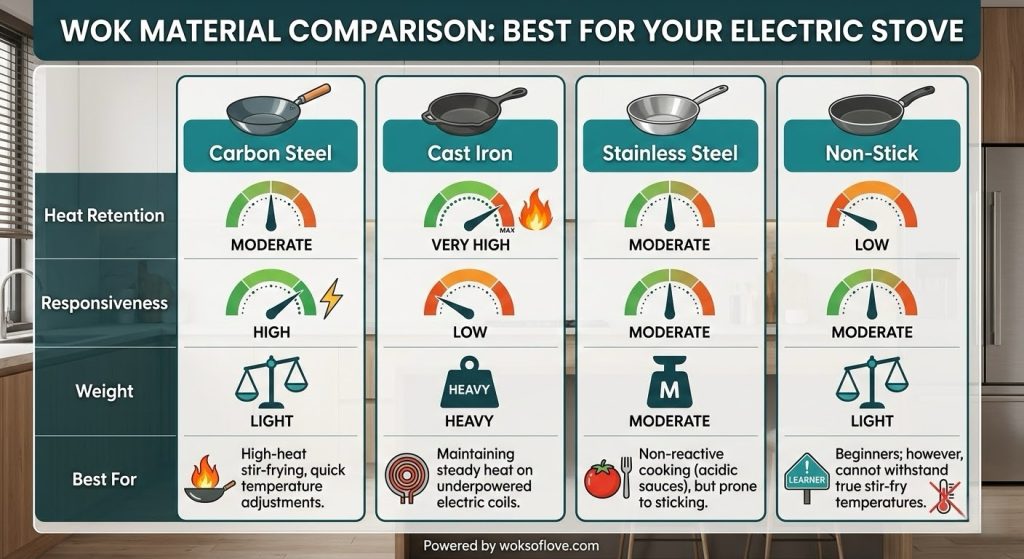
Choosing the right material is the first step in successful stir-frying. Each material interacts differently with electric elements.
| Material | Heat Retention | Responsiveness | Weight | Best For |
| Carbon Steel | Moderate | High | Light | High-heat stir-frying, quick temperature adjustments. |
| Cast Iron | Very High | Low | Heavy | Maintaining steady heat on underpowered electric coils. |
| Stainless Steel | Moderate | Moderate | Moderate | Non-reactive cooking (acidic sauces), but prone to sticking. |
| Non-Stick | Low | Moderate | Light | Beginners; however, cannot withstand true stir-fry temperatures. |
Why Carbon Steel Remains the Standard
For serious home cooks, a carbon steel wok is the optimal choice because it balances durability with the ability to change temperatures rapidly. On an electric stove, where the “burner” takes time to cool down, a responsive pan is your only defense against overcooking.
Critical Features for Electric Stoves
1. Flat Bottom Stability
A flat-bottom wok is mandatory for electric stoves. The flat base should be between 5 and 6.5 inches in diameter.
- Too small: The wok will be unstable and have insufficient contact with the heating element.
- Too large: The transition to the sloped sides becomes too abrupt, making it difficult to toss ingredients smoothly.
2. Gauge (Thickness)
For electric ranges, look for a gauge of 1.5mm to 2mm.
- Thinner woks (<1.2mm): May warp under the intense, concentrated heat of an electric coil.
- Thicker woks (>2.5mm): Take too long to preheat and are difficult to maneuver.
3. Handle Engineering
On electric glass tops, stability is paramount. A long wooden or stay-cool handle paired with a “helper handle” on the opposite side allows for better leverage. This is essential because you cannot easily tilt or “rock” the wok on a flat surface as you would on a gas grate.
Technical Performance: Maximizing Heat
To compensate for the lack of an open flame, follow these kitchen boundaries to maintain high-heat performance:
- Preheat Time: Carbon steel requires a minimum of 3 to 5 minutes on the highest setting before adding oil. You are looking for the “Leidenfrost effect,” where a drop of water beads and dances across the surface rather than evaporating instantly.
- Batch Size: Never exceed 12 ounces (340g) of protein at once. Overcrowding the pan causes the surface temperature to drop below the searing point (175°C to 200°C), resulting in boiled meat.
- Oil Selection: Use oils with a smoke point above 230°C (450°F), such as peanut or grapeseed oil, to accommodate the concentrated heat of the electric element.
When This Method Does NOT Work
- Induction Ranges with Thin Woks: If using an induction stove, very thin carbon steel can vibrate or “buzz” and may warp instantly if preheated on “Power Boost” without oil.
- Oversized Woks (16″+): Most residential electric burners are 8 to 10 inches wide. A 16-inch wok will have massive “cold zones” on the upper edges, leading to uneven cooking.
Maintenance and Longevity
Regardless of the stove type, a wok is only as good as its seasoning. You must season a carbon steel wok properly to create a natural, non-stick patina.
On electric stoves, the bottom of the wok can develop a thick carbon crust more quickly due to direct contact. It is vital to clean and maintain your wok after every use, ensuring the bottom remains perfectly flat to maintain maximum thermal contact.
FAQ
Q: Can I use a wok ring on an electric stove? A: No. Wok rings are designed to hold round-bottom woks over gas flames. On an electric stove, a ring lifts the wok away from the heat source, making it impossible to reach stir-fry temperatures.
Q: Why does my stir-fry turn out watery? A: This usually happens because the stir-fry turns watery when the pan temperature drops. Ensure you are slicing meat for stir fry thinly and across the grain to ensure it cooks instantly before the pan loses heat.
Q: Is a cast iron wok better for electric? A: It can be. Because cast iron has higher thermal mass, it doesn’t lose heat as quickly when you add cold ingredients. However, it is much heavier and harder to use for traditional tossing.
Professional Recommendation
For the best results on an electric stove, I recommend a 14-inch flat-bottom carbon steel wok with a thickness of 1.8mm. This setup provides the best compromise between physical stability and the thermal performance needed for authentic Chinese cooking.






Leave a Reply