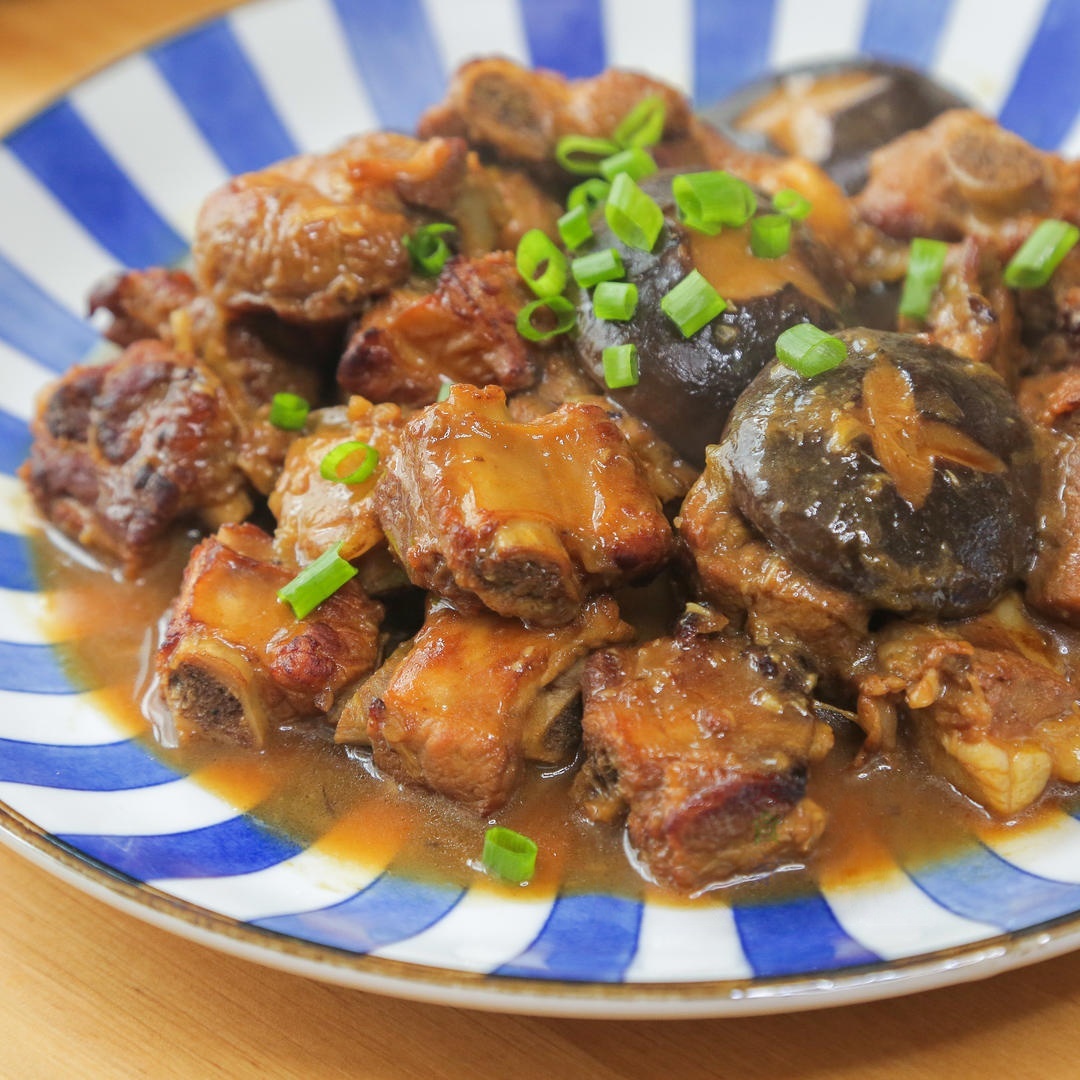
There is a certain kind of comfort that only comes from a clay pot bubbling at the center of the table, and this braised pork ribs with taro is exactly that. The ribs go in first, browning in a wok with ginger and rock sugar until the kitchen smells like a Cantonese grandmother’s kitchen, then they simmer low and slow with star anise, Sichuan peppercorns, and a whisper of angelica root. The taro — small, dense red-bud taro if you can find it — is roasted ahead of time so its edges turn golden and crisp, then dropped into the sauce to soak up all that glossy, savory braise.
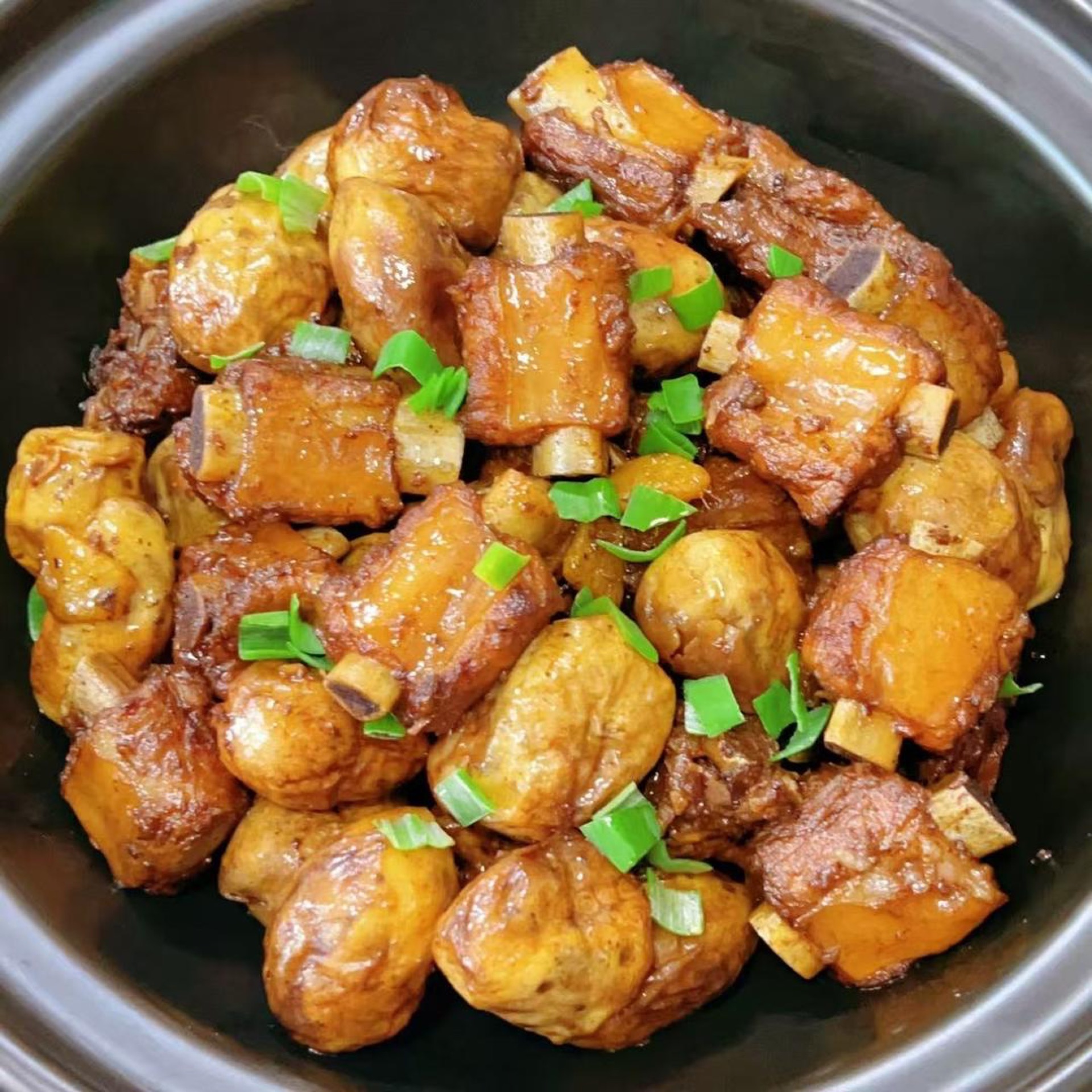
The result is a dish of contrasts: ribs so tender they slip off the bone, and taro that is crisp at the edge and creamy, almost silky, at the center. It is the kind of one-pot meal that feels like a hug, and it is easier than it looks once you know the two tricks — roast the taro first, and keep the braise gentle.
What Is Braised Pork Ribs with Taro?
Braised pork ribs with taro, called yuzi paigu bao (芋子排骨煲) in Chinese, is a home-style Cantonese clay-pot dish. Small pork ribs are braised with aromatics, rock sugar, and soy until tender, then small taro roots are added to simmer in the same sauce and thicken it naturally with their starch. The whole thing is finished in a clay pot, often with scallions scattered over the top, and eaten with steamed rice.
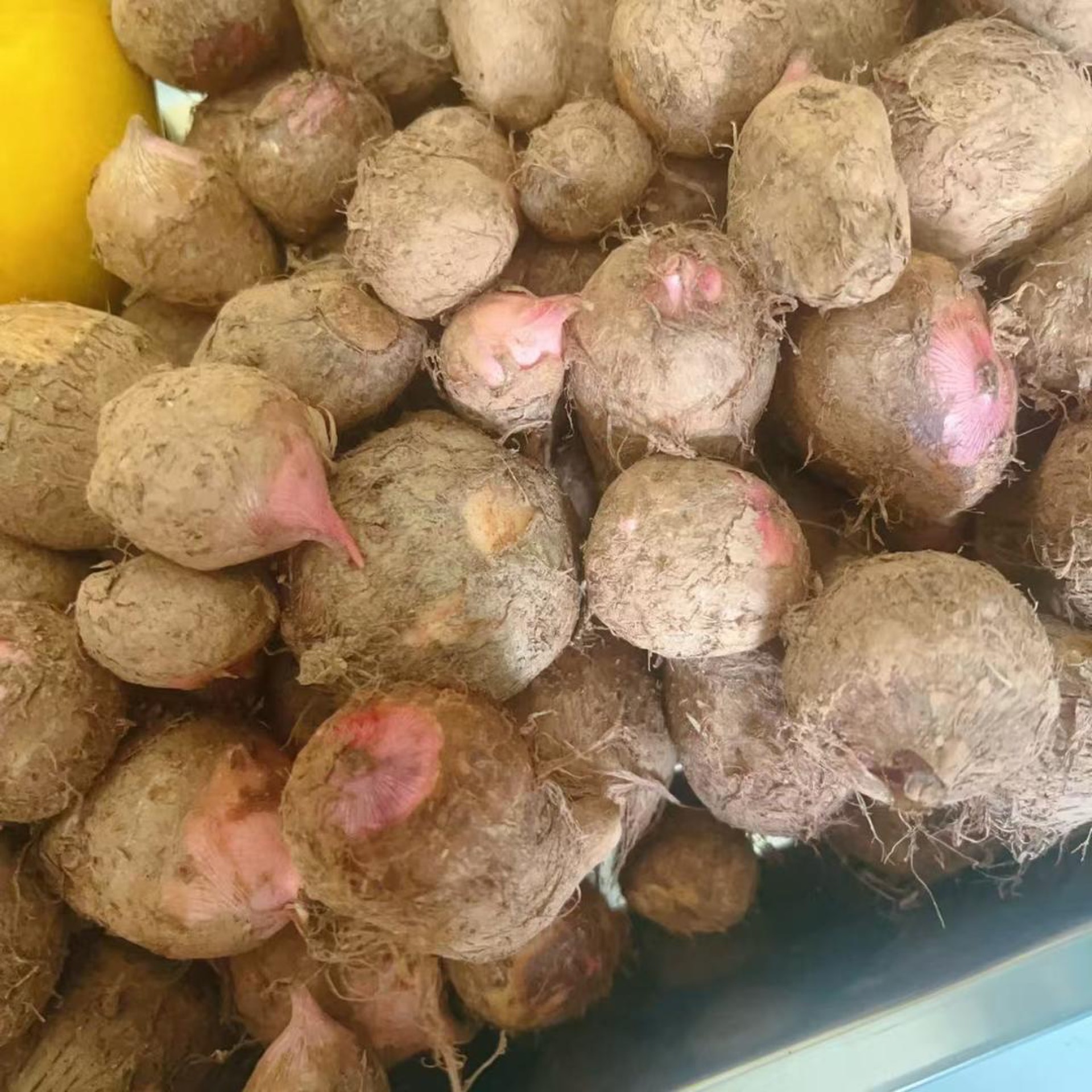
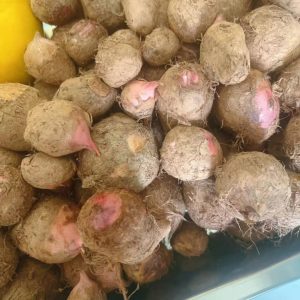
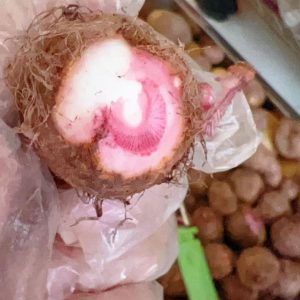
The taro is the star as much as the pork. Red-bud taro (红芽芋), sometimes sold as “milk taro,” is a small, dense variety with a creamy, nutty flesh that holds its shape far better than the big watery taro sold in some supermarkets. If you have ever had taro turn to mush in a stew, it was probably the wrong variety — or it was not pre-cooked.
If you love the deep, glossy flavor of a classic red-braised pork dish, our braised pork belly with abalone is the same family of cooking — rich, sweet-savory, and built for rice.
1Braised Pork Belly with Abalone (Bao Yu Hong Shao Rou)A luxurious Chinese surf and turf dish featuring tender pork belly and fresh abalone braised in a savory red fermented bean curd sauce. Perfect for special occasions.Check out this recipe

For a dim-sum-style project that teaches you the same pork-and-sweet-sauce pairing, try our steamed BBQ pork buns, where fluffy dough wraps a sticky char siu filling.
2Homestyle Steamed BBQ Pork Buns (Char Siu Bao / 叉烧包)A classic Cantonese dim sum favorite made at home with a pillowy soft bun and a rich, juicy, and savory-sweet BBQ pork filling. This recipe is a labor of love that is well worth the effort.Check out this recipe
And if you want a fast, high-heat pork dish to round out the table, our stir fried diced pork comes together in about 30 minutes with big wok flavor.
3Authentic Jiang Bao San Ding (Stir-Fried Diced Pork)A quick, comforting Chinese homestyle meal featuring diced pork, tofu, radish, and soybeans in a deeply savory yellow soybean paste sauce.Check out this recipe

Why This Recipe Works
Most taro-and-pork recipes fail in one of two ways: the taro dissolves into a cloudy paste, or the ribs stay tough and chewy. This method solves both problems at once.
- Roasting the taro first. Air-frying (or deep-frying) the taro sets its surface and drives off excess water, so it holds its shape in the braise and develops a crisp, golden shell that later soaks up sauce like a sponge. It also cuts down on the amount of time it spends simmering, which keeps it creamy rather than waterlogged.
- Browning the ribs in the wok. Searing the ribs after blanching drives off the raw pork smell and builds a fond that becomes the backbone of the sauce.
- Rock sugar and soy for a glossy red braise. Yellow rock sugar gives the sauce a clean, rounded sweetness and that characteristic shine, while light soy adds color without overwhelming saltiness.
- A gentle simmer. Keeping the braise at a low bubble rather than a rolling boil is what makes the ribs tender without shredding and keeps the taro intact.
Why does rock sugar make a glossier sauce than regular sugar? Rock sugar melts more slowly and caramelizes in larger crystals, which produces a smoother, more viscous syrup that clings to the meat. Serious Eats explains the science of caramelization and sugar syrups if you want to dig deeper into the browning reactions that give red-braised dishes their color.
Equipment Needed
- Wok — for searing the ribs and building the braise. A heavy-bottomed wok or a wide Dutch oven both work.
- Air fryer — for roasting the taro. No air fryer? Deep-fry the taro cubes at 170°C (340°F) until golden, or roast them in a hot oven on a tray.
- Clay pot — for the final bubbling presentation. A heavy lidded pot is a fine substitute; the clay pot is as much about the table drama as it is about heat retention.
- Cutting board and knife — for peeling and chunking the taro (wear gloves if your skin is sensitive to taro sap).
- Slotted spoon — for lifting the ribs out of the blanching water and for fishing aromatics out of the braise.
- Small heatproof bowl — for holding the measured aromatics before they go into the wok.
Ingredients
Here is what goes into the pot. Exact amounts are in the recipe card below, but the shape of the ingredient list matters:
- Pork ribs — small, meaty ribs cut into 2-inch pieces. Ask your butcher to cut them crosswise into short lengths if they are not already.
- Taro — red-bud taro if you can find it; otherwise small, firm taro roots rather than large watery ones.
- Yellow rock sugar — the classic sweetener for red-braised dishes. Granulated sugar works in a pinch.
- Ginger — sliced thickly; it perfumes the oil and cuts the pork’s richness.
- Star anise, Sichuan peppercorns, bay leaves — the warm, aromatic backbone of the braise.
- Dried angelica root (bai zhi) — a traditional Cantonese addition that adds a subtle herbal depth. Optional but lovely.
- Shaoxing wine — for deglazing and lifting the flavor.
- Light soy sauce — for color and umami.
- Scallions — for the fresh green finish.
Ingredient Notes
Red-bud taro (红芽芋) is worth seeking out. It is smaller, denser, and creamier than the large taro often sold in Western supermarkets, and it keeps its shape in a long braise. Look for it at Asian grocers in autumn and winter, or substitute small taro roots of any variety. Avoid taro with soft spots or mold at the stem end.
Pork ribs — look for “small ribs” or “spare ribs” cut into short lengths. If your ribs are very fatty, trim some of the excess fat, but leave a little for flavor. Our classic braised pork ribs recipe goes deeper on choosing and prepping ribs if you want the full background.
Yellow rock sugar melts into a cleaner, less cloying sweetness than white sugar and gives the sauce its shine. If you only have granulated sugar, use slightly less, since it is sweeter by volume.
Sichuan peppercorns add a gentle numbing tingle rather than heat. Toast them briefly in the wok if you want to wake up their aroma, but do not let them burn.
Angelica root (bai zhi) is a dried herbal slice sold in Chinese pharmacies and some Asian groceries. It is optional; if you cannot find it, the dish is still delicious without it.
Prep & Mise en Place
This dish comes together quickly once you start cooking, so set everything up before the wok gets hot.
- Peel and chunk the taro. Peel the taro, rinse, and cut into 1.5-inch chunks. Wear gloves if your hands itch — taro sap contains calcium oxalate crystals that can irritate skin.
- Measure the aromatics. Put the ginger, star anise, Sichuan peppercorns, angelica root, bay leaves, and rock sugar in a small bowl so you can tip them in all at once.
- Blanch the ribs. Bring a pot of water to a boil, add the ribs, and blanch for 5 minutes. Drain and set aside.
- Start the taro roasting. Get the taro into the air fryer first, since it takes 30 minutes and can roast while you blanch the ribs and sear them.
- Chop the scallions and have the Shaoxing wine and soy sauce within reach.
Once the taro is roasting and the ribs are blanched, you are ready to cook. For another take on this pairing, see our steamed pork ribs with taro, which uses the same ingredients in a lighter, steamed format.
Cooking Process
Step 1 — Air-Fry the Taro
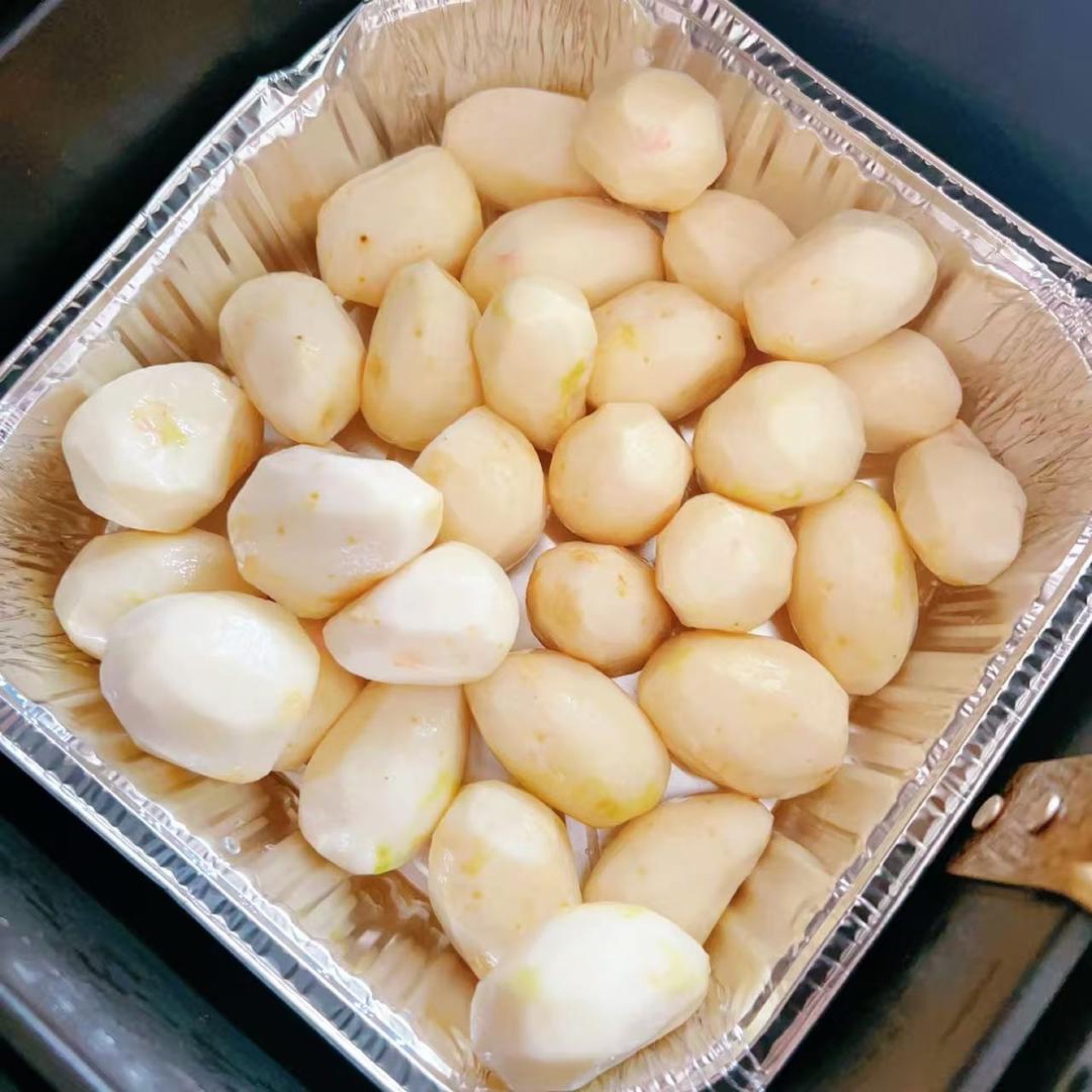
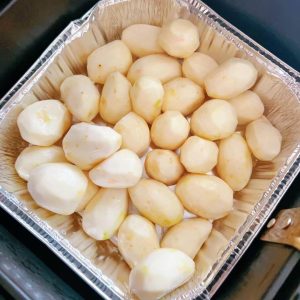
Peel the taro, rinse it clean, drain well, and put it in the air fryer at 180°C (355°F) for 30 minutes.
Step 2 — Flip and Finish
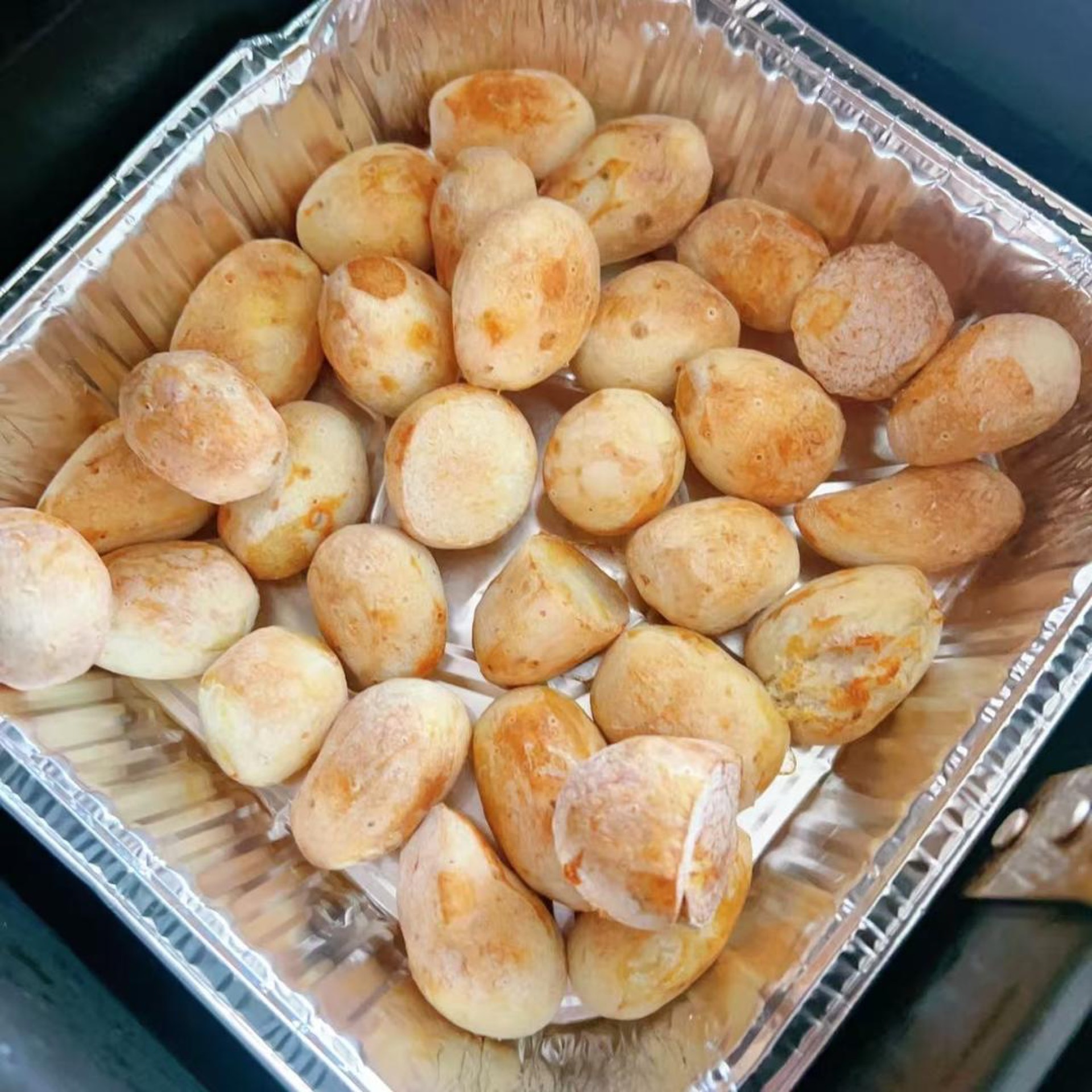
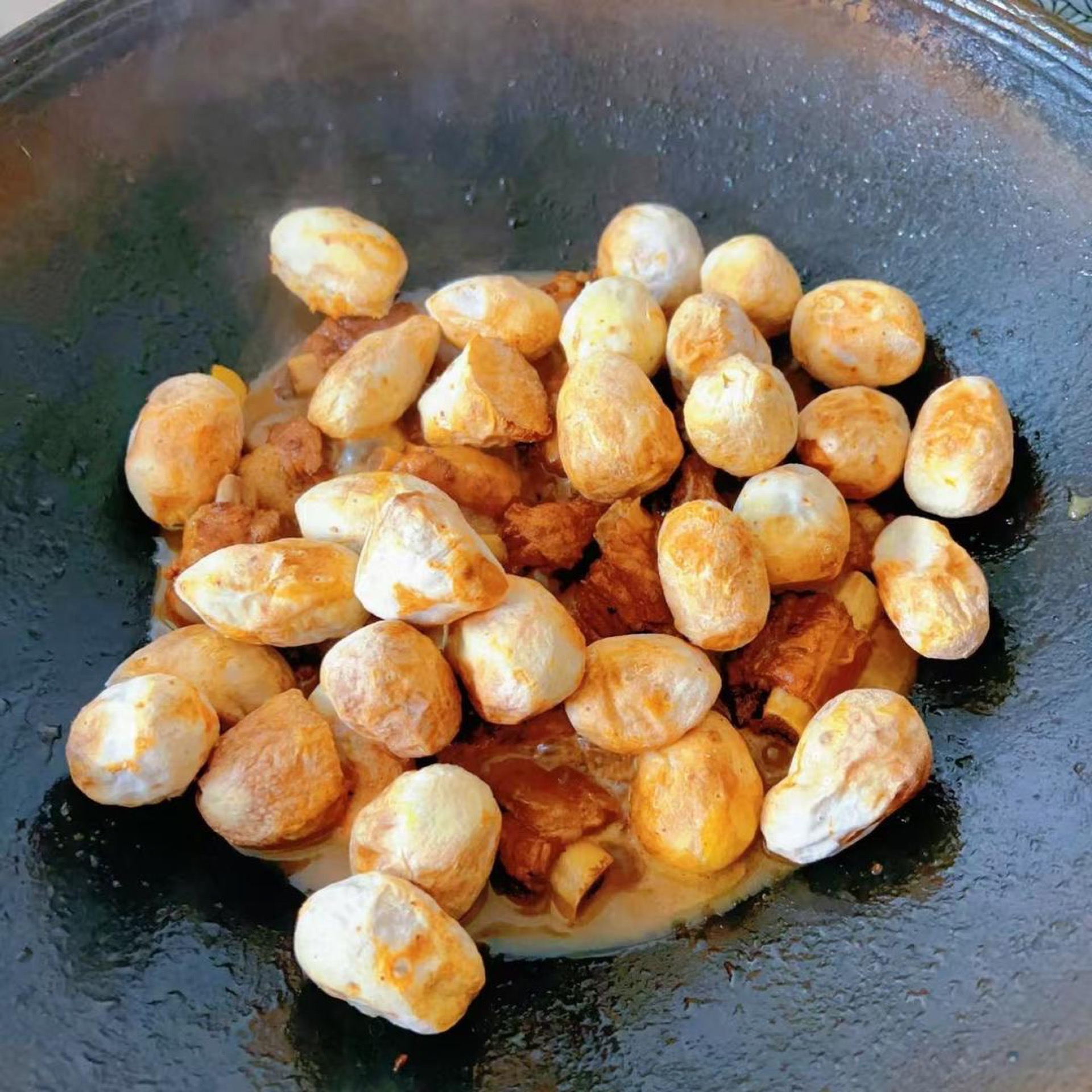
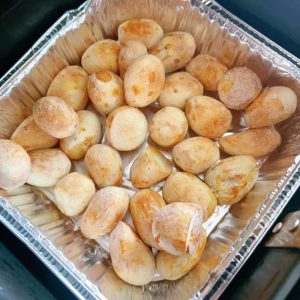
After 15 minutes, flip the pieces once and keep roasting for another 15 minutes. This is how the roasted taro looks.
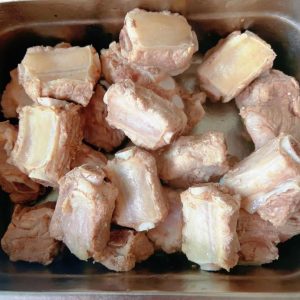
Step 3 — Blanch the Ribs
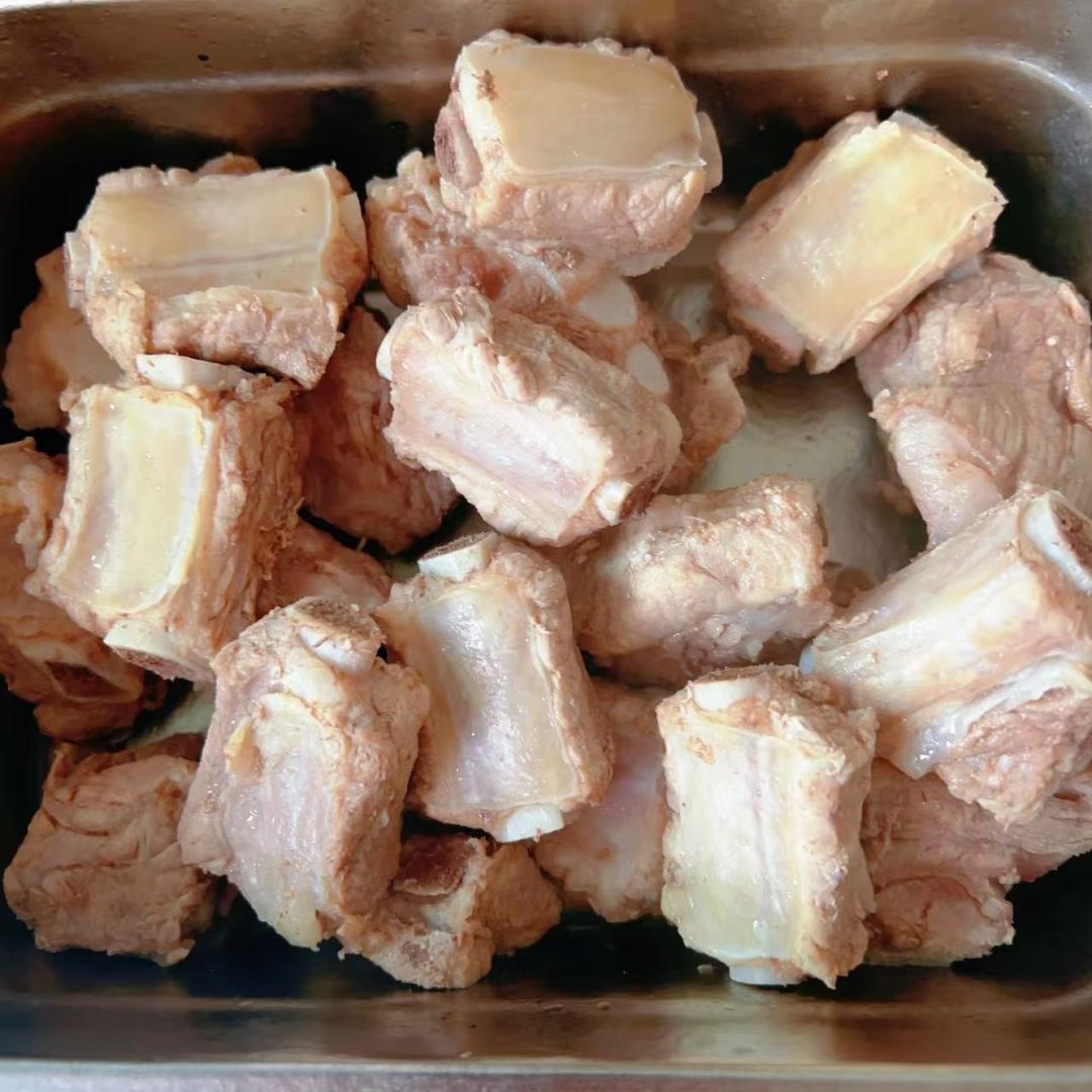
Blanch the pork ribs for 5 minutes, then drain and scoop them out.
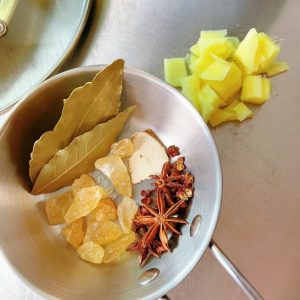
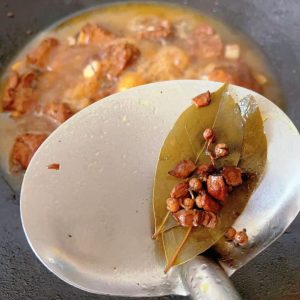
Step 4 — Ready the Aromatics
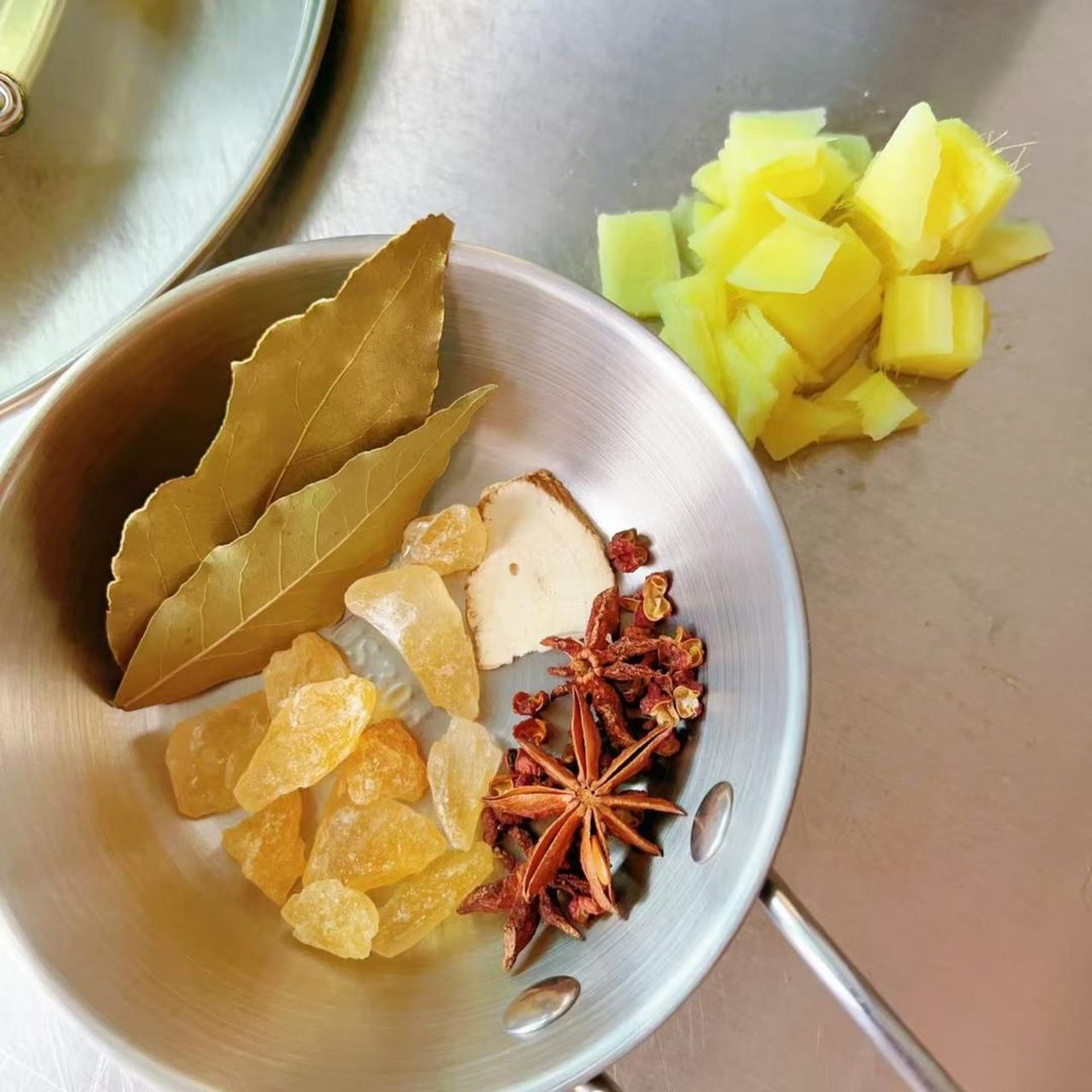
Prepare 15 g ginger, 2 bay leaves, 3 star anise, 10 g Sichuan peppercorns, 1 piece of dried angelica root, and 20 g yellow rock sugar.
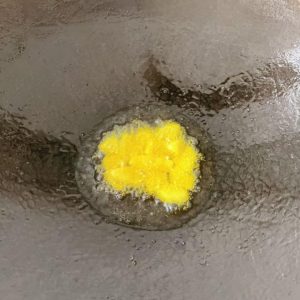
Step 5 — Bloom the Ginger
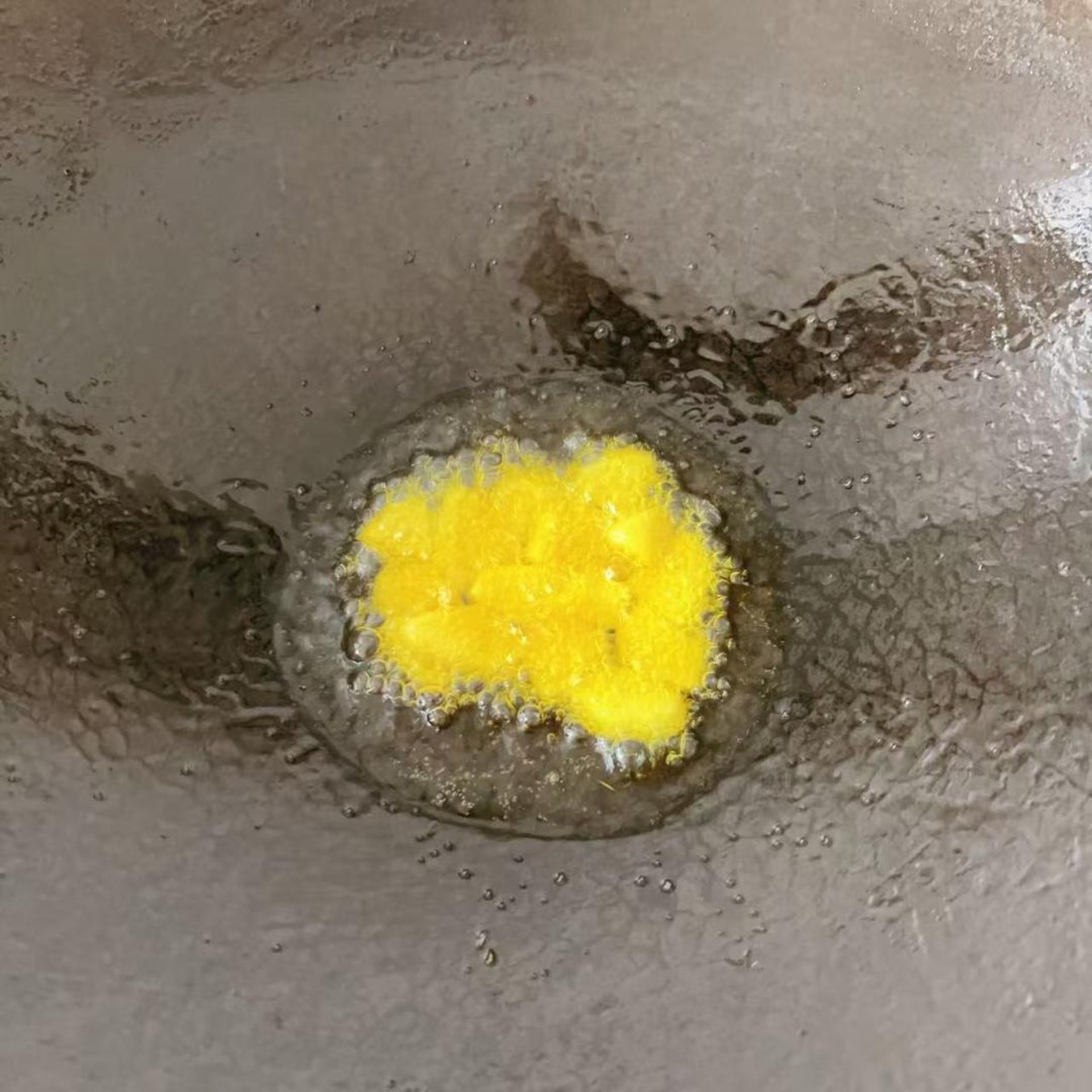
Heat a little oil in the wok and stir-fry the ginger until fragrant.
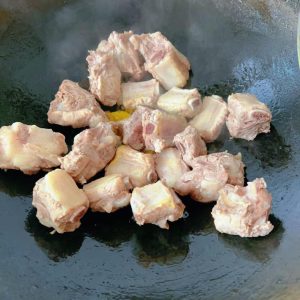
Step 6 — Sear the Ribs
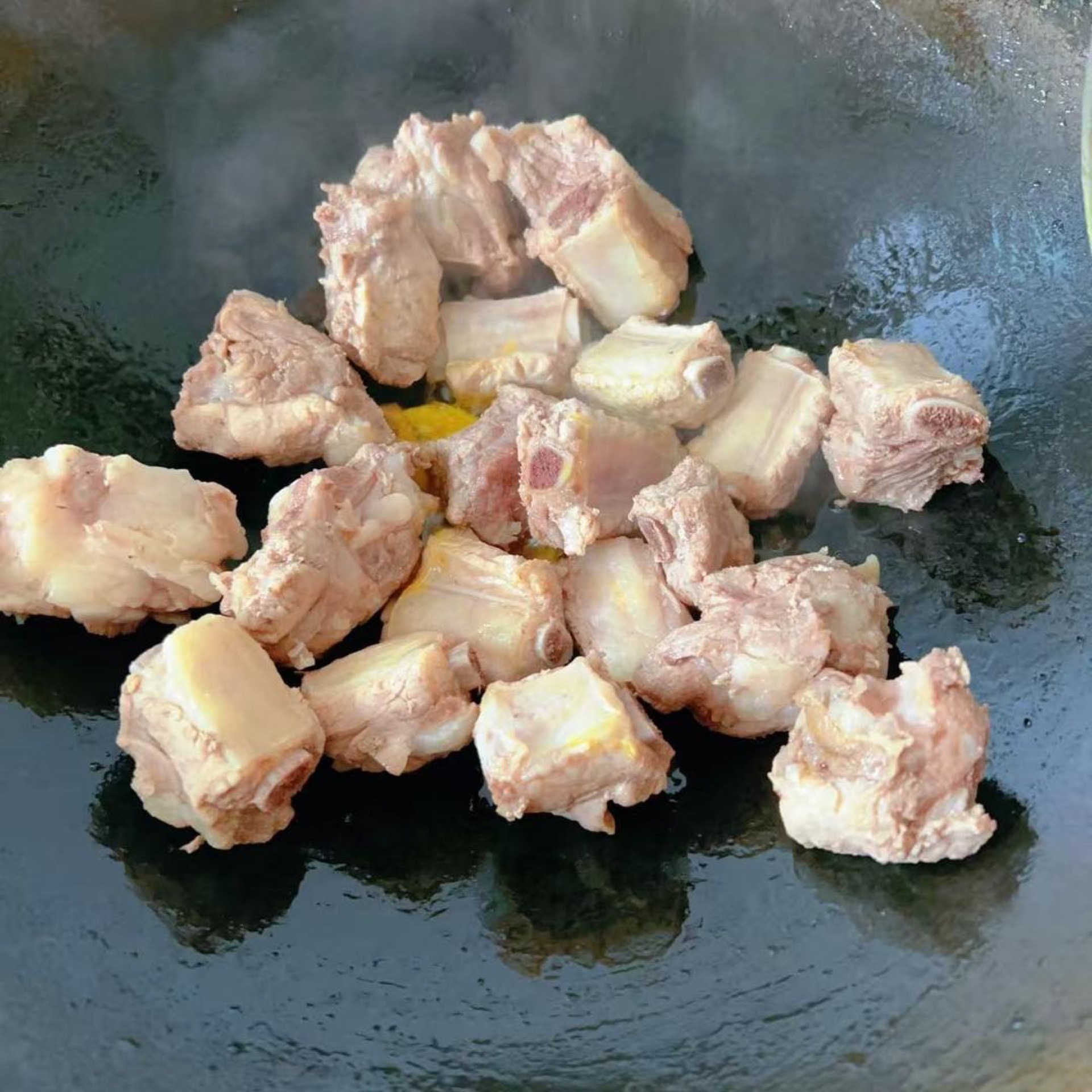
Add the ribs to the wok and stir-fry to drive off the moisture.
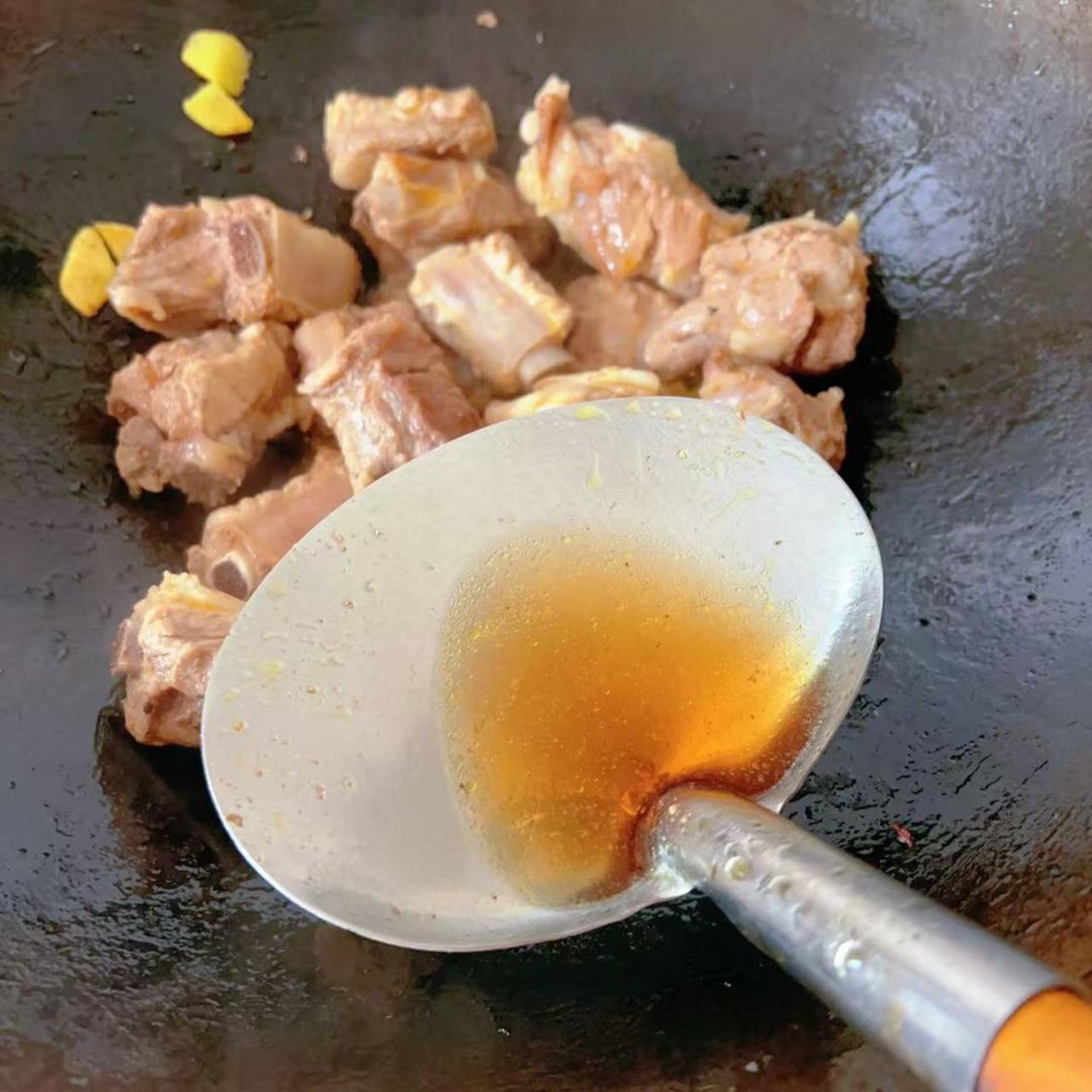
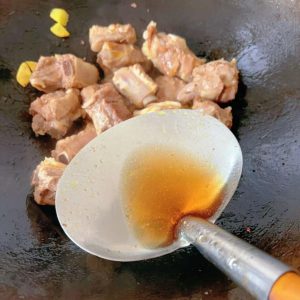
Step 7 — Splash the Wine
Add 1 ladle of Shaoxing wine to lift the flavor.
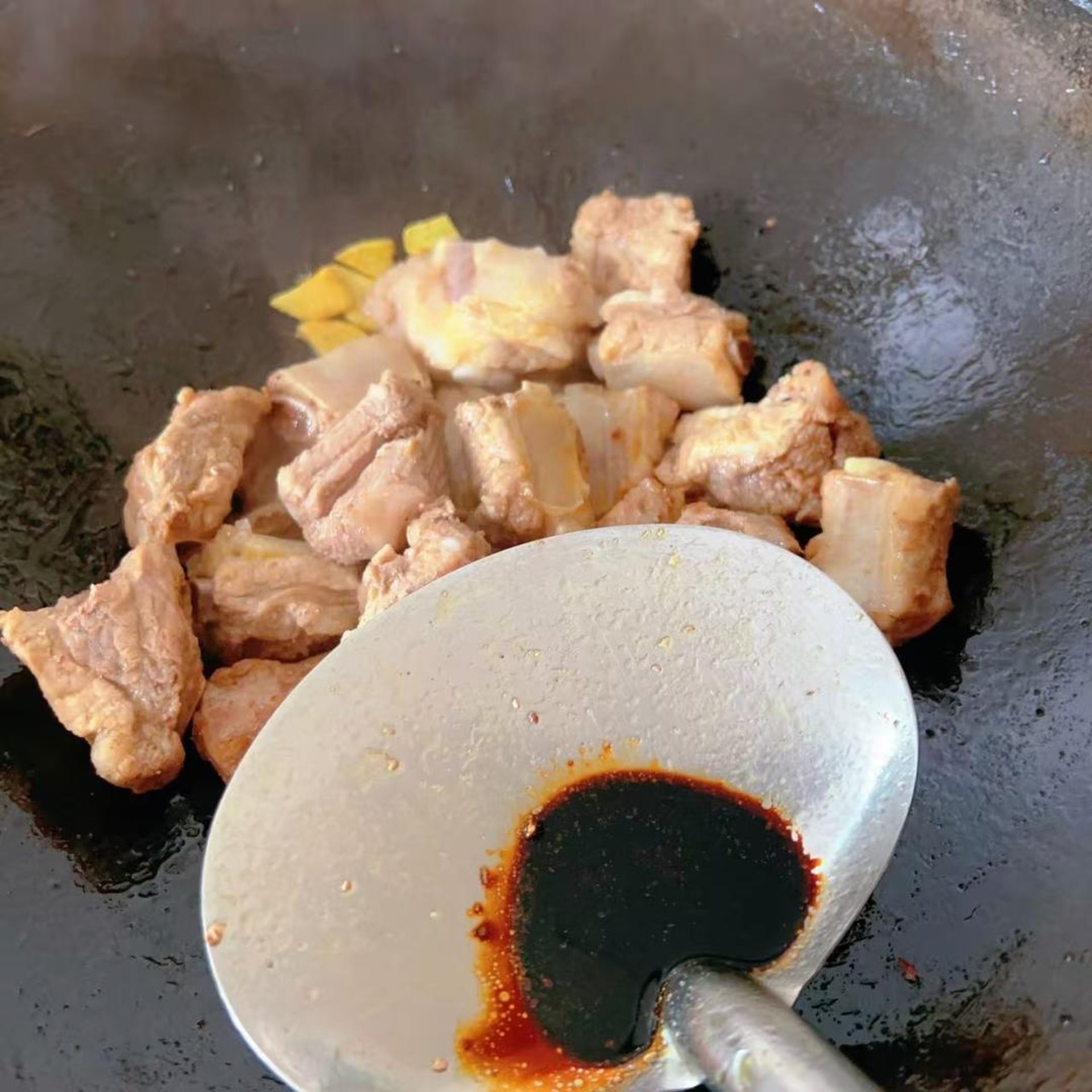
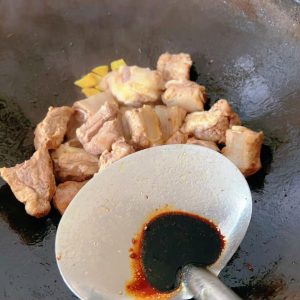
Step 8 — Add the Soy
Add 1 small spoon of soy sauce for color.
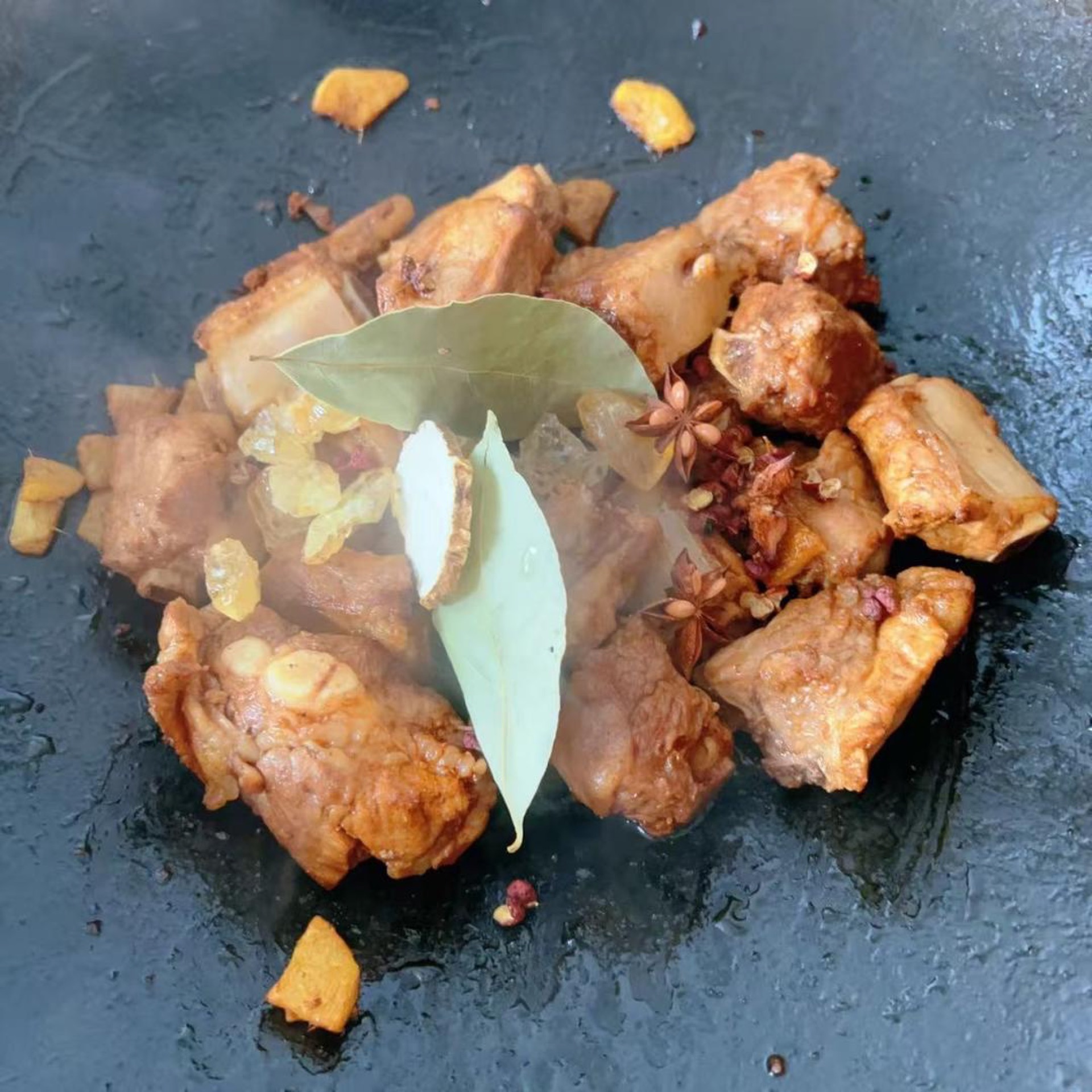
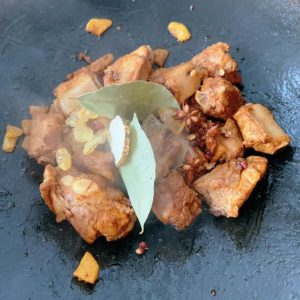
Step 9 — Add the Aromatics
Tip the bowl of aromatics from step 4 into the wok and stir-fry everything evenly.
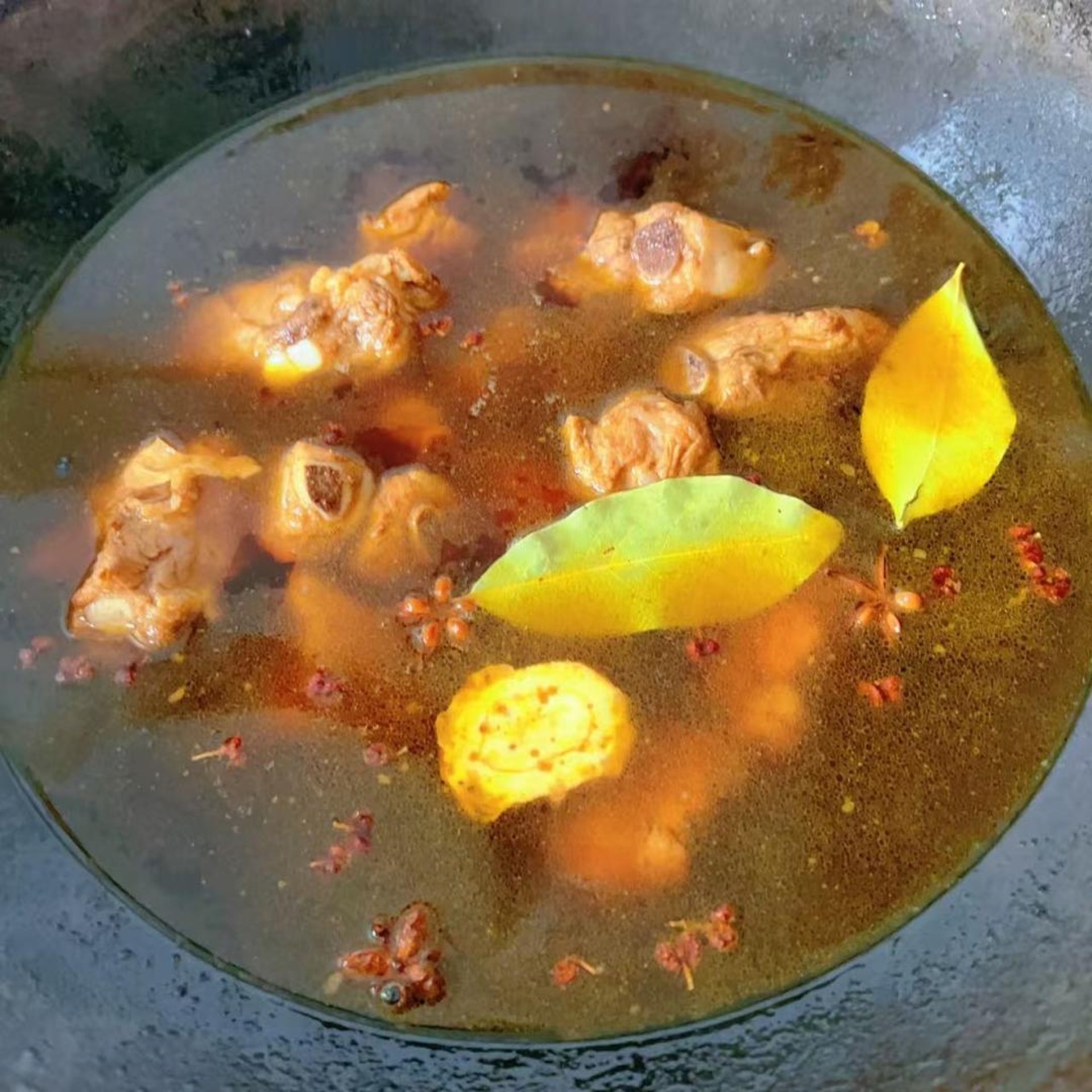
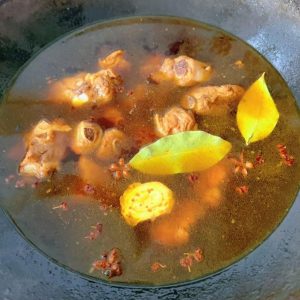
Step 10 — Braise the Ribs
Pour in boiling water level with the ribs, cover, and simmer for about 40 minutes.
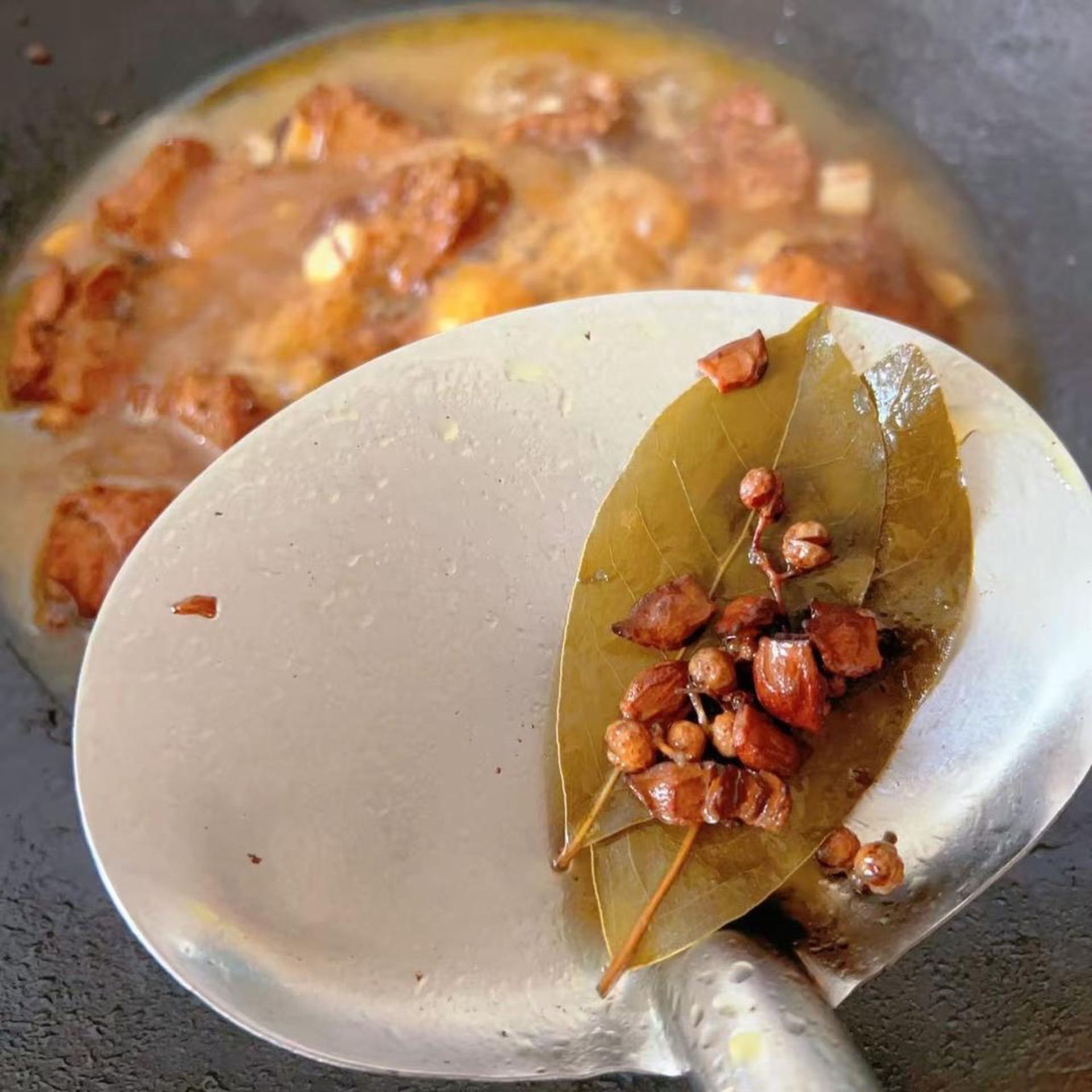
Step 11 — Taste and Strain
Once braised, taste the sauce, fish out and discard the aromatics, and keep some of the braising liquid in the wok.
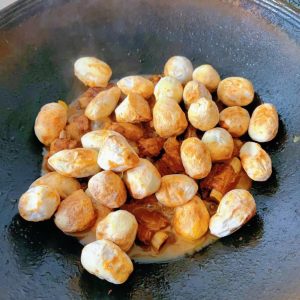
Step 12 — Add the Taro
Add the roasted taro from step 2 to the wok, toss so every piece is coated in sauce, cover, and simmer for about 10 minutes more, stirring a few times so it heats evenly. Season with salt and MSG to taste.
Step 13 — Serve in a Clay Pot
Transfer everything to a clay pot, scatter over the chopped scallions, and in winter set it over a small alcohol burner to bubble away at the table — so warming.
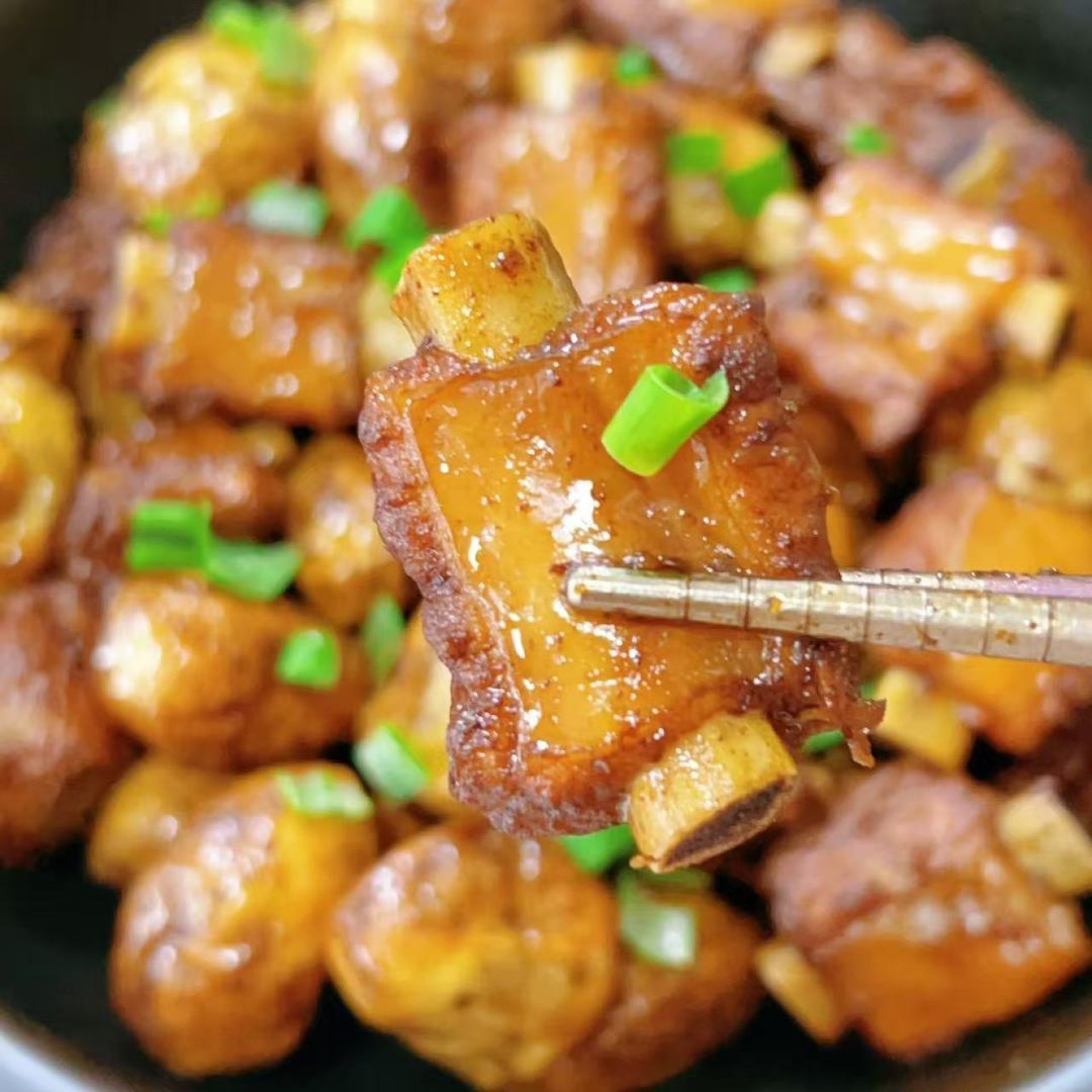
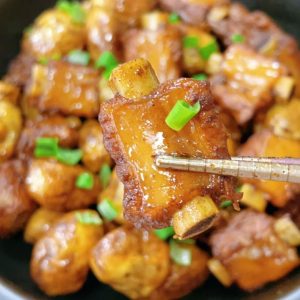
Step 14 — Check the Ribs
The ribs should be soft, tender, and falling off the bone.
Step 15 — Coat the Taro
The taro is glazed in the rich, thick sauce.
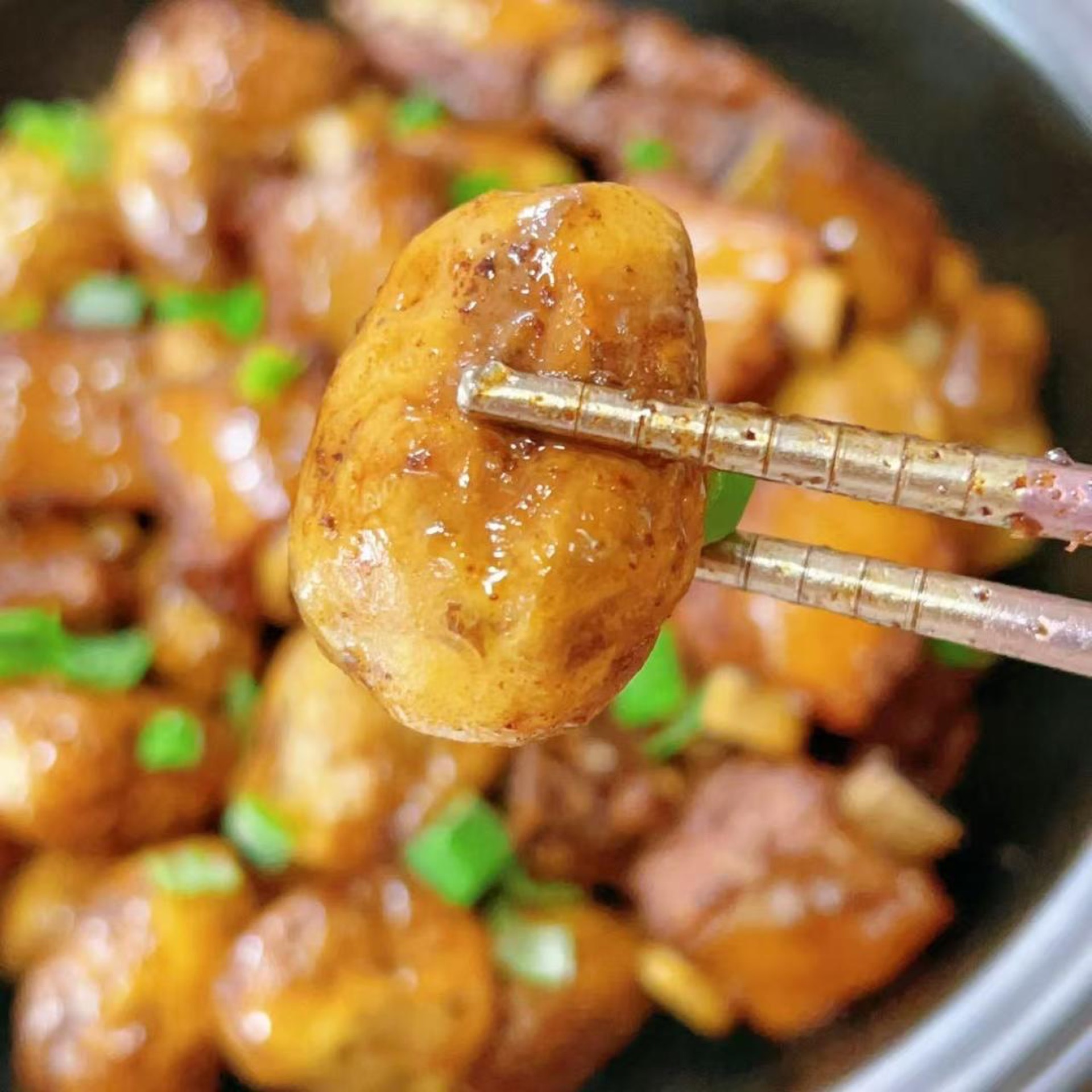
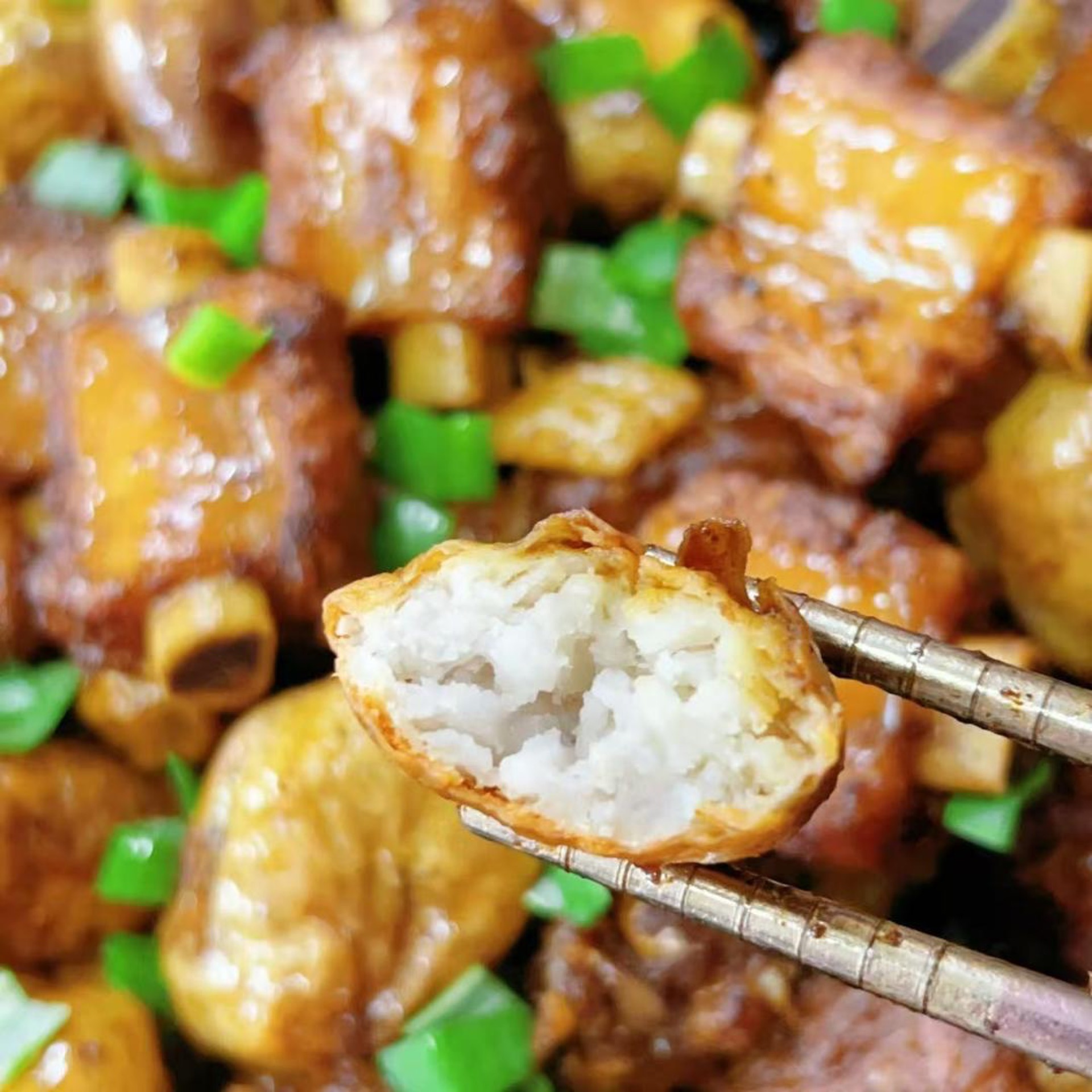
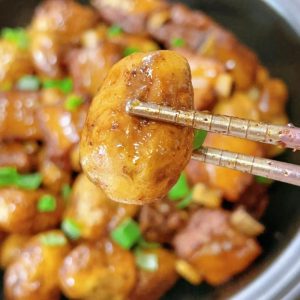
Step 16 — Take a Bite
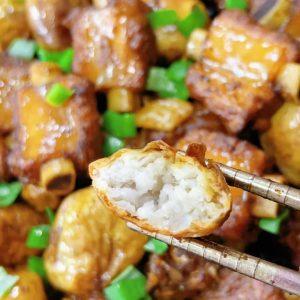
One bite gives a slightly crisp outer layer with a soft, starchy, silky center — so good.
Step 17 — About the Taro
This is red-bud milk taro, the small, creamy variety that holds its shape in a braise.
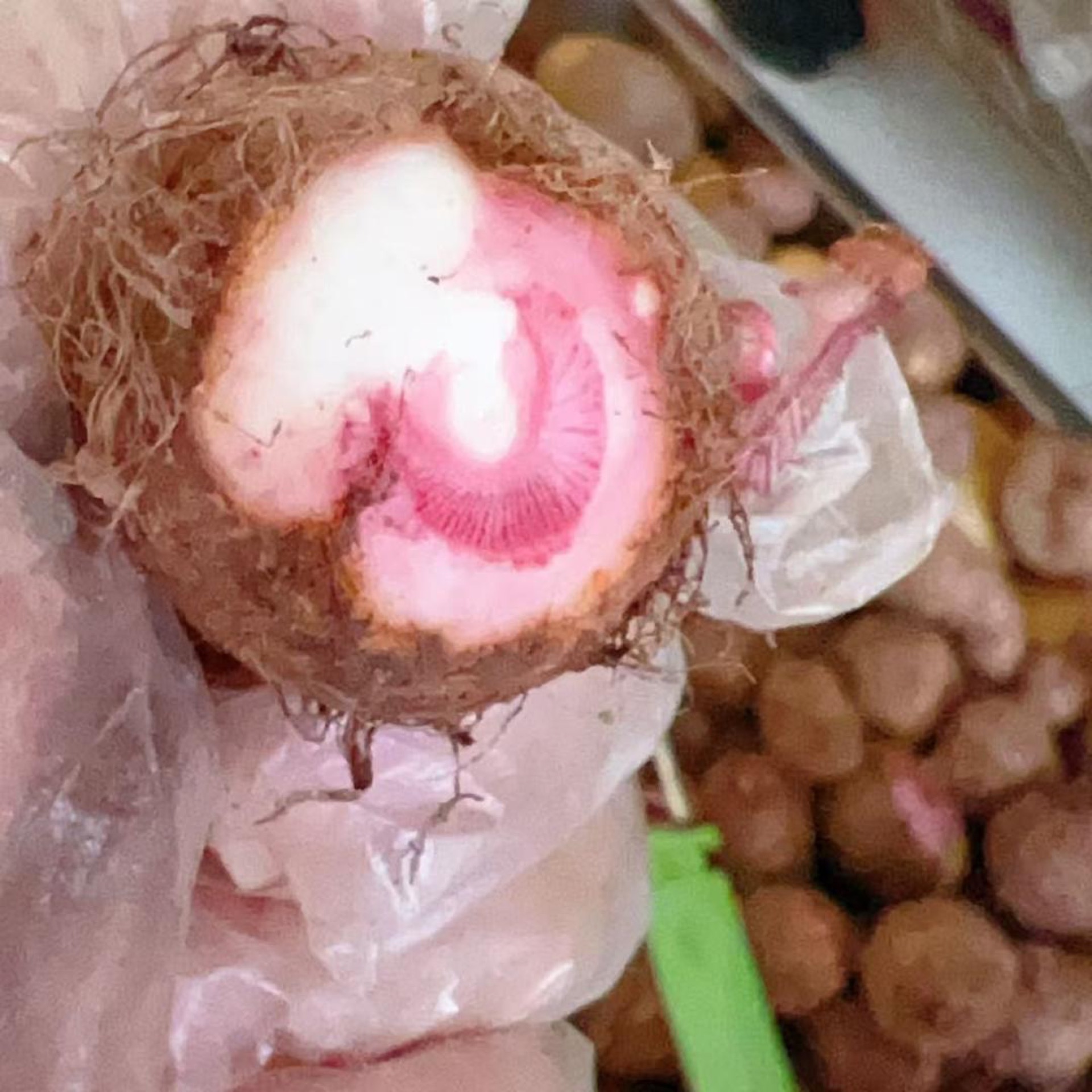
Step 18 — Simmer Time
Let it bubble gently for 30 to 60 minutes at the table so the flavors keep deepening.
Common Mistakes When Making Braised Pork Ribs with Taro
1. Skipping the pre-cook on the taro. Raw taro dropped straight into the braise will drink up liquid and turn to paste, clouding the sauce and losing its shape. The cause is that taro is starchy and porous; the fix is to roast, air-fry, or deep-fry it first so its surface sets before it meets the sauce.
2. Using the wrong taro. Large, watery taro roots break down quickly. The cause is variety, not technique. The fix is to choose small, dense red-bud or “milk” taro, which holds its shape and stays creamy.
3. Boiling the braise hard. A rolling boil agitates the taro and shreds the ribs. The cause is impatience; the fix is to keep the pot at a gentle simmer, with the lid slightly ajar if needed, and to stir the taro only a few times near the end.
4. Adding too much water. If the braise is too thin, the sauce never reduces to a glaze. The cause is eyeballing the liquid; the fix is to add just enough boiling water to come level with the ribs, as the recipe says, and to keep some liquid in the wok when you fish out the aromatics.
5. Not blanching the ribs. Skipping the blanch leaves a scummy, porky foam and a duller sauce. The cause is wanting to save a step; the fix is a quick 5-minute blanch, which removes impurities and lets the sear build clean flavor.
6. Over-seasoning early. Soy sauce reduces and concentrates as the braise cooks down. The cause is salting at the start; the fix is to taste at the end and adjust salt and MSG only after the sauce has reduced.
Variations
- Oven-braised version. Sear the ribs on the stovetop, then transfer everything to a covered Dutch oven at 160°C (325°F) for about 1 hour, adding the roasted taro in the last 15 minutes.
- With tofu puffs. Add a handful of fried tofu puffs in the last 10 minutes; they soak up the sauce beautifully. Our rice cooker braised pork ribs with tofu takes this idea in a set-and-forget direction.
- Spicier braise. Add 3–4 dried red chilies with the aromatics for a Hunan-style kick.
- Sweet-and-sour twist. Add 1 tablespoon of black vinegar and an extra piece of rock sugar for a tangier glaze, in the spirit of our sweet and sour pork ribs.
- With eggs. Simmer a few peeled boiled eggs in the braise for the last 15 minutes, as in our braised pork ribs with eggs.
Frequently Asked Questions
Can I use frozen taro? Yes, but do not thaw it first. Roast or fry it from frozen until golden, then add it to the braise as directed. Frozen taro is often par-cooked, so watch it closely so it does not overcook.
Why did my taro turn mushy? Almost always because it was not pre-cooked, or because the braise boiled too hard. Roast the taro first and keep the simmer gentle.
Can I make this ahead? Yes. Braise the ribs up to 2 days ahead and refrigerate them in the sauce. Reheat gently, then add freshly roasted taro just before serving so it stays crisp-edged.
Is taro safe to eat raw? No. Raw taro contains calcium oxalate crystals that irritate the mouth and throat. Always cook taro thoroughly; the roasting and braising here do the job.
What can I use instead of Shaoxing wine? Dry sherry or a splash of rice wine works well. Avoid “cooking wine” that is heavily salted unless you reduce the added salt.
How to Serve
Serve this braised pork ribs with taro straight from the clay pot over steamed jasmine rice, with a vegetable on the side to cut the richness. A plate of blanched greens with a drizzle of oyster sauce is the classic pairing.
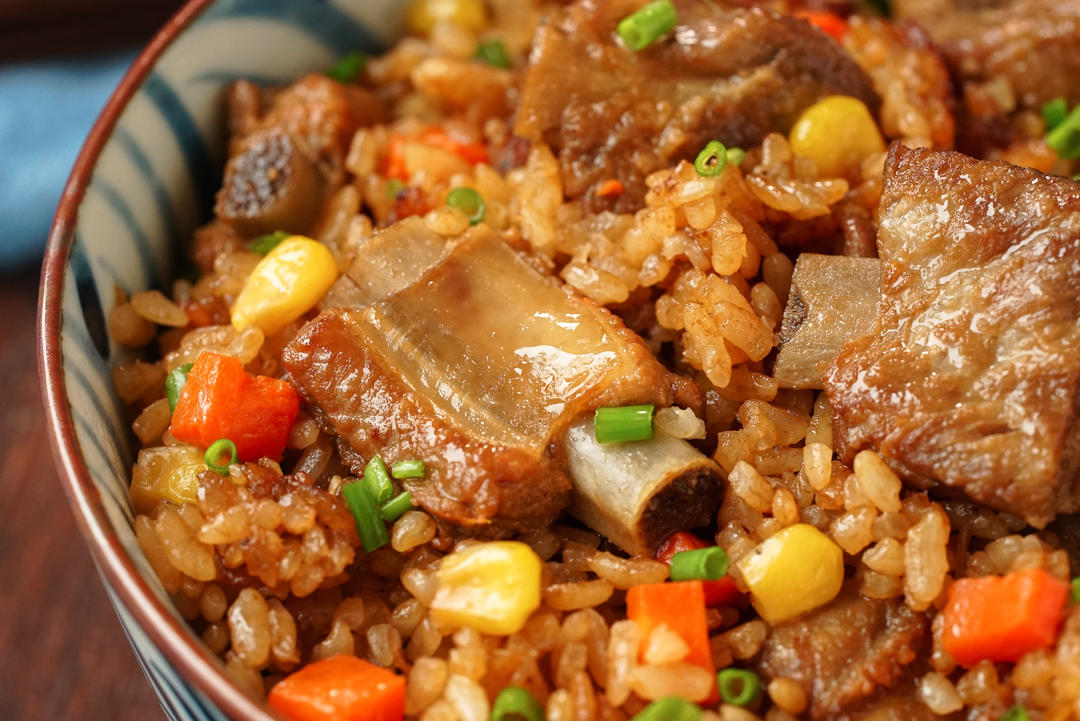
For a heartier one-pot meal, spoon the ribs and taro over one pot rice cooker pork ribs and rice, which lets the sauce soak into every grain. If you want a crisp, fried side to contrast the soft braise, our crispy taro puffs are a lovely way to use up any extra taro. And for a simpler weeknight version of the same idea, our braised pork ribs is a great place to start.

Storage & Reheat
Store leftovers in an airtight container in the refrigerator for up to 3 days. The taro will soften further on reheating, so if you can, store the taro and ribs separately and reheat the taro briefly in the microwave or a hot oven.
To reheat, warm gently on the stovetop over low heat with a splash of water, or microwave covered until steaming hot (165°F / 74°C). Do not boil hard, or the taro will break apart. This dish does not freeze well because the taro becomes grainy, though the ribs alone freeze nicely for up to 2 months.
Allergen Notice
This recipe contains soy (from the soy sauce). If you are cooking for someone with a soy allergy, use a soy-free seasoning sauce and check every label. If you need gluten-free, choose a gluten-free soy sauce or tamari. The recipe as written is otherwise free of dairy, eggs, nuts, and shellfish.
Nutrition Disclaimer
Nutrition information is calculated using an ingredient database and should be considered an estimate. In cases where multiple ingredient alternatives are given, the first listed is calculated for nutrition. Garnishes and optional ingredients are not included.
About the Author & Recipe Development
Lin is the cook and writer behind Woks of Love, where she shares the home-style Chinese recipes she grew up with and the techniques she has refined over years of cooking and testing. This braised pork ribs with taro recipe was developed from a Cantonese home-cooking method, tested repeatedly to get the taro texture right, and written so that a home cook with a wok and an air fryer can make it on a weeknight.
Authoritative References
- USDA safe minimum internal temperature chart — for pork safety temperatures.
- FDA refrigerator and food storage guidance — for safe cooling and storage times.
- Serious Eats food science — for background on caramelization and braising.
Braised Pork Ribs with Taro (芋子排骨煲): Tender Ribs, Creamy Taro

Equipment
- Wok
- Air Fryer
- Clay Pot
- Cutting Board
- Slotted Spoon
Ingredients
For the Ribs
- 600 g pork ribs small meaty ribs, cut into 2-inch pieces
- 1 tbsp cooking oil for stir-frying
- 1 tbsp Shaoxing wine or any cooking wine
- 1 tsp light soy sauce for color
For the Taro
- 500 g taro red-bud taro if available, peeled and cut into 1.5-inch chunks
For the Aromatics
- 20 g yellow rock sugar or 1 1/2 tbsp granulated sugar
- 15 g ginger sliced
- 3 whole star anise
- 10 g Sichuan peppercorns about 1 tbsp
- 1 piece dried angelica root bai zhi, optional
- 2 whole bay leaves
For Finishing
- to taste salt
- a pinch MSG optional
- 1 handful scallions finely chopped
Instructions
- Peel the taro, rinse it clean, drain well, and put it in the air fryer at 180°C (355°F) for 30 minutes.

- After 15 minutes, flip the pieces once and keep roasting for another 15 minutes. This is how the roasted taro looks.
- Blanch the pork ribs for 5 minutes, then drain and scoop them out.
- Prepare 15 g ginger, 2 bay leaves, 3 star anise, 10 g Sichuan peppercorns, 1 piece of dried angelica root, and 20 g yellow rock sugar.
- Heat a little oil in the wok and stir-fry the ginger until fragrant.
- Add the ribs to the wok and stir-fry to drive off the moisture.
- Add 1 ladle of Shaoxing wine to lift the flavor.
- Add 1 small spoon of soy sauce for color.
- Tip the bowl of aromatics from step 4 into the wok and stir-fry everything evenly.
- Pour in boiling water level with the ribs, cover, and simmer for about 40 minutes.
- Once braised, taste the sauce, fish out and discard the aromatics, and keep some of the braising liquid in the wok.
- Add the roasted taro from step 2 to the wok, toss so every piece is coated in sauce, cover, and simmer for about 10 minutes more, stirring a few times so it heats evenly. Season with salt and MSG to taste.
- Transfer everything to a clay pot, scatter over the chopped scallions, and in winter set it over a small alcohol burner to bubble away at the table — so warming.
- The ribs should be soft, tender, and falling off the bone.
- The taro is glazed in the rich, thick sauce.
- One bite gives a slightly crisp outer layer with a soft, starchy, silky center — so good.
- This is red-bud milk taro, the small, creamy variety that holds its shape in a braise.
- Let it bubble gently for 30 to 60 minutes at the table so the flavors keep deepening.



Leave a Reply