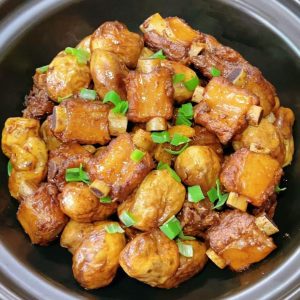
Braised Pork Ribs with Taro (芋子排骨煲): Tender Ribs, Creamy Taro

Braised pork ribs with taro is a Cantonese clay-pot classic where fall-off-the-bone ribs and creamy air-fried taro drink up a glossy star-anise braise.The taro turns silky and golden outside while the ribs stay tender enough to pull apart with chopsticks.
Equipment
- Wok
- Air Fryer
- Clay Pot
- Cutting Board
- Slotted Spoon
Ingredients
For the Ribs
- 600 g pork ribs small meaty ribs, cut into 2-inch pieces
- 1 tbsp cooking oil for stir-frying
- 1 tbsp Shaoxing wine or any cooking wine
- 1 tsp light soy sauce for color
For the Taro
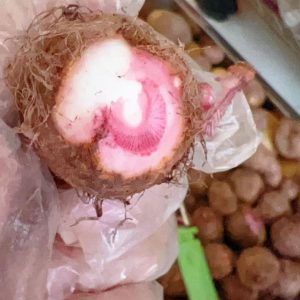
- 500 g taro red-bud taro if available, peeled and cut into 1.5-inch chunks
For the Aromatics
- 20 g yellow rock sugar or 1 1/2 tbsp granulated sugar
- 15 g ginger sliced
- 3 whole star anise
- 10 g Sichuan peppercorns about 1 tbsp
- 1 piece dried angelica root bai zhi, optional
- 2 whole bay leaves
For Finishing
- to taste salt
- a pinch MSG optional
- 1 handful scallions finely chopped
Instructions
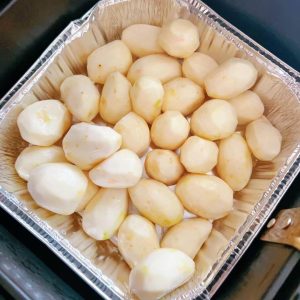
- Peel the taro, rinse it clean, drain well, and put it in the air fryer at 180°C (355°F) for 30 minutes.
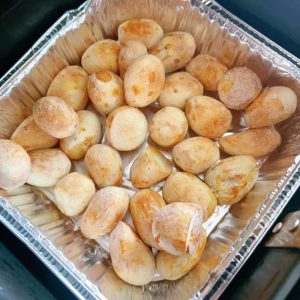
- After 15 minutes, flip the pieces once and keep roasting for another 15 minutes. This is how the roasted taro looks.
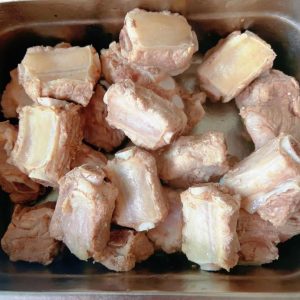
- Blanch the pork ribs for 5 minutes, then drain and scoop them out.
- Prepare 15 g ginger, 2 bay leaves, 3 star anise, 10 g Sichuan peppercorns, 1 piece of dried angelica root, and 20 g yellow rock sugar.
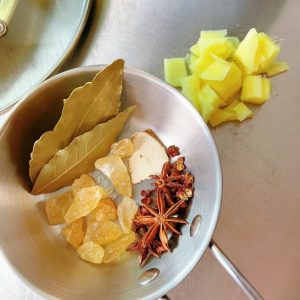
- Heat a little oil in the wok and stir-fry the ginger until fragrant.

- Add the ribs to the wok and stir-fry to drive off the moisture.
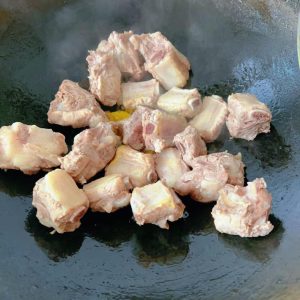
- Add 1 ladle of Shaoxing wine to lift the flavor.
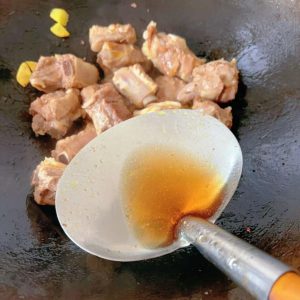
- Add 1 small spoon of soy sauce for color.
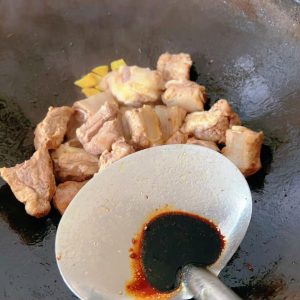
- Tip the bowl of aromatics from step 4 into the wok and stir-fry everything evenly.
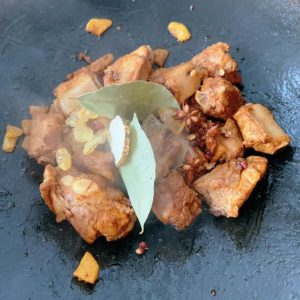
- Pour in boiling water level with the ribs, cover, and simmer for about 40 minutes.
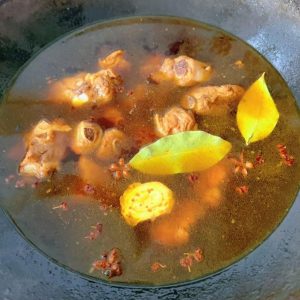
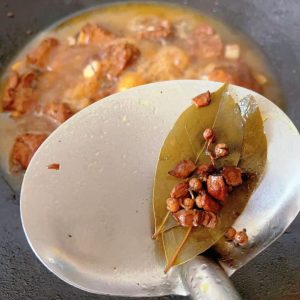
- Once braised, taste the sauce, fish out and discard the aromatics, and keep some of the braising liquid in the wok.
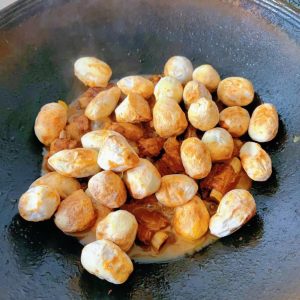
- Add the roasted taro from step 2 to the wok, toss so every piece is coated in sauce, cover, and simmer for about 10 minutes more, stirring a few times so it heats evenly. Season with salt and MSG to taste.
- Transfer everything to a clay pot, scatter over the chopped scallions, and in winter set it over a small alcohol burner to bubble away at the table — so warming.
- The ribs should be soft, tender, and falling off the bone.
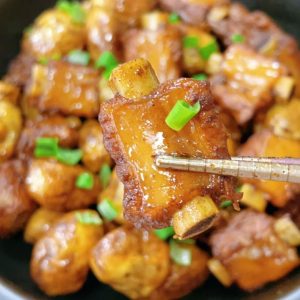
- The taro is glazed in the rich, thick sauce.
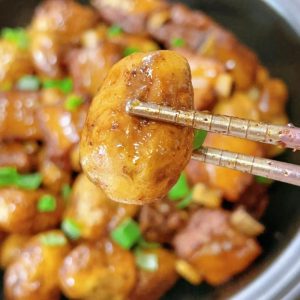
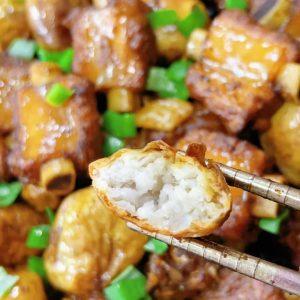
- One bite gives a slightly crisp outer layer with a soft, starchy, silky center — so good.
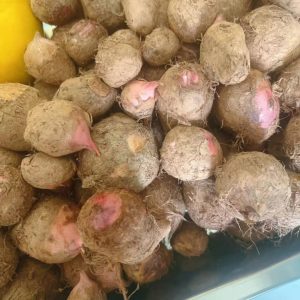
- This is red-bud milk taro, the small, creamy variety that holds its shape in a braise.
- Let it bubble gently for 30 to 60 minutes at the table so the flavors keep deepening.
Notes
Tips: Air-fry or fry the taro before braising so the cubes hold their shape and stay creamy instead of dissolving into the sauce.
Keep the braise at a gentle simmer and stir the taro only a few times, or the cubes will break apart.
Food Safety: Cook pork ribs to a safe internal temperature of 145°F (63°C) and let them rest, then continue braising until fork-tender. Store leftovers in the refrigerator within 2 hours and eat within 3 days; reheat to 165°F (74°C).
Allergen Notice: Soy (soy sauce). Check your soy sauce label if you need a gluten-free version.
Nutrition Disclaimer: Nutrition information is calculated using an ingredient database and should be considered an estimate. In cases where multiple ingredient alternatives are given, the first listed is calculated for nutrition. Garnishes and optional ingredients are not included.