There is a whole category of Chinese home cooking built on making a cheap vegetable taste like a luxury, and braised daikon with minced pork sits right at the top of it. White radish is mild, watery and almost sweet when raw, but give it a few minutes in salted water and then a short braise in a porky, soy-darkened sauce, and it turns silky and juicy, with a texture somewhere between a braised potato and a wedge of melon. The minced pork does not need to be generous — a small handful is enough to perfume the whole wok.
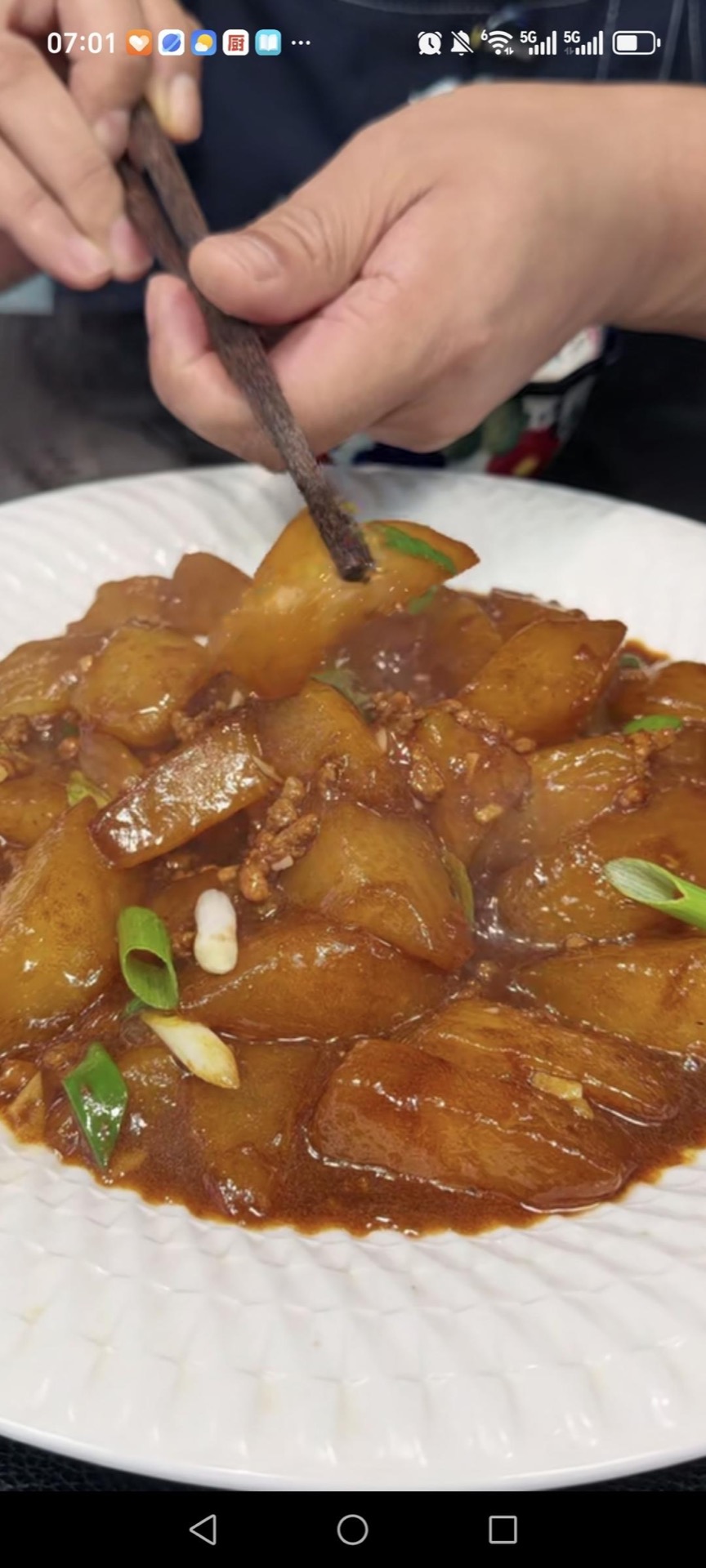
This is the kind of dish that shows up on a weeknight table in northern China without any fanfare. It costs very little, uses one wok, and rewards you with a sauce that begs to be spooned over rice. If you have ever bought a daikon, brought it home, and then wondered what on earth to do with a vegetable the size of your forearm, this recipe is the answer.
What makes it work is the order of operations. The radish is blanched first, not to cook it through but to drive off the sharp, peppery edge that raw daikon carries and to firm up the outside so the chunks keep their shape. Then the pork goes in, then the aromatics, then the liquid, and the whole thing simmers quietly until the radish goes from opaque white to translucent and the sauce clings instead of pooling.
What Is Braised Daikon with Minced Pork?
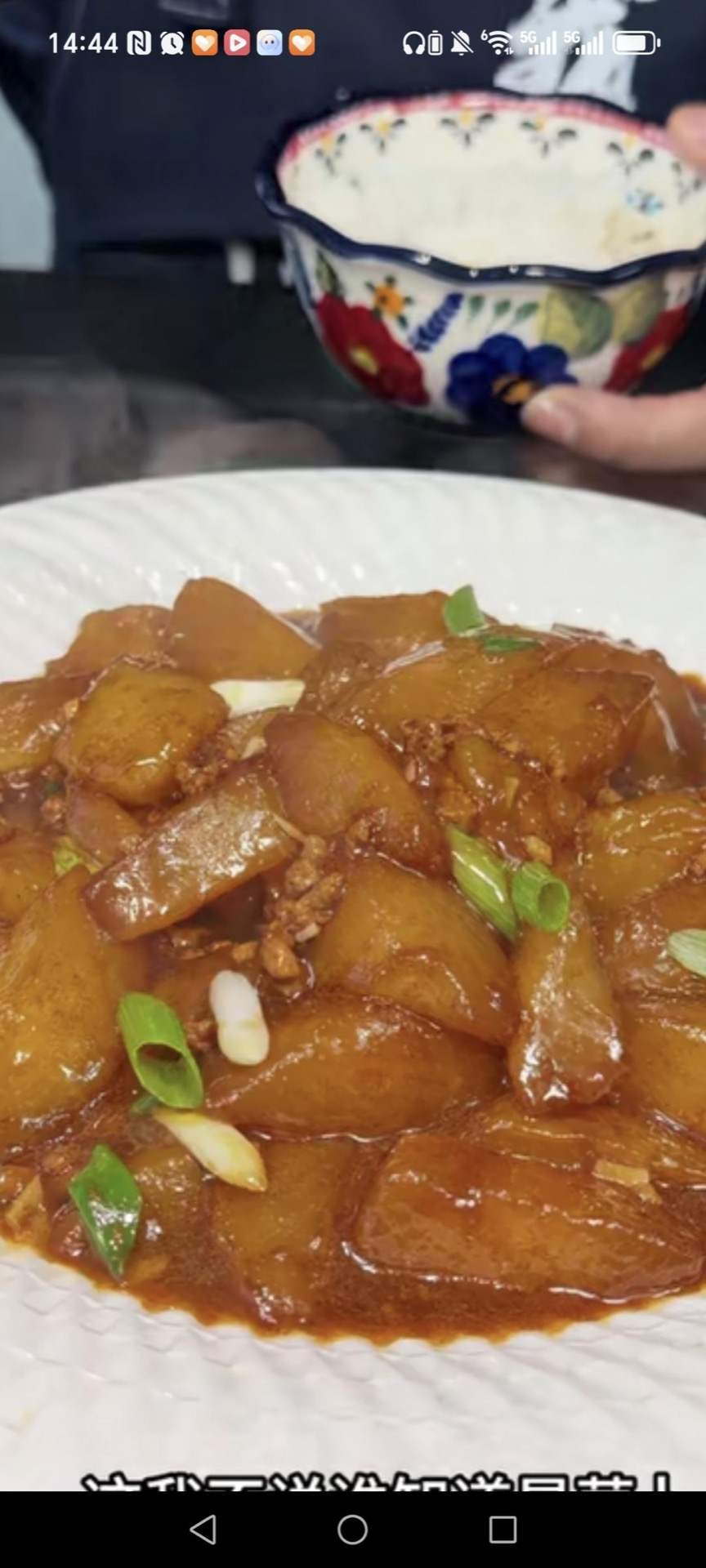
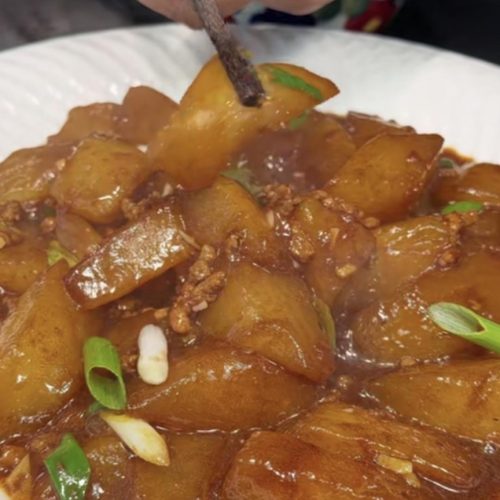
Braised daikon with minced pork — 肉沫烧萝卜 in Chinese, roughly “radish braised with minced meat” — is a homestyle braise from northern China. Daikon (white radish) is cut into chunks, blanched in salted water, then simmered with a small amount of ground pork, star anise, Shaoxing wine and soy sauce until the radish is tender and the sauce is glossy. A little cornstarch slurry at the end turns the braising liquid into a clinging glaze, and raw garlic and scallions go in at the last moment for a fresh, sharp finish.
It belongs to the same family as other Chinese braises where a vegetable plays the lead and a little pork plays support — the radish drinks up the sauce, and the pork gives it body. Served with steamed rice, it is a full meal; served beside other dishes, it is a side that quietly steals the table.
If you love the way a good braise makes a vegetable taste rich, there are a few more dishes in this same family worth cooking next. This braised beef brisket with daikon radish takes the same radish-and-braise logic in a heartier direction.
1Braised Beef Brisket with Daikon RadishA rich, authentic Cantonese-style beef stew where the daikon radish absorbs the savory, umami-packed sauce, making it even more delicious than the beef itself. Features a special ‘whole-sear’ technique for juicier meat.Check out this recipe

And for another take on minced pork doing the heavy lifting in a braise, this braised tiger skin peppers with minced pork is a great next stop.
2Braised ‘Tiger Skin’ Peppers with Minced Pork (虎皮青椒, Hǔ Pí Qīng Jiāo)This is one of those ‘rice killer’ (下饭, xià fàn) dishes from the Chinese home kitchen. Smoky, blistered ‘tiger skin’ green peppers are braised with savory minced pork in a fast, easy, and incredibly delicious one-pan meal. Perfect for a weeknight dinner, it’s my absolute comfort food.Check out this recipe

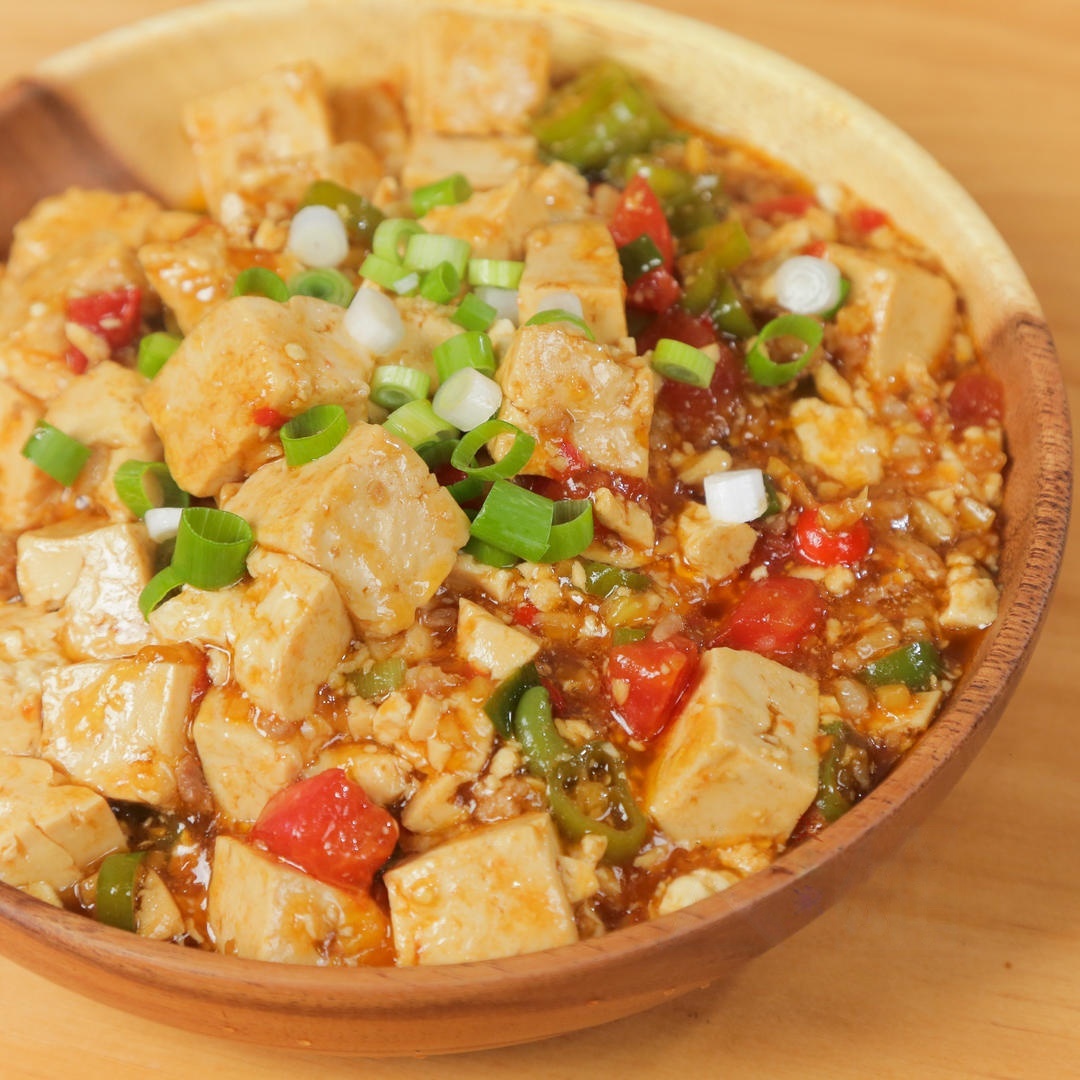
Finally, if you like the soft, saucy texture of this dish, this braised tofu with fresh chilis and minced pork delivers a very similar comfort in a different ingredient.
3Fresh Chili Tofu with Minced Pork (鲜椒肉末豆腐)A fast, 15-minute Sichuan homestyle favorite. Silky tofu and savory minced pork braised with fresh chilis and tomatoes for a bright, ‘rice-killing’ flavor profile.Check out this recipe
Ingredient Notes
Daikon (white radish). Look for a firm, heavy radish with smooth, unblemished skin — heaviness means it is still full of water and will braise up juicy rather than spongy. Smaller radishes tend to be sweeter and less fibrous. If the skin looks thick or the radish has been sitting a while, peel generously.
Ground pork. Coarsely ground is better than paste-fine here, because you want little nuggets of pork rather than a uniform mince. A fattier ratio (about 20–30% fat) gives a richer sauce; if yours is very lean, the tablespoon of pork lard in the ingredients list is worth adding.
Pork lard. Optional but traditional. A small piece melted into the oil adds a round, savory depth that vegetable oil alone cannot match. If you do not have it, do not substitute butter — just use a little more neutral oil.
Star anise. One whole star is enough. It is the classic aromatic for Chinese braises and gives the sauce a warm, faintly licorice backbone that makes the dish taste slow-cooked even when it is not.
Shaoxing wine. Splashed in while the wok is hot, it burns off the alcohol and leaves a mellow, fermented fragrance. Dry sherry is the closest substitute.
Light and dark soy sauce. Light soy does the seasoning; dark soy does the color. “A little” dark soy really means a little — a teaspoon or so is enough to turn the sauce a deep amber without making it taste of nothing but soy.
MSG. Optional, and entirely a matter of taste. A pinch rounds out the savory notes of the pork and radish.
Cornstarch slurry. This is what separates a thin braise from a glossy one. Mix the cornstarch with cold water just before adding, and add it in stages — you want the sauce to coat the radish, not to set into a gel.
Garlic and scallions. Both go in at the very end, off the long simmer. Raw garlic keeps its bite, and the scallion greens stay bright green and crisp.
Ingredients
- 1 large daikon radish (about 1.5 lb / 680 g), peeled and cut into 1-inch chunks
- 1 tbsp salt, for the blanching water
- 2 tbsp neutral oil
- 1 tbsp pork lard (optional)
- 6 oz (170 g) ground pork, coarsely minced
- 1 whole star anise
- 1 tbsp Shaoxing wine
- 2 tbsp light soy sauce
- 1 tsp dark soy sauce
- 1 1/2 cups (360 ml) hot water
- 1/2 tsp MSG (optional)
- 1/2 tsp salt, or to taste
- 3 cloves garlic, minced
- 1 tbsp cornstarch mixed with 2 tbsp cold water
- 2 scallions, green parts only, finely chopped
Equipment Needed
You need a wok and a pot. The pot is for blanching the radish — any saucepan large enough to hold the chunks in a single layer will do. The wok does the braising, and its sloped sides make it easy to toss the radish without breaking it.
A cutting board and a sharp knife matter more than usual here, because daikon is dense and a dull blade will crush the chunks instead of cutting them cleanly. A slotted spoon is the easiest way to move the blanched radish from pot to wok without carrying over a puddle of water, and a lid that fits your wok is needed for the covered simmer. A small bowl for the cornstarch slurry and a couple of prep bowls for the garlic and scallions keep the last, fast steps calm.
Why This Recipe Works
The blanch is doing real work. Daikon raw has a sharp, almost mustardy bite, and blanching in salted water for 3–5 minutes mellows that while also firming the surface so the chunks survive a 10–15 minute simmer without collapsing into mush. Skipping this step is the single most common reason the dish comes out tasting raw and looking ragged.
The pork is browned before any liquid goes in, which builds a fond on the wok that later dissolves into the braise. The star anise goes in with the pork so it blooms in the fat, and the wine goes in while the wok is hot so the alcohol flashes off and leaves only fragrance.
Hot water, not cold, goes into the wok. Adding cold liquid to a hot braise drops the temperature abruptly and can make the pork seize and the sauce taste flat; hot water keeps the simmer steady from the moment the lid goes on.
Finally, the finish is staged. Garlic and scallions go in after the simmer, so they stay sharp and green. The slurry goes in after that, so the sauce thickens around the aromatics rather than burying them. The result is a dish where the radish tastes braised and the aromatics taste fresh — which is exactly the contrast that makes it so good.
Prep & Mise en Place
Peel the daikon and cut it into roughly 1-inch chunks. Try to keep them similar in size so they finish at the same time; irregular chunks mean some turn to mush while others stay firm. If the radish has a very thick skin, take off a little more than you think you need.
Bring a pot of water to a boil and salt it, then blanch the chunks for 3–5 minutes and drain them well in a colander. While that happens, mince the garlic, slice the scallion greens, measure the soy sauces and wine into small bowls, and mix the cornstarch slurry last so it does not settle.
Have the hot water ready before you start stir-frying. Once the pork is browning and the wine has gone in, you will not want to stop and boil a kettle.
Cooking Process
Step 1 — Blanch the Daikon
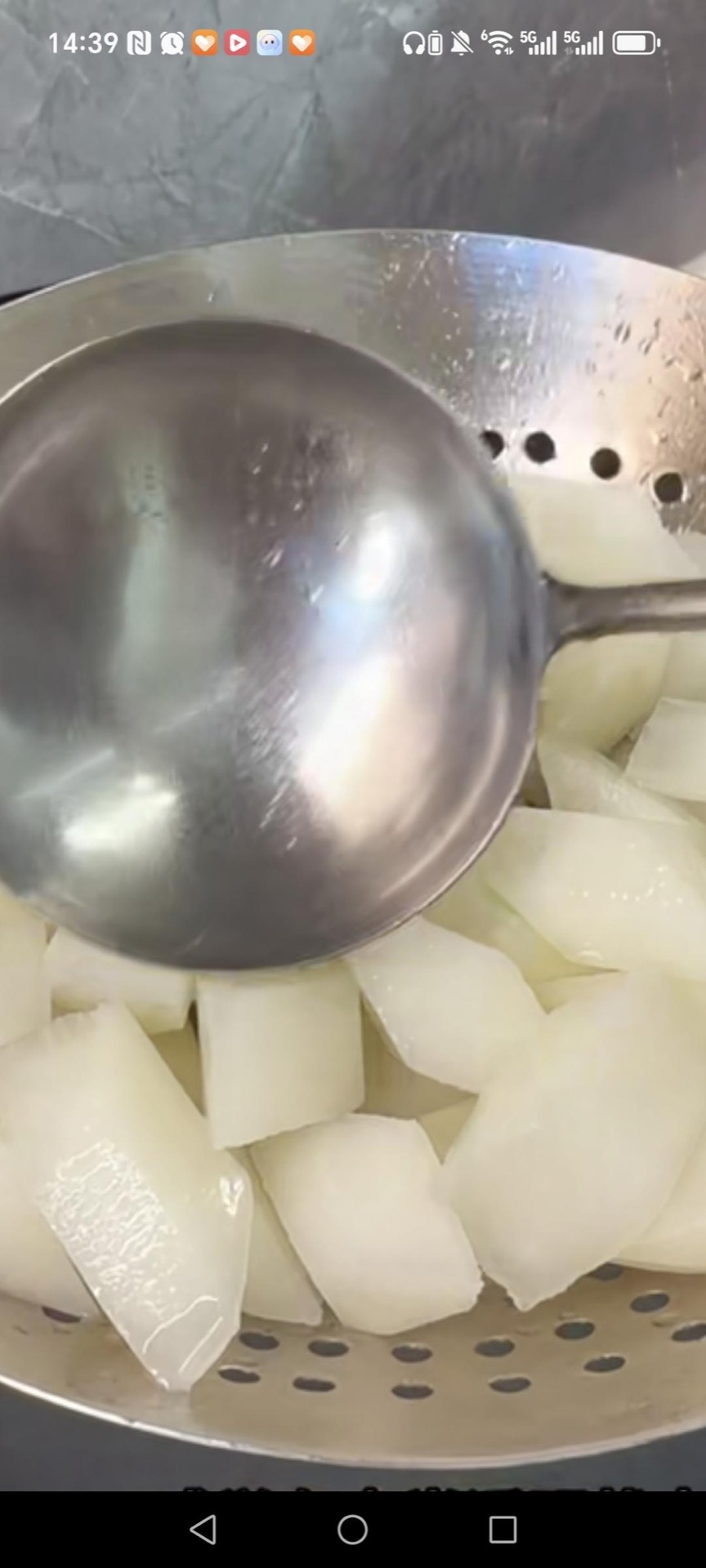
Peel the daikon and cut it into chunks, bring a pot of water to a boil, add a suitable amount of salt, and blanch the radish for 3 to 5 minutes.

Step 2 — Drain the Radish
Scoop out the blanched radish and drain off the water.
Step 3 — Heat the Oil
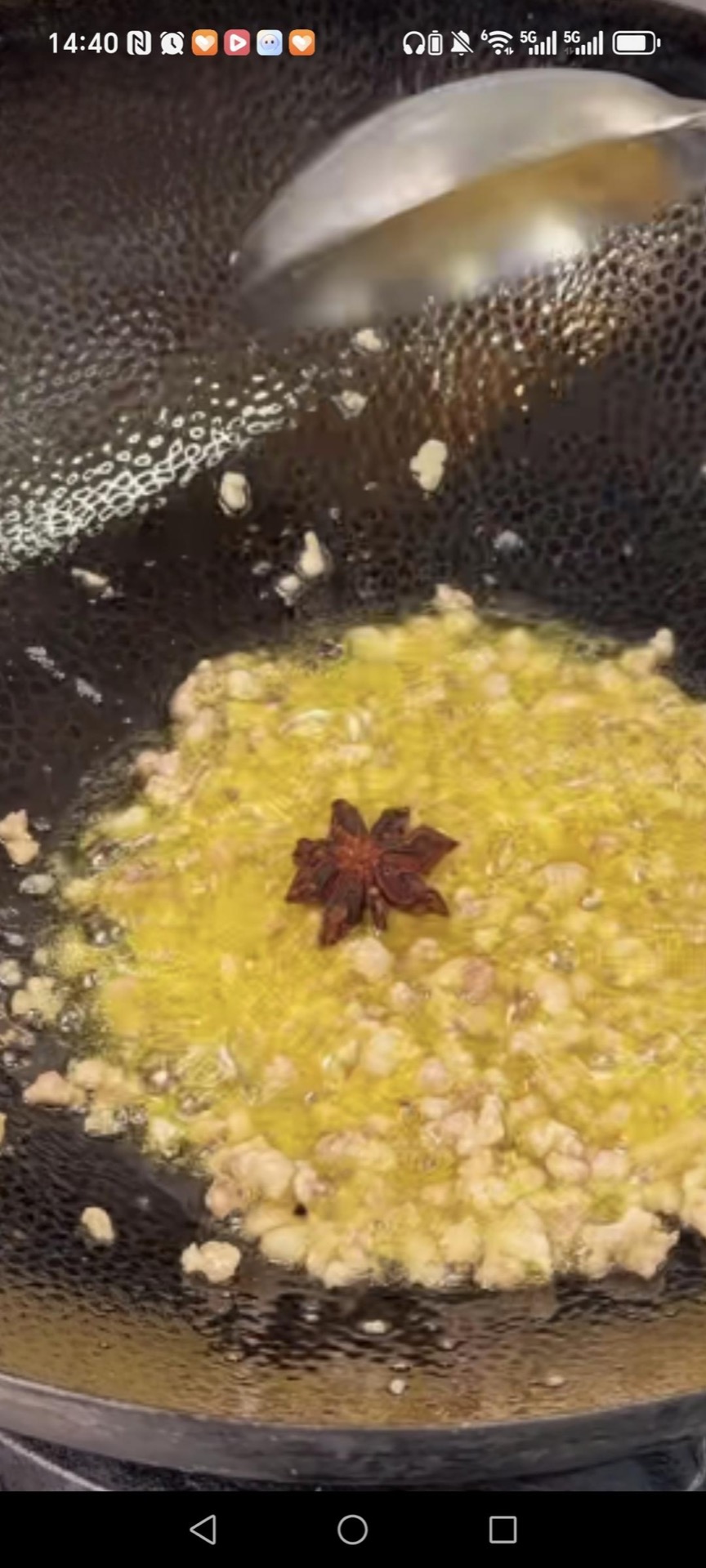
Set a wok over heat, add oil and heat it up, then add a small piece of pork lard and let it melt.

Step 4 — Brown the Pork
Add the ground pork and stir-fry until cooked through, then add one star anise.
Step 5 — Add the Radish
Add the radish chunks to the wok.
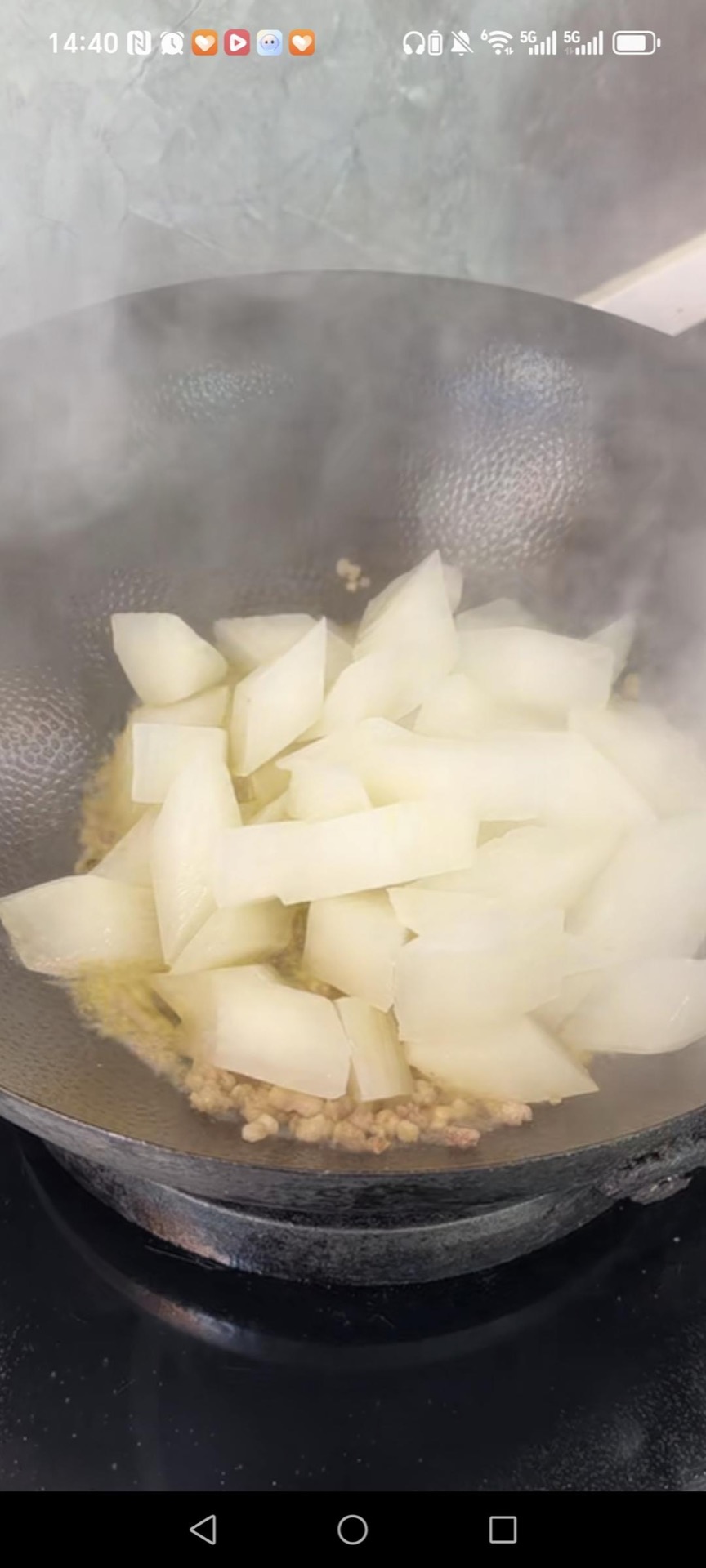
Step 6 — Season with Wine and Soy
Splash in the Shaoxing wine and add a suitable amount of light soy sauce, then just a little dark soy sauce.
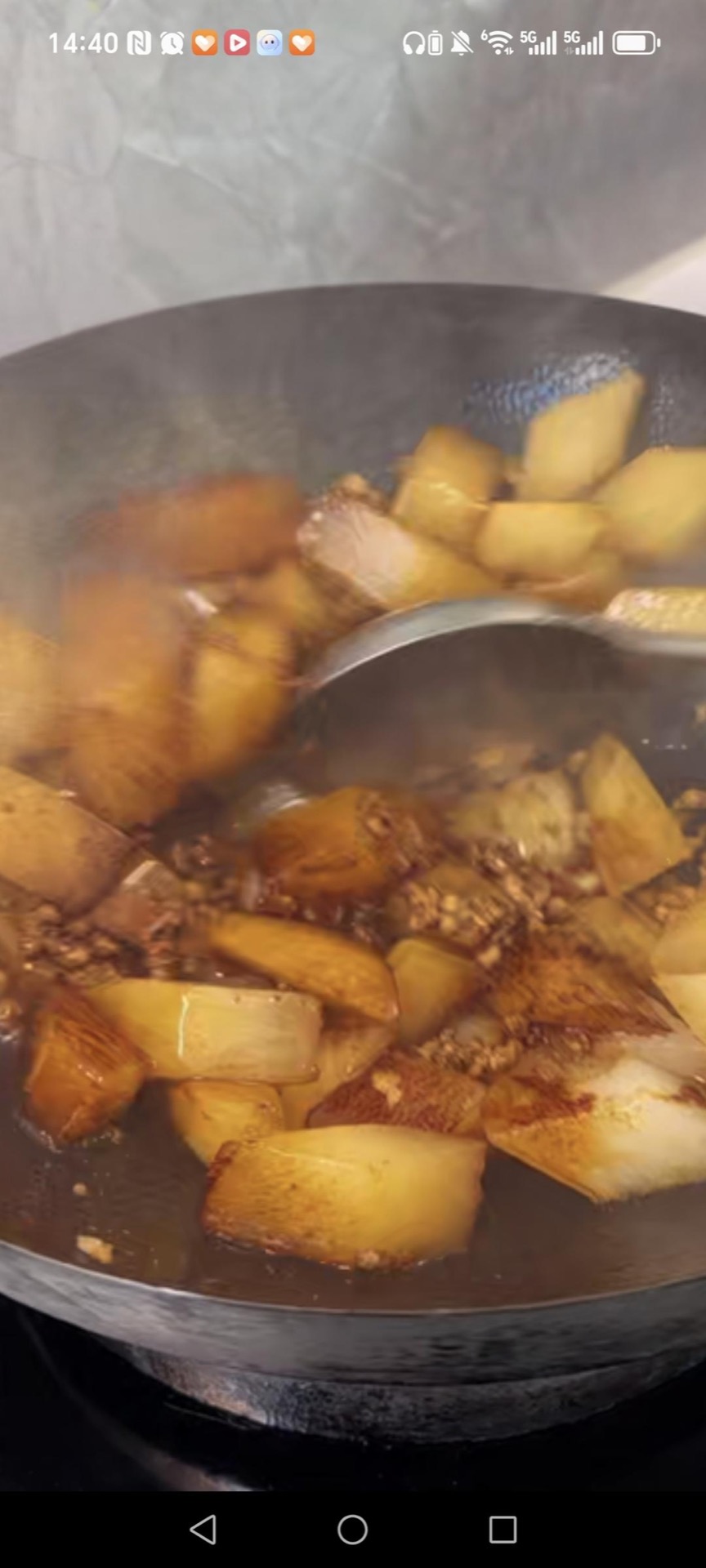
Step 7 — Pour in Hot Water
Add boiling water to the wok.

Step 8 — Season the Braise
Add a suitable amount of MSG and salt.

Step 9 — Simmer Covered
Cover with a lid and bring the wok to a boil, then turn the heat from high to medium-low and simmer for 10 to 15 minutes.

Step 10 — Check the Doneness
This is how the radish should look when it is tender and the sauce has reduced.
Step 11 — Add the Garlic
Open the lid and scatter in a suitable amount of minced garlic, then stir.

Step 12 — Thicken the Sauce
Thicken lightly with a little cornstarch slurry and cook until the sauce is glossy and thick.
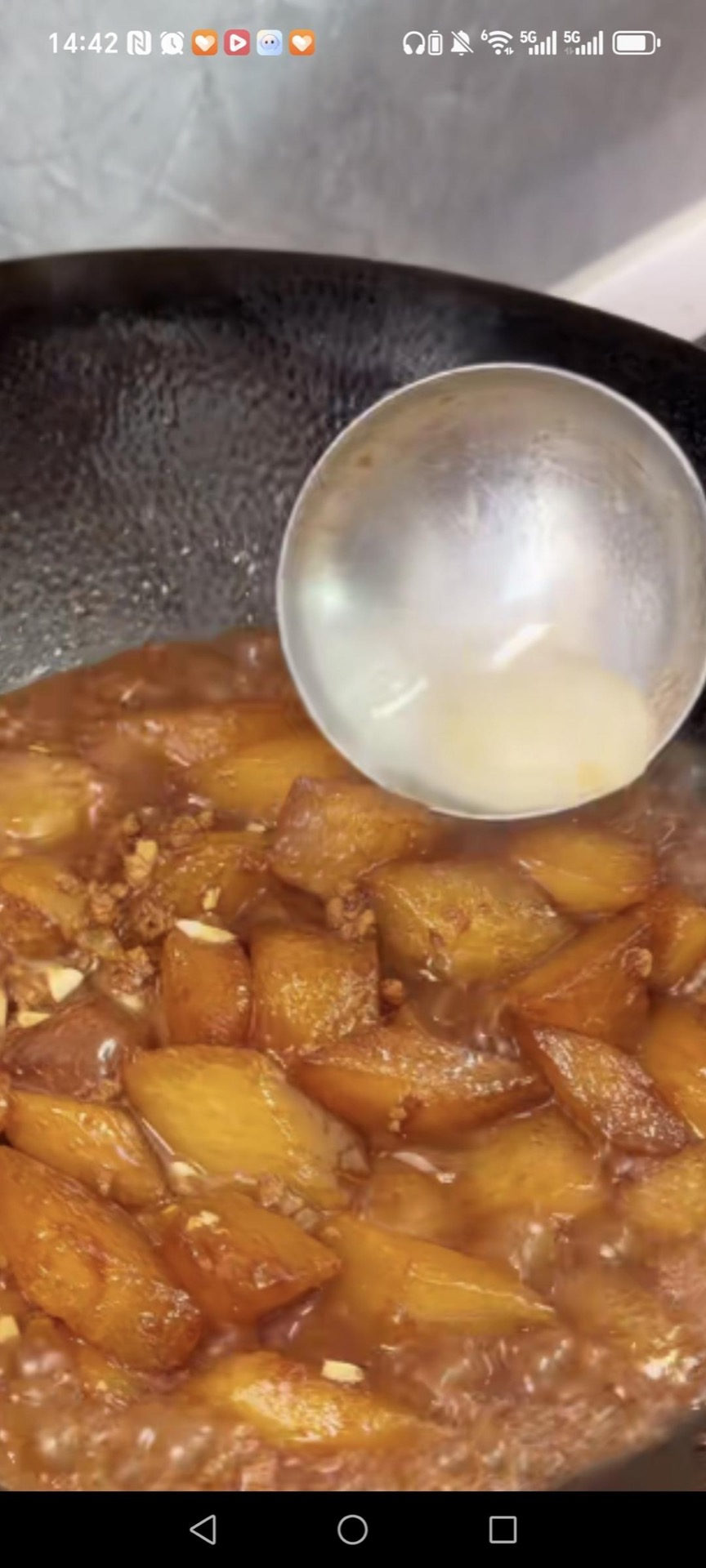
Step 13 — Add the Scallions
Scatter over the green scallion tops.
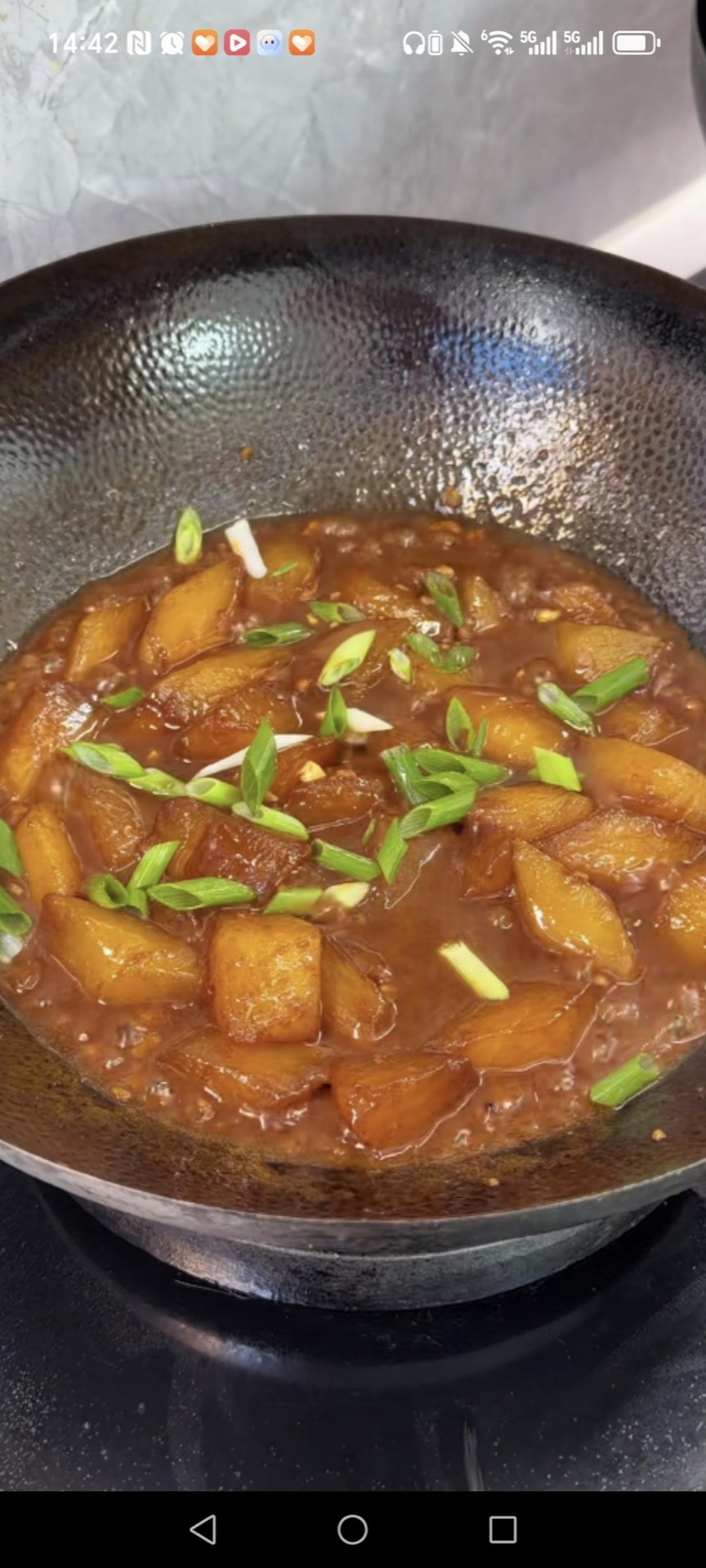
Step 14 — Toss to Combine
Toss everything together evenly.

Step 15 — Plate and Serve
Transfer to a plate, and the braised daikon with minced pork is ready.
Common Mistakes When Making Braised Daikon with Minced Pork
1. Skipping the blanch. The cause is impatience — it feels like an extra pot to wash. The result is radish that tastes raw and peppery and turns mushy in the braise. The fix: blanch for the full 3–5 minutes in salted water, then drain thoroughly before it goes anywhere near the wok.
2. Adding cold water to the hot wok. The cause is grabbing the nearest jug. Cold water shocks the braise, stalls the simmer, and can make the pork tough. The fix: always use hot or boiling water, and add it in one go rather than splashing it in gradually.
3. Overdoing the dark soy sauce. The cause is chasing a deep color. Too much dark soy makes the sauce bitter and muddy and stains the radish an unappetizing near-black. The fix: measure it — about a teaspoon — and remember that the sauce will darken further as it reduces.
4. Adding the garlic at the start. The cause is treating garlic like a normal stir-fry aromatic. Simmered for 10–15 minutes, minced garlic turns dull and slightly bitter. The fix: hold the garlic until the lid comes off, then stir it in raw for that bright, punchy finish.
5. Dumping in the whole slurry at once. The cause is wanting the sauce thick now. Cornstarch added all at once can seize into lumps or set the sauce too stiff. The fix: stir the slurry again, add it in two or three additions, and let the sauce come back to a simmer between each one so you can see how thick it is getting.
6. Cutting the radish unevenly. The cause is rushing the knife work on a dense vegetable. Uneven chunks cook at different rates, so some fall apart before others are tender. The fix: cut into consistent 1-inch pieces and trim any awkward thin slivers away.
Variations
With dried shrimp. Add a small handful of soaked, chopped dried shrimp with the pork for a deeper, brinier flavor — a classic pairing with radish in southern China.
Spicier version. Add a tablespoon of doubanjiang (fermented chili bean paste) with the pork, or a couple of dried chilies with the star anise, for a version with real heat. If you like that direction, our stir fried minced pork with chili peppers scratches a similar itch.
With tofu puffs. Add a handful of halved tofu puffs along with the water; they soak up the sauce and turn the dish into something closer to a one-pot meal.
Pork-free. Swap the ground pork for finely chopped shiitake mushrooms and add an extra tablespoon of oil — the star anise and soy still give it plenty of depth.
Pressure cooker. After browning the pork and adding the liquid, cook under pressure for 5 minutes instead of simmering for 10–15, then finish with the garlic, slurry and scallions on the stovetop.
Frequently Asked Questions
Can I use red radishes instead of daikon? Yes, but they cook faster and taste sharper. Blanch them for only 2 minutes and shorten the simmer to about 8 minutes, checking often.
Do I have to peel the daikon? For this dish, yes. The skin is thick and can stay tough through braising. Peeling also lets the sauce penetrate the chunks evenly.
Why did my radish turn mushy? Almost always too long a simmer or chunks cut too small. Daikon goes from tender to collapsing quickly — check at 10 minutes and pull it off the heat as soon as a knife slides in with slight resistance.
Can I make this ahead? Yes. It reheats beautifully, and many cooks think it tastes better the next day once the radish has sat in the sauce. Reheat gently on the stovetop with a splash of water.
Is this dish spicy? No. As written it is savory and mild, with only the warmth of the star anise. Add chili bean paste or dried chilies if you want heat.
How to Serve
Braised daikon with minced pork is made for plain steamed white rice — the glossy sauce is the point, and rice is the vehicle. A bowl of rice, a spoonful of radish and sauce, and perhaps a simple stir-fried green vegetable is a complete weeknight meal. It also works as part of a larger Chinese spread, sitting comfortably next to a steamed fish or a cold dish.
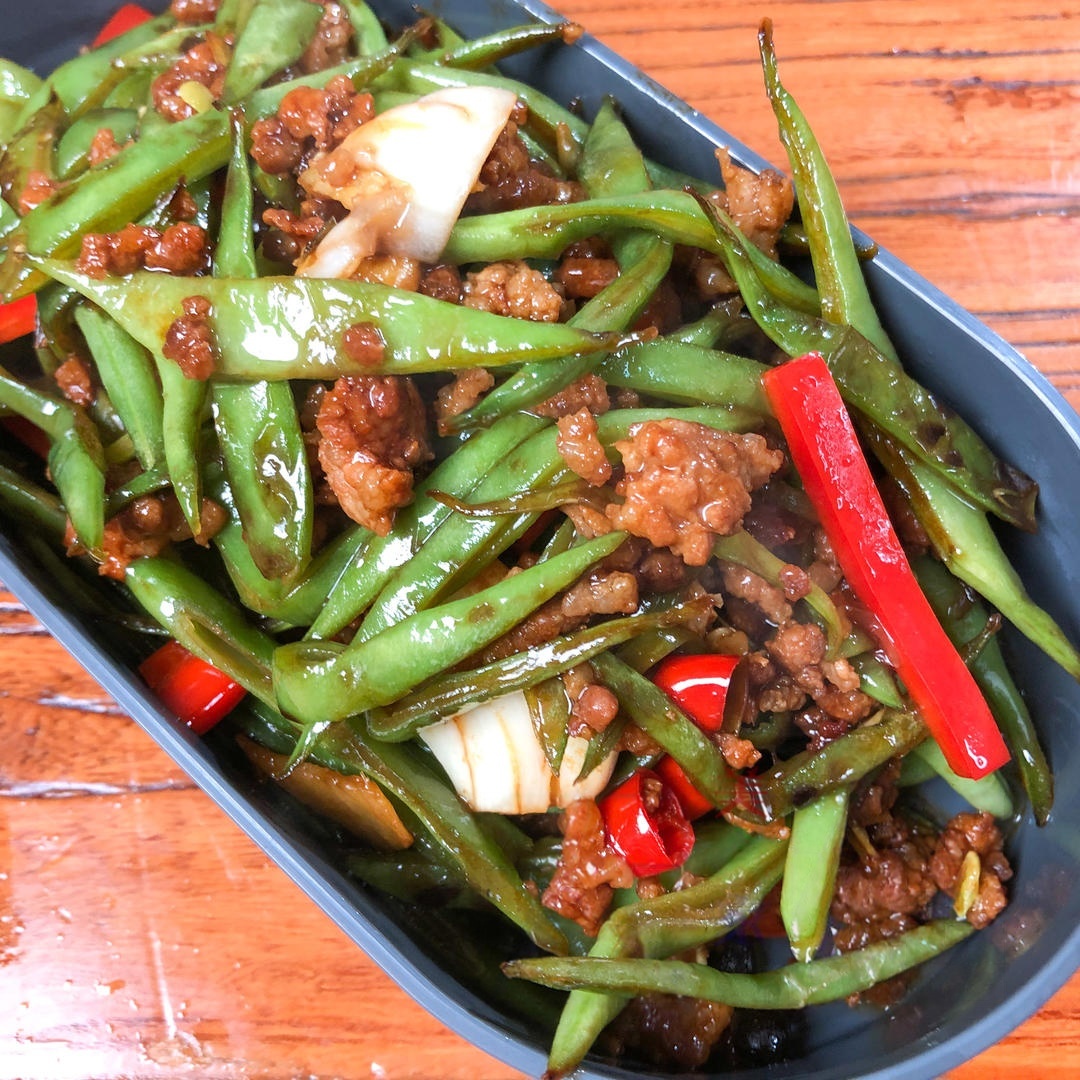
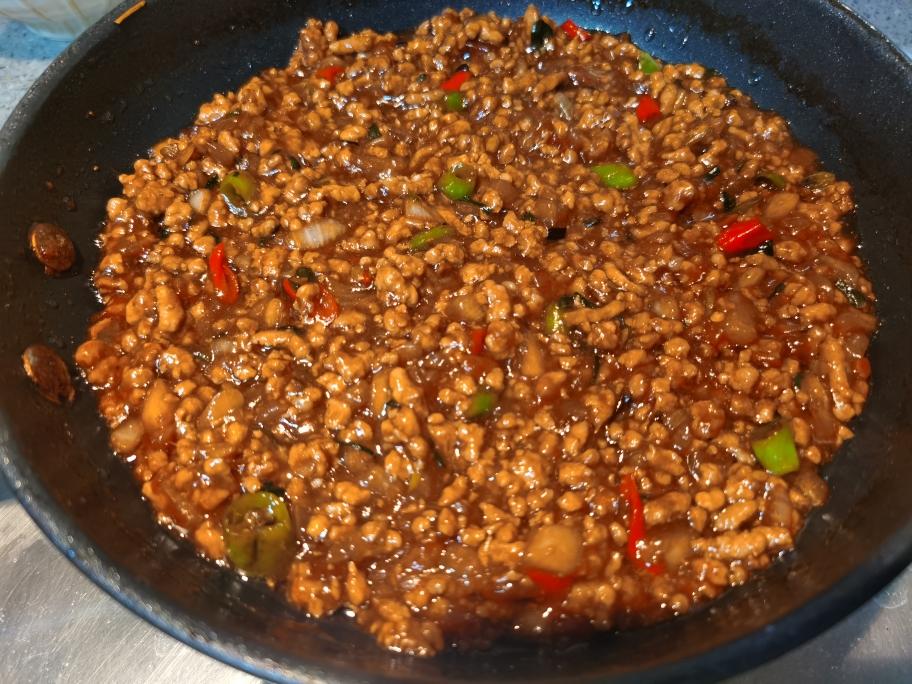
If you want to build out the table with more minced-pork dishes, this silky steamed egg with minced pork is a natural partner, and this stir fried green beans with minced pork adds a crisp, fresh contrast. For a saucier accompaniment, a bowl of savory minced pork sauce alongside plain noodles rounds things out nicely.

Storage & Reheat
Cool leftovers within two hours, then store them in an airtight container in the refrigerator for up to 3 days. The radish will continue to absorb sauce as it sits, so the dish may look drier the next day — that is normal.
Reheat gently in a wok or saucepan over medium-low heat with a splash of water, stirring occasionally, until piping hot throughout (165°F / 74°C). Avoid the microwave if you can, since it heats unevenly and can toughen the pork. Do not freeze this dish — the radish turns watery and spongy on thawing.
Allergen Notice
This recipe contains soy, from both the light and dark soy sauces. If you are cooking for someone with a soy allergy, substitute a soy-free seasoning sauce and check every label, including the Shaoxing wine. If you need it gluten-free, use a gluten-free soy sauce or tamari, and confirm your wine and any packaged stock are gluten-free too. The cornstarch slurry contains no gluten, but always read the packet.
Nutrition Disclaimer
Nutrition information is calculated using an ingredient database and should be considered an estimate. In cases where multiple ingredient alternatives are given, the first listed is calculated for nutrition. Garnishes and optional ingredients are not included.
About the Author & Recipe Development
Lin is the cook and writer behind Woks of Love, where she shares the homestyle Chinese recipes she grew up eating and the ones she has spent years learning to reproduce in a Western kitchen. This recipe is adapted from a family-style northern Chinese braise, tested repeatedly to nail the blanch time and the sauce consistency so the radish comes out tender but never mushy.
Every recipe on the site is cooked, tasted and adjusted before it is published, with amounts given in both US and metric measures so you can cook by weight if you prefer. If you make this one, the notes on the blanch and the staged finish are the two things worth reading twice.
Authoritative References
For safe handling and cooking temperatures for ground pork, see the USDA safe minimum internal temperature chart. General food-safety guidance on cooling and storing leftovers is covered by the FDA refrigerator and food safety guidance.
Braised Daikon with Minced Pork (肉沫烧萝卜): Tender Daikon in Savory

Equipment
- Wok
- Cutting Board
- Slotted Spoon
Ingredients
For the Daikon
- 1 large daikon radish about 1.5 lb, peeled and cut into 1-inch chunks
- 1 tbsp salt for the blanching water
For the Braise
- 2 tbsp neutral oil plus 1 tbsp pork lard if you have it
- 6 oz ground pork coarsely minced
- 1 whole star anise
- 1 tbsp Shaoxing wine
- 2 tbsp light soy sauce
- 1 tsp dark soy sauce
- 1 1/2 cups hot water
- 1/2 tsp MSG optional
- 1/2 tsp salt to taste
To Finish
- 3 cloves garlic minced
- 1 tbsp cornstarch mixed with 2 tbsp water
- 2 whole scallions green parts only, finely chopped
Instructions
- Peel the daikon and cut it into chunks, bring a pot of water to a boil, add a suitable amount of salt, and blanch the radish for 3 to 5 minutes.

- Scoop out the blanched radish and drain off the water.
- Set a wok over heat, add oil and heat it up, then add a small piece of pork lard and let it melt.
- Add the ground pork and stir-fry until cooked through, then add one star anise.
- Add the radish chunks to the wok.
- Splash in the Shaoxing wine and add a suitable amount of light soy sauce, then just a little dark soy sauce.
- Add boiling water to the wok.
- Add a suitable amount of MSG and salt.
- Cover with a lid and bring the wok to a boil, then turn the heat from high to medium-low and simmer for 10 to 15 minutes.
- This is how the radish should look when it is tender and the sauce has reduced.
- Open the lid and scatter in a suitable amount of minced garlic, then stir.
- Thicken lightly with a little cornstarch slurry and cook until the sauce is glossy and thick.
- Scatter over the green scallion tops.
- Toss everything together evenly.
- Transfer to a plate, and the braised daikon with minced pork is ready.























Leave a Reply