If you grew up in a Cantonese household, you already know the smell: garlic hitting a hot wok, then bitter melon, then egg. 苦瓜煎蛋 — bitter melon omelette — is one of those dishes that looks almost too plain to be special, and yet it shows up on dinner tables all summer long, usually next to a bowl of rice and something braised. The melon is sliced thin, salted, squeezed, and fried with smashed garlic until it goes translucent, and then egg is poured over the whole thing and cooked into a soft, golden sheet that gets cut into wedges right in the pan.
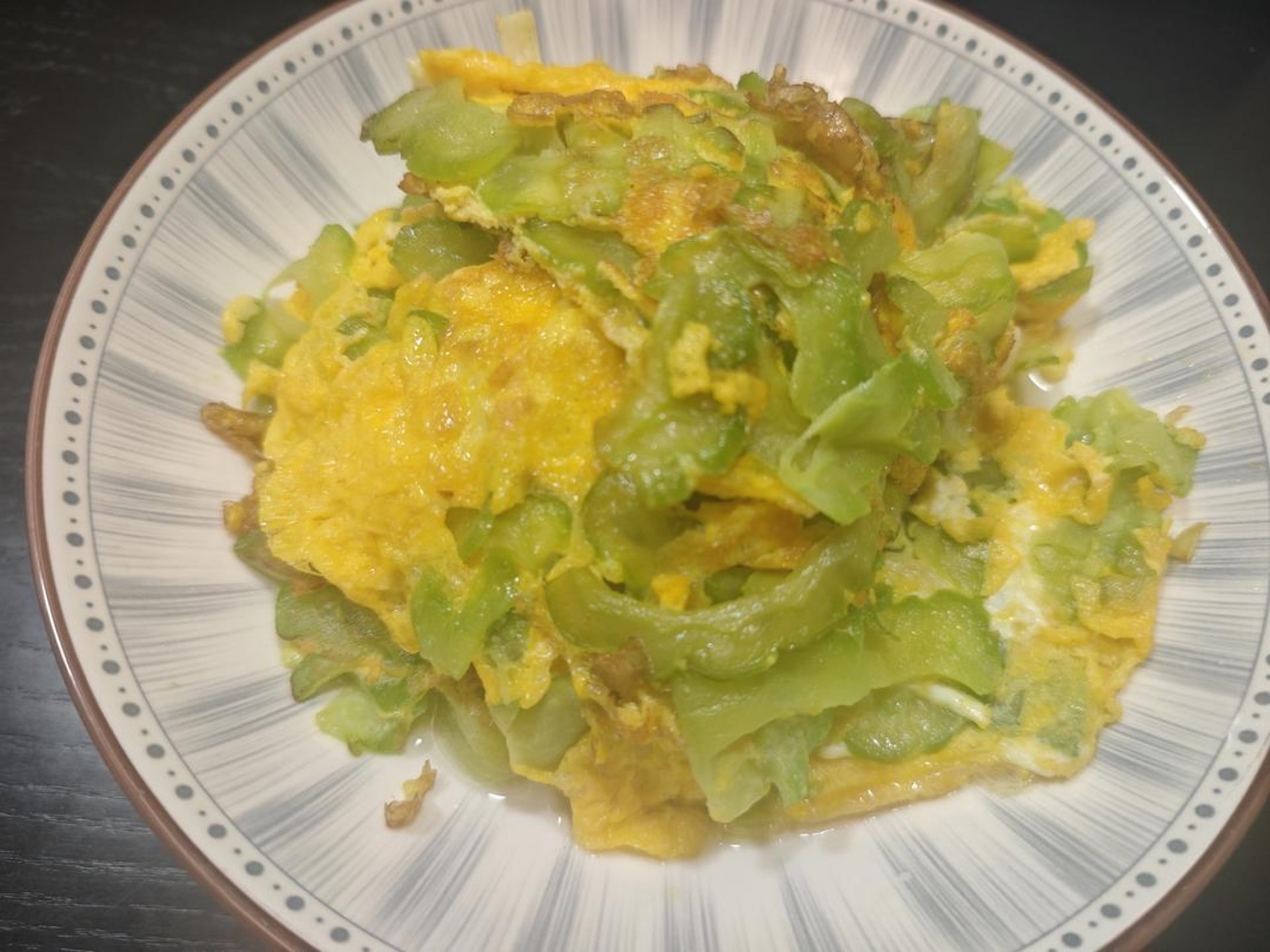
The first bite is a little bitter. The second bite is sweet, because the egg and the garlic are doing their quiet work underneath. By the third bite you understand why this dish has survived for generations without a single trendy ingredient in it.
What makes it worth cooking at home is how little it asks of you. One gourd, four eggs, a few cloves of garlic, salt, and oil. Fifteen minutes of prep, twenty minutes at the stove, and a technique that is forgiving enough for a weeknight but precise enough to be proud of. The only real skill is patience with the melon: salt it, squeeze it, and cook it long enough that the bitterness softens into something you actually crave.
This version keeps the classic proportions and adds a couple of small refinements — a pinch of white pepper in the egg, a brief rest for the salted melon, and a cross-cut flip that keeps the omelette intact instead of scrambling it. If you have ever eaten bitter melon and wondered why anyone bothers, this is the recipe to change your mind.
What Is Bitter Melon Omelette?
Bitter melon omelette, called 苦瓜煎蛋 (kǔguā jiāndàn) in Mandarin and roughly “bitter gourd pan-egg” in English, is a home-style Cantonese dish made by stir-frying thin slices of bitter melon with garlic and then setting beaten egg over them in the pan. It is not a fluffy diner omelette and it is not a frittata. It is closer to a Chinese egg pancake: a thin, tender sheet of egg studded with soft, translucent ribbons of gourd, cut into wedges and served with rice.
The dish belongs to a whole family of Chinese egg-and-vegetable pan-fries — tomato and egg, chive and egg, preserved radish and egg — where egg acts as a binder and a buffer rather than the star. What makes the bitter melon version distinct is the gourd itself. Bitter melon (Momordica charantia) is prized in Chinese cooking for its cooling character and its assertive bitterness, which is treated as a feature rather than a flaw. The salt-and-squeeze step is the traditional way of dialing that bitterness down to a level that complements the egg instead of overwhelming it.
If you love the soft, barely-set texture of Chinese egg dishes, our silky scrambled eggs with shrimp uses the same gentle heat and quick hand to keep the curds tender.
1Silky Scrambled Eggs with Shrimp (Huadan Xiaren)A Cantonese classic featuring tender, glossy scrambled eggs and snappy shrimp. This recipe uses a special yolk-heavy ratio and a residual heat cooking technique to ensure the eggs remain moist and silky, never rubbery.Check out this recipe

Another dish that shares the same egg-and-liquid logic is our style egg drop soup, where a steady stream of beaten egg turns a pot of broth into something silky.
210-Minute Restaurant-Style Egg Drop Soup (Dan Hua Tang)A quick and authentic Chinese Egg Drop Soup featuring silky egg ribbons in a savory, seasoned chicken broth. Perfect as a starter or a light meal.Check out this recipe

And for a lighter, seaweed-forward take on the same technique, our seaweed egg drop soup shows how egg can carry a whole bowl without any meat at all.
3Easy Seaweed Egg Drop Soup (紫菜蛋花汤)A classic, comforting Chinese soup ready in 10 minutes! Learn the secrets to perfect, silky egg ribbons and a savory broth with simple pantry ingredients. It's the easiest, most satisfying soup you'll make all week—even better than takeout!Check out this recipe
Ingredient Notes
Bitter melon. Look for a gourd that is firm, bright green, and heavy for its size, with bumps that are crisp rather than soft. Smaller, thinner melons tend to be more bitter; larger, paler ones are milder. Both work here — just adjust the salting time. The Chinese variety (long, pale green, heavily ridged) is what you want for this dish; the smaller Indian bitter melon is far more bitter and will need a longer soak.
Eggs. Four large eggs is the right ratio for one medium gourd. Room-temperature eggs beat smoother and set more evenly, so pull them out of the fridge ten minutes ahead if you can. Older eggs actually work fine here since we are not relying on structure.
Garlic. Smashed, not minced. Smashing releases the oils without burning as fast, and the larger pieces are easy to leave in or fish out. Three cloves is the baseline; four is fine if you love garlic.
Salt. You will use salt twice: once to draw water and bitterness out of the melon, and once in the egg. Do not skip the first salt — it is the single most important step in the recipe.
Oil. A neutral high-smoke-point oil like peanut, canola, or avocado. Bitter melon absorbs oil quickly, so you will likely need a little more than you think. Add it in stages rather than all at once.
Optional additions. A quarter teaspoon of white pepper in the egg adds warmth without heat. A few drops of sesame oil at the end is a nice finish. Some cooks add a pinch of sugar to the melon to further tame the bitterness — traditional in parts of Guangdong, and worth trying if your gourd is particularly assertive.
Ingredients
Here is everything you need for four servings. Full measurements are in the recipe card at the bottom of this post.
- 1 large bitter melon (about 12 oz / 340 g), halved, seeded, sliced 1/8-inch thin
- 1 tsp salt, for salting the melon
- 4 large eggs, room temperature
- 1/2 tsp salt, plus more to taste
- 1/4 tsp white pepper (optional)
- 2 tbsp neutral oil, divided, plus more as needed
- 3 cloves garlic, smashed and peeled
If you are also cooking rice to go with this, our rice to water ratio chart all methods covers every pot, cooker, and stovetop method in one place.
Equipment Needed
You do not need much for this dish, but the pan matters more than you might expect.
- A wok or a wide nonstick skillet. A carbon steel wok is traditional and gives you the best control over the egg, but a 10- or 12-inch nonstick skillet works beautifully and is more forgiving if you are worried about sticking. If you are cooking on an electric coil or induction cooktop, see our guide to how to stir fry without wok for the pan and heat adjustments that make it work.
- A chef’s knife and cutting board. A sharp knife makes thin, even melon slices much easier, and even slices are what let the gourd cook uniformly.
- A mixing bowl and whisk or fork. Any bowl wide enough to beat four eggs without splashing.
- A slotted spoon or spider. Useful for lifting the cooked melon out if you want to cook it in batches.
- A flexible spatula. Essential for the cross-cut flip in the final step.
Why This Recipe Works
Salting tames the bitterness without hiding it. The salt draws out water and some of the bitter compounds from the gourd’s flesh. Squeezing that water out is what turns a harsh, crunchy melon into something soft and almost sweet. This is the step most home cooks skip, and it is the reason their omelette tastes aggressively bitter.
Garlic bridges the two flavors. Garlic’s sweetness and savoriness sit right between the melon’s bitterness and the egg’s richness. Blooming it in oil first infuses the whole pan, so every bite carries that aromatic base.
Cooking the melon before the egg keeps textures separate. If you pour the egg over raw melon, the gourd steams and releases water into the egg, which makes the omelette weep and turn rubbery. Cooking the melon first drives off that moisture and lets the egg set cleanly around it.
A moderate, steady heat gives you a tender sheet. High heat makes the egg puffy and tough; low heat makes it greasy. Medium heat, with the egg poured in an even layer, gives you the custardy interior and lightly golden edges that define a good 苦瓜煎蛋.
The cross-cut flip keeps it intact. Cutting the set omelette into four wedges before flipping means each piece turns easily with a spatula, without folding or tearing the sheet. It is a small trick that makes the dish look intentional.
Prep & Mise en Place
Get everything ready before the wok goes on the heat, because once the garlic hits the oil, the dish moves quickly.
1. Salt the melon first. Toss the thin slices with a teaspoon of salt in a bowl, then let them sit for 10 to 15 minutes. You will see water bead on the surface. Squeeze the slices firmly in your hands, a handful at a time, over the sink, discarding the liquid. This is the single most important prep step in the recipe. If you have time, a longer 30-minute rest makes an even milder omelette; some cooks go as far as a brief cold-water soak after salting, which we note in the variations below.
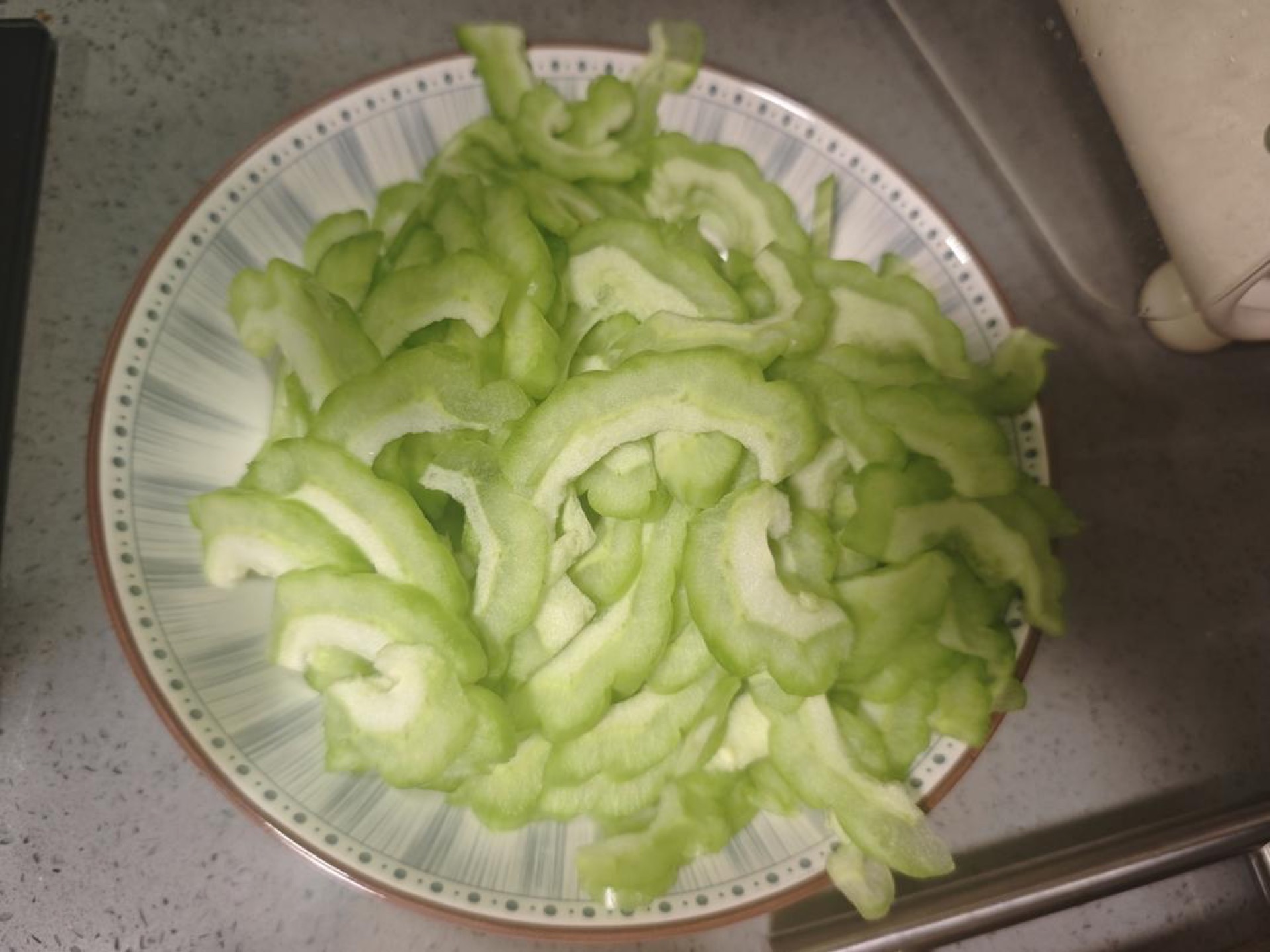
2. Slice evenly. Aim for 1/8-inch half-moons. Thicker slices stay crunchy and bitter; thinner slices dissolve into the egg and lose their identity. Consistency matters more than exact thickness.
3. Beat the eggs thoroughly. Whisk until the mixture is uniform and slightly frothy — no streaks of white. Add the half teaspoon of salt and the optional white pepper now, not later, so the seasoning is distributed evenly.
4. Smash the garlic. Lay each clove under the flat of your knife, press down firmly with the heel of your hand, and the skin slips right off. Leave the cloves whole or cut them in half; do not mince.
5. Stage your station. Melon squeezed and in a bowl, eggs beaten, garlic smashed, oil within reach, spatula ready. If you are adding rice, start it now so it finishes with the omelette.
If you plan to serve this with a meat dish, our twice-cooked pork is a classic pairing and comes together in about the same amount of time.
Cooking Process
Step 1 — Prep the Melon and Garlic
Halve the bitter melon lengthwise, scrape out the seeds and white pith with a spoon, and slice it crosswise into 1/8-inch thin half-moons; smash the garlic cloves with the flat side of your knife and peel them.
Step 2 — Beat the Eggs
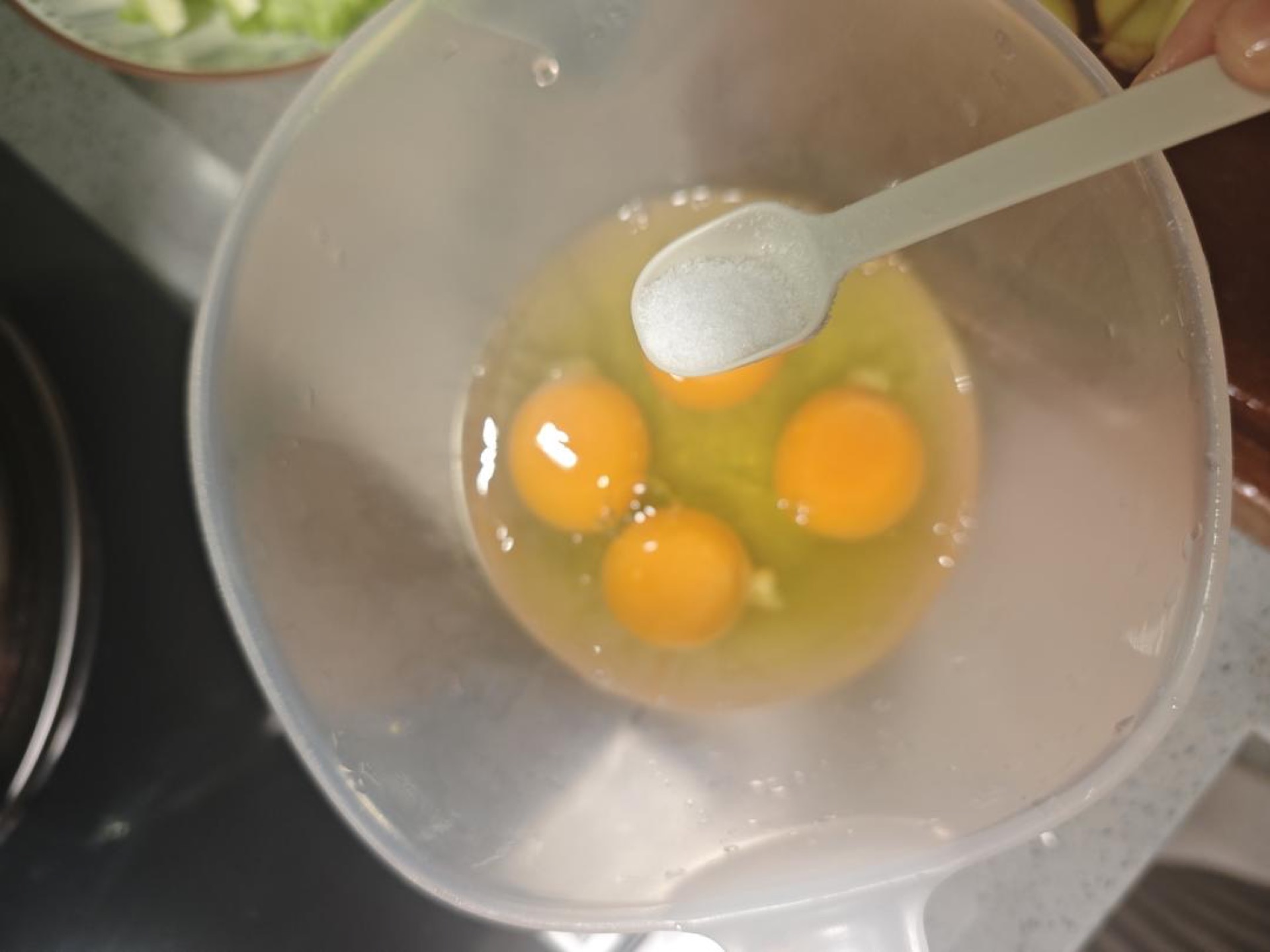
Crack the four eggs into a bowl, add half a teaspoon of salt, and whisk until the yolks and whites are completely combined and slightly frothy.
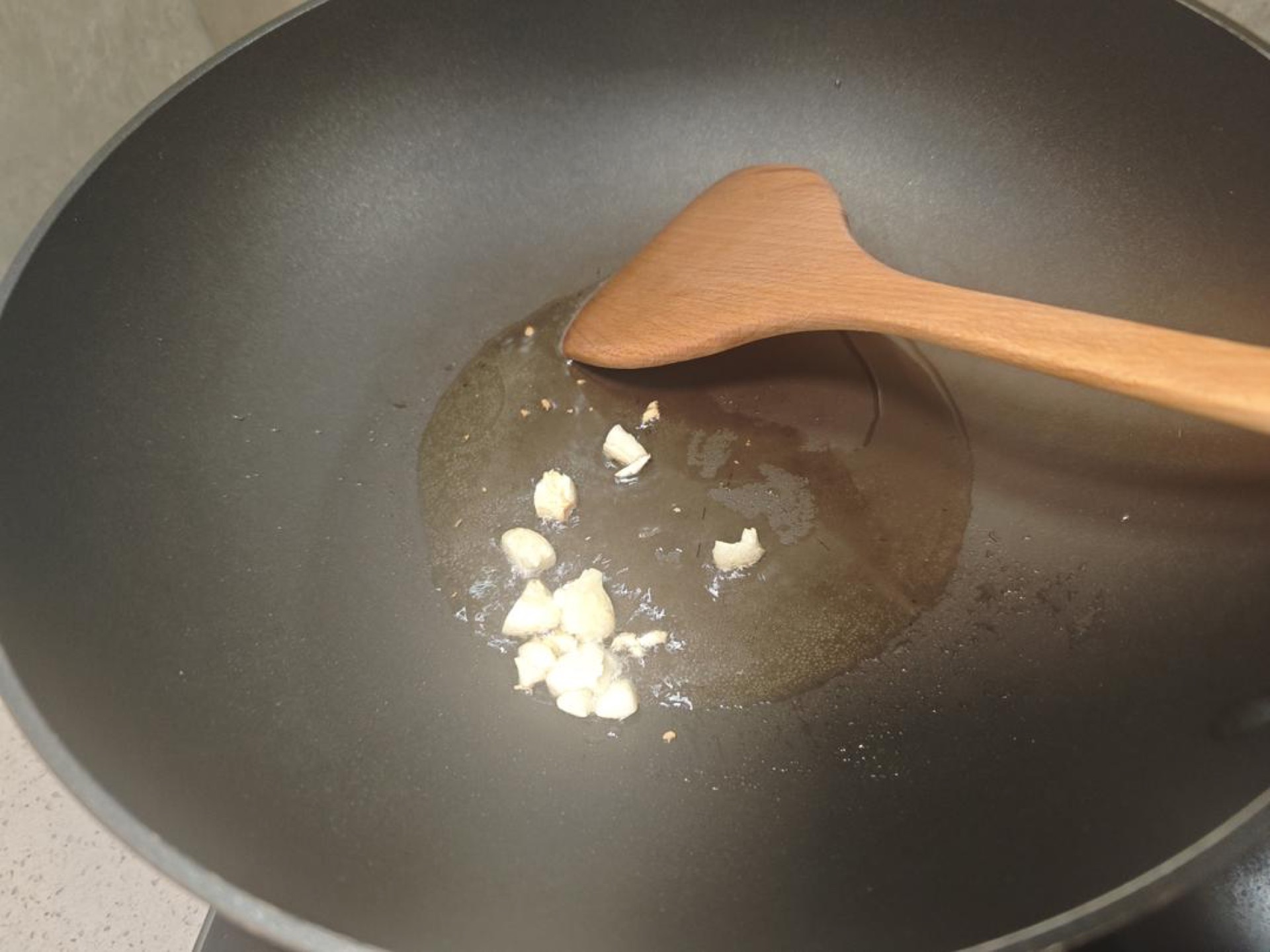
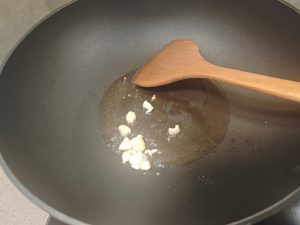
Step 3 — Bloom the Garlic
Set a wok over medium heat, add the oil, and once it shimmers add the smashed garlic, stirring for about 30 seconds until it smells sweet and fragrant but has not browned.
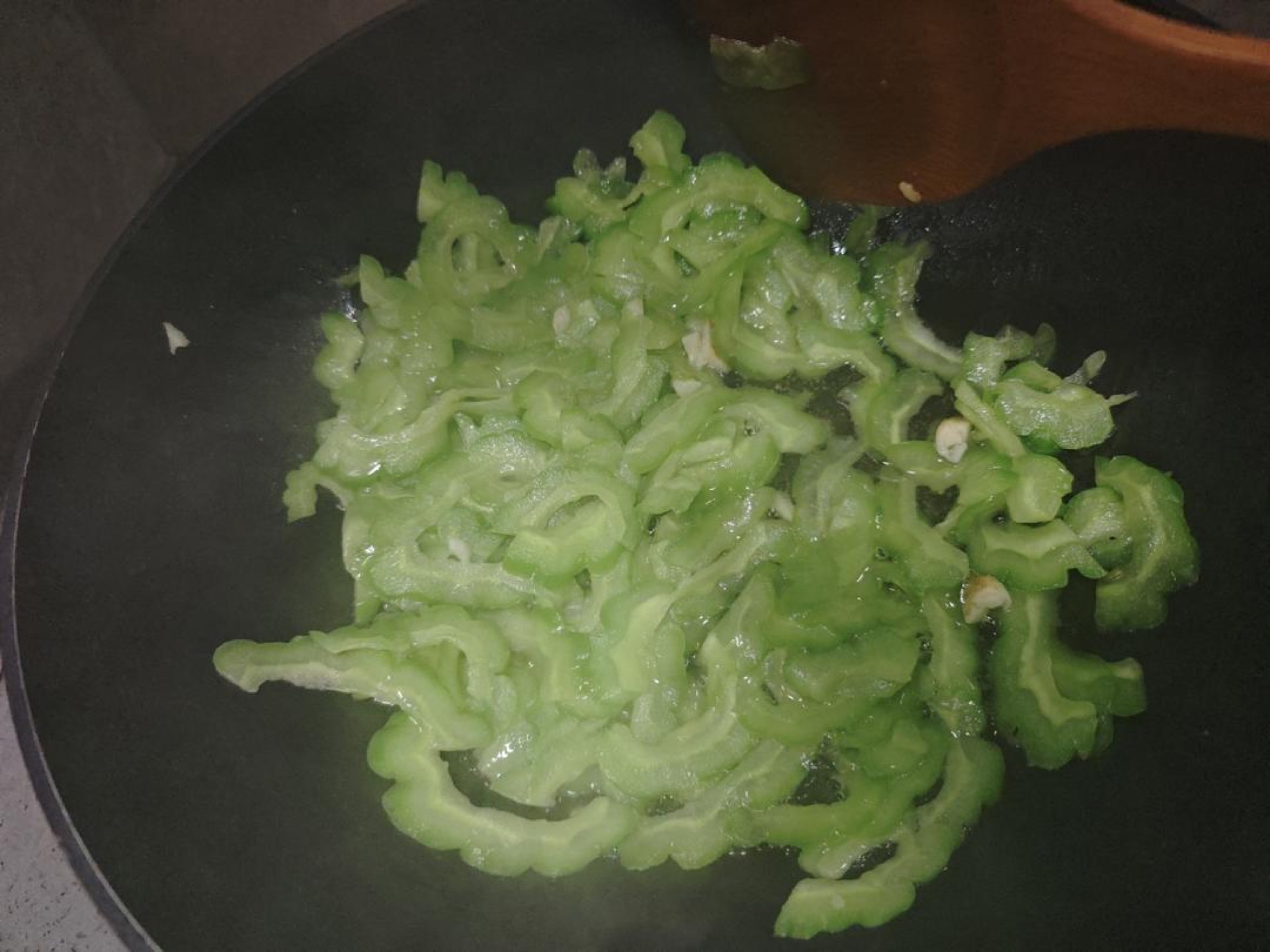
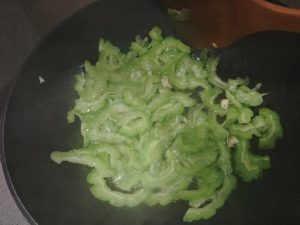
Step 4 — Cook the Bitter Melon
Add the sliced bitter melon to the wok and stir-fry for 4 to 6 minutes, until the slices soften, lose their raw edge, and turn translucent.
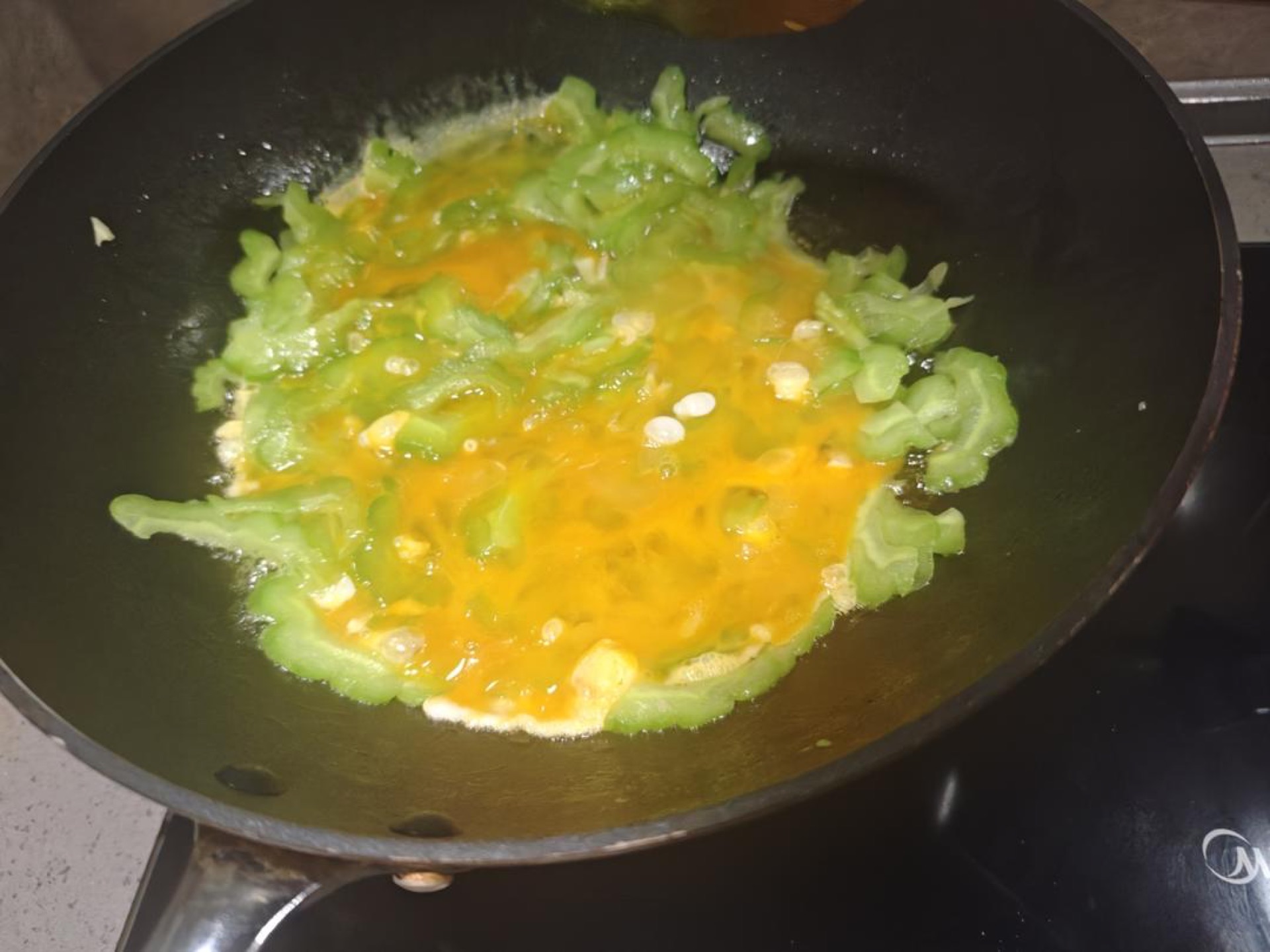
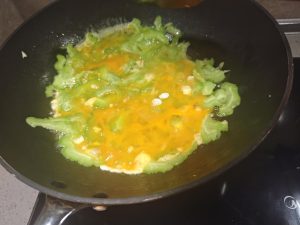
Step 5 — Add the Egg
Drizzle a little more oil around the edge of the wok, pour the beaten egg evenly over the bitter melon, and tilt the wok so the egg settles into an even layer.
Step 6 — Flip and Finish
Once the bottom is set and the top is still slightly wet, use your spatula to cut a cross in the center to make four wedges, flip each wedge one at a time, and cook until the second side is golden and the egg is fully set.
Common Mistakes When Making Bitter Melon Omelette
1. Skipping the salt-and-squeeze step. This is the mistake that ruins the dish. Unsalted bitter melon stays harsh and releases water into the pan, which dilutes the egg and makes it weep. Fix: Salt the slices for at least 10 minutes, then squeeze them dry in your hands or in a clean kitchen towel before they ever touch the wok.
2. Slicing the melon too thick. Thick slices never soften fully, so you get a crunchy, aggressively bitter bite in the middle of a tender omelette. Fix: Slice crosswise into 1/8-inch half-moons. If your knife skills are still developing, take your time — even slices matter more than fast ones.
3. Burning the garlic. Garlic goes from fragrant to acrid in seconds, and burnt garlic will make the whole omelette taste bitter in the wrong way. Fix: Use medium heat, keep the garlic moving, and pull it out or push it to the side the moment it turns pale gold. If it darkens past gold, start over with fresh oil.
4. Pouring the egg over undercooked melon. If the gourd is still firm and opaque when the egg goes in, it will keep releasing water and the omelette will steam instead of set. Fix: Stir-fry the melon until the slices look translucent and have lost their raw crunch, usually 4 to 6 minutes. Taste a slice — it should be soft with only a gentle bitterness.
5. Using too little oil. Bitter melon drinks oil, and a dry pan means the egg sticks and the melon scorches. Fix: Add oil in two stages — once for the garlic and melon, and again right before the egg. The second addition is what gives you those golden, lacy edges.
6. Cooking on high heat to save time. High heat puffs the egg, browns it too fast, and leaves the center raw. Fix: Medium heat, a wide pan, and a little patience. The omelette should set slowly and evenly, not snap and bubble.
7. Flipping the whole sheet at once. A single giant flip almost always tears the omelette or splashes oil. Fix: Cut a cross in the center with your spatula to make four wedges, then flip each wedge individually. It is faster, safer, and cleaner.
Variations
With dried shrimp. Soak two tablespoons of dried shrimp in warm water for 10 minutes, then stir-fry them with the garlic before adding the melon. The briny sweetness cuts the bitterness beautifully and adds a chewy texture.
With fermented black beans. Rinse a tablespoon of fermented black beans, mash them lightly, and add them with the garlic. This is a more savory, deeper version that pairs especially well with plain congee.
With ground pork. Brown a quarter pound of ground pork with the garlic, then add the melon and proceed. The pork fat carries the bitterness and turns the dish into a full one-pan meal. If you cook a lot of pork, our guide to pork knuckle vs pork hock is a useful reference for choosing the right cut for braises and stir-fries alike.
Extra-mild version. After salting, blanch the melon slices in boiling water for 60 seconds, then drain and squeeze. This removes even more bitterness and is a good entry point for anyone new to the gourd.
Tomato version. Add a small diced tomato with the melon. The acidity and sweetness round off the bitterness and give the omelette a looser, saucier texture that soaks into rice.
Spicier version. Add a teaspoon of chili bean paste or a few slices of fresh chili with the garlic. This is less traditional in Cantonese homes but very common in Hunan and Sichuan kitchens.
Egg-white version. Swap two of the whole eggs for four egg whites for a lighter omelette. The texture will be slightly firmer, so reduce the heat a touch.
Frequently Asked Questions
How do I make bitter melon less bitter? Salt it, wait, and squeeze. Slice the gourd thin, toss with a teaspoon of salt, let it sit 10 to 15 minutes, then squeeze the slices firmly to press out the liquid. For an even milder result, blanch the slices for a minute after salting. Some cooks also add a pinch of sugar to the melon while it cooks.
Do I need to peel bitter melon? No. The skin is thin, edible, and where much of the bitterness and the crisp texture live. Peeling softens the dish and removes some bitterness, but it also removes character. If your gourd has very hard, warty ridges, you can scrape the highest bumps lightly with a spoon.
Can I use a different pan if I don’t have a wok? Yes. A 10- to 12-inch nonstick skillet is actually the easiest pan for this dish because the egg releases cleanly. A cast iron skillet works too, but you will need a little more oil and slightly lower heat. Our guide to how to stir fry without wok covers the adjustments in detail.
Why did my omelette turn out watery? Almost always because the melon was not salted and squeezed, or because the egg was poured in before the gourd was fully cooked. Bitter melon holds a lot of water, and that water has to come out before the egg goes in.
Can I make this ahead of time? It is best fresh from the pan, but it reheats well. Cook it fully, cool it, and refrigerate for up to three days. Reheat gently in a lightly oiled pan or covered in the microwave so the egg does not toughen.
How to Serve
苦瓜煎蛋 is a rice dish at heart, so start there. A bowl of steamed jasmine rice and a small dish of soy sauce or chili oil on the side is the classic setup. If you want a second vegetable, a simple garlicky greens stir-fry or a cucumber salad balances the richness of the egg.
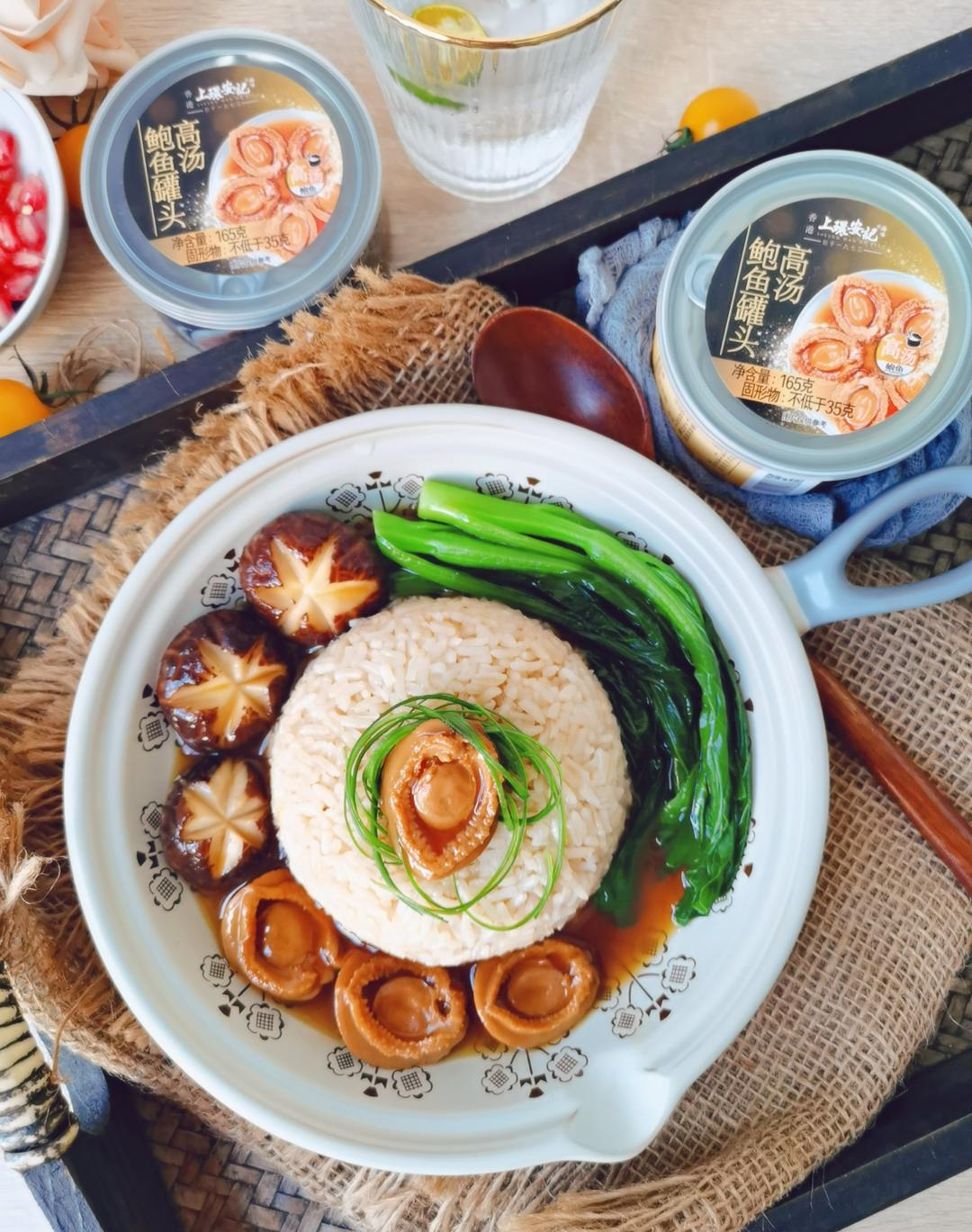
For a fuller table, serve it alongside a cold or room-temperature dish so the meal has contrast. Our eggplant fried rice turns the same flavors into a one-bowl meal if you would rather not cook rice separately, and our abalone rice is a luxurious but surprisingly simple companion for a weekend dinner.
If you are feeding a crowd and want something with more heat on the table, our spicy orleans chicken wraps add a completely different register without competing with the omelette. And if you are exploring the aromatic side of Chinese cooking, galangal root powder is worth keeping in the pantry for broths and braises that would sit nicely next to this dish.

Storage & Reheat
Cool any leftovers to room temperature within two hours, then transfer to an airtight container. Refrigerate for up to 3 days. Do not leave the omelette sitting out overnight — cooked egg is a food-safety priority, and the FDA’s cold food storage guidance recommends keeping cooked egg dishes below 40°F (4°C).
Reheating. The gentlest method is a lightly oiled nonstick pan over medium-low heat, covered, for 3 to 4 minutes until steaming hot. A microwave works too: cover the plate with a damp paper towel and heat in 30-second bursts. Avoid high heat, which makes the egg rubbery and the melon mushy.
Freezing. Not recommended. The egg becomes spongy and the melon releases water on thawing, so the texture suffers badly. If you must freeze it, portion it into wedges, wrap tightly, and use within one month, reheating from frozen in a covered pan.
Allergen Notice
This recipe contains eggs, which are a major allergen. If you add soy sauce, oyster sauce, or fermented black beans, check the labels for soy and wheat. Bitter melon is a cucurbit; anyone with a known gourd or melon allergy should avoid this dish. Cooked in a wok that has previously cooked shellfish or peanuts? Clean it thoroughly first if cross-contact is a concern.
Nutrition Disclaimer
Nutrition information is calculated using an ingredient database and should be considered an estimate. In cases where multiple ingredient alternatives are given, the first listed is calculated for nutrition. Garnishes and optional ingredients are not included.
About the Author & Recipe Development
Hi, I’m Lin — the cook, writer, and photographer behind Woks of Love. I grew up watching my mother and grandmother cook Cantonese home food, and I have spent the years since testing, retesting, and writing down the dishes that never made it into restaurants but always made it onto our table. Bitter melon omelette is one of those dishes. I tested this version with three different gourds — a small, very bitter one, a large pale one, and a standard Chinese variety — to make sure the salting and cooking times work across the range you are likely to find at the market.
Every recipe on this site is developed in my own kitchen with ingredients you can buy at a normal supermarket or Asian grocery. If you cook this one, I would love to hear how it turned out — especially if you tried one of the variations. Leave a comment below or tag me in your photos.
Authoritative References
For safe handling and cooking temperatures for eggs and egg dishes, see the FDA’s refrigerator and food safety guidance and the USDA safe minimum internal temperature chart. For more on bitter melon as an ingredient, the Encyclopaedia Britannica entry on bitter melon covers its botany and culinary use.
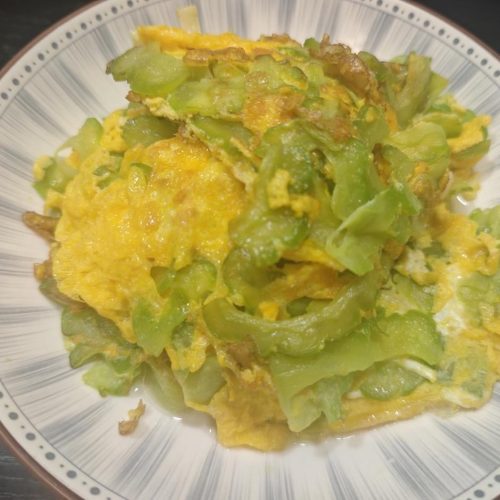
Bitter Melon Omelette (苦瓜煎蛋): Tender Egg, Slightly Bitter Melon

Equipment
- Wok
- Cutting Board
- Slotted Spoon
- Chef’s knife
- Mixing Bowl
- Whisk or fork
Ingredients
For the Bitter Melon
- 1 large bitter melon about 12 oz, halved, seeded, sliced 1/8-inch thin
- 1 tsp salt for salting the melon
For the Omelette
- 4 large eggs room temperature
- 1/2 tsp salt plus more to taste
- 1/4 tsp white pepper optional
- 2 tbsp neutral oil divided, plus more as needed
- 3 cloves garlic smashed and peeled
Instructions
- Halve the bitter melon lengthwise, scrape out the seeds and white pith with a spoon, and slice it crosswise into 1/8-inch thin half-moons; smash the garlic cloves with the flat side of your knife and peel them.

- Crack the four eggs into a bowl, add half a teaspoon of salt, and whisk until the yolks and whites are completely combined and slightly frothy.
- Set a wok over medium heat, add the oil, and once it shimmers add the smashed garlic, stirring for about 30 seconds until it smells sweet and fragrant but has not browned.
- Add the sliced bitter melon to the wok and stir-fry for 4 to 6 minutes, until the slices soften, lose their raw edge, and turn translucent.
- Drizzle a little more oil around the edge of the wok, pour the beaten egg evenly over the bitter melon, and tilt the wok so the egg settles into an even layer.
- Once the bottom is set and the top is still slightly wet, use your spatula to cut a cross in the center to make four wedges, flip each wedge one at a time, and cook until the second side is golden and the egg is fully set.












Leave a Reply