Hey there! Let’s be real for a second—walking up to a butcher counter can sometimes feel more intimidating than a final exam at culinary school. You see these massive hunks of meat labeled “hock,” “knuckle,” “shank,” or “trotter,” and they all look suspiciously similar.
Growing up in my parents’ loud, chaotic Sichuan restaurant in Chengdu, I was surrounded by these ingredients daily. I remember watching the chefs breakdown entire pigs, tossing parts into massive stockpots or master stocks. To them, the difference between a knuckle and a hock wasn’t just anatomy; it was the difference between a rich, gelatinous braise and a watery soup.
Now, as a culinary school graduate who’s spent a decade in professional kitchens, I want to bridge that gap for you. Today, we are breaking down the science, the texture, and exactly how to cook these cuts so you get that perfect, “bouncy” result in your own kitchen.
The Anatomy: What is the Difference?
First, let’s clear up the confusion. Depending on where you live (US vs. Europe vs. Asia), these terms get swapped around. But here is the breakdown based on standard butchery and how we treat them in a professional Chinese kitchen.
1. The Pork Hock (The Shin)
The hock is the joint between the foot (trotter) and the upper leg (ham or shoulder). Think of it as the shin of the pig.
- Appearance: It’s round, covered in a thick layer of skin and fat, and contains two distinct bones (tibia and fibula).
- The Meat: There is a decent amount of meat here, but it is heavily wrapped in connective tissue.
2. The Pork Knuckle (The Joint)
Strictly speaking, the “knuckle” refers to the joint itself. However, in many recipes (especially the famous German Schweinshaxe or Chinese Ti Pang), “Pork Knuckle” usually refers to the upper part of the hock or the lower part of the ham/shoulder joint.
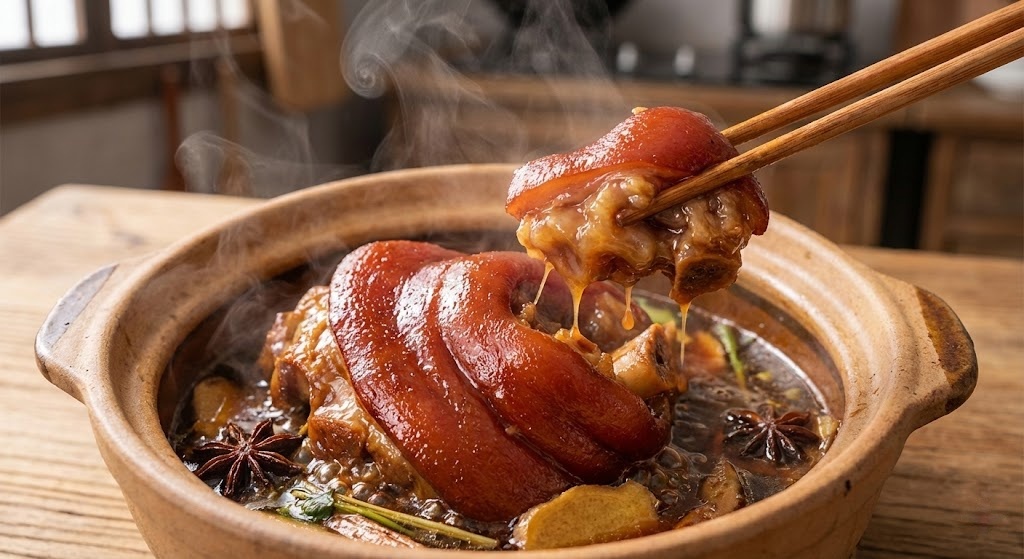
- The “Chef” Distinction: In Chinese cooking, when we make something impressive like Dongpo Ginger Pork Knuckle, we are looking for that upper, meatier section that still has the skin attached.
Let’s be real: If you are at a standard Western supermarket, “Hock” and “Knuckle” are often sold as the same cut. The most important thing to look for is the skin. You need that skin for protection during long cooking and for that lip-smacking texture.

Texture and Taste: The Sensory Experience
Why do we obsess over these tough cuts? It comes down to one word: Collagen.
When I was backpacking across China, from Xi’an street stalls to Guangzhou dim sum halls, the best dishes weren’t the lean ones—they were the ones that wobbled.
- The Science: Both cuts are loaded with collagen. When you cook them slowly with liquid, that tough collagen breaks down into gelatin.
- The Sensory Cue: You know it’s done when the skin turns a deep, glossy red and the meat feels “bouncy,” like a flexed muscle that suddenly relaxes. The sauce should be sticky enough to coat a spoon—that’s natural thickening from the bones!
If you love that sticky, melt-in-your-mouth texture, you are likely already a fan of my Braised Pork Trotters. The hock offers a similar experience but with significantly more meat to bite into.
How to Cook Them (And Avoid Failure)
I know it’s tempting to crank up the heat to get dinner on the table faster, but don’t!. These are working muscles. If you boil them hard and fast, the muscle fibers will seize up, and the texture will be tough and dry.
Method 1: The Red Braise (Hong Shao)
This is my go-to for Knuckles. You want to simmer it in a master stock of soy sauce, sugar, and spices.
- Pro Tip: Always blanch the meat first to remove impurities. Then, when braising, add a splash of Shaoxing Wine to neutralize any gamey odor. This is a non-negotiable step in professional kitchens!
- Color Secret: To get that professional, dark amber color, we use Dark Soy Sauce. It doesn’t add much salt, but it adds that beautiful caramel hue.
Method 2: The Soup
Hocks are incredible for soup because the bone marrow and collagen create a milky, rich broth.
- If you enjoy the comforting depth of a Lotus Root and Pork Rib Soup, try swapping the ribs for a smoked hock (or fresh hock) next time. The broth will be thicker and even more satisfying.
Western Kitchen Reality: Substitutions
I get it—sometimes your local grocery store in the US or Europe just doesn’t carry a whole pork knuckle. You don’t have to abandon the recipe!
- Pork Shoulder (Boston Butt): If you want the meat but don’t care about the skin/bone, this is your best bet. It has enough fat to stay moist during braising. You can check out my guide on Pork Shoulder to see how versatile it is.
- Pork Belly: If you are strictly chasing that gelatinous fat texture, go for Braised Pork Belly. It cooks faster than a knuckle and is easier to find.
Serving Suggestions
Pork knuckle is rich. Like, really rich. In my family, we always balance that richness with something acidic or spicy.
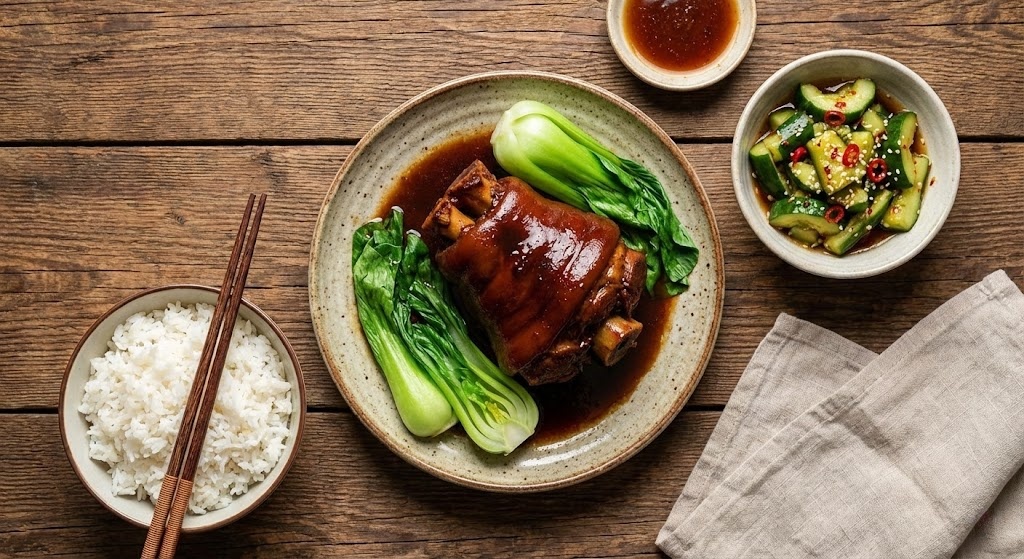
- Dip it: I love serving plain braised hock with a side of Homemade Chinese Chili Oil. The heat cuts right through the fat.
- Pair it: Serve this alongside a refreshing veggie dish to cleanse the palate. A cold appetizer like Smashed Cucumber Salad is the perfect contrast to the heavy meat.
Final Thoughts
Whether you call it a hock, a knuckle, or Ti Pang, mastering this cut is a rite of passage for any cook. It teaches you patience and the magic of slow transformation. Trust me on this—once you take that first bite of wobbly, savory skin, you’ll never look at the “cheap cuts” section of the butcher shop the same way again.
Happy cooking, and let me know in the comments if you’ve ever tackled this giant cut of meat!
Authoritative References
- USDA Food Safety and Inspection Service: Pork: Farm to Table – For official guidelines on safe internal cooking temperatures and handling of fresh pork cuts.
- Serious Eats: The Food Lab’s Guide to Slow-Cooking – A deep dive into the science of collagen breakdown and why tough cuts like hocks require specific cooking methods.
- The Pork Checkoff: Pork Cuts Guide – A comprehensive visual guide to understanding where each cut comes from on the animal.




Leave a Reply