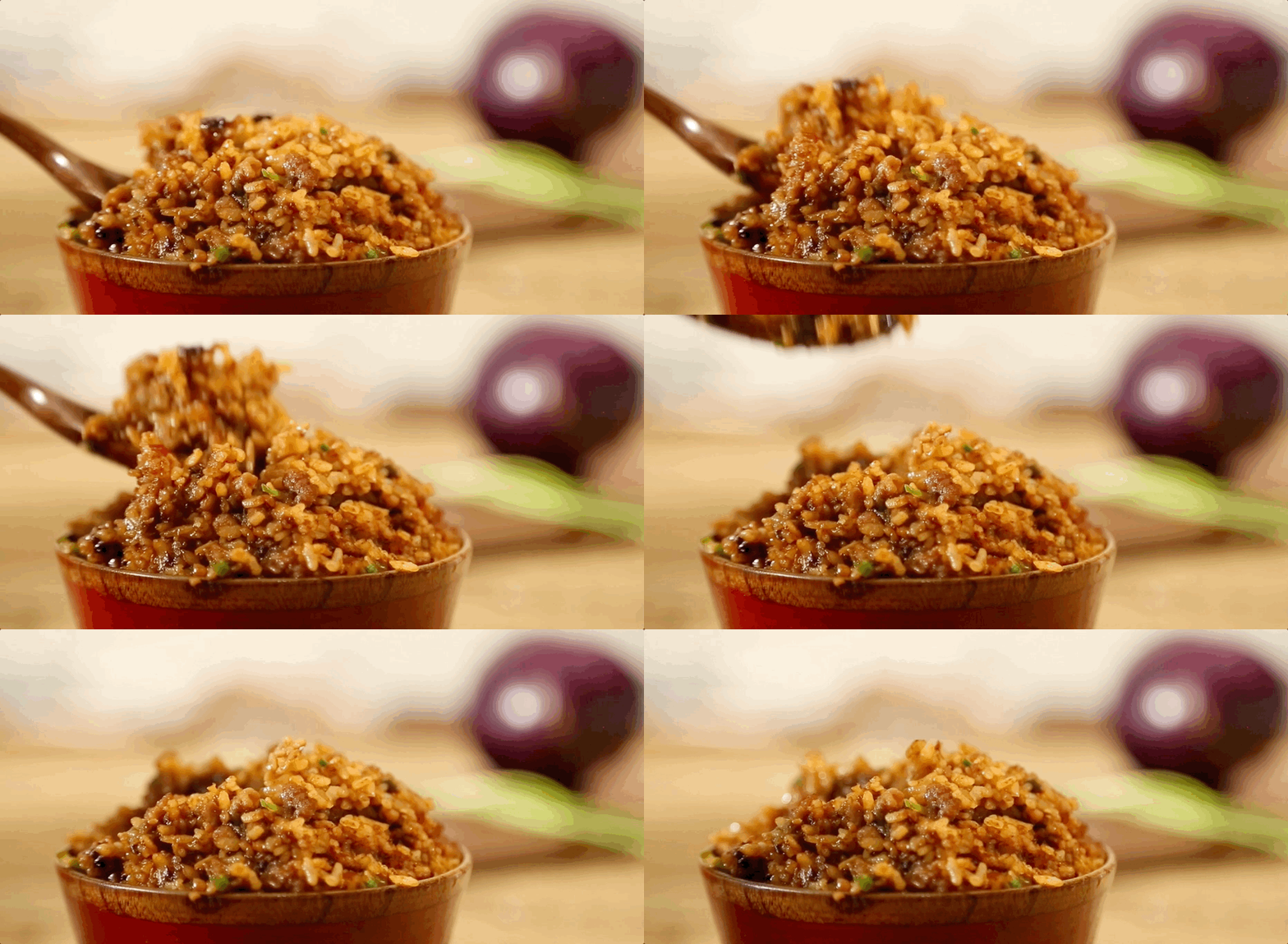
Growing up in Sichuan, eggplant was a vegetable we ate constantly, yet I never grew tired of it. Whether it was the round, baseball-sized eggplants typical of Northern China or the slender, purple crescents we saw more often in the South, the flavor was always comforting. This Eggplant Fried Rice (Qiezi Chaofan) is my go-to “solo dinner” when I’m at home and don’t know what to cook.

It’s savory, slightly spicy from the Lao Gan Ma, and incredibly satisfying. The eggplant acts like a sponge, soaking up the garlic and pork fat, becoming melt-in-your-mouth tender before getting tossed with the rice. In fact, I often find myself scraping the bottom of the bowl because it is just that fragrant.
Why This Recipe Works
- Texture Contrast: By cutting the eggplant into small dice and cooking it until “dehydrated” and soft, it blends perfectly with the rice grains without turning into a mushy mess.
- Flavor Layering: We use a technique called “Bao Xiang” (exploding fragrance) with the garlic and meat, then build a savory sauce with oyster sauce and sugar to coat every grain.
- Speed: This is a complete meal—protein, starch, and vegetable—in one wok, ready in under 20 minutes.
What Is Eggplant Fried Rice?
Eggplant Fried Rice (茄子炒饭) is a quintessential jiachang cai (home-style dish). You won’t often find this on takeout menus in the US or Europe, which usually feature Yangzhou Fried Rice or Chicken Fried Rice. However, in Chinese households, it is a brilliant way to stretch a small amount of meat and a single vegetable into a hearty meal. It bridges the gap between a stir-fry and a rice dish.
About the Author & Recipe Development
I’m Lin, a chef born in Sichuan with over a decade of experience in professional Chinese kitchens. This recipe was developed based on my family’s method but tested in my US kitchen to ensure accuracy with local ingredients. I tested this specific recipe three times: once on a high-BTU outdoor burner and twice on a standard electric coil stove.
I found that on home stoves, dicing the eggplant smaller (about 1-1.5 cm) is crucial because home burners lack the intense heat to blast-cook large chunks quickly. I also adjusted the salt levels to account for the sodium already present in American-market oyster sauce and soy sauce.
Key Ingredients & Substitutions
- Eggplant: I recommend using Chinese or Japanese long eggplants. They have thinner skin and fewer seeds than the large Globe eggplants found in Western supermarkets. If you must use a Globe eggplant, peel it first, as the skin can be tough.
- Minced Meat: The original recipe calls for 250g (about 9oz) of minced meat. Pork is traditional and provides the best fat for flavor, similar to our Minced Pork Sauce. However, ground chicken or beef works well too.
- Rice: You must use day-old, cold cooked rice. Fresh rice contains too much moisture and will turn gummy. If you need to make rice fresh, I have a guide on how to cook perfect rice in a cast iron pot—just make sure to spread it out on a tray to cool and dry under a fan for an hour.
- Lao Gan Ma: This savory chili crisp adds the signature “wok” flavor without intense heat. If you are out, you can check our guide on Essential Chinese Sauces for alternatives, or use a broad bean paste (Doubanjiang).
- Seasonings: We use Oyster Sauce for umami and Light Soy Sauce for saltiness.
Ingredients
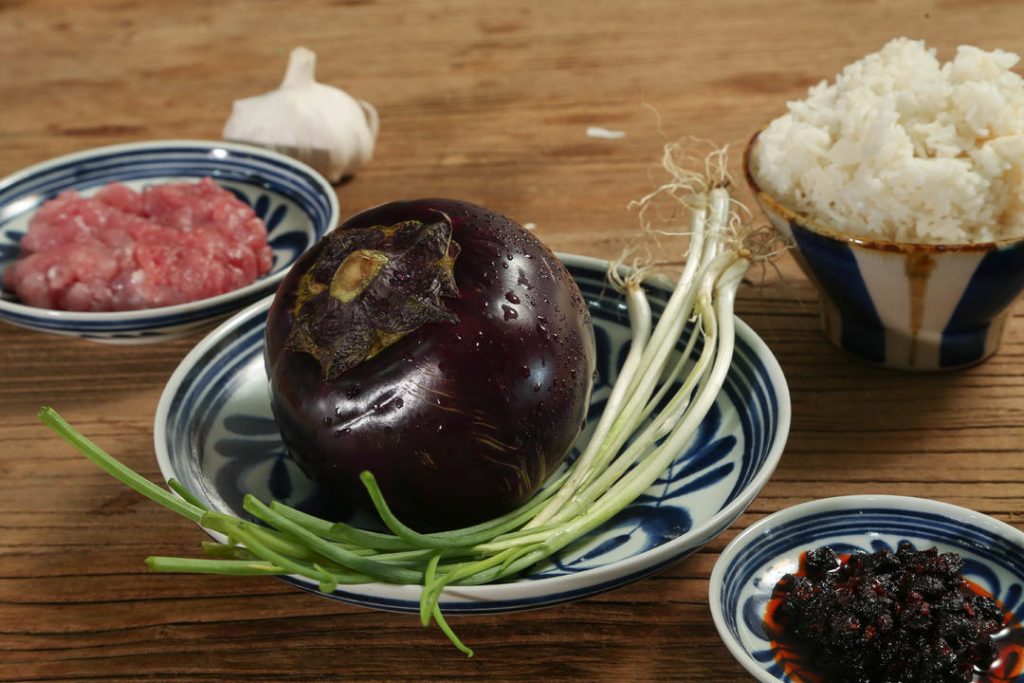
- Eggplant: 1 medium (about 10-12 oz / 300g), diced into small cubes.
- Ground Pork: 9 oz (250g).
- Cooked Rice: 2 cups (approx. 1 rice bowl), preferably chilled overnight.
- Garlic: 6-7 cloves, minced.
- Scallions: 2 stalks, finely chopped (separate whites and greens if desired).
- Lao Gan Ma (Chili Crisp): 1 tablespoon.
- Oyster Sauce: 1 tablespoon.
- Light Soy Sauce: ½ tablespoon.
- Sugar: 1 tablespoon.
- Salt: To taste (use sparingly as sauces are salty).
- Oil: 2-3 tablespoons vegetable oil.
Recipe Notes Before We Begin
Equipment: A carbon steel wok is ideal, but a wide 12-inch non-stick skillet works perfectly for this recipe since eggplant can be sticky.
Eggplant Prep: Do not soak the eggplant in water. We want to remove moisture during cooking, not add it. Wash it before cutting, then dry it thoroughly.
Mise en Place
- Dice the Eggplant: Wash the eggplant. Cut it into strips, then crosswise into small cubes (about ½ inch).
- Aromatics: Peel and mince the garlic cloves. Wash and chop the scallions.
- Sauce Mix: In a small bowl, combine the oyster sauce, light soy sauce, and sugar. Stir until the sugar is mostly dissolved. This ensures you don’t have to fumble with bottles while stir-frying.
How to Make Eggplant Fried Rice
Step 1: Sear the Meat Heat your wok or skillet over medium heat. Add a small amount of oil. When the oil is shimmering, add the ground pork (250g). Stir-fry, breaking up clumps with your spatula, until the meat turns white and is cooked through. Remove the meat from the pan and set it aside.
Tip: We remove the meat so it doesn’t overcook and become dry while we deal with the eggplant.
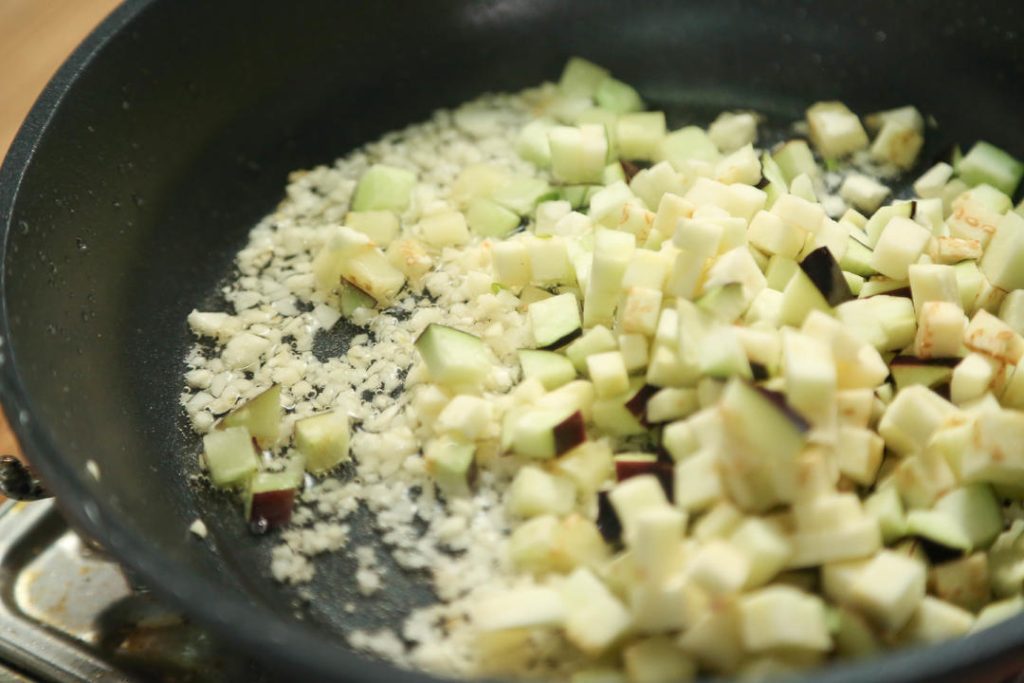
Step 2: Bloom the Garlic In the same wok (don’t wash it), add a little more oil if it looks dry. Add the minced garlic (6-7 cloves). Stir-fry gently until fragrant and slightly golden. Do not burn it, or it will taste bitter.
Step 3: Cook the Eggplant Add the diced eggplant and the cooked meat back into the pan. Stir-fry over medium-high heat. You are looking for the eggplant to dehydrate and turn soft.
Note: Eggplant acts like a sponge and will soak up oil immediately. Be patient; as it cooks down, it will release some oil back. If it looks dangerously dry and is burning, add a tiny splash of water to create steam.
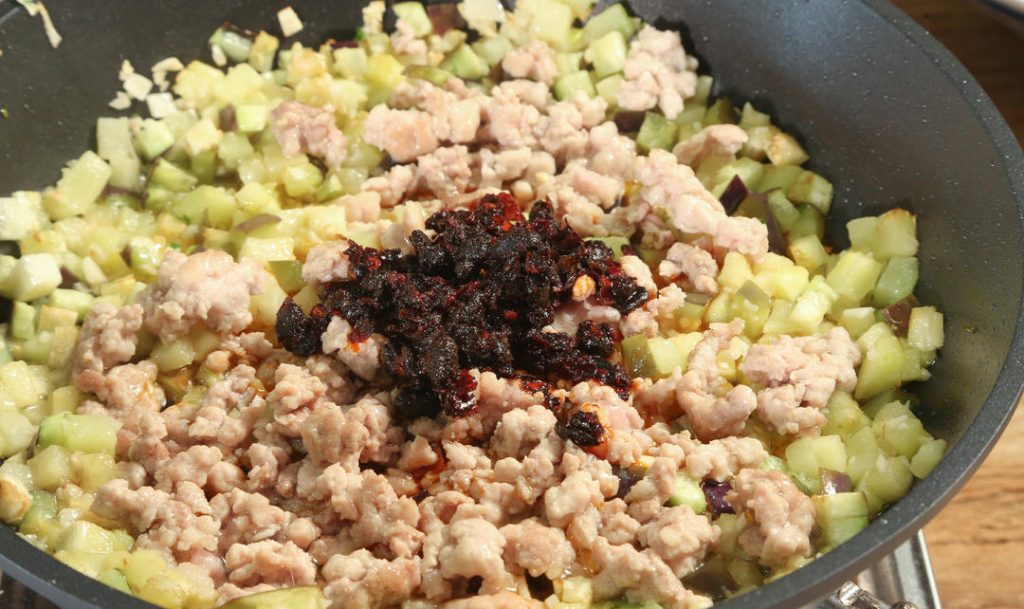
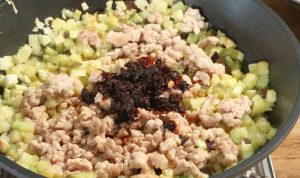
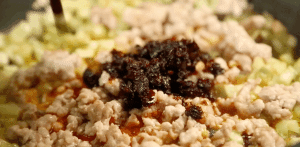
Step 4: Seasoning Pour the pre-mixed sauce (oyster sauce, soy sauce, sugar) into the wok. Add 1 tablespoon of Lao Gan Ma. Stir-fry vigorously so the eggplant and meat are evenly coated and colored. The sugar helps caramelize the mixture slightly.
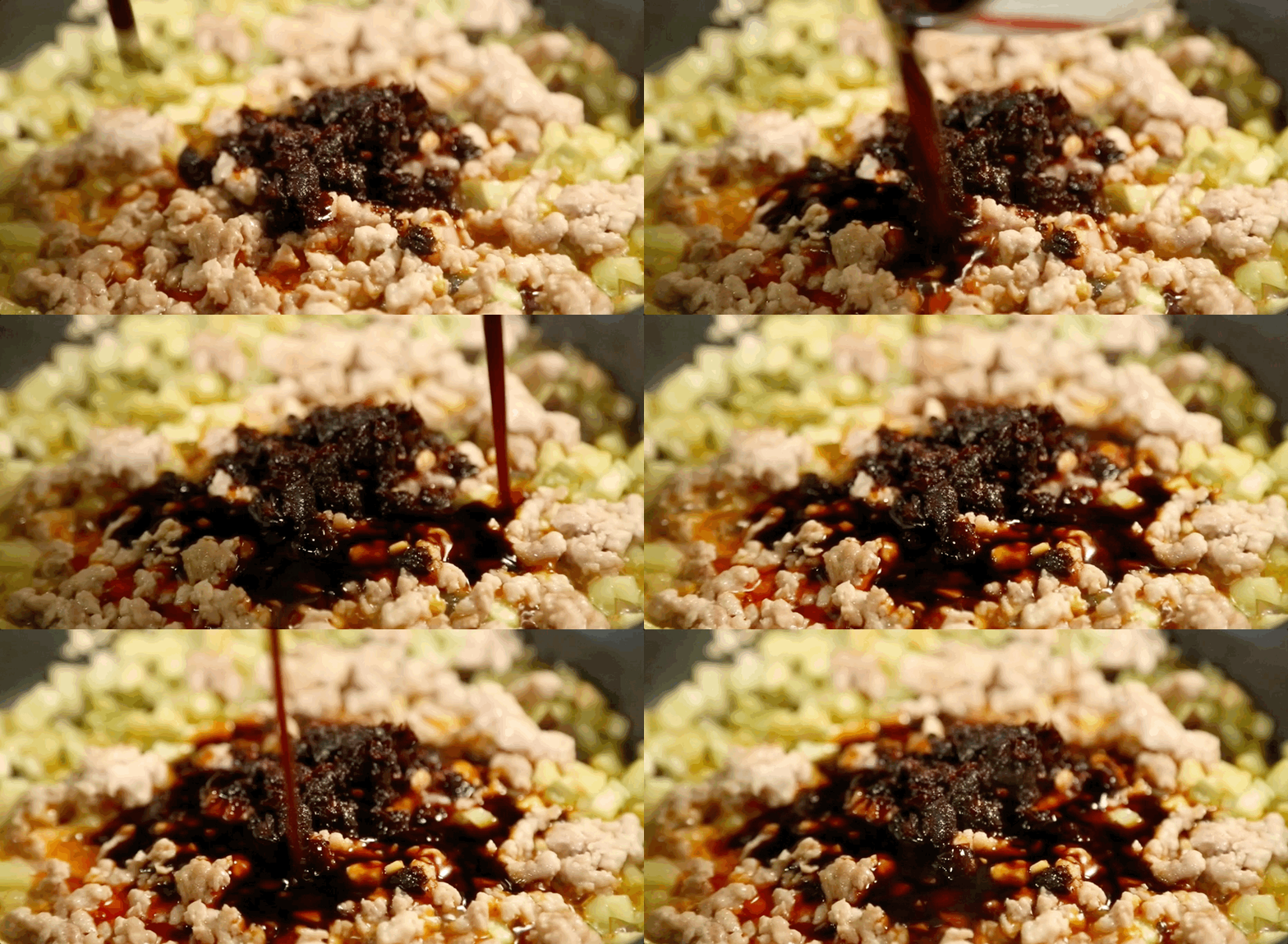
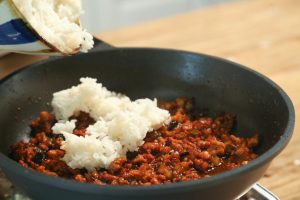
Step 5: Add Rice and Incorporate Add the cold rice (1 bowl) to the wok. Use your spatula to break up any large clumps of rice, pressing them down gently to separate the grains. Toss everything together until the rice is uniformly coated in the sauce. Taste a few grains. Depending on your sodium tolerance, add a pinch of salt if needed (I usually find the sauces provide enough salt).
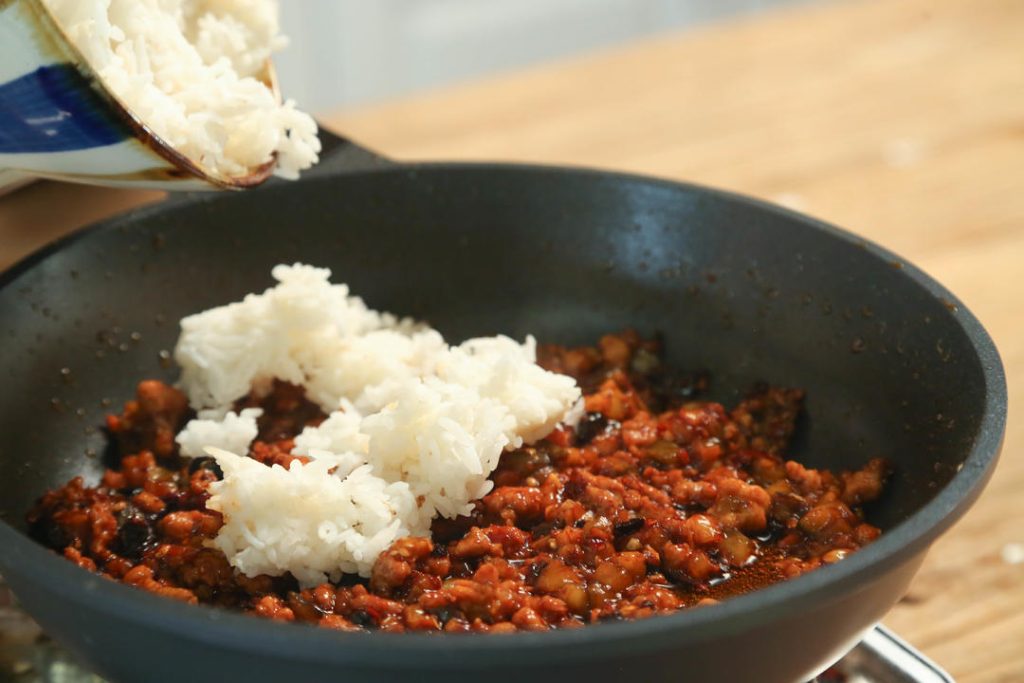
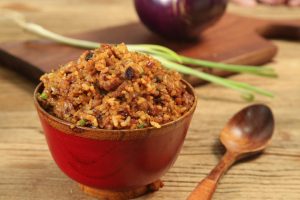
Step 6: Finish and Serve Turn off the heat. Sprinkle the chopped scallions over the rice and give it one final toss. Serve immediately.
Common Mistakes When Making Eggplant Fried Rice
- Cutting Eggplant Too Big: If the cubes are too large, the center will be raw while the outside burns. Keep them uniform and small.
- Using Hot Rice: This is the cardinal sin of fried rice. Hot rice releases starch and turns into a sticky glue. Always use cold rice. If you are in a rush, spread fresh rice on a baking sheet and freeze for 20 minutes.
- Adding Too Much Salt: Oyster sauce, soy sauce, and Lao Gan Ma are all sodium-rich. Taste before adding extra salt in Step 5.
FAQ & Troubleshooting
- Can I make this vegetarian? Yes. Omit the pork and replace the oyster sauce with Vegetarian Oyster Sauce (made from mushrooms). The eggplant is meaty enough to carry the dish.
- My rice is mushy. Why? You likely used fresh rice or overcrowded the pan. If your wok isn’t hot enough, the vegetables steam the rice instead of frying it.
- I don’t have Lao Gan Ma. What can I use? You can use any chili oil, or for a non-spicy version, just omit it. However, if you enjoy spicy food, you might also like my Garlic Fried Rice which uses similar aromatics.
Notes:
- Rice Texture: Ensure your rice is cold. If using fresh rice, spread it on a tray and freeze for 20 minutes to dry out the surface moisture.
- Eggplant: If using American Globe eggplant, peeling is recommended as the skin can be thick and bitter.
- Heat Control: Eggplant absorbs oil quickly. If the pan gets too dry before the eggplant is soft, add a teaspoon of water rather than more oil to steam it slightly.
- Allergy Info: Contains Soy, Wheat (in soy sauce/oyster sauce), and Mollusks (oyster sauce). Use gluten-free tamari and vegetarian oyster sauce for substitutions.
Authoritative References
For more information on the safe handling of cooked rice to prevent Bacillus cereus, please refer to the National Health Service (NHS) guidelines on reheating rice.
For guidelines on cooking pork to safe temperatures, refer to the USDA Food Safety and Inspection Service.
Serving Suggestions
This dish is rich enough to be a standalone meal. However, if serving it as part of a larger Chinese dinner, it pairs beautifully with something fresh and acidic, like a Smashed Cucumber Salad. If you have extra eggplant, you might also be interested in our recipe for Braised Eggplant with Tomato.
Nutrition Information (Estimate)
- Calories: ~550 kcal per serving
- Protein: 22g
- Carbohydrates: 55g
- Fat: 28g
- Sodium: 1100mg (varies by sauce brands)
(Disclaimer: Nutrition information is calculated using an ingredient database and should be considered an estimate. In cases where multiple ingredient alternatives are given, the first listed is calculated for nutrition. Garnishes and optional ingredients are not included. Actual values vary based on specific brands used.)
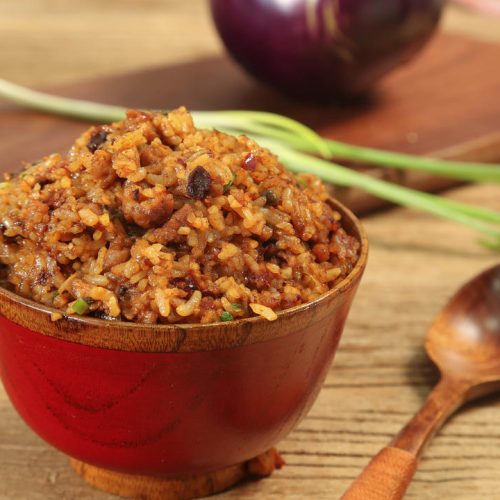
Eggplant Fried Rice (Qiezi Chaofan)

Equipment
- Wok or large skillet
- Chef’s knife
Ingredients
Main Ingredients
- 1 medium eggplant diced into small cubes
- 9 oz ground pork
- 2 cups cooked rice cold, day-old is best
Aromatics & Seasonings
- 1 tbsp Lao Gan Ma (Chili Crisp)
- 6 cloves garlic minced
- 2 stalks scallions finely chopped
- 1 tbsp oyster sauce
- 0.5 tbsp light soy sauce
- 1 tbsp sugar
- salt to taste
- 2 tbsp vegetable oil divided
Instructions
- Wash the eggplant and cut into strips, then dice into small ½ inch cubes. Mince the garlic.
- Heat a wok with a little oil over medium heat. Add ground pork and stir-fry until it turns white and is fully cooked. Remove meat and set aside.

- Add a bit more oil to the wok if needed. Add minced garlic and fry until fragrant and lightly golden.
- Add the diced eggplant and the cooked meat back to the wok. Stir-fry until the eggplant softens and dehydrates slightly.

- In a small bowl, mix oyster sauce, light soy sauce, and sugar. Pour this over the eggplant mixture. Add the Lao Gan Ma and stir-fry to coat everything evenly.

- Add the cold rice. Break up clumps with your spatula and toss until the rice is hot and uniform in color. Taste and add salt if necessary.
- Turn off the heat, sprinkle with chopped scallions, and serve immediately.


Leave a Reply