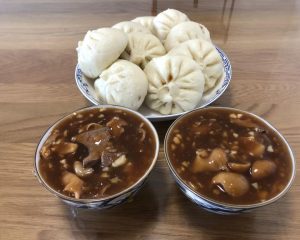
The first time a Beijing friend ordered chao gan for me, I watched her pick up the bowl and slurp it straight from the rim – no spoon, no chopsticks, just the glossy sauce sliding down. That is the point of the dish, as the home cook behind this recipe puts it in her final step: “no spoon, no chopsticks, just slurp.” Old Beijing stirred liver is a bowl of slow-braised intestines and velveted liver in a garlicky starch sauce, and it is one of the great street breakfasts of Beijing.
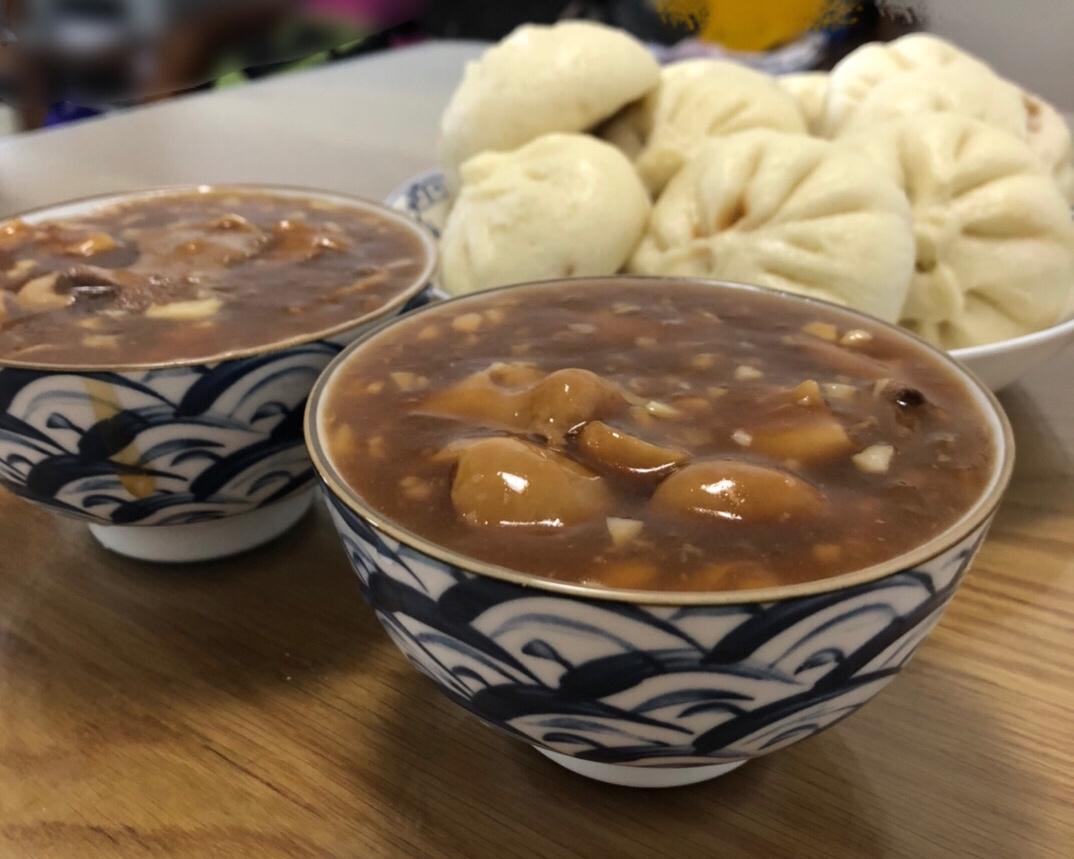
Chao gan (炒肝儿) is the Beijing classic: pork intestines simmered in a seasoned sauce with slices of pork liver, thickened with potato starch and finished with a heavy hand of garlic. The home version from a Chinese recipe site is honest about its labor – washing three jin of intestines, watching them shrink to a fraction – and generous with its lessons, including the note that the liver is added last so it stays tender.
What Is Old Beijing Stirred Liver (Chao Gan)?
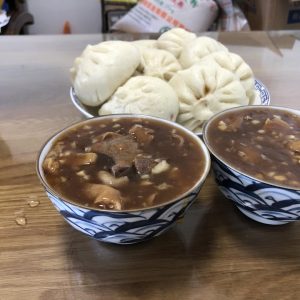
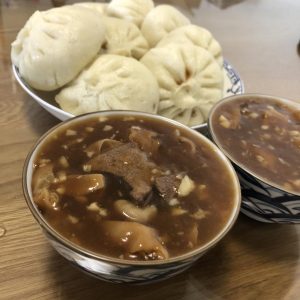
Chao gan (炒肝儿) is an Old Beijing breakfast dish: pork intestines braised in a seasoned, thickened sauce, with sliced pork liver added near the end and a strong finish of raw garlic. Despite the name (chao means stir-fry), it is not stir-fried – it is a slow braise whose sauce is thickened with starch into a glossy, slippery bowl. It is traditionally eaten by slurping from the bowl’s rim, which is how the sauce – not the solids – leads the experience.
The dish is built in stages. The intestines are cleaned and boiled until tender; the liver is sliced, soaked, and velveted; and the sauce is seasoned with sweet bean paste, soy, dark soy, sugar, and the five-spice aromatics of star anise, scallion, and ginger, then thickened with potato starch. The garlic goes in last – raw, chopped, and generous – because its sharpness is the counterpoint to the rich sauce. This home version uses sweet bean paste as a stand-in for the traditional yellow paste, a substitution the cook endorses.
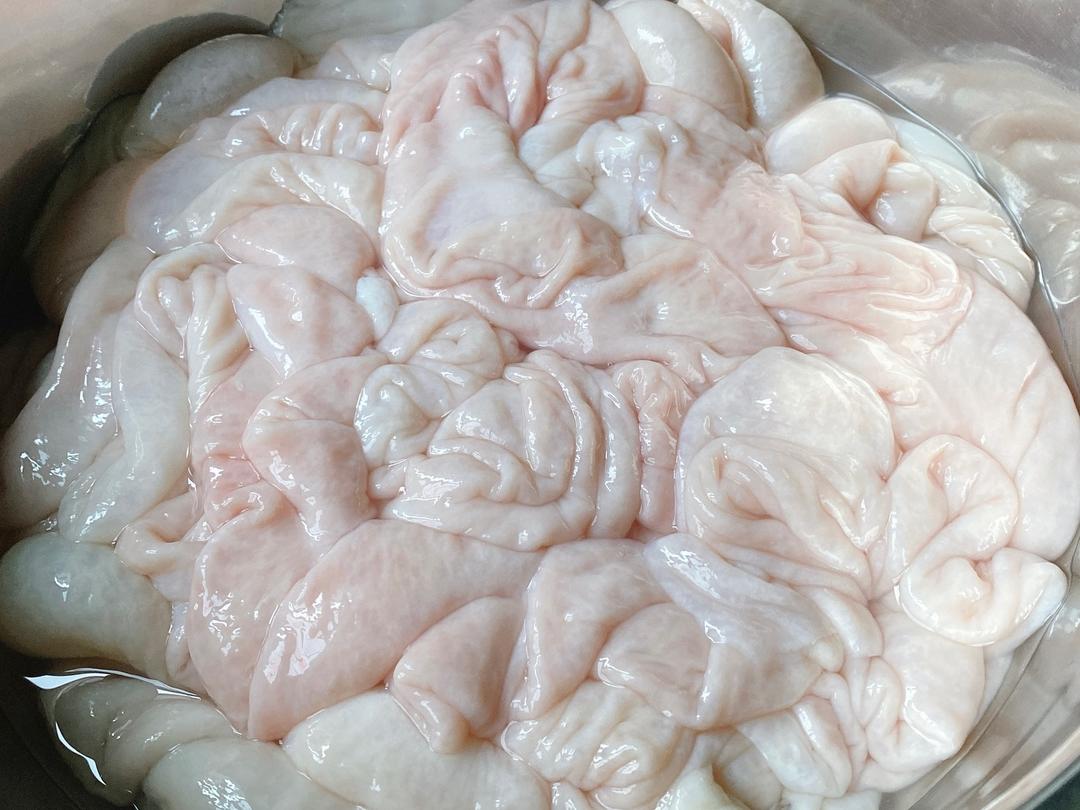
If the intestine cleaning is what is holding you back, my complete guide to cleaning pork intestines walks through the whole process.
1How to Clean Pork IntestinesLearn the professional Sichuan chef’s method for perfectly cleaning pork intestines at home using flour, salt, and wine.Check out this recipe
Why This Version Works
- Cleaning that keeps the fat. The intestines must be clean but not stripped – the fat is the flavor. The original’s method (baking soda, salt, lemon) gets both.
- Slow-boiled intestines, not rushed. The intestines simmer until tender before the sauce builds – the dish’s foundation.
- Liver velveted and added last. Salt, wine, and starch in the marinade, and a quick blanch, keep the liver tender – it joins the pot only at the end.
- Sweet bean paste for the fermented depth. The original swaps the traditional yellow paste for tian mian jiang and says it tastes just as good – a substitution with confidence.
- Potato starch for the glossy sauce. The right starch is half the success, the original notes – potato starch gives the signature sheen.
Equipment Needed
- A large pot for the intestines
- A separate bowl for the liver soak
- A whisk or spoon for the starch slurry
- A knife for the garlic and liver
Ingredients
- 250 g (8.8 oz) pork liver
- 1.5 kg (3.3 lb / 3 jin) pork intestines (cleaned weight will shrink a lot)
- 2 heads garlic, minced
- 1-2 tbsp (15-30 ml) dark soy sauce
- 5 g (1 tsp) sugar
- Salt, to taste
- 1 large scallion and a piece of ginger, for the broth
- 2-3 star anise
- 1 tbsp (15 g) sweet bean paste (tian mian jiang)
- 5-6 tbsp (75-90 ml) soy sauce
- 2-3 tbsp (30-45 ml) Shaoxing wine
- About 100 g (3.5 oz) potato starch, for the thickening
- 1 tsp (3 g) chicken bouillon powder (optional)
Ingredient Notes
Pork intestines: Three jin (1.5 kg / 3.3 lb) bought, but the original is blunt: soaked intestines shrink dramatically when boiled – hers cooked down to under 400 g (14 oz). Adjust your amounts accordingly, and buy more than you think you need. My tender pork liver soup covers the liver side of the offal family.
Pork liver: 250 g (8.8 oz), sliced and soaked to draw out blood, then velveted with salt, wine, and starch. The liver is added last so it stays tender – the original’s key timing.
Sweet bean paste (tian mian jiang): The original’s stand-in for yellow paste, used with confidence – it gives the sauce its fermented depth. My Wenzhou braised pork belly uses a similar paste logic.
Potato starch: The original’s choice for the glossy thickening – “choose the right starch and you succeed.” It gives the sauce its signature slippery sheen.
Prep & Mise en Place
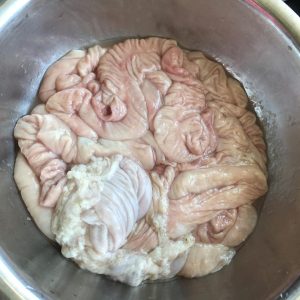
Start with the intestines: the original’s cleaning is baking soda, then salt, then lemon – clean but not fat-stripped. Then boil them from cold water until tender. While they cook, slice the liver and soak it in water, changing the water often until it runs clear, then velvet with salt, wine, and starch.
Have the garlic minced (two full heads), the seasonings measured, and the starch slurry mixed. The build is: aromatics in boiling water, intestines in, seasoning, then the liver, then the thicken, then the garlic – and the bowls are ready to slurp.
Cooking Process
Step 1 – Clean the Intestines
Wash the intestines – the key is clean without stripping all the fat, because the fat is the flavor. The original’s method is baking soda first, then salt, then lemon, with water rinses between. There are many cleaning methods; this one works.
Step 2 – Boil the Intestines Tender
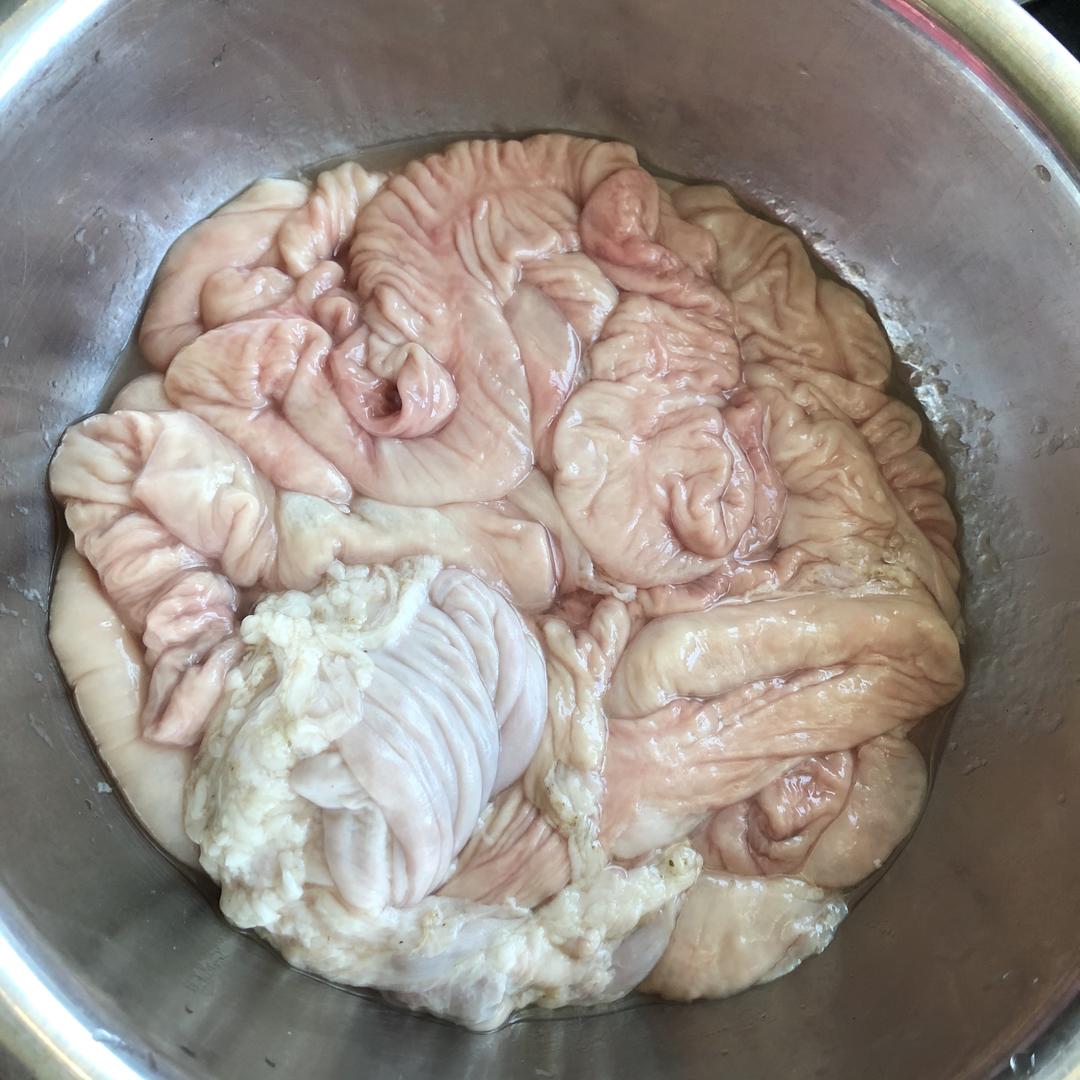
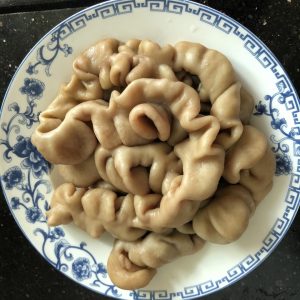
Boil the intestines from cold water until tender. The original’s honest note: three jin of soaked intestines shrank to under a jin after cooking – so do not panic when your pot suddenly looks half empty.
Step 3 – Prep the Liver
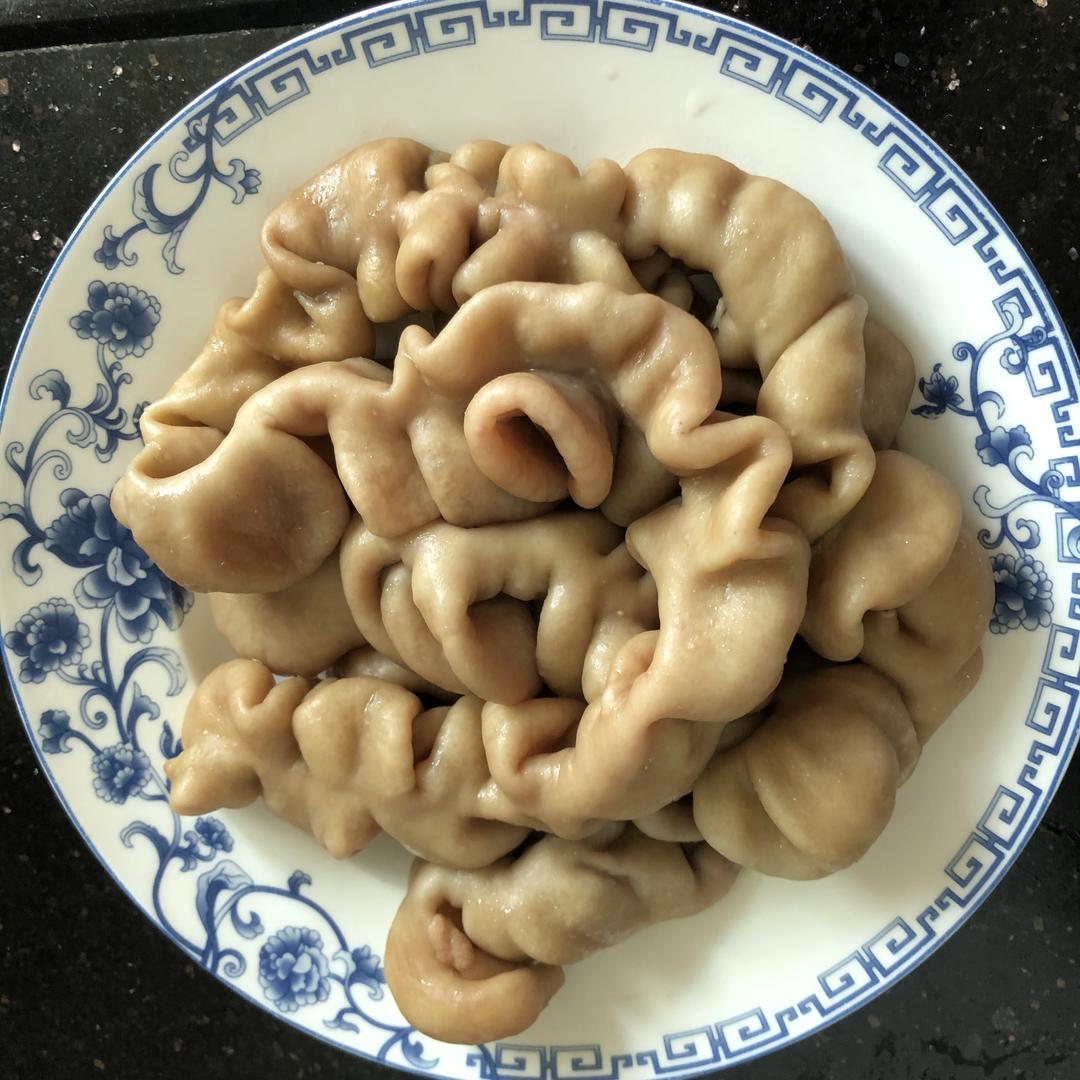
Slice the liver and soak it in water, changing the water until it runs clear – this draws out the blood. Drain, then velvet with salt, wine, and a little starch. Blanch it in boiling water just until the color changes, and set it aside; the liver joins the pot last.
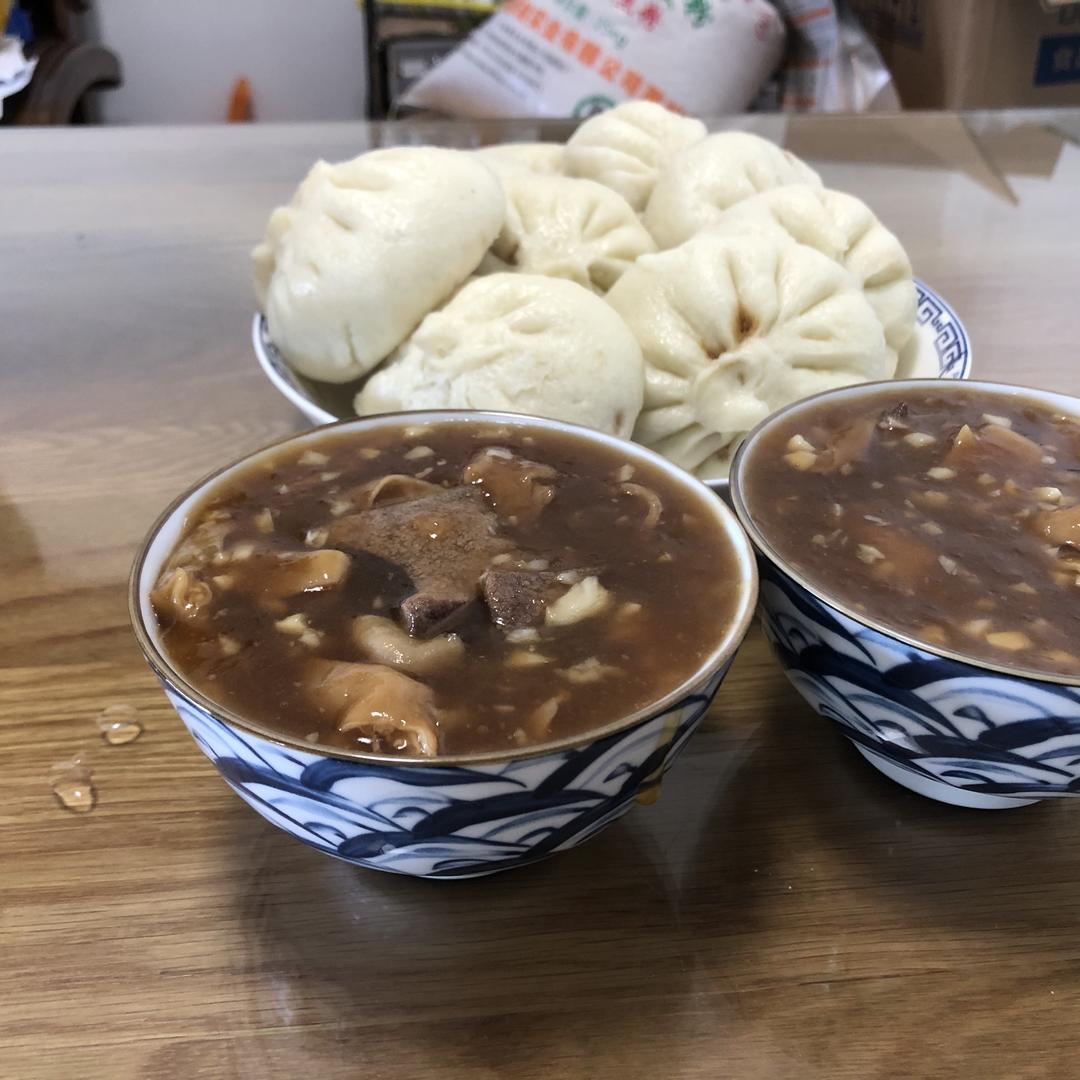
Step 4 – Build the Sauce
Bring water to a boil with the scallion, ginger, and star anise until fragrant. Add the cooked intestine pieces and begin seasoning: sweet bean paste (the original’s substitution for yellow paste, endorsed as equally good), soy sauce, dark soy, sugar, salt, and the wine. Taste and adjust as it simmers.
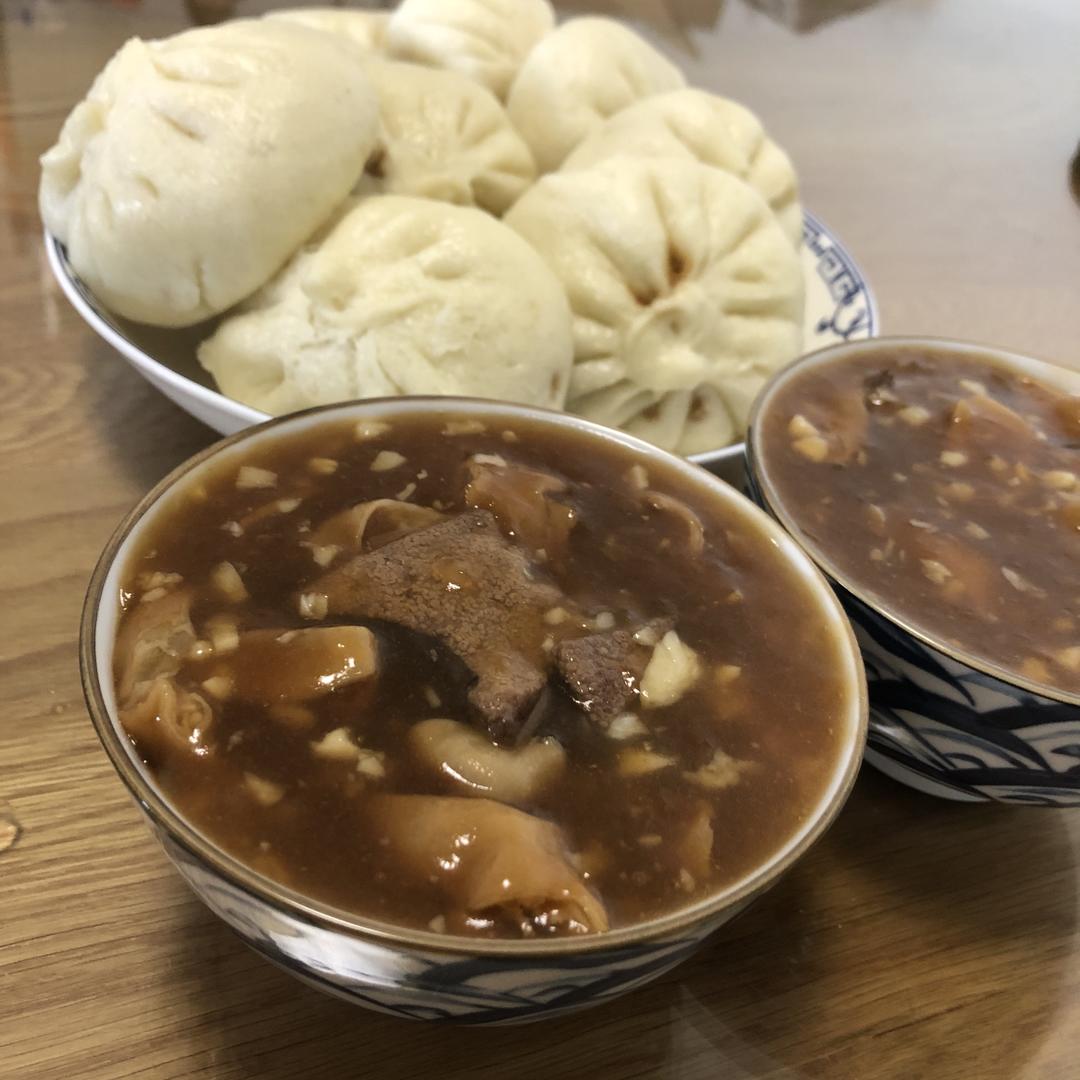
Step 5 – Add the Liver and Thicken
When the intestines are seasoned and tender, add the velveted liver and bring it to a boil. Then thicken with the potato starch slurry, stirring until the sauce turns glossy and coats the bowl. The right starch is half the success, the original notes – potato starch gives the sheen.
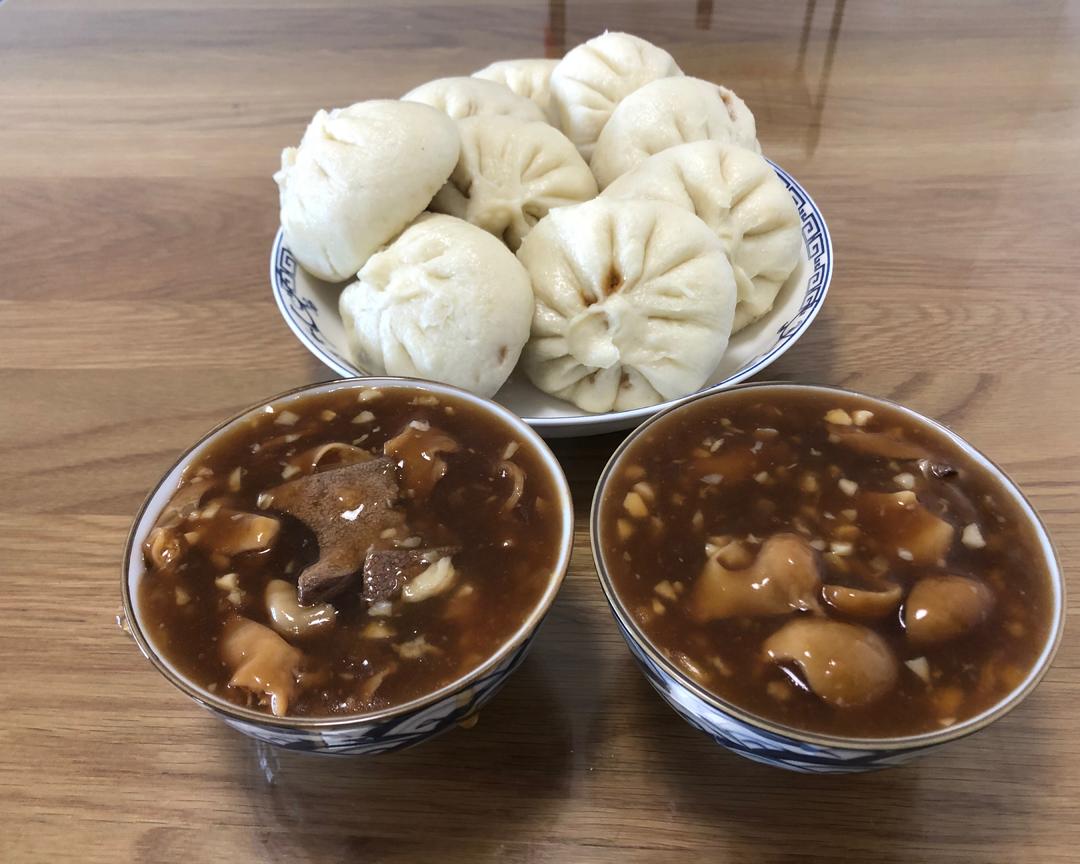
Step 6 – Garlic Last, and Slurp
Off the heat, stir in the minced garlic – the raw garlic is the dish’s sharp finish. Ladle into bowls. The original’s final instruction is the whole experience: no spoon, no chopsticks, just pick up the bowl and slurp.
Common Mistakes When Making Old Beijing Stirred Liver
1. Gamey, unpleasant intestines. Cause: a rushed cleaning. Fix: the baking soda-salt-lemon routine, with rinses between – clean but never fat-stripped.
2. Tough, rubbery liver. Cause: adding the liver too early or cooking it hard. Fix: velvet it, blanch briefly, and add it only at the very end.
3. A thin, watery sauce. Cause: too little starch, or the wrong kind. Fix: potato starch and enough of it – the glossy thickness is the dish.
4. A flat, one-note flavor. Cause: skipping the paste or the garlic finish. Fix: the sweet bean paste gives depth, and the raw garlic is the counterpoint.
5. Intestines that vanish in the pot. Cause: soaked intestines shrinking. Fix: buy more than you think – the original’s own confession.
6. A muddy sauce. Cause: no blanch on the liver, or stirring too hard after thickening. Fix: blanch the liver, and stir the thickened sauce gently.
Variations
Yellow paste: If you have the traditional yellow bean paste, use it – the original’s sweet bean paste is a confident substitute, not a demand.
Chicken feet: The same glossy sauce works on chicken feet – my spicy braised chicken feet is the saucy family member.
More liver: The original reduced the liver because the intestines shrank – scale it to your own batch.
Other offal braises: For the braise family, my vegetarian braised radish and waterless braised vegetables show the method without the offal.
Frequently Asked Questions
Is chao gan actually stir-fried? No – the name says stir-fry, but it is a slow braise with a starch-thickened sauce. The “stir” is in the history, not the method.
How do I eat it? Pick up the bowl and slurp – the original’s final step, and the traditional way.
Can I use less intestine? Yes – the proportions are flexible; the original adjusted hers after the shrink.
How long does it keep? Refrigerated 2 days; reheat gently and re-thicken if needed.
Is this very strong-tasting? It is rich and savory – an acquired and beloved taste, and the garlic makes it boldly flavored.
How to Serve
Serve the chao gan in bowls for slurping, traditionally for breakfast with egg drop soup or congee on a Beijing morning spread. For the offal and braise family, pair with stir-fried pork liver and pork liver soup – a liver night. My Wenzhou braised pork belly and red wine braised beef round out a braise-heavy table.
Storage & Reheat
Refrigerate for up to 2 days; reheat gently and re-thicken with a little starch slurry if the sauce has thinned. Reheat to at least 74°C (165°F). Do not freeze – the sauce and offal both degrade. Never leave the pot out for more than 2 hours.
Allergen Notice
This recipe contains soy (soy sauce, dark soy, sweet bean paste) and may contain gluten – check labels. It is free of nuts, eggs, dairy, and shellfish.
Nutrition Disclaimer
Nutrition information is calculated using an ingredient database and should be considered an estimate. In cases where multiple ingredient alternatives are given, the first listed is calculated for nutrition. Garnishes and optional ingredients are not included.
About the Author & Recipe Development
I am Lin, a professional Chinese chef and food writer with a decade in restaurant kitchens before turning to recipes. Chao gan is a dish I learned to respect through Beijing breakfasts, and this xiachufang home cook writes it with the right honesty – the intestine shrink, the starch warning, the final slurp. I tested the cleaning routine and the liver-last timing, and both hold up. I have not tested every cleaning method or starch brand, so treat the original’s choices as tested suggestions, not laws.
Authoritative References
USDA Food Safety and Inspection Service – Safe Temperature Chart for pork offal handling and storage guidance.
Old Beijing Stirred Liver (Chao Gan): Intestines and Liver

Equipment
- Large Pot
- Bowl for the liver soak
- Whisk or spoon
Ingredients
For the Chao Gan
- 250 g pork liver 8.8 oz
- 1.5 kg pork intestines 3.3 lb / 3 jin; shrinks a lot when cooked
- 2 heads garlic, minced
- 1-2 tbsp dark soy sauce 15-30 ml
- 5 g sugar 1 tsp
- salt, to taste
- 1 large scallion and a piece of ginger for the broth
- 2-3 star anise
- 1 tbsp sweet bean paste (tian mian jiang) 15 g
- 5-6 tbsp soy sauce 75-90 ml
- 2-3 tbsp Shaoxing wine 30-45 ml
- 100 g potato starch, for the thickening about 3.5 oz
- 1 tsp chicken bouillon powder optional
Instructions
- Clean the intestines with baking soda, salt, and lemon – clean but never strip all the fat.

- Boil the intestines from cold water until tender – they shrink a lot.
- Slice the liver, soak out the blood, and velvet with salt, wine, and starch; blanch briefly and set aside.
- Season the simmering intestines with sweet bean paste, soy, dark soy, sugar, salt, and wine.
- Add the liver, bring to a boil, and thicken with potato starch until glossy.

- Off the heat, stir in the minced garlic. Serve in bowls – no spoon, no chopsticks, just slurp.












Leave a Reply