Growing up in my family’s restaurant kitchen in Sichuan, I learned early on that preparing offal requires patience. My father, a seasoned chef, taught me this exact method for cleaning pork intestines. Consequently, this step-by-step process removes all unpleasant odors and sticky mucus.
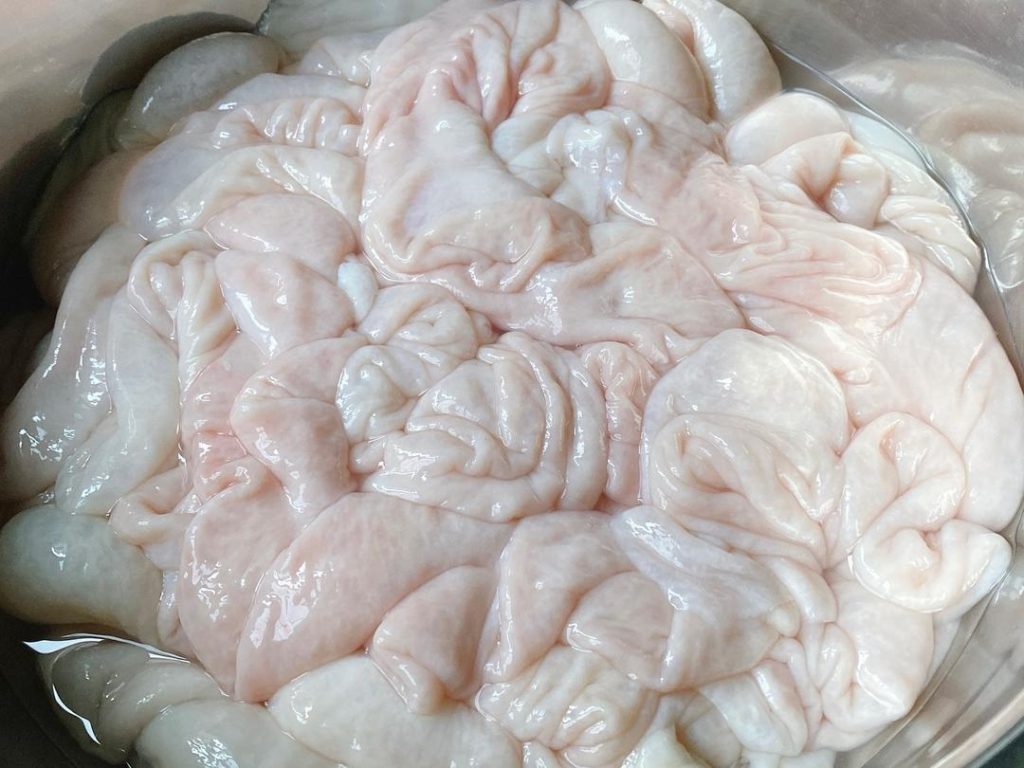
If you love rich, chewy textures, preparing fresh offal at home is incredibly rewarding. Furthermore, it is far superior to buying pre-boiled, frozen alternatives. Therefore, I want to share this restaurant-proven technique to help you confidently master this ingredient in your own kitchen.
What Are Pork Intestines?
Pork intestines (肥肠, féi cháng) are a beloved delicacy in Chinese cuisine. They feature a distinctively chewy texture and a rich, fatty flavor profile. Historically, they were an economical protein. Today, they are prized in famous dishes like dry-fried intestines and hearty stews.
Although you can buy them semi-prepared and frozen, those often retain a subtle funky smell. In contrast, fresh intestines, cleaned by your own hands, yield a pure, savory taste that elevates any stir-fry or braise.
Why This Recipe Works
- Mechanical Cleaning: Using flour acts as a gentle abrasive. As a result, it binds to and strips away the thick layer of surface mucus effectively.
- Chemical Neutralization: The combination of Salt and Shaoxing Wine penetrates the tissue to neutralize deep-seated odors.
- Visual Guidance: Cutting the long tubes into shorter segments makes the tricky inverting process completely manageable for home cooks.
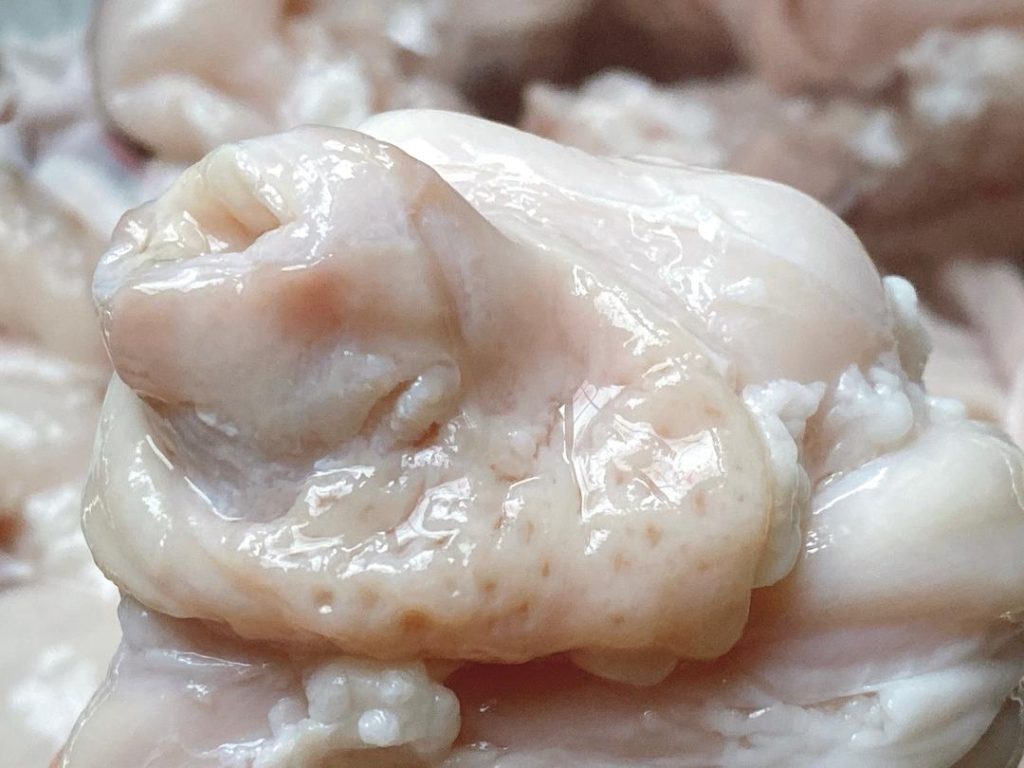
- Targeted Trimming: By exposing the inside, you can easily remove excess fat and the reddish lymph nodes, which are the primary sources of bad smells.
Key Ingredients & Substitutions
- Fresh Pork Intestines: Look for fresh, pliable intestines at your local Asian butcher. They will have a strong smell initially, but do not worry.
- All-Purpose Flour: You need about 6 to 8 tablespoons. The gluten network traps the slippery mucus.
- Shaoxing Wine: 3 tablespoons. It acts as a deodorizer. Dry sherry is a safe substitute if necessary.
- Kosher Salt: 3 tablespoons. The coarse texture scrubs the surface, while the sodium draws out impurities.
Deeper Dive: Flour vs. Vinegar
Many home cooks wonder why we use flour instead of just vinegar. While vinegar masks smells, flour physically absorbs the slime. The starch granules act like microscopic sponges. Therefore, always start with flour for a truly clean foundation.
Ingredients
- 1 bunch (about 2 lbs / 1 kg) fresh pork intestines
- 6 to 8 tbsp all-purpose flour (divided)
- 3 tbsp Shaoxing wine
- 3 tbsp kosher salt
- Water (for rinsing)
Recipe Notes Before You Start
First, prepare a clean, dedicated workspace in your sink. Handling raw offal requires strict hygiene. Have a dedicated colander and a pair of kitchen shears ready.
Additionally, use cold or room-temperature water. Using hot water prematurely will cook the proteins and lock the unpleasant odors into the meat.
Mise en Place / Prep
Clear your sink entirely. Place the fresh intestines in a large, wide mixing bowl. Next, measure out your flour, salt, and wine into separate small bowls so you do not have to touch your pantry containers with contaminated hands.
How to Make Clean Pork Intestines
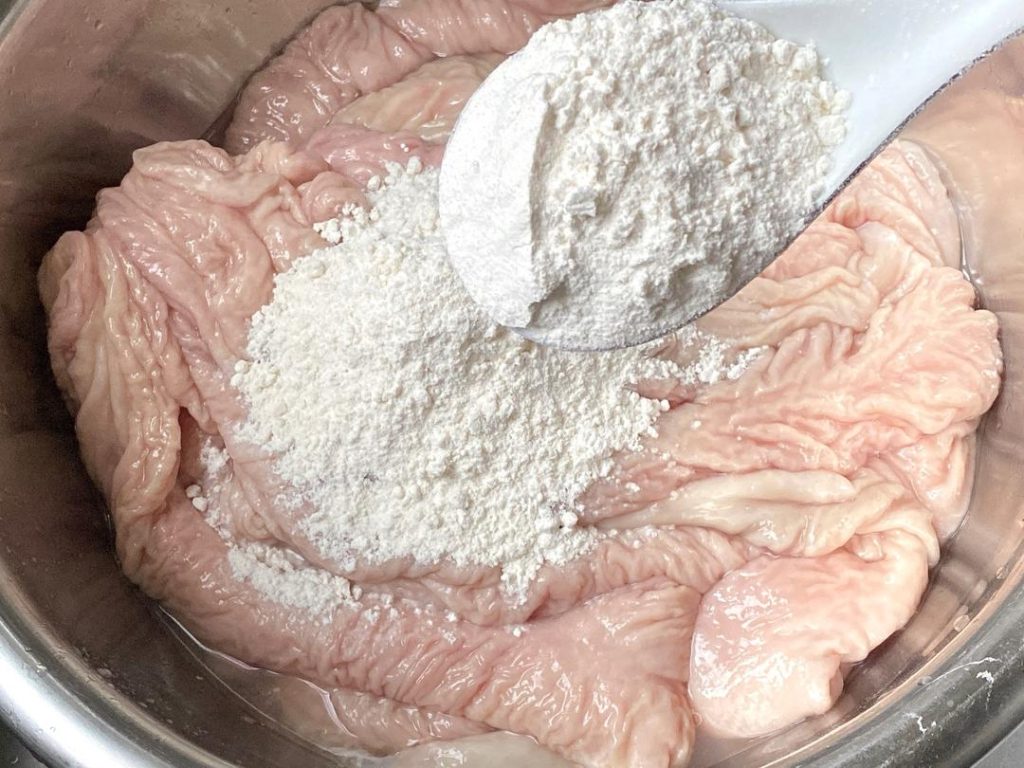
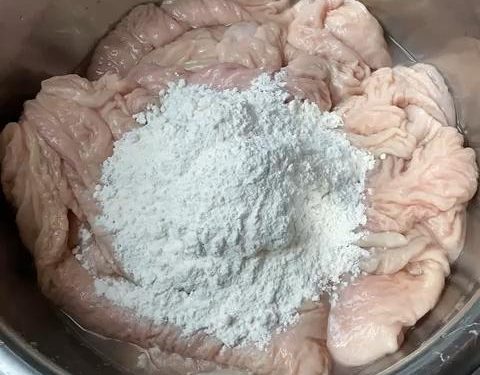
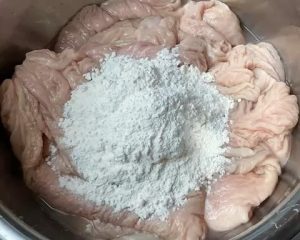
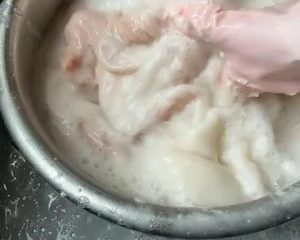
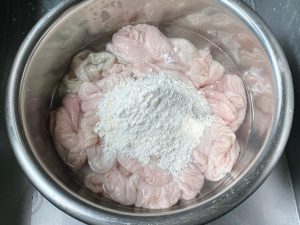
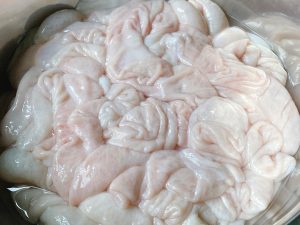
1. The First Flour Wash Place the unwashed intestines in your large basin. Add 2 tablespoons of flour. Begin kneading and rubbing the flour into the surface. The flour will clump as it absorbs the thick mucus. If it feels too dry, add a tiny splash of water.

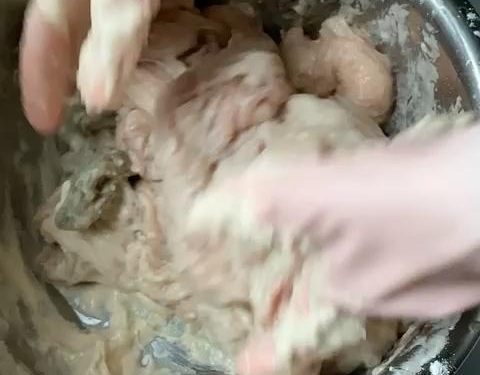
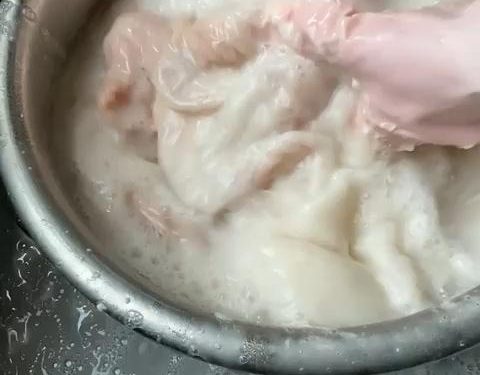
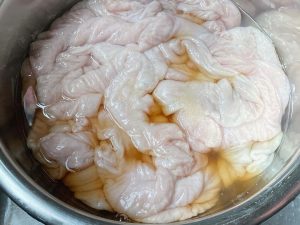
2. Rinse Under Running Water After a thorough kneading, place the bowl under running water. Continue to massage the intestines while the water washes away the dirty flour paste. Rinse until the water runs mostly clear.
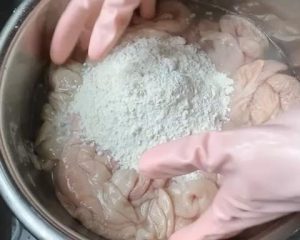
3. Repeat the Flour Wash Drain the water and add another 2 tablespoons of flour. Repeat the vigorous kneading process. As a result, you will notice the surface becoming noticeably smoother and less slimy. Rinse under running water again.
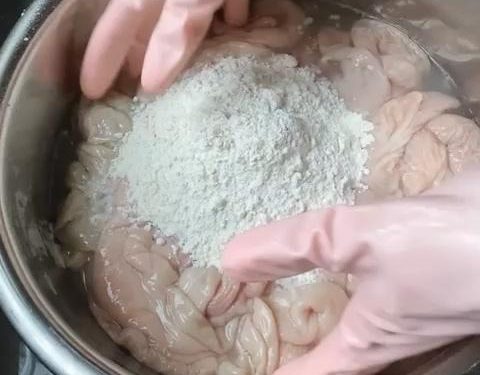
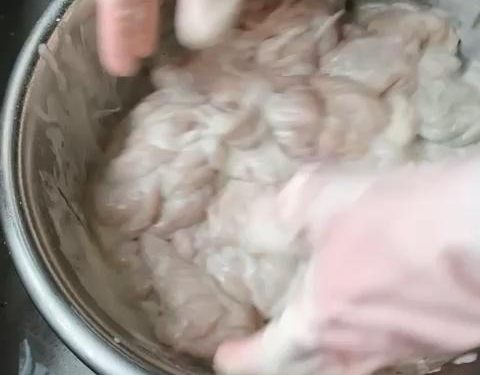
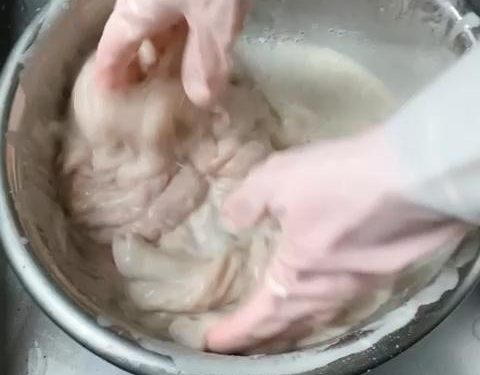
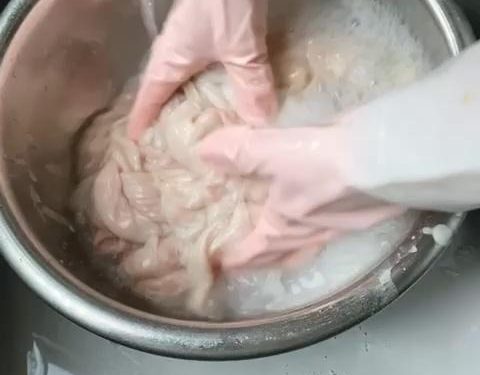
4. Final Flour Wash For the third time, add 2 tablespoons of flour and repeat the kneading and rinsing. By now, the exterior should look very clean. Smell it; if a strong odor persists, you can do a fourth flour wash.
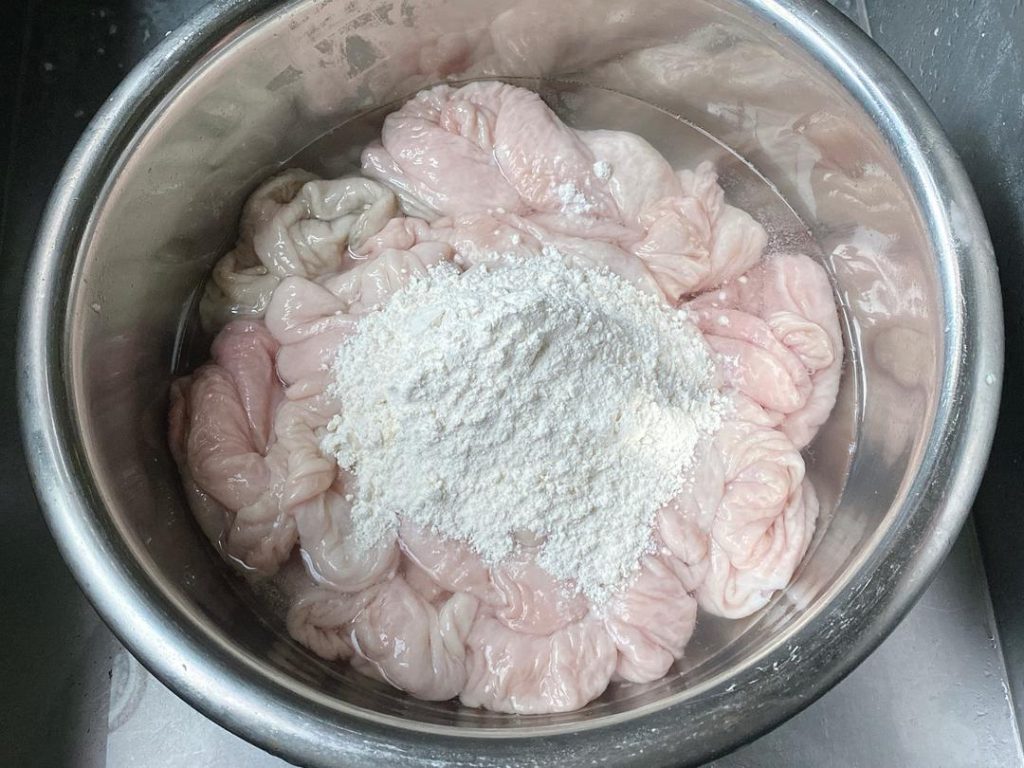
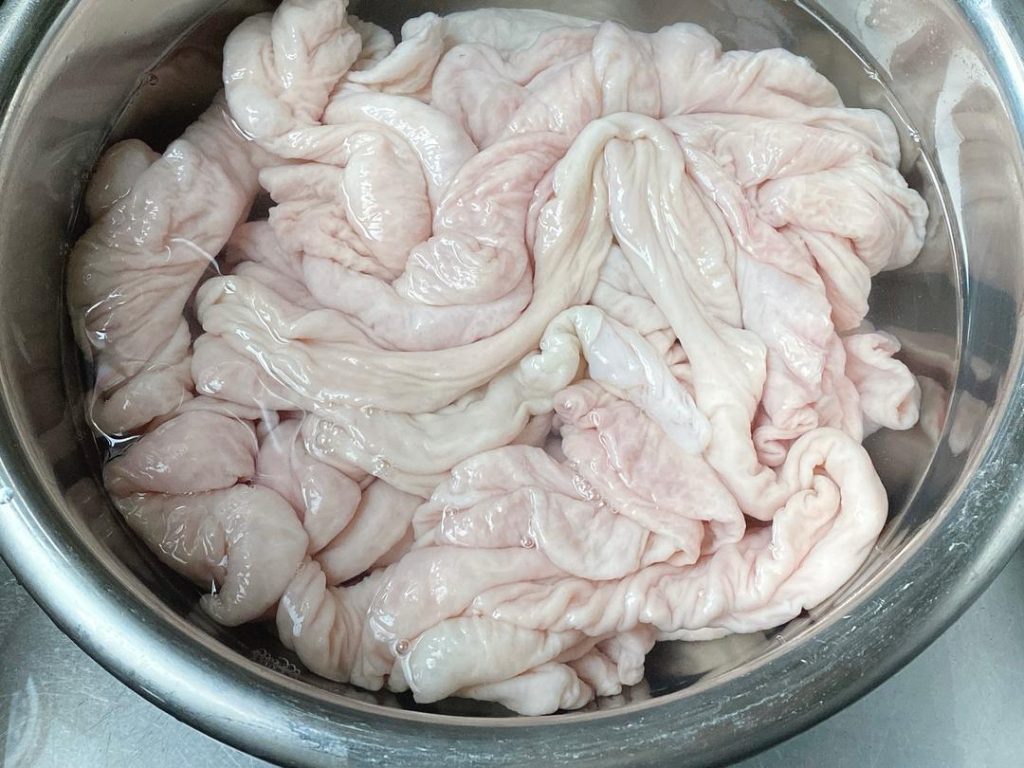
5. Salt and Wine Treatment Drain the intestines. Add 3 tablespoons of salt and 3 tablespoons of Shaoxing wine. Knead vigorously one last time. This combination acts as a powerful deodorizer. Rinse thoroughly until the water is completely crystal clear.
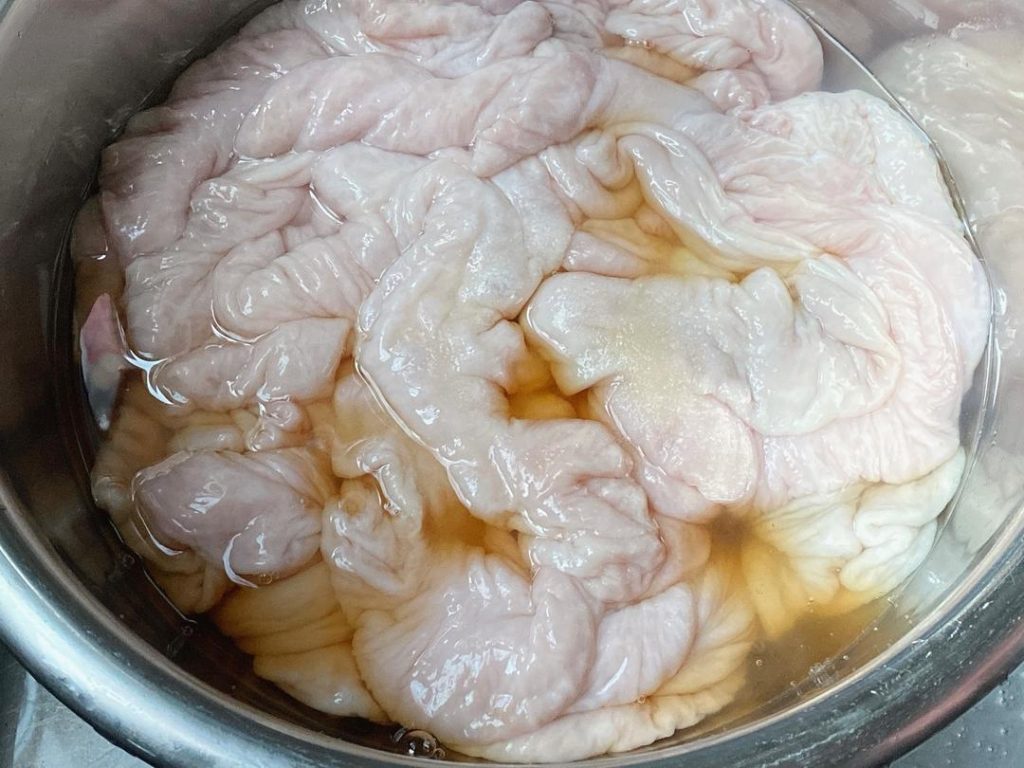
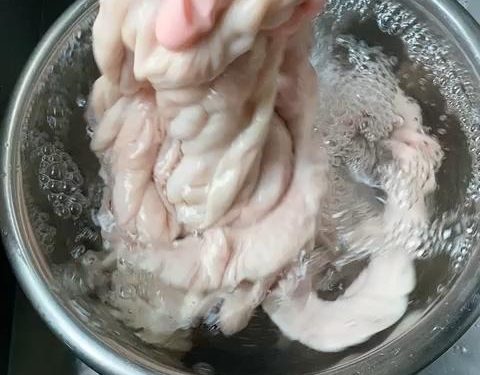
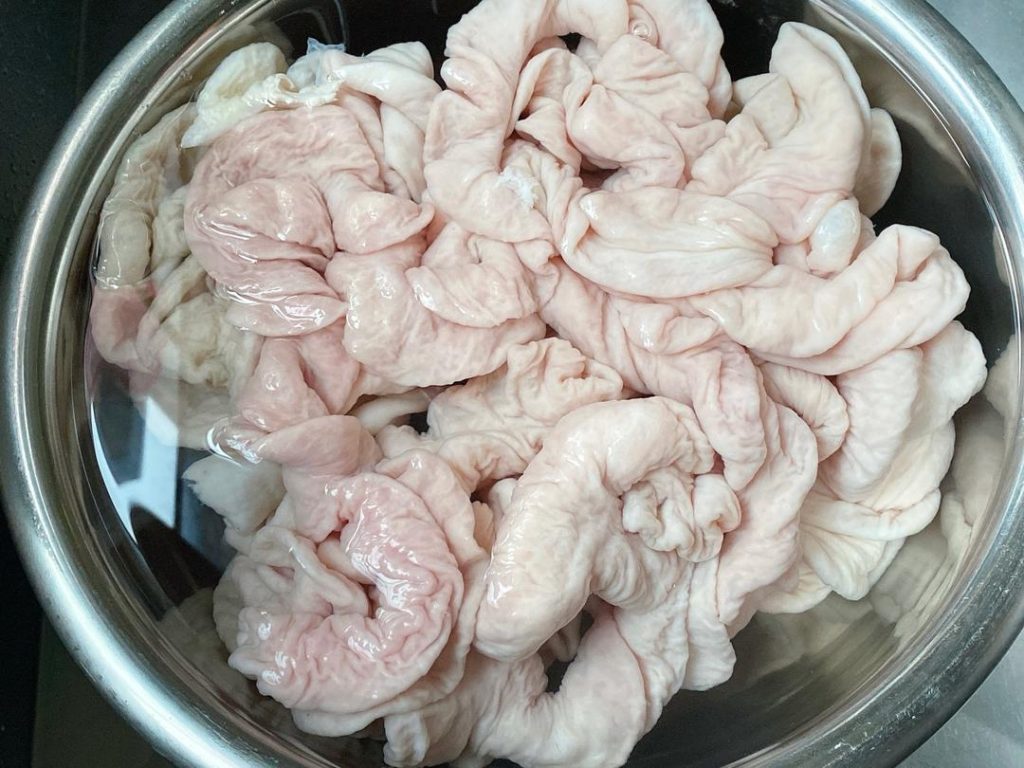
6. Prepare for Inverting The outside is now clean, but we must clean the inside. To make this easier, use kitchen shears to cut the long intestine into shorter, 6-inch (15 cm) sections.
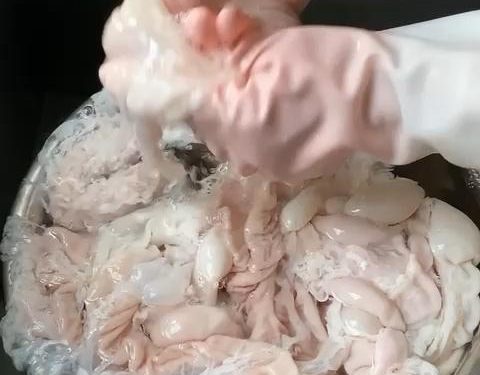
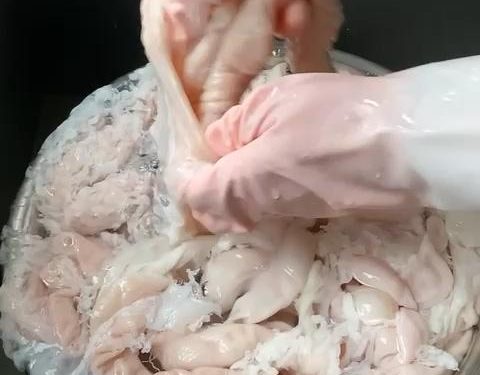
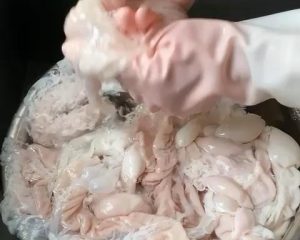
7. Invert the Intestines Hold one end of a segment open under a gentle stream of running water. Using your fingers, push the edges inward, allowing the water pressure to help push the intestine inside out.
8. Trim Fat and Lymph Nodes Once inverted, you will see clumps of white fat and dark, reddish, granular lymph nodes. Use your fingers or scissors to pull off and discard the lymph nodes. They must be removed. You can leave a little white fat for flavor, or strip it entirely for a leaner dish.
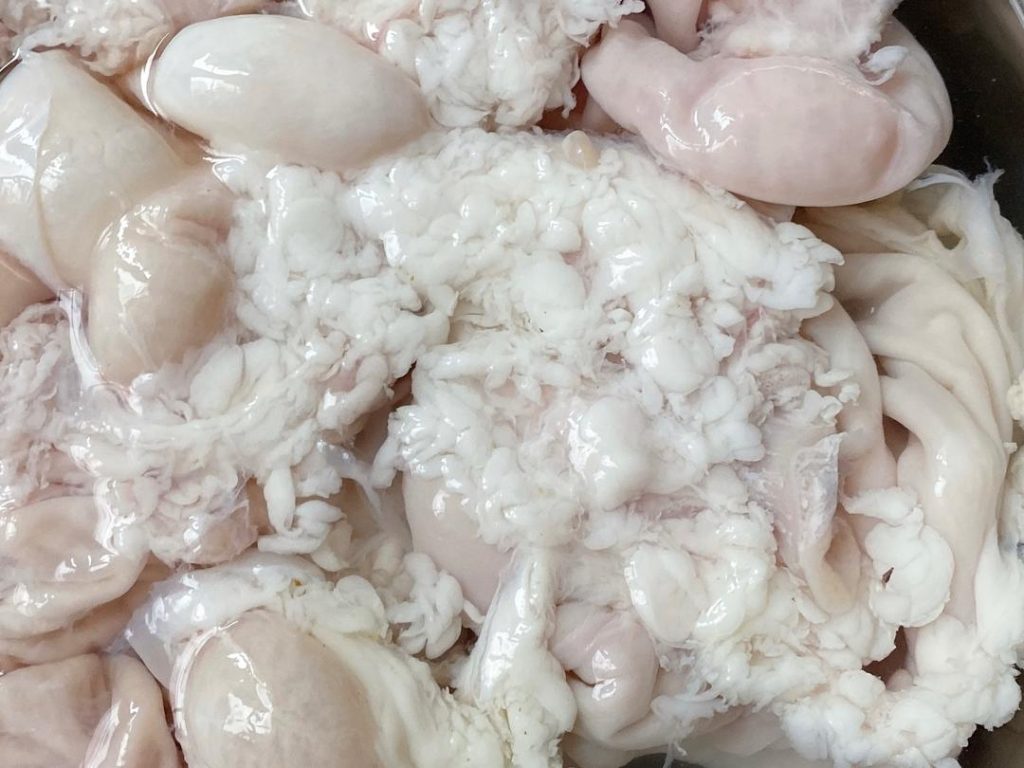
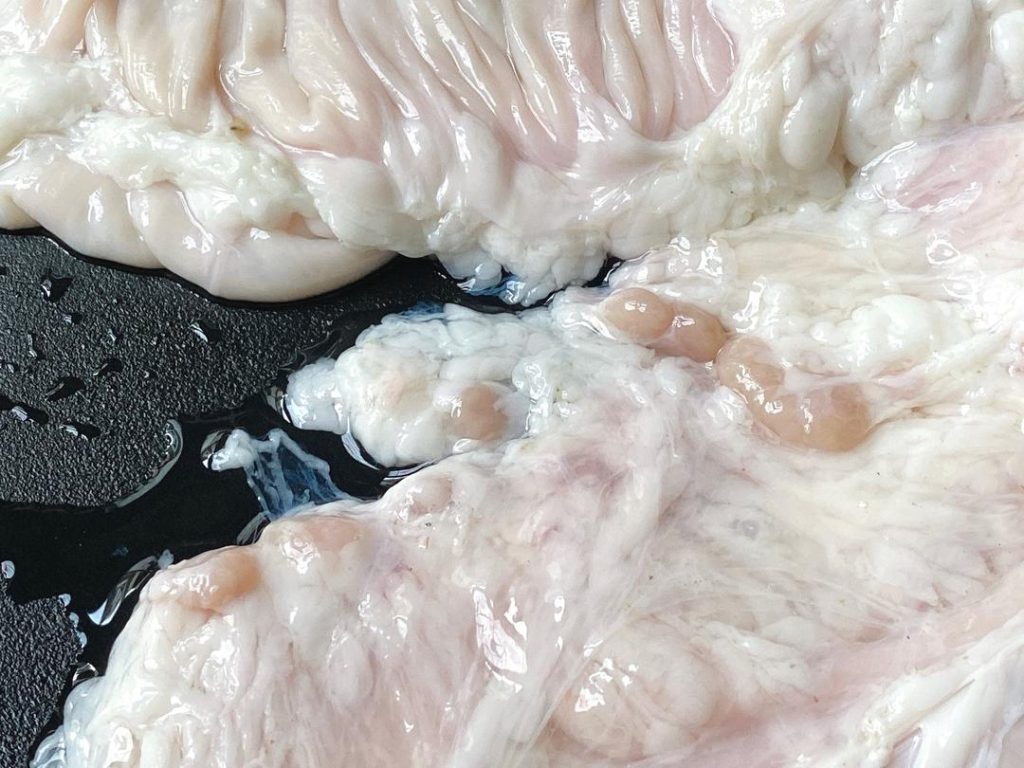
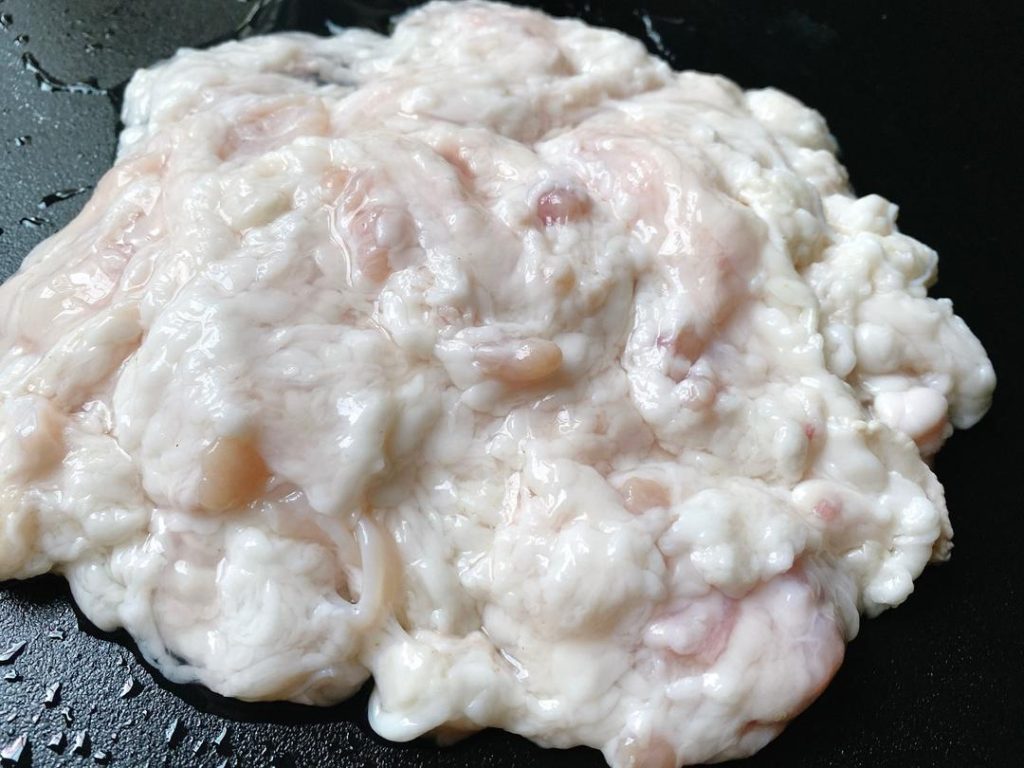
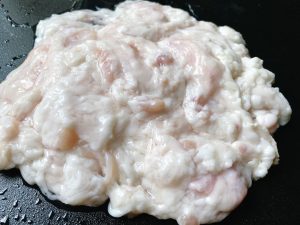
9. Final Inspection Check the ends of each segment. If the very tips look too dirty or frayed to clean properly, simply snip them off and discard them. Your intestines are now completely odor-free and ready to be boiled, braised, or stir-fried.
Common Mistakes When Making This
- Skipping the Inversion: The inside houses the lymph nodes and excess fat. If you do not turn them inside out, the final dish will taste extremely bitter and gamey.
- Using Hot Water to Clean: Hot water will slightly cook the mucus, cementing the funky smell into the muscle fibers permanently. Always use cold tap water.
- Rushing the Kneading: It takes genuine elbow grease to strip the slime. Therefore, do not just toss the flour and rinse immediately.
FAQ / Troubleshooting
Why do my intestines still smell after three washes? Sometimes, older or lower-quality cuts require more effort. Simply repeat the flour kneading process a fourth or fifth time until the smell dissipates.
Can I use frozen intestines? Yes, but they are much harder to turn inside out because the freezing process affects tissue elasticity. Thaw them completely in the fridge before starting.
Do I need to boil them after this? Yes. This tutorial covers cleaning. Before stir-frying, you should blanch them in boiling water with ginger and scallions to set the texture.
Tips for Success
💡 Chef’s Tip: Cutting the intestines into shorter lengths is the ultimate restaurant secret. Trying to push a 3-foot long slippery tube inside out is frustrating. Short segments make the inversion step take only seconds.
Variations & Make-Ahead
If you buy intestines in bulk, you can clean them all at once. After the final rinse, drain them exceptionally well. Next, pack them tightly into heavy-duty freezer bags and freeze them for up to 3 months. They will be ready to cook whenever you crave them.
Serving Suggestions
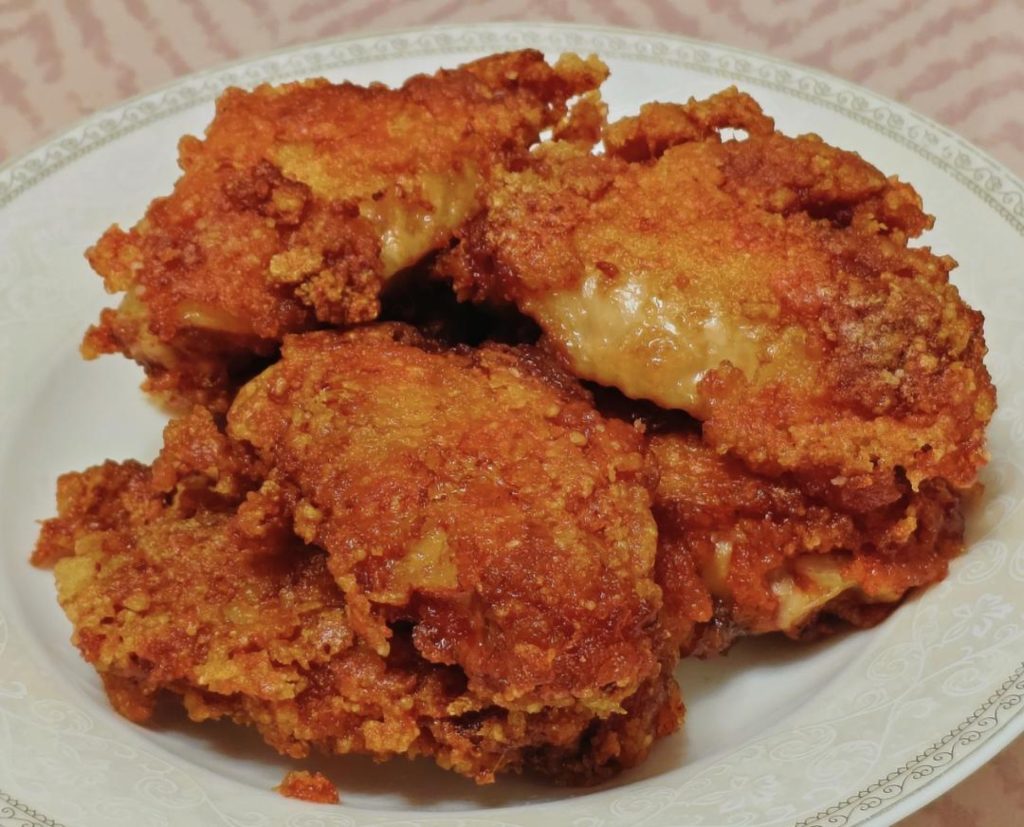
Once cleaned and parboiled, these are incredibly versatile. You can slice them and toss them in a fiery wok with White Pepper and dried chilies. Alternatively, you can slow-braise them until they are meltingly tender, absorbing the flavors of Essential Chinese Sauces.
What to Serve With It
If you are planning a hearty Chinese dinner, rich pork dishes pair wonderfully with lighter sides. While intestines are robust, you might also enjoy cooking Braised Pork Belly for guests who prefer traditional cuts. Balance the meal with a crisp vegetable stir-fry or a Pork Stir-fry with Green Peppers for varied textures. For a deeper look at unique ingredients, check out our guide on Pork Skin Uses Chinese Cooking or the iconic Twice-Cooked Pork.
How to Store & Reheat
Store cleaned, uncooked intestines in an airtight container in the coldest part of your refrigerator for up to 2 days. For longer storage, freeze them for up to 3 months. Always thaw them safely overnight in the refrigerator before moving on to the cooking stage.
Food Safety and Preparation
Raw offal carries a high risk of bacterial contamination. Consequently, you must wash your hands, the sink, and all tools with hot, soapy water immediately after prep. Furthermore, always ensure the intestines reach a safe internal temperature of 165°F (74°C) during your final cooking process.
Authoritative References
To ensure maximum safety in your home kitchen, I highly recommend reviewing the United States Department of Agriculture (USDA) guidelines on the safe handling of raw pork and offal. You can find detailed, scientifically backed preparation standards here: USDA Safe Food Handling for Fresh Pork.
About the Author & Recipe Development
I grew up navigating the fast-paced environment of my family’s restaurant in Sichuan. I learned traditional techniques from my father, an expert in regional cuisine. After formal training at the Sichuan Culinary Institute and 10 years of professional cooking, I adapted these rigorous commercial techniques for home kitchens. This cleaning method has been tested extensively to guarantee restaurant-quality results without requiring industrial equipment.
Nutrition Information (Estimate)
Pork intestines are a delicacy, but they should be consumed in moderation. They are high in calories, saturated fat, and notably high in cholesterol.
- Calories: ~260 kcal per 100g (varies based on fat trimming)
- Protein: 14g
- Fat: 22g (Saturated: 8g)
- Cholesterol: High
- Sodium: Varies based on rinsing
(Disclaimer: Nutrition information is calculated using an ingredient database and should be considered an estimate. In cases where multiple ingredient alternatives are given, the first listed is calculated for nutrition. Garnishes and optional ingredients are not included.)
Final Thoughts
Mastering the art of cleaning pork intestines unlocks a whole new realm of authentic Chinese cooking. Although the process requires some time and physical effort, the reward is an impeccably clean, odor-free ingredient. I hope this detailed guide empowers you to bring genuine Sichuan flavors right into your dining room.
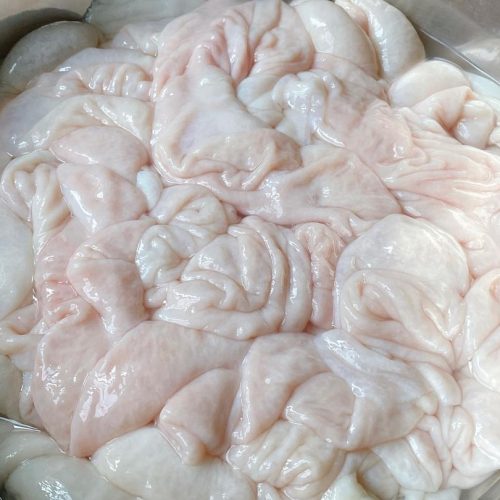
How to Clean Pork Intestines

Equipment
- Kitchen Shears For cutting intestines into manageable segments.
- Large Basin For washing and kneading.
Ingredients
Main Ingredients
- 2 lbs fresh pork intestines about 1 kg
- 6-8 tbsp all-purpose flour divided
- 3 tbsp Shaoxing wine
- 3 tbsp kosher salt
- Water cold tap water for rinsing
Instructions
- Place fresh intestines in a large basin. Add 2 tbsp flour. Knead vigorously to let the flour absorb the surface mucus. Add a few drops of water if too dry.

- Place under running cold water. Massage while washing until the water runs mostly clear.
- Add 2 more tbsp flour and repeat the kneading process. Rinse under running water.
- Add 2 more tbsp flour, knead, and rinse. Repeat until the surface is smooth and the strong odor subsides.

- Drain well. Add 3 tbsp salt and 3 tbsp Shaoxing wine. Knead thoroughly to neutralize deep odors, then rinse until the water is crystal clear.
- Cut the intestines into 6-inch (15 cm) segments. Under running water, push the edge of one opening inward, letting the water pressure push the intestine inside out.
- On the newly exposed inner side, pull off and discard the reddish, granular lymph nodes and any excess white fat.
- Snip off any heavily soiled or frayed ends. Give the inverted intestines one final rinse. They are now ready to be parboiled and cooked.










Leave a Reply