For years I was the person who politely pushed liver soup to the side of the bowl. Liver always arrived at my table the same way: dense, mealy, faintly metallic, with a texture like a sponge left in the sun. I assumed that was simply what liver was. Then a Cantonese uncle, watching me pick at my bowl, told me the truth: “The liver is not the problem. The knife is the problem. Slice it like paper, and the soup does the rest.”
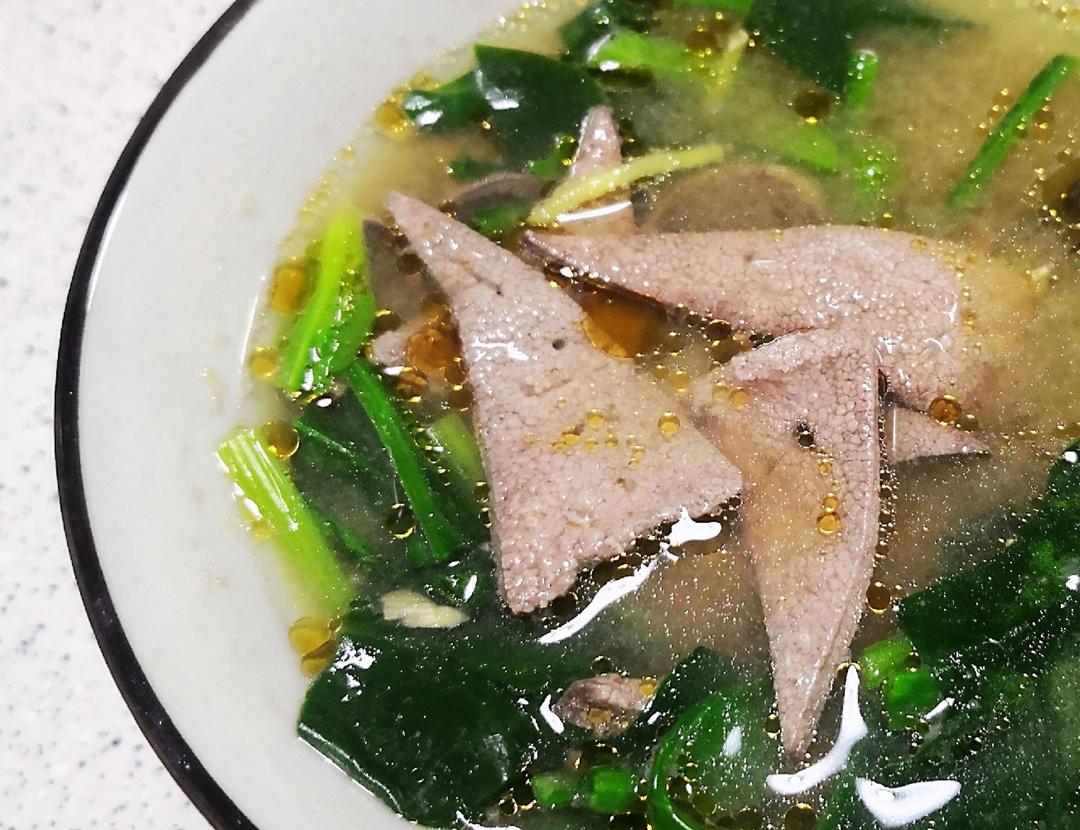
He was right. This zhu gan tang (猪肝汤) is one of the most comforting bowls I know — provided the liver gets three simple rituals: paper-thin slicing, a cold-water soak to draw out the blood, and a cornstarch velvet coat that protects the meat the moment it hits hot liquid. Do those three things and liver turns silky, almost creamy. This is the family-size version I make at home now, and if you have ever feared cooking liver, I hope it changes your mind.
What Is Pork Liver Soup (Zhu Gan Tang)?
Zhu gan tang is exactly what its name promises: a simple broth built around sliced pork liver, almost always paired with a leafy green. Spinach is the classic companion in the home kitchen, though you will also see the soup made with napa cabbage, watercress, or chrysanthemum greens depending on the season. There is no heavy sauce and no long braise — the whole point is speed. The liver goes in at the very end and cooks in about a minute, so it stays tender instead of turning into the rubbery disks that gave liver a bad name.
Liver holds a special place in Chinese cooking. For centuries, organ meats were prized as everyday nourishment — rich in iron and vitamin A, and believed to “nourish the blood.” A bowl of pork liver soup is what many families serve after illness, after childbirth, or on a cold evening when someone needs fortifying. It is food of care, the dish that says “eat this, you need it” better than any other ingredient can.
Liver also deserves a respectful safety note: it is a filtration organ, so it can concentrate certain substances. Buy it from a reputable butcher, use it fresh within a day or two, and cook it until no pink remains at the center. This recipe does exactly that while keeping the slices silky.
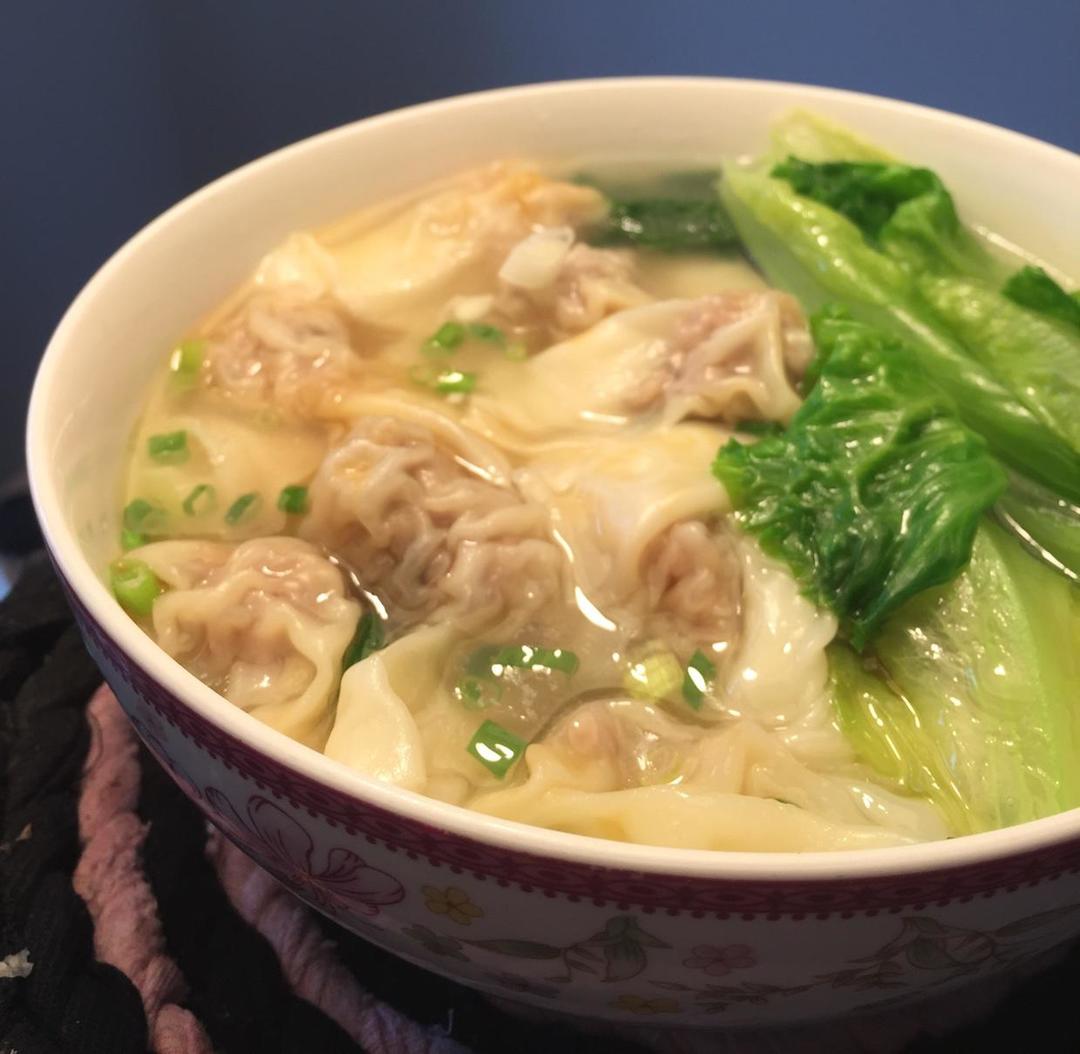
If you love clean, comforting broths, my easy Cantonese wonton soup shares the same homey spirit — a clear, warming broth built on simple ingredients and quick cooking. It is the soup I turn to when I want that comfort without the planning.
1Cantonese Wonton Soup (广式云吞)A quick, homestyle Cantonese Wonton Soup with a savory pork and mushroom filling, served in a simple, traditional broth. Perfect for a fast, comforting meal.Check out this recipe
Why This Recipe Works
- Paper-thin slices are the whole secret: a 2 mm slice cooks through in seconds and stays silky; a thick chunk turns leathery while its center cooks.
- A cold-water soak draws out the blood: 15 minutes of soaking pulls out the myoglobin that makes liver taste metallic and the broth murky.
- The cornstarch velvet coat is a shield: the starch slurry buffers the liver against the hot broth, so the surface sets gently instead of seizing and squeezing out moisture.
- Blanching removes the spinach’s oxalic acid: a 30-second dip tames the sharp, metallic edge and keeps the broth clean and sweet.
- The liver goes in last: one minute in a gentle simmer cooks it through while it finishes in residual heat, never boiling.
Equipment Needed
- A sharp chef’s knife (a thin, honed blade makes paper-thin slicing actually pleasant)
- A stockpot or deep saucepan for the soup
- A small pot of boiling water for blanching
- A mixing bowl, a colander or sieve, and a slotted spoon
Ingredients
- 250 g (about 8.8 oz) fresh pork liver (zhu gan) — about 50 g per person
- 2 handfuls fresh spinach (about 150 g / 5 oz), washed and cut into sections
- 1 tbsp (15 ml) Shaoxing cooking wine (huangjiu)
- 15 g (1 tbsp) fresh ginger, peeled and cut into fine shreds
- 1 tbsp (15 g) cornstarch
- 1/4 tsp (1 g) white pepper
- 2 g (1/2 tsp) salt
- 1 tsp (5 ml) sesame oil, to finish
- 6 cups (1.4 L) water, for the broth
Ingredient Notes
Pork liver is the star, and freshness is non-negotiable. Buy it from a butcher you trust, ideally the same day you cook it. Fresh liver should be deep reddish-brown, smooth, and moist, with no sour or off smell. Ask for a clean piece with no bile stains or greenish patches. Chicken livers make a decent substitute — they are smaller and richer, and need even less cooking time.
Spinach is why this soup tastes bright rather than heavy, and why we blanch it first: mature leaves carry oxalic acid, the compound that gives spinach its sharp, slightly chalky bite and can turn a pale broth gray. The same quick dip that tames it also keeps it from dulling the soup. If you want the moisture-control reasoning behind this technique, my guide to how to cook meat tender in a stir-fry explains why it makes such a difference.
Shaoxing cooking wine perfumes the marinade, and its alcohol helps cut the liver’s raw, gamey note. Dry sherry is the closest pantry substitute; if you must skip it, add an extra pinch of white pepper and a squeeze of ginger juice instead.
Prep & Mise en Place
Everything moves fast at the end, so prep is where you earn your calm. Peel a thumb-size piece of ginger and cut it into the finest shreds you can manage — fine shreds perfume the broth without leaving chunks to dodge. Wash the spinach in a few changes of cold water to flush out grit, then cut the leaves into sections.
The liver needs your sharpest knife, and a cold one. Pop it in the freezer for 20–30 minutes until firm but not hard; it will slice like a dream. Cut against the grain into slices about 2 mm thick — thin enough to almost see through. A dull blade will crush and tear the liver, so hone yours first. The velvet coating used here is the same idea behind my restaurant-method velveted beef.
Cooking Process
Step 1 — Slice the Liver Paper-Thin
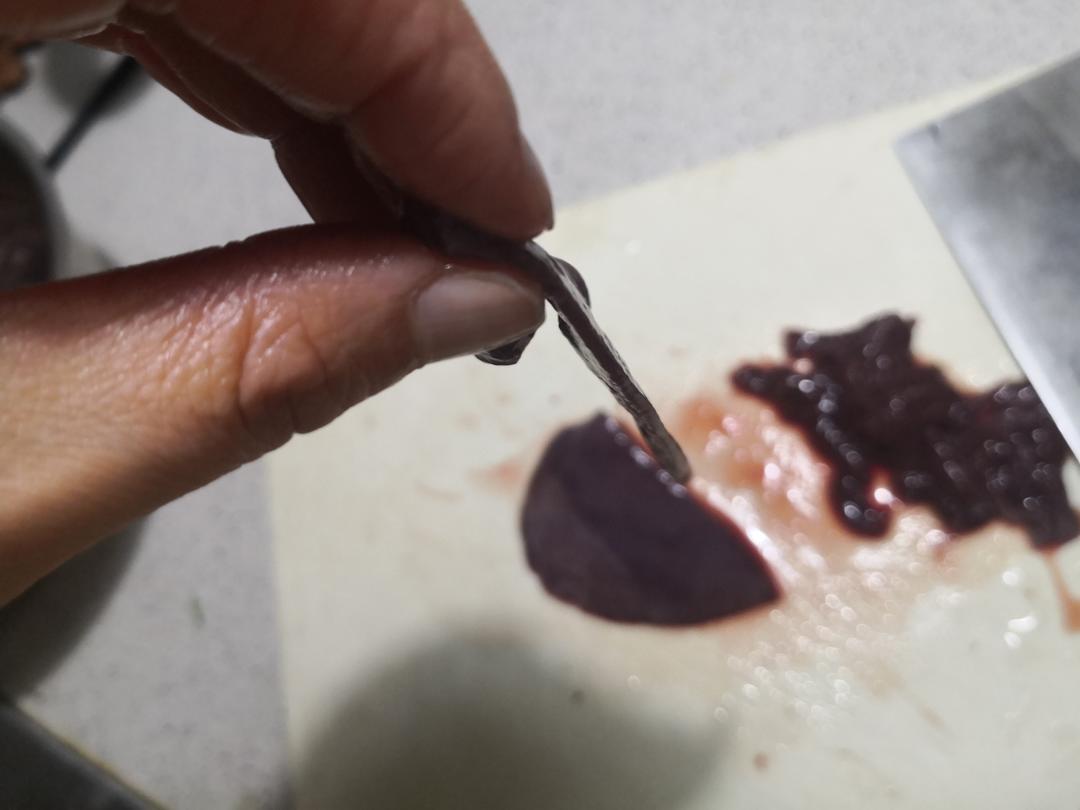
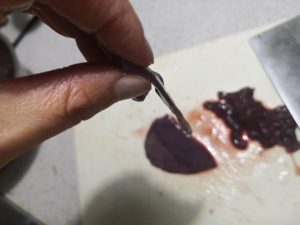
Slice the liver as thin as possible — about 2 mm, and thinner if you can manage it. Thin slicing is the single most important step, so take your time; partially freezing the liver for 20–30 minutes first makes it dramatically easier. Meanwhile, cut the ginger into fine shreds and wash the spinach, cutting it into sections.
Step 2 — Rinse and Soak Out the Blood
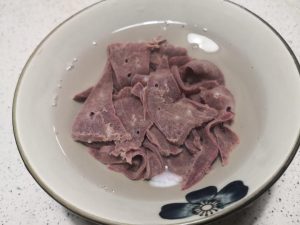
Rinse the liver slices in cold running water, then soak them in fresh cold water for 15 minutes. You will see the water turn pink as blood and myoglobin leach out. Drain, and rinse once more.
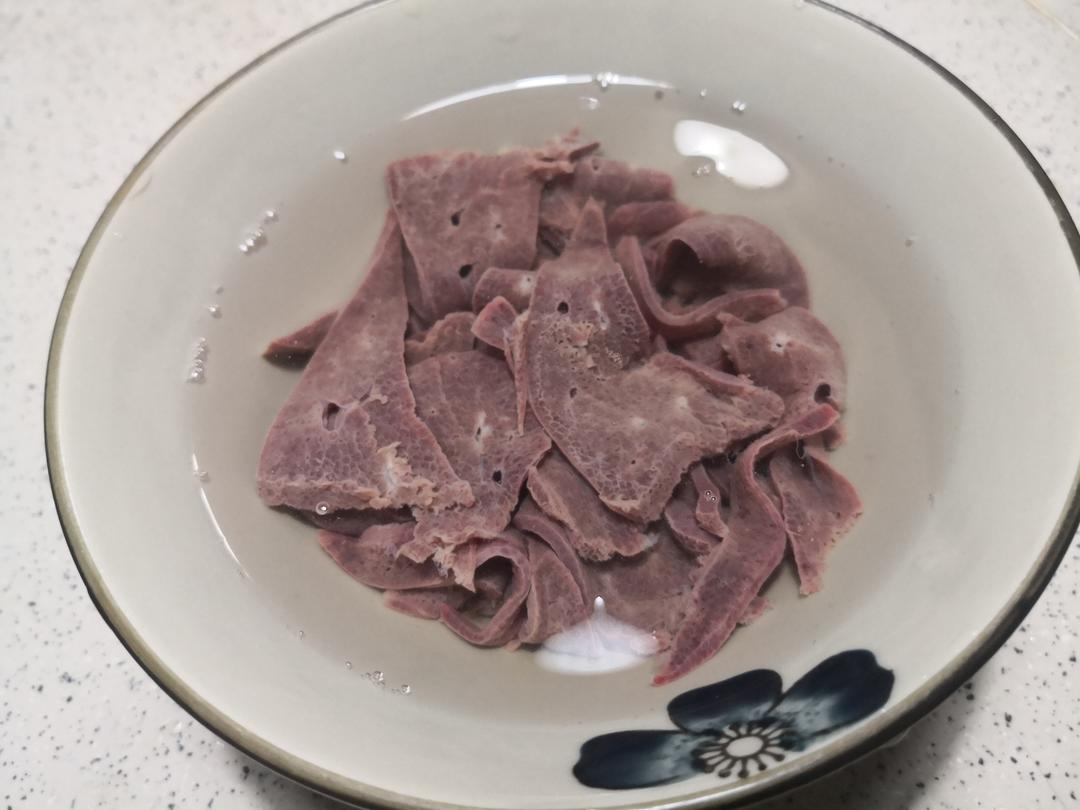
The metallic, “livery” taste that puts people off liver mostly comes from blood and myoglobin, the iron-containing protein that gives meat its color. Cold-water soaking pulls these into the water — the pink water you pour away is the harshness leaving the bowl. Do not use warm water: that sets the proteins instead of releasing them.
Step 3 — Marinate with the Velvet Coat
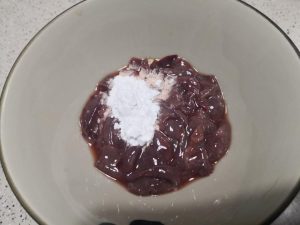
Squeeze the soaked liver dry — this matters more than it looks. Season with salt, white pepper and Shaoxing wine, then add the cornstarch and mix well so every slice is evenly coated. Marinate for 15 minutes while you get the broth ready.
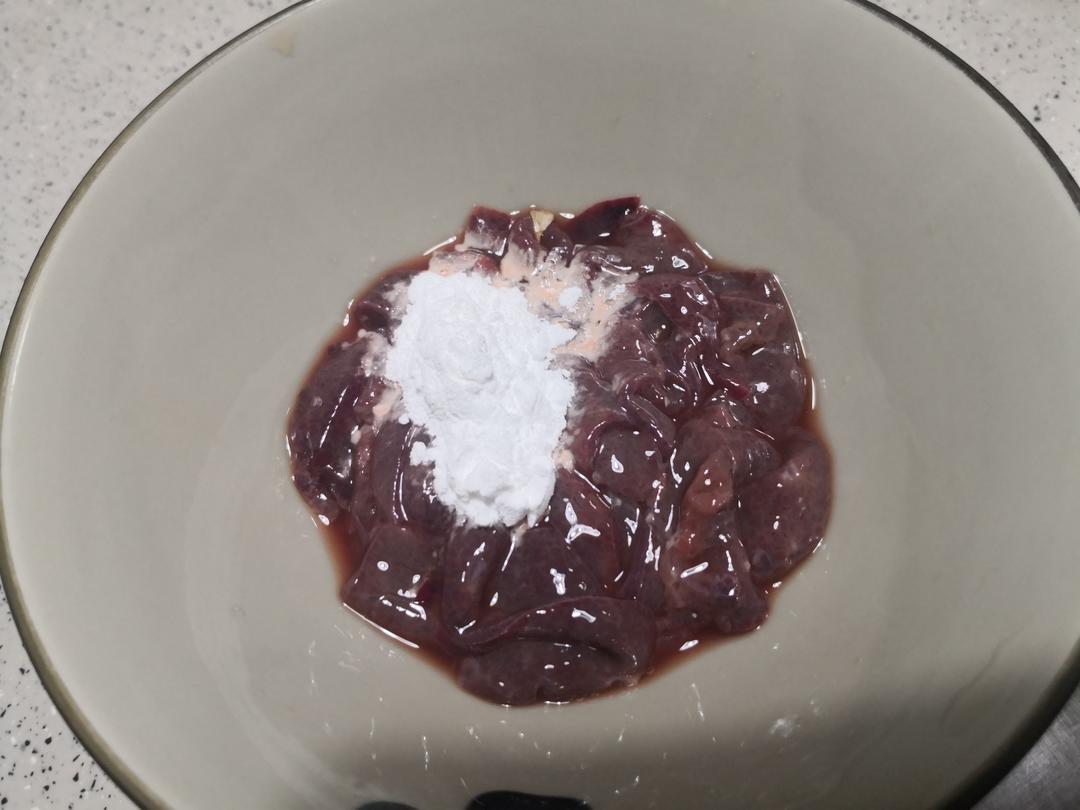
The cornstarch coat is a classic Chinese “velveting” trick: when a coated slice hits the hot broth, the starch swells into a slick gel that insulates the surface. Heat still reaches the center, but gently, so the outside sets without squeezing out moisture. The squeeze-dry step is not optional — extra water dilutes the starch and turns the coating into foam.
Step 4 — Blanch the Spinach and the Liver
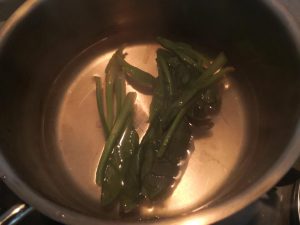
Bring a small pot of water to a rolling boil. Drop in the spinach for 20–30 seconds until just wilted and bright green, then scoop it out. Bring the water back to a boil, add the liver slices and blanch for about 10 seconds — just until they turn pale — then drain immediately.
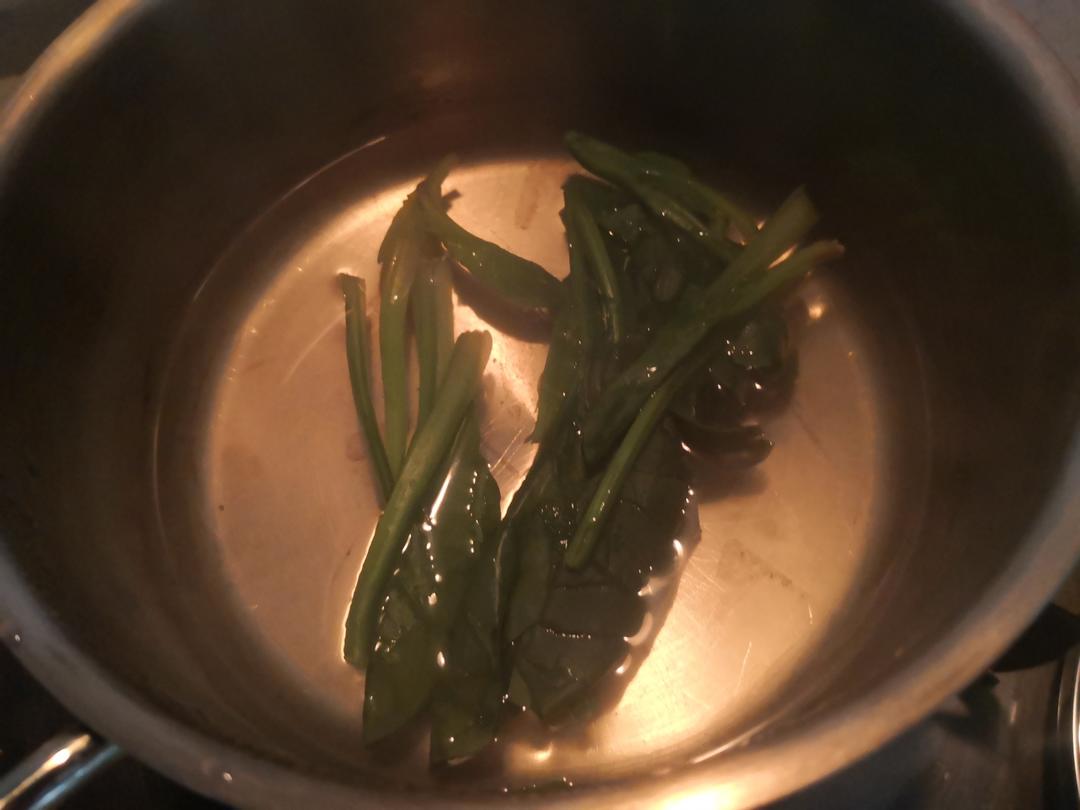
Blanching does two jobs. For the spinach, a quick boil releases oxalic acid — the compound that gives greens their sharp, chalky taste and can turn a pale broth gray — leaving the leaves sweet and tender. For the liver, the 10-second dip sets the surface proteins and washes away the last of the raw, fishy smell. The liver is only partially cooked here; it finishes in the broth in Step 6.
Step 5 — Build the Gingery Broth
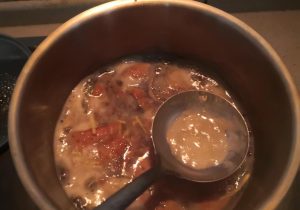
Discard the blanching water, rinse the pot, and pour in 6 cups of fresh water. Add the ginger shreds and bring to a gentle simmer over medium heat — the water should tremble and release small bubbles, not boil hard. Let it simmer for about 3 minutes so the ginger perfumes the broth.
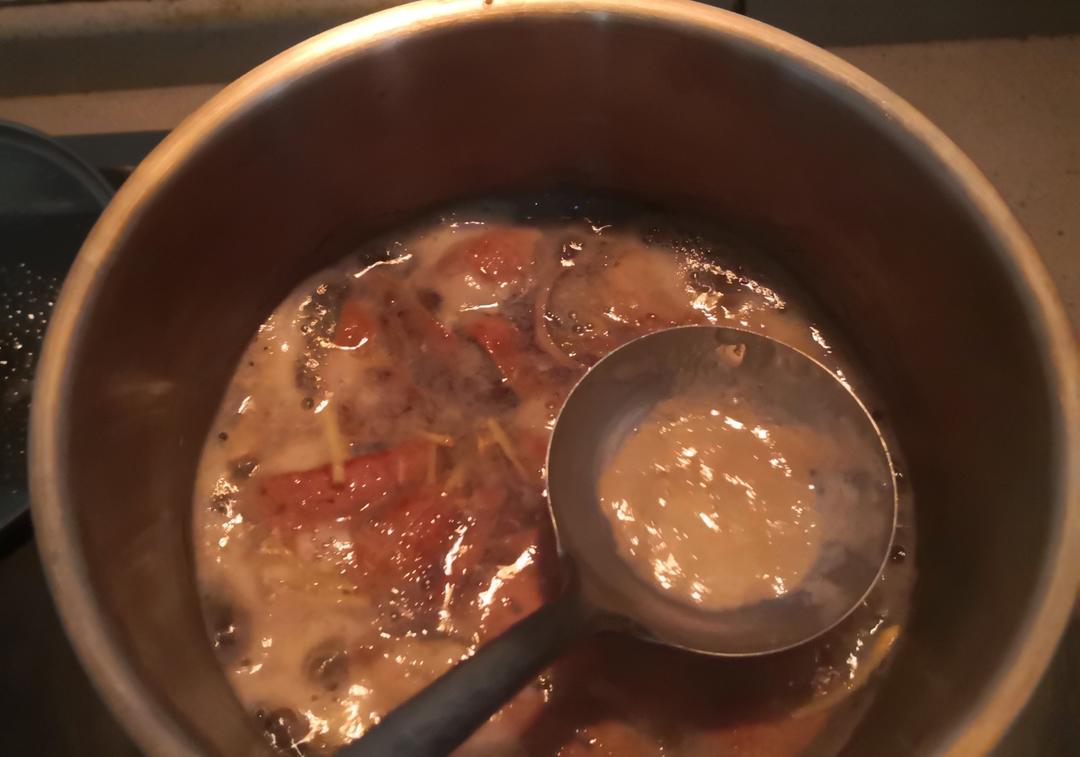
Always start the broth with fresh water, never the blanching water — that water already holds the spinach’s oxalic acid and the liver’s released impurities, and reusing it would defeat both blanches. A gentle simmer (about 190°F / 88°C) is hot enough to cook the liver through in a minute, but gentle enough that delicate slices never seize the way they would in a violent boil.
Step 6 — Finish the Soup
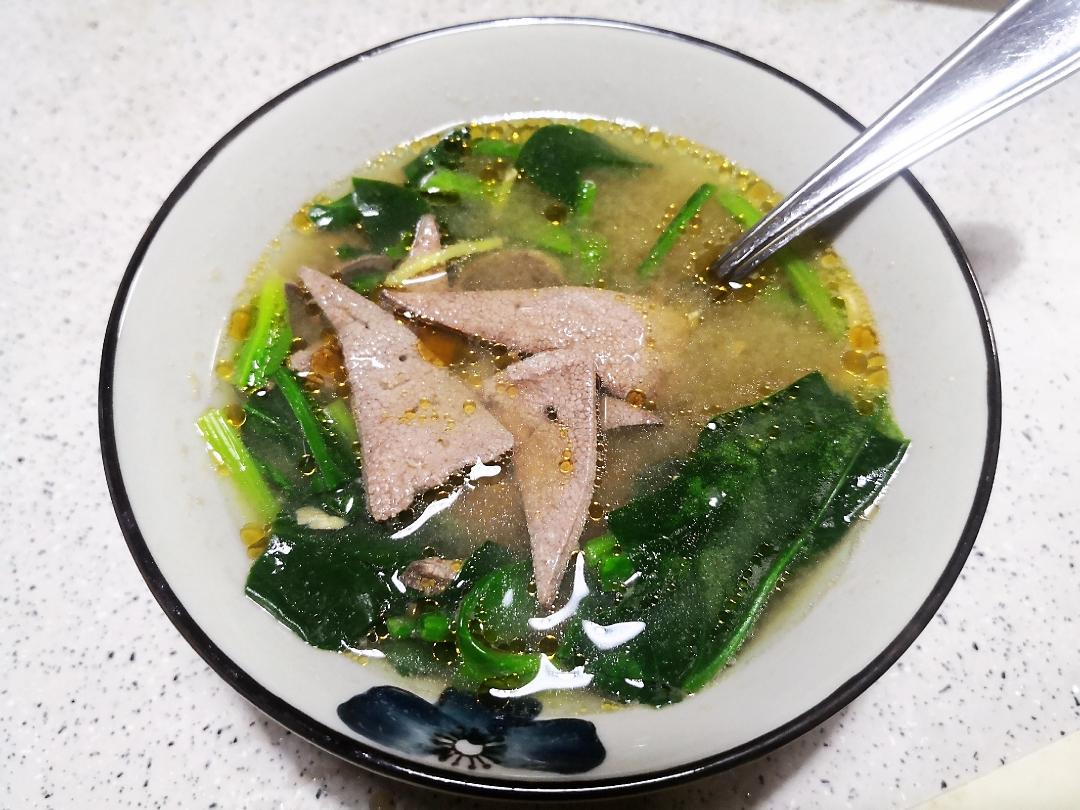
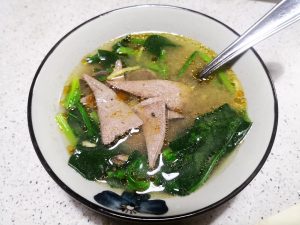
Add the blanched spinach to the simmering broth, then add the liver slices in a single layer. Cook for about 45 seconds to 1 minute — just until the liver turns pale and opaque all the way through. Taste and adjust with a pinch more salt if needed. Remove from the heat immediately and finish with a few drops of sesame oil.
Common Mistakes When Making Pork Liver Soup
1. The liver comes out tough and rubbery. Cause: slices cut too thick, or left too long in the broth. Fix: slice to about 2 mm (partially freeze the liver first) and cook for no more than 1 minute in the final broth.
2. The soup tastes metallic and “livery.” Cause: the blood was not drawn out. Fix: rinse well and soak for a full 15 minutes in cold water, changing the water once if it turns dark.
3. The broth is cloudy and murky. Cause: the liver went into the soup raw. Fix: give the liver its 10-second blanch first, then add it to a gently simmering pot.
4. The cornstarch coat washes off into foam. Cause: the liver was not squeezed dry. Fix: squeeze the soaked slices firmly (or pat them dry) before marinating.
5. The spinach tastes sharp and the soup looks gray. Cause: oxalic acid from unblanched spinach. Fix: blanch the spinach for 20–30 seconds before adding it, and use fresh water for the broth.
6. The soup is bland. Cause: not enough salt, or the ginger was not given time to bloom. Fix: let the ginger simmer a few minutes, season the broth before adding the liver, and taste again at the end — liver dulls seasoning, so a final pinch of salt often saves the bowl.
Variations
The framework is endlessly flexible. Swap the spinach for napa cabbage, watercress, or chrysanthemum greens (tong hao) — keep the same blanching logic for any sturdy green. For a richer broth, replace a cup of water with light chicken stock, or add soaked wood ear mushrooms for earthy depth. Like heat? Slice a bird’s-eye chili into the broth, or finish with a splash of Chinese black vinegar for a bright, tangy edge. Chicken livers work beautifully with the same method — just shave the final cook time down to 30–40 seconds.
Frequently Asked Questions
Is liver safe to eat? Yes, when handled and cooked properly. Buy fresh liver from a reputable butcher, keep it refrigerated below 40°F (4°C), and use it within 1–2 days. Cook it until no pink remains at the center — pale beige with no rosy interior, which is what this recipe does. The USDA recommends cooking organ meats to at least 160°F (71°C). Pregnant women should consult their doctor about portions, since liver is very high in vitamin A and iron.
Can I use frozen pork liver? Yes. Thaw it overnight in the refrigerator, never on the counter. A slight freeze is actually a bonus — frozen liver slices into even thinner pieces. Give it the same rinse, soak, and blanch routine.
Why is my liver always tough no matter what I do? The almost-certain culprit is heat exposure time. Liver has no connective tissue to soften, so every extra minute cooks moisture out of it. Between the blanch and the broth, this recipe keeps the liver in hot liquid for well under 2 minutes total. Cut thinner, cook shorter.
Can I make the soup ahead of time? Not fully assembled — the liver is best the moment it is cooked. Prep everything up to the blanching, refrigerate the velveted liver and blanched spinach separately, then finish the soup fresh in about 5 minutes.
What can I serve with pork liver soup? Steamed rice is the classic companion, or a noodle bowl like my braised beef noodle soup, or a light bowl of tomato egg drop soup.
How to Serve
Pork liver soup is best served immediately, piping hot, with the liver and spinach scooped into each bowl before the broth is ladled over. Add the sesame oil just before serving so its fragrance is still rising. Serve with steamed rice for a complete meal, or as a fortifying first course in a bigger spread. It sits beautifully beside a plate of Shanghai pork and vegetable wontons — one soup, one steamed bundle, and dinner feels like a feast. When I want variety in the broth bowl, I rotate this with my seaweed egg drop soup and the Beijing eggplant noodle soup.
Storage & Reheat
Pork liver soup is best eaten the day it is made — the liver is at its peak for about an hour after cooking. If you have leftovers, refrigerate them in an airtight container within 2 hours and eat within 1 day. Reheat gently over low-medium heat just until steaming — do not boil, or the liver will toughen. Alternatively, store components separately: the broth keeps 3 days, and the velveted, blanched liver keeps 1 day in the fridge. Always reheat to a gentle simmer (at least 165°F / 74°C), and never reheat the same batch more than once.
Allergen Notice
This recipe is naturally gluten-free (Shaoxing wine is made from glutinous rice; check labels, as some brands are aged with wheat). It contains no other common top allergens. The sesame oil is a sesame product — omit it if you have a sesame allergy. If you are sensitive to alcohol, simmer the wine off in the marinade or use a splash of ginger juice in its place.
Nutrition Disclaimer
Nutrition information is calculated using an ingredient database and should be considered an estimate. In cases where multiple ingredient alternatives are given, the first listed is calculated for nutrition. Garnishes and optional ingredients are not included. Nutrition information is an estimate and provided for informational purposes only.
About the Author & Recipe Development
I’m Lin, a professional chef who spent a decade working line jobs in Chinese restaurants before I started writing recipes for home cooks. Liver was one of the first things I learned to respect in a professional kitchen, because it punishes carelessness faster than almost any ingredient. I tested this recipe until the window between “cooked through” and “tough” was forgiving enough for a home cook — the thin slice, the soak, the double blanch, and the velvet coat are all in service of that goal. The amounts are scaled for a family batch (about 50 g of liver per person), and the method holds up with chicken liver, watercress instead of spinach, or stock instead of water.
Authoritative References
For safe internal temperatures for organ meats, I follow the USDA safe minimum internal temperature chart, which recommends cooking organ meats to 160°F (71°C). The nutrition profile of pork liver — an excellent source of iron, vitamin A, and B vitamins — is documented in the USDA FoodData Central database.
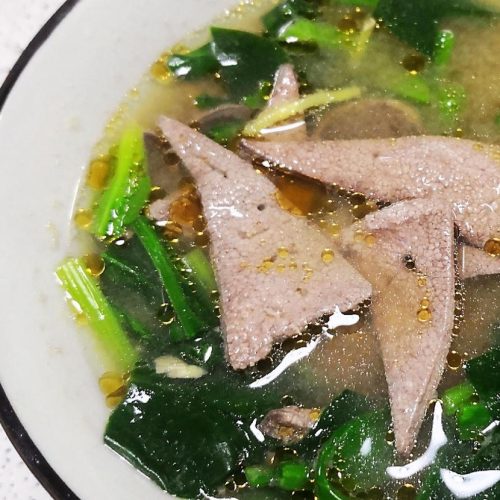
Tender Pork Liver Soup with Spinach (Zhu Gan Tang)

Equipment
- Sharp Chef’s Knife
- Stockpot or Deep Saucepan
- Small pot (for blanching)
- Mixing Bowl
- Colander or Sieve
- Slotted Spoon
Ingredients
For the Pork Liver Soup
- 250 g fresh pork liver (zhu gan) sliced paper-thin, about 50 g per person
- 2 handfuls fresh spinach about 150 g / 5 oz, washed and cut into sections
- 1 tbsp Shaoxing cooking wine huangjiu; dry sherry in a pinch
- 15 g fresh ginger peeled, cut into fine shreds, about 1 tbsp
- 1 tbsp cornstarch for the velvet coating
- 0.25 tsp white pepper freshly ground preferred
- 2 g salt about 1/2 tsp, plus more to taste
- 1 tsp sesame oil to finish
- 6 cups water for the broth, or light chicken stock
Instructions
- Slice the pork liver as thin as possible, about 2 mm. Partially freezing the liver for 20–30 minutes first makes slicing much easier. Cut the ginger into fine shreds, wash the spinach and cut it into sections.

- Rinse the liver slices in cold running water, then soak them in fresh cold water for 15 minutes to draw out the blood. Drain and rinse once more.
- Squeeze the soaked liver dry. Mix with salt, white pepper and Shaoxing wine, then add the cornstarch and mix well so every slice is coated. Marinate for 15 minutes.
- Bring a small pot of water to a boil. Blanch the spinach for 20–30 seconds until bright green, then drain. Blanch the liver for about 10 seconds until pale, then drain immediately.
- Discard the blanching water and rinse the pot. Add 6 cups fresh water and the ginger shreds, and bring to a gentle simmer. Let the ginger perfume the broth for about 3 minutes.

- Add the blanched spinach, then the liver. Cook for 45 seconds to 1 minute until the liver is pale and opaque all the way through. Remove from the heat and finish with a few drops of sesame oil.







Leave a Reply