Ask a Chinese cook what to do with a big white daikon radish and you will usually get the same answer: braise it. Su shao luo bo (素烧萝卜) takes the humble, slightly peppery root and turns it into something almost dessert-like — thick coins of radish simmered slowly with dried shiitake mushrooms until they turn translucent, sweet, and so tender a pair of chopsticks can slide through them. The mushroom soaking water does the heavy lifting, turning plain radish into a bowl that tastes far richer than its vegetable-only ingredient list suggests.
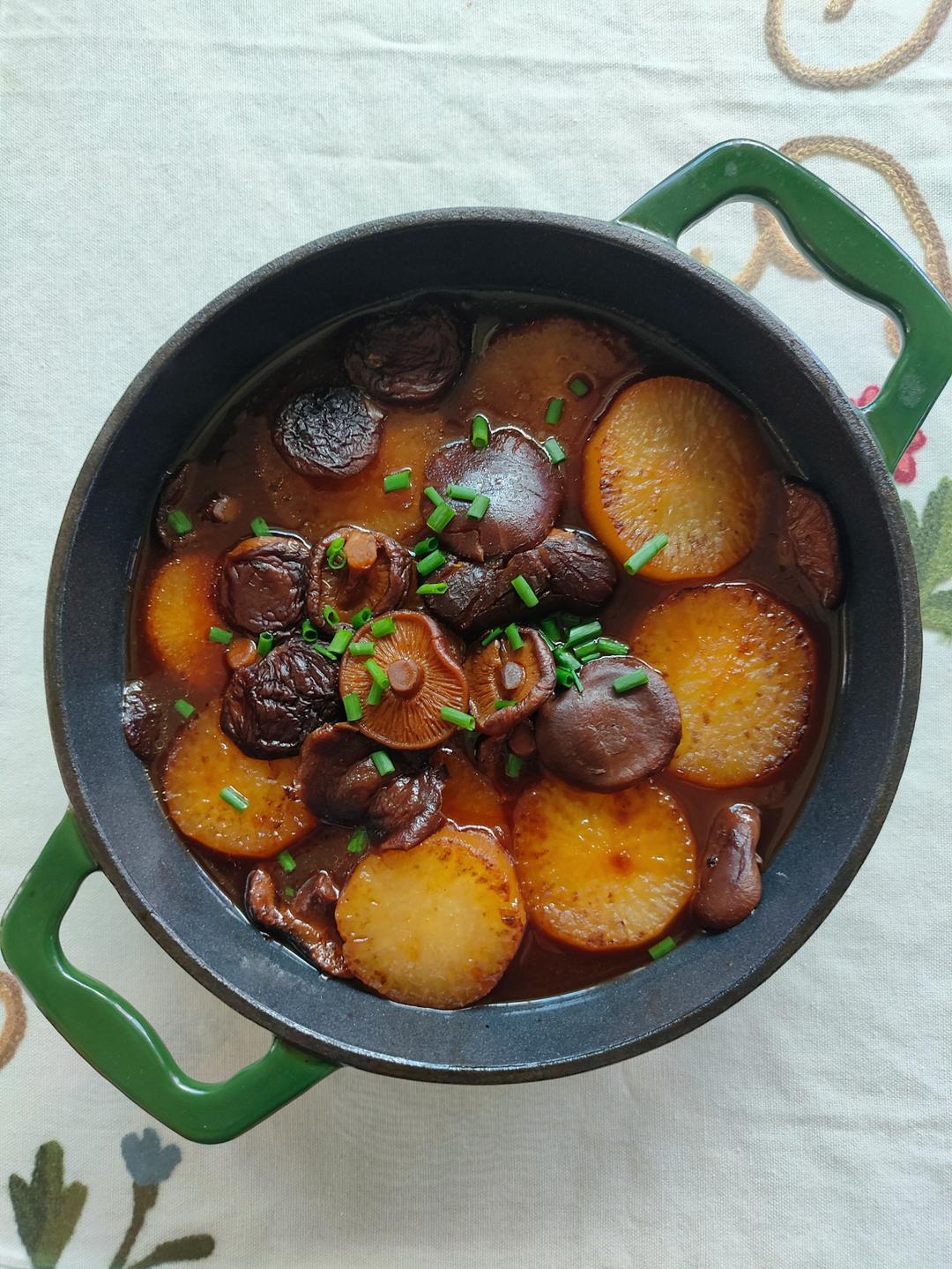
The whole dish is one pot, about 40 minutes, and almost entirely hands-off after the first sear. It is the kind of recipe that quietly disappears at the dinner table — even from people who insist they do not like radish. Serve it over rice and you have a complete, meatless weeknight dinner.
What Is Vegetarian Braised Radish (Su Shao Luo Bo)?
Su shao (素烧) means “vegetarian braised” — a family of Chinese dishes cooked without meat, relying instead on dried mushrooms, soy sauce and long, gentle simmering for depth. Here, thick slices of daikon are first seared until golden, then braised with rehydrated shiitake mushrooms and their soaking water, seasoned with soy sauce, oyster sauce and a little sugar, and simmered on medium-low heat for 30 to 40 minutes. The long braise pulls the radish’s peppery bite away and lets it soak up the savory, faintly sweet mushroom broth until it turns glassy and almost creamy inside.
Daikon is the same vegetable I braise with beef in my braised beef brisket with daikon radish — if you love the melting texture of slow-braised radish, that meaty version is the natural next stop after this vegetarian one.
1Braised Beef Brisket with Daikon RadishA rich, authentic Cantonese-style beef stew where the daikon radish absorbs the savory, umami-packed sauce, making it even more delicious than the beef itself. Features a special ‘whole-sear’ technique for juicier meat.Check out this recipe

Why This Recipe Works
- Searing first, braising second: a quick golden sear on the radish builds a nutty surface and keeps the coins intact through the long simmer.
- The mushroom soaking water is liquid gold: dried shiitake release glutamates into their soaking water, giving a meatless broth the same savory depth that pork stock would.
- Slow, low heat does the work: 30 to 40 minutes on medium-low lets the radish turn sweet and translucent as its peppery sharpness fades.
- A touch of sugar balances the soy: braised radish leans sweet in most home versions, and the sugar rounds out the salty soy and mushroom umami.
- One pot, zero fuss: everything goes into a single skillet and simmers unattended — a true set-and-forget vegetable dish.
Equipment Needed
- A wide skillet or shallow pot with a lid
- A small bowl for rehydrating the mushrooms
- A vegetable peeler
Ingredients
- 1 white daikon radish (about 800 g / 1.75 lb), peeled
- 10 dried shiitake mushrooms, rehydrated
- 2 tbsp light soy sauce
- 1 tsp dark soy sauce
- 1 tbsp oyster sauce (use vegetarian mushroom oyster sauce to keep it vegan)
- 1 tbsp sugar, or more if you like it sweet
- 1 scallion, sliced, to finish
- Neutral oil, for searing
Ingredient Notes
Daikon radish is the long white winter radish sold in every Chinese market; a regular round white radish works too. Pick one that feels heavy and has smooth, unwrinkled skin. Dried shiitake mushrooms are non-negotiable here — fresh mushrooms do not have the concentrated aroma that dried ones release. Save every drop of their soaking water. Note that oyster sauce is made from oyster extract, so for a strictly vegetarian or vegan version, swap in mushroom-based vegetarian oyster sauce.
Prep & Mise en Place
Start by soaking the dried mushrooms in warm water for about 30 minutes until soft, then squeeze them dry (reserve the soaking liquid!), trim the stems and halve any large caps. Peel the daikon and cut it into thick coins — about 2 cm (3/4 inch) thick so they hold their shape through the braise. Slice the scallion for the garnish. Everything else is measuring out the sauces.
Cooking Process
Step 1 — Sear the Radish
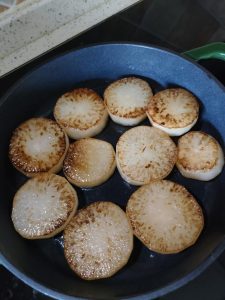
Heat a little oil in a wide skillet over medium heat. Add the daikon coins in a single layer and cook until golden on both sides, about 3 to 4 minutes per side.
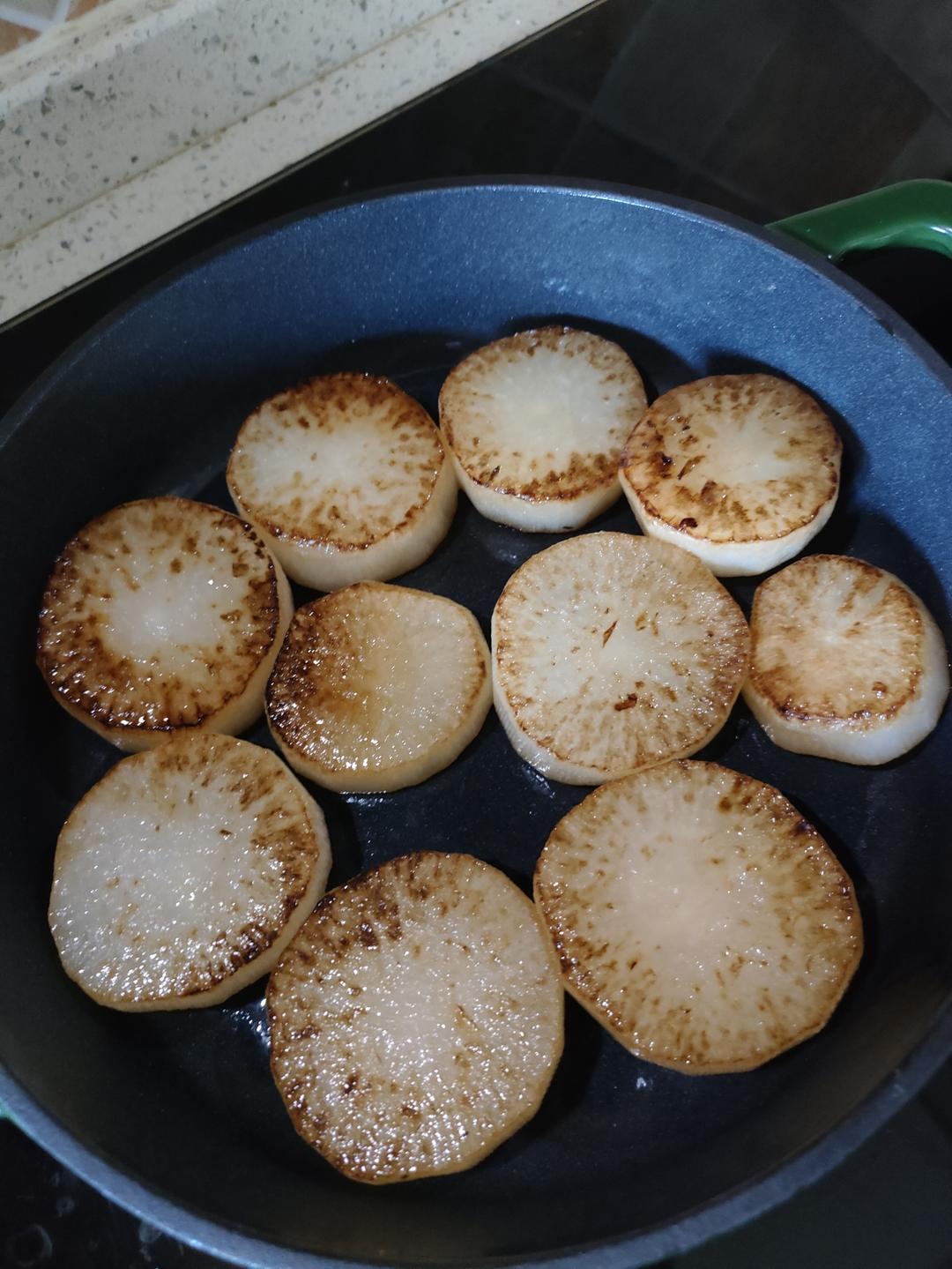
The sear matters for two reasons: the Maillard reaction builds a layer of nutty flavor on the radish’s surface, and the slightly firm, browned skin helps each coin stay intact while the inside cooks to tenderness. Skip the sear and you get a mushier, less flavorful braise.
Step 2 — Add the Mushrooms and Mushroom Water
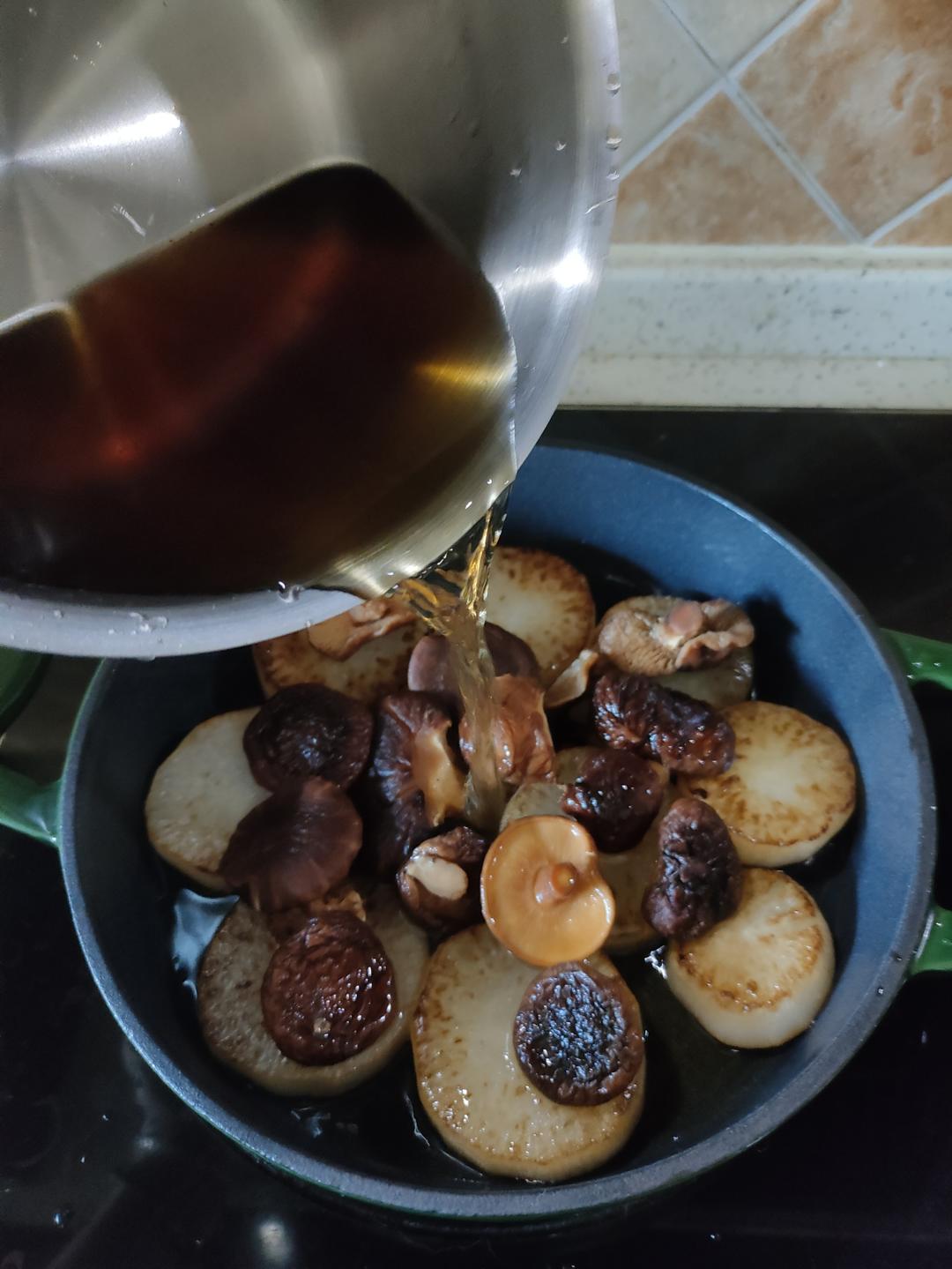
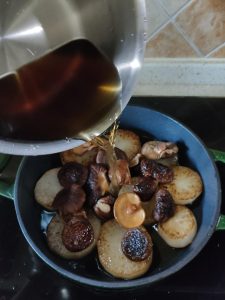
Add the rehydrated mushrooms to the pan, then pour in the reserved mushroom soaking water — it should come close to covering the radish. If it does not, top up with plain water.
Step 3 — Season and Simmer
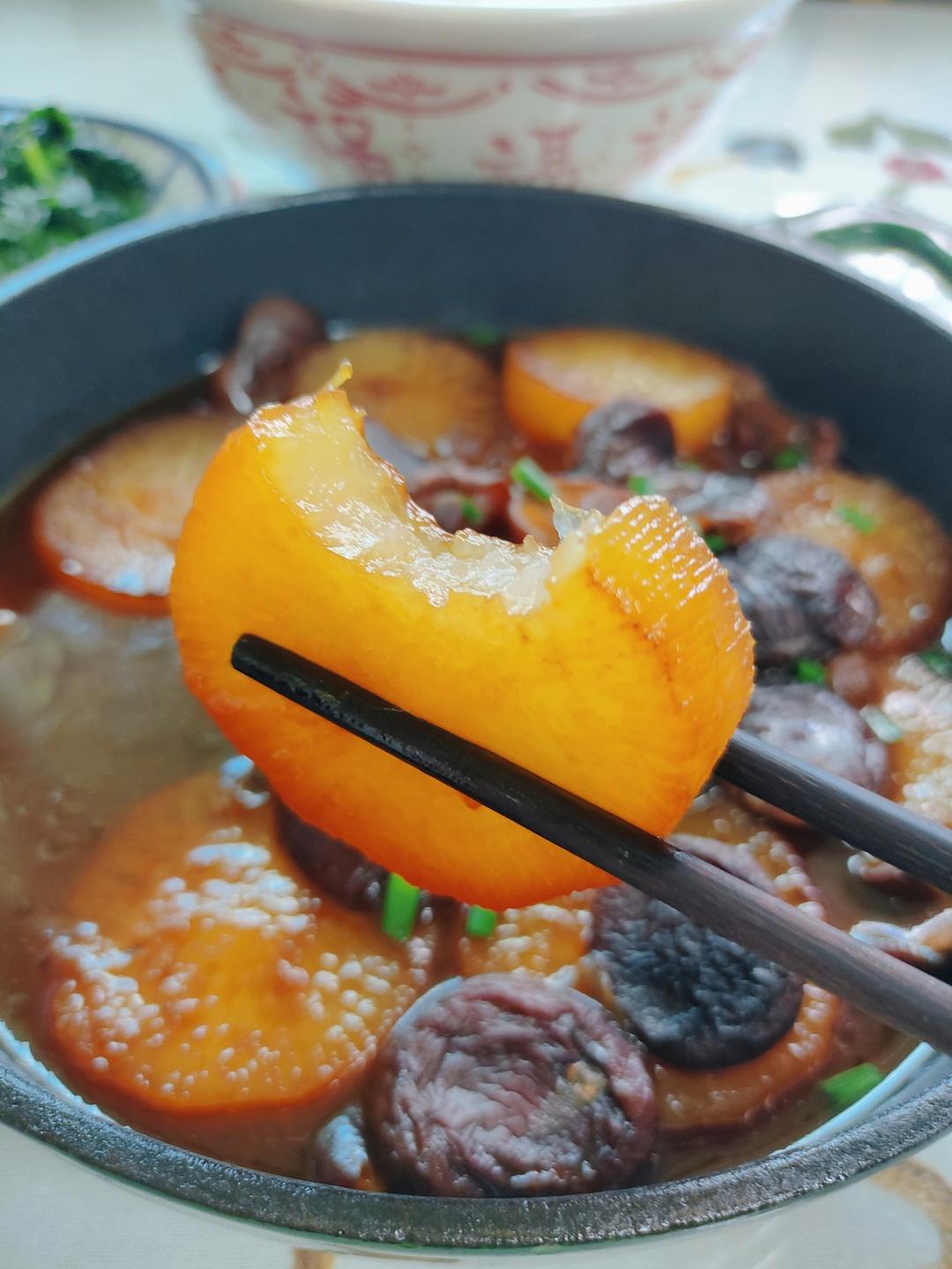
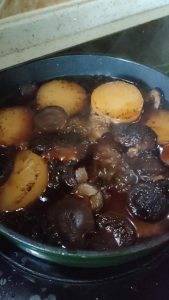
Add the light soy, dark soy, oyster sauce and sugar. Bring to a boil, then lower the heat to medium-low, cover, and simmer for 30 to 40 minutes, until the radish is translucent and easily pierced by a chopstick. The sauce will reduce into a glossy glaze.
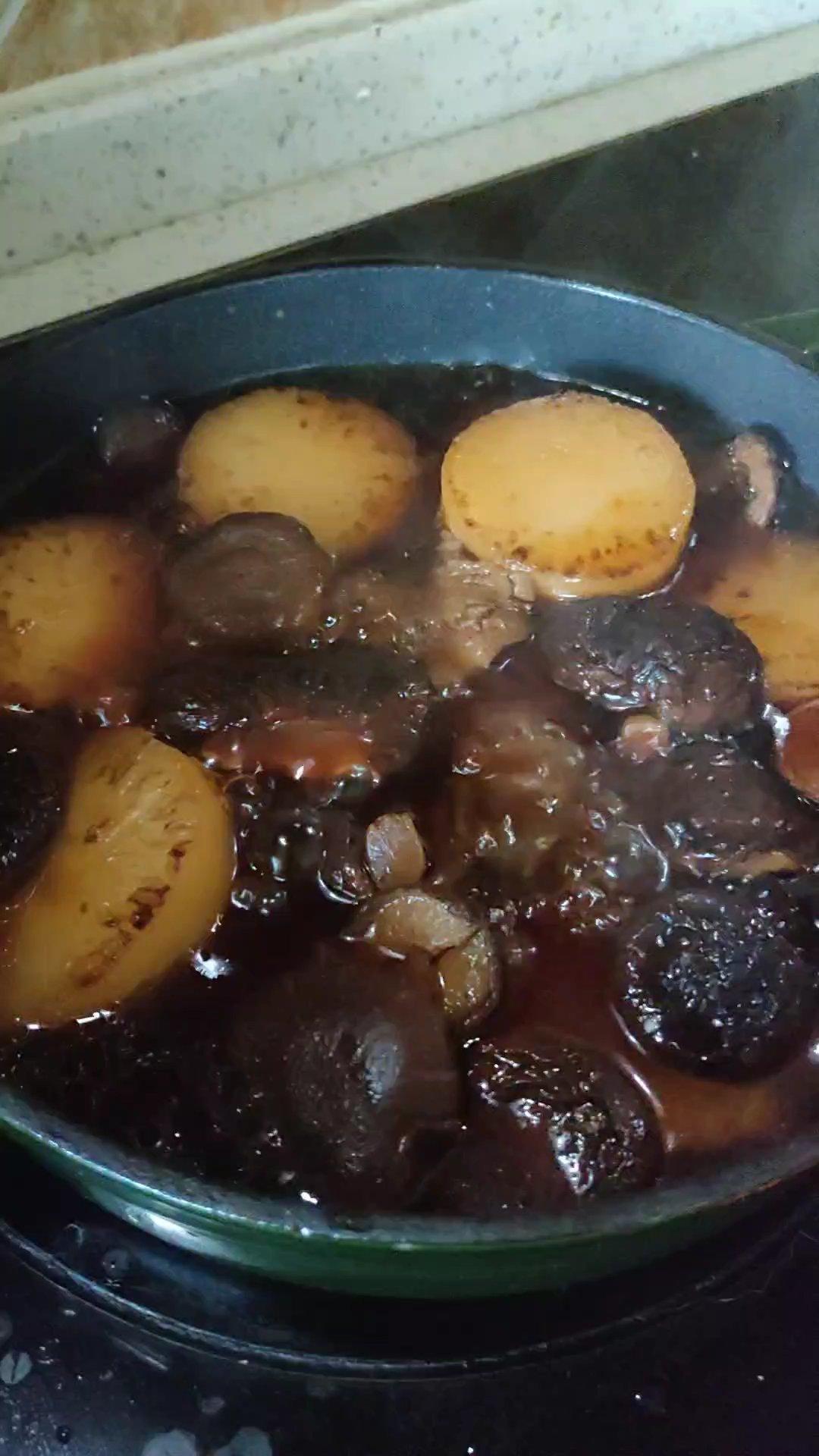
During a long braise, the radish’s cell structure softens and its peppery compounds dissipate, while the savory liquid is pulled inward — which is why slow-simmered radish tastes sweet and creamy instead of sharp. The glossy sauce comes from the natural starches released by the radish itself, so no thickening is needed.
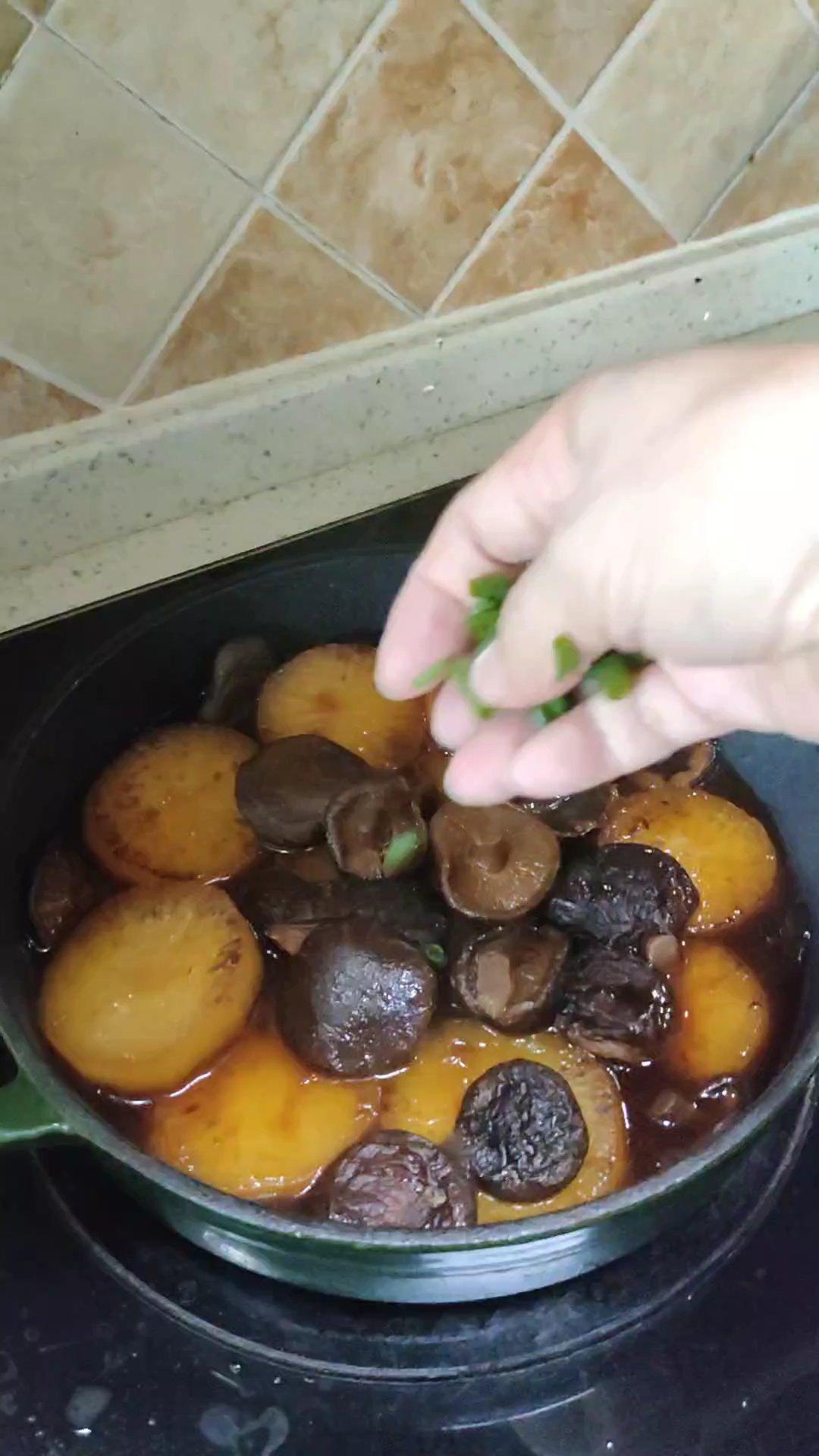
Step 4 — Finish with Scallions
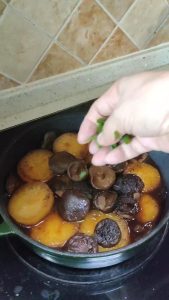
Sprinkle the sliced scallion over the top and serve hot, with the glossy sauce spooned over rice.
Step 5 — Enjoy the Radish
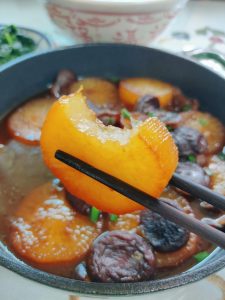
The radish should be soft, sweet and fully soaked with the mushroom aroma. Spoon the reduced sauce over everything — it is the best part.
Common Mistakes When Making Vegetarian Braised Radish
1. The radish tastes bitter and sharp. Cause: cut too thick, or not simmered long enough. Fix: slice to about 2 cm and braise the full 30 to 40 minutes until the pieces turn translucent.
2. The dish tastes thin and watery. Cause: too much water added on top of the mushroom liquid. Fix: use only enough mushroom soaking water to nearly cover the radish and let the sauce reduce uncovered at the end.
3. The mushrooms are gritty. Cause: the soaking water was not strained. Fix: pour the soaking water through a fine-mesh strainer before adding it, and squeeze the mushrooms dry first.
4. The radish falls apart. Cause: the pan was too hot during the sear, or the slices were too thin. Fix: sear over medium heat and keep the coins at least 2 cm thick.
5. The sauce is too salty. Cause: regular soy plus oyster sauce together can overshoot. Fix: start with a little less light soy and taste before the final 10 minutes of simmering.
Variations
This recipe adapts easily. Add a handful of rehydrated wood-ear mushrooms for extra texture, or a few slices of ginger in the braise for warmth. For spice, stir in chili flakes or serve with a spoon of homemade chili garlic sauce. The same mushroom-broth braising method works on other dense vegetables: try it with chunks of winter melon or daikon’s cousin, the turnip. Want more substance? Toss in fried tofu puffs during the last 10 minutes so they soak up the sauce.
Frequently Asked Questions
Can I use fresh mushrooms instead of dried? You can, but the dish will be noticeably less aromatic. Dried shiitake have a far more concentrated, smoky-umami flavor — worth keeping on hand for exactly this kind of braise.
Is this dish vegan? The classic version uses oyster sauce, which contains oyster extract. Swap in vegetarian mushroom oyster sauce (widely available in Asian grocers) and it becomes fully vegan.
How do I know the radish is done? It should be translucent and offer no resistance when pierced with a chopstick — and the sauce should have reduced to a glossy coating.
Can I make this ahead? Yes, and it improves overnight. Braised radish reheats beautifully; the flavors mellow and deepen after a day in the fridge.
Why is my radish still white and hard? It needs more time. Old or very large radishes can take longer — extend the simmer and add a splash of water if the pan runs dry.
How to Serve
Serve the radish over steamed rice with the glossy sauce spooned on top. It is a natural centerpiece for a meatless spread: pair it with braised tofu with scallions and stir-fried lettuce with garlic for a full vegetarian dinner, or add smashed cucumber salad for contrast. If you enjoy the soy-braised flavor, my braised tofu and mushrooms uses a similar savory sauce, and braised eggplant with tomato is another no-meat favorite.
Storage & Reheat
Leftovers keep refrigerated in an airtight container for up to 4 days. Reheat gently in a covered pan over low heat with a splash of water — the radish holds up well and the flavors actually deepen. This dish freezes acceptably for up to 1 month, though the texture turns slightly softer after thawing.
Allergen Notice
This recipe contains soy (soy sauce) and gluten (soy sauce). It is vegetarian as written; use vegetarian oyster sauce and gluten-free tamari for vegan and gluten-free versions. Contains no nuts, eggs or shellfish.
Nutrition Disclaimer
Nutrition information is calculated using an ingredient database and should be considered an estimate. In cases where multiple ingredient alternatives are given, the first listed is calculated for nutrition. Garnishes and optional ingredients are not included. Nutrition information is an estimate and provided for informational purposes only.
About the Author & Recipe Development
I’m Lin, a chef who spent a decade in Chinese restaurant kitchens before writing recipes for home cooks. Braised vegetables were a staple of the banquet kitchens I worked in, and this radish dish is the one I keep making at home — partly because it is so cheap, and partly because it consistently converts radish skeptics. I tested the timing across fresh and older daikon, and the 30-to-40-minute window with the sear-and-simmer sequence is what produces that glassy, sweet result every time. My father, who cooked vegetarian meals twice a week for our family, taught me the habit of never throwing out mushroom soaking water — it is the whole secret here.
Authoritative References
The USDA MyPlate guidelines recommend filling half your plate with vegetables — braised radish is an easy way to do that — see the MyPlate vegetables guidance for more.
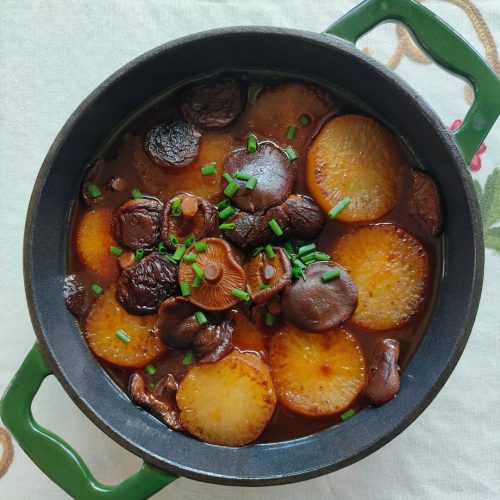
Vegetarian Braised Daikon Radish (Su Shao Luo Bo)

Equipment
- Wide Skillet or Shallow Pot with Lid
- Fine-mesh strainer
Ingredients
The Braise
- 1 white daikon radish about 800 g (1.75 lb), peeled and cut into 2 cm coins
- 10 dried shiitake mushrooms rehydrated, soaking water reserved
- 2 tbsp light soy sauce
- 1 tsp dark soy sauce
- 1 tbsp oyster sauce use vegetarian mushroom oyster sauce to keep it vegan
- 1 tbsp sugar or more if you like it sweet
- 1 scallion sliced, to finish
- neutral oil for searing
Instructions
- Peel the daikon and cut into 2 cm thick coins. Heat a little oil over medium heat and sear the coins until golden on both sides, 3 to 4 minutes per side.

- Add the rehydrated shiitake mushrooms, then pour in the strained mushroom soaking water, topping up with plain water to nearly cover the radish.
- Add light soy, dark soy, oyster sauce and sugar. Bring to a boil, lower the heat to medium-low, cover and simmer 30 to 40 minutes until the radish is translucent and easily pierced.

- Sprinkle with sliced scallion and serve hot, sauce spooned over rice.
- The radish should be soft, sweet and soaked with mushroom aroma. Spoon the reduced sauce over everything.






Leave a Reply