The chiffon cake is the dessert Chinese home bakers measure themselves against, and this sheet pan version is the practical answer to its one weakness: a tall chiffon in a tube pan serves one cake, but a chiffon baked flat in a 28×28 cm (11×11 in) pan cuts into 27 squares. This home baker’s recipe is a careful, numbered walkthrough – separate the eggs, whip the whites to stiff peaks, fold gently, bake low and slow at 140°C (284°F) – and the finished pan is the kind of cake you can bake on Sunday and snack on all week.
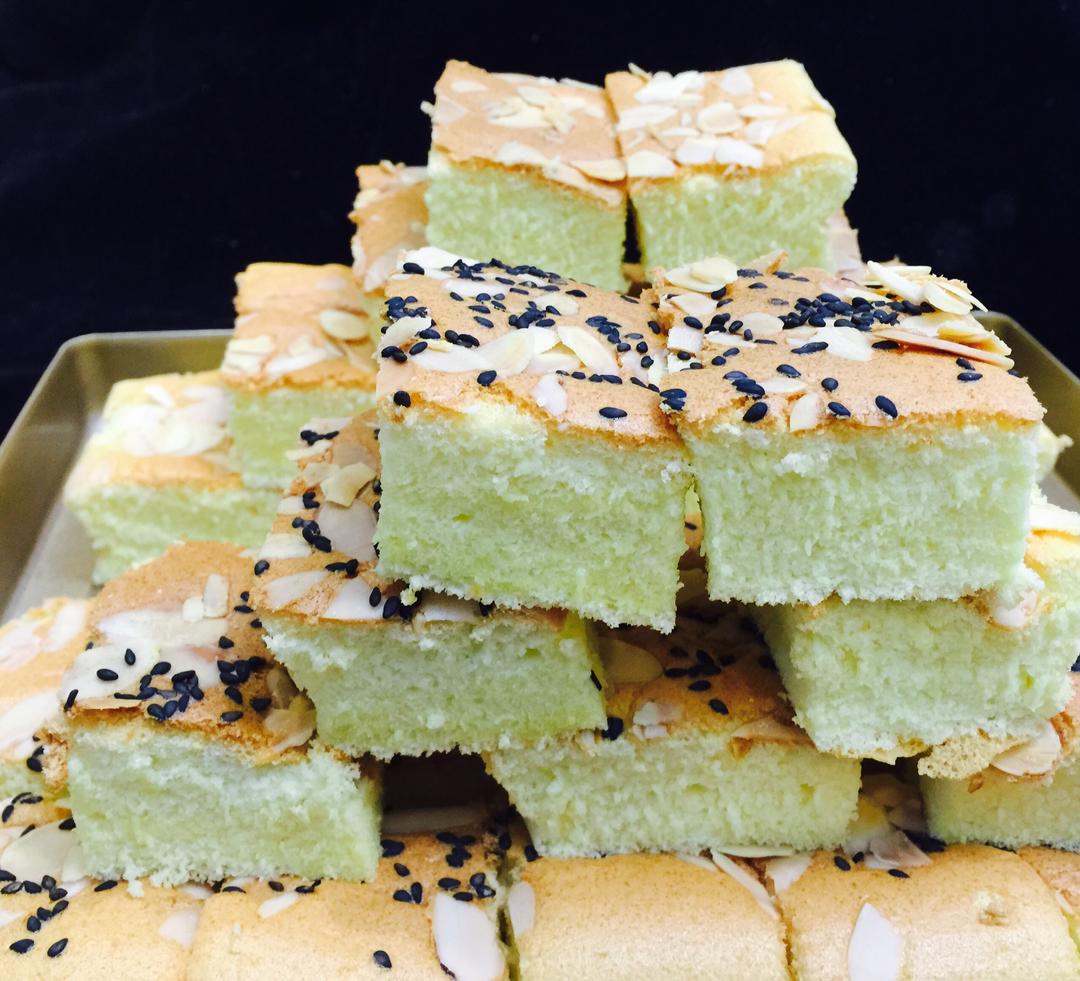
Kao pan dan gao (烤盘蛋糕) is sheet pan cake – a chiffon-style sponge baked in a flat pan and cut into squares. The original is an 18-step recipe with real care: seven eggs, a low-and-slow bake, and topping options from black sesame to scallion pork floss. It is the big-batch chiffon, and it is a staple of Chinese home baking.
What Is Sheet Pan Cake (Kao Pan Dan Gao)?
Kao pan dan gao (烤盘蛋糕) is a chiffon-style sponge cake baked in a flat sheet pan instead of a tube pan. The batter is the classic chiffon: egg whites whipped to stiff peaks and folded into a yolk-oil-milk-flour base, then baked flat so it rises into a tender, uniform sheet that cuts into neat squares. It is the dessert version of a casserole – one pan, many servings, endlessly adaptable toppings.
The technique is the chiffon discipline. The whites are whipped with sugar added in three stages to a stiff-peak meringue; the yolk base is a simple oil-milk-flour emulsion; and the two are folded together gently, quickly, and softly – the original’s explicit warning against stirring in circles, which deflates the foam. Baked at a gentle 140°C (284°F) for about 35 minutes, the sheet comes out golden, even, and tender enough to eat plain or top with anything from nuts to scallion pork floss.
For the steamed, even gentler version of the chiffon family, my steam-baked milk chiffon cake is the same texture with a softer crumb.
1Steam-Baked Milk Chiffon Cake (Zheng Kao Niu Nai Dan Gao)A custard-soft chiffon cake made with water buffalo milk, baked low and slow in a water bath so the top never cracks and the crumb stays silky. A gentle, foolproof Chinese home-baking classic.Check out this recipe
Why This Version Works
- The chiffon structure is foolproof at this size. A flat sheet bakes more evenly than a tall tube cake – no cracked top, no sunken center.
- Whites whipped to stiff peaks, sugar in three stages. The original’s careful meringue gives the cake its lift and tenderness.
- Folding that is gentle, quick, and soft. The explicit anti-deflation warning – fold from the bottom up, never in circles.
- A low 140°C (284°F) bake. Gentle heat cooks the thick sheet evenly without browning the top too fast.
- One pan, 27 squares, endless toppings. The big-batch format is the sheet cake’s whole appeal – the original even bakes two flavors in one pan.
Equipment Needed
- A 28×28 cm (11×11 in) baking pan lined with parchment
- A stand mixer or hand mixer for the meringue
- Two large mixing bowls (the white bowl must be oil- and water-free, per the original – stainless is best)
- A rubber spatula for the folding
- A sieve for the flour
Ingredients
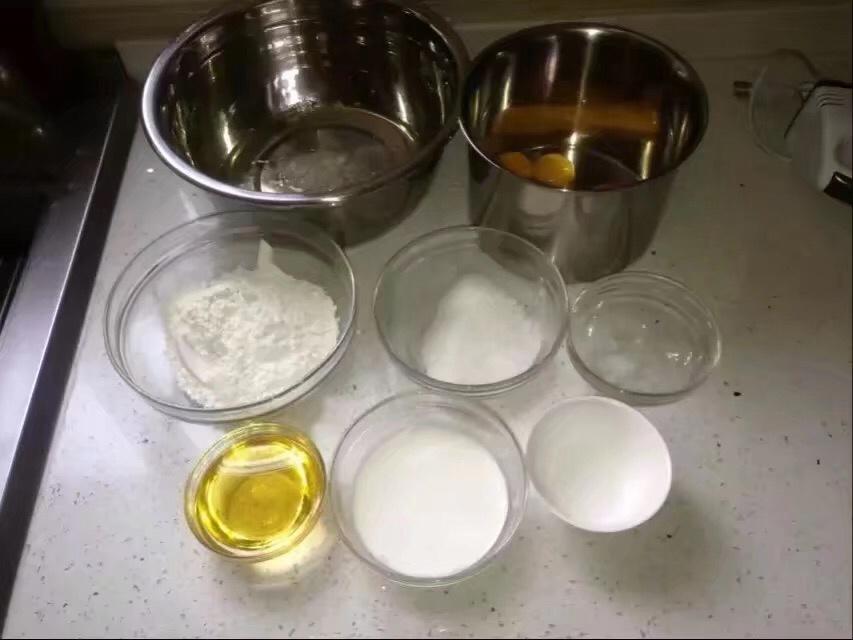
- 7 eggs, separated
- 60 g (1/4 cup) corn oil
- 60 g (1/4 cup) milk
- 130 g (1 cup) cake flour, sifted
- 100 g (1/2 cup) fine sugar
- 2 g (1/2 tsp) salt
- 5 drops lemon juice or white vinegar (for the meringue)
- Toppings of choice: black sesame, white sesame, almond slices, or scallion pork floss
Ingredient Notes
Cake flour: The original uses low-gluten flour (130 g / 1 cup), sifted. It is what gives the tender crumb; all-purpose will make a chewier cake. My fluffy matcha chiffon cake uses the same base with matcha.
Eggs: Seven large eggs, separated. The white bowl must be clean and dry – any oil or water keeps the meringue from whipping.
Corn oil: A neutral oil – the original uses corn oil. It keeps the crumb moist without flavor.
Lemon juice or vinegar: Five drops in the whites stabilize the meringue – the original says it is optional but recommended.
Prep & Mise en Place
Preheat the oven to 140°C (284°F). Separate the eggs – whites in a clean, dry stainless bowl, yolks in another. Sift the cake flour. Line the 28×28 cm (11×11 in) pan with parchment.
The sequence is classic chiffon: yolk base first (yolks, salt, oil, milk, flour), then the meringue (whites whipped with sugar in three stages to stiff peaks), then the fold. Have everything measured before the meringue starts – once the whites are whipped, the batter moves fast.
Cooking Process
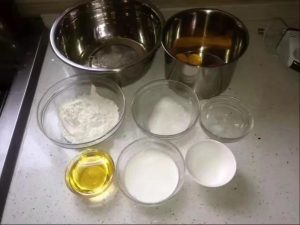
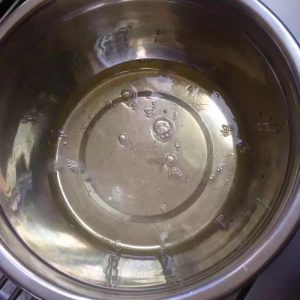
Step 1 – Prep: sift the flour, separate the yolks and whites – the wh
Prep: sift the flour, separate the yolks and whites – the whites’ bowl must be oil-free and water-free, preferably stainless steel.
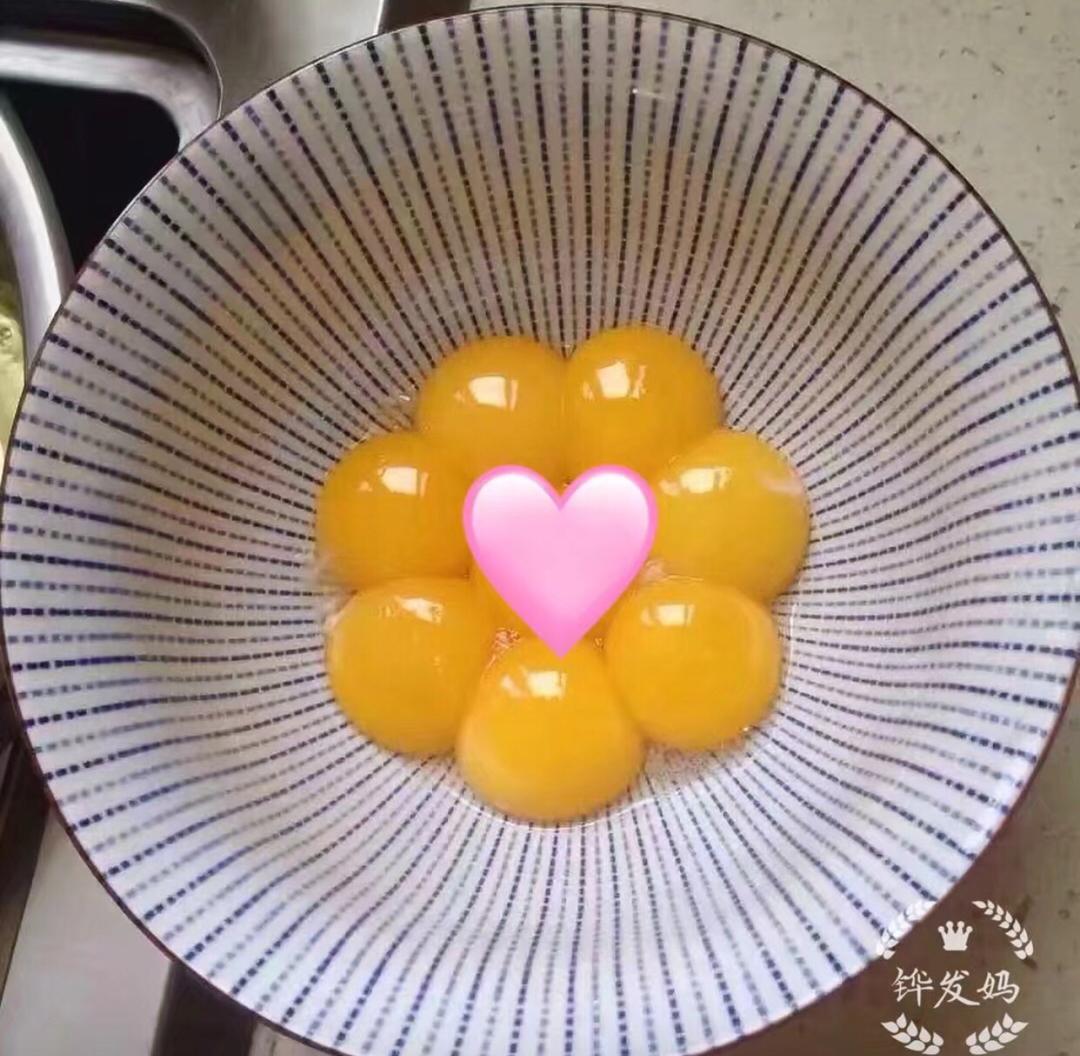
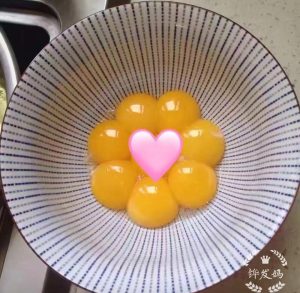
Step 2 – Add salt to the yolks and whisk gently with a hand whisk; se
Add salt to the yolks and whisk gently with a hand whisk; set aside.
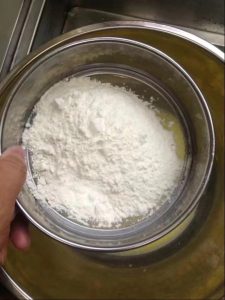
Step 3 – In another bowl, add water or milk, then the vegetable oil;
In another bowl, add water or milk, then the vegetable oil; whisk together, sift in the flour, mix, then add the yolk liquid in three additions, folding each time.
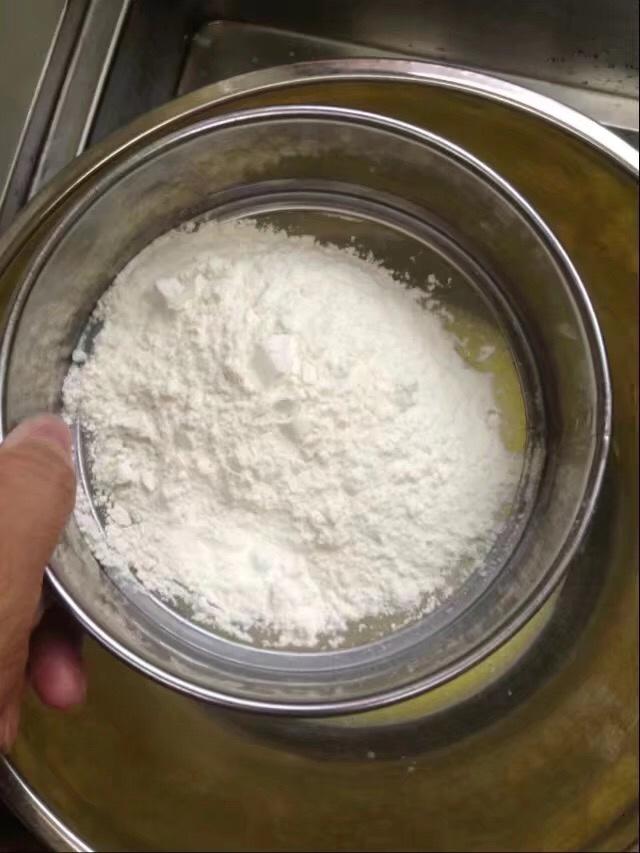
Step 4 – For the whites: beat on low until fish-eye bubbles; add a fe
For the whites: beat on low until fish-eye bubbles; add a few drops of white vinegar or lemon (optional). Add sugar in three additions – once at fish-eye stage, then continue…
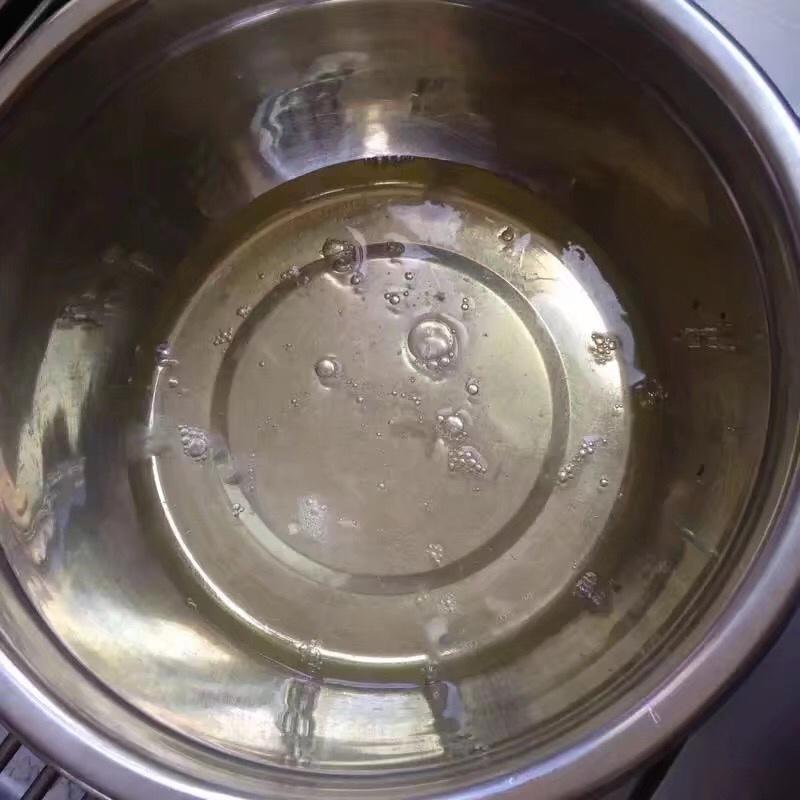
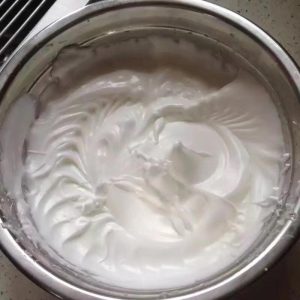
Step 5 – When lifting the whisk, the whites pull a short, upright pea
When lifting the whisk, the whites pull a short, upright peak – stiff peaks – stop beating. Beyond this…
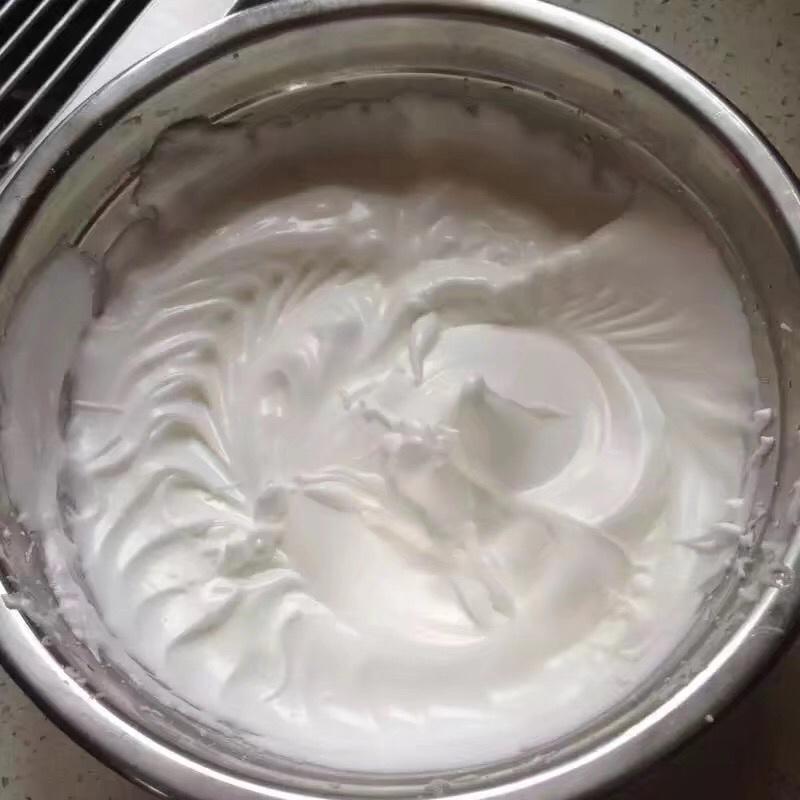
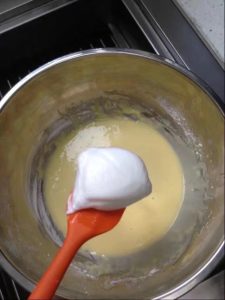
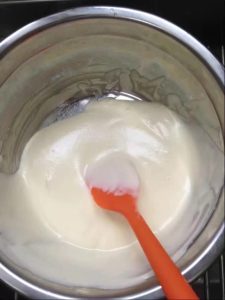
Step 6 – Fold 1/3 of the meringue into the yolk batter with a spatula
Fold 1/3 of the meringue into the yolk batter with a spatula, gently (fold from bottom up, don’t stir in circles or the whites deflate).
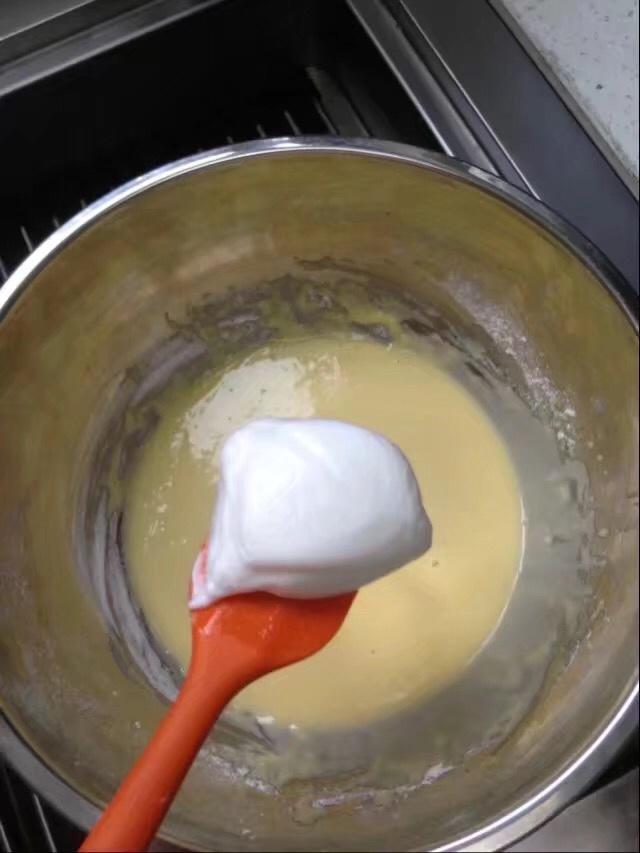
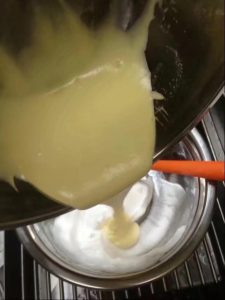
Step 7 – Once combined, pour the batter into the remaining 2/3 of mer
Once combined, pour the batter into the remaining 2/3 of meringue.
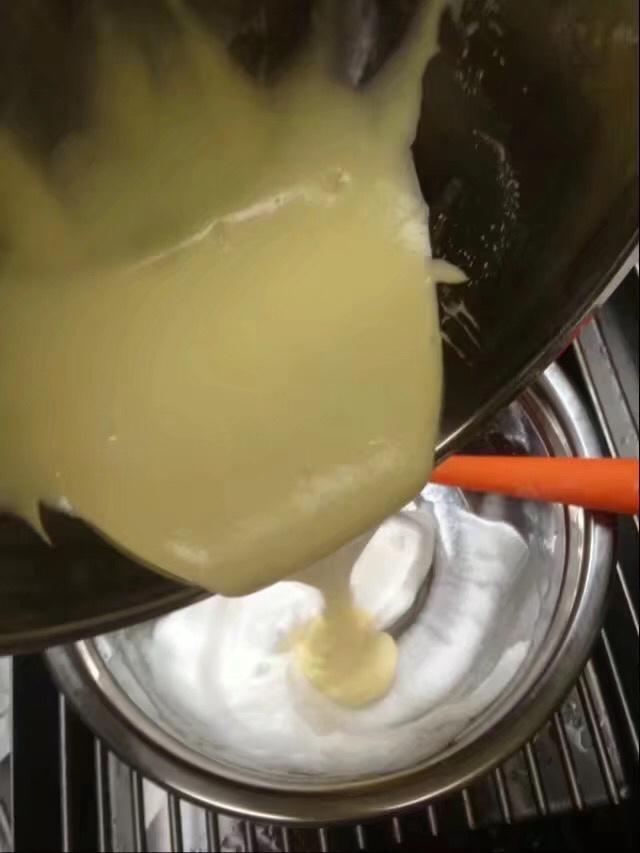
Step 8 – Fold the same way until fully merged – the whole fold must b
Fold the same way until fully merged – the whole fold must be light, quick, gentle to avoid deflating.
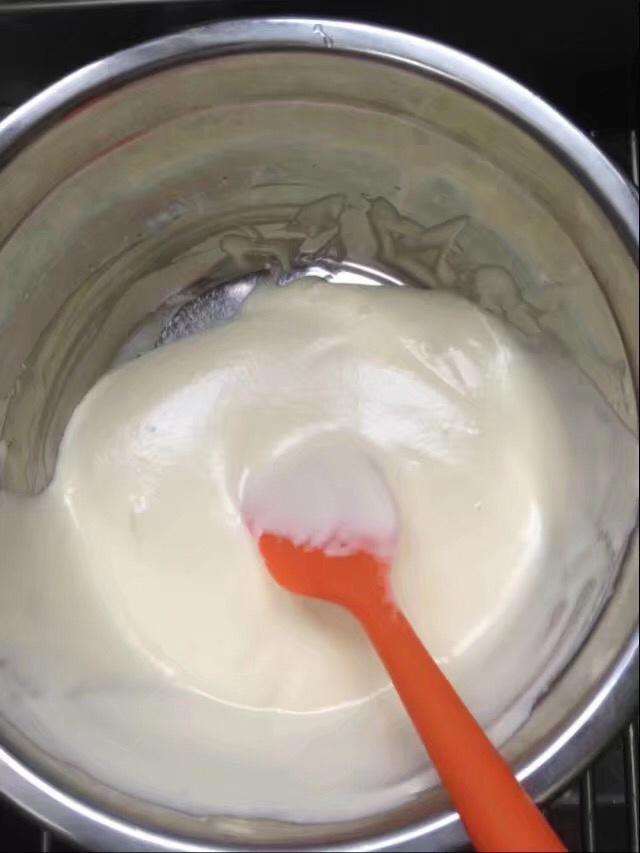
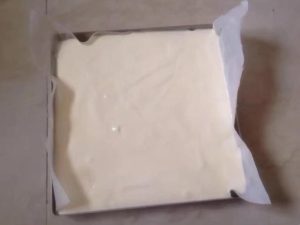
Step 9 – Pour the batter into the mold
Pour the batter into the mold.
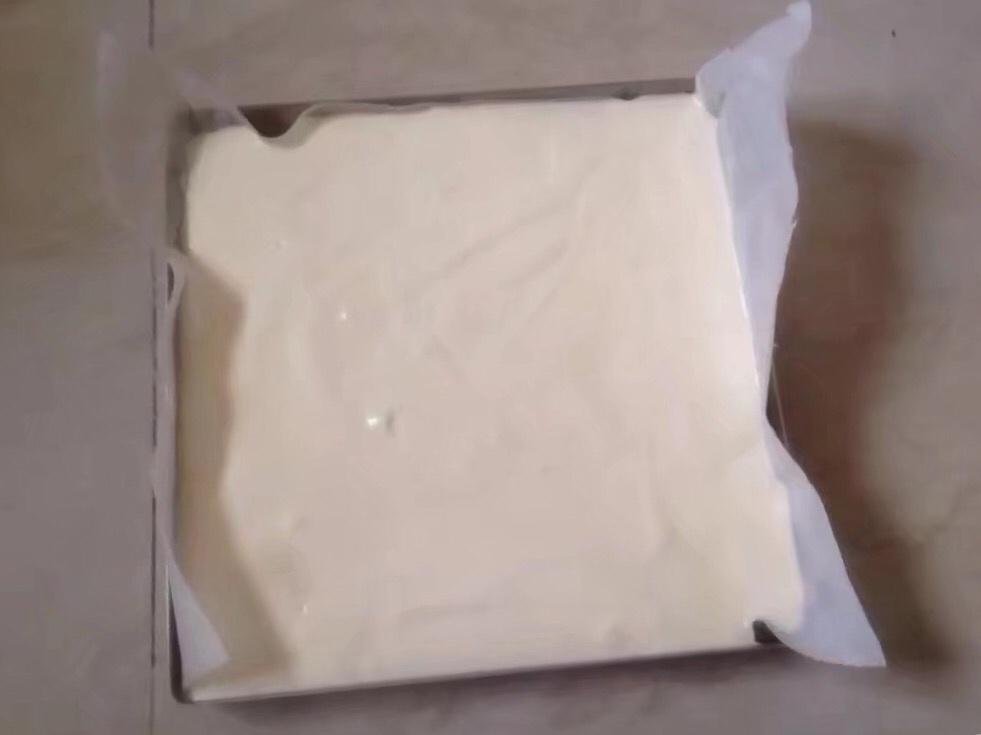
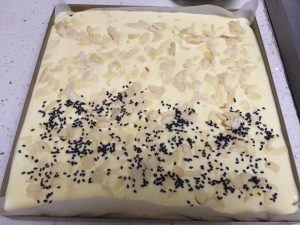
Step 10 – Scatter your toppings; drop the mold from above 3 times to r
Scatter your toppings; drop the mold from above 3 times to release bubbles.
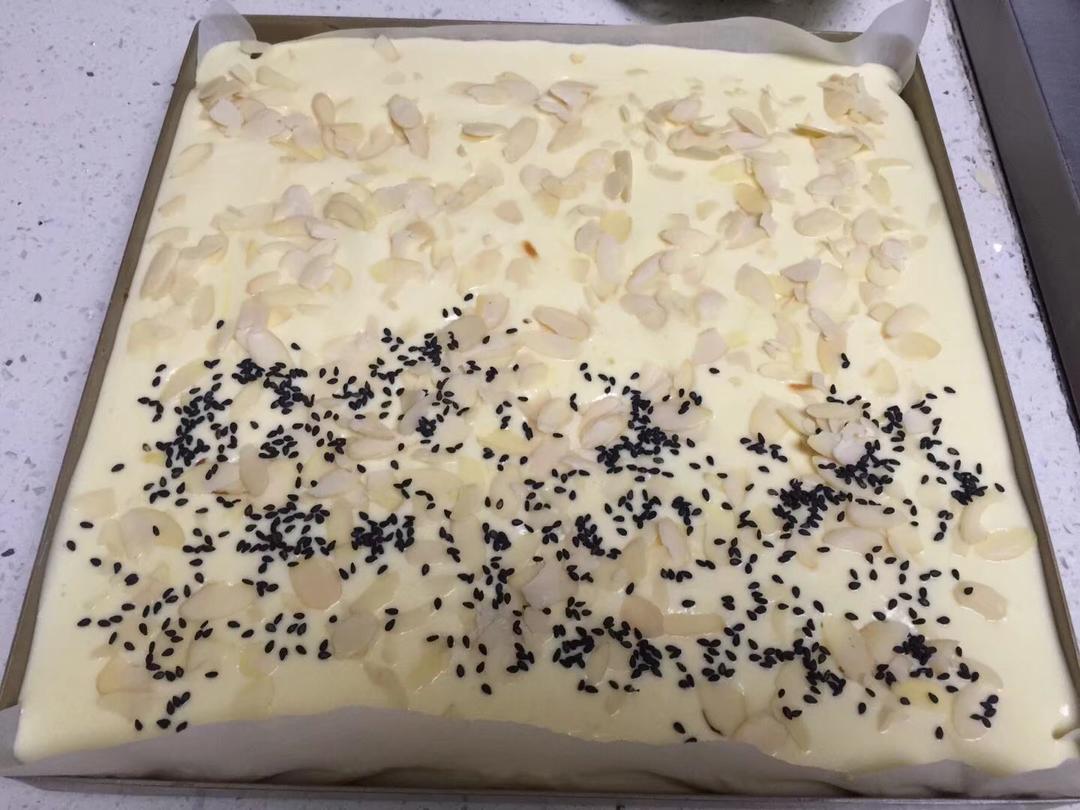
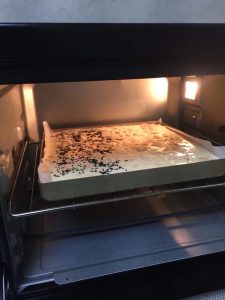
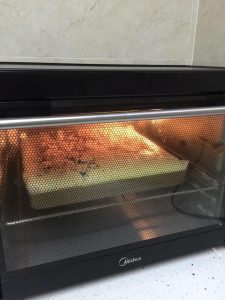
Step 11 – Put the mold into the preheated oven
Put the mold into the preheated oven.
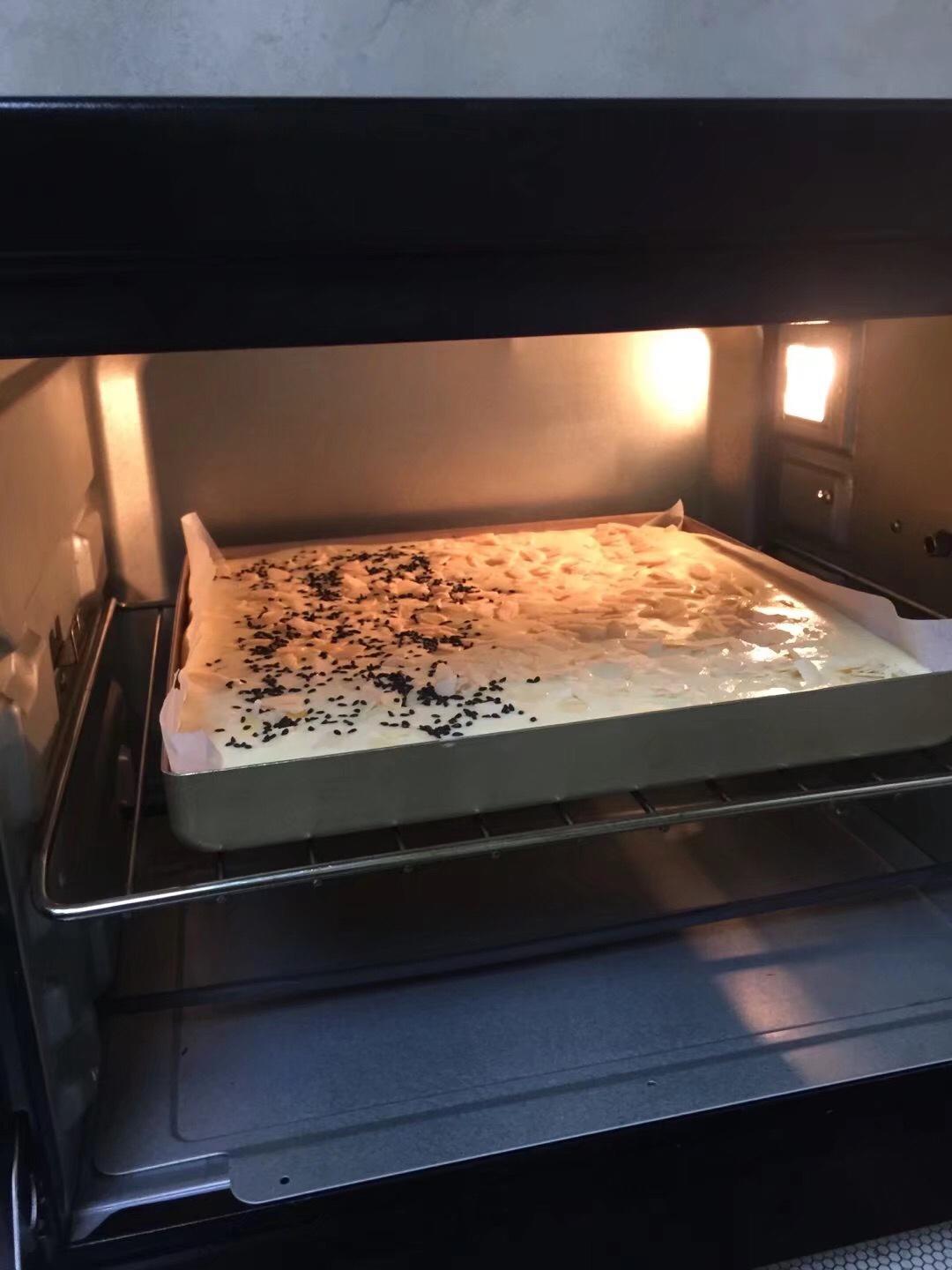
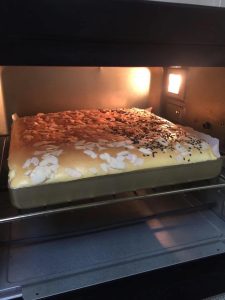
Step 12 – Bake at 140°C top-and-bottom, middle rack, about 35 minutes
Bake at 140°C top-and-bottom, middle rack, about 35 minutes.
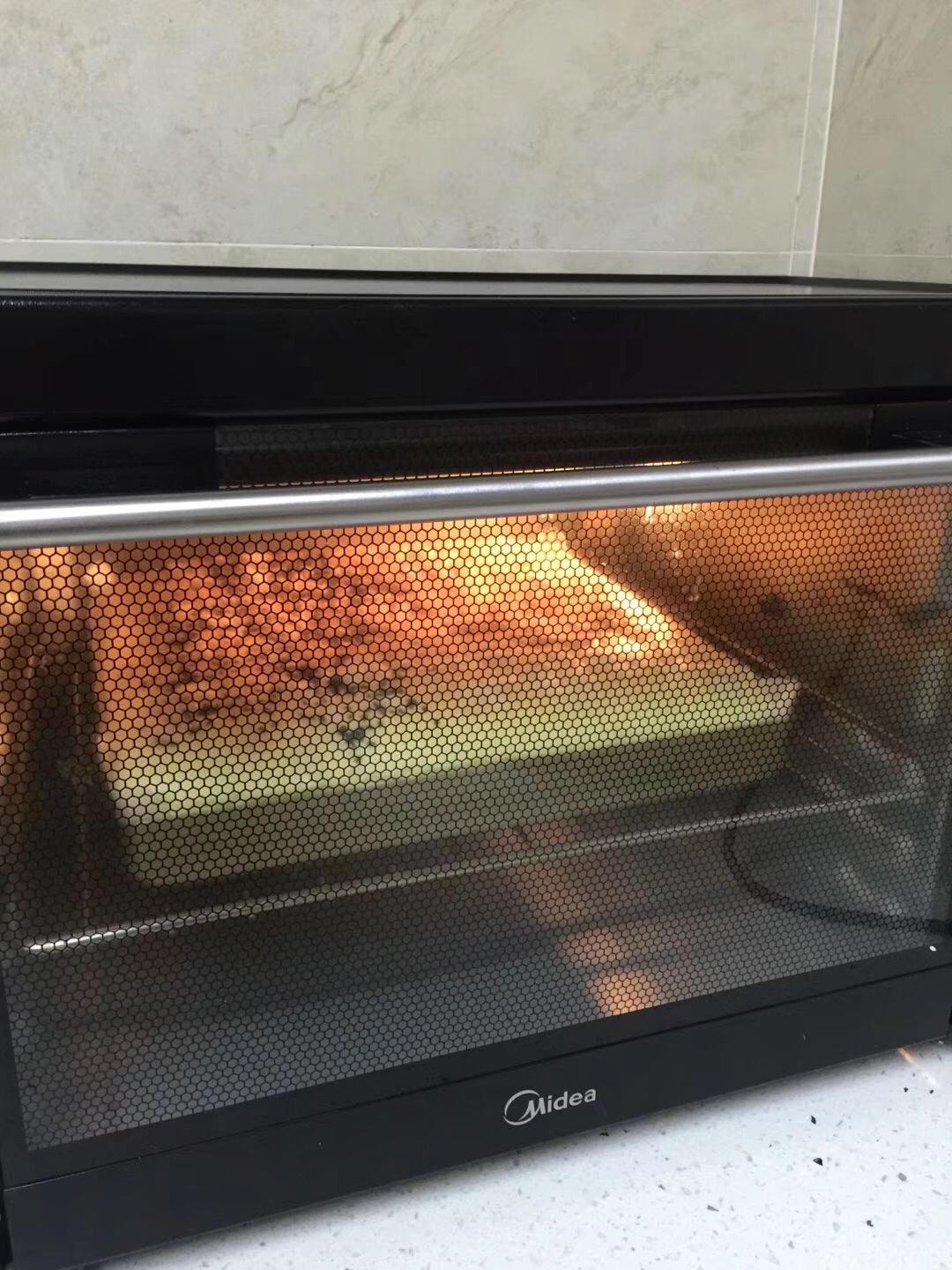
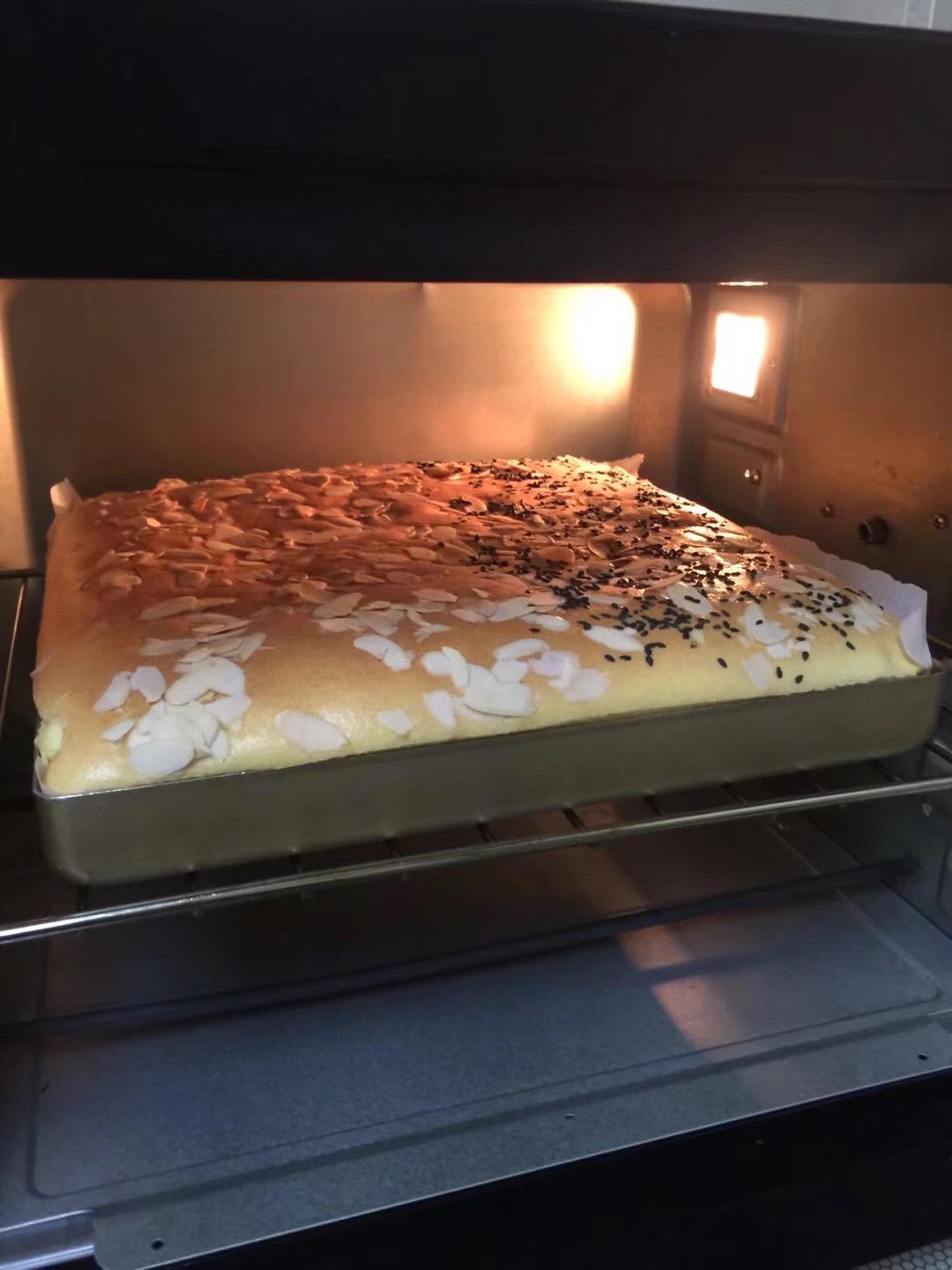
Step 13 – Until the surface is golden; watch closely near the end
Until the surface is golden; watch closely near the end.
Step 14 – When baked, place with the parchment onto a cooling rack, pe
When baked, place with the parchment onto a cooling rack, peel back the paper, cool, and cut into pieces.
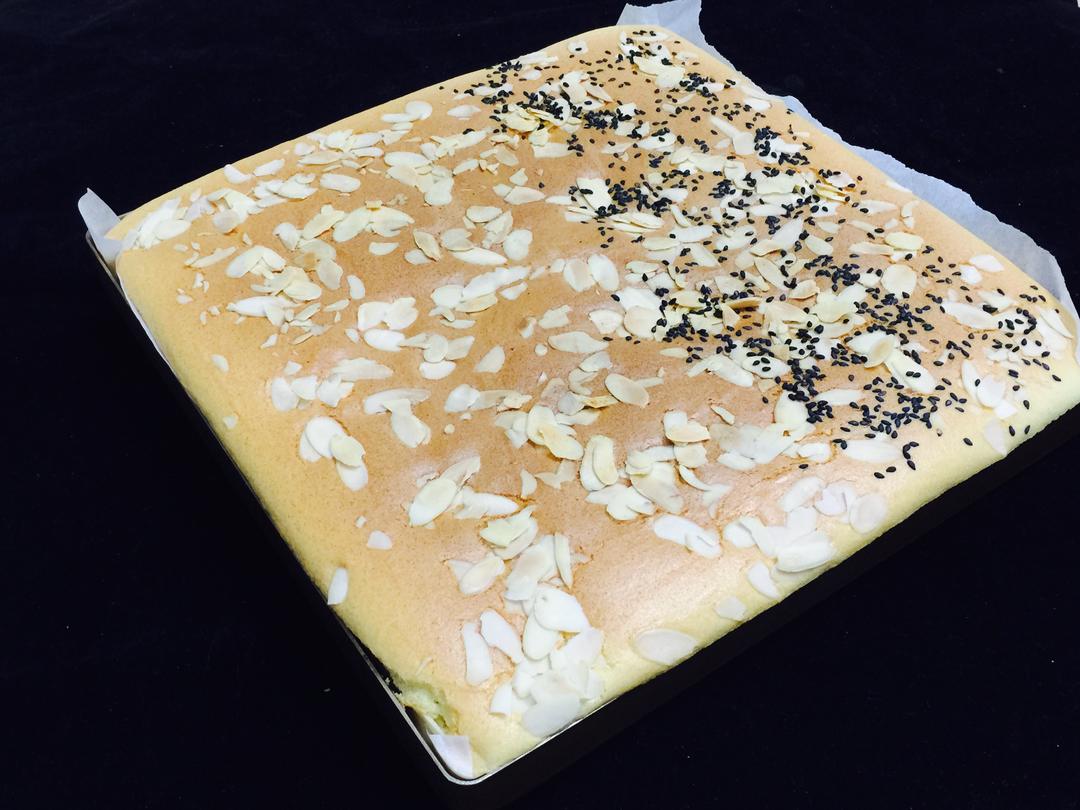
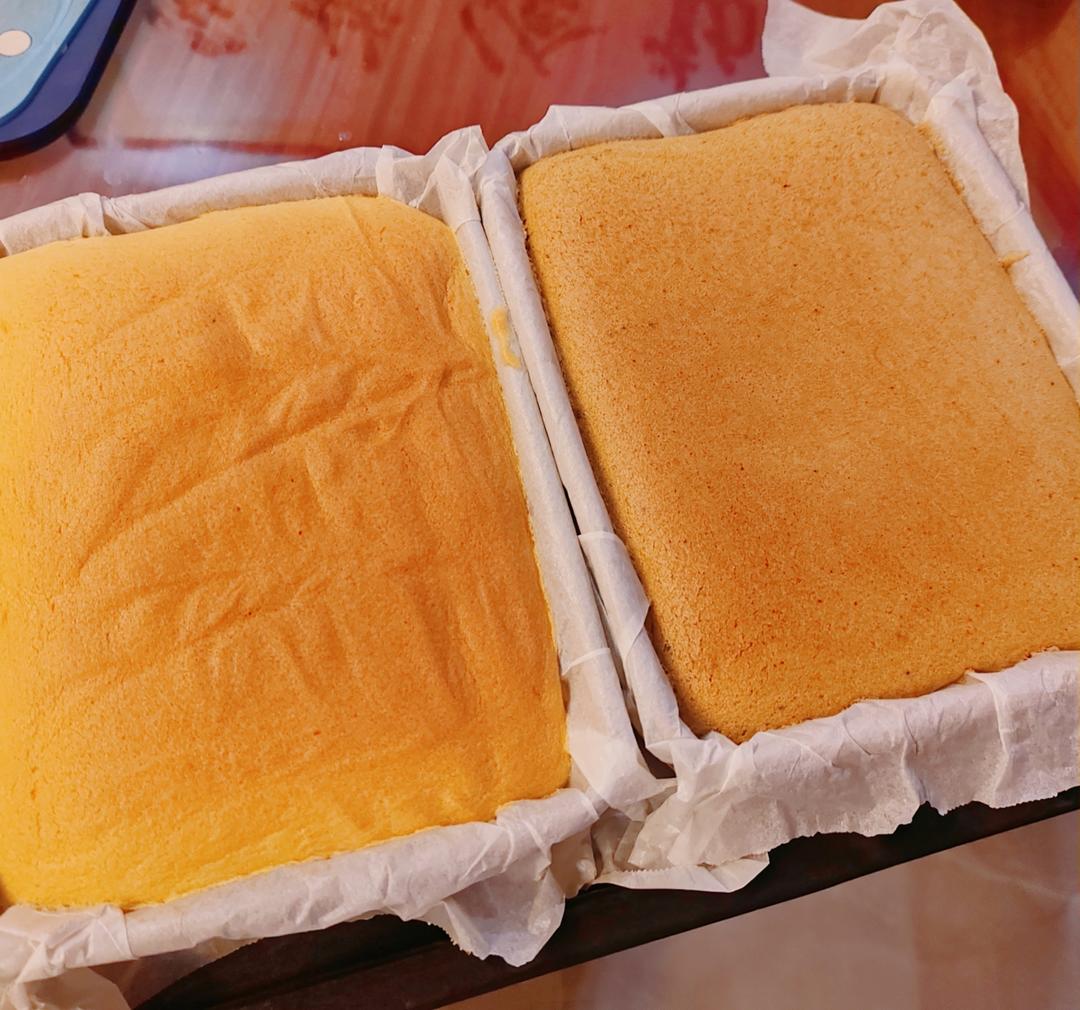
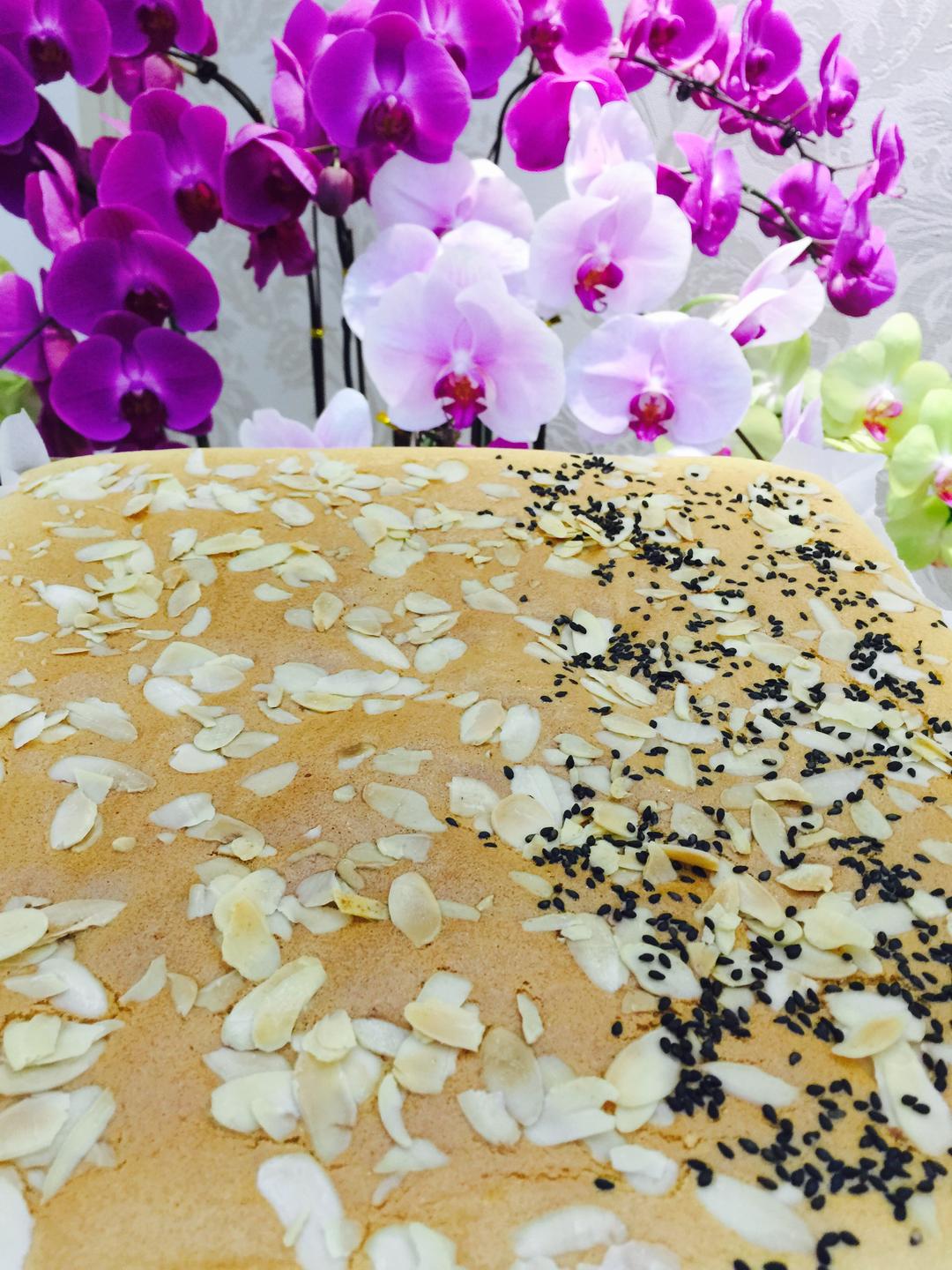
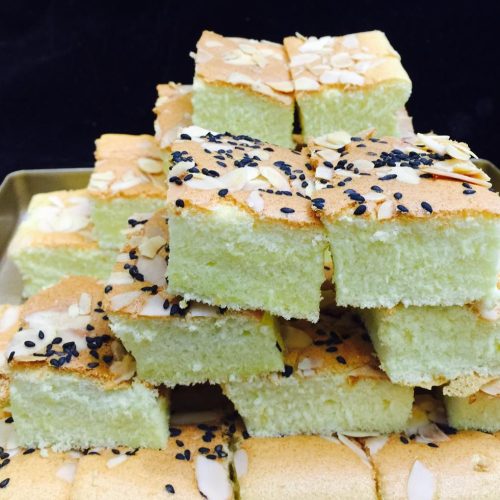
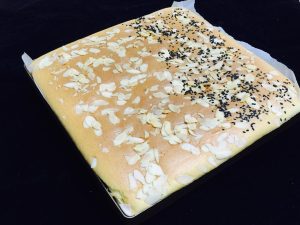
Step 15 – Two in one tray: almond cake and almond-black-sesame cake
Two in one tray: almond cake and almond-black-sesame cake.
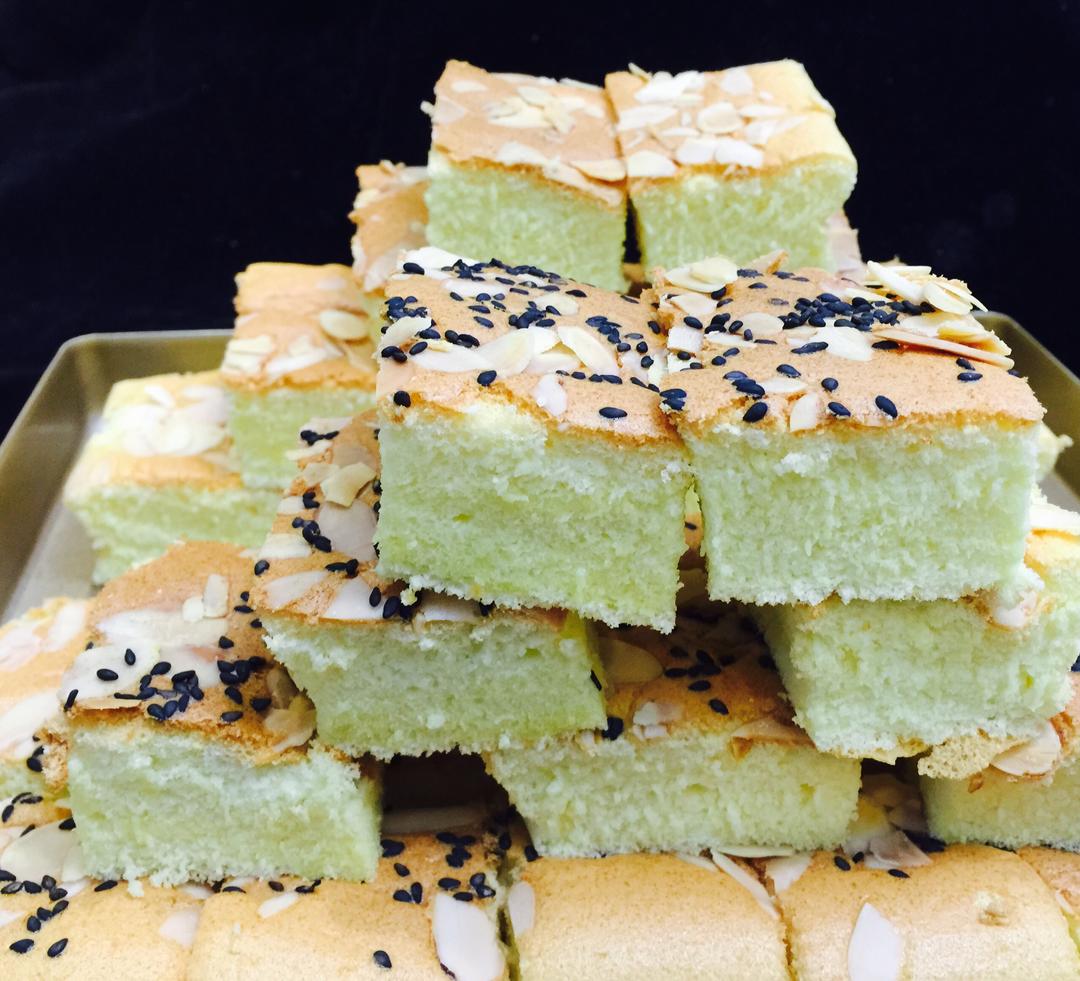
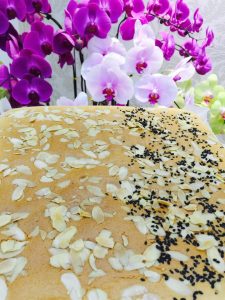
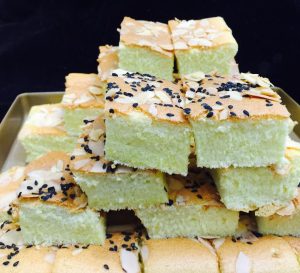
Step 16 – Sheet cake: black sesame almond slice cake
Sheet cake: black sesame almond slice cake.
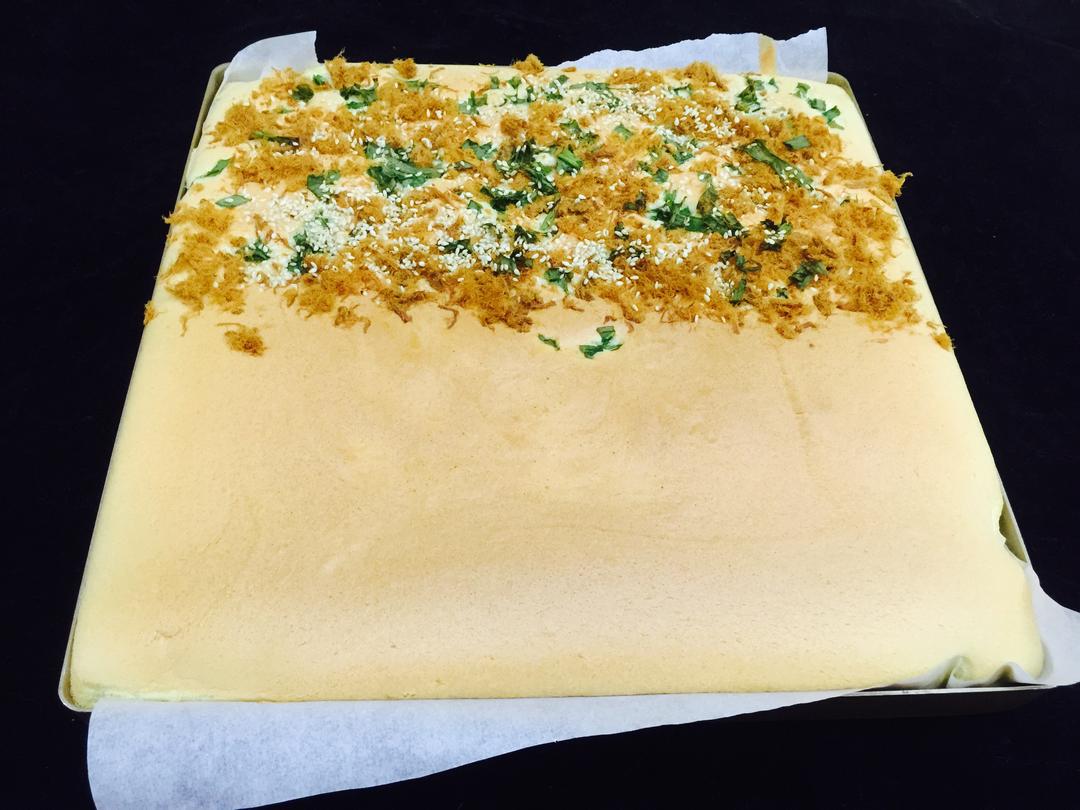
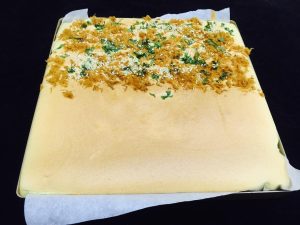
Step 17 – Two in one tray: plain and scallion-pork-floss cake
Two in one tray: plain and scallion-pork-floss cake.
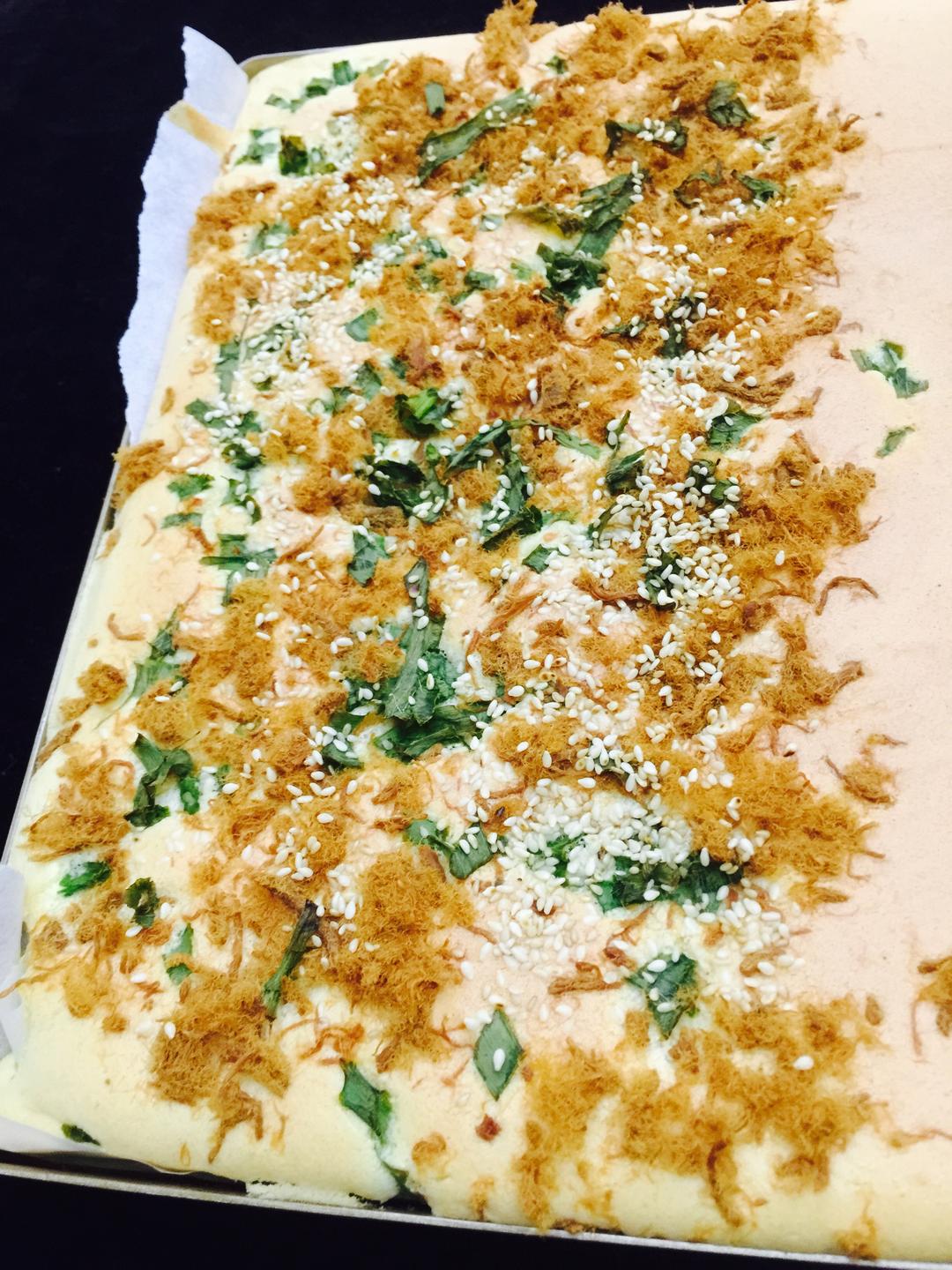
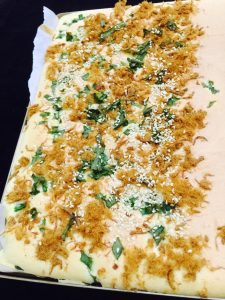
Step 18 – Scallion pork floss cake
Scallion pork floss cake.
Common Mistakes When Making Sheet Pan Cake
1. A flat, dense cake. Cause: deflated meringue or over-whipped whites. Fix: fold gently from the bottom up, never in circles, and stop the meringue at stiff peaks – not beyond.
2. A cracked, dry top. Cause: the oven too hot. Fix: 140°C (284°F) low and slow – the gentle heat is the recipe’s method.
3. Eggy-smelling or rubbery crumb. Cause: undermixed yolks or overbaking. Fix: fold until fully combined, and pull the cake at the golden, springy stage.
4. The cake sticks to the pan. Cause: no parchment. Fix: line the pan with parchment – the original’s method.
5. A sunken center. Cause: opening the oven early, or over-whipping the whites. Fix: resist opening the door until the bake is nearly done.
6. Uneven color. Cause: the pan’s position or hotspots. Fix: middle rack, and rotate once halfway if your oven runs hot.
Variations
Matcha: Add a spoon of matcha powder with the flour – my fluffy matcha chiffon cake is the full recipe.
Meat floss: The savory pork floss topping is the original’s favorite – my meat floss cakes are the individual version.
Raspberry or fruit: Fresh berries pressed into the batter before baking add pockets of tartness.
Other pans: The batter scales to a tube pan or cupcakes – adjust the time; my turnip cake shows the savory pan-cake family.
Frequently Asked Questions
Can I use a hand mixer? Yes – the original’s method works with either. Whip the whites to stiff peaks regardless of the tool.
Why did my cake collapse? Most likely the meringue deflated during the fold, or the oven door opened too early. Fold gently and bake uninterrupted.
How do I store it? Sealed at room temperature 2 days, refrigerated 4, or frozen up to 1 month – slice before freezing.
Can I halve the recipe? Yes – scale the eggs down and use a smaller pan; reduce the bake time slightly.
Is this the same as a chiffon cake? Yes, in batter – this is just the sheet pan format of the chiffon, cut into squares.
How to Serve
Cut the cooled sheet into squares and serve as a snack or dessert – it needs nothing, accepts everything. It is a tea-time staple: with savory milk-egg pancakes for a sweet-savory table, or butter sugar toast for the toast lover. My coconut bread strips and cloud-soft milk bread rolls round out a baking day.
Storage & Reheat
Store sealed at room temperature for 2 days, refrigerated for 4, or frozen for up to 1 month (slice first). Reheat squares in a 150°C (300°F) oven for 5 minutes to refresh. Do not refrigerate long-term – it stales faster. Never leave cake out beyond 2 hours for food safety.
Allergen Notice
This recipe contains egg, gluten (cake flour), and dairy (milk). Toppings may add nuts (almond slices) or soy (pork floss) – check each. It is free of shellfish.
Nutrition Disclaimer
Nutrition information is calculated using an ingredient database and should be considered an estimate. In cases where multiple ingredient alternatives are given, the first listed is calculated for nutrition. Garnishes and optional ingredients are not included.
About the Author & Recipe Development
I am Lin, a professional Chinese chef and food writer with a decade in restaurant kitchens before turning to recipes. This xiachufang home baker writes chiffon with real care – the stainless-bowl note, the three-stage sugar, the no-circles folding – and the sheet pan format makes it a practical everyday bake. I tested the 140°C (284°F) bake and the stiff-peak meringue, and both hold up. I have not tested every topping combination, so the pan is yours to experiment with – the original’s own spirit.
Authoritative References
USDA Food Safety and Inspection Service – Safe Temperature Chart for egg handling and baked-good storage.
Sheet Pan Cake (Kao Pan Dan Gao): The Big-Batch Chiffon

Equipment
- 28×28 cm baking pan
- Stand or hand mixer
- Rubber Spatula
- Sieve
Ingredients
For the Cake
- 7 eggs, separated
- 60 g corn oil 1/4 cup
- 60 g milk 1/4 cup
- 130 g cake flour, sifted 1 cup
- 100 g fine sugar 1/2 cup
- 2 g salt 1/2 tsp
- 5 drops lemon juice or white vinegar optional, for the meringue
- toppings: black sesame, white sesame, almond slices, or scallion pork floss
Instructions
- Prep: sift the flour, separate the yolks and whites – the whites’ bowl must be oil-free and water-free, preferably stainless steel.

- Add salt to the yolks and whisk gently with a hand whisk; set aside.

- In another bowl, add water or milk, then the vegetable oil; whisk together, sift in the flour, mix, then add the yolk liquid in three additions, folding each time.

- For the whites: beat on low until fish-eye bubbles; add a few drops of white vinegar or lemon (optional). Add sugar in three additions – once at fish-eye stage, then continue…

- When lifting the whisk, the whites pull a short, upright peak – stiff peaks – stop beating. Beyond this…
- Fold 1/3 of the meringue into the yolk batter with a spatula, gently (fold from bottom up, don’t stir in circles or the whites deflate).
- Once combined, pour the batter into the remaining 2/3 of meringue.
- Fold the same way until fully merged – the whole fold must be light, quick, gentle to avoid deflating.
- Pour the batter into the mold.
- Scatter your toppings; drop the mold from above 3 times to release bubbles.
- Put the mold into the preheated oven.
- Bake at 140°C top-and-bottom, middle rack, about 35 minutes.
- Until the surface is golden; watch closely near the end.
- When baked, place with the parchment onto a cooling rack, peel back the paper, cool, and cut into pieces.
- Two in one tray: almond cake and almond-black-sesame cake.
- Sheet cake: black sesame almond slice cake.

- Two in one tray: plain and scallion-pork-floss cake.
- Scallion pork floss cake.







Leave a Reply