Hey there! Welcome back to my kitchen.
If you grew up around a traditional Chinese kitchen like I did in Chengdu, the sound of meal prep wasn’t the whir of a food processor—it was the rhythmic, heavy thud-thud-thud of a cleaver hitting a wooden cutting board. My parents didn’t buy pre-ground meat in plastic tubs. They hand-chopped specific cuts to control the texture and, most importantly, the fat ratio.
Let’s be real: buying the “90% Lean” ground pork from a standard Western supermarket is the number one reason your homemade dumplings taste like dry cardboard.
Today, I’m putting on my chef coat to explain the science of fat, the “Golden Ratio” we used in professional kitchens, and how you can replicate that juicy, bouncy texture at home.
The Science: Why Fat Matters (It’s Not Just Flavor)
In culinary school, we learned that fat isn’t just about taste—it’s a vehicle for moisture and an insulator for proteins. When you cook lean muscle fibers, they contract and squeeze out water. If there isn’t enough fat distributed between those fibers to melt and lubricate them, you end up with a tough, dry bite.
In Chinese cooking, specifically for fillings, we rely on an emulsion of water, soy sauce, and aromatics mixed into the meat. You need a higher fat content to hold that suspension together. If the meat is too lean, the liquid just leaks out, making your dumpling wrappers soggy while the meat inside stays dry.
The Golden Ratio: 3:7 (San Fei Qi Shou)
In the professional kitchens I worked in, the gold standard for dumplings and buns is 30% fat to 70% lean meat.
- 90/10 (Supermarket Standard): Too dry for fillings. Okay for quick stir-fries if you add extra oil, but not ideal.
- 80/20 (The Minimum): Acceptable for meatballs and heavy stir-fries.
- 70/30 (The Sweet Spot): Essential for that “soup explosion” in dumplings and buns.
- 50/50: Used for specific dishes like specialized soup dumplings or rich stocks, but usually too greasy for everyday eating.
Lin’s “No Secrets” Tip: If you can only find lean ground pork, don’t worry. I often buy a small piece of pure pork fat back or even bacon ends, mince them finely, and mix them into the lean store-bought pork to adjust the ratio manually.
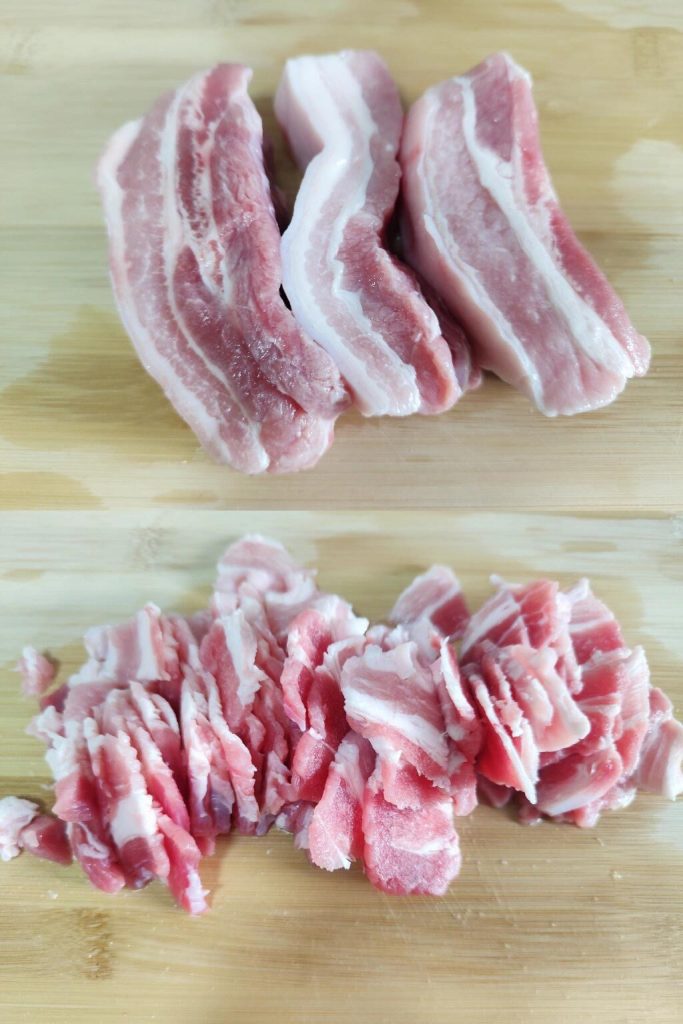
Selecting the Right Cut
If you want to elevate your cooking, stop buying the mystery tub. Go to the butcher counter and ask for a specific cut, or grind it yourself.
1. Pork Belly (The King of Fillings)
For the absolute best Pork Belly, look for pieces with clearly defined layers. This is my go-to for dumpling fillings because the fat is firm and melts beautifully. It naturally hovers around that 50/50 or 60/40 range, so I usually mix this with a leaner cut.
2. Pork Shoulder / Butt (The All-Rounder)
Also known as the “Boston Butt” in the US. This cut usually sits right at that 70/30 or 80/20 ratio. It has enough connective tissue to stay moist during high-heat cooking. It is perfect for dishes like Pork Shoulder stir-fries or braises.
Best Uses by Ratio
The “High Fat” Zone (30%+)
This is strictly for fillings. When you bite into a dumpling, the solid fat should have melted into a savory broth. If you are making my San Xian Dumplings, please ensure you are using fatty pork. If the meat is too lean, the chives inside will steam the meat from the inside out, making it rubbery.
This is also crucial for Fried Pork Meatballs. The fat creates tiny pockets of air as it renders, making the meatball light and crispy rather than a dense lump of meat.
The “Medium Fat” Zone (20-25%)
This is your stir-fry zone. You want enough fat so the meat “fries” in its own juices in the wok, creating that caramelized exterior.
- Mapo Tofu: The minced meat needs to be crispy. Authentic Mapo Tofu relies on the pork fat rendering out to mix with the Doubanjiang (chili bean paste) to create that signature red oil.
- Ants Climbing a Tree: This classic noodle dish uses glass noodles that soak up all the flavor. The fat from the pork coats the noodles, making them slippery and fragrant. Check out my recipe for Ants Climbing a Tree to see this chemistry in action.
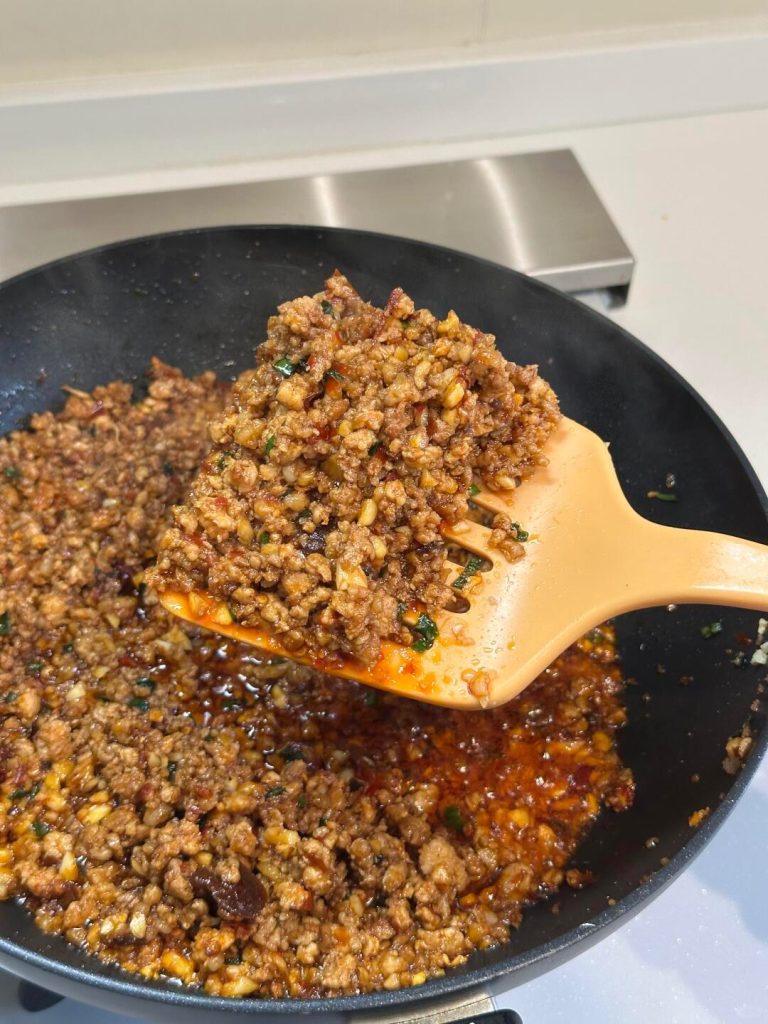
The “Sauce” Zone
For noodle toppings, we need savory richness. When making Minced Pork Noodles, the ground pork acts as a ragu. A slightly higher fat content helps the sauce cling to the noodles.
Technique: The “Slap” (Da Xian)
Having the right fat ratio is only step one. Step two is mechanical action.
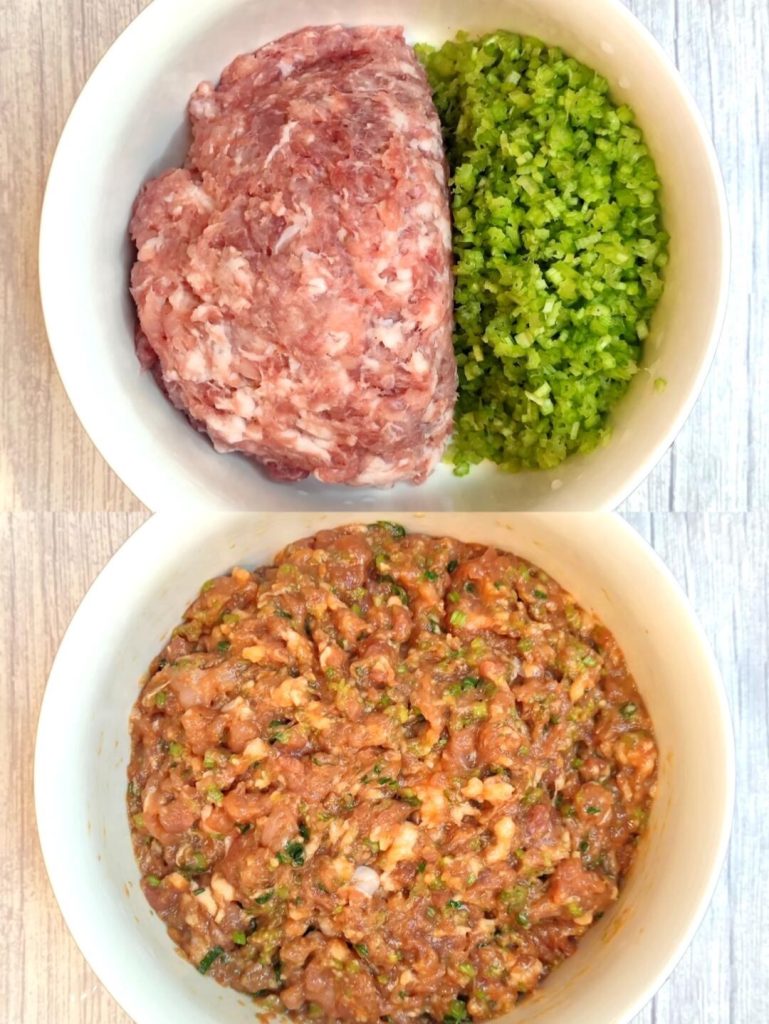
In the restaurant, we didn’t just stir the meat; we slammed it. When making fillings, after adding your liquids (water, soy sauce, ginger water), you must stir vigorously in one direction until the mixture becomes a sticky paste.
Then, you pick up the handful of meat and throw it back into the bowl. Thwack. Thwack.
Why? This aligns the proteins (myosin) and creates a “bouncy” texture (Q-texture) that traps the fat and water inside. If you don’t do this, your Pork Dumpling Filling will crumble apart when cooked.
Lin’s Troubleshooting for Western Kitchens
- The Supermarket Hack: If you are stuck with 90/10 lean pork and have no pork belly, add 1 tablespoon of neutral oil or sesame oil per half-pound of meat before adding your liquid seasonings. It mimics the mouthfeel of fat.
- The Temperature Rule: Keep your fat cold! If you are grinding your own meat or making dumpling filling, keep the meat in the fridge until the last second. If the fat melts on your hands while shaping, the texture will be greasy, not juicy.
Trust me on this—fix your fat ratio, and you fix your Chinese food.
Authoritative References
- USDA Pork Grades: Understanding the different cuts of pork and their typical lean-to-fat composition. USDA Pork Cuts Guide
- Food Science of Emulsions: An overview of how protein and fat interact in meat emulsions (like dumpling fillings) from the Journal of Food Science. Meat Emulsion Functionality


Leave a Reply