
Hey there! Welcome back to my kitchen.
If there is one cut of meat that defines the soul of Chinese comfort food, it is pork belly.
Growing up in my parents’ restaurant in Chengdu, pork belly wasn’t just an ingredient; it was a religion. I remember watching my dad slice through slabs of it with surgical precision—the knife gliding through layers of snowy white fat and rosy meat like it was butter. Whether it was the sticky, trembling cubes of Red Braised Pork or the sizzling, translucent slices in a wok of Twice-Cooked Pork, this cut was always the star of the show.
But I know that for many home cooks in the West, pork belly can be intimidating. Is it just bacon? Is it too fatty? How do you cook it without it becoming rubbery?
Let’s be real: If you treat pork belly right, it transforms into “meat candy.” It’s luscious, savory, and melts in your mouth. Today, I’m taking off my chef hat and putting on my teacher hat to break down everything you need to know about this legendary cut.
What Exactly Is Pork Belly?
In the simplest terms, pork belly is the boneless cut from the underside of the pig. It is the same cut used to make bacon in the West, but in Chinese cooking, we use it fresh (uncured) and, crucially, skin-on.
The Anatomy of a Perfect Slice
When you look at a slab of pork belly, you aren’t just looking for fat. You are looking for a landscape. In culinary school, we were taught to look for the “Five Layers” (skin, fat, meat, fat, meat).
- The Skin (Rind): This provides that gelatinous, bouncy texture in braises or that shattering crispiness in roasted dishes.
- The Fat: It renders down to baste the meat from the inside out.
- The Meat: It should be a deep, vibrant pink—never gray.
How to Choose Pork Belly: The “Chef’s Eye”
Not all pork belly is created equal. I’ve seen some sad-looking cuts in supermarkets that are 90% fat and 10% meat. Do not buy those!
Here is the secret to selecting the best piece:

- The Poke Test: If you are at a butcher counter, the meat should feel firm and bouncy, like a flexed muscle, not soft or slimy.
- The Layer Check: Look for distinct, even layers. You want a balance. Too much fat, and the dish becomes greasy; too much lean meat, and it will be dry.
- Skin Condition: Ensure the skin is clean and smooth. If there are stray hairs (it happens!), don’t worry—I’ll teach you how to deal with those later.
The Science: Why We Cook It the Way We Do
You might be wondering, “Lin, why do Chinese recipes always involve boiling or blanching the pork belly first?”
This is the “why” behind the technique. Pork belly is a hard-working muscle with a lot of connective tissue and fat.
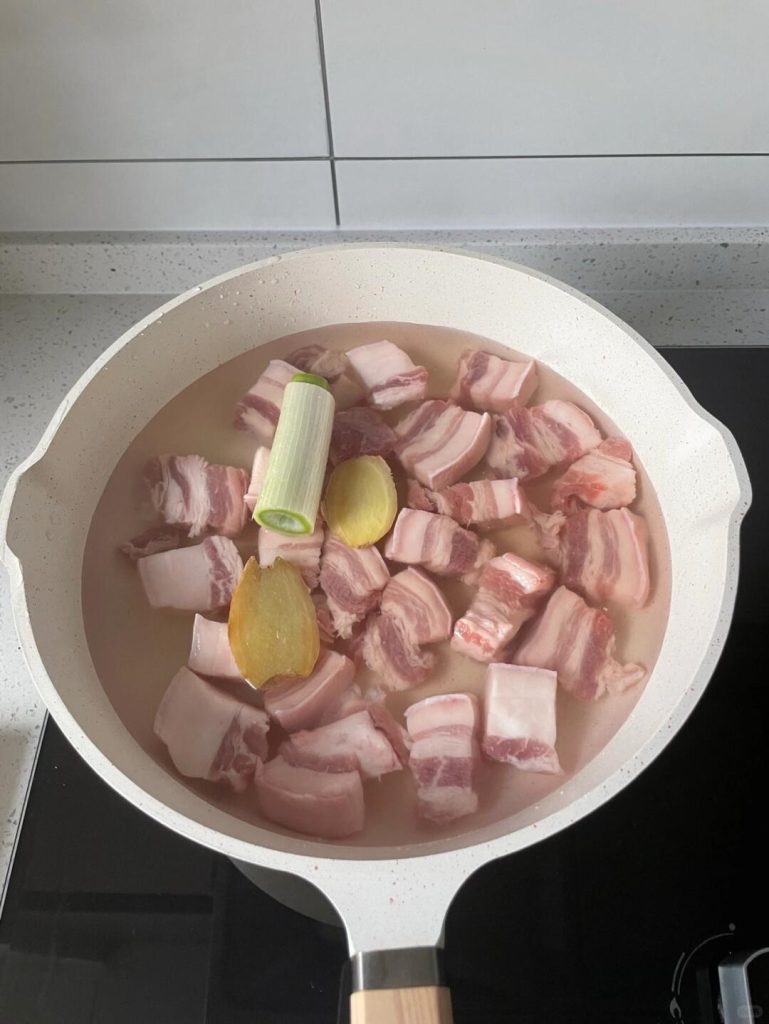
- Blanching: We almost always blanch pork belly in cold water with ginger, scallions, and Shaoxing Wine. This pulls out impurities and blood foam, ensuring your final sauce is clean and aromatic, not muddy.
- Double-Cooking: For dishes like Twice-Cooked Pork, we simmer the meat until it’s just cooked through before slicing and stir-frying. This gelatinizes the skin and fat, so when it hits the hot wok, it doesn’t dissolve—it firms up and gets that distinct “bouncy” texture.
How Chinese Cooks Use Pork Belly (And Recipes You Should Try)
Pork belly is incredibly versatile. Here are the main ways we use it in the Chinese kitchen, tailored for your home stove.
1. The Low and Slow Braise (Hong Shao)
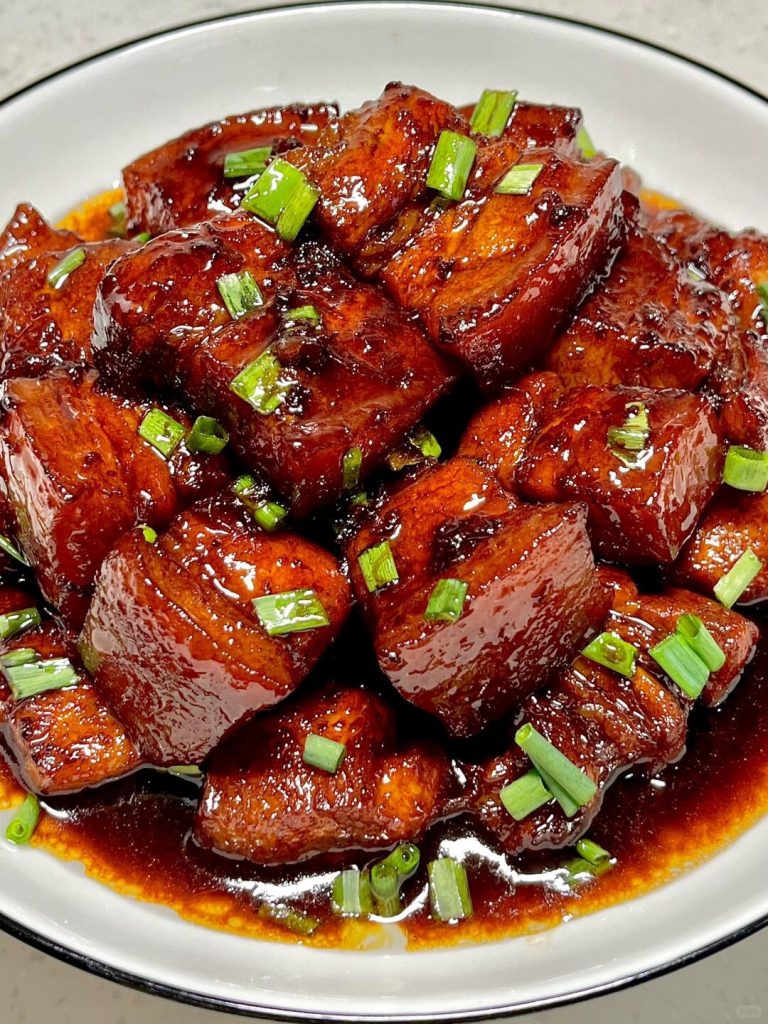
This is the holy grail. By simmering pork belly for hours with sugar, aromatics, Dark Soy Sauce for color, and Light Soy Sauce for savory depth, the fat renders out and the collagen breaks down into gelatin.
- The Result: Sticky, sweet-savory cubes that tremble when you touch them.
- Try it here: My Braised Pork Belly (Hong Shao Rou) recipe uses a special technique to keep the juices locked in. If you want a version with extra veggies, try my Braised Pork with Potatoes.
2. The Sizzling Stir-Fry
The goal here isn’t soft; it’s toasted. We render the fat in the wok until the slices curl up (we call this “lantern pork” because the curled slices look like little lamps).
- The Flavor Bomb: This method usually relies on strong pastes like Doubanjiang (Chili Bean Paste) and Sweet Bean Sauce to coat the meat.
- Try it here: The absolute classic is Twice-Cooked Pork. For a quicker weeknight option that pairs perfectly with rice, check out my Scallion Pork Belly Stir-Fry or the tangy and spicy Kimchi Pork Belly Stir-fry.
3. The Crispy Roast (Siu Yuk Style)
Cantonese crispy pork belly is famous for its crackling skin. In a professional kitchen, we use high-power ovens, but you can achieve this at home!
- Western Kitchen Hack: You don’t need a roasting pit. I’ve developed a method that works perfectly in a modern gadget.
- Try it here: My Air Fryer Crispy Pork Belly guarantees that golden, shattering crunch without the hassle.

4. Cold and Poached (Liang Ban)
This surprises many Western cooks. We boil the pork belly until tender, slice it paper-thin, and drape it over cucumbers with a garlic-heavy sauce. It’s refreshing and not greasy at all.
- The Secret Sauce: It relies heavily on a good Homemade Chinese Chili Oil and plenty of garlic.
- Try it here: Poached Pork Belly with Garlic Sauce.
5. The Simple Pan-Fry
Sometimes you just want dinner in 10 minutes. Pork belly is great for pan-frying because it releases its own oil—you don’t need to add any!
- Try it here: Pan-Fried Pork Belly is one of the easiest ways to start if you are a beginner.
Lin’s “No Secrets” Tips for Success
- Skin Issues: If you buy pork belly with hair on the skin (it’s natural!), don’t freak out. Heat a dry pan and press the skin side down for a few seconds to singe them off, or use a disposable razor.
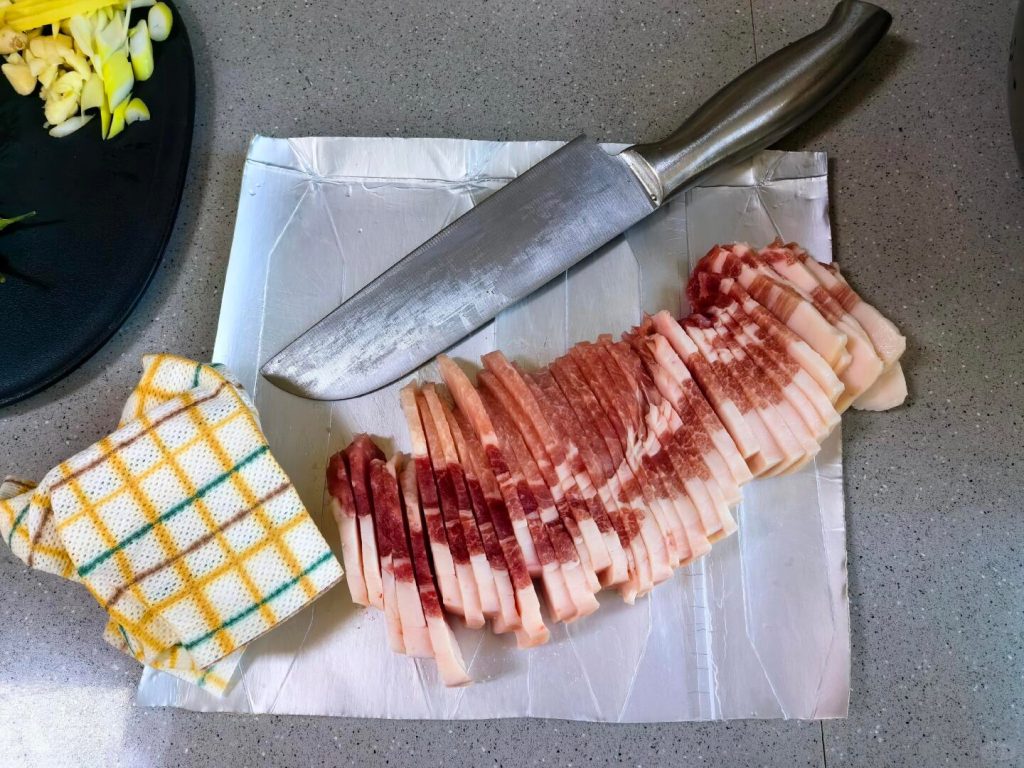
- Slicing Hack: Raw pork belly is wobbly and hard to slice thinly. Freeze it for 30 minutes before cutting. It will firm up, allowing you to get those professional-looking thin slices.
- Don’t Rush the Braise: I know it’s tempting to turn up the heat to cook it faster. Don’t! High heat toughens the proteins. Low and slow is the only way to get that melting texture.
Final Thoughts
Pork belly is a forgiving, flavorful, and incredibly rewarding cut to master. Whether you are making a rich stew or a quick stir-fry, the key is understanding the layers. Trust your senses—wait for the oil to turn deep red, listen for the sizzle, and let the aroma guide you.
Ready to cook? Grab a slab from your local butcher (or Asian market for the skin-on variety) and let’s get those woks fired up!












Leave a Reply