If there is one dish that saved my sanity during busy dinner rushes in my family’s restaurant back in Sichuan, it is this one. While customers were waiting for elaborate banquet dishes, the kitchen staff would often huddle in the back, slurping down bowls of these Minced Pork Noodles (Rou Jiang Ban Mian).
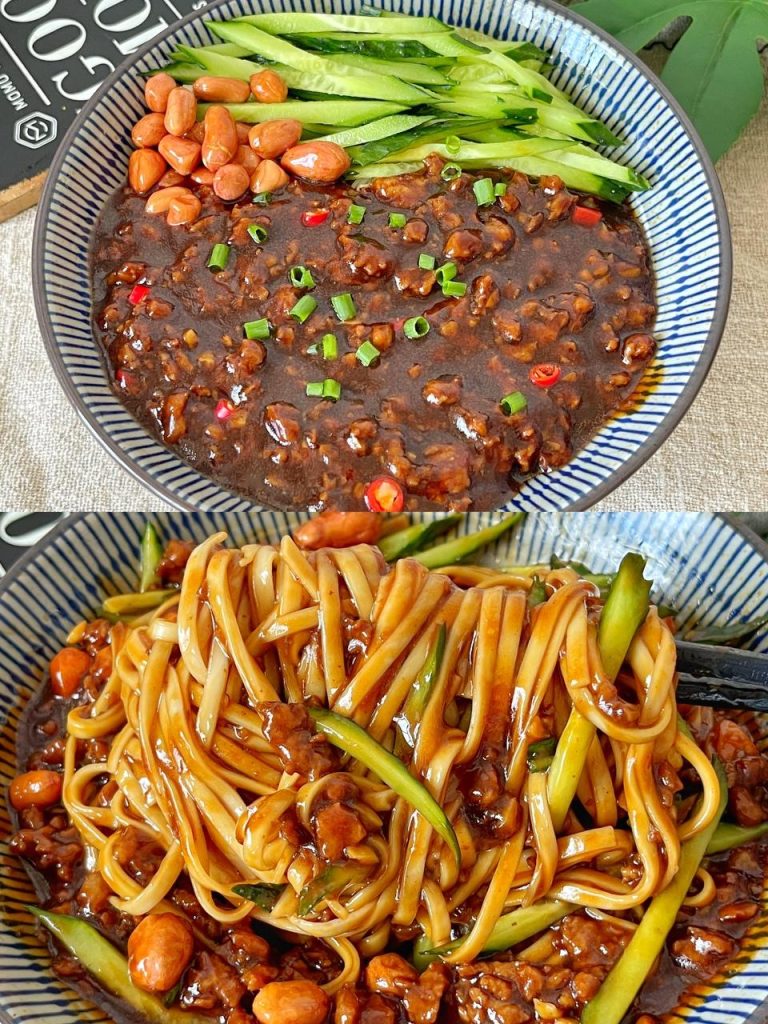
It is humble, incredibly fast, and packed with flavor. Unlike the famous Zha Jiang Mian which relies heavily on fermented bean paste, this “Rou Jiang” (meat sauce) relies on a pantry-friendly trinity of soy sauce, oyster sauce, and sugar.
My son, who can be quite picky, absolutely loves this. He calls it “Chinese Spaghetti Bolognese,” and truthfully, he isn’t wrong. The sauce is glossy, savory, and clings to every single strand of noodle. Whether you are a tired parent or just craving a savory carb fix, this recipe is your answer.
Why This Recipe
This recipe bridges the gap between authentic Chinese flavors and the realities of a busy Western kitchen.
- Speed: It comes together in about 15 minutes, making it faster than ordering takeout.
- Accessibility: No hard-to-find fermented pastes here; just standard sauces you likely have in your pantry.
- Texture: The combination of tender pork, chewy noodles, crunchy peanuts, and crisp cucumber offers a perfect mouthfeel in every bite.
What Is Rou Jiang Ban Mian?
In Chinese, Ban Mian (拌面) literally means “mixed noodles.” Unlike noodle soups where the flavor is in the broth, Ban Mian relies on a concentrated, flavorful sauce to coat the noodles.
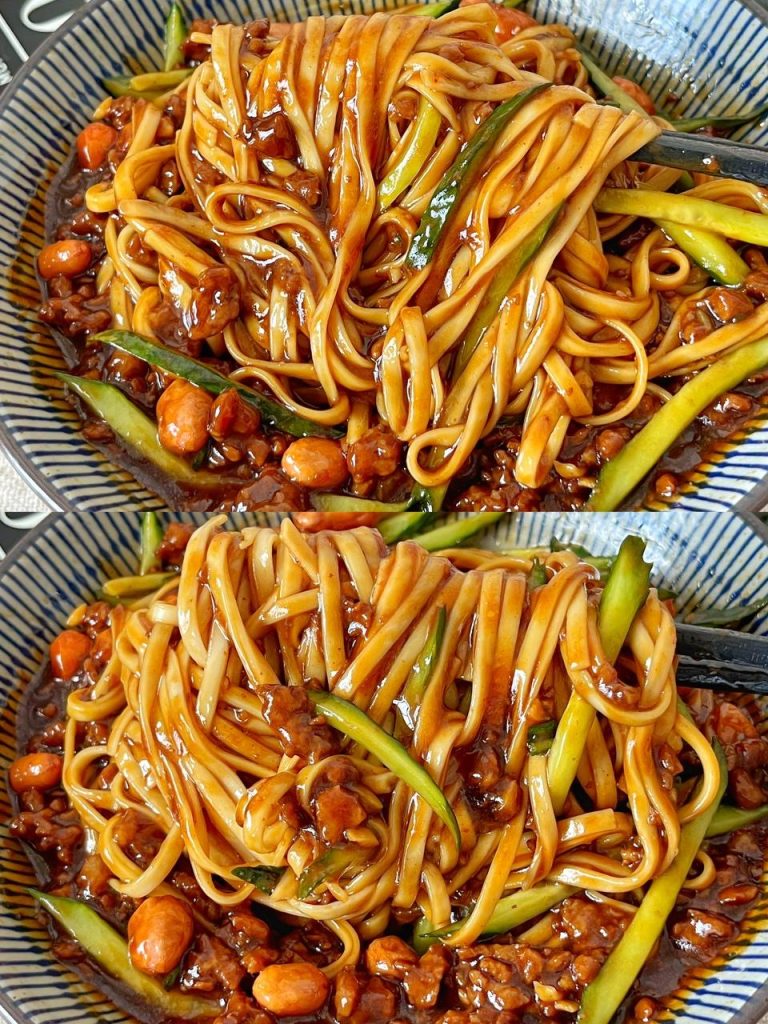
This specific version, Rou Jiang (Meat Sauce), is a homestyle staple across China. While I grew up in Sichuan where we might add a heavy hand of chili oil, this version is universally loved for its savory, slightly sweet profile. It is similar to Zha Jiang Mian, but lighter and easier to execute for beginners.
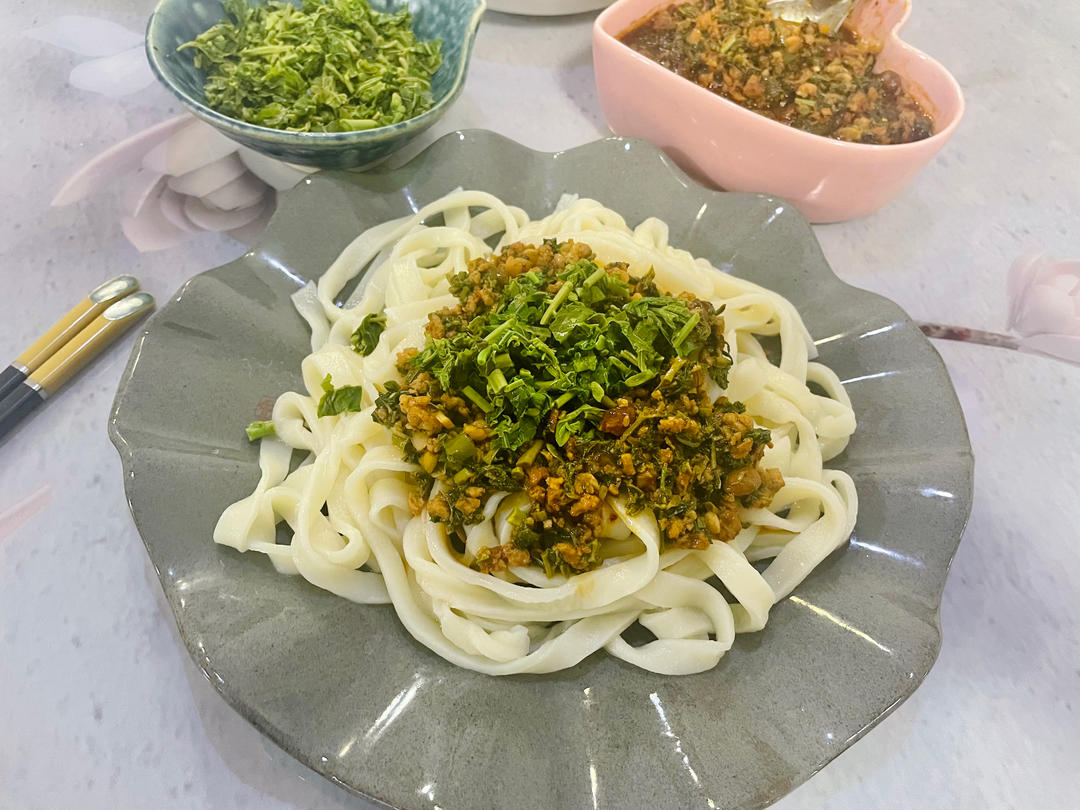
If you love the savory, comforting profile of this classic minced pork sauce but want to experience a highly sought-after seasonal variation, you have to try our Authentic Chinese Toon Noodles with Meat Sauce
. Available for only a few short weeks during spring, fresh Chinese toon (xiangchun) adds an incredible, truffle-like garlic aroma to the rich pork base that completely transforms the dish. It’s an absolute must-try for any noodle lover looking to capture the authentic, fleeting taste of a Chinese spring!1Authentic Chinese Toon Noodles with Meat SauceDiscover the ultimate taste of spring with these savory Chinese Toon Noodles with Meat Sauce. A quick 15-minute recipe featuring fresh fragrant toon leaves, minced pork, and chewy noodles.Check out this recipe
Why This Recipe Works
- Layered Seasoning: We don’t just dump everything in. We sauté the aromatics first, then brown the meat, and finally add the liquids. This builds depth.
- Starch Slurry: Adding starch water (cornstarch slurry) is the secret restaurant technique. It emulsifies the sauce, turning a watery liquid into a glaze that sticks to the noodles rather than pooling at the bottom of the bowl.
- Temperature Contrast: The hot noodles and sauce are topped with cool, crisp cucumber and room-temperature crunchy peanuts. This temperature contrast is a hallmark of great Chinese cold/warm noodle dishes.
Key Ingredients & Substitutions
- Ground Pork: I recommend a 80/20 lean-to-fat ratio. The fat renders out and mixes with the sauces to create a luscious mouthfeel. You can substitute with ground chicken or turkey, but you may need a splash more oil.
- Noodles: The original recipe calls for Gua Mian (dried fine wheat noodles). You can find these in Asian markets. However, dried spaghetti or linguine works surprisingly well here! Just cook them slightly past al dente so they absorb the sauce better.
- Millet Chili (Xiaomi La): These small red peppers pack a punch. If you cannot find them, Thai Bird Eye chilies are a close match. For a milder heat, use Fresno peppers or simply a dollop of Chili Garlic Sauce.
- The Sauces: You need Light Soy Sauce (for saltiness/umami), Dark Soy Sauce (crucial for that appetizing caramel color), and Oyster Sauce (for richness).
- Roasted Peanuts: These add an essential crunch. If you are allergic to nuts, you can substitute with fried shallots or toasted sesame seeds for texture.
Recipe Notes Before You Start
- Mise en Place is Key: Because the cooking process happens very fast (under 5 minutes for the sauce), have your sauce ingredients mixed or measured out before you turn on the stove.
- Boil Water First: Get your big pot of water boiling for the noodles before you start the sauce. This way, the noodles and sauce finish at the same time.
- Knife Skills: Julienne your cucumber finely. The thinner the strips, the better they mix with the noodles.
Ingredients
The Sauce Base:
- 5 oz (150g) Ground pork (fatty preferred)
- 2 Fresh Millet chilies or Thai chilies, chopped (adjust to spice tolerance)
- 2 cloves Garlic, minced
- 1 stalk Scallion (green onion), chopped (separate whites and greens)
- 1 tbsp Cooking oil (vegetable or canola)
The Seasoning:
- 1 tsp (5g) Sugar
- 1 tbsp Shaoxing Wine (or dry sherry)
- 2 tbsp Light Soy Sauce
- 1 tbsp Dark Soy Sauce
- 1 tbsp Oyster Sauce
The Thickener:
- 1/4 cup Water mixed with 1 tsp Cornstarch (Starch Water)
For Serving:
- 1 serving Dried Wheat Noodles (approx. 3-4 oz / 100g)
- 2 tbsp Roasted Peanuts, crushed or whole
- 1/4 Cucumber, julienned into strips
How to Make Minced Pork Noodles
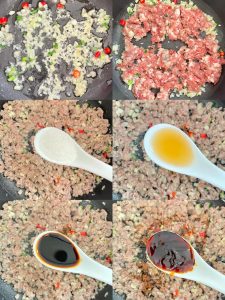
1. Sauté the Aromatics Heat the oil in a wok or skillet over medium heat. Add the minced garlic, chopped chilies, and the white parts of the scallions. Stir-fry until fragrant, about 30 seconds.
Note: Do not burn the garlic. As soon as you smell the aroma, move to the next step.
2. Brown the Pork Increase the heat to medium-high. Add the ground pork. Break it up with your spatula and stir-fry until the meat changes color from pink to white and starts to brown slightly.
Why? Browning the meat triggers the Maillard reaction, adding a savory depth that boiling meat cannot achieve.
3. Season the Meat Add the sugar, Shaoxing wine, light soy sauce, dark soy sauce, and oyster sauce. Stir constantly for about 1 minute to let the pork absorb these flavors. The meat should look dark and glossy.
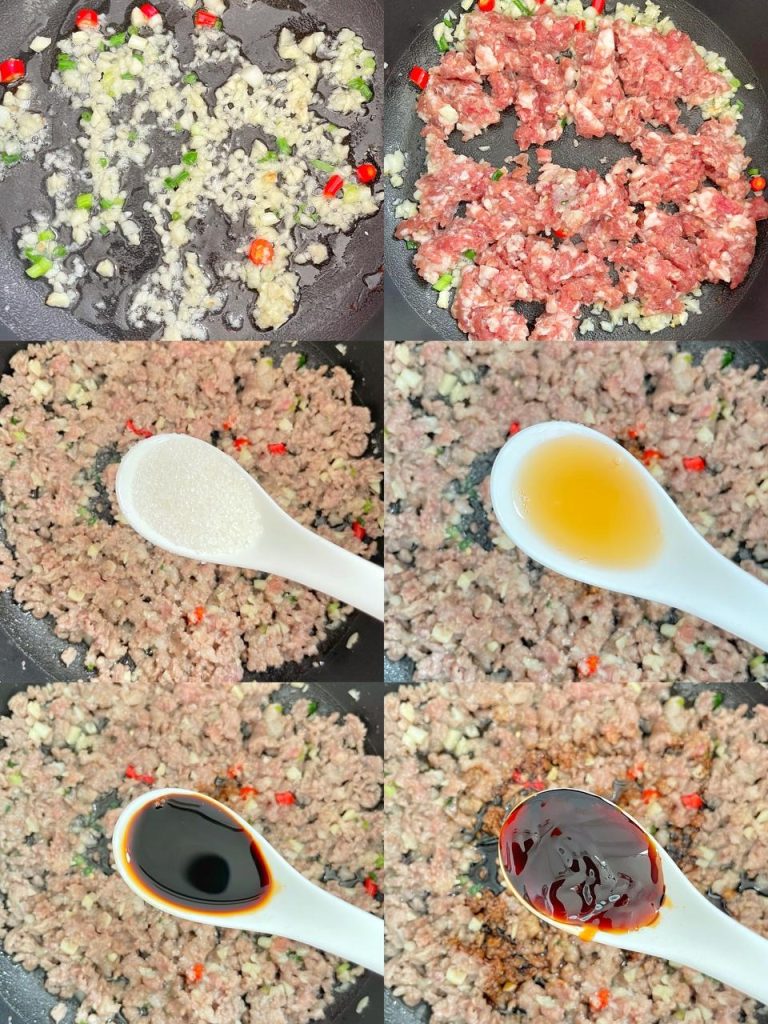
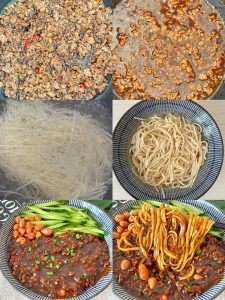
4. Thicken the Sauce (The “Gou Qian” Technique) Give your cornstarch water a quick stir (starch settles) and pour it into the pan. Bring it to a boil. You will see the sauce tighten up and become thick almost instantly.
Visual Cue: The sauce is ready when it can coat the back of a spoon. Turn off the heat immediately.
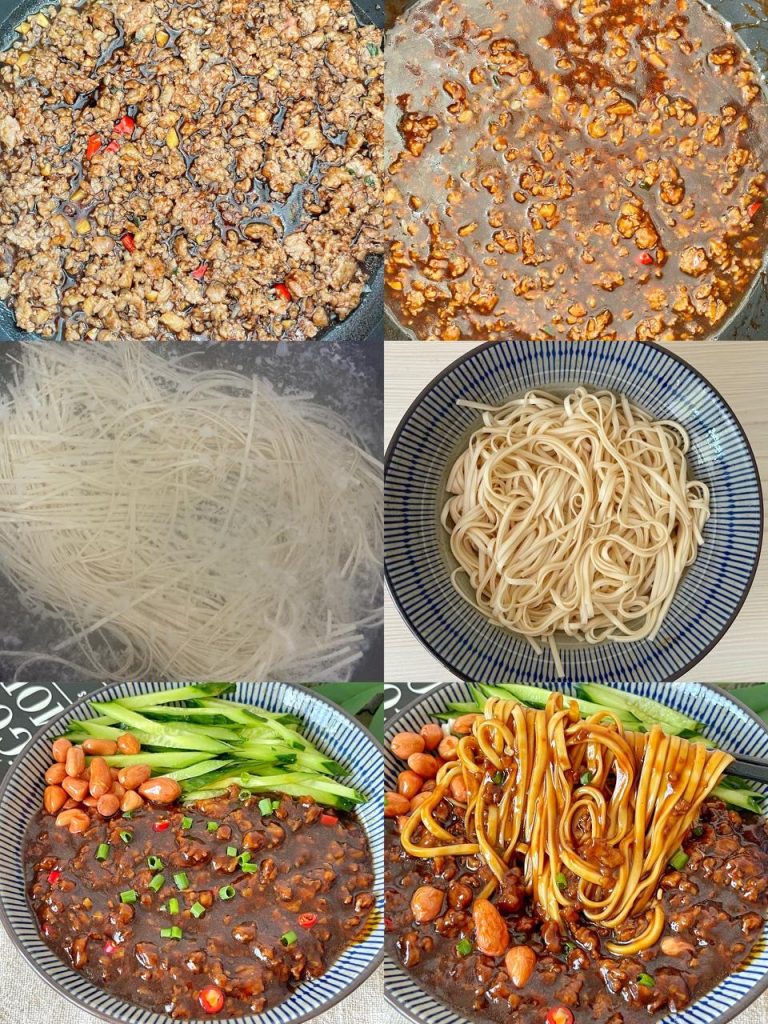
5. Cook the Noodles While the sauce is resting, cook your noodles in boiling water according to the package instructions. Drain them well.
Tip: Do not rinse the noodles in cold water for this dish; we want the heat to help absorb the sauce.
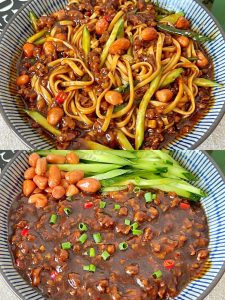
6. Assemble and Serve Place the hot noodles in a bowl. Pour the rich meat sauce over the top. Garnish generously with the julienned cucumber, roasted peanuts, and the green parts of the scallions.
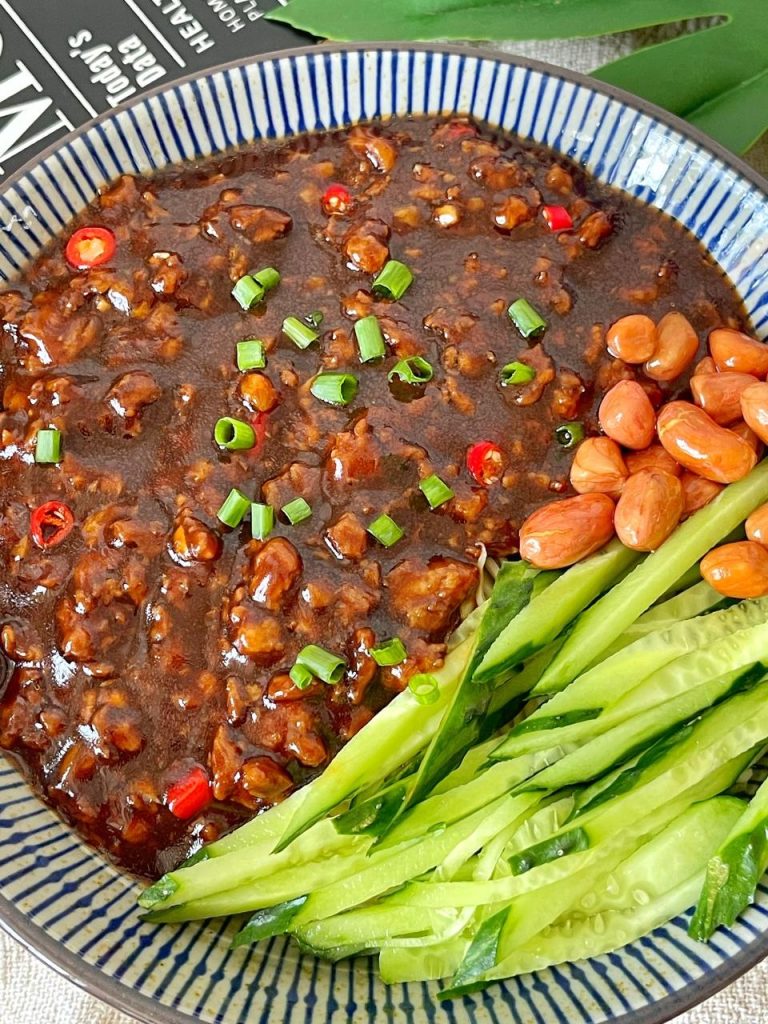
7. The “Ban” (Mix) This is the most important step! Mix everything thoroughly until every strand of noodle is coated in the dark, savory sauce. Enjoy immediately!
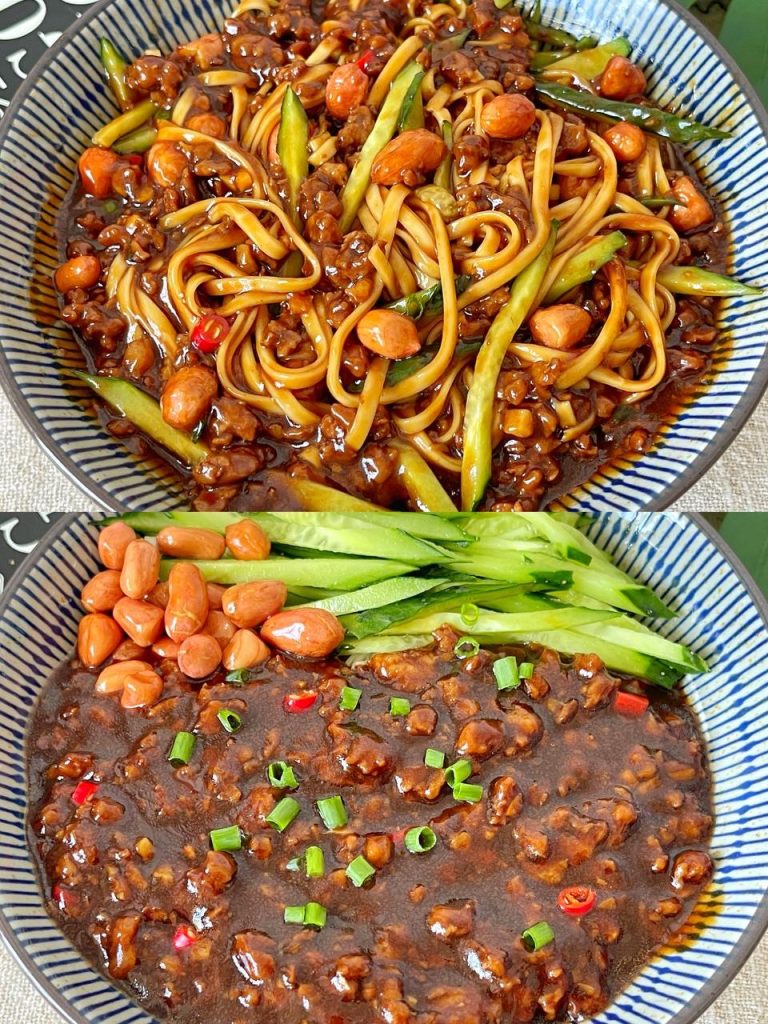
Our Systematic Test Kitchen Notes
- Sauce Consistency: In our tests, if the sauce was too thick (like a paste), it didn’t coat the noodles evenly. We found that adding a tablespoon of the pasta/noodle cooking water to the sauce right before serving helps loosen it up for the perfect texture.
- Noodle Type: We tested this with fresh ramen noodles, dried wheat noodles, and spaghetti. While fresh noodles had the best chew, dried wheat noodles (Gua Mian) absorbed the sauce the best. Spaghetti is a solid 8/10 alternative but requires slightly more sauce.
Chef’s Tips for Success:
- Manage the Saltiness: Soy sauce brands vary significantly in sodium content. I use Pearl River Bridge or Lee Kum Kee generally. If you are using a very salty brand (like standard Kikkoman), you might want to start with 1.5 tablespoons of light soy sauce and taste as you go. You can always add more, but you can’t take it out!
- The “Pasta Water” Trick: Just like with Italian pasta, save a small cup of the noodle boiling water before draining. If your meat sauce becomes too thick or sticky once mixed with the noodles, splash in a tablespoon of this starchy water. It helps emulsify the sauce and makes it coat the noodles luxuriously.
- Noodle Timing: Chinese wheat noodles (Gua Mian) cook very quickly, usually in 3–4 minutes. Do not walk away! Overcooked, mushy noodles will break when you try to mix them with the heavy meat sauce. Aim for a “al dente” texture with a slight bite in the center.
- Handling Chili Heat: The capsaicin in fresh chilies can linger on your skin. I highly recommend washing your hands immediately after chopping the millet chilies, or wearing gloves. If you want the flavor of chili without the intense heat, remove the seeds before chopping.
FAQ / Troubleshooting
Q: My sauce is too salty. What can I do? A: Soy sauce brands vary in sodium content. If it’s too salty, add a splash of water or unsalted chicken stock and a pinch more sugar to balance it out.
Q: Can I meal prep this? A: Yes! The meat sauce stores beautifully. Keep the sauce in an airtight container in the fridge for up to 4 days. Cook fresh noodles when you are ready to eat.
Q: Can I use beef instead of pork? A: Absolutely. Ground beef works well, though it has a stronger flavor profile. If using very lean beef, add a teaspoon of sesame oil at the end for richness.
Nutrition Information (Estimate per serving)
- Calories: 650 kcal
- Carbohydrates: 55g
- Protein: 32g
- Fat: 35g
- Saturated Fat: 10g
- Cholesterol: 75mg
- Sodium: 1450mg
- Fiber: 4g
- Sugar: 8g
Nutrition Disclaimer: Nutrition information is calculated using an ingredient database and should be considered an estimate. In cases where multiple ingredient alternatives are given, the first listed is calculated for nutrition. Garnishes and optional ingredients are not included. Actual values may vary based on specific product brands and cooking methods.
Food Safety & Preparation
- Cook Pork Thoroughly: Ground pork must be cooked to a safe minimum internal temperature of 160°F (71°C) to ensure food safety. Visually, there should be no pink remaining, and the juices should run clear.
- Avoid Cross-Contamination: Wash hands, cutting boards, dishes, and utensils with hot soapy water after coming in contact with raw meat. Do not place cooked vegetables or noodles on the same plate that held raw pork.
- Allergen Warning: This recipe contains Peanuts, Soy, Wheat (Gluten), and Oyster derivatives. If cooking for someone with allergies, verify ingredient labels on all sauces (especially oyster sauce and soy sauce) and omit peanuts or substitute with sesame seeds if necessary.
- Storage & Reheating: Store leftover meat sauce in an airtight container in the refrigerator for up to 4 days. Reheat the sauce in a pan or microwave until steaming hot before serving over fresh noodles. Do not leave the cooked sauce at room temperature for more than 2 hours.
Authoritative References
For further reading on food safety standards and ingredient handling used in this recipe, please refer to the following trustworthy sources:
- Safe Minimum Internal Temperatures: To ensure the ground pork is safe to consume, we adhere to the guidelines set by the U.S. Department of Agriculture (USDA), which recommends cooking ground pork to an internal temperature of 160°F (71°C).
- Handling Flour and Raw Dough (if making homemade noodles): If you choose to make fresh noodles from scratch, be aware of the safety risks associated with raw flour.
- Source: FDA – Handling Flour Safely
- Sodium Intake & Soy Sauce: This recipe relies on soy sauce for seasoning. For information on managing sodium intake and understanding daily limits, refer to the American Heart Association.
15-Minute Minced Pork Noodles (Rou Jiang Ban Mian)

Equipment
- 1 Wok or large skillet Carbon steel preferred for best heat distribution
- 1 Pot For boiling noodles
Ingredients
The Noodles & Toppings
- 1 serving dried wheat noodles approx 100g, or spaghetti
- 2 tbsp roasted peanuts unsalted, crushed or whole
- 1/4 cucumber julienned into strips
The Meat Sauce
- 5 oz ground pork approx 150g, 80/20 fat ratio preferred
- 2 millet chilies or Thai bird eye chilies, chopped
- 2 cloves garlic minced
- 1 stalk scallion chopped
- 1 tbsp cooking oil
The Seasoning
- 1 tsp sugar approx 5g
- 1 tbsp Shaoxing wine or dry sherry
- 2 tbsp light soy sauce
- 1 tbsp dark soy sauce
- 1 tbsp oyster sauce
- 1 tsp cornstarch mixed with 1/4 cup water
Instructions
- Heat oil in a wok over medium heat. Add minced garlic, chopped chilies, and scallion whites. Stir-fry until fragrant (about 30 seconds).

- Increase heat to medium-high. Add the ground pork and stir-fry until it changes color and is no longer pink.
- Add sugar, Shaoxing wine, light soy sauce, dark soy sauce, and oyster sauce. Stir well to combine.
- Pour in the starch water (cornstarch slurry). Cook until the sauce thickens and coats the back of a spoon. Remove from heat.
- Boil the noodles according to package instructions. Drain well.
- Place noodles in a bowl, top with the meat sauce, roasted peanuts, julienned cucumber, and scallion greens. Mix well and serve immediately.
Notes
Calories: 650 kcal
Carbohydrates: 55g
Protein: 32g
Fat: 35g
Saturated Fat: 10g
Sodium: 1450mg
Fiber: 4g
Sugar: 8g Food Safety Warning: Ensure ground pork reaches an internal temperature of 160°F (71°C). Be careful when adding wet ingredients to hot oil to avoid splattering.












Leave a Reply