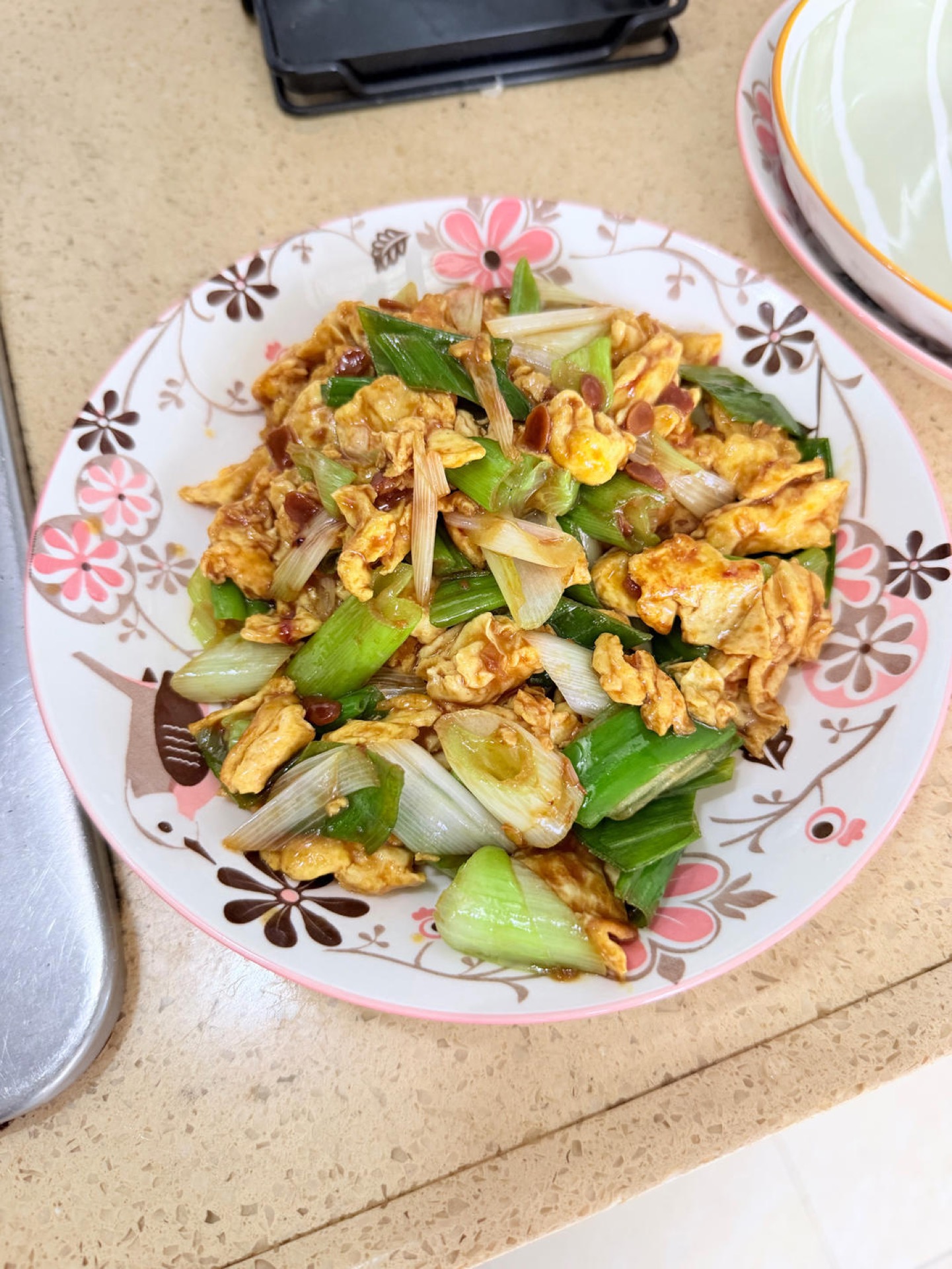
If there is one dish that proves great Chinese cooking is not about long ingredient lists, it is 酱炒鸡蛋 — soy sauce scrambled eggs. Six eggs, a handful of scallions, and a sauce built from pantry pastes come together in a wok in under ten minutes, and what lands on the plate is soft, glossy, and savory enough to make a bowl of plain rice disappear.
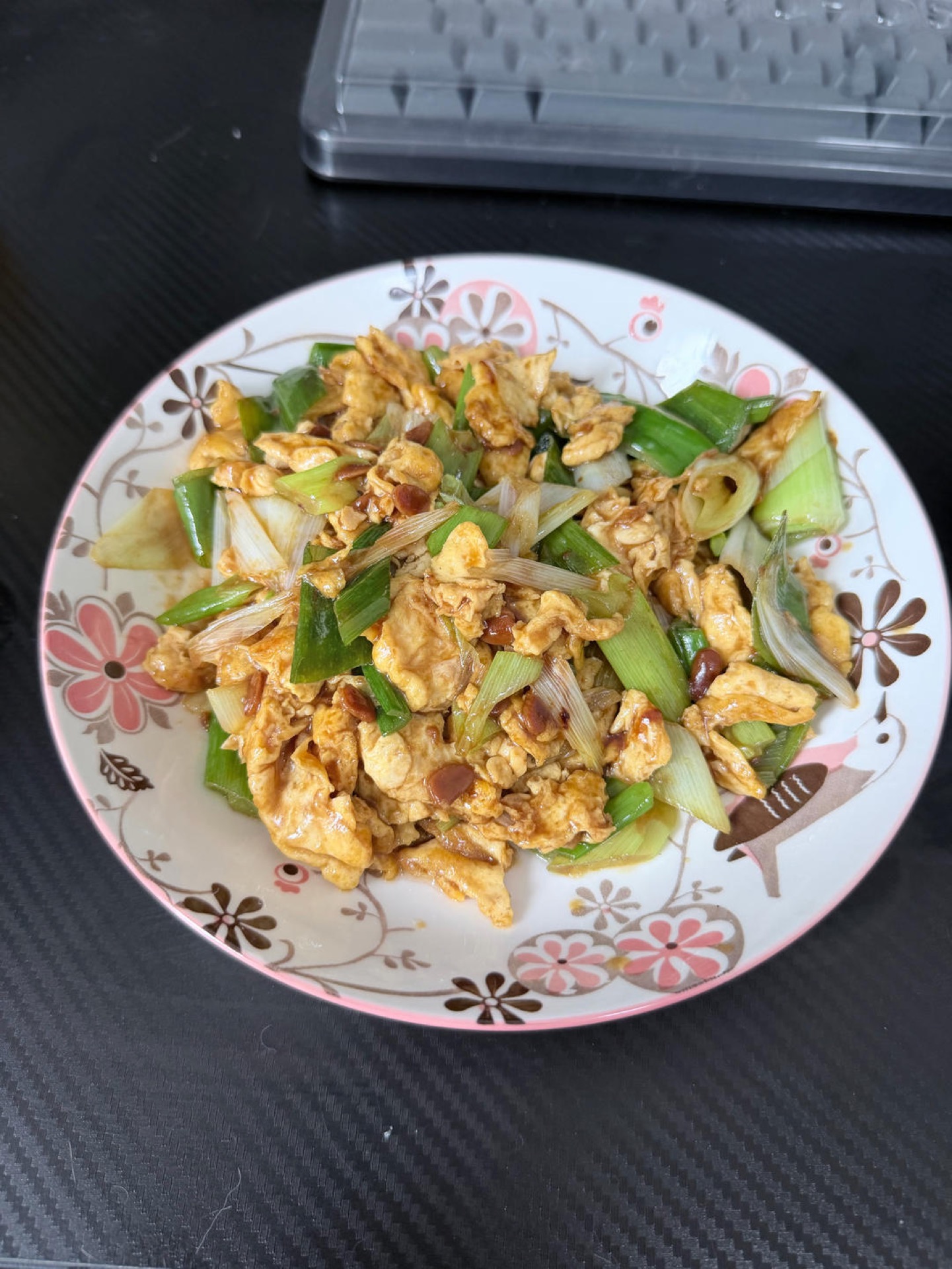
This is not the dry, rubbery scrambled egg of a hotel breakfast buffet. In northern China, eggs are treated as a vehicle for sauce, and the sauce here is the point: soybean paste for fermented depth, sweet flour paste for a round sweetness, soy sauce for salt and color, oyster sauce for body, sesame oil for perfume, and a touch of cornstarch to give everything that clinging, lacquered shine. The scallions go in whole sections, not minced, so they stay sweet and slightly crisp instead of disappearing into the mix.
What makes this recipe such a reliable weeknight fallback is its tolerance. The eggs are scrambled first and pulled out while still tender, so they never overcook. The sauce is whisked in a bowl before the wok is even hot, so there is no frantic stirring at the stove. And the whole thing is finished over high heat in under a minute, which is exactly the kind of confidence-building cooking that makes people fall in love with a wok. If you have ever made chinese tomato and egg stir fry, you already know the rhythm: cook the eggs, cook the aromatics, bring them back together, sauce, done.
What Is 酱炒鸡蛋?
酱炒鸡蛋 (jiàng chǎo jī dàn) translates literally as “paste stir-fried eggs,” and that is precisely what it is: beaten eggs stir-fried with a sauce built on fermented bean pastes. It belongs to the broad northern Chinese family of 家常菜 (home-style dishes) — the everyday cooking that never shows up on banquet menus but shows up on dinner tables several times a week. The defining ingredient is 黄豆酱 (huáng dòu jiàng), a salted fermented soybean paste, often paired with 甜面酱 (tián miàn jiàng), a sweeter wheat-flour paste, the same one used to lacquer Peking duck.
Unlike the Cantonese-style scrambled eggs you may have had in a restaurant, where eggs are cooked silky and barely set with a whisper of salt, this version is saucier and more assertive. The eggs are still tender, but they are coated rather than simply seasoned. The scallions are cut into chunky roll-cut sections so they retain texture. And the finish is glossy, thanks to that small amount of cornstarch in the sauce — the same trick that gives so many Chinese stir-fries their restaurant sheen.
The reason the sauce clings instead of pooling is starch gelatinization. When cornstarch granules are heated in water, they absorb liquid, swell, and eventually burst, releasing amylose and amylopectin that thicken the surrounding liquid into a glossy, translucent coating. That is why a half teaspoon of cornstarch in three tablespoons of water can transform a thin, watery sauce into something that hugs every curve of an egg curd — and why you must whisk it into cold water first, or it will clump the moment it meets heat.
If you enjoy this style of cooking — eggs as the base, sauce as the star — it is worth exploring a few of the other egg-forward dishes on the site that share the same DNA.
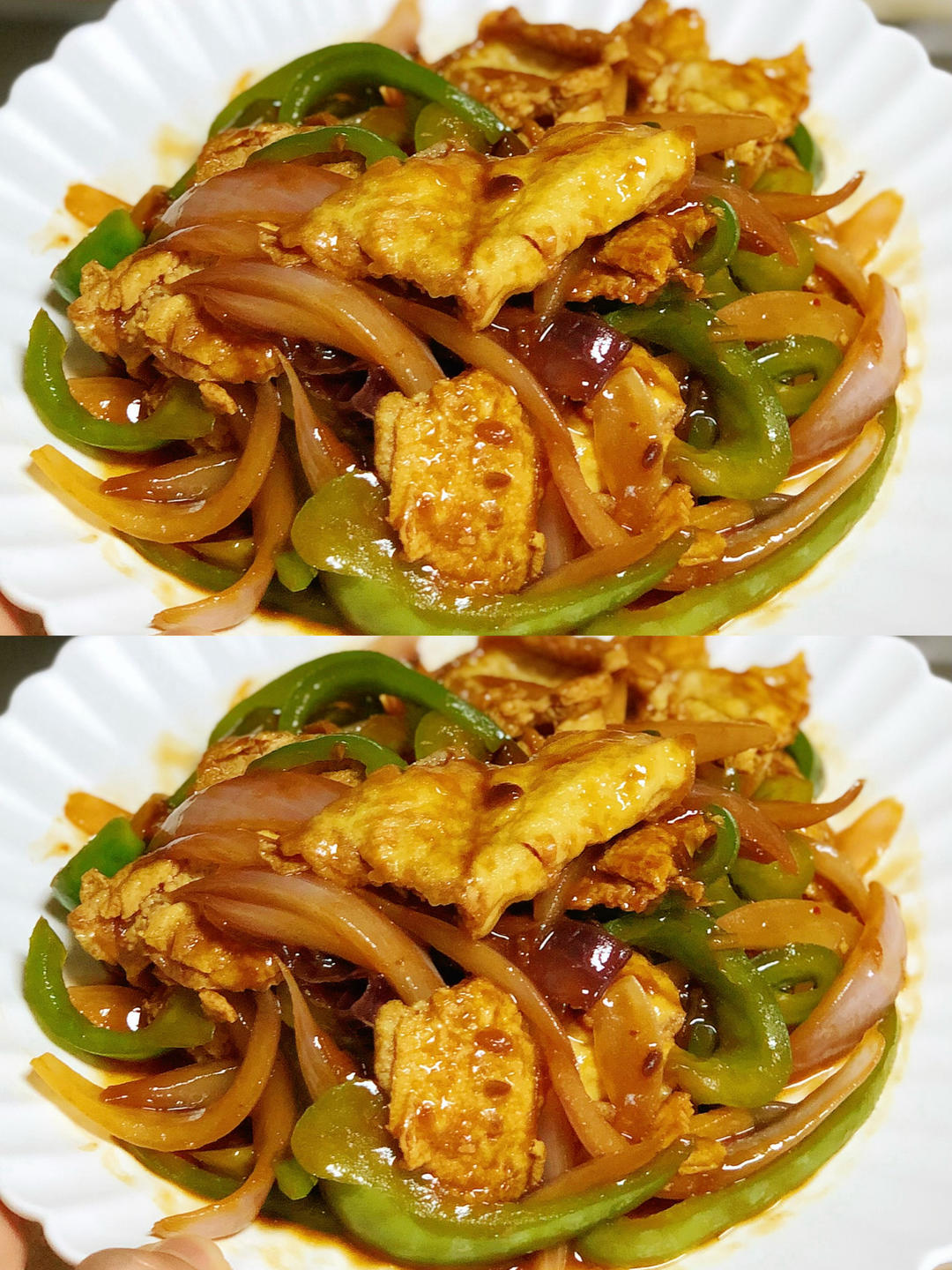
For a version that leans even harder into the sauce, try sauce stir fried eggs, which pushes the same paste-and-soy combination to its most concentrated, rice-clinging form.
1Sauce Stir-Fried Eggs (Jiang Chao Ji Dan)A savory, rich, and quick stir-fry where fluffy eggs and crisp vegetables are coated in a glossy soy-bean sauce. A perfect 15-minute meal that kids love!Check out this recipe
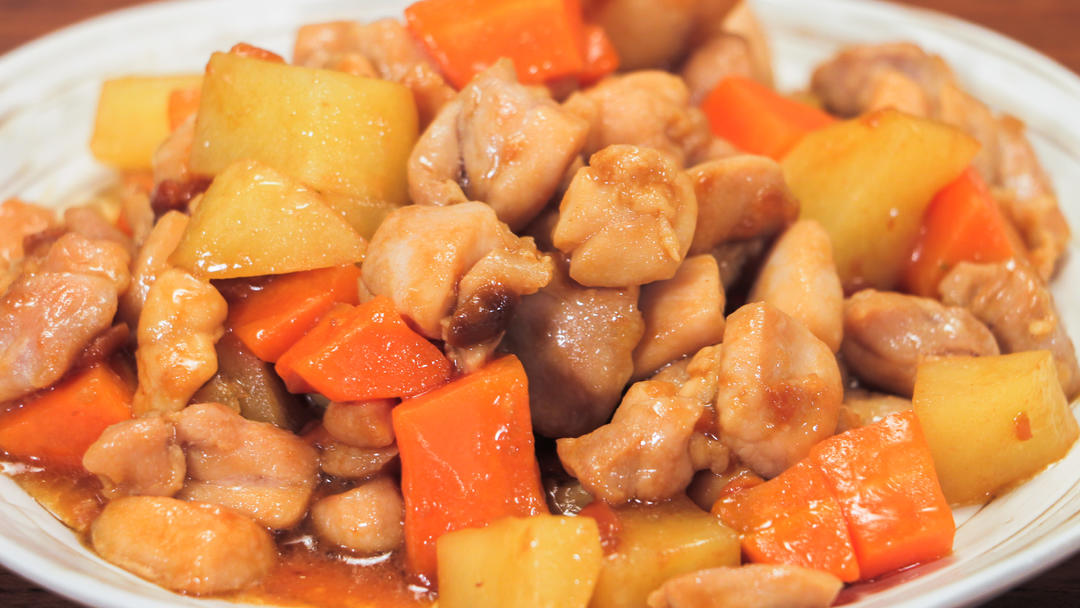
The same fermented soybean paste that gives these eggs their backbone also anchors savory soybean paste chicken, a richer braise that is worth making once you have a jar of huang dou jiang in the fridge.
2Savory Soybean Paste Chicken (Huang Dou Jiang Chicken)A super quick 15-minute stir-fry featuring juicy chicken, tender potatoes, and carrots in a rich, savory soybean paste sauce. Perfect for bento boxes and busy weeknights!Check out this recipe
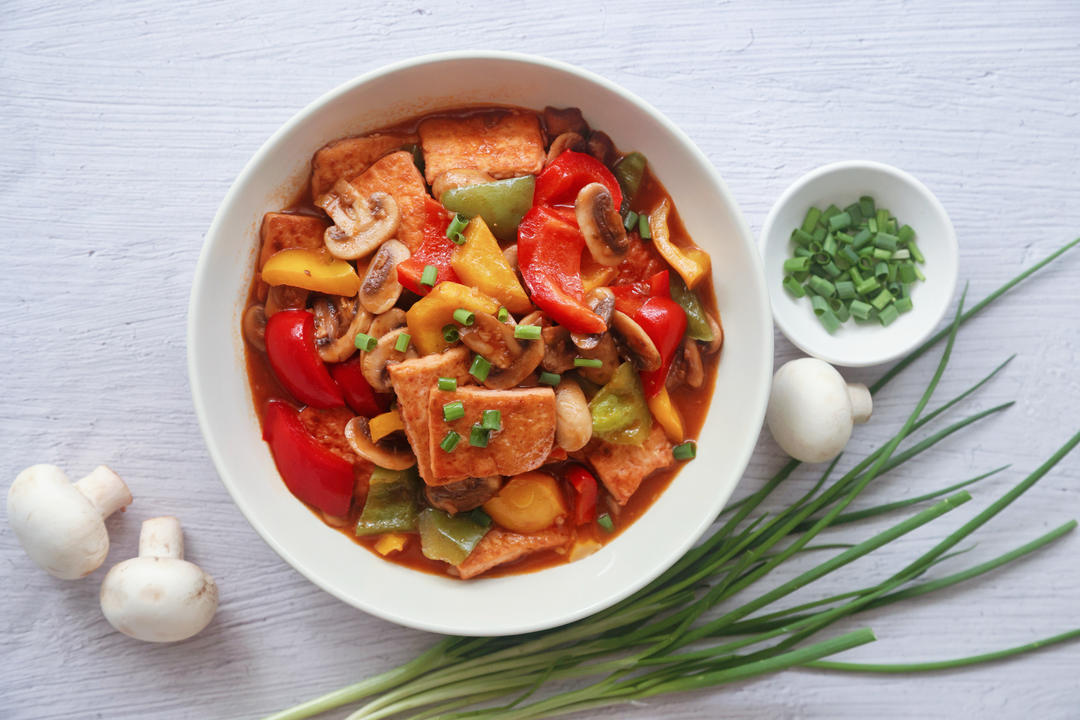
And if you like the way a glossy savory sauce coats a soft, yielding main ingredient, braised tofu and mushrooms applies the same logic to tofu and mushrooms in a deeply savory jiang-shao sauce.
3Braised Tofu and Mushrooms with Savory SauceThis Braised Tofu and Mushrooms recipe uses a secret weapon—Spare Rib Sauce—to create a rich, savory, vegetarian dish that tastes even better than meat. It features pan-fried firm tofu and juicy button mushrooms braised in a glossy, umami-packed glaze.Check out this recipe
Why This Recipe Works
Most home cooks who struggle with scrambled eggs are fighting one of two problems: overcooking, or a sauce that turns out watery. This recipe is engineered around both.
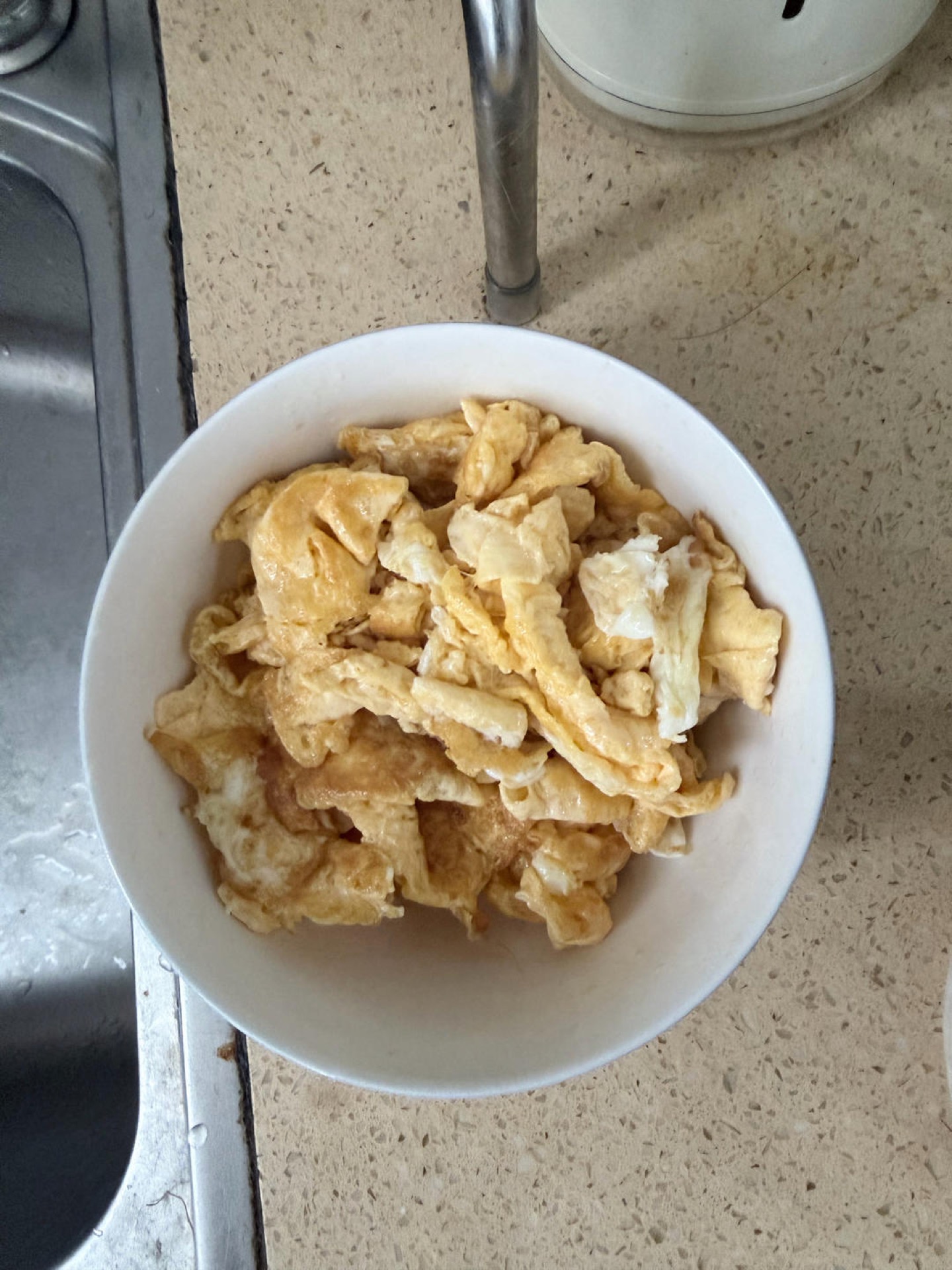
The eggs come out first. They are scrambled to the barely-set stage and removed from the wok entirely. They finish cooking in the residual heat of the plate and then get a second, very brief pass in the sauce. This two-stage approach is why the curds stay tender instead of turning into rubber.
The sauce is built in a bowl, not the wok. Soybean paste and sweet flour paste are thick and stubborn. Trying to dissolve them in a hot wok while eggs are sitting nearby is a recipe for burnt paste and cold eggs. Whisking them with the liquids and cornstarch slurry beforehand means the sauce goes in as one homogeneous, ready-to-thicken liquid.
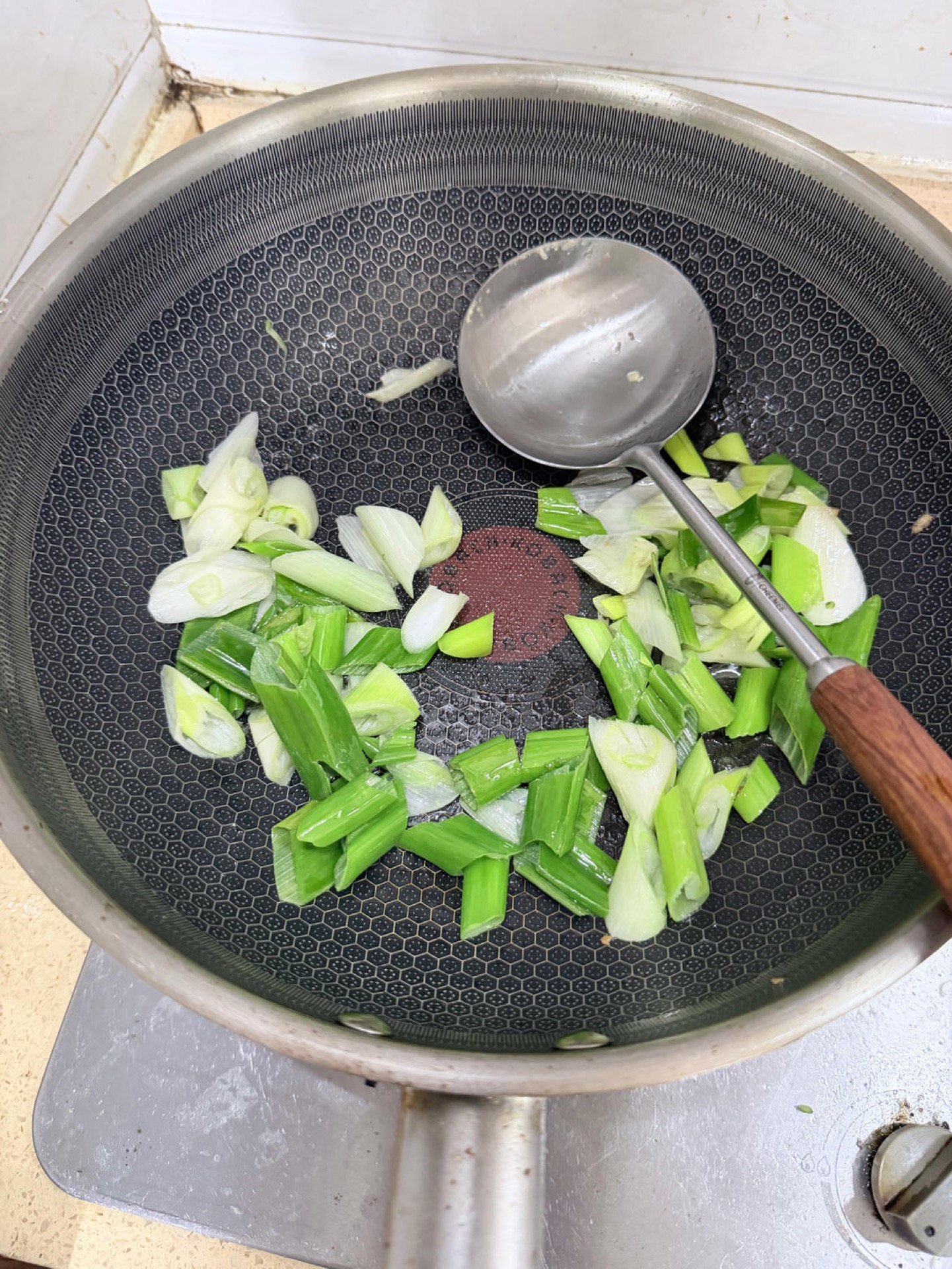
The scallions are bloomed, not browned. Roll-cut scallion sections need just enough time in hot oil to soften and release their sweetness. Push them further and they turn bitter and stringy. The instruction to pull them while they are “微微发蔫” — slightly wilted — is the whole game.
High heat at the end. The final toss happens over high heat so the sauce thickens fast and the eggs never sit in liquid long enough to weep. Fast is flavorful here.
Equipment Needed
A wok is ideal because its curved sides let you push eggs up and away from direct heat, but a wide skillet or sauté pan works perfectly well. You want something with enough surface area that the eggs spread into a thin layer rather than steaming in a deep pile.
Beyond the pan, you need a cutting board and a sharp knife for the scallions, a small bowl and a whisk or fork for the sauce, a bowl for beating the eggs, and a slotted spoon or spatula for lifting the eggs out cleanly. A slotted spoon is genuinely useful here — it drains off any loose, watery egg liquid so it does not end up diluting your sauce later.
Have a plate ready before you start cooking. The eggs come out fast, and you do not want to be hunting for a landing spot while they overcook in the pan.
Ingredients
Here is what goes into the dish. Full quantities are in the recipe card at the bottom of this post.
Eggs. Six large eggs. Freshness matters less than you think for scrambled eggs, but older eggs beat up slightly thinner, so if yours have been in the fridge a while, add an extra half teaspoon of water to the bowl.
Scallions. Four stalks, ideally the thick Chinese scallions (大葱) if you can find them at an Asian market. They are sweeter and meatier than the thin Western supermarket type, and they hold up beautifully to roll-cutting.
Soybean paste (黄豆酱). The soul of the dish. Salty, fermented, and deeply savory. Do not substitute miso — it is too sweet and too mild.
Sweet flour paste (甜面酱). Balances the salt with a malty sweetness. A little goes a long way.
Light soy sauce. Salt and umami. Use light, not dark, or the sauce will go muddy.
Oyster sauce. Adds body and a subtle brininess. If you are cooking vegetarian, mushroom oyster sauce substitutes well.
Toasted sesame oil. A finishing aromatic, added to the sauce rather than the wok. A teaspoon is enough to perfume the whole dish.
Cornstarch. The thickener that turns the sauce glossy and clingy.
Neutral oil. Any high-smoke-point oil — peanut, canola, or grapeseed.
Ingredient Notes
On the pastes. Huang dou jiang brands vary dramatically in saltiness. If you are using a new jar, taste a tiny dab before you commit it to the sauce, and adjust the soy sauce down if it is aggressively salty. The same caution applies to tian mian jiang, which ranges from mildly sweet to almost jammy depending on the producer.
On the scallions. If you only have thin supermarket scallions, use six or seven stalks instead of four, and cut them a little longer so they do not vanish. Keep the white and light-green parts for the wok and save the dark green tops for a raw garnish if you like.
On the cornstarch slurry. Mix the cornstarch with the cold water in the bowl first, before adding the pastes. If you add cornstarch directly to a paste, you will get lumps that never fully dissolve.
On the sesame oil. Toasted sesame oil is a finishing oil, not a cooking oil. It burns easily and turns acrid. Keeping it in the sauce bowl rather than the wok protects its aroma.
On the water. Three tablespoons may seem like a lot for a sauce this small, but it is what allows the pastes to loosen and the cornstarch to hydrate. Do not skip it.
Prep & Mise en Place
This dish moves quickly enough that doing your prep first is not optional — it is the difference between a silky result and a stressed one. Everything should be within arm’s reach of the stove before the wok goes on.
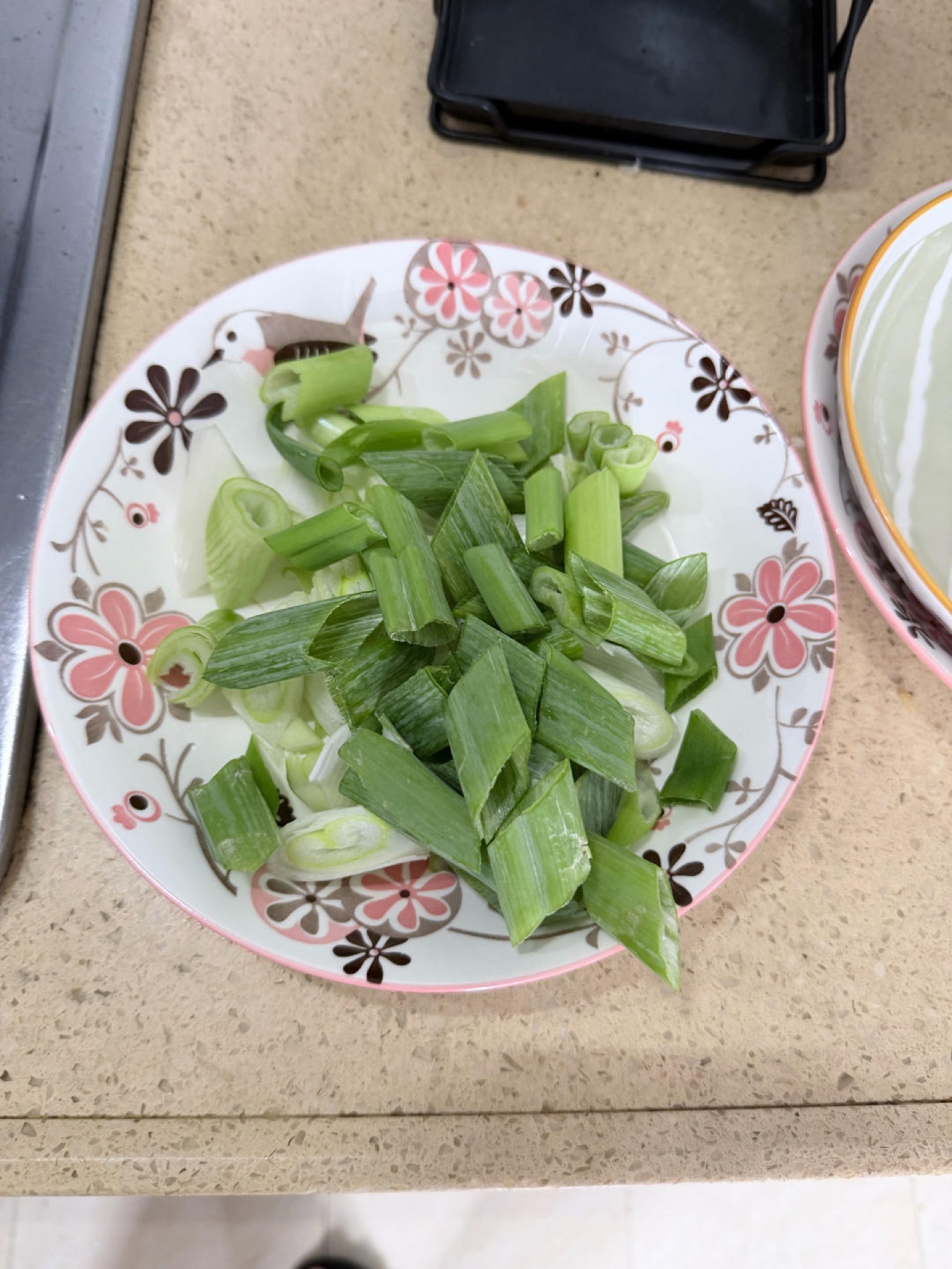
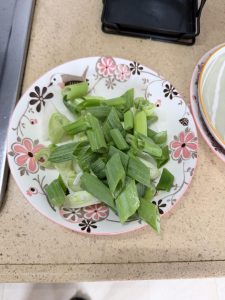
Start by cutting the scallions into 2-inch roll-cut sections. To roll-cut, hold the scallion at a 45-degree angle and slice, then rotate it a quarter turn and slice again. This exposes more surface area to the hot oil, which means faster sweetening and better sauce adhesion. Keep the white and green parts together; they cook at roughly the same rate in this application.
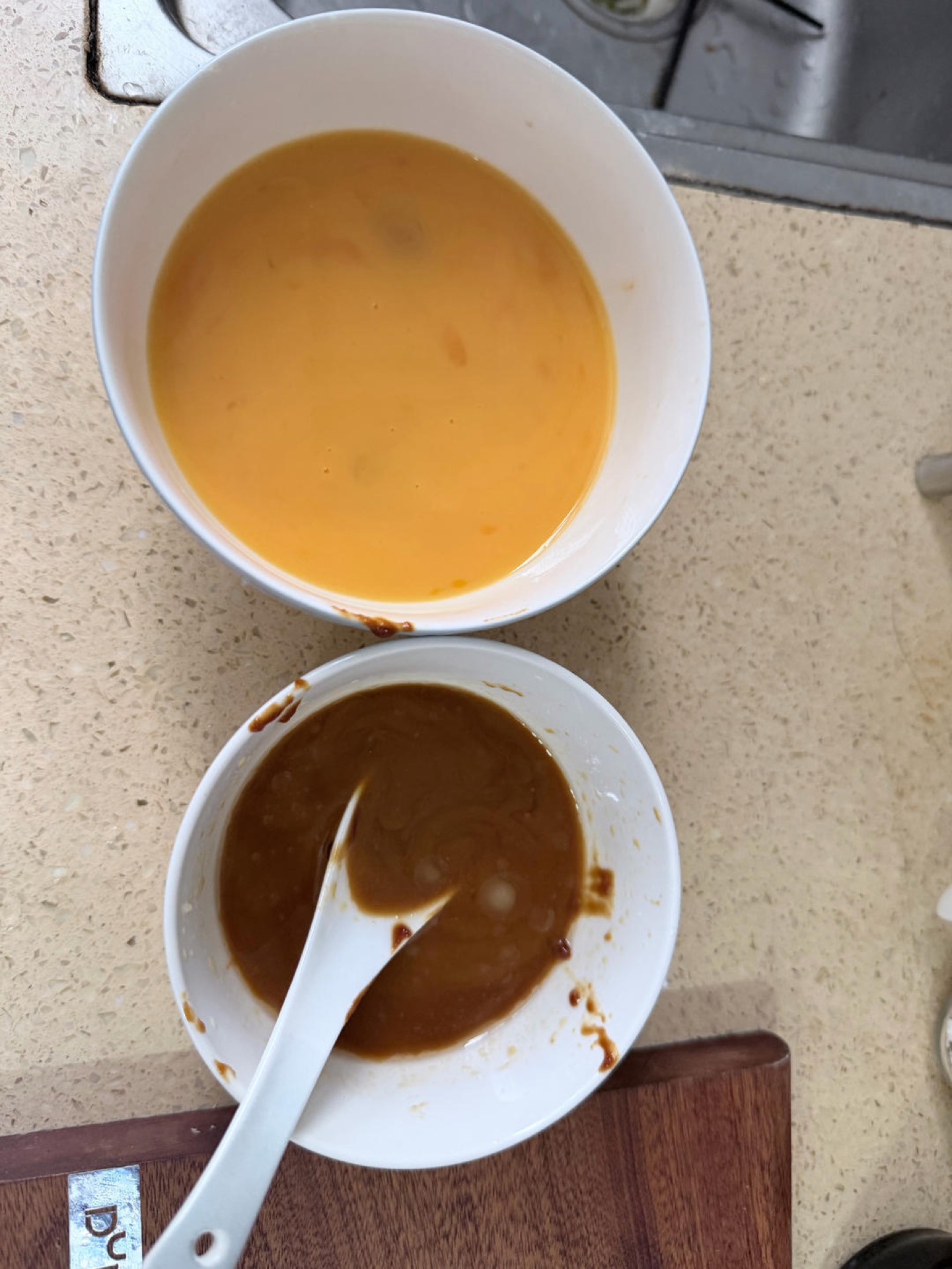
Next, crack the eggs into a bowl and beat them until they are completely uniform, with no streaks of white remaining and a light froth on top. Beating thoroughly incorporates air, which makes the scrambled curds fluffier.
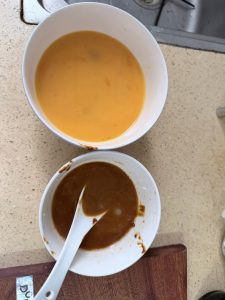
Then build the sauce. In a small bowl, combine the soybean paste, sweet flour paste, light soy sauce, oyster sauce, toasted sesame oil, and the cornstarch already dissolved in cold water. Whisk until the mixture is completely smooth and no paste lumps remain. It should look like a thin, tan liquid at this stage — it will thicken dramatically in the wok.
Set a clean plate beside the stove for the eggs. Now you are ready to cook.
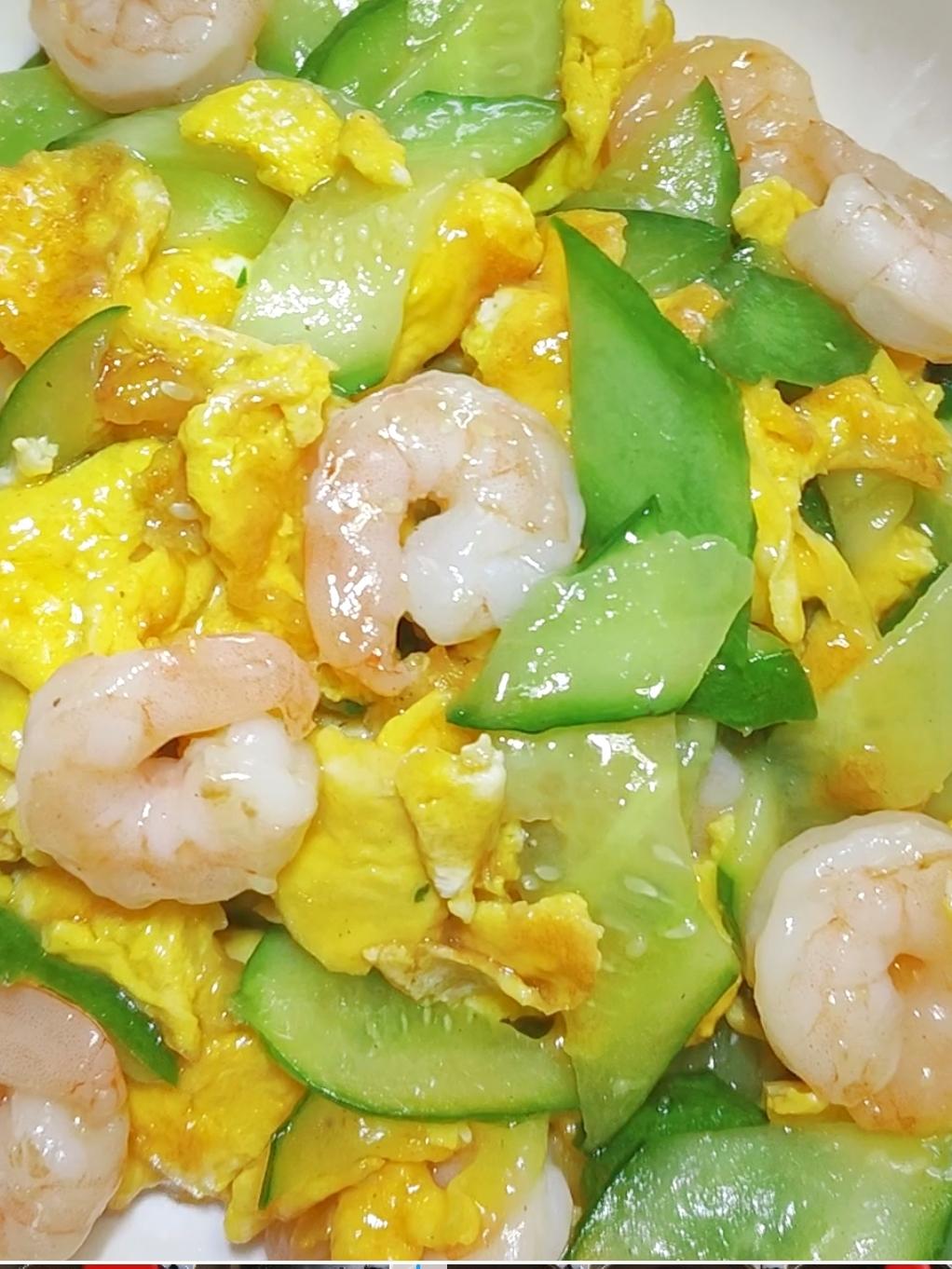
If you want to build your egg-cooking confidence before tackling this one, the technique of pushing curds from the bottom of a hot wok is well illustrated in silky scrambled eggs with shrimp, which is a gentler, less saucy version of the same fundamental skill.
Cooking Process
Step 1 — Cut the Scallions
Cut the scallions into 2-inch roll-cut (gun-cut) sections, keeping the white and green parts separate.
Step 2 — Beat the Eggs and Mix the Sauce
Beat the eggs until uniform and frothy, then whisk together the soybean paste, sweet flour paste, soy sauce, oyster sauce, sesame oil, cornstarch, and water in a small bowl until smooth.
Step 3 — Scramble the Eggs
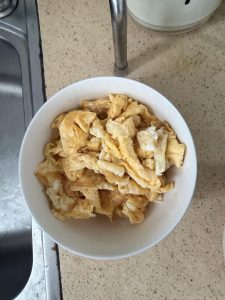
Heat the wok over medium-high with half the oil, pour in the eggs, and push the set curds up from the bottom until the eggs are just barely set, then remove them to a plate.
Step 4 — Bloom the Scallions
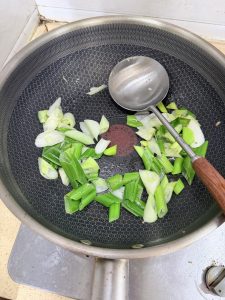
Add the remaining oil and the scallion sections to the hot wok and stir-fry just until they soften slightly and smell sweet, not until they brown.
Step 5 — Return and Toss
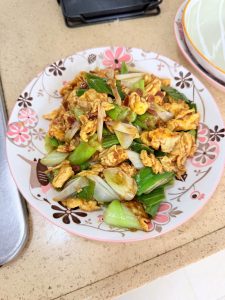
Return the eggs, pour in the sauce, and stir-fry over high heat until the sauce thickens, coats the eggs, and smells fragrant, then slide everything onto a plate.
Common Mistakes When Making 酱炒鸡蛋
1. Adding the pastes directly to the wok. Thick fermented pastes do not dissolve readily in hot oil — they scorch on the surface and stay lumpy underneath. The fix: always whisk the pastes into the liquid ingredients in a bowl first, so they go into the pan as a smooth slurry.
2. Overcooking the eggs in the first pass. If the eggs are fully set and dry before they come out, the second pass in the sauce will make them rubbery. The fix: pull them while the surface still looks slightly wet and glossy. They will carryover-cook on the plate.
3. Browning the scallions. Scallions taken past the wilting stage turn bitter and their texture becomes stringy. The fix: keep the heat at medium-high for this step and pull them the moment they soften and smell sweet, usually under a minute.
4. Skipping the cornstarch. Without it, the sauce stays thin and pools at the bottom of the plate instead of coating the eggs. The fix: do not omit the slurry, and do not increase it either — a half teaspoon is calibrated for this quantity of liquid.
5. Cooking at too low a heat at the end. A low final toss means the eggs sit in liquid and start to weep water, and the sauce never develops that concentrated “酱香” aroma. The fix: crank the heat to high for the final 30 to 45 seconds and keep everything moving.
6. Salting the eggs before they cook. Salt added to raw beaten eggs draws out moisture and makes them weep in the pan. The fix: let the sauce do the seasoning. It has plenty of salt from the pastes and soy sauce.
Variations
With green pepper. Add a thinly sliced green bell pepper along with the scallions for crunch and a mild vegetal sweetness. This is a very common northern variation and it works beautifully — see the same combination in green pepper and egg stir fry.
With tomato. A handful of wedged tomatoes added after the scallions will break down into the sauce and add a fruity acidity that cuts the salt. This is a different dish, but a delicious one, and it is essentially what happens in glossy homestyle tomato and egg stir fry.
With shrimp. Sear a few peeled shrimp in the wok before the scallions and fold them back in at the end. The sweetness of the shrimp plays very well against the fermented paste.
With cucumber. Cubed cucumber added raw at the very end, off the heat, gives a cool, crunchy contrast. Try the same idea in shrimp cucumber and egg stir fry.
With ham. Diced ham or lap cheong (Chinese sausage) sautéed with the scallions adds a smoky, salty note. The same pairing shows up in this cucumber and egg stir fry with ham.
With carrot and onion. Thinly sliced carrot and onion, cooked a little longer than the scallions, add sweetness and color. That combination is the backbone of carrot and onion egg stir fry.
Vegetarian. Swap the oyster sauce for mushroom oyster sauce and the result is fully plant-based as long as your pastes are (check the label — some contain fish derivatives).
Frequently Asked Questions
Can I use regular miso instead of soybean paste? You can, but the dish will taste noticeably sweeter and less funky. If miso is all you have, use a dark red miso and reduce the sweet flour paste to a scant teaspoon.
Why did my sauce turn out lumpy? Almost always because the cornstarch was not fully dissolved in cold water before it met the pastes, or because the pastes were added to a hot wok directly. Dissolve the starch first, then whisk in the pastes until completely smooth.
My eggs came out rubbery. What went wrong? They were cooked too long in the first pass. Pull them from the wok while they are still slightly underdone and glossy — the residual heat on the plate finishes the job.
Can I make this ahead of time? It is at its best fresh, but you can prepare the sauce and cut the scallions up to a day ahead and refrigerate them separately. The eggs themselves should be cooked to order.
Is this dish very salty? It is on the savory side, which is the point — it is designed to be eaten with plain rice. If you are sensitive to salt, reduce the light soy sauce by half and taste before serving.
How to Serve
Soy sauce scrambled eggs are a rice dish at heart. Serve them over or alongside a bowl of hot steamed white rice, and let the sauce run into the grains. A simple stir-fried green vegetable — garlic bok choy, blanched spinach with sesame, or smashed cucumber salad — rounds out the meal and cuts the richness. If you want to build a fuller table, a light soup such as egg drop or winter melon broth works well alongside.
For a low-carb plate, serve the eggs with steamed cauliflower rice or tucked into lettuce cups. And for breakfast, they are excellent piled onto toast with an extra drizzle of sesame oil.
If you are looking for another egg dish to round out the spread, shrimp cucumber and egg stir fry makes a light, fresh counterpoint to this saucier dish.
Storage & Reheat
Leftover soy sauce scrambled eggs keep in an airtight container in the refrigerator for up to 3 days. They do not freeze well — the egg proteins toughen and the sauce separates on thawing, so plan to eat them within the window.
To reheat, the gentlest method is a covered skillet over low heat with a teaspoon of water to create steam, which warms them through without drying the curds. A microwave works in a pinch at 50 percent power in 20-second bursts, but it will firm the eggs noticeably. Reheat to 165°F (74°C) for food safety.
If the sauce has thickened too much in the fridge, loosen it with a splash of water or stock as it warms.
Allergen Notice
This recipe contains egg, soy, wheat/gluten (from the soy sauce, soybean paste, sweet flour paste, and oyster sauce), and sesame (from the toasted sesame oil). If you are cooking gluten-free, use tamari in place of soy sauce and verify that your pastes and oyster sauce are certified gluten-free — many are not.
If you are serving someone with a shellfish allergy, note that some oyster sauces are produced on shared equipment or contain shellfish derivatives. Check labels carefully.
Nutrition Disclaimer
Nutrition information is calculated using an ingredient database and should be considered an estimate. In cases where multiple ingredient alternatives are given, the first listed is calculated for nutrition. Garnishes and optional ingredients are not included.
About the Author & Recipe Development
This recipe was developed and tested in the Woks of Love kitchen by Lin, drawing on the northern Chinese home-cooking tradition of 酱炒鸡蛋 that appears in countless family kitchens across Shandong, Hebei, and Beijing. The version here was refined over several rounds of testing to nail the ratio of soybean paste to sweet flour paste, and to find the cornstarch quantity that gives the sauce a glossy, clinging body without turning it gluey.
Every measurement in the recipe card has been tested with both Chinese-style thick scallions and standard supermarket scallions, and the timing has been adjusted for a home wok on a standard residential burner. If you make it and tweak it to your own taste, that is exactly the spirit of the dish.
Authoritative References
For safe handling and cooking temperatures for eggs and egg dishes, see the FDA guidance on food safety and eggs. For general food safety principles used in this recipe’s storage guidance, consult the WHO food safety fact sheet.
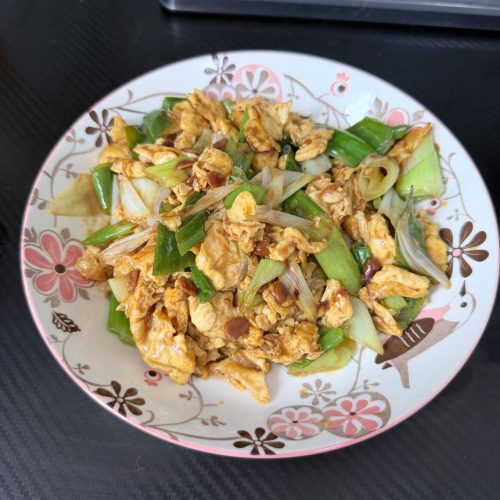
Soy Sauce Scrambled Eggs (酱炒鸡蛋): Savory, Saucy, Fluffy Eggs

Equipment
- Wok
- Cutting Board
- Slotted Spoon
Ingredients
For the Sauce
- 1 tbsp soybean paste huang dou jiang
- 1/2 tbsp sweet flour paste tian mian jiang
- 1 tbsp light soy sauce or tamari
- 1 tsp oyster sauce
- 1 tsp toasted sesame oil
- 1/2 tsp cornstarch
- 3 tbsp water cold
For the Dish
- 6 large eggs
- 2 tbsp neutral oil divided
- 4 stalks scallions Chinese scallions if available, cut into 2-inch roll-cut sections
Instructions
- Cut the scallions into 2-inch roll-cut (gun-cut) sections, keeping the white and green parts separate.

- Beat the eggs until uniform and frothy, then whisk together the soybean paste, sweet flour paste, soy sauce, oyster sauce, sesame oil, cornstarch, and water in a small bowl until smooth.
- Heat the wok over medium-high with half the oil, pour in the eggs, and push the set curds up from the bottom until the eggs are just barely set, then remove them to a plate.
- Add the remaining oil and the scallion sections to the hot wok and stir-fry just until they soften slightly and smell sweet, not until they brown.
- Return the eggs, pour in the sauce, and stir-fry over high heat until the sauce thickens, coats the eggs, and smells fragrant, then slide everything onto a plate.












Leave a Reply