If you grew up in a Chinese household, you know that the best “rice killer” dishes (下饭菜) aren’t always the most expensive meat dishes. Sometimes, they are the humble vegetable stir-fries that transform simple ingredients into something magical. Green Pepper and Egg Stir-fry (青椒炒鸡蛋) is exactly that kind of dish.

I remember my dad whipping this up when we were short on time. It sounds incredibly simple—just peppers and eggs—but the magic lies in the technique. We aren’t just sautéing peppers; we are searing them until they achieve a “tiger skin” blister. This creates a smoky, charred flavor that pairs perfectly with fluffy, savory eggs.
It is a savory, slightly spicy, and deeply comforting dish that comes together in less than 15 minutes. If you are looking for a quick weeknight dinner that tastes like home, this is it.
Why This Recipe Works
- Texture Contrast: By searing the peppers until they blister (Tiger Skin), they become tender and smoky, which contrasts beautifully with the soft, fluffy scrambled eggs.
- Umami Bomb: The addition of Doubanjiang (Spicy Bean Paste) elevates this from a plain egg dish to a rich, savory main course. The fermented beans add a depth that salt alone cannot achieve.
- Speed: This is a high-heat, fast-cooking recipe. It preserves the vibrant color of the peppers while ensuring the eggs remain tender.
What is Green Pepper and Egg Stir-fry?
In Chinese cuisine, eggs are often treated as a main protein rather than just a breakfast item. You might be familiar with our classic Tomato and Egg Stir-fry, which is sweet and savory. This green pepper version, however, is savory, smoky, and slightly spicy.
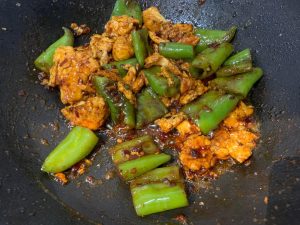
The key to this dish is the “Tiger Skin” (Hu Pi, 虎皮) technique. This involves dry-frying or pan-frying the peppers until the skin separates slightly from the flesh and chars, looking like the stripes of a tiger. This process intensifies the pepper’s flavor and reduces its raw “grassy” taste.
Ingredients You Will Need
One of the best things about this recipe is its simplicity. However, choosing the right pepper makes a huge difference.
- Green Peppers: You need about 3 medium-sized peppers.
- Ingredient Comparison:Long Green Peppers vs. Bell Peppers.
- I recommend using Long Green Peppers (like Anaheim, Cubanelle, or Chinese screw peppers). They have thinner skins and char faster, creating that “tiger skin” effect easily. They also offer a mild heat that balances the rich eggs.
- Bell Peppers are thicker and hold more water. While you can use them, they take longer to blister and are much sweeter. If you use bell peppers, the dish will be more kid-friendly but less traditional.
- Ingredient Comparison:Long Green Peppers vs. Bell Peppers.
- Eggs: 3 large eggs. I prefer free-range eggs for their vibrant yellow yolks.
- Garlic: 2 cloves, minced. This provides the aromatic base.
- Doubanjiang (Pixian Bean Paste): This is the soul of Sichuan cooking. It adds color, spice, and salinity. If you don’t eat spicy food, you can substitute it with sweet bean sauce (Tianmianjiang) or just use soy sauce, but Doubanjiang is highly recommended.
- Light Soy Sauce: For that classic savory umami.
- Oil: A neutral oil with a high smoke point (like vegetable or canola oil) is best for searing.
Note: If you love spicy food, you can add a teaspoon of myHomemade Chili Garlic Saucefor an extra kick!
Mise en Place: Preparation
Before you turn on the stove, it is crucial to have everything ready. Stir-frying happens fast!
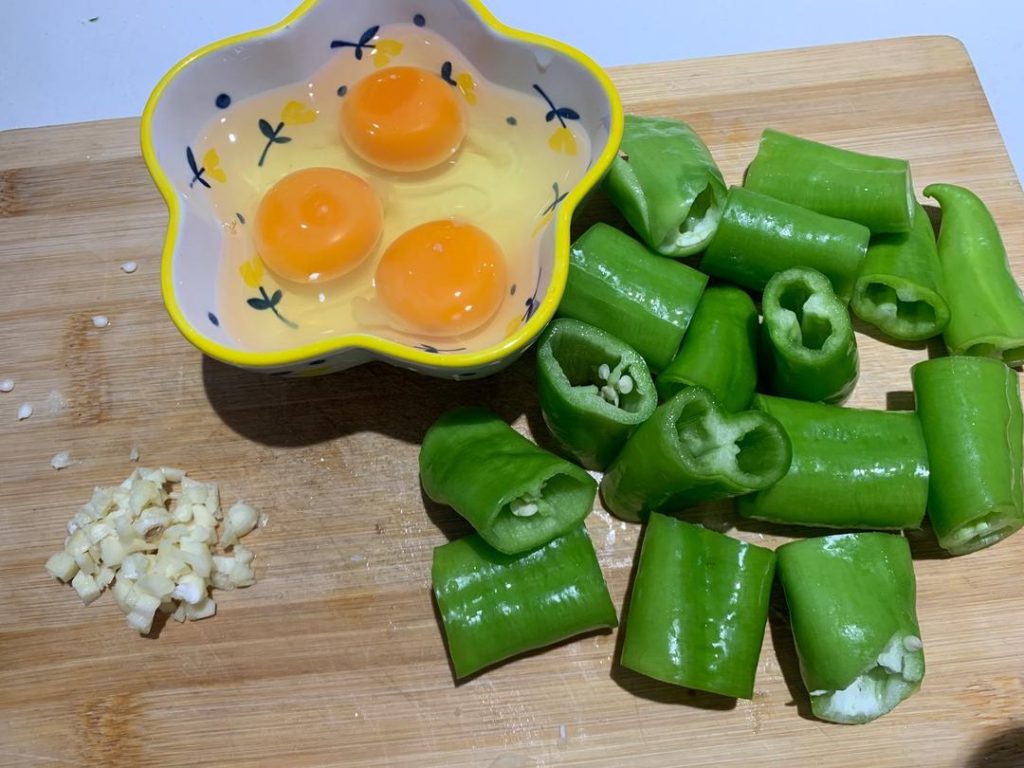
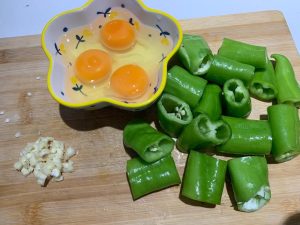
- Prep the Peppers: Wash the peppers and remove the stems and seeds. Cut them into bite-sized chunks or strips. Ensure they are completely dry before cooking to prevent oil splattering.
- Beat the Eggs: Crack the eggs into a bowl. Whisk them vigorously until the yolks and whites are fully combined.
- Aromatics: Mince the garlic and have your Doubanjiang and soy sauce measured out near the stove.
How to Make Green Pepper and Egg Stir-fry
Step 1: Cook the Eggs
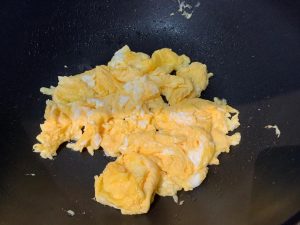
Heat a wok or skillet over medium-high heat. Add about 1 tablespoon of oil. Once the oil is hot, pour in the beaten eggs. Scramble them quickly.
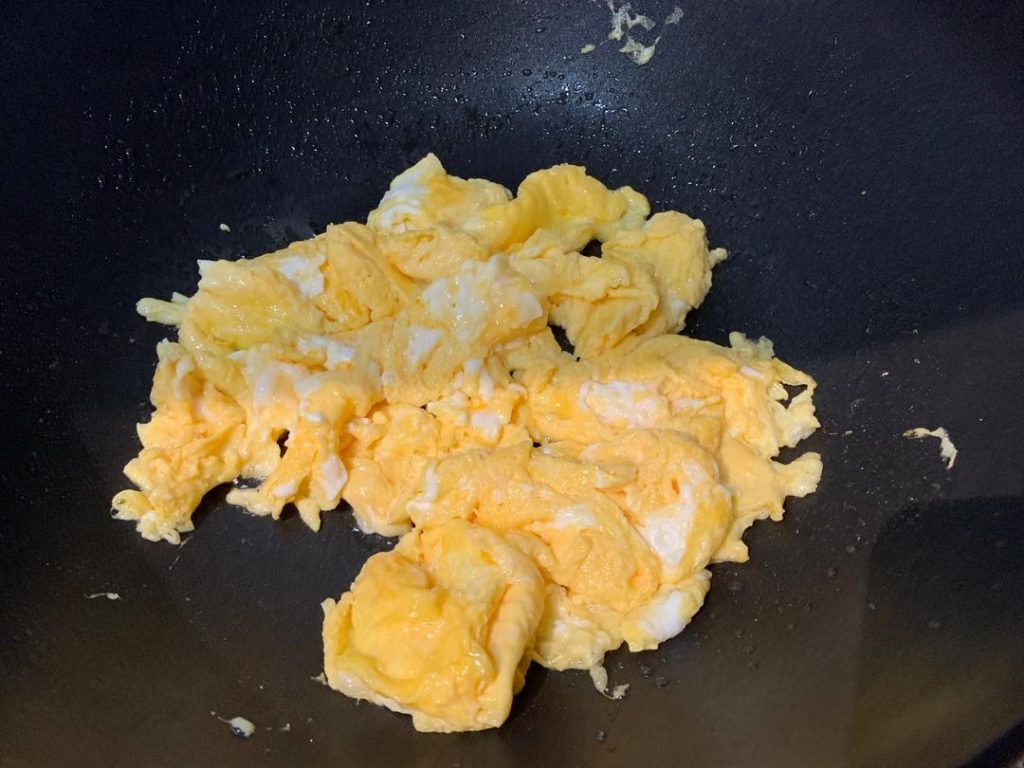
- Tip: You want the eggs to be just set but still soft. Do not overcook them here, as they will go back into the pan later. Remove the eggs from the pan and set them aside.
Step 2: Create the “Tiger Skin” (The Key Step!)
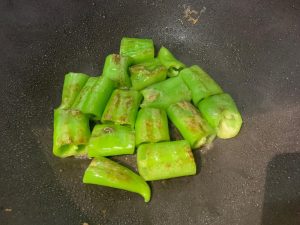
Add a little more oil to the pan if needed (or you can dry fry if you have a well-seasoned wok). Add the green pepper chunks.
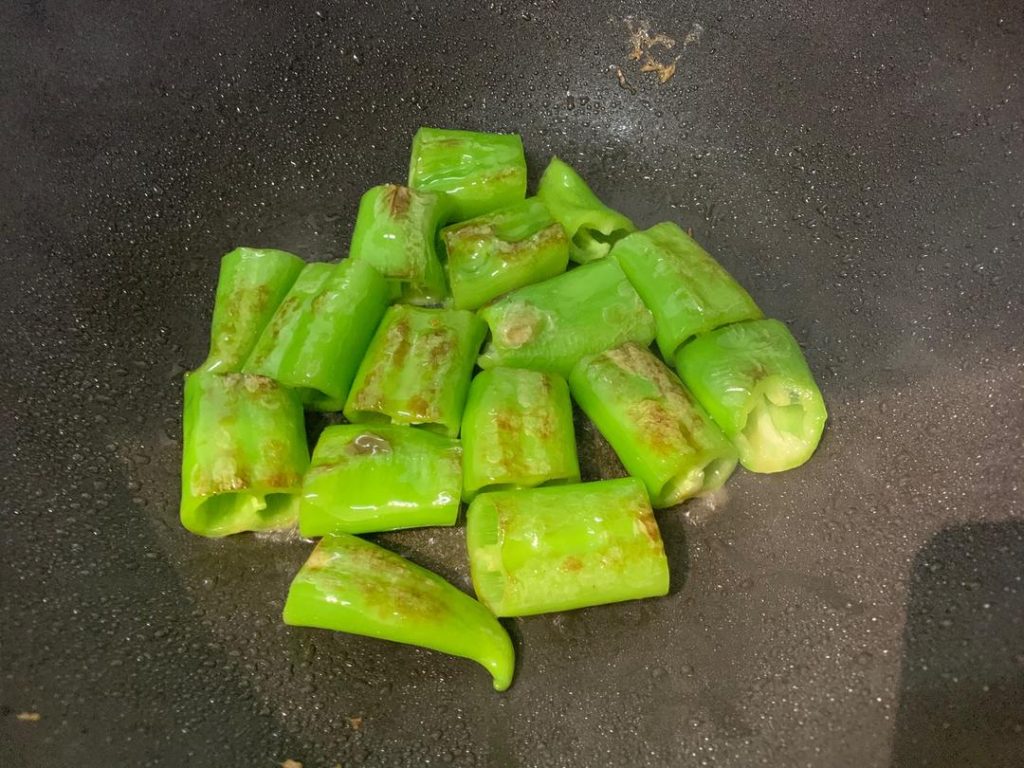
- Technique: Use your spatula to press down on the peppers against the hot pan. You want to hear a searing sound. Cook until the skins start to blister and turn white/brown in spots (the “Tiger Skin” look). This releases the smoky aroma and tenderizes the peppers without making them mushy.
Step 3: Bloom the Aromatics
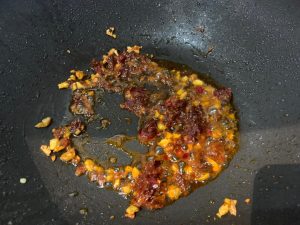
Push the peppers to one side of the wok (or remove them if your pan is small). Add a tiny bit of oil to the empty space and add the minced garlic and 1 tablespoon of Doubanjiang.
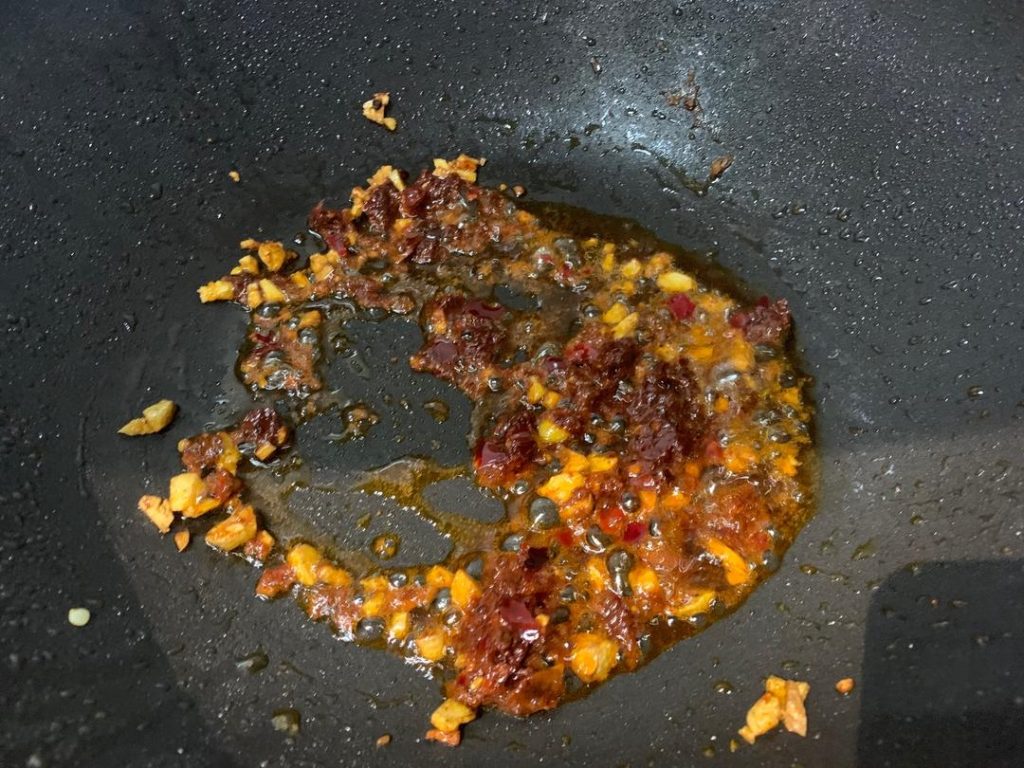
- Why we do this: We fry the bean paste in oil (not water) to release its red oil and fragrance. Stir-fry the sauce for 10-20 seconds until it smells amazing.
Step 4: Combine and Season
Toss the peppers with the sauce until coated. Add the cooked eggs back into the pan. Pour in 1 tablespoon of Light Soy Sauce.
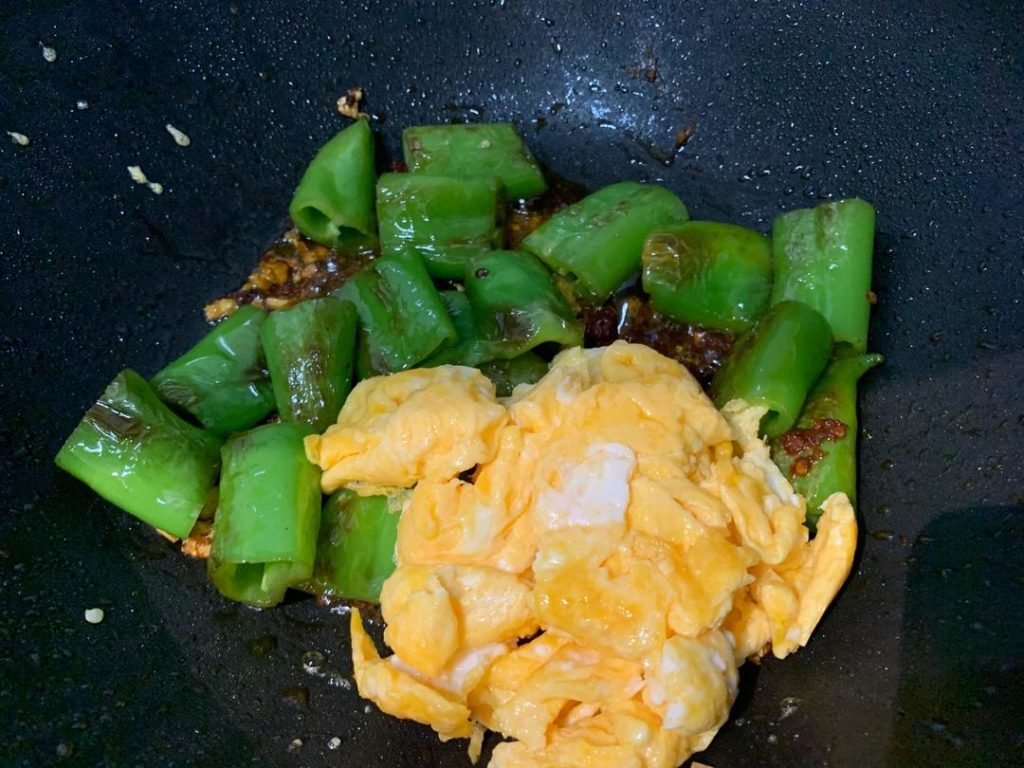
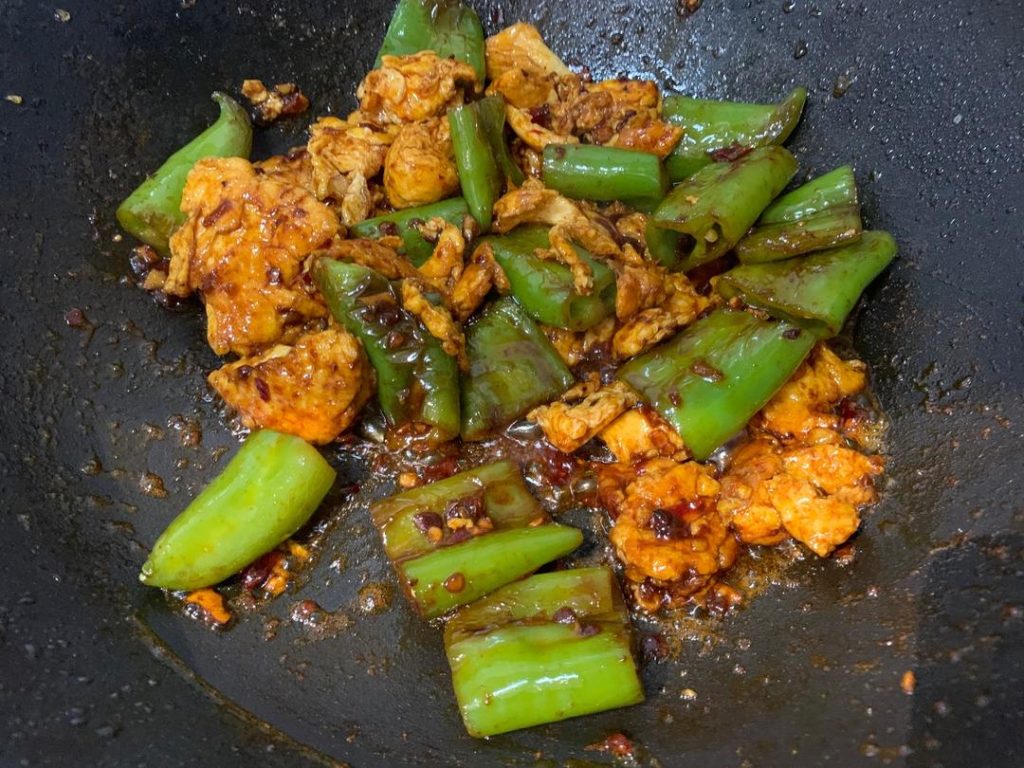
Stir-fry everything together for another 30 seconds. You want the eggs to absorb some of that delicious savory sauce and the peppers to mingle with the garlic.
Step 5: Serve
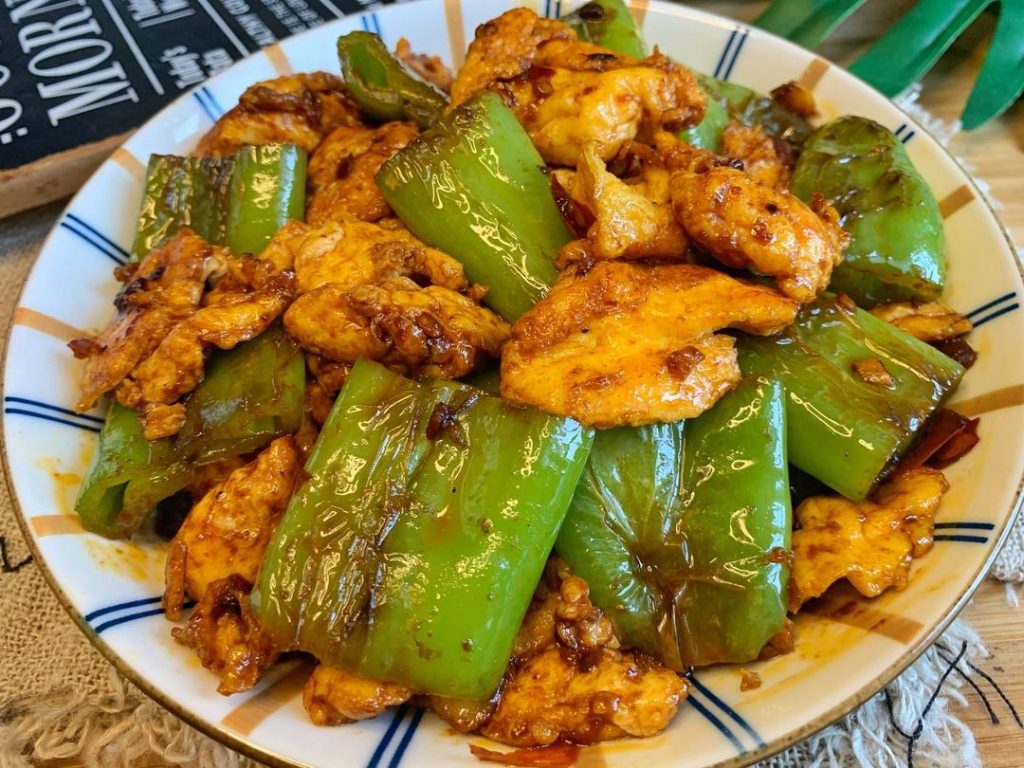
Transfer to a plate immediately. Serve hot with steamed white rice.
Recipe Notes & Tips for Success
- Dry Your Peppers: I cannot stress this enough. If your peppers are wet, they will steam instead of sear, and you won’t get that beautiful blistered skin.
- Control the Salt: Doubanjiang and soy sauce are both salty. You likely do not need to add extra salt. Taste the dish at the end before adding any.
- Wok Hei: If you are using a gas stove, keep the heat high during the pepper-searing stage to get a hint of wok hei (breath of the wok).
Serving Suggestions
This dish is a classic “rice killer,” so a bowl of high-quality steamed jasmine rice is mandatory. To make it a complete Chinese meal, I recommend pairing it with a soup and perhaps a meat dish.
- Soup: A light soup balances the savory bean paste. Try my Simple Clear Beef Noodle Soup (you can serve just the broth/veg) or a simple tofu soup.
- Meat: Since this egg dish is rich, a lighter meat dish works well, or go all out with Braised Pork Belly for a feast.
Food Safety & Storage
- Egg Safety: Ensure your eggs are cooked until the whites and yolks are firm to prevent foodborne illness. According to the FDA, dishes containing eggs should be cooked to 160°F.
- Storage: This dish is best eaten fresh. However, leftovers can be stored in an airtight container in the refrigerator for up to 2 days.
- Reheating: Reheat in a pan over medium heat. Microwaving may make the peppers soggy and the eggs rubbery.
Frequently Asked Questions
Q: Can I make this dish non-spicy?
A: Yes! Simply omit the Doubanjiang. You can replace it with a little oyster sauce or just stick to soy sauce. It will taste lighter but still delicious.
Q: Why are my peppers tough?
A: You likely didn’t cook them long enough during the “Tiger Skin” stage. Make sure to press them down and let them blister. This breaks down the tough skin.
Q: Can I add meat to this?
A: Absolutely. Sliced pork belly or chicken breast works great. Cook the meat first, remove it, and add it back in with the eggs at the end.
Nutrition Information & Important Reminders
Nutrition Facts (Per Serving)
- Calories: 285 kcal
- Total Fat: 23g
- Saturated Fat: 4g
- Cholesterol: 279mg
- Sodium: 650mg
- Total Carbohydrates: 9g
- Dietary Fiber: 2g
- Sugars: 4g
- Protein: 11g
- Vitamin C: 90mg (approx. 100% DV)
- Calcium: 60mg
- Iron: 1.8mg
Important Notes & Safety Reminders
- Nutrition Disclaimer: Nutrition information is calculated using an ingredient database and should be considered an estimate. In cases where multiple ingredient alternatives are given (e.g., different types of peppers or oils), the first listed is calculated for nutrition. Garnishes and optional ingredients are not included in the count.
- Allergen Warning: This recipe contains Eggs, Soy, and Wheat/Gluten (found in Soy Sauce and Doubanjiang). To make this Gluten-Free, ensure you use a Gluten-Free Tamari and a GF-certified broad bean paste.
- Food Safety:
- Eggs: Ensure eggs are cooked until both the yolk and white are firm to prevent foodborne illness. The FDA recommends cooking egg dishes to an internal temperature of 160°F (71°C).
- Peppers: Wash peppers thoroughly under running water to remove any dirt or residue before slicing.
- Sodium Note: This dish is naturally high in sodium due to the Doubanjiang (bean paste) and soy sauce. If you are watching your salt intake, reduce the amount of soy sauce or serve with unsalted steamed rice to balance the flavor.
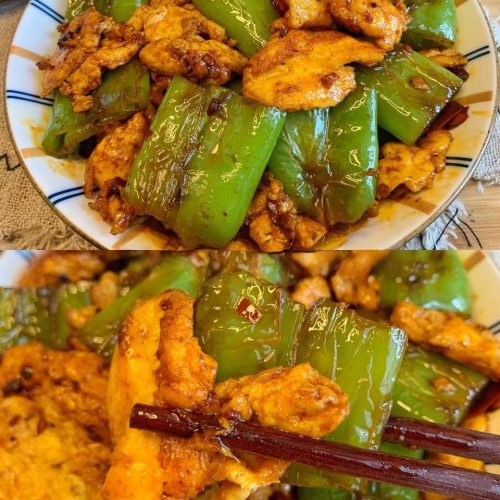
Green Pepper and Egg Stir-fry (Tiger Skin Peppers)

Equipment
- Wok or large skillet
- Spatula
Ingredients
Main Ingredients
- 3 green peppers (long green peppers or frying peppers recommended) seeds removed and cut into chunks
- 3 large eggs beaten
- 2 cloves garlic minced
Seasoning
- 1 tbsp Doubanjiang (Spicy Bean Paste) can substitute with sweet bean paste for non-spicy
- 1 tbsp light soy sauce
- 2 tbsp cooking oil divided
Instructions
- Prep the ingredients: Wash the peppers, remove seeds, and cut into bite-sized chunks. Mince the garlic and beat the eggs in a bowl.

- Scramble the eggs: Heat 1 tablespoon of oil in a wok over medium-high heat. Pour in the eggs and scramble quickly until just set. Remove from the pan and set aside.
- Sear the peppers (Tiger Skin effect): Add a little more oil if the pan is dry. Add the green peppers. Use your spatula to press the peppers down against the hot wok. Cook until the skin blisters and chars slightly (the “tiger skin” look).
- Fry aromatics: Push the peppers to the side. Add the minced garlic and Doubanjiang (bean paste) to the hot oil. Stir-fry for 20 seconds until the oil turns red and fragrant.
- Combine and serve: Toss the peppers with the sauce. Add the cooked eggs back in. Drizzle with light soy sauce. Stir-fry everything together for another 30 seconds. Serve hot with rice.
Notes
- Calories: 285 kcal
-
Total Fat: 23g
- Saturated Fat: 4g
- Cholesterol: 279mg
- Sodium: 650mg
-
Total Carbohydrates: 9g
- Dietary Fiber: 2g
- Sugars: 4g
- Protein: 11g
- Vitamin C: 90mg (approx. 100% DV)
- Calcium: 60mg
- Iron: 1.8mg
- Nutrition Disclaimer: Nutrition information is calculated using an ingredient database and should be considered an estimate. In cases where multiple ingredient alternatives are given (e.g., different types of peppers or oils), the first listed is calculated for nutrition. Garnishes and optional ingredients are not included in the count.
- Allergen Warning: This recipe contains Eggs, Soy, and Wheat/Gluten (found in Soy Sauce and Doubanjiang). To make this Gluten-Free, ensure you use a Gluten-Free Tamari and a GF-certified broad bean paste.
-
Food Safety:
- Eggs: Ensure eggs are cooked until both the yolk and white are firm to prevent foodborne illness. The FDA recommends cooking egg dishes to an internal temperature of 160°F (71°C).
- Peppers: Wash peppers thoroughly under running water to remove any dirt or residue before slicing.
- Sodium Note: This dish is naturally high in sodium due to the Doubanjiang (bean paste) and soy sauce. If you are watching your salt intake, reduce the amount of soy sauce or serve with unsalted steamed rice to balance the flavor.





Leave a Reply