Hello, I am Lin! Growing up in my family’s restaurant kitchen in Sichuan, I learned early on that the best Chinese food isn’t always the most complex. My father, a professional chef, taught me traditional techniques, while my mother showed me how to feed a family quickly and nutritiously. After my formal training at the Sichuan Higher Institute of Cuisine and a decade working in professional kitchens, I realized that true culinary expertise is making simple ingredients shine. I have tested this recipe over three times on standard Western electric and gas stoves to ensure you get perfect results, balancing the heat levels so the eggs stay fluffy without burning.
Why This Recipe
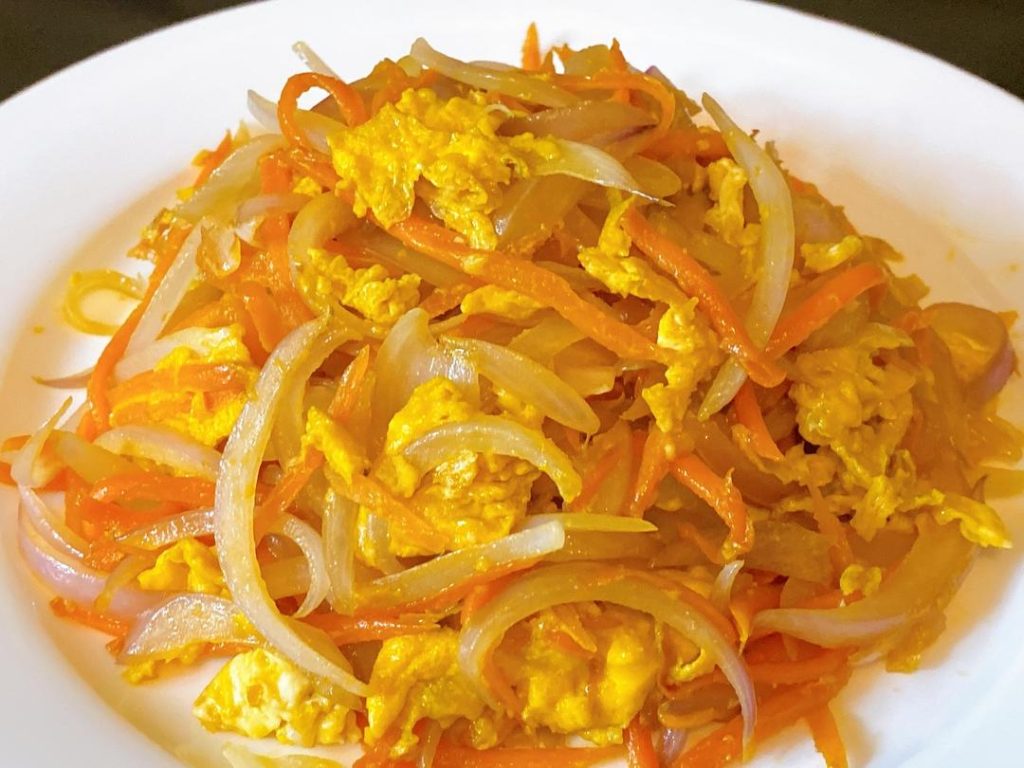
If you are looking for a quick, comforting, and visually vibrant dish, this Carrot and Onion Egg Stir-Fry is perfect. It is a humble, everyday vegetable stir-fry that relies on the natural sweetness of onions, the crunch of carrots, and the rich fluffiness of eggs. Therefore, it requires minimal seasoning. It is incredibly fast to prepare, taking less than 15 minutes from cutting board to table.
What Is Carrot and Onion Egg Stir-Fry?
In China, we classify dishes like this as jiācháng cài (家常菜), meaning everyday homestyle cooking. You will rarely find this on an overseas Chinese restaurant menu, but it is a staple on family dining tables across China. It is highly adaptable and highlights the natural flavors of the vegetables rather than masking them with heavy sauces.
Explore Similar Homestyle Egg Dishes: If you enjoy this recipe, you will also love the iconic Chinese Tomato and Egg Stir-fry. Furthermore, for quick and savory variations, I highly recommend checking out our Chinese Chives and Eggs and the mildly spicy Green Pepper and Egg Stir-fry.
Why This Recipe Works
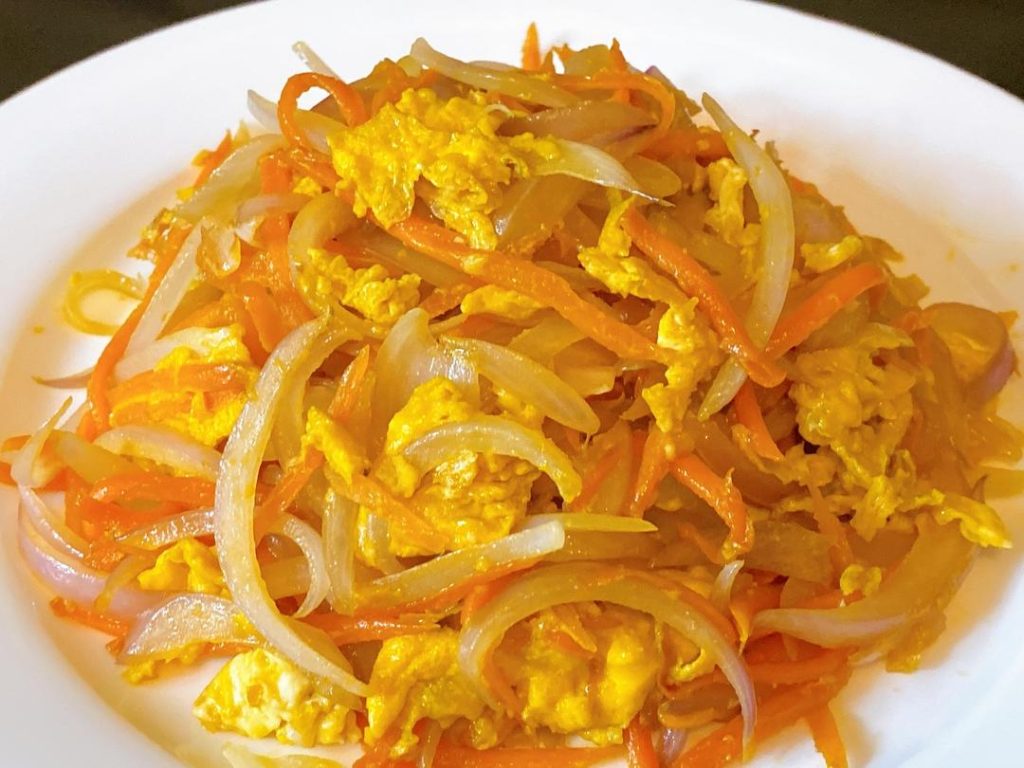
- Optimal Nutrient Release: Cooking the carrots in oil first breaks down their cellular walls, effectively releasing fat-soluble beta-carotene for better absorption.
- Natural Sweetness: Gently stir-frying the onions brings out their natural sugars, meaning we do not need to add any refined sugar to the dish.
- Perfect Egg Texture: Pouring the eggs over the vegetables and allowing them to set briefly creates large, fluffy curds rather than a mushy scramble.
- Minimalist Seasoning: Using just a touch of salt and oyster sauce enhances the savory notes without overpowering the fresh vegetables.
Key Ingredients & Substitutions
- Carrot: One medium carrot, julienned or grated. It provides crunch and vibrant color.
- Onion: One medium yellow or red onion, sliced thinly. Yellow onions offer the best sweetness.
- Eggs: Two large eggs, beaten well until slightly frothy.
- Oyster Sauce: 1 tablespoon. This adds essential umami. For vegetarians, substitute with vegetarian mushroom oyster sauce. Learn more about choosing the best Oyster Sauce for your pantry.
- Salt: Just 1 gram (about 1/4 teaspoon) to bring out the flavors. Using the right Salt makes a big difference in wok cooking.
- Cooking Oil: 2 tablespoons of neutral oil (like canola, peanut, or vegetable) with a high smoke point.
Deeper Dive: The Science of Cooking Carrots
Why do we fry the carrots first? Carrots are rich in beta-carotene (a precursor to Vitamin A), which is fat-soluble. Consequently, cooking them in oil rather than boiling them in water significantly increases the bioavailability of these nutrients. However, as noted by nutritional guidelines, avoid overconsuming massive quantities of carrots daily to prevent carotenemia (a harmless yellowing of the skin).
Ingredients

- 1 medium carrot (about 150g / 5 oz)
- 1 medium onion (about 150g / 5 oz)
- 2 large eggs
- 1 tbsp (15ml) oyster sauce
- 1/4 tsp (1g) salt
- 2 tbsp (30ml) neutral cooking oil
Recipe Notes Before You Start
- Equipment Guide (Wok vs. Non-Stick Skillet): A 12-inch or 14-inch carbon steel wok is traditional and imparts a subtle smoky flavor (wok hei). However, if you are a beginner or cooking on an electric stove, a large non-stick skillet works perfectly. With a non-stick pan, use medium-high heat instead of the blazing high heat required for a wok to prevent damaging the coating.
- Prep Everything First: Stir-frying moves rapidly. Have your vegetables sliced, your eggs beaten, and your sauces measured before turning on the stove.
Mise en Place / Prep
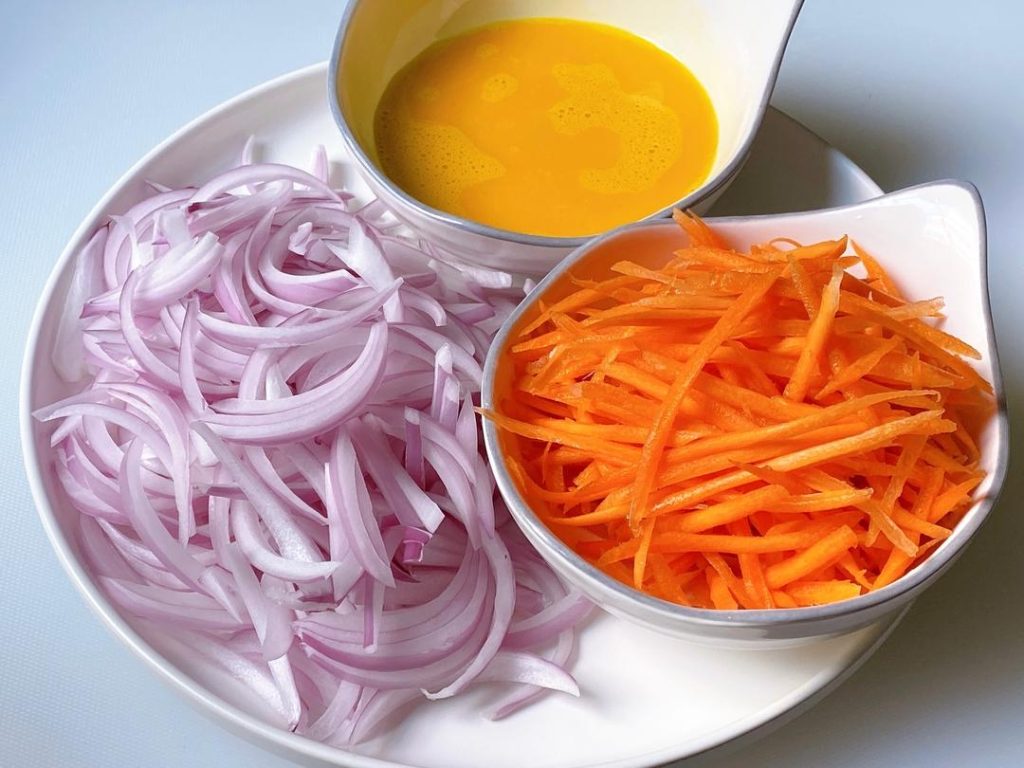
- Cut the Vegetables: Julienne the carrot into thin matchsticks. Alternatively, use a box grater for faster prep. Slice the onion thinly.
- Beat the Eggs: Crack the two eggs into a bowl. Beat them vigorously with chopsticks or a fork until the yolks and whites are fully combined and slightly frothy on top.
How to Make Carrot and Onion Egg Stir-Fry
- Heat the Oil: Place your wok or skillet over medium-high heat. Add 2 tablespoons of neutral oil and heat until it is shimmering but not smoking (around 325°F / 165°C).
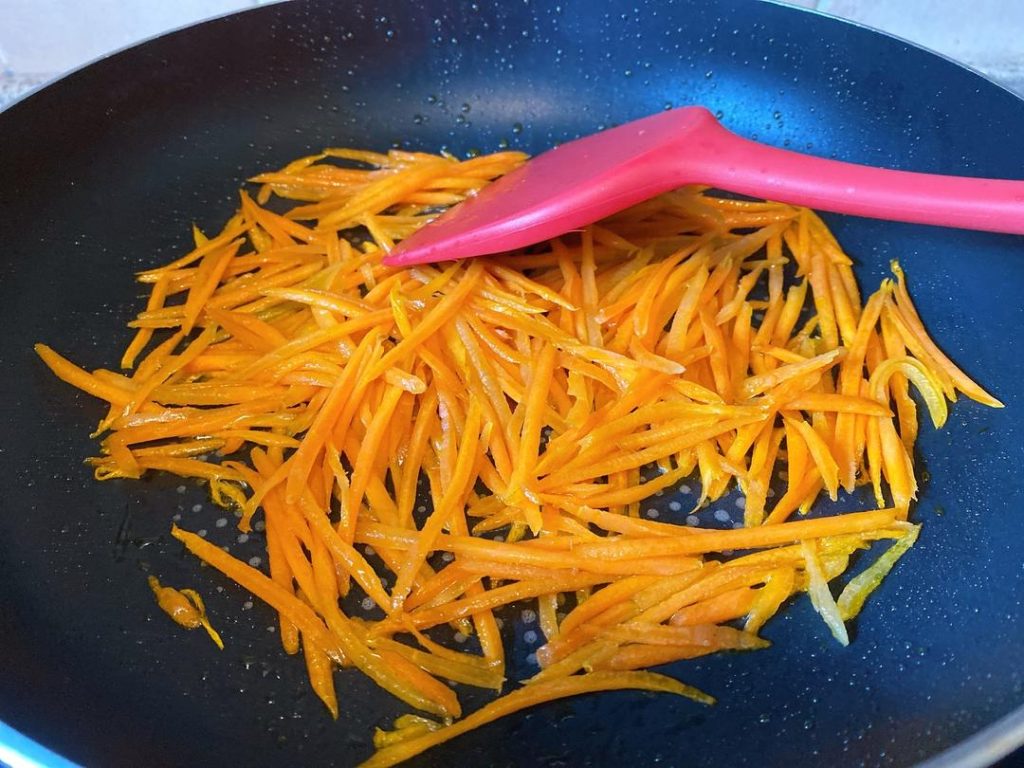
- Fry the Carrots: Add the julienned carrots to the hot oil. Stir-fry for about 1 to 2 minutes. Why? Frying the carrots first softens their texture and infuses the oil with beta-carotene, turning the oil a beautiful golden hue.
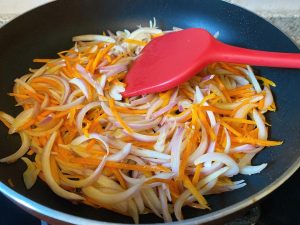
- Add the Onions: Toss in the sliced onions. Continue to stir-fry for another 2 minutes until the onions become translucent and fragrant.
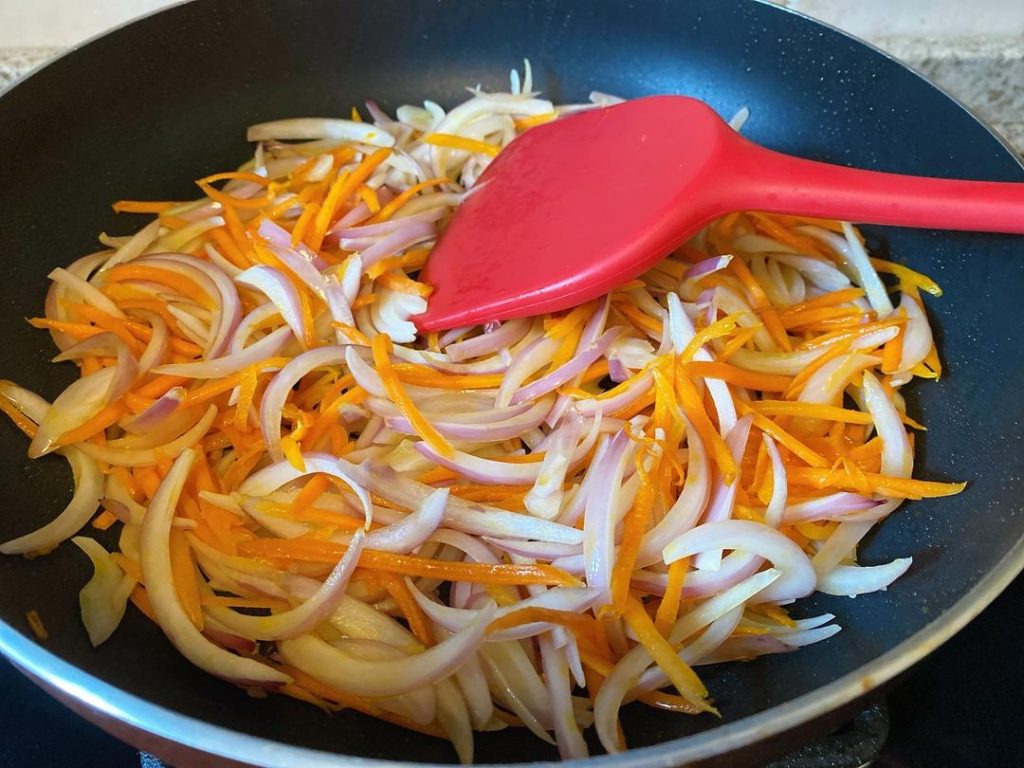
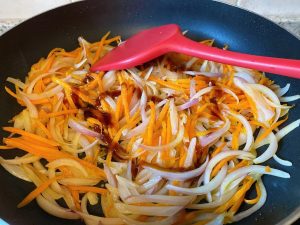
- Season the Vegetables: Sprinkle in the 1/4 tsp of salt and add the 1 tbsp of oyster sauce. Stir quickly to coat the vegetables evenly. Because the onion is naturally sweet, you do not need heavy seasonings.
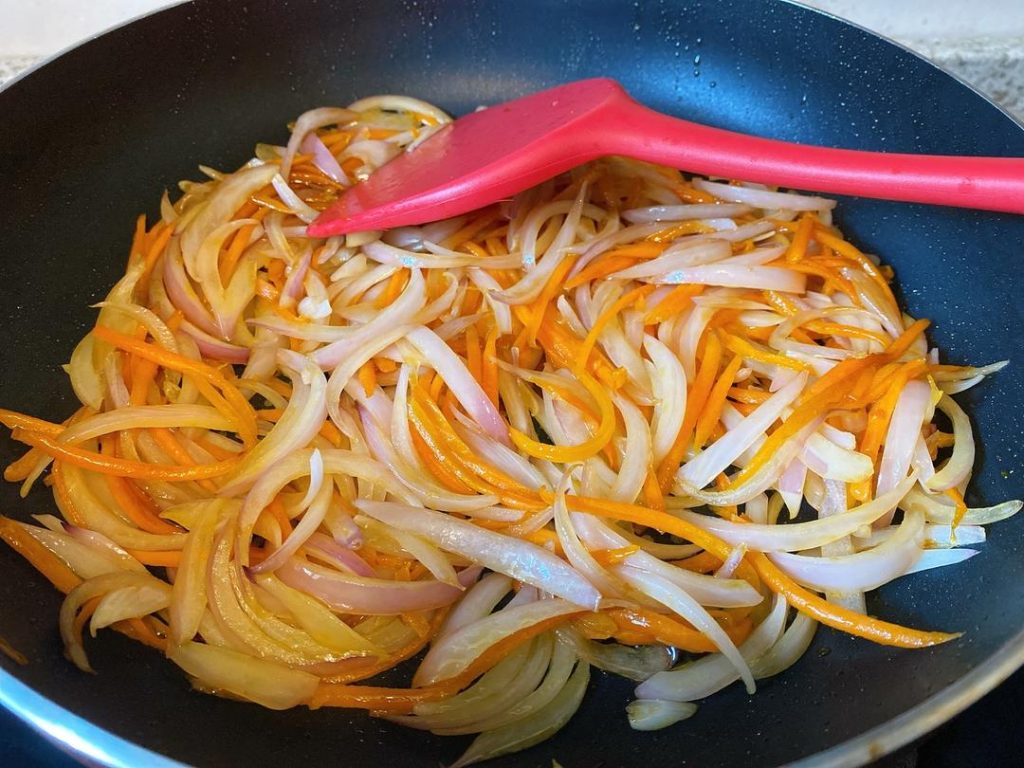
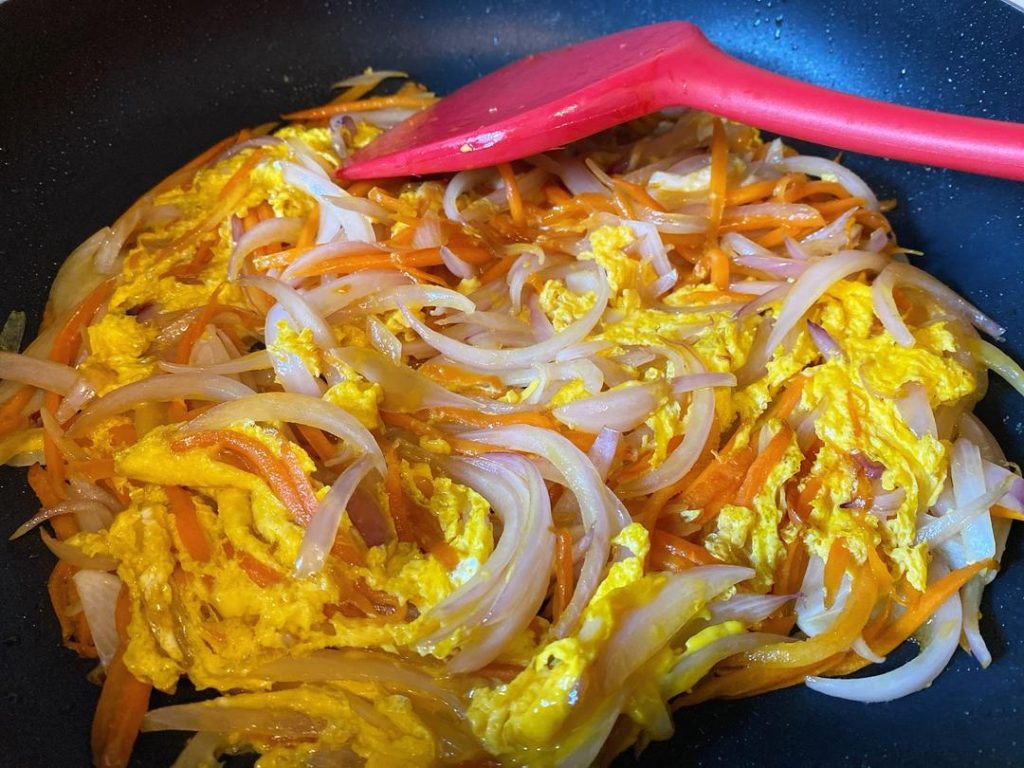
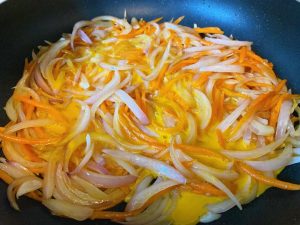
- Pour in the Eggs: Pour the beaten eggs evenly over the vegetable mixture. Crucial step: Do not flip or stir immediately. Let the mixture sit undisturbed for about 15 to 20 seconds.
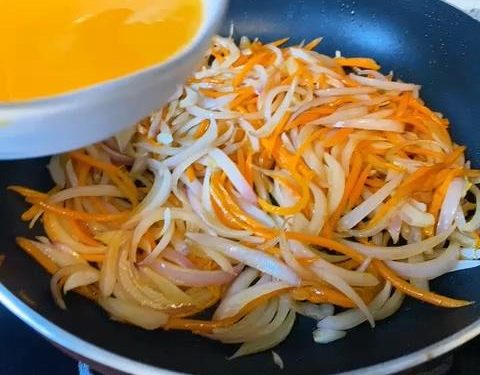
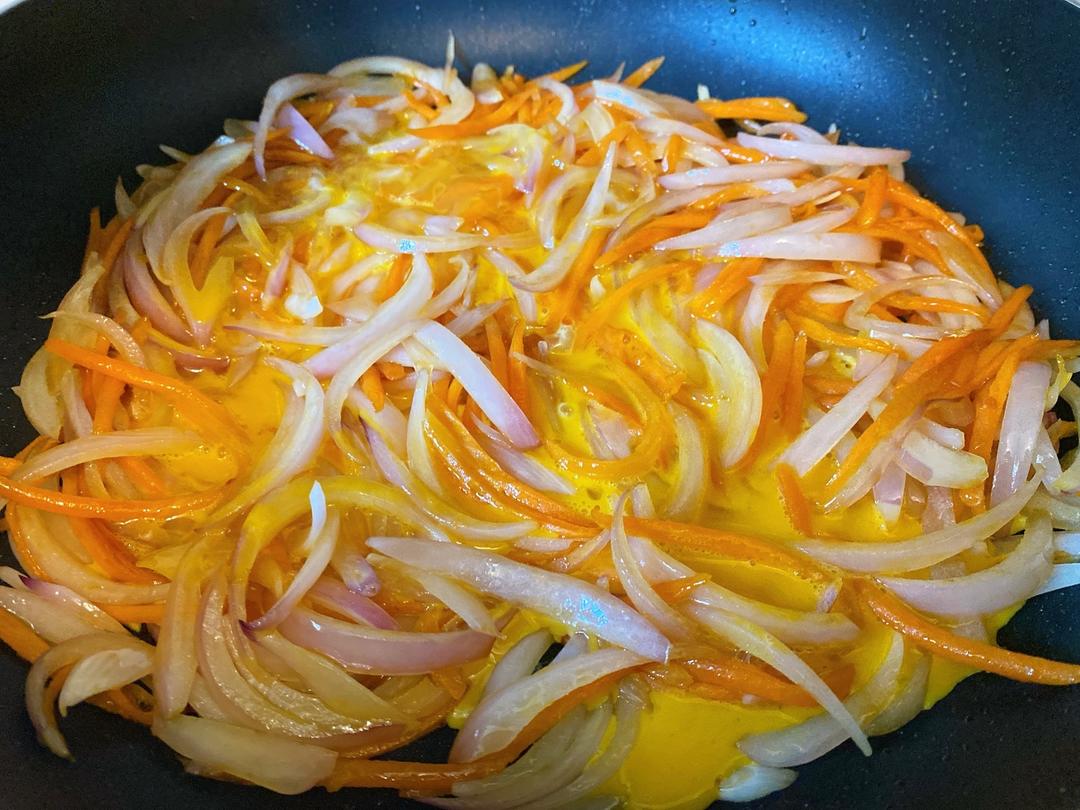
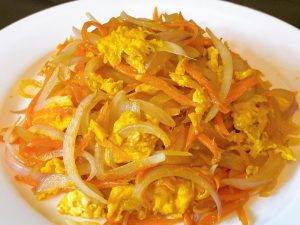
- Flip and Scramble: Once the bottom of the eggs has set and formed a light crust, gently flip the mixture using a spatula. Break it apart into large chunks and stir-fry for another 30 seconds until the eggs are completely cooked and reach a safe internal temperature of 160°F (71°C).
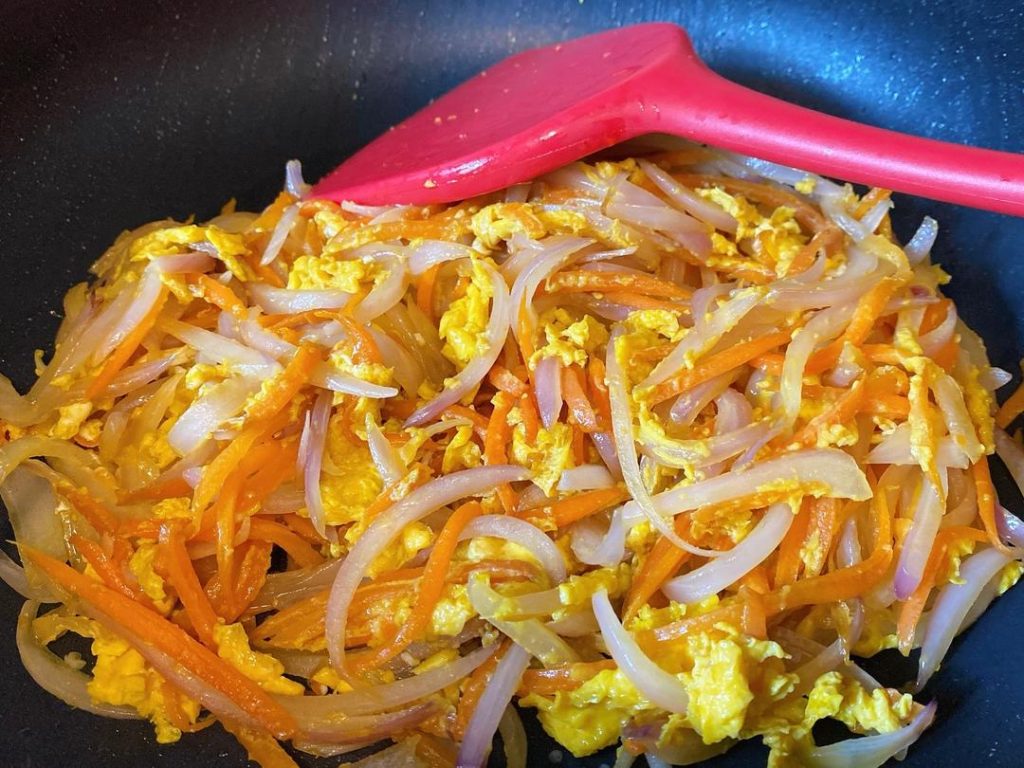
- Serve: Transfer immediately to a plate and serve hot.
Common Mistakes When Making Carrot and Onion Egg Stir-Fry
- Stirring the Eggs Too Soon: If you aggressively stir the eggs the moment they hit the pan, they will coat the vegetables in a mushy paste. Always let the eggs set at the bottom first to create distinct, fluffy curds.
- Burning the Oyster Sauce: Oyster sauce contains sugar and can scorch if left on high heat for too long without moving. Toss it quickly with the vegetables before adding the eggs.
FAQ / Troubleshooting
Why did my eggs turn out watery? This usually happens if the heat was too low or if you added the eggs before the moisture from the onions cooked off. Ensure your pan is sufficiently hot before pouring the eggs.
Can I use soy sauce instead of oyster sauce? Yes, but the flavor profile will change. Soy sauce is saltier and lacks the thick, sweet umami of oyster sauce. If you substitute it, consider using a high-quality Light Soy Sauce and adding a tiny pinch of sugar to balance it.
Why are my carrots still hard? If you sliced the carrots too thickly, they will not soften in the short stir-fry time. To fix this, slice them thinner or give them an extra minute in the pan before adding the onions.
Tips for Success
- Uniform Slicing: Keep your carrot and onion slices relatively similar in size. This ensures they cook evenly and provide a pleasant texture in every bite.
- Temperature Control: If using an electric stove, the heat response is slower. Preheat your pan thoroughly and do not overcrowd it.
Variations & Make-Ahead
- Add Protein: If you want a meatier dish, you can stir-fry a handful of minced pork before adding the carrots. For other great ground pork and egg ideas, check out our Steamed Egg with Minced Pork.
- Spicy Kick: Add a teaspoon of chili crisp or a fresh diced jalapeño when frying the onions.
- Make-Ahead: I recommend chopping the vegetables up to 2 days in advance and storing them in airtight containers. However, this dish is best cooked fresh right before eating.
Serving Suggestions
This vibrant stir-fry is traditionally served family-style alongside a bowl of freshly steamed jasmine rice. The fluffy eggs and savory sauce pair wonderfully with the neutral rice.
What to Serve With It
To create a complete Chinese meal, pair this dish with a clear broth, such as a simple tomato egg drop soup, and perhaps a bolder, saucy dish like our Sauce Stir-Fried Eggs if you are feeding a larger crowd.
Food Safety and Preparation
- Egg Safety: The FDA recommends cooking egg dishes to an internal temperature of 160°F (71°C) to prevent Salmonella illness. Ensure no visible liquid egg remains before serving.
- Cross-Contamination: Always use separate cutting boards for unwashed vegetables and ready-to-eat ingredients.
How to Store & Reheat
- Storage: Let leftovers cool to room temperature, then store in an airtight container in the refrigerator for up to 3 days. Do not freeze this dish, as cooked eggs become rubbery when thawed.
- Reheating: To reheat, place the stir-fry in a skillet over medium-low heat with a splash of water. Toss gently for 2–3 minutes until heated through. Alternatively, microwave on medium power in 30-second bursts, stirring in between, until hot.
Authoritative References
- For detailed guidelines on safe egg handling and cooking temperatures, refer to the FDA Egg Safety Guide.
- To learn more about the nutritional benefits and absorption of beta-carotene from carrots, consult the NIH Vitamin A Fact Sheet for Health Professionals.
Nutrition Information (Estimate)
Calories: 195 kcal | Carbohydrates: 11g | Protein: 7g | Fat: 15g | Sodium: 480mg | Fiber: 3g | Sugar: 5g (Allergens: Eggs, Soy/Gluten depending on the oyster sauce brand used)
Disclaimer: Nutrition information is calculated using an ingredient database and should be considered an estimate. In cases where multiple ingredient alternatives are given, the first listed is calculated for nutrition. Garnishes and optional ingredients are not included. Actual values vary.
Final Thoughts
This Carrot and Onion Egg Stir-fry proves that you do not need expensive ingredients or hours in the kitchen to create a wholesome, deeply satisfying meal. I hope this simple technique brings a touch of authentic Chinese home cooking to your table. Happy cooking!
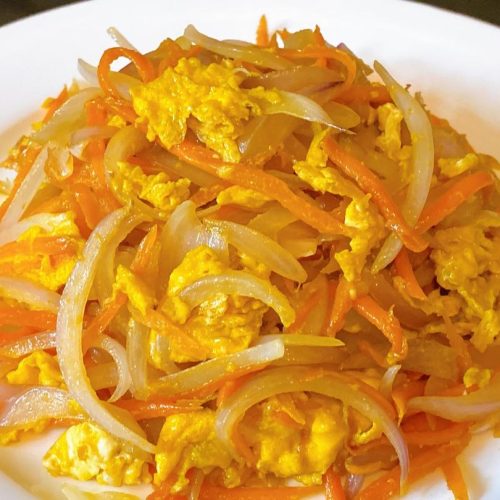
Easy Carrot and Onion Egg Stir-Fry

Equipment
- Carbon Steel Wok or Large Non-Stick Skillet A wok is traditional, but a large skillet works perfectly on electric stoves.
- Spatula For gently flipping the eggs.
Ingredients
Vegetables & Eggs
- 1 medium carrot julienned or grated
- 1 medium onion yellow or red, sliced
- 2 large eggs beaten until frothy
Seasonings
- 1 tbsp oyster sauce use vegetarian oyster sauce if preferred
- 1/4 tsp salt
- 2 tbsp neutral cooking oil canola, vegetable, or peanut oil
Instructions
- Heat 2 tablespoons of oil in a wok or large skillet over medium-high heat until shimmering.
- Add the julienned carrots to the hot oil. Stir-fry for 1 to 2 minutes to soften and release the beta-carotene, giving the oil a golden color.

- Toss in the sliced onions. Continue to stir-fry for another 2 minutes until the onions become translucent and fragrant.
- Season the vegetables with 1/4 tsp salt and 1 tbsp oyster sauce. Stir quickly to coat the vegetables evenly.
- Pour the beaten eggs evenly over the vegetable mixture. Do not flip or stir immediately. Let the mixture sit undisturbed for about 15 to 20 seconds to allow the bottom to set.
- Gently flip the mixture using a spatula. Break it apart into large chunks and stir-fry for another 30 seconds until the eggs are completely cooked and reach an internal temperature of 160°F (71°C). Transfer to a plate and serve immediately.



Leave a Reply