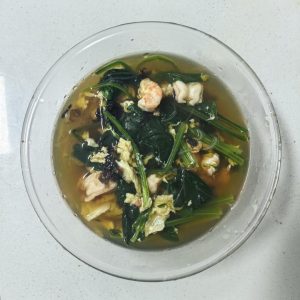
There is a particular kind of Chinese soup that shows up on the table when nobody has the energy to cook but everybody still wants something warm, green, and a little sour. This spinach soup with shrimp and vermicelli — 菠菜汤 in Chinese — is exactly that bowl. It is not a long-simmered broth and it is not a cream soup. It is a fast, clear, vinegar-bright soup where spinach, glass noodles, shrimp, and egg ribbons all land in the pot within about five minutes of each other, and the whole thing is on the table before you have finished setting out bowls.
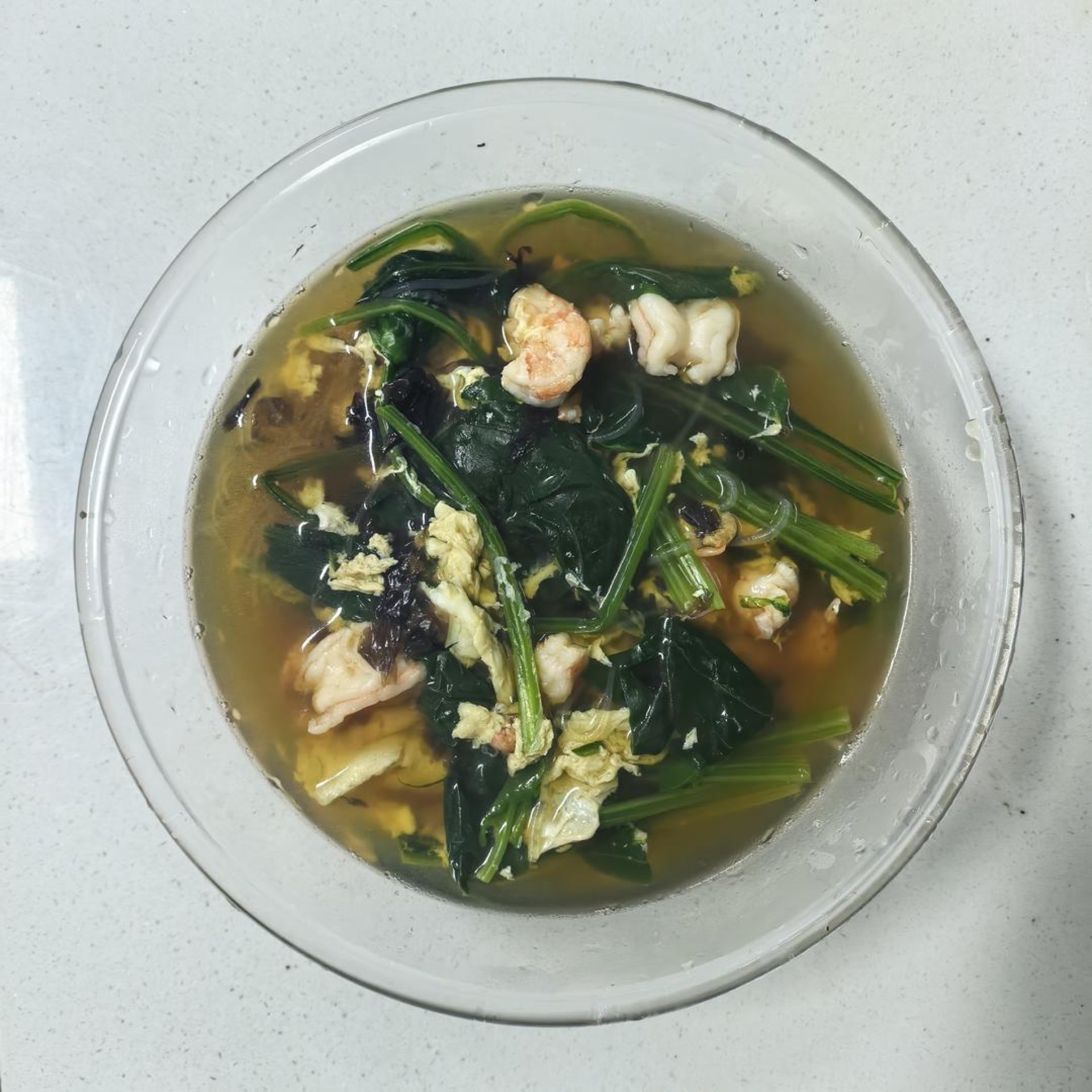
What makes it work is the seasoning, and the seasoning is not timid. Black vinegar gives the broth its tang, light soy sauce gives it depth and salt, dried shrimp and nori give it the sea, and white pepper and sesame oil round it off at the end. The result tastes like something that simmered far longer than it did. If you have ever had a bowl of 菠菜汤 at a northern Chinese home and wondered why yours never tasted the same, the answer is usually in the vinegar and the dried shrimp — and in one small step most people skip.
This recipe is written for a wok because that is what I reach for, but any wide pot works. Everything is measured in US cups and spoons here, with metric equivalents in the notes, and the whole thing is done in 35 minutes including prep. The only waiting is the soak.
What Is Spinach Soup with Shrimp and Vermicelli?
菠菜汤 (bōcài tāng) is a home-style Chinese spinach soup, and this version is the northern-leaning one: a clear, tangy broth thickened only by the starch the vermicelli releases, with shrimp and egg stirred in at the end. It belongs to the same family as the other quick Chinese soups on this site — a thin, savory broth, a vegetable, a protein, and something starchy to make it a meal.
The name 菠菜汤 literally means “spinach soup,” and it is one of those dishes with as many versions as there are kitchens. Some families add tofu, some add pork slivers, some leave out the egg entirely. What stays constant is the spinach, the vinegar, and the speed. It is a soup that is meant to be eaten the day it is made, and it is meant to be eaten with rice or a piece of bread on the side.
The reason this soup tastes savory rather than flat is glutamate: dried shrimp and nori are both extremely high in free glutamate and inosine monophosphate, and together they create the same synergistic umami effect that makes dashi taste so full-bodied — which is why a pinch of each does more for this broth than a whole extra tablespoon of soy sauce would.
If you like the idea of a fast, tangy, vegetable-forward Chinese soup, this one sits in a happy family. rich tomato shrimp soup with vermicelli is the tomato-based cousin, where the broth goes sweet and tangy from ripe tomatoes instead of vinegar, and the vermicelli soaks up all of that color.
1Rich Tomato Shrimp Soup with Vermicelli (No Water Added)A 20-minute Chinese ‘Nong Tang’ (thick soup) that uses blended fresh tomatoes to create a luxurious, waterless broth. Packed with juicy shrimp and slippery glass noodles, it’s a perfect balance of sweet, sour, and savory.Check out this recipe

For a bowl that leans on the same egg-drop technique but goes in a seaweed direction, seaweed egg drop soup is the simplest possible version — just nori, egg, and a clean broth, which makes it a good way to practice getting your egg ribbons fine before you try them here.
2Easy Seaweed Egg Drop Soup (紫菜蛋花汤)A classic, comforting Chinese soup ready in 10 minutes! Learn the secrets to perfect, silky egg ribbons and a savory broth with simple pantry ingredients. It's the easiest, most satisfying soup you'll make all week—even better than takeout!Check out this recipe
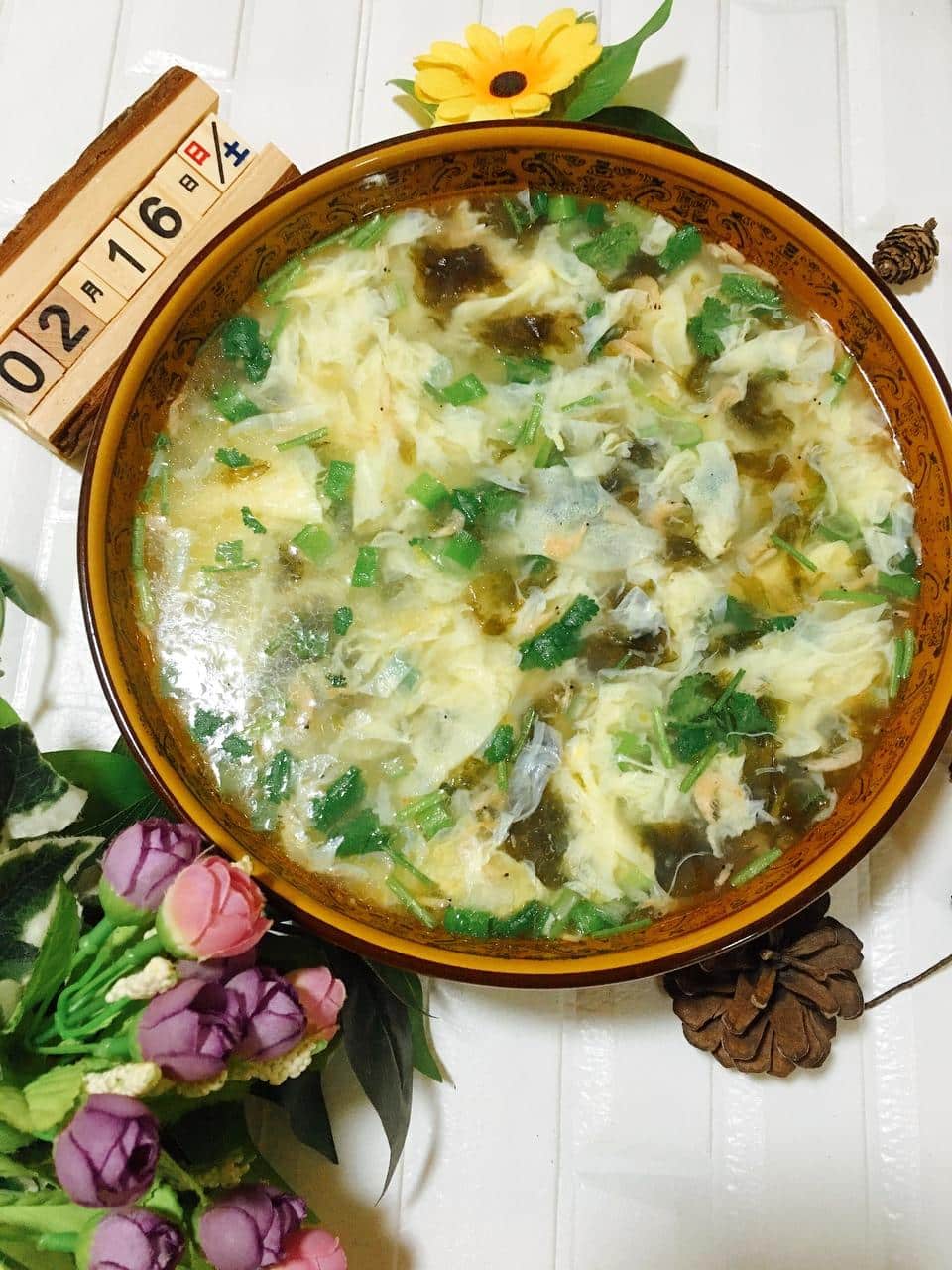
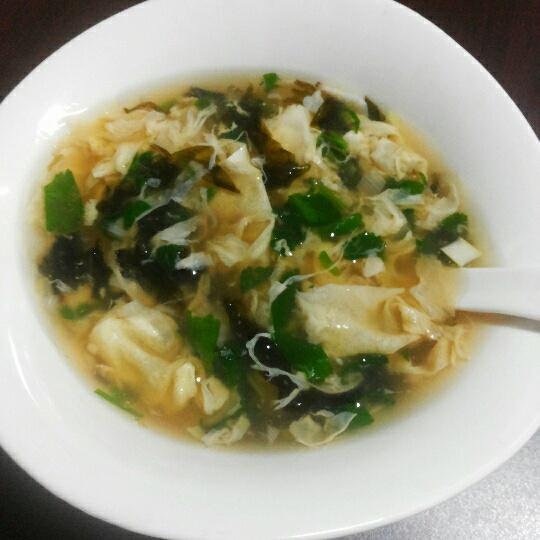
And if you want that same idea pushed a little further, with a silkier body and a more careful hand with the starch, silky seaweed egg drop soup is the one to make next. It is the same flavor family as this spinach soup, just with a different texture goal.
3Seaweed Egg Drop Soup (Zi Cai Dan Hua Tang)Silky ribbons of egg float in a ginger-and-peppercorn broth with torn nori and a scattering of dried shrimp. A classic Chinese comfort soup, ready in 15 minutes.Check out this recipe
Ingredient Notes
Spinach. Use mature bunch spinach rather than baby spinach. Baby leaves collapse into nothing in hot broth, while larger leaves hold their shape and give you something to bite. If all you have is baby spinach, blanch it for 20 seconds instead of a minute and add it at the very end.
Vermicelli. These are mung bean glass noodles, sold in dry bundles. A standard bundle is about 3 ounces. Do not substitute rice vermicelli — rice noodles go soft and gluey in a clear broth, while mung bean noodles stay springy and translucent. Sweet potato starch noodles (the wide, chewy kind) also work but will change the texture considerably.
Shrimp. Frozen peeled shrimp are completely fine here and are what the original recipe calls for. Thaw them in a bowl of cool water for about 10 minutes, then butterfly each one by cutting along the outer curve and pulling the dark digestive tract. Butterflying is not just for looks — it lets the shrimp cook through in the same 60 seconds the spinach needs.
Dried shrimp (虾米). A small pinch, about a tablespoon, is the single biggest flavor upgrade in this recipe. Look for the pale pinkish-orange ones rather than the bright orange dyed kind. If yours are very dry and hard, soak them in warm water for 10 minutes first and use the soaking liquid in the soup.
Nori (紫菜). Torn sheets of toasted nori, the same kind you would wrap sushi with. Two tablespoons is enough. It softens almost instantly in hot broth and gives the soup a dark, mineral edge.
Black vinegar (陈醋). Chinkiang vinegar is the standard. It is malty, slightly sweet, and far less sharp than white vinegar. If you only have rice vinegar, use it but expect a brighter, thinner tang — start with 2 tablespoons and taste.
Light soy sauce. The original recipe uses a generous amount — roughly 10 tablespoons, or about 2/3 cup. That sounds like a lot, and it is, because this soup is seasoned to be eaten with plain rice. If you are serving it as a standalone soup, start with 1/3 cup and add more to taste. Use light soy sauce, not dark, or the broth will turn muddy and taste of molasses.
Eggs. Two large eggs, beaten until completely uniform with no streaks of white. Any unbroken white will cook into a rubbery patch instead of a ribbon.
Ingredients
Here is everything you need, in the order it goes into the pot. Full amounts are in the recipe card at the bottom of this post.
- 10 oz fresh spinach (about 1 bunch)
- 1 bundle (about 3 oz) dried mung bean vermicelli
- 10 large shrimp, peeled and deveined
- 2 large eggs, beaten
- 1 tbsp dried shrimp (虾米)
- 2 tbsp torn nori (紫菜)
- 3 tbsp black vinegar (陈醋)
- About 2/3 cup light soy sauce
- 1 tsp ground white pepper
- 1 tbsp toasted sesame oil
- 6 cups water or unsalted stock
Equipment Needed
You do not need much, and you almost certainly already own all of it.
- A wok or any wide, deep pot — wide surface area means the egg ribbons spread instead of clumping
- A cutting board for the spinach and shrimp
- A slotted spoon for lifting the blanched spinach out of the water
- A small bowl for beating the eggs, and another for soaking the noodles
- A pair of kitchen scissors for snipping the vermicelli
If you have a fine-mesh skimmer, it is even better than a slotted spoon for the blanch, because it catches the small leaves in one pass.
Why This Recipe Works
Three things do the heavy lifting here, and each one is worth understanding.
The blanch. Spinach is high in oxalic acid, which is what gives raw spinach that dry, furry feeling on your teeth. Oxalic acid is water-soluble, so a one-minute blanch in boiling water pulls most of it out and down the drain. Skip this and the acid goes into your soup, where it dulls the flavor and can react with the calcium in the broth. It is a one-minute step that changes the entire bowl.
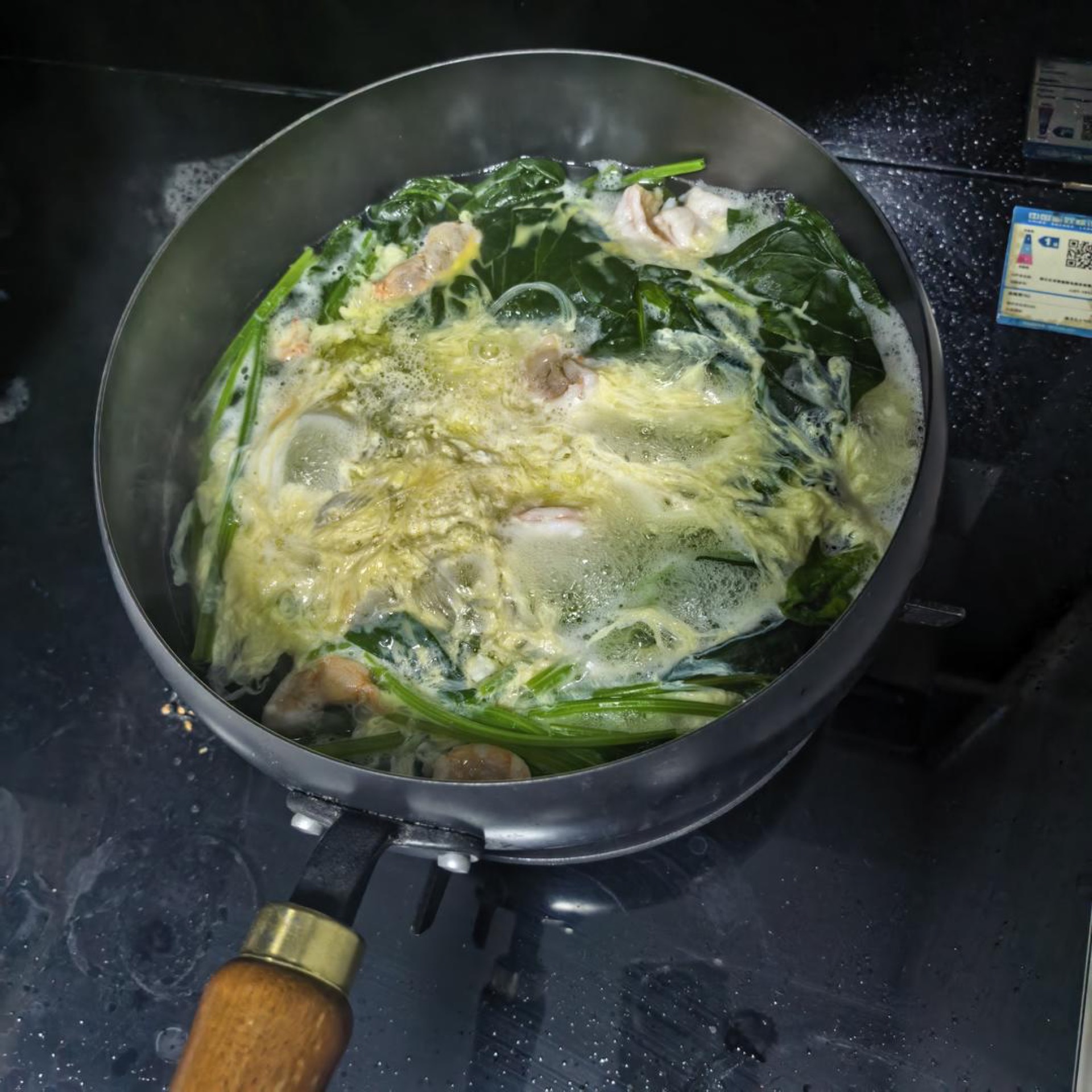
The order of addition. Spinach, then noodles, then shrimp, then egg. Each ingredient needs a different amount of time: spinach is already blanched and just needs to heat through, dried vermicelli needs about 60 to 90 seconds to go from stiff to silky, shrimp need about 60 seconds to turn opaque, and egg needs about 10 seconds. Adding them in the wrong order gives you mush on one end and raw shrimp on the other.
The acid at the end. Black vinegar goes in after the egg, not before, and it goes in off a rolling boil. Boiling vinegar for a long time flattens its aroma — the volatile compounds that make Chinkiang vinegar smell malty and complex are exactly the ones that evaporate. Adding it at the end keeps the tang bright and forward, which is what makes this soup taste like 菠菜汤 instead of plain spinach broth.
Prep & Mise en Place
This soup cooks in about five minutes, which means there is no time to chop anything once the water is boiling. Do all of this before you turn on the heat.
1. Soak the shrimp. Put the frozen shrimp in a bowl of cool water and leave them for about 10 minutes, until fully thawed. If you are using dried shrimp, soak those separately in a small bowl of warm water at the same time.
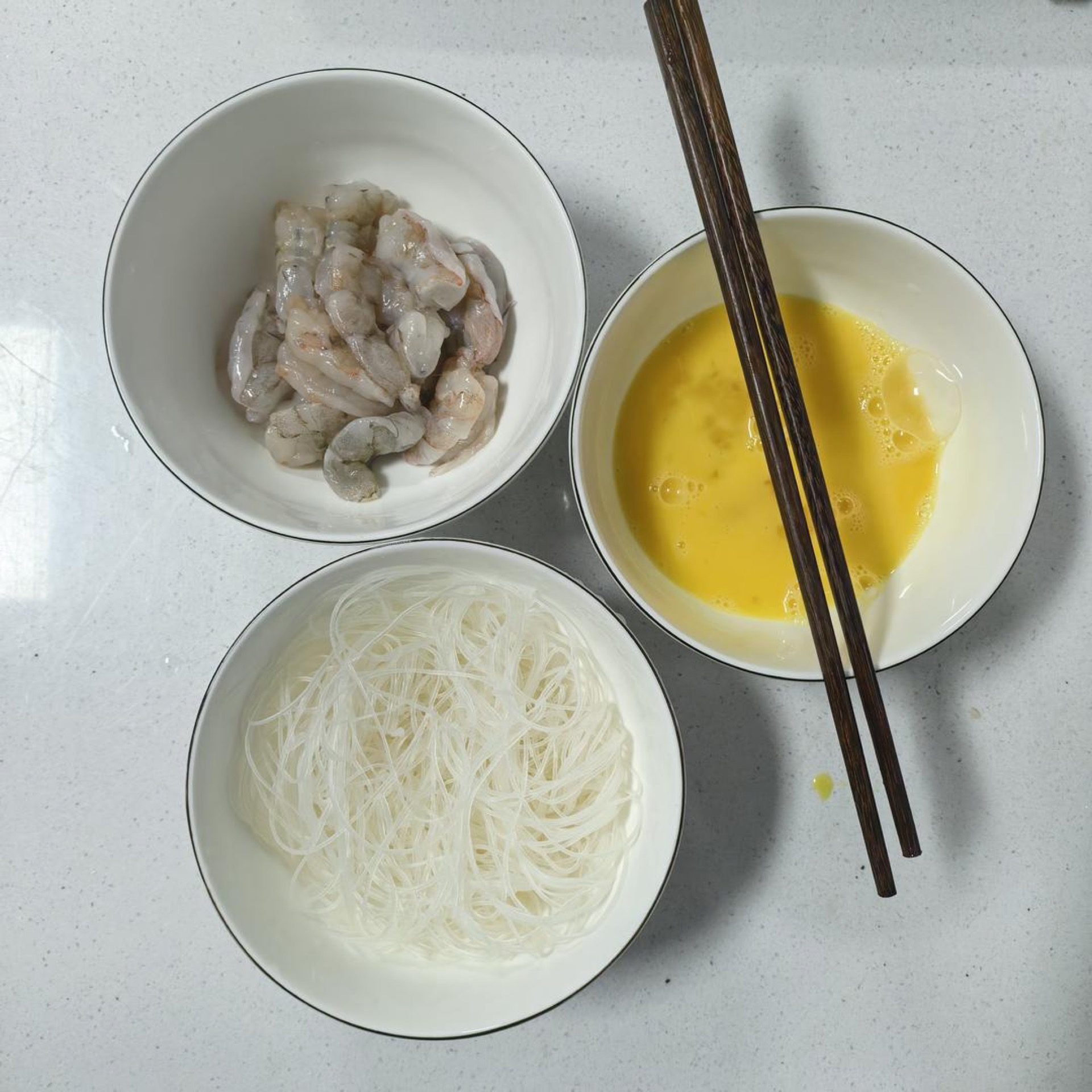
2. Soak the vermicelli. Put the bundle of glass noodles in a separate bowl of warm water and let it sit until pliable, about 8 to 10 minutes. It should bend without snapping but still have a firm core. Drain, then snip into roughly 6-inch lengths with kitchen scissors — long noodles are impossible to eat neatly with a spoon.
3. Beat the eggs. Beat two eggs in a small bowl until the yolk and white are completely combined and the mixture is uniform, with no visible streaks. Set aside near the stove.
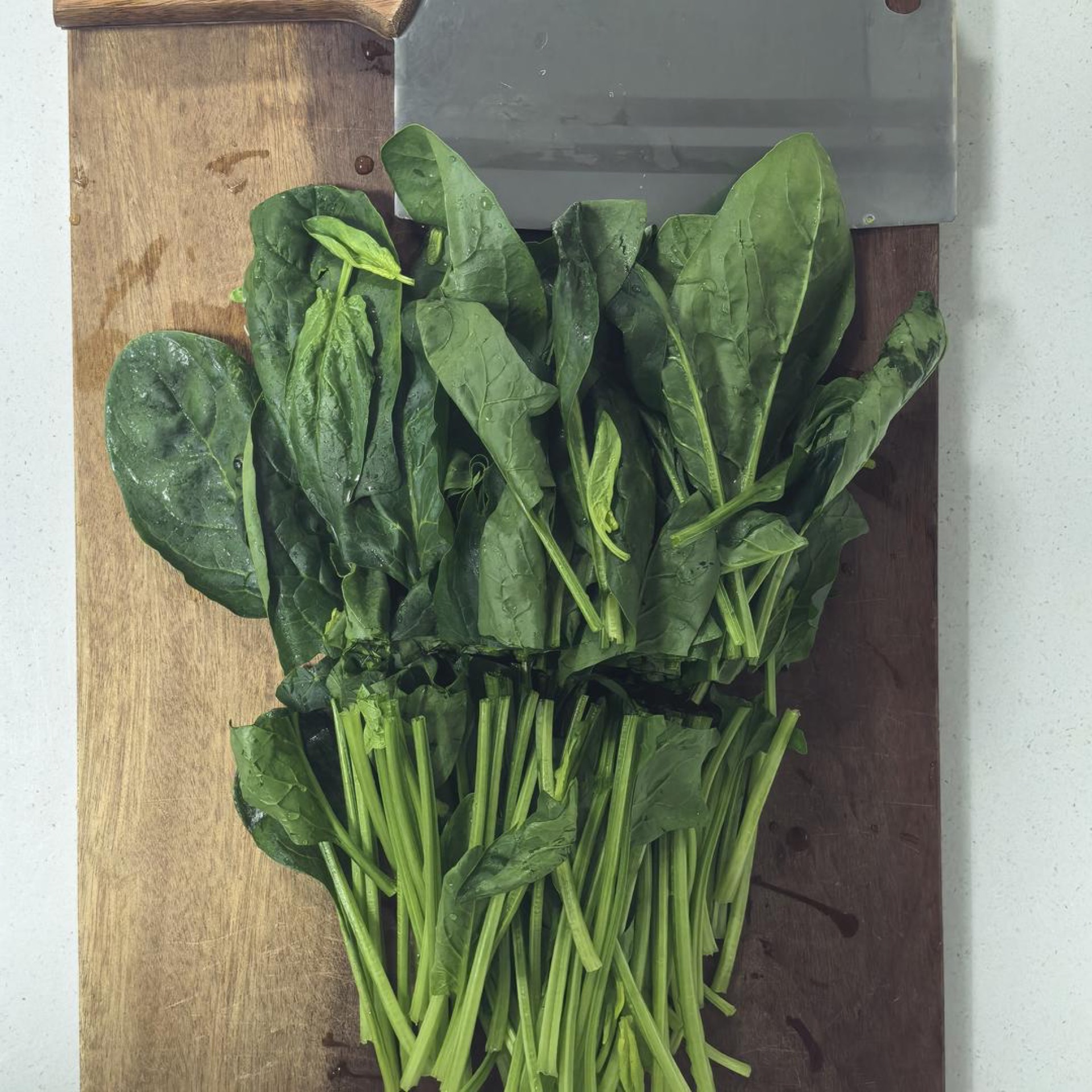
4. Prep the spinach. Wash the spinach thoroughly in a sink of cold water, lifting the leaves out rather than pouring the water off, so any grit stays at the bottom. Cut into lengths — large leaves into three segments, smaller ones into two. Keep the stems and leaves together; they cook at roughly the same rate after the blanch.
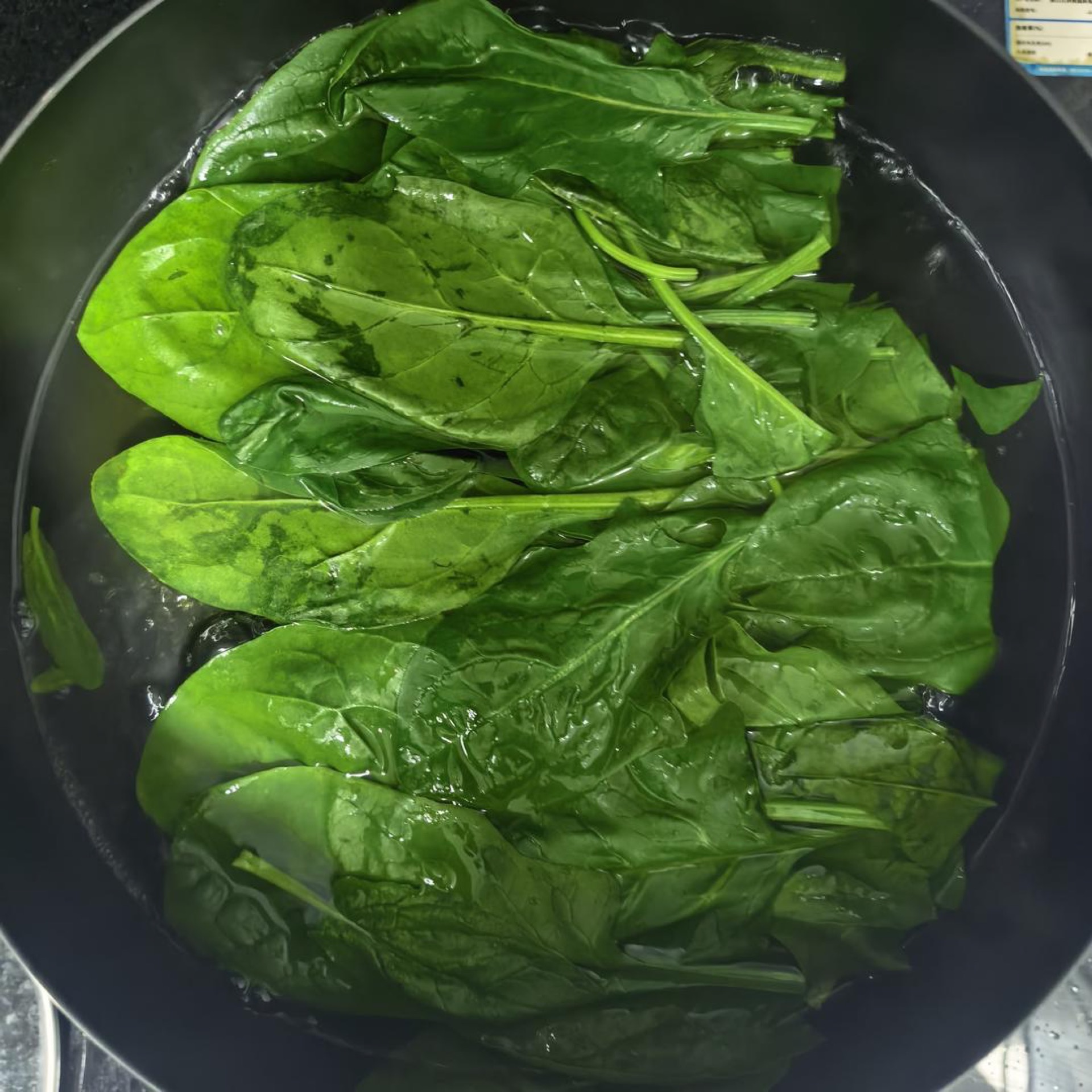
5. Blanch the spinach. Bring a separate pot of water to a rolling boil, drop in the spinach, and blanch for about one minute. Lift it out with a slotted spoon or skimmer and set it aside. Do not pour it into a colander and press on it — you want the leaves intact.
6. Prep the shrimp. Butterfly each shrimp by cutting along the outer curve about halfway through, then pull out the dark vein. If any of your shrimp are unusually large, cut them into two or three segments so they cook in the same time as the rest.
7. Line up your seasonings. Measure the vinegar, soy sauce, dried shrimp, nori, white pepper, and sesame oil into small dishes and set them next to the stove. Once the soup is boiling you will be adding things every few seconds.
Cooking Process
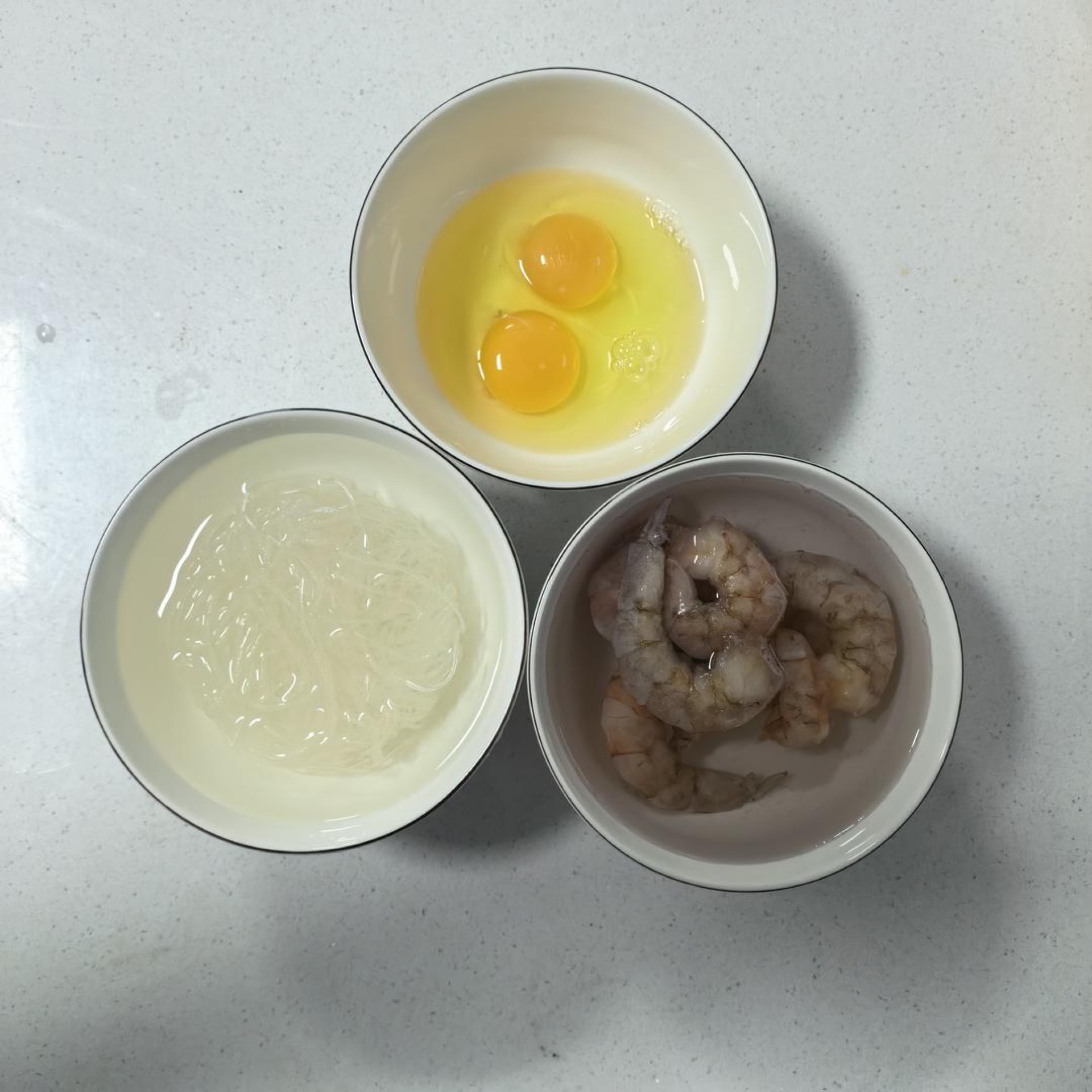
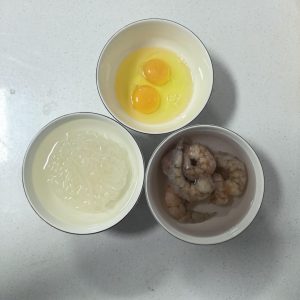
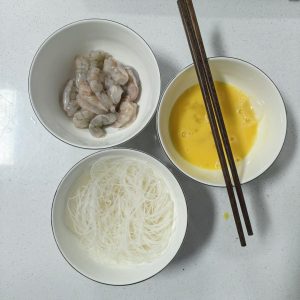
Step 1 — Soak the Shrimp and Noodles
Soak the frozen shrimp to thaw, soak a bundle of vermicelli in warm water until pliable, and beat two eggs in a small bowl.
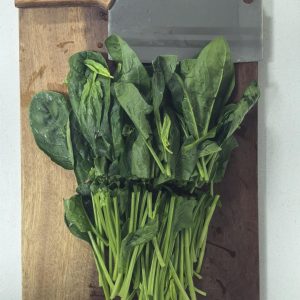
Step 2 — Prep the Spinach
Wash the spinach well and cut it into lengths — large spinach leaves should be cut into three segments.
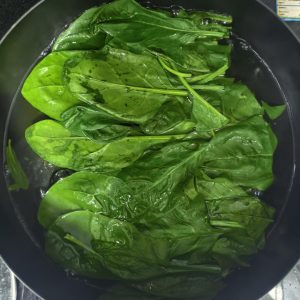
Step 3 — Blanch the Spinach
Bring a pot of water to a boil and blanch the spinach for about one minute; this step cannot be skipped.
Step 4 — Cut the Noodles and Shrimp
Snip the soaked vermicelli into shorter lengths, butterfly the shrimp and pull the dark vein, and cut very large shrimp into segments.
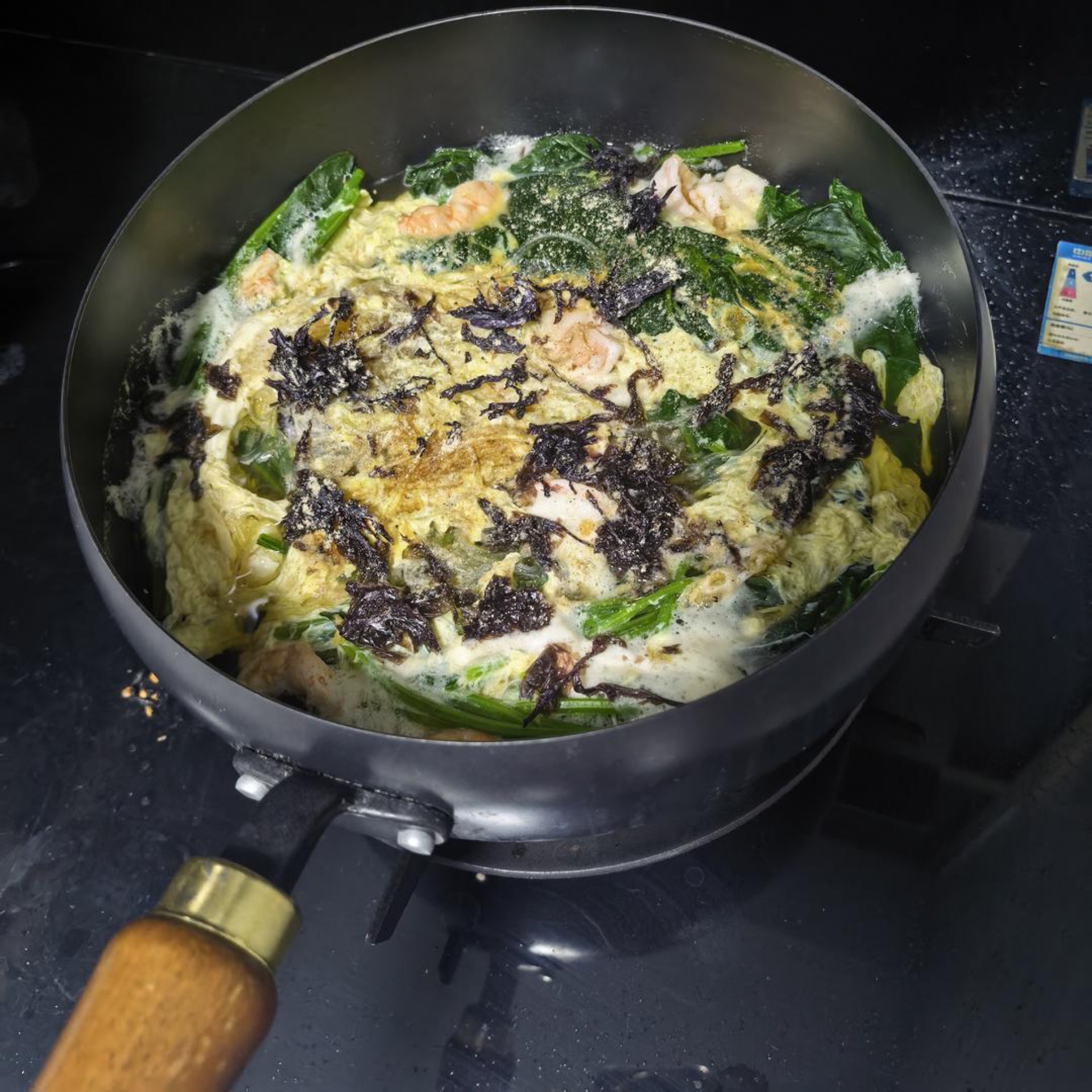
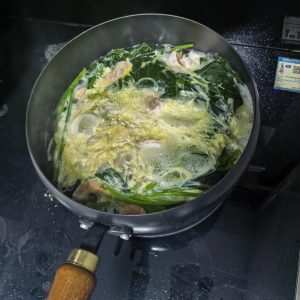
Step 5 — Build the Soup
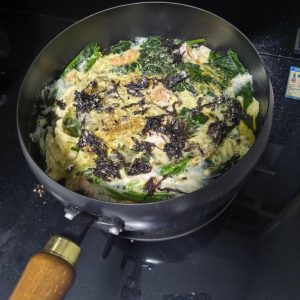
When the water comes to a boil, add the spinach, vermicelli, shrimp, and beaten egg in that order.
Step 6 — Season and Finish
Then add the black vinegar, a swirl of light soy sauce, a pinch of dried shrimp, a suitable amount of nori and white pepper, and finally the sesame oil; stir to combine and take the pot off the heat.
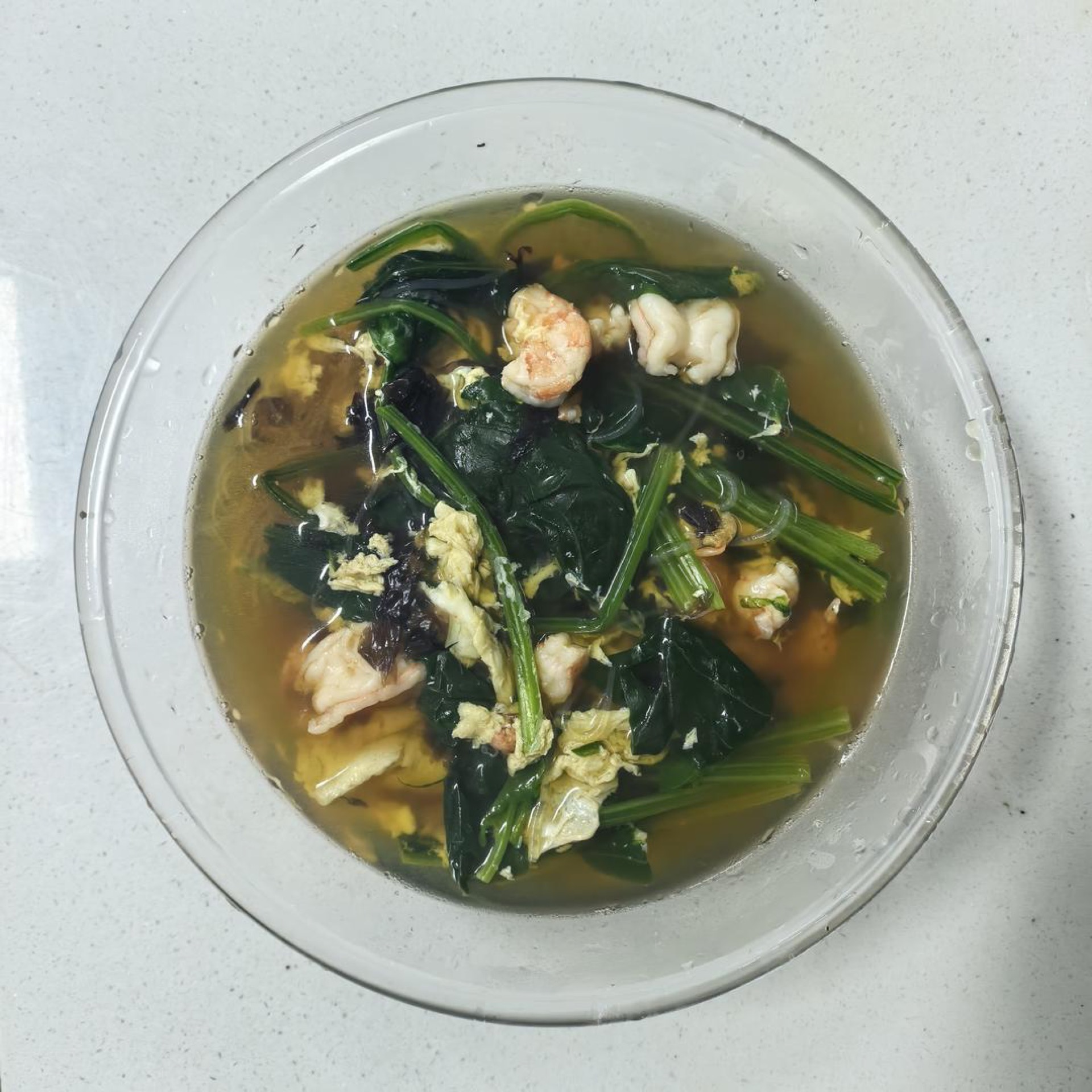
Step 7 — Serve
Ladle the finished soup into bowls and serve hot.
Common Mistakes When Making 菠菜汤
1. Skipping the blanch. This is the mistake that ruins the soup most often, and it is the one the original recipe explicitly warns against. Unblanched spinach releases oxalic acid into the broth, which makes it taste flat and slightly chalky and leaves that unpleasant dry coating on your teeth. Fix: blanch for a full minute in plenty of boiling water, then drain and add the spinach to the soup at the end.
2. Adding the egg into a hard rolling boil. If the water is churning when the egg goes in, the ribbons shred into tiny curds and the broth turns cloudy. Fix: lower the heat so the surface is barely trembling, then pour the beaten egg in a thin stream from about 6 inches up, count to five, and stir once gently.
3. Overcooking the shrimp. Shrimp go from translucent to opaque to rubbery in well under a minute. If you add them first and then spend two minutes adjusting the seasoning, they will be tough. Fix: add the shrimp after the noodles, and have every seasoning already measured so the shrimp are in the pot for no more than 60 to 90 seconds.
4. Using dark soy sauce. Dark soy sauce is thicker, sweeter, and heavily colored. In a clear broth it turns the soup an unappetizing brown and overwhelms the vinegar. Fix: use light soy sauce only. If you only have dark, use half the amount and add a pinch of salt to make up the difference.
5. Soaking the vermicelli too long. Glass noodles left in warm water for 20 minutes turn mushy before they ever hit the pot. Fix: soak only until pliable — 8 to 10 minutes in warm water, or 15 minutes in cool water — and drain them well. If they are still slightly firm in the center, that is correct.
6. Adding the vinegar too early. Vinegar boiled for several minutes loses its aroma and leaves only a flat sour note. Fix: add the black vinegar at the very end, off the boil, and taste before serving. If the soup tastes dull, a few extra drops of vinegar at the table will wake it right up.
7. Under-seasoning because it looks like a lot of soy sauce. This soup is designed to be salty and tangy because it is eaten alongside plain rice. If you cut the soy sauce in half and serve it as a main course, it will taste thin. Fix: start with 1/3 cup if you are unsure, then taste and add more — but do not be surprised if you end up closer to the full amount.
Variations
Tomato version. Swap the black vinegar for two ripe tomatoes, cut into wedges and fried in a little oil until they collapse, then add the water. The broth goes sweet and pink instead of tangy and clear. This is the same direction as rich tomato shrimp soup with vermicelli, and it is a good way to use up summer tomatoes.
Silken tofu version. Add a block of silken tofu cut into 1-inch cubes along with the noodles. It warms through in the same time and makes the soup more substantial without changing the flavor much. A silken tofu and shrimp soup is the closest published cousin to that idea.
Luffa version. In summer, replace half the spinach with peeled luffa (丝瓜) cut into roll-cut pieces. Luffa is sweeter and softer than spinach and gives the soup a different, more delicate character — see this luffa and shrimp soup for the general approach.
No-egg version. Leave the eggs out entirely and increase the vermicelli slightly. The soup becomes lighter and cleaner, closer to a plain vegetable broth, and it keeps better in the fridge because there is no egg to turn grainy on reheating.
Pork version. Add a few thin slivers of pork loin, marinated in a little soy sauce and cornstarch, at the same time as the shrimp. This turns it into a more complete one-bowl meal and is common in northern home cooking.
Frequently Asked Questions
Can I use baby spinach instead of bunch spinach? Yes, but blanch it for only 20 seconds and add it at the very end, right before the egg. Baby spinach is tender enough that a full minute in boiling water turns it to paste.
Why does my spinach soup taste bitter or dry? Almost always because the spinach was not blanched. Oxalic acid in raw spinach gives that drying, slightly bitter sensation. A one-minute blanch in plenty of boiling water removes most of it and fixes the problem entirely.
Can I make this soup ahead of time? You can prep everything ahead — blanch the spinach, soak and snip the noodles, thaw and butterfly the shrimp, measure the seasonings — and hold each component separately in the fridge for up to a day. But do not cook the soup itself ahead: the noodles keep absorbing broth and the egg goes rubbery on reheating.
How do I get fine egg ribbons instead of scrambled egg? Three things: beat the eggs until completely uniform, make sure the broth is barely simmering rather than boiling hard, and pour the egg in a thin stream from a height of about 6 inches while moving the bowl in a slow circle. Wait five seconds before you stir, and stir only once.
Is this soup gluten-free? Only if you use gluten-free soy sauce (or tamari) and gluten-free vermicelli. Standard mung bean vermicelli is usually just mung bean starch and water, but some brands blend in wheat starch, so check the label. The eggs, spinach, shrimp, nori, and vinegar are all naturally gluten-free.
How to Serve
This soup is at its best with plain white rice, which is how it is most often eaten at home in northern China — the salt and tang of the broth are calibrated for a bland starch alongside. A bowl of rice and a bowl of 菠菜汤 is a complete, balanced meal, and it takes less time than ordering in.
If you want to build out the table, a second soup is never a bad idea, and the fastest one to add is a restaurant-style egg drop soup, which comes together in about ten minutes and uses the same egg-ribbon technique you just practiced here. For a slightly sweeter, more familiar bowl, this tomato egg drop soup is a good pairing with anything rice-based. And if you want a version with a little more body and a little more starch, this tomato egg drop soup with dough drops turns the meal into something closer to a one-bowl dinner.
For a lighter, more vegetable-forward meal, serve the soup with a simple stir-fried green and a bowl of rice, or with steamed buns for dipping. It also works as a side dish alongside a richer braised meat, where its acidity cuts through the fat nicely.


Storage & Reheat
This soup is genuinely best the day it is made. The vermicelli continues to absorb broth as it sits, so by the next morning you will find a bowl of soft noodles with very little liquid around them.
If you do have leftovers, cool them within two hours, transfer to a sealed container, and refrigerate for up to 2 days. Reheat gently on the stovetop or in the microwave until the soup reaches 165°F (74°C). You will almost certainly need to add a splash of water or stock to loosen it back up, and a few fresh drops of black vinegar and sesame oil at the end will restore some of the brightness that fades in the fridge.
Do not freeze this soup. The noodles turn to mush, the spinach goes limp and dark, and the egg becomes spongy. If you want to freeze something, freeze the broth base before the noodles and egg go in.
Allergen Notice
This recipe contains shellfish (shrimp and dried shrimp), soy (light soy sauce), wheat (standard soy sauce, and wheat-based vermicelli in some brands), and egg. Nori is a seaweed and may be a concern for anyone with iodine sensitivity or a seaweed allergy.
If you are cooking for someone with a soy allergy, use coconut aminos in place of the soy sauce, though the flavor will be noticeably sweeter and less salty. For a shellfish allergy, this soup does not adapt well — the dried shrimp and nori are doing most of the savory work, and removing them leaves a very plain broth. For gluten-free needs, use tamari and certified gluten-free vermicelli, and check the vinegar label as some brands add wheat.
Nutrition Disclaimer
Nutrition information is calculated using an ingredient database and should be considered an estimate. In cases where multiple ingredient alternatives are given, the first listed is calculated for nutrition. Garnishes and optional ingredients are not included.
About the Author & Recipe Development
Hi, I’m Lin — I grew up in a Chinese household where soup was on the table every single night, and I have been cooking and writing about Chinese home cooking on Woks of Love for over a decade. This recipe comes from a family version of 菠菜汤 that my mother made on weeknights: a bundle of glass noodles, a bag of frozen shrimp, and whatever spinach was in the fridge.
I tested this version to nail down the two things that make the biggest difference — the one-minute blanch and the timing of the vinegar — and to give the seasoning amounts in a range that works whether you are eating it with rice or on its own. If you make it, I would love to hear how it turned out, especially if you tried one of the variations.
Authoritative References
For safe handling and cooking temperatures for shrimp and eggs, see the FDA refrigerator and food safety guidance and the USDA safe minimum internal temperature chart, which list 145°F (63°C) for fish and shellfish and 160°F (71°C) for egg dishes. For more on the oxalic acid content of spinach and why blanching matters, the National Library of Medicine review of dietary oxalate is a useful starting point. The WHO food safety fact sheet covers the general two-hour rule for leaving cooked food at room temperature.
Spinach Soup with Shrimp and Vermicelli (菠菜汤): Savory Spinach

Equipment
- Wok
- Cutting Board
- Slotted Spoon
Ingredients
For the Soup Base
- 10 oz spinach washed, cut into 3-inch lengths
- 1 bundle vermicelli about 3 oz, mung bean glass noodles
- 10 large shrimp peeled, deveined, butterflied
- 2 large eggs beaten
- 1 pinch dried shrimp about 1 tbsp
- 1 pinch nori about 2 tbsp, torn
For the Seasoning
- 3 tbsp black vinegar Chinkiang vinegar preferred
- 10 tbsp light soy sauce about 2/3 cup, or tamari
- 1 tsp white pepper ground
- 1 tbsp sesame oil toasted
Instructions
- Soak the frozen shrimp to thaw, soak a bundle of vermicelli in warm water until pliable, and beat two eggs in a small bowl.

- Wash the spinach well and cut it into lengths — large spinach leaves should be cut into three segments.
- Bring a pot of water to a boil and blanch the spinach for about one minute; this step cannot be skipped.
- Snip the soaked vermicelli into shorter lengths, butterfly the shrimp and pull the dark vein, and cut very large shrimp into segments.
- When the water comes to a boil, add the spinach, vermicelli, shrimp, and beaten egg in that order.
- Then add the black vinegar, a swirl of light soy sauce, a pinch of dried shrimp, a suitable amount of nori and white pepper, and finally the sesame oil; stir to combine and take the pot off the heat.
- Ladle the finished soup into bowls and serve hot.












Leave a Reply