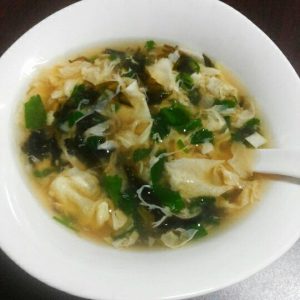
The first soup I ever cooked for my father was a pot of water with ginger and peppercorns, a torn sheet of dried nori, and two eggs drizzled into a rolling boil until they unfurled into golden ribbons. I was nine, the bowl came out nothing like the picture, and my father still finished every drop. Decades later, zi cai dan hua tang (紫菜蛋花汤, seaweed egg drop soup) is still the soup I make when I need comfort in a hurry.
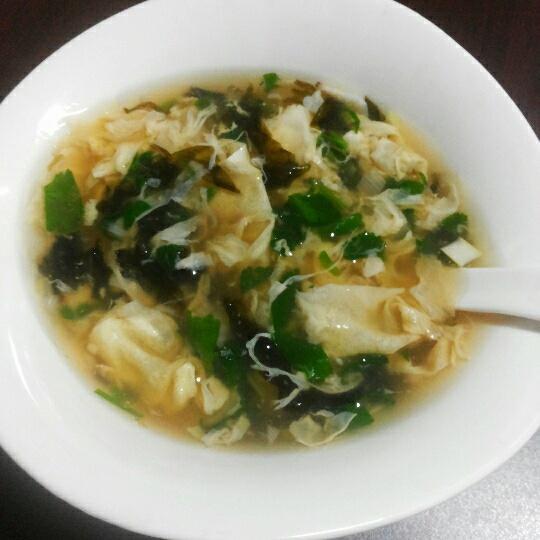
Seaweed egg drop soup is China’s answer to chicken noodle soup: quick, pantry-friendly, quietly restorative. The nori brings a whisper of ocean minerality, the egg ribbons turn it silky, and the little dried shrimp — xia pi (虾皮) — drop a burst of umami that makes you wonder why something this fast tastes this considered.
I wanted to keep the five-minute honesty of the classic but fix the two things that usually go wrong: egg that sinks in a single white lump, and soup that tastes like hot water with scenery. The answers are small — a cornstarch slurry so the soup has body, and a careful drizzle-and-count technique for the eggs.
What Is Seaweed Egg Drop Soup (Zi Cai Dan Hua Tang)?
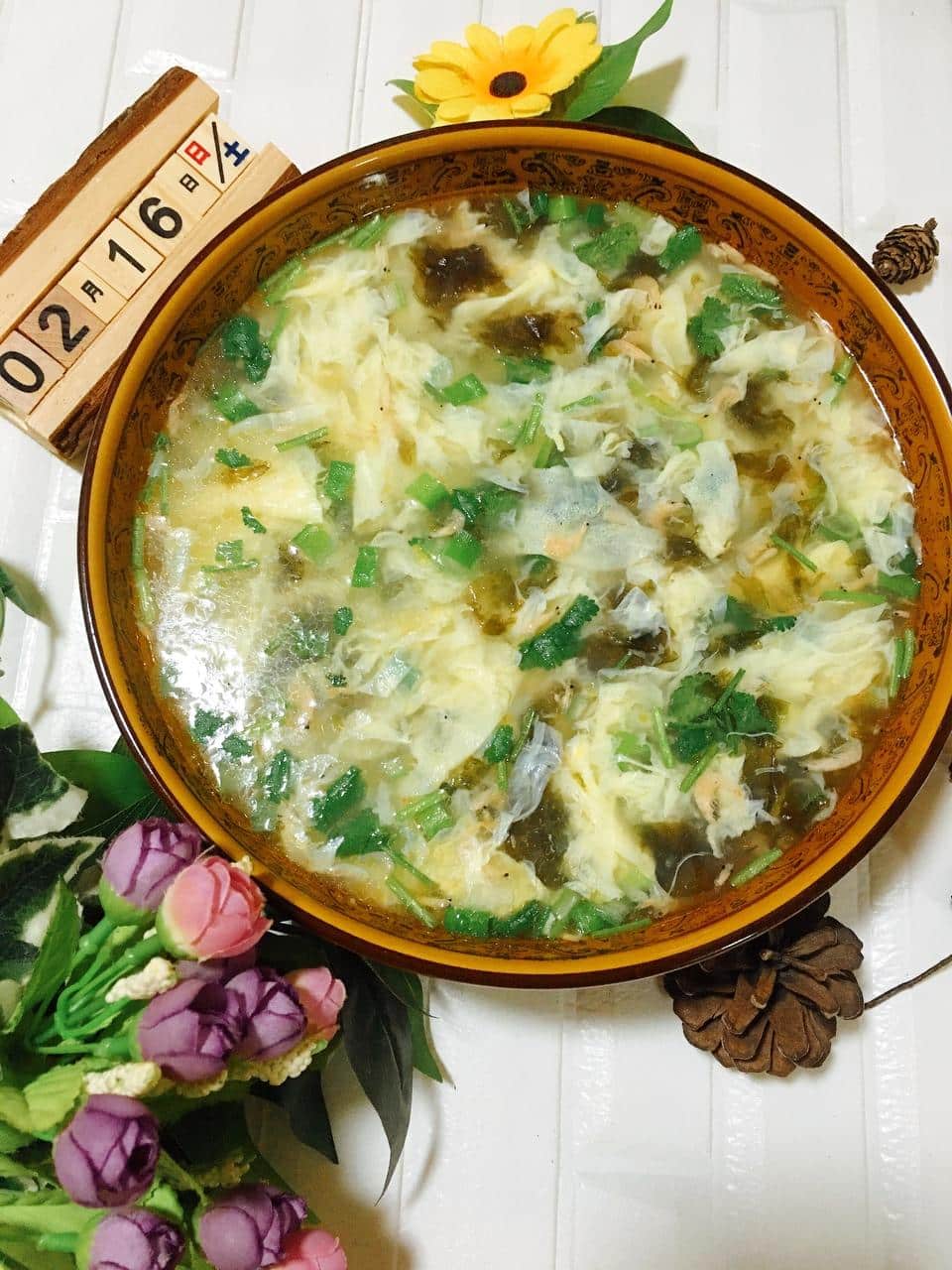
Zi cai dan hua tang literally translates as “seaweed egg flower soup.” The “egg flower” (dan hua, 蛋花) is the cloud of silky ribbons that unfurl in the hot liquid — the hallmark of the entire egg-drop family. The “seaweed” is dried nori (紫菜), the same roasted sheets sold for sushi, which rehydrate in the broth in under a minute. Add dried shrimp, a few scallions, a drop of sesame oil, and you have a bowl most Chinese families make several times a week.
The soup belongs to the Chinese tradition of tang (汤) as the anchor of a meal rather than a separate course. On a home table it is ladled over rice or drunk between bites of stir-fry; in restaurants it often opens the meal as a gentle first course. The home version is bare-bones — water, not stock, and whatever aromatics you have — while restaurant versions gild it with richer stock, tofu, tomato or mushrooms. Both are correct; the honest home version is the one I make here.
If you are in a hurry, the stripped-down sibling — my easy seaweed egg drop soup — skips the aromatics-infused broth and the slurry for a five-minute, three-ingredient version perfect for late nights and tiny kitchens. This recipe is the full-flavored one I reach for when I have twelve minutes and want the best bowl.
1Easy Seaweed Egg Drop Soup (紫菜蛋花汤)A classic, comforting Chinese soup ready in 10 minutes! Learn the secrets to perfect, silky egg ribbons and a savory broth with simple pantry ingredients. It's the easiest, most satisfying soup you'll make all week—even better than takeout!Check out this recipe
Why This Recipe Works
- A quick aromatics broth adds depth without stock: ginger and Sichuan peppercorns simmered for a few minutes build a layered base, so the soup never tastes flat.
- Torn nori infuses faster and more evenly: small pieces rehydrate and release their marine flavor within seconds, instead of one chewy sheet that keeps its shape.
- A cornstarch slurry gives the eggs something to float on: a barely-there body keeps the ribbons suspended instead of sinking into a sodden heap.
- Many strokes of beating make even ribbons: a thoroughly beaten egg, with no streak of white left, pours into a fine, uniform silk.
- Drizzling in batches into rolling soup is the technique: the moving liquid stretches the egg into ribbons and separates them, so you get a nest of ribbons instead of one clump.
- Finishing off the heat keeps everything silky: residual heat cooks the last ribbons gently, so nothing boils into tough shreds.
Equipment Needed
- A medium saucepan or small pot (about 2 L / 2 qt)
- A fine-mesh strainer or slotted spoon, for removing the aromatics
- A small bowl and chopsticks (or a fork) for beating the eggs
- A spoon for drizzling the egg into the soup
- A ladle and deep serving bowls
Ingredients
- 6 cups (1.5 L) water
- 4 slices fresh ginger
- 1 tsp (3 g) Sichuan peppercorns
- 1 tbsp (15 ml) light soy sauce (一品鲜, yi pin xian)
- 1/2 tsp (2 g) chicken essence (or chicken bouillon powder)
- 1 sheet dried nori (紫菜), torn into small pieces — about 5 g (1/4 oz)
- 1 tbsp (15 g) cornstarch mixed with 3 tbsp (45 ml) water
- 2 large eggs
- 1 tbsp (10 g) dried shrimp (虾皮, xia pi)
- White pepper, to taste
- Salt, to taste
- 1/2 tsp (2 ml) sesame oil
- 2–3 sliced scallions, for garnish
- A few sprigs chopped cilantro, for garnish
- Optional add-ins: enoki mushrooms, silken tofu, cucumber slices, or tomato
Ingredient Notes
Nori vs. wakame: this soup is built on dried nori — crisp, roasted, paper-thin sheets — not wakame, the slippery bright-green seaweed of miso soup that needs a soak before use. Nori rehydrates in the hot broth in seconds and tastes gently toasted and mineral. If you only have wakame, rehydrate it first and use about half the volume, accepting a silkier, greener result.
Dried shrimp (xia pi): these tiny, salted, sun-dried shrimp are the umami backbone of this soup. Scattered over the finished bowl as a garnish — not simmered into the broth — they stay chewy and briny instead of turning the soup cloudy. They last for months in a sealed jar in the fridge. For a vegetarian version, skip them and lean on more soy sauce and a pinch of MSG or nutritional yeast.
Why the cornstarch slurry: one tablespoon of cornstarch whisked into cold water, then stirred into the boiling soup, thickens it just enough to look glossy without becoming gluey. The slight body keeps the egg ribbons floating instead of sinking — the quiet trick that separates a restaurant bowl from a plain soup.
Prep & Mise en Place
Everything moves fast once the pot is on, so get ready before you turn on the heat. Peel the ginger and cut four thin slices; measure the Sichuan peppercorns; tear the nori into thumbnail-size pieces — smaller pieces rehydrate evenly, larger ones stay chewy. Beat the eggs with many strokes until uniformly pale yellow with no streak of white remaining; this step makes the difference between ribbons and shreds. Stir the cornstarch into the cold water until fully dissolved, then set everything near the stove.
Cooking Process
Step 1 — Infuse the Broth with Aromatics
Add the water, ginger slices and Sichuan peppercorns to the pot and bring to a boil. Let it bubble for 3 to 4 minutes, until the water smells gently of ginger and spice, then remove and discard the aromatics with the strainer.
This brief infusion is how the soup gets depth without a stockpot. Ginger’s pungent compounds (gingerol, and shogaol as it cooks) and the Sichuan peppercorns’ citrusy, numbing sanshools dissolve into hot water in a few minutes — enough to perfume the pot, but short enough that nothing turns bitter. Infuse longer than five minutes and astringent notes creep in, so keep it quick.
Step 2 — Season and Add the Nori
Pour in the light soy sauce and the chicken essence, and stir once. Add the torn nori (along with any optional enoki mushrooms, silken tofu, cucumber slices or tomato), and bring everything back to a boil.
Step 3 — Thicken with the Cornstarch Slurry
Give the cornstarch slurry a quick stir (it settles as it sits), then pour it into the bubbling soup while stirring gently. Let the soup return to a full boil for about 30 seconds, until it turns just barely glossy — thick enough to coat the back of a spoon, but still clearly a thin soup.
The cornstarch works by gelatinization: as the mixture heats past about 60°C (140°F), the starch granules swell and burst, trapping water and creating that faint, velvety body. The slurry goes in before the eggs so the liquid is already slightly thickened when the ribbons hit it — that is what holds them up instead of letting them sink.
Step 4 — Beat the Eggs and Drizzle Them In
Make sure the eggs are thoroughly beaten — many strokes, until uniform pale yellow. With the soup at a rolling boil, use a spoon to drizzle the egg into the moving liquid in several batches, counting a few seconds between each pour and letting the swirl draw the egg into ribbons.
Two physics ideas come together. First, the beating: egg whites are mostly water wrapped around coiled protein strands (ovalbumin). Beating stretches and unwinds those strands evenly, so on contact with heat they coagulate into a fine, uniform web — un-beaten pockets of white instead cook into opaque clumps. Second, the drizzle: pouring a thin stream into vigorously moving liquid stretches the egg out, and the boiling water sets each thread almost instantly, leaving separate silky ribbons rather than one scrambled mass. Drizzling in batches keeps the temperature up and each batch distinct.
Step 5 — Finish, Season and Garnish
When the egg ribbons float to the surface — about 10 to 15 seconds after the last batch — turn off the heat immediately. Season with white pepper, salt to taste, and the sesame oil. Sprinkle with sliced scallions, chopped cilantro and the dried shrimp, and ladle into bowls right away.
Common Mistakes When Making Seaweed Egg Drop Soup
1. The eggs turn into one big lump. Cause: all the egg was poured at once into barely-moving liquid. Fix: drizzle in several thin batches with a spoon while the soup swirls, counting a few seconds between pours.
2. The ribbons come out tough and rubbery. Cause: the soup was left boiling after the egg went in. Fix: turn off the heat the moment the ribbons float — residual heat finishes them gently.
3. The soup tastes flat, like hot water. Cause: the aromatics were skipped, or the soy sauce and chicken essence were held back. Fix: always simmer the ginger and peppercorns for those 3–4 minutes, and season generously.
4. The egg turns into watery white shreds. Cause: the eggs were barely beaten, leaving pockets of white. Fix: beat with many strokes until the mixture is one uniform pale yellow.
5. The nori stays chewy and clumpy. Cause: a whole sheet was dropped in and never broken up. Fix: tear the nori into thumbnail-size pieces and stir after adding so it separates.
6. The soup looks cloudy. Cause: the dried shrimp were simmered in the pot. Fix: add the shrimp only at the very end, as a garnish on each bowl.
Variations
This soup is a template, and it welcomes whatever is in your fridge. Add tomato, sliced or in wedges, in Step 2 for a gentle sweet-sour lift — this bridges to my tomato egg drop soup, which builds the whole bowl around it. Silken tofu cubed makes it heartier, enoki mushrooms add crunch and savor, and cucumber slices keep it summery. For a vegetarian bowl, drop the dried shrimp and double the soy sauce with a pinch of MSG. Swap the chicken essence for vegetable bouillon, or use real chicken stock instead of water for a richer base. For heat, finish with extra white pepper or a slick of homemade chili garlic sauce — and if you love the tomato-egg pairing, my Chinese tomato and egg stir-fry is the same flavor marriage in a skillet.
Frequently Asked Questions
Can I use wakame instead of nori? Yes, with adjustments. Wakame is slippery and bright green rather than toasted and crisp, so rehydrate it first, use about half the volume, and expect a silkier, greener soup. For the classic zi cai dan hua tang, nori is the authentic choice.
Can I make this soup without dried shrimp? Absolutely. The shrimp add umami and a briny pop, but a vegetarian version with extra soy sauce and a pinch of MSG (or nutritional yeast) comes surprisingly close.
Why do I need the cornstarch slurry? One spoonful gives the soup a barely-there body that keeps the egg ribbons floating and the broth glossy. Skip it and the eggs will sink and the soup will look thin — it still works, but it is not the same bowl.
Can I use chicken stock instead of water? Yes, and it will be richer. If you do, hold back on the chicken essence and start with less salt, adjusting at the end.
Can I add more eggs? Of course. Three eggs give a thicker, more custardy soup; keep everything else the same and take slightly longer with the drizzle so each ribbon sets separately.
How to Serve
Seaweed egg drop soup is a first course or a side, never the whole show. Serve it before or alongside braised beef noodle soup for a rich-meets-light pairing, or next to simple clear beef noodle soup when you want a cleaner table. It is also a natural companion to easy Cantonese wonton soup on a soup night, and to Chinese chives and eggs when you are in an egg mood. On a rice-based dinner, add a cool smashed cucumber salad on the side — the bright crunch plays beautifully against the silky broth.
Storage & Reheat
This soup is best eaten the day it is made — the ribbons soften and the nori darkens overnight. If you must keep it, refrigerate in an airtight container for up to 1 day and reheat gently over medium-low heat without boiling, or the eggs will turn rubbery. It does not freeze well: thawed egg ribbons turn watery and break apart. Reheat only what you plan to eat, and add a fresh drop of sesame oil before serving.
Allergen Notice
This recipe contains egg, dried shrimp (shellfish), soy (light soy sauce), and sesame (sesame oil). If you use a conventional soy sauce, note that it typically contains gluten (wheat). For a soy-free version, substitute coconut aminos; for a shellfish-free version, omit the dried shrimp as described in the Variations section.
Nutrition Disclaimer
Nutrition information is calculated using an ingredient database and should be considered an estimate. In cases where multiple ingredient alternatives are given, the first listed is calculated for nutrition. Garnishes and optional ingredients are not included.
About the Author & Recipe Development
I’m Lin, a chef who spent a decade in restaurant kitchens before turning to writing recipes for home cooks. Seaweed egg drop soup was the first dish I ever cooked — at nine years old, in my father’s kitchen — and I have been quietly perfecting it ever since. I have made it on restaurant gas ranges, residential electric coils and a camping stove, and the two techniques that changed everything were the cornstarch slurry and the careful drizzle. This is the version I cook for my own family, and I hope it becomes yours too.
Authoritative References
For the nutrition of eggs, the USDA FoodData Central database provides the composition of large raw eggs used in this recipe. For the science behind the cornstarch slurry, the ScienceDirect overview of starch gelatinization explains how heat makes starch granules swell and thicken liquid — the same mechanism that gives this soup its silky body.
Seaweed Egg Drop Soup (Zi Cai Dan Hua Tang)

Equipment
- Medium Saucepan (2 L / 2 qt)
- Fine-mesh strainer
- Small Bowl and Chopsticks
Ingredients
For the Broth
- 6 cups water
- 4 slices fresh ginger thin slices
- 1 tsp Sichuan peppercorns
- 1 tbsp light soy sauce 一品鲜 (yi pin xian)
- 1/2 tsp chicken essence or chicken bouillon powder
For the Soup
- 1 sheet dried nori 紫菜, torn into small pieces, about 5 g
- 1 tbsp cornstarch mixed with 3 tbsp (45 ml) water as a slurry
- 2 large eggs beaten until uniform pale yellow
For the Finish
- 1 tbsp dried shrimp 虾皮 (xia pi)
- white pepper to taste
- salt to taste
- 1/2 tsp sesame oil
- 2 sliced scallions for garnish
- chopped cilantro for garnish
Optional Add-ins
- enoki mushrooms, silken tofu, cucumber slices or tomato
Instructions
- Add the water, ginger slices and Sichuan peppercorns to the pot and bring to a boil. Let it bubble for 3 to 4 minutes until fragrant, then remove and discard the aromatics.
- Stir in the light soy sauce and chicken essence. Add the torn nori (plus any optional enoki mushrooms, silken tofu, cucumber or tomato) and bring back to a boil.
- Stir the cornstarch slurry, pour it into the soup while stirring, and let it return to a boil for about 30 seconds until just glossy and lightly thickened.
- Beat the eggs thoroughly with many strokes until uniformly pale yellow. With the soup at a rolling boil, drizzle the egg in several batches with a spoon, letting the swirl of the soup draw it into ribbons.
- When the egg ribbons float to the surface, turn off the heat. Season with white pepper, salt and sesame oil, then sprinkle with sliced scallions, chopped cilantro and the dried shrimp. Ladle into bowls immediately.











Leave a Reply