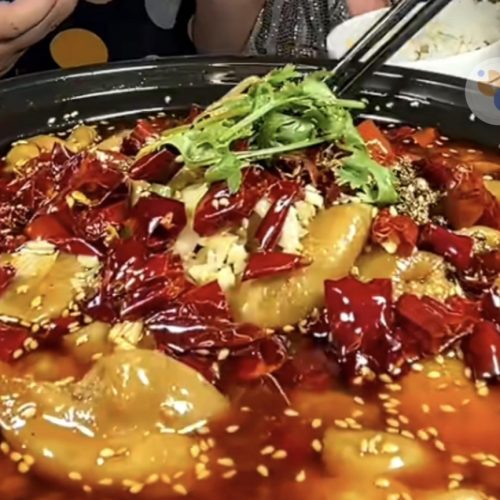
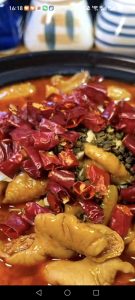
If you have ever eaten your way through a Chengdu night market, you already know the sound: a ladle of smoking oil hitting a pile of dried chilies, and the whole table leaning in. 水煮肥肠 — poached pork intestines — is that moment in a clay pot. Tender rings of braised intestine sit on a bed of crunchy bean sprouts, tofu skin, and greens, and everything is drowned in a red, glossy, numbing broth that is far gentler than it looks.
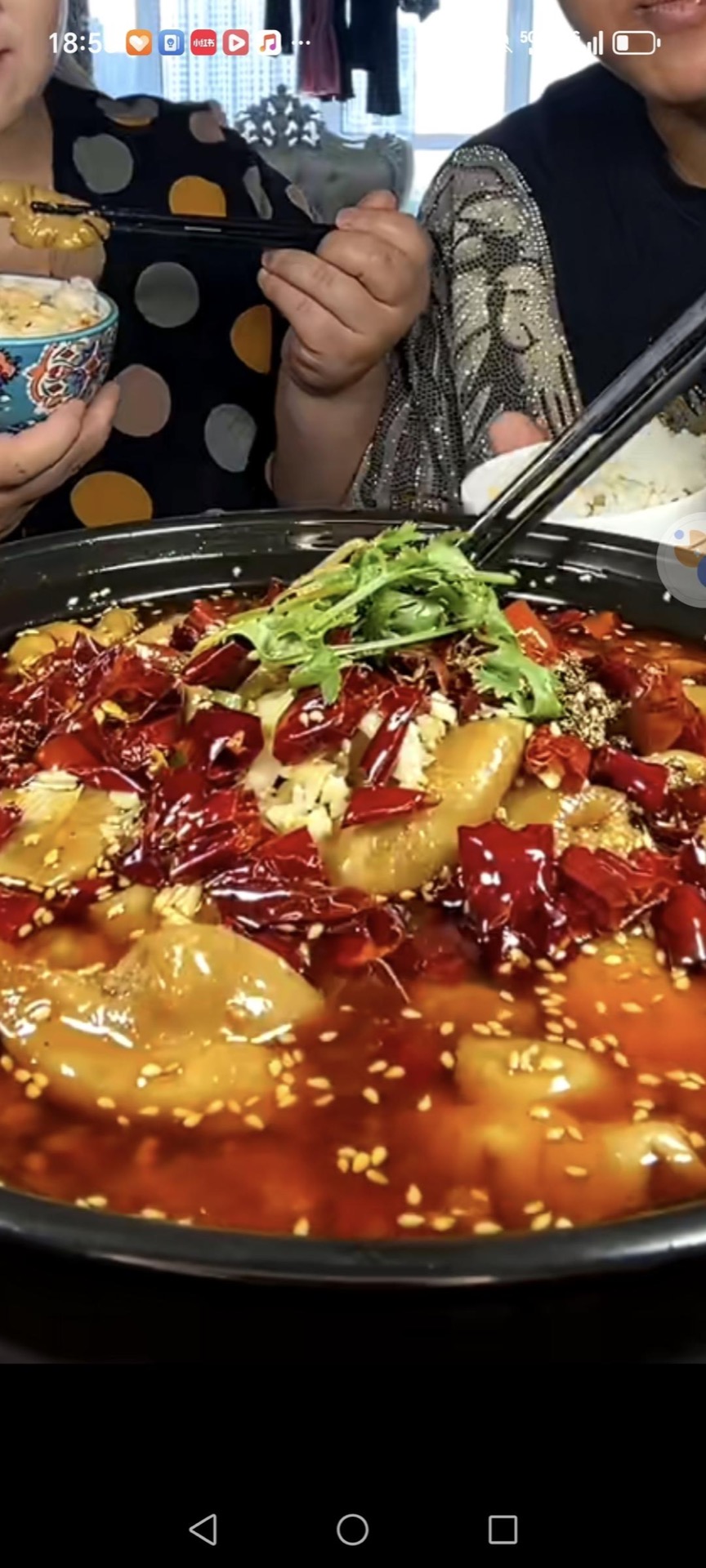
Most people meet 水煮肥肠 in a restaurant and assume it is a restaurant-only dish. It is not. The “water-boiled” family — 水煮牛肉, 水煮鱼, and this intestine version — is really a two-part technique: simmer a protein in a seasoned broth, then finish the whole pot with a ladle of oil hot enough to bloom chilies and Sichuan peppercorns on contact. Once you understand those two moves, you can make it on a Tuesday.
What makes this version practical is starting from braised intestines. Cleaning and braising raw intestines from scratch takes the better part of a day; buying them already braised (卤肥肠) from a Chinese butcher or a well-stocked Asian market turns this into a 35-minute dish. The intestines arrive seasoned, tender, and ready to be re-fried and simmered. If you want the deep, funky, mineral savoriness that makes this dish worth eating, that shortcut does not cost you anything.
One note before we start: this is a rich dish, and it is meant to be. The vegetables underneath are not filler — they are the balance. Bean sprouts stay snappy, tofu skin soaks up the red broth like a sponge, and the greens give you something clean between bites of intestine. Serve it with plain rice and let the pot do the rest.
What Is 水煮肥肠?
水煮肥肠 (shuǐ zhǔ féi cháng) is a Sichuan preparation of pork intestines in which the intestines are simmered in a seasoned, chili-forward broth and then finished with a pour of smoking oil over dried chilies and Sichuan peppercorns. The name translates literally as “water-boiled fatty intestine,” but “water” is doing a lot of work — the liquid is a savory, wine-spiked, soy-and-oyster-sauce broth, and the “boiling” is really a short simmer.
The dish belongs to the 水煮 (shuǐ zhǔ) family, the same branch of Sichuan cooking that gave us 水煮牛肉 and 水煮鱼. What separates the intestine version is texture. Where beef and fish are tender by nature, intestine is chewy and collagen-rich, so it needs a braise first to become soft, and then a quick re-fry and simmer to pick up the chili oil. The payoff is a texture no other protein in the family offers: springy, slightly sticky, and coated in red oil.
To understand why the technique works the way it does, it helps to know a little food science. The signature aroma of Sichuan cooking comes from capsaicin in the chilies and hydroxy-alpha-sanshool in the Sichuan peppercorns. Both are fat-soluble, which is why the finishing oil is poured hot rather than cold: heat and fat together pull those compounds out of the spices and carry them into the broth. If you want a deeper dive into how the “water-boiled” family fits into Sichuan cooking, how to learn Chinese cooking walks through the core techniques that make dishes like this one click.
Sichuan peppercorns do not add heat — they add vibration. The tingling, buzzing sensation they produce comes from a compound that activates the same touch receptors your skin uses to sense cold and vibration, which is why má and là together read as “electric” rather than simply “spicy.”
In Chengdu and Chongqing, 水煮肥肠 is usually served in a clay pot or a deep metal bowl, brought to the table still bubbling, with the oil pour done in front of the diners. It is a sharing dish, a drinking dish, and a rice dish all at once. At home, a flameproof clay pot gives you the best of both: you can build the vegetable base in it and bring the whole thing to the table without dirtying another vessel.
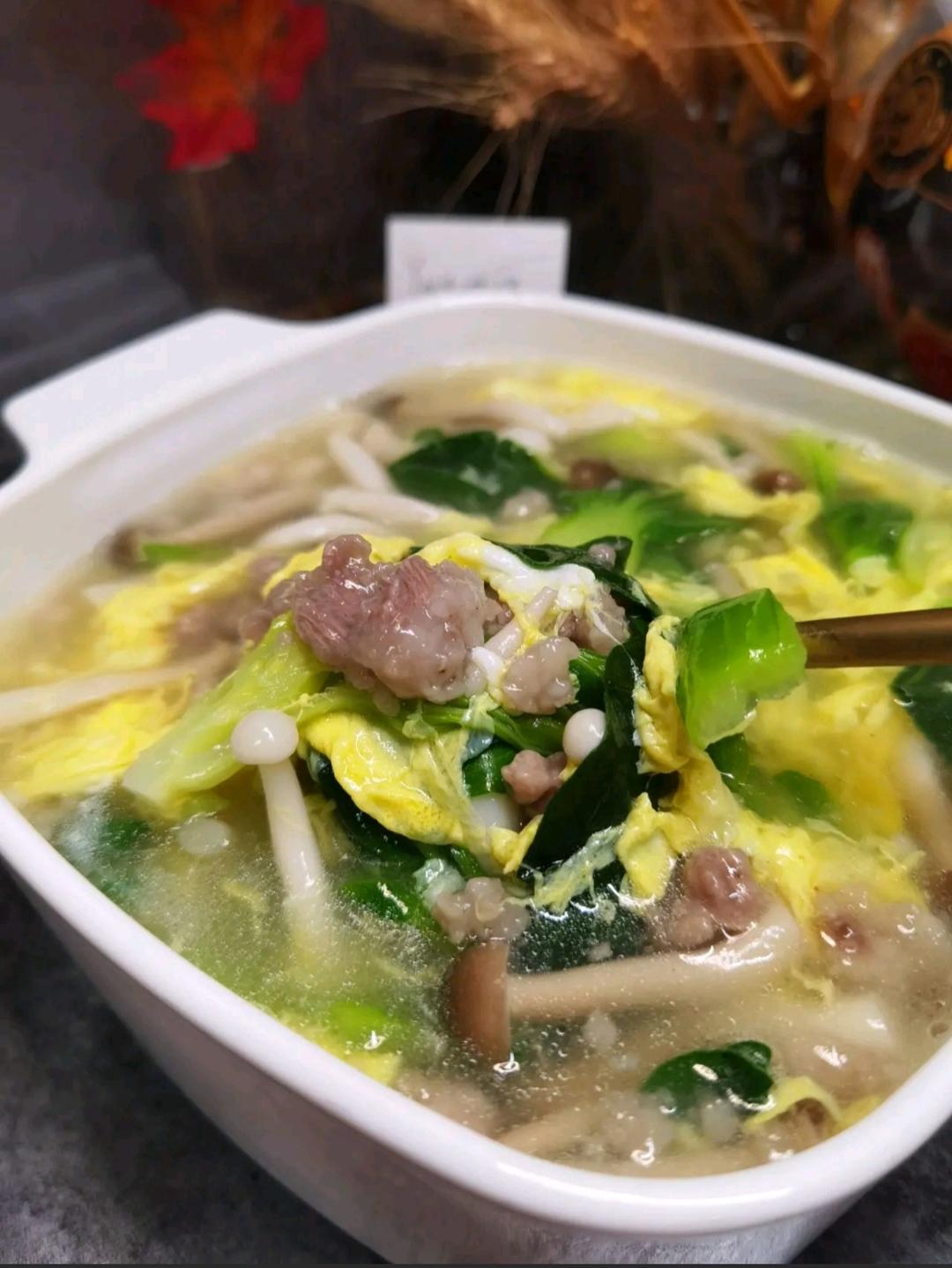
If you like the flavors here, our moms poached pork soup is a gentler, brothier take on pork, and a good next stop if you want to stay in the same ingredient family without the chili.
1Mom’s Poached Pork Soup (Cuan Rou Tang)A clear, homey Chinese soup of sweet-potato-starch-coated pork, quickly poached in boiling water with shiitake mushrooms, leafy greens and a soft egg swirl. On the table in about 15 minutes, from a pantry you already have.Check out this recipe
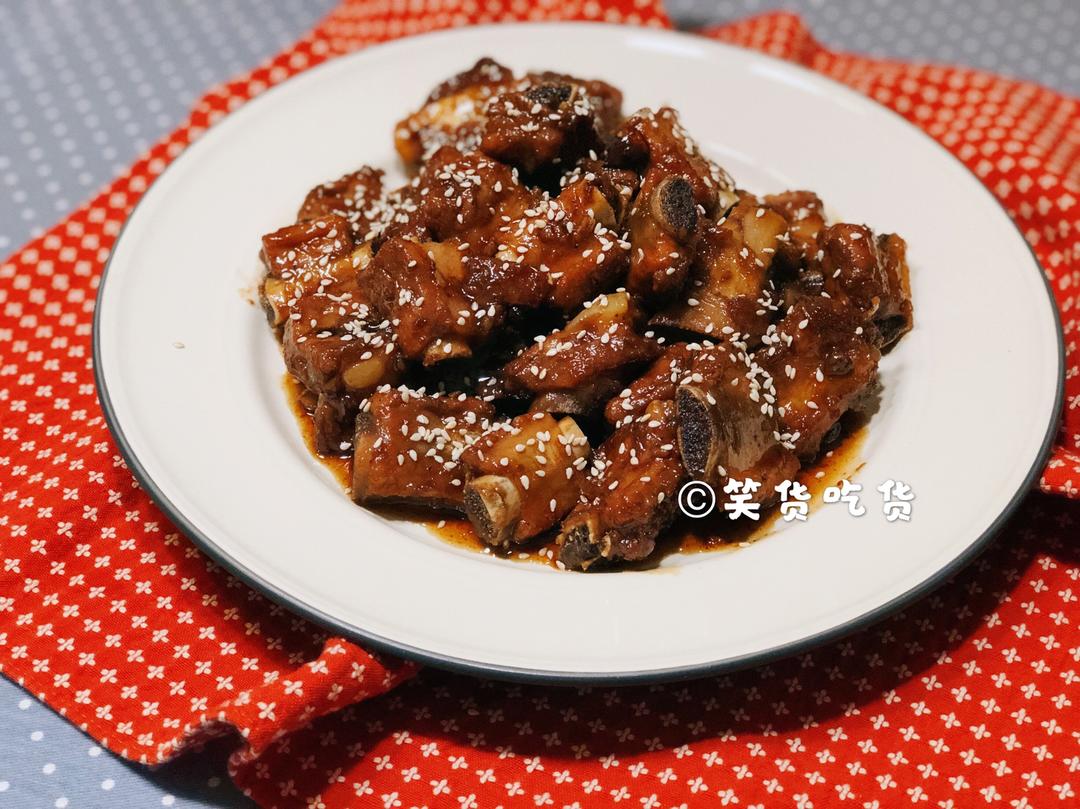
For a pork dish with the same sweet-savory balance but none of the heat, try our sweet and sour pork ribs — the sauce is built on the same soy-and-sugar logic, just pointed in a different direction.
2Authentic Sweet and Sour Pork Ribs (Tang Cu Pai Gu)A foolproof, no-fry Sweet and Sour Pork Ribs recipe using the classic 1-2-3-4 golden ratio for the perfect balance of sweet and tangy flavors. Sticky, glossy, and incredibly tender!Check out this recipe
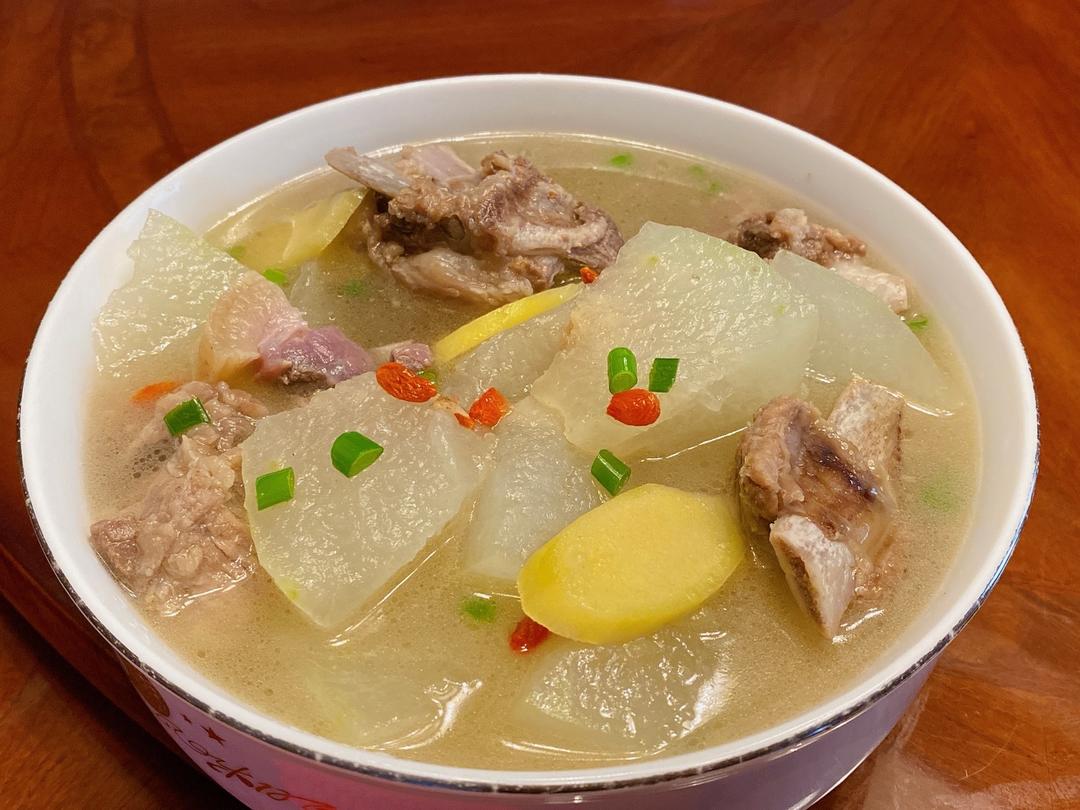
And if you want a light, clear soup to serve alongside a rich pot like this one, our winter melon pork rib soup is the cooling counterweight that Cantonese home cooks reach for.
3Authentic Winter Melon Pork Rib Soup (Dong Gua Pai Gu Tang)A comforting, hydrating summer soup featuring tender pork ribs, savory salted pork, and melt-in-your-mouth winter melon. Authentic, simple, and naturally healthy.Check out this recipe
Why This Recipe Works
Three decisions do most of the work here.
Start with braised intestines. Raw pork intestines need aggressive cleaning — salt, vinegar, cornstarch, repeated rinsing — and then a long braise with aromatics before they are pleasant to eat. Braised intestines (卤肥肠) skip all of that. They are already tender, already seasoned with star anise and soy, and they hold up beautifully to a second cooking. This is the single biggest reason the recipe fits into a weeknight.
Fry the intestines before simmering them. A quick stir-fry in hot oil with the sauce ingredients drives off the residual “off” notes that even good braised intestines carry. It also caramelizes the soy and oyster sauce onto the surface, so the intestines taste seasoned rather than merely coated. Skipping this step is the most common reason home versions taste flat.
Layer, do not stir. The vegetables go in the bottom of the pot and stay there. The intestines and broth are poured over the top. This keeps the sprouts crunchy and the tofu skin intact, and it means every spoonful has a different ratio of soft intestine to crisp vegetable. If you stir everything together, you get a uniform, slightly soggy stew instead.
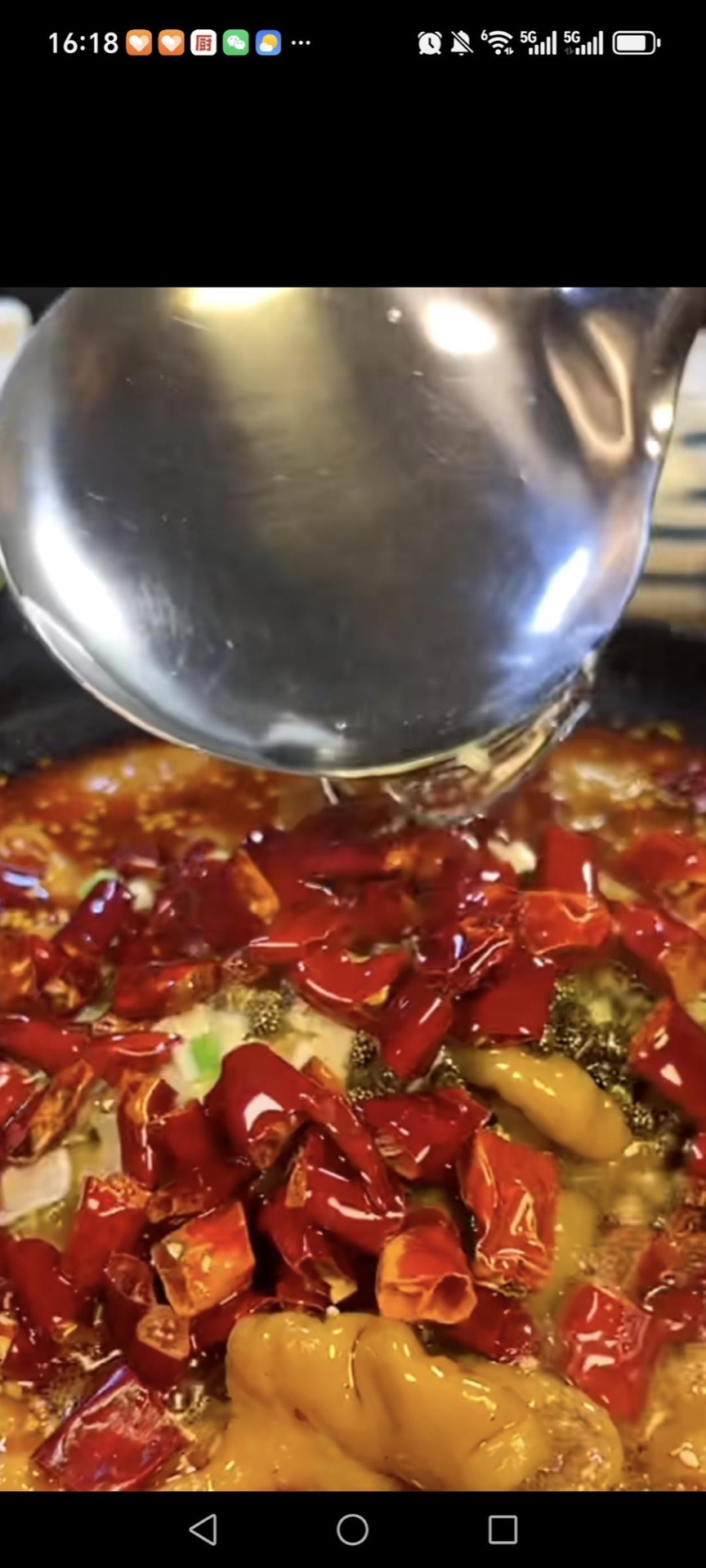
The finishing oil is the fourth pillar, and it is non-negotiable. Oil heated to the smoking point, poured directly over a mound of dried chilies and Sichuan peppercorns, extracts their aroma in about two seconds. Cool oil does not do this. If your oil is not smoking, wait.
Equipment Needed
You do not need much, but a few pieces make this significantly easier.
- A wok. A carbon steel wok is ideal for the stir-frying stages — it gets hot fast and gives you room to toss. A large skillet works in a pinch.
- A clay pot or flameproof casserole. This is what you serve in. A 2- to 3-quart clay pot is the traditional choice and holds heat beautifully at the table. Any heavy flameproof pot will do.
- A small saucepan or ladle. For heating the finishing oil to smoking. A small metal ladle you can hold over the flame also works.
- A slotted spoon. For lifting the blanched vegetables out of the water without carrying extra liquid.
- A cutting board and a sharp knife. You will be slicing garlic, snipping chilies, and cutting intestines into rings.
One optional but genuinely useful piece: a fine-mesh skimmer for fishing stray peppercorns out of the oil if you over-pour. Not required, but it saves a mouthful of pure má.
Ingredients
Here is what goes into the pot. Full quantities are in the recipe card below.
For the vegetable base: bean sprouts, tofu skin (dou pi), and a green vegetable — baby bok choy or rapeseed greens both work. Scallions and garlic for the initial stir-fry.
For the intestines: about a pound of braised pork intestines, cut into 1-inch rings. Neutral oil for frying.
For the aromatic base: dried red chilies, sliced garlic, and whole Sichuan peppercorns, fried in oil to start the flavor build.
For the sauce: Shaoxing wine, light soy sauce, dark soy sauce, oyster sauce, water, chicken bouillon powder, and ground white pepper.
For the sizzling finish: more dried chilies and Sichuan peppercorns, a quarter cup of neutral oil heated until smoking, toasted sesame seeds, and fresh cilantro.
Ingredient Notes
Braised pork intestines (卤肥肠). Look for them in the refrigerated or frozen section of a Chinese market, usually sold in vacuum-sealed packs. They are already cooked and seasoned. If you can only find raw intestines, you will need to clean and braise them first — plan for most of a day, and see the note in Variations below. Rinse the braised intestines briefly and pat them dry before cutting; excess liquid will spit in the wok.
Sichuan peppercorns (花椒 / má jiāo). Use whole peppercorns, not ground. The whole ones release aroma in hot oil and give you the tingling sensation without turning the dish gritty. Taste one before you commit — older peppercorns lose their numbing punch. If yours smell dusty rather than citrusy, buy fresh.
Dried red chilies. Sichuan-facing chilies like er jing tiao or facing heaven (朝天椒) are the right choice: fragrant, moderately hot, and they turn a deep red in oil. Snip them into segments and shake out most of the seeds — the seeds burn easily and turn the oil bitter. If you want a milder pot, use fewer chilies in the finish and more in the simmer, where their heat disperses.
Oyster sauce. This is where the dish gets its roundness. If you are unsure which bottle to buy or when to add it, our guide to how to use oyster sauce covers the brands and the timing.
Dark soy sauce. Just a teaspoon. It is there for color, not salt. Skip it and the broth will look pale and thin.
Tofu skin (dou pi). Sold dried, usually in flat sheets or folded bundles. Soak in warm water until pliable, about 20 minutes, then cut into strips. Do not skip the soak or it will stay leathery in the pot.
Neutral oil. Peanut, canola, or any high-smoke-point oil. Do not use olive oil — it will smoke and taste wrong at this temperature.
Prep & Mise en Place
This dish moves fast once the wok is hot, so set everything up before you turn on the flame.
- Soak the tofu skin. Cover it in warm water and let it sit for 20 minutes while you do everything else.
- Cut the intestines. Rinse, pat dry, and slice into 1-inch rings. Set aside in a bowl.
- Prep the vegetables. Rinse the bean sprouts and drain well. Cut the greens into 2-inch pieces. Keep them separate from the sprouts if you can — they cook at slightly different speeds.
- Make the sauce mixture. In a small bowl, combine the Shaoxing wine, light soy, dark soy, and oyster sauce. Have the water, bouillon, and white pepper measured and ready nearby.
- Prep the aromatics. Mince the scallion whites and 3 cloves of garlic. Separately slice 4 cloves of garlic for the aromatic stage. Snip all the dried chilies and divide them: one portion for the aromatic base, one for the finish. Measure the Sichuan peppercorns into two portions as well.
- Set up your stations. Wok, clay pot, slotted spoon, and a small saucepan for the finishing oil, all within arm’s reach.
Total hands-on prep is about 15 minutes if the tofu skin is already soaked. If you are starting from dry tofu skin, add 20 minutes of unattended soaking time.
Cooking Process
Step 1 — Blanch the Vegetables
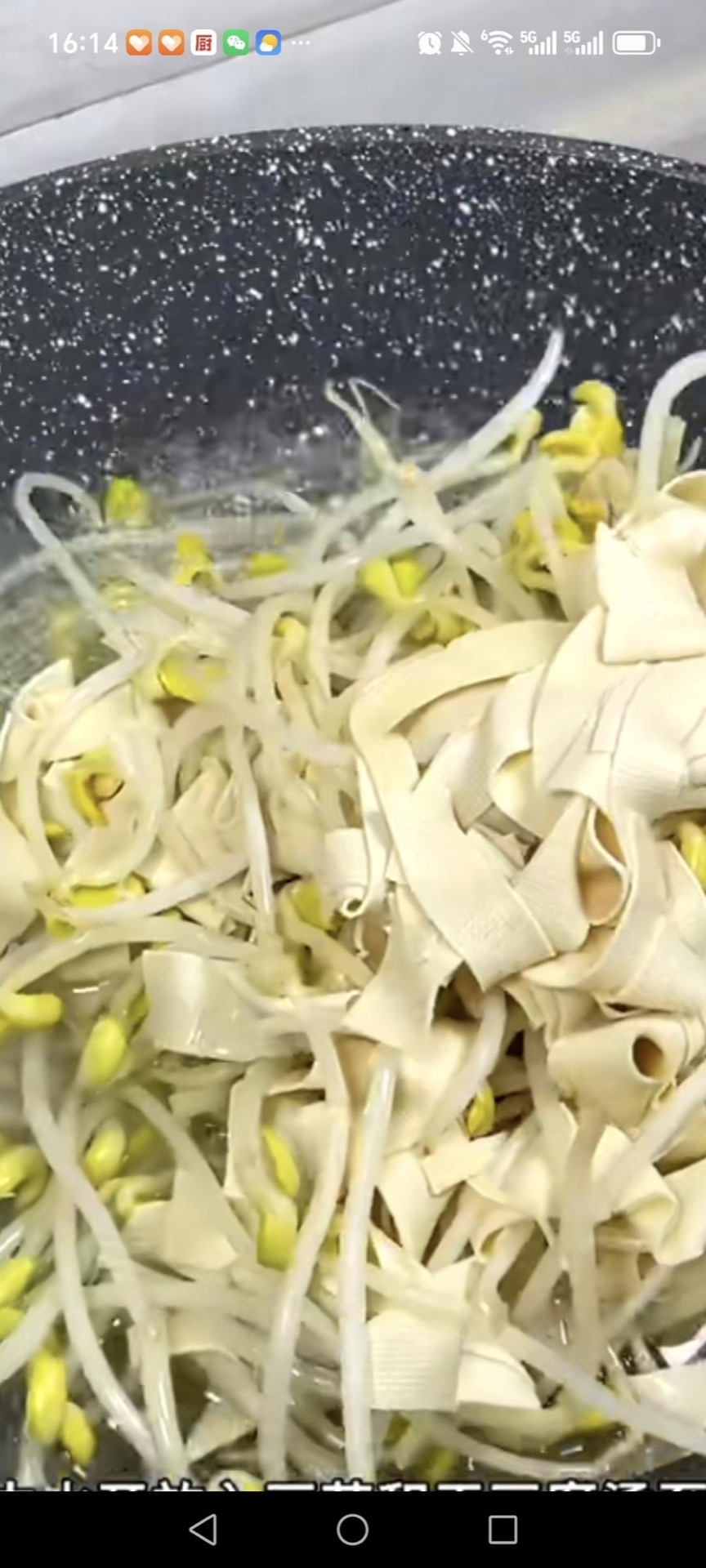
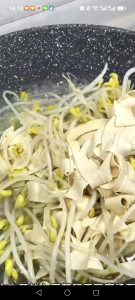
Bring a pot of water to a boil, add the bean sprouts and tofu skin, and blanch for 2 minutes, then scoop them out and set aside.
Step 2 — Sauté the Aromatics
Heat oil in a separate wok, add the scallions and minced garlic, and stir-fry until fragrant.

Step 3 — Wilt the Greens
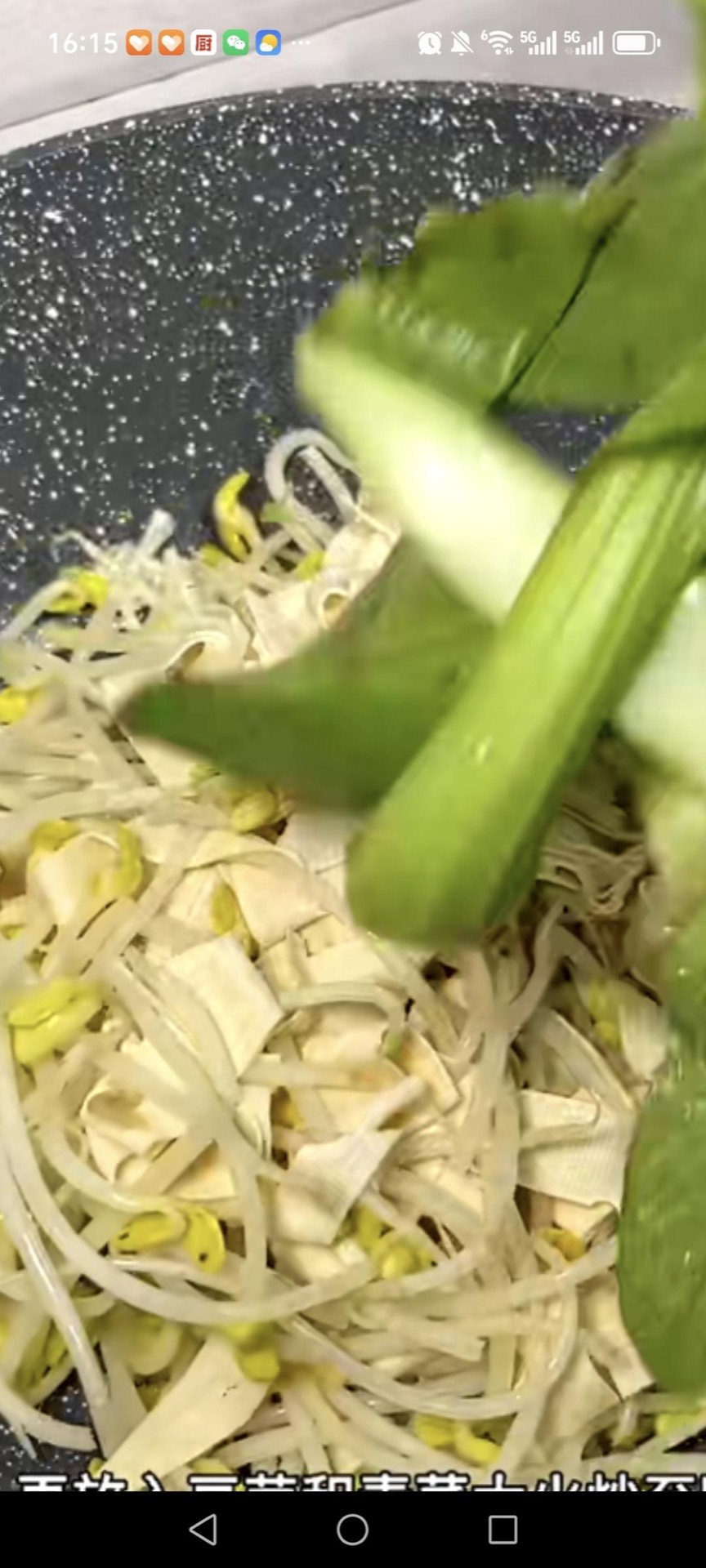
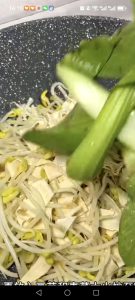
Add the bean sprouts, tofu skin, and greens to the wok and stir-fry until softened.
Step 4 — Build the Base
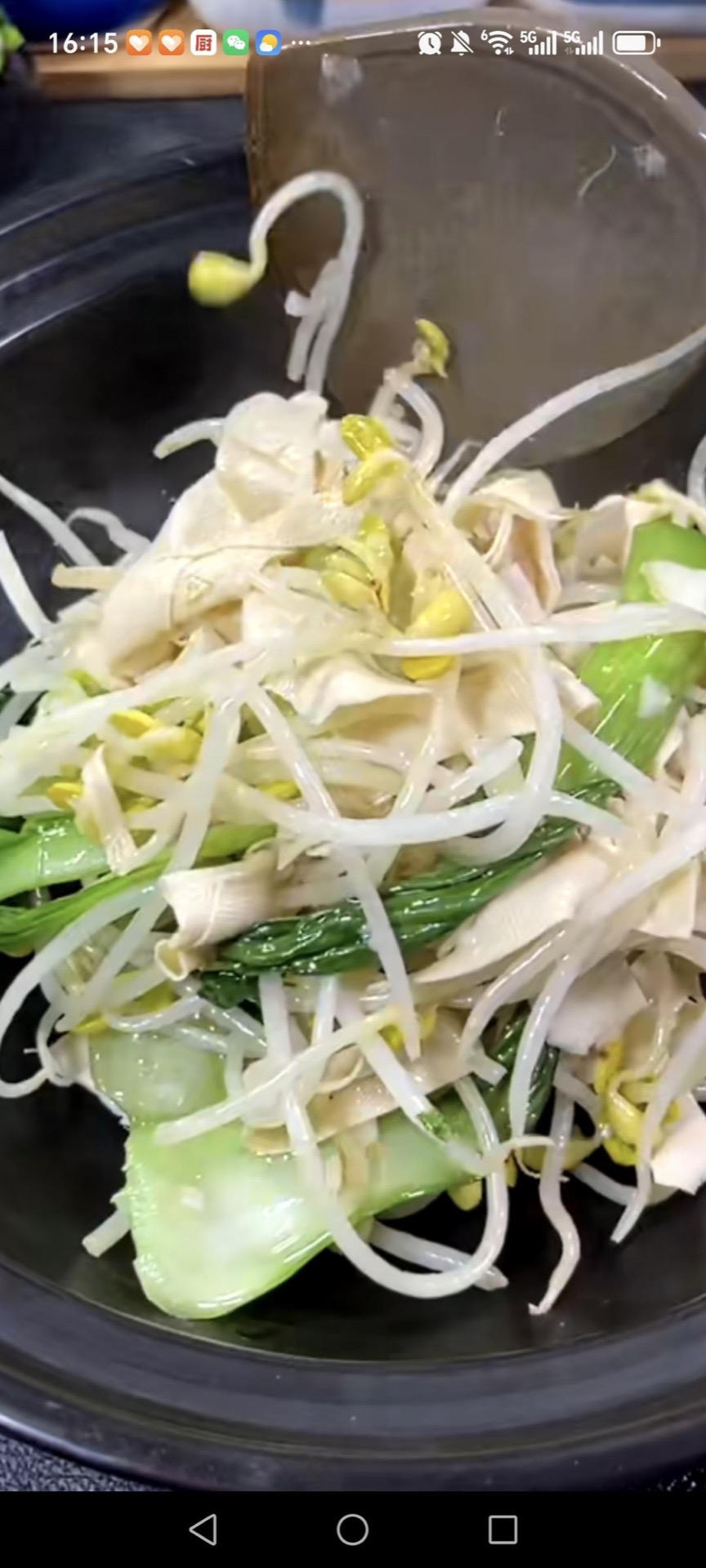
Spread all the vegetables in the bottom of a clay pot and set it aside.
Step 5 — Fry the Intestines
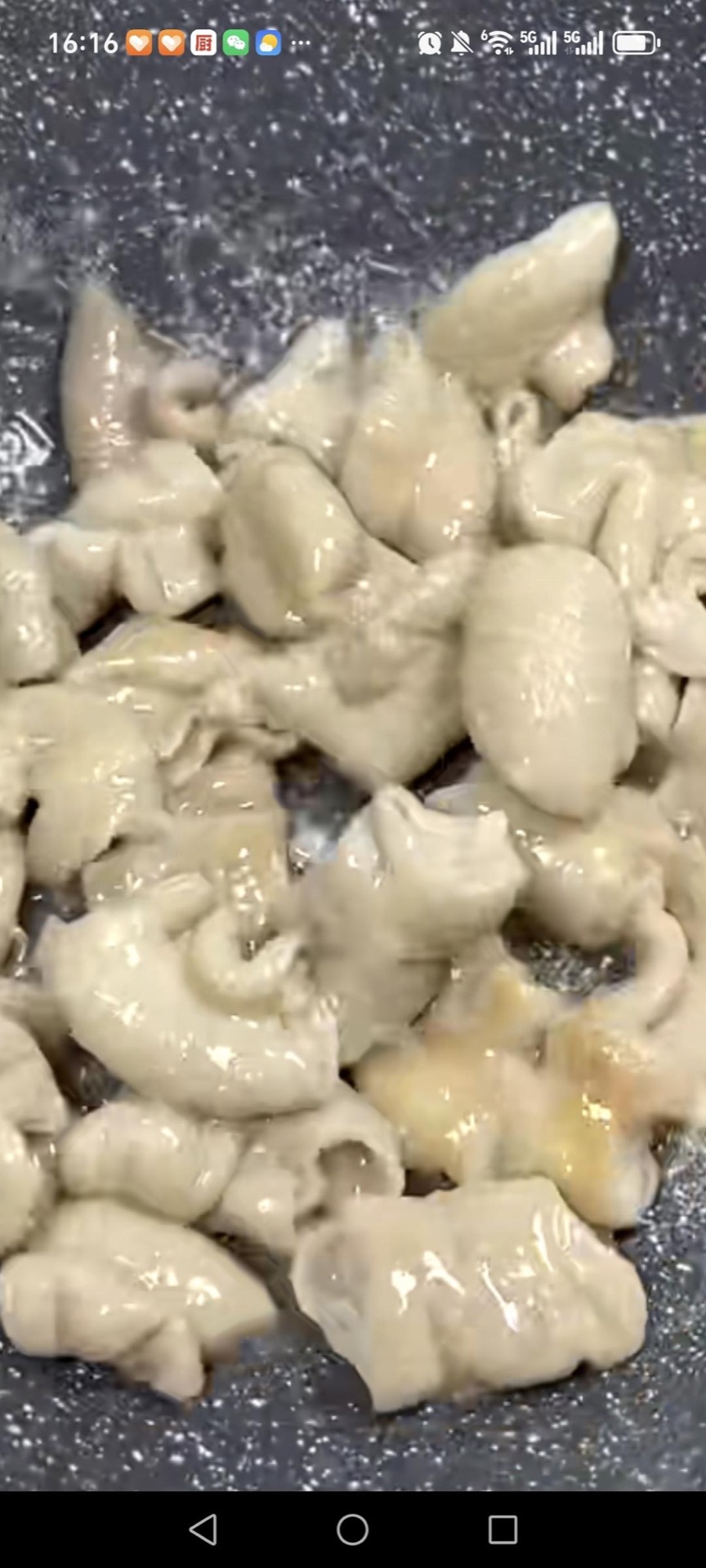
Heat oil in another wok, add the intestines, sprinkle over the sauce mixture, and stir-fry to cook off any gamey smell.
Step 6 — Bloom the Spices
Heat oil in a clean wok, add the dried chili segments, garlic slices, and Sichuan peppercorns, and stir-fry until fragrant.
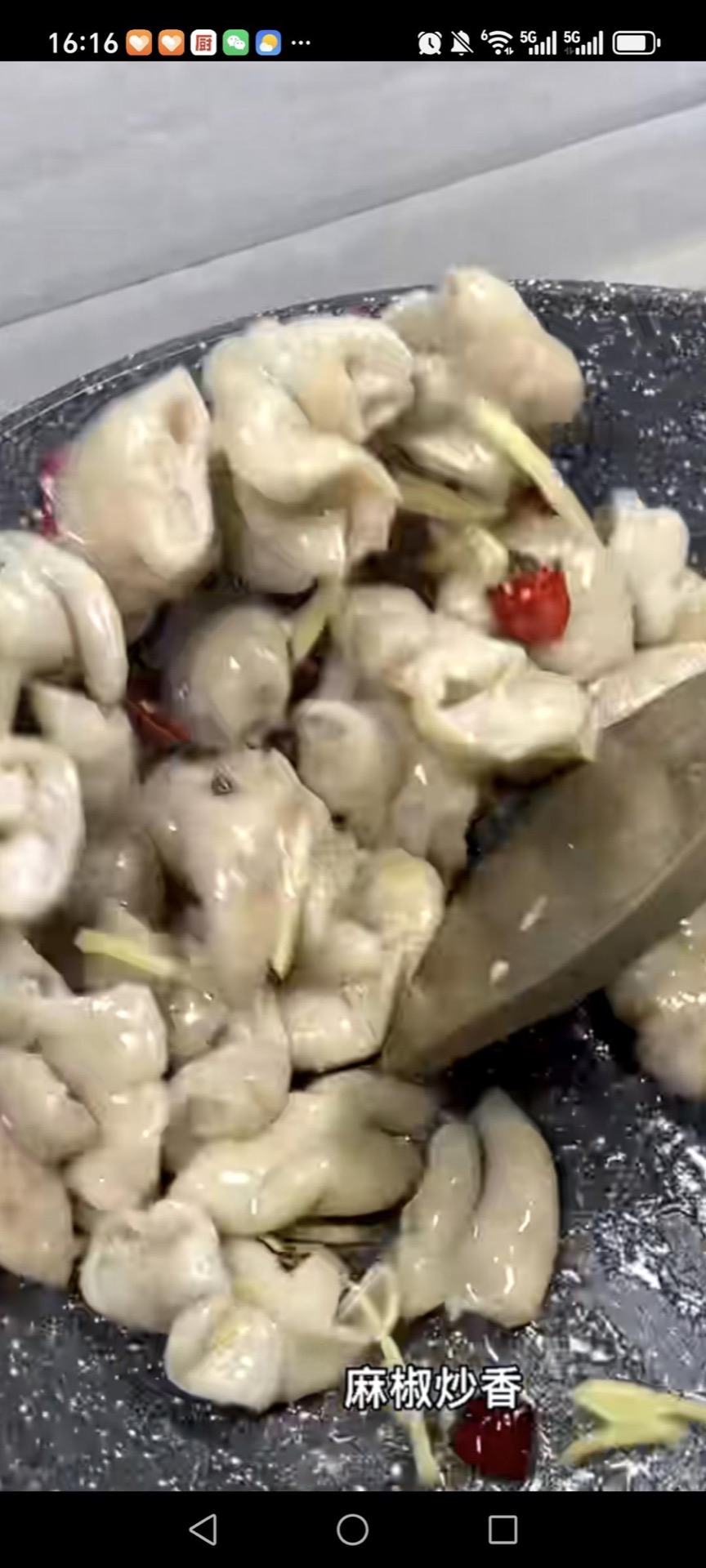
Step 7 — Season and Toss
Add the Shaoxing wine, light soy sauce, dark soy sauce, and oyster sauce to the wok and toss everything together.
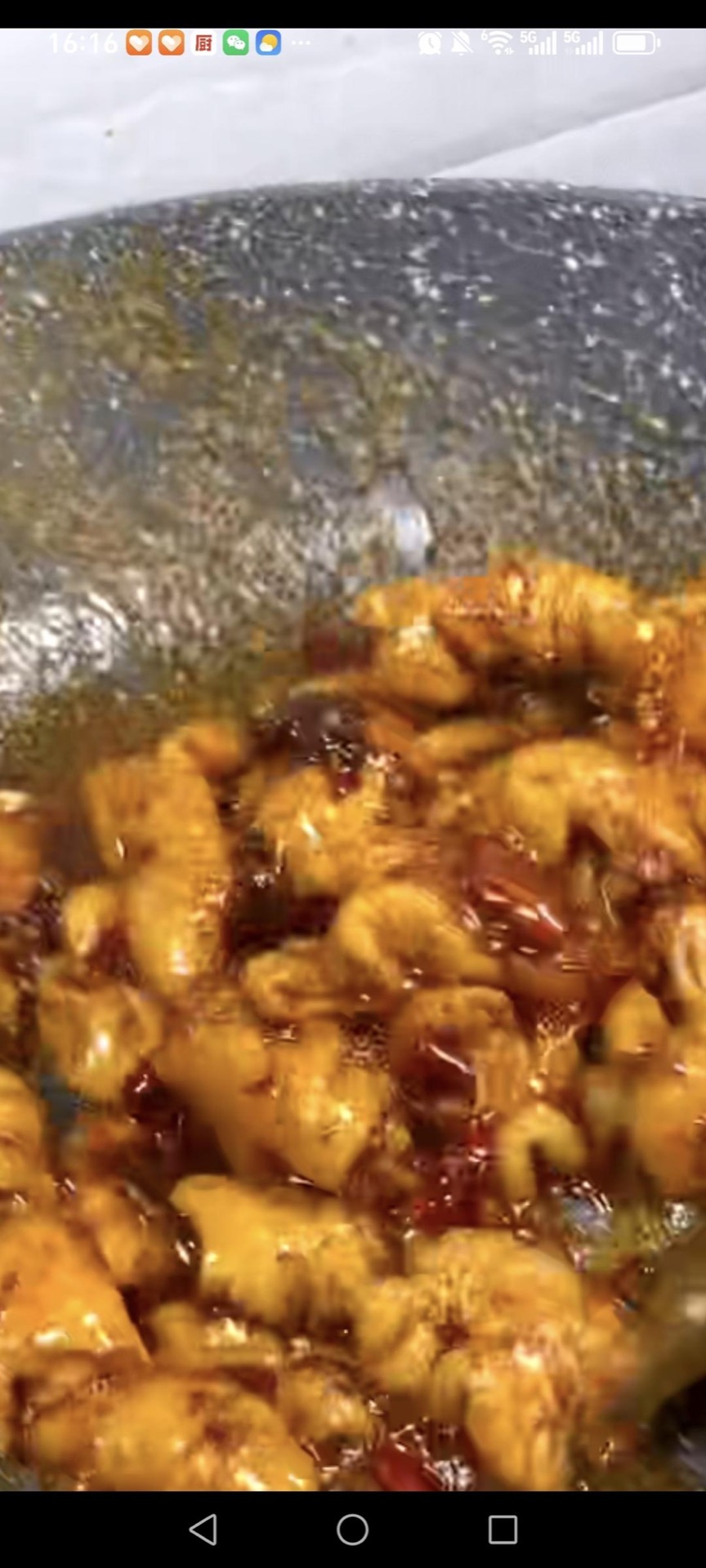
Step 8 — Simmer
Add the water, chicken bouillon powder, and white pepper, and simmer for 2 minutes.
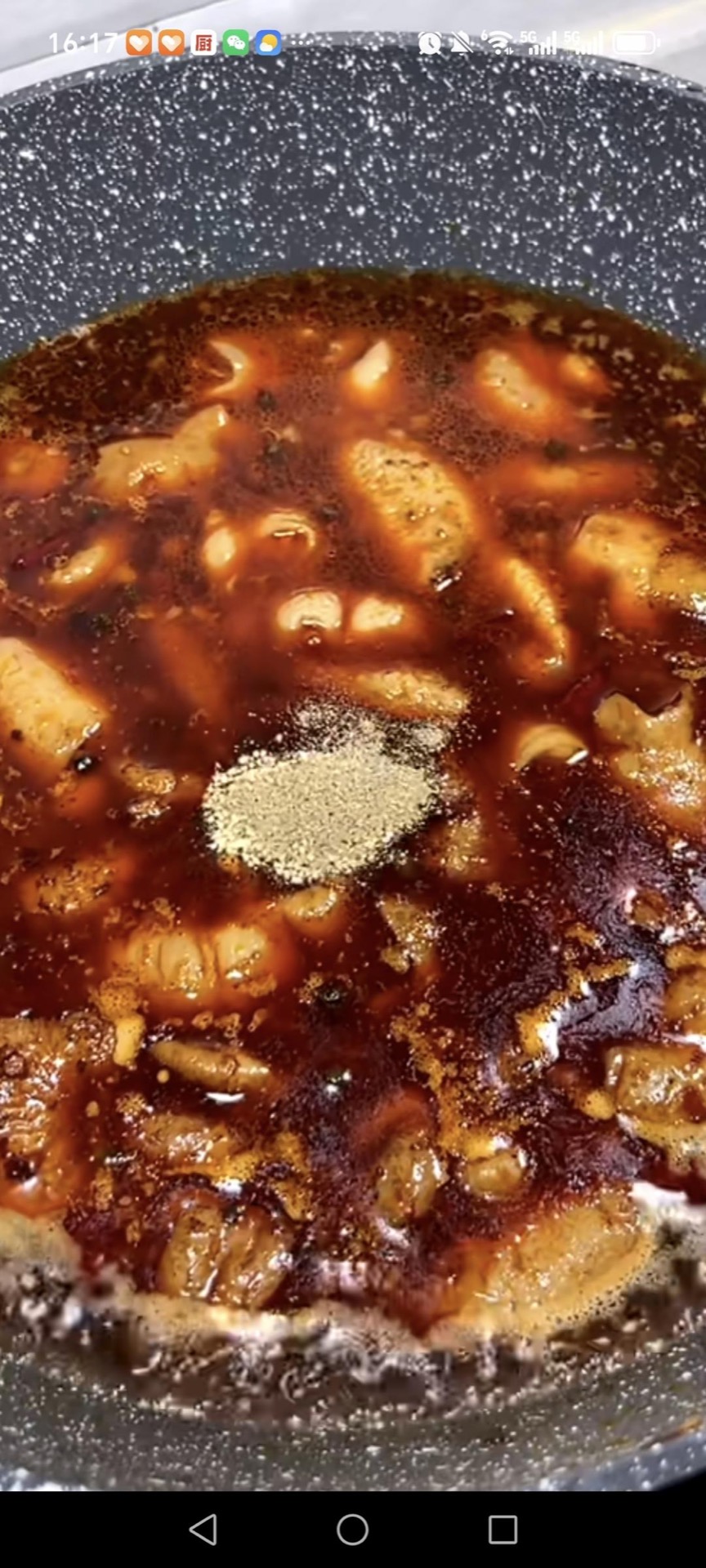
Step 9 — Pour Over the Vegetables
Pour the cooked intestines and their braising liquid over the vegetables in the clay pot.
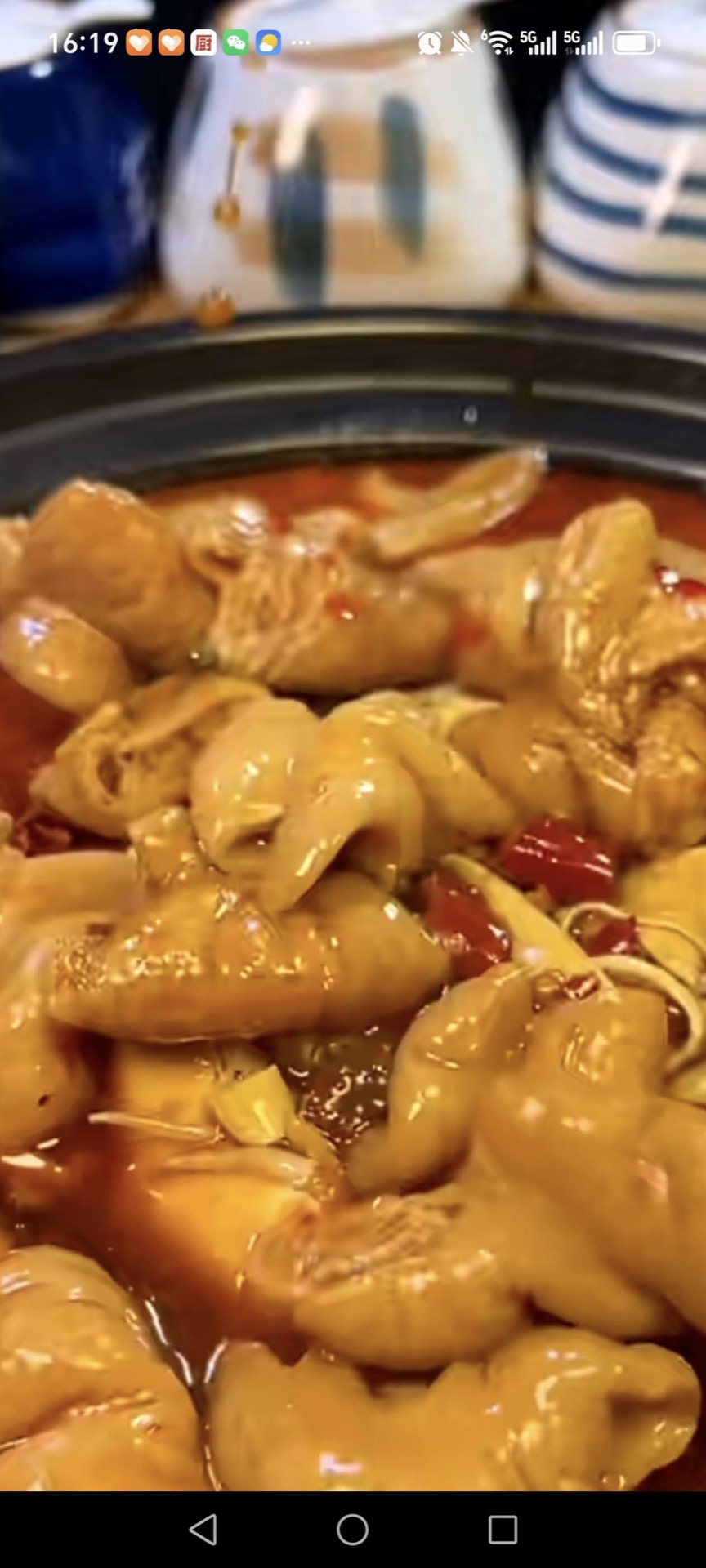
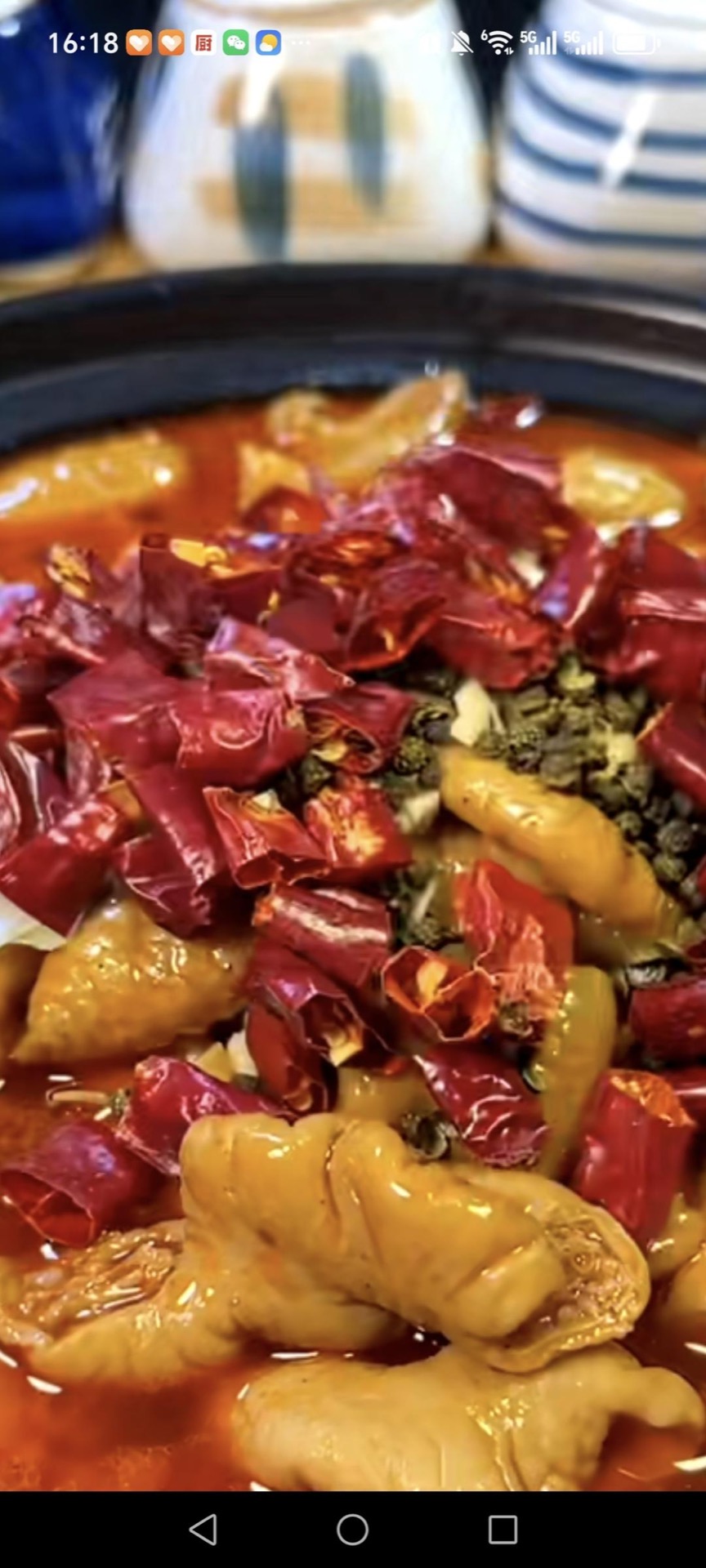
Step 10 — Top with Chilies and Peppercorns
Scatter the dried chili segments and Sichuan peppercorns over the top.
Step 11 — Sizzle the Oil
Heat oil until it is smoking and pour it over the chilies and peppercorns to release their aroma.
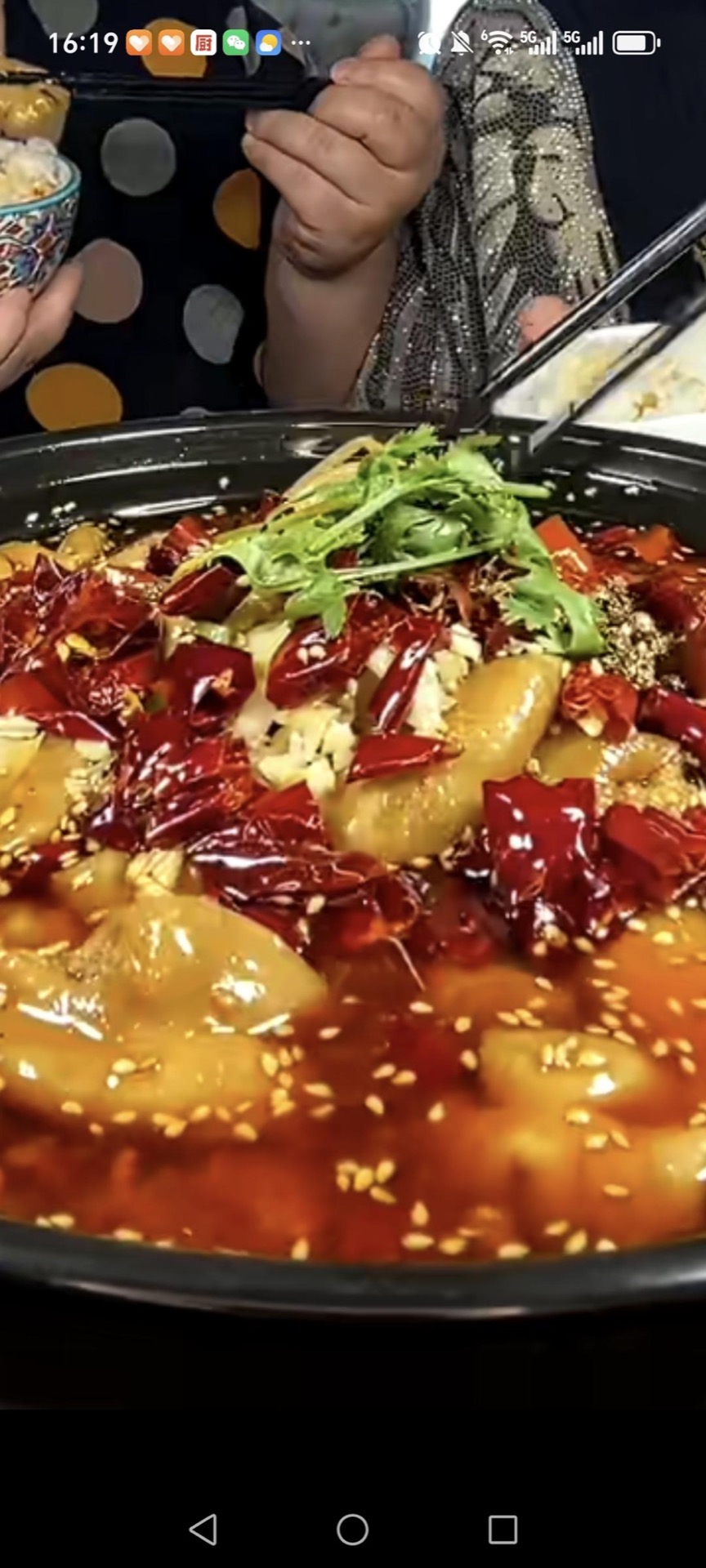
Step 12 — Garnish and Serve
Sprinkle with sesame seeds, top with cilantro, and the poached pork intestines are ready.
Common Mistakes When Making 水煮肥肠
1. Using cold or lukewarm finishing oil. This is the mistake that ruins the dish most often. Oil that is not visibly smoking will not bloom the chilies and peppercorns — it just makes everything greasy. Cause: impatience, or heating the oil in a pot that is too wide to judge. Fix: heat the oil in a small saucepan over medium-high until a wisp of smoke rises steadily, then count two seconds and pour.
2. Skipping the fry on the intestines. Going straight from package to pot means the intestines never lose their residual funk and never get coated in caramelized sauce. Cause: wanting to save a step. Fix: two minutes in a hot wok with the sauce mixture, until the rings look glossy and smell savory rather than sharp.
3. Stirring the vegetables into the broth. If you mix everything together, the sprouts go limp and the tofu skin disintegrates. Cause: habit. Fix: keep the vegetables in a single layer at the bottom of the pot and pour the intestines and broth over them. Do not stir at the table either — spoon from the top and let the layers stay layered.
4. Burning the chilies in the aromatic stage. Dried chilies go from fragrant to acrid in seconds. Cause: oil that is too hot before the chilies go in, or leaving them in while you prep the next ingredient. Fix: add the chilies and peppercorns to oil that is hot but not smoking, stir constantly, and move on the moment they darken and smell sweet.
5. Underseasoning the broth. The vegetables underneath are unseasoned, so the broth has to carry the salt for the whole pot. Cause: tasting only the intestines, which are already salty from the braise. Fix: taste the simmering liquid and adjust — it should be slightly saltier than you want the finished dish to be, because the vegetables will dilute it.
6. Overcrowding the wok. A pound of intestines plus vegetables in a small skillet will steam rather than fry. Cause: using a pan that is too small. Fix: work in batches, or use a proper wok. Steam is the enemy of browning.
7. Serving it cold. This dish is at its best between 150°F and 180°F (65–82°C), when the oil is still liquid and the aroma is still rising. Cause: letting it sit while you finish other dishes. Fix: time the oil pour for the moment everyone is seated.
Variations
With raw intestines, braised at home. If you want to start from scratch, clean raw intestines with salt, vinegar, and cornstarch, rinse until the water runs clear, then braise for 1.5 to 2 hours with ginger, scallions, star anise, Shaoxing wine, soy sauce, and rock sugar. Cool them in the braising liquid, then proceed with the recipe. The flavor is deeper, but the project is a full day.
Swap the protein. The technique works with thinly sliced beef (the classic 水煮牛肉), white fish fillets, or even duck blood and luncheon meat for a 毛血旺-adjacent pot. Adjust the simmer time: fish needs only 1 minute, beef about 2.
Milder pot. Halve the dried chilies in the finish and use only half a teaspoon of Sichuan peppercorns. You still get the aroma and a hint of má, without the full electric effect. This is the version to make for guests who claim they cannot eat spicy food.
Extra vegetables. Enoki mushrooms, sliced lotus root, and napa cabbage all work in the base. Add them to the blanch step so they are parcooked before they go into the pot. If you like the idea of vegetables carrying a chili dressing, our chrysanthemum greens salad is a lighter, cold counterpart.
Vegetarian version. Replace the intestines with thick-cut king oyster mushrooms and use mushroom bouillon instead of chicken. The texture is different, but the sauce and the finishing oil carry the dish.
Frequently Asked Questions
Do I have to use braised intestines, or can I use raw? You can use raw, but you must clean and braise them first — a process that takes several hours. Braised intestines are already tender and seasoned, which is why this recipe uses them. If you are buying raw, ask your butcher whether they have been cleaned.
How do I get rid of the smell? Two things: a brief rinse and pat-dry before cutting, and the fry step with Shaoxing wine and soy sauce. The wine and the high heat drive off the volatile compounds responsible for the funk. If the smell persists after frying, your intestines may not have been braised long enough.
Is this dish very spicy? It is spicy, but the heat is adjustable. Most of the perceived heat comes from the finishing oil, so reducing the chilies in that step is the easiest lever. Sichuan peppercorns add numbness rather than heat, so you can keep them even if you lower the chili count.
Can I make it ahead? Yes, up to the point of the oil pour. Build the pot, cover, and refrigerate for up to 2 days. Reheat gently on the stovetop until bubbling, then do the chili-and-oil finish right before serving. The oil pour does not hold.
What do I do with leftover broth? Do not throw it away. Strain it, refrigerate it, and use it as the base for a noodle soup or a braise. It is intensely flavored and freezes well for up to 3 months.
How to Serve
Serve 水煮肥肠 in the clay pot it was built in, with the oil still sizzling, and put a bowl of plain white rice next to every diner. The rice is not optional — it is the counterweight to the richness. A plate of steamed greens or a cold cucumber salad on the side keeps the table from being all chili and oil.
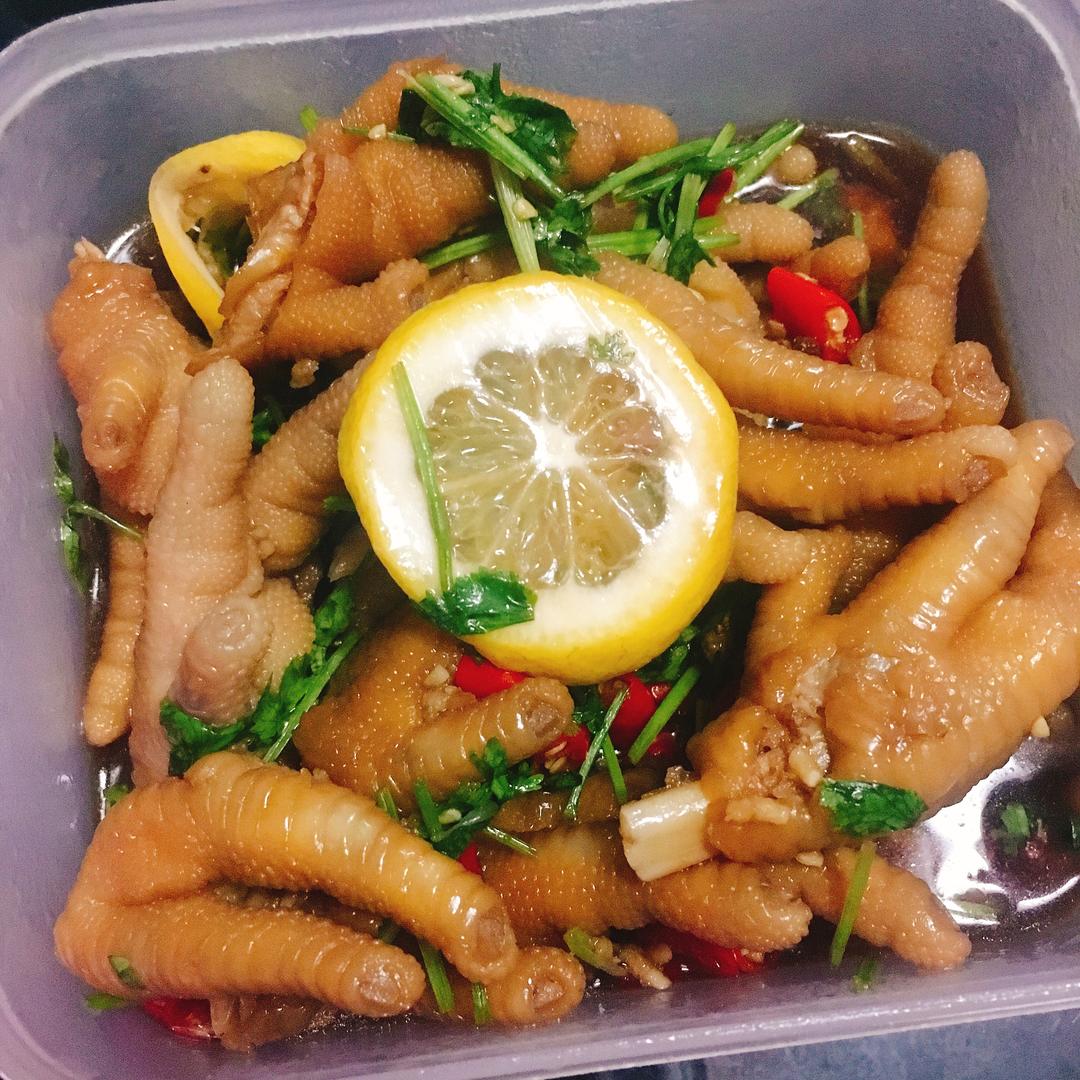
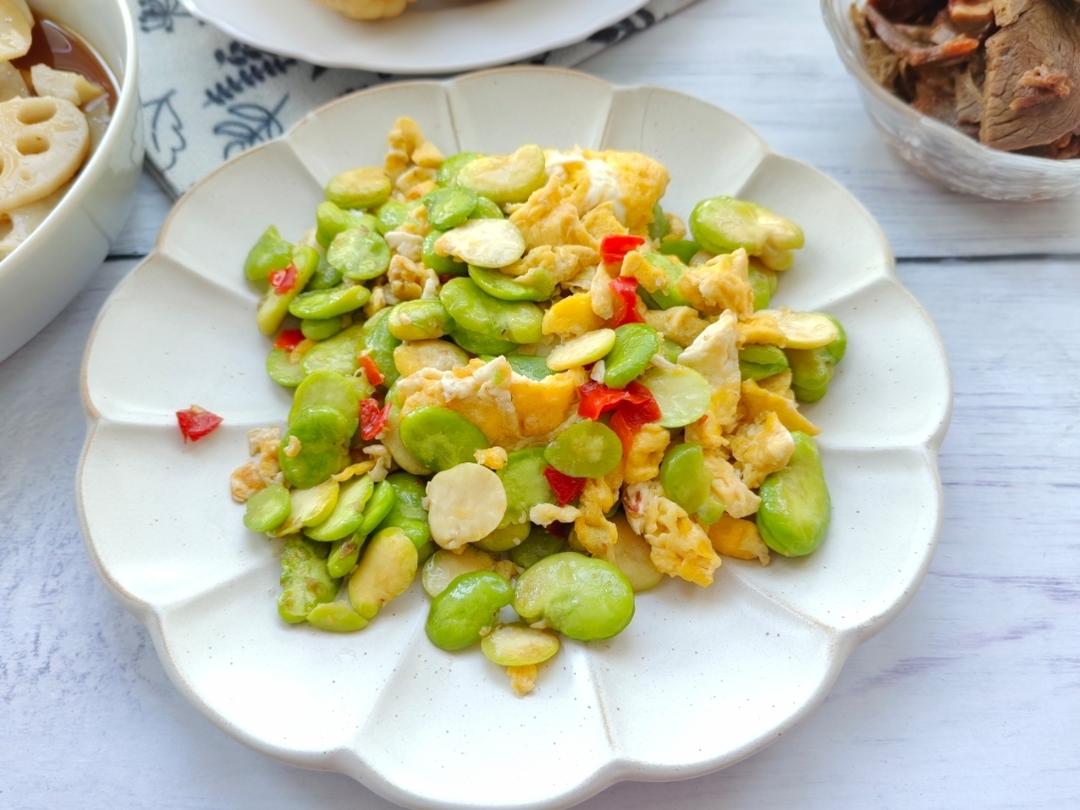
If you want a cold dish to start, our hot and sour chicken feet are a classic Sichuan drinking-table opener and share the same sour-spicy profile. For a sweeter, milder side that balances the heat, Chinese tea eggs work surprisingly well — the soy-and-five-spice flavor sits comfortably next to the chili oil. And if you want one more vegetable on the table, stir fried fava beans with eggs is quick, mild, and adds a fresh green note.
For drinks, cold beer or a light roasted oolong. Avoid anything sweet — it fights the má.

Storage & Reheat
Cool leftovers within 2 hours and refrigerate in a sealed container for up to 3 days. The vegetables will soften considerably on day two, which is normal — if you want to preserve their texture, lift them out before storing and keep them separate.
To reheat, transfer to a pot and warm gently over medium-low heat until bubbling, about 5 to 7 minutes, stirring once or twice. Do not microwave if you can avoid it; the oil separates and the intestines turn rubbery. If the broth looks thick after chilling (the collagen in the intestines sets), add a splash of water as it heats.
Reheat to 165°F (74°C) and hold hot foods above 140°F (60°C). Do not reheat more than once. The dish does not freeze well — the tofu skin breaks down and the sprouts turn to mush.
Allergen Notice
This recipe contains soy (light soy sauce, dark soy sauce, oyster sauce), wheat (soy sauce and oyster sauce are both brewed with wheat), and sesame (the toasted sesame seed garnish). Oyster sauce also contains shellfish. If you are avoiding soy, use coconut aminos in place of both soy sauces and a soy-free oyster sauce substitute; the color will be lighter but the flavor will still work. If you are avoiding sesame, simply omit the garnish. If you are avoiding shellfish, replace the oyster sauce with an extra teaspoon of soy sauce plus a pinch of sugar.
Check the labels on your braised intestines, bouillon powder, and oyster sauce — formulations vary, and some contain wheat or added MSG that may matter to you.
Nutrition Disclaimer
Nutrition information is calculated using an ingredient database and should be considered an estimate. In cases where multiple ingredient alternatives are given, the first listed is calculated for nutrition. Garnishes and optional ingredients are not included.
About the Author & Recipe Development
Hi, I am Lin — I grew up in a Chinese kitchen where the wok was always hot and the answer to most problems was more garlic. I started Woks of Love to write down the dishes my family actually cooked, with the measurements and the reasoning that home cooks need and restaurant recipes never include.
This recipe came together over several rounds of testing in my own kitchen. The first version used raw intestines and took a full day; it was delicious and completely impractical. The second version used pre-braised intestines but skipped the fry step, and the result tasted flat and slightly funky. The third version — the one you have here — fries the intestines with the sauce, layers rather than stirs, and finishes with oil hot enough to actually bloom the spices. That is the version I make now, and it is the version I cook for friends who claim they do not like intestine. They change their minds about halfway through the pot.
If you cook it, I would love to hear how it went — especially if you adjusted the chili level or swapped in a different vegetable base. Those variations are where the recipe keeps getting better.
Authoritative References
For safe handling and reheating of cooked pork products, see the USDA safe minimum internal temperature chart. For storage and cooling guidance, the FDA Food Code refrigerator and cold-storage guidance is the reference I use. On the chemistry of Sichuan peppercorn’s tingling sensation, see this explainer on the science of má. For general food-safety principles on leftovers and reheating, the WHO food safety fact sheet is a useful overview.
Poached Pork Intestines (水煮肥肠): Spicy, Numbing, Tender Pork

Equipment
- Wok
- Clay pot or flameproof casserole
- Cutting Board
- Slotted Spoon
- Small Saucepan
Ingredients
For the Vegetable Base
- 6 oz bean sprouts rinsed
- 4 oz tofu skin (dou pi) soaked until pliable, cut into strips
- 4 oz baby bok choy or rapeseed greens cut into 2-inch pieces
- 2 tbsp neutral oil for stir-frying
- 2 scallions white parts minced, greens reserved
- 3 cloves garlic minced
For the Intestines
- 1 lb braised pork intestines (卤肥肠) cut into 1-inch rings
- 2 tbsp neutral oil for stir-frying
For the Aromatic Base
- 3 tbsp neutral oil for frying the aromatics
- 10 dried red chilies snipped into 1-inch segments, seeds shaken out
- 4 cloves garlic thinly sliced
- 1 tbsp Sichuan peppercorns (má jiāo) whole
For the Sauce
- 2 tbsp Shaoxing wine
- 2 tbsp light soy sauce
- 1 tsp dark soy sauce
- 1 tbsp oyster sauce
- 1 cup water
- 1 tsp chicken bouillon powder
- 1/4 tsp ground white pepper
For the Sizzling Finish
- 2 tbsp dried red chilies snipped
- 1 tsp Sichuan peppercorns whole
- 1/4 cup neutral oil heated until smoking
- 1 tsp toasted sesame seeds
- 1 cilantro roughly chopped
Instructions
- Bring a pot of water to a boil, add the bean sprouts and tofu skin, and blanch for 2 minutes, then scoop them out and set aside.

- Heat oil in a separate wok, add the scallions and minced garlic, and stir-fry until fragrant.
- Add the bean sprouts, tofu skin, and greens to the wok and stir-fry until softened.
- Spread all the vegetables in the bottom of a clay pot and set it aside.
- Heat oil in another wok, add the intestines, sprinkle over the sauce mixture, and stir-fry to cook off any gamey smell.
- Heat oil in a clean wok, add the dried chili segments, garlic slices, and Sichuan peppercorns, and stir-fry until fragrant.
- Add the Shaoxing wine, light soy sauce, dark soy sauce, and oyster sauce to the wok and toss everything together.
- Add the water, chicken bouillon powder, and white pepper, and simmer for 2 minutes.
- Pour the cooked intestines and their braising liquid over the vegetables in the clay pot.
- Scatter the dried chili segments and Sichuan peppercorns over the top.
- Heat oil until it is smoking and pour it over the chilies and peppercorns to release their aroma.
- Sprinkle with sesame seeds, top with cilantro, and the poached pork intestines are ready.





















Leave a Reply