There is a particular smell that comes out of a Hong Kong kitchen around six in the evening — curry roux melting into chicken fat, potato starch thickening the sauce, a pot of rice clicking over to warm. Curry chicken leg rice (咖喱鸡腿饭) is that smell. It is not a restaurant dish in the fancy sense; it is the dish a home cook makes when there are chicken legs in the fridge, a block of curry in the cupboard, and half a potato that needs using. And yet it eats like something you would pay for.
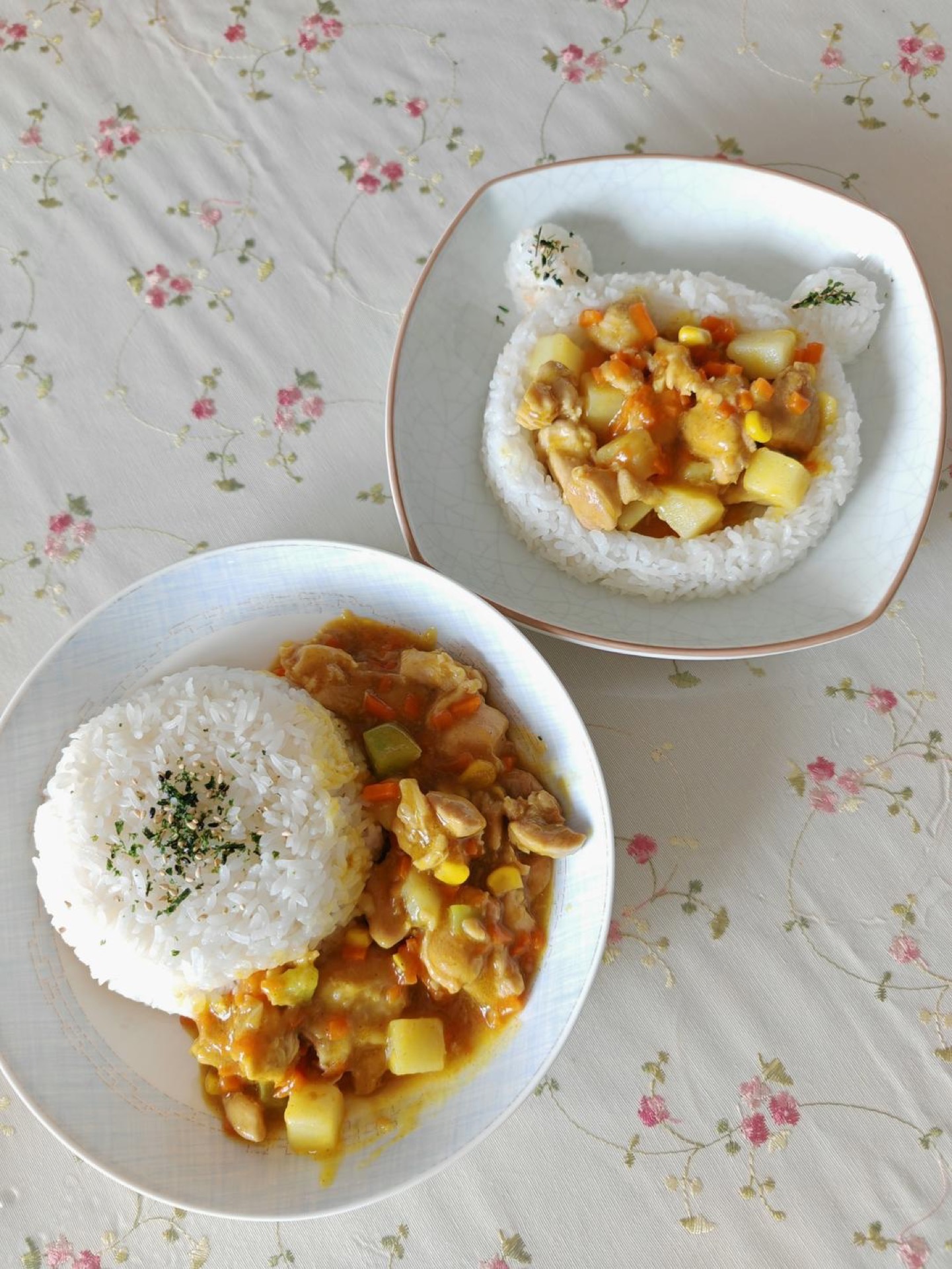
What makes this version different from a plain curry is the marinade. The chicken gets wine, aromatics, cornstarch and oil, and then it rests — for hours, ideally overnight. That starch layer seals the meat, the oil keeps the pieces from sticking, and the result is chicken that stays genuinely tender even after a simmer. The other trick is the Sichuan-peppercorn-infused oil: you fry scallion and peppercorns, throw them away, and cook everything else in what is left behind. It is a small move with a big payoff.
This is a one-pan dish in the truest sense. Everything happens in the wok: the sear, the simmer, the melt, the reduce. You need rice, and you need about thirty-five minutes of actual work. Everything else is patience.
What Is Curry Chicken Leg Rice?
Curry chicken leg rice is a Cantonese-Hong Kong home dish that sits at the meeting point of two curry traditions. From the Chinese side it takes the braise: chicken and root vegetables simmered together in a light liquid until the potato starts to break down and thicken things naturally. From the Japanese side it takes the roux block — that dense, dark, slightly sweet curry tablet that melts into a glossy sauce without any flour-and-butter work on your part.
The dish is built in layers. First the chicken is marinated and seared, which builds a fond on the wok. Then potato, carrot and corn go in for sweetness and body. Boiling water comes next, and a short ten-minute simmer does most of the cooking. Only at the end, with the heat off, does the curry block go in — and that timing matters more than almost anything else in the recipe. Curry roux scorches quickly if it hits a hot wok bottom, and once it scorches the whole pot tastes bitter.
The dish is essentially a braise with a roux finish, which is why the potato matters so much: as its edges soften, the released starch gives the curry a velvety body that a roux alone cannot produce.
Because it is a rice bowl, it travels well. It is the kind of thing you pack for lunch, reheat in a microwave, and find is somehow better on day two. If you have ever ordered 咖喱鸡饭 at a cha chaan teng and wondered why the sauce tasted rounder than the boxed curry you make at home, the answer is usually the chicken — bone-in or bone-out leg meat, marinated, cooked gently. That is the whole secret.
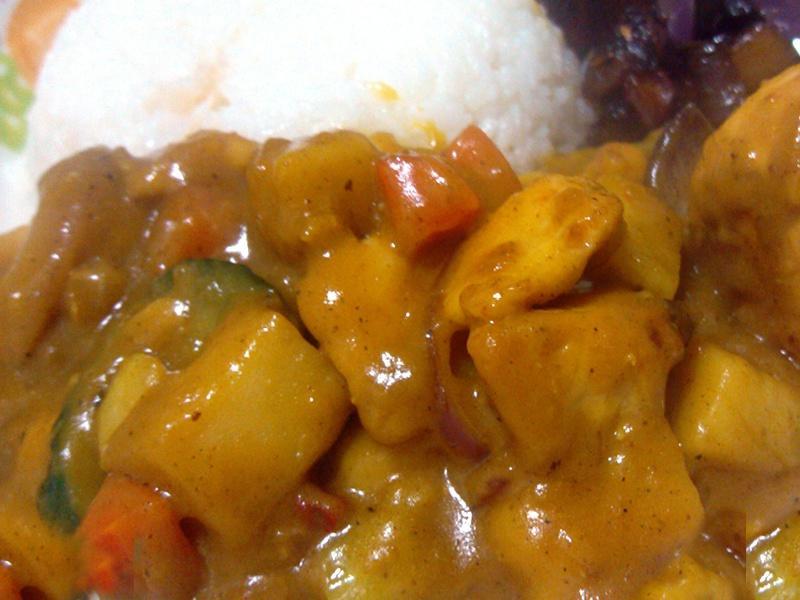
If you enjoy this style of cooking, our japanese curry chicken rice kare raisu takes the same roux-block approach in a slightly different direction, and it is a good next step once you have this one down.
1Foolproof Japanese Curry Chicken RiceA zero-failure, deeply comforting Japanese curry chicken with a rich, velvety sauce, made easy for home cooks.Check out this recipe
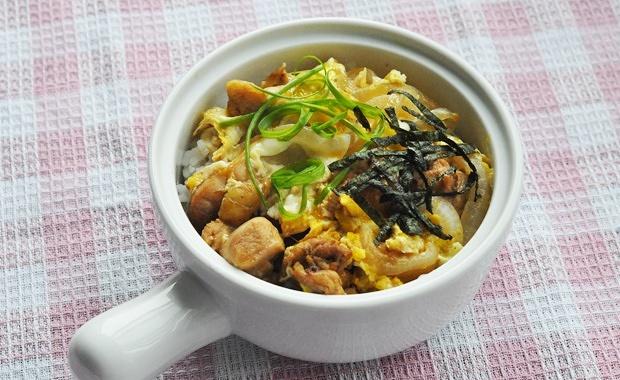
Our oyakodon japanese chicken and egg rice bowl is another chicken-over-rice bowl worth keeping in rotation, built on a sweet-savory dashi broth instead of curry.
2Oyakodon (Japanese Chicken and Egg Rice Bowl)A classic Japanese comfort food featuring tender pan-seared chicken and onions simmered in a savory-sweet sauce, bound together by silky semi-cooked eggs and served over rice.Check out this recipe
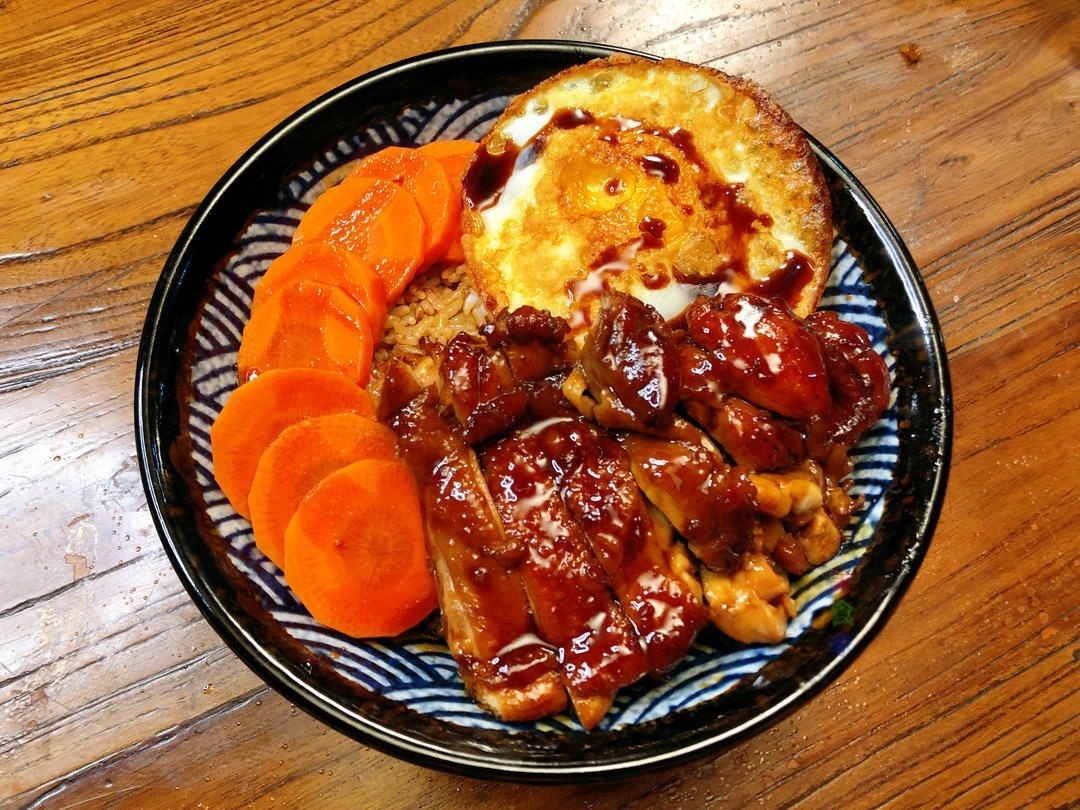
And if you like the idea of a glossy glaze over rice, our teriyaki chicken rice bowl delivers the same weeknight ease with a completely different flavor profile.
3Teriyaki Chicken Rice Bowl (Zhao Shao Ji Tui Fan)A quick, 20-minute meal featuring crispy pan-seared chicken leg glazed in a savory-sweet teriyaki sauce, served over steamed rice. Perfect for a hassle-free weeknight dinner.Check out this recipe
Ingredient Notes
Chicken legs. Use boneless, skinless leg meat, not breast. Leg meat has more connective tissue and fat, which means it survives a ten-minute simmer without turning chalky. If you buy bone-in legs, deboning them yourself takes about two minutes per leg and gives you bones you can freeze for stock. Thigh meat works identically if legs are unavailable.
Shaoxing wine. This is the standard Chinese cooking wine, and it does real work here: it cuts the gamey note in the chicken and adds a faint fermented depth. Dry sherry is the closest substitute. Do not use “cooking wine” that has salt added — it will throw off the seasoning.
Cornstarch. One heaping tablespoon, mixed in after the wine and aromatics and before the oil. This is a velveting step. The starch holds moisture in the meat during searing and gives the chicken a slightly slippery, tender texture that plain seared chicken does not have.
Neutral oil. Anything with a high smoke point and no strong flavor — peanut, canola, grapeseed, or rice bran. If you want to understand why this matters, our guide to oil for stir fry high smoke point oils breaks down the smoke-point ranges. Olive oil is the wrong choice here; it will taste like olive oil and it will burn before the chicken browns.
Sichuan peppercorns. Optional but recommended. You are not trying to make the dish ma la — you are using them to perfume the oil, then discarding them. One teaspoon is enough to leave a faint citrus-tingle behind. Skip if you dislike the sensation entirely.
Potato and carrot. Waxy potatoes hold their shape; starchy ones break down and thicken the sauce. Either works, but if you want distinct potato cubes, choose a waxy variety. Cut the potato into three-quarter-inch cubes and the carrot into half-inch dice so they cook at the same rate.
Corn kernels. A quarter cup, fresh or frozen. They add little pops of sweetness that balance the curry’s savory edge. This is an optional addition — the original home version often leaves them out.
Japanese curry roux. One block, about 3.5 ounces or 100 grams. Brands vary enormously in salt, sweetness and heat, which is exactly why the recipe tells you not to add salt. Buy the medium-hot version if you want the dish to taste like the cha chaan teng version; the mild version is noticeably sweeter.
Rice. Short or medium grain, cooked a little firmer than you would eat on its own. The curry sauce is heavy, and mushy rice disappears under it. If you are exploring rice-and-noodle pairings more broadly, our piece on types of Chinese noodles covers the other half of the pantry.
Ingredients
Here is everything you need for four servings. The full measured list, with amounts and notes, is in the recipe card at the bottom of this post.
- 3 chicken legs, boneless and skinless, cut into 1-inch cubes
- 1 tablespoon Shaoxing wine
- 1 tablespoon chopped scallion, plus 1 tablespoon white parts for the oil
- 1 teaspoon minced ginger
- 1 tablespoon cornstarch
- 2 to 3 tablespoons neutral oil, divided
- 1 teaspoon Sichuan peppercorns (optional)
- 1 cup potato, cut into 3/4-inch cubes
- 1/2 cup carrot, cut into 1/2-inch dice
- 1/4 cup corn kernels
- 3 cups boiling water
- 1 block Japanese curry roux, about 3.5 oz / 100 g
- 4 cups hot steamed white rice, for serving
- Toasted sesame seeds or furikake, to garnish
Equipment Needed
You need less than you think. A wok is ideal because its curved sides let you stir without flinging potato cubes onto the stove, but a wide deep skillet works fine. A cutting board and a sharp knife handle the prep. A slotted spoon is the right tool for fishing the scallion and peppercorns out of the oil, and it also lets you lift the chicken out if you want to sear in batches.
Two other things are worth having: a pot of rice going in the background, and a lid that fits your wok or skillet, in case the simmer needs covering. You do not need a curry pot, a blender, or any specialty equipment. If you happen to own a pressure cooker and want to explore what else it can do, our collection of 14 pressure cooker recipes is a good browse — but this dish is faster on the stove.
Why This Recipe Works
Three things carry this dish, and none of them are complicated.
The marinade is a two-stage coating. Wine and aromatics go in first and season the meat from the surface. Cornstarch goes in second and forms a thin film that traps moisture. Oil goes in last and keeps the pieces separate so they sear instead of steam. That order matters. If you dump everything in at once, the starch clumps and the oil slides off.
The infused oil builds flavor without extra ingredients. Frying scallion and Sichuan peppercorn in the oil and then removing them leaves behind a aromatic base that would otherwise require a dozen extra components. It is the same logic behind the flavored oils in our north korean chili paste koryo style sauce, where aromatics are cooked into the fat rather than added as solids.
The curry goes in off the heat. This is the single most important instruction in the recipe. Curry roux contains flour and fat; drop it into a furiously boiling wok and it will seize into lumps and scorch on the bottom before it melts. Kill the heat, add the block, stir until it disappears, then bring the heat back low to reduce. The sauce comes out glossy and even every time.
One more thing: the ten-minute simmer is not arbitrary. It is roughly the time it takes for potato cubes of that size to soften at the edges while holding their center, which is exactly the texture you want — soft enough to eat with a spoon, firm enough to still be a cube.
Prep & Mise en Place
This dish moves quickly once the wok is hot, so do all the cutting before you turn on the stove.
Marinate the chicken first. Bone and skin the legs, cut the meat into one-inch cubes, then add the wine, scallion and ginger and mix well. Add the cornstarch and mix again until every piece is coated. Finally add the oil and mix once more. Cover and refrigerate for at least 8 hours, ideally overnight. If you are short on time, 30 minutes at room temperature will still help, but the texture will not be the same.
Cut the vegetables. Potato into three-quarter-inch cubes, carrot into half-inch dice. Keep them separate — the carrot goes in at the same time as the potato here, but having them apart lets you adjust if your carrot is particularly thick.
Measure the aromatics. Set aside the white parts of the scallion and the Sichuan peppercorns for the oil. Have the curry block unwrapped and ready next to the stove; you do not want to be wrestling with packaging while the sauce waits.
Start the rice. Rice takes longer than the curry, so get it going before anything else. Hot rice under the curry is not optional — cold rice cools the sauce too fast and the dish loses its shine.
Boil the water. Have three cups of boiling water ready in a kettle or measuring cup. Adding cold water to a hot wok drops the temperature and stalls the simmer.
If you are cooking for a crowd and want to avoid a crowded wok, the principles in our guide to how to prevent overcrowding in stir fry apply directly: sear the chicken in two batches if your wok is small, and remove the first batch before starting the second.
Cooking Process
Step 1 — Marinate the Chicken
Bone and skin the chicken legs, cut the meat into cubes, then add 1 tablespoon of Shaoxing wine, a little scallion and ginger, and mix well; add 1 heaping tablespoon of cornstarch and mix again, then finish with a little cooking oil and mix until each piece is coated.
Step 2 — Infuse the Oil
Heat oil in the wok, add a little scallion and Sichuan peppercorns and fry until fragrant, then scoop them out and discard, leaving only the flavored hot oil behind.
Step 3 — Sear the Chicken and Vegetables
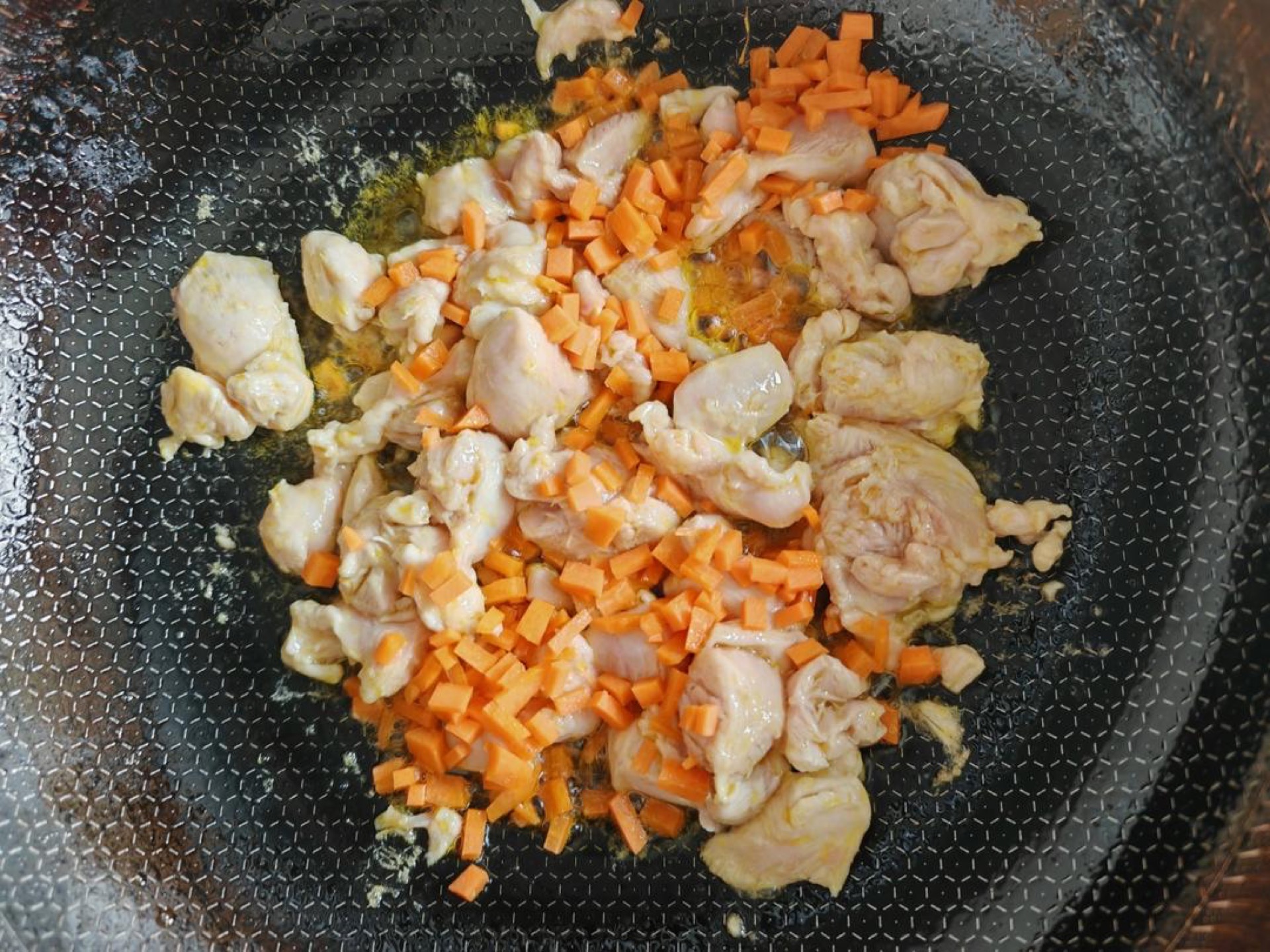
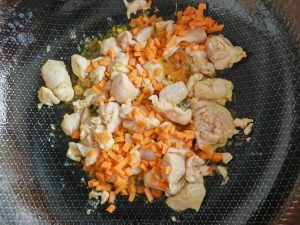
Pick the scallion and ginger out of the chicken, pour the chicken into the hot oil, and do not rush to stir; let it set slightly, then stir-fry until the chicken turns white, add the diced carrot, corn kernels and potato chunks, and toss everything together evenly.
Step 4 — Simmer
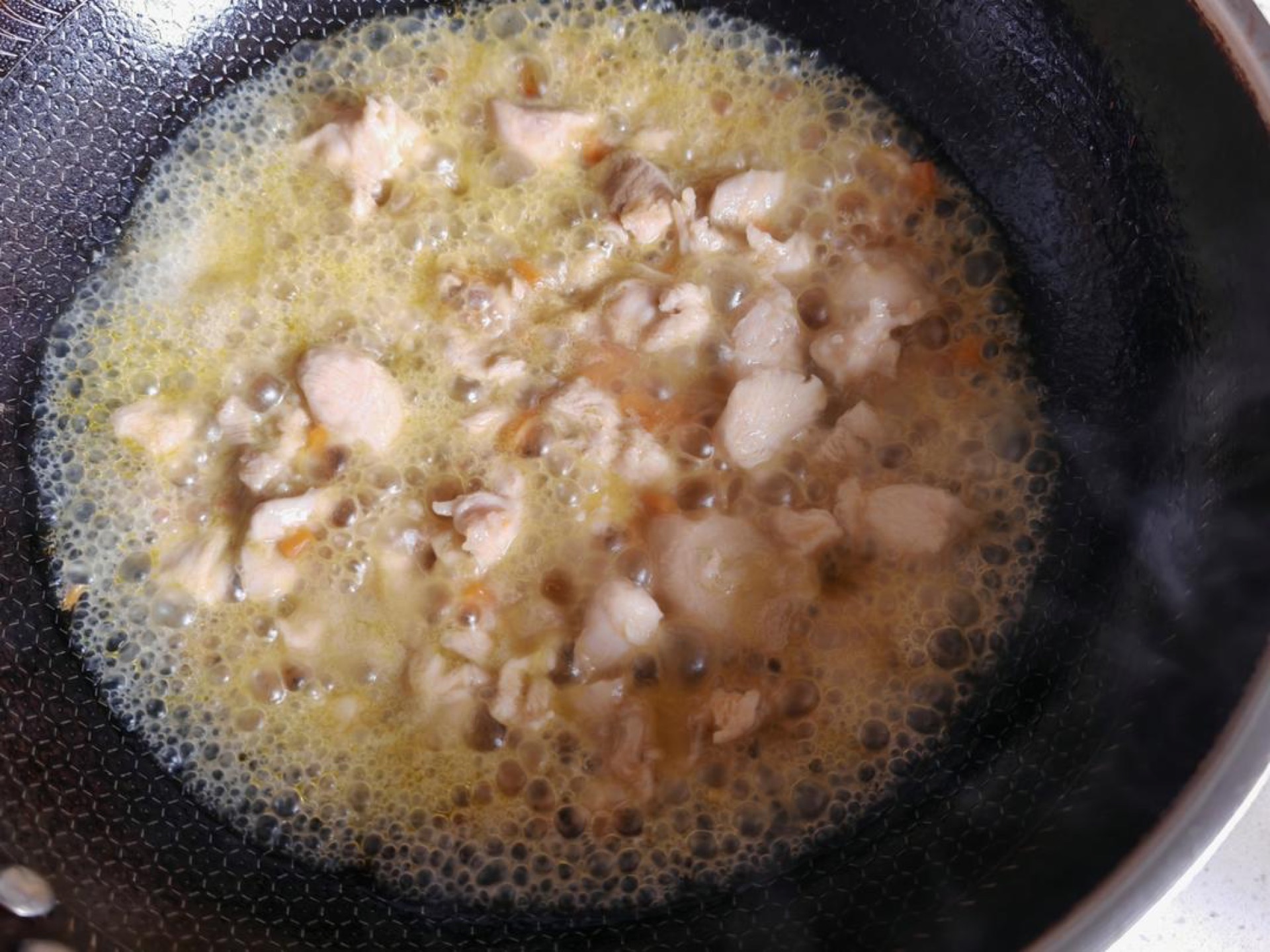
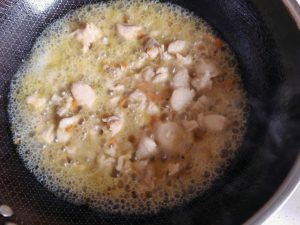
Add boiling water until it comes level with the chicken, then simmer over medium heat for 10 minutes.
Step 5 — Melt the Curry
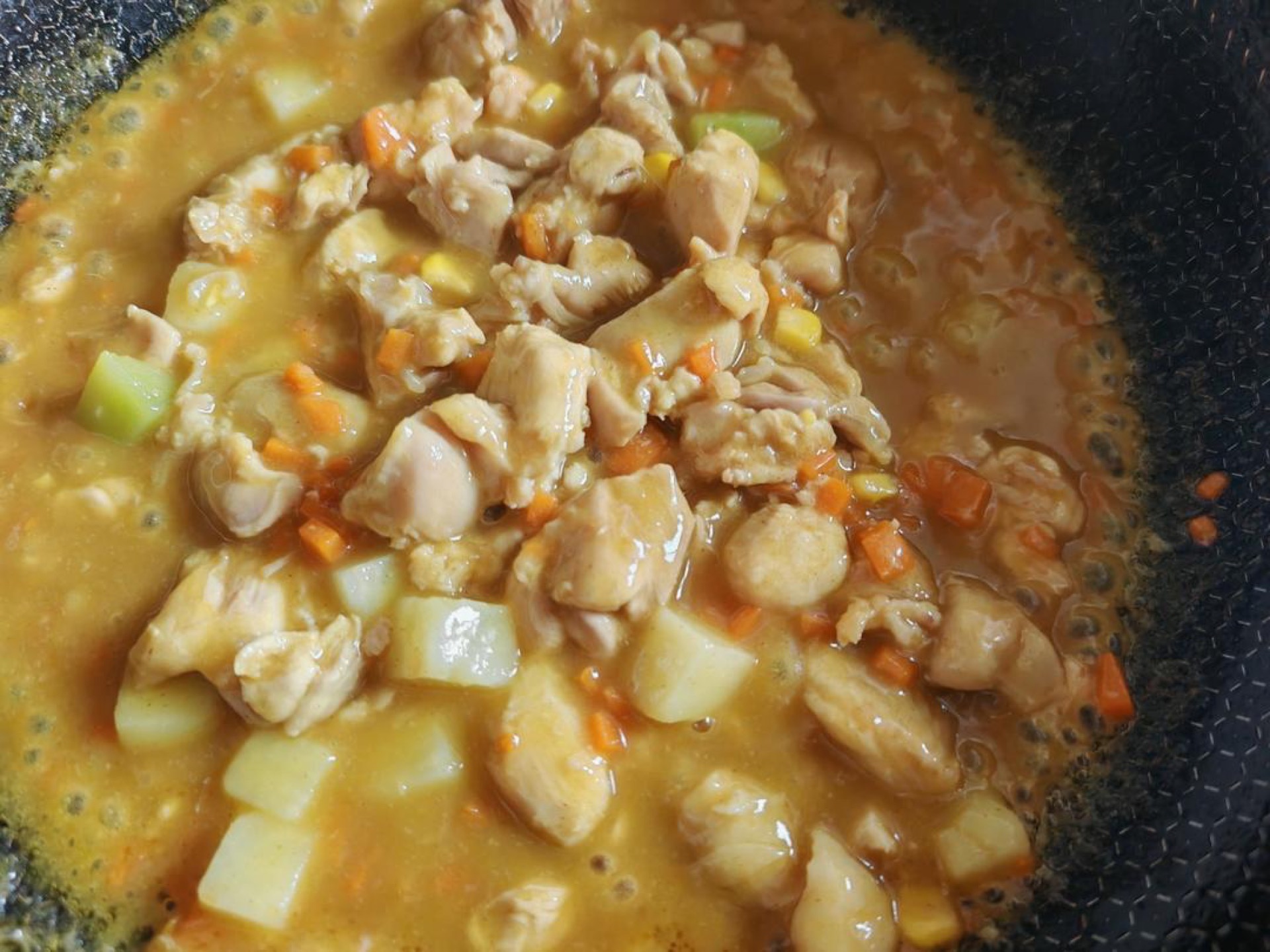
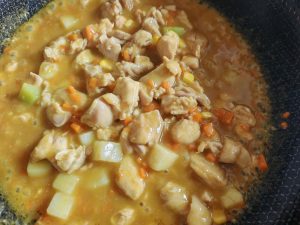
After 10 minutes, turn off the heat, add 1 block of curry roux, and stir until it has completely melted; turn the heat to low and reduce the sauce until it reaches the thickness you like, then turn off the heat and dish it out — no extra salt is needed.
Step 6 — Plate and Serve
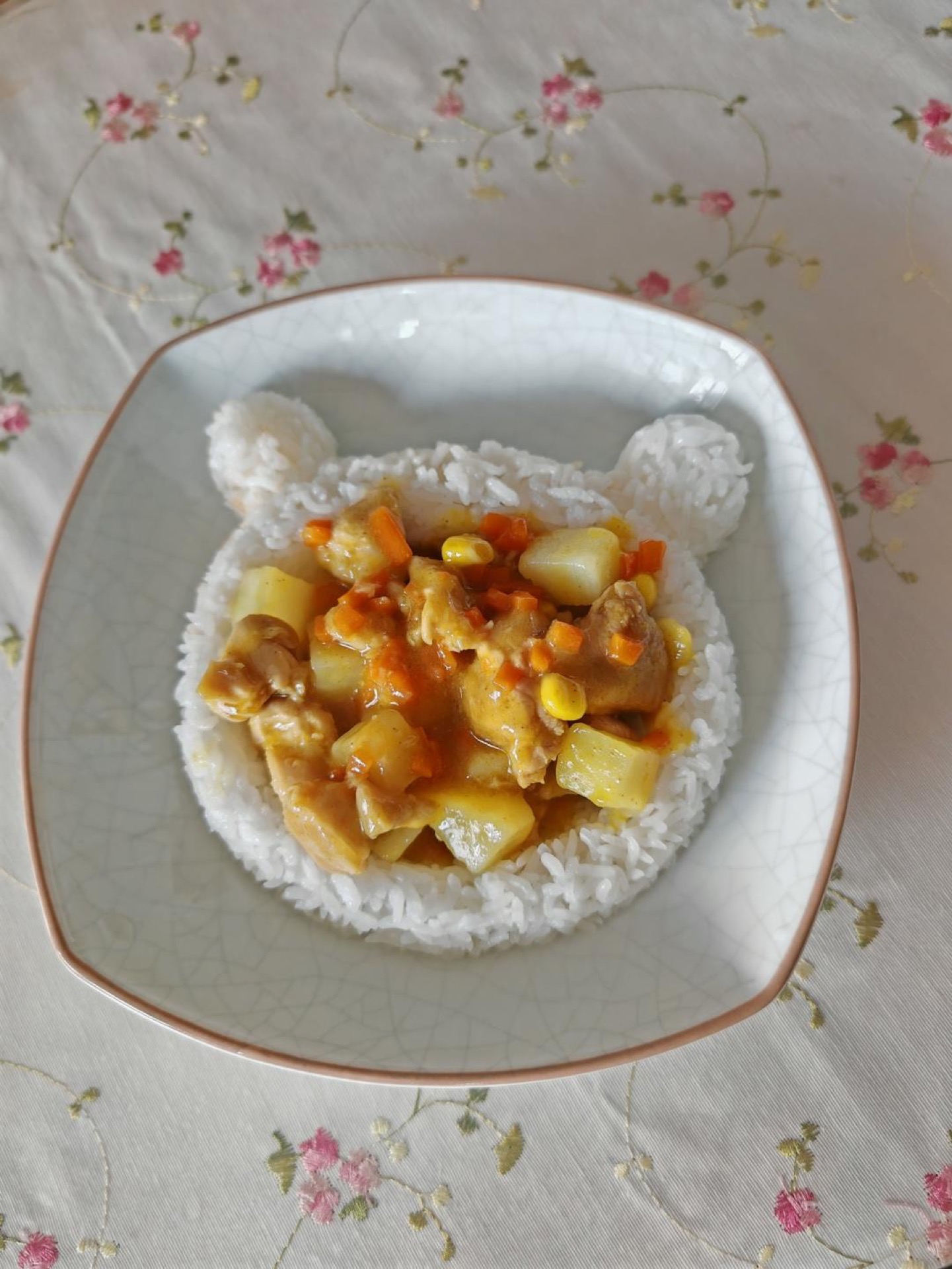
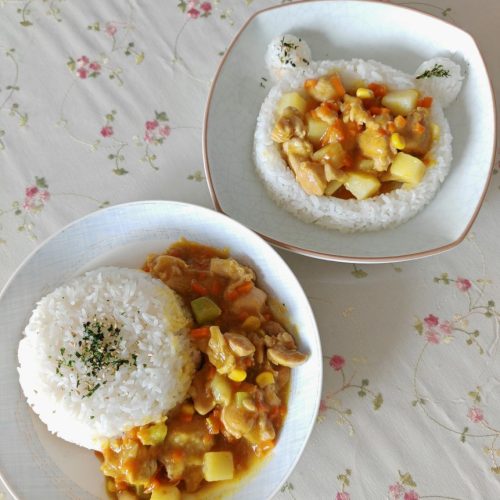
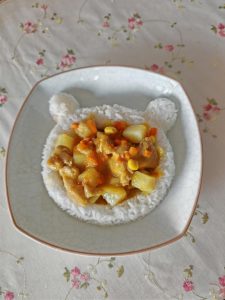
Spoon the curry out over the rice, and if you like, scatter a little toasted sesame or furikake over the top.
Common Mistakes When Making Curry Chicken Leg Rice
1. Adding the curry block to a boiling wok. This is the most common failure. The roux hits the hot metal, the flour scorches, and the sauce turns bitter and lumpy. The cause is impatience — you want the curry to melt fast. The fix is to turn the heat off completely, wait for the bubbling to stop, then add the block and stir. It will melt in about thirty seconds on residual heat alone.
2. Skipping the marinade rest. Marinating for ten minutes does almost nothing. The starch needs time to hydrate and bond to the meat surface, and the wine needs time to penetrate. The cause is a last-minute decision to cook this dish. The fix is to marinate the night before, or in the morning before work. The difference in tenderness is unmistakable.
3. Adding salt out of habit. Curry roux blocks are heavily salted — often over 900 mg of sodium per block. The cause is muscle memory from cooking other braises. The fix is to taste after the curry has melted and reduced, and only then decide. Nine times out of ten you will not need any.
4. Cutting the potato too small. Quarter-inch cubes dissolve into the sauce during the ten-minute simmer and you end up with a thick, gluey curry with no visible vegetables. The cause is wanting everything to cook faster. The fix is to keep the potato at three-quarter-inch cubes and accept the ten-minute simmer. If you are in a hurry, simmer for eight minutes and check.
5. Stirring the chicken immediately after it hits the oil. The chicken needs a moment of contact with the hot metal to set and release. Stirring right away tears the starch coating and the pieces stick and shred. The cause is the instinct to keep things moving. The fix is to let the chicken sit undisturbed for about thirty seconds, then stir. It will release on its own.
6. Using chicken breast. Breast meat has almost no fat or connective tissue, and a ten-minute simmer dries it out completely. The cause is habit or a preference for leaner meat. The fix is leg or thigh meat. If you must use breast, add it after the potato has simmered for six minutes and cook it for only four.
Variations
Spicier version. Use a hot curry roux block instead of medium, and add a teaspoon of chili oil or a sliced fresh chili with the aromatics. The heat level of Japanese curry blocks varies more than the label suggests, so taste as you go.
Extra vegetables. Frozen peas, green beans, or diced bell pepper can go in during the last three minutes of the simmer. Avoid watery vegetables like zucchini or tomato, which will thin the sauce.
Curry chicken soba. Instead of rice, serve the same curry over soba noodles for a completely different bowl. Our curry chicken soba noodles is built on exactly that idea and is worth trying if you like the sauce but want variety in the base.
Pressure cooker version. Sear the chicken and aromatics in the pressure cooker, add potato, carrot and 2 cups of water, and cook at high pressure for 5 minutes. Release naturally, then stir in the curry block off the heat. It is faster, though the sauce is slightly thinner because less water evaporates.
Vegetarian version. Replace the chicken with firm tofu or extra-firm pressed tofu, marinate it the same way, and use a vegetable-based curry roux. Add a handful of mushrooms for body. Note that many curry blocks contain no meat but are processed on shared equipment, so check the label if that matters to you.
Bone-in version. If you prefer bone-in chicken legs, brown them whole first, remove them, build the sauce, then return them for a 20-minute simmer. The sauce will be richer, but the cooking time roughly doubles.
Frequently Asked Questions
Can I make this without a curry roux block? Yes, but it becomes a different dish. You would need to build a curry sauce from curry powder, flour, butter and stock, cooked into a roux first. The block exists precisely to skip that step. If you go homemade, bloom two tablespoons of curry powder in butter, whisk in two tablespoons of flour, cook for a minute, then add stock gradually.
Why did my curry turn out bitter? Almost always scorched roux. Either the block went into a wok that was too hot, or the sauce was boiled hard after the curry melted. Keep the heat low once the roux is in, and stir frequently. If it is only slightly bitter, a teaspoon of sugar and a splash of milk or coconut milk can round it off.
How thick should the sauce be? It should coat the back of a spoon and hold a line when you drag a finger through it. It will thicken further as it cools, so pull it off the heat slightly looser than you want it on the plate. If it gets too thick, add hot water a tablespoon at a time.
Can I use chicken breast instead of leg? You can, but adjust the timing. Add the breast cubes after the potato has simmered for six minutes, cook for four more, then melt the curry off the heat. Otherwise the meat will be dry.
Does this freeze well? The curry freezes well for up to two months, but the potato changes texture — it becomes slightly grainy after thawing. If you plan to freeze, undercook the potato by two minutes so it does not turn to mush on reheating. Rice should be frozen separately and reheated covered.
How to Serve
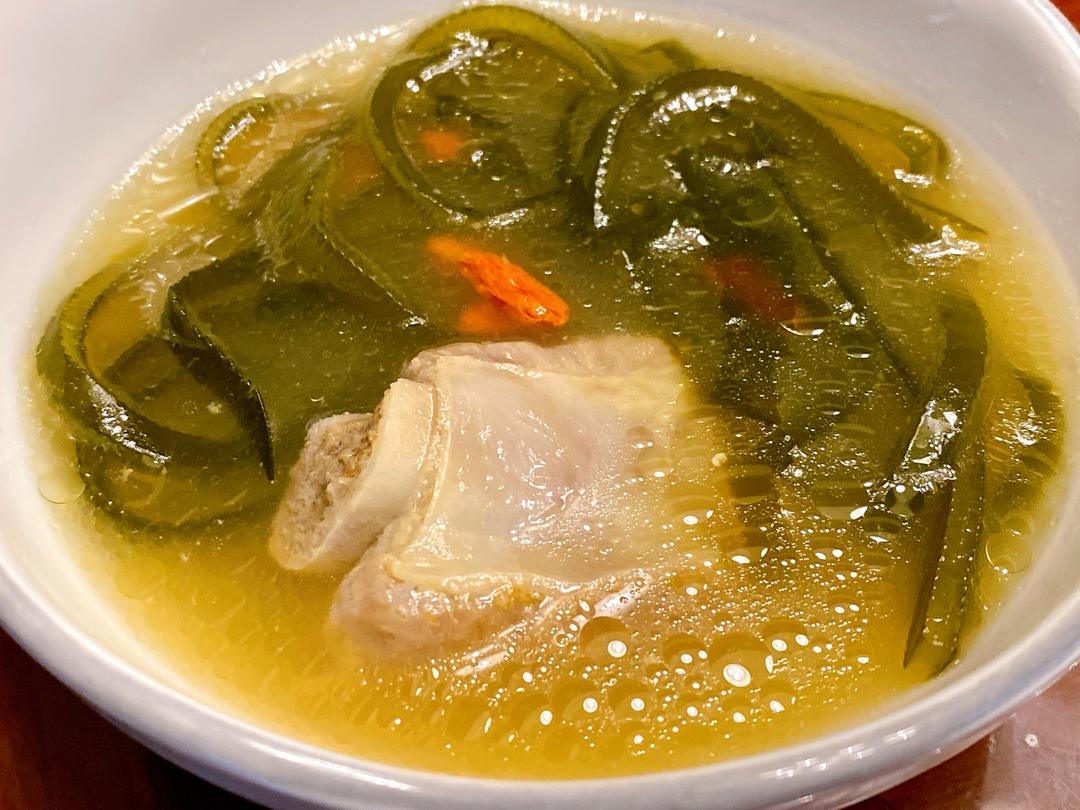
Curry chicken leg rice is a complete meal on its own: curry over hot rice, a scattering of sesame or furikake, and you are done. That said, it pairs beautifully with a light soup to cut through the richness. Our nourishing kelp and pork rib soup is a clean, savory broth that works as a starter or a side, and its mildness balances the curry’s weight.
If you want a second starch on the table — which is very much the Cantonese home-style way — a small bowl of sesame noodles alongside the rice makes the meal feel like a proper spread rather than a single bowl. Keep the portion small; the curry is rich.
A quick cucumber or tomato salad dressed with rice vinegar and a pinch of sugar is the third option, and it takes two minutes. Whatever you choose, serve the curry hot and the rice hotter.

Storage & Reheat
Cool the curry to room temperature within two hours of cooking, then transfer it to an airtight container. It keeps in the refrigerator for up to 3 days. Store the rice separately — if you store them together, the rice absorbs the sauce and turns to paste.
To reheat, transfer the curry to a saucepan over low heat with a splash of water, and stir until it loosens and steams. A microwave works too: cover and heat in one-minute bursts, stirring between, until it reaches 165°F (74°C). Do not boil it hard, or the sauce will split and the potato will break apart.
For freezing, portion the curry into freezer-safe containers and freeze for up to 2 months. Thaw overnight in the refrigerator rather than at room temperature. As noted above, the potato texture suffers slightly, so undercook it a little if you know you are freezing.
Rice should be cooled quickly and refrigerated within one hour, then eaten within 24 hours — cooked rice is a well-known risk area for Bacillus cereus, so do not leave it sitting out. Reheat rice until it is steaming hot throughout.
Allergen Notice
This recipe contains wheat (Japanese curry roux blocks are typically made with wheat flour), soy (curry blocks and, if used, soy sauce), and possibly milk or dairy depending on the brand of curry roux. Some curry blocks also contain apple or honey, which is relevant if you avoid those for dietary reasons.
If you are cooking for someone with a wheat allergy, look for a gluten-free curry roux, which is available from several Japanese brands. Shaoxing wine is rice-based and generally gluten-free, but check the label if the brand adds wheat. Always read the specific curry block packaging — formulations differ significantly between mild, medium and hot versions of the same brand.
Nutrition Disclaimer
Nutrition information is calculated using an ingredient database and should be considered an estimate. In cases where multiple ingredient alternatives are given, the first listed is calculated for nutrition. Garnishes and optional ingredients are not included.
About the Author & Recipe Development
This recipe was developed and tested in the Woks of Love kitchen by Lin, who has been cooking and writing about Chinese home cooking for over a decade. The version here started as a family weeknight dish — chicken legs marinated the night before, curry block melted off the heat — and was refined through repeated testing to pin down the marinade ratio, the simmer time, and the exact moment to add the roux.
The measurements reflect US kitchen equipment and standard supermarket ingredients. Where a range is given, the lower end produces a looser sauce and the upper end a thicker one. If you make this and adjust something that works better in your kitchen, that is the point — home cooking is meant to be adapted.
Authoritative References
Food safety guidance in this article follows the FDA Food Code and the USDA’s safe minimum internal temperature chart for poultry, which sets 165°F (74°C) as the safe internal temperature for chicken. Storage and reheating times follow USDA refrigeration guidance for cooked meat and rice. For questions about specific curry roux ingredients, the manufacturer’s packaging is the authoritative source.
Curry Chicken Leg Rice (咖喱鸡腿饭): Rich Curry, Tender Chicken Over

Equipment
- Wok
- Cutting Board
- Slotted Spoon
Ingredients
For the Chicken Marinade
- 3 pieces chicken legs boneless, skinless, cut into 1-inch cubes
- 1 tbsp Shaoxing wine or dry sherry
- 1 tbsp scallion finely chopped, plus more for garnish
- 1 tsp ginger finely minced
- 1 tbsp cornstarch
- 1 tbsp neutral oil plus more for the wok
For the Curry
- 2 tbsp neutral oil for frying
- 1 tsp Sichuan peppercorns optional, for the infused oil
- 1 tbsp scallion white parts, for the infused oil
- 1 cup potato peeled, cut into 3/4-inch cubes
- 1/2 cup carrot peeled, cut into 1/2-inch dice
- 1/4 cup corn kernels fresh or frozen
- 3 cups water boiling
- 1 block Japanese curry roux about 3.5 oz / 100 g
For Serving
- 4 cups steamed white rice hot
- 1 tsp toasted sesame seeds optional
- 1 tbsp furikake optional
Instructions
- Bone and skin the chicken legs, cut the meat into cubes, then add 1 tablespoon of Shaoxing wine, a little scallion and ginger, and mix well; add 1 heaping tablespoon of cornstarch and mix again, then finish with a little cooking oil and mix until each piece is coated.
- Heat oil in the wok, add a little scallion and Sichuan peppercorns and fry until fragrant, then scoop them out and discard, leaving only the flavored hot oil behind.
- Pick the scallion and ginger out of the chicken, pour the chicken into the hot oil, and do not rush to stir; let it set slightly, then stir-fry until the chicken turns white, add the diced carrot, corn kernels and potato chunks, and toss everything together evenly.

- Add boiling water until it comes level with the chicken, then simmer over medium heat for 10 minutes.
- After 10 minutes, turn off the heat, add 1 block of curry roux, and stir until it has completely melted; turn the heat to low and reduce the sauce until it reaches the thickness you like, then turn off the heat and dish it out — no extra salt is needed.
- Spoon the curry out over the rice, and if you like, scatter a little toasted sesame or furikake over the top.













Leave a Reply