Hi everyone, I’m Lin! Today I’m sharing something truly special that you won’t find in a standard grocery store aisle. This recipe for Authentic North Korean Chili Paste comes directly from my brother, who brought the secret proportions back after a trip to North Korea.

While many of us are familiar with the deep, fermented funk of commercial Gochujang, this “Koryo-style” paste is a revelation. It relies on the natural sweetness of fresh Fuji apples and pears, balanced by a massive amount of garlic and a hidden hit of umami from dried shrimp. It’s brighter, fresher, and has a complex kick that makes it the perfect companion for everything from Vegetable Steamed Dumplings to a simple bowl of rice.
What Is North Korean Chili Paste?
Unlike the mass-produced tubs of Korean red pepper paste, this version is often made in smaller batches using a “cooked-starch” method. It combines a glutinous rice flour slurry with maltose (starch syrup) to create that signature glossy, sticky texture. The addition of fresh aromatics like onion, ginger, and fruit provides a layer of enzymes that help the sauce “mature” quickly in the refrigerator.
If you enjoy making your own condiments, you might also want to try our Homemade Chili Garlic Sauce, which offers a more vinegar-forward profile compared to the savory-sweet depth found here.
Ingredients
The Fruit & Aromatic Base
- Apple: 1 medium (Fuji or Gala preferred), peeled and cored
- Pear: 1 medium (Asian pear is best for sweetness), peeled and cored
- Onion: ½ medium yellow onion
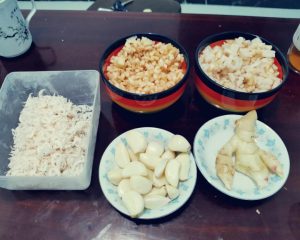
- Garlic: 150g – 200g (approx. 1 to 1.5 cups) peeled cloves, adjusted to your spice tolerance
- Ginger: 25g (approx. 1-inch knob), peeled
- Dried Shrimp (Shrimp Skin): 25g (approx. ¼ cup), or soaked dried shrimp for deep umami
The Thickening Slurry
- Glutinous Rice Flour: 58g (approx. ½ cup)
- Water (for slurry): 100ml (approx. 0.4 cup)
The Sauce Body
- Maltose (Starch Syrup): 400g (approx. 1.2 cups)
- Chili Powder: 50g – 100g (approx. ½ to 1 cup). Use a mix of coarse and fine Chinese Chili Oil-style flakes for the best texture.
- Salt: 50g (approx. 3 tbsp), or more if you prefer a saltier finish
- Water (for the pot): 750ml (approx. 3.1 cups)
- White Spirit (Baijiu): 1-2 tsp (acts as a natural preservative and flavor enhancer)
Equipment Needed
- High-speed blender or food processor
- Heavy-bottomed pot (to prevent the maltose from scorching)
- Silicone spatula (essential for constant stirring)
- Sterilized glass jars for storage
Prep & Mise en Place
- Blend the Base: Roughly chop the apple, pear, ginger, onion, garlic, and dried shrimp. Place them in a blender with 200ml of filtered water. Blend until it forms a smooth, thick puree.
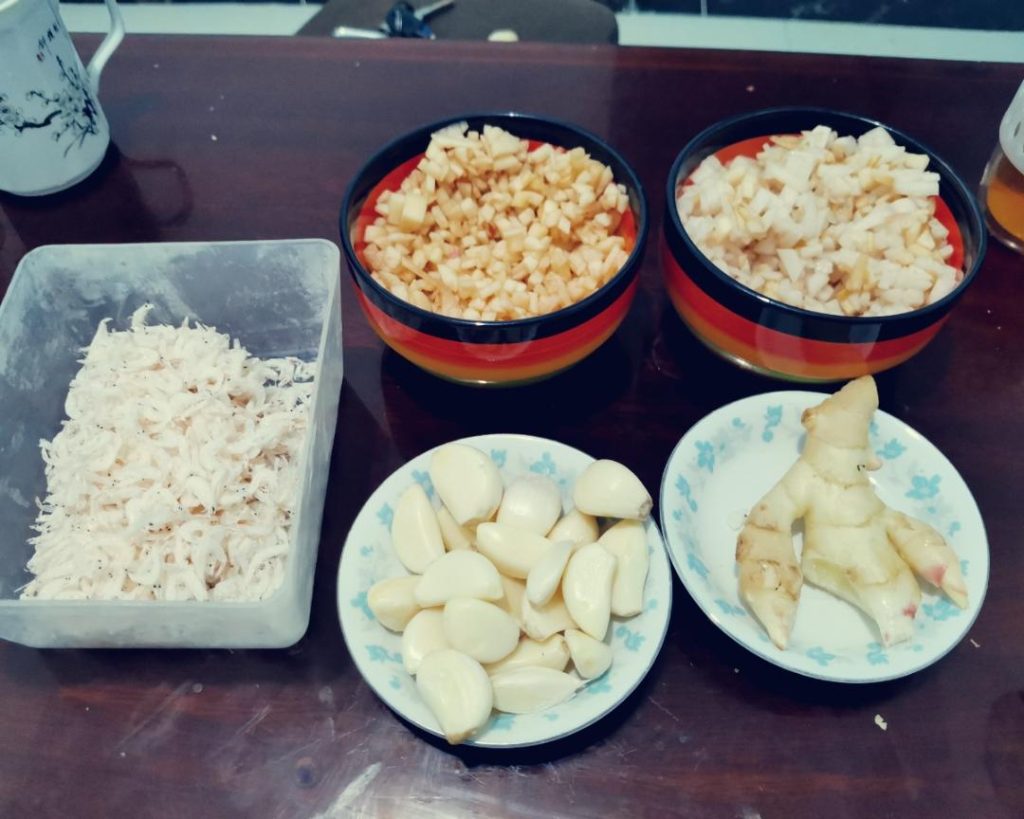
- Mix the Flour: In a small bowl, whisk the 58g of glutinous rice flour with 100ml of water until no lumps remain.
- Prepare the Chili: Mix your coarse and fine chili powders together in a bowl so they are ready to be incorporated quickly.
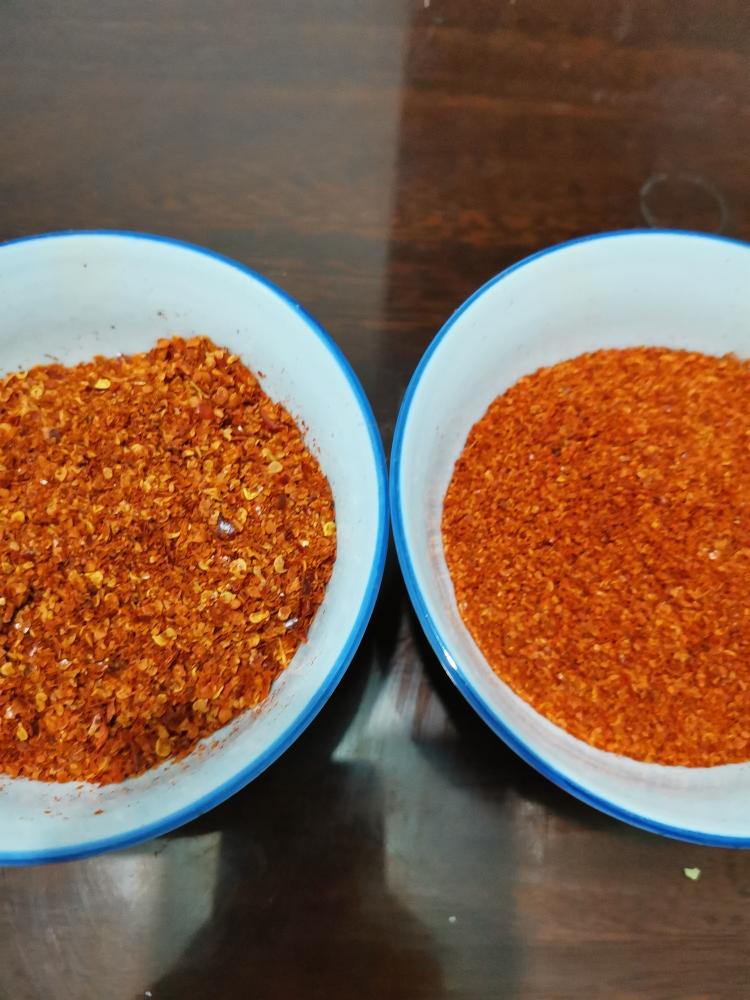
Cooking Process
- Dissolve the Sweetener: In your heavy pot, combine 750ml of water and 400g of maltose. Turn the heat to low.The use of maltose here is critical for the “gloss” of the sauce. According to the science of starch hydrolysis, maltose provides a less intense sweetness than sucrose but a much higher viscosity, which gives the sauce its professional, jam-like cling.
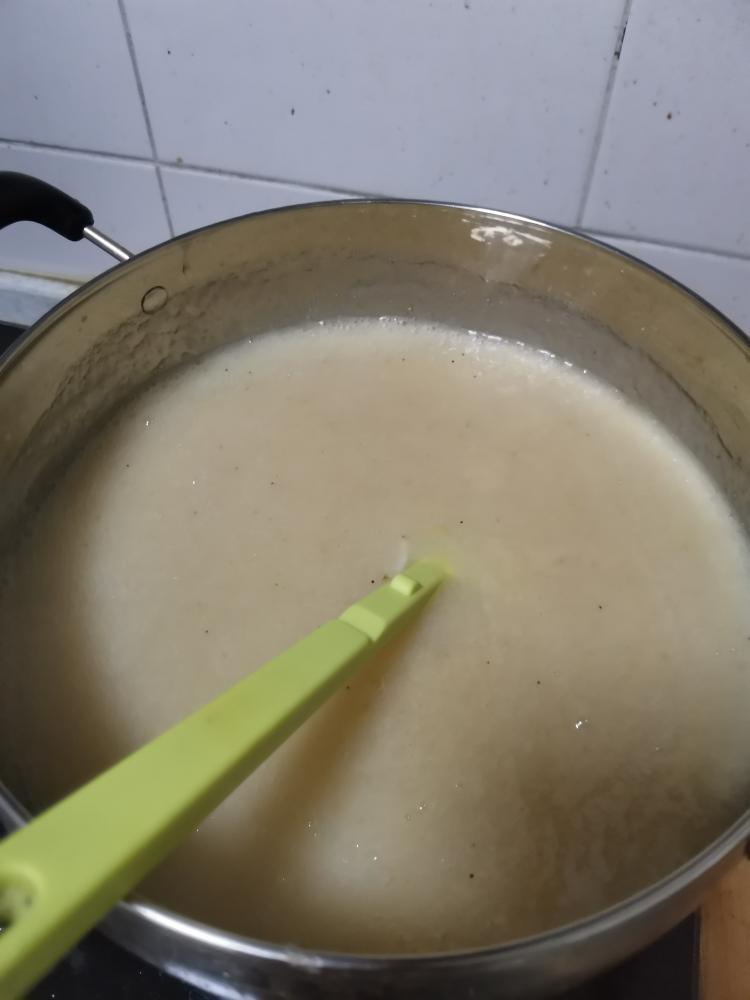
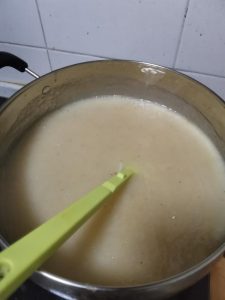
- Thicken the Base: Constantly stir the maltose water as it heats to prevent sticking. Once you see small bubbles starting to simmer, slowly pour in the glutinous rice flour slurry.
- Stir to Density: Continue to stir over low heat until the mixture thickens into a translucent, glue-like consistency.
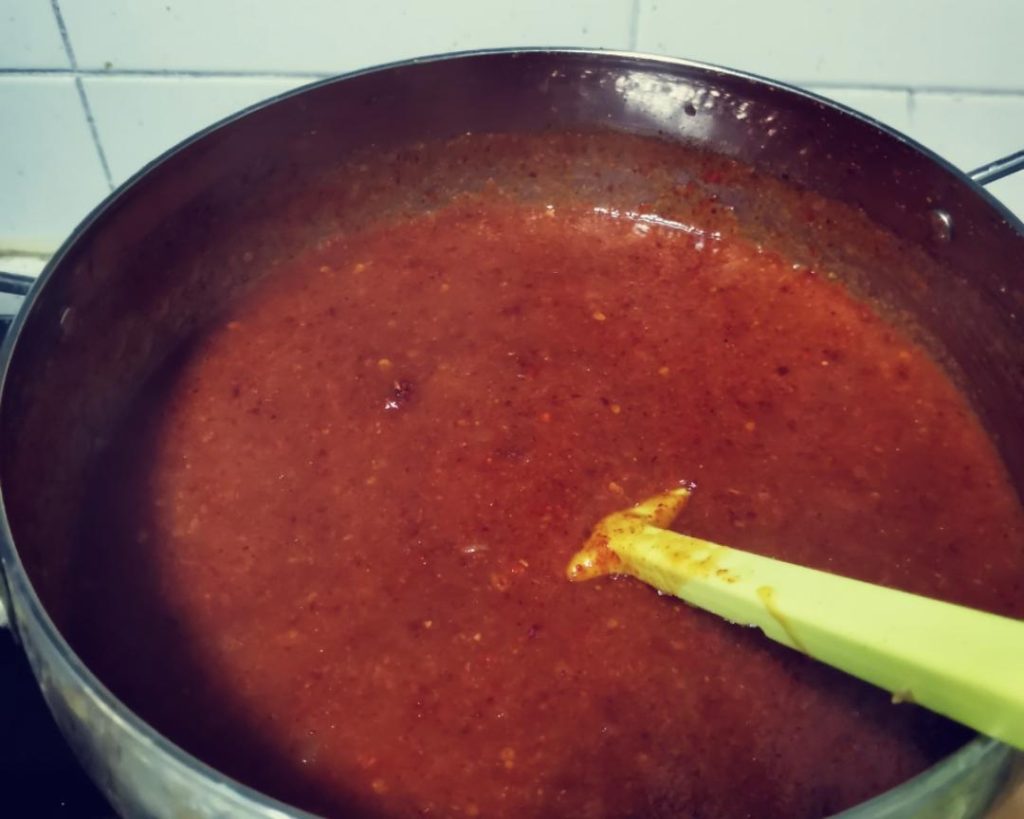
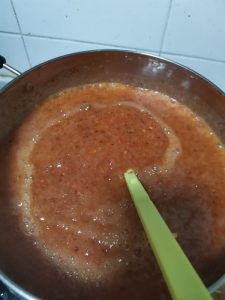
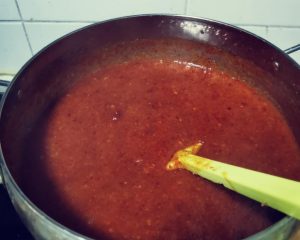
- Integrate Aromatics & Spice: Pour in the blended fruit/garlic mixture and the chili powder. Use your spatula to fold everything together until the color is a uniform, vibrant red.
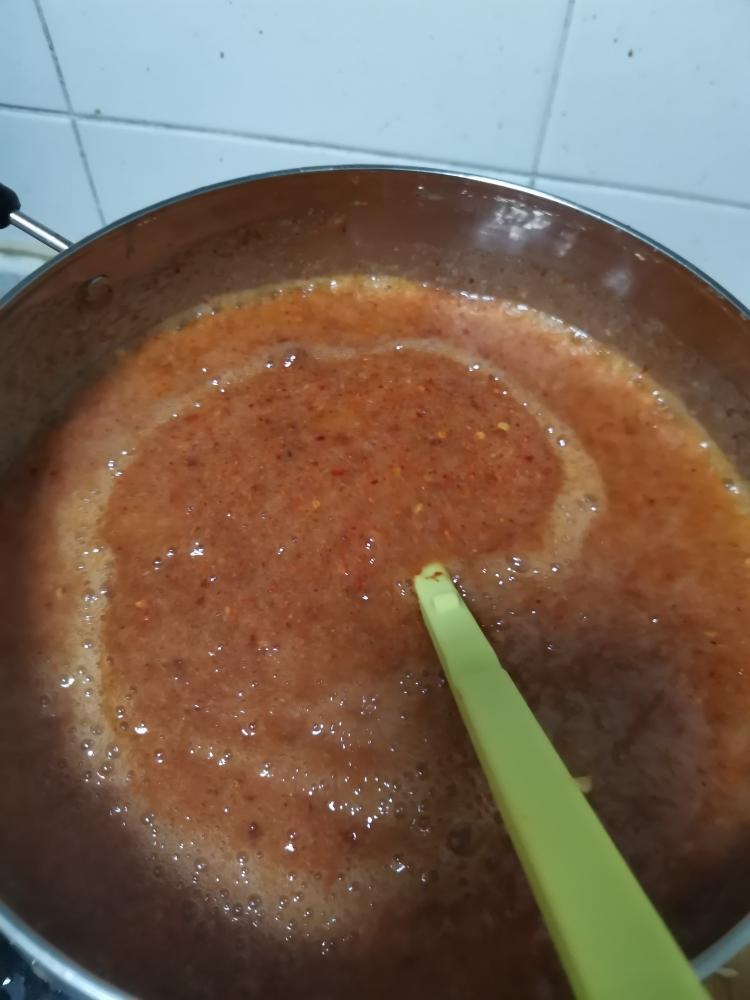
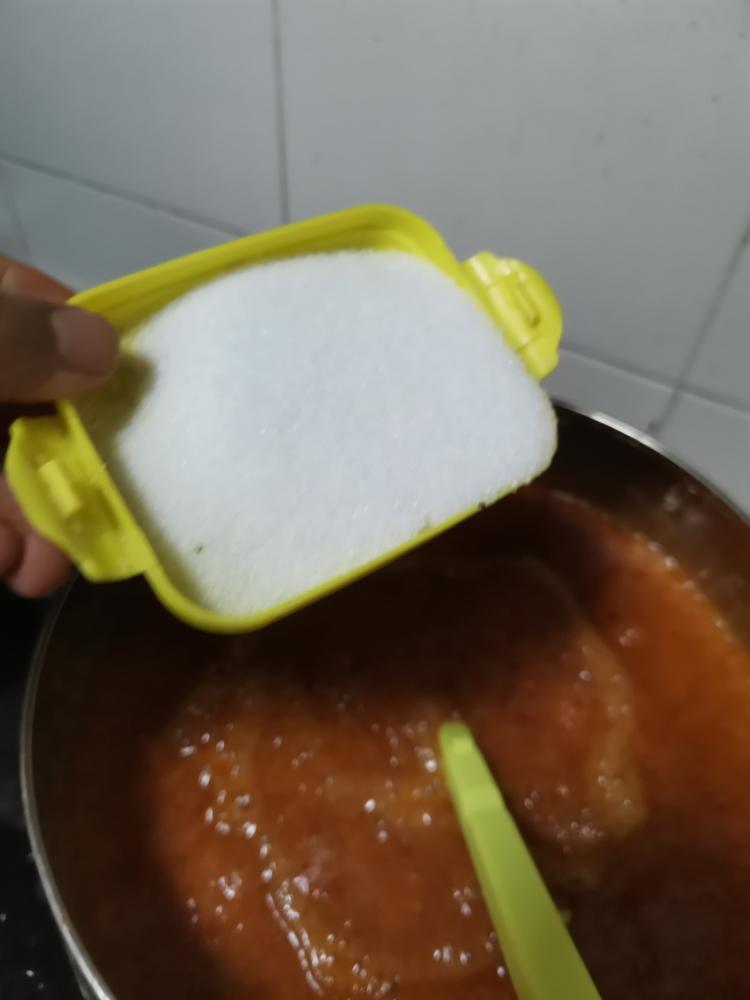
- Seasoning: Add the 50g of salt. Continue stirring for another 2-3 minutes.
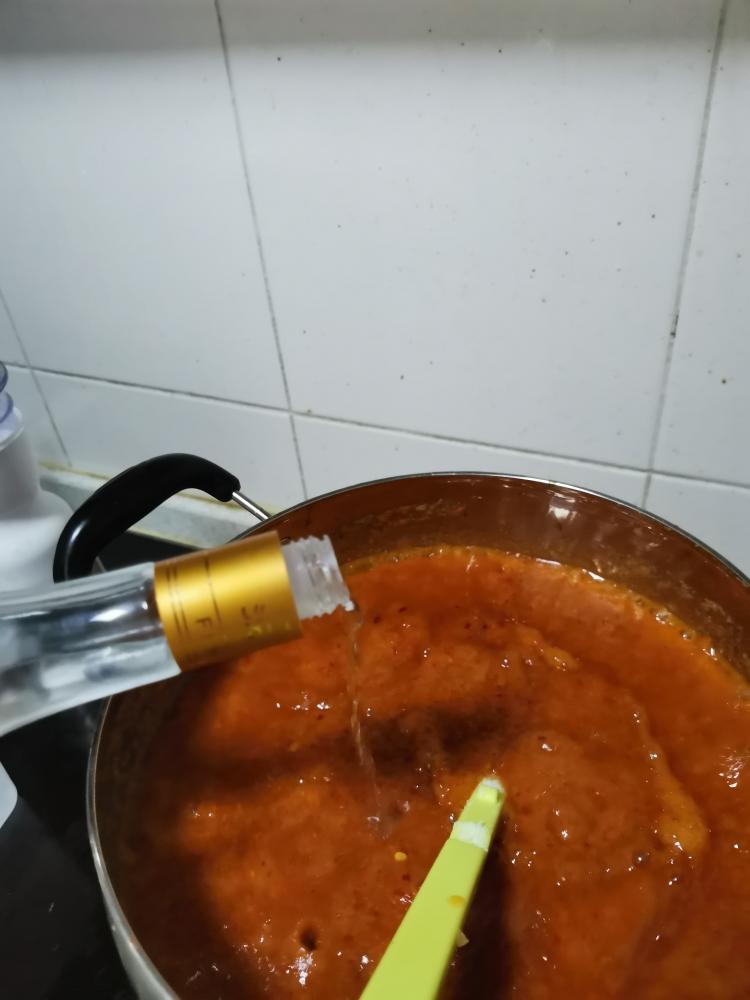
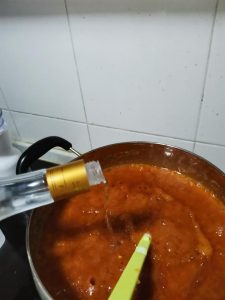
- The Final Touch: Stir in a small splash of white spirit (Baijiu). This helps stabilize the sauce and adds a subtle floral note.
- Cool and Age: Turn off the heat. Let the sauce cool completely in the pot. Once cool, transfer to a completely dry, oil-free glass container. Crucial: Let it rest in the fridge for at least 2 days before using. This allows the garlic’s sharpness to mellow and the fruit sugars to meld with the salt.
Common Mistakes When Making North Korean Chili Paste
- Scorching the Bottom: Maltose and rice flour are highly prone to burning. You must use low heat and never stop stirring once the flour is added.
- Using Wet Jars: Any moisture in your storage container will cause the sauce to mold within days. Ensure your jars are sterilized and bone-dry.
- Skipping the Resting Period: Freshly made paste tastes “sharp” and disconnected. The 48-hour chill period is where the magic happens.
Why This Recipe Works
- Enzymatic Sweetness: The natural enzymes in the raw pear and apple help break down the starches over time, creating a deeper flavor than sugar alone.
- Balanced Viscosity: The ratio of glutinous rice flour to water ensures a sauce that is spreadable but won’t run off your food.
- Umami Punch: Dried shrimp provides a savory backbone that balances the heat of the chili.
Frequently Asked Questions
Can I substitute the Maltose? You can use honey or Korean corn syrup, but the texture will be slightly thinner and the sweetness more “sharp.”
How long does it last? Thanks to the salt and the splash of alcohol, it stays fresh in the refrigerator for up to 3 months.
Is this sauce very spicy? It depends on your chili powder! If you want a milder sauce, use a deseeded Korean red pepper powder (Gochugaru).
Can I make this vegan? Yes! Simply omit the dried shrimp. You can add a tablespoon of Light Soy Sauce for a different kind of umami.
How to Serve
This paste is incredibly versatile. I recommend using it as:
- A base for Easy Sesame Noodles.
- A dipping sauce for Guo Tie (Potstickers).
- A flavor booster for Szechuan Cold Noodles with Shredded Chicken.
- A side condiment for Yangzhou Fried Rice to add a spicy kick.
- Mixed into a warm bowl of Easy 15-Minute Miso Soup for a fusion spicy broth.
Storage & Reheat
- Storage: Keep in an airtight glass jar in the refrigerator for 2-3 months.
- Reheating: This sauce is meant to be served cold or at room temperature as a condiment. Do not microwave the whole jar, as it will change the texture of the rice starch.
About the Author & Recipe Development
I’m Lin, and I’ve spent years obsessed with the nuances of regional Asian condiments. This North Korean recipe was tested four times in our home kitchen to ensure the water-to-flour ratio creates the perfect “commercial” cling without needing industrial thickeners. We adjusted the salt levels specifically for home storage safety.
Authoritative References
- USDA Guide to Home Canning and Condiment Safety
- The Role of Capsaicin in Flavor Perception (National Institutes of Health)
- The History and Science of Korean Fermentation (Britannica)
Allergen Notice & Nutrition Disclaimer
Allergens: Contains Shellfish (dried shrimp). Nutrition Disclaimer: Nutrition information is an estimate and provided for informational purposes only. This sauce is high in sodium and natural sugars from maltose.
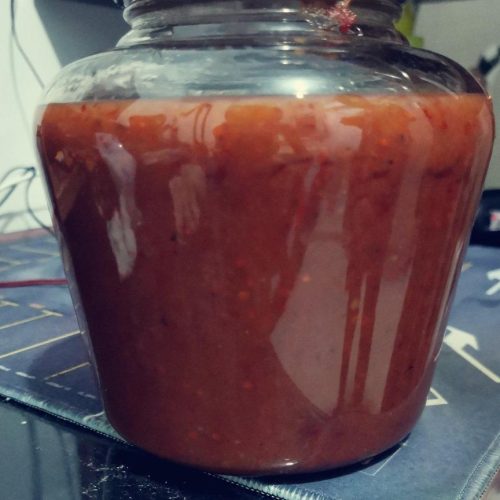
Authentic North Korean Chili Paste (Koryo-Style)

Ingredients
- 1 piece Apple Fuji or Gala
- 1 piece Pear Asian pear preferred
- 0.5 piece Onion
- 175 g Garlic Peeled cloves
- 25 g Ginger
- 25 g Dried Shrimp
- 58 g Glutinous Rice Flour
- 400 g Maltose Starch syrup
- 75 g Chili Powder Mix of fine and coarse
- 50 g Salt
- 1050 ml Water Total water used across blending and boiling
- 1 tsp White Spirit Baijiu or high-proof vodka
Instructions
- Blend apple, pear, onion, garlic, ginger, and dried shrimp with 200ml water until smooth.

- Mix glutinous rice flour with 100ml water to form a slurry.
- In a pot, heat 750ml water and maltose over low heat until dissolved.

- Whisk in the flour slurry and stir constantly until thick and translucent.
- Add the blended fruit mixture and chili powder; stir until well combined.
- Add salt and white spirit, stir for 2-3 minutes, then turn off heat.
- Cool completely and store in a sterilized, dry jar. Refrigerate for 2 days before use.












Leave a Reply