Summer is approaching, and in the kitchen, that often presents a dilemma. We crave flavors that stimulate the appetite—like aromatic curry—but we also want meals that are lighter, healthier, and waistline-friendly.
Enter my Curry Chicken Soba Noodles (咖喱鸡肉荞麦面).
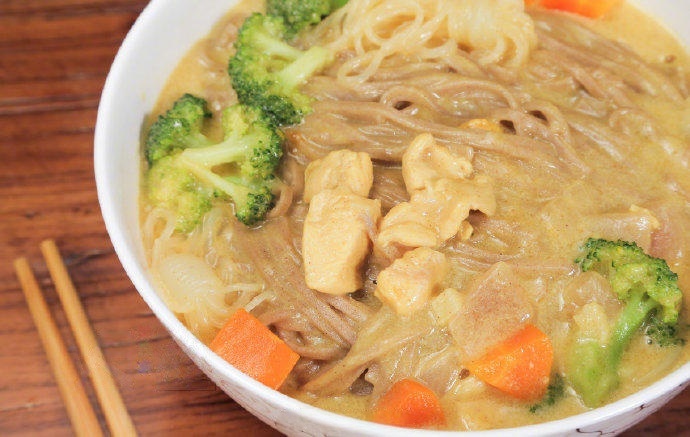
This isn’t your heavy, cream-laden curry. Instead, I’ve swapped white rice for earthy, nutrient-dense buckwheat noodles (soba) and incorporated shirataki (konjac knots) to add volume and texture without the calories. Combined with lean chicken and plenty of vegetables, it’s a meal that feels indulgent but is actually quite disciplined.
Whether you are looking for a post-workout meal or just a comforting dinner that won’t weigh you down, this dish hits the sweet spot.
Why This Recipe Works
- Balanced Nutrition: By replacing refined carbs with buckwheat noodles and adding low-calorie konjac, we significantly lower the glycemic load while keeping the meal filling.
- Texture Interplay: The softness of the stewed carrots, the bite of the al dente soba, and the unique “snap” of the konjac knots create a satisfying mouthfeel.
- Flavor Efficiency: Using a Japanese curry roux block is a time-tested shortcut that delivers complex, slow-cooked flavor in a fraction of the time.
What is “Gali Ji Rou Qiao Mai Mian”?
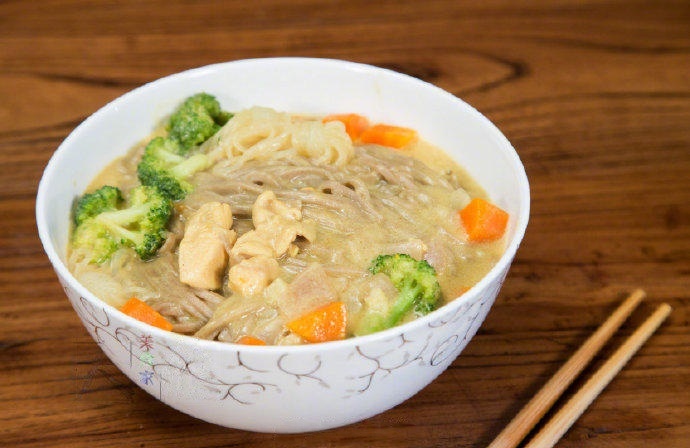
In China, “Gali” (Curry) is immensely popular, largely influenced by the Japanese style of curry—sweeter, thicker, and milder than its Indian or Thai counterparts. While usually served over short-grain rice, serving it over noodles is a popular variation.
This specific version is a “light food” (轻食, qing shi) staple in modern Chinese households. It borrows the technique of a classic stew but adapts the ingredients for health-conscious eating. It reminds me of the hearty noodle bowls my family would make in Sichuan when we wanted something warming but didn’t want the heaviness of a red-oil broth.
About the Author & Recipe Development
I’m Lin, and I grew up in the humid heat of Sichuan, where stimulating the appetite during muggy summers is an art form. My culinary training in China taught me that flavor shouldn’t be sacrificed for health.
In developing this recipe for Woks of Love, I tested the simmering times to ensure the chicken breast remains tender—a common pain point in curries. I also balanced the ratio of curry roux to water so the sauce coats the slippery soba noodles perfectly without becoming a gloppy mess. This recipe bridges the gap between a traditional hearty stew and a modern salad-style noodle bowl.
Key Ingredients & Substitutions
- Chicken: The original recipe calls for 300g of chicken. I recommend boneless, skinless chicken breast for the leanest option, but chicken thighs will offer more forgiveness if you tend to overcook meat.
- Buckwheat Noodles (Soba): These have a nutty flavor and a lower glycemic index than wheat noodles. Note: If you are gluten-free, ensure your soba is 100% buckwheat, as many brands blend in wheat flour.
- Konjac Knots (Magic Taro/Moyu): These are made from the corm of the konjac yam. They have almost zero calories and a chewy, gelatinous texture. If you can’t find them, you can substitute with more vegetables or wood ear mushrooms.
- Curry Roux: Japanese curry blocks (like Golden Curry or Vermont Curry) are essential here. They contain the thickener, fat, and spices all in one.
- Vegetables: We use broccoli, carrots, and onions. You could easily swap in potatoes, but keep in mind that potatoes will increase the carb count.
💡 Chef’s Tip: If you enjoy this healthy chicken approach, you might also like myBraised Chickenrecipe, which uses peppers to boost flavor without heavy fats.
Ingredients

For the Stir-fry and Stew:
- 10 oz (300g) Chicken breast, cut into 1-inch cubes
- 1 medium Carrot, peeled and diced
- 1 medium Onion, diced
- 3 cloves Garlic, minced
- 7 oz (200g) Broccoli florets
- 1 pack (7 oz/200g) Konjac knots (Shirataki), rinsed well
- 1-2 cubes Japanese Curry Roux (adjust for desired thickness)
- 1 tbsp Neutral cooking oil
- Salt, to taste
- Water (approx 2-3 cups, enough to cover ingredients)
For the Noodles:
- 5 oz (150g) Dried Buckwheat (Soba) noodles
Recipe Notes Before You Start
- Prep the Konjac: Konjac has a distinct earthy smell when opened. Rinse it thoroughly under cold water and par-boil for 1 minute if you are sensitive to the smell.
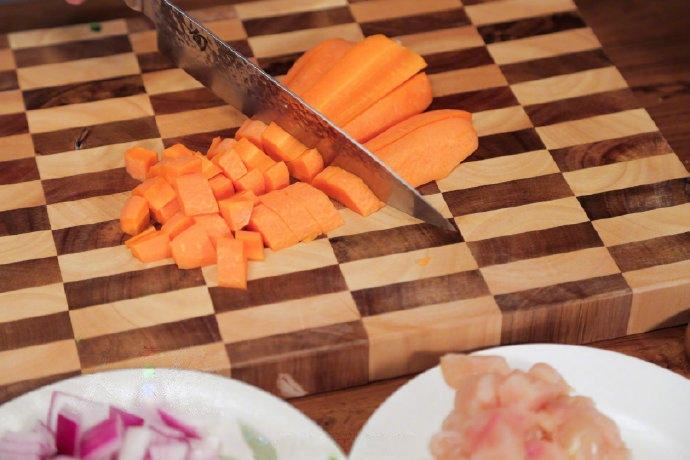
- Knife Work: Try to cut your chicken, carrots, and onions into uniform sizes. This ensures they cook at the same rate.
- Pot Selection: Use a heavy-bottomed pot or a deep sauté pan (or wok) to prevent the curry from scorching as it thickens.
How to Make Curry Chicken Soba Noodles
Step 1: Mise en Place Cut the carrot, chicken, and onion into small, bite-sized cubes. Cut the broccoli into small florets. Mince the garlic. Have your curry cubes ready.
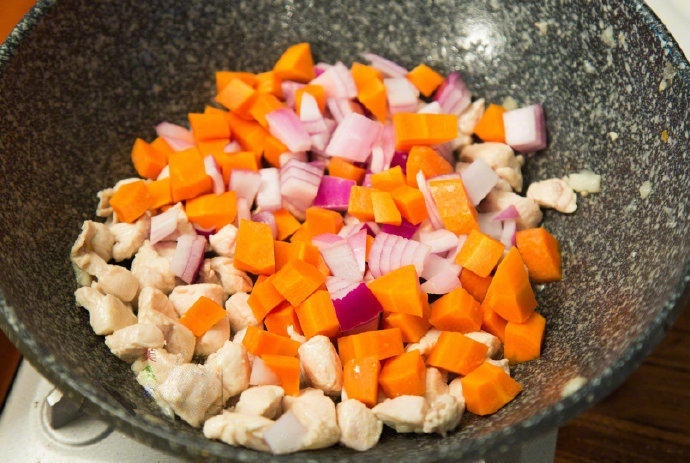
Step 2: Sear the Aromatics and Chicken Heat the oil in a pot over medium heat. Add the minced garlic and stir-fry until fragrant (about 30 seconds). Add the chicken cubes and stir-fry until they turn opaque and white.
Note: Searing the chicken creates a savory foundation known as the Maillard reaction, adding depth to the light sauce.
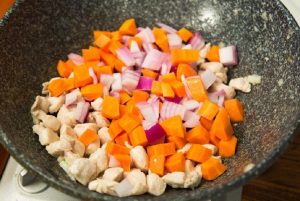
Step 3: Add Root Vegetables Add the carrots and onions to the pot. Stir-fry for 2-3 minutes until the onions begin to turn translucent and the carrots soften slightly.
Step 4: Simmer the Curry Pour in enough water to just cover the ingredients. Add the curry roux block. Bring the liquid to a boil over high heat, then immediately reduce to low heat. Cover and simmer for 30 minutes.
Critical Step: You must cook on low heat after adding the curry block. High heat will cause the thickeners in the roux to burn on the bottom of the pot. Stir occasionally.
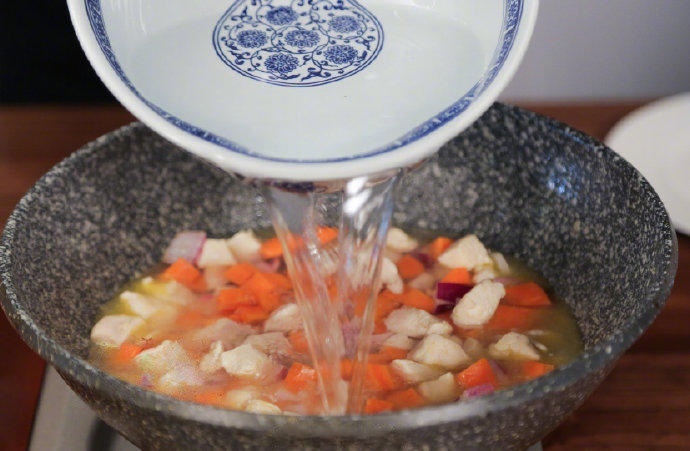
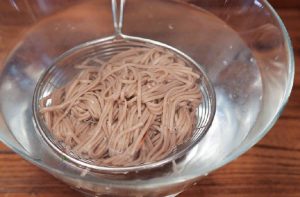
Step 5: Cook the Noodles While the curry simmers, bring a separate pot of water to a boil. Cook the buckwheat noodles according to package instructions (usually 3-5 minutes). Drain and immediately rinse under cold running water to remove excess starch.
Why rinse? Rinsing prevents the noodles from becoming gummy and sticking together.
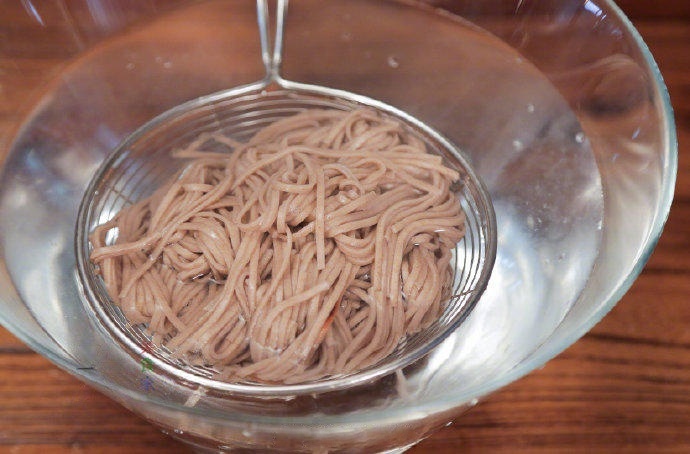
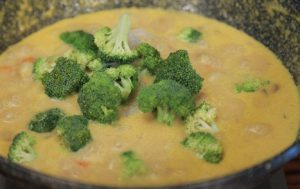
Step 6: Finish with Greens and Konjac Return to your curry pot. Add the broccoli florets and the rinsed konjac knots. Simmer for another 3-5 minutes until the broccoli is tender-crisp. Taste the sauce and add salt if needed (the curry block is salty, so taste first!).
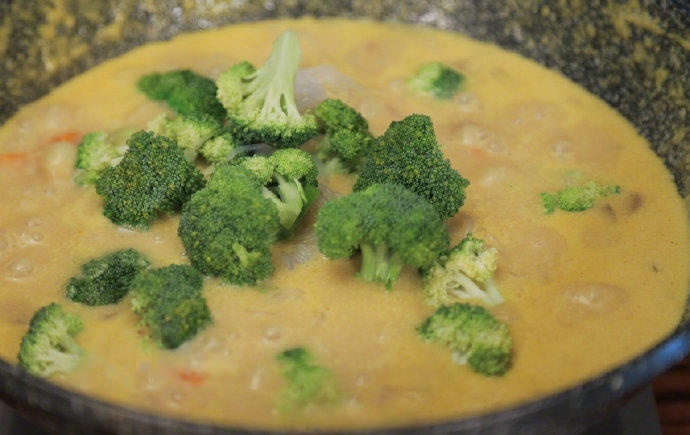
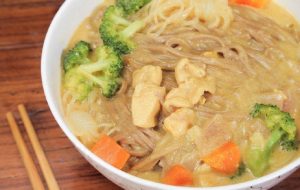
Step 7: Combine and Serve Place a portion of noodles into a bowl. Ladle the hot, thick curry chicken and vegetable mixture over the noodles. Mix well before eating.
Tips for Success
- Don’t Overcook the Broccoli: We add the broccoli at the very end (Step 6) rather than with the carrots. This preserves its bright green color and nutrients. If you boil broccoli for 30 minutes, it will turn mushy and yellow.
- Sauce Consistency: If the curry is too thick, add a splash of hot water. If too thin, simmer uncovered for a few extra minutes.
- Noodle Timing: Time your noodles so they finish right when the curry is done. If they sit too long, they can clump. If this happens, rinse them quickly with warm water before serving.
Common Mistakes When Making Curry Noodles
- Burning the Roux: Curry roux creates a thick sauce that catches easily. Solution: Use low heat and stir frequently once the block is added.
- Dry Chicken Breast: Chicken breast has very little fat. Simmering it for 30 minutes can sometimes dry it out. Solution: If you are very particular about juicy meat, you can brown the chicken in Step 2, remove it, and add it back in Step 6 with the broccoli.
- Fishy Konjac: Skipping the rinse on the konjac knots can leave a funky taste. Solution: Rinse well and blanch in boiling water if you have time.
Serving Suggestions
This is a complete meal in a bowl, but if you want to add some freshness or crunch, here are some pairings:
- Side Dish: A refreshing Smashed Cucumber Salad cuts through the richness of the curry perfectly.
- Condiment: If you like heat, a spoonful of Chili Garlic Sauce adds a wonderful kick.
- Appetizer: Start with some Spring Rolls for a texture contrast (crispy vs. saucy).
Food Safety and Preparation
- Chicken Temperature: Ensure your chicken reaches an internal temperature of 165°F (74°C) to ensure it is safe to eat. You can verify this with an instant-read thermometer. For more on poultry safety, refer to the USDA Guidelines.
- Reheating: If you have leftovers, store the noodles and curry separately if possible. Buckwheat noodles can become soggy if stored in the sauce. Reheat the curry to 165°F before serving.
Authoritative References
- Buckwheat Nutrition: For a deeper understanding of the health benefits of buckwheat (which is actually a seed, not a grain), you can read more at the Harvard T.H. Chan School of Public Health.
- Konjac/Glucomannan: Information on the dietary fiber found in konjac can be found via Healthline’s overview of Glucomannan.
Curry Chicken Soba Noodles (Gali Ji Rou Qiao Mai Mian)

Equipment
- Heavy-bottomed pot
- Colander
Ingredients
- 10 oz Chicken breast cut into 1-inch cubes (approx 300g)
- 1 Carrot medium, diced
- 7 oz Broccoli florets (approx 200g)
- 1 pack Konjac knots (Shirataki) rinsed well (approx 200g)
- 5 oz Dried Buckwheat (Soba) noodles (approx 150g)
- 1 Onion medium, diced
- 1.5 cubes Japanese Curry Roux mild or medium hot
- 3 cloves Garlic minced
- 1 tbsp Neutral cooking oil
- Salt to taste
Instructions
- Prep ingredients: Cut the carrot, chicken, broccoli, and onion into small uniform pieces. Mince the garlic.

- Add oil to a pot over medium heat. Sauté the minced garlic until fragrant, then add the chicken. Stir-fry until the chicken turns white.
- Add the carrots and onions. Stir-fry for 2-3 minutes to soften slightly.

- Add enough water to cover the ingredients and add the curry roux block. Bring to a boil, then reduce heat to LOW. Cover and simmer for 30 minutes, stirring occasionally to prevent sticking.

- Meanwhile, cook buckwheat noodles in boiling water according to package instructions. Drain and rinse thoroughly under cold water to remove starch.

- Add the broccoli florets and konjac knots to the curry. Simmer for another 3-5 minutes until broccoli is tender. Adjust salt to taste.

- Pour the curry mixture over the noodles, mix well, and serve.














Leave a Reply