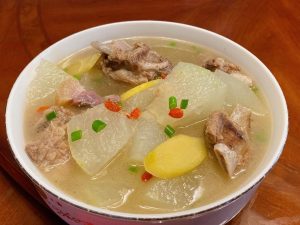
During the sweltering heat of summer, nothing brings comfort quite like a clear, nourishing bowl of Winter Melon Pork Rib Soup. It’s an absolute staple in my home. The winter melon absorbs all the rich, savory depth of the pork broth, becoming incredibly tender and practically melting in your mouth—my three-year-old son absolutely adores the soft melon pieces. While I’m currently busy testing endless variations of broths for my first cookbook that is currently in preparation, this classic, unpretentious version remains our family favorite.

What Is Winter Melon Pork Rib Soup?
Winter Melon Pork Rib Soup (冬瓜排骨汤) is a traditional Chinese homestyle soup celebrated for its natural cooling properties. Winter melon, despite its name, is a summer crop known for its high water content and mild flavor, making it the perfect canvas for rich pork broth. The addition of a little salted pork or dry-cured ham elevates the umami profile instantly.
If you enjoy nourishing, homestyle broths like this, you might also love my Bitter Melon Pork Rib Soup or the highly requested Kelp and Pork Rib Soup.

Ingredients
- Winter Melon (Dong Gua): 800g (about 1.7 lbs). Look for a piece with firm, dense white flesh.
- Pork Ribs: 400g (about 0.9 lbs), chopped into 1.5-inch pieces. For more details on cuts, check out my guide on Pork Bones: Which Bones Make the Best Soup.
- Salted Pork or Chinese Dry-Cured Ham: 60g (about 2 oz). This is the secret ingredient for an incredible depth of flavor. Read more about Authentic Chinese Dry-Cured Ham.
- Ginger: 6 slices (peeled if you want a stronger warming effect).
- Scallions: 2 knots for boiling, plus 1 tablespoon chopped for garnish.
- Shaoxing Wine: 2 tbsp, divided.
- Salt: 4g (approx. 3/4 tsp), adjust to taste.

Equipment Needed
- Large soup pot or a micro-pressure cooker.
- A secondary pot for blanching the pork.
Prep & Mise en Place
- Winter Melon: Peel the thick green skin, scoop out the seeds, and cut the flesh into 1.5-inch chunks.
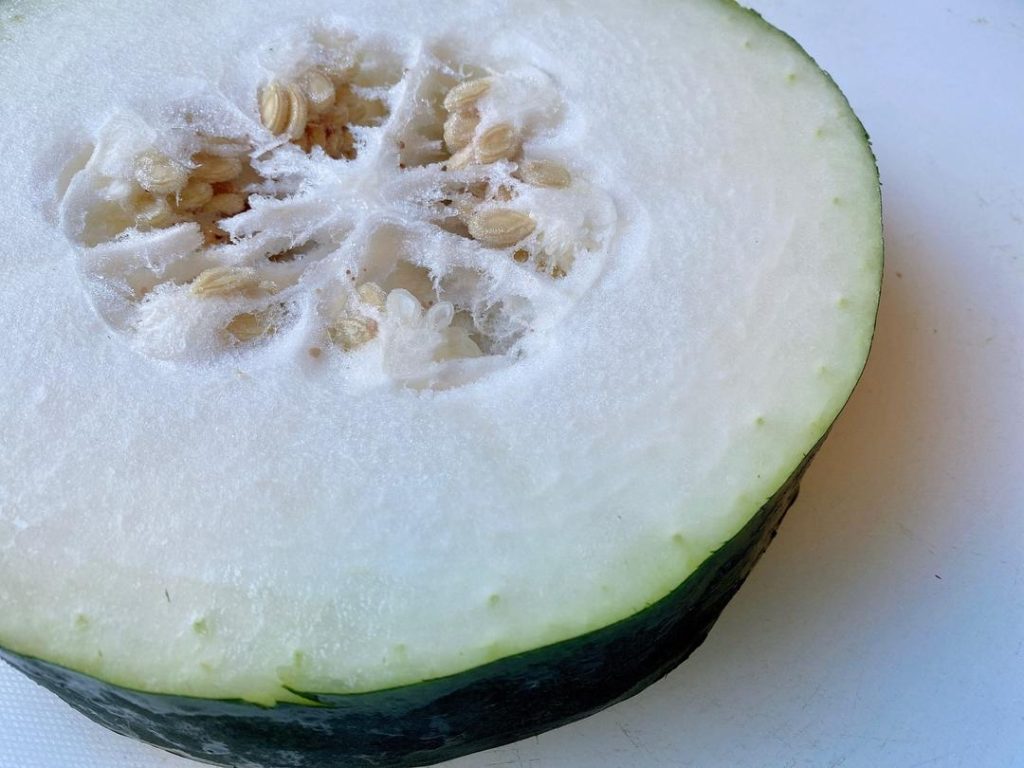
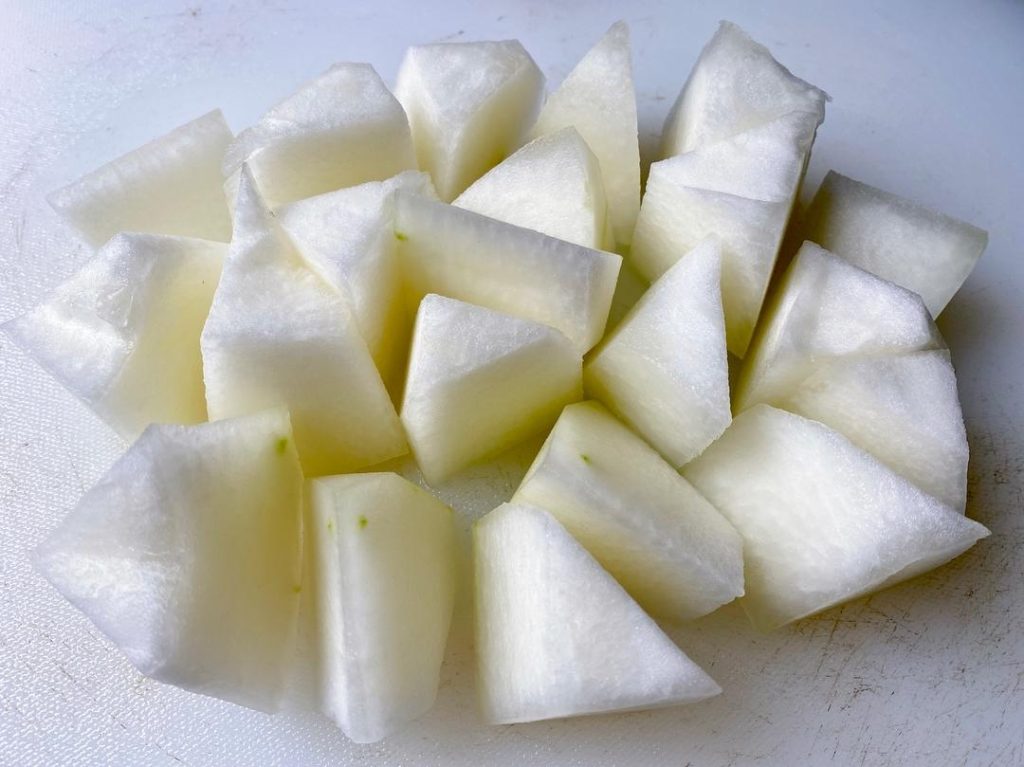
- Aromatics: Slice the ginger and tie the green onions into small knots to make them easier to fish out later.
Cooking Process
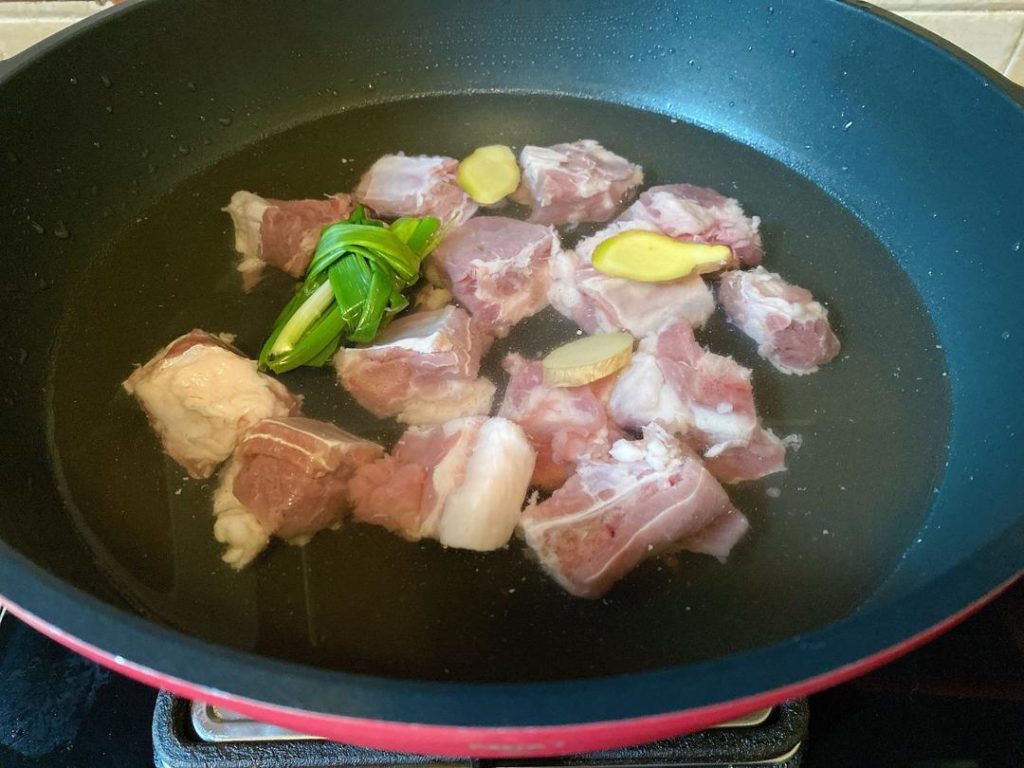
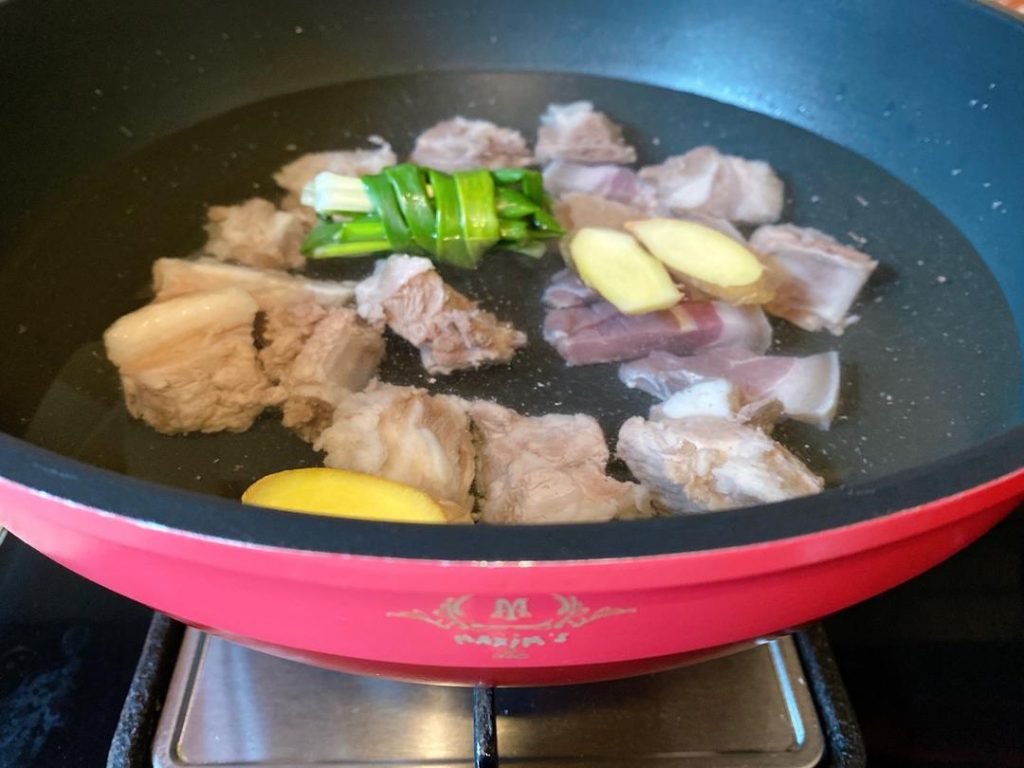
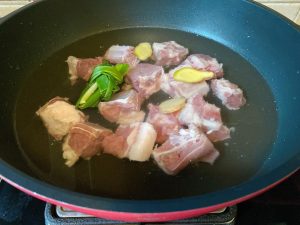
- Blanch the Ribs (5–7 minutes): Place the pork ribs into a pot of cold water. Add 1 tablespoon of Shaoxing wine, 2 slices of ginger, and 1 scallion knot. Bring to a boil over medium-high heat. Skim off the foam and let it boil for 2 minutes. Remove the ribs and rinse them clean with hot water.Why start with cold water? Placing raw meat in cold water and gradually bringing it to a boil allows the soluble proteins and blood to slowly leach out and coagulate on the surface. If you use hot water, the exterior cooks instantly, trapping impurities inside and leading to a cloudy broth.
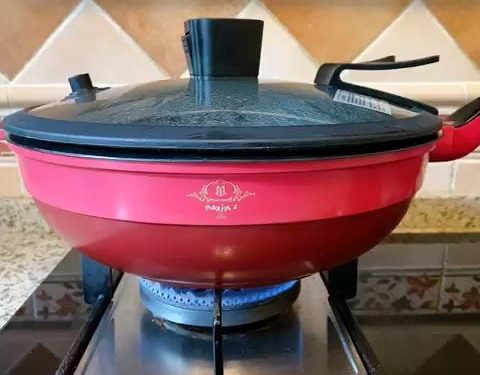
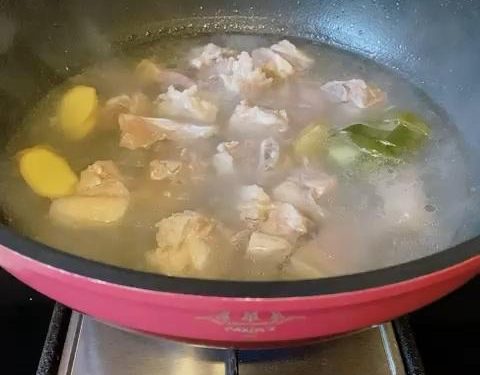
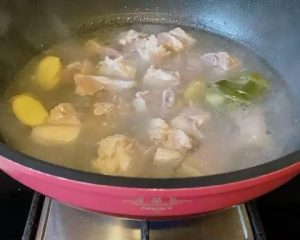
- Start the Broth (40 minutes): In a clean soup pot, add the blanched ribs, the remaining ginger slices, 1 new scallion knot, the salted pork (or ham), and 1 tablespoon of Shaoxing wine. Pour in enough water to comfortably submerge all ingredients (about 6-8 cups). Bring to a boil, then reduce the heat to a gentle simmer. Cover and cook for about 40 minutes at around 190°F to 200°F (88°C – 93°C). Note: If using a micro-pressure pot, this time may be slightly reduced.
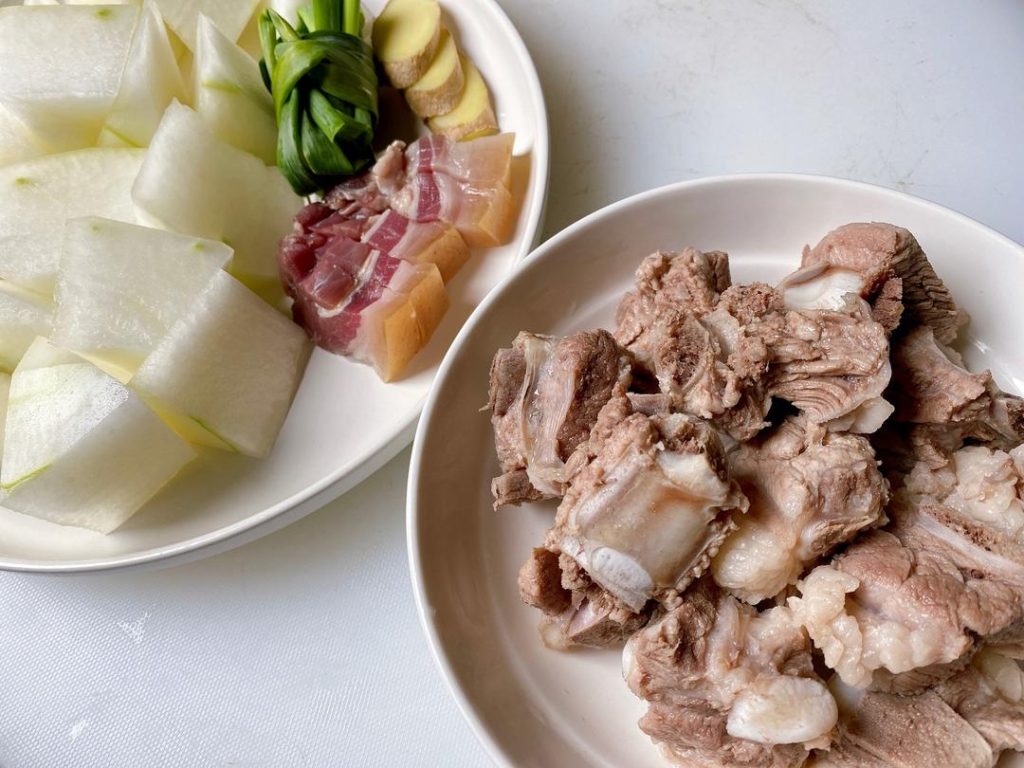
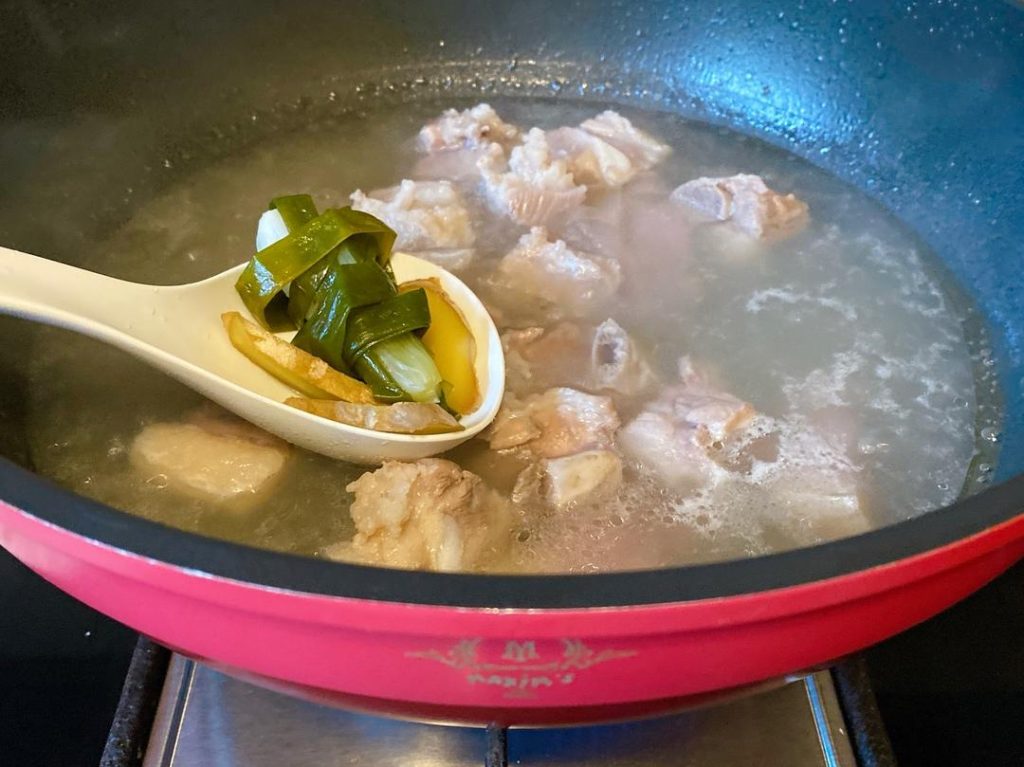
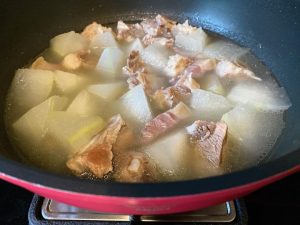
- Add the Winter Melon (10–15 minutes): Carefully fish out and discard the ginger and scallion knots. Add the cubed winter melon to the pot. Continue simmering for about 10 minutes, or until the melon turns semi-transparent and easily yields to a fork.
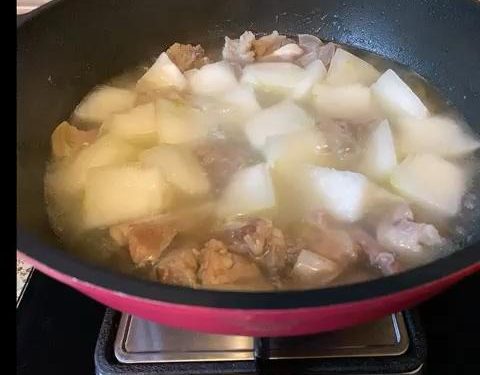
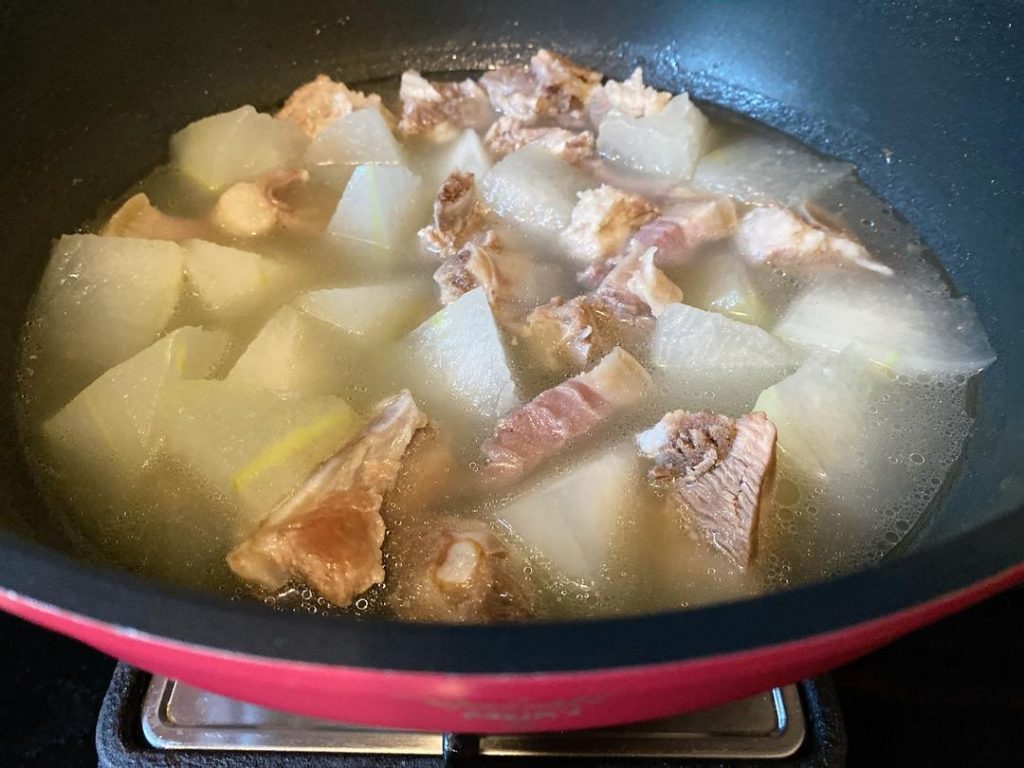
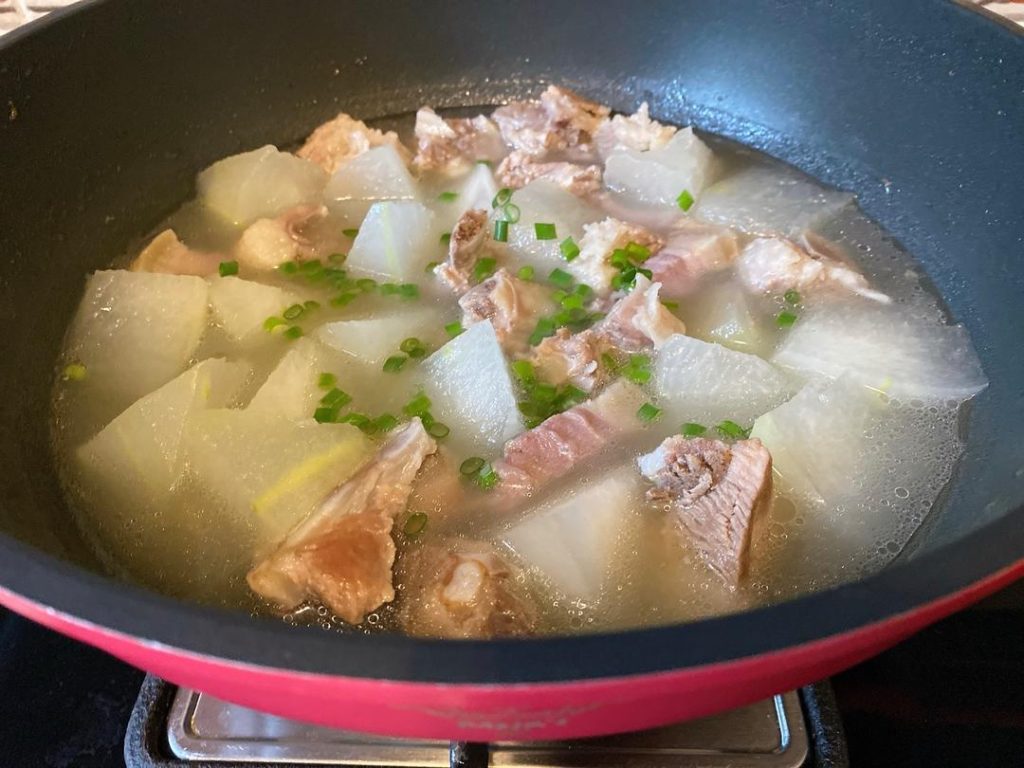
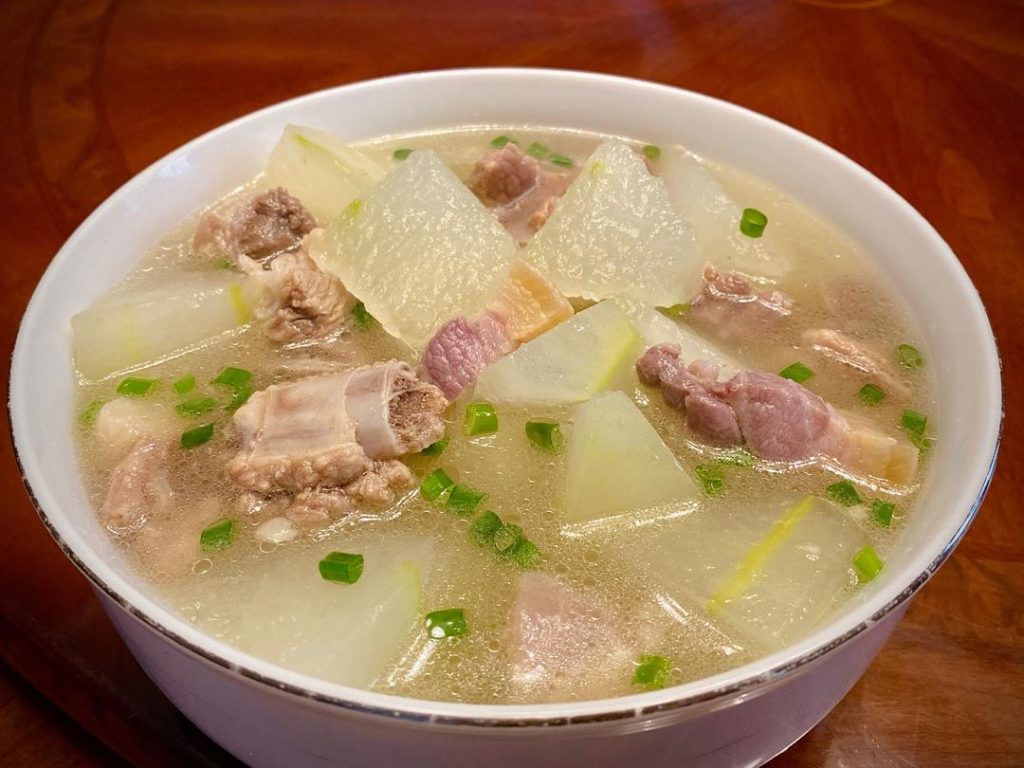
- Season and Serve (2 minutes): Stir in the salt, tasting as you go. Turn off the heat and garnish with fresh chopped scallions. The residual heat will continue to soften the melon slightly.
Why This Recipe Works
- Flavor Layering: The salted pork acts as an umami booster, providing a savory backbone that regular pork ribs lack on their own.
- Texture Balance: Adding the winter melon only in the last 10-15 minutes ensures it holds its shape while becoming luxuriously tender, rather than disintegrating into mush.
- Yin and Yang: In traditional Chinese cooking, winter melon is highly “cooling.” Adding peeled ginger introduces a “warming” element, creating a balanced, stomach-friendly dish.
Common Mistakes When Making Winter Melon Pork Rib Soup
- Mistake: Cloudy Broth. This is often caused by skipping the cold-water blanching step or letting the soup boil too vigorously.
- Solution: Always blanch ribs from cold water and maintain a gentle simmer (not a rolling boil) for a perfectly clear soup.
- Mistake: Mushy Winter Melon. This happens when the melon is added too early.
- Solution: Wait until the ribs are 90% cooked before adding the melon. It cooks very quickly.
Frequently Asked Questions
- Can I substitute the salted pork? Yes, you can omit it entirely, but you may need to add a touch more salt or a dash of chicken bouillon for extra depth. Jinhua ham or Virginia ham are excellent substitutes.
- Can I make it ahead? Absolutely. The soup often tastes even better the next day as the melon continues to absorb the savory broth.
- Is this authentic? Yes, this is a highly traditional homestyle recipe found across many Chinese households, especially during the summer months.
- Do I have to peel the winter melon? It’s a personal preference. The skin has strong cooling properties, so you can leave it on if you wash it thoroughly, but peeling it yields a much better, softer texture for eating.
How to Serve
Serve this soup piping hot alongside a bowl of freshly steamed rice—check out my method on how to cook perfect rice in a cast iron pot. To balance the gentle flavors of the soup, I love pairing it with a punchy Smashed Cucumber Salad and a simple plate of Homestyle Tofu.
Storage & Reheat
- Refrigerator: Store leftovers in an airtight container for up to 3 days.
- Reheat: Warm gently on the stovetop over medium heat until it reaches a simmer. Avoid aggressive boiling to keep the melon intact.
- Freeze: I do not recommend freezing this soup. The high water content in the winter melon will cause its texture to become spongy and unpleasant once thawed.
Allergen Notice
This recipe is generally free of common allergens. However, if using commercial salted pork or ham, check the label for hidden soy or gluten ingredients used during the curing process.
Nutrition Disclaimer: Nutrition information is an estimate and provided for informational purposes only.
About the Author & Recipe Development
I’m Lin, the recipe developer behind Woks of Love. This Winter Melon Pork Rib Soup has been rigorously tested in my home kitchen to guarantee the perfect meat-to-water ratio. I developed this particular version by dialing in the exact timing to ensure the ribs are fall-off-the-bone tender right as the winter melon reaches that ideal, translucent bite. The addition of salted pork is a chef’s trick I’ve relied on for years to naturally elevate the broth without needing artificial bouillon.
Authoritative References
For more information on safe internal cooking temperatures and handling for pork, please refer to the Safe Food Handling and Preparation.
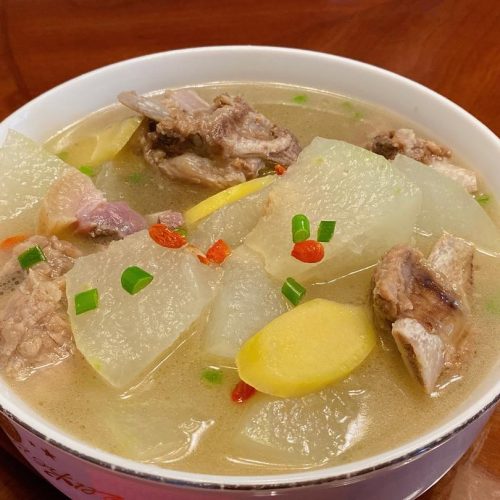
Authentic Winter Melon Pork Rib Soup (Dong Gua Pai Gu Tang)

Equipment
- Large Soup Pot or Micro-Pressure Cooker
Ingredients
Main Ingredients
- 800 g winter melon peeled, seeded, and cut into 1.5-inch chunks
- 400 g pork ribs chopped into small pieces
- 60 g salted pork or Chinese dry-cured ham sliced
Aromatics & Seasonings
- 6 slices ginger peeled if preferred
- 2 knots scallions plus extra chopped for garnish
- 2 tbsp Shaoxing wine divided
- 4 g salt approx 3/4 tsp, adjust to taste
Instructions
- Place pork ribs in a pot of cold water. Add 1 tbsp Shaoxing wine, 2 slices of ginger, and 1 scallion knot. Bring to a boil, skim the foam, boil for 2 minutes, then remove and rinse ribs with hot water.

- In a clean pot, add blanched ribs, remaining ginger, 1 scallion knot, salted pork, 1 tbsp Shaoxing wine, and enough water to submerge. Simmer covered for 40 minutes.

- Remove the aromatics. Add winter melon chunks and simmer for 10-15 minutes until semi-transparent and tender.
- Stir in salt to taste. Turn off heat, garnish with chopped scallions, and serve hot.




Leave a Reply