There is something quietly comforting about a steamer basket full of scallion pork steamed buns. The dough is soft and pillowy, the filling is juicy and scented with scallion oil, and the whole kitchen smells like a warm bakery the moment the lid comes off. This is the kind of bun you make on a slow weekend, then eat for breakfast, lunch, and a late-afternoon snack without ever getting tired of it.
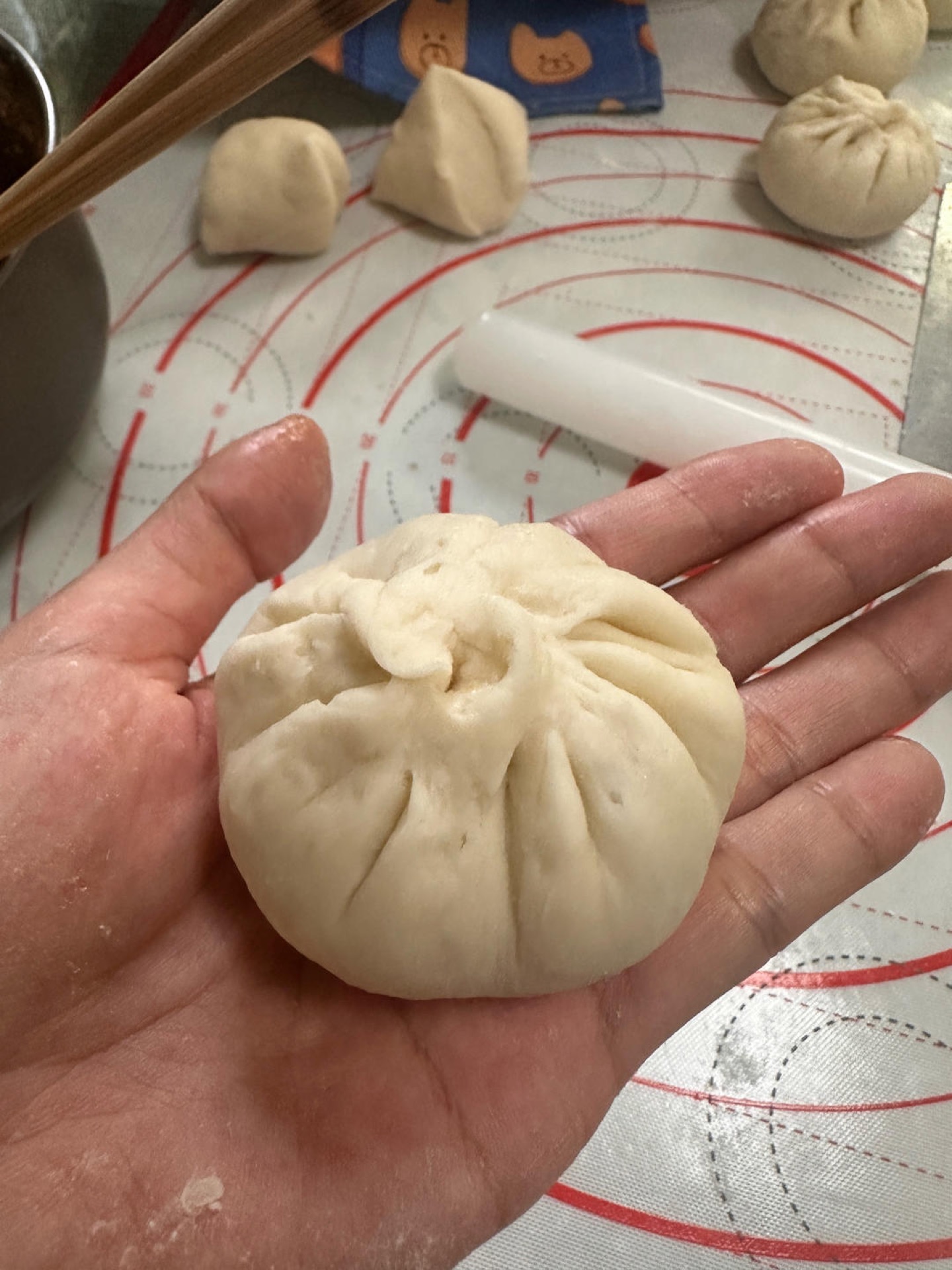
Scallion pork buns, or cong xiang rou bao, sit in the same family as the classic pork baozi but lean lighter and more aromatic. The scallion oil does most of the heavy lifting: it carries the green-onion perfume straight into the pork, so every bite tastes fresh rather than heavy. The dough is a straightforward yeasted one, which means the hardest part of this recipe is simply waiting for it to rise.
I developed this version with a gentler hand on the salt and soy sauce, because it is the kind of bun many Chinese families make for young children. That does not make it bland. It makes it clean-tasting, so the pork and scallion come through clearly. If you are feeding adults, a small dish of black vinegar on the side fixes everything.
What Is Scallion Pork Steamed Buns?
Scallion pork steamed buns are a Chinese baozi filled with seasoned ground pork and a generous amount of scallion oil. The dough is a simple yeasted wheat dough, rolled into rounds, filled, pleated, and steamed rather than baked. The result is a soft, white bun with a juicy center that tastes of pork, ginger, and green onion.
In Chinese home cooking, baozi are a category rather than a single recipe. You will find them with cabbage and pork, with mushrooms, with beef and onion, and with the scallion-heavy filling used here. The scallion version is popular because it is quick to assemble once the dough is ready, and because scallion oil is an ingredient most Chinese kitchens already have on hand.
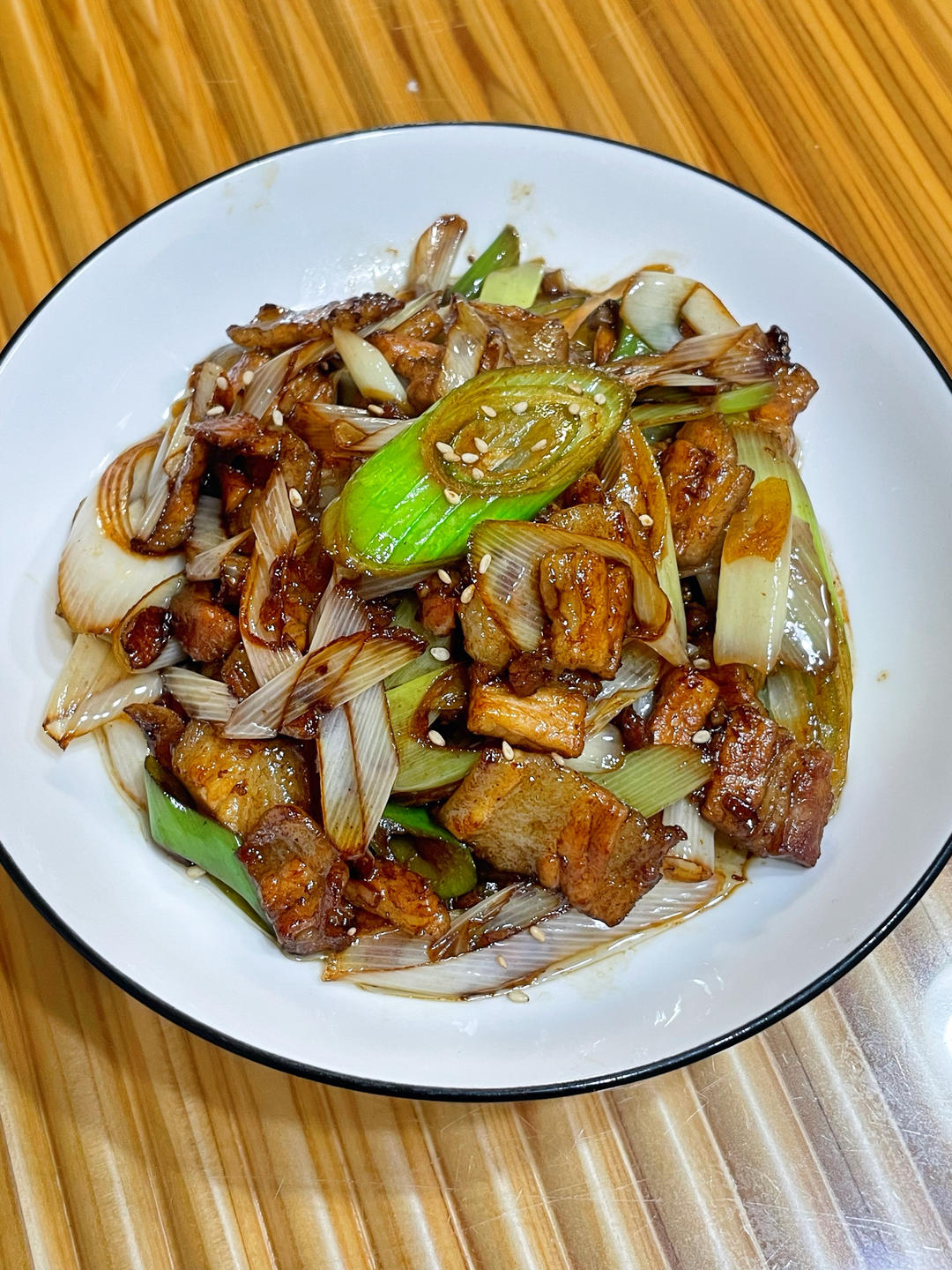
If you enjoy the way scallion and pork play together here, try this scallion pork belly stir fry, which uses the same flavor pairing in a fast wok-cooked dish.
1Scallion Stir-Fried Pork Belly (Cong Bao Rou)This classic Scallion Pork Belly Stir-Fry (Cong Bao Rou) is a savory, aromatic dish ready in 15 minutes. By rendering the pork belly until crisp and adding scallions in two stages, you get a perfect balance of texture and flavor without the grease.Check out this recipe
The secret to a juicy bun is really the same secret behind a great juicy dumpling filling, so if you want to understand the technique in more depth, that guide is worth reading.
2The Secret to Juicy Pork Filling for Dumplings & Buns (万能肉馅)Learn the restaurant secret to a juicy, flavorful pork filling (万能肉馅) for any dumpling or bun. This all-purpose recipe is tender, delicious, and foolproof, perfect for potstickers, steamed buns, and shumai.Check out this recipe

If you like the idea of a pork bun with a crisp bottom instead of a soft one, try sheng jian bao, the pan-fried Shanghai cousin of the steamed bun.
3Easy Sheng Jian Bao (Pan-Fried Pork Buns)A quick, 20-minute hack to make crispy, juicy Shanghai-style Pan-Fried Pork Buns using store-bought dumpling wrappers. No yeast or kneading required!Check out this recipe

Why This Recipe Works
The filling starts with scallion-ginger water, added in three additions and stirred in one direction. That single step is what keeps the pork juicy after steaming. Water bound into the meat does not run out during cooking; it stays in the filling and turns into steam and broth inside the bun.
Stirring salt in before the sauces does two things. It seasons the meat evenly, and it develops the sticky, springy texture that Chinese cooks call qi jiao, or “rising glue.” Once the pork holds together like that, it will not crumble when you wrap it.
The scallion oil is added at the very end, just before wrapping. Hot oil is not used here; the chopped scallions simply steep in cool neutral oil while the filling chills. That gentle infusion keeps the scallion flavor bright and grassy instead of cooked and dull.
The reason a second rise matters so much is gluten relaxation. After you pleat the buns, the dough is tight and elastic. Resting it lets the gluten slacken and the yeast produce gas again, so the buns puff rather than tear, and the pleats stay visible after steaming. According to the FDA Food Code, pork should be cooked to a safe internal temperature, which for ground pork is 160°F (71°C).
Equipment Needed
You do not need much for this recipe, but the steamer matters. A bamboo steamer lined with parchment keeps the buns from sticking and lets condensation drip away from the tops. A metal steamer works too, as long as you line it and leave enough space between buns for them to expand.
You will also want a large mixing bowl for the dough, a smaller bowl for the filling, a cutting board and knife for the scallions, and a slotted spoon or spider for lifting buns in and out. A kitchen scale makes the dough far more consistent than cup measures, especially with flour. If you are new to the wok and the Chinese kitchen generally, this guide to Chinese cooking techniques for absolute beginners covers the basics in plain language.
Ingredients
The dough is flour, yeast, sugar, and warm water. That is it. The sugar is not there to sweeten the bun; it feeds the yeast and helps the crust brown slightly in the steamer.
The filling is ground pork, light and dark soy sauce, salt, a little sugar, oyster sauce, white pepper, scallion-ginger water, and a large quantity of scallions and leek whites steeped in oil. The scallion-to-pork ratio looks aggressive on paper. It is correct. Scallions wilt and sweeten in the steamer, and the bun needs that much green to taste like anything.
Ingredient Notes
Ground pork: Use an 80/20 blend. Leaner pork gives a drier filling, and this bun has no sauce inside to compensate. If your butcher only has 90/10, add an extra tablespoon of oil to the filling.
Light vs. dark soy sauce: Light soy sauce brings salt and umami; dark soy sauce brings color and a mild molasses note. The source recipe uses equal amounts, which is a good default. If you only have one, use light soy sauce and accept a paler filling.
Oyster sauce: A teaspoon adds a rounded savoriness that soy sauce alone cannot. Vegetarian oyster sauce works fine. If you skip it, add a pinch more sugar.
Scallion-ginger water: Made by soaking sliced ginger and a few crushed peppercorns in warm water, then straining. It is the backbone of the juiciness. Do not replace it with plain water; the ginger and pepper are part of the flavor.
White pepper: Use it rather than black pepper. White pepper is sharper and more floral, and it disappears into the pork instead of speckling it.
Flour: All-purpose is right here. Bread flour makes the dough chewier and harder to pleat; cake flour makes it too soft to hold the filling.
If you are adjusting the texture of the filling, this piece on what to use instead of cornstarch is useful, since a small amount of starch is a common binder in Chinese fillings.
Prep & Mise en Place
Start by making the scallion-ginger water so it has time to steep. Slice a thumb of ginger, crush a few white peppercorns, cover with about half a cup of warm water, and let it sit while you gather everything else.
Then measure the flour, sugar, and yeast. Dissolve the yeast in a small amount of warm water, around body temperature. If the water is hot enough to sting your wrist, it will kill the yeast, and the dough will not rise.
Chop the scallions and the white parts of the leek. Put them in a bowl, pour over enough neutral oil to cover, and set aside. This can be done an hour ahead; the flavor only improves.
Finally, set up your steamer. Line it with parchment, cut a few slits for steam, and have it ready before the buns are wrapped. Once the second rise finishes, you want to go straight to the heat.
Cooking Process
Step 1 — Make the Dough
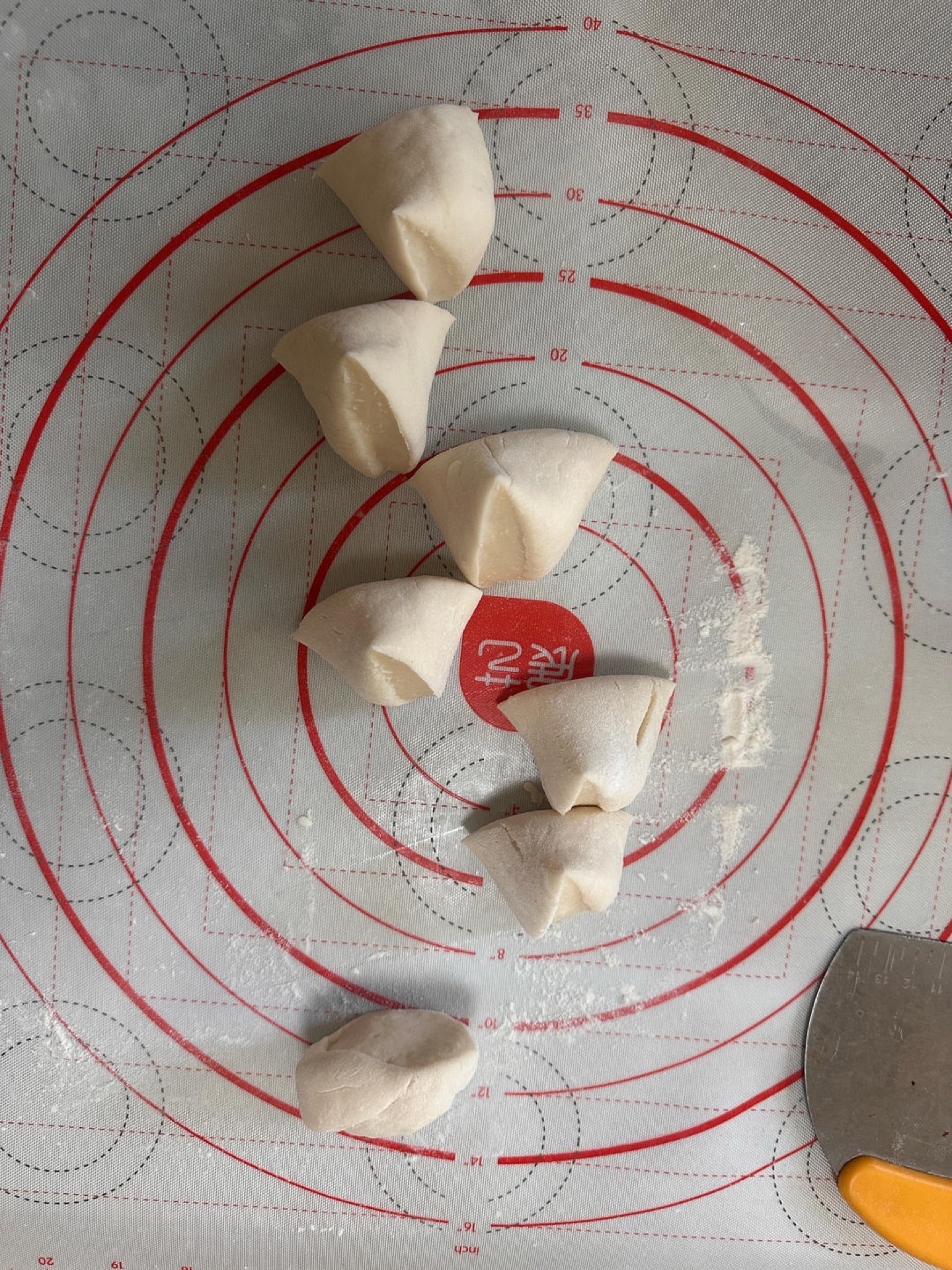
Stir the sugar into the flour, dissolve the yeast in a little warm water, then add it to the flour and mix while adding water until it forms small clumps with very little dry flour left. Add more warm water if the yeast water runs short, then cover and let it rise in a warm, humid spot until 1.5 to 2 times its size, about 1 hour in a rice cooker water bath at body temperature.
Step 2 — Mix the Filling
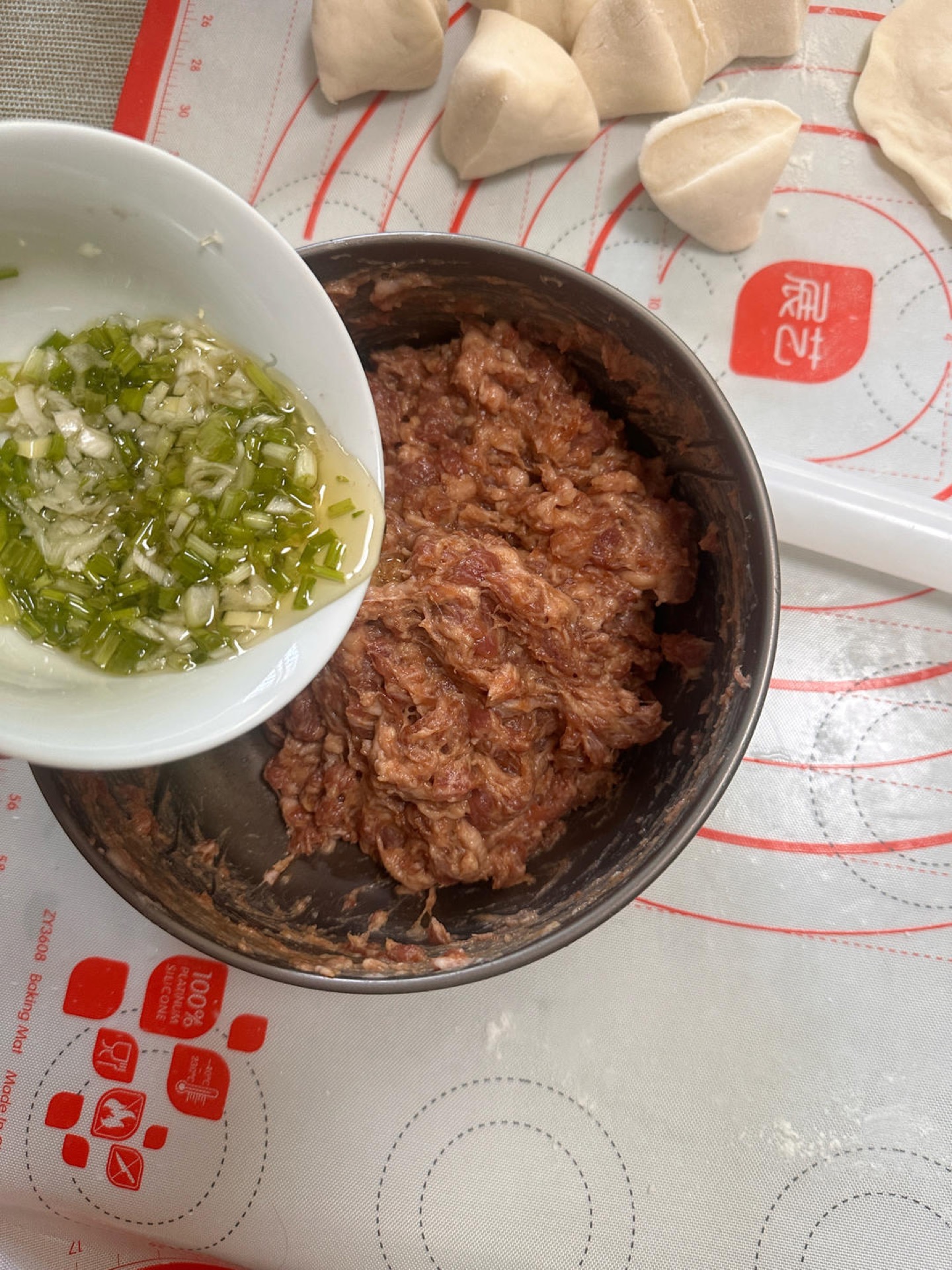
Add the scallion-ginger water to the ground pork in 3 additions, stirring clockwise until each addition is absorbed, then stir in the salt clockwise until the mixture becomes sticky. Add the light soy sauce, dark soy sauce, sugar, white pepper, and oyster sauce and mix well, then chill the filling in the refrigerator for about 1 hour. Chop the scallions and leek whites and soak them in oil until fully covered, then set aside.
Step 3 — Add the Scallion Oil
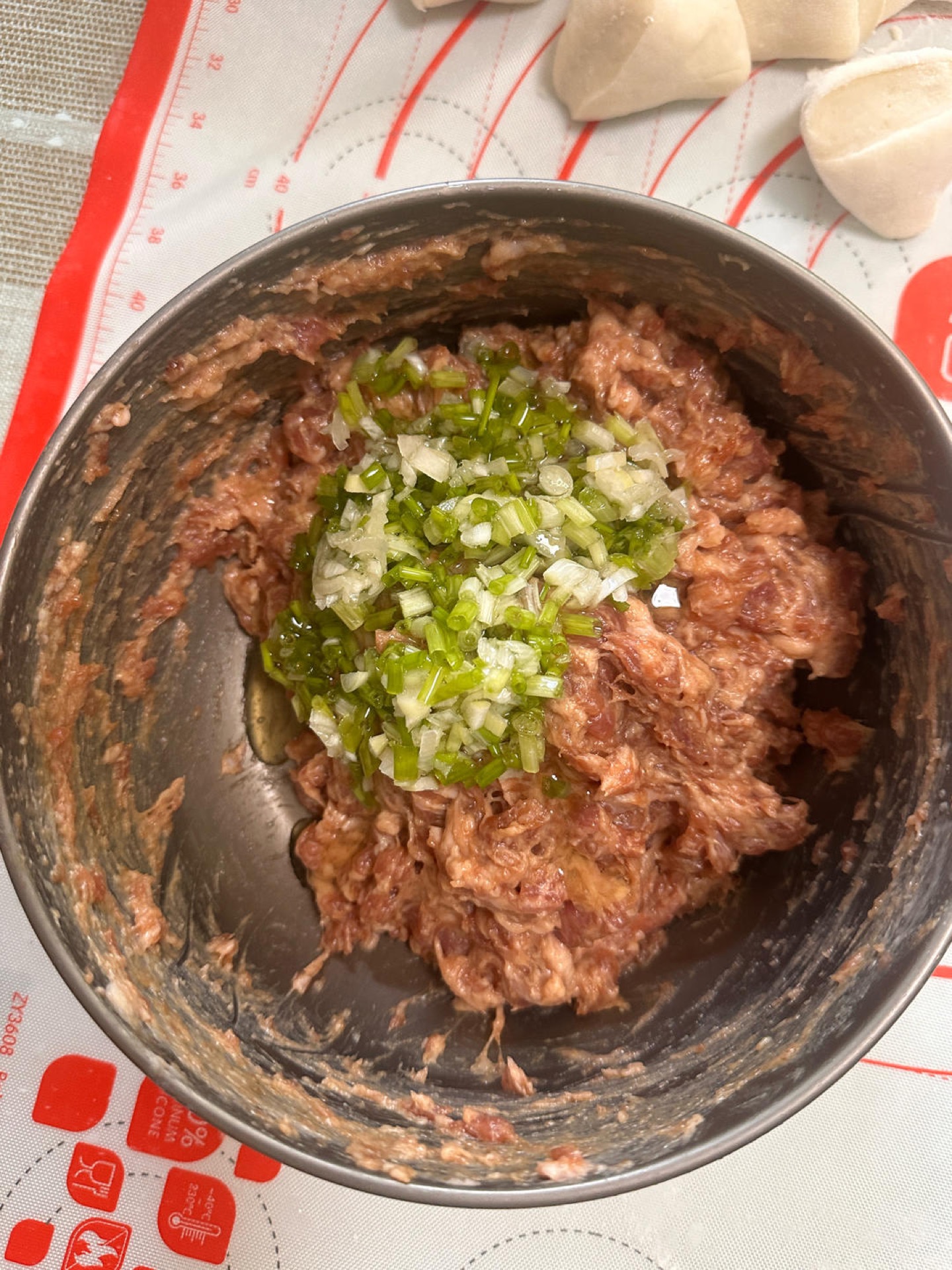
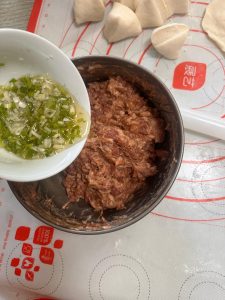
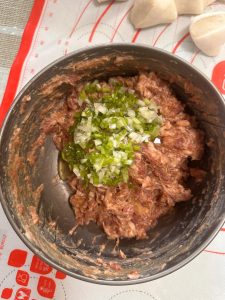
Once the dough has risen, take the filling out of the refrigerator and pour the scallion oil into it.
Step 4 — Shape the Buns
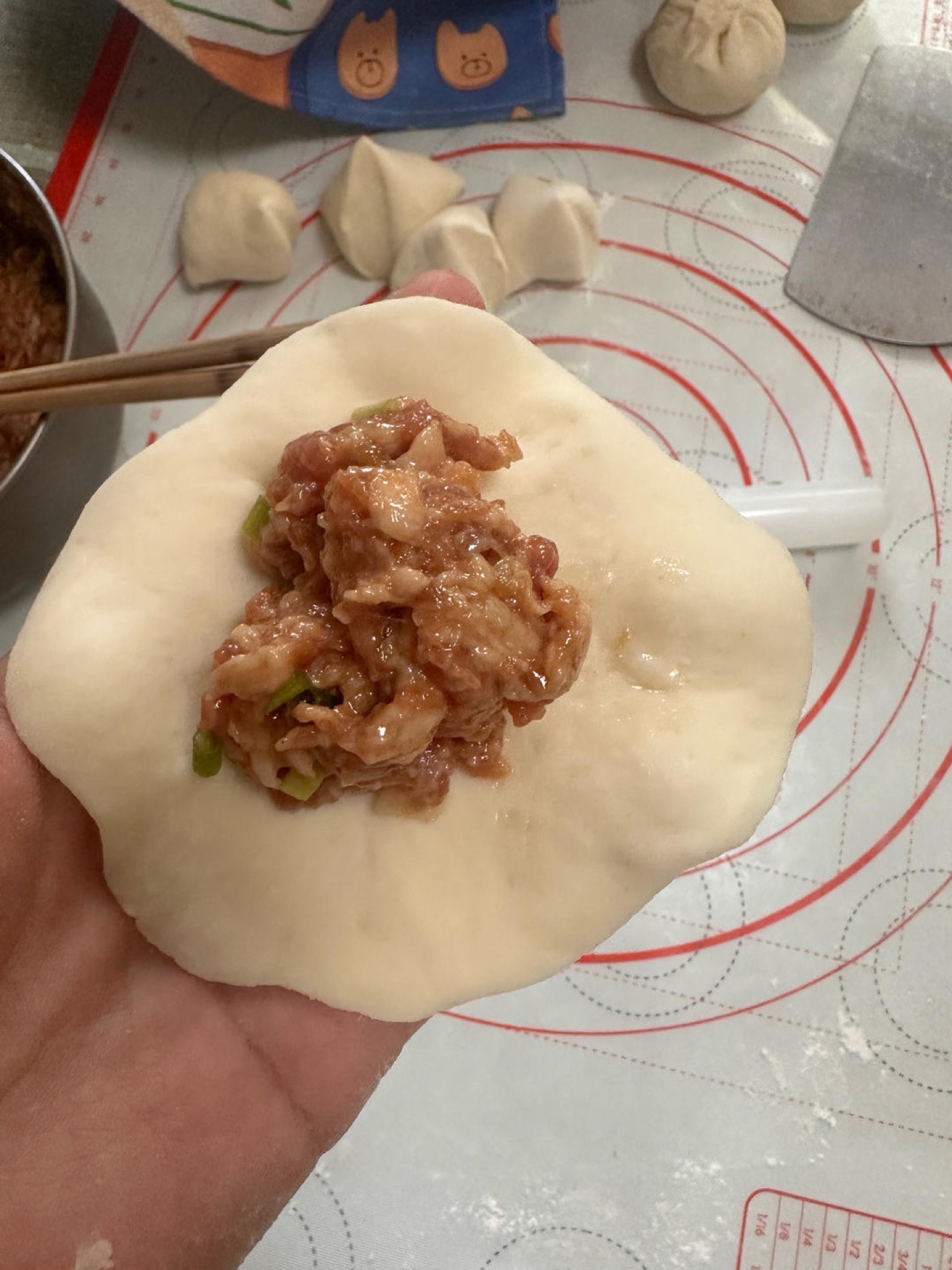
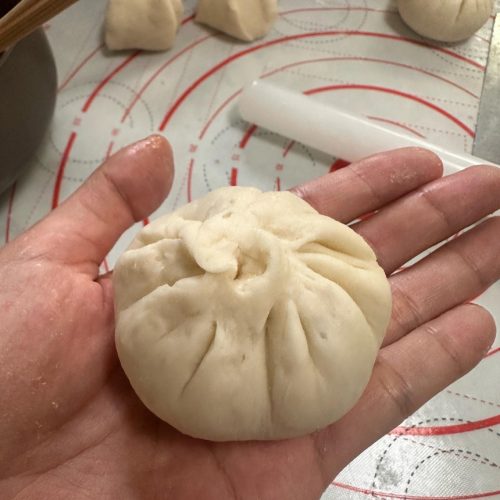
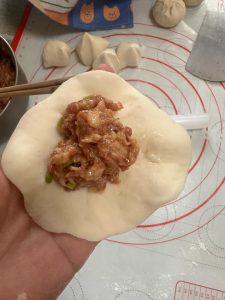
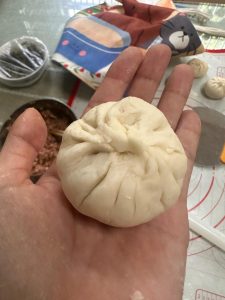
Knead the dough, cut it into portions, and wrap the filling into buns.
Step 5 — Steam the Buns
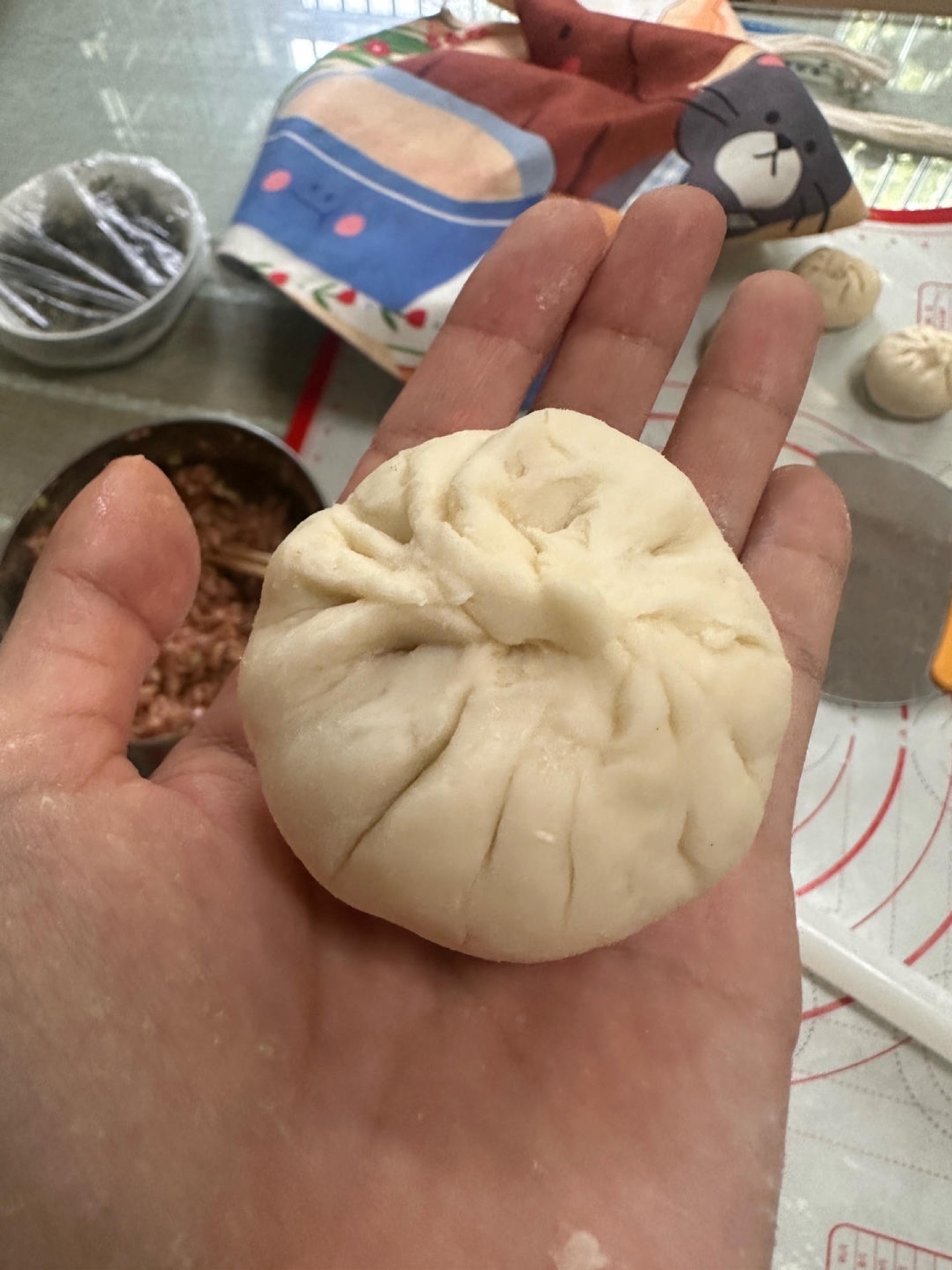
After wrapping, place the buns in the steamer for a second rise until doubled in size. Turn on high heat, steam after the steam rises for 13 to 15 minutes depending on the heat and bun size, then turn off the heat and wait 3 minutes before opening the lid.
Step 6 — Serve
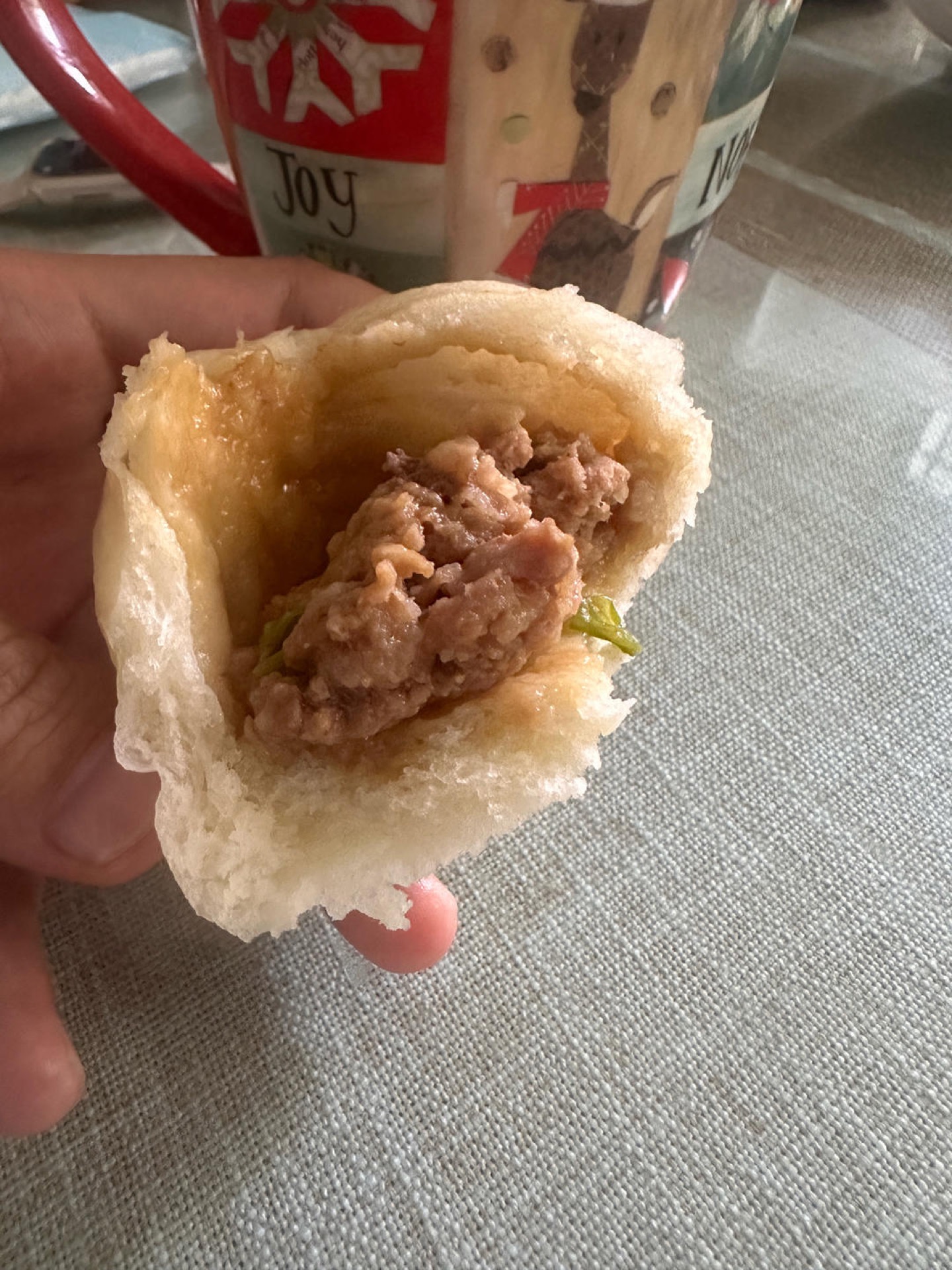
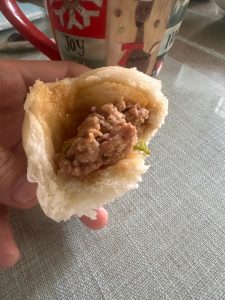
This is the low-salt, low-soy version for children, with a thin wrapper and generous filling that is very fragrant when pulled open.
Common Mistakes When Making Scallion Pork Steamed Buns
1. The dough does not rise. This is almost always water temperature or old yeast. If the water was too hot, the yeast is dead; if it was too cold, the yeast is dormant. Use water at about 100°F (38°C), and proof the yeast first if you are unsure. The fix is simply to start over with fresh yeast and a thermometer.
2. The filling is dry. This happens when the scallion-ginger water is added all at once, so the pork cannot absorb it, or when lean meat is used. Add the water in three additions, stirring clockwise until each is absorbed, and use 80/20 pork. A tablespoon of oil added at the end also helps.
3. The buns collapse after steaming. Opening the lid too soon causes a sudden temperature drop, and the buns deflate. Turn off the heat and wait a full 3 minutes before lifting the lid. Resist the urge to peek.
4. The pleats disappear. This usually means the second rise went too long, or the dough was rolled too thin at the top. Let the buns rise until doubled, not more, and keep the center of each wrapper slightly thicker than the edges.
5. The filling leaks out during steaming. Overfilling or a wet filling will do this. Leave a border of bare dough around the filling, and do not add extra liquid beyond the recipe. If your filling looks loose, chill it longer before wrapping.
6. The buns stick to the steamer. Parchment or cabbage leaves prevent this. If you use a bare metal steamer, brush it lightly with oil, and lift the buns out while they are still warm rather than after they cool.
Variations
Pan-fried version: Instead of steaming, arrange the buns in an oiled skillet, add water, cover, and cook until the water evaporates and the bottoms crisp. This gives you the sheng jian bao style, crisp on the bottom and fluffy on top.
Add cabbage: Napa cabbage, salted and squeezed dry, can replace a third of the scallion volume. It lightens the filling and stretches the pork further, which is common in northern Chinese home cooking.
Spicier filling: A teaspoon of chili oil or a spoonful of doubanjiang stirred into the pork gives the buns a gentle heat. This works especially well if you are serving them with beer or as part of a larger spread. For a bolder, drier chili experience at the table, a plate of Chongqing spicy chicken alongside makes a nice contrast.
Smaller buns: Make them half the size for a party snack. Reduce the steaming time to 10 to 12 minutes, since smaller buns cook faster.
Freezer batch: Steam the buns fully, cool them completely, then freeze on a tray before bagging. Reheat straight from frozen in a steamer for 10 minutes.
Frequently Asked Questions
Can I make the dough ahead of time? Yes. Let it rise once, punch it down, cover it, and refrigerate it overnight. Bring it back to room temperature for about an hour before shaping, since cold dough will not pleat well.
Why is my filling pink in the middle? It is undercooked. Ground pork needs to reach 160°F (71°C). Larger buns need more time; add 3 to 5 minutes if yours are on the big side, and check one with a thermometer before serving the rest.
Can I use this filling for dumplings? Absolutely. It is a little looser than a typical dumpling filling because of the scallion water, so chill it well and use a slotted spoon when wrapping. The flavor is excellent boiled or pan-fried.
Do I have to use both scallions and leek? No. All scallions work fine. The leek white adds a rounder, sweeter allium note, but it is a refinement, not a requirement.
How do I keep the pleats neat? Work with slightly stiff dough, keep the center of the wrapper thicker, and use fewer pleats rather than more. A tidy eight-pleat bun looks better than a crowded, uneven one.
How to Serve
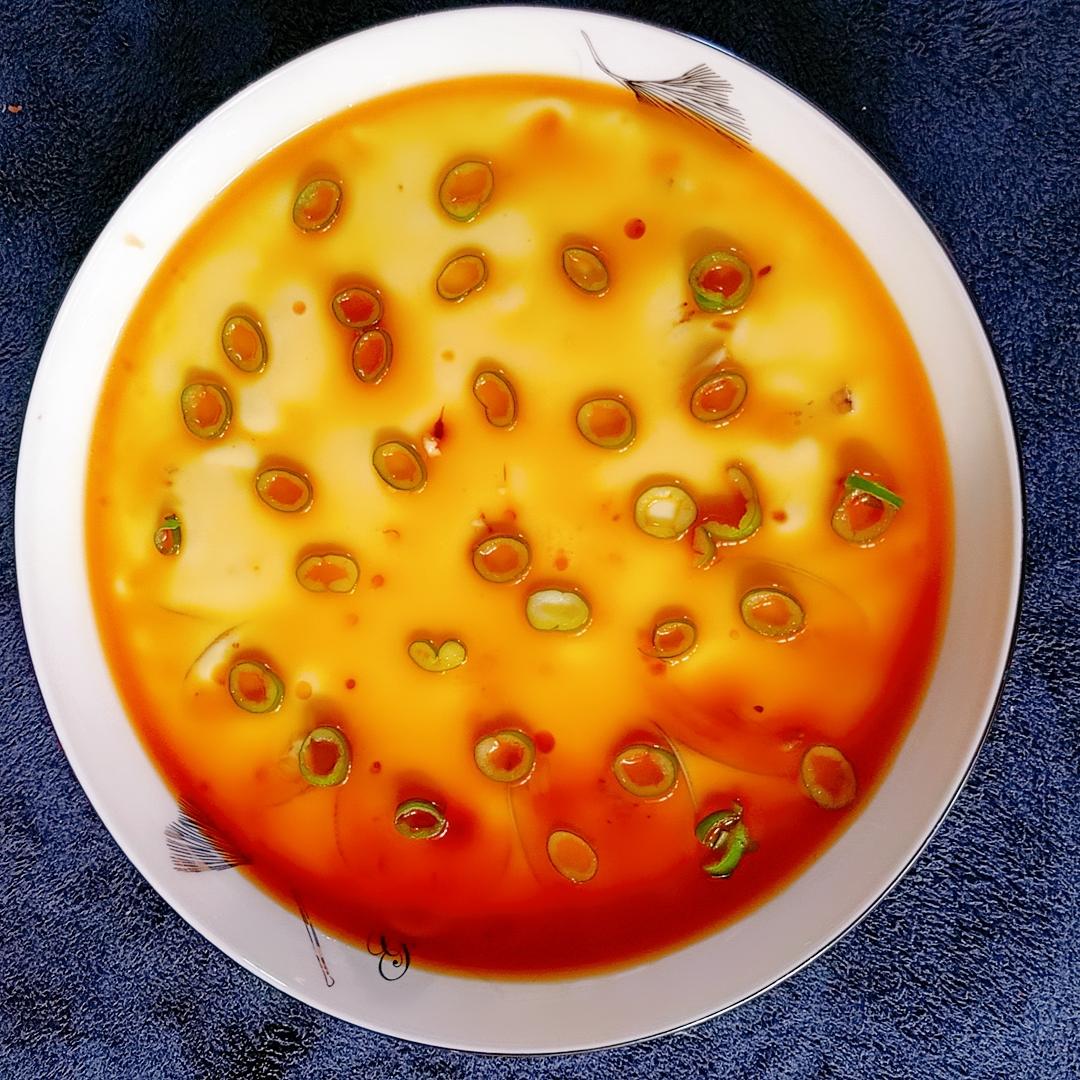
Scallion pork buns are a meal on their own with a bowl of rice porridge and a dish of black vinegar for dipping. For a fuller table, serve them alongside silky steamed egg with clams, which brings a soft, savory contrast to the bready buns.
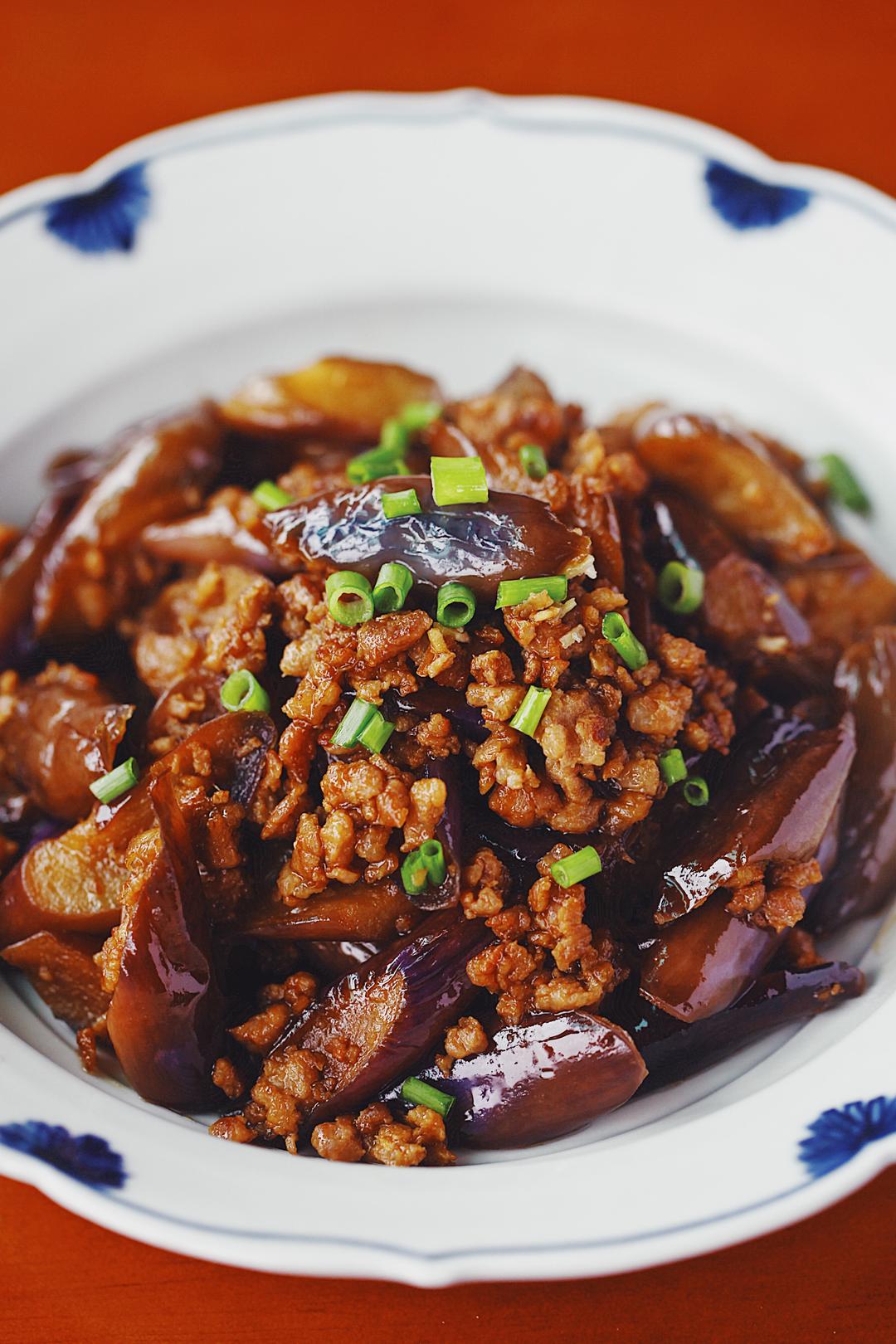
If you want a heartier spread, a bowl of rice cooker pork trotters adds a rich, gelatinous element that balances the lightness of the steamed dough. For a vegetable-forward option, minced pork eggplant is a natural companion, and it uses the same pork-and-soy flavor language.

Storage & Reheat
Cool any leftover buns completely before storing them. In the refrigerator, they keep for up to 3 days in an airtight container. To reheat, steam them for 5 to 7 minutes, or wrap them in a damp paper towel and microwave for 30 to 45 seconds. Microwaving alone can make the dough rubbery, so steaming is the better option if you have the time.
For longer storage, freeze fully steamed buns on a tray until solid, then transfer them to a freezer bag. They keep for up to 1 month. Reheat from frozen in a steamer for about 10 minutes, or microwave for 1 to 2 minutes. Do not refreeze buns that have already been thawed and reheated.
The filling can be made up to 2 days ahead and kept refrigerated, which is actually convenient, since a cold filling is easier to wrap. Bring it to cool room temperature before using if it has been chilled overnight, so it does not slow the second rise of the dough.
Allergen Notice
This recipe contains wheat (gluten) from the flour and soy from the soy sauces. Oyster sauce may contain shellfish; check the label if that is a concern. Some brands of oyster sauce also contain wheat, so read the ingredients if you are cooking for someone with celiac disease. To make the buns gluten-free, you would need a gluten-free flour blend and tamari in place of both soy sauces, though the dough texture will differ noticeably. Serve with awareness, and always tell your guests what is in the filling.
Nutrition Disclaimer
Nutrition information is calculated using an ingredient database and should be considered an estimate. In cases where multiple ingredient alternatives are given, the first listed is calculated for nutrition. Garnishes and optional ingredients are not included.
About the Author & Recipe Development
Lin is the writer and recipe developer behind Woks of Love, where she has been documenting Chinese home cooking for years. Her approach is simple: start from the way a dish is actually made in a Chinese kitchen, then write it down clearly enough that someone cooking it for the first time can succeed.
This recipe came from a family version of scallion pork buns made with less salt and less soy sauce, the way many households prepare them for young children. I tested it with a standard 80/20 ground pork and a simple yeasted dough, and kept the scallion oil generous because that is what makes the bun taste like itself. The steaming times were checked with a thermometer to make sure the filling reaches a safe temperature without drying out.
If you make these buns, I would love to hear how they turn out, especially if you try the pan-fried variation or add cabbage to the filling. Adjust the soy sauce to your family’s taste; that is the whole point of a home recipe.
Authoritative References
For safe cooking temperatures and food handling guidance, see the FDA Food Code and the USDA’s safe minimum internal temperature chart. Both are useful references for any steamed or ground-meat dish. For general information on foodborne illness prevention, the World Health Organization food safety fact sheet is a good starting point.
For a deeper look at how salt and water binding work in ground meat fillings, Harold McGee’s On Food and Cooking remains the standard reference, and it explains why stirring pork in one direction produces a springy, cohesive filling.
Scallion Pork Steamed Buns (葱香肉包): Fluffy Buns, Juicy Scallion

Equipment
- Wok
- Cutting Board
- Slotted Spoon
Ingredients
For the Dough
- 5 g active dry yeast about 1 3/4 tsp
- 1000 g all-purpose flour about 8 cups
- 5 g granulated sugar about 1 tsp
- 480 ml warm water about 2 cups, plus more as needed
For the Filling
- 1000 g ground pork about 2 1/4 lb, 80% lean
- 2 tbsp light soy sauce plus more to taste
- 2 tbsp dark soy sauce same amount as light soy
- 1 tsp kosher salt plus more to taste
- 1/2 tsp granulated sugar
- 1 tsp oyster sauce
- 8 parts scallions about 2 cups chopped, white and green parts
- 2 parts leek about 1/2 cup chopped, white parts only
- 120 ml neutral oil about 1/2 cup, enough to cover the scallions
- 1 tsp ground white pepper
- 1/2 cup scallion-ginger water ginger and pepper infused
Instructions
- Stir the sugar into the flour, dissolve the yeast in a little warm water, then add it to the flour and mix while adding water until it forms small clumps with very little dry flour left. Add more warm water if the yeast water runs short, then cover and let it rise in a warm, humid spot until 1.5 to 2 times its size, about 1 hour in a rice cooker water bath at body temperature.

- Add the scallion-ginger water to the ground pork in 3 additions, stirring clockwise until each addition is absorbed, then stir in the salt clockwise until the mixture becomes sticky. Add the light soy sauce, dark soy sauce, sugar, white pepper, and oyster sauce and mix well, then chill the filling in the refrigerator for about 1 hour. Chop the scallions and leek whites and soak them in oil until fully covered, then set aside.
- Once the dough has risen, take the filling out of the refrigerator and pour the scallion oil into it.
- Knead the dough, cut it into portions, and wrap the filling into buns.
- After wrapping, place the buns in the steamer for a second rise until doubled in size. Turn on high heat, steam after the steam rises for 13 to 15 minutes depending on the heat and bun size, then turn off the heat and wait 3 minutes before opening the lid.
- This is the low-salt, low-soy version for children, with a thin wrapper and generous filling that is very fragrant when pulled open.












Leave a Reply