In many Chinese households, eggplant is a beloved staple, but it often carries a reputation for being a “sponge” that soaks up excessive amounts of oil. Most traditional recipes suggest deep-frying, steaming, or salting the eggplant first to prevent this. However, in my mother’s kitchen in Hangzhou, we’ve always done things differently.

This recipe is the ultimate “minimalist” version of Rou Mo Qie Zi. We skip the pre-treatments entirely—no marinating, no steaming, and definitely no deep-frying. Instead, we use the natural fats from high-quality ground pork to soften the eggplant, resulting in a dish that is fragrant, savory, and incredibly light. If you are looking for a quick weeknight dinner that doesn’t leave you feeling heavy, this is the one.
What Is Minced Pork Eggplant (Rou Mo Qie Zi)?
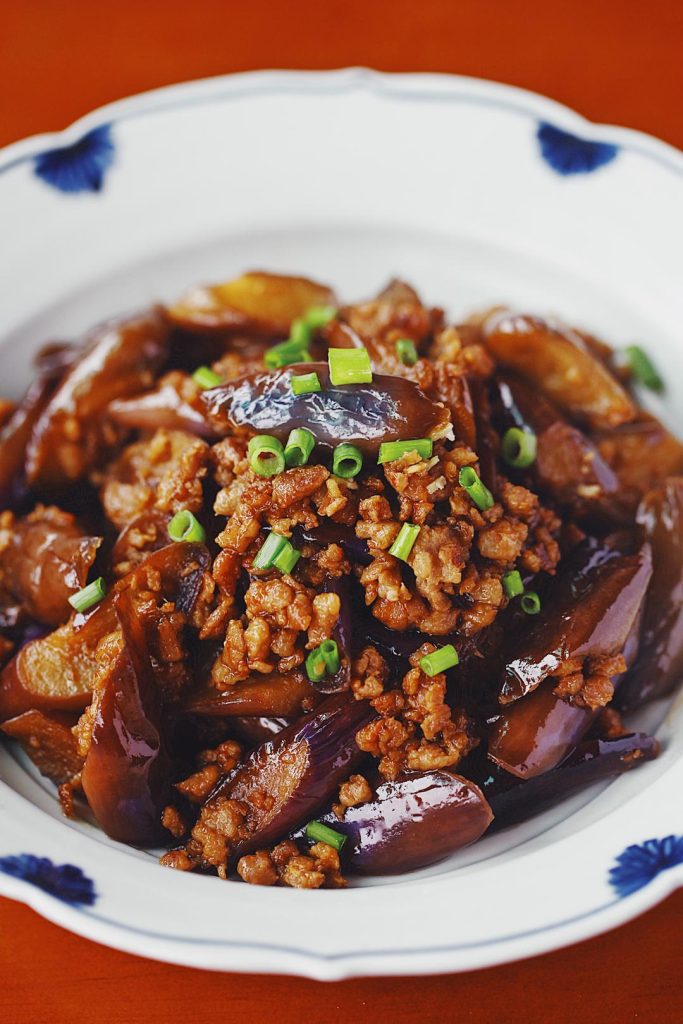
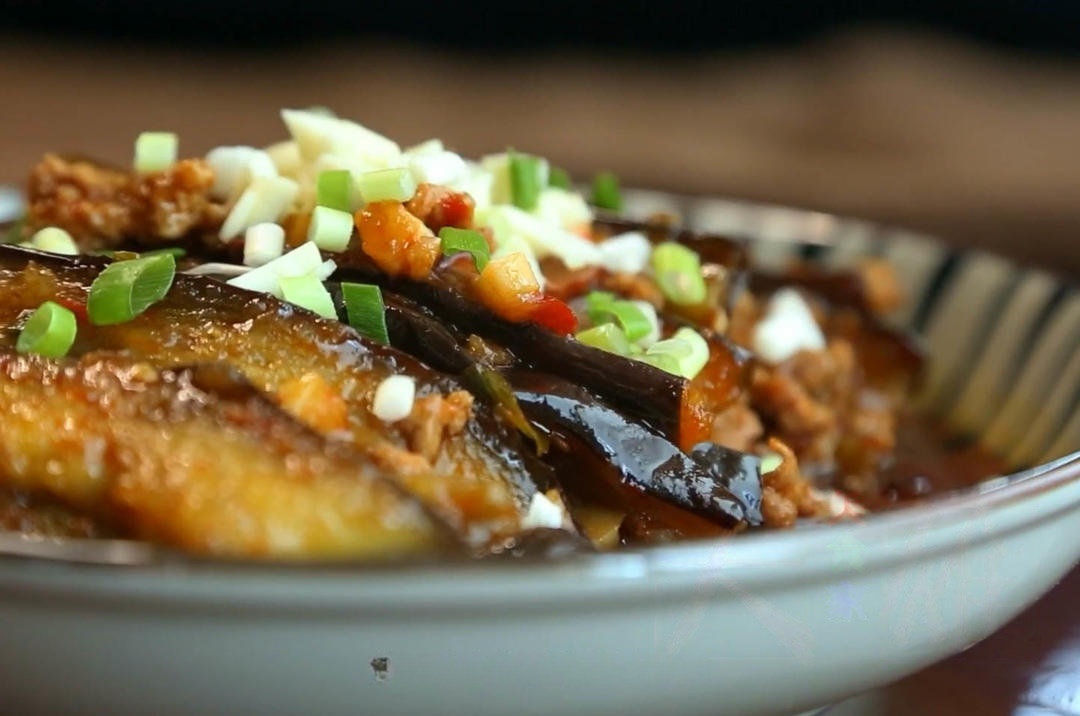
Rou Mo Qie Zi (肉末茄子) is a classic Chinese stir-fry consisting of tender eggplant slices and savory ground meat. While restaurant versions often lean toward the “Yuxiang” (fish-fragrant) flavor profile with heavy sauces, this homestyle version focuses on the pure harmony between the pork and the vegetable.
We actually have another version of this dish on the site: Homestyle Minced Pork Eggplant. While that version is also “no deep-fry,” this specific recipe is even more streamlined, using a technique my mother perfected over decades in Hangzhou to minimize cleanup and oil usage.
1Homestyle Minced Pork Eggplant (No Deep Frying)This easy, healthy Minced Pork Eggplant recipe uses a microwave technique to create tender, crispy eggplant without deep frying. Tossed in a savory, garlic-infused sauce, it’s a perfect 25-minute weeknight meal that pairs perfectly with rice.Check out this recipe
Ingredients
The Main Components
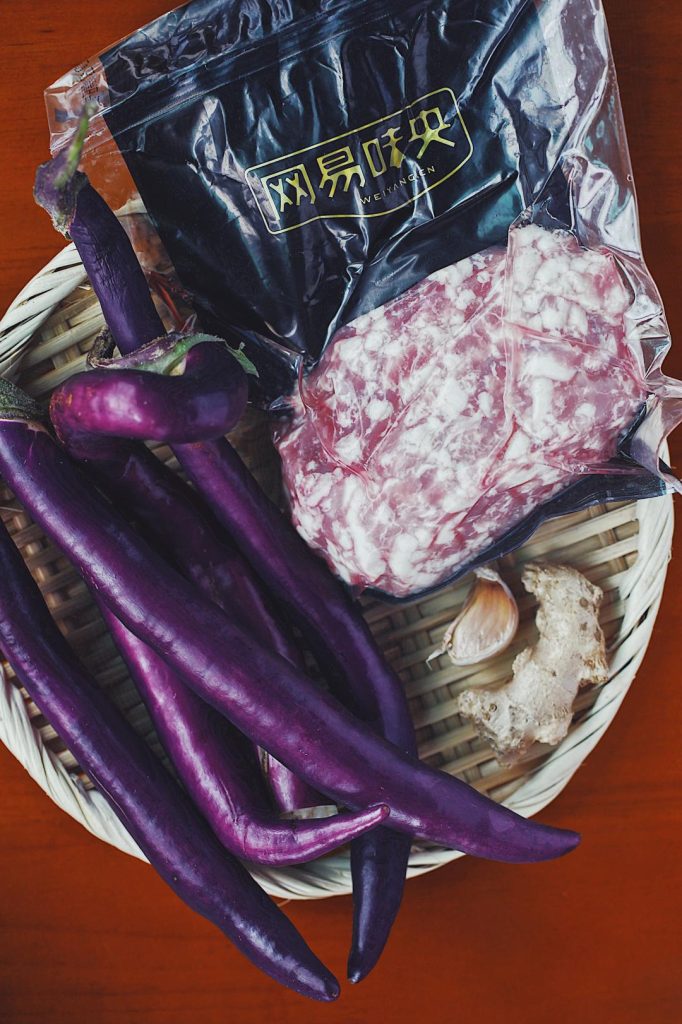
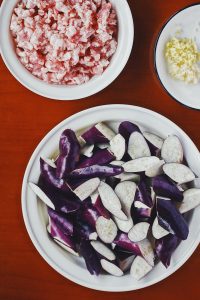
- 8 oz (250g) Long Purple Eggplant: Preferably the slender Chinese or Japanese variety.
- 5 oz (150g) Ground Pork: Look for a 70/30 lean-to-fat ratio. The fat is crucial as it acts as our cooking medium.
- 1 tbsp Shaoxing Wine: To remove any “gamey” scent from the pork.
- 1 clove Garlic: Minced.
- 2 slices Ginger: Minced.
The Seasoning Sauce
- 1 tbsp Soy Sauce: For color and depth.
- 1/4 tsp White Pepper: (Optional) for a subtle heat.
- A pinch of Sugar: To balance the savoriness.
- A pinch of Salt: To taste.
- 2-3 tbsp Water: To create a light glaze.
- Scallions: For garnish.
Ingredient Notes
- The Eggplant: In Hangzhou, we use incredibly thin, long eggplants. If you only have access to thicker Italian eggplants, ensure you cut them into smaller, bite-sized pieces to ensure they cook through without needing extra oil.
- The Pork: High-quality pork makes a difference. Since the seasoning is simple, the natural flavor of the meat shines through. I recommend pasture-raised pork if available.
Equipment Needed
- A Non-stick Skillet or Wok: Crucial for this low-oil method to prevent the meat from sticking.
- Spatula: For pressing the eggplant.
Prep & Mise en Place
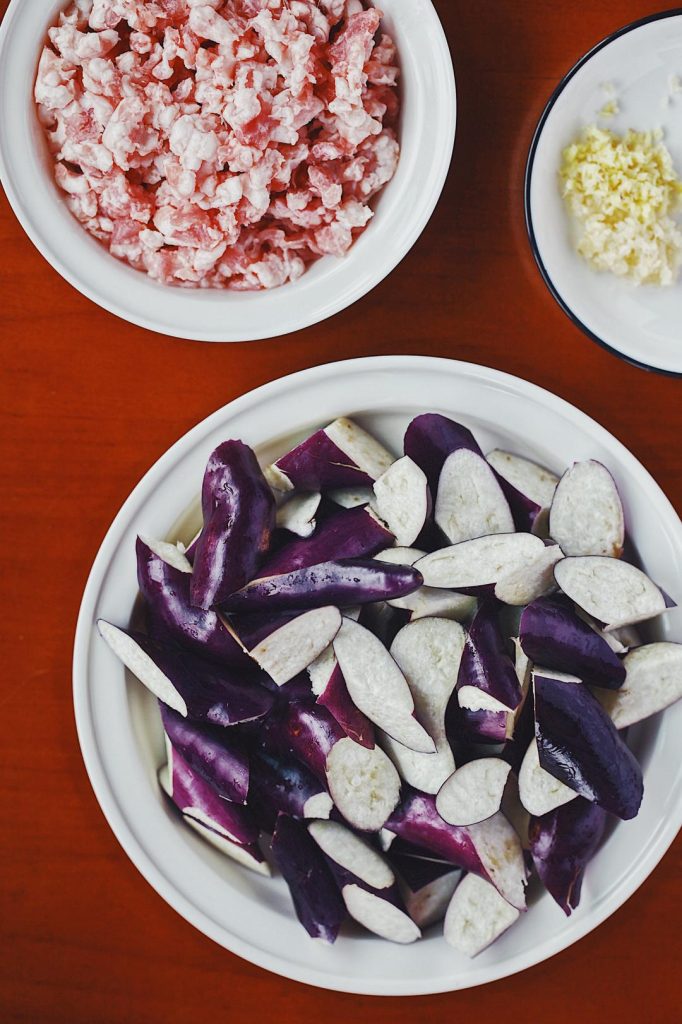
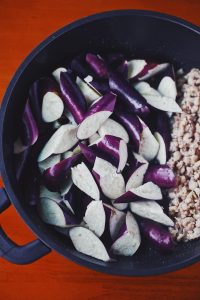
- Cut the Eggplant: Slice the eggplant diagonally into “rolling” chunks (wedges).
- Chef’s Tip: If you want to keep the skin vibrantly purple, toss the pieces in a teaspoon of white vinegar before cooking to prevent oxidation.
- Aromatics: Finely mince your garlic and ginger.
- Meat Prep: Ensure the pork is at room temperature so it breaks apart easily in the pan.
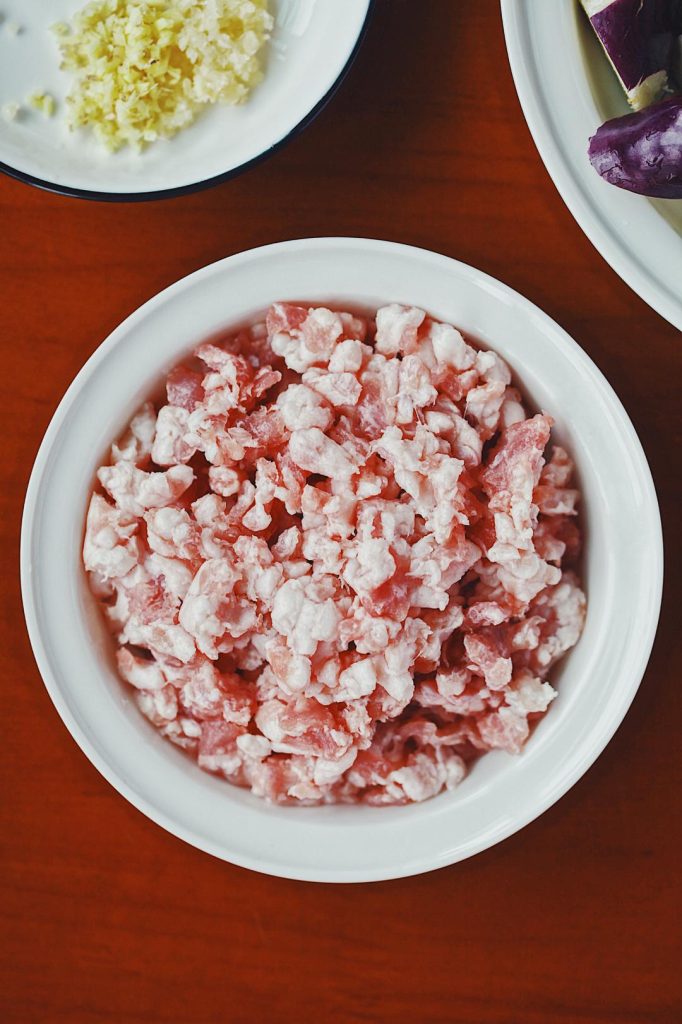
Cooking Process
1. Rendering the Pork Fat
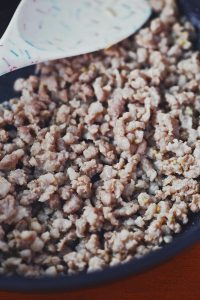
Place your skillet over medium-high heat with just a tiny drop of oil (less than you’d normally use). Add the ground pork and the Shaoxing wine. Break the meat apart with your spatula.
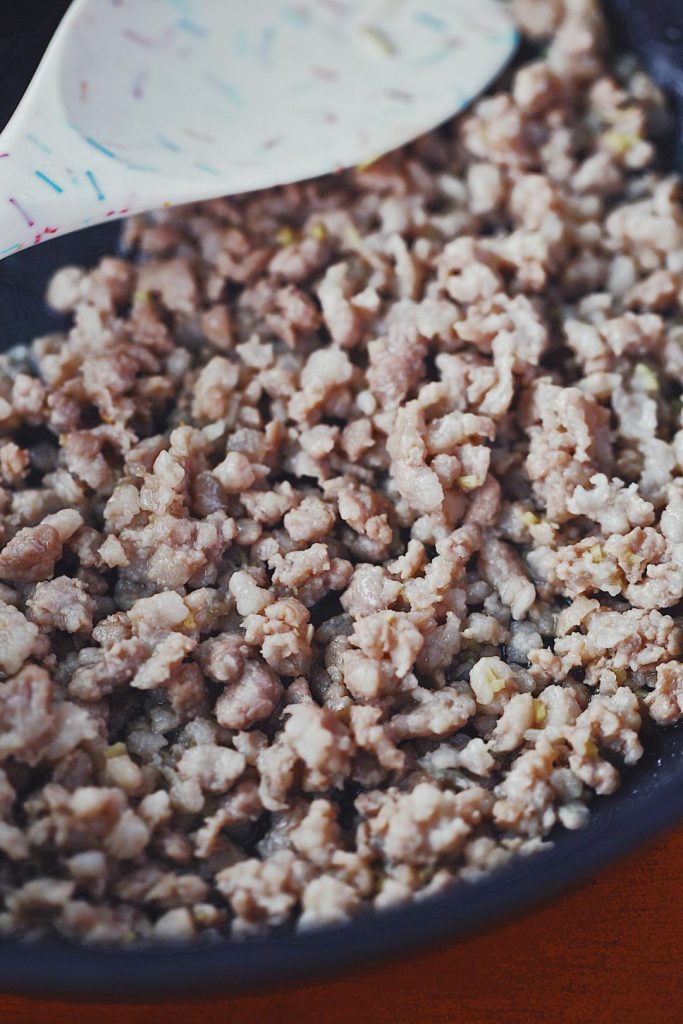
“As the pork heats up, it undergoes the Maillard Reaction, developing complex flavors. Simultaneously, the fat renders out. By using fatty pork, we ‘force’ the meat to provide the cooking oil for the rest of the dish.”
2. Sautéing the Aromatics
Once the pork is no longer pink and the oil is bubbling in the pan, push the meat to one side. Add the ginger and garlic to the oil in the center. Fry until fragrant (about 30 seconds).
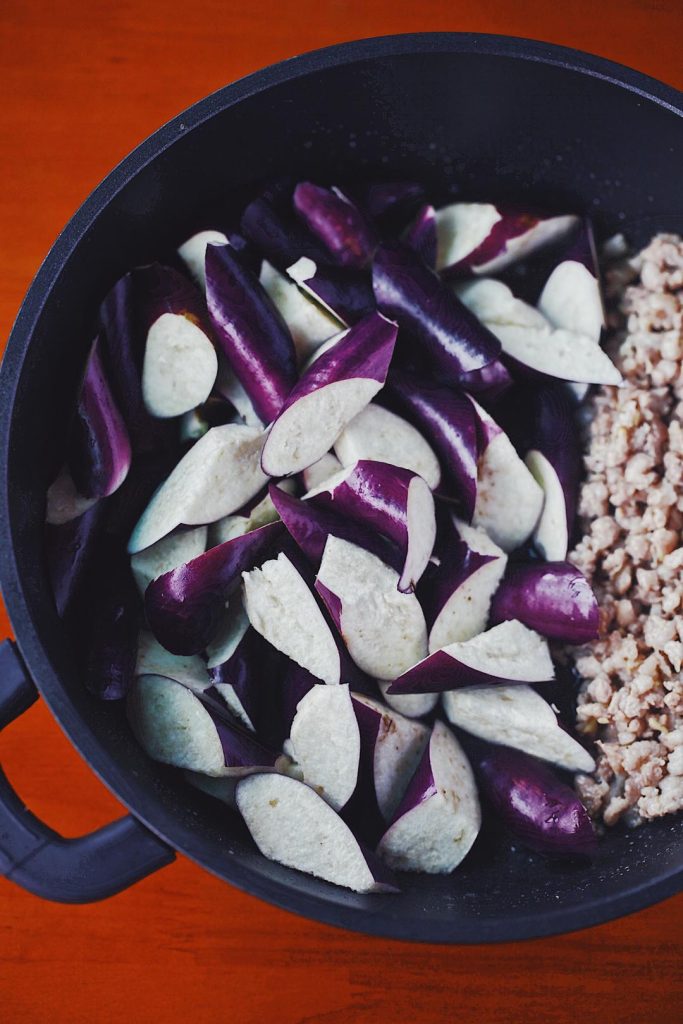
3. The “Pressing” Technique
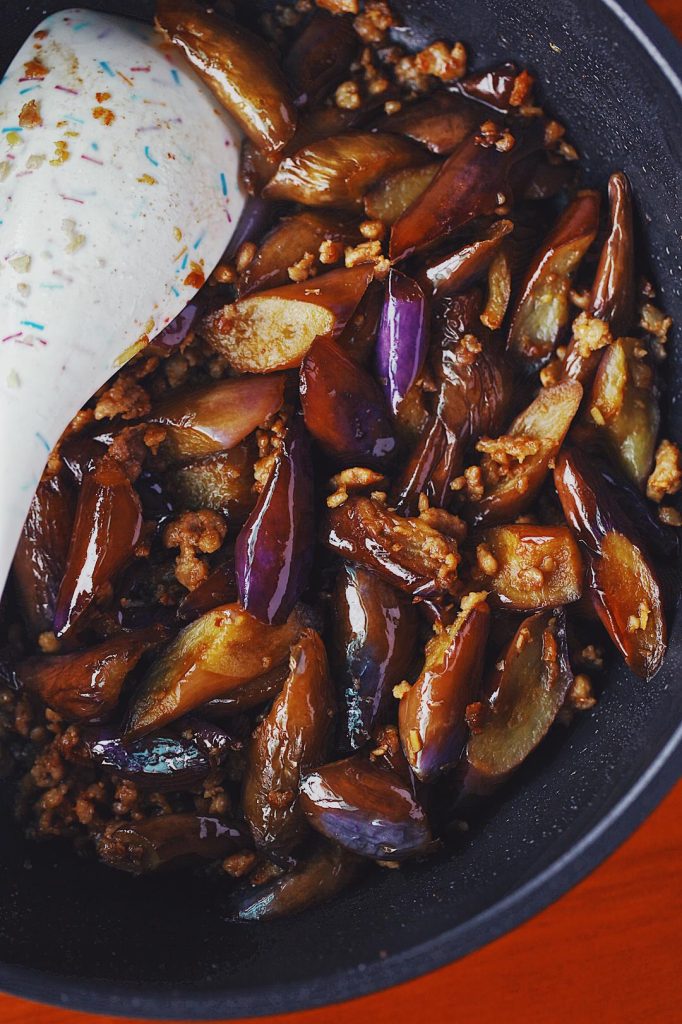
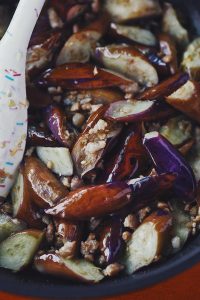
Add the eggplant directly into the pan. It will immediately soak up the oil. Do not panic and do not add more oil! Turn the heat down to medium-low. Use your spatula to occasionally press down on the eggplant pieces.
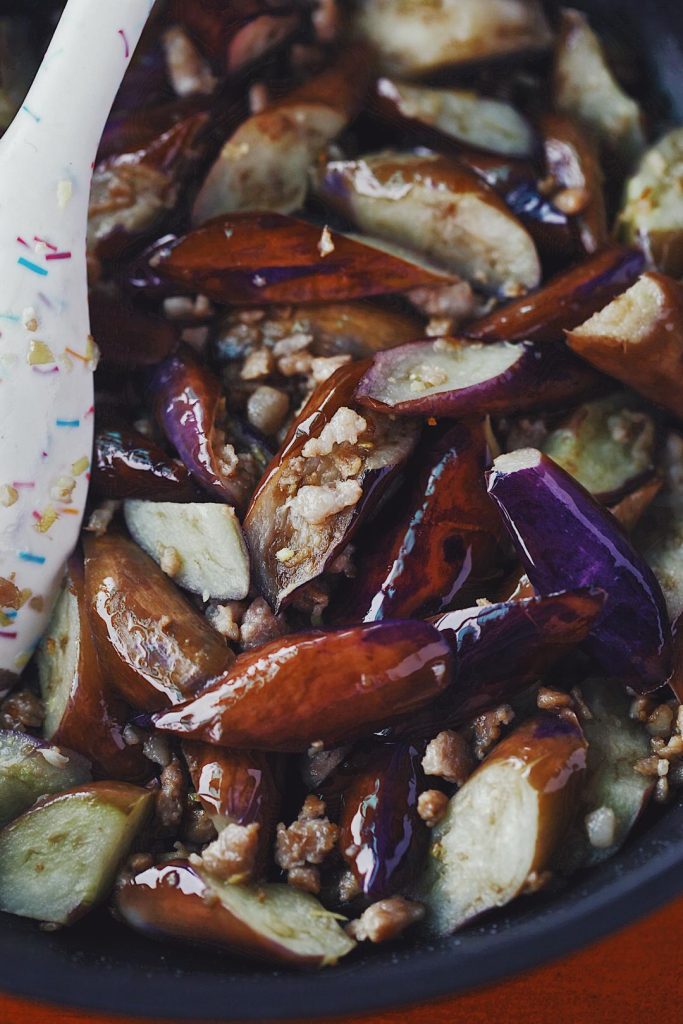
“Pressing the eggplant encourages it to release its internal moisture. As it softens, it will actually re-release some of the oil it absorbed, preventing the dish from becoming greasy.”
4. Deglazing and Emulsifying
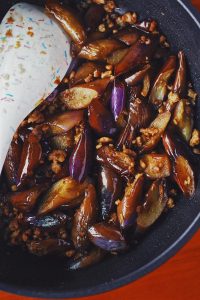
Once the eggplant is soft and translucent, add the Soy Sauce, Sugar, salt, and water. Increase the heat slightly and toss everything together for 1-2 minutes.
“When the water and soy sauce hit the rendered pork fat under high heat, they undergo emulsification, creating a thick, glossy sauce that clings to the eggplant without the need for a cornstarch slurry.”
Why This Recipe Works
- Oil Control: By leveraging the fat already present in the pork, we reduce the total added oil by nearly 80% compared to restaurant versions.
- Flavor Concentration: Sautéing the eggplant slowly with the meat allows it to absorb the savory pork juices directly into its flesh.
- Simplicity: One pan, no pre-steaming, and ready in the time it takes to steam a bowl of rice.
Common Mistakes When Making Rou Mo Qie Zi
- Adding Oil Too Early: If you add oil when the eggplant looks dry, you’ll end up with a greasy dish. Trust the moisture in the vegetable and the fat in the pork.
- Using Lean Meat: If you use 95% lean pork or turkey, the eggplant will remain tough and dry because there isn’t enough fat to “confit” the vegetable.
- High Heat Only: This is not a high-heat “flash” stir-fry. It requires a medium-low heat period to allow the eggplant to soften through to the center.
Variations
- Spicy Version: Add a tablespoon of Lao Gan Ma or chili bean paste (Doubanjiang) during the aromatic stage.
- Vegetarian Option: Use minced mushrooms or firm tofu crumbles, though you will need to add 2 tablespoons of neutral oil.
- Saucy Style: If you like more gravy for your rice, double the water and add a tiny cornstarch slurry at the end.
Frequently Asked Questions
- Can I use Globe (Italian) Eggplant? Yes, but peel strips of the skin off to help it soften faster, and cut into 1-inch cubes.
- Is this authentic? Yes! This is a “commoner’s” homestyle (Jia Chang) version typical of the Jiangnan region.
- Can I make this ahead? Eggplant is best served fresh, as it can turn greyish over time, though it tastes even better the next day as the flavors meld.
How to Serve
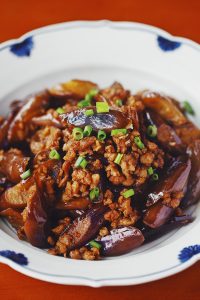
Serve this immediately over a steaming bowl of jasmine rice. To round out a full Chinese meal, I recommend pairing it with:
- A light soup like Seaweed Egg Drop Soup.
- A side of Steamed Egg with Minced Pork for extra protein.
- If you have leftover meat, you can use the same flavors to make Minced Pork Noodles.
- For a vegetable-heavy feast, try it alongside Braised Eggplant with Tomato.
Storage & Reheat
- Store: Keep in an airtight container in the fridge for up to 3 days.
- Reheat: Microwave for 1-2 minutes or quickly toss in a hot skillet. Do not freeze, as the eggplant texture will become mushy.
About the Author & Recipe Development
I’m Lin, and this recipe is a tribute to my mother’s efficient home cooking. Growing up in Hangzhou, I watched her transform simple ingredients into soul-satisfying meals with minimal fuss. This recipe has been tested in my own kitchen over a dozen times to ensure that even with Western supermarket eggplants, the “no-oil-addition” technique remains foolproof.
Authoritative References
- Pork Safety: For safety, ensure ground pork reaches an internal temperature of 160°F (71°C) as recommended by the USDA Food Safety Guidelines.
- Eggplant Science: Understanding why eggplant absorbs oil can be found in technical culinary guides like Serious Eats’ Eggplant Guide.
- Emulsification: The science of mixing fats and water for sauces is explained by The Exploratorium’s Science of Cooking.
Allergen Notice
Contains: Soy, Gluten (from soy sauce and Shaoxing wine). To make it Gluten-Free, use Tamari and dry sherry.
Nutrition Disclaimer
Nutrition information is an estimate and provided for informational purposes only. The fat content may vary based on the specific cut of pork used.
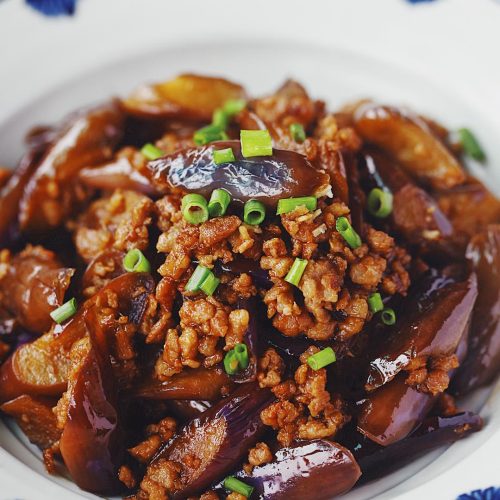
Easy Minced Pork Eggplant (Rou Mo Qie Zi)

Ingredients
- 250 g Long Purple Eggplant approx. 0.5 lb, sliced into wedges
- 150 g Ground Pork approx. 5 oz, 70/30 fat ratio preferred
- 1 tbsp Shaoxing Wine
- 1 clove Garlic minced
- 2 slices Ginger minced
- 1 tbsp Soy Sauce
- 1 tsp Sugar
- 2 tbsp Water
Instructions
- Prepare eggplant by cutting into diagonal wedges. Mince garlic and ginger.

- Heat a non-stick skillet over medium-high heat. Add ground pork and Shaoxing wine. Stir fry until the fat renders and meat is browned.
- Push meat to the side, add garlic and ginger to the rendered fat. Sauté until fragrant.
- Add eggplant. Reduce heat to medium. Use a spatula to press the eggplant down, allowing it to absorb the pork fat and soften.
- Once eggplant is soft, add soy sauce, sugar, salt, and water. Stir fry for 2 minutes until the sauce emulsifies and glazes the eggplant.
- Garnish with scallions and serve hot over rice.
Notes
Safety Warning: Always ensure ground pork is cooked to an internal temperature of 160°F (71°C) to prevent foodborne illness. If using eggplant with thick skin, consider par-peeling to ensure even cooking.










Leave a Reply