Growing up in my parents’ Sichuan restaurant, the smell of steamed pork buns and simmering dumplings was just a normal Tuesday. My dad, a professional chef for over 30 years, had what he called his “万能肉馅” (wàn néng ròu xiàn) — his “all-purpose, ten-thousand-use” meat filling. It was the secret base for everything from my favorite breakfast buns to the dumplings we’d fold by the hundred for festivals.

As a chef myself for 10 years, I’ve seen the number one complaint from home cooks: their dumpling filling is dry, tough, and crumbly. It’s heartbreaking to go through all the work of wrapping, only to be disappointed.
This recipe solves that, permanently.
The secret isn’t one ingredient, but a restaurant technique. It’s how you get that impossibly tender, juicy, flavor-packed filling that bursts in your mouth. This is the base recipe my father taught me, and it’s the only one I’ll ever use. It’s perfect for shumai, boiled dumplings (水饺), potstickers (锅贴), and steamed buns (包子).
What is “Pork mince”?
“Pork mince” (万能肉馅) literally translates to “All-Purpose Meat Filling.” It’s a foundational recipe in Chinese kitchens. It’s a perfectly seasoned, super-moist pork mixture that’s designed to be used as a delicious filling on its own, or as a base that you can customize with your favorite vegetables like chives, cabbage, or mushrooms.
Why This Recipe Works
This recipe uses professional Chinese kitchen techniques to guarantee a juicy, tender filling every single time.
- The 30% Fat Rule: Flavor lives in fat. Using pork shoulder (or belly) with a 3:7 fat-to-lean ratio ensures the filling stays moist and rich. Lean pork will always be dry.
- Aromatic-Infused Water: We steep scallions, ginger, and spices in hot water. Whipping this water into the meat adds moisture and deep, savory flavor without the unpleasant texture of biting into a chunk of ginger.
- The “Whipping” Technique (打水): This is the most important secret. By stirring the meat vigorously in one direction while slowly adding the aromatic water, you are building a protein matrix (myosin) that traps the liquid. The meat literally absorbs the water, making it plump, tender, and incredibly juicy.
- Hot Oil Finish (热油): Pouring sizzling-hot oil over the final aromatics (scallions) is a classic Sichuan technique. It instantly “blooms” their fragrance, cooking away any raw taste and infusing the entire filling with an irresistible aroma.
Recipe Notes Before We Begin
A Crucial Tip: No “Cooking Wine”!
Here’s a tip straight from my dad’s kitchen: Do not use Chinese “liaojiu” (料酒), or standard cooking wine, in this recipe. Those wines contain salt and additives that can turn sour and metallic when trapped inside a steamed dumpling or bun.
Instead, use Shaoxing wine (绍兴酒). It’s a high-quality fermented rice wine with a clean, complex flavor.
- Where to Buy: You can find Shaoxing wine at most Asian supermarkets or online.
- Good Substitute: If you can’t find it, a good-quality dry sherry is the best substitute.
The Best Pork for Dumplings
The single most important choice is your pork.
- What to Buy: Ask your butcher for pork shoulder (also called pork butt). It has the perfect fat-to-meat ratio, around 30% fat (or a 70/30 lean-to-fat ratio). Pork belly also works, but will be even richer.
- What to Avoid: Do not use “lean ground pork.” The pre-packaged lean pork at most Western supermarkets lacks the necessary fat and will result in a dry, sad filling.
- How to Prep: While you can use a grinder, hand-mincing the pork with a heavy cleaver provides a superior, more rustic texture. For convenience, a food processor (pulsing, not pureeing) or a meat grinder set to a coarse grind works well.
Ingredients You’ll Need (What You Will Need)
Let’s break down the key players for this “wan neng rou xian.”
For the Aromatic Water (葱姜水):
- Scallions (Green Onions): We’ll use the tough white parts for the water and save the delicate green tops for the finish.
- Ginger: A few slices, no need to peel.
- Sichuan Peppercorns (花椒): This is my family’s Sichuan touch! They add a fragrant, citrusy, and slightly numbing (麻, má) tingle. It’s not spicy-hot, just aromatic. You can find them at Asian markets or online from brands like The Mala Market (rel=”nofollow”). If you can’t find them, you can omit them.
- Star Anise (八角): Adds a warm, licorice-like aroma.
- Boiling Water: The heat is necessary to extract the flavors.
For the Pork Filling:
- Pork Shoulder (or Pork Belly): 1.8 lbs (about 800g), ground or finely minced (aim for 70/30 lean-to-fat).
- Egg: One large egg acts as a binder and adds richness.
- Light Soy Sauce (生抽): This is for saltiness and umami. Brands like Kikkoman or Pearl River Bridge are great.
- Dark Soy Sauce (老抽): This is purely for a rich, mahogany color and a hint of molasses flavor. A little goes a long way.
- Oyster Sauce (蚝油): My dad’s secret for an extra boost of savory, umami-sweetness.
- Toasted Sesame Oil (芝麻香油): Added at the end for its nutty fragrance.
- Seasonings: Salt, sugar (to balance the salt), and white pepper (essential in Chinese cooking for its earthy, sharp flavor).
- Scallions (Green Tops): Finely chopped, reserved for the final step.
- Neutral Oil: About 2 tbsp of grapeseed, canola, or vegetable oil, for the hot oil finish.
What Equipment Do You Need?
- Large Mixing Bowl: You need room to stir vigorously.
- A Stand Mixer (Optional but Recommended): Using the paddle attachment is the easiest way to “whip” the water into the meat. You can absolutely do this by hand with chopsticks or a sturdy spatula, it just takes more elbow grease!
- Small Pot: To heat the oil.
- Cleaver or Food Grinder: For the pork.
How to Make Juicy Pork Filling: Step-by-Step
Mise en Place (Get Your Prep Done First!)
My dad always said 90% of Chinese cooking is preparation, 10% is execution. Get everything ready before you start mixing.
- Mince the Pork: Finely mince your pork shoulder (or use your grinder) and place it in a large mixing bowl (or the bowl of your stand mixer).
- Prep Aromatics: Slice the ginger. Cut the scallions, separating the white/light green parts from the dark green tops. Finely chop the dark green tops and set them aside for the final step.
H2: The Cooking Process
Step 1: Make the Aromatic Water
In a heatproof bowl, combine the scallion whites, ginger slices, Sichuan peppercorns, and star anise. Pour 1 cup (240ml) of boiling water over them. The heat helps to instantly release their essential oils.

Let the water steep until it has cooled completely to room temperature (about 30 minutes). Strain the water into a cup, pressing on the solids to extract all the liquid. Discard the solids. You should have just under a cup of fragrant, light brown water.
Step 2: The Secret to Juiciness (Whipping the Water)
This is the most important step, known as dǎ shuǐ (打水).
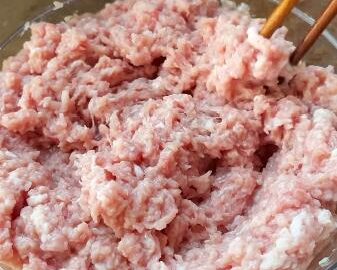
- Add about 1/3 of the cooled aromatic water to the ground pork in your large bowl.
- Using the paddle attachment on your stand mixer (on low-medium) or a pair of chopsticks (stirring very fast), begin stirring the meat in one direction only.
- Why one direction? This is crucial. Stirring in one direction builds up the meat’s proteins (myosin), creating a sticky paste that absorbs and traps the water. If you stir back and forth, you just tear the meat fibers and the water will leak out.
- Continue stirring until the water is completely absorbed and the meat looks sticky, not wet.
- Repeat this process two more times with the remaining water, only adding the next batch after the previous one is fully absorbed. By the end, the meat should look visibly plump, springy, and almost paste-like.
Step 3: Add Seasonings and Binder
Add the egg, light soy sauce, dark soy sauce, oyster sauce, salt, sugar, and white pepper to the meat mixture.
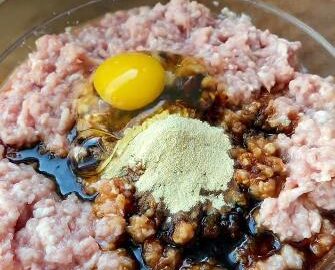
Stir again in the same direction until everything is fully incorporated and the mixture is sticky and smooth. Finally, stir in the toasted sesame oil.
Step 4: The Hot Oil Finish (Aromas!)
Pile the finely chopped scallion greens on top of the meat mixture. Do not mix them in yet.
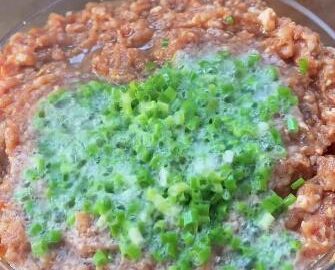
In a small pot, heat the 2 tablespoons of neutral oil until it’s very hot and shimmering (about 350°F / 175°C).
Safety Note: Be very careful with the hot oil. Pour it directly over the pile of scallions. You should hear a dramatic sizzle as the oil hits the greens.
This flash-fry instantly blooms the scallion’s fragrance, cooking away its raw taste and infusing the entire filling with a beautiful, toasty aroma.
Now, mix everything together one last time (in the same direction!) until the scallions are distributed.
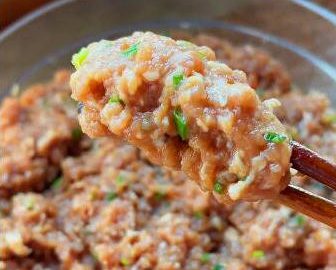
A Tip for Success
Chill the filling! Cover the bowl and refrigerate the filling for at least 30 minutes (or up to a day). This helps the fat solidify slightly, making the filling much easier to scoop and wrap into your dumplings or buns.
How to Customize Your Filling (Variations)
This “wan neng rou xian” is your canvas. A classic rule of thumb is to use a 2:1 or 1:1 ratio of meat to vegetables by weight.

The key is to control the vegetable’s moisture before adding it to the meat.
- For High-Water Veg (Cabbage, Radish, Celery): Finely chop the vegetable, toss it with 1-2 teaspoons of salt, and let it sit for 20 minutes. The salt will draw out the water. Then, place the vegetables in a cheesecloth (or just use your clean hands) and squeeze out as much liquid as possible. Add the “dry” vegetables to your finished pork filling.
- For Delicate Veg (Chives, Spinach): Do not use salt. Instead, finely chop the vegetables, and toss them with 1-2 teaspoons of oil (sesame or neutral oil). The oil coats the greens and creates a hydrophobic barrier that prevents them from leaking water when you mix them with the salty pork.
Classic Combos:
- Pork and Chive (韭菜猪肉): The all-star. Use the oil method.
- Pork and Napa Cabbage (白菜猪肉): Mild and sweet. Use the salt method.
- Pork and Shiitake (香菇猪肉): For deep umami, use rehydrated dried shiitake mushrooms. Mince them and sauté them for a few minutes to cook off their moisture before adding to the pork.
- Pork and Celery (芹菜猪肉): Use the salt method.
How to Use & Serve Your Filling
This filling is truly all-purpose. Use it to make:
- Boiled Dumplings (水饺)
- Pan-Fried Potstickers (锅贴)
- Steamed Buns (包子)
- You can even use this to make a fantastic homestyle Shumai (Homestyle Sticky Rice Shumai).
In my family, dumplings are a full meal, but we always serve them with a few small side dishes. A simple dipping sauce (black vinegar, soy sauce, and chili oil) is essential.
For a perfect pairing, try them with a crunchy, garlicky Smashed Cucumber Salad (Easy Smashed Cucumber Salad). If you’re making potstickers, they are also wonderful alongside a batch of Flaky Scallion Pancakes (Flaky Scallion Pancakes – Cong You Bing).
How to Store and Freeze
- Refrigerator: The raw, mixed filling can be stored in an airtight container in the fridge for up to 2 days before using.
- Freezer: This recipe is perfect for batching. You can freeze the raw filling in an airtight container or freezer bag for up to 3 months.
- Best Method: The best way to freeze is to wrap your dumplings or buns first. Place them on a parchment-lined baking sheet, making sure they don’t touch, and freeze them until solid. Once frozen, transfer them to a freezer bag. You can cook them straight from the freezer (just add a few extra minutes of cooking time).
Food Safety & Allergen Information
- Food Safety: This recipe contains raw pork and egg. Always cook dumplings or buns until the filling is cooked through. The internal temperature of the pork should reach 160°F (71°C).
- Allergens: This recipe contains EGG, SOY, WHEAT (from soy/oyster sauce), and SESAME.
- For a Gluten-Free version: Substitute soy sauce with gluten-free tamari or coconut aminos, and use a certified gluten-free oyster sauce.
Frequently Asked Questions (FAQ)
1. Why is my dumpling filling always dry and tough?
This is almost always one of two reasons: 1) You used pork that was too lean (like lean ground pork), or 2) You didn’t add and “whip” in enough liquid (like the aromatic water). The fat and the trapped water are what create the juice.
2. Can I use pre-ground pork from the supermarket?
You can, but it’s a gamble. Most supermarket ground pork is too lean. If it’s your only option, look for the package with the most visible fat. Do not buy “lean ground pork.” If it’s all you can find, you can try mincing in a 1/4 lb (113g) of bacon or pork fatback to increase the fat content.
3. Can I skip the hot oil step?
You can, but you will be missing that magic, toasty scallion aroma. It’s a 1-minute restaurant trick that makes the filling taste truly professional. I highly recommend it.
4. My filling is watery after adding vegetables! What happened?
You didn’t remove the moisture from your high-water-content vegetables (like cabbage) before mixing them in. The salt in the pork filling drew all that water out, creating a soggy mess. See the “Variations” section for how to prep your veggies properly.

The Secret to Juicy Pork Filling for Dumplings & Buns (万能肉馅)

Equipment
- 1 Large Mixing Bowl
- 1 Stand Mixer with paddle Optional, but very helpful
- 1 Small Pot
Ingredients
For the Aromatic Water:
- 1 cup Boiling Water
- 5 Scallions white and light green parts only
- 1 inch piece Ginger sliced
- 1 tsp Sichuan Peppercorns optional, see notes
- 2 whole Star Anise
For the Pork Filling:
- 1.8 lbs Pork Shoulder (or Pork Belly, 70/30 lean-to-fat ratio), ground or finely minced
- 1 large Egg
- 2 tbsp Light Soy Sauce
- 1 tbsp Dark Soy Sauce
- 1 tbsp Oyster Sauce
- 1 tbsp Shaoxing Wine (or Dry Sherry)
- 1 tsp Sugar
- 1 tsp Salt
- 1/2 tsp White Pepper ground
- 1 tbsp Toasted Sesame Oil
- 5 Scallions (green tops only), finely chopped
- 2 tbsp Neutral Oil (like grapeseed, canola, or vegetable)
Instructions
- Make the Aromatic Water: In a heatproof bowl, combine the boiling water, scallion whites, sliced ginger, Sichuan peppercorns, and star anise. Stir and let steep until cooled completely to room temperature (about 30 minutes). Strain the liquid, pressing on the solids to extract all the flavor. Discard the solids.
- Prepare the Pork: Place your minced pork in a large mixing bowl or the bowl of a stand mixer fitted with the paddle attachment.
- Whip the Water (The Secret!): Add 1/3 of the cooled aromatic water to the pork. Mix on low-medium speed (or stir vigorously by hand in one direction) until the liquid is completely absorbed. Repeat this process two more times with the remaining water, ensuring the meat has absorbed all the liquid before adding more. The pork should look plump and sticky.
- Season the Filling: Add the egg, light soy sauce, dark soy sauce, oyster sauce, Shaoxing wine, sugar, salt, and white pepper. Mix again in the same direction until the mixture is smooth and paste-like.
- Add Sesame Oil: Add the toasted sesame oil and mix one last time just to combine.
- The Hot Oil Finish: Pile the chopped scallion greens on top of the meat mixture in the center. Do not mix in.
- Sizzle: In a small pot, heat the 2 tbsp of neutral oil until it is shimmering and very hot (about 350°F / 175°C). Carefully pour the hot oil directly over the scallions. It will sizzle and pop.
- Final Mix: Stir the entire mixture (in the same direction) to incorporate the scallions and oil.
- Chill (Recommended): Cover the filling and chill in the refrigerator for at least 30 minutes. This solidifies the fat, making the filling much easier to wrap in your dumpling or bun wrappers.
- Use or Store: Use the filling immediately for dumplings, buns, or shumai. Or, store as directed in the "How to Store and Freeze" section in the post above.
Notes
Notes
- Pork Fat: Do not use lean ground pork. The 30% fat content from pork shoulder or belly is essential for a juicy filling.
- Sichuan Peppercorns: These add a wonderful, authentic fragrance. If you cannot find them, you can omit them. The filling will still be delicious.
- Whipping: Stirring in one direction is not a myth! It’s the key to trapping moisture. Don’t stir back and forth.
- Food Safety: Always cook raw pork filling to an internal temperature of 160°F (71°C).
Nutrition (Disclaimer)
Serving Size: 1 dumpling (approx. 1/80th of filling) Calories: 35 kcal Carbohydrates: 0.3 g Protein: 2.5 g Fat: 2.6 g Saturated Fat: 0.9 g Sodium: 75 mg Sugar: 0.2 g (Nutrition information is calculated using an ingredient database and should be considered an estimate. Actual values will vary based on exact ingredients, and this estimate does not include the dumpling wrapper.)What Readers Are Saying
★★★★★
“I’ve been making dumplings for years and they were always… fine. This recipe is a GAME CHANGER. Whipping the water in (I used my stand mixer) and the hot oil finish made the most tender, juiciest filling I’ve ever had. Tastes just like my favorite restaurant.”
— Sarah K.
★★★★★
“This is the one. I’m Chinese-American and this tastes like home. I used the pork and chive variation (with the oil trick!) and they were perfect. The tip about not using cooking wine (liaojiu) is 100% correct, my mother always said the same thing! Thank you for sharing your family’s recipe.”
— David L.
★★★★☆
“Really delicious and flavorful. It was my first time mincing my own pork, which took a while, but the texture was worth it. I couldn’t find Sichuan peppercorns so I just left them out and the aromatic water was still great. Will definitely be making a huge batch of these to freeze.”
— Emily B.












Leave a Reply