Some soups earn their place at the table by being rich and slow-simmered. 丝瓜蛋汤 earns it by being the opposite — barely twenty minutes of cooking, a handful of ingredients, and a bowl that tastes clean and sweet and faintly of summer. The luffa goes in at the end and turns silky and almost translucent, and the eggs give the broth a soft, milky body that makes the whole thing feel far more substantial than it is.
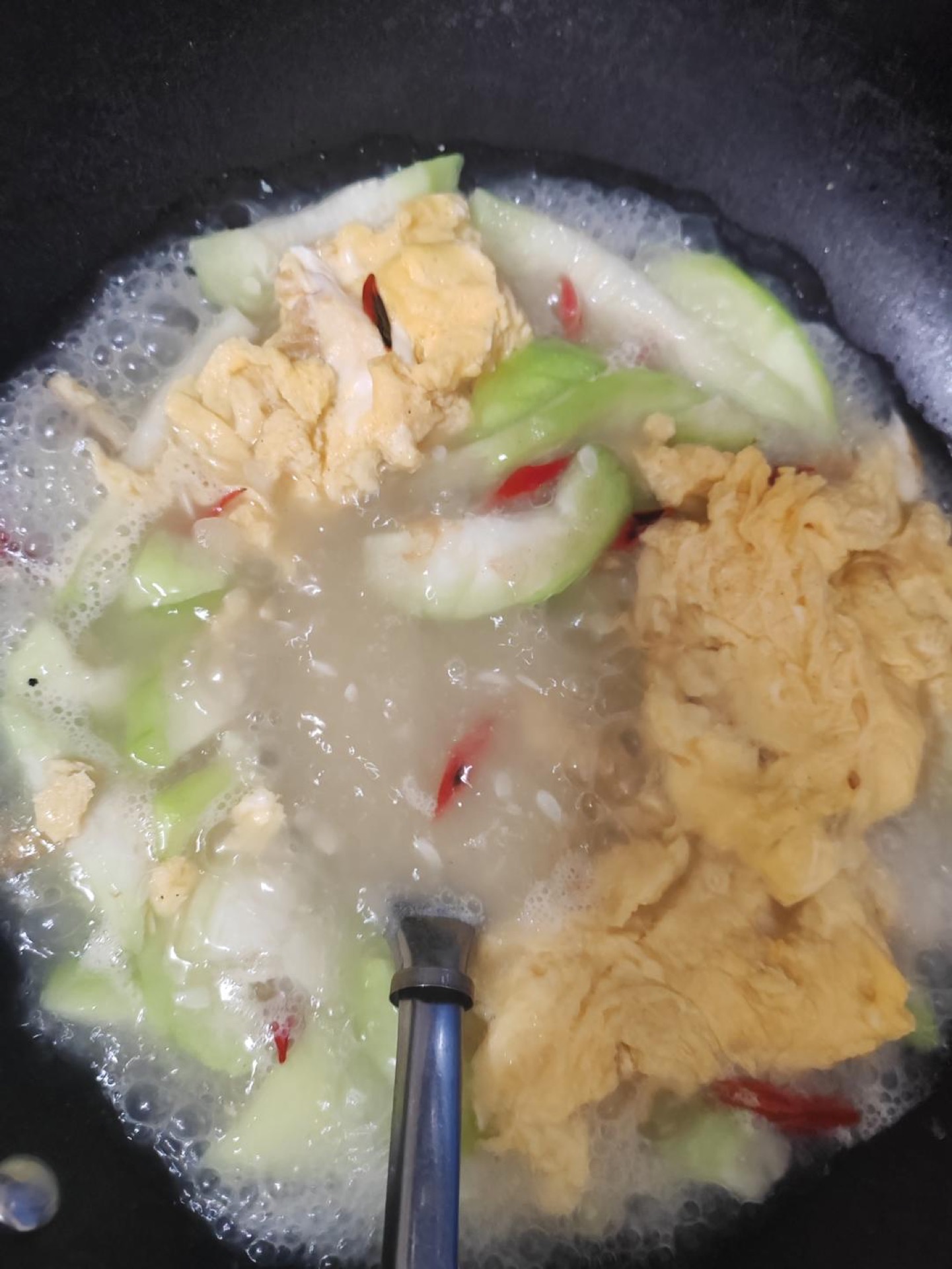
This is the soup I make when it is too hot to stand over the wok for long, or when a heavier dinner needs something light alongside it. It is also forgiving: the luffa is the only thing that needs attention, and once you know the one trick that makes the broth milky, the rest is nearly hands-off.
What Is Luffa and Egg Soup?
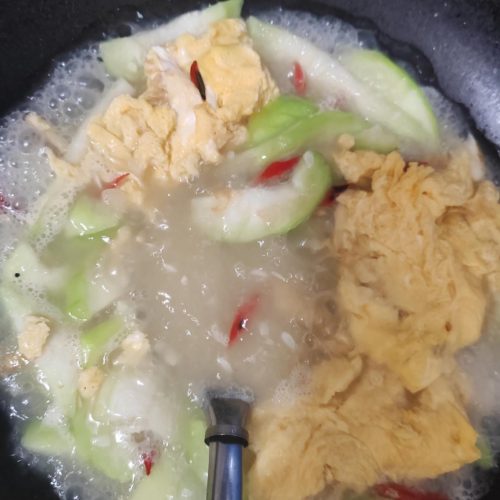
Luffa and egg soup — 丝瓜蛋汤, or sigua dantang — is a home-style Chinese soup built on luffa squash, egg, and a light broth. The luffa (also called loofah, sponge gourd, or 丝瓜) is a mild, sweet summer squash with a soft, spongy flesh that soaks up broth beautifully and turns silky when cooked. The eggs are fried first in the wok, then hit with boiling water, which emulsifies the egg and oil into a pale, milky broth. From there the luffa simmers just until tender, and the soup is seasoned with little more than salt and white pepper.
It belongs to the same family of quick Chinese egg soups as egg drop soup, and it is usually served as one of several dishes in a family meal rather than as a meal on its own. In Cantonese and Jiangnan home cooking it shows up most often in summer, when luffa is cheap, sweet, and at its best.
If you enjoy this style of soup, our 10-minute restaurant-style egg drop soup is the fastest version of the same idea — a silky egg broth with almost no prep at all.
For a version with more depth from the sea, this easy seaweed egg drop soup adds wakame and a touch of sesame for a savory, mineral edge.
And if you want the egg ribbons extra fine and delicate, our silky seaweed egg drop soup shows the straining technique that gives you the smoothest possible broth.
If you like this kind of cooking, my style egg drop soup is the closest recipe on the site — the same technique and the same pantry.
110-Minute Restaurant-Style Egg Drop Soup (Dan Hua Tang)A quick and authentic Chinese Egg Drop Soup featuring silky egg ribbons in a savory, seasoned chicken broth. Perfect as a starter or a light meal.Check out this recipe

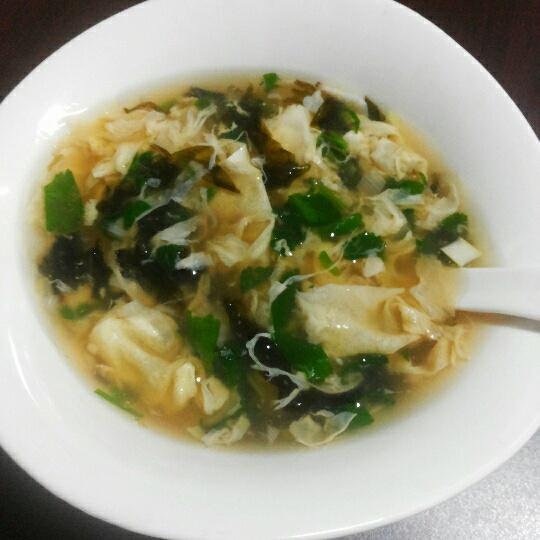
Cooked this way once, you will want the next one too: seaweed egg drop soup starts from the same base and the same pan.
2Easy Seaweed Egg Drop Soup (紫菜蛋花汤)A classic, comforting Chinese soup ready in 10 minutes! Learn the secrets to perfect, silky egg ribbons and a savory broth with simple pantry ingredients. It's the easiest, most satisfying soup you'll make all week—even better than takeout!Check out this recipe
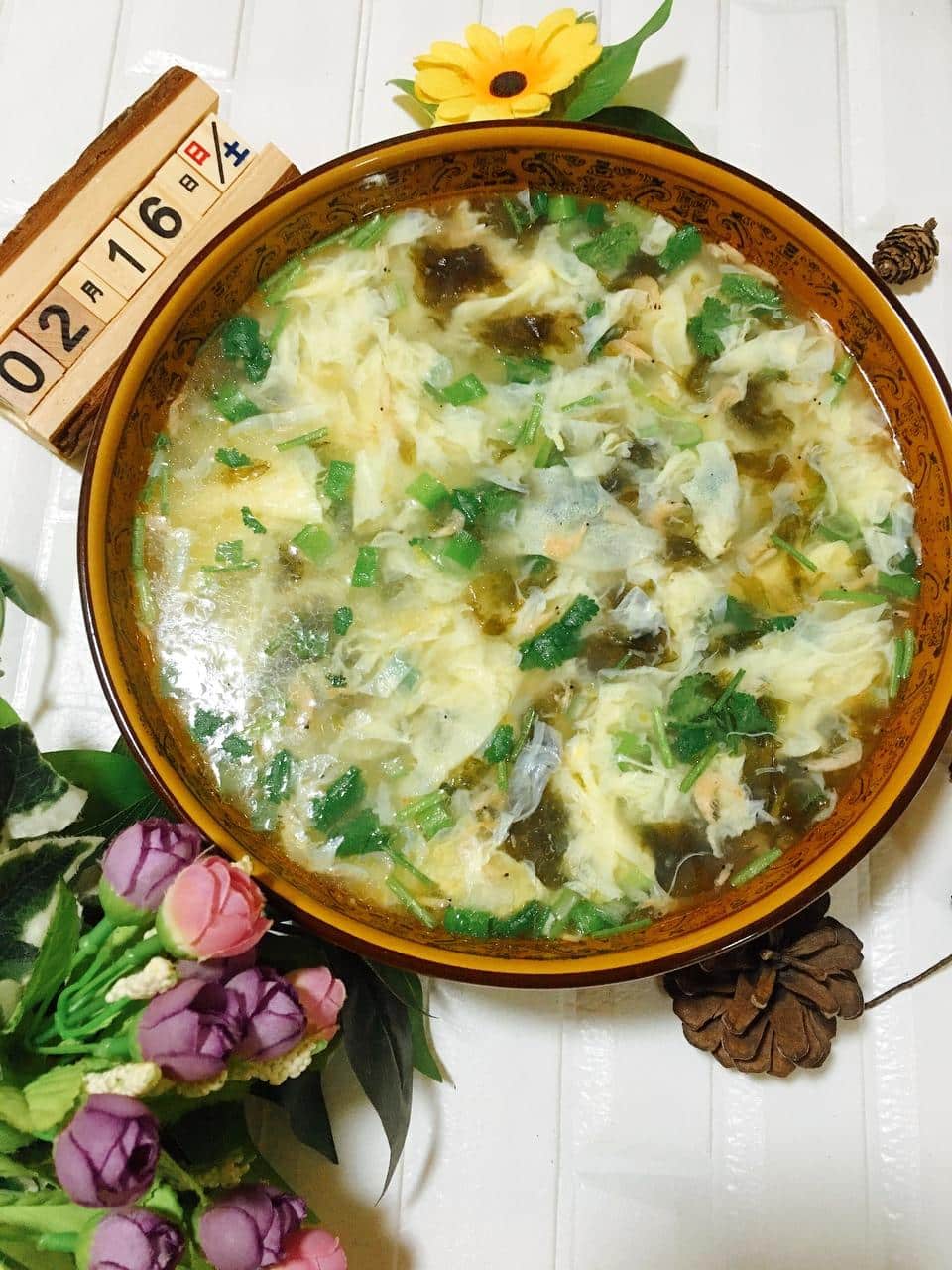
For the next cook from the same playbook, silky seaweed egg drop soup is the recipe I point people to.
3Seaweed Egg Drop Soup (Zi Cai Dan Hua Tang)Silky ribbons of egg float in a ginger-and-peppercorn broth with torn nori and a scattering of dried shrimp. A classic Chinese comfort soup, ready in 15 minutes.Check out this recipe
Ingredient Notes
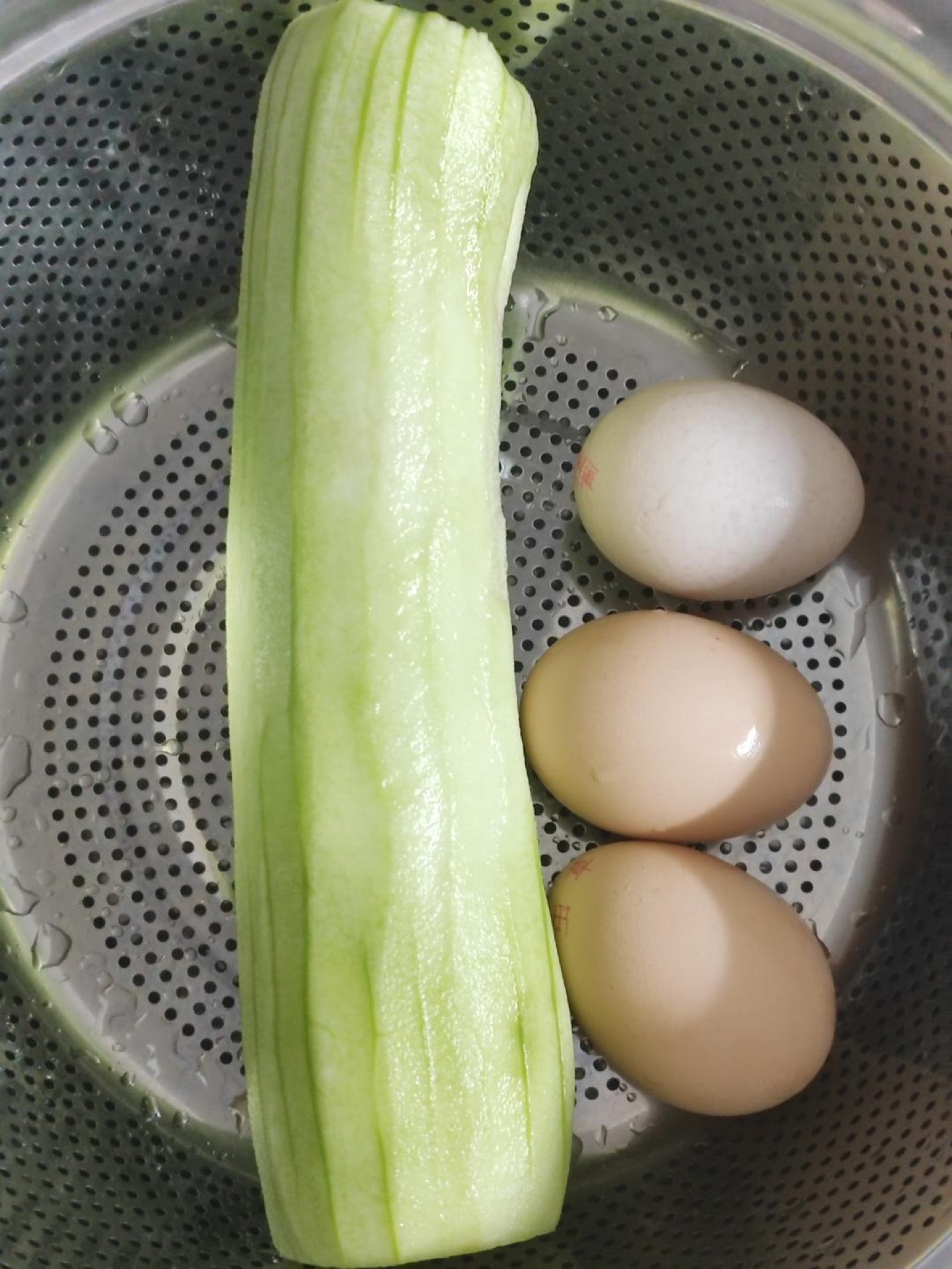
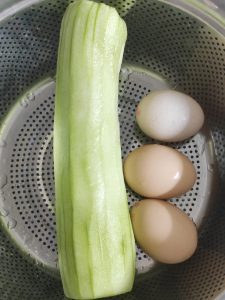
Luffa (丝瓜). Look for young, firm luffa that feel heavy for their size and give slightly when pressed. Older luffa develop tough fibers inside and will not turn silky no matter how you cook them. Peel the ridges and skin completely — the skin is too tough to eat — but leave the flesh intact. If you can only find ridged luffa (the kind with sharp longitudinal edges), that works perfectly here; it is the same vegetable and often sweeter.
Eggs. Three large eggs give the broth real body. Beat them until the whites and yolks are completely combined — streaks of unbroken white will fry into rubbery patches instead of a soft, milky base.
Boiling water. This is the ingredient people skip and then wonder why their soup is thin. The broth turns milky only when boiling water hits the hot, fried egg and oil in the wok and the fat emulsifies. Cold or even warm water breaks that emulsion and gives you a clear, watery soup.
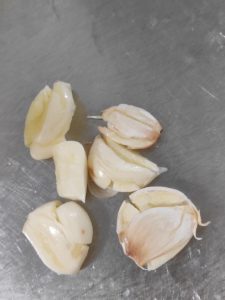
Garlic and chili. A few lightly crushed garlic cloves perfume the oil without overpowering the luffa, and a small red chili adds a gentle warmth. Both are optional but traditional in the southern home version. If you like heat, slice the chili with kitchen shears so you don’t get chili oil on your fingers.
Salt and white pepper. White pepper, not black, is what this soup wants — it is floral and warm rather than sharp, and it keeps the broth pale. A little sugar (a pinch, not more) will round out the luffa’s sweetness if your squash is on the bland side.
Ingredients
Here is what you need for four servings. Full amounts are in the recipe card at the bottom of this post.
- 1 lb (about 450g) luffa — 2 medium squash
- 3 large eggs
- 3 cloves garlic, lightly crushed
- 1 small red chili, sliced (optional)
- 2 tbsp neutral oil
- 4 cups boiling water
- 1 tsp salt, plus more to taste
- 1/2 tsp ground white pepper
- 2 scallions, thinly sliced
- 1 tsp light soy sauce (optional)
Equipment Needed
A wok is ideal because its wide, hot surface fries the eggs quickly and gives you room to stir without splashing. A deep skillet or a heavy pot works too — just make sure it is wide enough that the eggs spread into a thin layer rather than steaming into a thick block.
- Wok or a wide deep skillet
- Cutting board and a sharp knife
- Slotted spoon for lifting the fried egg out if you want to add it back at the end
- Vegetable peeler for the luffa
- Kettle for boiling water, so you can pour it in the moment you need it
Why This Recipe Works
The milky broth is not cream and it is not starch — it is an emulsion. When boiling water hits fried egg and hot oil, the fat disperses into tiny droplets that stay suspended in the liquid, scattering light and turning the broth opaque and white. This is the same principle behind the milky broths in long-simmered pork bone soups, achieved in seconds instead of hours.
Emulsified soups like this one get their color from suspended fat droplets rather than added dairy or starch — the same food-science principle the Serious Eats explanation of milky broths describes for long-simmered stocks.
Frying the egg first, rather than streaming beaten egg into the broth at the end, also changes the texture. Fried egg holds its structure in the hot liquid, so instead of dissolving into shreds it stays as soft, cloud-like pieces that the luffa can nestle against. And because luffa is added last and cooked only until tender, it keeps its delicate sweetness instead of collapsing into mush.
Finally, the seasoning is deliberately minimal. Luffa has a subtle, almost melon-like sweetness, and soy sauce or heavy aromatics will bury it. Salt, white pepper, and scallions are enough — that restraint is what makes the soup taste like summer rather than like a stir-fry sauce.
Prep & Mise en Place
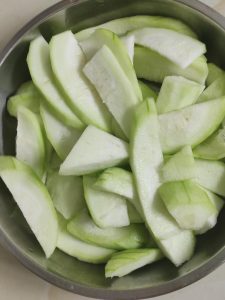
This soup cooks in under ten minutes once the wok is hot, so do all your cutting before you turn on the heat. Peel the luffa, cut it into rough 1-inch chunks, and set it aside. Crush the garlic, slice the chili, and slice the scallions. Beat the eggs in a bowl with a pinch of salt and put the kettle on to boil — you want that water at a rolling boil when the eggs come out of the wok.
If you are serving this as part of a larger meal, this is a good moment to think about timing. The soup is best the minute it is done, so start it after your heavier dishes are already resting. If you are pairing it with something heartier, a plate of moo shu pork or crispy sesame chicken bites makes a nice contrast in weight and texture.
Cooking Process
Step 1 — Peel and Beat
Peel the luffa with a vegetable peeler, then crack three eggs into a bowl and beat them until smooth.
Step 2 — Prep Aromatics
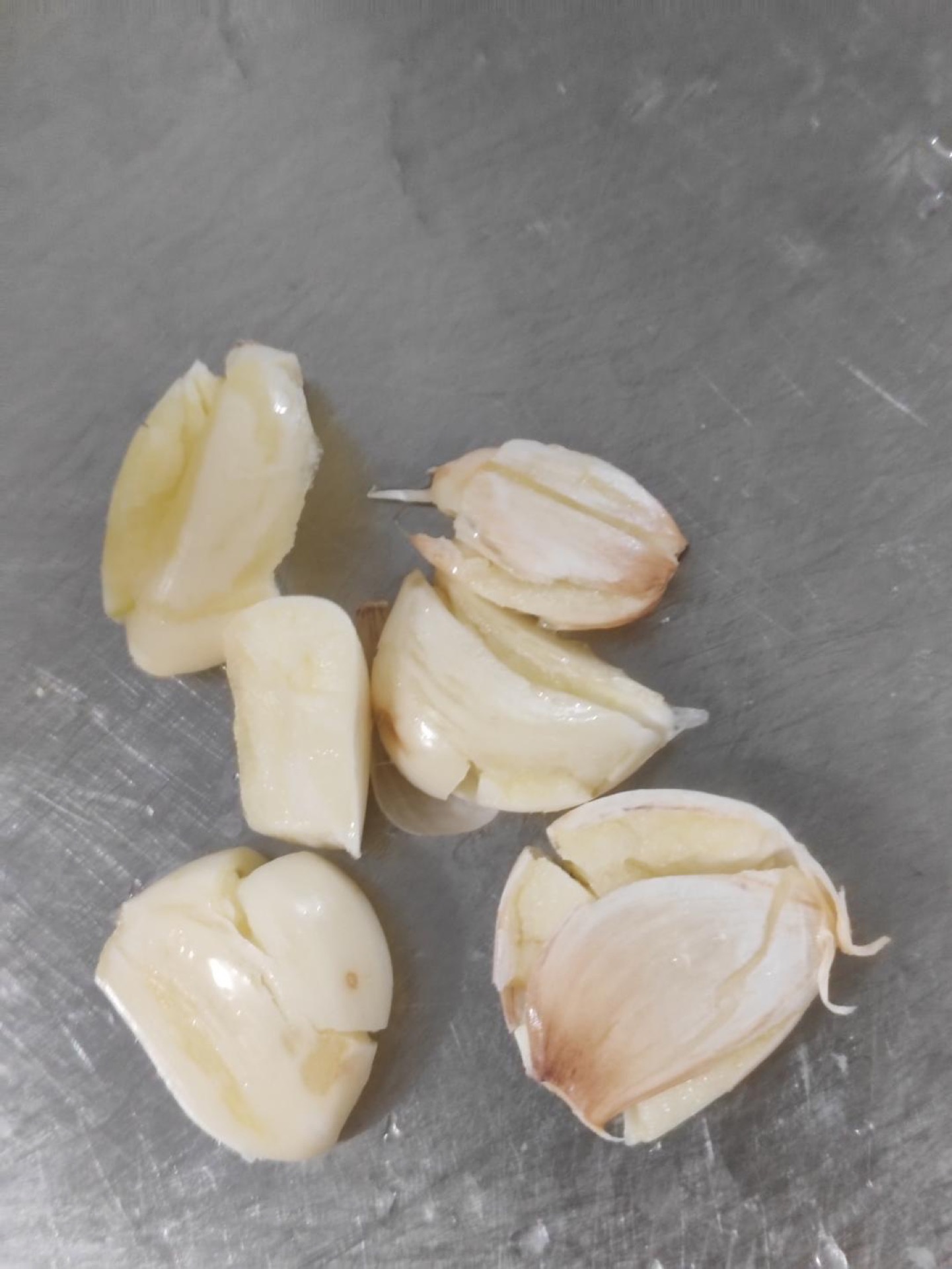
Press the garlic cloves with the flat side of a knife so the skins slip off easily, and cut the small red chili with kitchen shears if you want to keep your hands free of chili oil.
Step 3 — Cut the Luffa
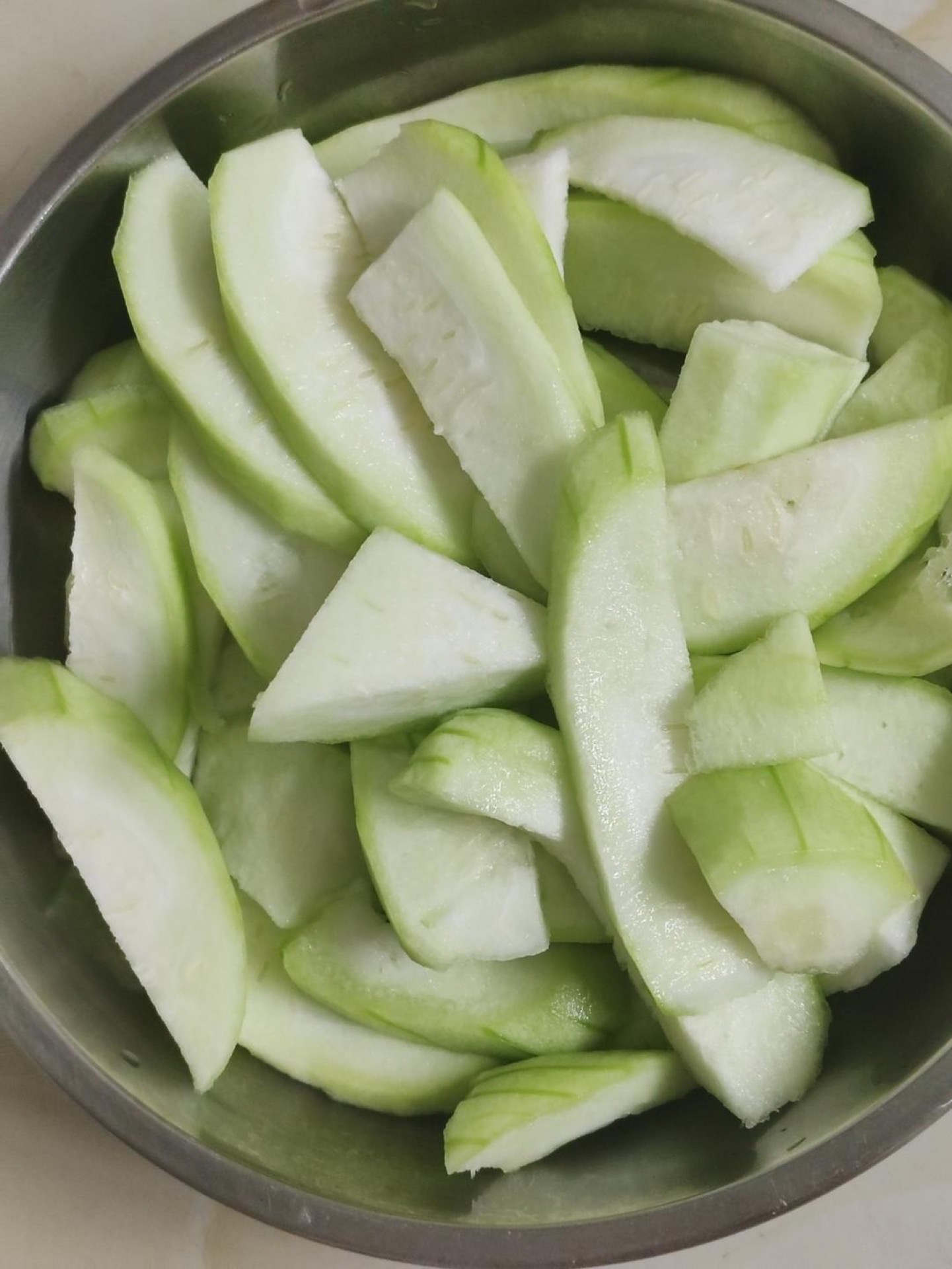
Cut the peeled luffa into rough 1-inch chunks.
Step 4 — Fry the Eggs
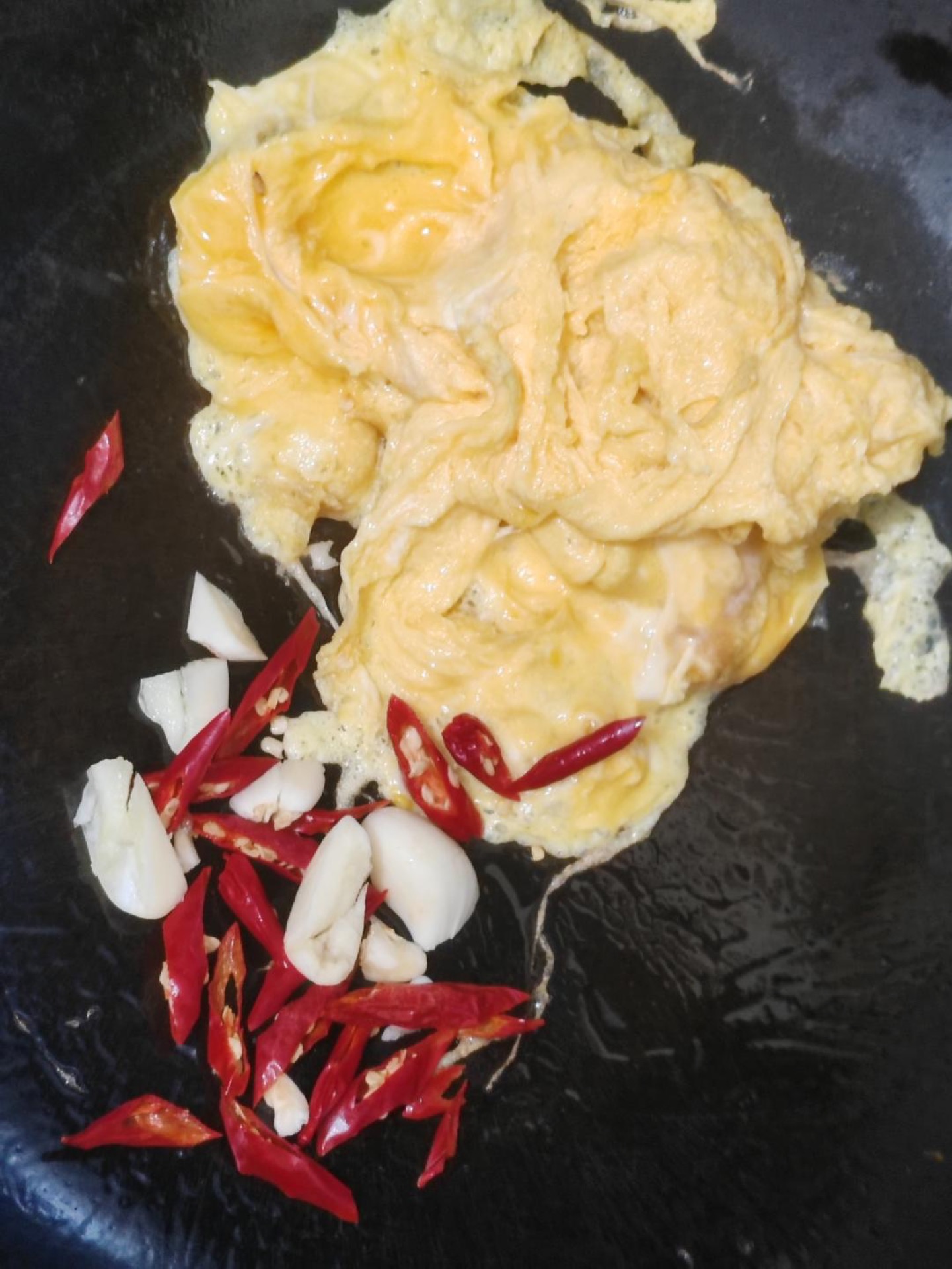
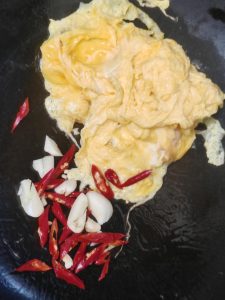
Heat a little oil in the wok and fry the eggs until set, then add the small red chili and the garlic.
Step 5 — Add Boiling Water
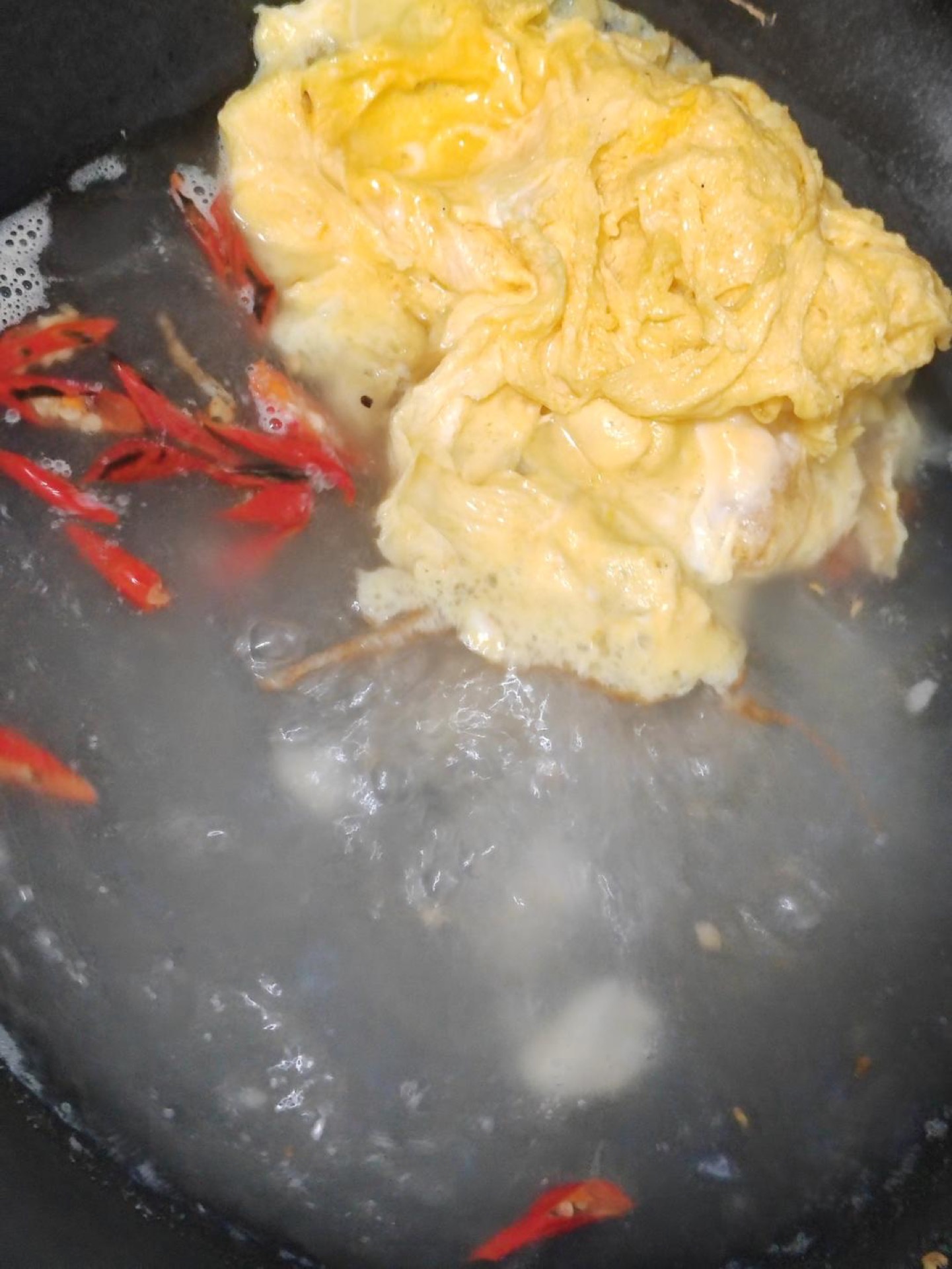
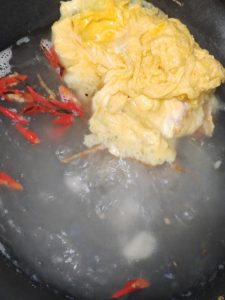
Pour in boiling water — only boiling water will give you a milky white broth.
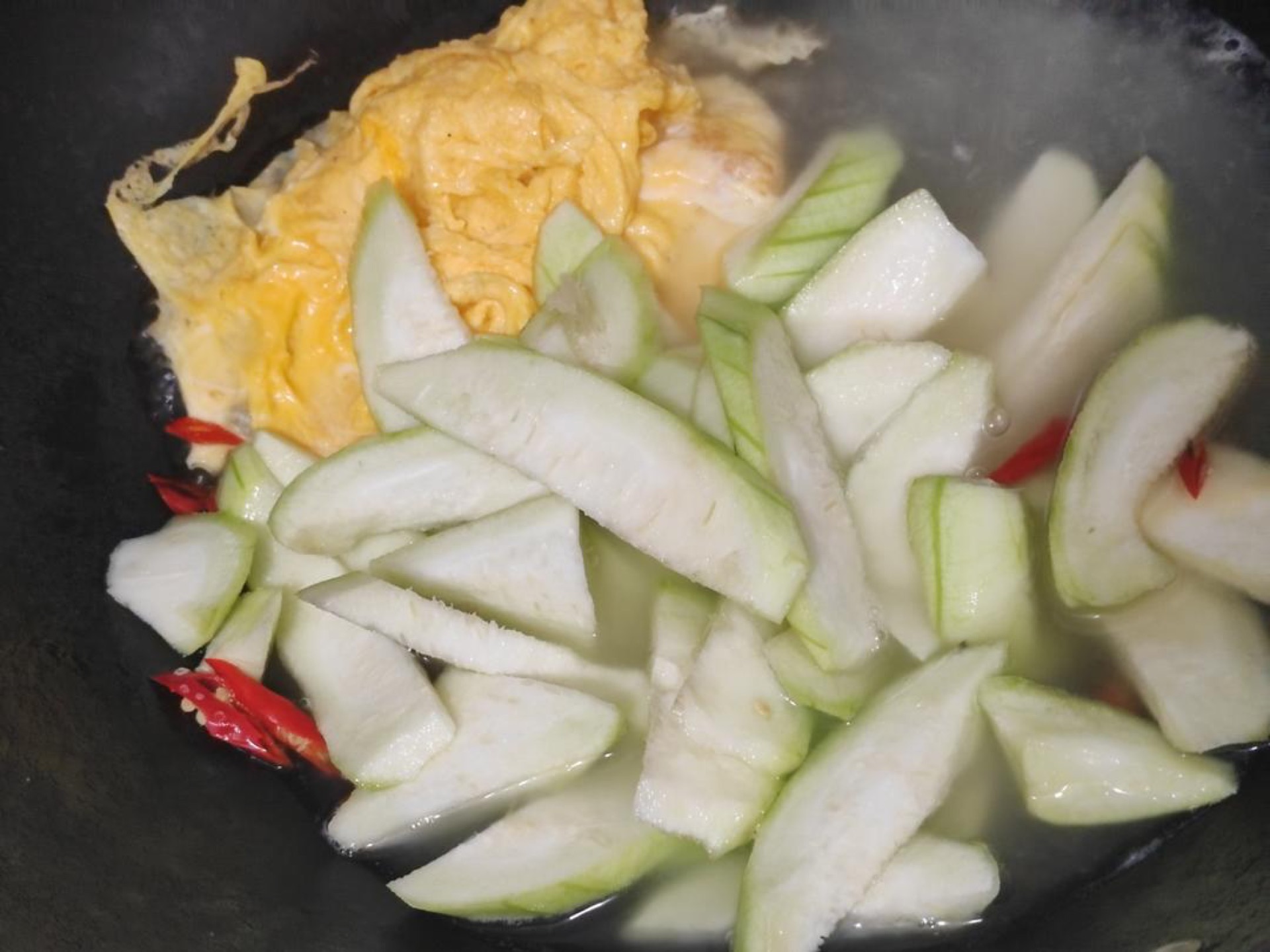
Step 6 — Simmer the Luffa
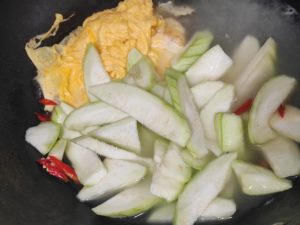
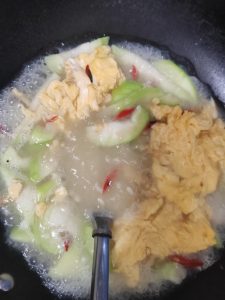
Add the luffa and simmer until it turns soft and translucent.
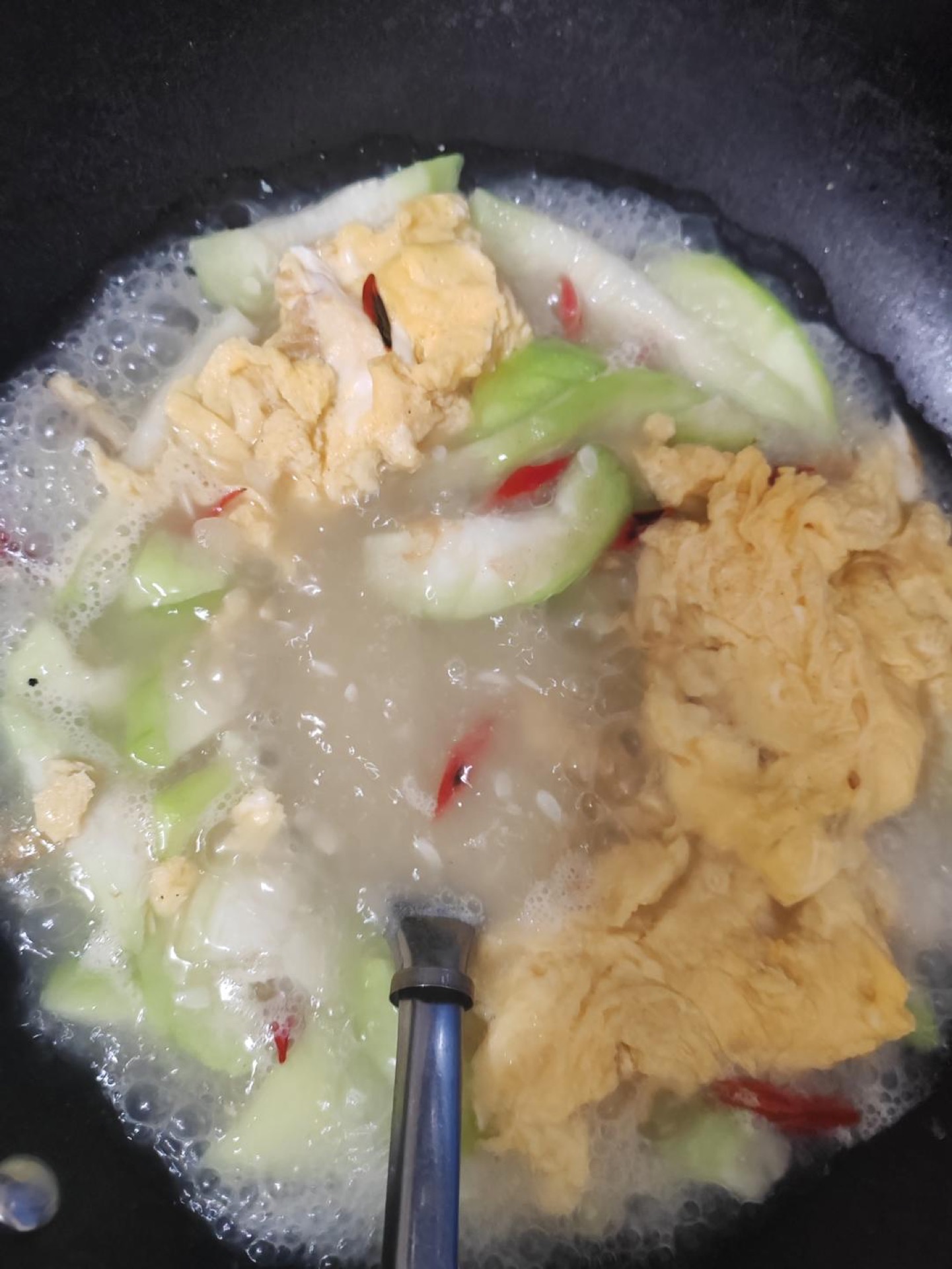
Step 7 — Season and Serve
Season with just salt and white pepper — you don’t even need soy sauce for it to taste great — and scatter sliced scallions over the top before taking it off the heat.
Common Mistakes When Making Luffa and Egg Soup
1. Using cold or warm water. The broth stays thin and clear instead of turning milky. The cause is that the fat never emulsifies. The fix is simple: keep a kettle at a rolling boil and pour the water in while the wok is still hot.
2. Overcooking the luffa. Luffa goes from silky to slumping in about a minute. The cause is leaving it in the broth while you do something else. The fix is to add it last, taste a piece as soon as it turns translucent, and take the wok off the heat immediately.
3. Using old, fibrous luffa. The squash never softens properly and the soup ends up with chewy strings in it. The cause is buying luffa that were left on the vine too long. The fix is to choose young, heavy, firm squash and to discard any that feel light or spongy at the stem end.
4. Underseasoning because you are afraid of salt. Luffa absorbs salt as it cooks, so a soup that tasted right before the luffa went in will taste flat afterward. The cause is seasoning too early. The fix is to taste after the luffa is tender and add the last pinch of salt then.
5. Beating the eggs carelessly. Streaks of uncombined egg white fry into tough, rubbery bands. The cause is a quick stir instead of a proper whisk. The fix is to beat for a full 30 seconds until the mixture is uniformly pale yellow.
6. Crowding the wok. If the eggs sit in a thick layer they steam rather than fry, and the broth never develops its color. The cause is a wok that is too small or too much oil. The fix is to use a wide wok and let the egg spread thin, breaking it up only after it has set.
Variations
With dried shrimp or tiny dried anchovies. Soak a small handful of dried shrimp in warm water for 10 minutes, then fry them with the garlic before the eggs go in. The broth gains a deep savory note that plays well with the luffa’s sweetness.
With silken tofu. Add cubes of silken tofu at the same time as the luffa for a softer, more filling soup. If you like that combination, our silken tofu with century egg is a cold version of the same pairing.
With rice vermicelli. Drop a small bundle of soaked rice noodles into the broth before the luffa and you have a light one-bowl lunch. Cooked fried rice noodles can also be added at the very end for crunch.
With a tomato. Cut one ripe tomato into wedges and fry it with the garlic before the eggs. The broth turns faintly pink and slightly tangy — a common variation in southern China.
Egg drop style. Skip the frying step and instead stream the beaten egg into the simmering broth in a thin ribbon while stirring. The soup will be clearer rather than milky, but it is faster and just as good.
Frequently Asked Questions
Can I use a different squash if I can’t find luffa? Zucchini is the closest substitute, though it is firmer and slightly more bitter. Peel it, cut it into chunks, and cook it a minute or two longer than you would luffa. Bottle gourd (葫芦) and chayote also work well.
Why is my soup not milky white? Almost always because the water was not boiling when it went in, or because the wok had cooled down. Get the wok properly hot, fry the eggs until they are just set, and pour boiling water in immediately while everything is still sizzling.
Do I need to peel the luffa? Yes. The skin and the ridges are tough and fibrous even on young squash. Peel all the way down to the pale green flesh. If the luffa is very young and tender you can leave a few faint green streaks, but the skin itself should go.
Can I make this soup ahead of time? It is best fresh, because the luffa continues to soften as it sits. If you must, cook it up to a day ahead, cool it quickly, and refrigerate. Reheat gently on the stove and add a splash of water, since the luffa will have released liquid.
Is this soup spicy? Not unless you want it to be. The small red chili is optional and mostly aromatic. Leave it out entirely for a completely mild soup, or add a second chili if you want real heat.
How to Serve
Luffa and egg soup is a supporting player, not a centerpiece. It sits alongside a steamed fish, a braised meat, or a simple stir-fried green, and its job is to be clean and light between richer bites. Serve it in small bowls as part of a multi-dish meal, or in a larger bowl with rice for a light lunch.
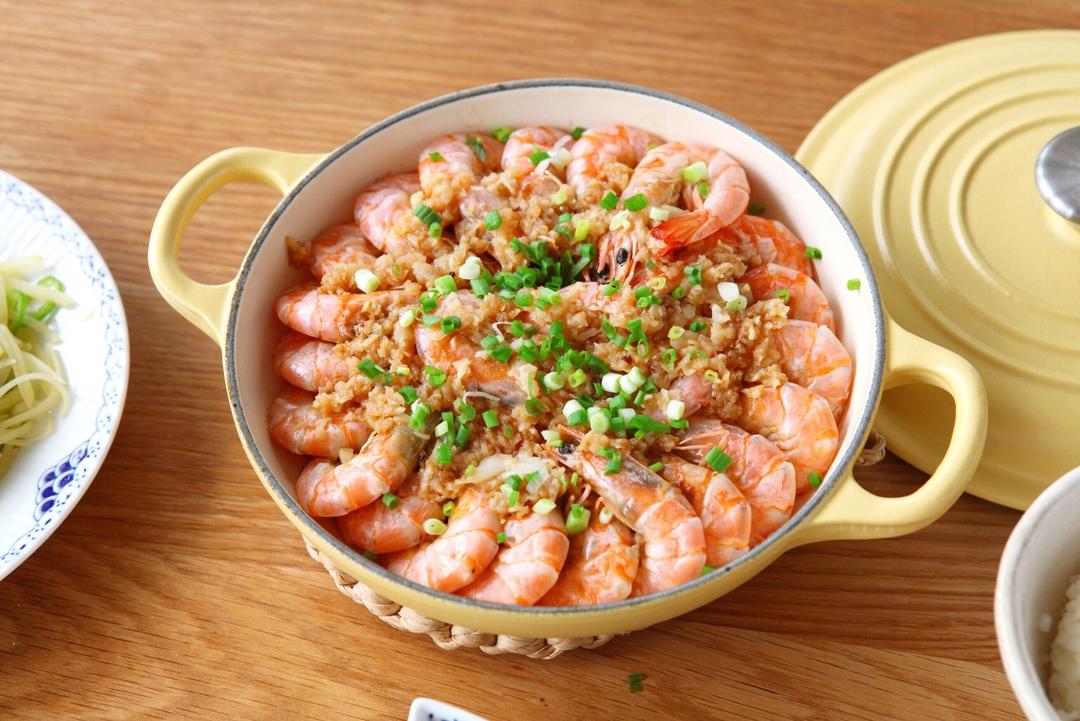
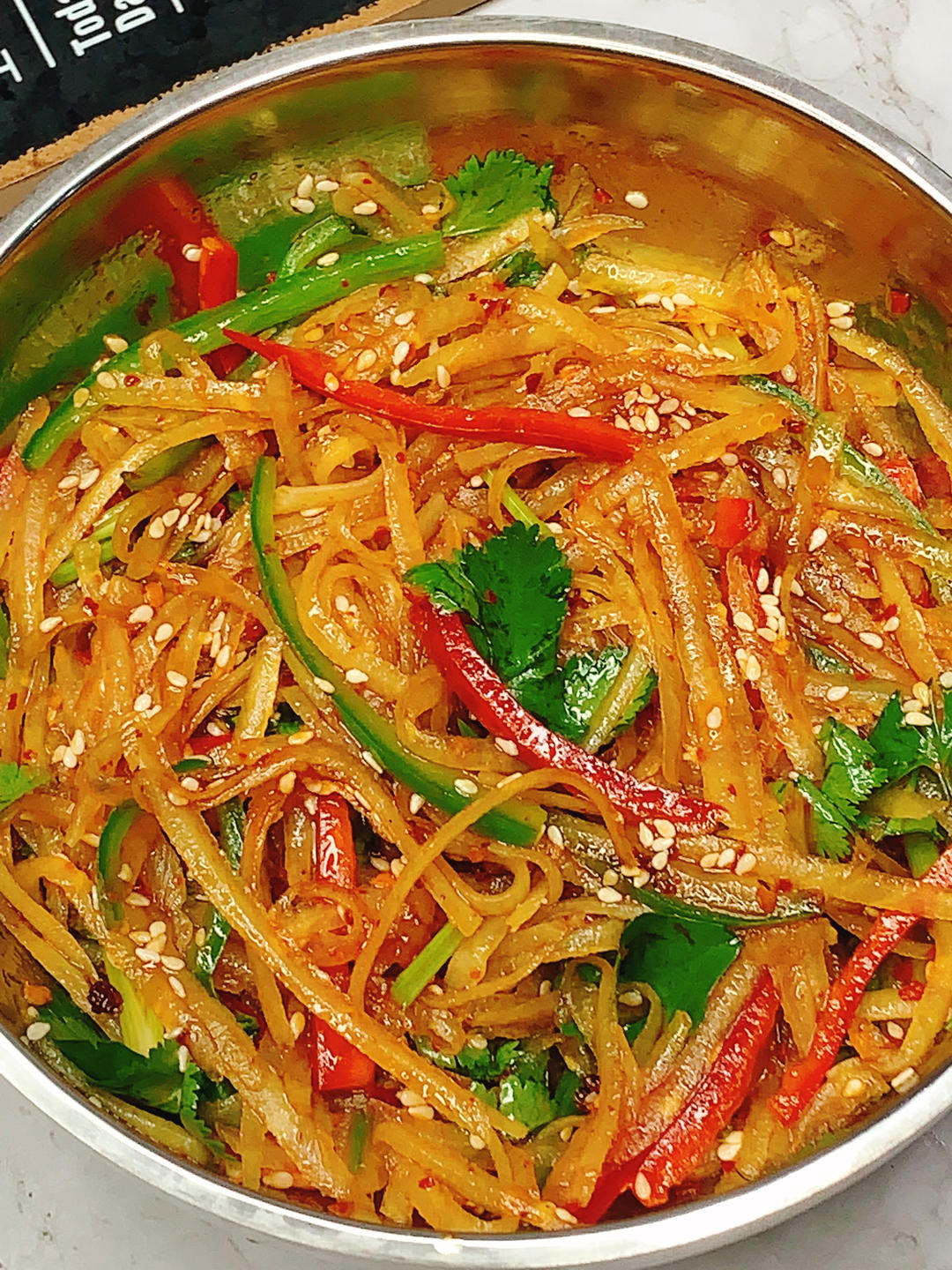
A few pairings work especially well. The soup’s mildness is a good counterpoint to pork hock, whose sticky, collagen-rich braise needs something bright alongside it. It is also a natural partner for garlic shrimp in cast iron pot, where the garlicky, savory shrimp and the sweet luffa broth balance each other. And if you are building a table of cold dishes and hot soups, a plate of sour and spicy shredded potato salad adds the crunch this soup does not have.
Storage & Reheat
Luffa and egg soup is at its best within an hour of cooking. The luffa keeps softening in the hot broth, so a bowl that sat on the table for twenty minutes will already be noticeably softer than one served immediately.
If you do have leftovers, cool the soup quickly — spread it in a shallow container rather than leaving it in a deep pot — and refrigerate within two hours. Store it in a sealed container for up to 3 days. The luffa will release water as it chills, so expect the soup to look thinner the next day.
Reheat gently on the stovetop over medium-low heat until it reaches 165°F (74°C), stirring occasionally. Do not boil it hard, or the egg pieces will break apart and the luffa will disintegrate. A splash of water or stock will loosen it if it has thickened. I do not recommend freezing this soup — the luffa turns watery and mushy when thawed.
For food safety guidance on holding and reheating soups, the FDA food safety guidance and the USDA leftovers guidance both recommend the two-hour rule for refrigerating cooked food.
Allergen Notice
This recipe contains eggs. If you use soy sauce or tamari, check the label — most soy sauce contains wheat, though tamari is typically gluten-free. The recipe as written is otherwise free of dairy, nuts, shellfish, and gluten, assuming you skip the optional soy sauce or use a gluten-free brand.
Nutrition Disclaimer
Nutrition information is calculated using an ingredient database and should be considered an estimate. In cases where multiple ingredient alternatives are given, the first listed is calculated for nutrition. Garnishes and optional ingredients are not included.
About the Author & Recipe Development
I’m Lin, and I’ve been cooking and writing about Chinese home cooking on Woks of Love for years. This recipe comes from the way 丝瓜蛋汤 is made in ordinary home kitchens in southern China — no restaurant tricks, no specialty ingredients, just a hot wok, a kettle of boiling water, and a good luffa. I tested this version with both smooth and ridged luffa, with and without the chili, and with cold water versus boiling water, to confirm exactly where the milky broth comes from and how long the luffa can hold before it turns to mush.
If you make it, I’d love to hear how it turned out — especially if you try one of the variations. And if you’re looking for more light Chinese soups and quick vegetable dishes, there are plenty more on the site.
Authoritative References
- FDA — Food Safety During a Power Outage (two-hour refrigeration rule)
- USDA FSIS — Leftovers and Food Safety (reheating to 165°F)
- Serious Eats — Why Some Broths Are Milky (emulsification in soups)
Luffa and Egg Soup (丝瓜蛋汤): Silky Luffa in Milky Egg Broth

Equipment
- Wok
- Cutting Board
- Slotted Spoon
Ingredients
For the Soup
- 1 lb luffa about 2 medium, peeled and cut into 1-inch chunks
- 3 large eggs beaten with a pinch of salt
- 3 cloves garlic lightly crushed with the flat of a knife
- 1 small red chili sliced, optional
- 2 tbsp neutral oil for frying the eggs
- 4 cups boiling water must be boiling, not cold
- 1 tsp salt plus more to taste
- 1/2 tsp ground white pepper or to taste
- 2 scallions thinly sliced, for garnish
Optional
- 1 tsp light soy sauce or tamari, optional
Instructions
- Peel the luffa with a vegetable peeler, then crack three eggs into a bowl and beat them until smooth.

- Press the garlic cloves with the flat side of a knife so the skins slip off easily, and cut the small red chili with kitchen shears if you want to keep your hands free of chili oil.
- Cut the peeled luffa into rough 1-inch chunks.
- Heat a little oil in the wok and fry the eggs until set, then add the small red chili and the garlic.
- Pour in boiling water — only boiling water will give you a milky white broth.
- Add the luffa and simmer until it turns soft and translucent.

- Season with just salt and white pepper — you don’t even need soy sauce for it to taste great — and scatter sliced scallions over the top before taking it off the heat.












Leave a Reply