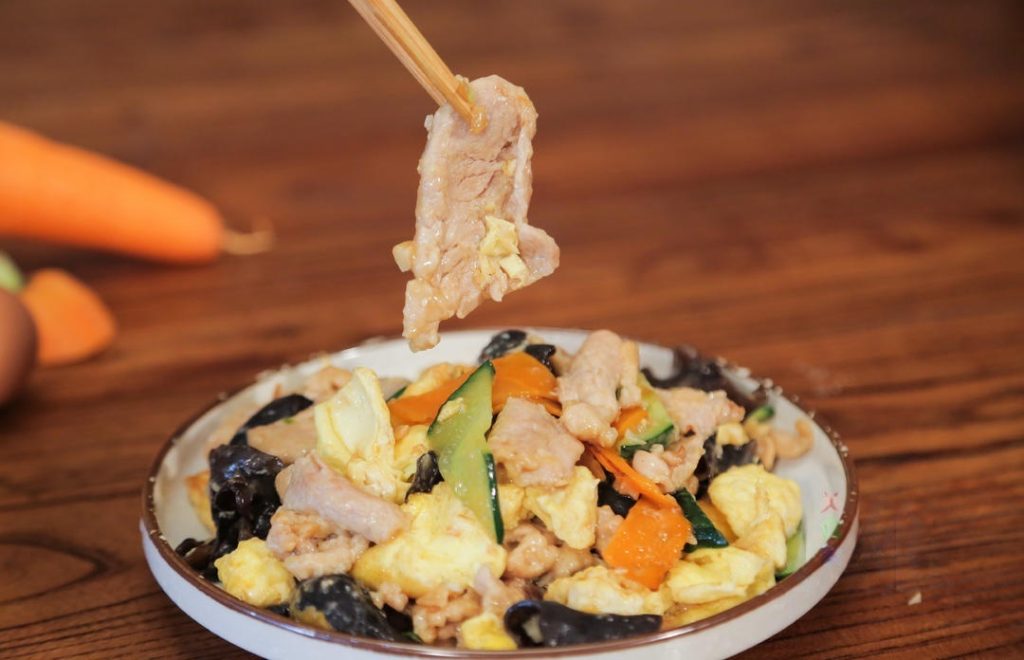
Growing up in a restaurant family with Sichuan roots, our table was often filled with fiery reds and numbing peppercorns. However, Moo Shu Pork (木须肉)—a classic dish originating from Northern China (Shandong cuisine)—held a special place in our rotation. My mother loved it because it is the definition of a balanced meal: meat, fungus, vegetables, and eggs, all in one wok.

This family-style version is vibrant, nutritious, and incredibly forgiving for beginners. While restaurant versions in the U.S. often serve this with pancakes and plum sauce, in Chinese homes, we serve it simply with steamed rice. It’s savory, textural, and ready in about 20 minutes.
Why This Recipe Works
- Textural Contrast: The crunch of wood ear mushrooms and cucumbers contrasts beautifully with the tender “velveted” pork and fluffy eggs.
- Velveting Technique: We use a restaurant-standard marinade (starch + egg white) to ensure the Pork Tenderloin remains juicy, never dry.
- High-Heat Scramble: Cooking the eggs in hot oil first removes any “eggy” odor and creates that signature fluffy texture essential to the dish.
What is Moo Shu Pork?
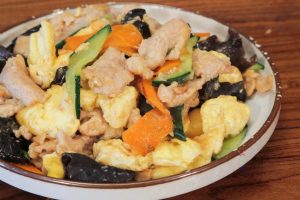
Moo Shu Pork (Mù Xū Ròu) traditionally consists of sliced pork, cucumber, wood ear mushrooms, and scrambled eggs. The name “Moo Shu” refers to sweet osmanthus flowers, which the yellow scrambled eggs are said to resemble.
While some traditional versions include dried daylilies (golden needles), my version—and many modern home-style versions—omits them for simplicity without sacrificing flavor. This is exactly how we cook it for a quick weeknight dinner.
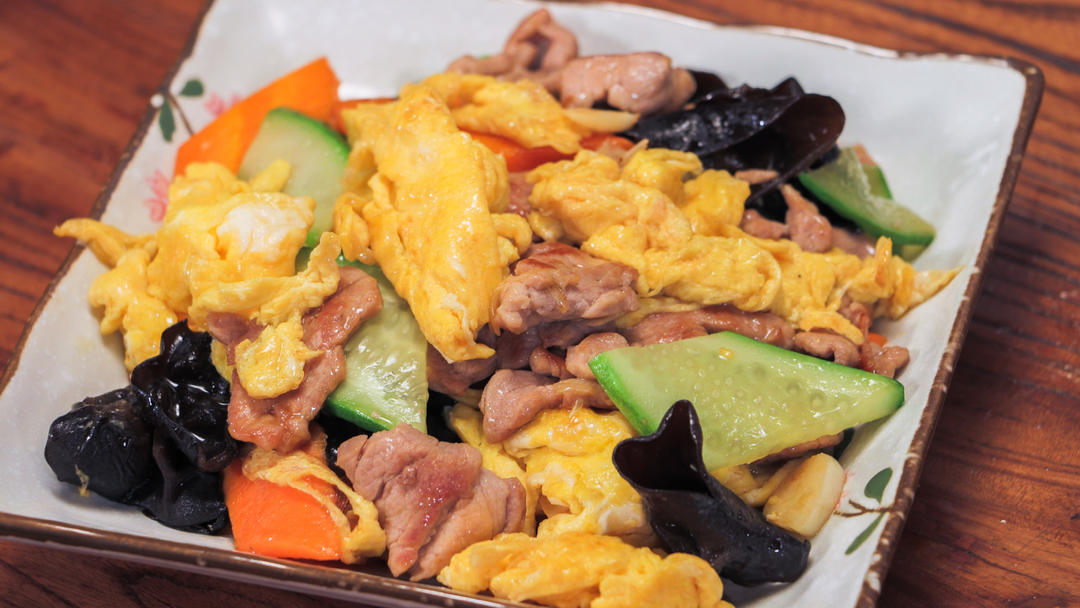
A Note on Variations: “Chinese cuisine is incredibly diverse, and even a single dish like Moo Shu Pork can have many interpretations depending on the region or whether it’s made in a home kitchen versus a banquet hall. While this recipe shares my cherished 20-minute family-style method perfect for weeknights, we have also documented another version of Moo Shu Pork (Mu Xu Rou) on the site. We believe that true culinary mastery comes from understanding a dish’s many forms, so I encourage you to compare both recipes to see which style best suits your dinner table tonight.”
About the Author & Recipe Development
I’m Lin, a culinary professional born in Sichuan with over a decade of experience in professional kitchens. This recipe was developed based on my family’s method but refined in our test kitchen to ensure accuracy for home cooks. We tested this specifically on standard home gas ranges to ensure you can achieve proper flavor without a commercial jet burner.
Key Ingredients & Substitutions
- Pork Tenderloin: This is the leanest, most tender cut. You can also use pork loin, but be careful not to overcook it.
- Wood Ear Mushrooms: Also known as black fungus. They have a neutral taste but a distinct, snappy crunch. You can learn more about preparing them in our Wood Ear Mushroom Salad (referencing preparation methods).
- Cucumber & Carrot: Sliced into diamond shapes for even cooking and visual appeal.
- Seasonings: A classic triad of Shaoxing Wine, Oyster Sauce, and Light Soy Sauce provides the savory backbone.
Ingredients
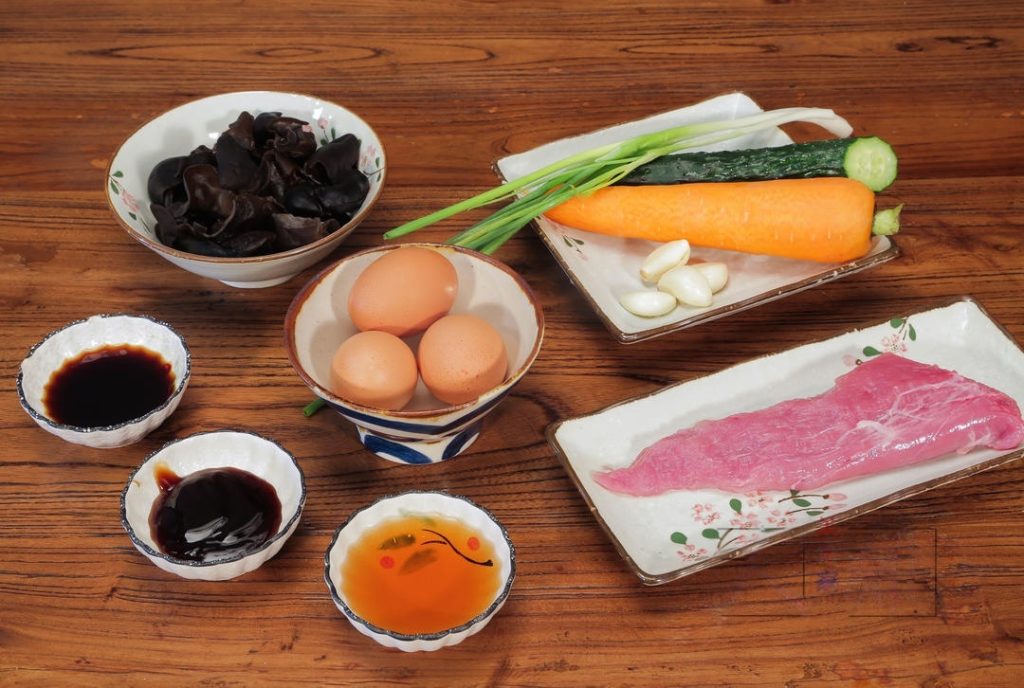
The Main Stir-fry:
- 5 oz (150g) Pork tenderloin (lean meat is preferred)
- 3 Large eggs, beaten
- 1 small handful Dried wood ear mushrooms (rehydrated)
- ½ Cucumber
- ½ Carrot
- 2 stalks Scallions (green onions)
- 2 cloves Garlic, minced
- 2 tbsp Cooking oil (divided)
The Pork Marinade:
- 2 tsp Shaoxing Wine
- 1 tsp Oyster Sauce
- 1 Egg white
- 1 tsp Cornstarch
The Sauce:
- 1 tbsp Oyster Sauce
- 1 tbsp Light Soy Sauce
- Salt, to taste (be careful, sauces are salty)
- Cornstarch Slurry: ½ tbsp cornstarch mixed with 2 tbsp water
Recipe Notes Before You Start
- Rehydrate Early: Wood ear mushrooms need at least 30 minutes to soak in warm water. Don’t skip this.
- Knife Work: For the best mouthfeel, try to cut your pork, carrots, and cucumbers into similar sizes. We use a “diamond” cut for the veggies.
- Wok Temperature: You need high heat to fluff the eggs, but moderate heat to cook the pork so it stays tender.
How to Make Moo Shu Pork
Step 1: Mise en Place (Prep Work)
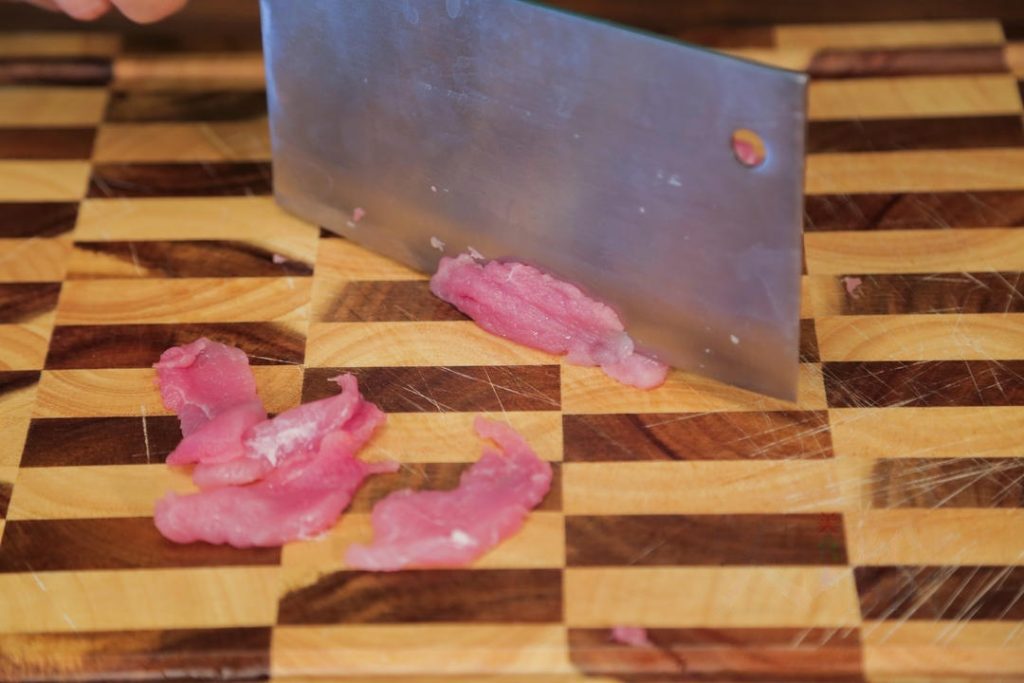
Soak the wood ear mushrooms in warm water until soft. Tear or cut them into bite-sized pieces. Slice the pork tenderloin against the grain into thin slices.
Cut the cucumber and carrot into diamond shapes: first cut into small logs, then slice diagonally. Slice scallions into small rounds and mince the garlic.
Step 2: Velvet the Pork
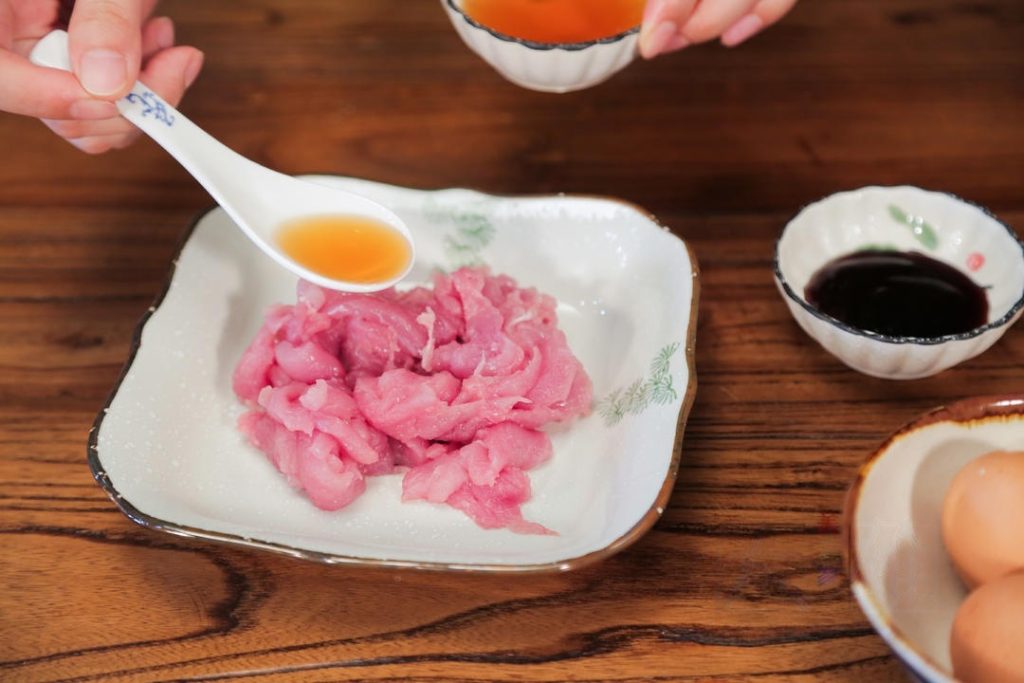
In a small bowl, combine the sliced pork with 2 teaspoons Shaoxing wine, 1 teaspoon oyster sauce, the egg white, and 1 teaspoon cornstarch. Mix well by hand until the liquid is absorbed and the meat feels tacky. Let it marinate for 15 minutes.
Why this matters: This process, known as “velveting,” coats the meat in a protective layer of starch and protein, keeping it silky and tender during the high-heat stir-fry.
Step 3: Scramble the Eggs
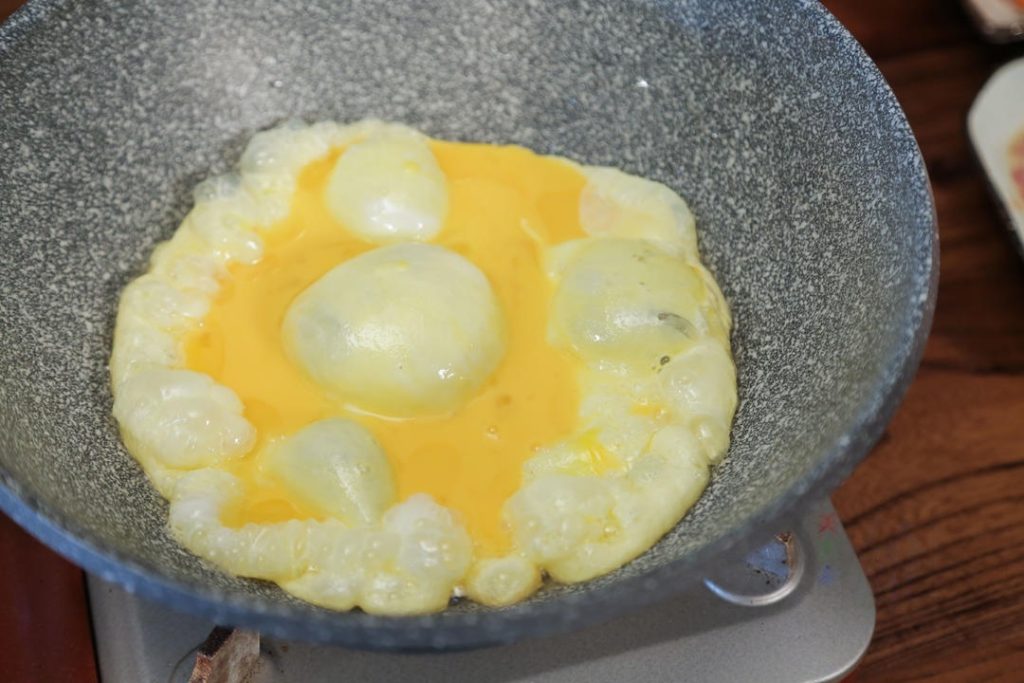
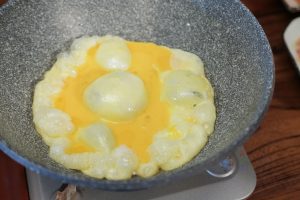
Heat a wok or skillet over high heat. Add about 1 tablespoon of oil. The oil needs to be hot to eliminate the raw egg smell and create fluffiness. Pour in the beaten eggs. As soon as they set (about 20-30 seconds), scramble them into large chunks and remove them from the pan immediately. Set aside.
Step 4: Stir-fry the Pork
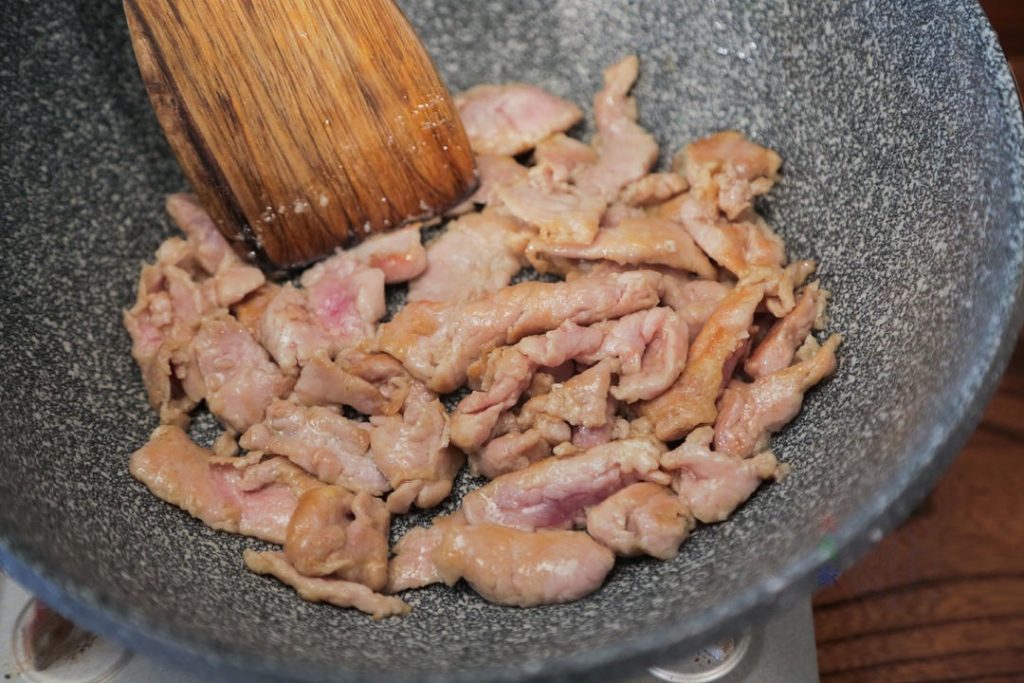
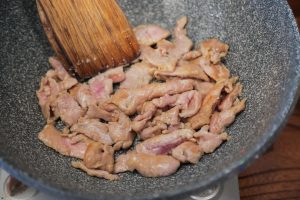
Add a little more oil to the pan if needed. Add the marinated pork. Stir-fry briskly until the meat turns white and opaque. Remove the pork and set it aside with the eggs.
Note: Do not overcook the pork here; it will go back into the pan later.
Step 5: Aromatics and Vegetables
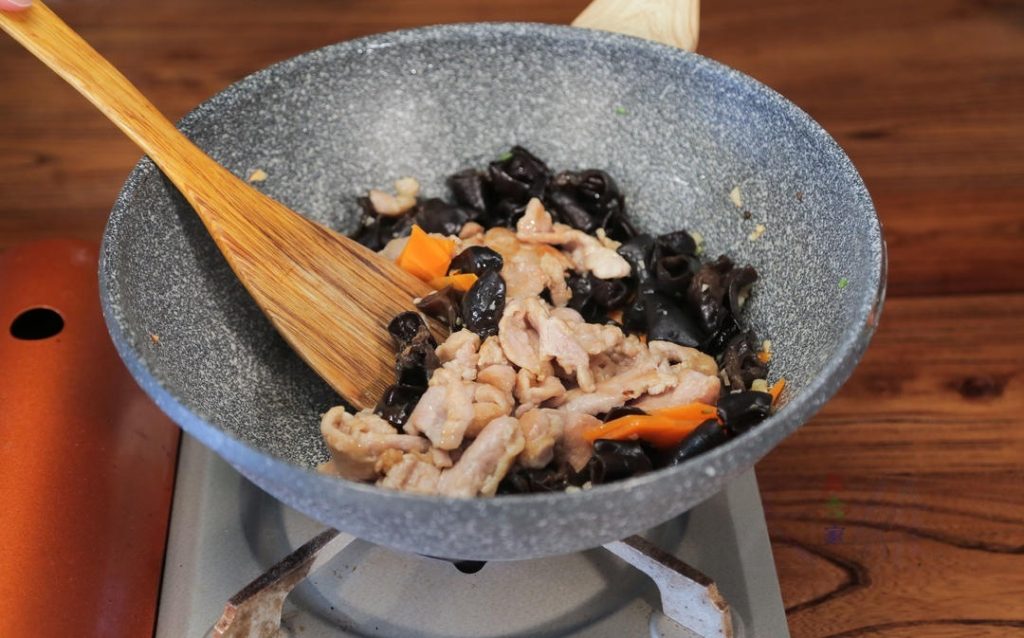
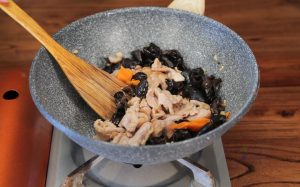
Add a small amount of oil to the wok. Toss in the minced garlic and scallions, stirring until fragrant (about 10 seconds). Add the carrots and wood ear mushrooms. Stir-fry for 1-2 minutes until the carrots soften slightly.
Step 6: Combine and Season
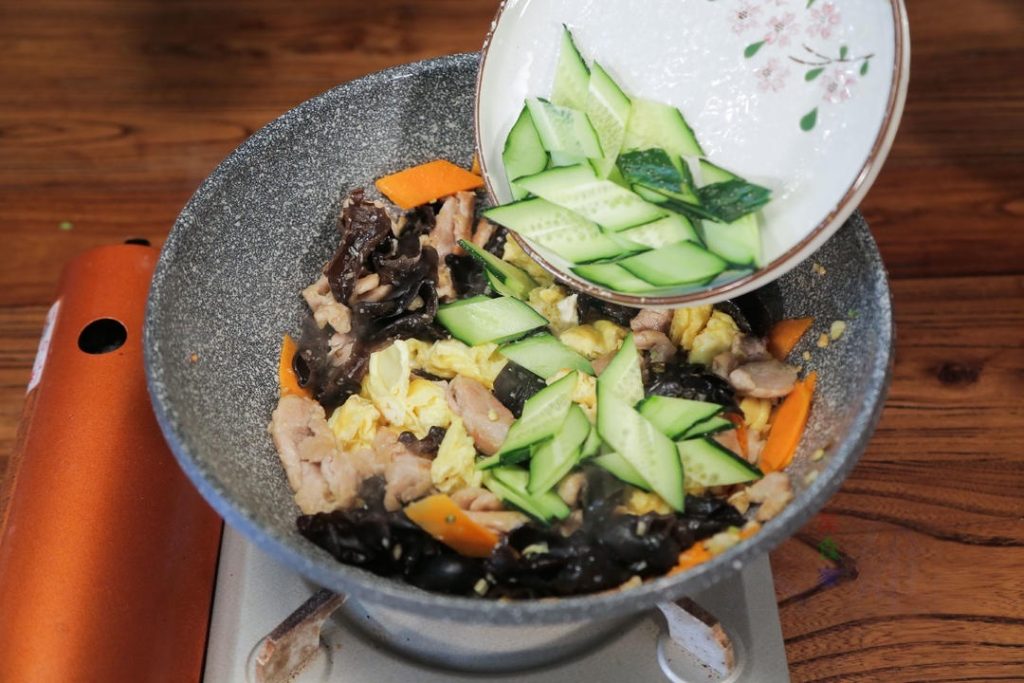
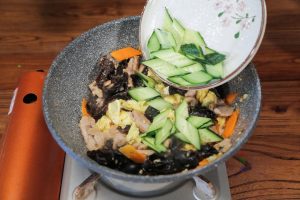
Return the cooked pork and eggs to the pan. Toss briefly. Add the cucumber slices last (to keep them crisp). Add 1 tablespoon oyster sauce and 1 tablespoon light soy sauce around the perimeter of the wok to sear the sauce. Taste and add a pinch of salt if needed.
Step 7: Thicken and Serve
Give your cornstarch slurry a quick stir (starch settles), then pour it over the ingredients. Stir-fry on high heat for another 15-30 seconds until the sauce thickens and glossily coats everything. Serve immediately!
Common Mistakes When Making Moo Shu Pork
- Overcooking the Pork: Since tenderloin is lean, overcooking makes it tough. Trust the velveting process and remove it from the heat once it changes color.
- Soggy Veggies: Adding the cucumber too early releases water. Add it at the very end to maintain its crunch.
- Cold Oil for Eggs: If the oil isn’t hot enough, the eggs will be flat and greasy instead of fluffy and aromatic.
Serving Suggestions
Classically, this is served with rice. However, it pairs exceptionally well with wheat-based sides. You can wrap it in Homemade Spring Roll Wrappers (like a burrito) or serve it alongside Scallion Pancakes for a Northern Chinese feast.
For a side dish, a refreshing Smashed Cucumber Salad compliments the savory richness of the pork perfectly.
Food Safety & Storage
- Pork Safety: According to the USDA, pork should be cooked to an internal temperature of 145°F (63°C). While we slice the meat thin, ensuring the pink is gone is a good visual indicator for stir-frys.
- Storage: Store leftovers in an airtight container in the refrigerator for up to 3 days.
- Reheating: Reheat in a pan over medium heat to maintain the texture. Microwave reheating may make the cucumbers soggy.
Authoritative References
- Velveting Meat Science: For a deeper understanding of how alkaline agents and starch affect meat tenderness, refer to this study on meat tenderization techniques on ScienceDirect.
- Wood Ear Mushrooms: Information on the nutritional profile of edible fungi can be found via the National Center for Biotechnology Information (NCBI).
Nutrition Information (Disclaimer)
Nutrition information is calculated using an ingredient database and should be considered an estimate. Garnishes and optional ingredients are not included. Sodium content depends heavily on the brands of soy sauce and oyster sauce used.
- Calories: ~320 kcal per serving
- Protein: 24g
- Carbohydrates: 12g
- Fat: 18g
- Sodium: 850mg (Estimate)
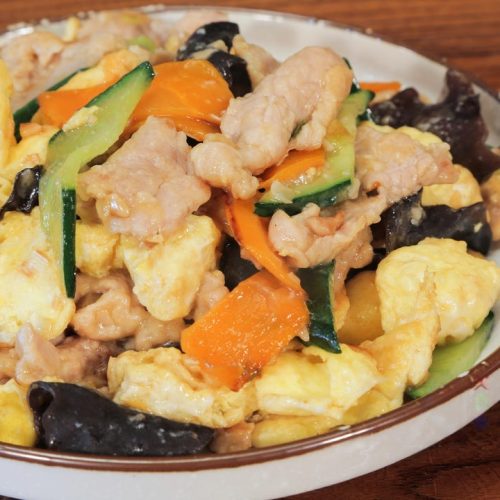
Family Style Moo Shu Pork (Mu Xu Rou)

Equipment
- Wok or large skillet Carbon steel preferred for wok hei
- Chef’s Knife or Cleaver
Ingredients
Main Ingredients
- 150 g pork tenderloin approx 5.5 oz, sliced thin
- 3 eggs large
- 1 handful dried wood ear mushrooms soaked in warm water until soft
- 0.5 cucumber sliced into diamond shapes
- 0.5 carrot sliced into diamond shapes
- 2 stalks scallion chopped
- 2 cloves garlic minced
- 2 tbsp cooking oil divided use
Marinade
- 2 tsp Shaoxing cooking wine
- 1 tsp oyster sauce
- 1 egg white
- 1 tsp cornstarch
Stir-fry Sauce
- 1 tbsp oyster sauce
- 1 tbsp light soy sauce
- 1 pinch salt to taste
- 0.5 tbsp cornstarch mixed with 2 tbsp water (slurry)
Instructions
- Prep: Soak wood ear mushrooms in warm water until soft (approx 20 mins). Slice pork thinly. Cut cucumber and carrot into diamond shapes. Chop scallions and mince garlic.

- Marinate: In a bowl, combine pork with Shaoxing wine, oyster sauce (1 tsp), egg white, and cornstarch (1 tsp). Mix well by hand and let sit for 15 minutes.
- Scramble Eggs: Heat oil in a wok over high heat. Pour in beaten eggs. Scramble quickly until just set but still soft. Remove and set aside.
- Cook Pork: Add a bit more oil if needed. Stir-fry the marinated pork until it turns white/opaque. Remove and set aside with the eggs.
- Stir-fry Veggies: Add scallions and garlic to the wok, fry until fragrant. Add carrots and wood ear mushrooms. Stir-fry for 1-2 minutes until carrots are slightly tender.

- Combine: Return the pork and eggs to the wok. Add the cucumber slices.
- Season: Add oyster sauce (1 tbsp), light soy sauce, and salt to taste. Toss to combine.
- Thicken: Give the cornstarch slurry a stir and pour it into the wok. Stir-fry on high heat until the sauce thickens and coats ingredients glossy. Serve immediately.



Leave a Reply