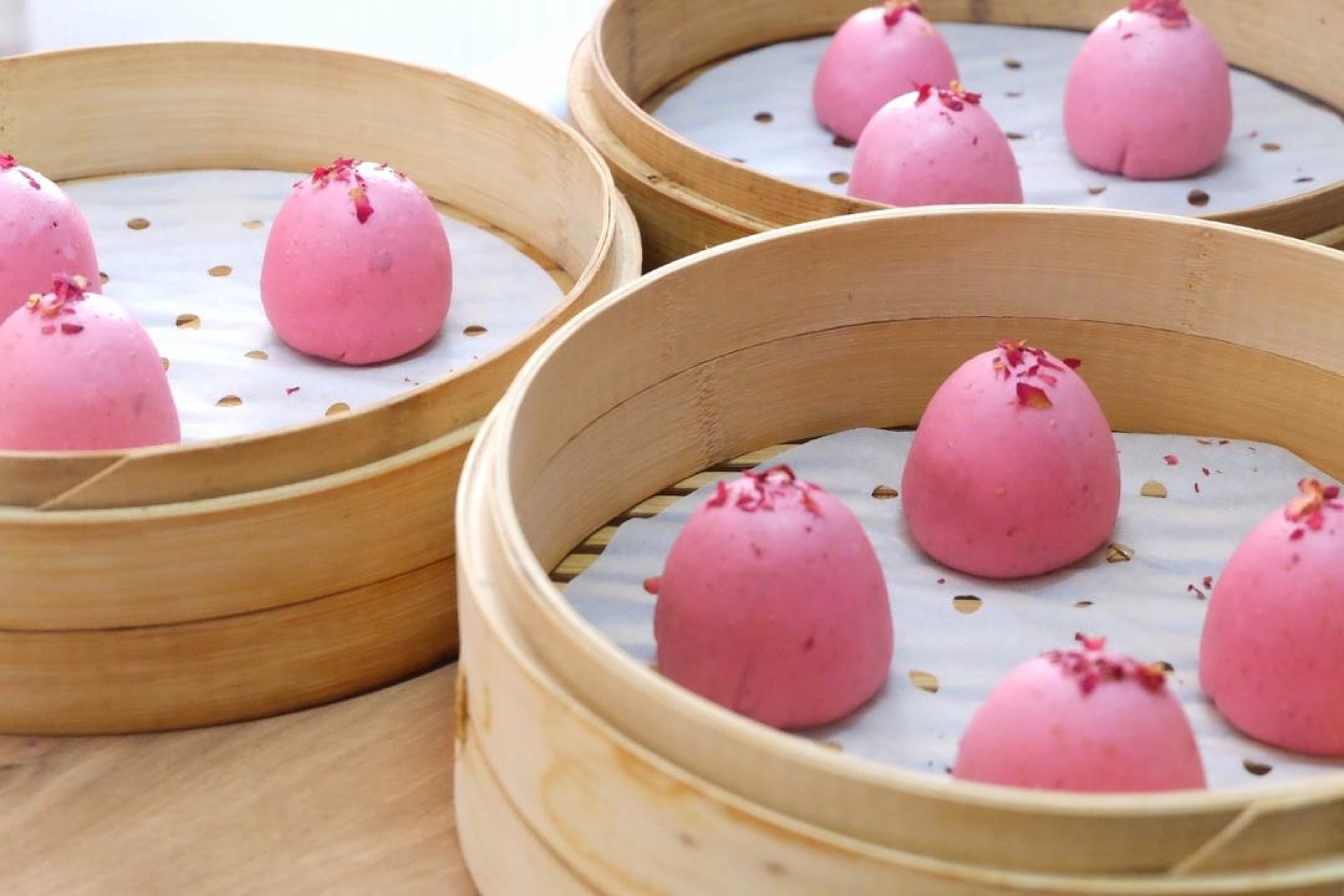
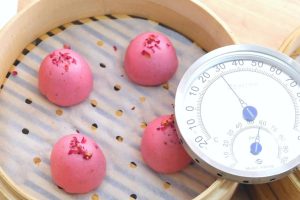
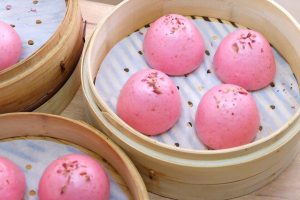
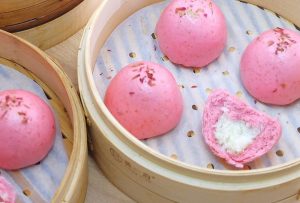
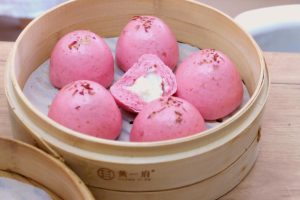
There is something quietly magical about pulling a bamboo steamer lid off a batch of freshly made mantou and watching the steam curl up around pillowy, rose-tinted buns. These low-sugar rose yam steamed buns — 家庭版低糖玫瑰山药馒头 — are exactly that kind of kitchen moment. The dough is soft and faintly floral, the filling is pure mashed iron-rod yam, and the whole thing comes together with far less sugar than a typical bakery bun.
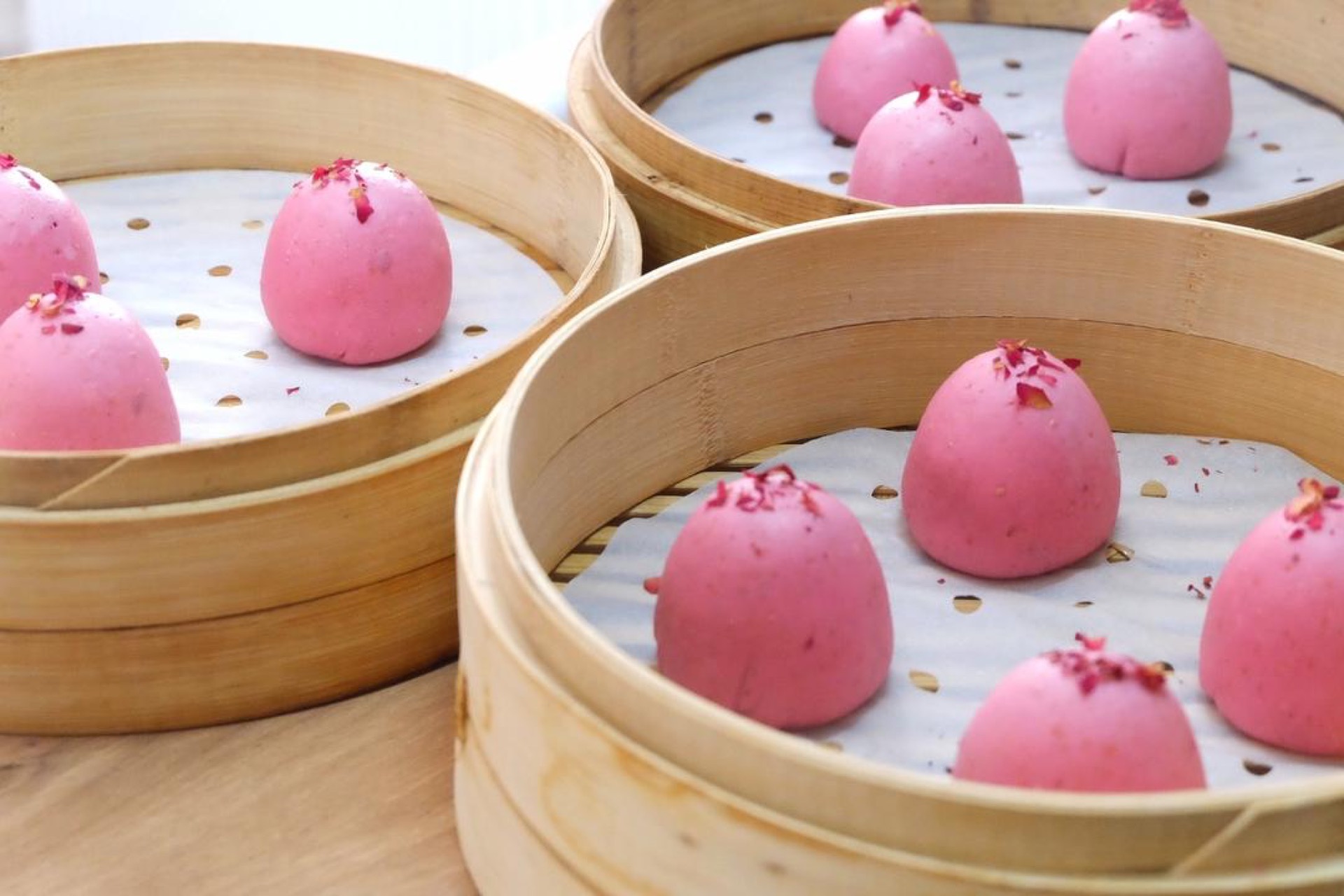
If you have ever been intimidated by yeast dough, this is the recipe to change your mind. The pre-ferment does most of the heavy lifting, the yam filling is a single ingredient, and the shaping is forgiving enough for a first-timer. What you get is a bun that is fluffy, gently sweet, and wholesome enough to eat for breakfast without a second thought.
I grew up watching my grandmother steam mantou every weekend, and she always said the dough should feel like an earlobe — soft, slightly tacky, and alive. That little bit of wisdom still guides every batch I make. Once you internalize that texture, steamed buns stop being a project and start being a habit.
What Is 家庭版低糖玫瑰山药馒头?
Meigui shanyao mantou is a modern home-style Chinese steamed bun that blends the classic northern mantou technique with two gentle twists: rose jam for fragrance and mashed iron-rod yam for a naturally sweet, creamy filling. The name breaks down simply — 玫瑰 (rose), 山药 (yam), and 馒头 (steamed bun) — and 家庭版低糖 means “home-style, low sugar.”
Unlike baozi, which usually hide a savory meat or vegetable filling, this bun leans sweet and delicate. The dough itself is barely sweetened, so the aromatic rose and the earthy yam do the talking. It is the kind of thing you find in a modern Chinese home kitchen rather than a dim sum hall, and it has become a favorite among people who want a lighter alternative to sugary pastries.
Iron-rod yam, or tiegun shanyao, is the preferred variety here because it is denser and less watery than other yams. That density means the filling holds its shape inside the bun instead of turning into a wet pocket. If you can only find a regular yam, steam it and drain it well before mashing.
If you love the idea of working whole grains into your steamed bread, my whole wheat steamed buns are a great next step after you master this dough.
1Yogurt Cookies (酸奶饼干): Tangy, Crispy, Foolproof BakingCrisp, tangy yogurt cookies with a crackly sugar top and a tender, short crumb. Six pantry ingredients, one bowl, no chilling, ready in about 30 minutes.Check out this recipe
Why This Recipe Works
The pre-ferment, or 面种, is the secret engine of this recipe. By letting a small portion of flour, water, and yeast ferment overnight in the refrigerator, you build flavor and strength before the main dough even exists. The cold slows the yeast down and lets enzymes develop the gluten gently, which is why the finished buns taste slightly sweet and complex rather than flat.
Whole wheat flour makes up a modest 10 percent of the total flour, which is just enough to add a nutty note and a little extra fiber without weighing the crumb down. Push that ratio much higher and you lose the cloud-like texture that makes mantou so appealing. Balance is everything here.
The reduced sugar — just 20 grams across the whole dough — works because the yam filling and rose jam carry natural sweetness. Yeast needs a little sugar to feed on, but not much, and the high-sugar-tolerant yeast handles the small amount of rose jam without any trouble. Cactus fruit powder gives the dough its blush-pink hue without any artificial coloring, and lard keeps the crumb tender and glossy.
Steaming is a uniquely gentle cooking method: because the buns sit in a moist, 212°F environment, the surface starch gelatinizes slowly instead of forming a crust, which is why mantou stay soft for hours. This is the same principle that makes Shandong steamed buns so famously tender.
Equipment Needed
You do not need much to make these buns, but a few pieces of equipment make the process far smoother.
- Stand mixer with a dough hook — the dough is soft and slightly sticky, so machine kneading saves your wrists. You can knead by hand, but it will take 12-15 minutes.
- Bamboo or metal steamer — a bamboo steamer wicks away condensation, which helps prevent wrinkly tops. A metal steamer works too; just wrap the lid in a towel to catch drips.
- Parchment paper squares — cut into 4-inch squares so the buns do not stick to the steamer floor.
- Digital scale — bread baking is a game of grams, not cups. Weighing your flour and yam guarantees consistent results.
- Rolling pin — for flattening the dough rounds before filling.
- Clean kitchen towel — to cover the dough while it proofs so it does not dry out.
If you are new to steamed bread, a stand mixer is genuinely worth the counter space. It develops gluten evenly, which is the difference between a bun that springs back when you press it and one that sits flat and dense.
Ingredients
Here is the full lineup. Measurements are in grams because precision matters for yeast dough.
- Pre-ferment (面种): 30 g bread flour, 30 g water, 0.3 g active dry yeast, 0.1 g salt
- Dough: 240 g whole milk, 20 g sugar, 3 g instant yeast, 270 g all-purpose flour, 30 g whole wheat flour, 4 g cactus fruit powder, 5 g lard, 0.3 g edible lye water, 30 g rose jam
- Filling: 300 g iron-rod yam, steamed and mashed
Optional add-ins for the filling include chopped nuts and candied orange peel, which add texture and a bright citrus note. Keep the orange peel in — it cuts through the richness of the yam and keeps each bite lively.
Ingredient Notes
Iron-rod yam (铁棍山药): This slender, dense yam from Henan is the gold standard for this recipe. It has a higher starch content and lower water content than the fat, pale yams sold in most Western supermarkets. If you can only find the latter, steam it, then let it drain in a colander for 10 minutes before mashing.
Rose jam (玫瑰酱): Look for a jam made with real rose petals, not rose flavoring. The good stuff is fragrant, slightly tart, and deeply floral. It is the flavor backbone of this bun, so do not substitute it with something else.
Cactus fruit powder: This is a natural pink colorant made from dried cactus fruit. It is widely available online and in Chinese grocery stores. If you cannot find it, a pinch of beet powder works, though the hue will be slightly more magenta.
Edible lye water (食用碱): A tiny amount neutralizes acidity from the long fermentation and keeps the dough from tasting sour. Baking soda dissolved in a teaspoon of water is a fine substitute. Do not skip this — it makes a real difference in the final flavor.
Lard: Traditional mantou recipes use lard for a reason. It coats the gluten strands and keeps the crumb tender and white. Neutral oil works in a pinch, but the texture will be slightly less silky.
High-sugar-tolerant yeast: Because the dough contains sugar and rose jam, use a yeast strain labeled for sweet doughs. Regular yeast can struggle in a sweeter environment and proof more slowly.
Prep & Mise en Place
Before you start mixing, get everything in order. Steamed buns move fast once the dough is ready, and having your filling and steamer prepped means you can shape and steam without scrambling.
- Make the pre-ferment the night before: Mix 50 g bread flour, 50 g room-temperature water, 0.5 g high-sugar-tolerant yeast, and 0.1 g salt in a small bowl. Stir until smooth, cover, and let it sit at about 79°F (26°C) for 1 hour. Then refrigerate for 12 hours. The next day it should be bubbly and smell lightly of beer.
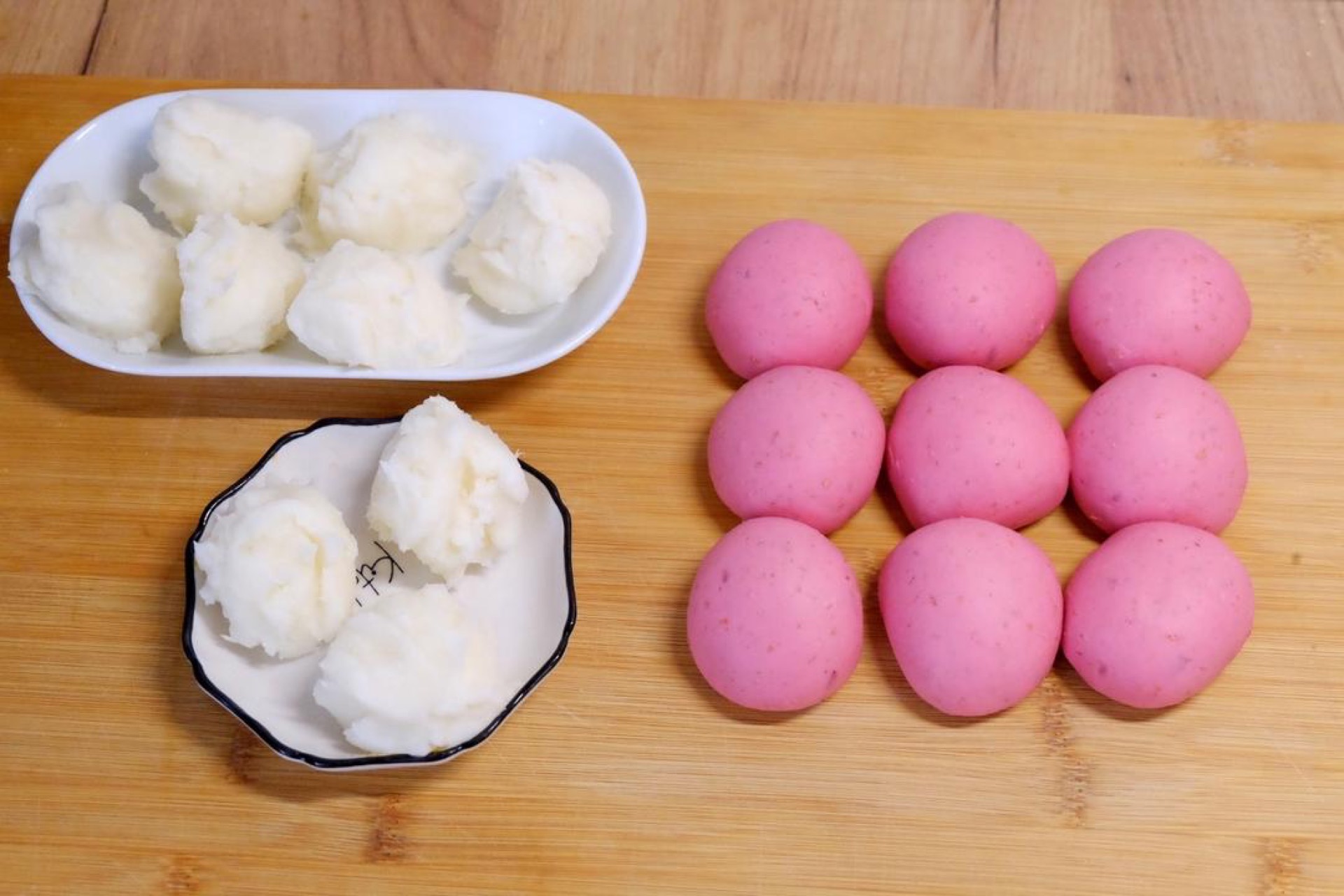
- Steam the yam: Peel and cut 300 g of iron-rod yam into chunks, steam for 15-20 minutes until a chopstick slides through easily, then mash while hot. Divide into 30 g portions and roll into balls. Cover and set aside.
- Weigh your dry ingredients: Combine the all-purpose flour, whole wheat flour, and cactus fruit powder in a bowl and whisk to distribute the color evenly.
- Prepare your steamer: Cut parchment squares and have your steamer basket ready. Fill the pot with enough water for a 13-minute steam, but do not turn on the heat yet.
- Warm the milk: Heat the milk to about 100°F (38°C) — warm to the touch but not hot. If it is too hot, it will kill the yeast.
This mise en place takes about 15 minutes of active work, plus the overnight pre-ferment. Once everything is lined up, the actual mixing and shaping is relaxed and enjoyable.
If you have a bread machine and want an even more hands-off approach, the same dough logic applies to my bread machine whole wheat buns — just swap in the rose jam and cactus fruit powder.
Cooking Process
Step 1 — Make the Pre-Ferment
Mix 50 g bread flour, 50 g room-temperature water, 0.5 g high-sugar-tolerant yeast, and 0.1 g salt in a small bowl until smooth. Let it ferment at about 79°F (26°C) for 1 hour, then refrigerate for 12 hours before using.
Step 2 — Portion Dough and Yam
Divide the finished dough into 55 g pieces. Steam the iron-rod yam until fully soft, mash it smooth, and divide into portions of about 30 g each.
Step 3 — Knead and Proof
Knead the dough in a stand mixer on medium speed for about 8 minutes until smooth and elastic, then let it proof at room temperature for 40 minutes.
Step 4 — Steam the Buns
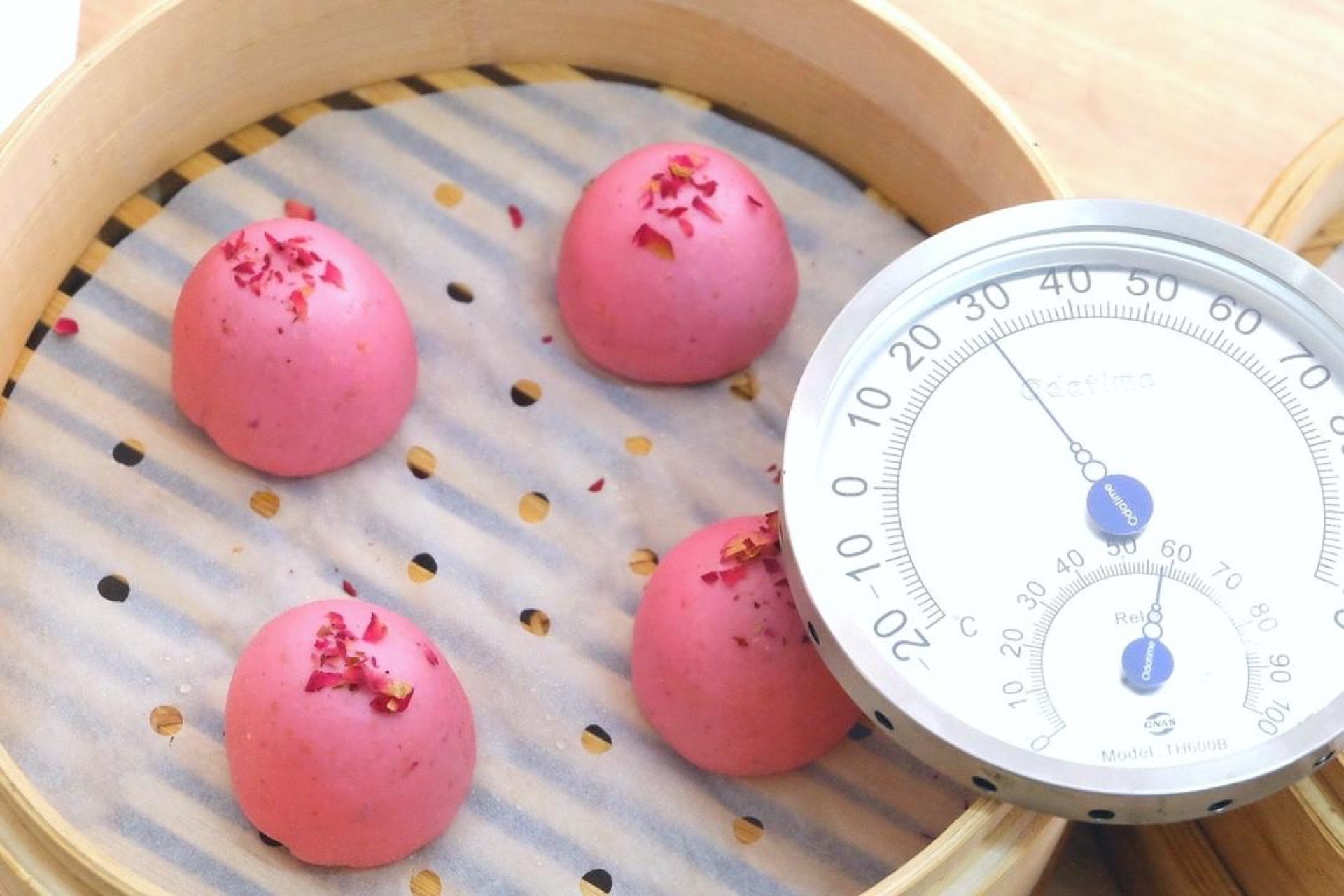
Steam the shaped buns over medium heat for 13 minutes, then turn off the heat and rest for 3 minutes before lifting the lid.
Step 5 — Enjoy Plain Yam
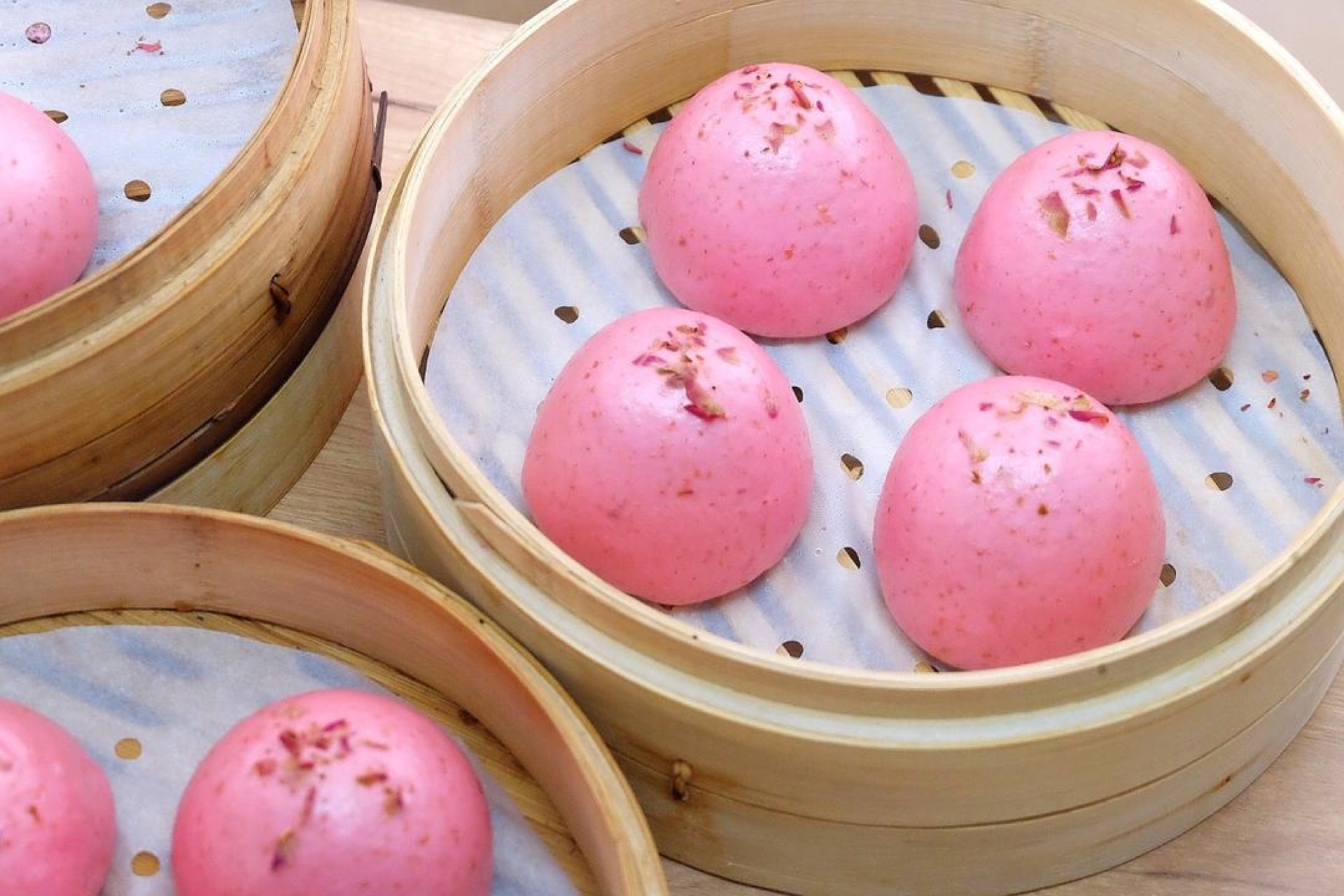
The plain yam filling is naturally sweet and completely guilt-free, so you can enjoy it on its own.
Step 6 — Add Nuts and Dried Fruit
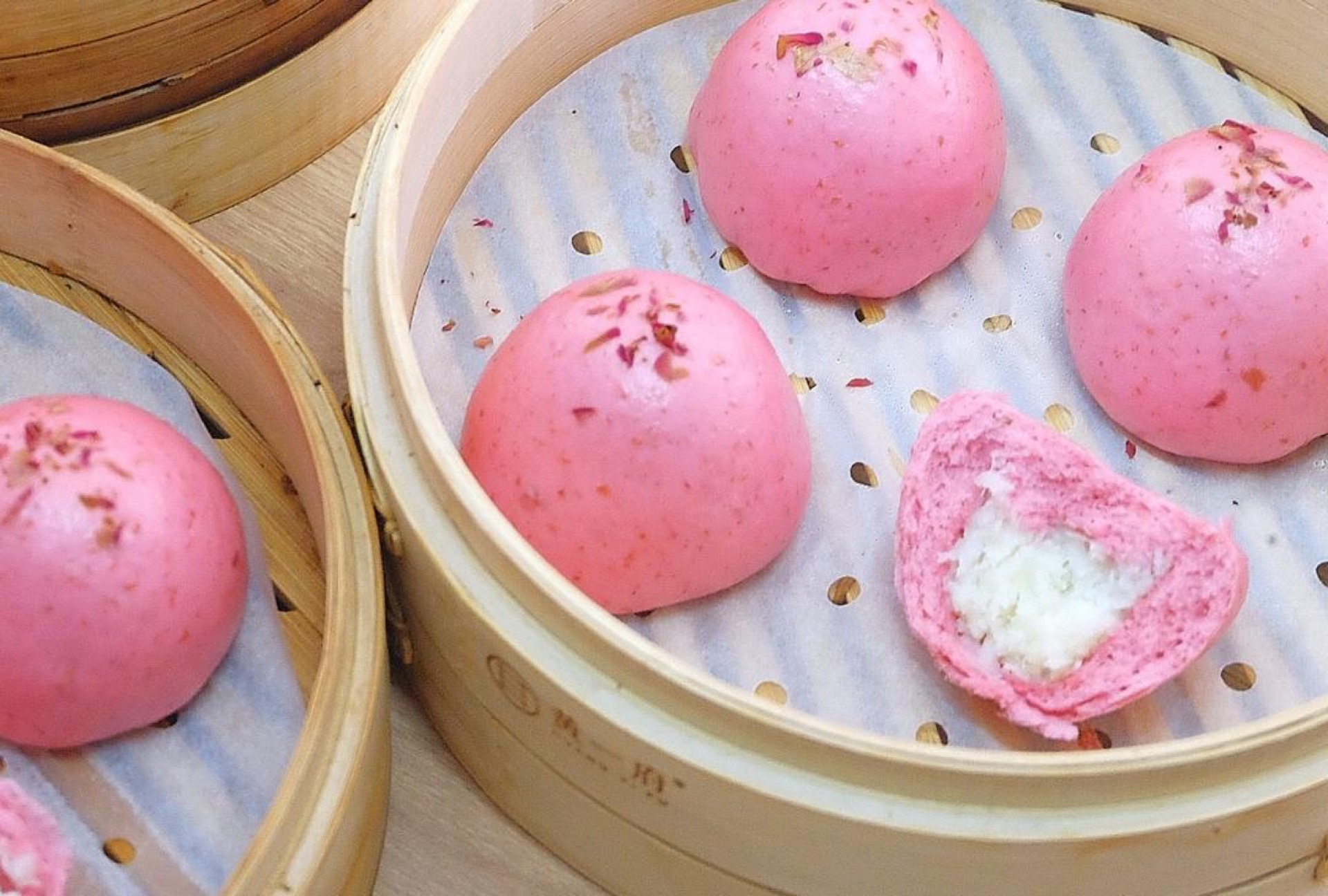
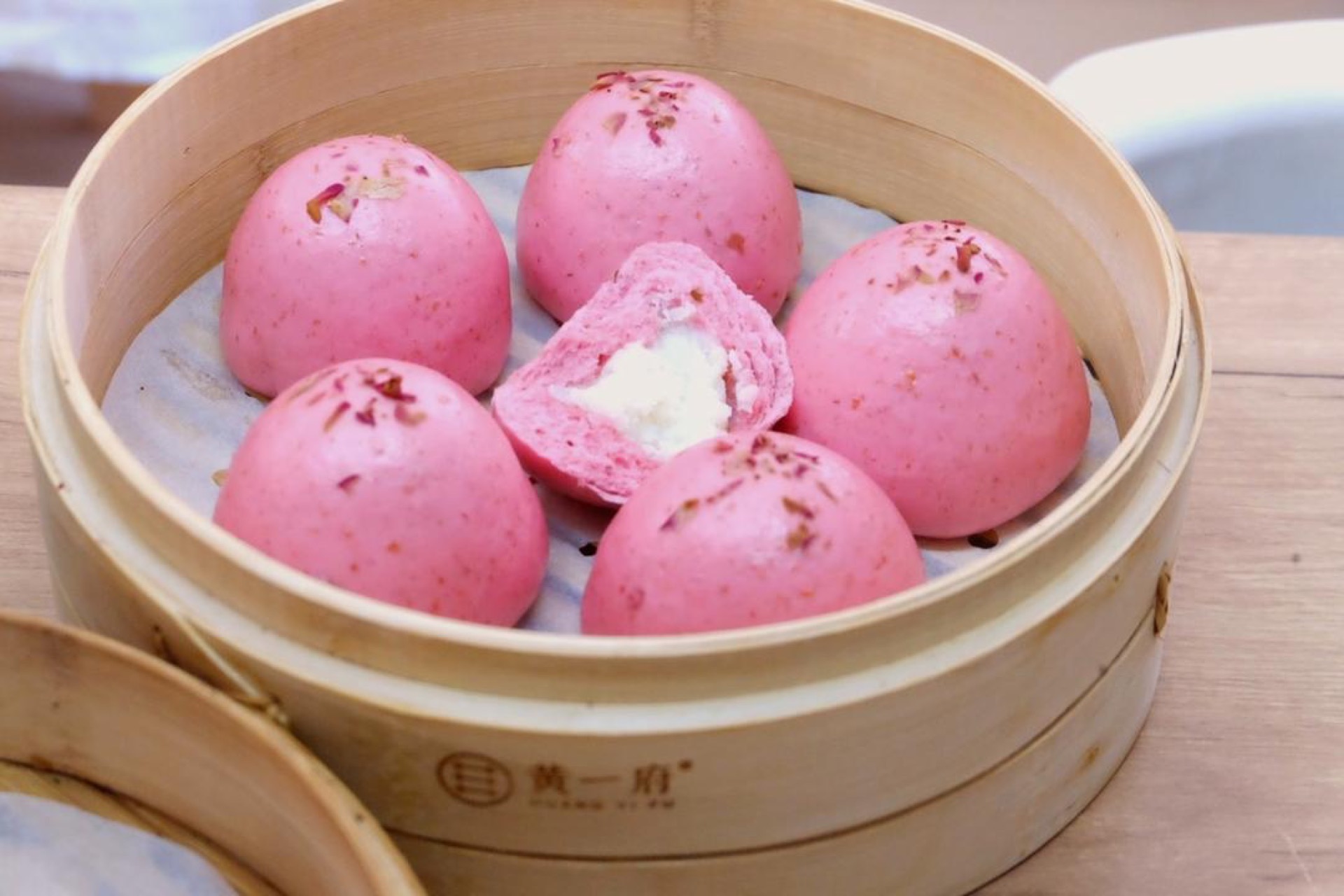
Use any combination of nuts you like as long as the total weight matches the recipe; keep the candied orange peel in the dried fruit mix because it keeps the filling from tasting heavy.
Common Mistakes When Making Rose Yam Steamed Buns
Even experienced bakers run into trouble with steamed buns. Here are the mistakes I see most often, and how to sidestep them.
- Skipping the pre-ferment. It is tempting to mix everything at once, but the overnight pre-ferment is what gives these buns their depth and softness. Without it, the dough tastes flat and proofs unevenly.
- Using wet yam. If your mashed yam is watery, the filling will leak out during steaming and leave hollow buns. Steam the yam, then let it drain and cool slightly before mashing. If it still looks wet, cook it in a dry pan for a minute to evaporate excess moisture.
- Over-proofing the shaped buns. The second proof should take 30-40 minutes at room temperature, not longer. If the buns over-proof, they collapse when the steamer lid comes off. They should look puffy but still hold their shape.
- Lifting the lid too soon. After 13 minutes of steaming, turn off the heat and wait 3 full minutes before lifting the lid. Sudden temperature changes cause the buns to deflate and wrinkle.
- Kneading too little. The dough needs to be smooth and elastic before the first proof. If it still looks shaggy after 8 minutes in the mixer, keep going. Under-kneaded dough produces dense, chewy buns.
- Adding too much flour. The dough should be soft and slightly tacky. If you keep dusting flour during shaping, you will end up with dry, tough buns. Use a light hand and a bench scraper instead.
One more tip: if your kitchen is cold, proof the dough in an oven with the light on. A steady 75-80°F environment is ideal for both proofs.
Variations
Once you have the base recipe down, there is plenty of room to play.
- Pumpkin version: Swap 100 g of the mashed yam for mashed pumpkin and reduce the milk slightly. The result is a golden-orange bun with a mellow sweetness — much like my pumpkin steamed buns.
- Black sesame filling: Replace the yam with 300 g of sweetened black sesame paste. The contrast against the pink dough is striking.
- Purple sweet potato: Use mashed purple sweet potato instead of yam for a dramatic violet filling and a slightly denser texture.
- Extra nuts: Fold 40 g of finely chopped walnuts or pistachios into the mashed yam for crunch. Toasted nuts add the most flavor.
- No cactus fruit powder: Leave it out entirely for a plain white bun, or use a teaspoon of matcha for a green tint.
If you want to branch into sweet Chinese baking beyond steamed buns, my Chinese date cake is a wonderful next project — it uses a similar low-sugar philosophy with a completely different texture.
Frequently Asked Questions
Can I make these buns without a stand mixer?
Yes. Knead by hand on a lightly floured surface for 12-15 minutes until the dough is smooth and elastic. It is a workout, but it works.
Why did my buns turn out wrinkly?
Wrinkling almost always comes from lifting the steamer lid too early or from over-proofing. Let the buns rest for 3 minutes after the heat is off, and do not let the second proof run past 40 minutes.
Can I use regular yam instead of iron-rod yam?
Yes, but drain it well after steaming. Regular yams hold more water, which can make the filling runny. You may also need a tablespoon or two of flour to bind it.
How do I know when the dough has proofed enough?
Press a finger gently into the dough. If the indentation springs back slowly and partially, it is ready. If it springs back immediately, it needs more time. If it does not spring back at all, it is over-proofed.
Can I freeze the buns?
Absolutely. Cool them completely, then freeze in a single layer before transferring to a freezer bag. They keep for up to 2 months. Reheat by steaming for 5-6 minutes — never microwave them, or they turn rubbery.
Is this recipe actually low sugar?
Yes. With just 20 g of sugar in the dough and natural sweetness from the yam and rose jam, each bun has roughly 9 g of sugar — about a third of what you would find in a typical bakery mantou.
What if I cannot find rose jam?
You can make a quick version by simmering dried rose petals with a little honey and water. Otherwise, a good-quality raspberry or strawberry jam will work, though the flavor will be fruitier and less floral.
How to Serve
These buns are wonderful warm, straight from the steamer, when the rose aroma is at its peak. They pair beautifully with a bowl of hot soy milk for breakfast, or alongside a simple congee for a comforting dinner. Because they are only lightly sweet, they also work as a side for savory dishes — try them next to a plate of hunan chicken or a chestnut chicken rice for a full meal.
For a lighter snack, split a bun and spread it with a little extra rose jam or a smear of cream cheese. They also make a lovely addition to a Chinese afternoon tea spread, alongside a pot of jasmine tea.
Storage & Reheat
Steamed buns are best eaten the day they are made, but they store well if handled properly.
Room temperature: Keep cooled buns in a paper bag or a loosely covered container for up to 1 day. A tightly sealed plastic bag will trap moisture and make the crust sticky.
Refrigerator: Store in an airtight container for up to 3 days. The cold will firm up the crumb, but a quick re-steam brings them right back.
Freezer: Freeze cooled buns in a single layer on a tray, then transfer to a freezer bag. They keep for up to 2 months.
Reheating: The best method is always the steamer. Reheat refrigerated buns for 5 minutes and frozen buns for 8-10 minutes over medium heat. If you are in a hurry, wrap a bun in a damp paper towel and microwave for 20-30 seconds — but keep in mind the texture will be slightly less fluffy.
Never reheat steamed buns in a dry oven or toaster. They will harden into rocks. Moisture is their best friend.
Allergen Notice
This recipe contains wheat (gluten) from the bread flour, all-purpose flour, and whole wheat flour, as well as milk from the whole milk. Depending on the brand of rose jam you use, there may also be traces of soy or sulfites. If you are cooking for someone with a soy allergy, check the jam label carefully.
To make the recipe dairy-free, substitute the whole milk with oat milk or unsweetened soy milk, and replace the lard with a neutral oil or coconut oil. The texture will be slightly different but still delicious.
Nutrition Disclaimer
Nutrition information is calculated using an ingredient database and should be considered an estimate. In cases where multiple ingredient alternatives are given, the first listed is calculated for nutrition. Garnishes and optional ingredients are not included.
About the Author & Recipe Development
Hi, I am Lin, the cook and writer behind Woks of Love. I grew up in a Chinese household where the steamer was always on, and I have spent years adapting the recipes I learned at home for modern kitchens and lighter palates. This low-sugar rose yam steamed bun is a direct reflection of that mission — traditional technique, thoughtful ingredients, and a result that feels good to eat.
I developed this recipe after many test batches, adjusting the sugar down, the whole wheat ratio up, and the yam filling until it held its shape perfectly inside the bun. Every measurement here has been tested in a home kitchen with standard equipment. If you make it, I would love to hear how it turns out.
Authoritative References
For more on the science of steaming and yeast dough, these resources are excellent:
- Serious Eats: The Science of Steamed Buns
- King Arthur Baking: Yeast and Fermentation Guide
- FDA: Refrigerator and Freezer Storage Chart
If you run into sticking issues with your wok or steamer setup, my guide on why stir fry sticks to the pan covers the fundamentals of heat and surface management that apply to steaming too.
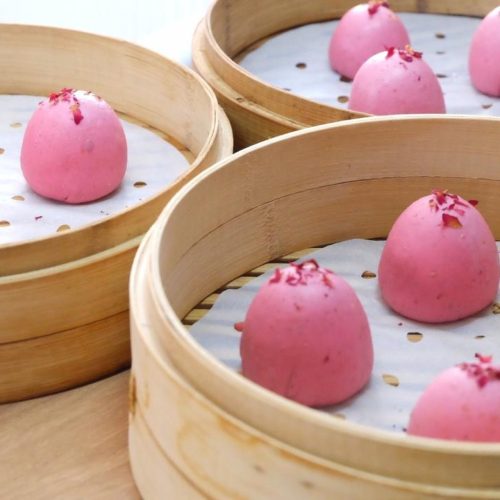
Low-Sugar Rose Yam Steamed Buns (家庭版低糖玫瑰山药馒头): Soft Fluffy Buns

Equipment
- Wok
- Cutting Board
- Slotted Spoon
- Steamer basket
- Stand mixer
- Parchment paper
Ingredients
For the Dough
- 30 g bread flour for the pre-ferment (面种)
- 30 g water room temperature, for the pre-ferment
- 0.3 g active dry yeast for the pre-ferment
- 0.1 g salt for the pre-ferment
- 240 g whole milk lukewarm, about 100°F
- 20 g granulated sugar reduced-sugar amount
- 3 g instant yeast high-sugar tolerant
- 270 g all-purpose flour plus extra for dusting
- 30 g whole wheat flour for a nuttier crumb
- 4 g cactus fruit powder natural pink color
- 5 g lard or neutral oil
- 0.3 g edible lye water or baking soda, dissolved
- 30 g rose jam good quality, fragrant
For the Yam Filling
- 300 g iron-rod yam peeled and cut into chunks
Instructions
- Mix 50 g bread flour, 50 g room-temperature water, 0.5 g high-sugar-tolerant yeast, and 0.1 g salt in a small bowl until smooth. Let it ferment at about 79°F (26°C) for 1 hour, then refrigerate for 12 hours before using.

- Divide the finished dough into 55 g pieces. Steam the iron-rod yam until fully soft, mash it smooth, and divide into portions of about 30 g each.
- Knead the dough in a stand mixer on medium speed for about 8 minutes until smooth and elastic, then let it proof at room temperature for 40 minutes.
- Steam the shaped buns over medium heat for 13 minutes, then turn off the heat and rest for 3 minutes before lifting the lid.
- The plain yam filling is naturally sweet and completely guilt-free, so you can enjoy it on its own.

- Use any combination of nuts you like as long as the total weight matches the recipe; keep the candied orange peel in the dried fruit mix because it keeps the filling from tasting heavy.












Leave a Reply