If you have ever ordered a cold plate at a Chinese restaurant and wondered why the chicken tastes so much more alive than the poached chicken you make at home, this lemon shredded chicken breast is the answer. The chicken is barely simmered, torn by hand into rough strips, then hit with a sizzling pour of oil over garlic, ginger, scallion, sesame, and chili powder. Lemon and rice vinegar cut through the richness, and fried peanuts add a crunch that keeps every bite interesting.
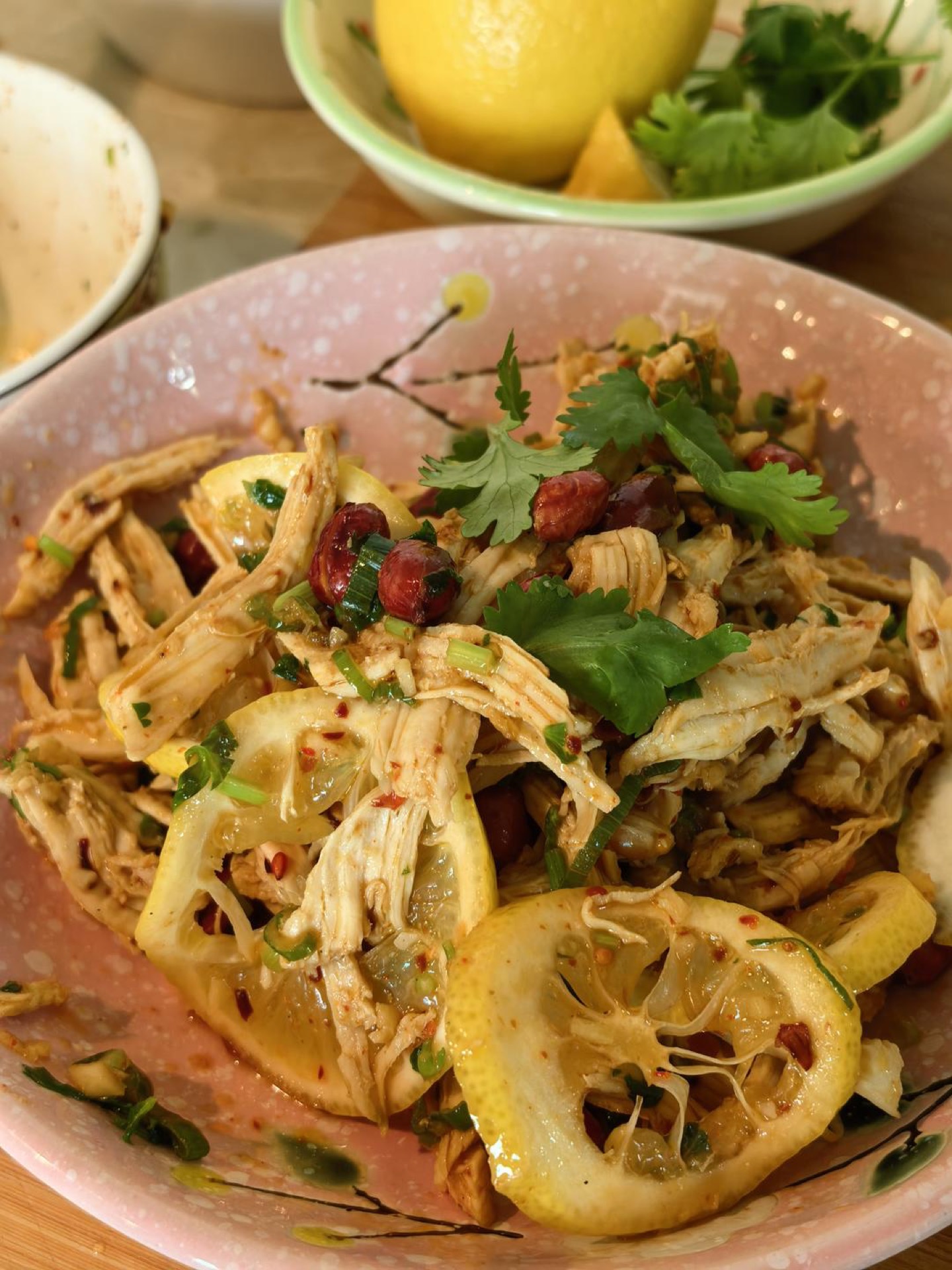
What makes this dish so good is the contrast of temperatures and textures: warm, blooming oil meeting cool shredded chicken, soft meat against crisp peanuts, and a bright, tangy dressing that keeps the whole plate feeling light. It is a technique-driven recipe more than a heavy braise, and once you understand the hot oil pour, you can apply it to all kinds of cold dishes. If you enjoy the style, my creamy cold shredded chicken takes the same idea in a richer direction, while this lemon version stays sharp and clean.
I like to make a big batch on a Sunday and eat it for lunch over the next few days, because the flavor actually deepens as it sits. The chicken stays tender because it was never boiled hard, and the lemon keeps everything tasting fresh. It is also a wonderful dish for anyone who wants a high-protein plate that does not feel heavy or repetitive.
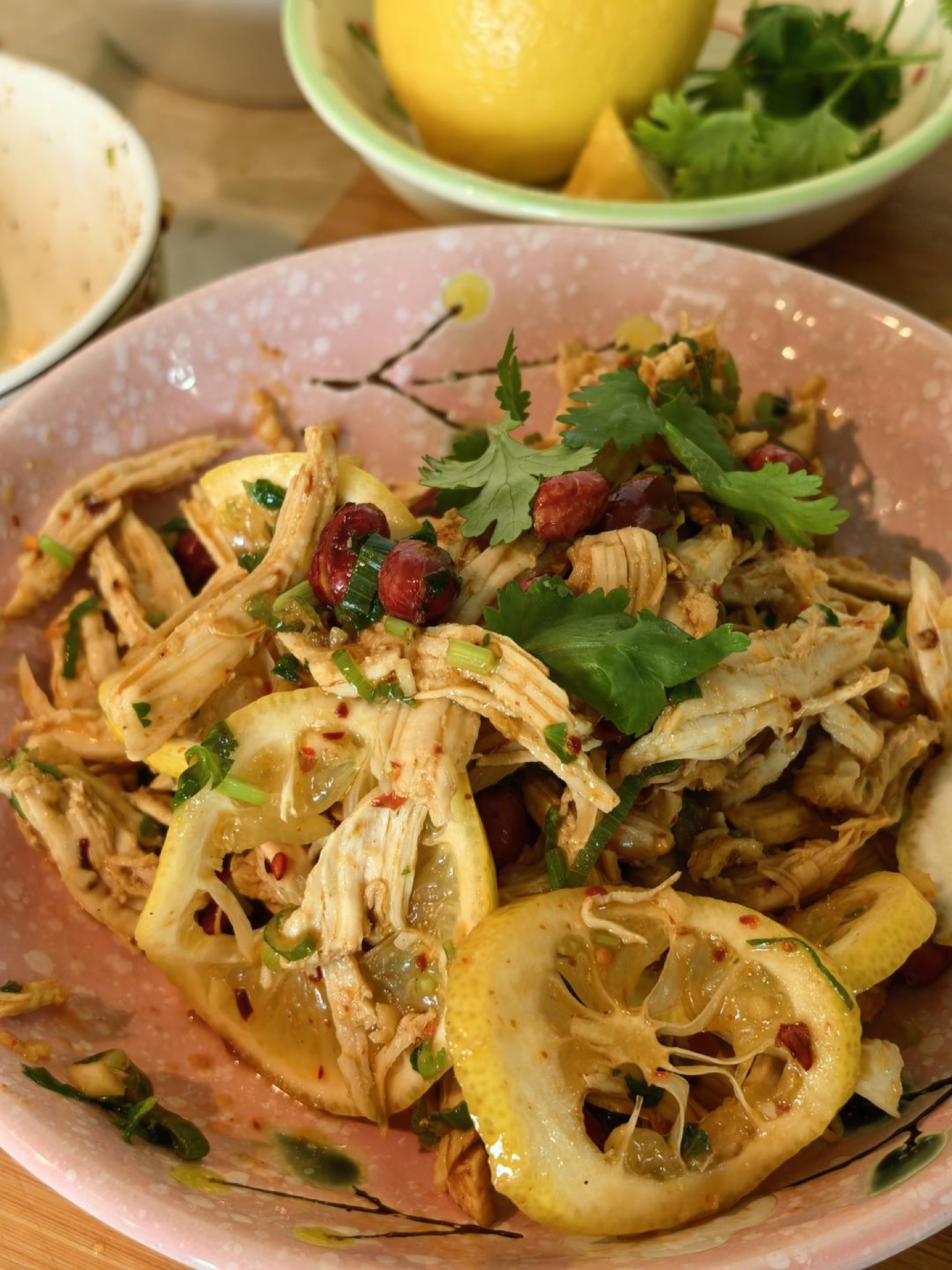
What Is Lemon Shredded Chicken Breast?
Lemon shredded chicken breast, known in Chinese as 柠檬鸡丝鸡胸肉, is a cold-tossed (凉拌) chicken dish built on hand-torn poached chicken breast. The chicken is gently simmered with aromatics, cooled, and shredded along the grain, then dressed with soy sauce, vinegar or lemon juice, garlic, ginger, scallion, sesame, chili, and a pour of smoking-hot oil that blooms the aromatics on contact. Fried peanuts and fresh cilantro go on at the end for crunch and color.
If you enjoy this kind of cooking, this next recipe is a good next step — read the recipe.
Our recommendation: Serve this dish at room temperature rather than straight from the fridge. Chilling mutes the aroma of the hot-oil pour, while a short rest on the counter brings the lemon, sesame, and chili back to life. If you make it ahead, let it sit out for 15 to 20 minutes before serving.
1Stir-Fried Pigeon with Rice (米炒鸽子): Lazy Family Hack, Bones and AllA lazy-day Chengdu hack for stir-fried pigeon: a 25-day squab minced bones and all, wok-fried with garlic chives, chiles, and a mountain of cilantro for a dry, fragrant, deeply savory plate.Check out this recipe
The dish belongs to a broad family of Chinese cold chicken plates, from Sichuan-style mala versions to Cantonese poached chicken with ginger-scallion oil. What sets this one apart is the lemon: it replaces part of the vinegar and gives the dressing a fresh, almost floral acidity that pairs beautifully with the toasted chili and sesame. It is light enough for summer and bold enough to hold its own next to a bowl of rice.
Why This Recipe Works
Several small decisions add up to a dish that tastes far more complex than its short ingredient list suggests.
- Gentle poaching keeps the breast juicy. Starting in cool water and holding a bare simmer means the proteins set slowly and the meat stays tender enough to tear. This is the same principle behind the poached chicken in my rice cooker whole chicken, just scaled down to breasts.
- Hand-tearing beats knife-cutting. Torn edges are rough and irregular, so they catch and hold the dressing instead of letting it slide off.
- The hot oil pour is the flavor engine. Pouring oil at 350°F to 375°F over garlic, ginger, scallion, sesame, and chili powder extracts fat-soluble aromatics instantly, which is why the dish smells so good before you even taste it.
- Acid and fat are balanced deliberately. Lemon juice and rice vinegar cut the oil and the richness of the peanuts, so the plate stays bright rather than heavy.
- Textures are layered on purpose. Soft chicken, crunchy peanuts, juicy lemon slices, and fresh cilantro give every bite contrast.
The science behind the sizzle: Many of the flavor compounds in garlic, ginger, and scallion are fat-soluble rather than water-soluble. Hot oil dissolves and carries them into the dressing far more efficiently than a cold liquid would, and the brief high heat also drives Maillard-type browning at the edges of the aromatics. That is why the pour must be hot but fast: enough energy to bloom, not enough time to burn.
Equipment Needed
You do not need much for this recipe, and most of it is already in a Chinese home kitchen.
- Wok or skillet: for frying the peanuts and heating the oil. A small wok is ideal, but any heavy skillet works. See my guide to stir fried chicken breast with bell peppers for more on wok technique.
- Medium pot: for poaching the chicken breasts.
- Cutting board and knife: for the aromatics and lemon.
- Slotted spoon: for lifting the peanuts out of the oil cleanly.
- Heatproof bowl: a sturdy ceramic or stainless bowl for the hot oil pour. Do not use thin glass.
- Instant-read thermometer: optional but genuinely useful for confirming the chicken hits 165°F and the oil is in the right range.
- Large mixing bowl: for tossing everything together.
Ingredients
Here is everything you need for four servings. Exact amounts are in the recipe card below.
- 2 lb boneless, skinless chicken breast
- Shaoxing wine, scallion, and ginger for poaching
- Raw peanuts with skin, plus salt for tossing
- Garlic, ginger, scallion, toasted sesame seeds, chili powder, and fresh red chilies
- Light soy sauce, dark soy sauce, rice vinegar, and salt
- One lemon, half juiced and half sliced
- Neutral oil for the hot pour
- Cilantro and extra sesame seeds for garnish
Ingredient Notes
Chicken breast. Boneless, skinless breasts are easiest, but bone-in works if you poach a few minutes longer and shred once cool. For a different texture entirely, try the same dressing over the chicken from my air fryer chicken breast with garlic cumin.
Chili powder. Use a coarse, fruity chili powder such as Sichuan erjingtiao or Korean gochugaru. Fine cayenne is far too harsh and will make the oil bitter. If you only have cayenne, use a quarter of the amount.
Lemon. A fresh, thin-skinned lemon gives the best juice and the prettiest slices. Meyer lemons are lovely here if you can find them, since they are sweeter and less sharp.
Soy sauce. Light soy sauce brings the salt and umami; dark soy sauce adds a touch of color and a mellow, slightly sweet depth. If you only keep one, use light soy and skip the dark.
Vinegar. Rice vinegar is mild and clean. Chinkiang black vinegar will make the dish darker and more assertive, which is delicious but a different mood.
Peanuts. Raw, skin-on peanuts fry up crisper and more flavorful than pre-roasted ones. If you only have roasted, skip the frying step and simply salt them.
Oil. Peanut oil is traditional and adds a roasted note. Canola or another neutral high-smoke-point oil works fine.
Prep & Mise en Place
This recipe rewards organization, because the final assembly happens in under two minutes.
- Rinse and pat the chicken breasts dry, then set them in the pot with the poaching aromatics.
- Mince the garlic, ginger, and scallion whites and light greens, and slice the fresh chilies.
- Measure the sesame seeds and chili powder into the same bowl as the aromatics.
- Juice half the lemon and slice the other half into thin rounds.
- Pick the cilantro leaves and set aside with the extra sesame seeds.
- Measure the soy sauces, rice vinegar, and salt into a small bowl so you can add them in one motion.
- Keep the peanuts, once fried, in a small dish near the assembly station.
If you are making this for a crowd, you can poach and shred the chicken up to two days ahead and fry the peanuts the same day for maximum crunch.
Cooking Process
Step 1 — Poach the Chicken
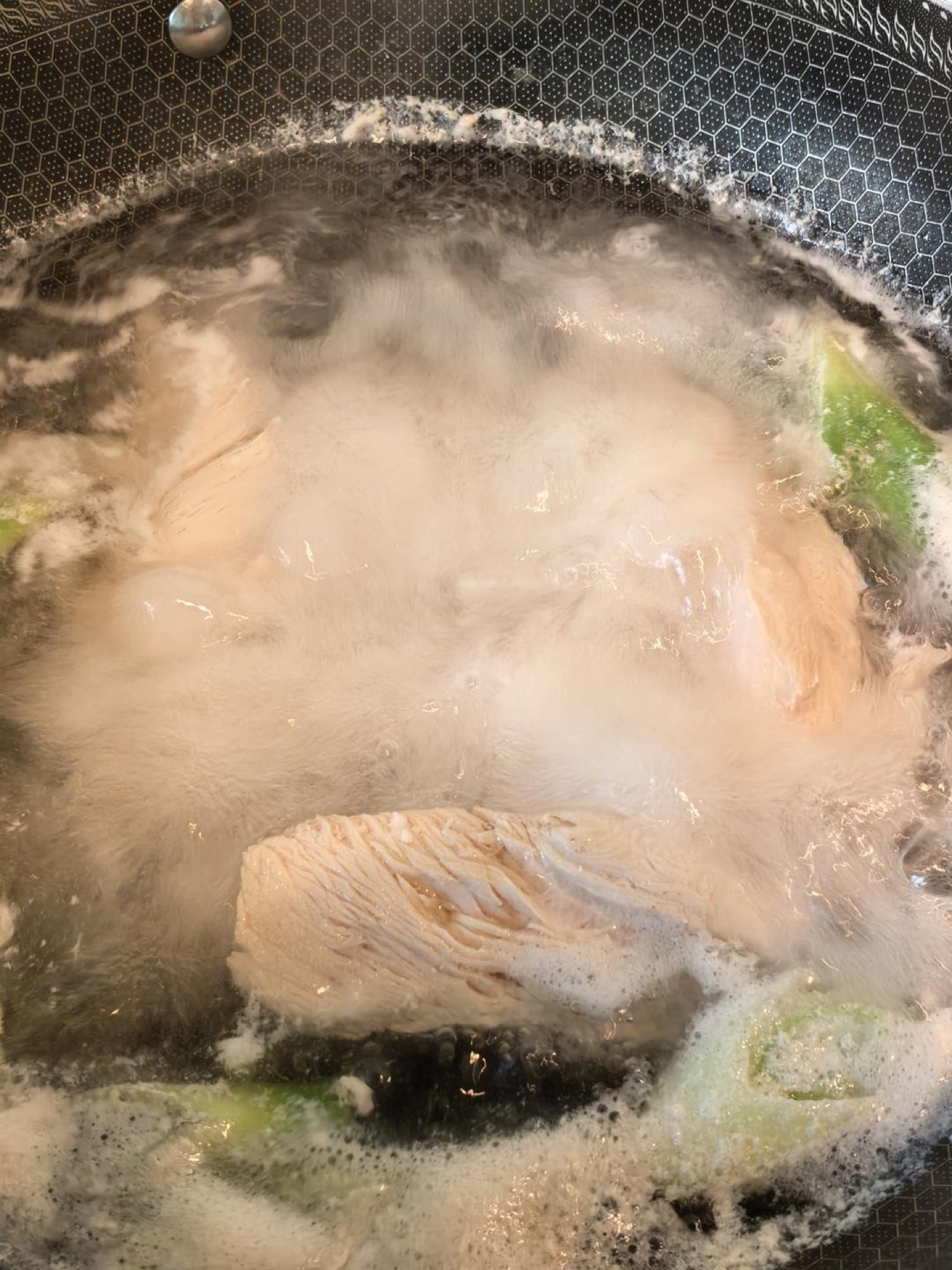
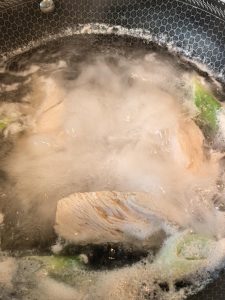
Rinse the chicken breasts under cold water and place them in a pot. Add cool water to cover by about 1 inch, then pour in the Shaoxing wine and add the scallion segments and ginger slices. Bring to a gentle simmer over medium heat, then lower the heat and poach for 12 to 15 minutes, until the chicken is cooked through.
Step 2 — Shred the Chicken
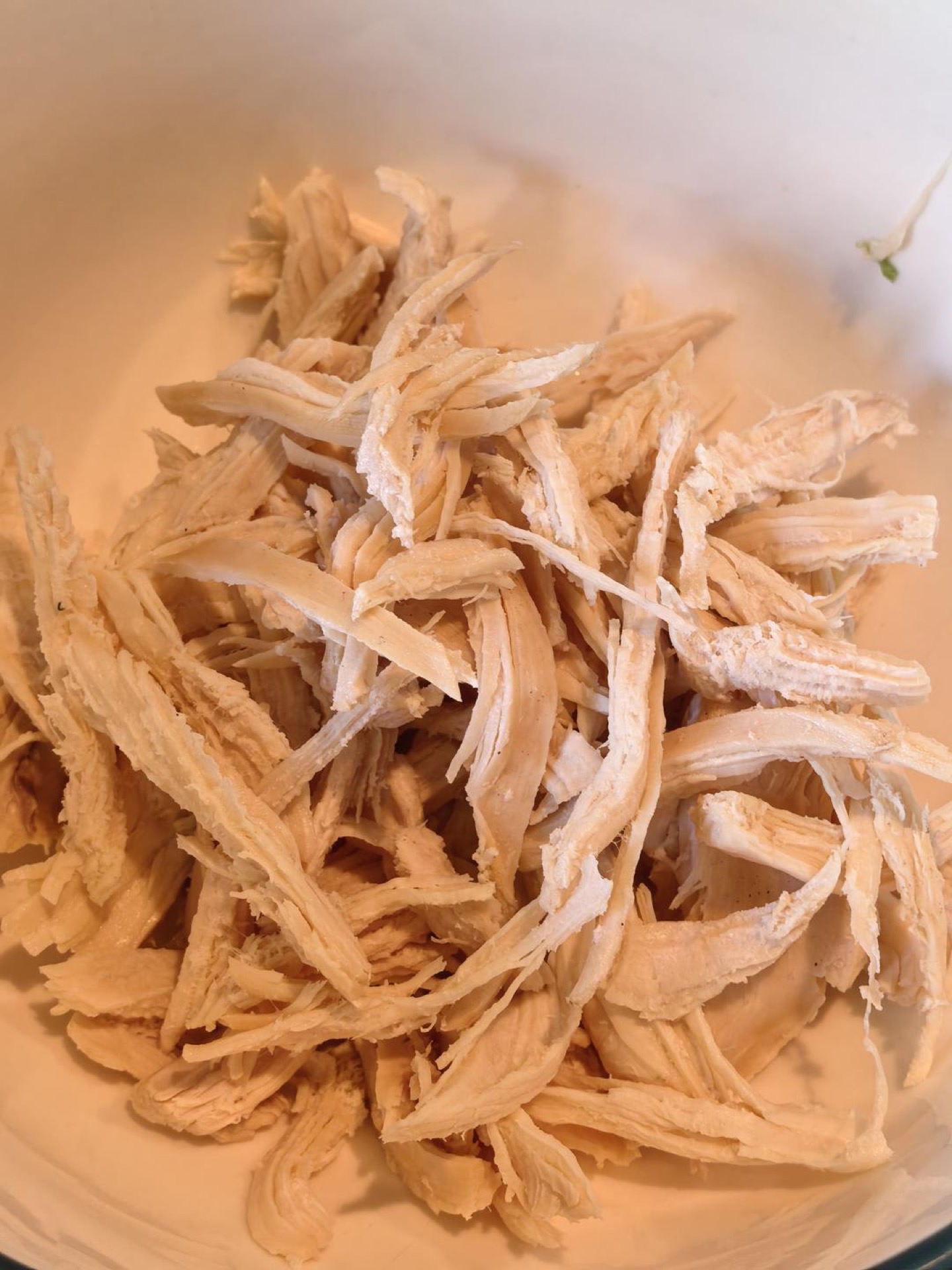
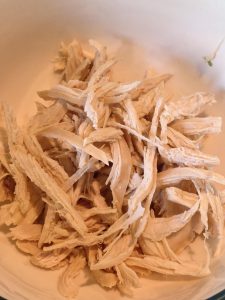
Lift the chicken out and let it cool until you can handle it, reserving a little of the poaching liquid. Tear the meat into thin strips by pulling along the natural grain of the muscle with your fingers or two forks. Set the shredded chicken aside in a large heatproof bowl.
Step 3 — Fry the Peanuts
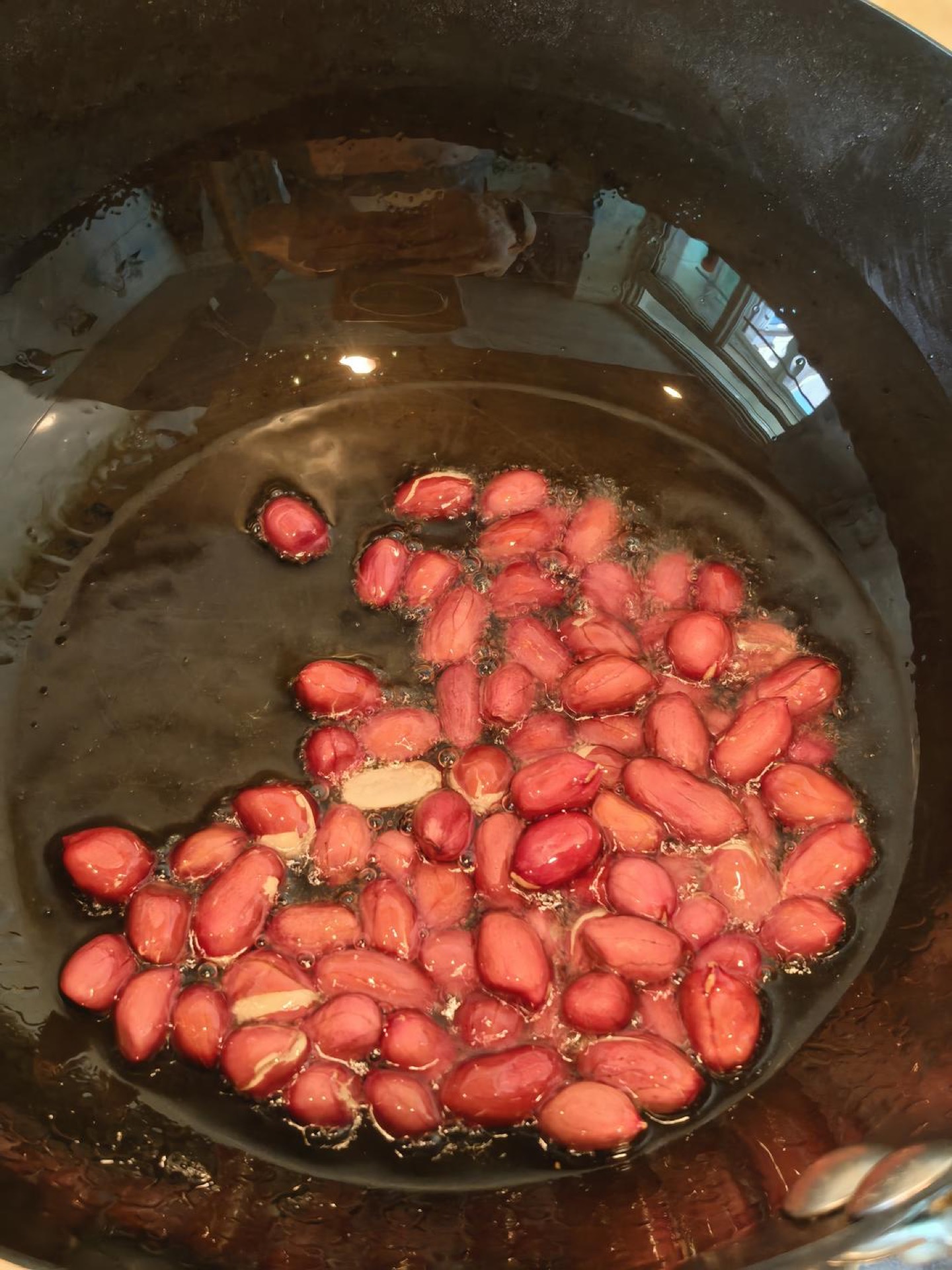
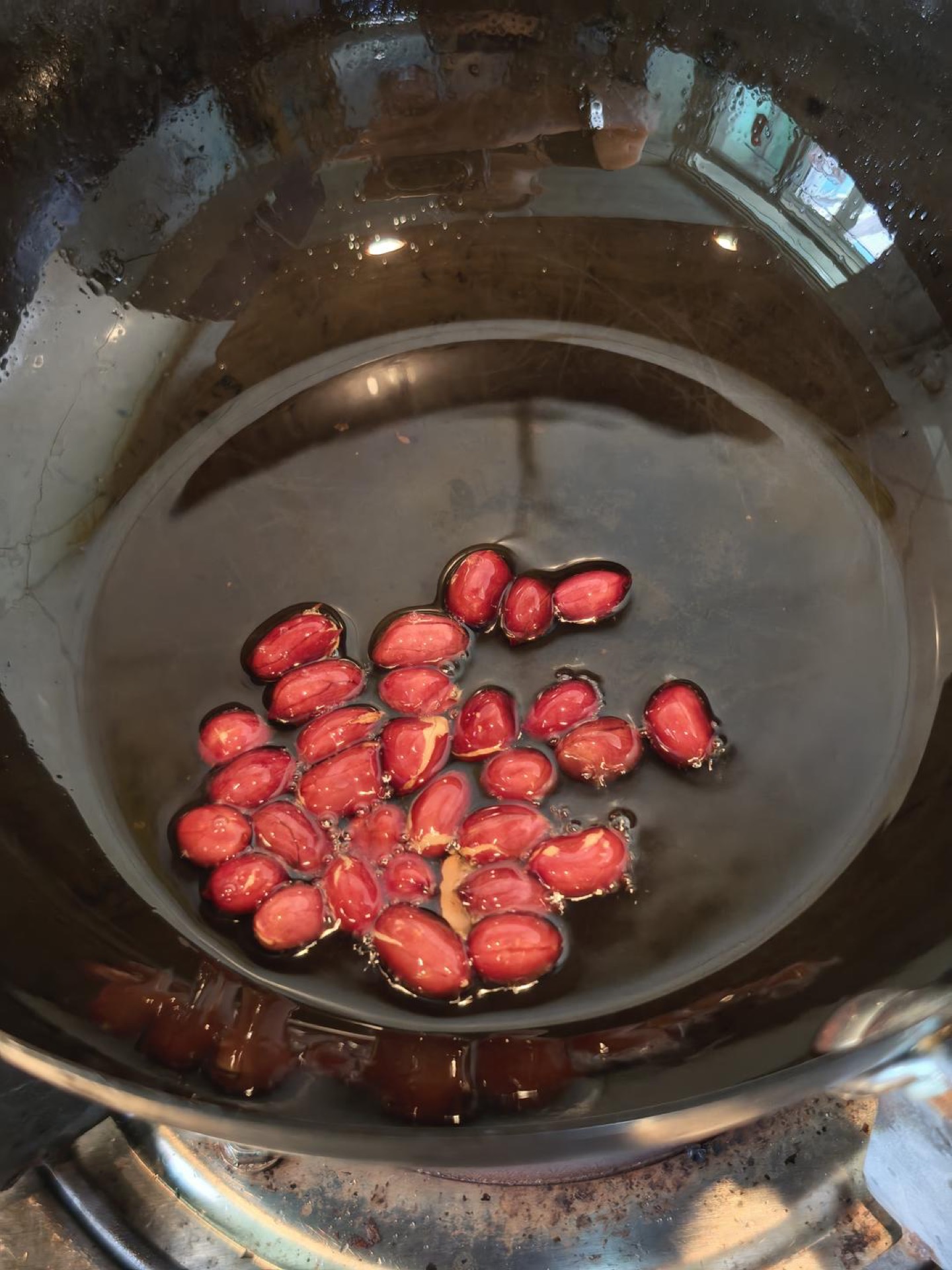
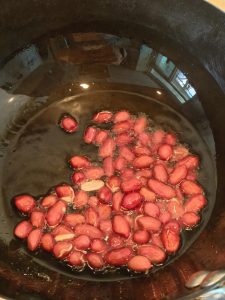
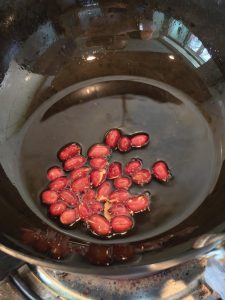
Heat a small wok or skillet over low heat with just enough oil to coat the bottom. Add the raw peanuts and fry slowly, stirring constantly, for 4 to 6 minutes until golden and fragrant. Do not let them darken. Scoop them out with a slotted spoon, drain, and immediately toss with the 1 teaspoon of salt.
Step 4 — Gather the Ingredients
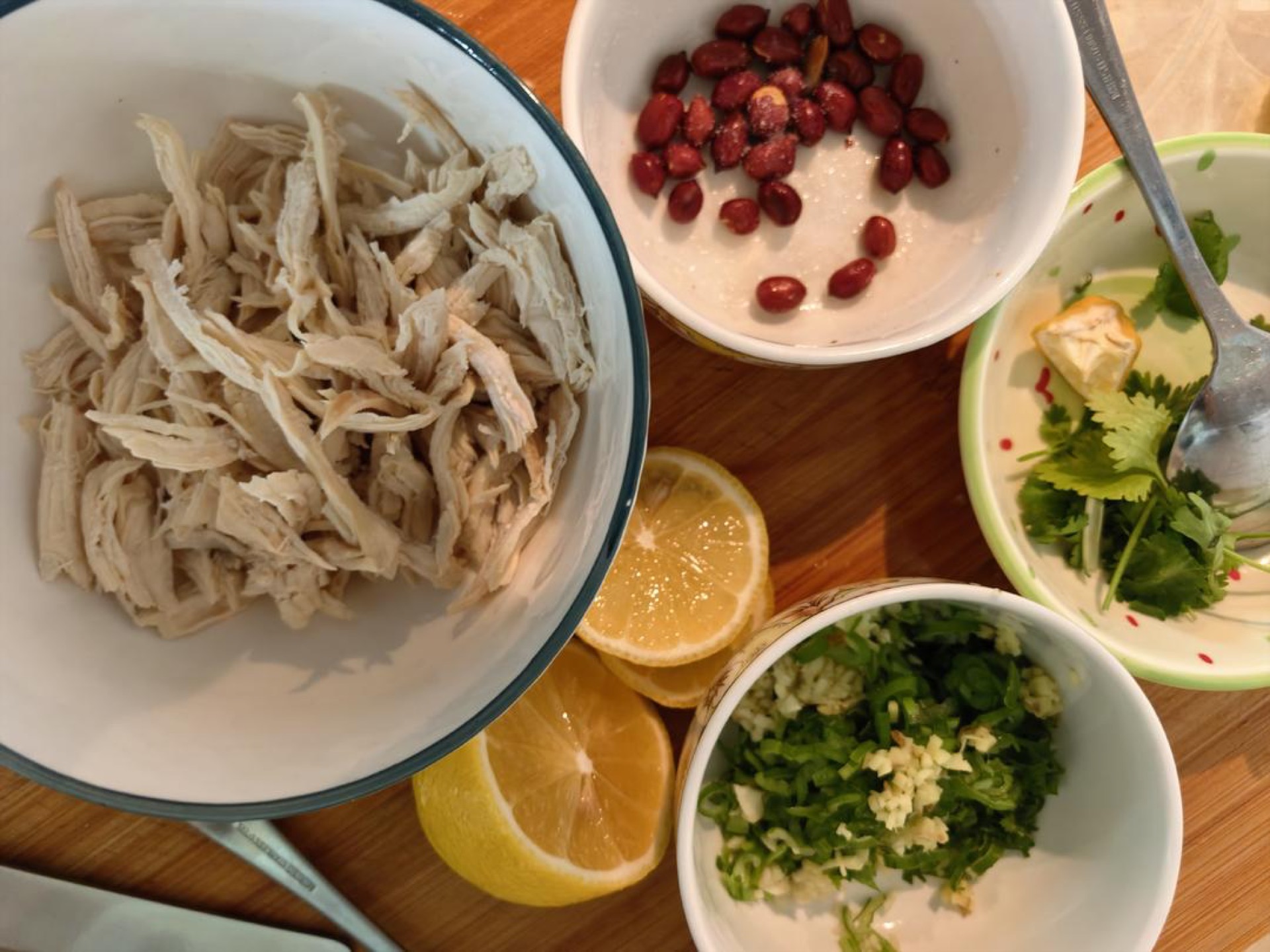
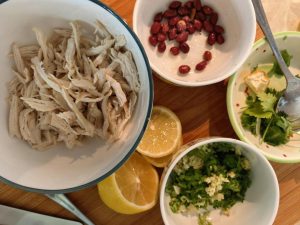
Arrange everything within reach: the shredded chicken as the main ingredient; lemon slices and peanuts as supporting ingredients; minced scallion, ginger, garlic, sesame seeds, and chili powder as the aromatics; soy sauce, dark soy sauce, rice vinegar, and salt as the seasonings; and cilantro leaves, white sesame seeds, and extra peanuts for plating.
Step 5 — Build the Aromatics
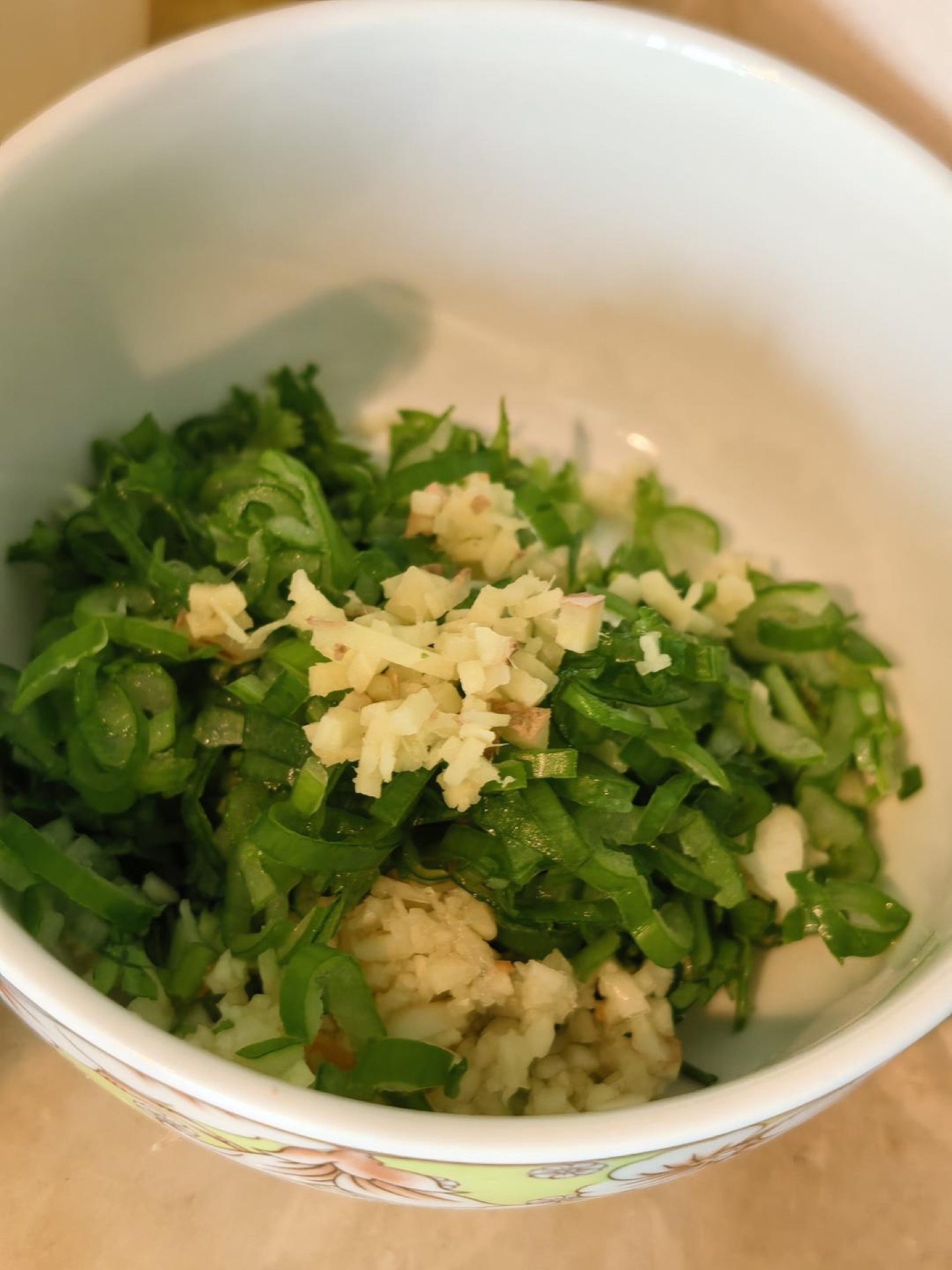
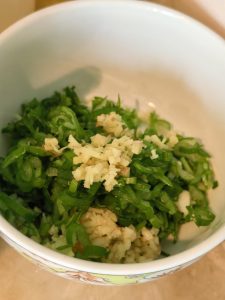
In a small heatproof bowl, combine the minced scallion, ginger, and garlic with the sesame seeds, chili powder, and sliced fresh chilies. Spread them in an even layer so the hot oil will hit them all at once.
Step 6 — Heat the Oil
Set a wok over medium-high heat and add the 1/3 cup of neutral oil. Heat until the oil shimmers and a wisp of smoke rises from the surface, about 350°F to 375°F. Keep the wok steady and have the bowl of aromatics close by.
Step 7 — Pour and Toss
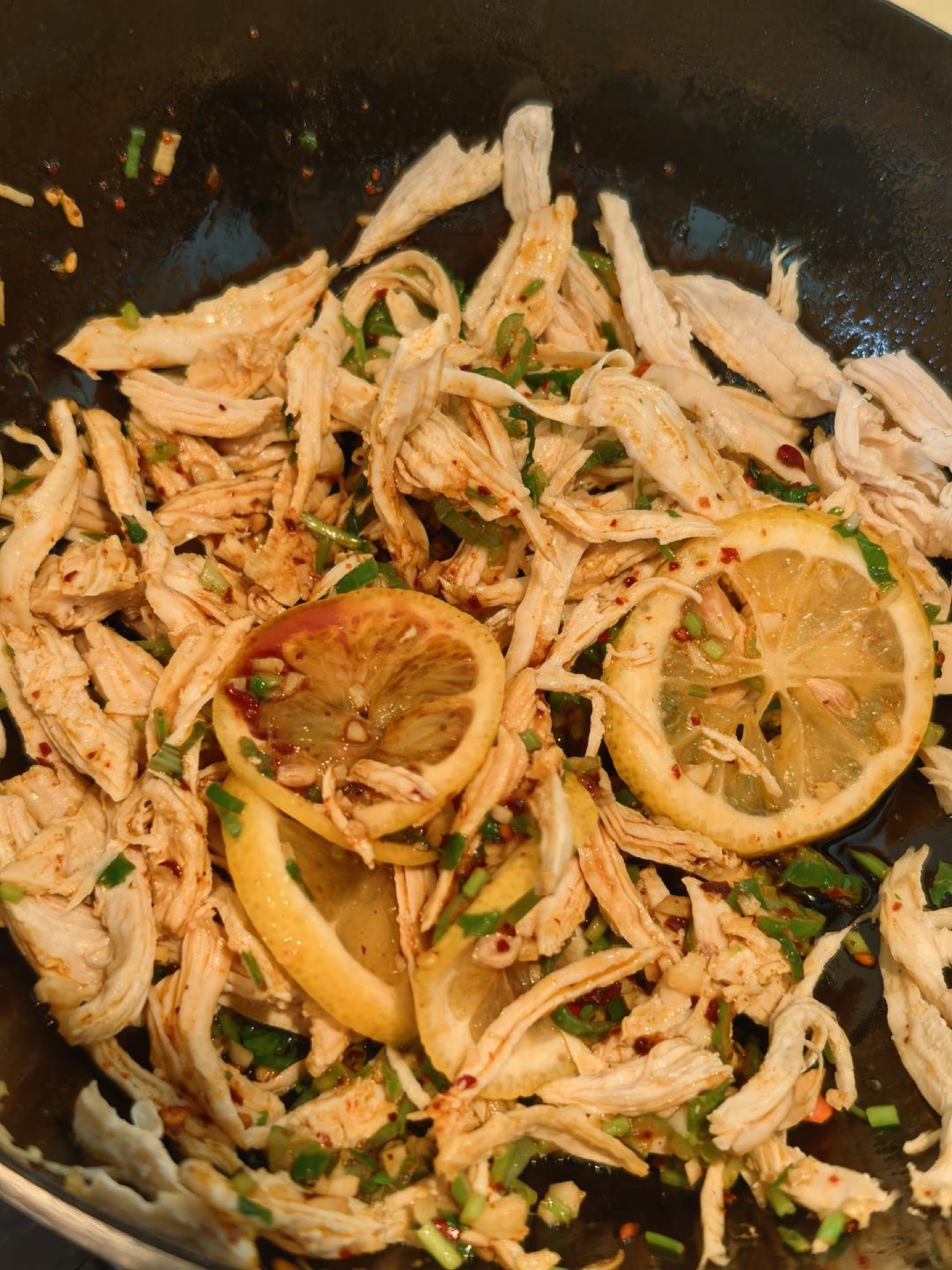
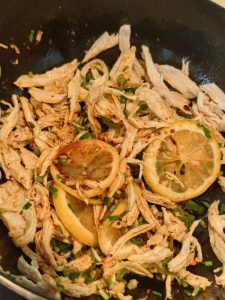
Carefully pour the hot oil over the aromatics in the bowl, or tip it directly over the chicken and aromatics in a large bowl, and stir immediately. Add the soy sauces, rice vinegar, lemon juice, and salt, then toss everything together with the shredded chicken, lemon slices, and fried peanuts until evenly coated.
Step 8 — Plate and Serve
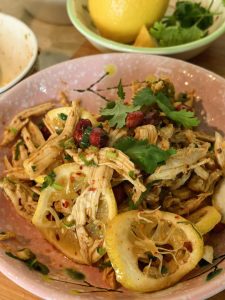
Taste and adjust the salt and acidity, then transfer to a serving plate. Scatter over the cilantro, white sesame seeds, and remaining peanuts, finishing with a few lemon slices so the plate shows white sesame, red peanuts, green cilantro, yellow lemon, and pale chicken. Serve at room temperature or chilled.
Common Mistakes When Making Lemon Shredded Chicken Breast
These are the issues I see most often, and each one has a simple fix.
- Boiling the chicken hard. A rolling boil tightens the muscle fibers and squeezes out moisture, leaving you with dry, chalky shreds. Keep the liquid at a bare tremble and pull the chicken as soon as it reaches 165°F.
- Shredding the chicken while it is hot. Hot meat falls apart into mush rather than clean strips, and you will burn your fingers. Let it cool to warm or room temperature first.
- Cutting the chicken instead of tearing it. Knife-cut strips are smooth and slick, so the dressing slides right off. Tearing along the grain creates rough surfaces that hold flavor.
- Burning the chili powder with the hot oil. If the oil is past the smoke point or you pour from too high, the chili scorches and turns acrid. Heat until a faint wisp of smoke appears, then pour immediately and steadily.
- Frying the peanuts on high heat. Peanuts need low and slow. High heat browns the outside before the inside cooks, which is why they taste raw in the middle and bitter on the outside.
- Forgetting to salt the peanuts while hot. Salt only sticks to hot, oily peanuts. Once they cool, it slides off and you get bland bites.
- Dressing the dish too far in advance. The peanuts soften and the cilantro wilts. Toss the base ahead if you like, but add peanuts and herbs just before serving.
- Under-seasoning the dressing. Cold dishes need more salt and acid than hot ones because cold temperatures dull our perception of both. Taste at room temperature and adjust boldly.
Variations
Once you have the technique down, this dish is endlessly adaptable.
- Sichuan mala version. Add a teaspoon of toasted ground Sichuan peppercorn to the aromatics and a spoonful of chili crisp to the dressing for a numbing, tingly finish. The spirit is close to my fish fragrant shredded chicken, though that dish is served warm.
- Sesame-forward version. Double the sesame seeds and add a tablespoon of toasted sesame paste to the dressing for a creamier, nuttier plate.
- Herb-heavy version. Swap half the cilantro for mint and Thai basil, which turns the dish in a Southeast Asian direction.
- Extra vegetables. Thinly sliced cucumber, shredded carrot, or blanched bean sprouts bulk out the plate and add more crunch.
- Less spicy. Omit the fresh chilies and use half the chili powder, or replace the chili powder with sweet paprika for color without heat.
- Different protein. The same dressing is excellent on poached shrimp, firm tofu, or shredded pork. For a vegetarian pairing at the table, my braised tofu with fresh chilis and minced pork is a great companion dish.
Frequently Asked Questions
Can I use chicken thighs instead of breast? Yes. Thighs are more forgiving and stay juicy even if you overshoot the poaching time slightly. Poach them for 18 to 20 minutes and shred once cool.
How do I know when the chicken is done? The safest test is an instant-read thermometer: 165°F (74°C) at the thickest point. If you do not have one, cut into the thickest part and check that the meat is opaque all the way through with no pink and that the juices run clear.
Can I make this ahead? Absolutely. Poach and shred the chicken up to two days ahead and refrigerate it in a sealed container. Fry the peanuts the same day you serve for the best crunch, and dress the dish at least 20 minutes before eating so the flavors meld.
Why did my hot oil turn the chili bitter? The oil was too hot, or the chili powder was too fine. Use a coarse chili powder and pull the oil off the heat the moment a faint wisp of smoke appears.
Is this dish very spicy? It is gently spicy as written, more aromatic than fiery. Adjust the fresh chilies and chili powder to your taste, or use sweet paprika for a mild version.
Can I skip the peanuts? Yes, though you lose the signature crunch. Toasted cashews, fried shallots, or crispy wonton strips all work as substitutes. If you are avoiding peanuts entirely, check my cantonese wonton soup for another peanut-free option.
How long does it keep? Up to 3 days in the refrigerator in a sealed container. The peanuts will soften after the first day, so add fresh ones when you serve leftovers.
Can I serve this warm? Yes, and it is delicious that way. Toss the chicken with the dressing while it is still slightly warm, then add the peanuts and cilantro just before serving.
How to Serve
This dish shines as part of a larger table. Serve it as a cold appetizer before a bigger meal, or as a light main with steamed rice and a simple green vegetable.
- With rice. Plain jasmine rice is the classic partner, and a spoonful of the dressing over the rice is one of the best bites in the meal.
- With noodles. Toss the dressed chicken with cold wheat noodles or rice noodles for an instant cold noodle bowl.
- As a drinking snack. Like many cold Chinese plates, it is excellent with beer or baijiu, alongside the coconut snail in my melo melo coconut snail recipe.
- In a bento. Pack the chicken and peanuts separately and combine at lunchtime so the crunch survives the morning.
- With soup. Pair it with a light broth, such as the cantonese wonton soup, for a balanced two-dish dinner.
Serving note: Bring the dish out of the refrigerator 15 to 20 minutes before serving. Cold temperatures suppress both the aroma of the toasted chili and the brightness of the lemon, so a short rest makes a noticeable difference.
For a fuller spread, add a warm stir-fry such as my tender stir fried chicken breast and a plate of garlicky greens. The contrast of hot and cold dishes on one table is very much the Chinese home-cooking style.
Storage & Reheat
Store the dressed chicken in a sealed container in the refrigerator for up to 3 days. The flavor improves overnight as the chicken absorbs the dressing, though the peanuts will soften, so add fresh ones when serving leftovers.
This dish is best eaten cold or at room temperature, so reheating is not necessary and, frankly, not recommended, since heat will toughen the chicken and wilt the cilantro. If you prefer it warm, gently warm only the chicken and dressing in a covered pan over low heat or in short bursts in the microwave, then add the peanuts, lemon slices, and herbs after.
For longer storage, freeze the undressed shredded chicken for up to 2 months in a freezer-safe bag. Thaw overnight in the refrigerator, then dress and finish as usual. Do not freeze the dressed dish, as the lemon and peanuts do not hold up well.
Allergen Notice
This recipe contains soy (from the light and dark soy sauce), peanuts, and sesame seeds. If you are cooking for someone with a soy allergy, substitute coconut aminos for the soy sauces, though the flavor will be sweeter and less deep. For a peanut allergy, replace the peanuts with toasted sunflower seeds or crispy fried shallots, and check that your chili powder and other packaged ingredients are free from cross-contamination. Sesame can be omitted entirely, though it is a signature part of the aroma. Always read labels on every packaged ingredient you use.
Nutrition Disclaimer
Nutrition information is calculated using an ingredient database and should be considered an estimate. In cases where multiple ingredient alternatives are given, the first listed is calculated for nutrition. Garnishes and optional ingredients are not included.
About the Author & Recipe Development
Hi, I am Lin, the writer and recipe developer behind Woks of Love. I grew up cooking Chinese food at home and have spent years documenting the home-style dishes I love, from quick stir-fries to slow braises and cold plates like this one. This lemon shredded chicken breast comes from the cold-tossed tradition of 凉拌 dishes, where a hot oil pour over aromatics does most of the flavor work.
For this version I tested the poaching time carefully so the breast stays tender enough to tear by hand, and I adjusted the acid balance so the lemon brightens the dish without overwhelming the toasted chili and sesame. The result is a plate that is zesty, gently spicy, and light enough to eat any time of year. If you make it, I would love to hear how you adjusted the heat and acidity for your own table.
Authoritative References
- USDA FoodData Central, chicken breast, raw and cooked nutrient data: https://fdc.nal.usda.gov/
- USDA FoodSafety.gov, safe minimum internal temperature for poultry (165°F / 74°C): https://www.foodsafety.gov/food-safety-charts/safe-minimum-internal-temperatures
- USDA FoodSafety.gov, refrigerator and freezer storage times for cooked poultry: https://www.foodsafety.gov/food-safety-charts/cold-food-storage-charts
- Harvard T.H. Chan School of Public Health, The Nutrition Source, protein and poultry: https://www.hsph.harvard.edu/nutritionsource/what-should-you-eat/protein/
- FDA, Food Allergies: What You Need to Know (major allergens including soy, peanuts, and sesame): https://www.fda.gov/food/food-labeling-nutrition/food-allergies
Lemon Shredded Chicken Breast (柠檬鸡丝鸡胸肉孕妇): Zesty, Spicy

Equipment
- Wok
- Cutting Board
- Slotted Spoon
Ingredients
For the Chicken
- 2 lb chicken breast boneless, skinless, about 2 large breasts
- 2 tbsp Shaoxing wine
- 2 stalks scallion cut into 2-inch segments
- 4 slices ginger about 1/4 inch thick
For the Peanuts
- 1/2 cup raw peanuts skin on
- 1 tsp salt for tossing the fried peanuts
For the Aromatics
- 3 cloves garlic minced
- 1 tbsp ginger minced
- 3 stalks scallion white and light green parts, minced
- 2 tbsp toasted sesame seeds white
- 1 tbsp chili powder Sichuan or Korean coarse chili powder
- 2 fresh red chilies thinly sliced, or to taste
For the Sauce
- 3 tbsp light soy sauce
- 1 tsp dark soy sauce
- 2 tbsp rice vinegar or lemon juice
- 1 tsp salt plus more to taste
- 1 lemon half juiced, half thinly sliced
For the Hot Oil
- 1/3 cup neutral oil peanut or canola
For Garnish
- 1 handful cilantro leaves picked
- 1 tsp toasted sesame seeds for sprinkling
Instructions
- Rinse the chicken breasts under cold water and place them in a pot. Add cool water to cover by about 1 inch, then pour in the Shaoxing wine and add the scallion segments and ginger slices. Bring to a gentle simmer over medium heat, then lower the heat and poach for 12 to 15 minutes, until the chicken is cooked through.

- Lift the chicken out and let it cool until you can handle it, reserving a little of the poaching liquid. Tear the meat into thin strips by pulling along the natural grain of the muscle with your fingers or two forks. Set the shredded chicken aside in a large heatproof bowl.
- Heat a small wok or skillet over low heat with just enough oil to coat the bottom. Add the raw peanuts and fry slowly, stirring constantly, for 4 to 6 minutes until golden and fragrant. Do not let them darken. Scoop them out with a slotted spoon, drain, and immediately toss with the 1 teaspoon of salt.
- Arrange everything within reach: the shredded chicken as the main ingredient; lemon slices and peanuts as supporting ingredients; minced scallion, ginger, garlic, sesame seeds, and chili powder as the aromatics; soy sauce, dark soy sauce, rice vinegar, and salt as the seasonings; and cilantro leaves, white sesame seeds, and extra peanuts for plating.

- In a small heatproof bowl, combine the minced scallion, ginger, and garlic with the sesame seeds, chili powder, and sliced fresh chilies. Spread them in an even layer so the hot oil will hit them all at once.
- Set a wok over medium-high heat and add the 1/3 cup of neutral oil. Heat until the oil shimmers and a wisp of smoke rises from the surface, about 350°F to 375°F. Keep the wok steady and have the bowl of aromatics close by.
- Carefully pour the hot oil over the aromatics in the bowl, or tip it directly over the chicken and aromatics in a large bowl, and stir immediately. Add the soy sauces, rice vinegar, lemon juice, and salt, then toss everything together with the shredded chicken, lemon slices, and fried peanuts until evenly coated.
- Taste and adjust the salt and acidity, then transfer to a serving plate. Scatter over the cilantro, white sesame seeds, and remaining peanuts, finishing with a few lemon slices so the plate shows white sesame, red peanuts, green cilantro, yellow lemon, and pale chicken. Serve at room temperature or chilled.












Leave a Reply