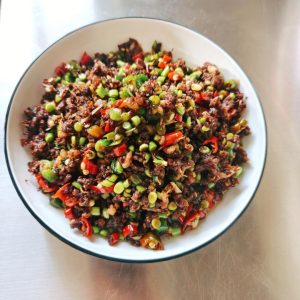
There is a dish my mother made on nights when she did not feel like cooking but still wanted the house to smell like someone had. It is pigeon, but not the whole bird on a plate. It is minced — bones, marrow, and all — pressed flat into a hot wok until every bit of moisture leaves and the fat starts to sing. We call it 米炒鸽子, “rice-fried pigeon,” because the finished meat looks like scattered grains of rice. It is one of the most honest things you can do with a young squab.
The first time I made this outside Chengdu, I used a supermarket pigeon that was closer to three months old, and the bones laughed at my cleaver. That is the honest limitation of this recipe: it only works with a真正 young bird, around 25 days, where the bones are still soft enough to crush by hand. Anything older and you will be picking shards out of your teeth. Buy from a live-poultry market or a butcher who knows squab, and ask for 乳鸽 specifically.
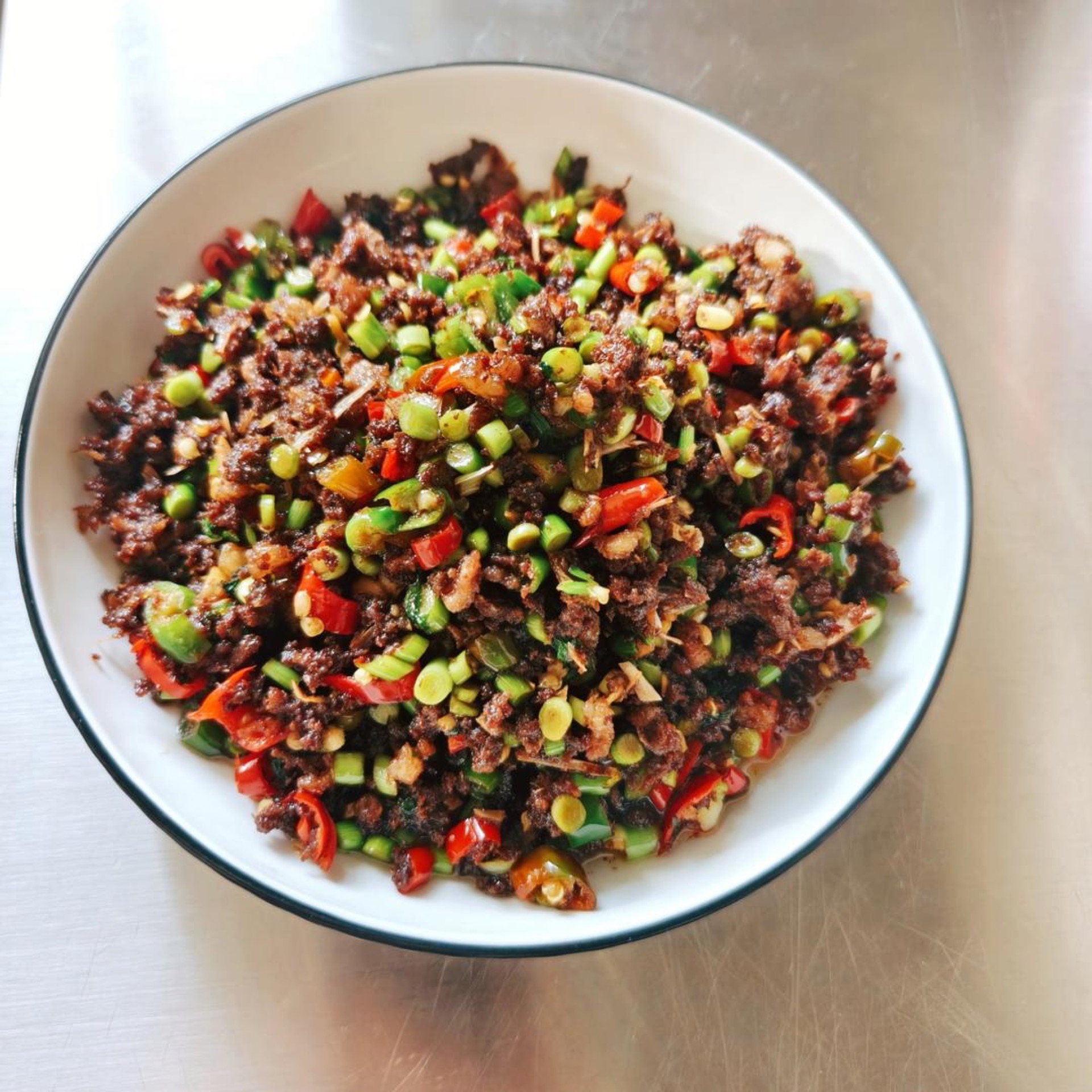
What Is 米炒鸽子?
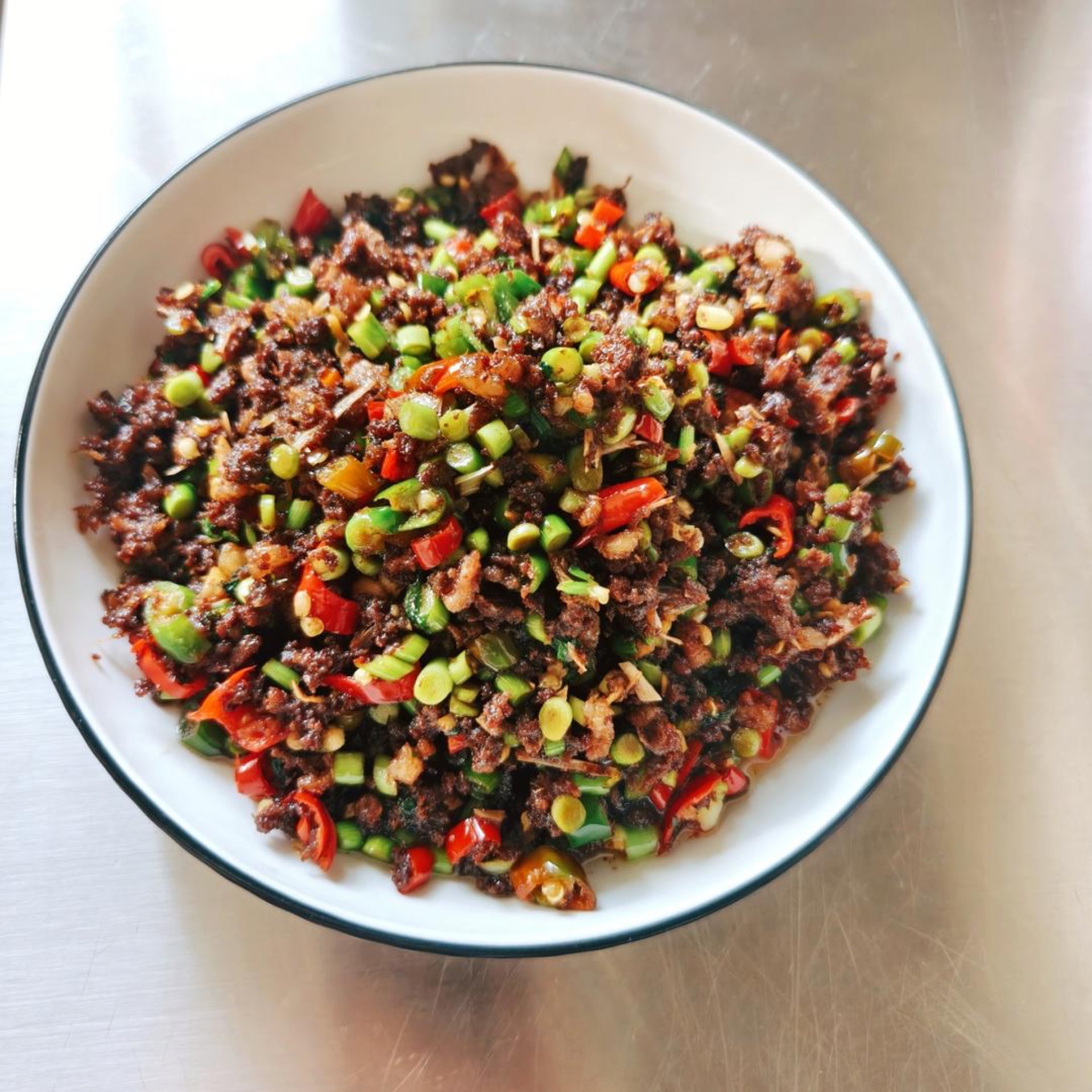
米炒鸽子 is a home-style Sichuan preparation in which a very young pigeon is minced — bones included — into a coarse, rice-like crumble, then stir-fried hard with aromatics until it is dry, chewy, and intensely savory. The word 米 (rice) describes the texture, not an ingredient. There is no actual rice in the dish. It belongs to the same family of “dry-fried minced” dishes as 干煸 dishes, where the goal is to drive off water and concentrate flavor. If you have ever eaten a good dry-fried green bean, you know the sensation: chewy, blistered, and slightly smoky.
The wok should be loud. If your pigeon is steaming quietly, you are braising it, not frying it. Turn the heat up and wait for the sizzle to change pitch.
The technique depends on a few things going right at once. The bird must be young. The mince must not be overworked into a paste — you want crumbs, not meatballs. And the aromatics go in at the very end, in a single fast burst, so the cilantro stays green and the chiles stay fragrant rather than bitter.
Why This Recipe Works
- Smashing the bones releases marrow, which is where most of the flavor lives in a squab.
- Adding minced pork belly back in restores the fat that a lean young bird lacks, so the mince fries instead of sticking.
- Pulse-blending in short bursts keeps the texture crumbly rather than turning it into a paste.
- Adding aromatics last keeps the cilantro and chives bright instead of stewed.
- Wide oil and a hot wok drive off water fast, which is the whole point of the dish.
Equipment Needed
You need a meat mallet or the back of a heavy cleaver, kitchen shears, a food processor or meat grinder, and a carbon steel wok. A flat-bottomed wok works fine on a home stove — I talk about heat management in my guide to controlling heat in a stir-fry on a home stove. A thin metal spatula helps you scrape the bottom without scratching; I use the one from my spatula comparison. If your oil tends to smoke before you are ready, read up on why oil smokes too much.
Ingredients
One fresh white-feathered squab (乳鸽), about 25 days old. A small handful of pork belly, cut fatty and minced. A large bunch of cilantro. Green and red bird’s eye chiles, dried chiles, scallions, and garlic chives. Peanut oil, salt, light soy sauce, oyster sauce, a pinch of sugar, and Shaoxing wine.
Ingredient Notes
The squab is the whole recipe. A 25-day bird has bones you can crush with a firm press of a mallet; a 40-day bird will resist. If you can only find older squab, ask the butcher to split it and use only the meat, accepting that you lose the marrow flavor. For oyster sauce, I keep a bottle from my ranked list of oyster sauce brands; if you avoid shellfish, there are good vegan oyster sauce substitutes. Cilantro is not optional here — it is a main ingredient, not a garnish. If you dislike cilantro, use the stems only, which taste far less soapy.
Prep & Mise en Place
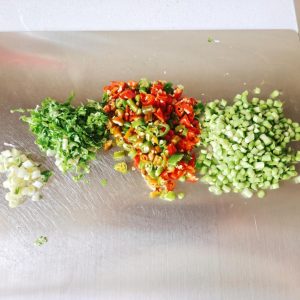
Everything happens fast once the wok is hot, so have it all ready. Crush the bones, mince the bird, mince the pork belly, and combine. Chop the chives, chiles, scallions, and cilantro separately and set them in small bowls. Measure the soy sauce, oyster sauce, wine, sugar, and salt into a single small bowl. Once the wok is smoking, you will not have time to look for anything. If you want a cold dish on the table to balance the heat, a quick cold cucumber salad takes five minutes and can be made ahead.
Cooking Process
Step 1: Crush the bones and cut the bird into pieces
Use a meat mallet to smash the harder bones — the leg and wing joints especially — until they crack and flatten. Then use kitchen shears to cut the bird, bones and all, into small segments that will fit into the food processor.
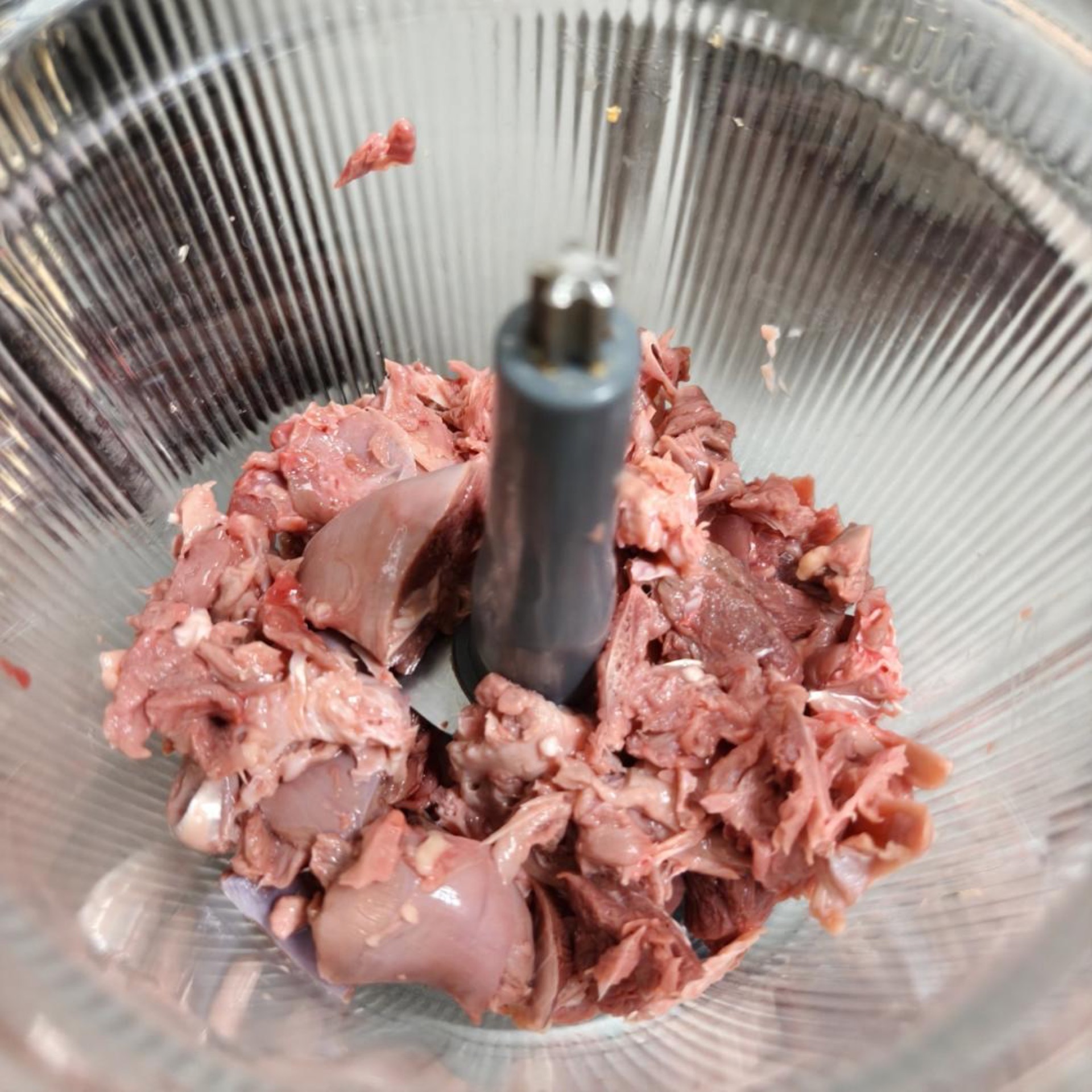
Step 2: Pulse in short bursts
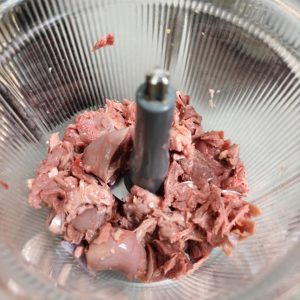
Add the pieces to the food processor and pulse. Press the button for about one or two seconds, stop, scrape down, and pulse again. Short bursts only.
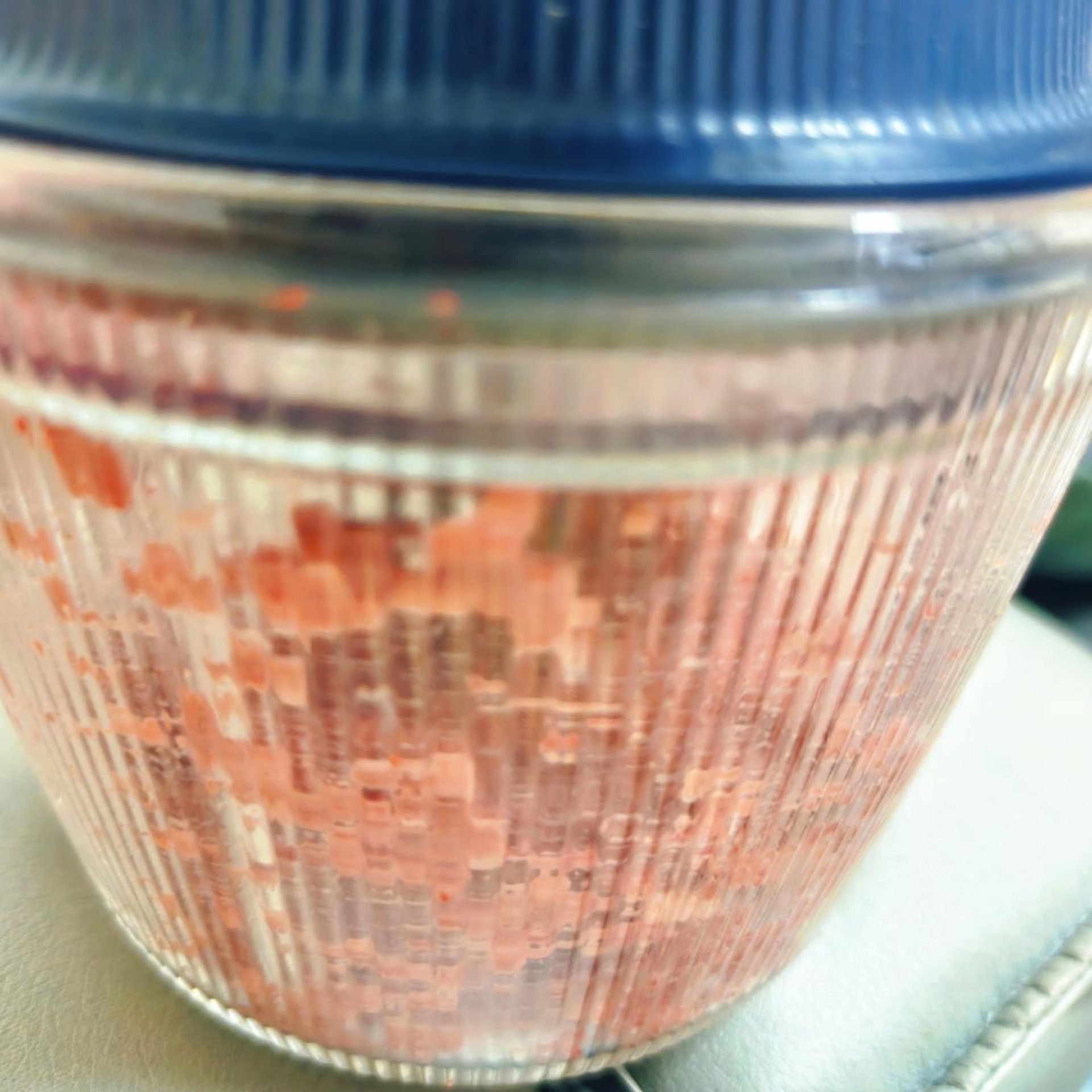
Step 3: Stop before it becomes a paste
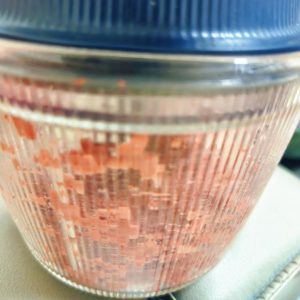
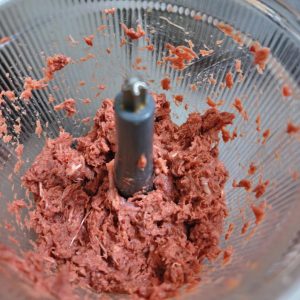
Keep pulsing until the mixture looks like coarse crumbs, roughly the size of rice grains. Stop the moment it starts to clump or bind — if it forms a ball, you have gone too far and the texture will be springy rather than crumbly.
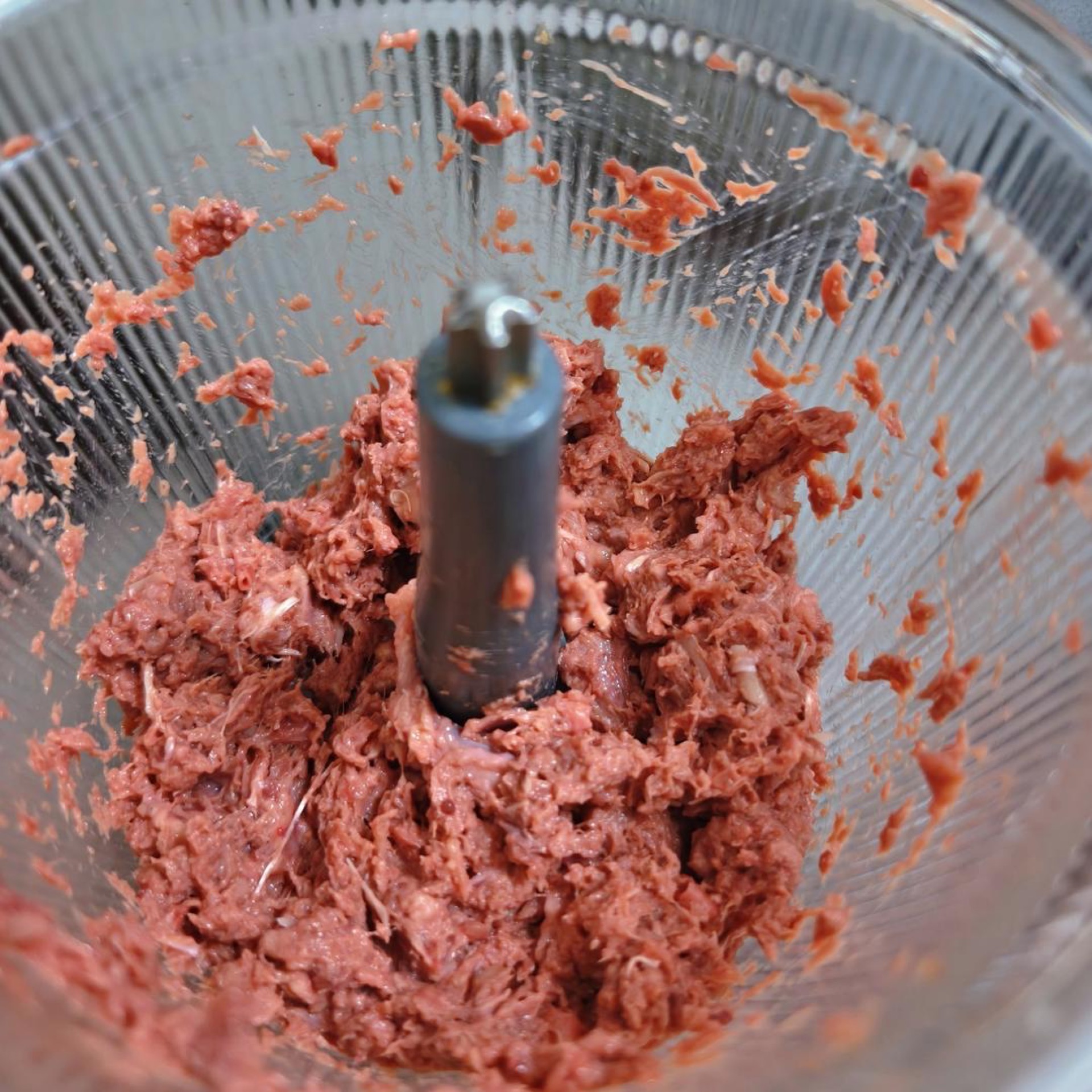
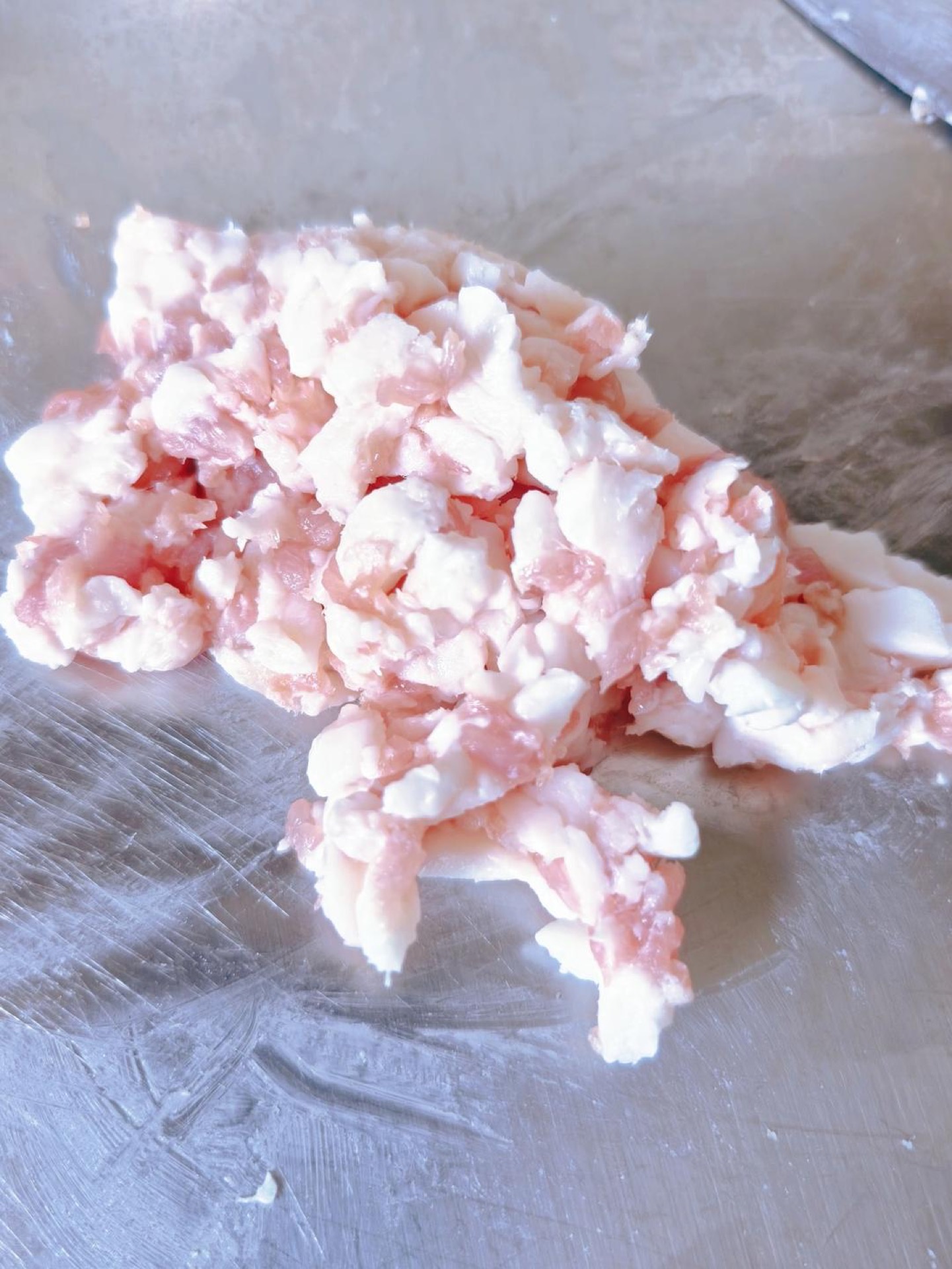
Step 4: Mince the pork belly and combine
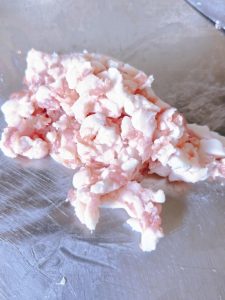
Cut a piece of fatty pork belly into small dice, then mince it finely. Fold it into the minced pigeon. This restores the fat the young bird lacks and keeps the mince from drying out too fast in the wok.
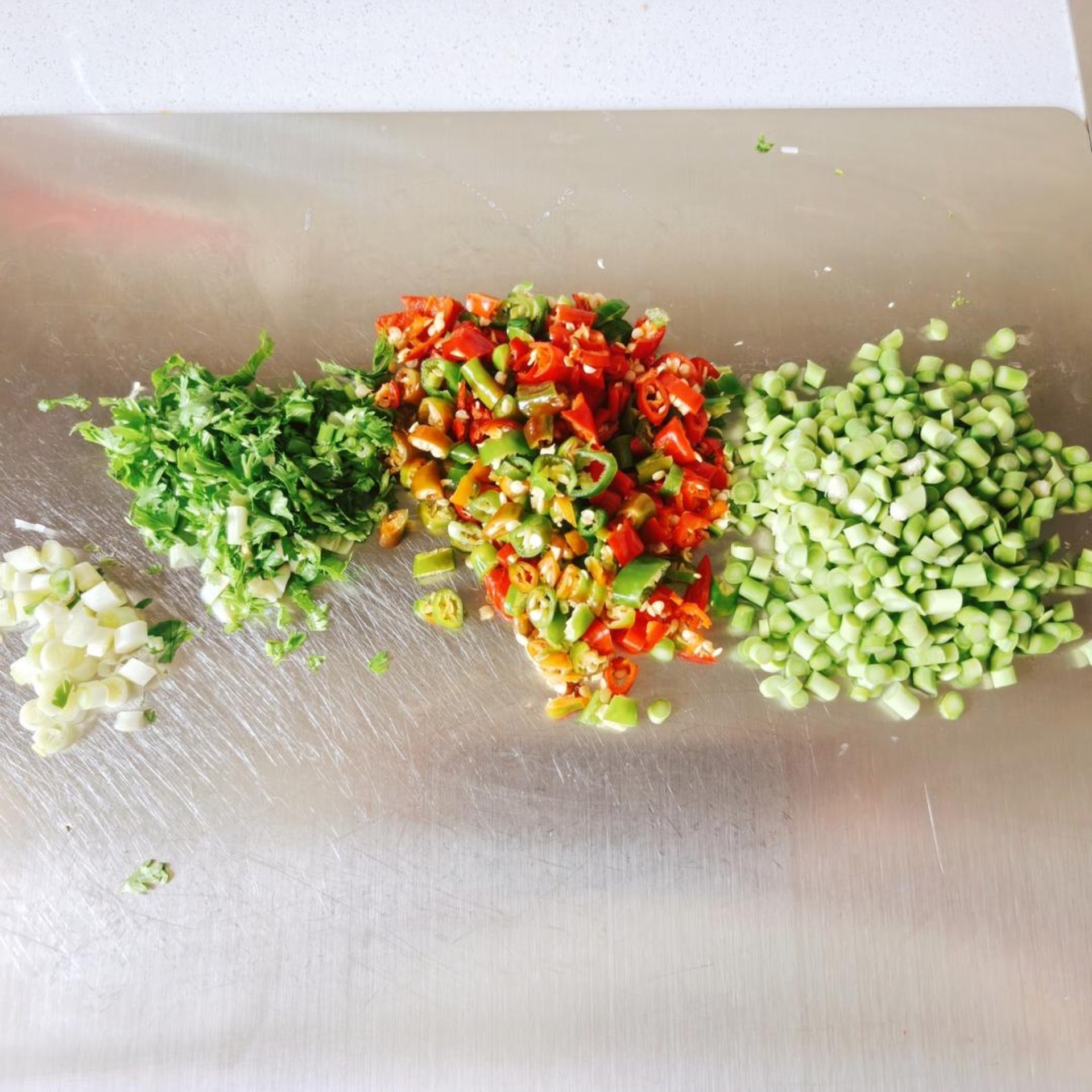
Step 5: Chop the aromatics
Finely chop the garlic chives, bird’s eye chiles, cilantro, and scallions. If you cannot handle much heat, use more cilantro and fewer chiles — the cilantro carries the dish on its own.
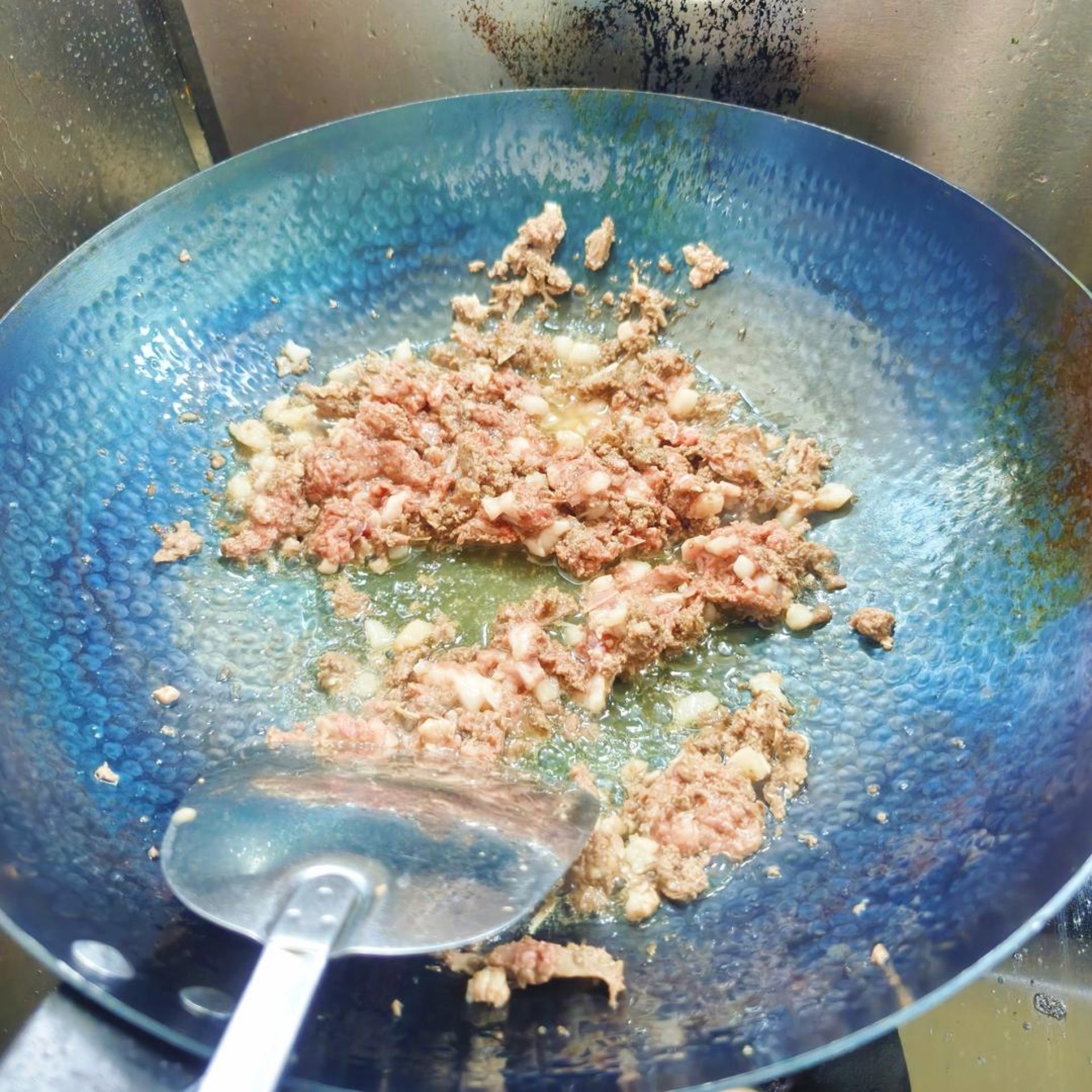
Step 6: Fry the mince in a hot wok with plenty of oil
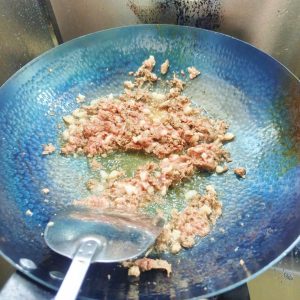
Heat the wok until the oil shimmers and just begins to ripple — this is the “hot wok, cool oil” moment. Add a generous pour of peanut oil, then the pigeon mixture. It should hiss immediately on contact.
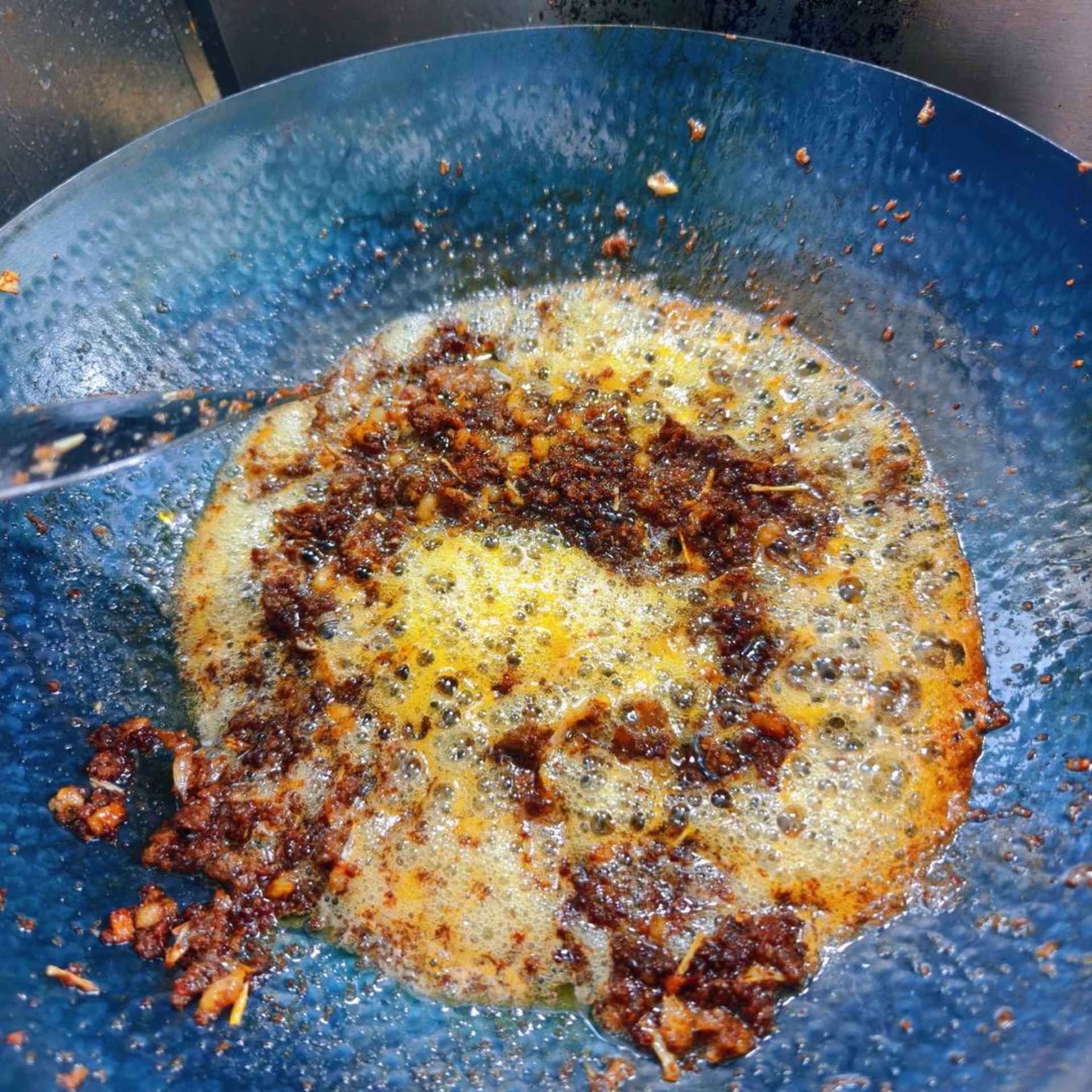
Step 7: Cook off the water, then season
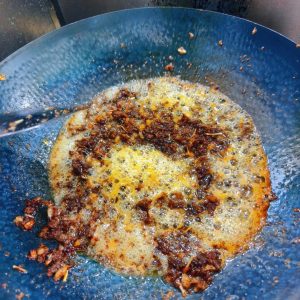
Stir over medium-low heat until the steam disappears and the mince starts to render its own fat, about 6 to 8 minutes. Add a splash of Shaoxing wine to lift the gaminess. Add one tablespoon of light soy sauce, half a tablespoon of oyster sauce, a pinch of sugar, and a little salt. Turn the heat to high and toss until the color deepens and the mince looks glossy and dry.
Step 8: Flash-fry the aromatics and finish with cilantro
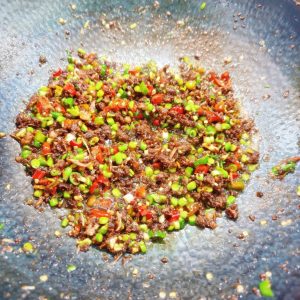
Add the dried chiles, scallions, bird’s eye chiles, and garlic chives. Toss over high heat for about 30 seconds until the chiles smell toasty and the chives soften slightly. Then dump in a large handful of chopped cilantro and toss for 10 seconds. Pull it off the heat immediately — cilantro cooked any longer loses its perfume and turns dull.
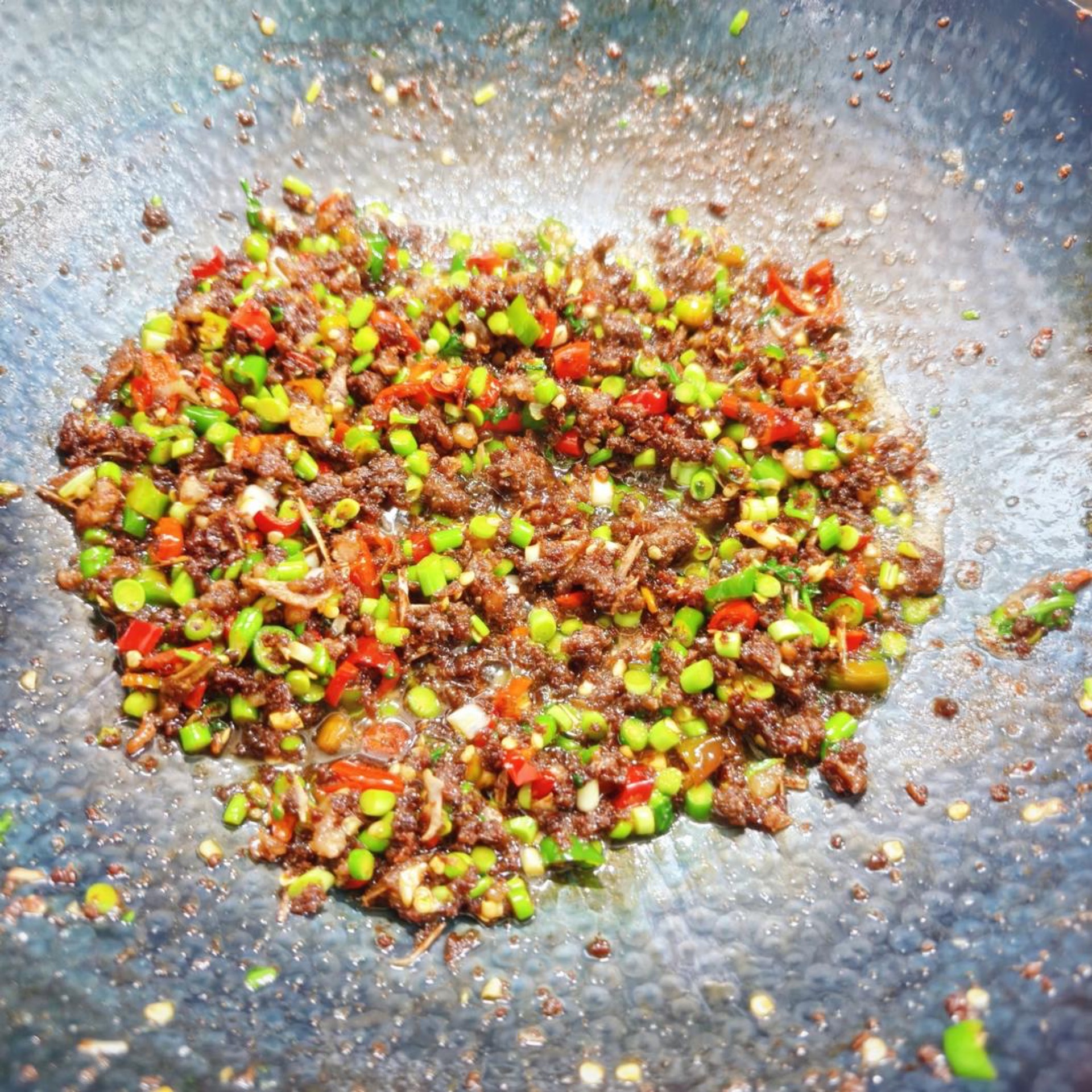
Step 9: Serve immediately
Plate it hot. A dry, fragrant pile of 米炒鸽子, still crackling slightly from the wok, is one of the small everyday luxuries of a Chengdu kitchen.
Common Mistakes When Making 米炒鸽子
Using a bird that is too old. Bones from a squab older than about 30 days will not crush cleanly, and you will end up with shards. Ask the butcher the bird’s age before you buy.
Over-processing the mince. If the food processor runs continuously, the meat binds into a paste and the texture turns rubbery. Pulse in one-second bursts and stop at the crumb stage.
Not cooking off the water. If you pull the mince while it is still steaming, the dish tastes flat and wet. Wait until the steam stops and the fat starts to render.
Adding the cilantro too early. Cilantro is a last-second ingredient. Ten seconds in the wok, then off the heat. Any longer and it tastes like boiled grass.
Skimping on oil. This is not a low-fat dish. Wide oil is what gives the mince its dry, chewy character. If you cut the oil, the meat will stick and burn before it dries out.
Variations
Some cooks skip the pork belly and instead add a spoonful of rendered lard at the start. Others swap the garlic chives for regular chives or even celery, which adds a similar crunch. If you cannot find fresh squab, minced quail with a bit of chicken thigh mixed in is a workable substitute — not identical, but close in spirit. For a milder version, cut the bird’s eye chiles entirely and double the cilantro. I sometimes add a few drops of a sauce-thickening trick if the mince looks loose, though a well-dried mince rarely needs it.
This is a dish for people who like bones. If you do not, use the meat only and accept that you lose the marrow, which is the soul of the recipe.
Frequently Asked Questions
Can I use a regular supermarket pigeon? Only if it is genuinely young, around 25 days. Older birds have hard bones that will not crush safely. Ask the butcher.
Do I have to include the bones? The bones are the point. They carry the marrow and give the dish its distinctive texture. If you must skip them, use the meat only and add a spoonful of lard for richness.
Is this dish very spicy? It is as spicy as you make it. The bird’s eye chiles are the heat source; the dried chiles add fragrance more than fire. Cut the fresh chiles and the dish becomes mild.
Can I make it ahead? It is best straight from the wok. Reheated, the cilantro turns dull and the texture tightens. If you must, reheat in a hot skillet for a minute, not a microwave.
What do I serve with it? Plain steamed rice, a light soup, and a cold vegetable. The dish is rich and salty, so it wants plain, cooling things alongside.
How to Serve
Serve over steamed jasmine rice with a bowl of clear soup on the side. A quick tomato shrimp ball soup is a good match. If you want a vegetable, a chrysanthemum greens salad or a shrimp-stuffed okra both work. For a fuller table, add a mushroom scrambled egg or a luffa beef egg rice bowl.
Storage & Reheat
Keeps in the fridge for up to two days in a sealed container. The cilantro will darken and lose its perfume, which is unavoidable. Reheat in a hot skillet with a splash of water to loosen it, or in a 350°F oven for 8 minutes. Do not microwave — it steams the mince and makes it rubbery.
Allergen Notice
Contains soy (soy sauce, oyster sauce) and shellfish (oyster sauce). Check your oyster sauce label if you have a shellfish allergy, or use a vegan substitute. Peanut oil can be replaced with a neutral oil if you have a peanut allergy.
Nutrition Disclaimer
Nutrition information is an estimate and is provided for general guidance only. Actual values depend on the size of the bird, the amount of oil used, and the brand of sauces. This is not medical or dietary advice.
About the Author & Recipe Development
I am Lin, and I grew up in my parents’ restaurant kitchen in Chengdu, where every dish on the menu had to earn its place. 米炒鸽子 was not on the menu — it was what the family ate after service, when the good birds were gone and only the young ones were left. I developed this version over several years of testing, mostly to solve the problem of older squab: I now ask the butcher for 25-day birds specifically, and I always keep a small piece of pork belly on hand to fold in. The cilantro measurement is deliberately generous. If it looks like too much, it is probably right.
Authoritative References
For background on Sichuan dry-frying techniques and the role of young poultry in home cooking, see Fuchsia Dunlop’s The Food of Sichuan and Land of Plenty. For food safety around poultry, consult USDA guidelines on handling and cooking raw poultry. For oyster sauce sourcing and labeling, see the manufacturer’s product information.
Stir-Fried Pigeon with Rice (米炒鸽子): Lazy Family Hack, Bones and All

Equipment
- Meat Mallet
- Kitchen Shears
- Food processor
- Carbon Steel Wok
- Thin metal spatula
Ingredients
Main
- 1 fresh white-feathered squab (乳鸽), about 25 days old
- 50 g fatty pork belly minced
- 1 large bunch cilantro finely chopped
- 4 green bird’s eye chiles finely chopped
- 4 red bird’s eye chiles finely chopped
- 6 dried red chiles torn
- 3 scallions finely chopped
- 100 g garlic chives finely chopped
- 4 tbsp peanut oil
- 1 tbsp light soy sauce
- 0.5 tbsp oyster sauce
- 1 tsp Shaoxing wine
- 1 pinch sugar
- 0.5 tsp salt or to taste
Instructions
- Use a meat mallet to smash the harder bones — leg and wing joints especially — until they crack and flatten. Cut the bird, bones and all, into small segments with kitchen shears.

- Add the pieces to a food processor and pulse. Press for one or two seconds, stop, scrape down, and pulse again.
- Keep pulsing until the mixture looks like coarse crumbs, roughly rice-grain sized. Stop the moment it starts to bind — if it forms a ball, you have gone too far.
- Cut the pork belly into small dice, then mince finely and fold into the minced pigeon.

- Finely chop the garlic chives, bird’s eye chiles, cilantro, and scallions. Use more cilantro and fewer chiles if you prefer less heat.
- Heat the wok until the oil shimmers and ripples. Add a generous pour of peanut oil, then the pigeon mixture — it should hiss immediately.
- Stir over medium-low heat until the steam disappears and the mince renders its fat, about 6 to 8 minutes. Add Shaoxing wine, soy sauce, oyster sauce, sugar, and salt. Turn heat to high and toss until glossy and dry.
- Add dried chiles, scallions, bird’s eye chiles, and garlic chives. Toss over high heat for 30 seconds. Add a large handful of cilantro and toss for 10 seconds, then remove from heat immediately.
- Plate hot and serve immediately.












Leave a Reply