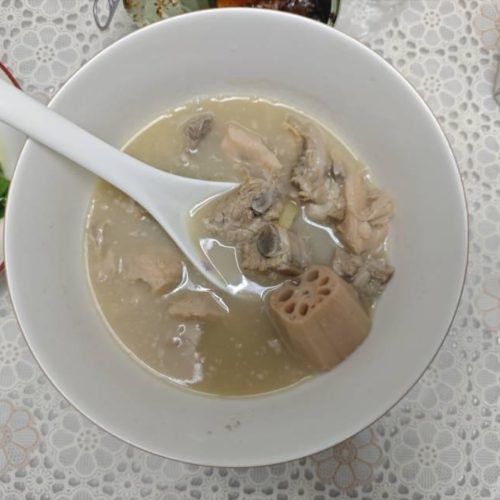
There is a bowl of soup in Hubei that people come home for, and it is this one. Lotus root and pork ribs go into a pot with nothing more than ginger, a splash of Shaoxing wine, and time — and what comes out is a broth so sweet and milky that you almost can’t believe two humble ingredients did it.
I learned to make this the way most families in the region do: by watching, tasting, and adjusting. There is no trick ingredient, no thickener, no shortcut that actually works. The pot simply has to sit. What you get is a soup that tastes like a warm blanket — porky but clean, faintly nutty from the lotus root, and gentle enough to drink straight from the bowl.
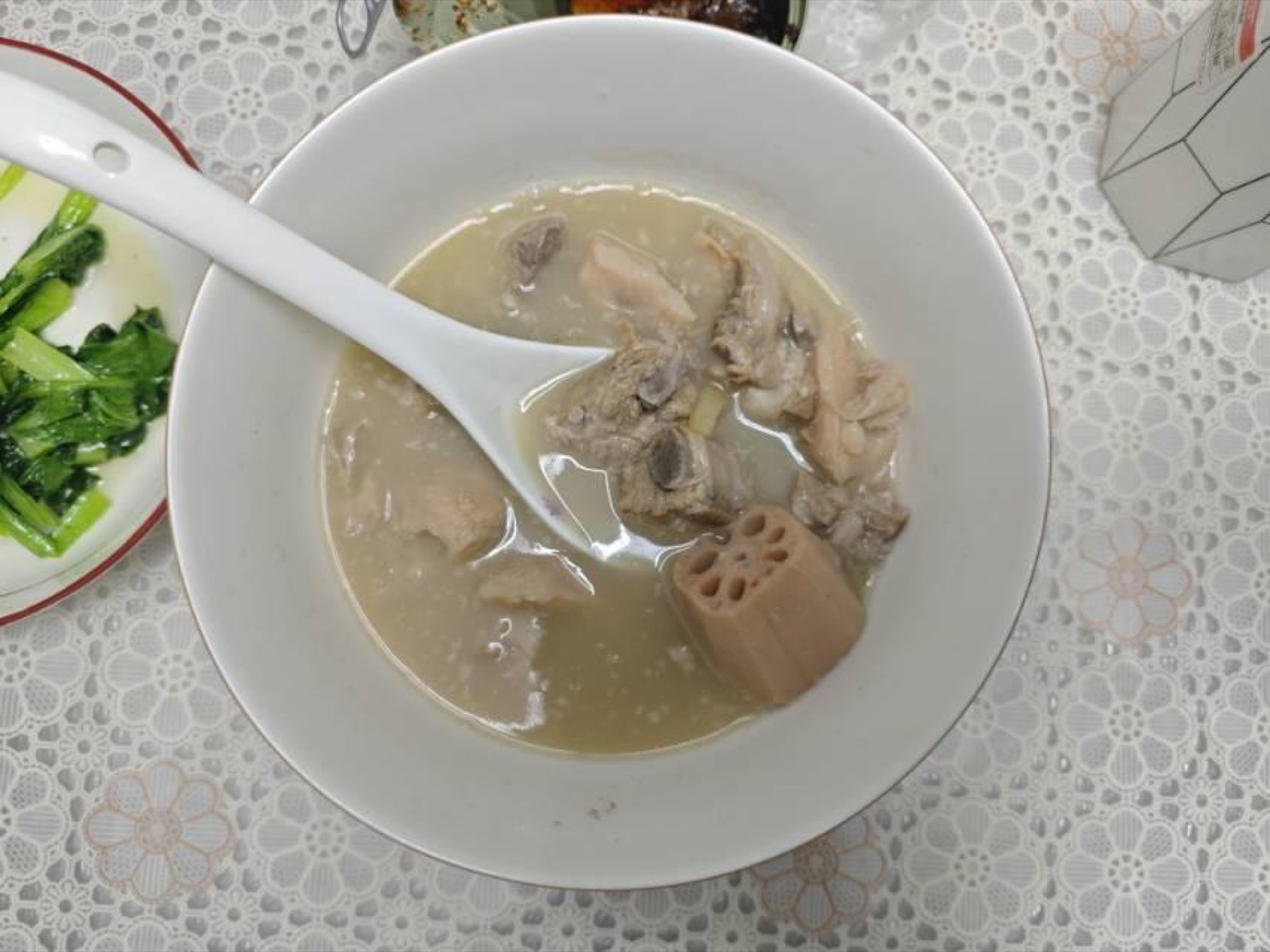
What Is Lotus Root Pork Rib Soup?
Pai gu ou tang (排骨藕汤) is a classic Hubei home soup — arguably the most famous dish of the province. Pork ribs are blanched, seared with ginger, then simmered with chunks of fresh lotus root until the broth turns opaque and ivory-white. The lotus root softens from crisp to starchy and yielding, and the ribs give up their flavor into the liquid.
In Hubei, this soup is what you make when someone comes home after a long trip, or when the weather turns cold, or when there is no reason at all. It is comfort food in its plainest, most honest form.
The lotus root you want is the starchy kind — long, tan-brown, with a dry, matte skin. If you can only find the crisp, pale kind used for stir-fries, the soup will still work, but the root will stay firm instead of melting. That is the honest limitation of this dish: the ingredient matters more than the technique.
Why This Recipe Works
- Blanching the ribs in cold water removes the blood and impurities that would otherwise cloud and muddy the broth.
- Salting the lotus root for half an hour draws out excess water and seasons it from the inside, so it tastes sweet rather than bland.
- Searing the ribs with ginger builds a light fond in the pot that gives the finished soup depth without any stock or bouillon.
- Adding boiling water instead of cold keeps the proteins from seizing, which is what lets the broth turn creamy white.
- Finishing salt and white pepper go in at the very end, so the seasoning stays bright and the soup never tastes flat.
Equipment Needed
- A heavy pot or wok for searing — anything with a thick base and tall sides works.
- A clay simmering pot (煨罐) or a heavy Dutch oven for the long cook.
- A ladle and a fine-mesh skimmer.
- A cutting board and a sharp cleaver or chef’s knife for the lotus root.
- A small bowl for the salt-and-sugar cure.
Ingredients
- 700 g pork ribs (排骨), cut into 4–5 cm lengths
- 600 g fresh lotus root (藕), peeled and cut into roll-cut chunks
- 1 tsp salt, plus more to taste
- 1 tsp sugar
- 4 slices fresh ginger
- 2 tbsp Shaoxing cooking wine, divided
- 1 tbsp neutral oil
- 2.5 L boiling water
- White pepper, to taste
Ingredient Notes
Pork ribs: ask your butcher for ribs cut across the bone into short lengths — the kind used for soup, not the long racks. You want plenty of bone and marrow; that is where the flavor comes from.
Lotus root: pick roots that feel heavy, with tight, unbroken joints and no soft spots. A starchy root will turn the broth slightly cloudy and taste faintly of chestnut. If yours is the crisp variety, expect a firmer bite.
Shaoxing wine: the real thing, not “cooking wine” with salt added. If you don’t have it, dry sherry works. There are other options if you’re avoiding alcohol, but the flavor will be a little different.
Water: use boiling water, not cold. This is the single step most home cooks get wrong, and it directly affects whether the broth turns white.
Prep & Mise en Place
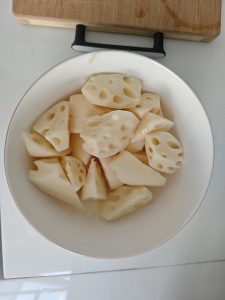
Peel the lotus root and cut it into irregular roll-cut chunks — about 3 cm across. Toss with the teaspoon of salt and teaspoon of sugar and let it sit for 30 minutes while you handle the ribs. This draws out water and seasons the root all the way through.
Cut the ribs into short lengths if your butcher hasn’t. Rinse them once under cold water. Slice the ginger. Measure the wine into two small bowls — one for the blanch, one for the sear. Put a kettle on for the boiling water.
Cooking Process
Step 1 — Cure the Lotus Root
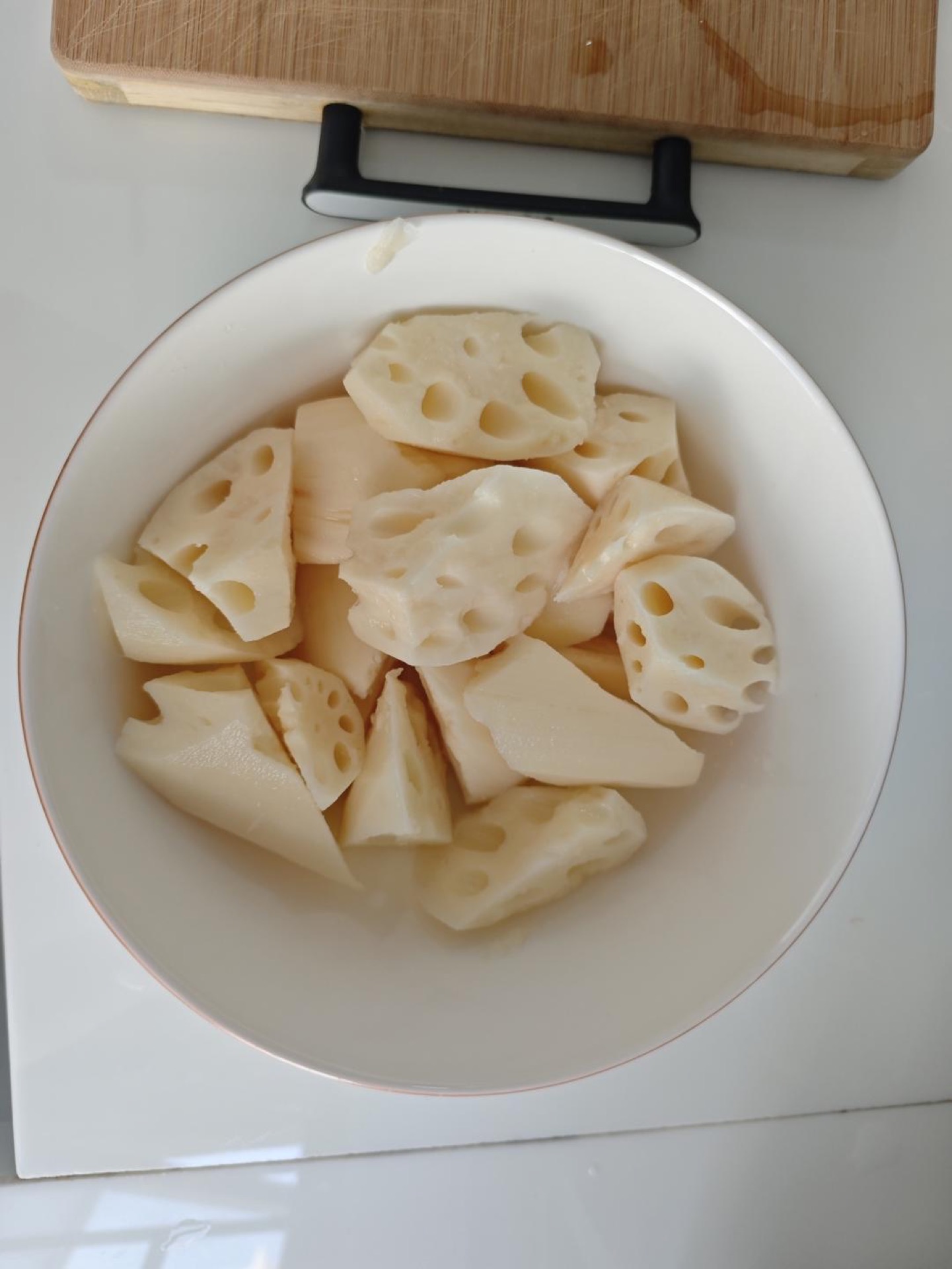
Cut the peeled lotus root into roll-cut chunks and toss with one small spoon of salt and one small spoon of sugar. Let it sit for half an hour. You’ll see a little water bead up on the surface — that’s exactly what you want.
Step 2 — Blanch the Ribs
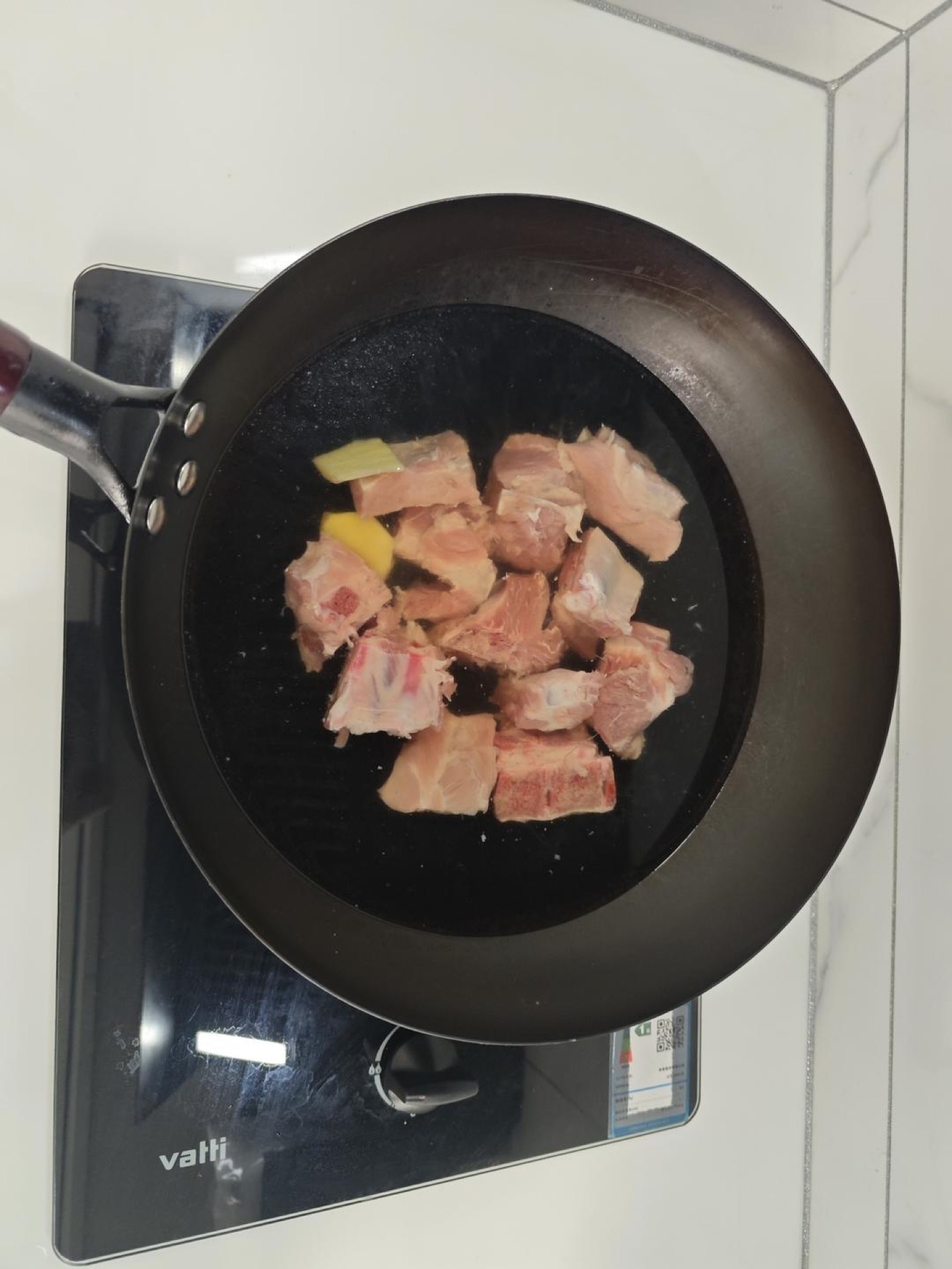
Put the ribs in a pot and cover with cold water. Add the ginger slices and a splash of Shaoxing wine. Bring to a boil, then let it bubble for two to three minutes until a grey scum rises to the top. Drain and rinse the ribs under hot water — not cold, or the meat will tighten.
Step 3 — Aromatize the Ginger
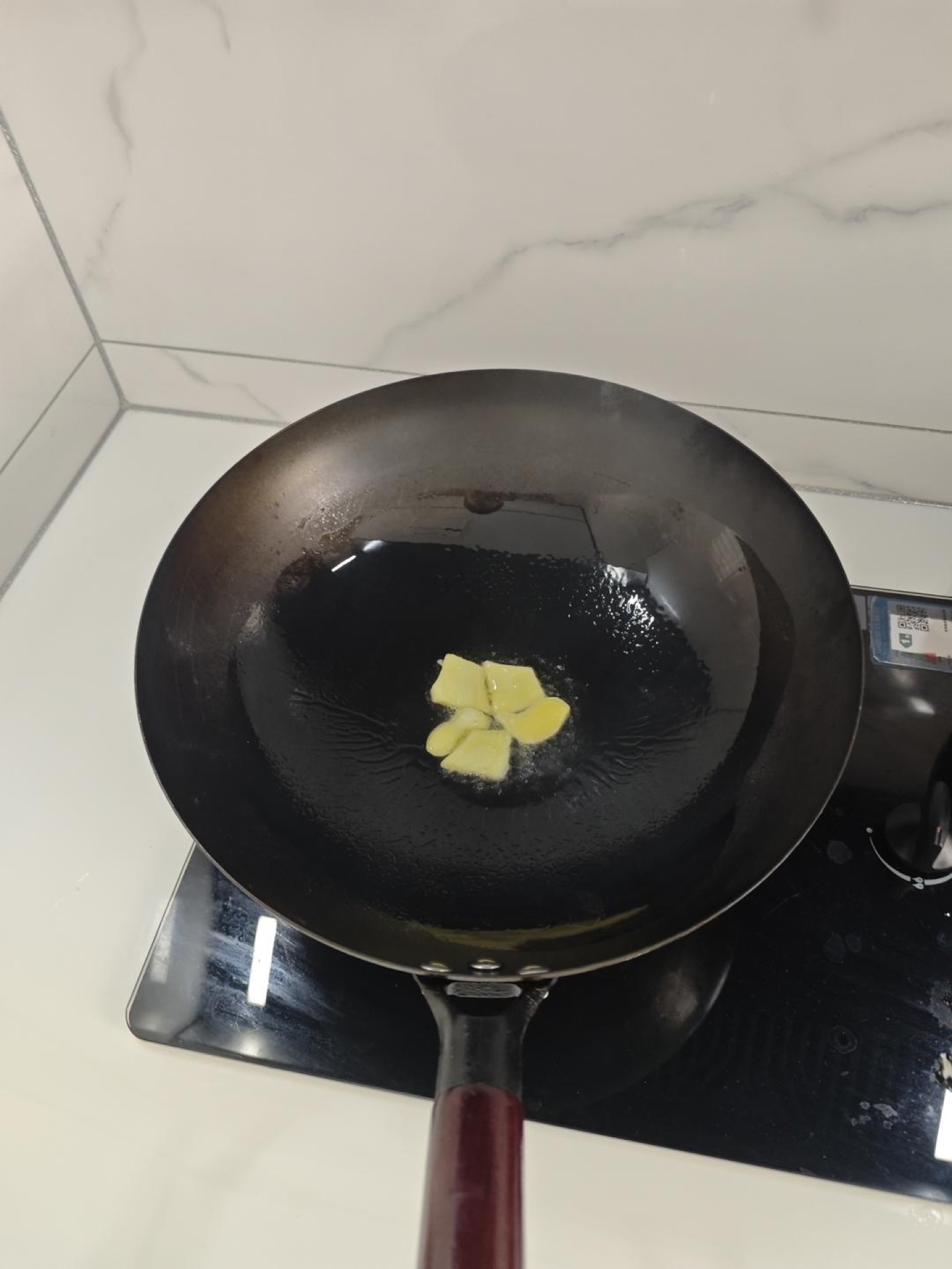
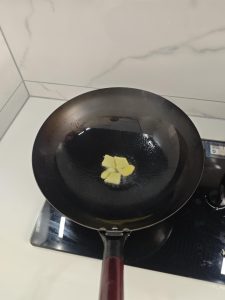
Heat a tablespoon of oil in your pot over medium heat. When the oil shimmers, add the ginger slices and stir until they smell fragrant and just barely start to color at the edges — about 30 seconds.
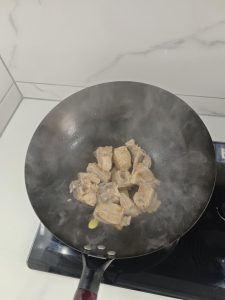
Step 4 — Sear the Ribs
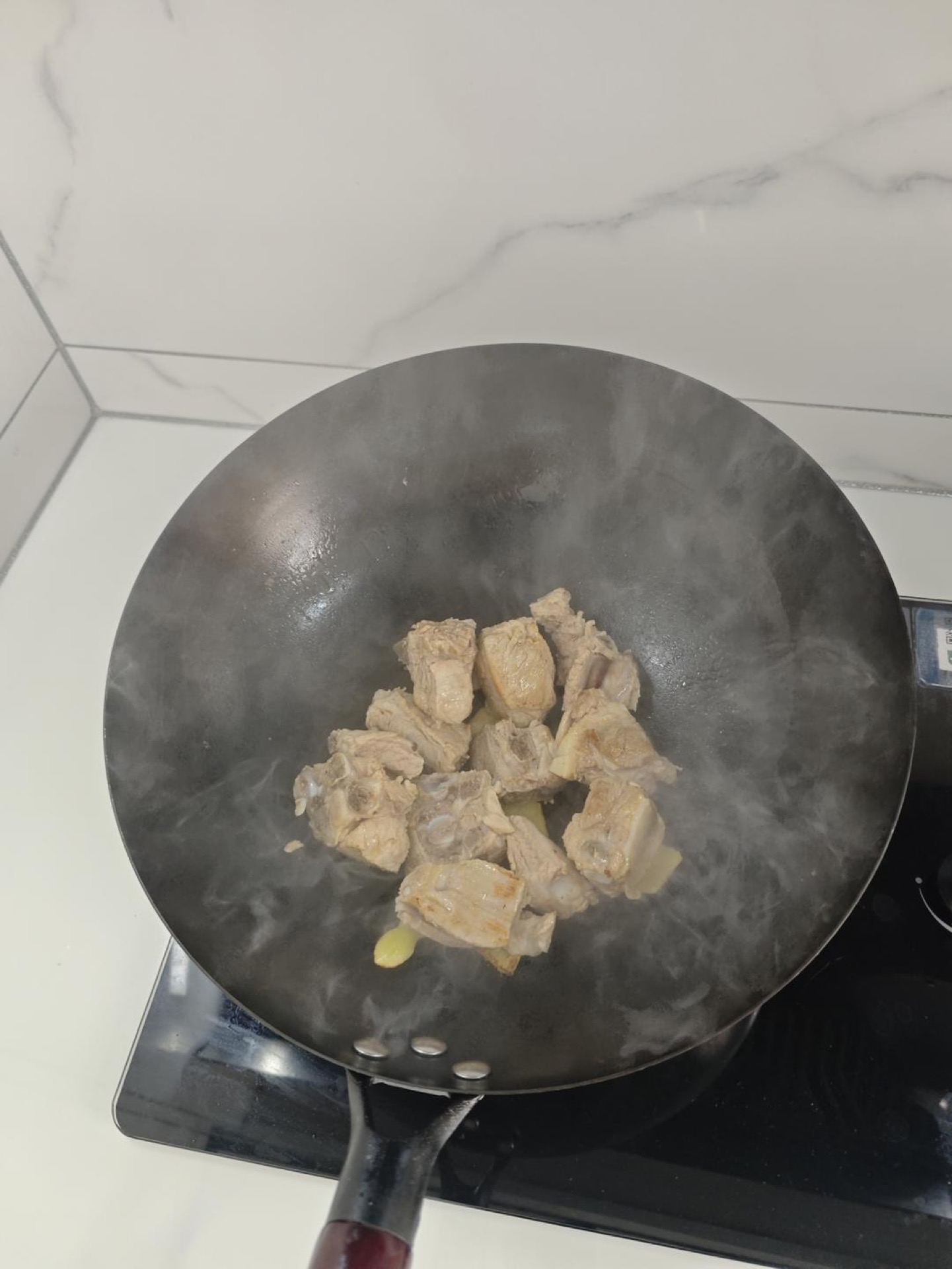
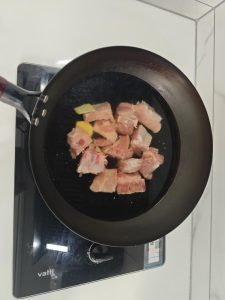
Add the drained ribs and stir-fry until they take on a light golden color and smell deeply porky, about 4 minutes. Splash the remaining Shaoxing wine down the side of the pot — it will hiss and steam — and toss to coat.
Step 5 — Build the Milky Broth
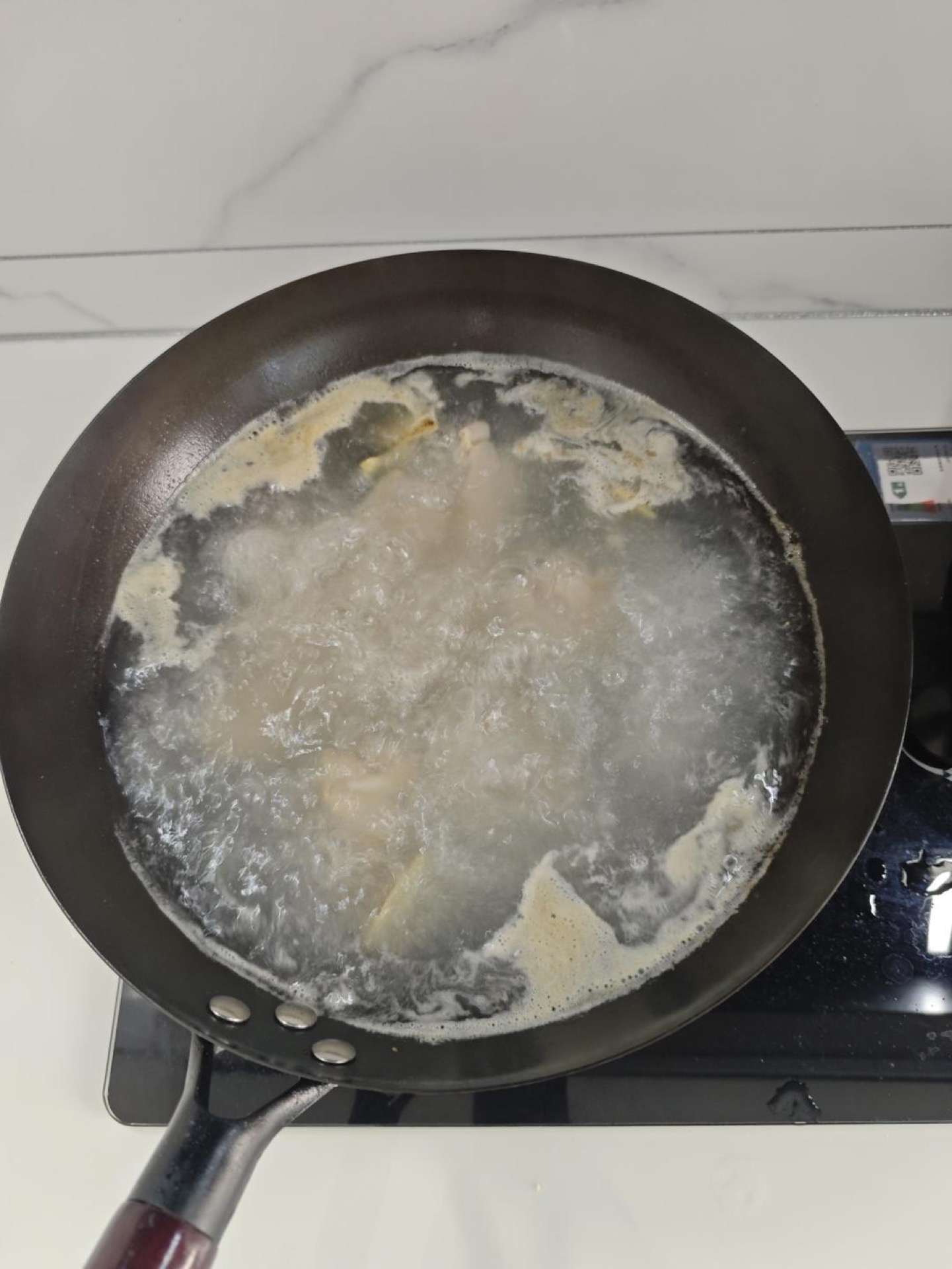
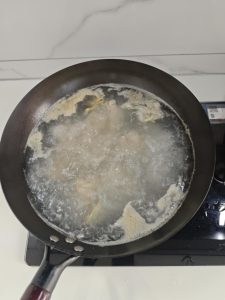
Pour in the boiling water — enough to cover the ribs by a good 4 cm. Turn the heat to high and let it boil hard, uncovered, for 10 to 15 minutes. The rolling boil is what emulsifies the fat into the liquid and turns the broth opaque and white. Once it’s milky, tip everything into your clay simmering pot or Dutch oven.
Step 6 — Add the Lotus Root and Simmer
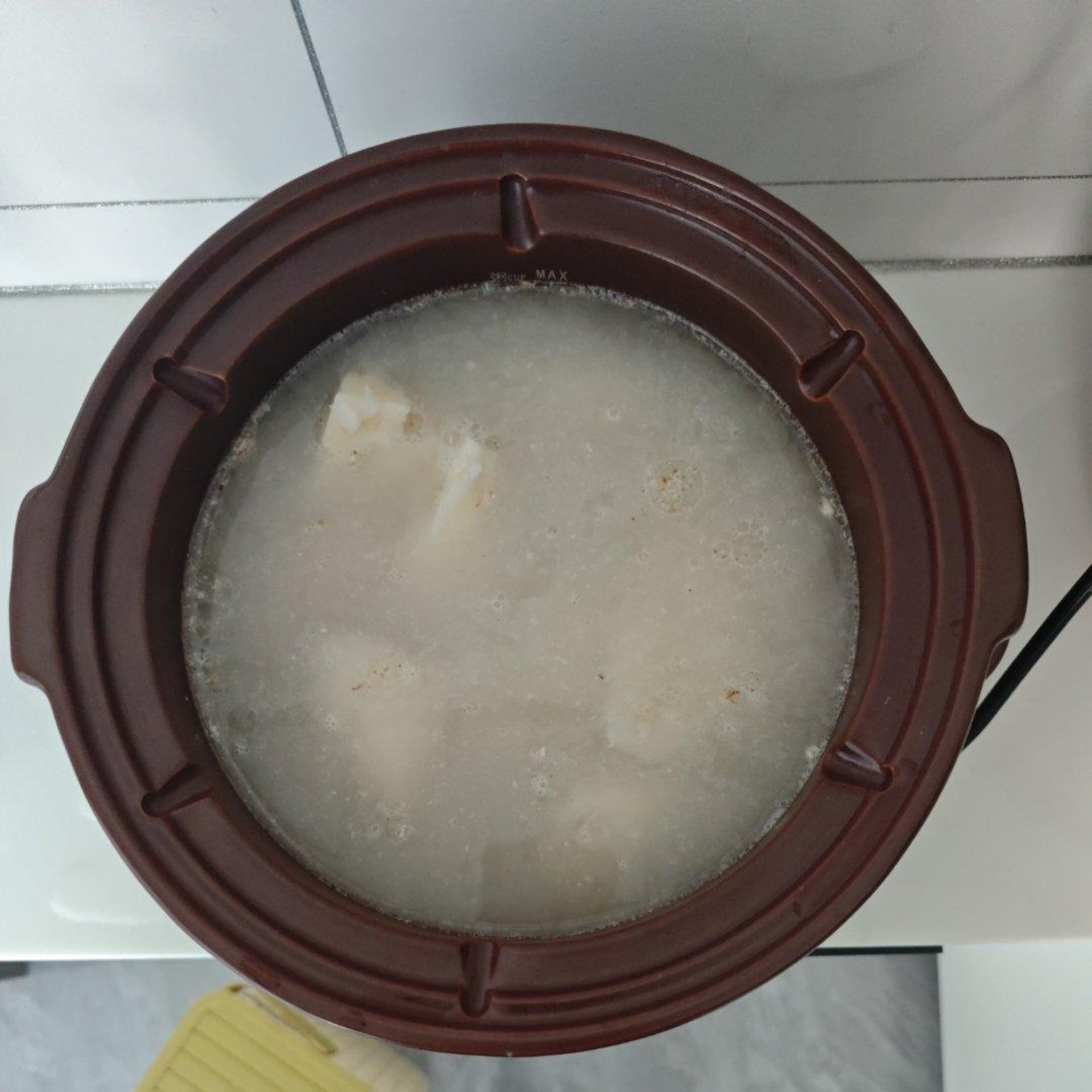
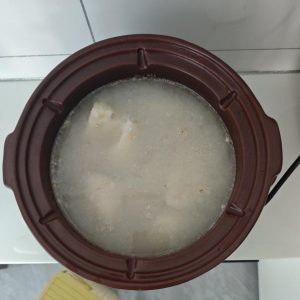
Add the cured lotus root to the pot with the ribs. Bring back to a gentle simmer, cover, and cook on low for about 2 hours, until the lotus root is completely tender and the ribs are falling-off-the-bone soft. Taste and season with salt and white pepper at the very end — not before, or the broth will reduce too salty.
Common Mistakes When Making Lotus Root Pork Rib Soup
Using cold water to top up the pot. Adding cold water mid-simmer shocks the proteins and can make the broth turn grey and thin. Always use boiling water.
Skipping the blanch. If you don’t blanch the ribs, the soup will be cloudy with scum and smell faintly of blood. It takes five minutes and changes everything.
Seasoning too early. Salt added at the start pulls moisture out of the meat and makes the broth taste flat and salty at the same time. Wait until the end.
Boiling the whole time. Once the broth has turned white, drop the heat to a bare simmer. A hard boil for two hours will shred the ribs and reduce the liquid too far.
Using the wrong lotus root. Crisp, pale lotus root will stay crunchy no matter how long you cook it. Look for the starchy, tan-skinned kind if you can.
Variations
Add a small handful of dried scallops or a few slices of dried shiitake along with the lotus root for a deeper, more savory broth.
Swap half the water for a light chicken stock if you want a richer result — but the classic version is water only, and it works.
For a peppery northern-style version, add 10 whole white peppercorns to the pot with the lotus root and crush them lightly first.
If you can find fresh water chestnuts, a few peeled ones tossed in during the last 40 minutes add a nice crunch alongside the soft lotus root.
Frequently Asked Questions
Can I use a pressure cooker? Yes. After the boiling-water step, transfer everything to a pressure cooker and cook at high pressure for 35 minutes, then natural release. The broth won’t be quite as clear, but it’s a good weeknight shortcut.
My broth didn’t turn white — what went wrong? Almost always the water was too cold, or the boil wasn’t hard enough at the start. The hard boil in step 5 is what creates the emulsion.
Can I use frozen lotus root? You can, but the texture is noticeably softer and less sweet. Fresh is worth seeking out.
How do I know when the lotus root is done? A chopstick should slide through a chunk with almost no resistance, like a cooked potato. If there’s any snap left, keep simmering.
Can I make this in advance? Absolutely — it tastes even better the next day. Cool it quickly, refrigerate, and reheat gently on the stove.
How to Serve
Ladle the soup into bowls with a few ribs and several chunks of lotus root in each. Serve with steamed white rice and a simple green vegetable on the side. A small dish of soy sauce with a drop of sesame oil is nice for dipping the ribs, though purists eat them straight from the bowl. If you want to round out the meal, a quick stir-fry like this spicy enoki stir-fry or a plate of oyster garlic broccoli works beautifully alongside.
If you’re building a Chinese soup repertoire, this is the one to learn first. It teaches you patience, the value of blanching, and how two ingredients can carry a whole bowl.
Storage & Reheat
Cool the soup to room temperature within two hours, then refrigerate in an airtight container for up to 4 days. The fat will solidify on top — leave it there, it protects the flavor, and you can skim it before reheating if you prefer.
Reheat gently on the stovetop over medium-low heat until steaming, about 8 minutes. Do not boil hard, or the lotus root will break apart. Freezing is possible for up to 2 months, but the lotus root will become noticeably softer after thawing.
Allergen Notice
This recipe as written is free of the major allergens (dairy, eggs, wheat, soy, peanuts, tree nuts, shellfish, fish, sesame). If you use a store-bought cooking wine or stock, check the label — some contain wheat or soy. If you’re cooking for someone with celiac disease, use a certified gluten-free Shaoxing wine or dry sherry, and see these gluten-free soy sauce alternatives if you plan to serve a dipping sauce.
Nutrition Disclaimer
Nutrition information is estimated and provided for general guidance only. Actual values will vary based on the specific cuts of pork, the size of your lotus root, and how much broth each person drinks versus leaves behind. This is not medical or dietary advice.
About the Author & Recipe Development
I’m Lin, and I grew up in my parents’ restaurant kitchen in Chengdu, where every dish on the menu had to earn its place. Pai gu ou tang wasn’t on that menu — it’s a Hubei soup, not a Sichuan one — but I learned it from a neighbor in Wuhan during a winter I spent there, and it has been part of my cold-weather cooking ever since. The version here is close to hers: the same half-hour salt cure on the lotus root, the same hard boil to turn the broth white, the same patience at the end. If you’re new to long-simmered Chinese soups, this is a good place to start. Once you’re comfortable with the technique, you might enjoy a guide to fixing flat-tasting sauces or a look at how to control heat in stir-frying — both useful skills once you move on to quicker dishes. For anyone setting up a kitchen, my notes on a budget wok setup pair well with this recipe, and if you want something sweet after, this foolproof Basque burnt cheesecake is a reliable finisher. For a lighter meal idea, try this yogurt bowl formula, and if you’re ever out of sesame oil, here’s what to use instead.
Authoritative References
- Fuchsia Dunlop, The Food of Sichuan — background on Sichuan and broader Chinese home cooking techniques.
- Harold McGee, On Food and Cooking — for the science of protein coagulation and broth emulsification.
- Regional Hubei home-cooking references on lotus root varieties and the traditional 煨罐 clay simmering method.
Lotus Root Pork Rib Soup (排骨藕汤): Slow-Simmered Comfort

Equipment
- Heavy pot or wok
- Clay simmering pot (煨罐) or Dutch oven
- Ladle
- Fine Mesh Skimmer
- Chef’s Knife or Cleaver
- Cutting Board
Ingredients
For the Soup
- 700 g pork ribs cut into 4–5 cm lengths
- 600 g fresh lotus root peeled, cut into roll-cut chunks
- 1 tsp salt for curing the lotus root
- 1 tsp sugar for curing the lotus root
- 4 slices fresh ginger divided
- 2 tbsp Shaoxing cooking wine divided
- 1 tbsp neutral oil
- 2.5 L boiling water plus more as needed
- salt to taste, added at the end
- white pepper to taste
Instructions
- Cut the peeled lotus root into roll-cut chunks and toss with one small spoon of salt and one small spoon of sugar. Let it sit for half an hour. You’ll see a little water bead up on the surface — that’s exactly what you want.

- Put the ribs in a pot and cover with cold water. Add the ginger slices and a splash of Shaoxing wine. Bring to a boil, then let it bubble for two to three minutes until a grey scum rises to the top. Drain and rinse the ribs under hot water — not cold, or the meat will tighten.
- Heat a tablespoon of oil in your pot over medium heat. When the oil shimmers, add the ginger slices and stir until they smell fragrant and just barely start to color at the edges — about 30 seconds.
- Add the drained ribs and stir-fry until they take on a light golden color and smell deeply porky, about 4 minutes. Splash the remaining Shaoxing wine down the side of the pot — it will hiss and steam — and toss to coat.
- Pour in the boiling water — enough to cover the ribs by a good 4 cm. Turn the heat to high and let it boil hard, uncovered, for 10 to 15 minutes. The rolling boil is what emulsifies the fat into the liquid and turns the broth opaque and white. Once it’s milky, tip everything into your clay simmering pot or Dutch oven.
- Add the cured lotus root to the pot with the ribs. Bring back to a gentle simmer, cover, and cook on low for about 2 hours, until the lotus root is completely tender and the ribs are falling-off-the-bone soft. Taste and season with salt and white pepper at the very end — not before, or the broth will reduce too salty.













Leave a Reply