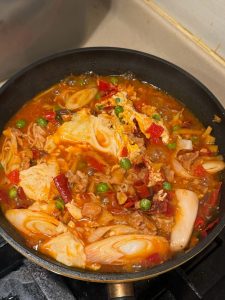
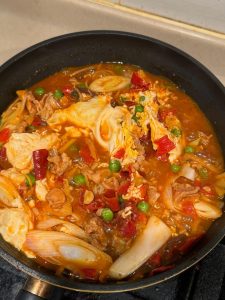
There is a particular kind of comfort that only comes from a bubbling pot of red, spicy broth with soft tofu trembling in it. This Korean spicy rabbit tofu soup — 韩式辣兔豆腐汤 — is that pot. It starts with a fragrant base of scallion, ginger, and garlic, blooms dried chilies and gochugaru in hot oil, then simmers rabbit until tender before silky soft tofu and enoki mushrooms slip in at the end.
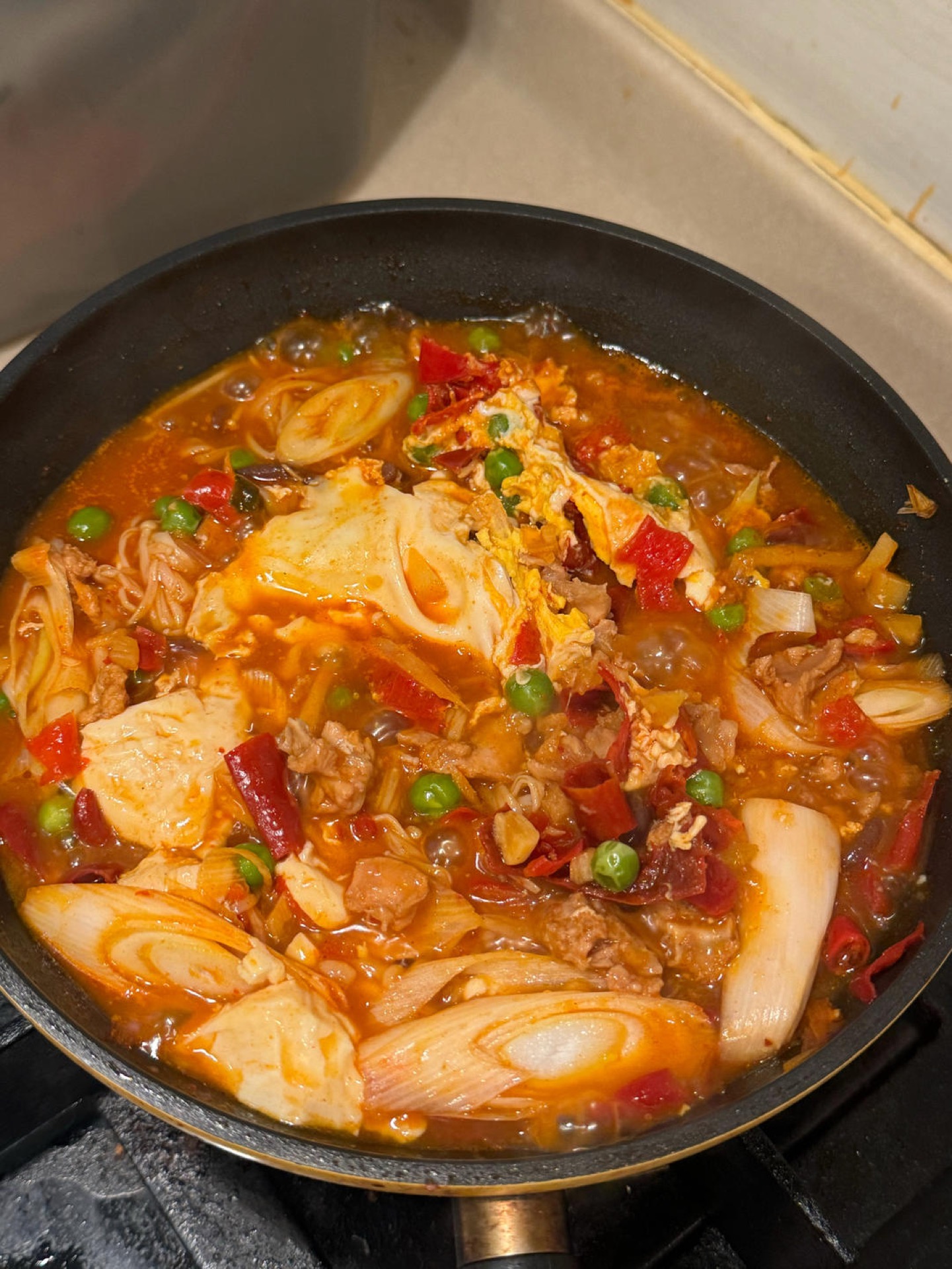
The rabbit is the honest caveat here. It is lean and can turn dry if you rush it, which is exactly why we blanch it first and then poach it gently. If you can’t find rabbit, this same broth is wonderful with chicken thigh or pork — see the Variations section below. For a similar slow-simmered comfort dish, look at my Taiwanese braised pork rice.
What Is Korean Spicy Rabbit Tofu Soup?
It is a Korean-leaning stew built on gochujang, gochugaru, and dried chilies, with rabbit standing in for the more common beef or pork. The dish borrows the structure of a Korean soft tofu stew (sundubu jjigae) but uses Sichuan pantry staples like mushroom seasoning and a splash of Shaoxing-style wine. The result is a soup that is spicy, deeply savory, and just barely sweet at the edges.
The trick is layering heat. Dried chilies, gochugaru, and gochujang all taste different, and using all three gives you a rounder burn than any one alone.
If you have ever struggled with a sauce that turns thin or separates, the same principles apply here: thickening a thin sauce and why sauces separate are both worth a read before you start.
Why This Recipe Works
- Blanching the rabbit in a starch slurry sets the coating and keeps the meat plump instead of tough.
- Blooming the dried chilies and gochugaru in oil releases fat-soluble flavor that water alone can’t pull out.
- Adding the tofu and mushrooms at the end keeps them intact and silky rather than broken and watery.
- The egg goes in last, off a gentle simmer, so it stays soft and custardy instead of rubbery.
- A small amount of sugar and mushroom seasoning rounds off the harsh edge of the chili heat.
Equipment Needed
- A heavy-bottomed pot or Dutch oven with a lid
- A small skillet or pan for blooming the aromatics
- A fine-mesh strainer for blanching the rabbit
- A wooden spoon or spatula
- Measuring spoons and a kitchen scale
Ingredients
- 200 g soft tofu (嫩豆腐), cut into large cubes
- 10 g ginger juice
- 60 g scallion, cut into “eyebrow” bias slices
- 3 g minced ginger
- 10 g minced garlic
- 10 g chopped scallion (white parts)
- 10 g dried chili segments
- 4 g vinegar-style chili flakes (醋辣椒面)
- 3 g fine chili powder (细辣椒面)
- 5 g beef stock powder (Dashida-style)
- 15–20 g Korean gochujang
- 1 g sugar
- 20 g reduced-sodium soy sauce
- 2 g dark soy sauce
- 1 egg
- 250 g enoki mushrooms, trimmed
- 1 fresh red chili (小米辣), sliced
- 1 g white pepper for marinating the rabbit
- 300 g rabbit, cut into small pieces
- 15 g starch (cornstarch or lotus root starch)
- 5 g oil for the marinade
- 400 ml boiling water
- 15 ml Shaoxing-style yellow wine
- 1 g mushroom seasoning
- 1 g white sugar (for the broth)
- 20 g Jilin dried chili flakes
Ingredient Notes
Soft tofu, sometimes sold as “silken” or “tender,” is the right choice here. Firm tofu will hold its shape but won’t give you that custard-soft spoonful. If you can only find firm, add it five minutes earlier so it absorbs more broth.
Gochujang brands vary wildly in sweetness and salt. Start with 15 g, taste the broth, and add the rest only if you want more depth. The dried chili flakes and vinegar-style chili flakes are not interchangeable — the vinegar type adds a tangy, almost pickled note.
Rabbit is lean and mild, closer to chicken thigh than to pork. If you’re working with other lean proteins, my notes on why chicken turns tough apply almost word for word.
Prep & Mise en Place
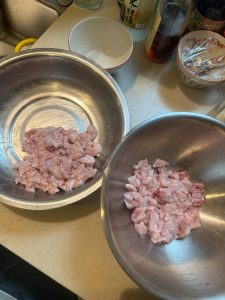
Cut the rabbit into thumb-sized pieces, rinse well under cold running water, and soak in cold water for 2 hours. Drain, squeeze out the excess water by hand, then pat completely dry with paper towels. Dry meat is the whole point — a wet surface steams instead of searing.
While the rabbit soaks, prep everything else: mince the ginger and garlic, chop the scallion whites, slice the scallion greens into thin bias “eyebrow” cuts, trim the enoki, cube the tofu, and measure out your spices into small bowls. Once the pot is hot, there is no time to chop.
If you plan to add noodles, soak them now. Noodles need hours, not minutes — see how cornstarch works in Chinese cooking for the starch-slurry logic behind the rabbit marinade.
Cooking Process
Step 1: Aromatic Base
Set out your aromatics — the ginger, garlic, and scallion whites — so they’re ready the moment the oil is hot. This step is about having everything within arm’s reach before anything hits the pan.
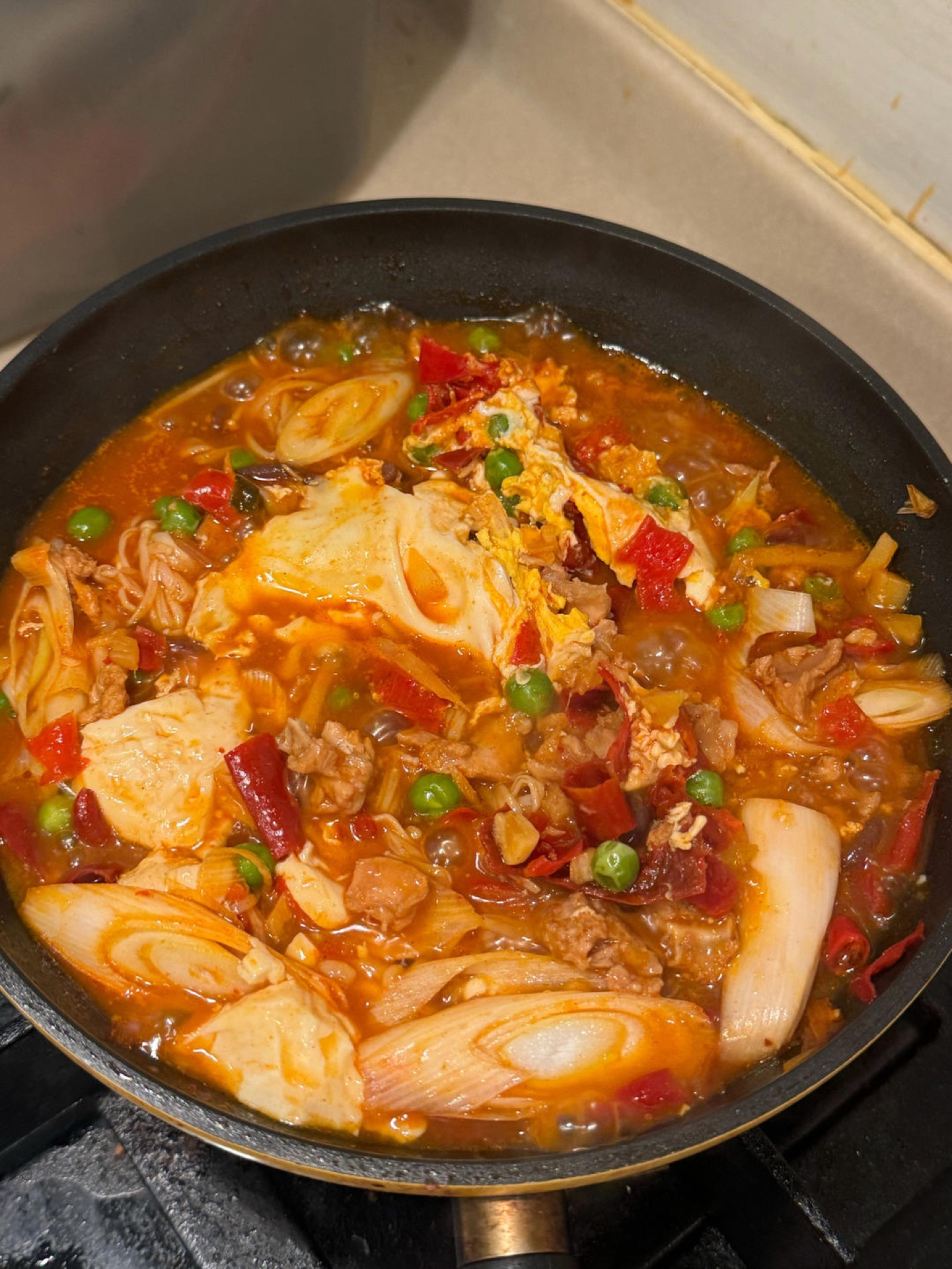
Step 2: Clean and Soak the Rabbit
Cut the rabbit into thumb-sized pieces and rinse thoroughly. Soak in cold water for 2 hours to draw out blood and any gaminess, then drain, squeeze dry by hand, and pat with paper towels until the surface is matte. This step matters more than it looks — wet rabbit will not brown or hold its coating.
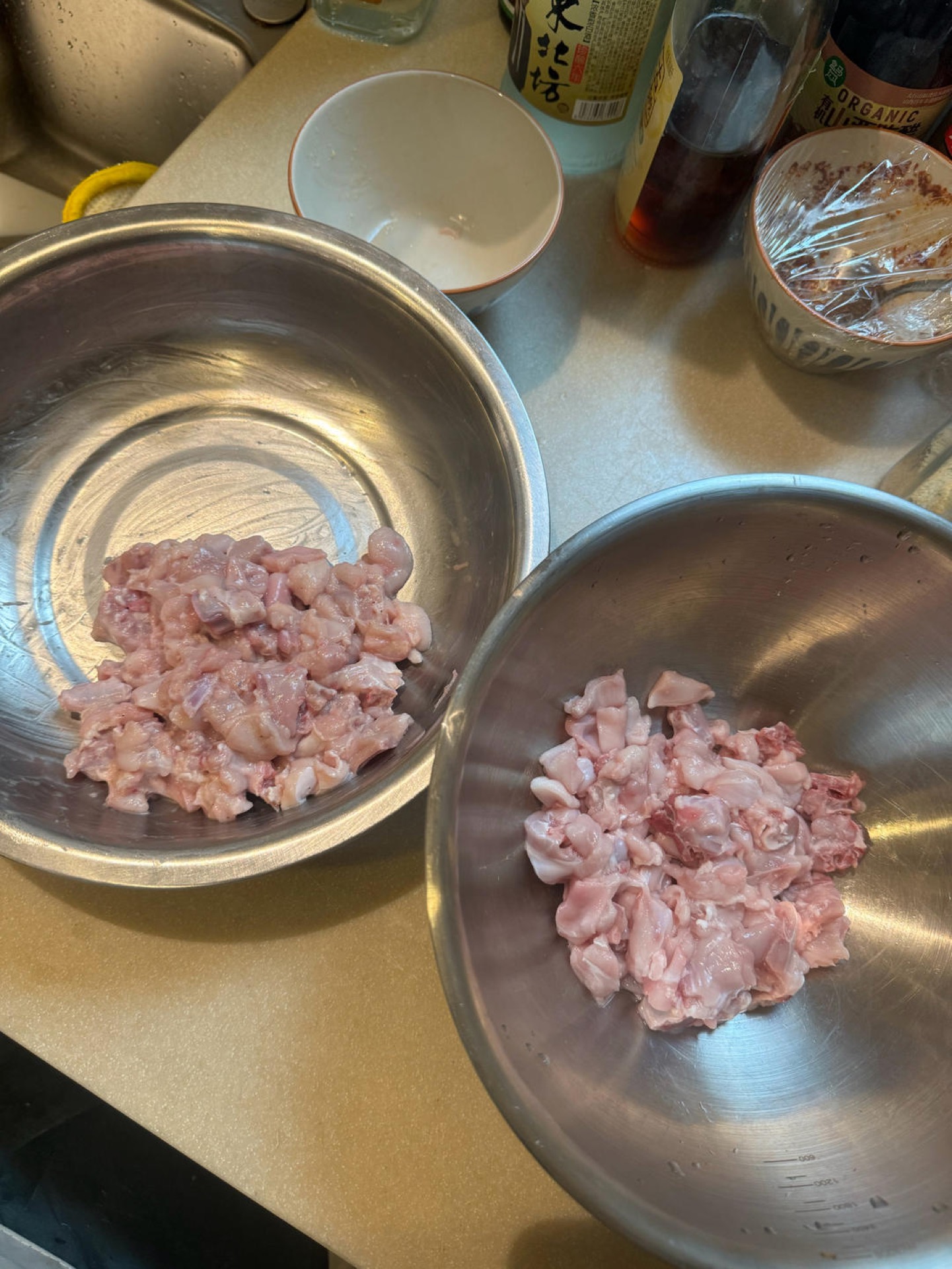
Step 3: Marinate and Blanch
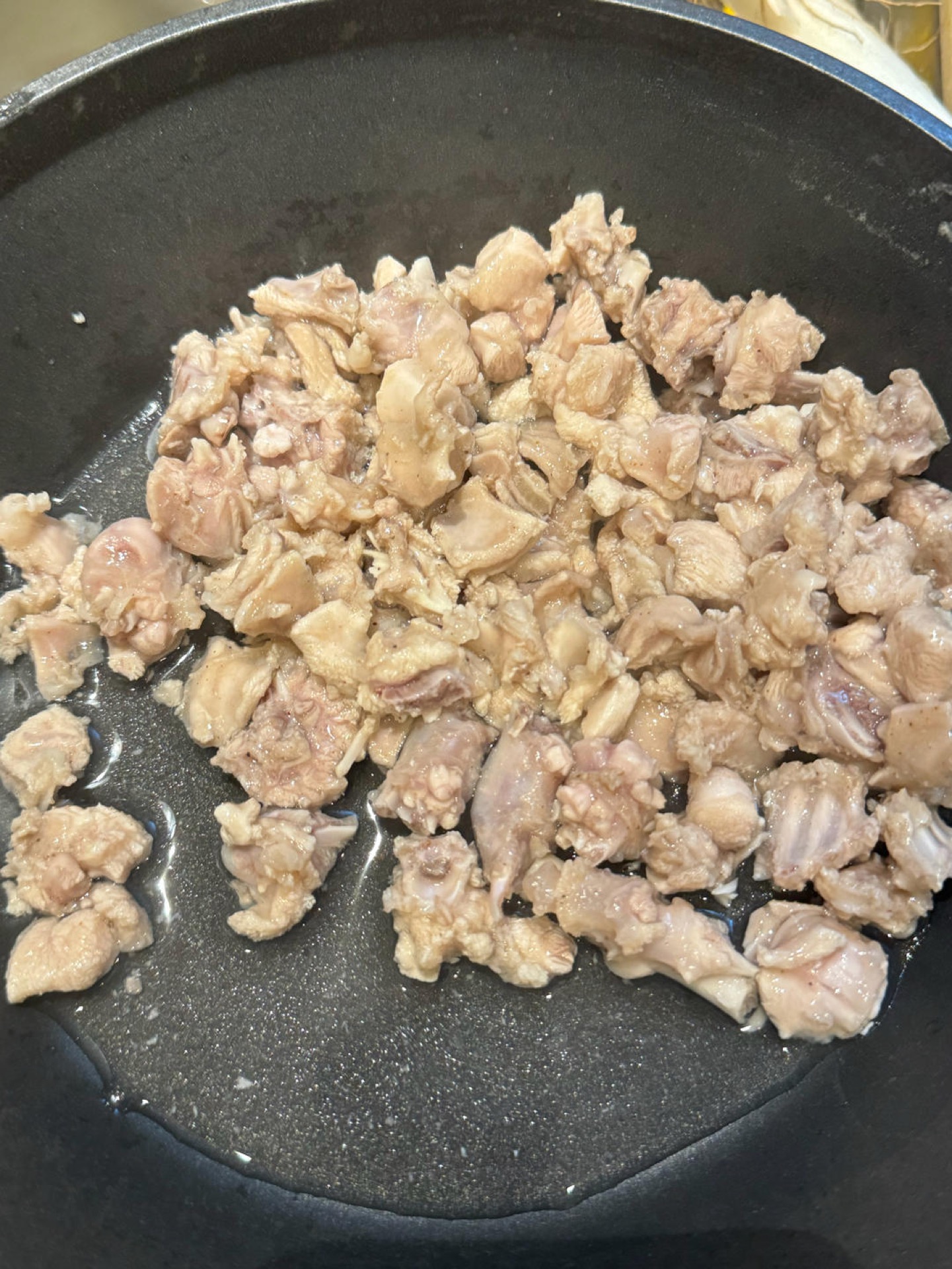
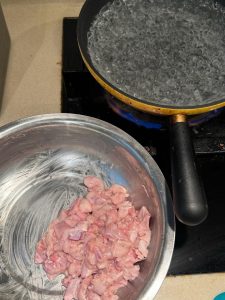
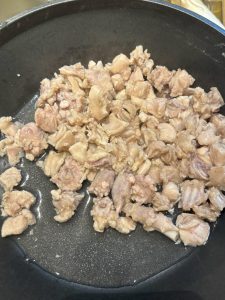
Toss the rabbit with 15 g starch (I used lotus root starch), 5 g oil, and 1 g white pepper. Bring a pot of water to a boil, then turn off the heat. Slide the rabbit pieces in one at a time — do not stir them. Turn the heat to its lowest setting and bring the water back to the edge of a simmer. The starch coating sets around each piece.
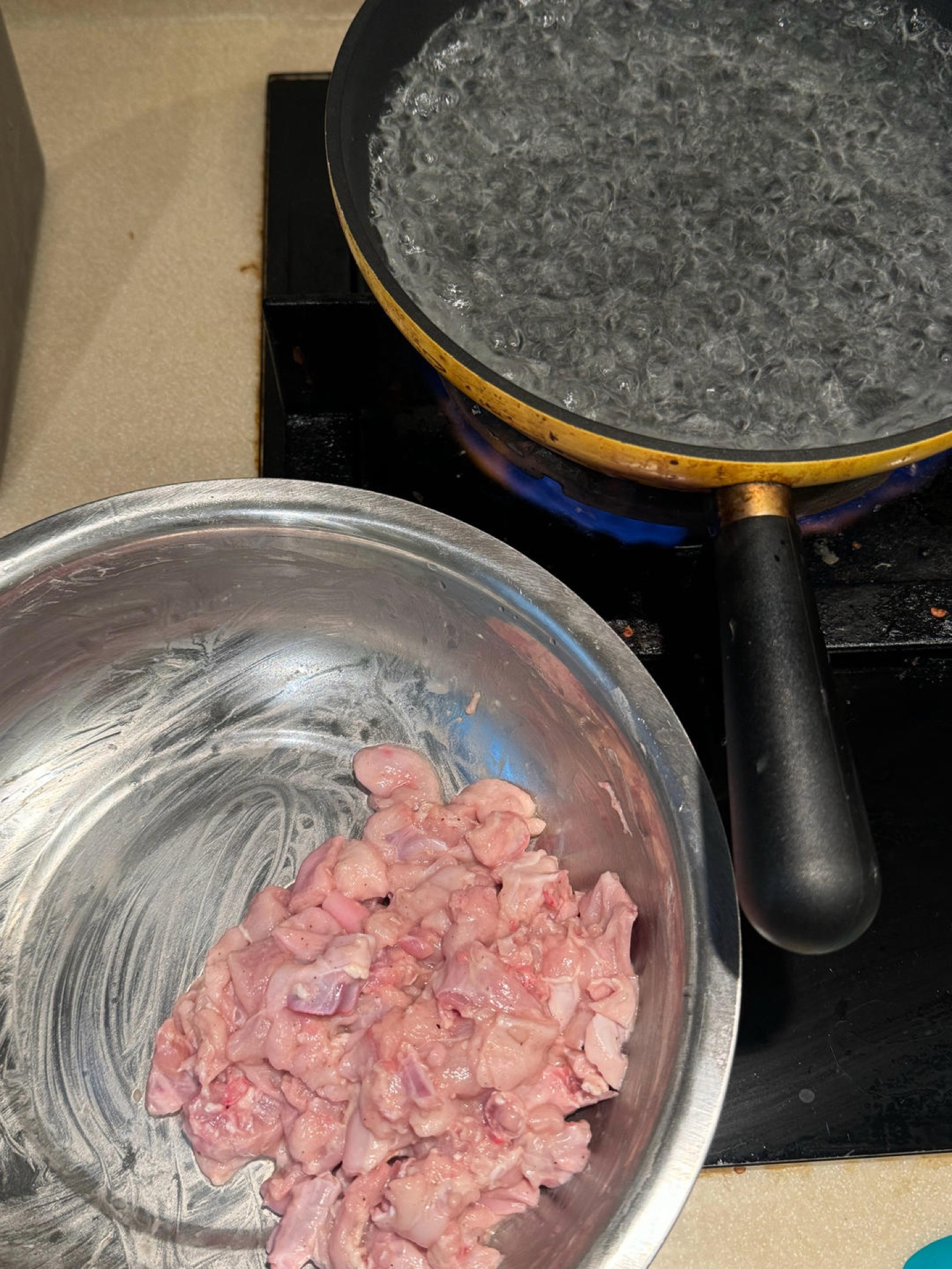
Step 4: Rinse the Blanched Rabbit
Once the pieces have firmed up and the coating has set, scoop them out and give them a gentle rinse under warm water. A quick dip is enough — you just want to remove surface starch without washing off the coating. Set aside.
Step 5: Bloom the Chili Base
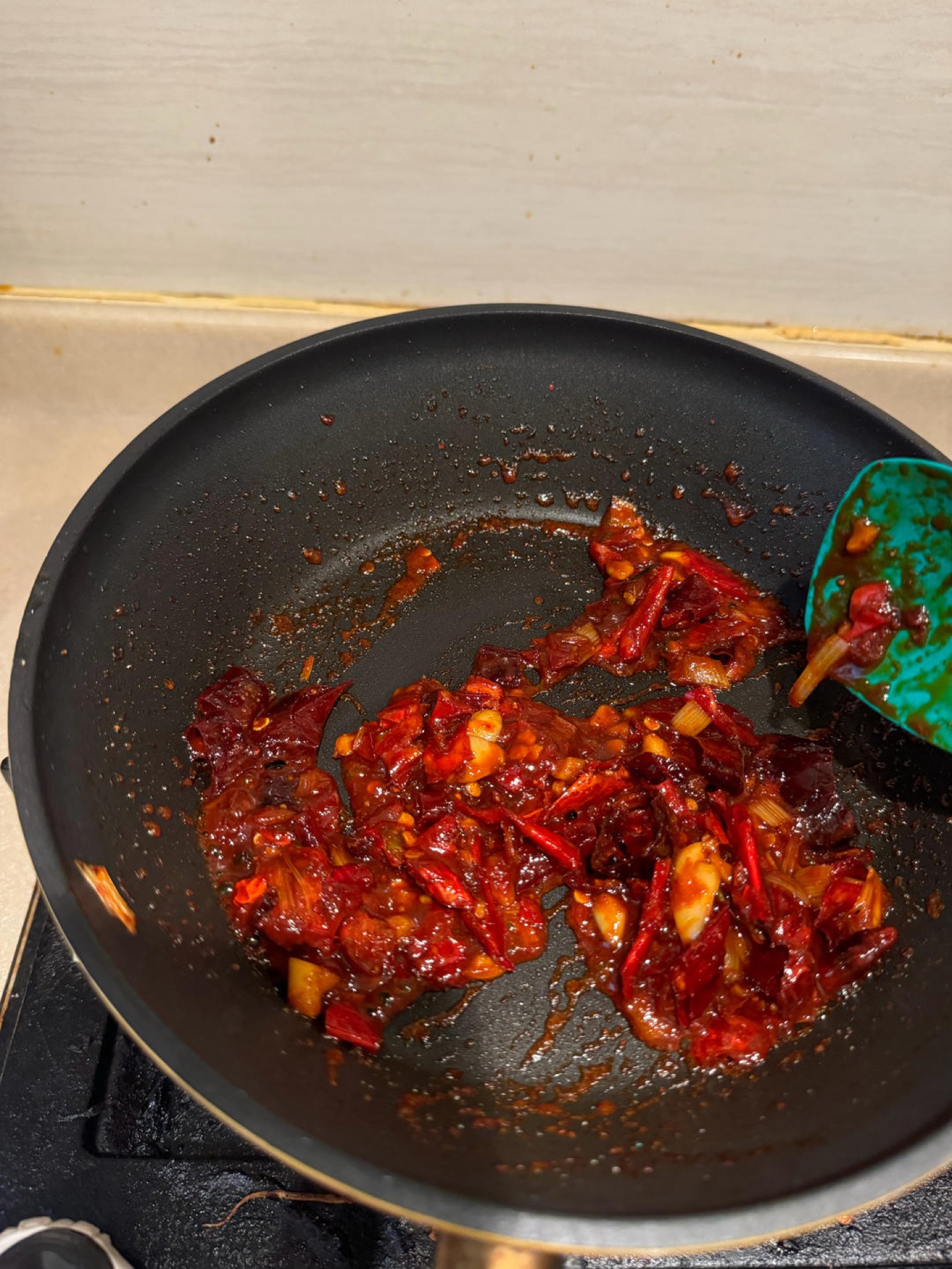
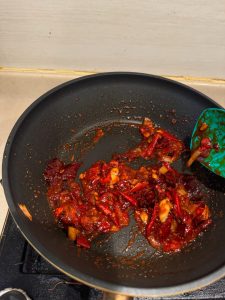
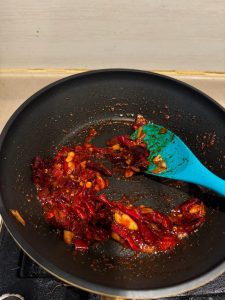
Heat a pot over medium, add oil, then the ginger, garlic, and scallion whites. When they smell sweet, add the dried chili segments and both chili flakes and stir for 20–30 seconds until the oil turns red and fragrant. Kill the heat. Add 15–20 g gochujang and stir it through the residual heat, then splash in 15 ml yellow wine. The pot should hiss and smell deeply savory.
Step 6: Add the Soy Sauces
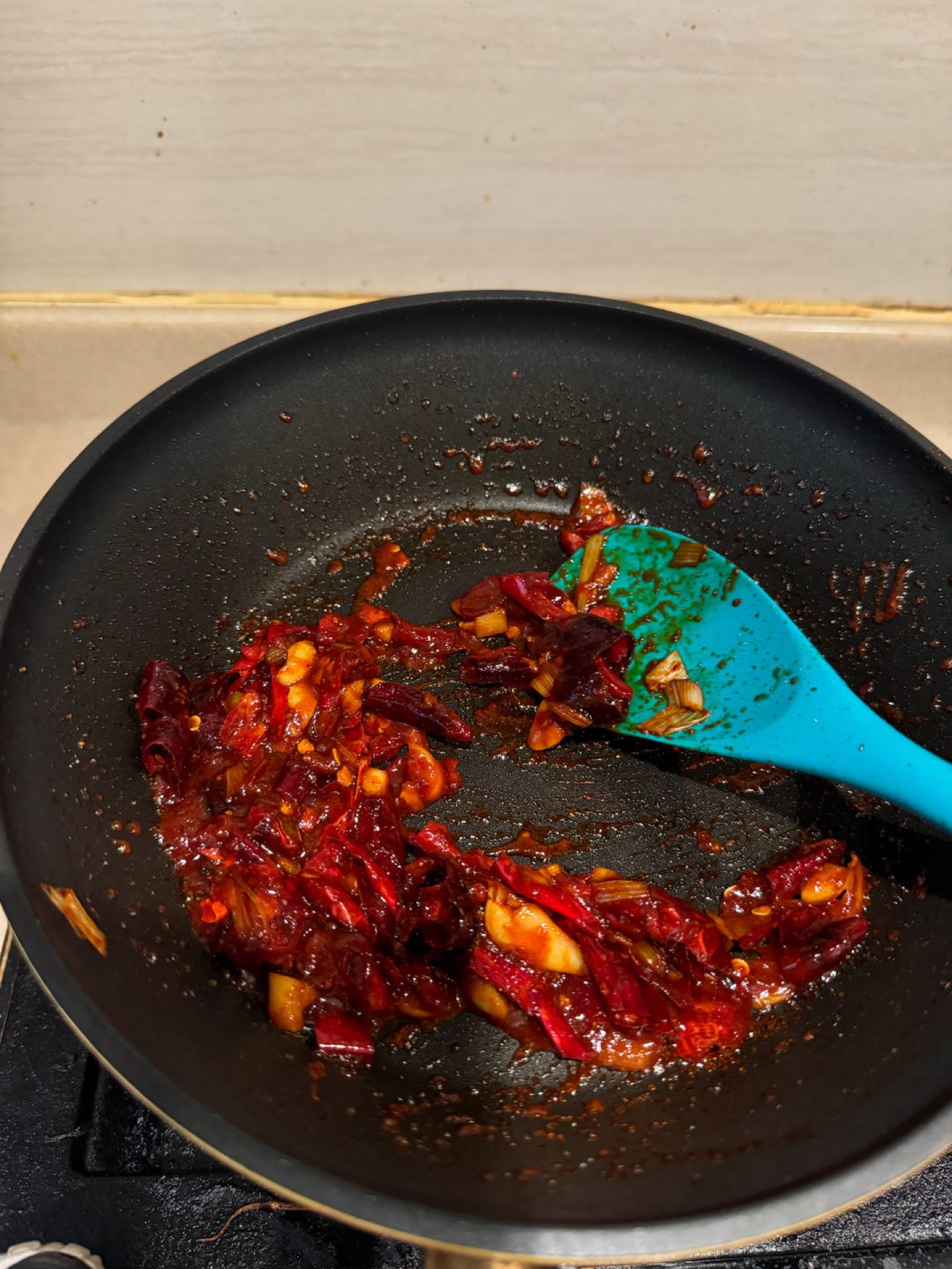
Stir in 20 g reduced-sodium soy sauce and 2 g dark soy sauce. The dark soy is mostly for color — it gives the broth that deep mahogany tone without adding much salt.
Step 7: Build the Broth and Simmer the Rabbit
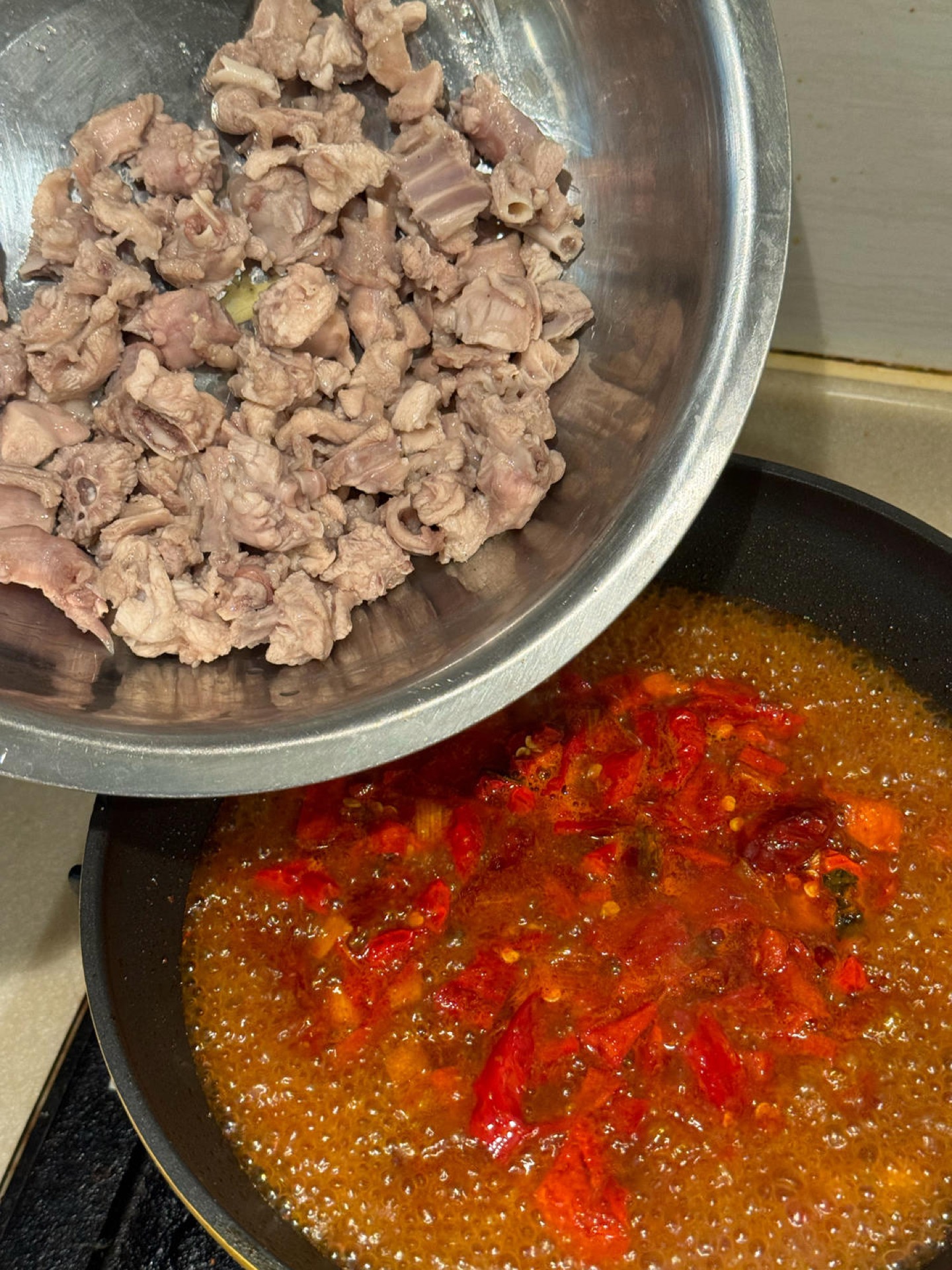
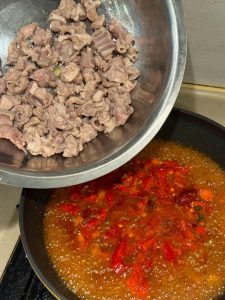
Turn the heat to high and add 400 ml boiling water. Bring to a boil, then add mushroom seasoning, the remaining dried chili flakes, beef stock powder, and 1 g sugar. Add the rabbit, return to a boil, then drop the heat to low and simmer covered for 15 minutes. The meat should be tender but still hold its shape.
Step 8: Add Mushrooms, Tofu, and Egg
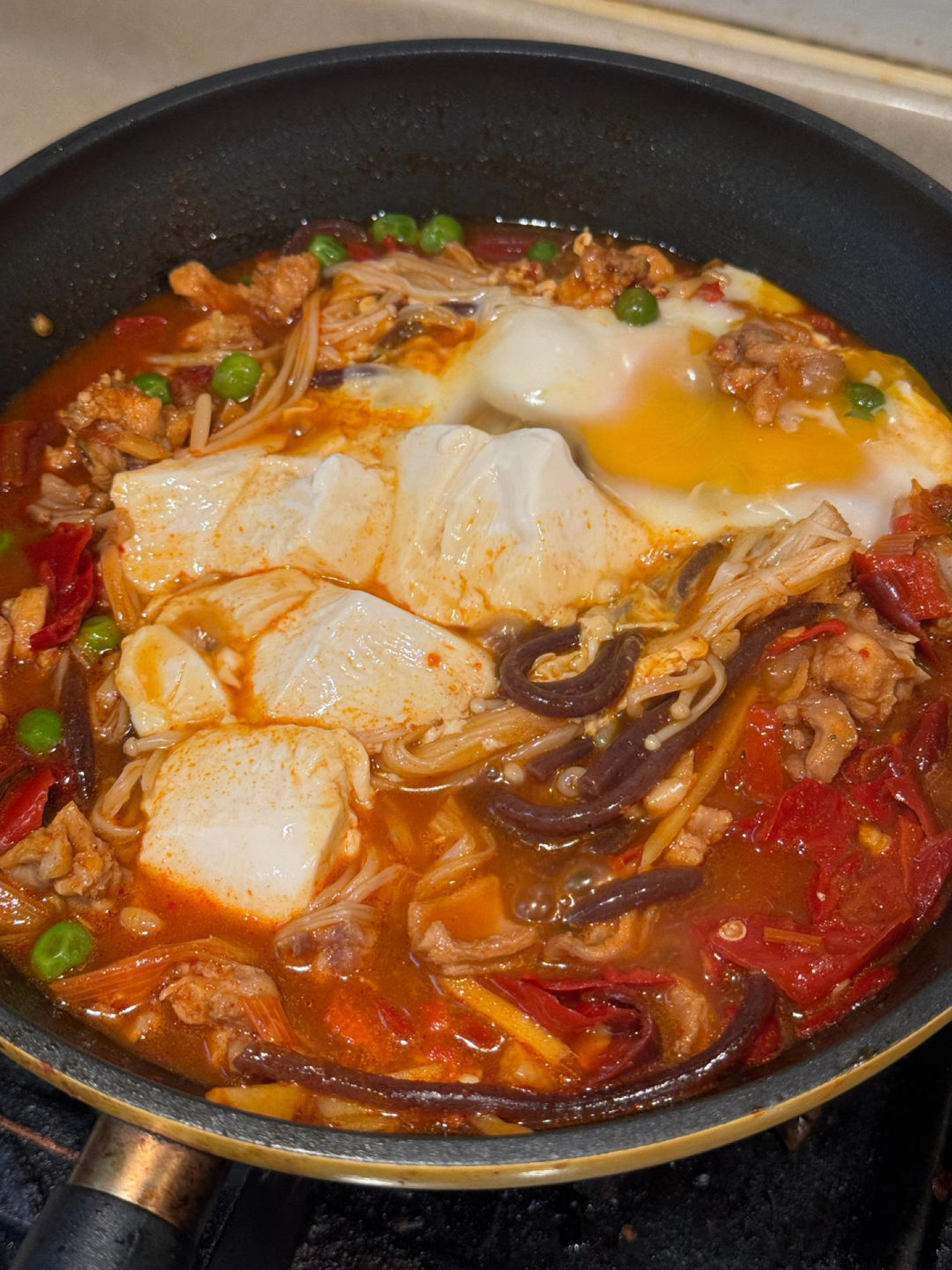
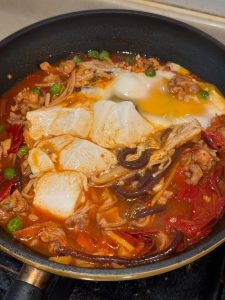
Add the enoki mushrooms — this is the soul of the dish — then the soft tofu, and anything else you like. Simmer covered over low heat for 5–10 minutes. Crack in the egg, cover, and cook just until the white sets. Stir in the ginger juice; it is important and brightens the whole pot. If you’re adding pre-soaked noodles, this is the moment; mine had soaked 6 hours and still needed 10 minutes in the pot to go properly tender.
Step 9: Finish and Serve
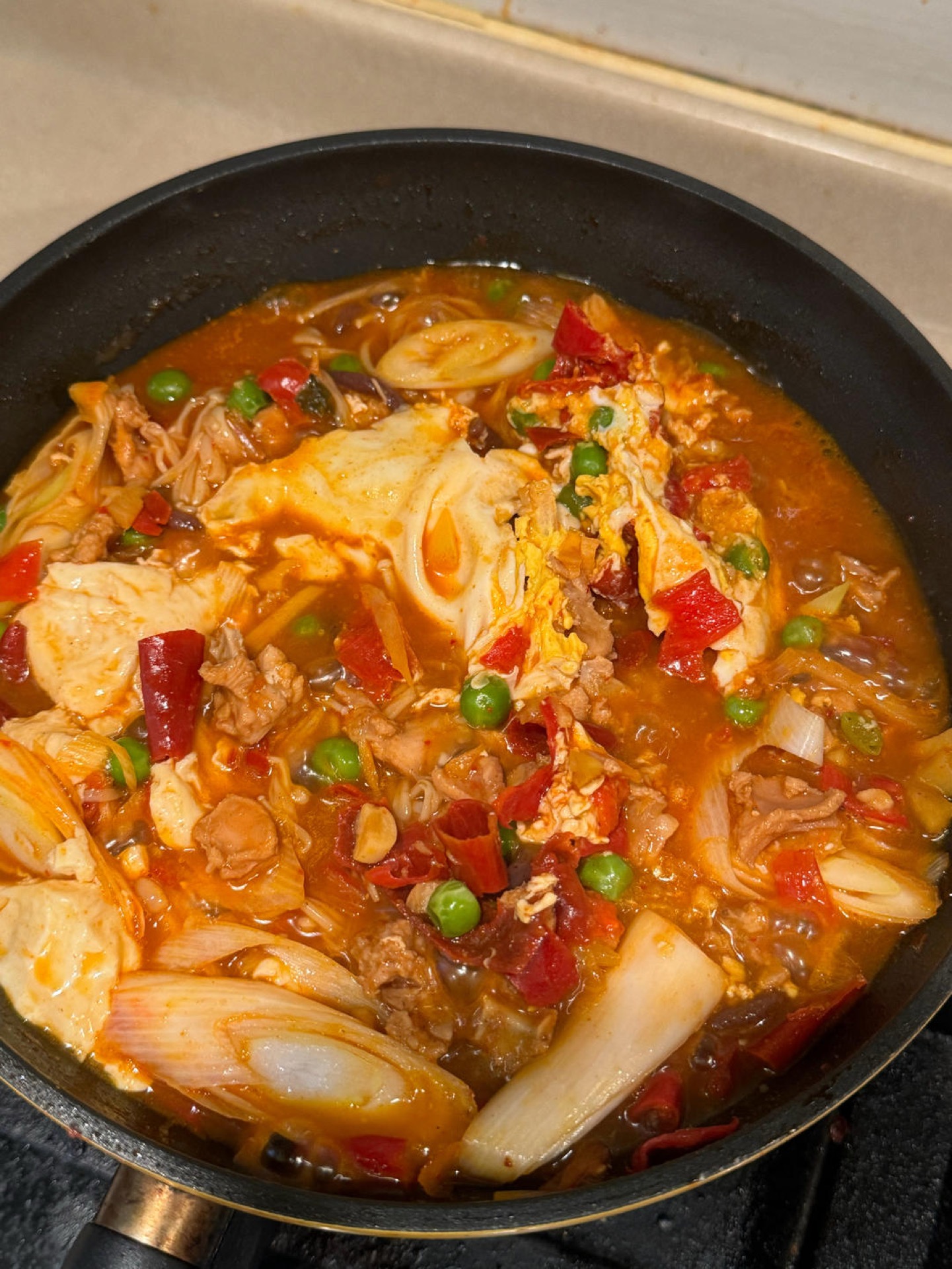
Add the sliced fresh red chili and the scallion “eyebrow” cuts. Taste and adjust — more gochujang for depth, a pinch of sugar if it’s sharp, salt only if it truly needs it. Serve immediately. Use a pasteurized or fresh egg if you like the yolk runny, and add it as late as possible so it stays soft.
Common Mistakes When Making Korean Spicy Rabbit Tofu Soup
1. Skipping the soak. Rabbit straight from the package carries blood and a faint gaminess that only a cold-water soak removes. Two hours is the minimum; longer is fine if you refrigerate it.
2. Leaving the rabbit wet. If you don’t pat it dry, the starch coating slides off in the blanching water and the meat poaches to a dull grey.
3. Boiling the rabbit hard. A rolling boil tightens lean muscle fast. Keep it at a bare simmer and the meat stays tender.
4. Adding tofu too early. Soft tofu breaks apart if it simmers for 20 minutes. Five to ten minutes is plenty for it to heat through and drink up the broth.
5. Burning the chili flakes. Thirty seconds in hot oil is enough to bloom them. Any longer and they turn bitter, and there is no fixing that pot.
Variations
Swap the rabbit for bone-in chicken thigh or thinly sliced pork belly — both are more forgiving and need only 10 minutes of simmering. For a vegetarian version, use shiitake and king oyster mushrooms with vegetable stock powder instead of beef stock powder, and double the gochujang.
If you want more body, add a spoonful of doenjang alongside the gochujang for a funkier, deeper broth. A handful of frozen dumplings dropped in at step 8 turns this into a full one-pot meal. And if you like a thicker, glossier broth, a small slurry of starch at the very end will do it — the same idea as thickening a thin sauce.
Rabbit is lean and mild, so it takes on whatever broth you give it. That’s a gift — but it also means under-seasoned broth makes for a bland bowl. Taste before you serve.
Frequently Asked Questions
Can I use firm tofu instead of soft? Yes, but add it 5 minutes earlier and handle it gently. Firm tofu holds its shape better but won’t give you that custardy texture.
How spicy is this really? Moderately hot by most standards, and quite hot if you use the full 20 g of gochujang plus all the dried chili. Cut the dried chili flakes in half for a milder pot.
Can I make it ahead? The broth and rabbit can be made up to 2 days ahead and refrigerated. Add the tofu, mushrooms, and egg fresh when you reheat.
Do I have to soak the rabbit? Yes, if you want a clean-tasting broth. It’s the single biggest difference between a good pot and a muddy one.
What if I can’t find gochujang? Mix equal parts miso and chili garlic sauce with a pinch of sugar. It’s not identical, but it gets you close.
How to Serve
Serve this straight from the pot with steamed short-grain rice and a few banchan on the side. A simple cucumber or bean sprout salad cuts the heat nicely. If you want something bready to soak up the broth, my pan-fried flatbread (lao bing) is a great match, and Shandong steamed buns work beautifully too.
For a lighter starter alongside, try this 15-minute chrysanthemum greens salad, or a bowl of tomato shrimp ball soup if you’re feeding a crowd.
Storage & Reheat
Store leftovers in an airtight container in the refrigerator for up to 3 days. The tofu will release water and the broth will thin slightly — that’s normal. Reheat gently on the stovetop over low heat; a hard boil will shred the tofu. I don’t recommend freezing this soup, because soft tofu turns spongy and grainy once frozen and thawed.
Allergen Notice
This recipe contains egg, soy (soy sauce, gochujang), and possibly wheat depending on your gochujang and soy sauce brands. Check labels carefully if you’re cooking for someone with celiac disease or a wheat allergy. Beef stock powder may contain additional allergens.
Nutrition Disclaimer
Nutrition information is estimated and provided for general guidance only. Actual values will vary based on your specific brands, portion sizes, and preparation method. This is not medical or dietary advice.
About the Author & Recipe Development
I’m Lin. I grew up in my parents’ restaurant kitchen in Chengdu, where every dish on the menu had to earn its place. That standard still shapes how I cook — nothing goes on this site unless it’s something I’d happily serve to my own family on a weeknight. This soup came out of a cold evening when I wanted sundubu jjigae but only had rabbit in the fridge. It has been in rotation ever since.
Authoritative References
- Korean Food Promotion Institute — guidance on gochujang and traditional stew construction
- USDA FoodData Central — nutrient data for rabbit, tofu, and enoki mushrooms
- FDA Food Safety guidance on egg handling and pasteurized eggs
Korean Spicy Rabbit Tofu Soup (韩式辣兔豆腐汤): Fiery, Silky Stew

Equipment
- Heavy-bottomed Pot or Dutch Oven
- Small Skillet
- Fine-mesh strainer
- Wooden Spoon
- Kitchen Scale
Ingredients
Main Ingredients
- 200 g soft tofu cut into large cubes
- 300 g rabbit cut into thumb-sized pieces
- 250 g enoki mushrooms trimmed
- 1 egg pasteurized or fresh
- 1 fresh red chili sliced
- 60 g scallion cut into eyebrow bias slices
- 10 g ginger juice
- 3 g minced ginger
- 10 g minced garlic
- 10 g chopped scallion whites
Seasonings & Sauces
- 10 g dried chili segments
- 4 g vinegar-style chili flakes
- 3 g fine chili powder
- 5 g beef stock powder Dashida-style
- 15 g gochujang up to 20 g to taste
- 1 g sugar
- 20 g reduced-sodium soy sauce
- 2 g dark soy sauce
- 20 g Jilin dried chili flakes
- 15 ml Shaoxing-style yellow wine
- 1 g mushroom seasoning
- 1 g white sugar for the broth
- 400 ml boiling water
Rabbit Marinade
- 15 g starch cornstarch or lotus root starch
- 5 g oil
- 1 g white pepper
Instructions
- Set out your aromatics — the ginger, garlic, and scallion whites — so they’re ready the moment the oil is hot.

- Cut the rabbit into thumb-sized pieces and rinse thoroughly. Soak in cold water for 2 hours to draw out blood and gaminess, then drain, squeeze dry by hand, and pat with paper towels until the surface is matte.
- Toss the rabbit with 15 g starch, 5 g oil, and 1 g white pepper. Bring a pot of water to a boil, then turn off the heat. Slide the rabbit pieces in one at a time — do not stir them. Turn the heat to lowest and bring back to the edge of a simmer so the starch coating sets.
- Once the pieces have firmed up and the coating has set, scoop them out and give them a gentle rinse under warm water. A quick dip is enough. Set aside.
- Heat a pot over medium, add oil, then the ginger, garlic, and scallion whites. When fragrant, add dried chili segments and both chili flakes and stir 20–30 seconds until the oil turns red. Kill the heat. Add 15–20 g gochujang and stir through the residual heat, then splash in 15 ml yellow wine.
- Stir in 20 g reduced-sodium soy sauce and 2 g dark soy sauce.
- Turn heat to high and add 400 ml boiling water. Bring to a boil, then add mushroom seasoning, remaining dried chili flakes, beef stock powder, and 1 g sugar. Add the rabbit, return to a boil, then drop to low and simmer covered for 15 minutes.
- Add the enoki mushrooms, then the soft tofu, and anything else you like. Simmer covered over low heat for 5–10 minutes. Crack in the egg, cover, and cook until the white sets. Stir in the ginger juice.
- Add the sliced fresh red chili and the scallion eyebrow cuts. Taste and adjust. Serve immediately with rice.












Leave a Reply