烙饼 is the flatbread that northern Chinese families make when they want something that is crisp on the outside, flaky inside, and happy to wrap around anything. This recipe from xiachufang is a beginner’s version — the cook admits she cannot roll dough with a rolling pin and presses the bread out with her fingers instead — and it produces a proper layered 烙饼 with just flour, warm water, and an oil-roux (油酥) brushed between the folds.
The dough rests overnight in the fridge, which does most of the work. A simple warm-water dough is kneaded, chilled, then rolled and brushed with an oil-roux made by pouring smoking hot oil over a little flour (or simply using lard). That fat layer is what creates the flaky layers when the bread is coiled, pressed, and griddled over medium heat — the cook notes that medium heat, not low, is what keeps the bread from drying out.
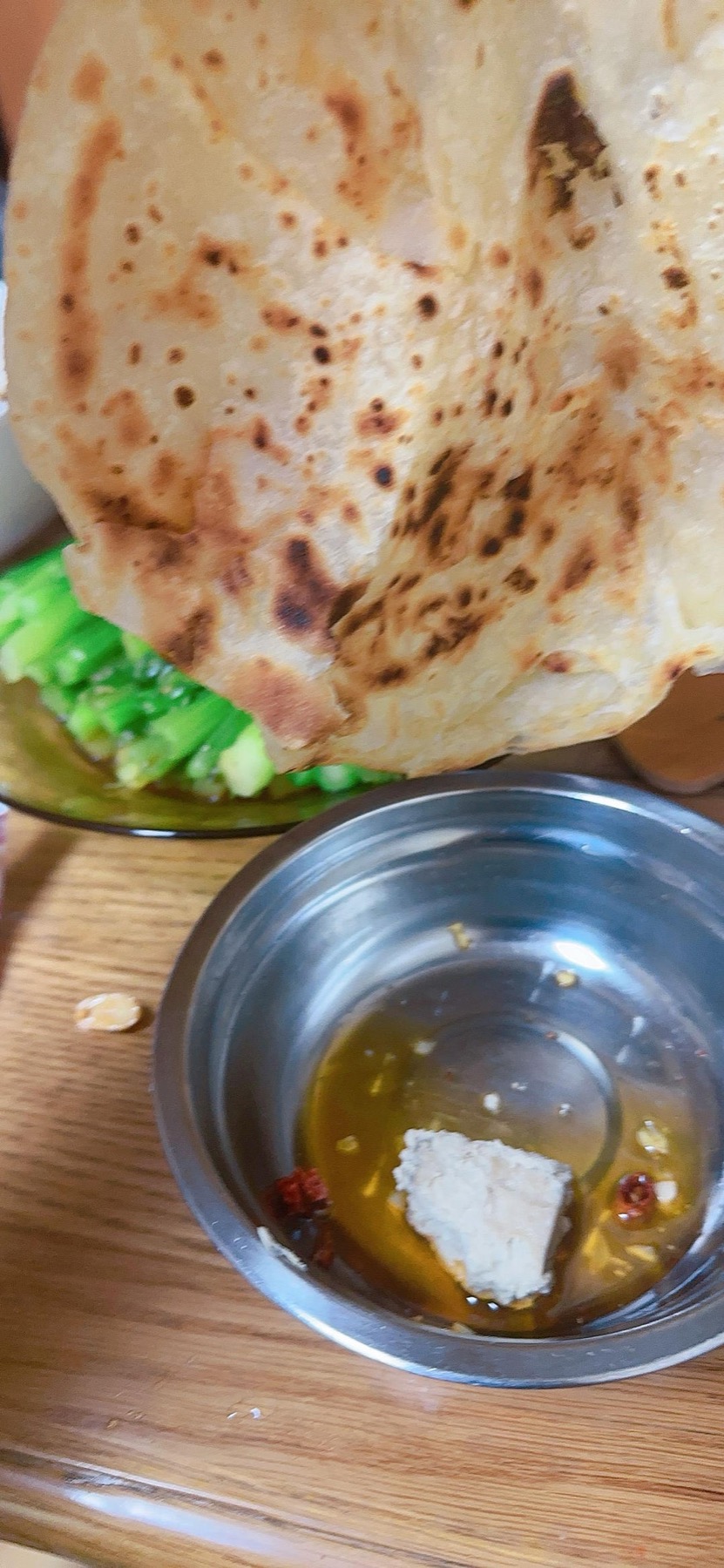
What Is Pan-Fried Flatbread (烙饼)?
Pan-fried flatbread (烙饼) is a northern Chinese griddle bread made from a soft warm-water dough, rolled with a fat layer, coiled into a spiral, pressed flat, and cooked on a griddle until flaky and golden. It is the everyday bread of the north — eaten with stir-fries, soups, or simply on its own.
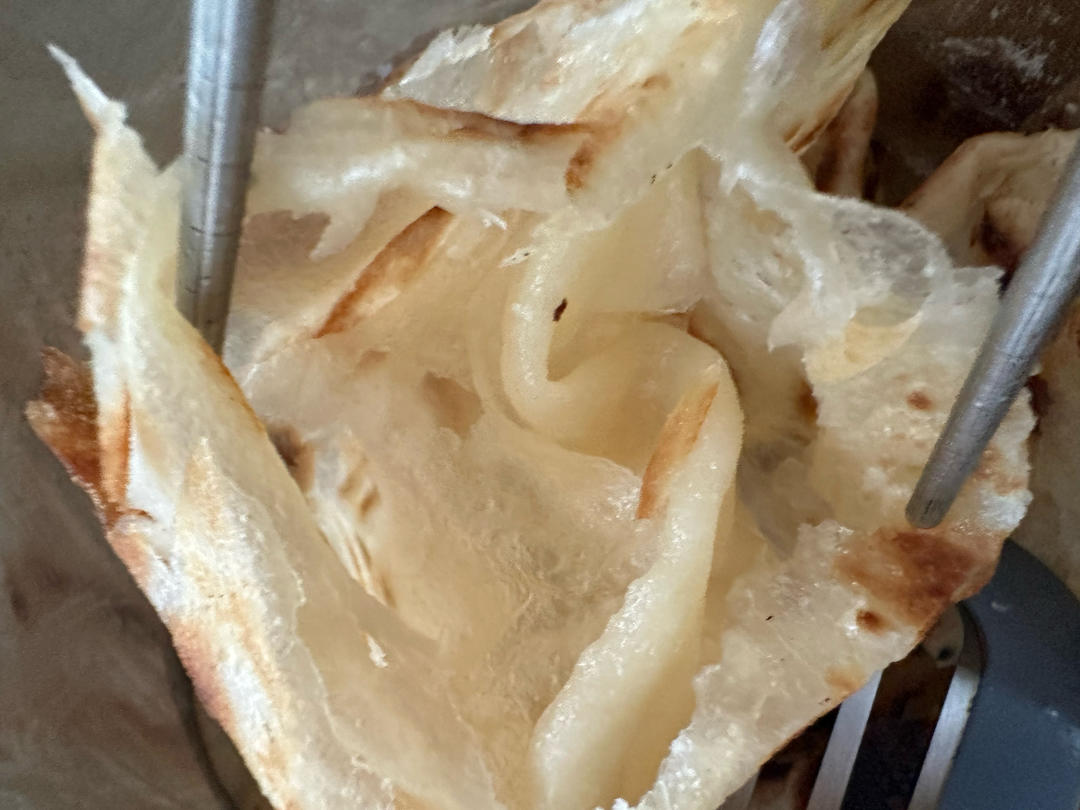
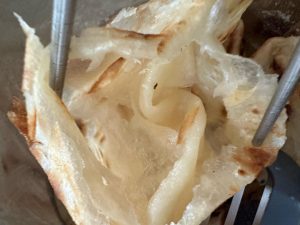
What makes it flaky is the oil-roux (油酥) spread between the layers of dough. When the coiled dough is pressed and fried, the fat separates the layers, so the bread puffs into distinct flakes rather than a solid disc. This version is deliberately unfussy: no salt in the dough (the cook says it is meant to pair with dishes), no special technique, and an overnight rest that makes the dough easy to handle.
If you love layered Chinese breads, my scallion pancakes use a similar oil-and-flour technique with scallions built in.
11-Hour Pumpkin Milk Steamed BunsA foolproof, single-proof method for making soft, fluffy, and vibrant yellow pumpkin steamed buns (mantou) in a fraction of the traditional time.Check out this recipe

Why This Recipe Works
- An overnight rest makes the dough easy to handle. Chilling relaxes the gluten so the dough rolls and presses without springing back.
- Oil-roux creates the layers. Fat brushed between folds separates the dough into flakes as it cooks.
- Coiling and pressing builds the spiral. Rolling the dough up and pressing it flat stacks the layers.
- Medium heat keeps the bread tender. The cook warns that low heat dries the bread out and makes it hard.
- No salt keeps it versatile. The bread is meant to be eaten with savory dishes, so the dough stays neutral.
Equipment Needed
- Mixing bowl
- Fridge space for the overnight rest
- Griddle or flat skillet with a lid
Ingredients
- 166 g (1 1/3 cups) all-purpose flour
- 100 g (1/2 cup minus 1 tsp) warm water, about 50°C (122°F)
- 2 tbsp oil-roux (油酥) or lard, for brushing
- Extra flour and hot oil, if making the oil-roux
Ingredient Notes
Warm water. Around 50°C (122°F) — warm enough to soften the dough but not hot enough to cook it.
Oil-roux (油酥). Make it by putting two tablespoons of flour in a bowl and pouring smoking-hot oil over it; the cook says lard works just as well and may be even better.
No salt. The dough is unsalted on purpose so the bread partners with whatever you serve.
Prep & Mise en Place
Weigh the flour and warm water. Mix the dough, then refrigerate it overnight (or at least several hours). If making the oil-roux, heat oil until it just smokes and pour it over the flour, stirring to a paste; otherwise have the lard ready. Set a griddle over medium heat when you are ready to cook.
Cooking Process
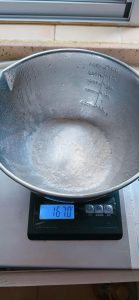
Step 1 — Weigh the Flour
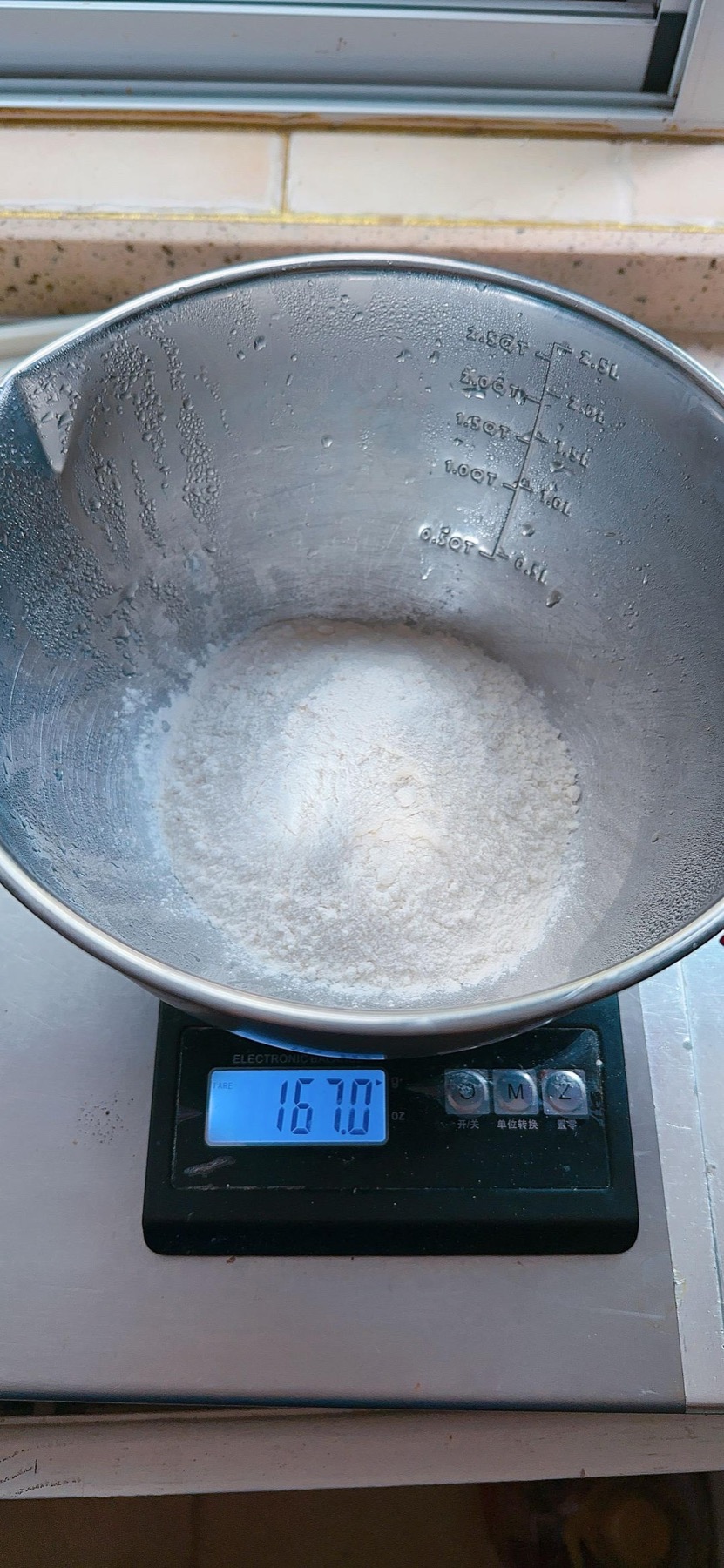
Weigh 166 g of flour into a bowl.
Step 2 — Measure the Warm Water
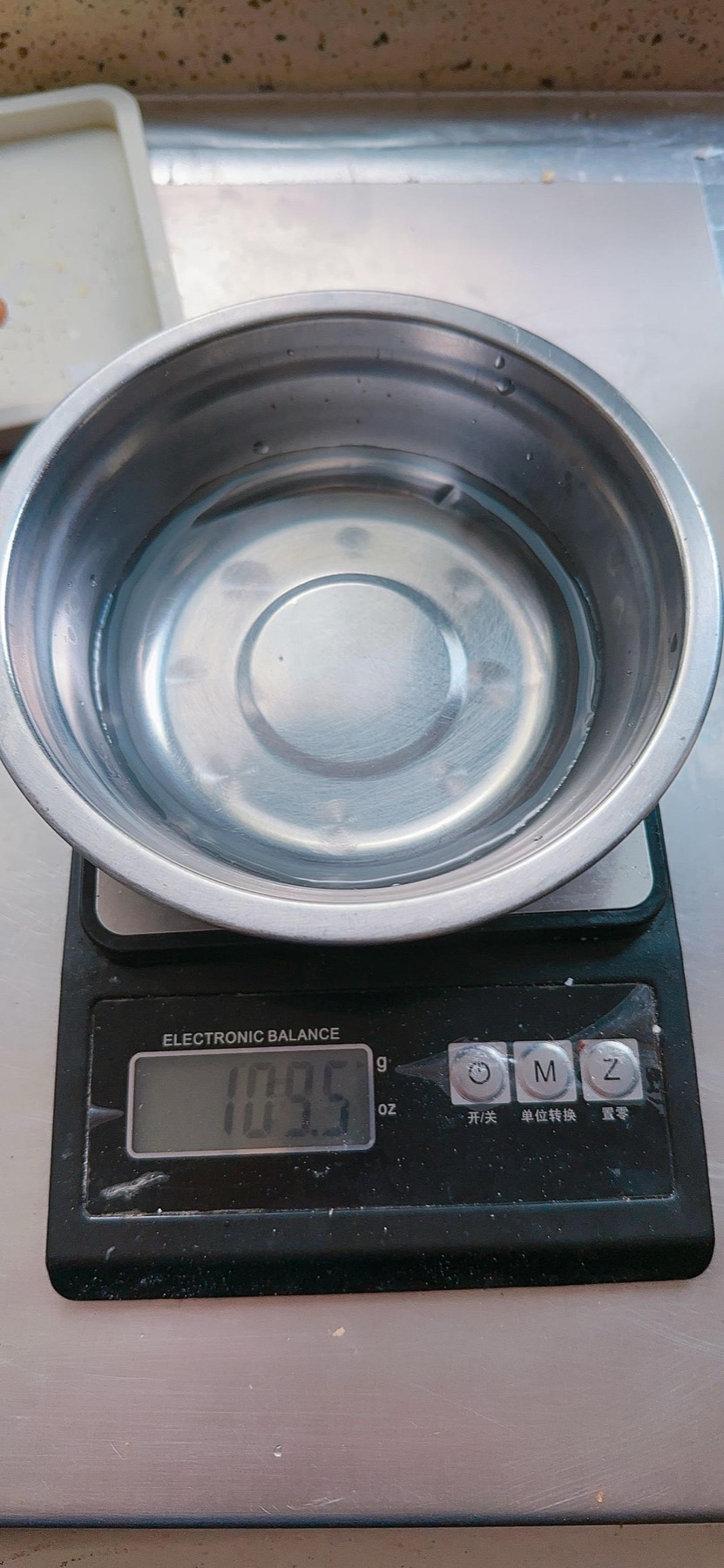
Measure 100 g of warm water, about 50°C (122°F).
Step 3 — Add the Water Gradually
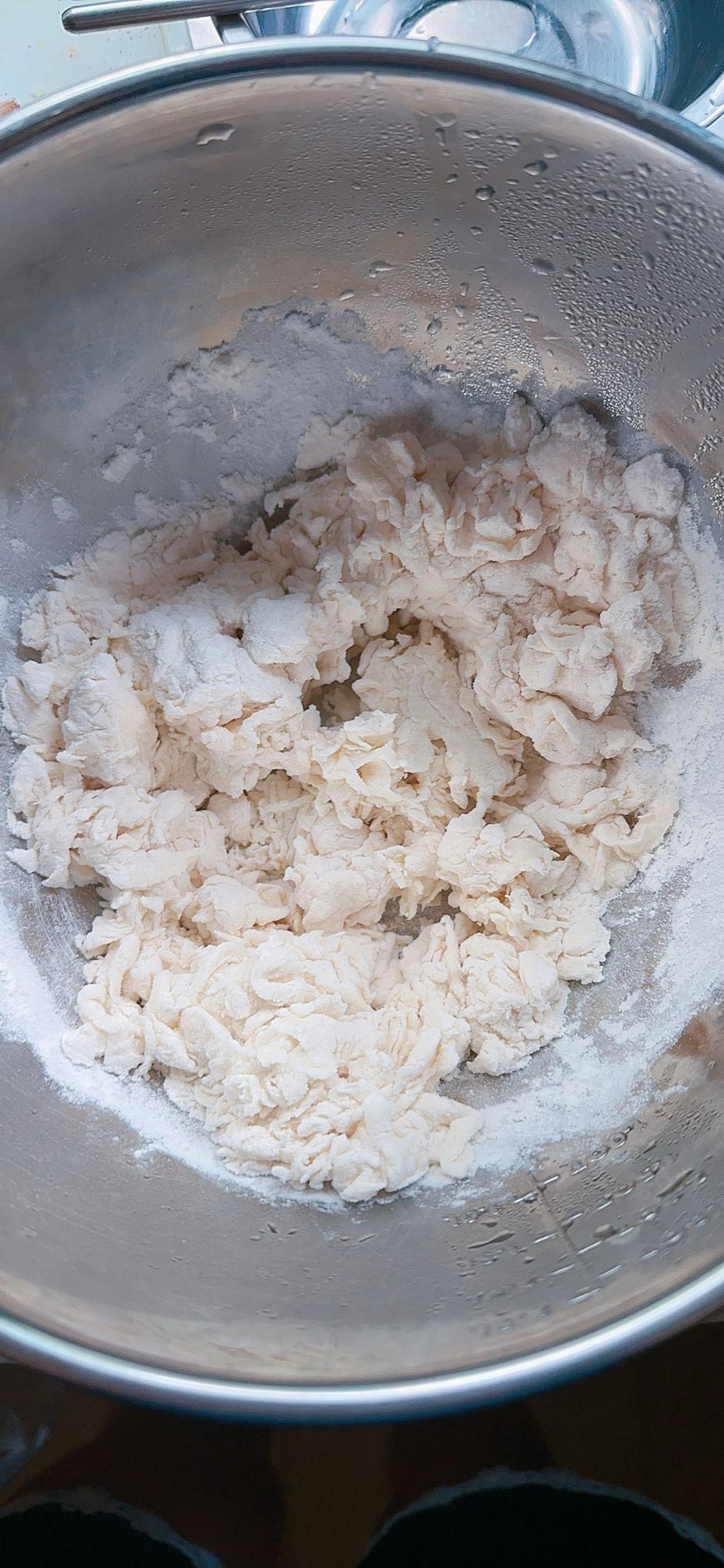
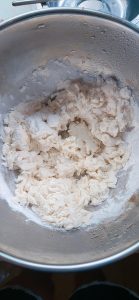
Pour the water into the flour in several additions, stirring between each.
Step 4 — Rest the Dough Overnight in the Fridge
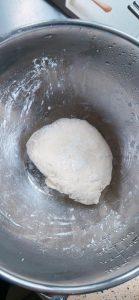
Mix into a dough and refrigerate overnight.
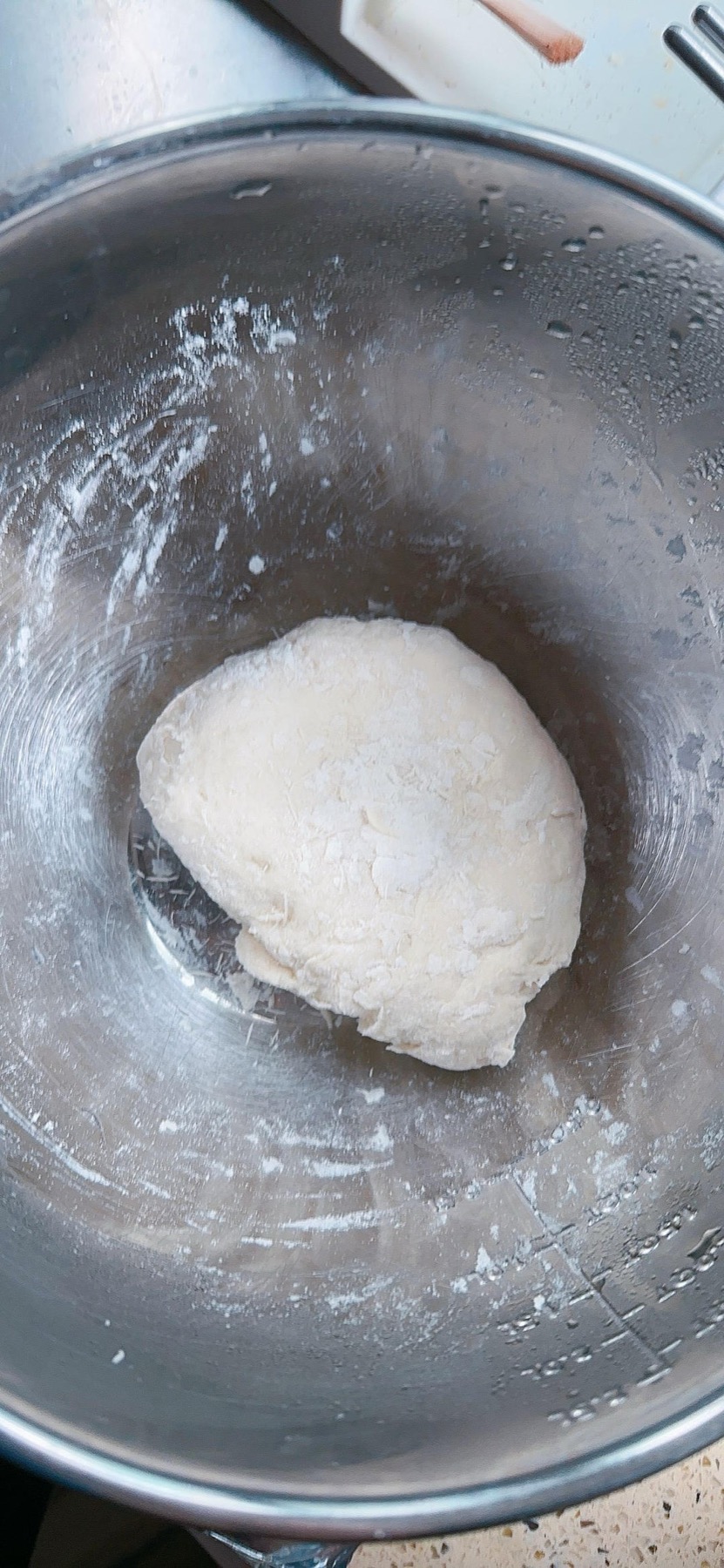
Step 5 — Knead and Relax 10 Minutes
Dust the work surface with flour, knead the dough, and let it relax 10 minutes before rolling.
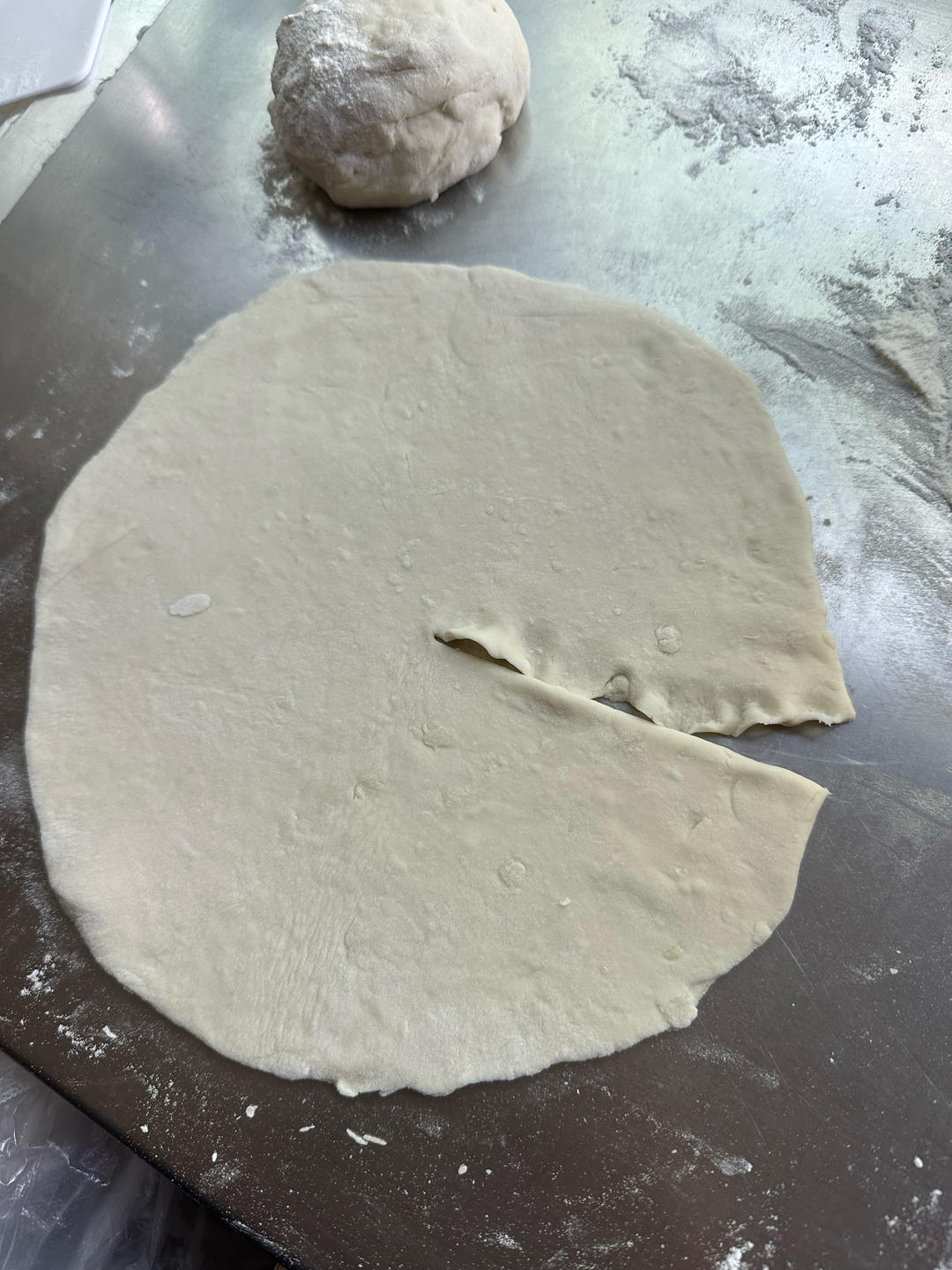
Step 6 — Make the Oil-Roux
Put two spoons of flour in a bowl and pour smoking-hot oil over it to make an oil-roux, or simply use lard.
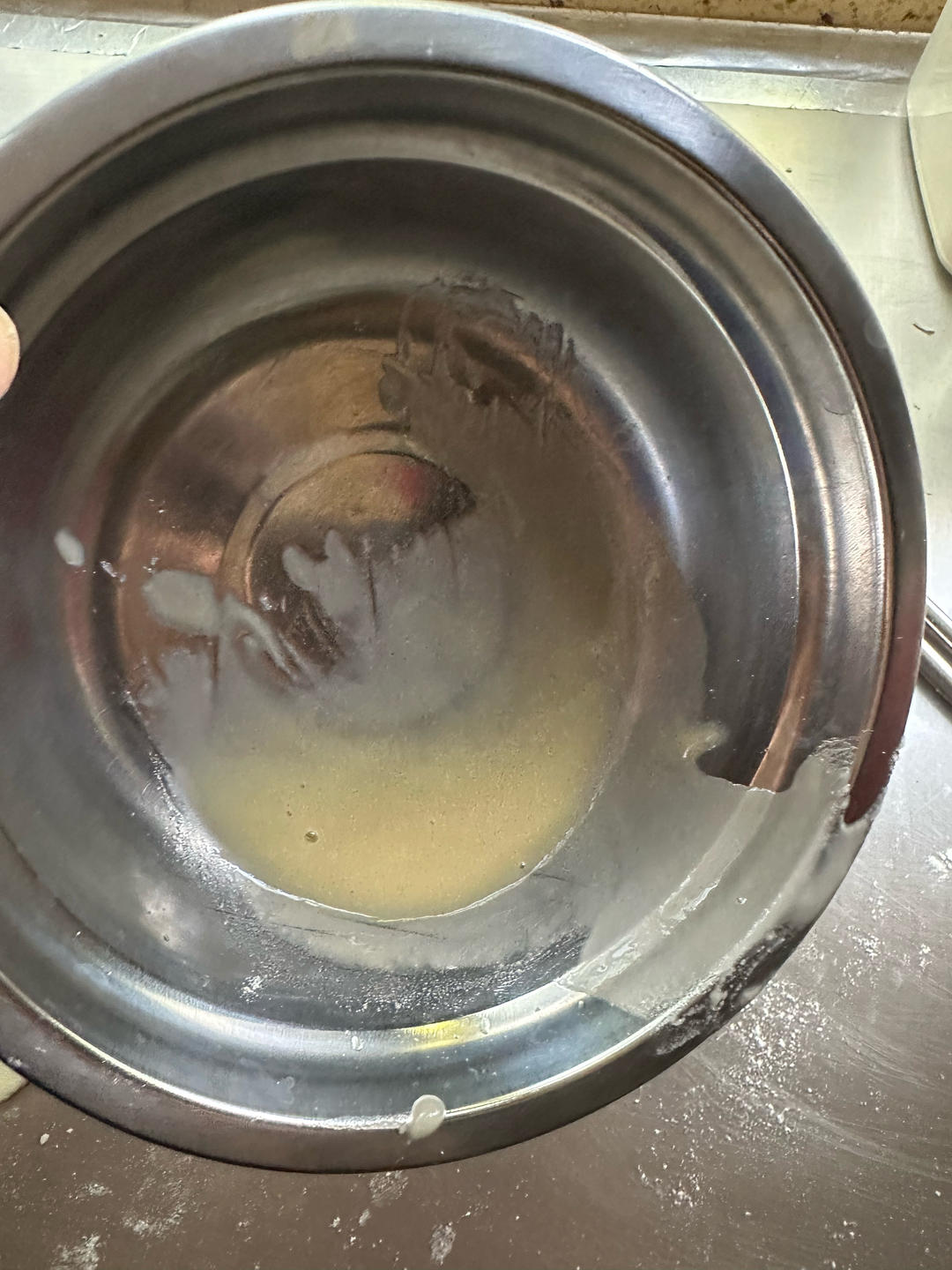
Step 7 — Brush and Roll Up
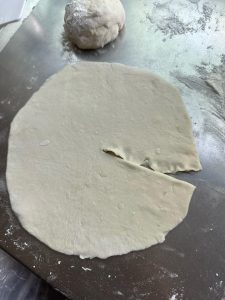
Brush the rolled dough with the oil-roux or lard and roll it up into a log.
Step 8 — Coil and Rest 5 Minutes
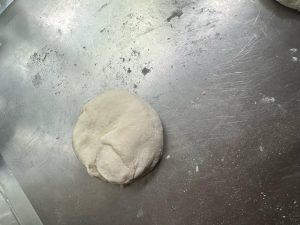
Coil the log into a round and let it rest 5 minutes.
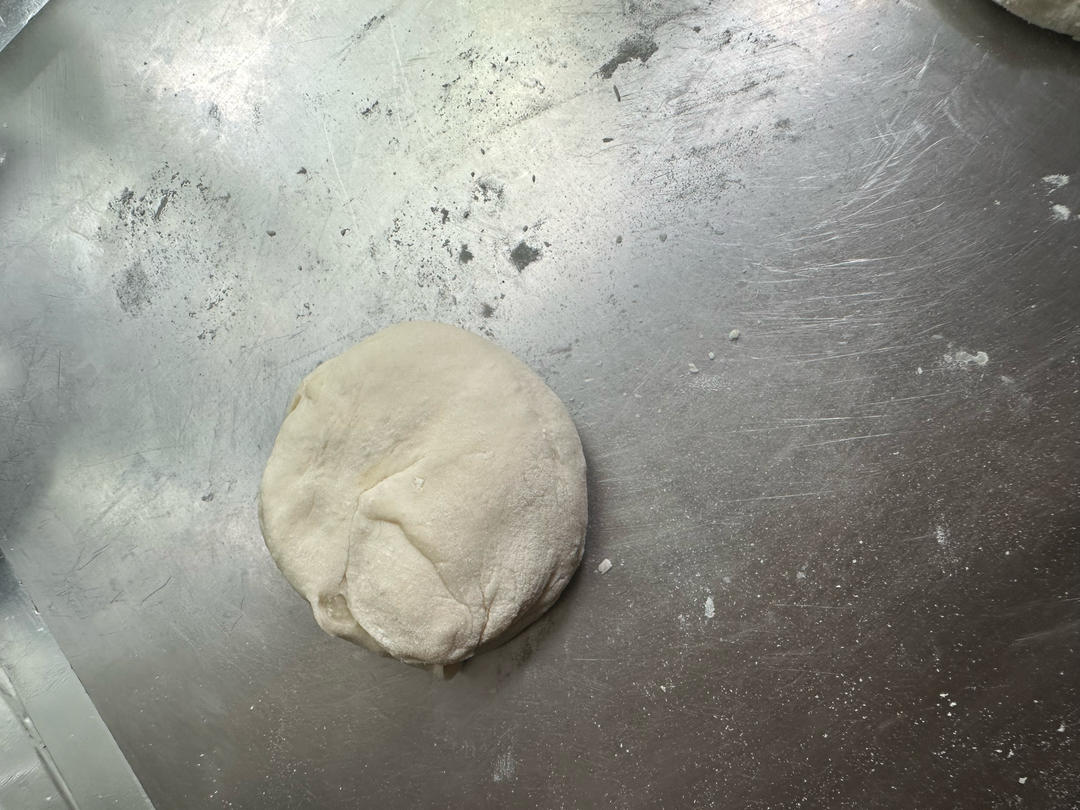
Step 9 — Press It Flat by Hand
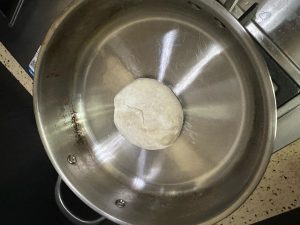
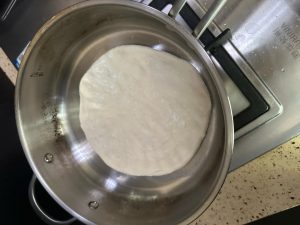
Oil the griddle, put the dough in, and press it flat with your fingers — the cook says she cannot use a rolling pin because the dough sticks, so pressing works better.
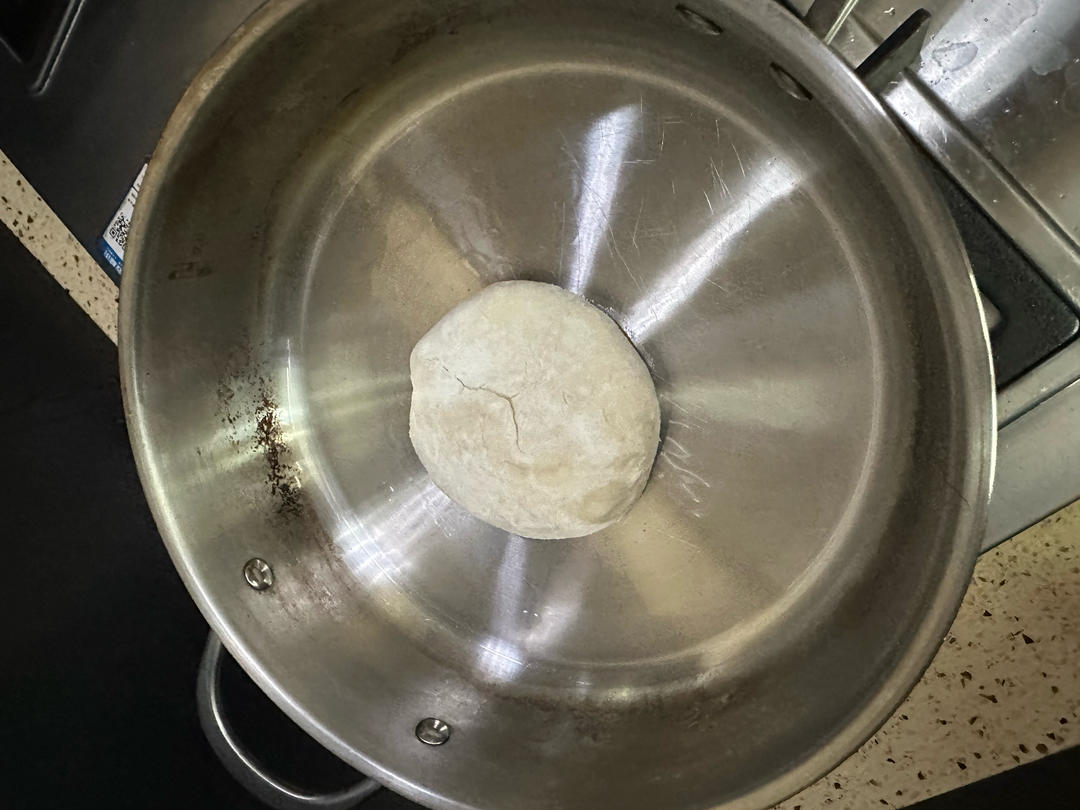
Step 10 — Press Again If Needed
If the first press is uneven, wait two minutes and press again — the softened dough spreads easily.
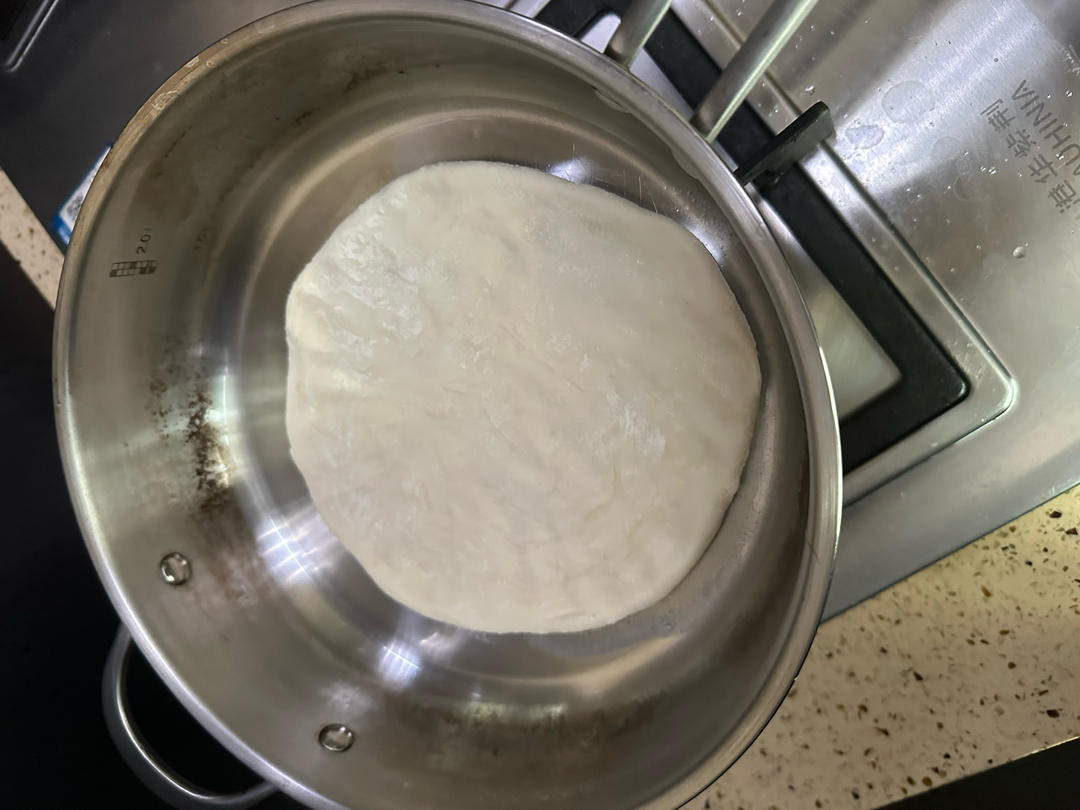
Step 11 — Fry Covered for a Minute, Then Oil the Top
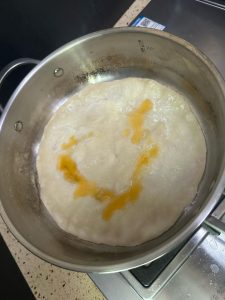
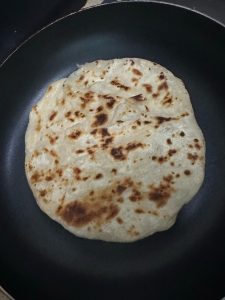
Once the bread is soft and pressed flat, cook over medium heat, covered, for about a minute. When it starts to change color, brush the surface with oil and get ready to flip.
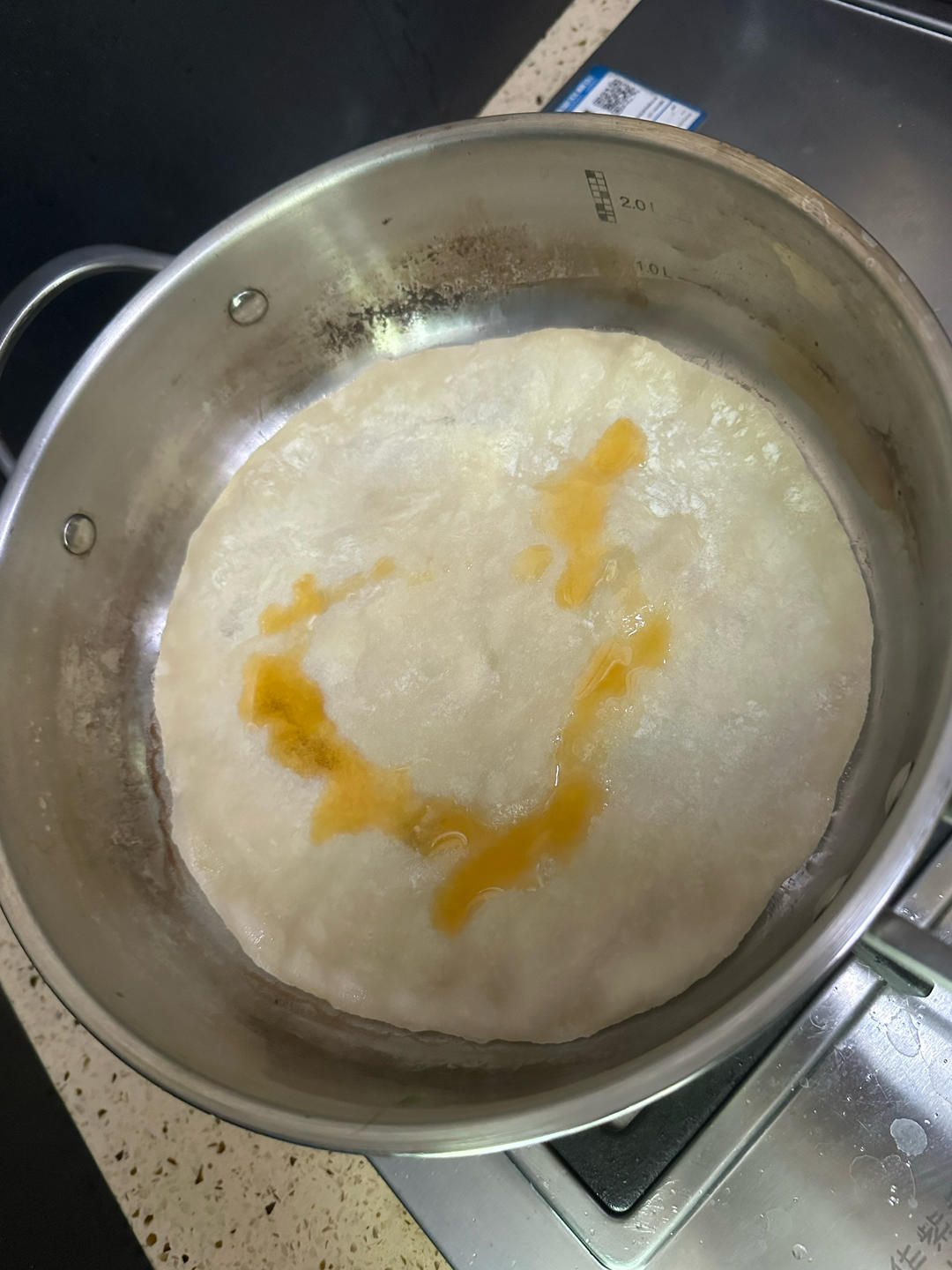
Medium heat is the trick to a flaky 烙饼. Cook it low and slow and the moisture evaporates before the layers set, leaving a hard, dry bread; medium heat browns the outside quickly enough that the interior steams and puffs, which is what opens the oil-brushed layers into flakes.
Step 12 — Flip and Fry Another Minute
Flip and cook another minute over medium heat. Two minutes total is usually enough; if it is not cooked through, flip once or twice more.
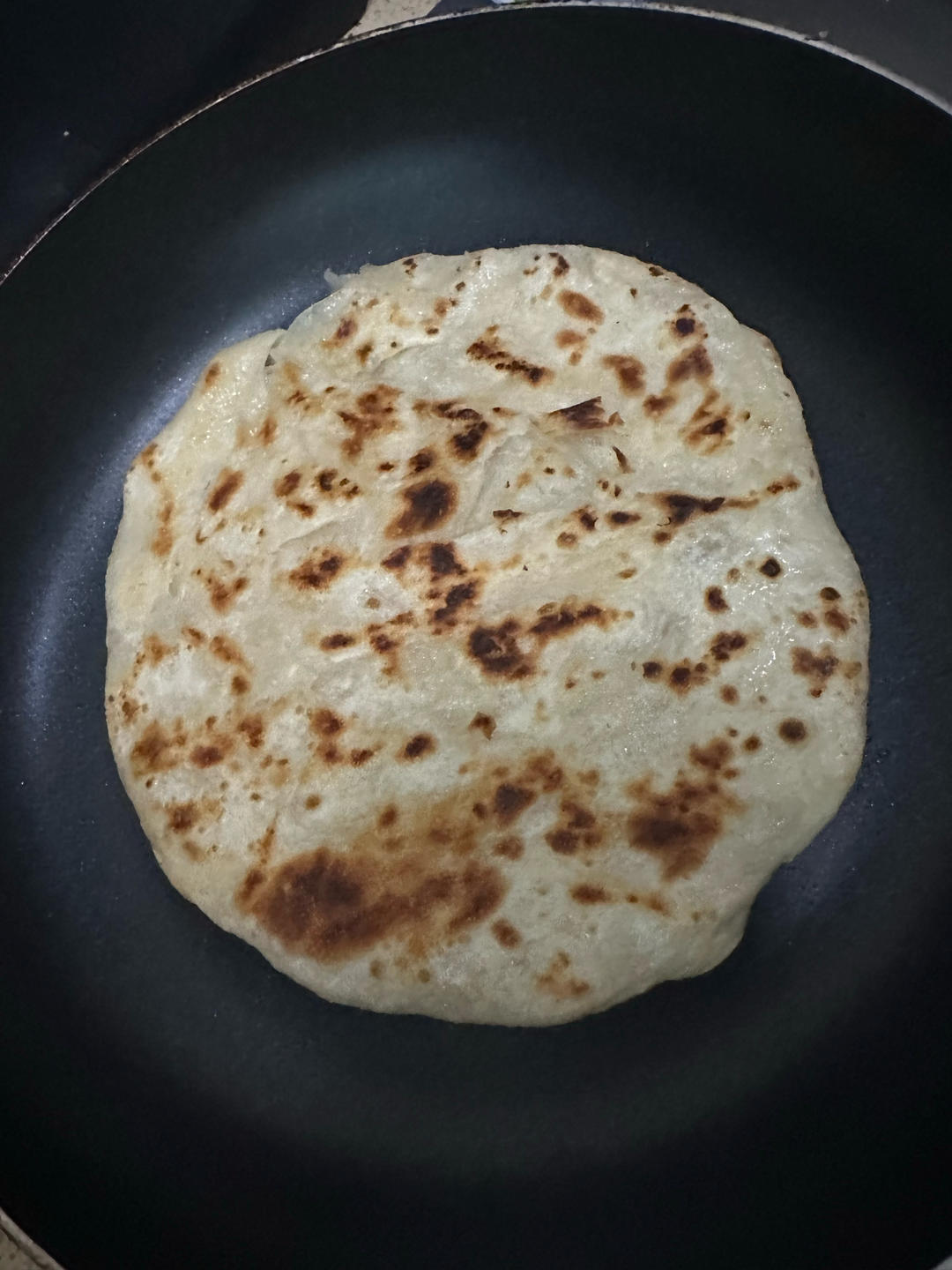
Step 13 — Serve With Savory Dishes
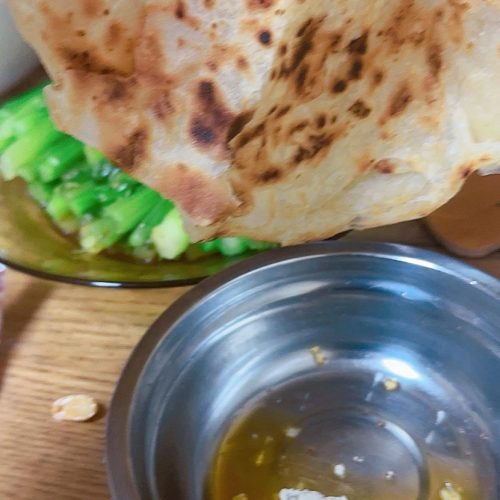
The bread has no salt — it is made to be eaten with dishes, not on its own.
Common Mistakes When Making Pan-Fried Flatbread
1. The bread is hard and dry. Cause: cooking over low heat. Fix: use medium heat so the layers steam and puff while the outside browns.
2. It does not form layers. Cause: no oil-roux between the folds. Fix: brush the rolled dough generously with oil-roux or lard before coiling.
3. The dough springs back. Cause: no rest. Fix: refrigerate overnight or let it relax 10 minutes before rolling.
4. The dough sticks to the pin. Cause: a soft, warm-water dough. Fix: press it out by hand, as the cook does.
5. It tastes flat. Cause: expecting salt. Fix: the bread is unsalted by design — serve it with savory dishes.
Variations
With scallions. Sprinkle chopped scallions over the oil-roux before rolling, like my scallion pancakes.
Stuffed. Fill with pork and onion like my guokui, or with mei cai pork like my mei cai pancakes.
Lard version. The cook says lard brushed instead of oil-roux may taste even better.
Frequently Asked Questions
Do I have to rest the dough overnight? It makes the dough much easier to handle; a few hours helps, overnight is best.
What is oil-roux? Flour mixed with hot oil into a paste; brushed between layers it creates the flakiness.
Can I use a rolling pin? Yes, but a soft warm-water dough sticks, which is why the cook presses by hand.
How do I reheat it? Re-crisp in a dry pan over medium heat, covered, for a minute or two.
What goes with it? Any stir-fry, soup, or braise — it is the northern Chinese answer to rice.
How to Serve
Serve the flatbread warm with stir-fries, soups, or braises, or alongside soft breakfast pancakes and meat pies for a bread-and-pancake breakfast, or with youtiao and no-knead ciabatta for a bread-lover’s spread.
Storage & Reheat
Store cooled flatbread in a sealed bag in the fridge for 2 days, or freeze for up to a month. Reheat in a covered dry pan over medium heat for 1-2 minutes per side to bring back the flakiness.
Allergen Notice
Contains wheat (flour).
Nutrition Disclaimer
Nutrition information is calculated using an ingredient database and should be considered an estimate. In cases where multiple ingredient alternatives are given, the first listed is calculated for nutrition. Garnishes and optional ingredients are not included.
About the Author & Recipe Development
I am Lin, and I grew up in my parents’ restaurant kitchen in Chengdu, where northern flatbreads were a favorite of the cooks from Shandong and Henan — they ate them with everything. This xiachufang recipe is a beginner’s version, and I love that the cook is honest about pressing the dough with her fingers because a rolling pin sticks. I tested it twice: the first time I cooked it on low heat and it came out hard; the second time, following her medium-heat rule, it puffed into proper flakes. The overnight rest is the quiet hero — a dough that fought me at midnight became cooperative the next morning.
Authoritative References
King Arthur Baking on tender flatbreads for dough guidance, and USDA Safe Temperature Chart for storing cooked breads.
Pan-Fried Flatbread (烙饼): Flaky Layered Chinese Griddle Bread

Equipment
- Mixing Bowl
- Griddle or skillet with lid
Ingredients
For the Flatbread
- 1.33 cups all-purpose flour 166 g
- 0.48 cup warm water, about 50°C 100 g
- 2 tbsp oil-roux or lard, for brushing
- 2 tbsp flour and hot oil to make the oil-roux, optional
Instructions
- Weigh 166 g of flour into a bowl.

- Measure 100 g of warm water, about 50°C (122°F).
- Add the water gradually, stirring between additions.
- Mix into a dough and refrigerate overnight.
- Knead on a floured surface and relax 10 minutes.

- Make the oil-roux: pour smoking-hot oil over 2 spoons of flour, or use lard.
- Brush the rolled dough with oil-roux and roll it into a log.
- Coil into a round and rest 5 minutes.

- Oil the griddle, add the dough, and press it flat by hand.
- If uneven, wait 2 minutes and press again.
- Cook covered over medium heat about 1 minute, then brush the top with oil.
- Flip and cook another minute; repeat if needed.
- Serve with savory dishes — the bread is unsalted on purpose.












Leave a Reply