There is a particular kind of comfort that only a slow-braised Northeast Chinese chicken stew can deliver — the kind that fills the kitchen with the smell of star anise and soy, and makes you want to pull a chair up to the stove. This is 小鸡炖蘑菇, or xiao ji dun mo gu, a dish that belongs to the cold northern provinces where a heavy pot of chicken, mushrooms, and potatoes is dinner and medicine at the same time.
I grew up watching my mother make versions of this in our Chengdu restaurant kitchen, though she always claimed the northerners did it better. The technique is simple: blanch the chicken, bloom the aromatics, braise everything low and slow until the meat gives way to a spoon. What you get is a stew that is savory, faintly sweet from the onion, and glossy with collagen.
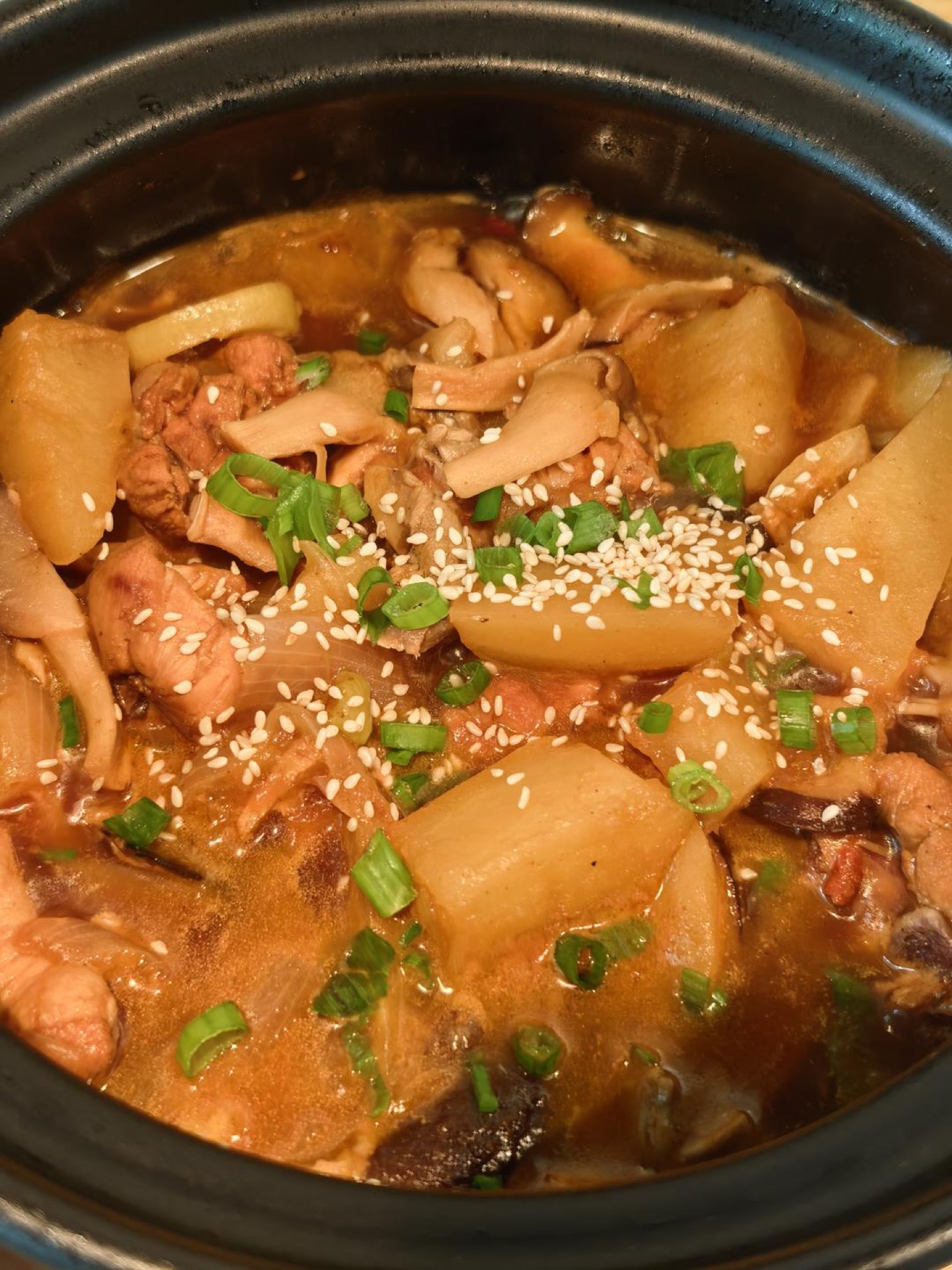
What Is Chicken Stew with Mushrooms?
Xiao ji dun mo gu is a signature dish of Dongbei cuisine, the cooking of China’s northeast. It traditionally uses a free-range chicken and dried wild mushrooms — often hazel mushrooms or dried shiitake — rehydrated and simmered with the bird until the broth turns mahogany. Potatoes and onion are common additions in home versions because they thicken the liquid and soak up the sauce.
The first time I made this for friends, someone asked if there was wine in it. There wasn’t — that deep, almost beefy richness comes entirely from soy sauce, a little doubanjiang, and time.
Unlike a quick stir-fry, this is a braise, which means the cooking is mostly unattended. If you are newer to Chinese home cooking, our easy Chinese home cooking guide is a good place to build the foundational habits this recipe assumes.
Why This Recipe Works
- Blanching the chicken first removes impurities so the final broth stays clear instead of muddy.
- Adding hot water — never cold — keeps the meat from seizing up and turning tough.
- Layering the potatoes and mushrooms at different times means nothing turns to mush.
- A single strip of lemon zest at the end lifts the heavy soy notes without making the stew taste citrusy.
- Finishing with toasted sesame seeds adds a nutty crunch against the soft braised textures.
One honest caveat: if you use ordinary supermarket chicken rather than a stewing bird, the meat will be tender in about 35 minutes but the broth will be noticeably thinner. It still tastes good — just less profound.
Equipment Needed
- A heavy wok or Dutch oven for the initial sear
- A clay pot or heavy saucepan for the braise
- A slotted spoon for skimming
- A cutting board and cleaver or heavy knife
- Small bowls for pre-measured aromatics and sauces
Ingredients
- 1.5 lbs chicken legs, cut into 2-inch pieces
- 2 medium potatoes, peeled and cut into wedges
- 1 large onion, sliced thick
- 1 cup dried mushrooms, soaked and drained (reserve the soaking liquid)
- 3 slices ginger
- 4 garlic cloves, sliced
- 2 scallions, cut into segments, plus more for garnish
- 3 dried chilies
- 2 bay leaves
- 2 star anise
- 2 tbsp light soy sauce
- 1 tbsp dark soy sauce
- 1 tbsp oyster sauce
- 1 tbsp doubanjiang
- 1/2 tsp five-spice powder
- 1 tbsp Shaoxing wine (or see our substitute for Chinese cooking wine)
- Salt to taste
- 1 strip lemon zest
- Toasted white sesame seeds and sliced scallion, to finish
Ingredient Notes
Dried mushrooms are not optional here — their soaking liquid is half the flavor of the dish. Strain it through a fine sieve or coffee filter before adding, since grit settles at the bottom.
Dark soy sauce is what gives the stew its color. If you only have light soy, the taste will be fine but the sauce will look pale; our guide to the best substitute for dark soy sauce explains the workarounds.
Doubanjiang adds a fermented, faintly spicy backbone. Use a mild Pixian brand if you can find one.
If you are cooking on high heat and things feel like they are steaming rather than searing, read why food steams instead of fries before you start — it will change how you handle the wok.
Prep & Mise en Place
Have everything chopped and measured before the wok goes on the heat. Group the aromatics together, the sauces together, and keep the hot water kettle going. This is a dish where the cooking moves quickly at the start and then slows down completely.
Cooking Process
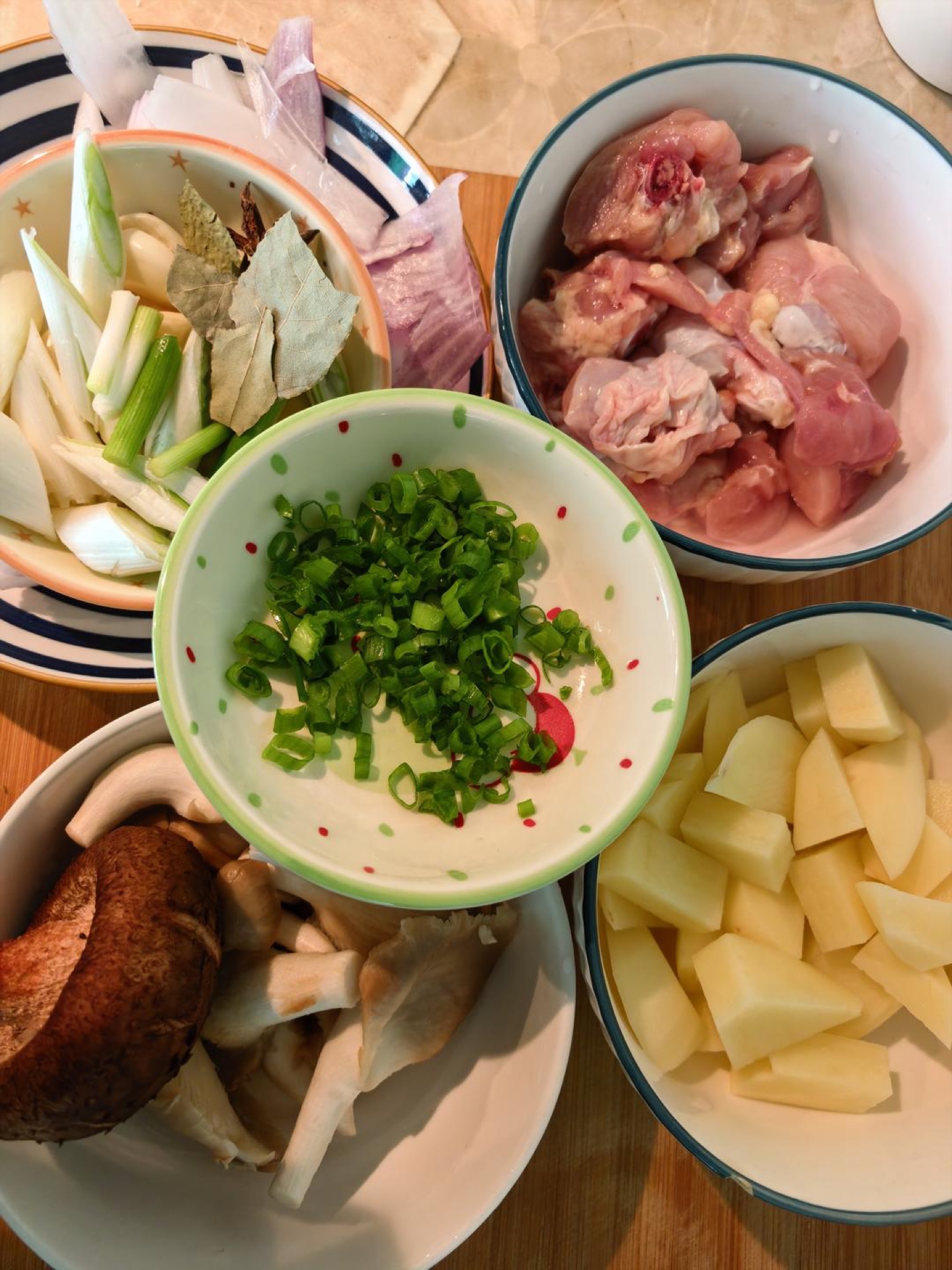
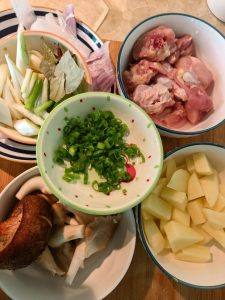
Step 1: Gather and Prepare the Ingredients
Main protein: chicken legs cut into chunks. Supporting vegetables: onion, potatoes, and mushrooms. Aromatics: scallion, ginger slices, garlic slices, dried chilies, bay leaves, and star anise. Seasonings: light soy sauce, dark soy sauce, oyster sauce, five-spice powder, and salt. For finishing: white sesame seeds, chopped scallion, and lemon.
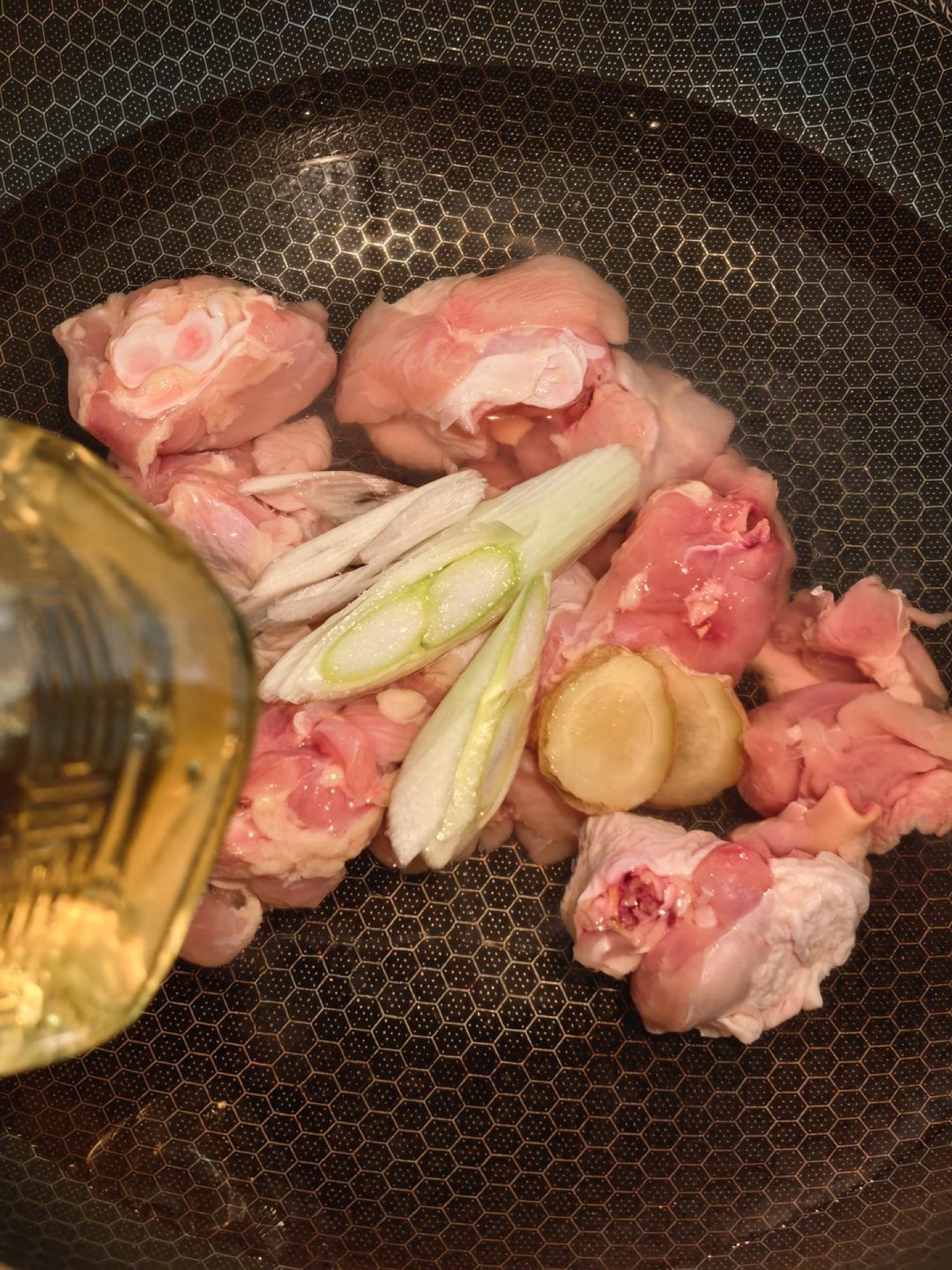
Step 2: Blanch the Chicken
Place the chicken in a pot of cold water. Add Shaoxing wine, scallion segments, and ginger slices. Bring to a boil and let it blanch for two to three minutes, skimming the gray foam that rises.
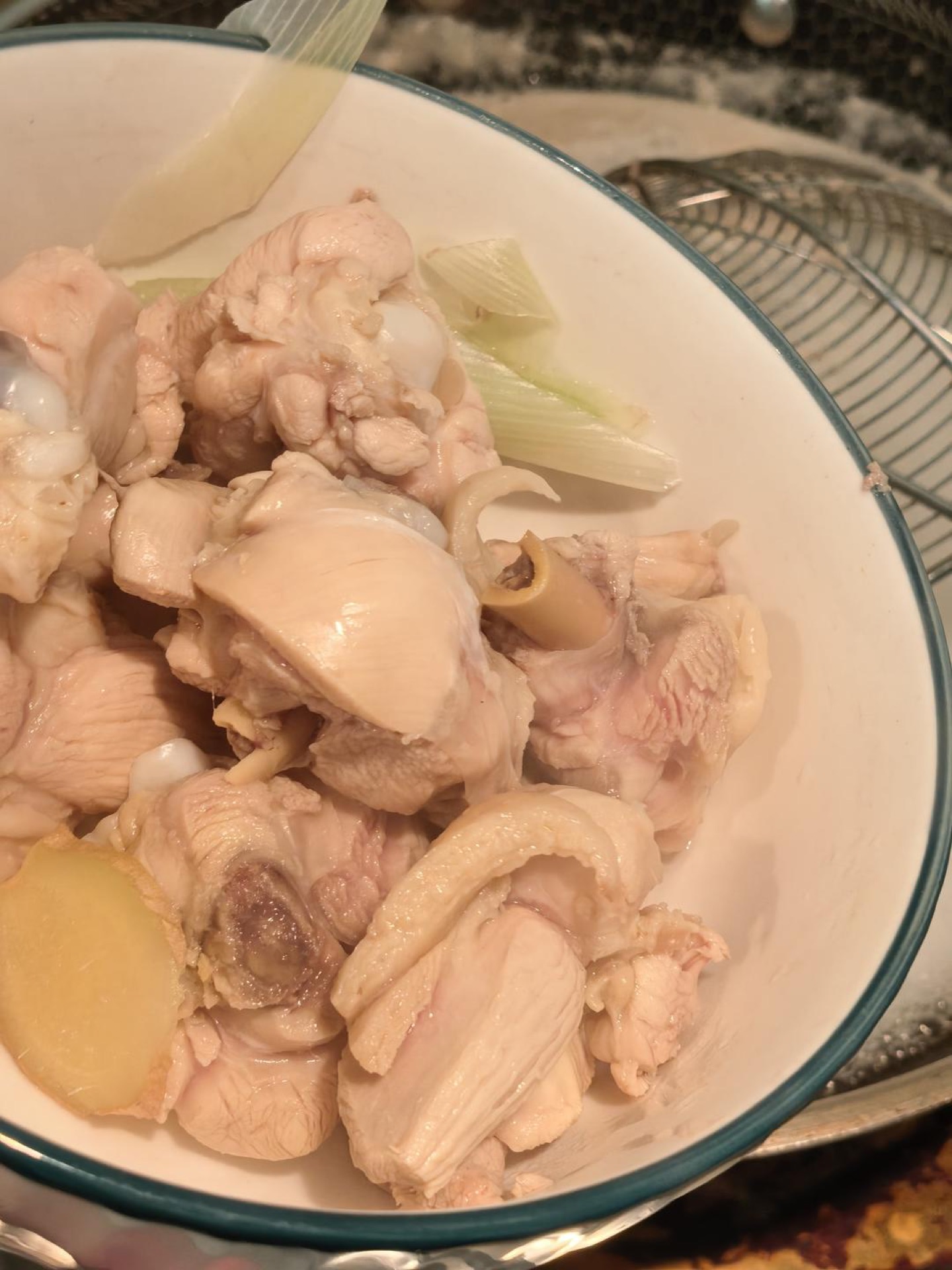
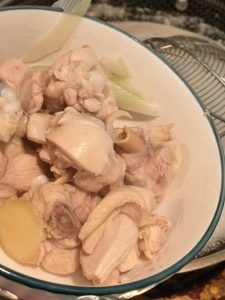
Step 3: Drain the Blanched Chicken
Lift the chicken out with a slotted spoon and rinse away any clinging foam. Set it aside to drain while you prepare the aromatics.
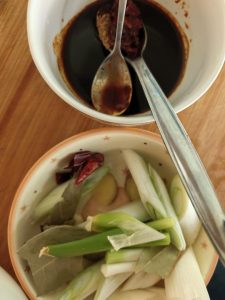
Step 4: Measure the Seasonings
Have ready the aromatics — scallion, ginger, garlic, dried chilies, bay leaves, star anise — and the sauces: light soy sauce, dark soy sauce, oyster sauce, doubanjiang, and five-spice powder.
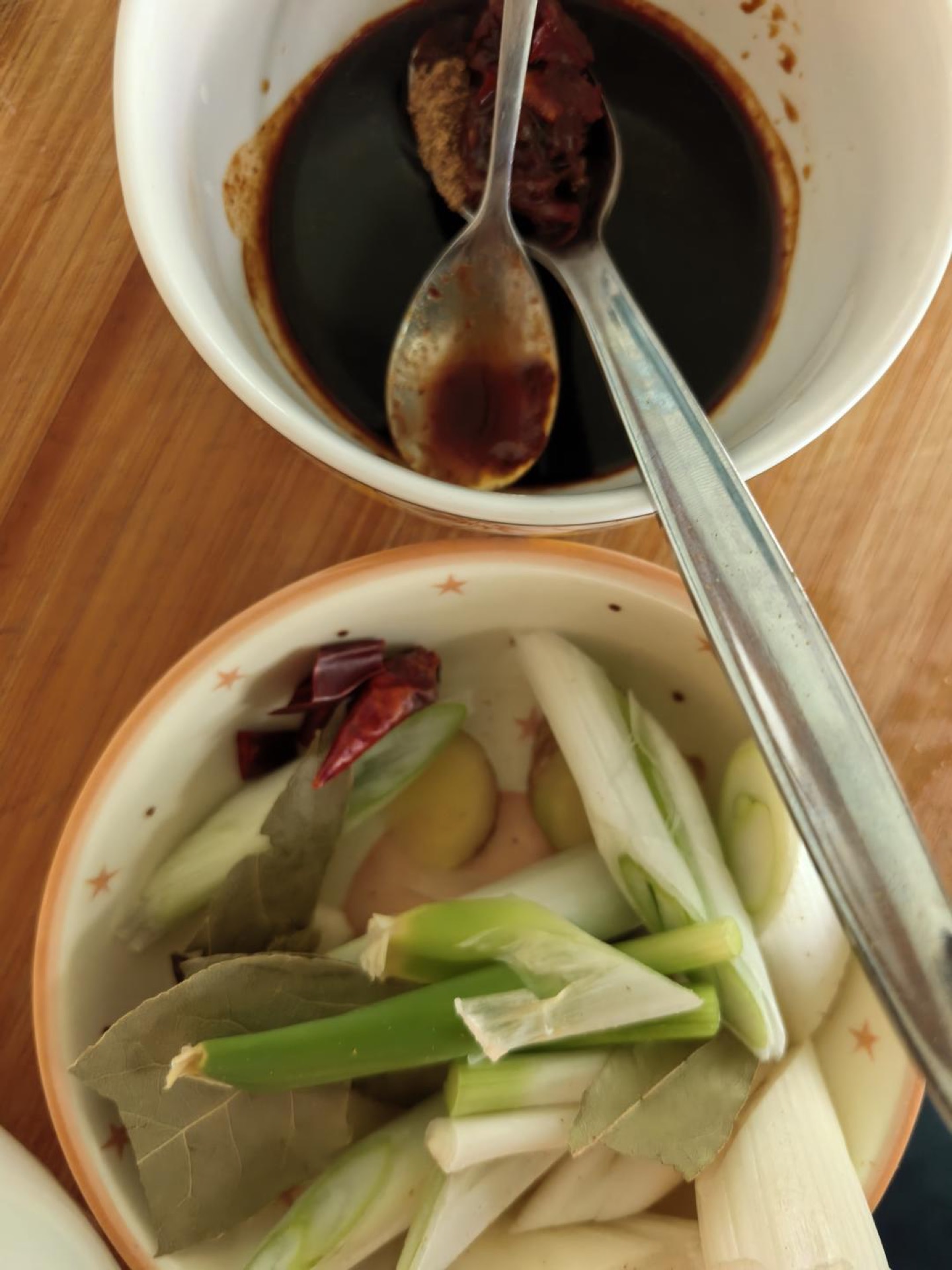
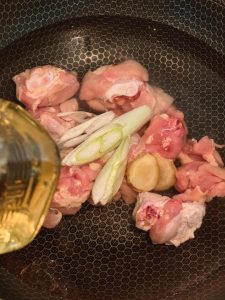
Step 5: Bloom the Aromatics
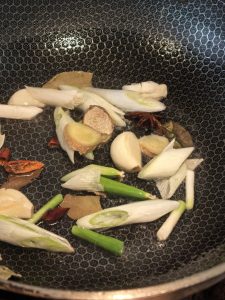
Heat oil in a wok until it shimmers, then add the scallion, ginger, garlic, bay leaves, and star anise. Stir for thirty seconds until fragrant — do not let the garlic brown.
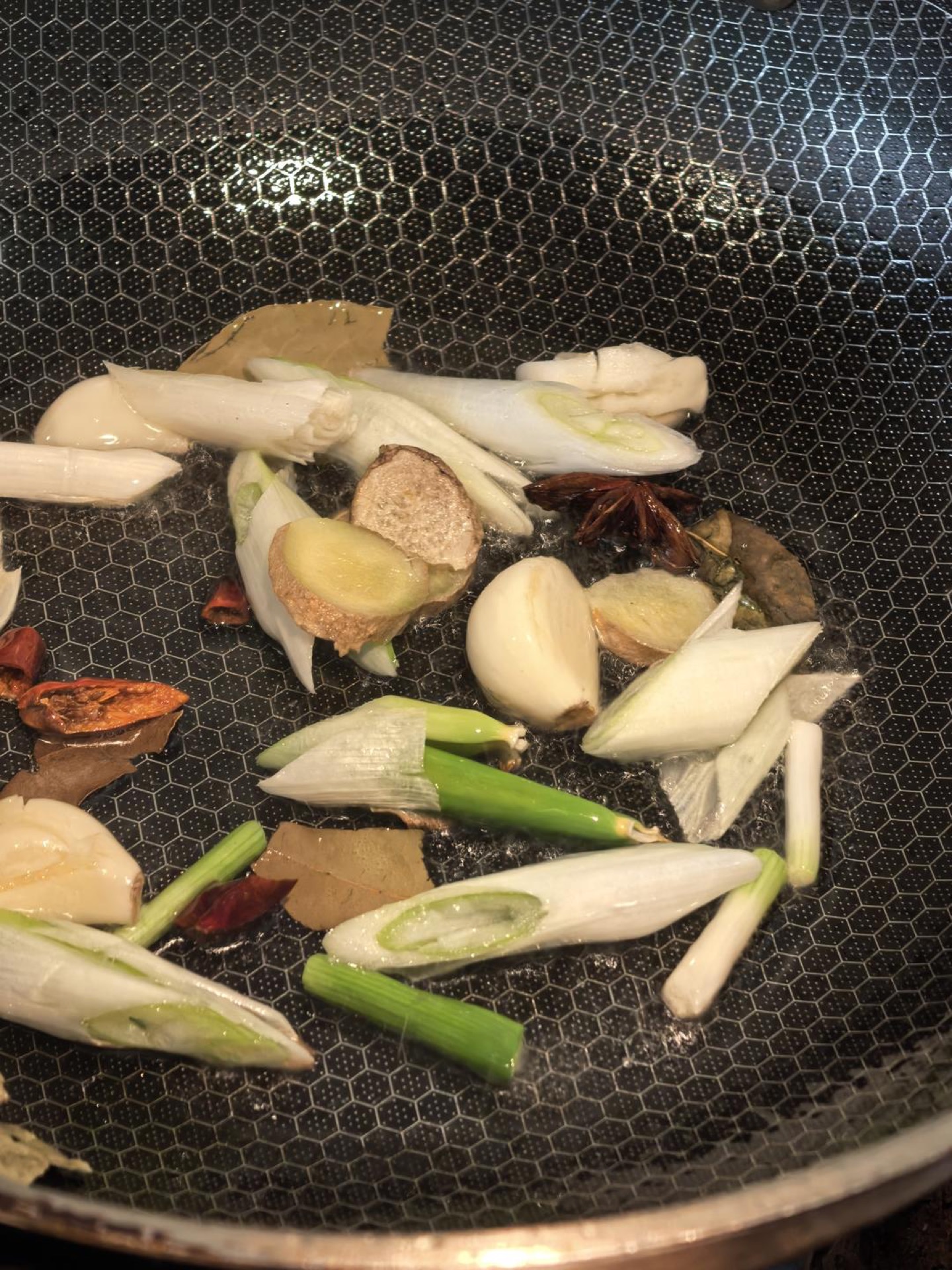
Step 6: Add the Chicken
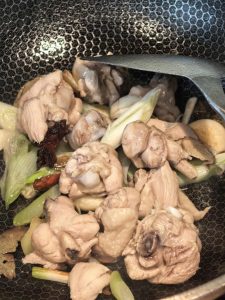
Tip in the blanched chicken and toss to coat it in the fragrant oil. Let it sear for two to three minutes, pressing it against the wok so the edges pick up color.
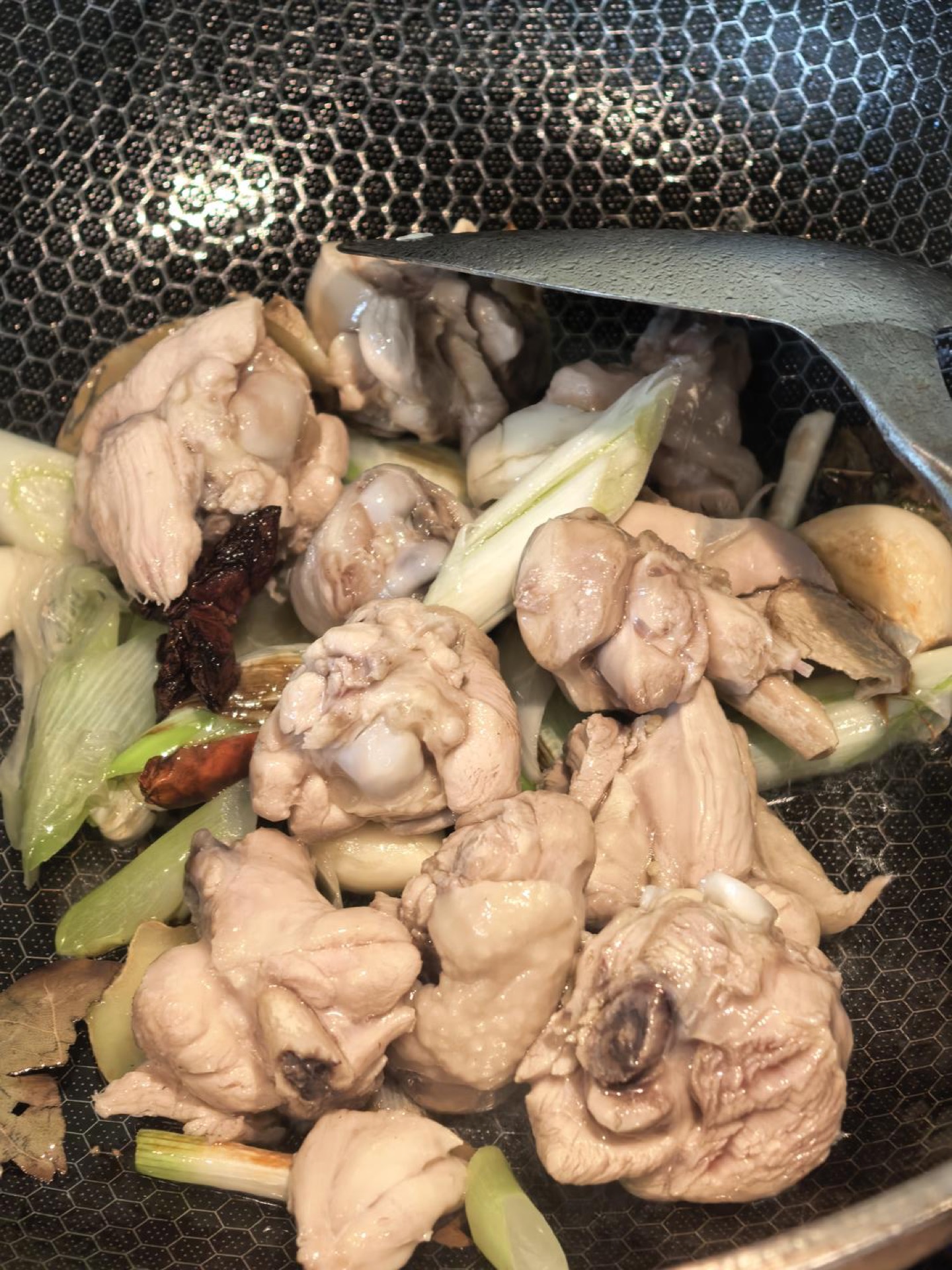
Step 7: Add the Sauces
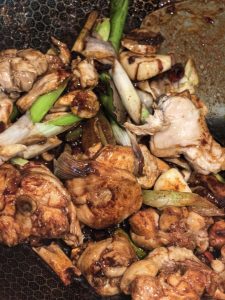
Pour in the light soy sauce, dark soy sauce, oyster sauce, doubanjiang, and five-spice powder. Stir constantly for about a minute so every piece of chicken is lacquered in sauce.
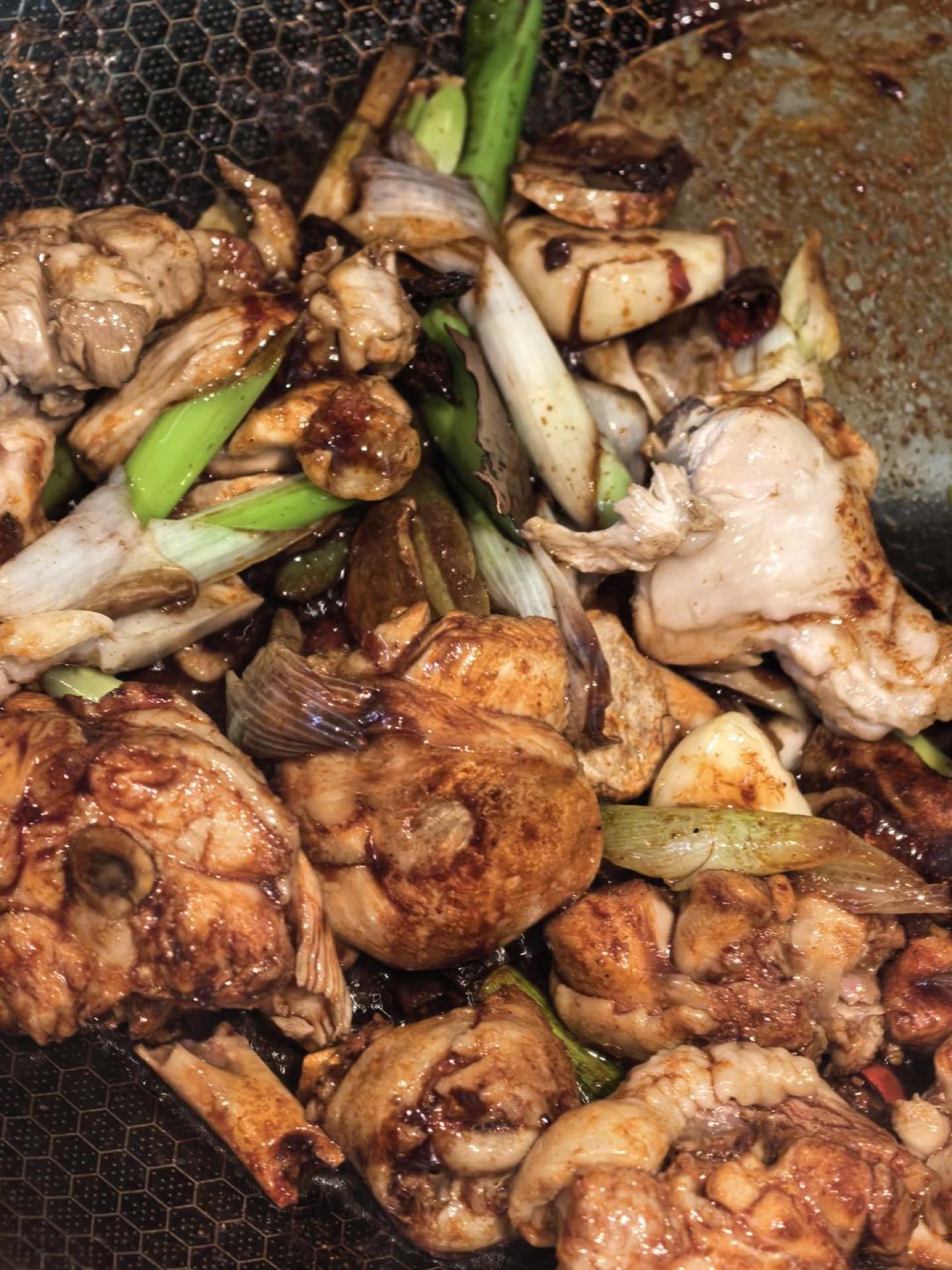
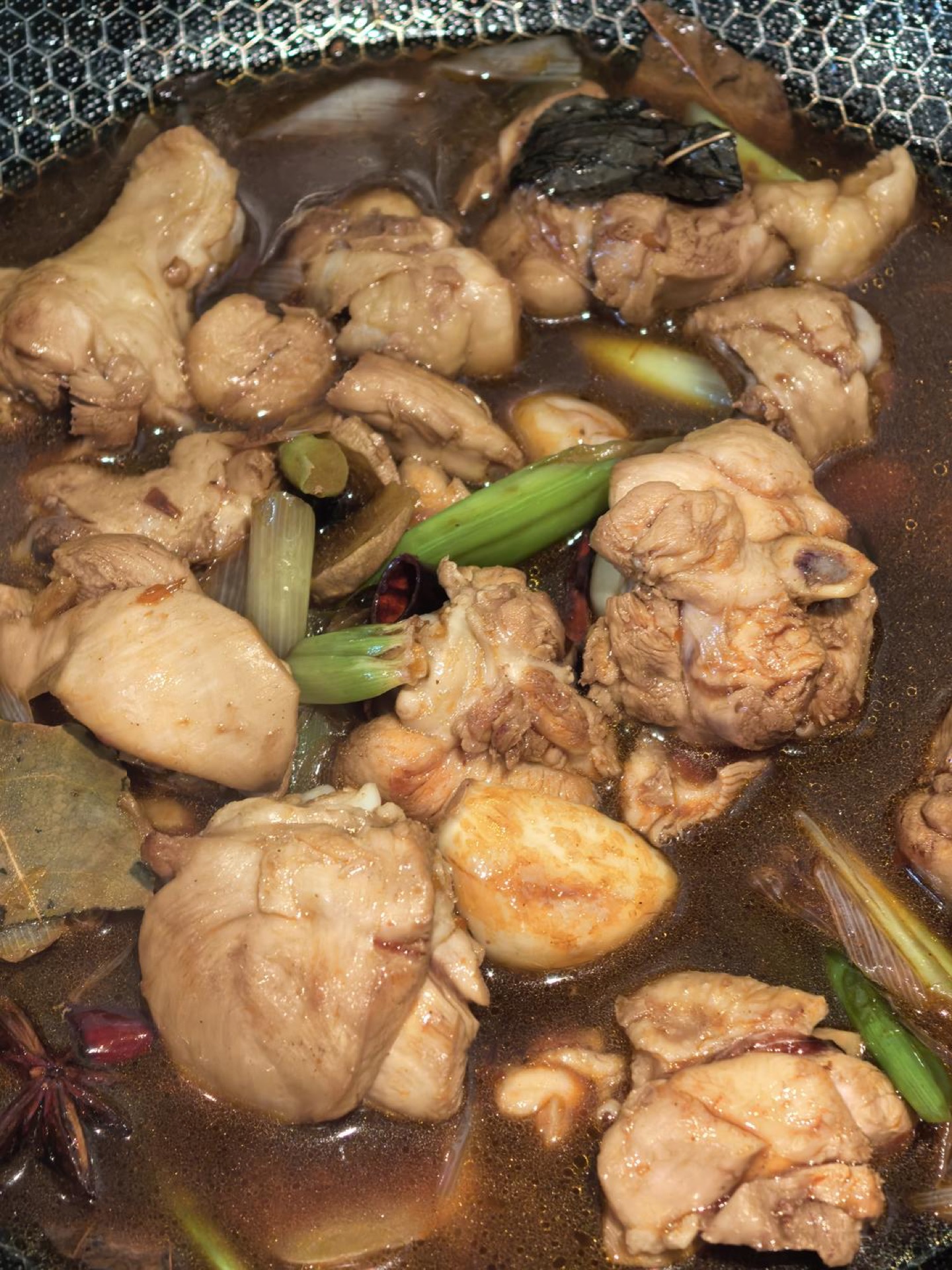
Step 8: Add Hot Water
Pour in hot water — it must be hot, not cold. Add enough to come just to the top of the chicken. Cold water will tighten the muscle fibers and leave you with dry meat.
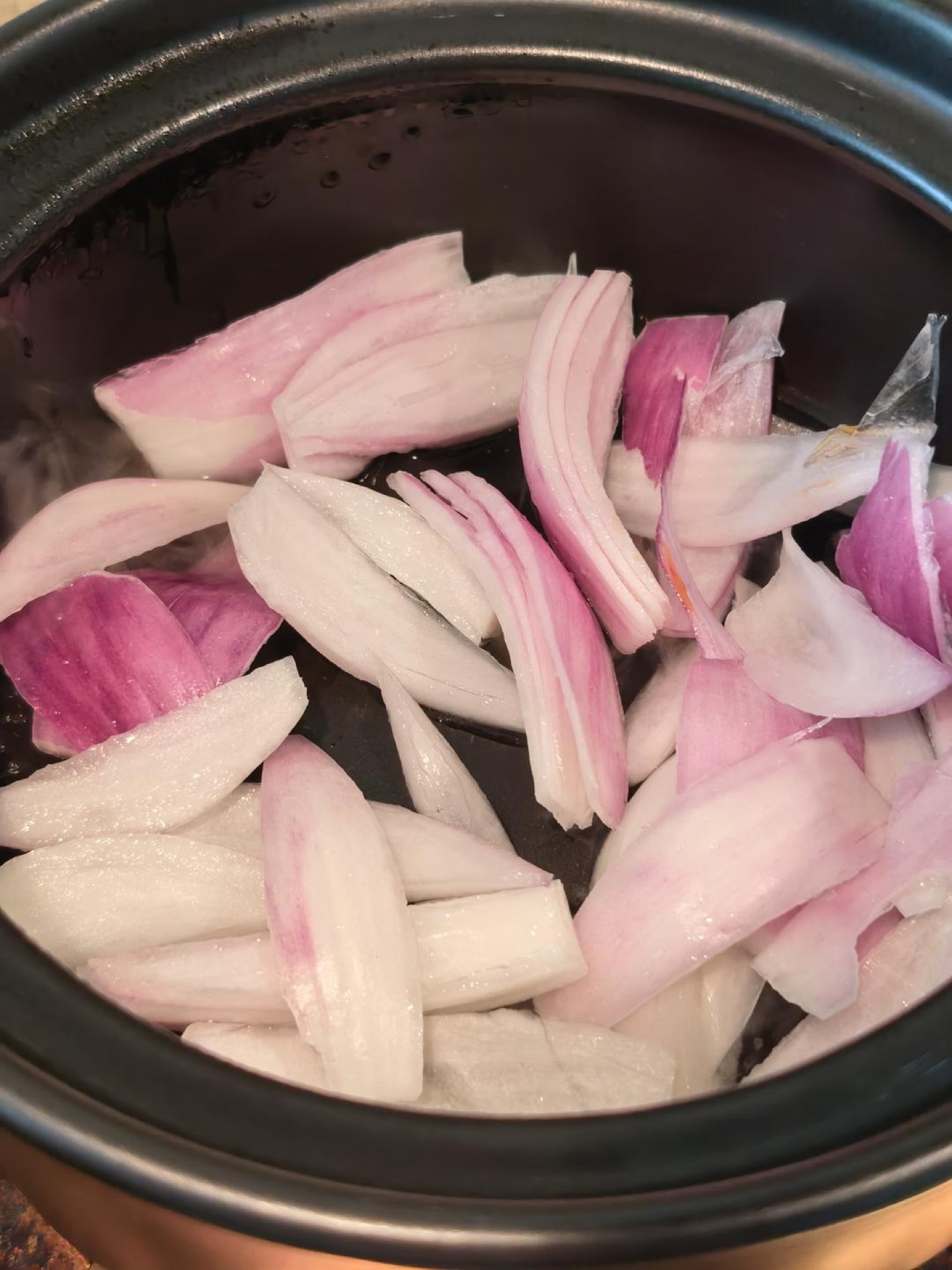
Step 9: Prepare the Clay Pot
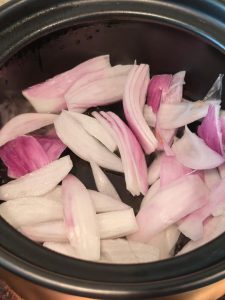
Set a separate clay pot over low heat and lay the sliced onion across the bottom in an even layer. It will act as a sweet, protective bed for the stew.
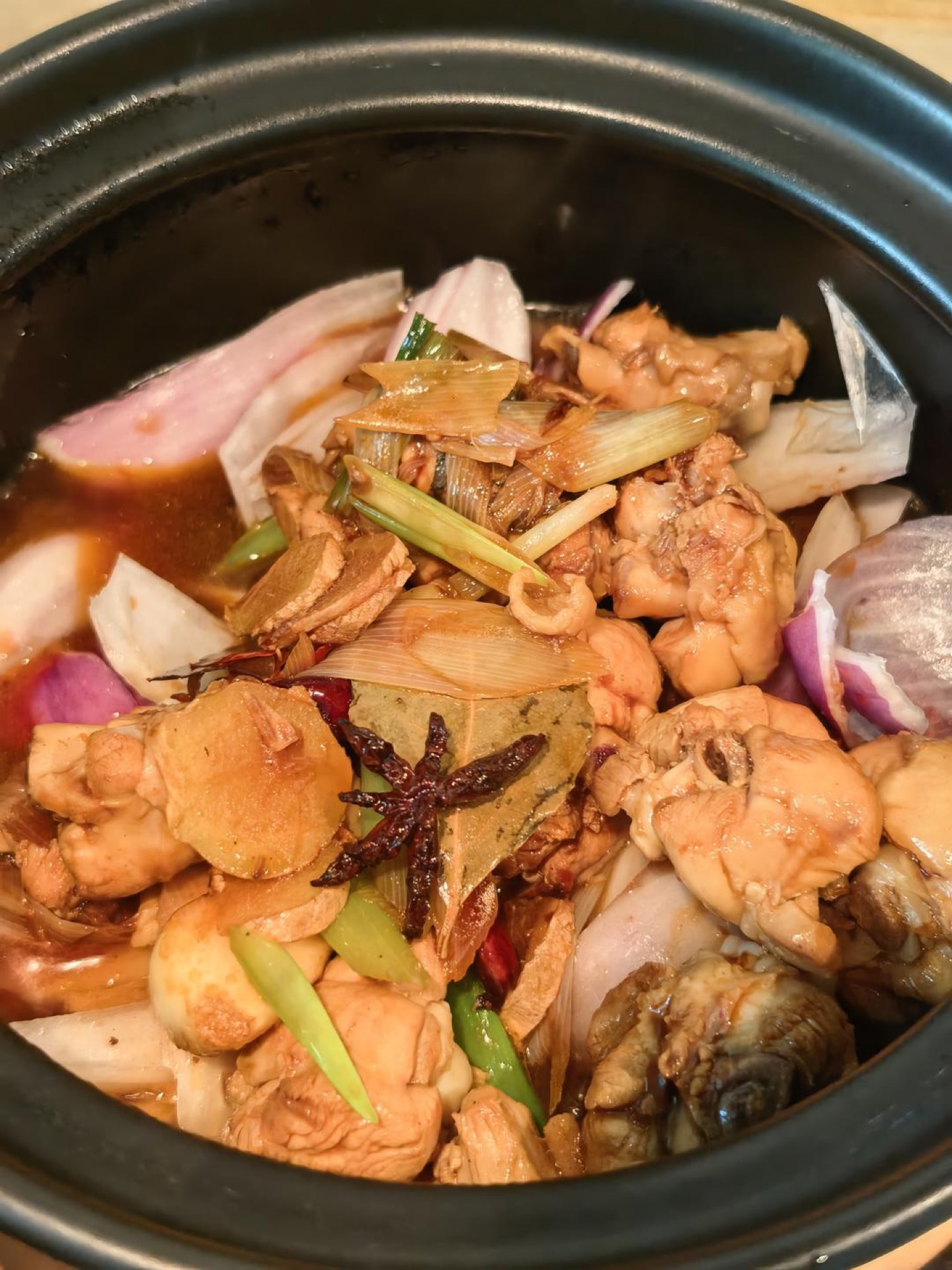
Step 10: Transfer to the Clay Pot
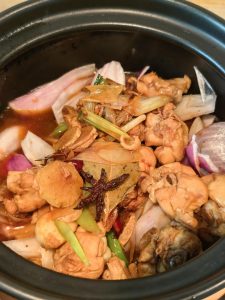
Pour the contents of the wok into the clay pot over the onion. Top up with more hot water — again, it must be hot.
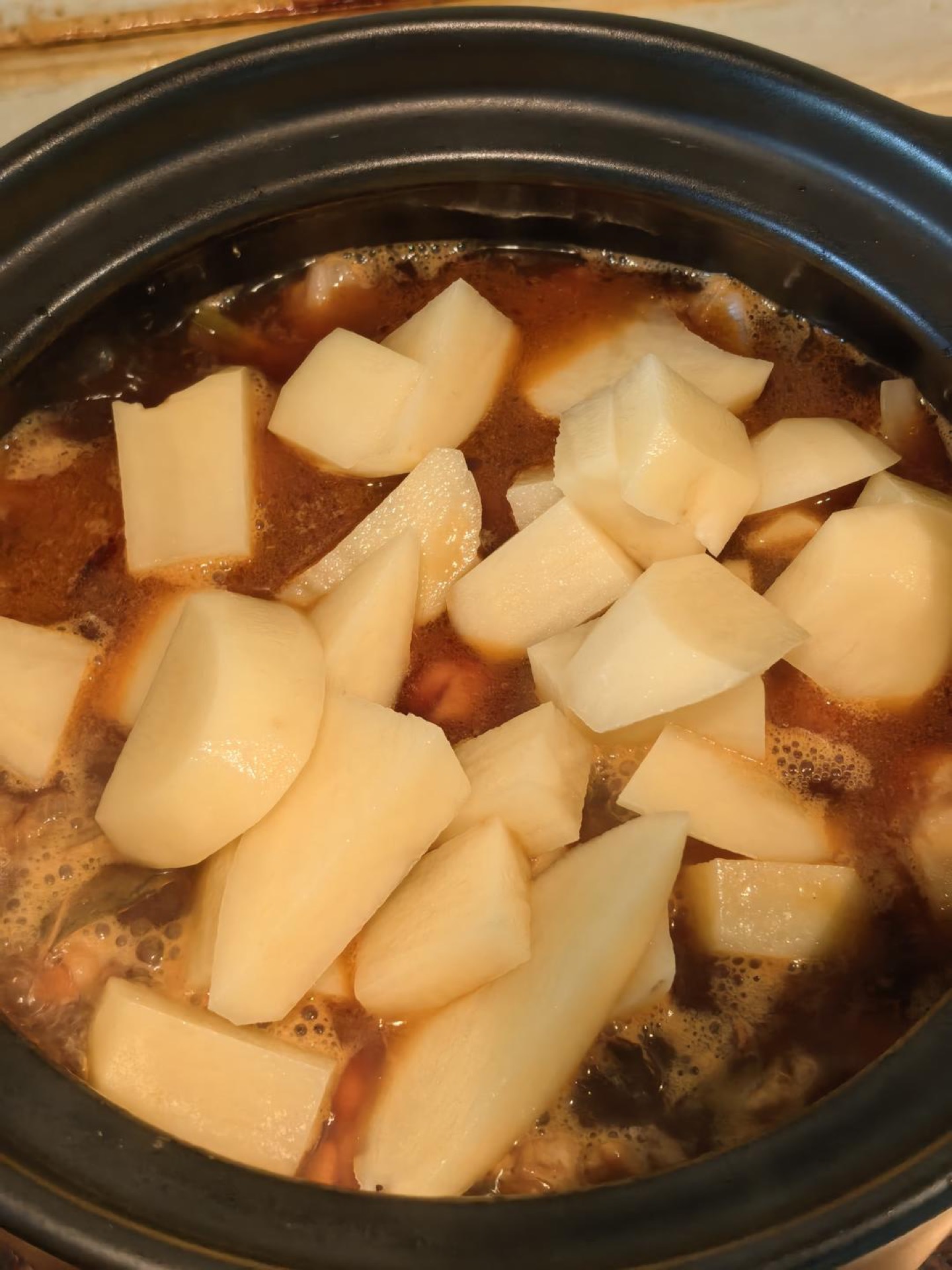
Step 11: Bring to a Boil, Then Simmer
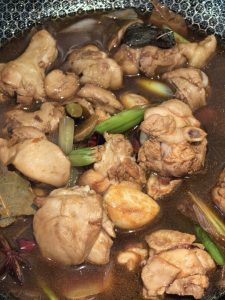
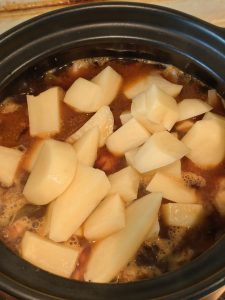
Add hot water until the chicken is fully submerged. Bring to a boil, then reduce to a low simmer. After 15 minutes, add the potato wedges.
Step 12: Add Mushrooms and Lemon
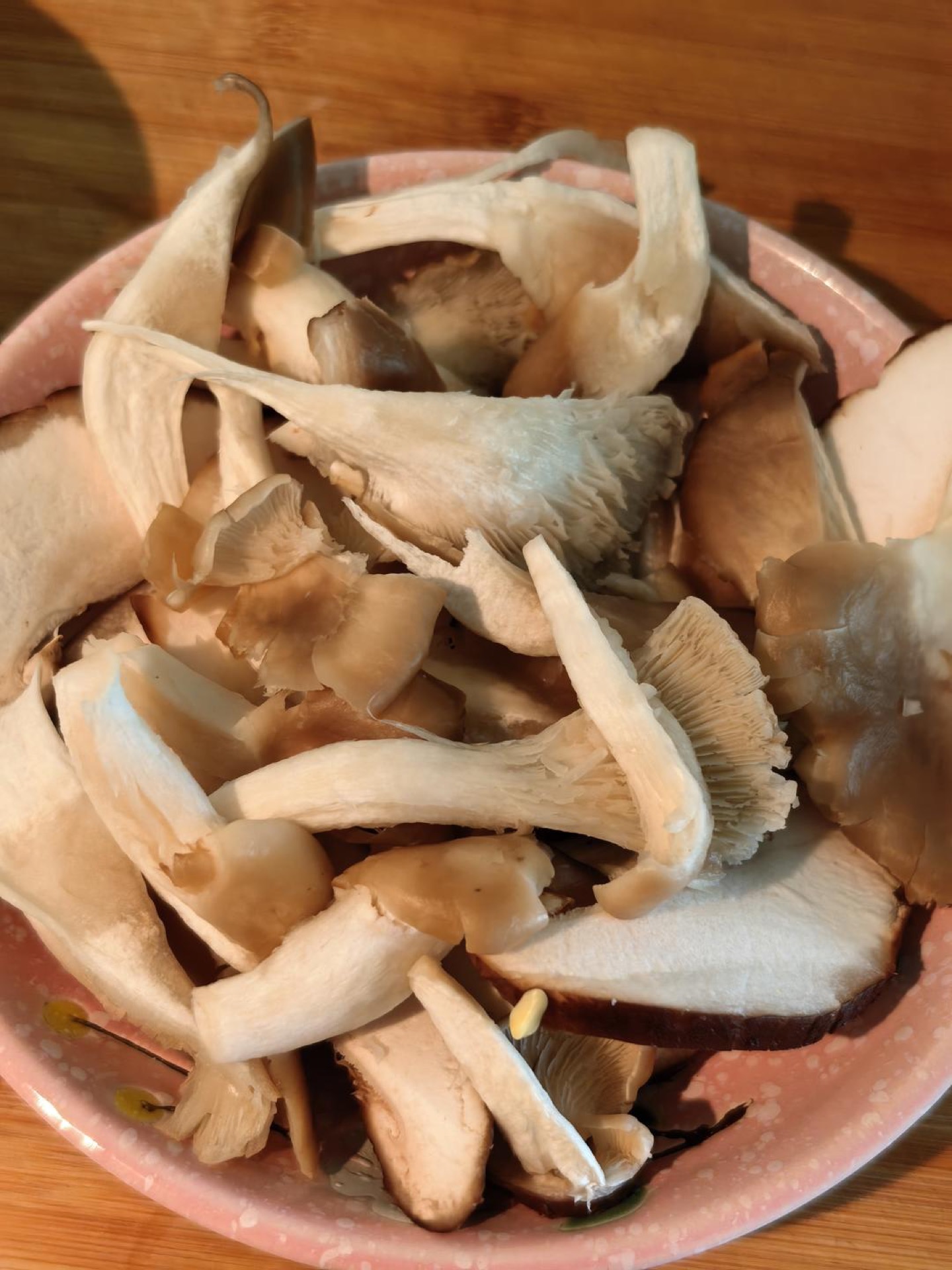
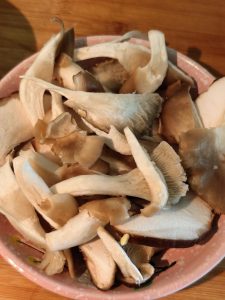
Five minutes later, add the soaked mushrooms and a strip of lemon zest. Simmer for another ten minutes.
Step 13: Finish the Braise
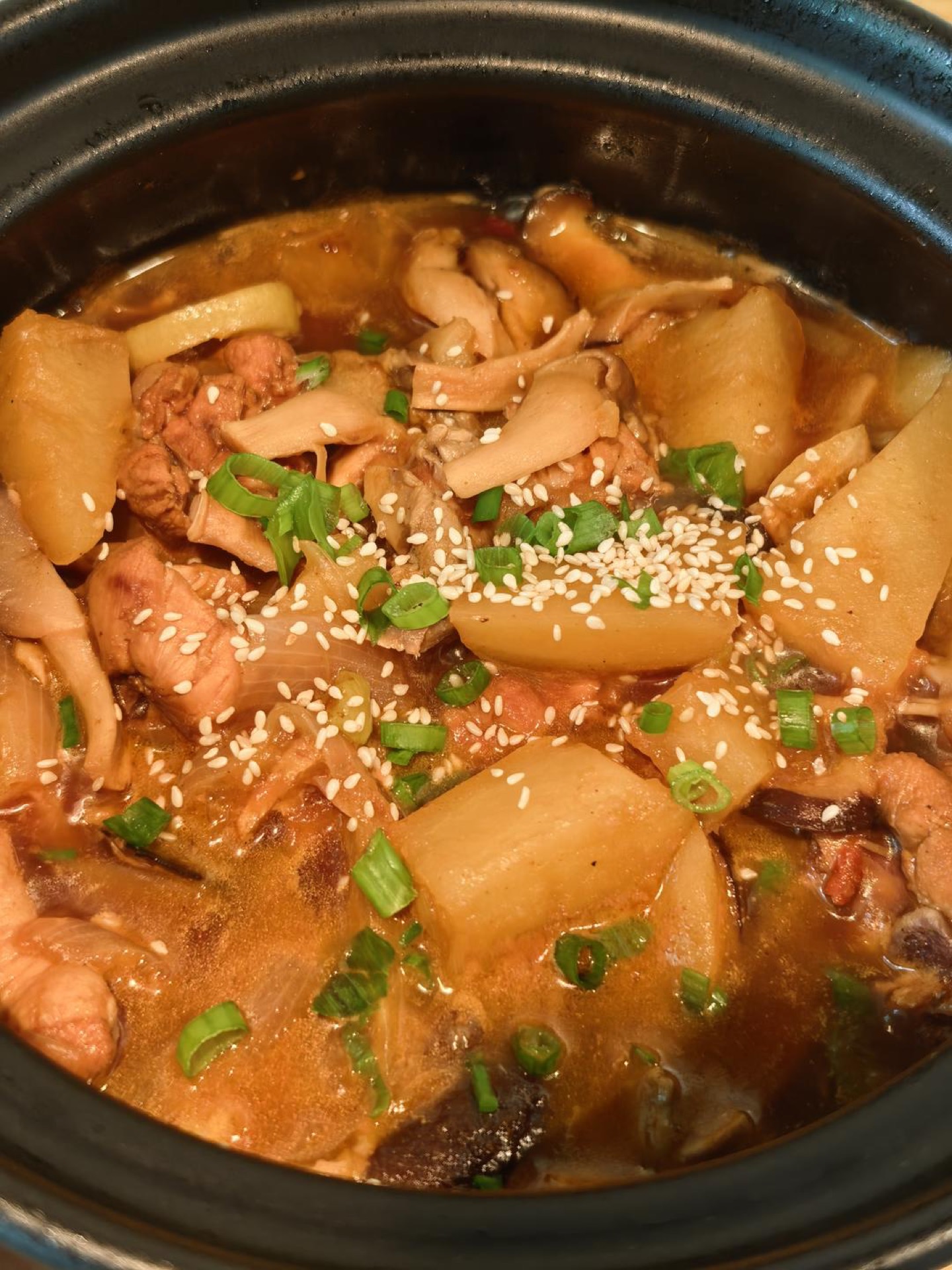
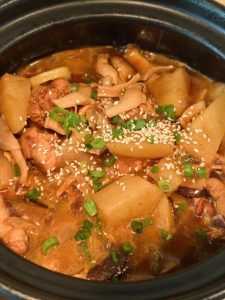
Total braising time should be 35 to 40 minutes. Taste and adjust salt, then scatter chopped scallion over the top.
Step 14: Garnish and Serve
Finish with chopped scallion and toasted white sesame seeds. Bring the pot to the table and serve straight from it.
Common Mistakes When Making Chicken Stew with Mushrooms
Using cold water mid-braise. It shocks the meat and produces a tough, dry texture even after long simmering.
Adding potatoes too early. They dissolve into the broth and turn the sauce cloudy and starchy rather than glossy.
Skipping the mushroom soaking liquid. That liquid is concentrated mushroom flavor; discarding it wastes the best part of the dish.
Boiling hard instead of simmering. A rolling boil breaks the chicken apart and makes the sauce greasy.
Not tasting for salt at the end. Soy sauce, oyster sauce, and doubanjiang all carry salt, so the right moment to season is after the braise, not before.
Variations
Swap the potatoes for taro or daikon, which hold their shape better and soak up sauce in a different way.
Use bone-in chicken thighs instead of legs for a richer, more gelatinous broth.
Add a handful of glass noodles in the last five minutes for a one-pot meal. If you enjoy one-pot cooking, our Taiwanese braised pork rice uses a similar braising logic.
For a spicier version, double the dried chilies and add a teaspoon of chili oil at the table.
Frequently Asked Questions
Can I use fresh mushrooms instead of dried? You can, but the flavor will be milder. Dried mushrooms contribute an intensity that fresh ones cannot match, so if you substitute, add a splash of soy sauce to compensate.
Do I have to use a clay pot? No. A heavy Dutch oven or a thick-bottomed saucepan works just as well. The clay pot mainly helps with even, gentle heat and a nice table presentation.
Why is my stew watery? Likely because the potatoes went in too early and broke down, or because the lid was left off during the simmer. Keep the pot partially covered and let the sauce reduce at the end.
Can I make this ahead? Yes, and it tastes better the next day. Cool it quickly, refrigerate, and reheat gently on the stove with a splash of water.
Is this dish spicy? Only mildly. The dried chilies and doubanjiang give warmth rather than heat. Remove the chilies before serving if you want it even milder.
How to Serve
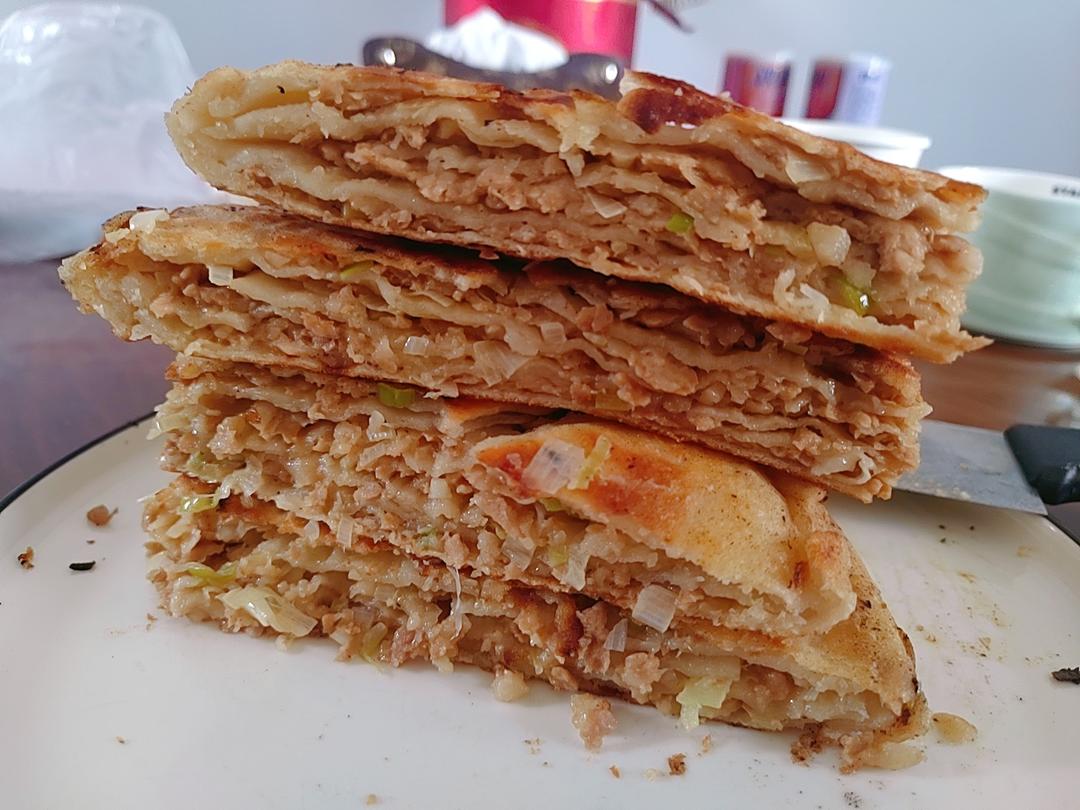
Serve this over steamed white rice, with the sauce spooned generously over the top. A simple blanched green vegetable on the side balances the richness — our blanched romaine lettuce is a good match. If you want something to dip into the broth, paper-thin spring pancakes work beautifully.
Storage & Reheat
Store leftovers in an airtight container in the refrigerator for up to three days. The flavors deepen overnight. Reheat on the stovetop over low heat with a tablespoon or two of water to loosen the sauce; avoid the microwave, which toughens the chicken. This stew does not freeze particularly well because the potatoes become grainy.
Allergen Notice
This recipe contains soy (soy sauce, doubanjiang), wheat (soy sauce, doubanjiang), and shellfish (oyster sauce). Check labels carefully if you are cooking for someone with allergies, and substitute tamari and a mushroom-based stir-fry sauce where needed.
Nutrition Disclaimer
Nutrition figures are estimates calculated from typical ingredient values and will vary with brand, portion size, and how much sauce is consumed. They are provided for general guidance only and are not a substitute for professional dietary advice.
About the Author & Recipe Development
I am Lin, and I grew up in my parents’ restaurant kitchen in Chengdu, where every dish on the menu had to earn its place. That standard is why this version of xiao ji dun mo gu uses a two-pot method and insists on hot water at every stage — small details that separate a good braise from a forgettable one. I tested this recipe four times, twice with supermarket chicken and twice with a stewing hen, and the notes above reflect what actually changed in the pot.
If you are building up your Chinese home cooking repertoire, simple Chinese dishes for first-time cooks is a useful companion, and understanding your best oil for stir-frying will help with the opening sear.
Authoritative References
- Chinese regional cuisine references on Dongbei braised dishes
- Standard food safety guidance on poultry internal temperatures (165°F / 74°C)
- USDA storage guidelines for cooked poultry
Chicken Stew with Mushrooms (小鸡炖蘑菇): Northeast Classic

Equipment
- Wok or Dutch Oven
- Clay pot or heavy saucepan
- Slotted Spoon
- Cutting board and knife
Ingredients
Main
- 1.5 lbs chicken legs cut into 2-inch pieces
- 2 potatoes peeled and cut into wedges
- 1 large onion sliced thick
- 1 cup dried mushrooms soaked and drained, liquid reserved
Aromatics
- 3 slices ginger
- 4 cloves garlic sliced
- 2 scallions cut into segments, plus more for garnish
- 3 dried chilies
- 2 bay leaves
- 2 star anise
Seasonings
- 2 tbsp light soy sauce
- 1 tbsp dark soy sauce
- 1 tbsp oyster sauce
- 1 tbsp doubanjiang
- 0.5 tsp five-spice powder
- 1 tbsp Shaoxing wine
- salt to taste
- 1 strip lemon zest
- toasted white sesame seeds to finish
- scallion sliced, to finish
Instructions
- Main protein: chicken legs cut into chunks. Supporting vegetables: onion, potatoes, and mushrooms. Aromatics: scallion, ginger slices, garlic slices, dried chilies, bay leaves, and star anise. Seasonings: light soy sauce, dark soy sauce, oyster sauce, five-spice powder, and salt. For finishing: white sesame seeds, chopped scallion, and lemon.

- Place the chicken in a pot of cold water. Add Shaoxing wine, scallion segments, and ginger slices. Bring to a boil and let it blanch for two to three minutes, skimming the gray foam that rises.
- Lift the chicken out with a slotted spoon and rinse away any clinging foam. Set it aside to drain while you prepare the aromatics.
- Have ready the aromatics — scallion, ginger, garlic, dried chilies, bay leaves, star anise — and the sauces: light soy sauce, dark soy sauce, oyster sauce, doubanjiang, and five-spice powder.
- Heat oil in a wok until it shimmers, then add the scallion, ginger, garlic, bay leaves, and star anise. Stir for thirty seconds until fragrant — do not let the garlic brown.
- Tip in the blanched chicken and toss to coat it in the fragrant oil. Let it sear for two to three minutes, pressing it against the wok so the edges pick up color.
- Pour in the light soy sauce, dark soy sauce, oyster sauce, doubanjiang, and five-spice powder. Stir constantly for about a minute so every piece of chicken is lacquered in sauce.
- Pour in hot water — it must be hot, not cold. Add enough to come just to the top of the chicken. Cold water will tighten the muscle fibers and leave you with dry meat.
- Set a separate clay pot over low heat and lay the sliced onion across the bottom in an even layer. It will act as a sweet, protective bed for the stew.
- Pour the contents of the wok into the clay pot over the onion. Top up with more hot water — again, it must be hot.
- Add hot water until the chicken is fully submerged. Bring to a boil, then reduce to a low simmer. After 15 minutes, add the potato wedges.
- Five minutes later, add the soaked mushrooms and a strip of lemon zest. Simmer for another ten minutes.
- Total braising time should be 35 to 40 minutes. Taste and adjust salt, then scatter chopped scallion over the top.
- Finish with chopped scallion and toasted white sesame seeds. Bring the pot to the table and serve straight from it.












Leave a Reply