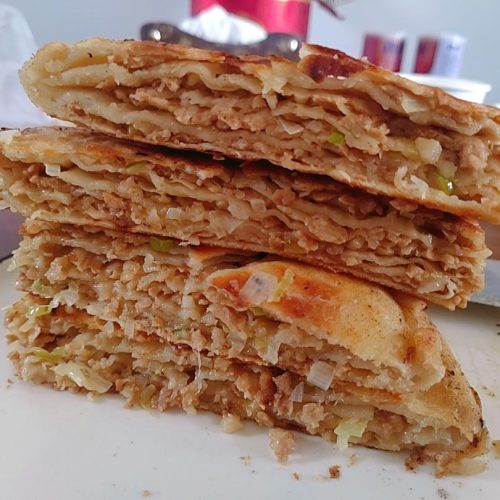
There are food videos that make you pause and rewind, and the Henan zhuang mo videos got me the same way they got the original cook of this recipe: a thick, golden bread stacked on a counter, sliced into four towering wedges, each layer glistening with pork and scallion. The comment she wrote says it plainly – “watching food streamers eat Shandong zhuang mo left me restless; we could not go out during the pandemic, so I made my own.” That restlessness is how the best home recipes are born.
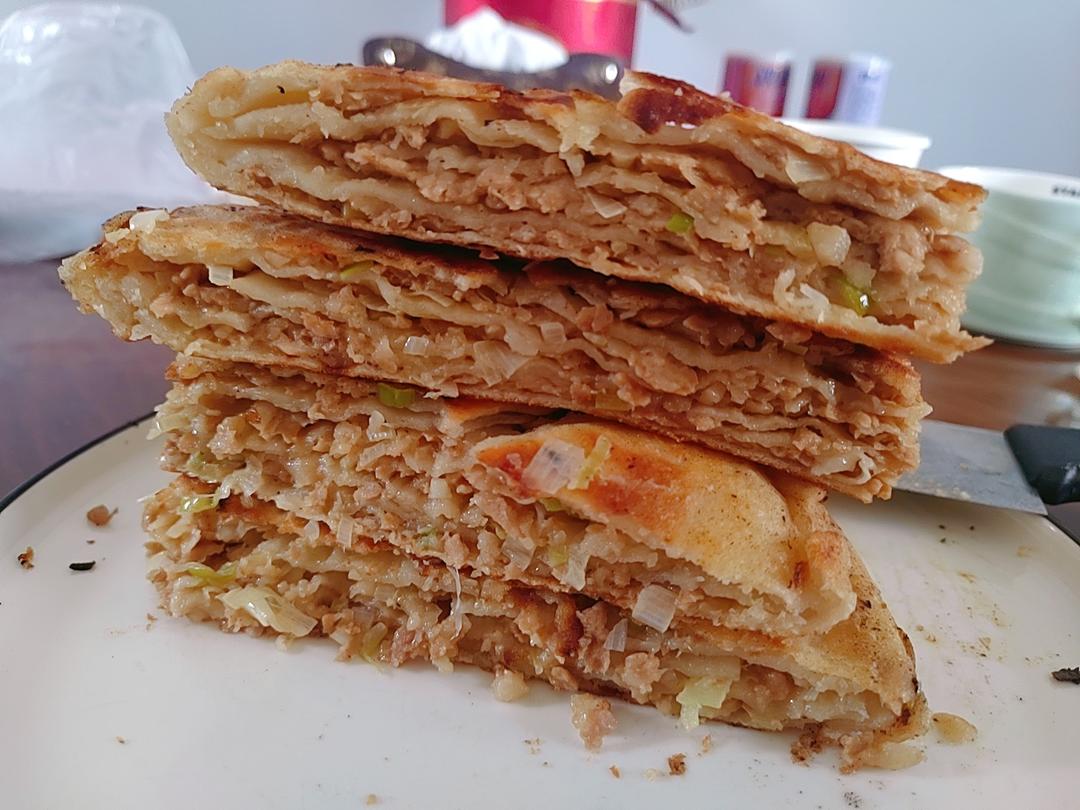
Da rou zhuang mo (大肉壮馍) is “big meat zhuang mo” – a thick, layered bread from the Henan-Shandong borderlands, stuffed with seasoned pork and scallion, rolled into a tall towel shape, and pan-fried until the outside is crisp and the inside is soft, juicy layers. It is street food in the truest sense: heavy, cheap, and spectacular. This home version uses a scalded dough – half boiling water, half warm – which is the quiet trick that makes the crust crisp and the crumb tender at once.
What Is Big Meat Zhuang Mo (Da Rou Zhuang Mo)?
Da rou zhuang mo (大肉壮馍) is a Henan-style stuffed bread: a wheat dough – part scalded with boiling water, part kneaded with warm – rolled into a thin sheet, brushed with oil, layered with a seasoned pork-and-scallion filling, rolled up into a tall “towel” shape, and pan-fried with generous oil until the outside is golden-crisp. It is cut into wedges that reveal spirals of dough and meat.
The zhuang mo family includes many regional shapes; the “big meat” version is the show-stopper – a vertical tower of layered dough and filling that bakes into a cross-section like a savory mille-feuille. The scalded-dough technique (tang mian, 烫面) is the key: boiling water gelatinizes some of the flour’s starch, giving the bread a softer crumb, while the remaining warm-water dough provides structure for the crisp crust. Street vendors make it in enormous electric griddles; this home version does the same in a standard one.
If you love stuffed pan-fried breads, my pork and onion guokui is the flatter cousin of this tower-shaped classic.
1Easy Pork and Onion “Guokui” (A Crispy Scallion Pancake Hack)A “lazy” version of Guokui using store-bought scallion pancakes! These crispy, flaky pockets are stuffed with a savory pork and onion filling and bake or air-fry in 20 minutes.Check out this recipe
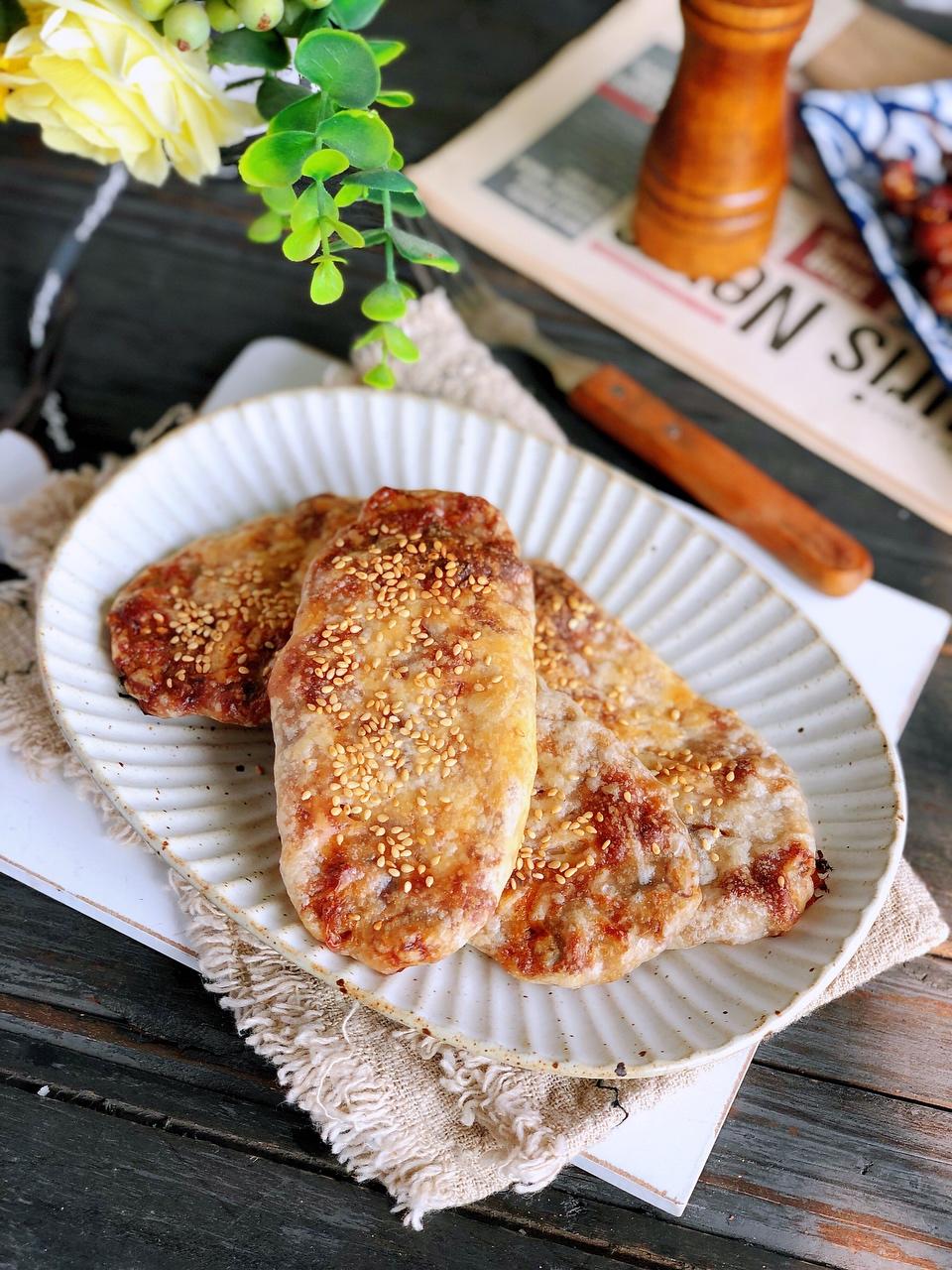
Why This Version Works
- The scalded dough is the texture trick. Half the flour is hydrated with boiling water, which gelatinizes its starch and makes the crumb tender; the warm-water half adds gluten structure for the crisp shell.
- A 10-minute knead is enough. The dough needs to be soft and pliable – the recipe’s rule is simple: too soft, add flour; too hard, add warm water. No exact grams will beat feel here.
- The filling seasons the layers. Pork, scallion, soy, dark soy, oyster sauce, pepper, and wine – the same savory logic as the juiciest dumpling filling, spread over the rolled dough.
- Oil between the layers makes the spiral. Brushing the sheet with oil before rolling is what separates the dough into flaky layers as it cooks – the visible spiral in every wedge.
- A hot griddle and firm pressing. Pressing the rolled tower flat into the preheated griddle develops the crisp golden crust on both faces.
Equipment Needed
- A large mixing bowl for the dough
- A rolling pin
- An electric griddle or a heavy, lidded skillet – the recipe calls for an electric griddle (电饼铛)
- A pastry brush for the oil
- A sharp knife for the wedges
Ingredients
- 400 g (14 oz) all-purpose flour
- 5 g (1 tsp) salt
- About 250 ml (1 cup) water – half boiling, half warm
- 300 g (10.5 oz) pork, minced or finely chopped
- 1 large scallion or 1/2 leek, finely chopped
- 3 tbsp (45 ml) light soy sauce
- 1/2 tbsp (8 ml) dark soy sauce
- 1 tbsp (15 ml) oyster sauce
- 1/2 tsp (2 g) black pepper
- 1/2 tsp (2 g) Sichuan pepper powder or five-spice powder
- 3 tbsp (45 ml) Shaoxing wine
- Neutral oil, for brushing and the griddle
Ingredient Notes
Scalded dough (tang mian): The original mixes the flour with boiling water first, stirs it into flakes, then adds warm water and kneads 10 minutes. This double-hydration is standard for pan-fried breads – it is the same principle my thousand-layer scallion pancake relies on for its flaky crumb.
Pork: The ingredient list calls for 300 g (10.5 oz) of pork – minced or very finely chopped works best so the filling spreads evenly and cooks through in the griddle. A little fat in the mince keeps the layers juicy; see my ground pork fat ratio guide if you are buying mince.
The spice blend: The original lists either Sichuan pepper powder or five-spice – both are traditional in zhuang mo fillings, and each gives a different warmth. I have tested both and honestly prefer a half-and-half mix, but either alone works.
Scallion: One large scallion or a piece of leek, finely chopped, is the filling’s fresh note. Do not skimp – the scallion is what makes the layers aromatic, the way it does in thousand-layer meat pies.
Prep & Mise en Place
Start with the dough, because it rests while you make the filling. Mix the flour and salt, pour in the boiling water and stir into flakes, then add the warm water and knead for about 10 minutes until the dough is soft and smooth – the recipe’s feel-test: add flour if too sticky, warm water if too firm. Cover and rest.
While the dough rests, mix the filling: pork, scallion, both soy sauces, oyster sauce, the peppers, and the wine, stirred until evenly combined. Have the oil and a brush ready. The griddle should be preheating – the recipe says to add the dough tower to a preheated griddle with generous oil.
Cooking Process
Step 1 – Make the Scalded Dough
Mix 400 g (14 oz) flour with 5 g (1 tsp) salt. Pour in half the water boiling hot and stir into flakes with chopsticks, then add the remaining warm water and knead for about 10 minutes, until soft and pliable. Adjust by feel – the recipe’s rule: too soft, add flour; too hard, add warm water. Cover and rest while you make the filling.
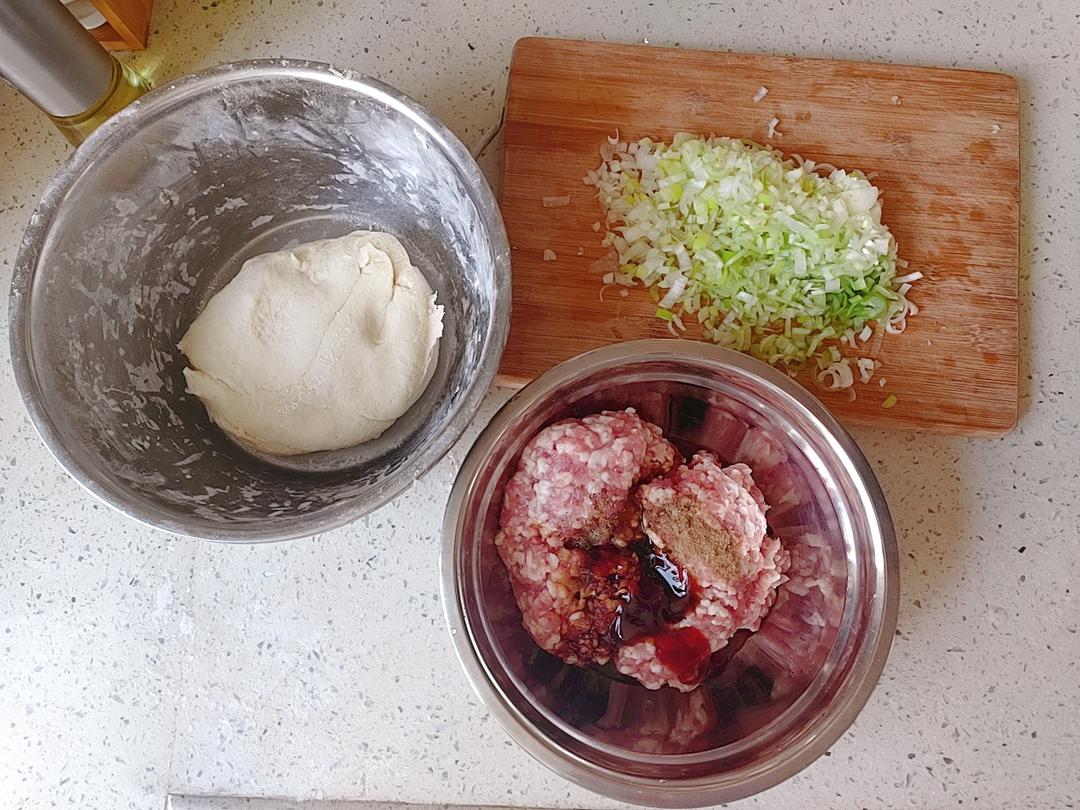
The boiling-water scald is starch gelatinization: the hot water swells and bursts the starch granules, making the dough soft and tender without gluten development. The warm water added after brings in enough gluten for structure. This split is why the bread can be crisp outside yet soft inside – two hydrations, two textures.
Step 2 – Mix the Pork and Scallion Filling
In a bowl, combine the minced pork, chopped scallion, light soy, dark soy, oyster sauce, black pepper, Sichuan pepper or five-spice powder, and Shaoxing wine. Stir until the mixture is evenly seasoned and slightly sticky. The filling should spread easily – if it is too thick, a tablespoon of water helps; if too loose, it will wet the dough.
Step 3 – Roll the Dough Into a Thin Sheet
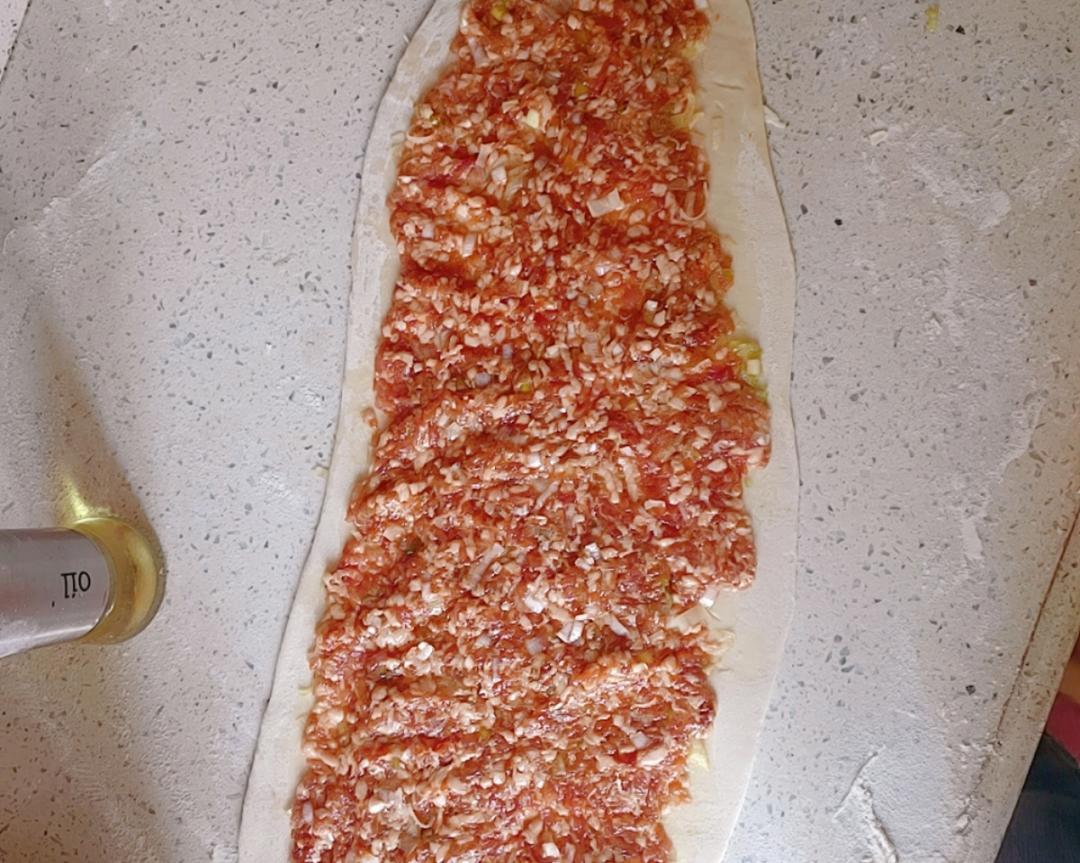
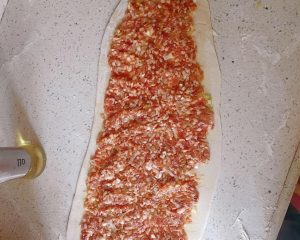
Divide the rested dough into two pieces. On a floured surface, roll each piece into a sheet about 30 cm (12 in) long, 10 cm (4 in) wide, and 2 mm (1/16 in) thick. Leave a margin of about half a centimeter (1/5 in) around the edges for sealing, and brush the rest of the sheet with a thin layer of oil.
Step 4 – Fill, Roll, and Layer Into a Towel Tower
Spread half the filling over the oiled sheet, again leaving the edges bare so it seals. Take one end of the sheet and roll it up tightly, building layer upon layer until you have a compact towel-shaped roll. Pinch the seams closed so the filling stays inside.
Step 5 – Press and Pan-Fry Until Both Sides Are Crisp
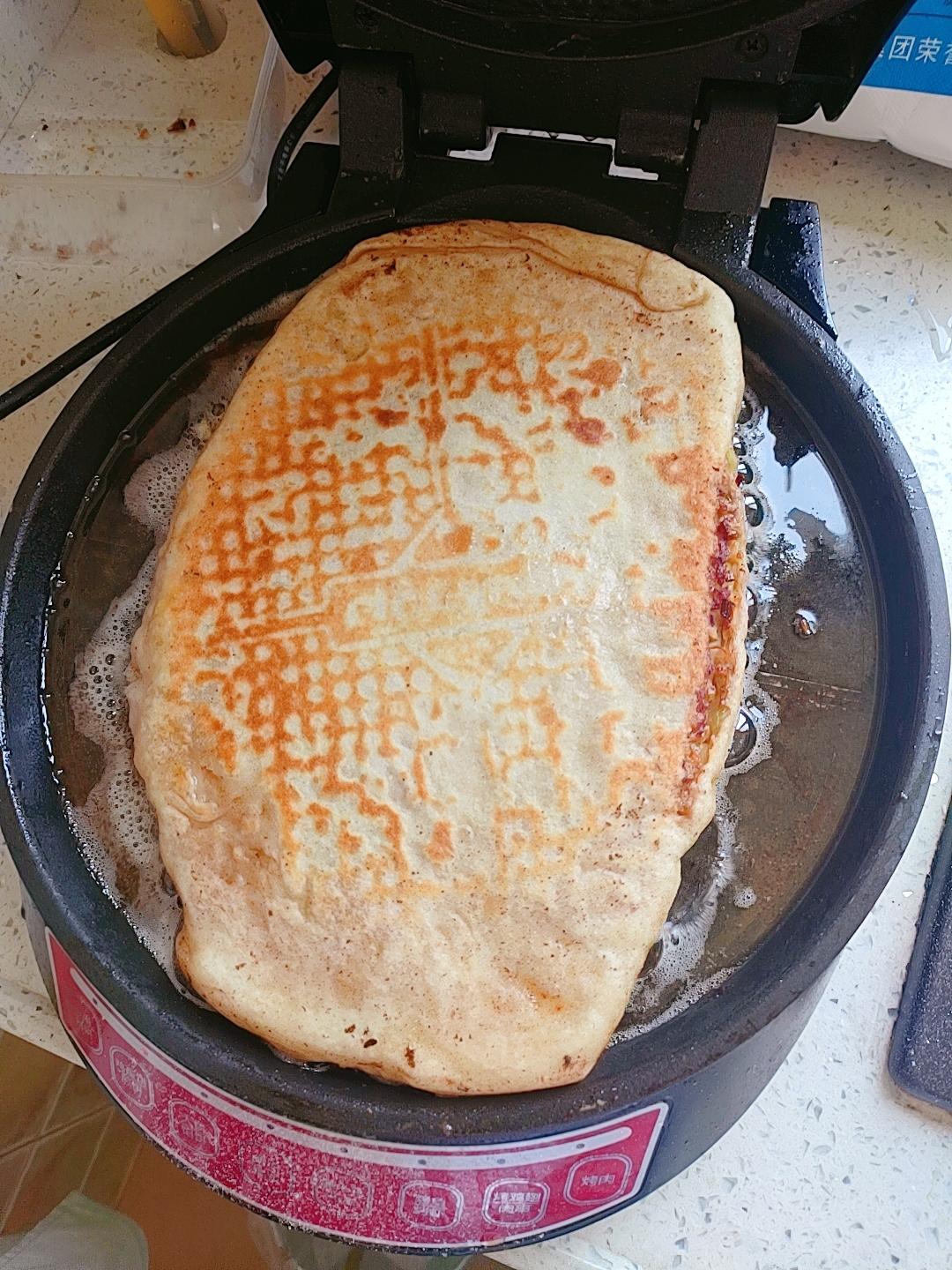
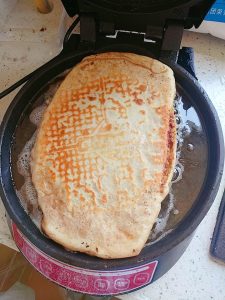
Preheat an electric griddle (or a heavy, lidded skillet) with a generous splash of oil. Place the towel tower in the griddle and press it down firmly with a spatula, flattening it to about half its height. Fry over medium heat, turning and pressing, until both faces are golden and crisp – the recipe’s target is “both sides crisp without burning, the filling soft and juicy.” Adjust the heat if the crust browns too fast.
Step 6 – Slice, Stack, and Serve
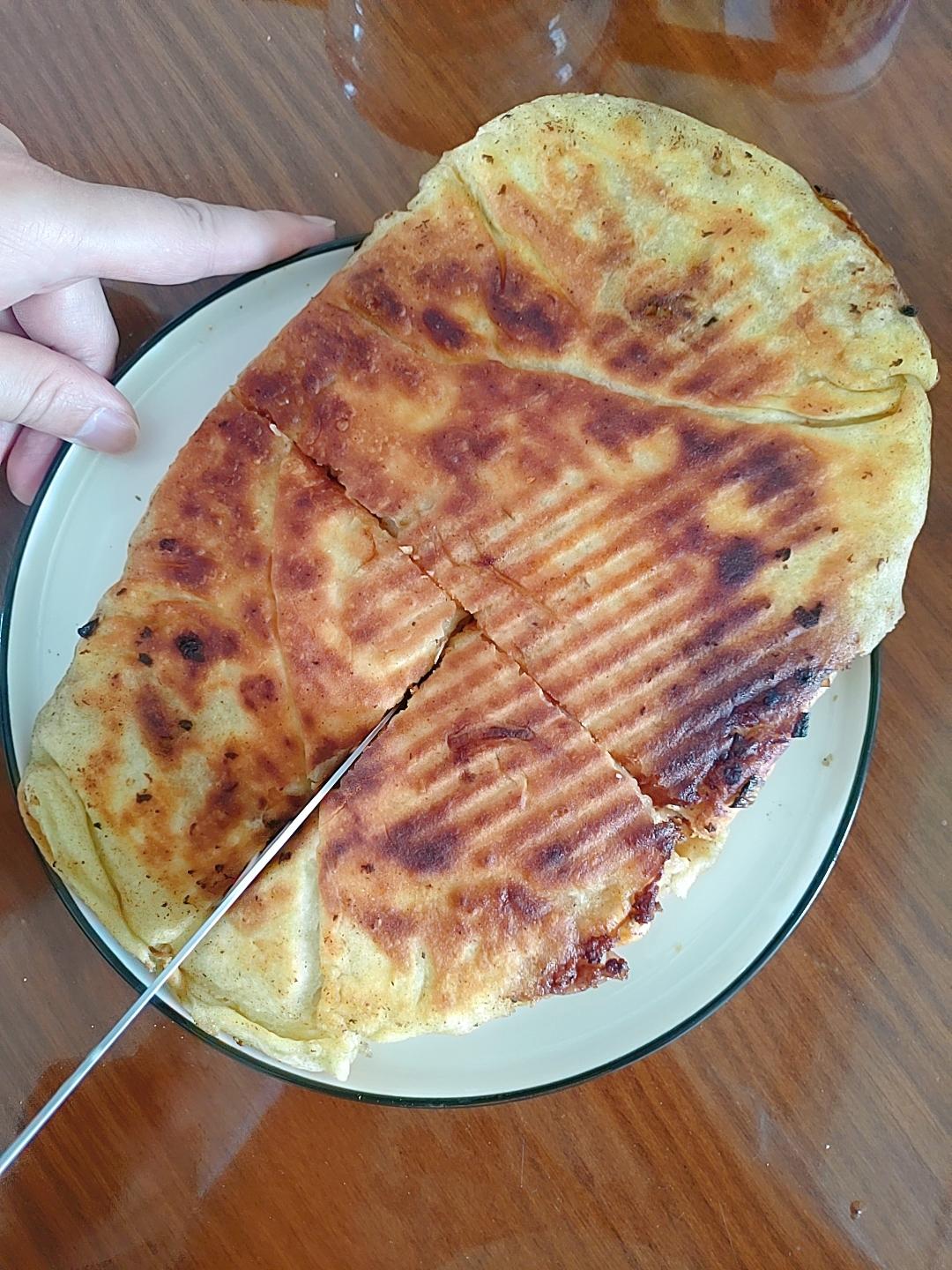
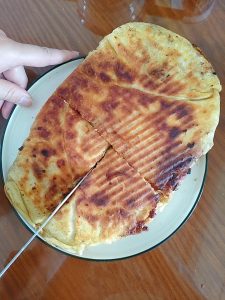
When the bread is deeply golden and cooked through – about 10-12 minutes total – transfer it to a board and cut it into four wedges with a sharp knife. Stack the wedges the way the viral zhuang mo shops do, and serve immediately with a bowl of hot and sour soup, which the original recommends as the perfect companion.
Common Mistakes When Making Big Meat Zhuang Mo
1. A tough, dense crumb. Cause: skipping the boiling-water scald or skimping on it. Fix: the tang mian half is what makes the bread tender – use genuinely boiling water for that half.
2. Filling leaking out in the griddle. Cause: filling spread to the edges, or seams not sealed. Fix: leave a bare margin and pinch the seams firmly – the same rule as my sheng jian bao.
3. Burnt outside, raw center. Cause: the griddle too hot, or the tower not pressed flat enough. Fix: medium heat, press the tower down firmly, and cook low enough that the heat reaches the center.
4. No visible layers. Cause: skipping the oil between the dough layers. Fix: brush the sheet with oil before rolling – the oil is what separates the dough into the flaky spiral.
5. A dry, crumbly filling. Cause: lean pork and not enough moisture. Fix: use pork with some fat, and do not skip the wine and soy in the filling – they keep the meat juicy.
6. Dough that fights the rolling pin. Cause: not resting, or too little warm water. Fix: rest the dough at least 15 minutes after kneading, and keep it soft – the recipe’s feel-test exists for a reason.
Variations
Five-spice vs Sichuan pepper: The original allows either. Five-spice gives a sweeter, more aromatic warmth; Sichuan pepper gives a gentle numbing lift. I have made both and genuinely cannot pick a favorite.
Vegetarian: Replace the pork with finely chopped mushrooms, tofu, and a spoonful of hoisin – the layers and method are unchanged.
Smaller rolls: Divide the dough into three or four smaller pieces for individual breads – easier to manage in a small skillet, and the crisp-to-filling ratio improves.
Griddle-less: A heavy, lidded skillet over medium-low heat with a splash of water added and covered (steam-fry) finishes the center reliably. I have tested this fallback and it works, though the crust is slightly less crisp.
Frequently Asked Questions
What is the difference between zhuang mo and guokui? Both are stuffed pan-fried breads, but guokui is flatter and often baked against the walls of a drum oven, while zhuang mo is a taller, griddle-fried tower. My guokui recipe covers the flat sibling.
Can I make the dough ahead? Yes – the dough rests and even improves in the fridge overnight. Bring it to room temperature before rolling.
Why did my bread not get crisp? Either the griddle was not hot enough when the dough went in, or the oil was too skimpy. The recipe says oil generously – the crust needs it.
Can I freeze zhuang mo? Yes – cool completely, wrap well, and freeze up to 2 months. Reheat in a covered pan over low heat to revive the crust.
Is this the same as rou jia mo? No – rou jia mo is a split flatbread filled with braised pork; zhuang mo has the filling rolled inside the dough itself. They are cousins, not the same dish.
How to Serve
Serve the zhuang mo hot, stacked in wedges, with hot and sour soup – the original’s own pairing, and a genuinely perfect one. It is street-food heavy, so it suits a casual table: alongside flaky scallion pancakes and pan-fried buns for a bread basket, or with a plate of scallion pork belly stir-fry if you want more pork on the table. For the full northern street-food spread, add sesame paste flatbread and let everyone tear and share.
Storage & Reheat
Leftover zhuang mo keeps refrigerated for 2 days, wrapped well. Reheat in a covered pan over low heat for 4-5 minutes per side, or in a 180°C (356°F) oven for 8 minutes – the microwave softens the crust. Reheat until the pork filling reaches at least 74°C (165°F). Freeze wedges for up to 2 months and reheat straight from frozen in a covered pan. Never leave cooked bread out for more than 2 hours.
Allergen Notice
This recipe contains gluten (flour), soy (light and dark soy sauce, oyster sauce), and may contain shellfish in oyster sauce – check labels. It is free of nuts, eggs, and dairy.
Nutrition Disclaimer
Nutrition information is calculated using an ingredient database and should be considered an estimate. In cases where multiple ingredient alternatives are given, the first listed is calculated for nutrition. Garnishes and optional ingredients are not included.
About the Author & Recipe Development
I am Lin, a professional Chinese chef who spent a decade in high-volume restaurant kitchens before writing about Chinese cooking. I first met zhuang mo through the same food-streaming videos that started the original cook down this path, and I understand her restlessness exactly – some dishes are so visually loud you cannot unsee them. I tested this home version twice, once with five-spice and once with Sichuan pepper, and I kept the original’s two honest pieces of advice: the dough is judged by feel, not grams, and the griddle wants generous oil. I have not tested a vegan filling or a convection-oven bake, so I have flagged those as experiments rather than promises.
Authoritative References
USDA Food Safety and Inspection Service – Safe Temperature Chart for pork filling and storage guidance.
Big Meat Zhuang Mo (Da Rou Zhuang Mo): Henan Street Bread

Equipment
- Large Mixing Bowl
- Rolling Pin
- Electric griddle or heavy skillet
- Pastry Brush
Ingredients
For the Dough
- 400 g all-purpose flour 14 oz
- 5 g salt 1 tsp
- 250 ml water, half boiling half warm about 1 cup, judged by feel
For the Filling
- 300 g pork, minced or finely chopped 10.5 oz
- 1 large scallion or 1/2 leek, finely chopped
- 3 tbsp light soy sauce 45 ml
- 1/2 tbsp dark soy sauce 8 ml
- 1 tbsp oyster sauce 15 ml
- 1/2 tsp black pepper 2 g
- 1/2 tsp Sichuan pepper powder or five-spice powder 2 g
- 3 tbsp Shaoxing wine 45 ml
- neutral oil, for brushing and the griddle
Instructions
- Mix the flour and salt; add boiling water and stir into flakes, then warm water, and knead about 10 minutes until soft. Rest covered.

- Mix the pork, scallion, soy sauces, oyster sauce, peppers, and wine into an evenly seasoned filling.
- Divide the dough in two; roll each into a 30 x 10 cm (12 x 4 in) sheet about 2 mm thick. Brush with oil, leaving the edges bare.

- Spread the filling over the oiled sheet, leaving the edges bare, then roll up tightly into a towel-shaped tower and pinch the seams.

- Fry in a preheated, generously oiled griddle, pressing flat, until both sides are golden and crisp and the filling is cooked through.
- Cut into four wedges, stack, and serve hot with hot and sour soup.



Leave a Reply