There is a whole category of Sichuan food built for the table before the meal even starts, and cold-fried beef strips sit right at the top of it. The name is a little misleading in English: 冷吃 means “eat cold,” and that is exactly the point. The beef is braised until tender, torn by hand into ragged strips, then fried with chilies and aromatics until every strand is glossy and chewy. You eat it at room temperature, straight from the bowl, with your fingers or a pair of chopsticks, and it gets better the longer it sits.
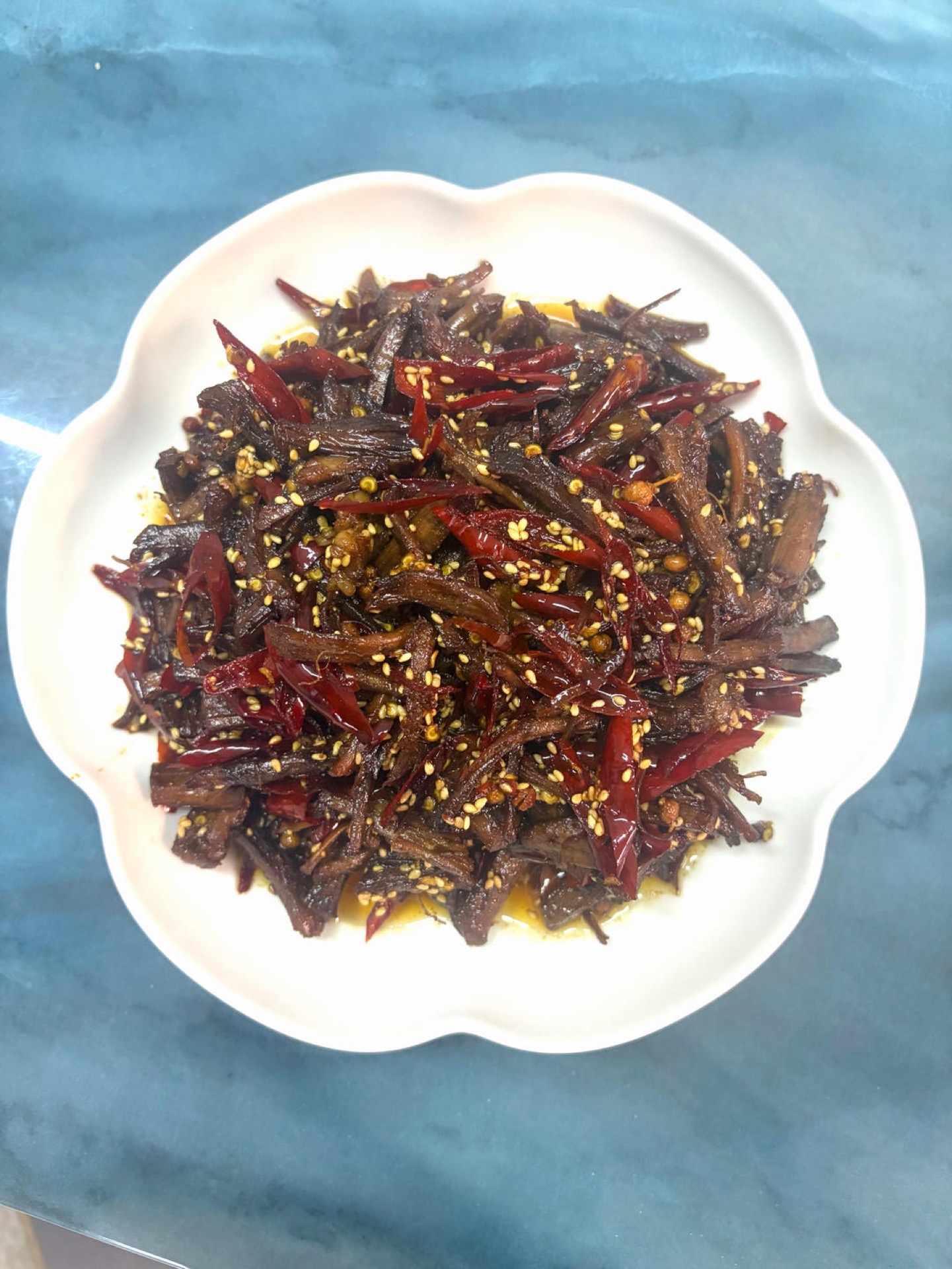
What makes this version worth making at home is the texture. Most beef snacks are either jerky-hard or soft and shreddy, and this one lands somewhere in between: firm enough to chew on, tender enough to keep eating. The braise does the tenderizing, the hand-shredding gives you those long, irregular strands that catch the chili oil, and the final fry concentrates everything down into a deeply savory, gently numbing bite. It is also, conveniently, one of those dishes that tastes better on day two.
This is a Zigong-style preparation, from the salt-and-chili heartland of Sichuan, where cold dishes like this are standard bar food. If you have ever ordered a plate of 冷吃兔 or 冷吃牛肉 at a Sichuan restaurant and wondered why it was so addictive, this is the home version. It takes some hands-on time, but almost all of it is unattended braising and cooling.
What Is Cold-Fried Beef?
Cold-fried beef, or 冷吃牛肉 (leng chi niu rou), is a Sichuan cold dish made from beef that is first braised until tender, then hand-shredded along the grain, and finally fried in aromatic oil with dried chilies and Sichuan peppercorns. Despite the name, “cold-fried” does not mean the beef is fried cold; it means the dish is served cold or at room temperature, and the frying step happens after the beef has already been cooked through.
The technique belongs to a family of Sichuan cold dishes called 凉菜 (liang cai), which are served as appetizers, drinking snacks, or part of a larger spread of small plates. The braise builds a gentle base of star anise, cinnamon, and bay, and the fry layers on chili heat, numbing peppercorn, and a touch of sweetness. The finished beef keeps for days in the fridge, which is part of why it became such a popular snack: it travels well, it does not need reheating, and it only improves as the oil and spices settle into the meat.
Cold-fried beef is essentially a twice-cooked beef: a wet braise for tenderness, then a dry fry for flavor and chew. Skip either stage and you lose the point of the dish.
If you enjoy the texture and flavor profile here, the same cold-dish logic shows up across the Sichuan table. For a lighter, creamier take on the same idea, this creamy cold shredded chicken uses shredded meat and a sesame-forward dressing instead of a chili fry.
1Creamy Cold Shredded Chicken (Liangban Jisi)A refreshing, nutty, and savory cold chicken salad. Perfect for hot summer days, featuring tender poached chicken and a velvety peanut dressing.Check out this recipe

If it is the chili-and-numbing combination you are after rather than the beef itself, this chili garlic cold noodles delivers the same flavor family in noodle form, and it comes together in about fifteen minutes.
2Easy Chili Garlic Cold Noodles (Liangban Mian)These 15-minute authentic Chinese cold noodles feature a savory, tangy sauce poured over chewy noodles and crunchy cucumbers. A perfect quick meal for hot days.Check out this recipe

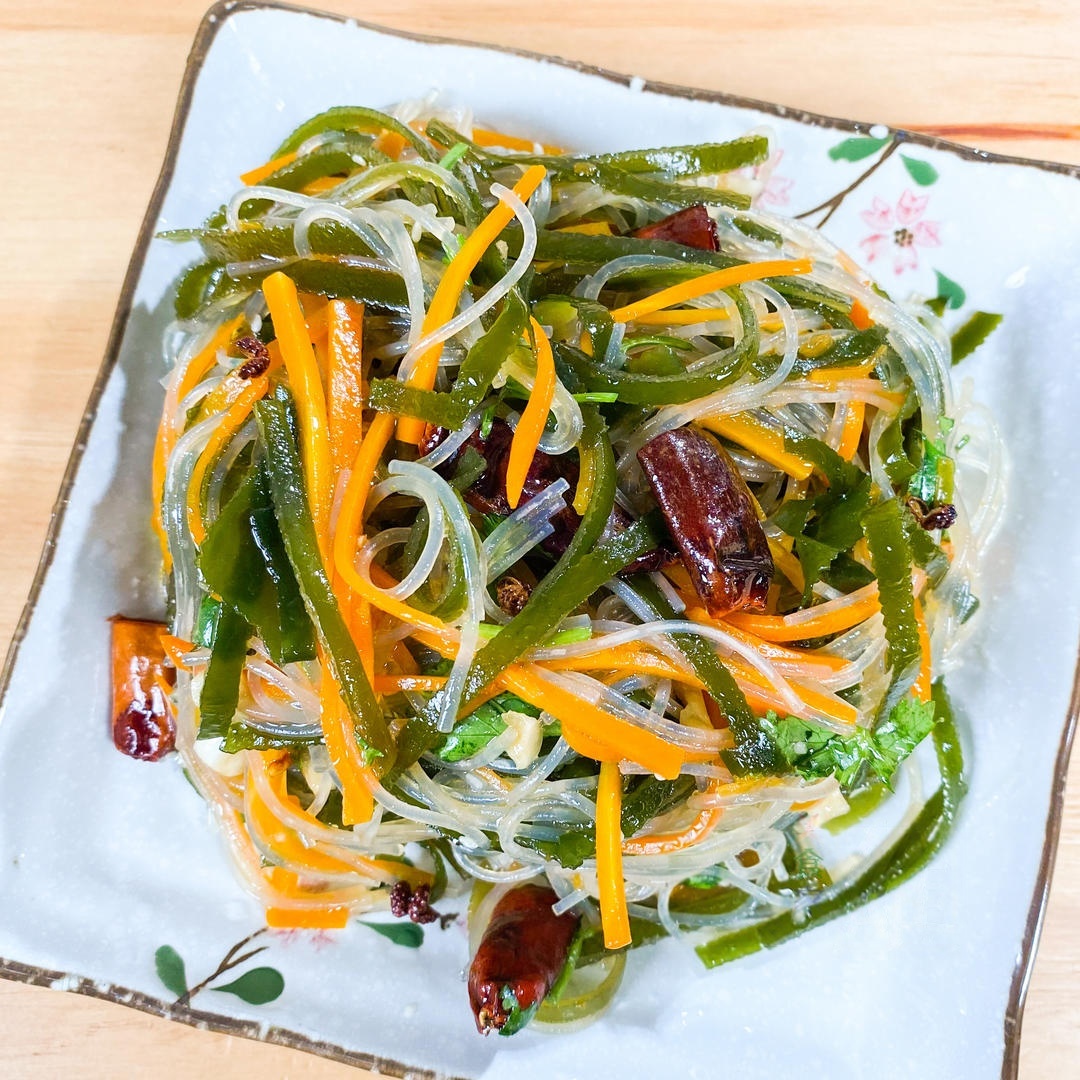
And if you like the idea of a cold, hand-shredded plate that you can build ahead of time, this shredded cold salad is the vegetable-forward cousin of the same tradition, with the same emphasis on texture and a punchy dressing.
3Shredded Cold Salad (Liangban Sansi)A vibrant, crunchy, and cooling Sichuan salad featuring kelp, carrots, and glass noodles in a spicy-aromatic dressing.Check out this recipe
Why This Recipe Works
Three things make this recipe reliable. First, the beef is braised whole in large chunks before it is ever shredded, which keeps it moist and lets the fibers separate cleanly instead of tearing into mush. Second, the aromatics are fried in the oil and then removed, so the oil picks up their flavor without leaving scorched bits behind in the finished dish. Third, the chilies and peppercorns are soaked briefly before they hit the wok, which keeps them from burning in the hot oil and lets them soften just enough to cling to the beef.
The seasoning is also deliberately layered rather than dumped in at once. Dark soy gives color, light soy gives salt and umami, sugar rounds off the chili heat, and thirteen-spice powder adds the warm background note that makes the beef taste like more than just spicy meat. The result is a dish that reads as complex even though the technique is simple.
One more thing worth knowing: this dish is forgiving. If your beef braises a little longer than 40 minutes, no harm done. If you want it hotter, add chili powder at the end. If you want it less oily, use less oil in the fry. The only step you should not rush is the cooling, because shredding warm beef gives you a pile of broken fibers instead of clean strips.
Ingredients
You need three groups of ingredients here: the beef and its braising aromatics, the oil-building aromatics, and the chili and seasoning mix. The full list with amounts is in the recipe card below, but a few notes will help you shop and prep.
For the beef, flank or shank both work well. Flank shreds into long, tidy strips and has a satisfying chew; shank is a little more collagen-rich and gives you a slightly softer bite after braising. Either way, buy it in one piece if you can, since pre-cut stew meat is often trimmed into uneven cubes that shred awkwardly.
For the chilies, use a medium-heat dried red chili rather than a super-hot variety. You want the dish to be pleasantly spicy and aromatic, not punishing. Sichuan peppercorns should be the red variety if you can find them, and they should smell citrusy and floral when you open the bag. If they smell like dust, they are old and will not give you much numbing effect.
The soy sauces matter more than you might think. Dark soy is for color and a molasses-like depth; light soy is for salt and freshness. If you only have one, use light soy and accept a paler finished dish. A pinch of salt can be adjusted at the end if the seasoning feels flat.
Finally, the oil. Use a neutral oil with a high smoke point, like peanut or canola. You are frying aromatics at a moderate temperature, so you do not need anything fancy, but you do want an oil that will not taste bitter after a few minutes of heat.
Cooking Process
Step 1 — Braise the Beef
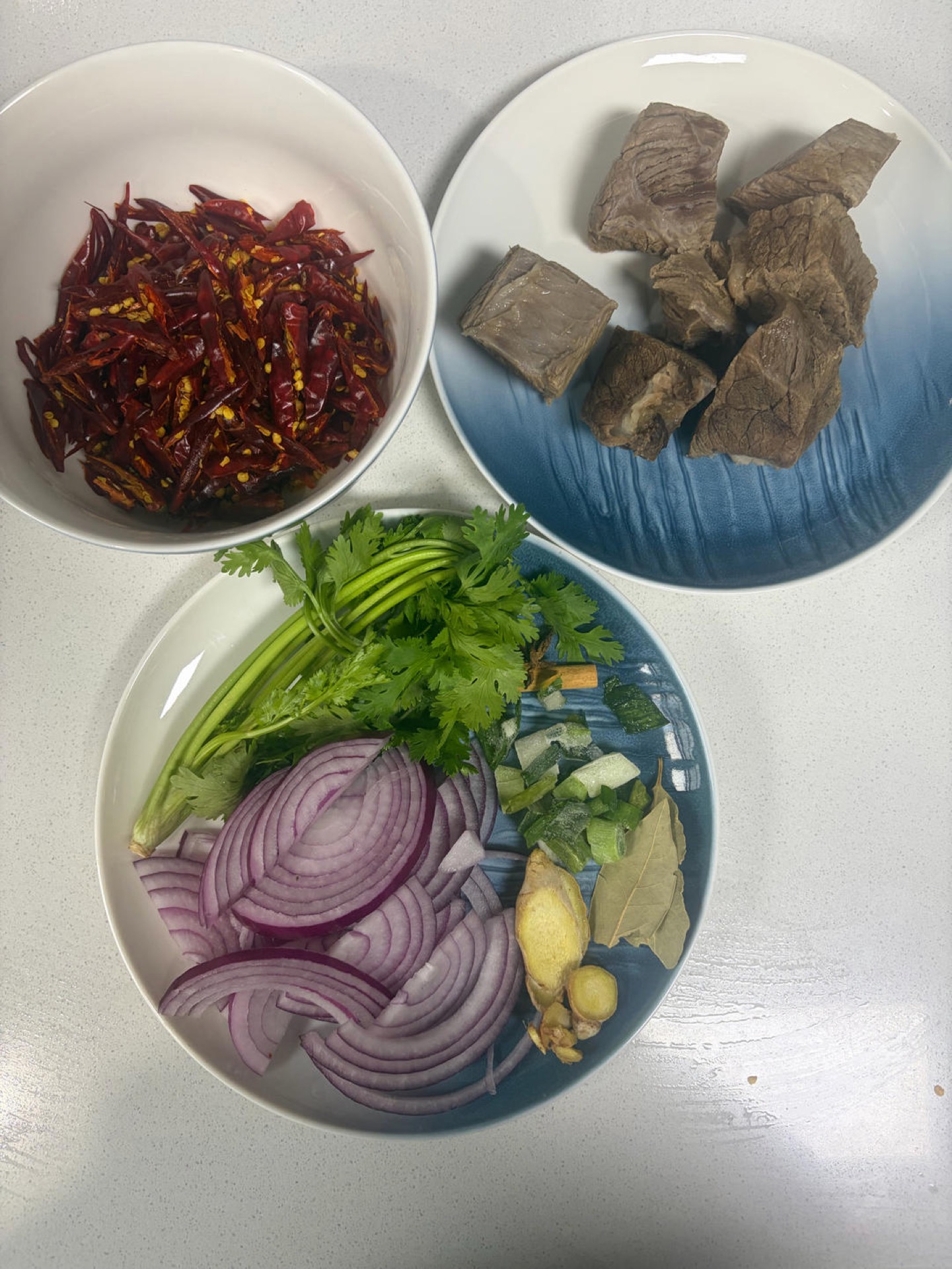
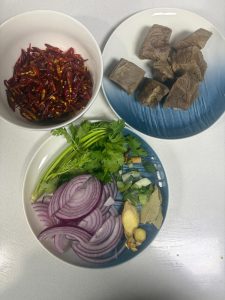
Cut the beef into roughly 5cm chunks, blanch in water with scallion, ginger and Shaoxing wine, skim off the blood foam when the water boils, then add 2 star anise, 30 Sichuan peppercorns, 1 piece cinnamon bark, 2 bay leaves and 2 tsp salt and simmer for 40 minutes, then let it cool completely. While it simmers, prepare: 1) 40g dried chilies snipped into strips and a small handful of Sichuan peppercorns (the peppercorns will need a short soak later before frying); 2) one cilantro stalk, half an onion, 2 slices ginger, 2 bay leaves, scallion, a small piece of cinnamon bark and one star anise.
Step 2 — Shred the Beef
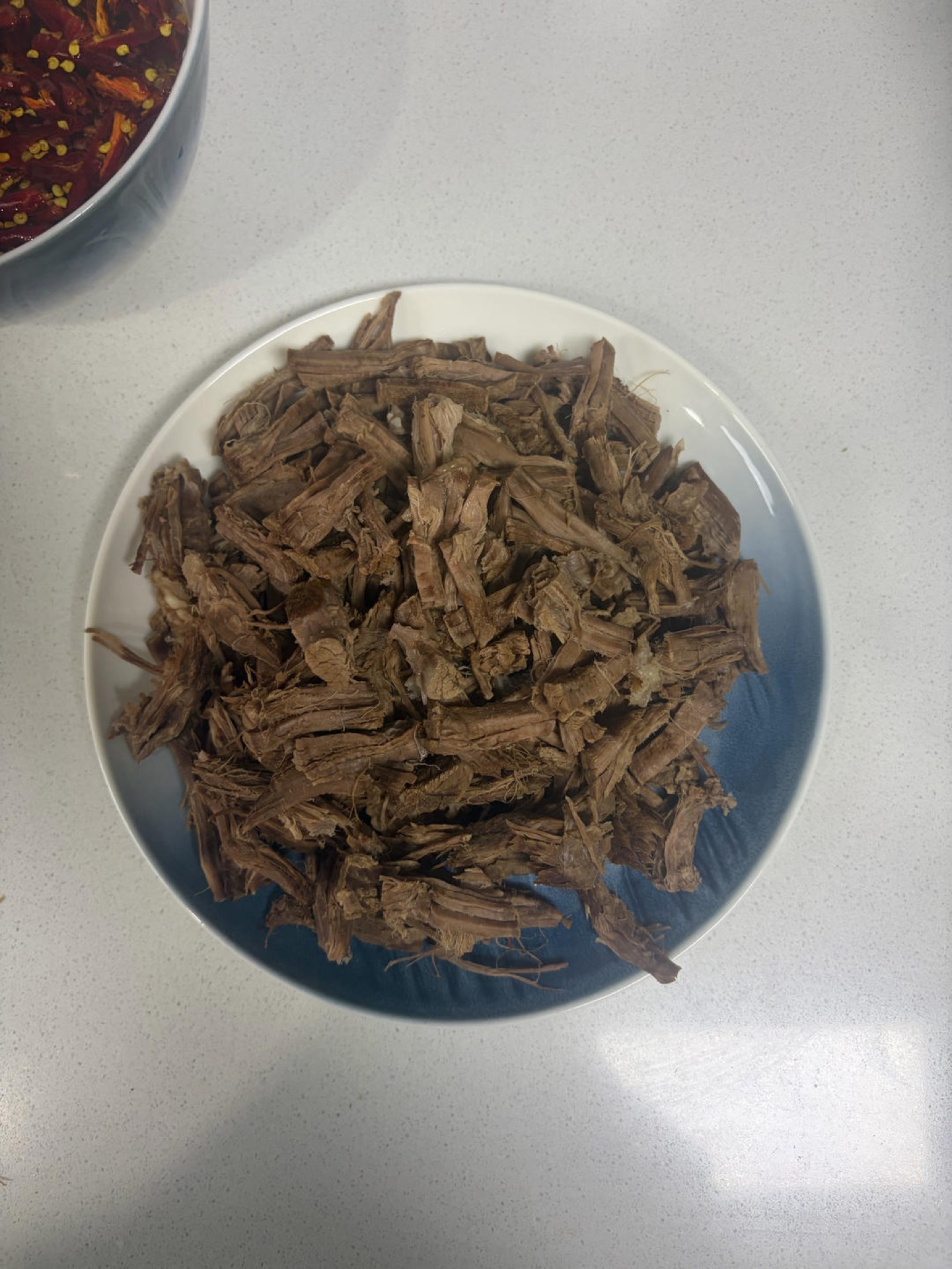
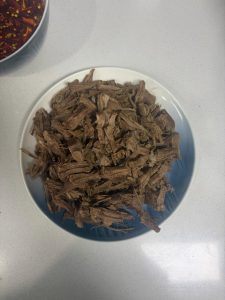
Once the beef has cooled, tear it along the grain into strips (this part takes some patience).
Step 3 — Build the Aromatic Oil
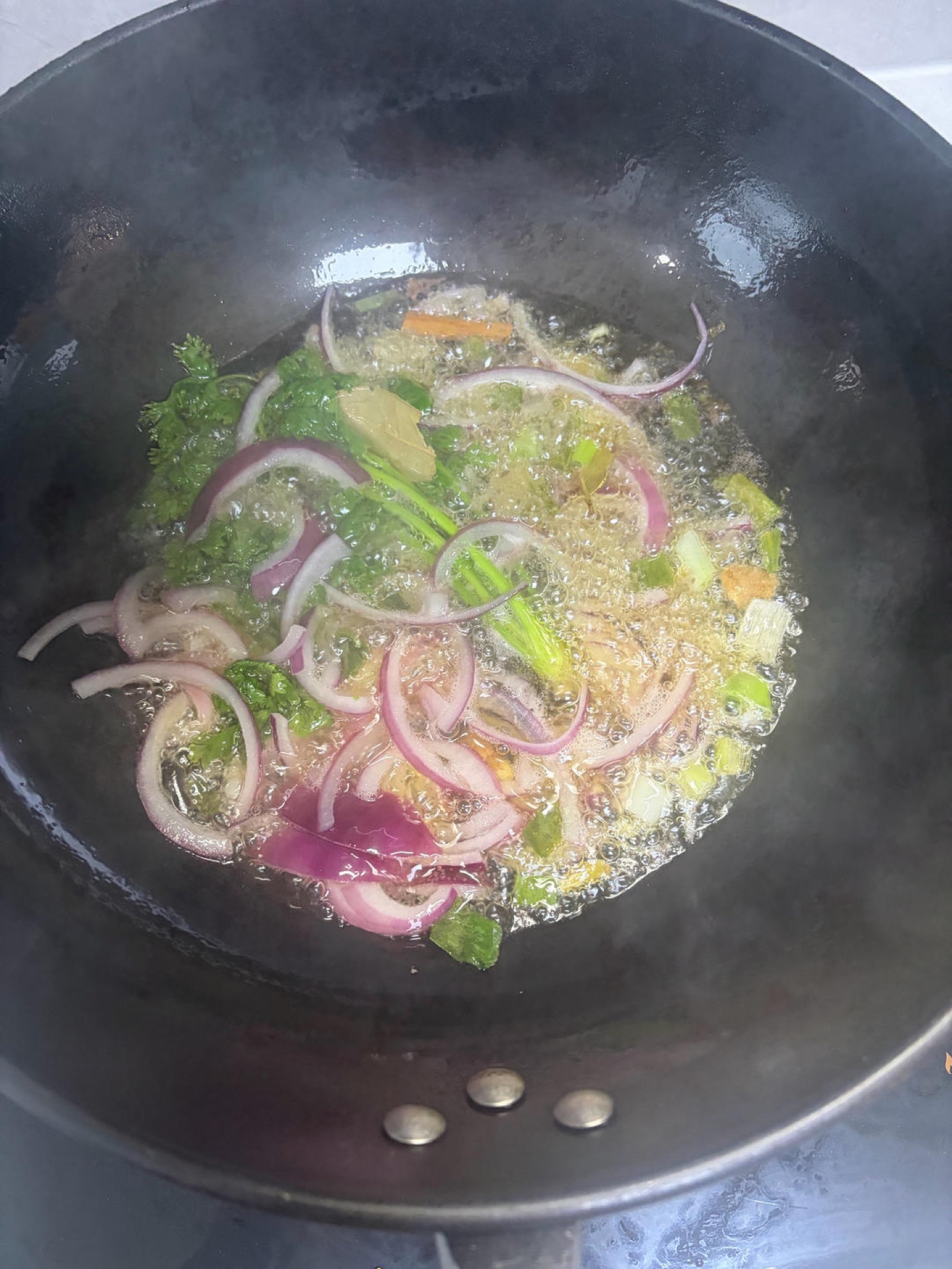
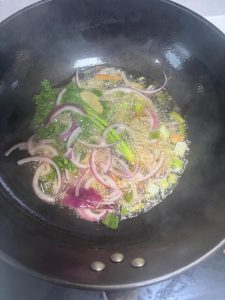
Pour oil into the wok, a little more than you would for a normal stir-fry but not too much, otherwise the finished dish will be swimming in oil. Add the cilantro, onion, bay leaves, star anise, cinnamon bark, scallion and ginger from step 2.
Step 4 — Fry the Aromatics and Soak the Chilies
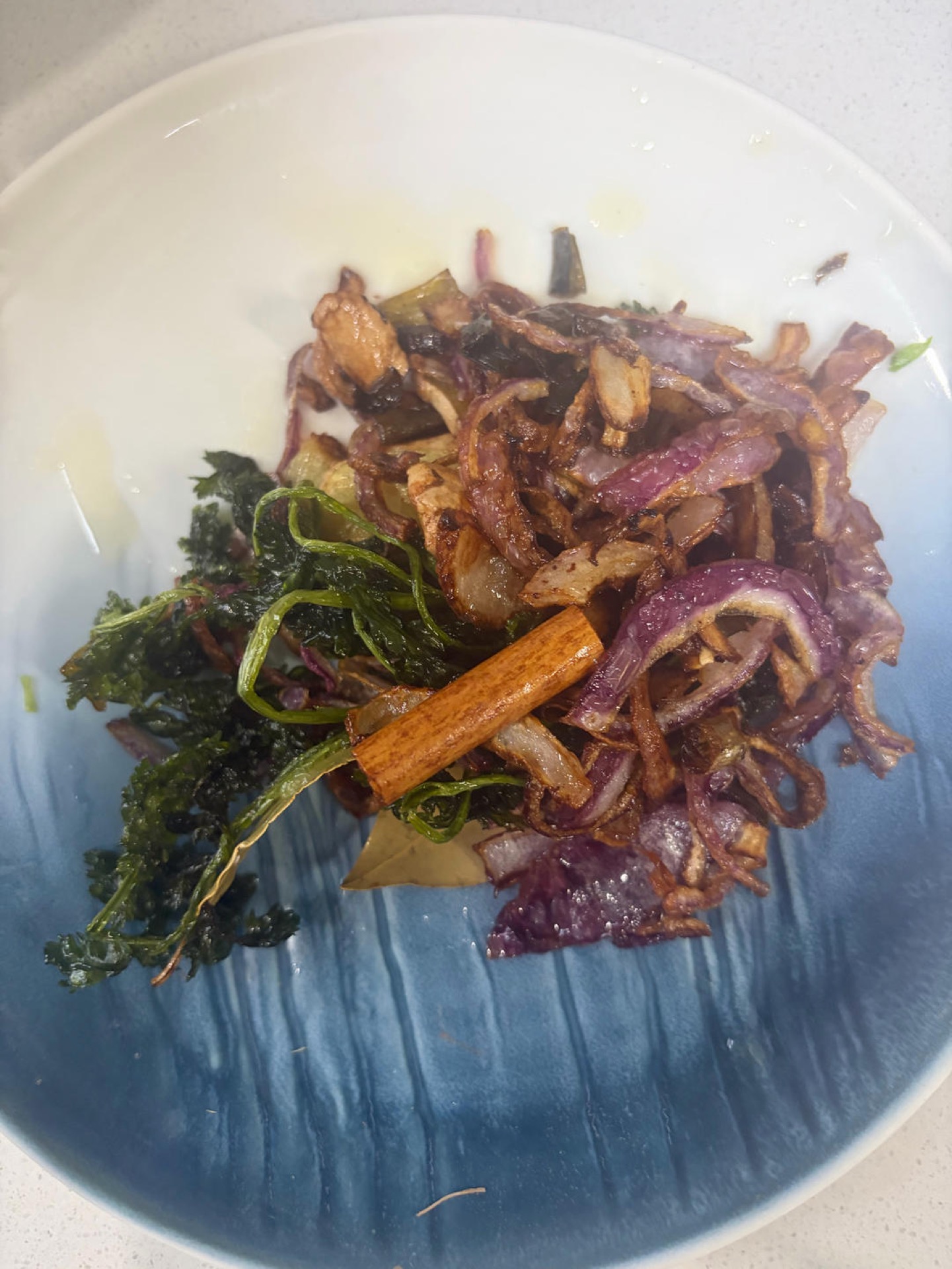
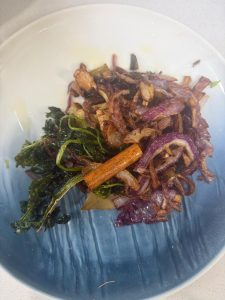
Turn on the heat and fry for about 4-5 minutes until the aromatics are browned, then scoop them out. While they fry, soak the chilies and Sichuan peppercorns in water, shaking them first to knock out the chili seeds (no need to be too thorough, since you can never get them all out anyway), soaking for about 4-5 minutes so they are ready right when the beef is done.
Step 5 — Fry the Beef with Chilies
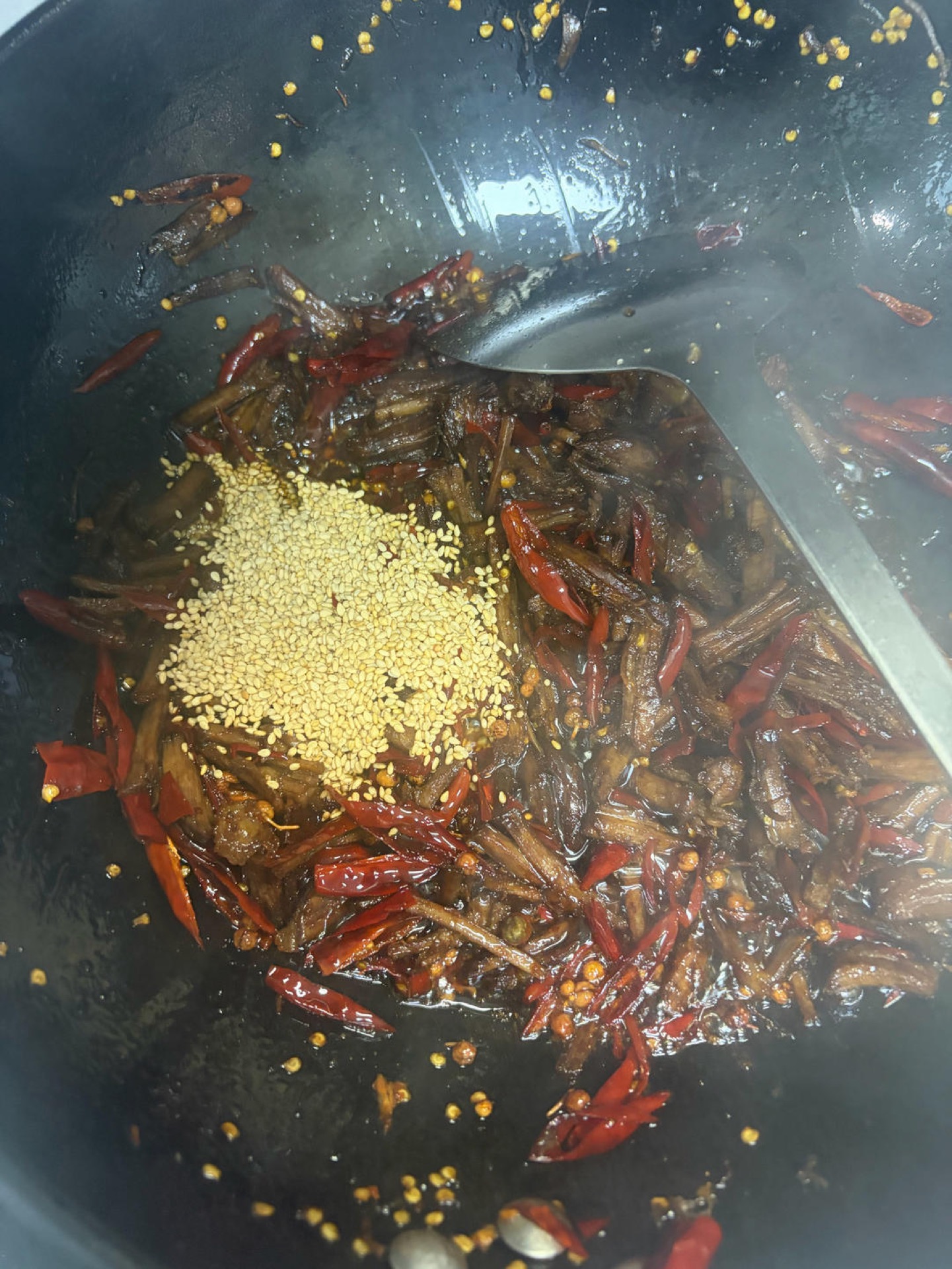
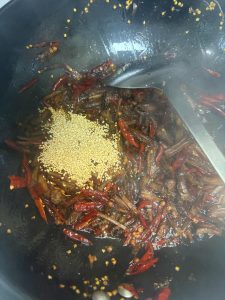
After removing the aromatics, add the shredded beef to the wok and stir-fry for 2-3 minutes, then add the soaked chilies and Sichuan peppercorns. After a few stirs, lower the heat and season: add one circle of dark soy sauce, two circles of light soy sauce, a little thirteen-spice powder, 3 tsp sugar, 1 tsp salt, 1 tsp MSG and a handful of white sesame seeds, plus a little chili powder if you want more heat (I didn’t add any). Stir everything together evenly and it is ready to come out of the wok.
Step 6 — Serve and Adjust
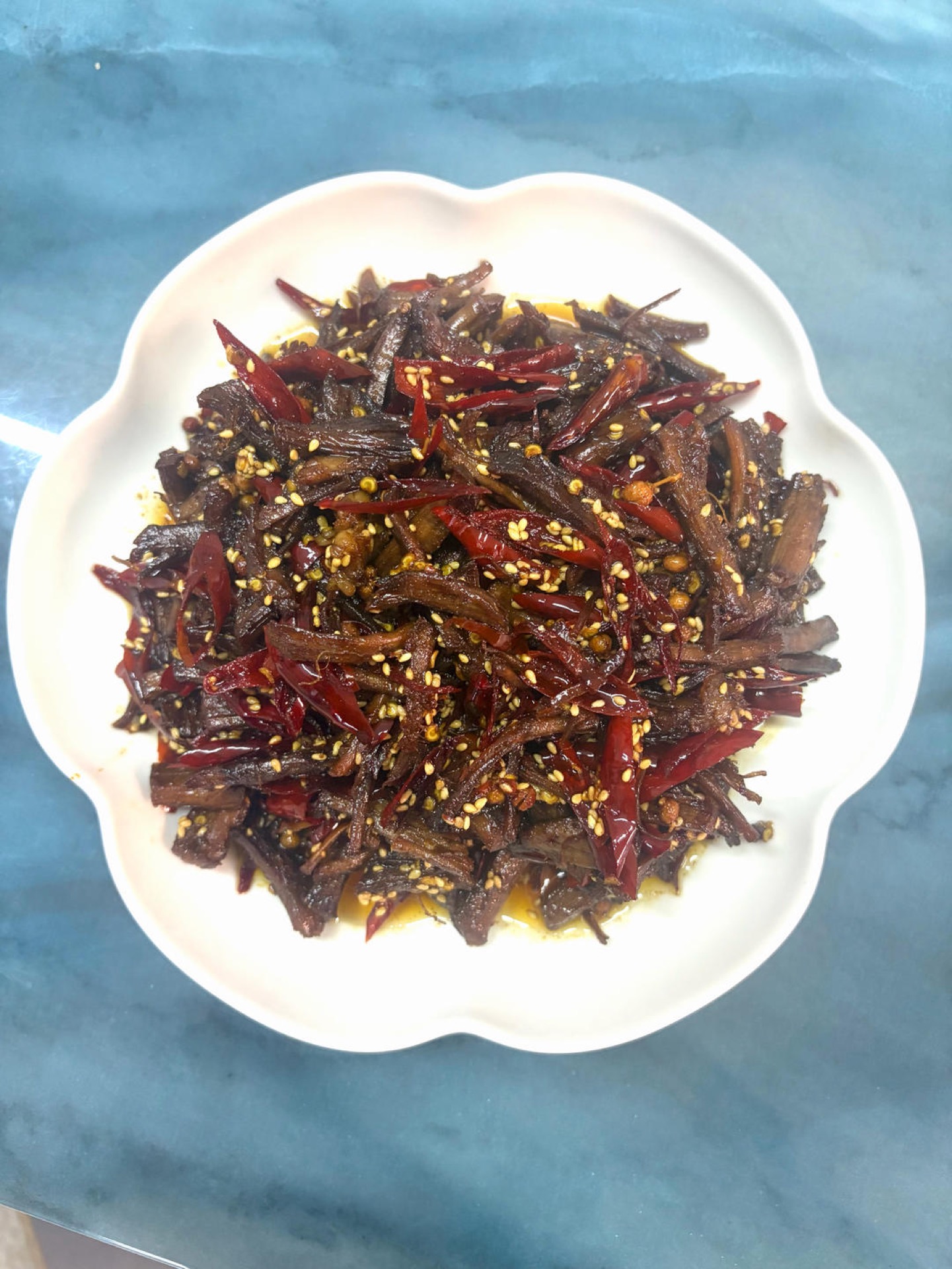
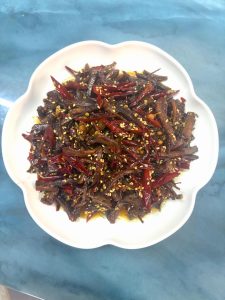
A little spicy this time, so next time I’ll use less oil.
Common Mistakes When Making Cold-Fried Beef
1. Shredding the beef while it is still warm. Warm beef fibers are fragile and will break into short, crumbly pieces instead of long strips. The cause is impatience; the fix is to let the beef cool completely, ideally in the fridge for an hour or two, before you start tearing.
2. Pulling the beef across the grain instead of along it. If you shred perpendicular to the muscle fibers, the strips fall apart in the wok and turn mushy. The cause is not looking closely at the meat before you start; the fix is to find the direction of the grain on the first chunk and follow it for every strip.
3. Burning the aromatics. Cilantro, onion, and scallion go from fragrant to acrid quickly if the oil is too hot. The cause is high heat and walking away; the fix is to keep the flame moderate and stir, pulling the aromatics out the moment they are browned and crisp.
4. Adding wet chilies and peppercorns to a screaming-hot wok. Soaked chilies carry water, and water in hot oil spatters and can burn the chili before it flavors the oil. The cause is not draining them well; the fix is to shake them dry and lower the heat slightly before they go in.
5. Over-oiling the fry. Too much oil leaves the finished beef greasy and heavy, and the oil pools at the bottom of the bowl. The cause is treating this like a deep fry; the fix is to use just a little more oil than a normal stir-fry and to drain the beef well when it comes out.
6. Seasoning before tasting. The chilies, soy sauces, and MSG all carry salt, so a heavy hand early can push the dish past pleasant. The cause is seasoning by habit; the fix is to add the soy and salt gradually, taste a strip, and adjust at the very end.
How to Serve
Cold-fried beef is at its best at room temperature, so take it out of the fridge about twenty minutes before you plan to eat. Serve it in a shallow bowl with the chili oil spooned over, and set it out as a cold appetizer alongside a larger meal. It pairs especially well with plain rice and a simple green vegetable, and it is a natural fit on a table of small plates.
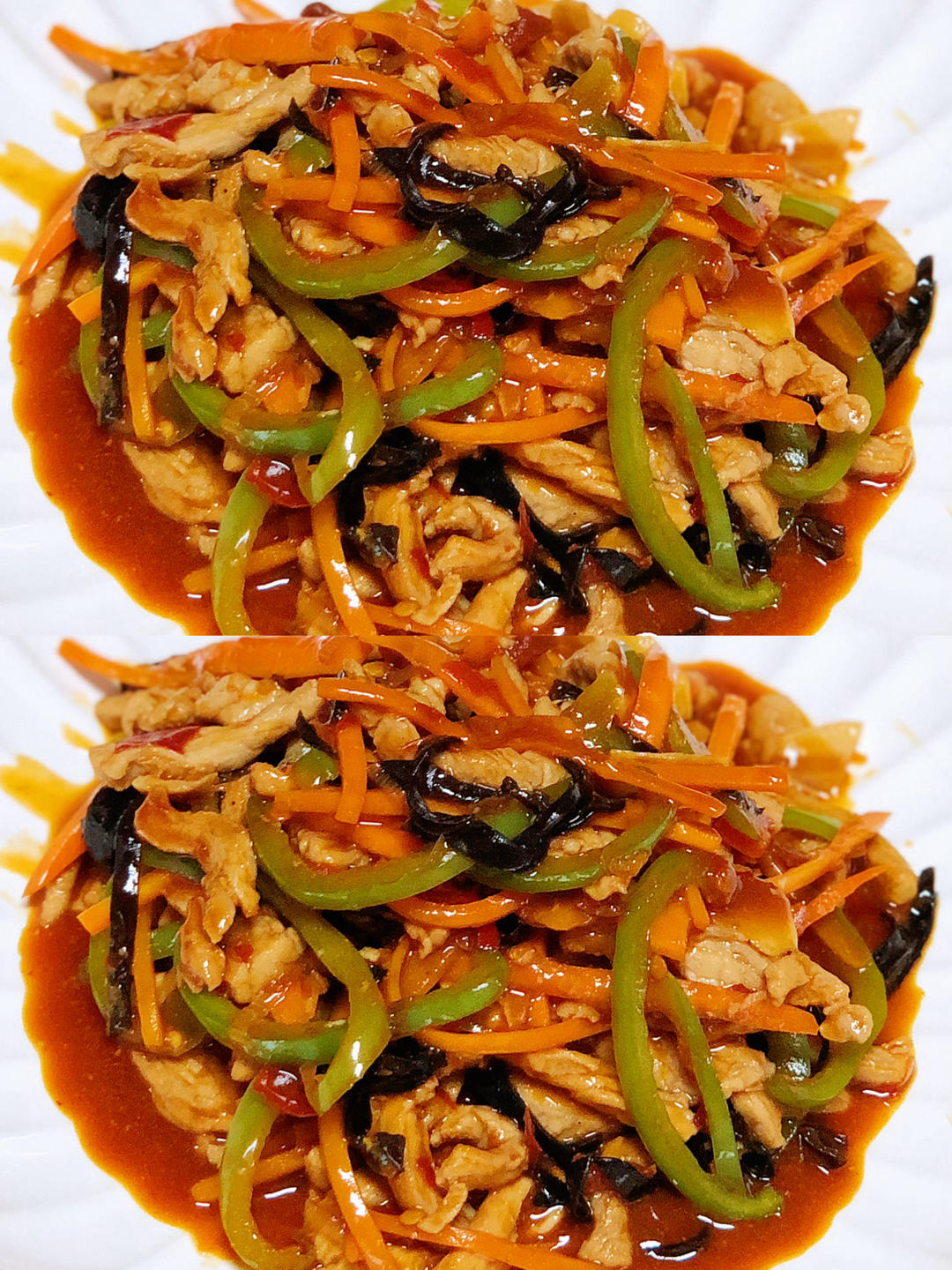
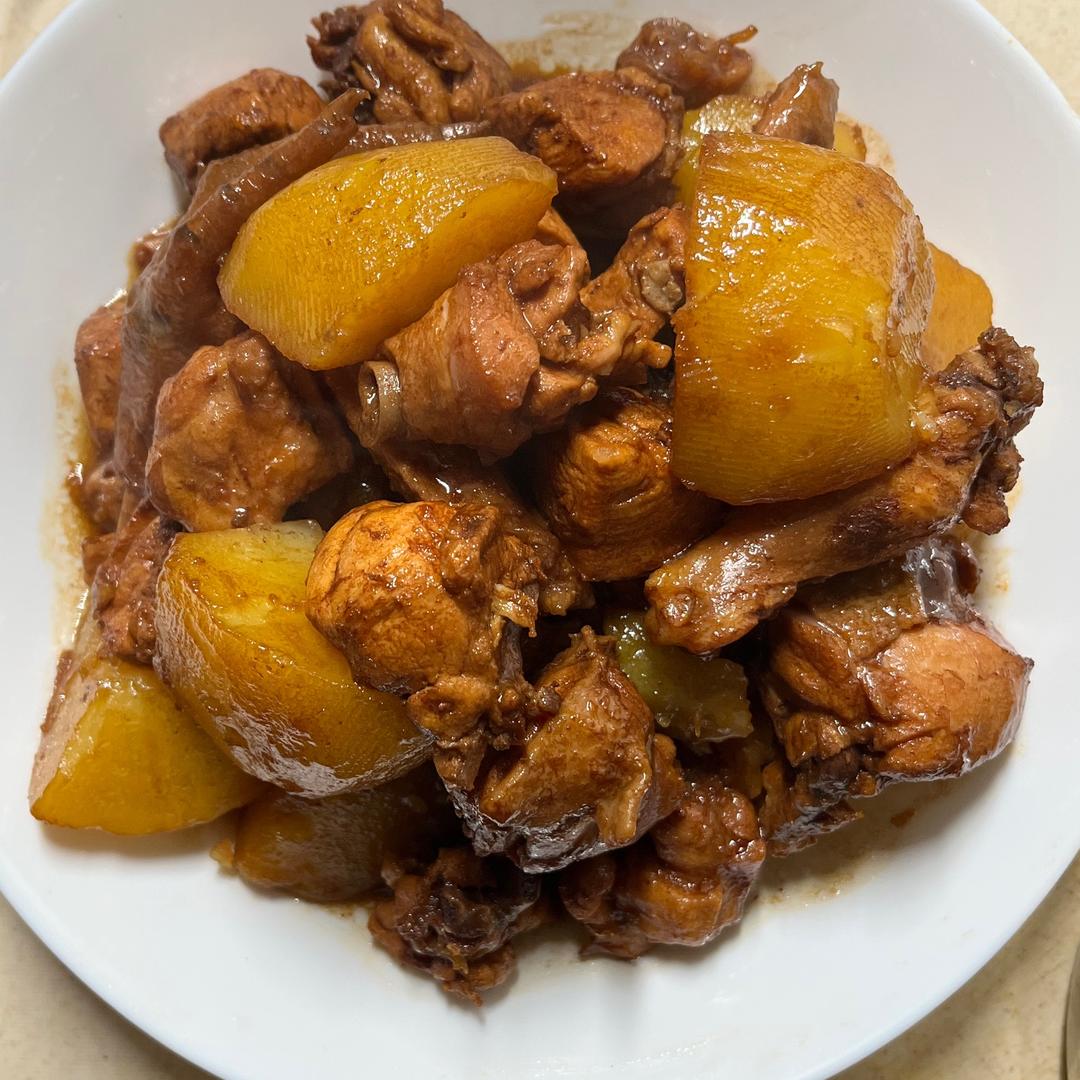
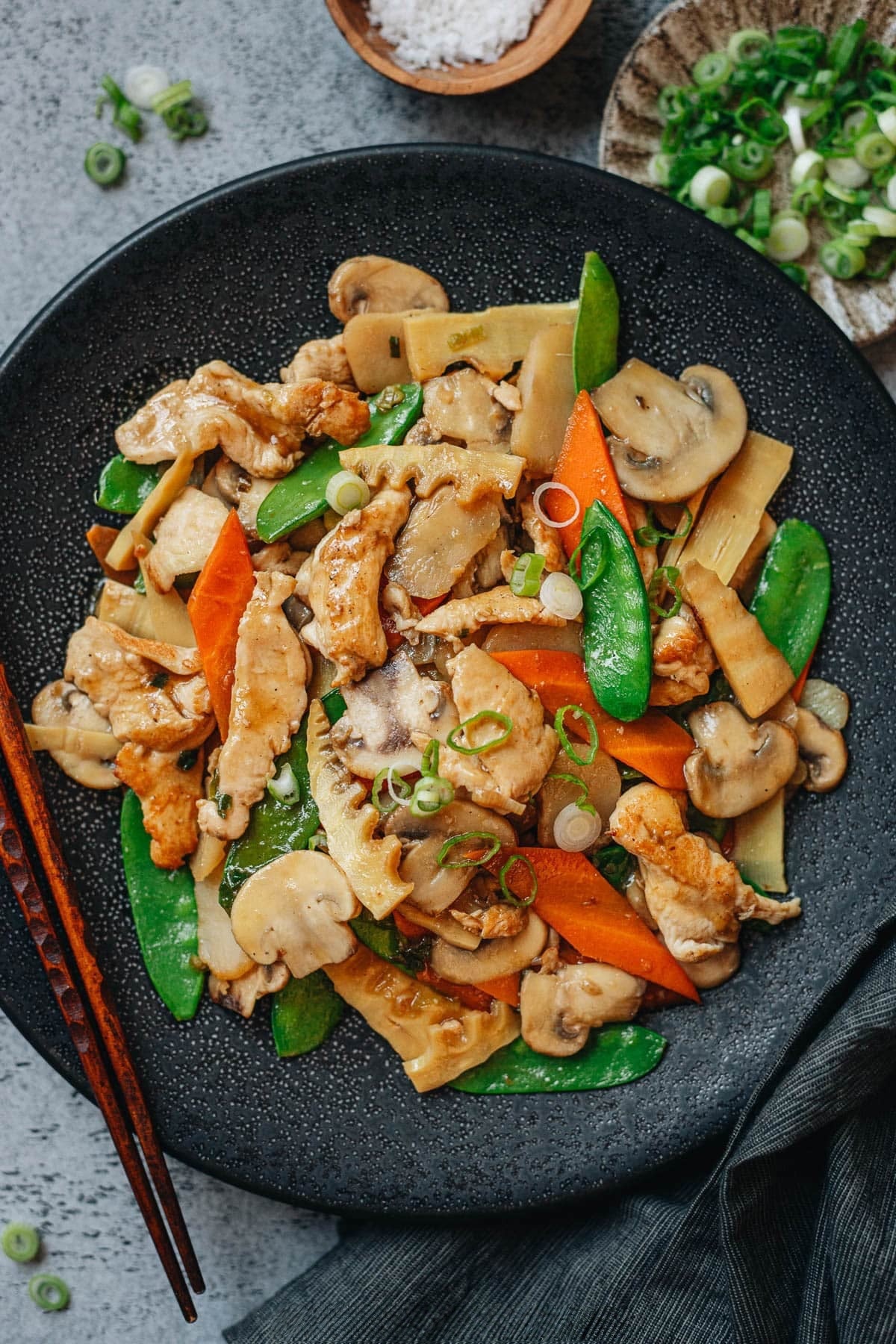
For a heartier spread, serve it next to fish-fragrant pork, whose sweet-sour-spicy sauce plays nicely against the dry, numbing heat of the beef. If you want a cold-weather main to anchor the meal, potato braised chicken is a comforting counterpoint, and moo goo pan chicken mushroom stir fry adds a lighter, savory dish to round out the table.
Storage & Reheat
Cold-fried beef stores beautifully, which is one of its best qualities. Keep it in an airtight container in the refrigerator for up to 4 days. The oil will solidify in the cold, which is normal; let the container sit at room temperature for 15 to 20 minutes and the oil will loosen again. Do not microwave it, since that will toughen the beef and make the chilies bitter. If you want it warm, warm it gently in a dry pan over low heat for a minute or two, but room temperature is really the ideal serving state.
For longer storage, freeze the beef in a freezer-safe container for up to 2 months. Thaw overnight in the refrigerator rather than at room temperature, and stir well before serving to redistribute the oil and spices. The texture will soften slightly after freezing, but the flavor holds up well.
Allergen Notice
This recipe contains soy (soy sauce), wheat (soy sauce), and sesame (white sesame seeds). If you are cooking for someone with a soy or gluten sensitivity, use tamari or a certified gluten-free soy sauce and check the label on your thirteen-spice powder, since some blends include wheat-based ingredients. If sesame is a concern, simply omit the sesame seeds; the dish does not depend on them.
Nutrition Disclaimer
Nutrition information is calculated using an ingredient database and should be considered an estimate. In cases where multiple ingredient alternatives are given, the first listed is calculated for nutrition. Garnishes and optional ingredients are not included.
About the Author & Recipe Development
Lin is the cook and writer behind Woks of Love, where she has been documenting Chinese home cooking for years, with a focus on the regional dishes she grew up eating and the techniques that make them work in a home kitchen. This version of cold-fried beef comes from a Sichuan home-style approach to 冷吃牛肉, adapted for a Western kitchen with ingredients you can find at a well-stocked supermarket or Asian grocery. The recipe was tested with flank steak and with beef shank, and the timing below reflects a braise that keeps the beef tender without falling apart.
If you make this dish, the one thing worth doing is tasting as you go. The heat level of dried chilies varies a lot from bag to bag, and your soy sauce may be saltier or milder than mine. Adjust, and it will be better for it.
Authoritative References
For safe handling and cooking temperatures, the USDA safe minimum internal temperature chart is the standard reference for beef and other meats. For broader food safety guidance on storage and reheating, the FDA Food Code is the authoritative source. Both are worth bookmarking if you cook meat dishes like this one regularly.
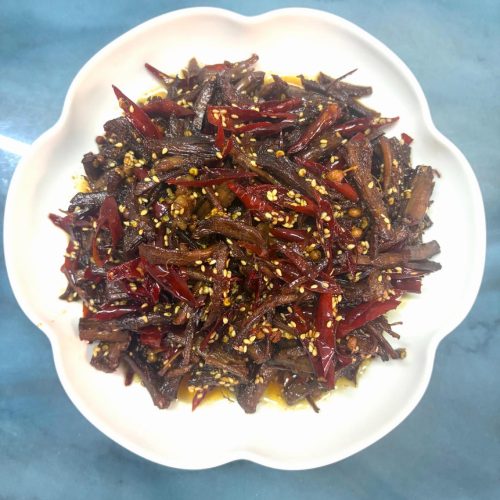
Cold-Fried Beef Strips (冷吃牛肉): Spicy, Chewy Beef Strips, Sichuan

Equipment
- Wok
- Cutting Board
- Slotted Spoon
Ingredients
For the Beef and Braise
- 500 g beef flank or shank, cut into 5cm chunks
- 2 stalks scallion for blanching
- 3 slices ginger for blanching
- 1 tbsp Shaoxing wine for blanching
- 2 pieces star anise for the braise
- 30 pieces Sichuan peppercorns for the braise
- 1 piece cinnamon bark about 2 inches
- 2 pieces bay leaves for the braise
- 2 tsp salt for the braise
For the Aromatic Frying Oil
- 1 cup neutral oil a little more than usual stir-frying
- 1 stalk cilantro whole, for frying
- 1/2 piece onion halved, for frying
- 2 slices ginger for frying
- 2 pieces bay leaves for frying
- 1 stalk scallion for frying
- 1 piece cinnamon bark small, for frying
- 1 piece star anise for frying
For the Chili and Spice Mix
- 40 g dried chilies snipped into strips, seeds shaken out
- 1 small handful Sichuan peppercorns for frying, soaked
For the Seasoning
- 1 circle dark soy sauce drizzled around the wok
- 2 circles light soy sauce drizzled around the wok
- 1/2 tsp thirteen-spice powder or to taste
- 3 tsp sugar to balance
- 1 tsp salt to taste
- 1 tsp MSG optional
- 1 tbsp white sesame seeds toasted
- 1 tsp chili powder optional, if more heat is wanted
Instructions
- Cut the beef into roughly 5cm chunks, blanch in water with scallion, ginger and Shaoxing wine, skim off the blood foam when the water boils, then add 2 star anise, 30 Sichuan peppercorns, 1 piece cinnamon bark, 2 bay leaves and 2 tsp salt and simmer for 40 minutes, then let it cool completely. While it simmers, prepare: 1) 40g dried chilies snipped into strips and a small handful of Sichuan peppercorns (the peppercorns will need a short soak later before frying); 2) one cilantro stalk, half an onion, 2 slices ginger, 2 bay leaves, scallion, a small piece of cinnamon bark and one star anise.

- Once the beef has cooled, tear it along the grain into strips (this part takes some patience).
- Pour oil into the wok, a little more than you would for a normal stir-fry but not too much, otherwise the finished dish will be swimming in oil. Add the cilantro, onion, bay leaves, star anise, cinnamon bark, scallion and ginger from step 2.
- Turn on the heat and fry for about 4-5 minutes until the aromatics are browned, then scoop them out. While they fry, soak the chilies and Sichuan peppercorns in water, shaking them first to knock out the chili seeds (no need to be too thorough, since you can never get them all out anyway), soaking for about 4-5 minutes so they are ready right when the beef is done.
- After removing the aromatics, add the shredded beef to the wok and stir-fry for 2-3 minutes, then add the soaked chilies and Sichuan peppercorns. After a few stirs, lower the heat and season: add one circle of dark soy sauce, two circles of light soy sauce, a little thirteen-spice powder, 3 tsp sugar, 1 tsp salt, 1 tsp MSG and a handful of white sesame seeds, plus a little chili powder if you want more heat (I didn’t add any). Stir everything together evenly and it is ready to come out of the wok.
- A little spicy this time, so next time I’ll use less oil.












Leave a Reply