Every weekend, my kitchen turns into a testing ground for family favorites, and today we are tackling a classic of the Sichuan canon: Fish Fragrant Pork (Yu Xiang Rou Si).
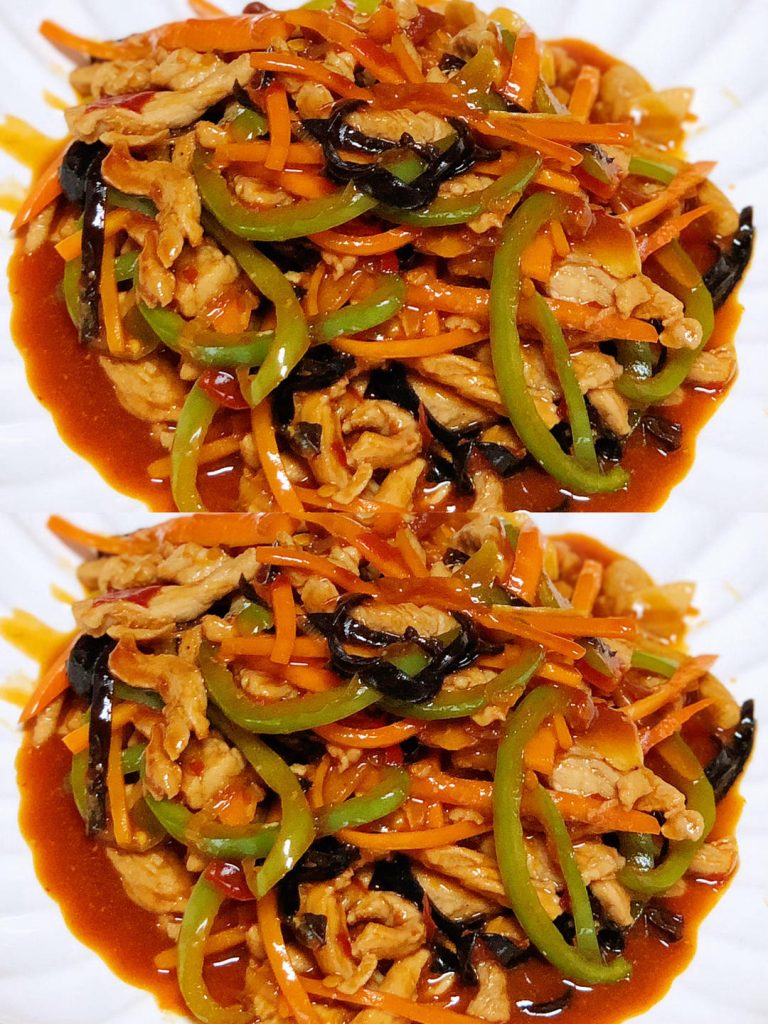
If you have ever ordered this at a restaurant, you know that addictive balance of sweet, sour, savory, and spicy flavors. But here is the secret: you don’t need heavy oil or a restaurant burner to make it. This recipe is designed for the home kitchen—simple, reproducible, and arguably better than what you get at many takeout spots.
Based on my years of cooking Sichuan food (and my father’s 20 years of experience as a chef), I can tell you that “Fish Fragrant” describes a flavor profile traditionally used for cooking fish in Sichuan, not the presence of fish itself. This specific version is a “zero-failure” method that takes about 10 minutes of active cooking.
Why This Recipe Works
- Velveting Technique: We marinate the pork with egg white and cornstarch (a technique called “velveting”), which creates a protective barrier. This ensures the meat stays silky and tender, even if you accidentally cook it a few seconds too long.
- The “Bowl Juice” (Wan Zhi): In professional Chinese kitchens, we mix the sauce ingredients ahead of time. This prevents you from scrambling for bottles while the wok is hot, ensuring the perfect sweet-and-sour balance every time.
- Texture Contrast: The crunch of wood ear mushrooms and carrots contrasts beautifully with the tender pork strips.
What is Yu Xiang Flavor?
The term Yu Xiang (鱼香) literally translates to “fish fragrance.” Legend has it that a housewife used leftover sauce from cooking fish—containing garlic, scallions, ginger, sugar, and vinegar—to cook pork, creating a happy accident that became a staple.
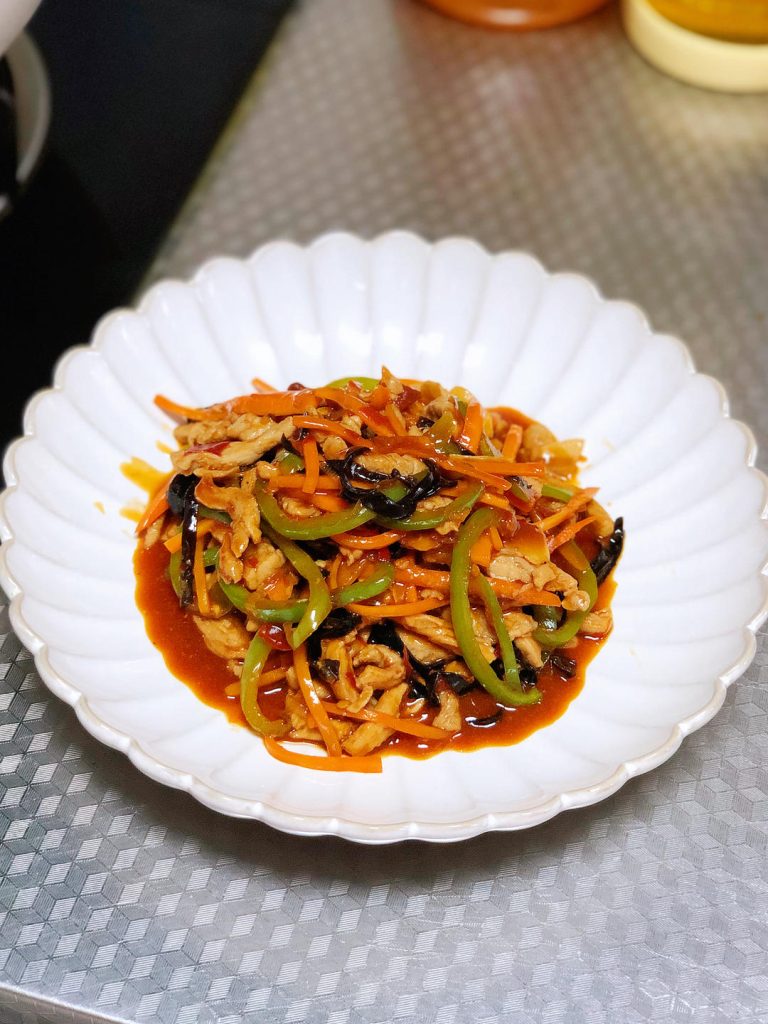
This recipe achieves that signature taste using a precise ratio of Pixian Doubanjiang (fermented chili bean paste), vinegar, and sugar.
Key Ingredients & Substitutions
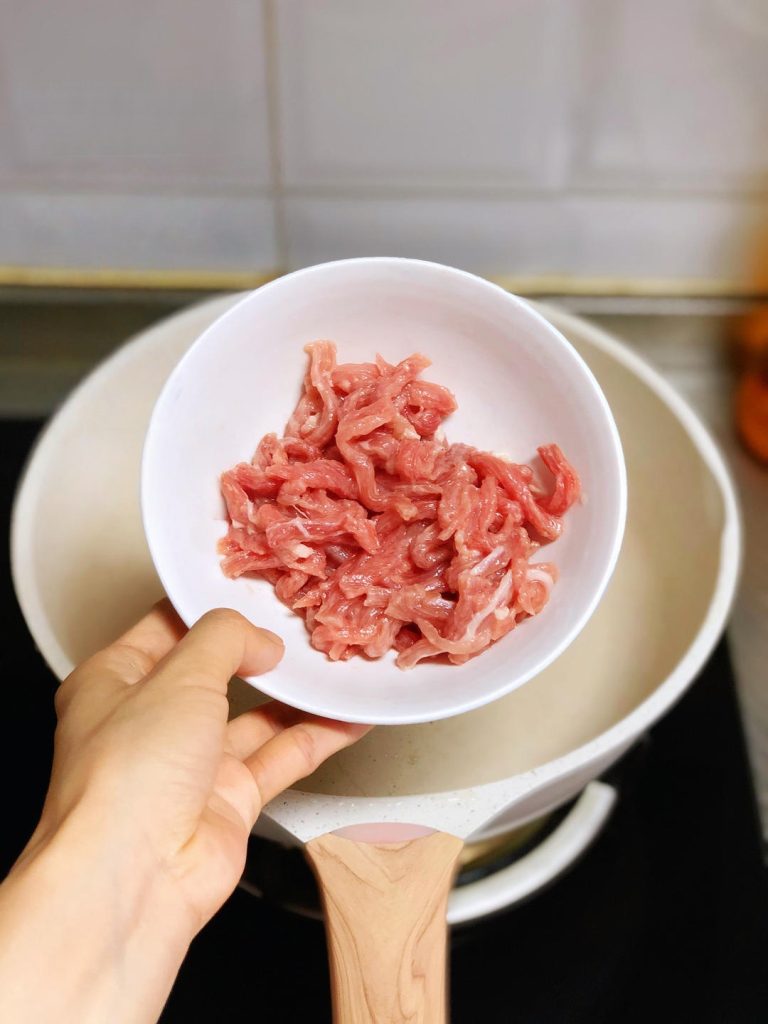
- Pork Loin: I use pork loin (tenderloin is also excellent) because it is lean and easy to slice. Tip: Freeze the meat for 20 minutes before slicing to get those perfect, uniform matchsticks.
- Wood Ear Mushrooms (Mu Er): These add a signature crunch. You typically buy them dried and rehydrate them. Substitute: If you cannot find them, sliced bamboo shoots are a traditional alternative.
- Pixian Doubanjiang: This is the soul of Sichuan cooking. It provides the spicy, savory, fermented base.
- Chinese Rice Vinegar & Sugar: These create the “lychee” flavor profile (sweet and sour) essential to the dish.
- Huadiao Wine: A type of high-quality Shaoxing wine. Substitute: Dry sherry.
Author’s Note: While traditional recipes sometimes use pickled chilies (Pao Jiao), this home-style version uses Doubanjiang for a richer, more accessible red oil base that is just as delicious.
Recipe Notes Before You Start
- Mise en Place is Critical: Stir-frying happens fast. Have your “Bowl Juice” mixed and veggies chopped before you heat the pan.
- The Sugar Ratio: Do not be shy with the sugar. This dish must have a distinct sweetness to balance the sour vinegar and salty Doubanjiang.
- Knife Skills: Try to cut the meat and vegetables into similar-sized strips (julienne) so they cook evenly.
Ingredients
The Main Stir-Fry
- 7 oz (200g) Pork loin or tenderloin
- 1/2 Green bell pepper, julienned
- 1/3 Carrot, julienned
- 5 Dried Wood Ear mushrooms, rehydrated and sliced into strips
- 2 tbsp Cooking oil (for stir-frying)
The Marinade (For the Pork)
- 1 tbsp Huadiao wine (or Shaoxing wine)
- 1 tsp White pepper powder
- 1 tbsp Egg white (approx. half an egg white)
- 1 tbsp Cornstarch
- 1 tbsp Cooking oil (to seal the meat)
The Aromatics
- 1 tbsp Scallions (green onions), chopped
- 2 cloves Garlic, sliced
- 2 tbsp Pixian Doubanjiang (Chili Bean Paste)
The “Bowl Juice” (Sauce)
- 2 tbsp Light soy sauce
- 2 tbsp Rice vinegar (or Chinkiang vinegar for a deeper flavor)
- 2 tbsp Sugar (adjust to taste, but don’t reduce too much)
- 1 tbsp Oyster sauce
- 1 tbsp Cornstarch
- 1/2 cup Water
How to Make Fish Fragrant Pork
Step 1: Marinate the Pork (Velveting)
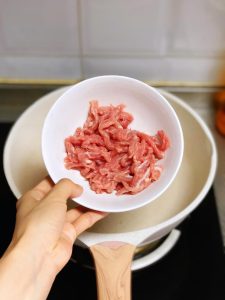
Slice the pork loin into thin strips (about 1/8 inch thick). Place them in a bowl and add the Huadiao wine, white pepper, egg white, and cornstarch. Mix vigorously by hand or with chopsticks until the liquid is absorbed and the meat feels sticky. Finally, add 1 tablespoon of oil and mix gently to coat.
Why? The oil “locks” the moisture inside, ensuring the meat separates easily in the pan later.
Step 2: Prepare the “Bowl Juice”
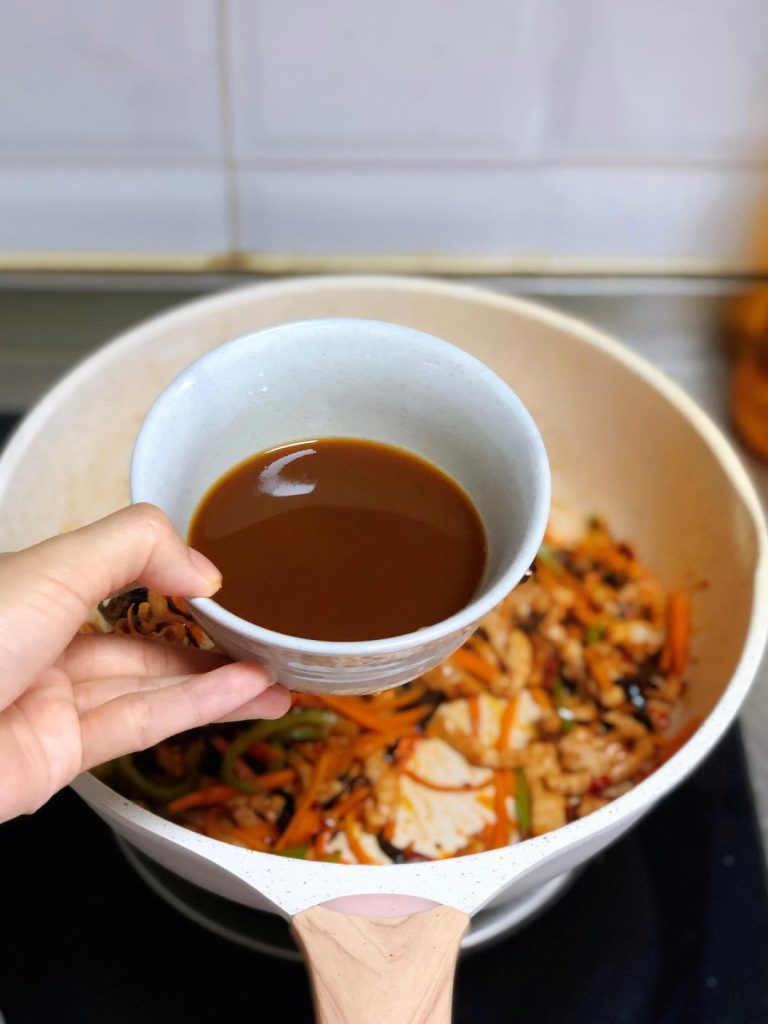
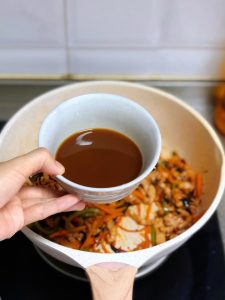
In a small bowl, combine the light soy sauce, oyster sauce, sugar, vinegar, water, and cornstarch. Stir until the sugar and starch are completely dissolved. Set aside.
Step 3: Sear the Pork
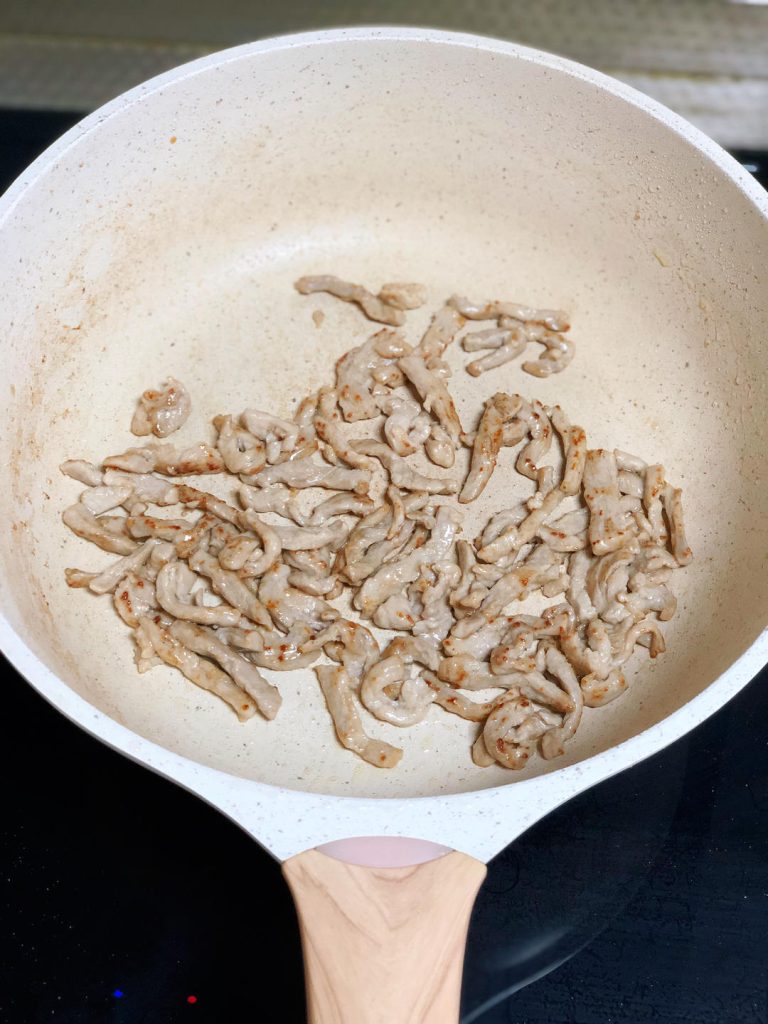
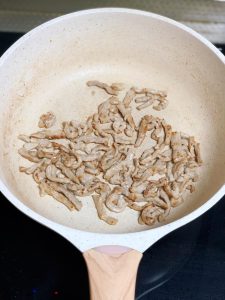
Heat your wok or skillet over medium-high heat. Add oil (you don’t need too much if using a non-stick pan). Add the marinated pork strips and stir-fry quickly until they turn pale/white. Remove the pork from the pan immediately and set aside.
Tip: Do not overcook here; the pork will go back into the pan later.
Step 4: Fry the Aromatics
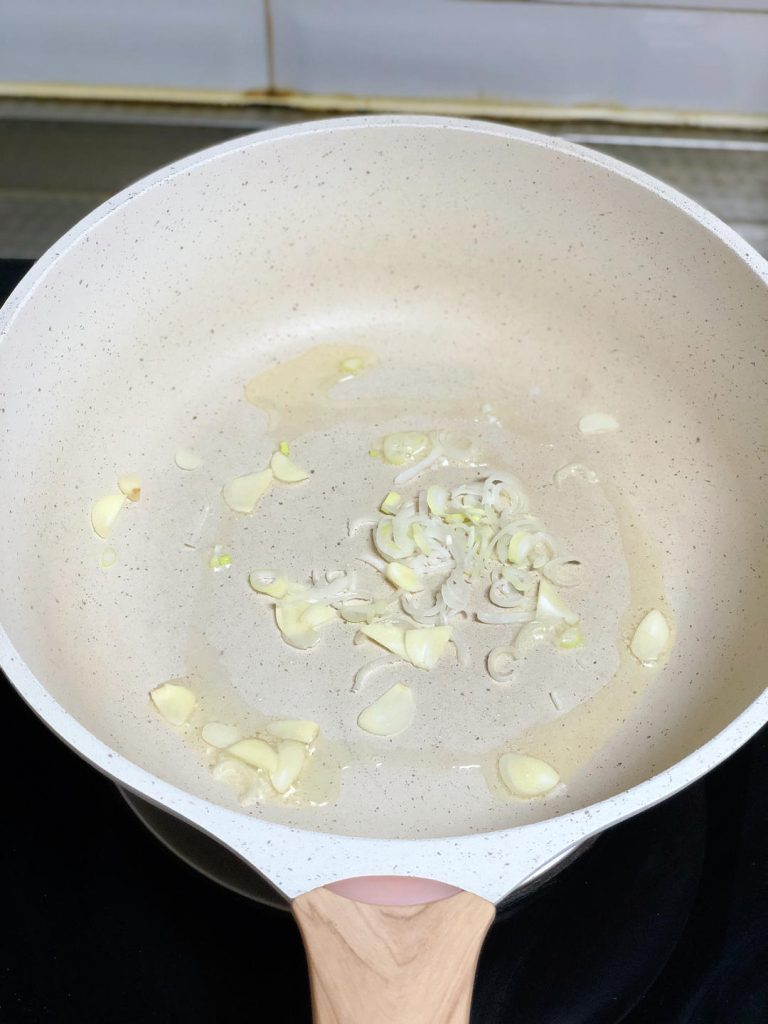
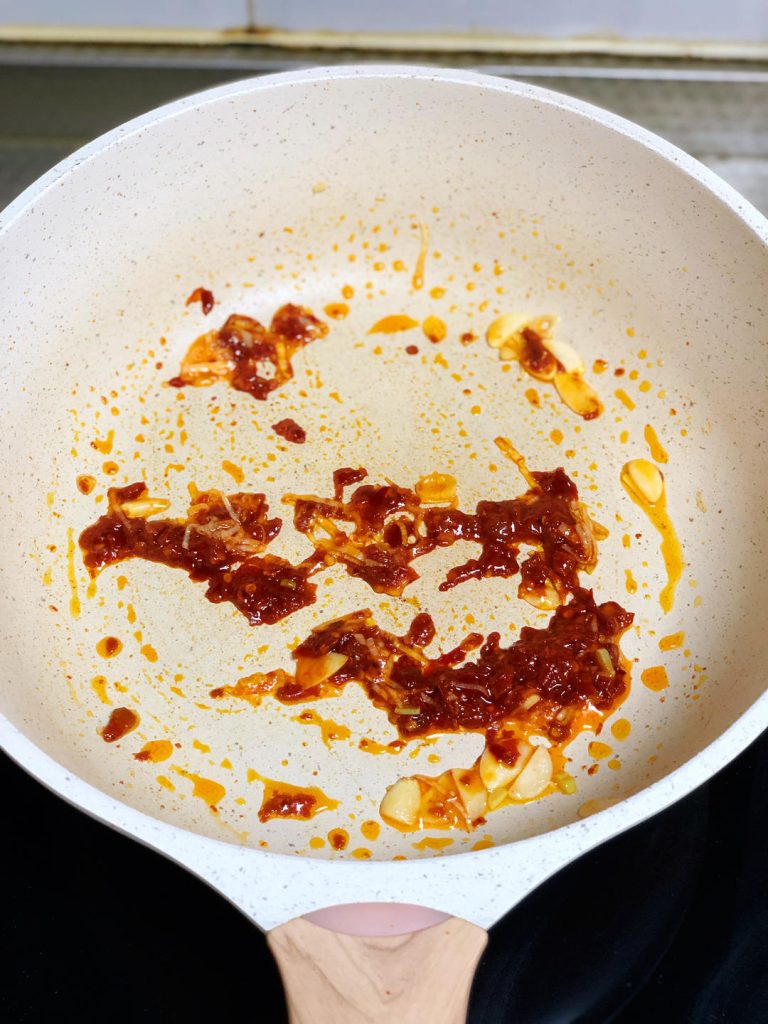
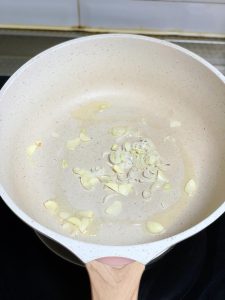
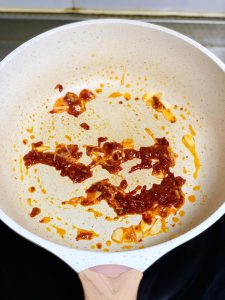
Keep the residual oil in the pan (add a little more if dry). Add the scallions and garlic slices and stir-fry until fragrant (about 15 seconds). Add the Pixian Doubanjiang. Stir-fry over medium heat until the oil turns red and the sauce smells aromatic.
Why? Frying the bean paste releases its red oil and removes the raw fermented taste.
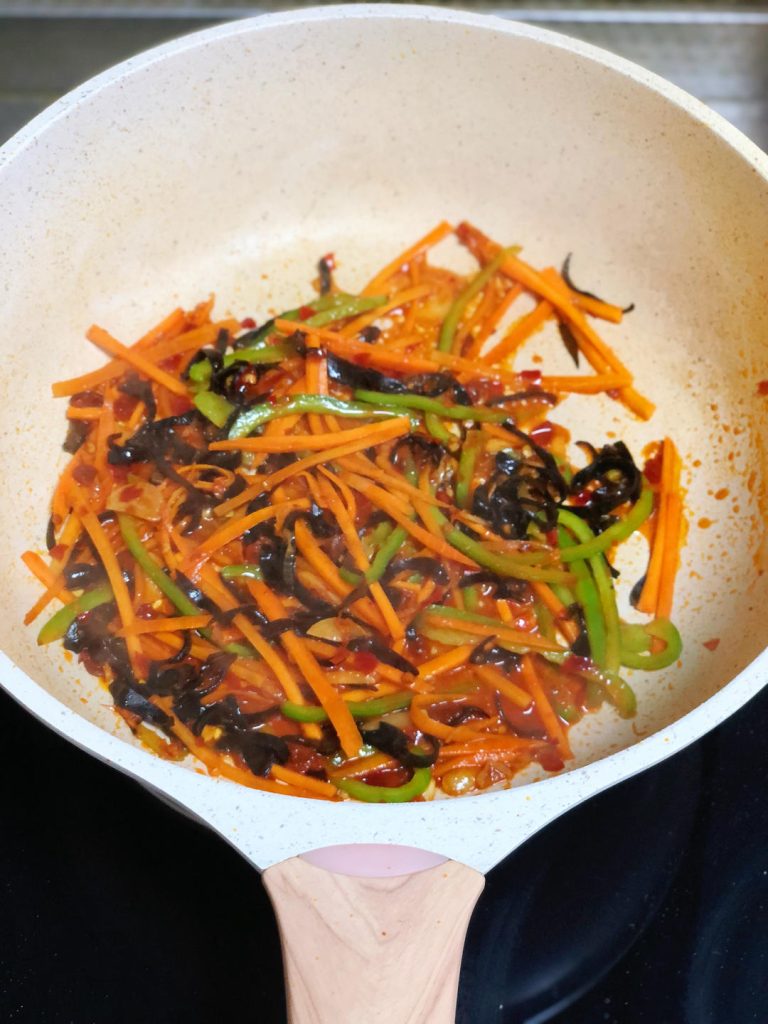
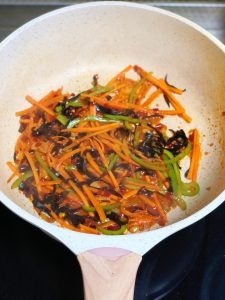
Step 5: Stir-fry Vegetables
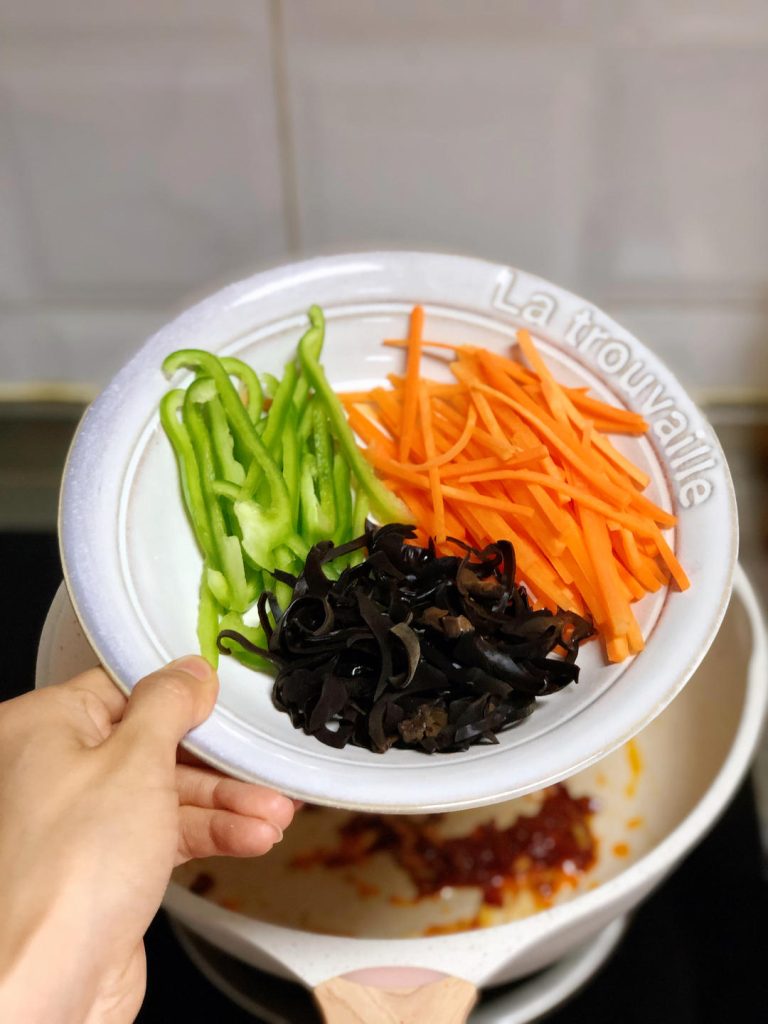
Add the sliced carrots, green peppers, and wood ear mushrooms. Turn the heat up to high and stir-fry until the carrots soften slightly (about 1-2 minutes).
Step 6: Combine and Thicken
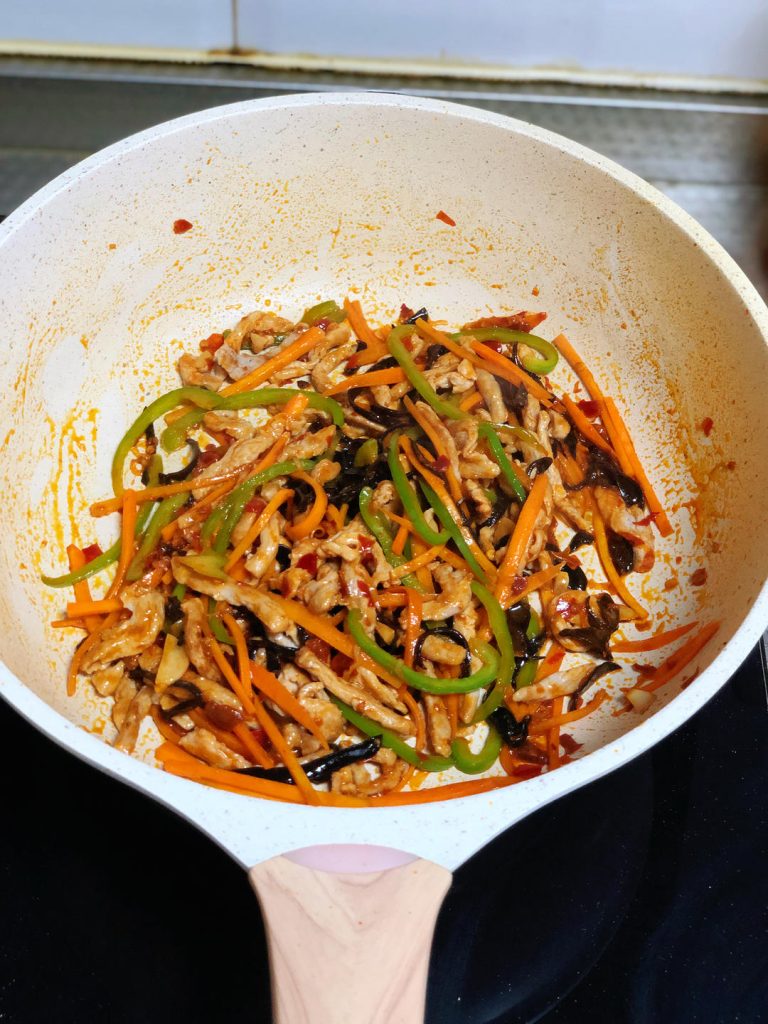
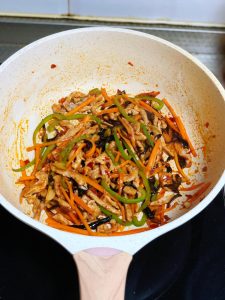
Return the cooked pork strips to the pan. Toss everything together to mix. Give your “Bowl Juice” a quick stir (starch settles at the bottom), then pour it into the wok.
Step 7: Finish
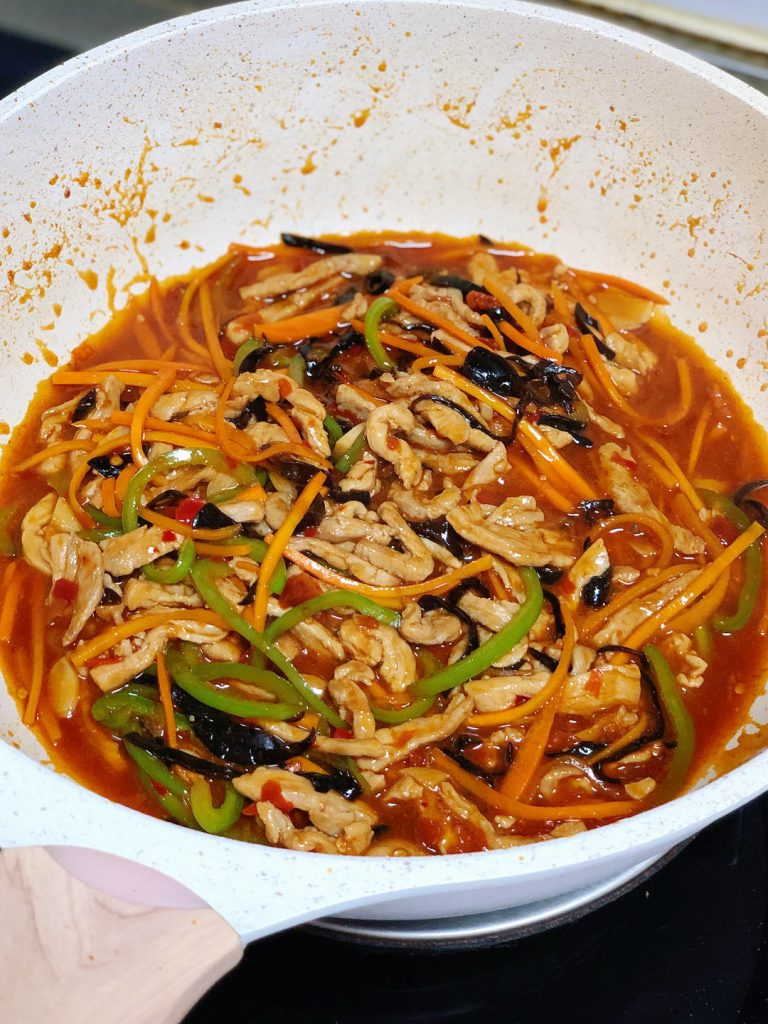
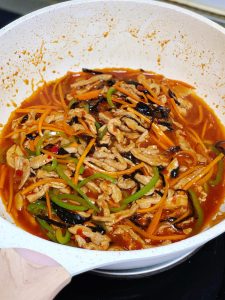
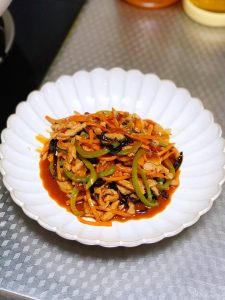
Stir continuously over high heat. The sauce will bubble and thicken rapidly, coating every strip of meat and vegetable in a glossy, red-brown glaze. Once the sauce is thick and sticky, turn off the heat.
Step 8: Serve
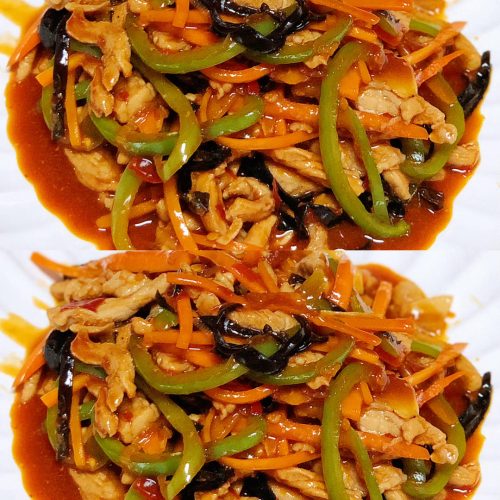
Transfer to a serving plate immediately. The color should be vibrant and inviting. Serve alongside steaming hot white rice.
Serving Suggestions
This dish is flavor-forward (salty, sweet, sour, and spicy), so it pairs best with simple sides.
- Rice: Plenty of steamed jasmine rice is mandatory.
- Soup: A simple Hot and Sour Soup complements the flavors perfectly.
- Another Main: If serving a family, pair this with Twice-Cooked Pork for a true Sichuan feast.
Troubleshooting & FAQ
Q: My sauce is too thick/gooey.
- A: This usually happens if there is too much cornstarch or not enough water. Add a splash of hot water to the pan to loosen it up.
Q: Can I skip the spicy bean paste (Doubanjiang)?
- A: Technically, yes, but it won’t be authentic Yu Xiang Rou Si. If you can’t eat spicy food, you can omit it and slightly increase the soy sauce and oyster sauce, but you lose the signature “fish fragrant” red oil aspect.
Q: Can I use chicken instead of pork?
- A: Absolutely. Chicken breast works perfectly with this exact same marinade and cooking method.
Food Safety & Storage
- Pork Safety: Ensure the pork strips are cooked through. The internal temperature should reach 145°F (63°C), though visual cues (no longer pink) are usually sufficient for thin strips. Reference: USDA Pork Cooking Guidelines.
- Allergens: This recipe contains soy, wheat (in the soy sauce and vinegar), and egg. Use gluten-free tamari if needed.
- Storage: Store leftovers in an airtight container in the fridge for up to 3 days. Reheat in a pan or microwave.
Nutrition Info (Estimate)
- Calories: ~320 kcal per serving
- Protein: 24g
- Carbs: 18g
- Fat: 16g
- Disclaimer: Nutrition information is calculated using an ingredient database and should be considered an estimate. Garnishes and optional ingredients are not included.
Fish Fragrant Pork (Yu Xiang Rou Si)

Equipment
- Wok or large skillet Carbon steel preferred for wok hei
- Sharp Knife For julienning ingredients
Ingredients
Main Ingredients
- 7 oz pork loin or tenderloin 200g, sliced into thin matchsticks
- 1/2 green bell pepper julienned
- 1/3 carrot small, julienned
- 5 pieces dried wood ear mushrooms rehydrated and sliced
Pork Marinade
- 1 tbsp Huadiao wine or Shaoxing wine
- 1 tsp white pepper powder
- 1 tbsp egg white approx small amount
- 1 tbsp cornstarch
- 1 tbsp cooking oil to lock in moisture
The Sauce (Bowl Juice)
- 2 tbsp light soy sauce
- 2 tbsp rice vinegar
- 2 tbsp sugar adjust to taste, sweetness is key
- 1 tbsp oyster sauce
- 1 tbsp cornstarch
- 1/2 cup water
Aromatics
- 1 tbsp scallions chopped
- 2 cloves garlic sliced
- 2 tbsp Pixian Doubanjiang spicy broad bean paste
Instructions
- Slice the pork loin into thin strips. In a bowl, combine the pork with Huadiao wine, white pepper, egg white, and 1 tbsp cornstarch. Mix well until sticky. Add 1 tbsp oil and mix gently to coat. Set aside.

- Heat a wok with oil. Add the pork strips and stir-fry until they change color (turn white). Remove pork from the pan and set aside.
- In the same wok (add a bit more oil if needed), add scallions and garlic slices. Stir-fry until fragrant.
- Add the Pixian Doubanjiang and stir-fry until the oil turns red and aromatic.
- Add the julienned carrots, green peppers, and wood ear mushrooms. Stir-fry until the carrots begin to soften.
- Return the cooked pork to the wok and mix well.
- Stir the sauce mixture (Bowl Juice) again to ensure starch hasn’t settled, then pour it into the wok.
- Stir-fry on high heat until the sauce thickens and coats everything evenly. Serve immediately.
- Serve hot with steamed rice.





Leave a Reply