I remember the first time I tried making Moo Goo Gai Pan at home. I was craving that specific, silky-smooth texture of the chicken found in high-end Cantonese restaurants, but my early attempts always resulted in tough meat and watery sauce. After years of testing in the “Woks of Love” kitchen and consulting with seasoned chefs, I’ve perfected the technique that brings that restaurant-quality finish to your dinner table in just 20 minutes.

This dish is the epitome of Cantonese comfort—it’s light, nutritious, and focuses on the natural sweetness of the vegetables and the umami of the mushrooms. If you’ve mastered my Kung Pao Chicken, you’ll find this to be a refreshing, non-spicy alternative that’s just as satisfying.
What Is Moo Goo Gai Pan?
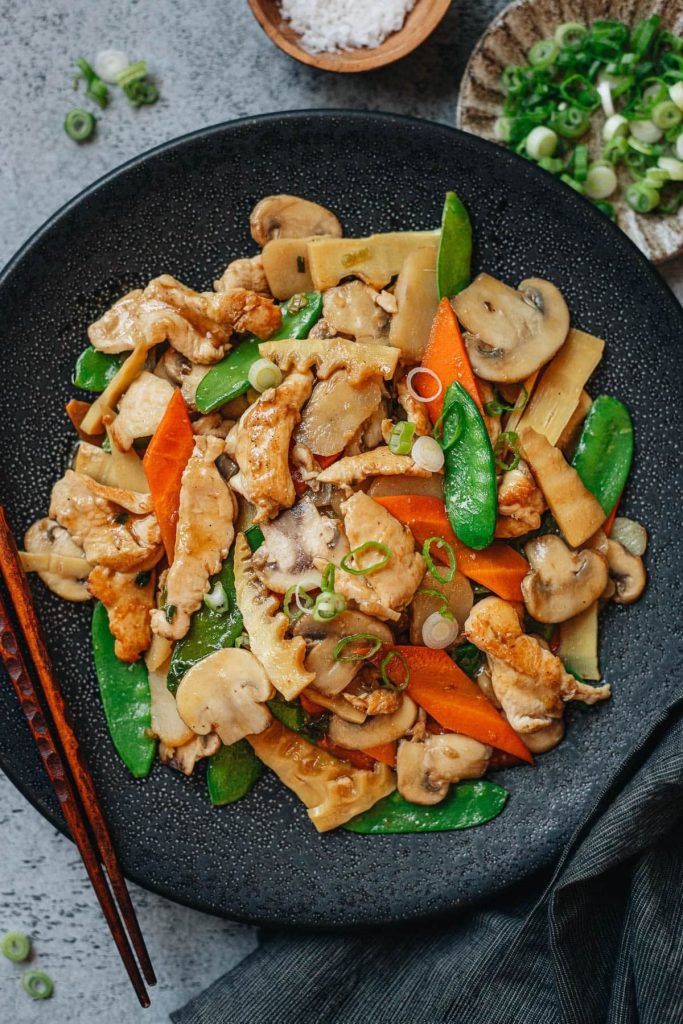
Moo Goo Gai Pan (蘑菇鸡片) literally translates to “mushroom chicken slices.” It is a staple of Cantonese home cooking that gained massive popularity in American Chinese takeout. Unlike the heavy, dark sauces found in General Tso’s Chicken, Moo Goo Gai Pan features a “white sauce” (clear gravy) made from chicken broth, garlic, and ginger.
The heart of the dish lies in the contrast between the tender chicken and the earthy mushrooms. While many takeout versions are bland, an authentic version relies on fresh aromatics and high-quality Light Soy Sauce to enhance, rather than mask, the ingredients.
Ingredients
The Chicken & Marinade
- 1 lb (450g) Chicken breast, thinly sliced against the grain
- 1 tbsp Shaoxing Wine
- 1 tsp Cornstarch
- 1 tsp Best Oil for Stir Frying (like vegetable or grapeseed oil)
- 1/4 tsp Salt
The Vegetables
- 8 oz (225g) Fresh button mushrooms or shiitake, sliced (For a deeper flavor, see my Braised Chicken with Mushrooms )
- 1 cup (100g) Snow peas, ends trimmed
- 1/2 cup (75g) Sliced bamboo shoots or water chestnuts (for crunch)
- 1 small Carrot, thinly sliced into medallions
The Sauce & Aromatics
- 2 cloves Garlic, minced
- 1 tsp Fresh ginger, minced
- 1/2 cup (120ml) Low-sodium chicken broth
- 1 tsp Sugar
- 1 tsp Sesame Oil
- 1 tbsp Cornstarch mixed with 1 tbsp water (slurry)
Equipment Needed
- A well-seasoned wok: If you are using an electric stove, check out my guide on the Best Wok for Electric Stove.
- Wok spatula: For high-heat tossing.
- Instant-read thermometer: To ensure poultry safety.
Prep & Mise en Place
- Slice the Chicken: It is crucial to slice the meat across the grain to ensure it stays tender.
- Velvet the Chicken: Mix the chicken with the wine, salt, cornstarch, and oil.”Velveting creates a protective starch barrier that prevents the protein fibers from tightening and losing moisture when hitting the high heat of the wok, a process known as protein denaturation.”
- Prepare the Sauce: Whisk the broth, sugar, and sesame oil in a small bowl. Have your cornstarch slurry ready on the side.
Cooking Process
1. Sear the Chicken
Heat your wok until it’s lightly smoking. Add 2 tablespoons of oil. Spread the chicken in a single layer. Let it sear for 1 minute before tossing. Cook until the exterior is white but the center is slightly underdone (about 2–3 minutes). Remove and set aside.
2. Stir-fry Aromatics and Veggies
Add another tablespoon of oil to the wok. Toss in the garlic and ginger for 10 seconds until fragrant. Add the carrots, mushrooms, and snow peas. If the wok looks dry, add a splash of water to create steam. Similar to my Stir-Fried Chicken with Snow Peas, you want the vegetables to stay vibrant and crisp.
3. Combine and Thicken
Return the chicken to the wok. Pour in the sauce mixture. Once it begins to bubble, stir the cornstarch slurry and pour it in slowly while tossing constantly.
“Starch gelatinization occurs around 144°F to 162°F (62°C to 72°C), which is when the sauce will suddenly transform from a watery liquid into a glossy, translucent glaze that clings to the ingredients.”
4. Final Touch
Toss everything for another 30 seconds until the chicken reaches an internal temperature of 165°F (74°C).
Common Mistakes When Making Moo Goo Gai Pan
- Overcrowding the Wok: If you add too much at once, the temperature drops and the chicken will boil in its own juices rather than sear. Learn how to prevent overcrowding in stir fry to maintain that smoky “wok hei” flavor.
- Dull Mushrooms: Using canned mushrooms instead of fresh will result in a rubbery texture and muted flavor. Always opt for fresh white button or cremini mushrooms.
- Watery Sauce: Not letting the sauce come to a full boil after adding the slurry. The starch needs heat to activate its thickening power.
Why This Recipe Works
- Velveting Technique: This is the secret to that “melt-in-your-mouth” texture characteristic of professional Chinese cooking.
- Balanced Aromatics: The combination of ginger and garlic provides a backbone of flavor that prevents the clear sauce from being bland.
- High-Heat Control: By cooking in stages, we ensure the vegetables stay crisp and the chicken stays juicy.
Frequently Asked Questions
Can I make this ahead of time? Stir-frys are best enjoyed fresh. However, you can prep all the ingredients (the “mise en place”) up to 24 hours in advance.
Can I use chicken thighs? Absolutely! Chicken thighs are more forgiving and stay moist longer than breasts.
What if I don’t have Shaoxing wine? Dry sherry or even a light white wine are the best substitutes for Shaoxing wine.
How to Serve
Serve this immediately over a bed of perfectly cooked Jasmine rice. For a full dim sum-style spread, consider pairing it with:
About the Author & Recipe Development
I’m Lin, and I’ve spent the last decade deconstructing restaurant recipes for the home cook. This Moo Goo Gai Pan recipe underwent four rounds of testing to find the perfect ratio of broth to cornstarch for that elusive “velvet” finish. My background in food science helps me bridge the gap between traditional techniques and modern kitchen equipment, ensuring your stir-fry succeeds even on a standard home range.
Authoritative References
- USDA Safe Minimum Internal Temperature Chart
- The Science of Starch Thickening (Exploratorium)
Storage & Reheat
- Refrigerate: Store in an airtight container for up to 3 days.
- Reheat: For best results, reheat in a pan over medium heat with a splash of water to loosen the sauce. Avoid the microwave if possible, as it can make the chicken rubbery.
Allergen Notice: Contains Soy (Soy sauce) and Shellfish (if using oyster sauce). Gluten-free if using Tamari and GF oyster sauce.
Nutrition Disclaimer: Nutrition information is an estimate and provided for informational purposes only. Consult a professional nutritionist for medical-grade dietary planning.
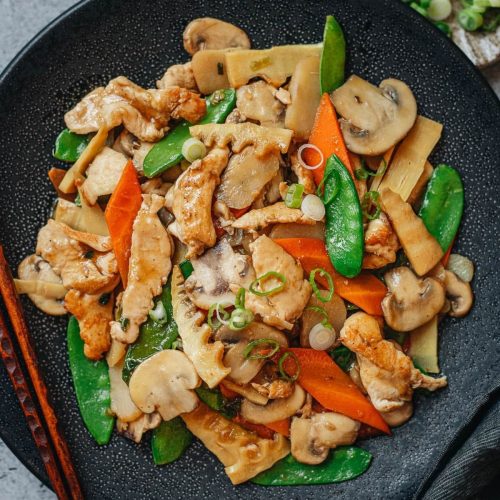
Authentic Moo Goo Gai Pan

Equipment
- Wok or large skillet
- Wok spatula
Ingredients
- 1 lb chicken breast thinly sliced
- 1 tbsp Shaoxing wine
- 1 tsp cornstarch for marinade
- 8 oz button mushrooms sliced
- 1 cup snow peas
- 1/2 cup chicken broth
- 2 cloves garlic minced
Instructions
- Marinate sliced chicken with Shaoxing wine, salt, cornstarch, and oil for 15 minutes.
- Heat oil in a wok and sear chicken until white on the outside. Remove and set aside.
- Stir-fry garlic and ginger, then add mushrooms, carrots, and snow peas.
- Add chicken broth and sugar. Return chicken to the wok.
- Stir in cornstarch slurry and toss until the sauce thickens and coats the chicken.





Leave a Reply