Hi everyone, Lin here! Welcome back to Woks of Love. If you love the crisp, spicy, and tangy crunch of traditional fermented cabbage but do not have the patience to wait weeks for fermentation, this recipe is for you. Today, I am sharing my family’s method for making a quick, everyday instant kimchi (Ji Shi La Bai Cai). It delivers that irresistible punch of garlic, fruit sweetness, and chili right away, and it only gets better if you let it sit in the fridge overnight.

What Is Quick Kimchi (Ji Shi La Bai Cai)?
Quick Kimchi, known in Chinese as Ji Shi La Bai Cai, is an accelerated version of the traditional fermented Korean staple. Instead of relying on a long, slow lactic acid fermentation process, this method uses a concentrated paste of fresh fruits (apples and pears), aromatics (garlic and ginger), and bloomed chili powder to instantly flavor salted Napa cabbage. It is fresh, crisp, and ready to eat on the same day.
If you are looking to utilize your freshly made batch in a hot dish, you can seamlessly incorporate it into our Kimchi Pork Belly Stir-fry for an incredibly flavorful weeknight meal.
1Kimchi Pork Belly Stir-fry (La Bai Cai Chao Wu Hua Rou)A 15-minute savory, spicy, and tangy stir-fry featuring crispy rendered pork belly and fermented kimchi. This easy homestyle dish is the perfect appetite stimulant.Check out this recipe
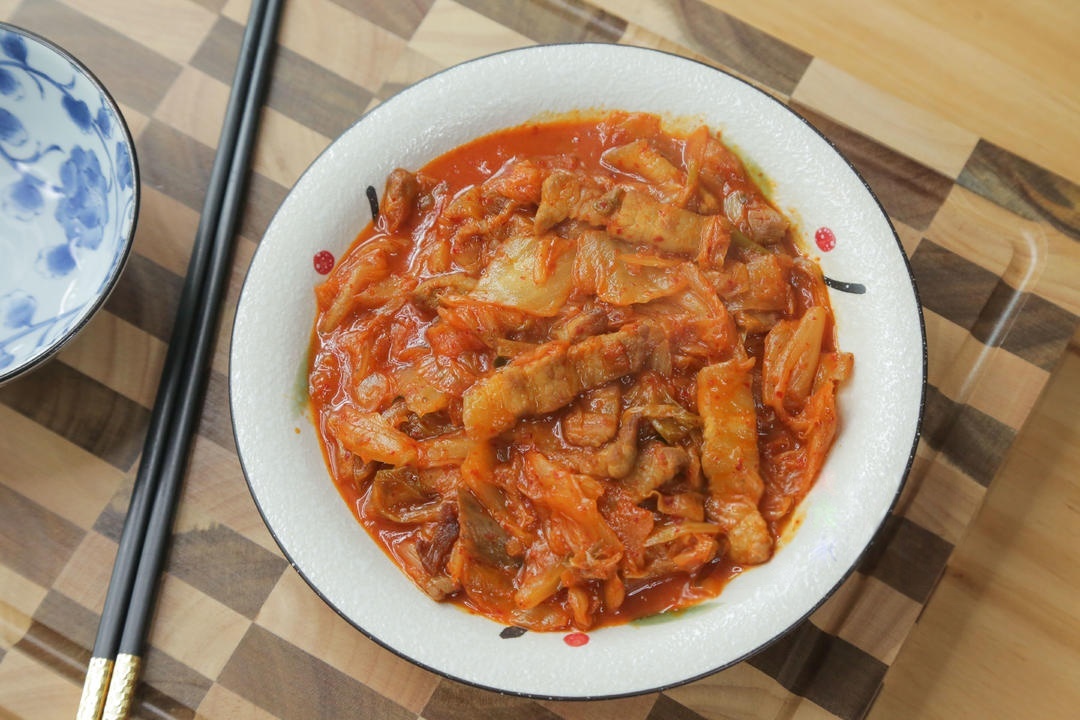
Ingredients
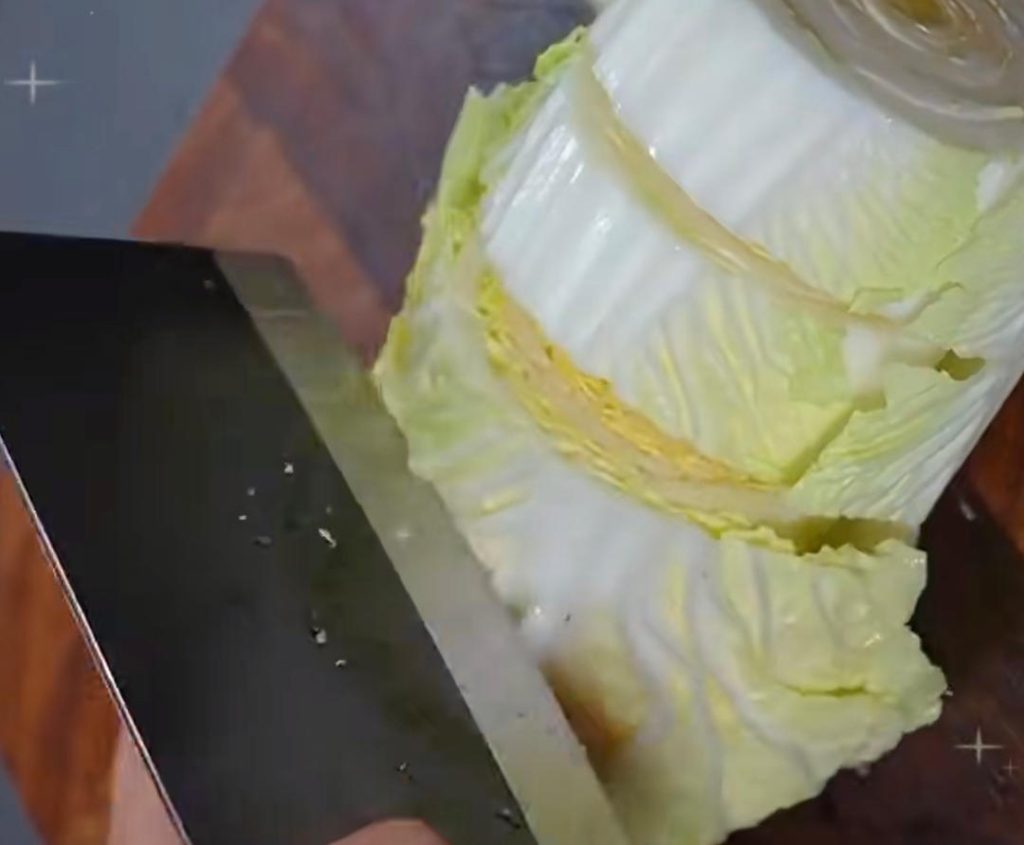
The Vegetables:
- Napa Cabbage: 1 large head, about 5.5 lbs (2.5 kg). Look for a head that feels heavy for its size with tightly packed leaves.
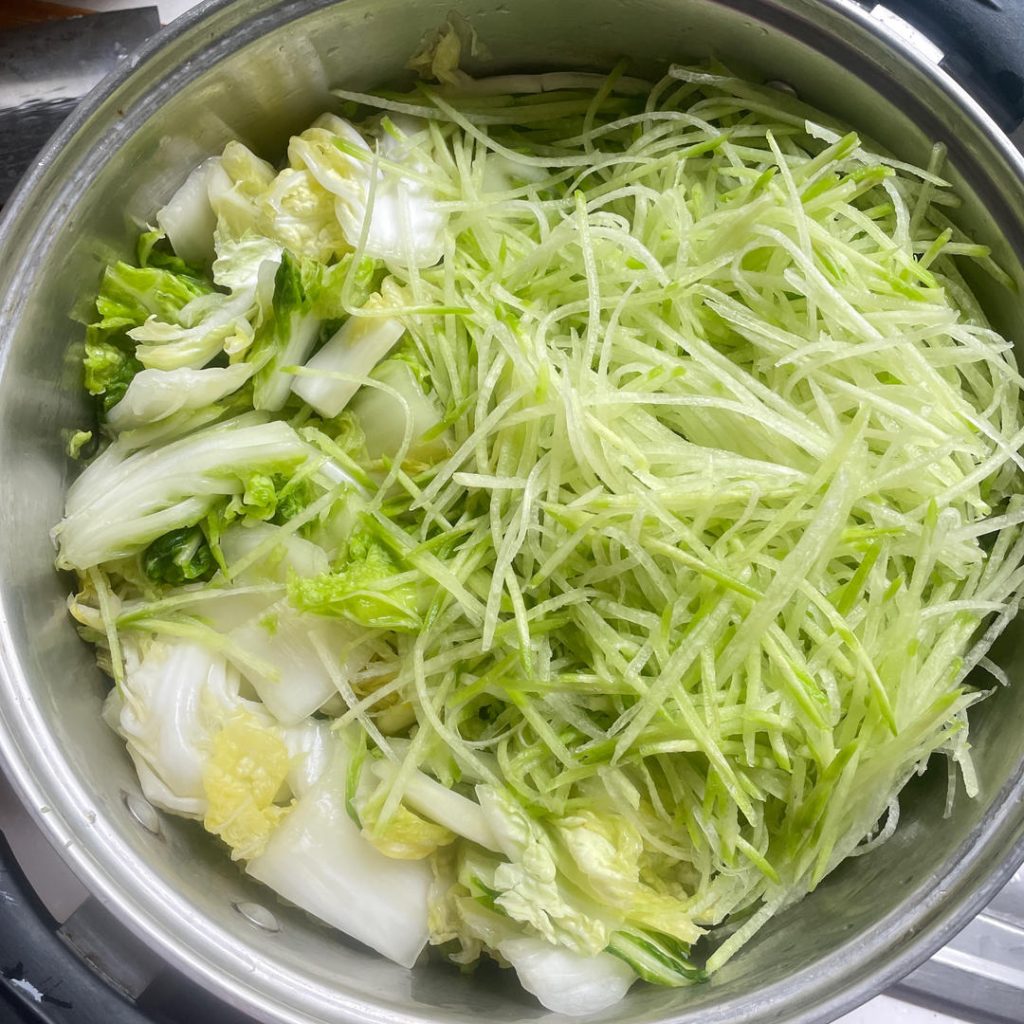
- Daikon Radish (Fruit Radish): 1 medium piece, peeled and julienned.
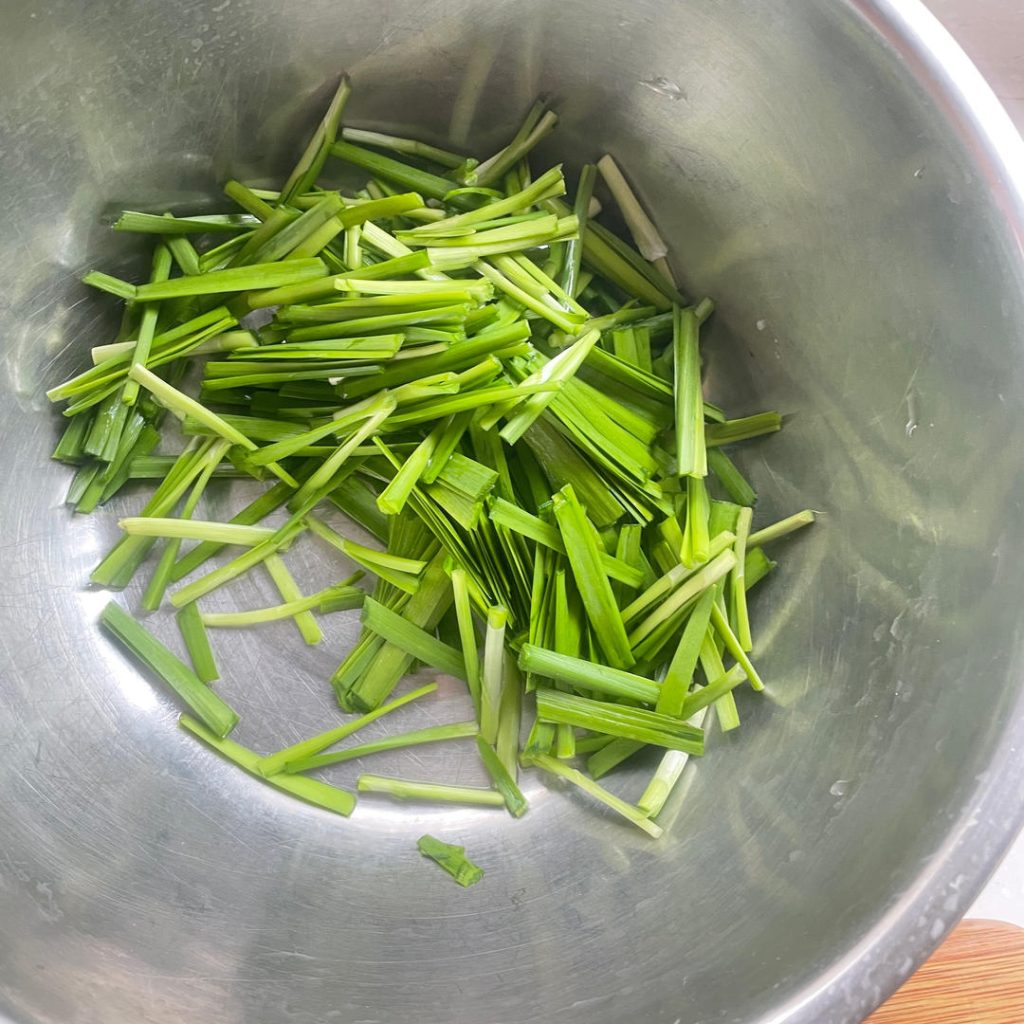
- Asian Chives (Garlic Chives): 1 small bunch, cut into 2-inch sections.
- Kosher Salt: 1/2 cup (120 g), strictly for drawing water out of the cabbage.
The Flavor Paste:
- Asian Pear: 1 to 2 medium pears, peeled and cored.
- Apple: 1 medium (Fuji or Gala), peeled and cored.
- Onion: 1/2 of a medium yellow onion.
- Garlic: 2 whole heads, cloves peeled.
- Fresh Ginger: 1 large piece (about 2 inches), peeled.
The Seasonings:
- Chili Powder: 120 g total (about 1 cup). The secret is using a 50/50 mix of coarse and fine flakes (60 g each) for optimal color and texture. If you are experimenting with regional heat, you can read more about our Sichuan Chili flakes, though standard Gochugaru is preferred here.
- Boiling Water: 1/2 cup (120 ml), to bloom the chili.
- Salt: 1 tablespoon (15 g), added to the chili paste.
- Granulated Sugar: 1/2 cup (100 g). This balances the heat and aids in quick fermentation.
- Beef Bouillon Powder (Dashida) or MSG: 1 tablespoon (10 g). This is the secret to a deep, savory umami profile.
- Gochujang (Korean Chili Paste): 2 tablespoons (optional, but highly recommended for extra depth).
Equipment Needed
- 1 extra-large mixing bowl or food-grade basin
- Food processor or blender (for the aromatic paste)
- Food-safe disposable gloves (crucial for protecting your hands from the chili)
- Airtight glass jars or glass Tupperware for storage
Prep & Mise en Place
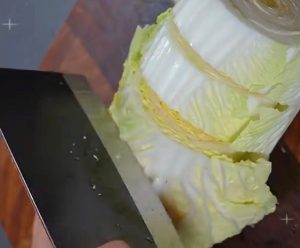
- Chop the Cabbage: Discard the wilted outer leaves. Cut the Napa cabbage lengthwise into quarters, cut out the tough core, and chop the leaves into large, bite-sized squares (about 2×2 inches).
- Process the Aromatics: Roughly chop the pear, apple, onion, garlic, and ginger.
Cooking Process
Step 1: Salting the Cabbage (1 Hour)
Place the chopped cabbage in your largest bowl. Sprinkle the 1/2 cup of kosher salt evenly over the leaves. Toss well with your hands. Let it sit at room temperature for exactly 1 hour, tossing once halfway through.
Chef’s Science Note: Salting the cabbage induces osmosis. The salt draws out excess water from the cell walls, which not only softens the cabbage to make it pliable but also prevents your final seasoning paste from becoming diluted and watery.
Step 2: Washing and Squeezing (5 Minutes)
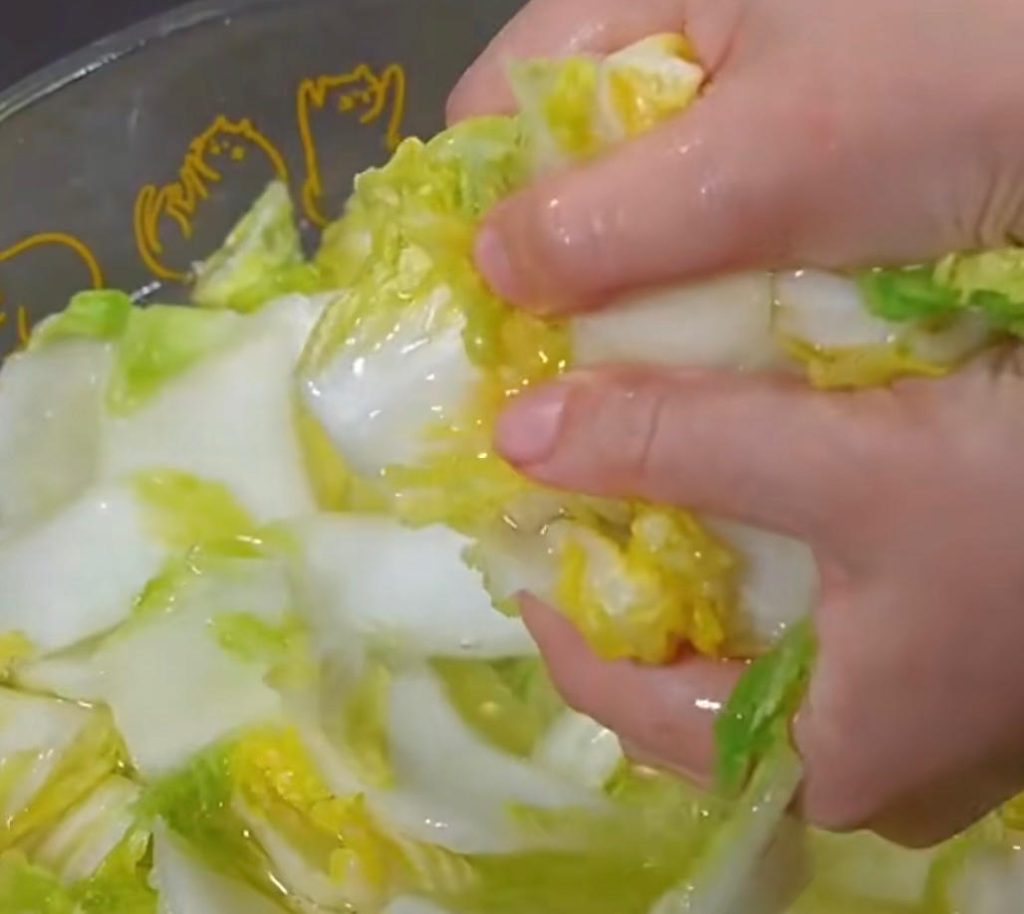
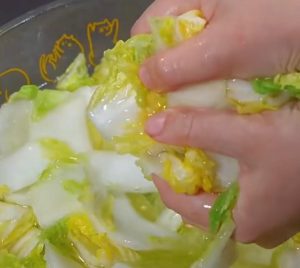
After 1 hour, the cabbage will have shrunk significantly. Rinse the cabbage thoroughly under cold running water at least twice to remove the excess salt. Take handfuls of the cabbage and squeeze out as much water as you possibly can. Transfer to a clean, dry bowl.
Step 3: Blooming the Chili (5 Minutes)
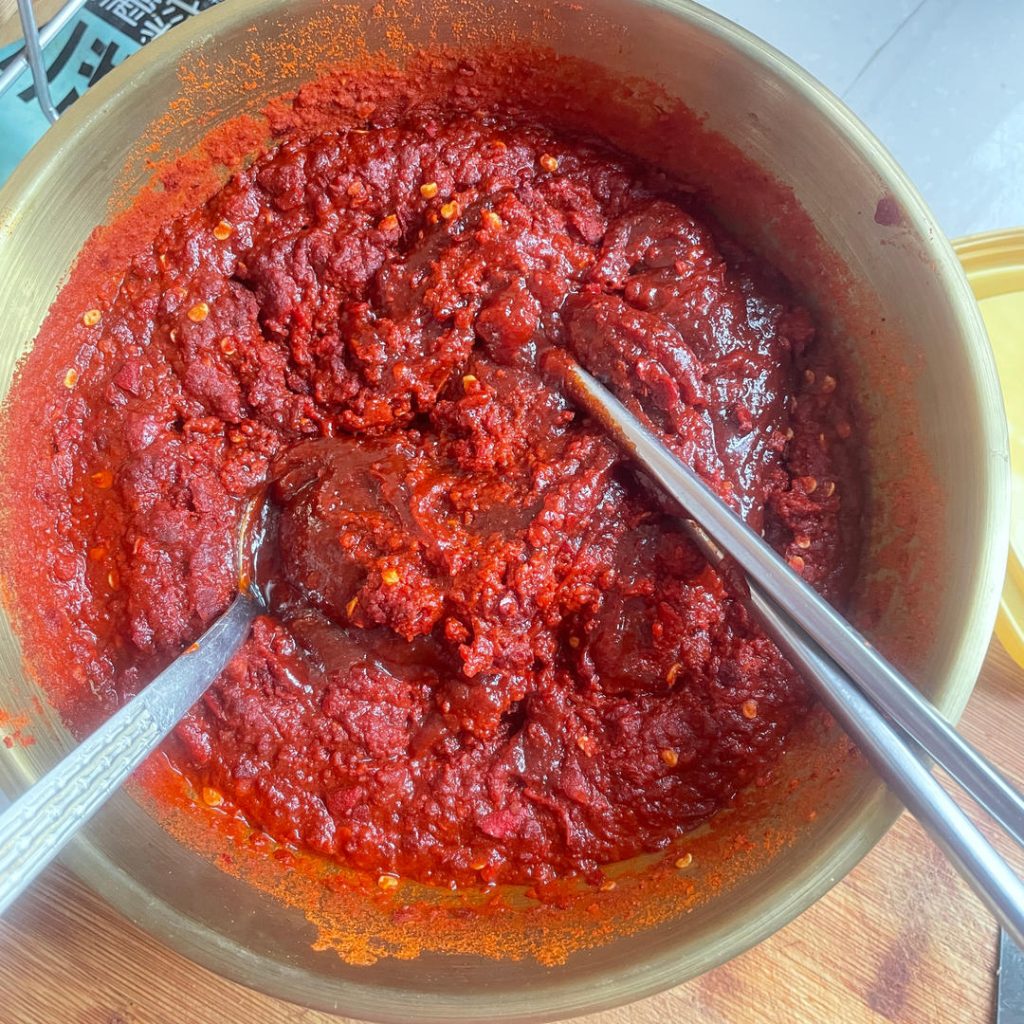
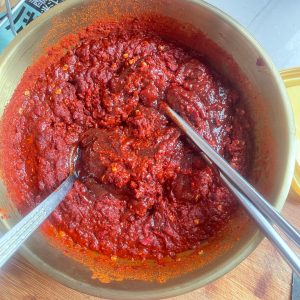
In a heat-proof bowl, combine the 60 g of coarse chili powder, 60 g of fine chili powder, and 15 g of salt. Pour the 1/2 cup of boiling water over the mixture and stir immediately. Let it sit for 10 minutes. The hot water cooks the raw edge off the chili and releases its natural oils, creating a thick, vibrant paste.
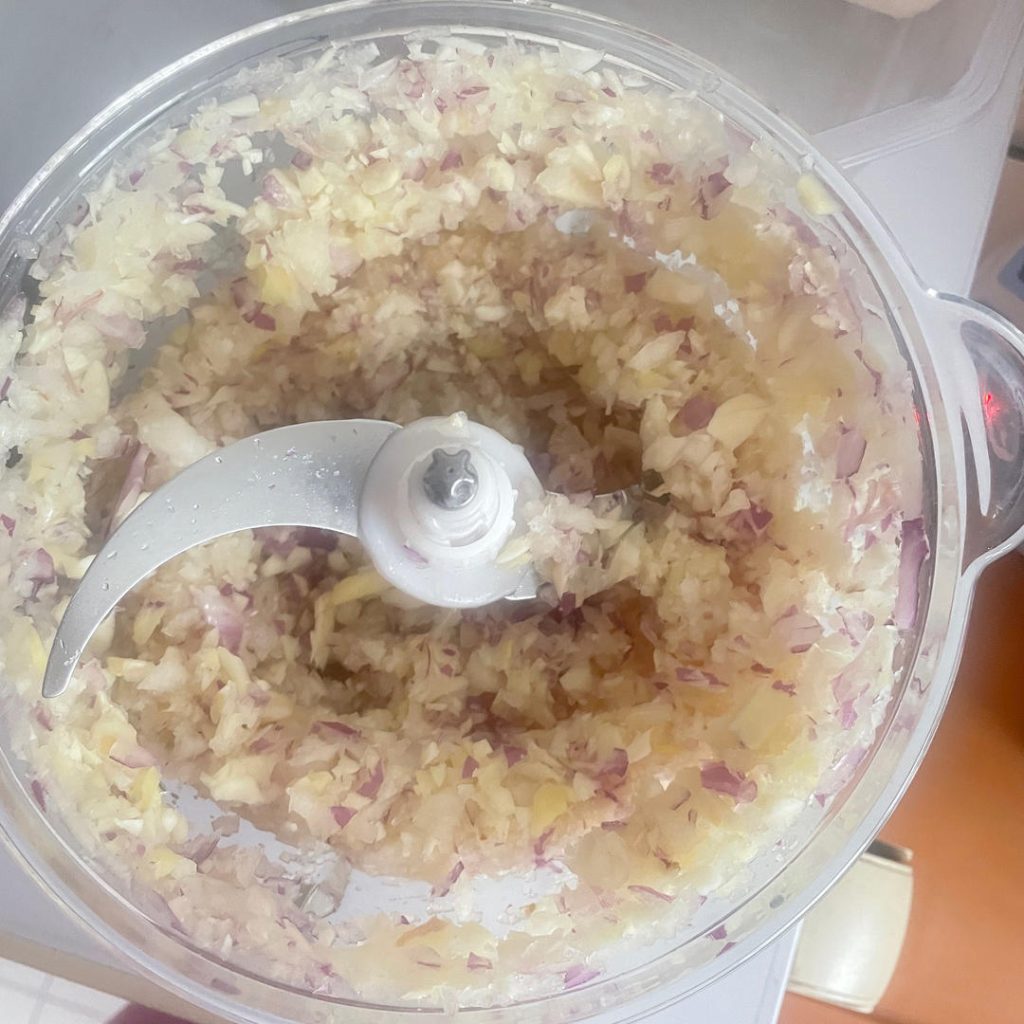
Step 4: Blending the Aromatic Paste (5 Minutes)
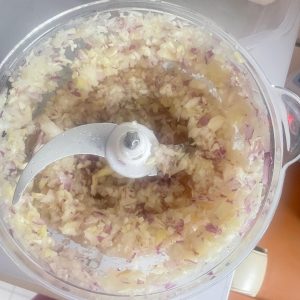
Place the prepared pear, apple, onion, garlic, and ginger into your food processor. Blend until it becomes a fine, smooth purée.
Step 5: Assembling and Mixing (10 Minutes)
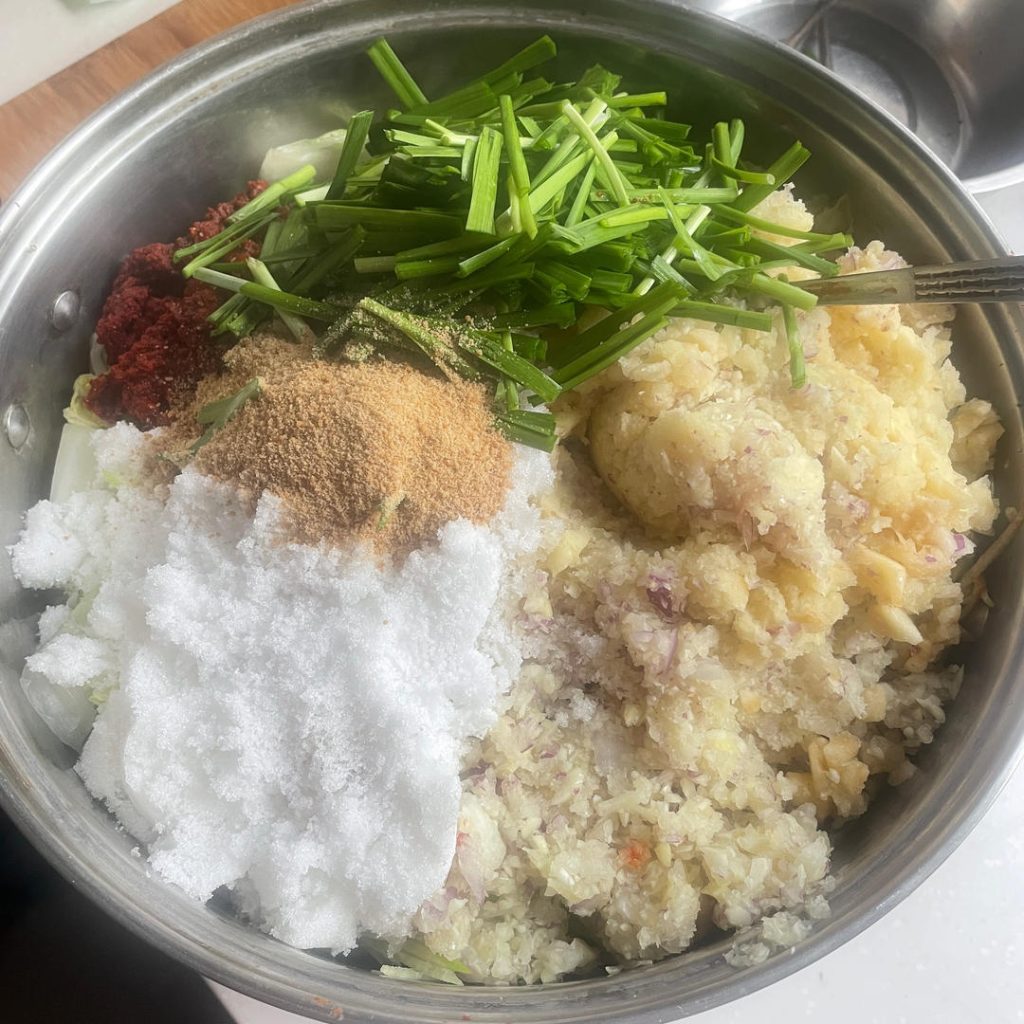
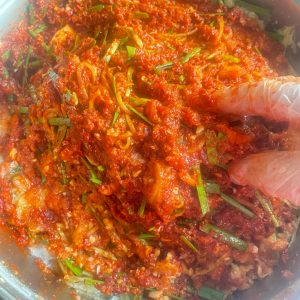
Put on your food-safe gloves. To the squeezed cabbage, add the julienned radish, the chopped chives, the bloomed chili paste, the blended fruit/aromatic purée, the 100 g of sugar, the 10 g of beef bouillon/MSG, and the 2 tablespoons of Gochujang (if using). Use your hands to massage the mixture thoroughly, ensuring every single leaf is heavily coated.
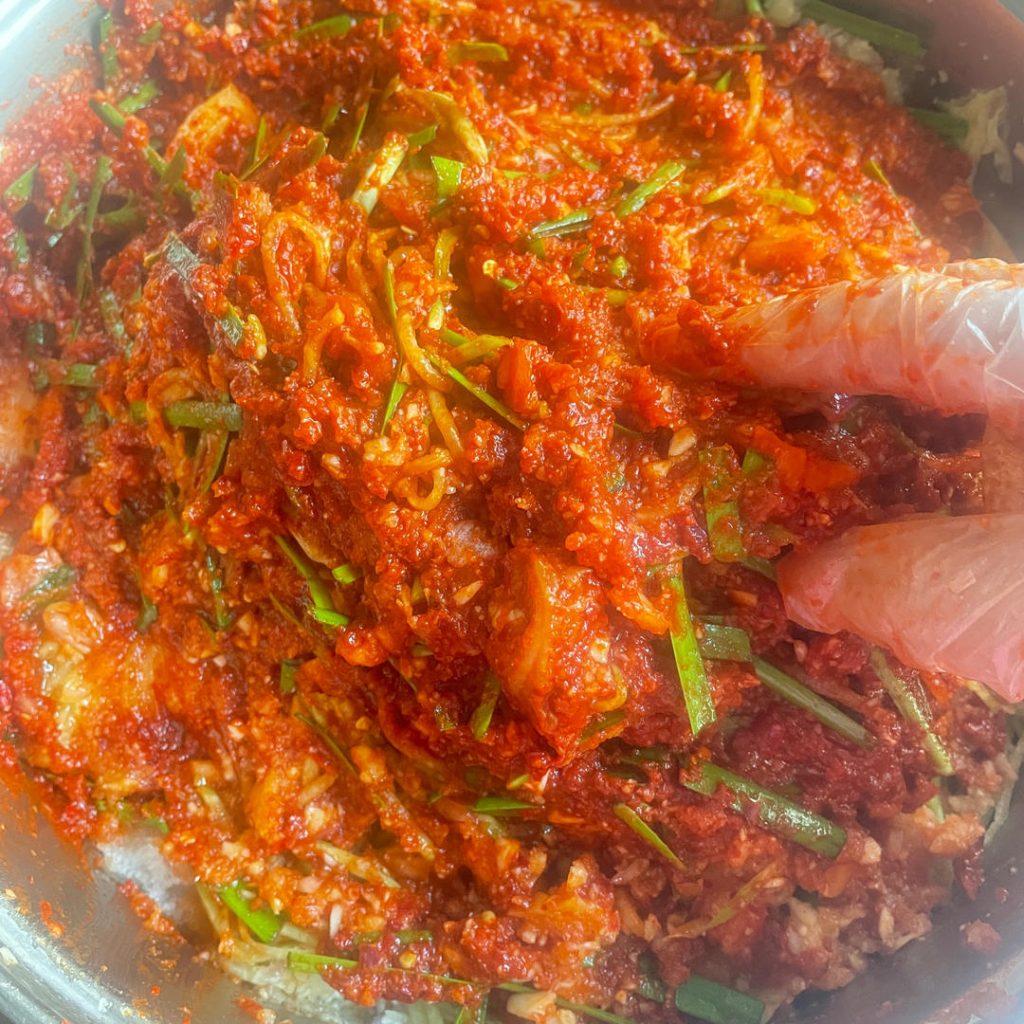
Step 6: Resting (12 Hours)
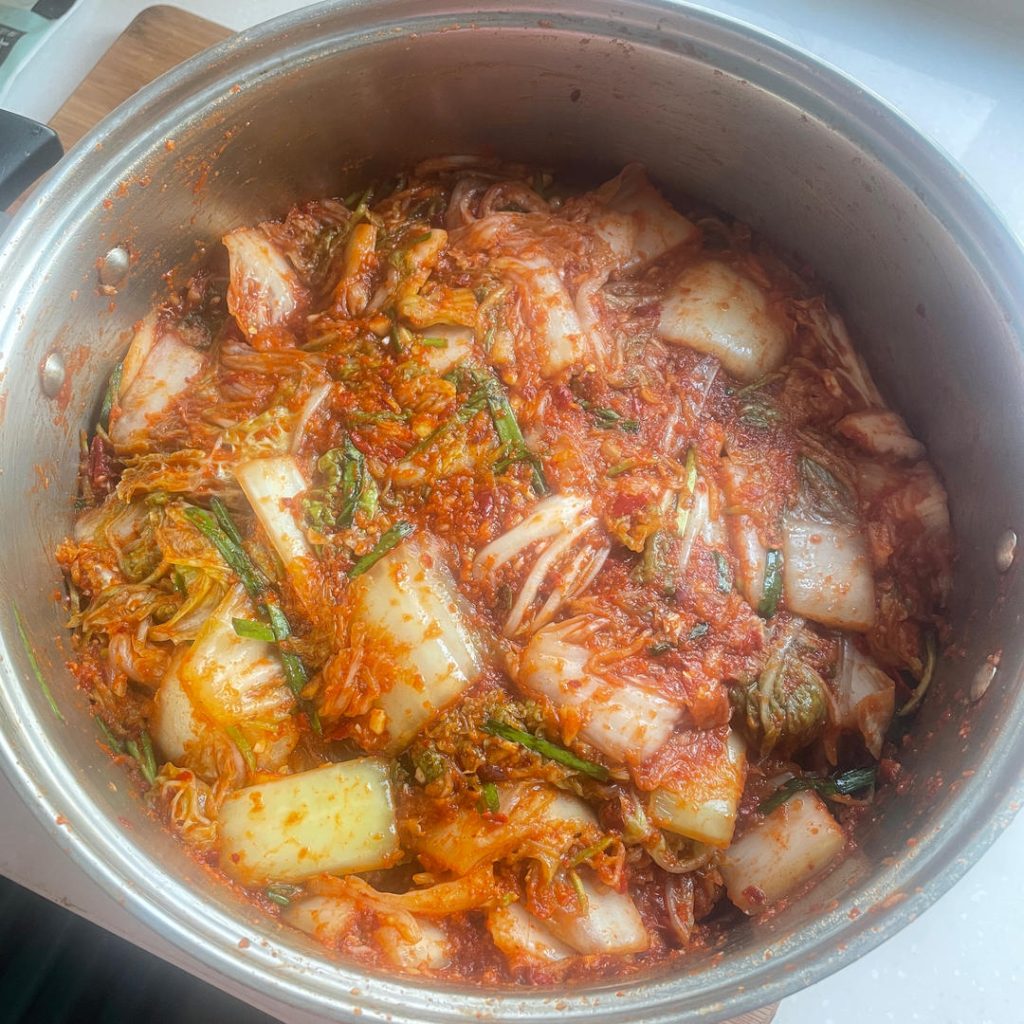
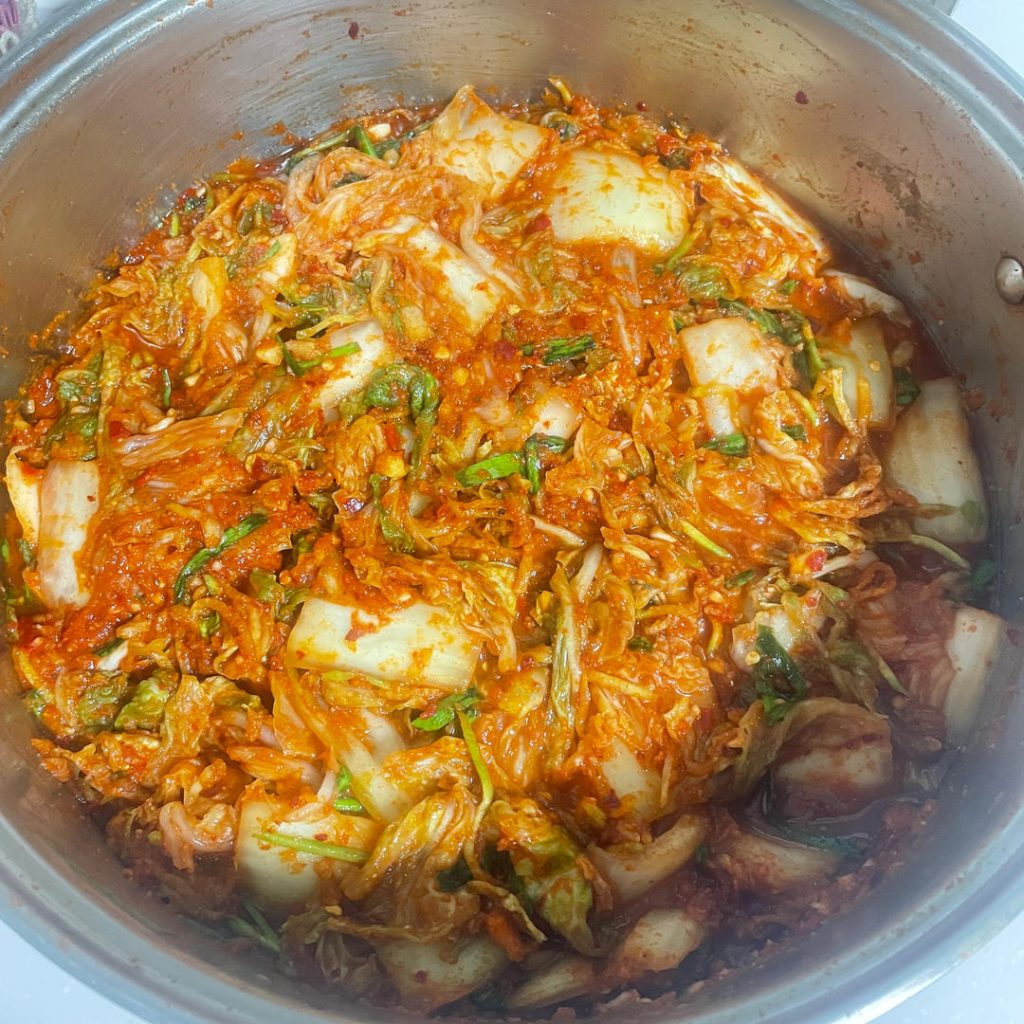
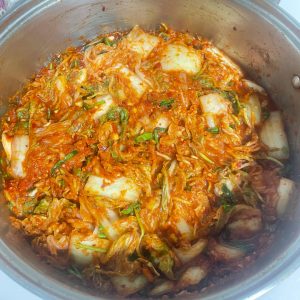
Flatten the mixture in the bowl, cover tightly with plastic wrap, and let it marinate at room temperature (around 68-72°F) for half a day (about 12 hours). It is ready to eat immediately after this, but transferring it to the fridge overnight allows the flavors to deepen incredibly.
Why This Recipe Works
- Fruit Tenderizers: The natural enzymes and sugars in the apple and pear break down the cabbage slightly while providing an earthy sweetness that refined sugar cannot achieve alone.
- Bloomed Chili: Using boiling water on the chili powder prevents the final dish from tasting “dusty” and extracts maximum pigment for a bright red finish.
- Dual Texture Cabbage: By aggressively salting and squeezing the cabbage, it retains a distinct, satisfying crunch without bleeding water into the sauce.
Common Mistakes When Making Quick Kimchi
- Problem: The kimchi is too salty.
- Cause: Not rinsing the cabbage thoroughly after the 1-hour salting phase.
- Solution: Always rinse the cabbage at least twice in ample cold water, tasting a small piece before proceeding.
- Problem: The sauce is watery and pooling at the bottom.
- Cause: Failing to squeeze enough water out of the rinsed cabbage.
- Solution: Use serious elbow grease to wring out the cabbage. It should feel relatively dry to the touch before the sauce goes on.
Frequently Asked Questions
- Can I make it ahead? Absolutely. In fact, it tastes noticeably better on days 2 and 3 after the garlic and ginger have mellowed into the cabbage.
- Is this authentic? This is a highly authentic “homestyle” shortcut method (Geotjeori style) popular in Northern Chinese and Korean-Chinese households when winter cabbage is abundant.
- Can I substitute the beef bouillon? Yes, mushroom powder or a splash of fish sauce will provide the necessary umami if you prefer not to use beef powder.
How to Serve
This instant spicy cabbage is a powerhouse side dish. It is perfect alongside a comforting bowl of Hot and Sour Soup or served with a generous portion of Yangzhou Fried Rice. If you are putting together a banquet, it acts as a wonderful palate cleanser next to rich dishes like Steamed Pork Ribs with Black Bean Sauce. Need another quick vegetable side? Try pairing it with our Easy Smashed Cucumber Salad.
Storage & Reheat
- Refrigerator: Store in an airtight glass container (plastic will stain and hold odors) for up to 2-3 weeks. It will slowly ferment and become sourer over time, making it perfect for stews or fried rice later on.
- Freezing: Do not freeze. The cellular structure of the cabbage will collapse, resulting in a mushy texture upon thawing.
Allergen Notice
- Soy & Wheat: If using Gochujang, check the label, as it often contains fermented soybeans and wheat.
- MSG: Contains naturally occurring glutamates (from tomatoes/MSG powder).
Nutrition Disclaimer & Safety
Nutrition information is an estimate and provided for informational purposes only.
Medical & Safety Analysis: While fermented and pickled foods like this provide excellent gut-friendly probiotics, this recipe contains high levels of sodium from the salting and bouillon processes. Individuals managing hypertension or cardiovascular health should consume this in moderation. Furthermore, naturally fermented products generate histamines; those with severe histamine intolerance should be cautious. Always ensure your storage jars are thoroughly sanitized with boiling water before use to prevent the growth of harmful bacteria during the initial room-temperature resting phase.
About the Author & Recipe Development
I am Lin, a chef and the voice behind Woks of Love. This quick kimchi recipe was developed after countless late-night shifts when I craved the sharp, spicy bite of traditional kimchi but didn’t have a mature batch ready in the kitchen. To perfect the hydration levels, I tested over twenty batches—eventually discovering that blooming the dual-texture chili flakes with boiling water was the absolute key to locking in that deep, restaurant-quality color and flavor without the wait. When cooking meats to pair with this, I highly recommend brushing up on your knife skills with my guide on How to Slice Meat for Stir Fry , ensuring you have the perfect wok setup, like the Best Wok for Electric Stove, for an ultimate home-dining experience.
Authoritative References
- Osmosis and Salting: To understand the science behind drawing moisture from vegetables using salt, consult the culinary science resources at Serious Eats on Osmosis and Brining.
- Safe Fermentation Practices: For comprehensive guidelines on safe vegetable fermentation and storage temperatures, please refer to the USDA Guidelines on Fermented Foods.
Easy Quick Kimchi (Instant Spicy Cabbage in 24 Hours)

Equipment
- Large Mixing Bowl
- Food processor
- Food-Safe Gloves
Ingredients
The Vegetables
- 5.5 lbs Napa cabbage chopped
- 1 daikon radish julienned
- 1 bunch Asian chives cut into 2-inch sections
- 0.5 cup kosher salt for drawing out water
The Flavor Paste
- 1 Asian pear peeled and cored
- 1 apple peeled and cored
- 0.5 yellow onion
- 2 heads garlic peeled
- 1 piece fresh ginger about 2 inches, peeled
The Seasonings
- 1 cup chili powder half coarse, half fine
- 0.5 cup boiling water
- 1 tbsp salt for chili paste
- 0.5 cup granulated sugar
- 1 tbsp beef bouillon powder or MSG
- 2 tbsp Gochujang optional
Instructions
- Place the chopped cabbage in a large bowl. Sprinkle 1/2 cup kosher salt evenly over the leaves. Toss well and let sit at room temperature for 1 hour, tossing once halfway through.

- Rinse the cabbage thoroughly under cold running water at least twice to remove excess salt. Squeeze out as much water as possible by hand and transfer to a clean, dry bowl.

- In a heat-proof bowl, combine the chili powders and 1 tbsp salt. Pour the boiling water over the mixture, stir, and let it bloom for 10 minutes.

- Blend the pear, apple, onion, garlic, and ginger in a food processor until smooth.
- Wearing food-safe gloves, add the radish, chives, bloomed chili paste, fruit puree, sugar, bouillon powder, and Gochujang (if using) to the squeezed cabbage. Massage thoroughly until well coated.
- Flatten the mixture in the bowl, cover tightly, and let marinate at room temperature for 12 hours before eating or transferring to the fridge.












Leave a Reply