This comprehensive guide focuses on the technical mastery of slicing meat—specifically for Chinese stir-fry—where the direction of your knife determines whether your dinner is melt-in-the-mouth tender or unpleasantly chewy.
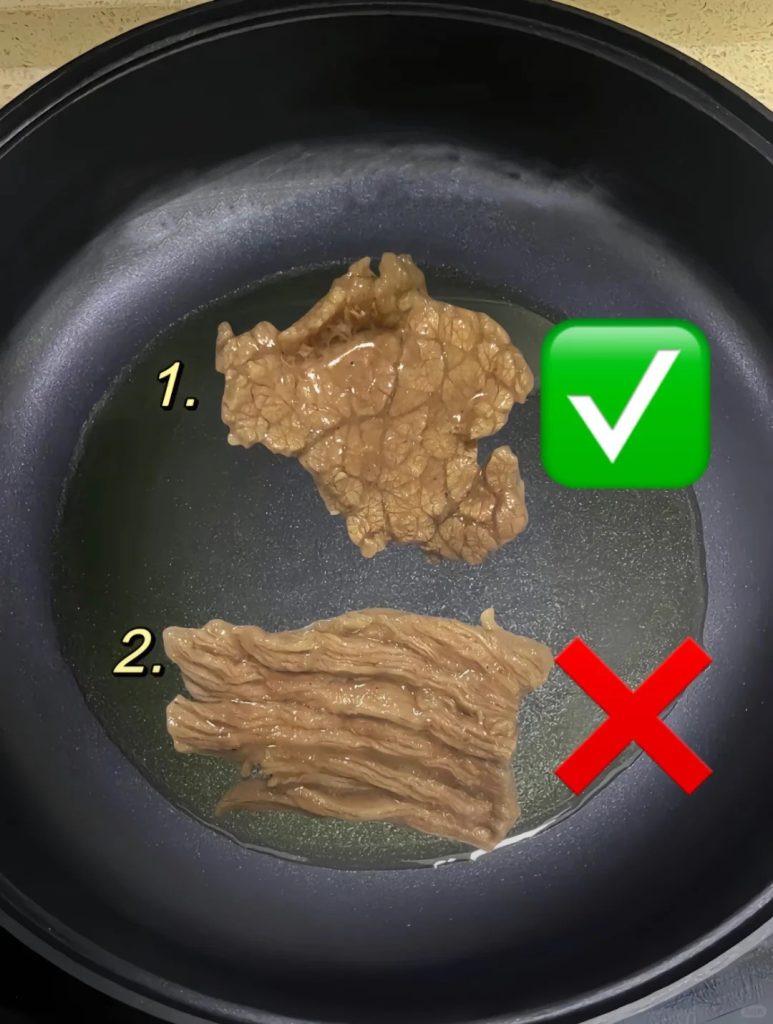
The Science of “Across the Grain”
The “grain” of meat refers to the direction in which the muscle fibers run. These fibers are bundles of tough proteins designed to be strong. If you slice parallel to these fibers (with the grain), you leave long, intact protein strands that are difficult for human teeth to break down.
When you slice across the grain, you are mechanically shortening these fibers into tiny segments. Instead of your teeth doing the hard work of tearing through long muscle bundles, they only need to separate the short segments you’ve already created. In a high-heat environment like a wok, where cooking happens in 2–3 minutes, this mechanical tenderizing is non-negotiable.
Visual Identification: Finding the Grain
- Look for Lines: Examine the surface of the raw meat. You will see distinct “lines” or “streaks.” This is the muscle alignment.
- The Pull Test: If the lines are unclear, gently pull the meat. It will stretch along the grain and tear more easily across it.
- Positioning: Rotate the meat so the lines are running horizontally in front of you. Your knife should then drop vertically, creating a “T” shape with the grain.
Technical Slicing Boundaries: Beef, Pork, and Chicken
Different proteins require specific thickness boundaries to survive the intense heat of a stir-fry without drying out.
| Protein Type | Optimal Thickness | Cutting Angle | Best For |
| Beef | 2mm – 3mm | Perpendicular (90°) | Black Pepper Steak |
| Pork | 3mm – 4mm | Slight Bias (45-70°) | Pork and Pepper Stir-fry |
| Chicken Breast | 4mm – 5mm | Against Grain (90°) | Kung Pao Chicken |
1. Slicing Beef
Beef has the coarsest muscle fibers. For a dish like Hunan Stir-fried Beef, you must slice strictly perpendicular to the grain. If the slices are thicker than 3mm, they will not cook through fast enough to stay tender.
- Pro Tip: Use Pork Tenderloin techniques even for beef—chilling the meat in the freezer for 30–45 minutes until “firm-to-the-touch” but not frozen allows for paper-thin precision.
2. Slicing Pork
Pork fibers are finer than beef but tougher than chicken. When preparing Pork Belly, the goal is often uniform thickness to ensure the fat renders evenly. For leaner cuts like Pork Loin, a slight bias cut (angling the knife) increases the surface area, allowing more Soy Sauce and marinade to penetrate.
3. Slicing Chicken
Chicken breast is prone to “shredding” if cut too thin. Keep slices closer to 5mm. Because the grain in chicken breast often changes direction near the wing joint, you must adjust the meat’s position halfway through slicing to stay “across the grain.”
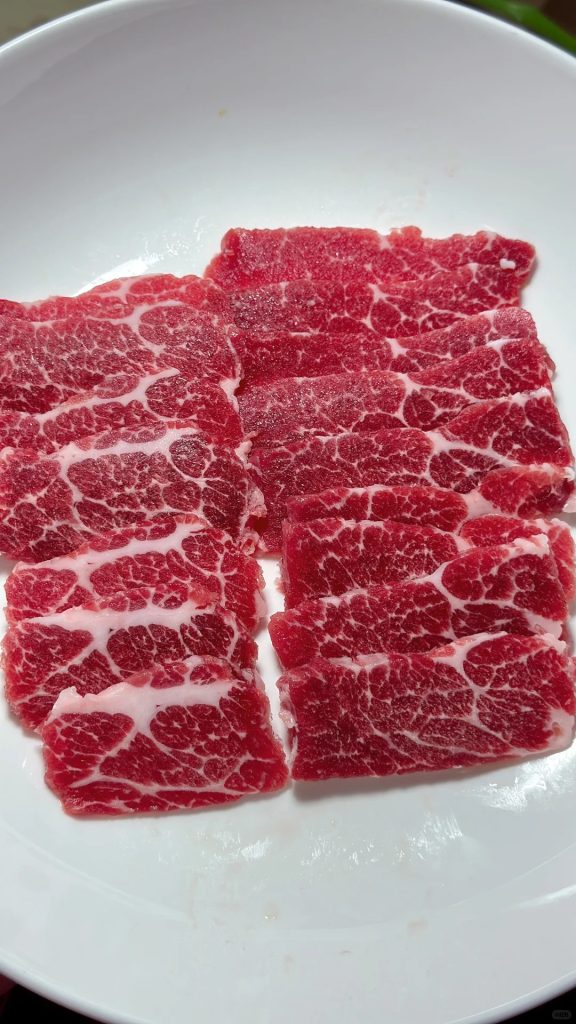
Professional Steps for Stir-Fry Prep
Step 1: Trim and Section
Remove excess silver skin or heavy connective tissue. Large pieces of meat, like a whole Pork Shoulder, should be sectioned into manageable blocks (about 2 inches wide) before slicing.
Step 2: The “Semi-Frozen” Hack
Professional chefs rarely slice room-temperature meat. Place your protein on a tray in the freezer.
- Time: 30 minutes for small cuts; 60 minutes for large roasts.
- Result: The water in the cells crystallizes slightly, providing structural resistance against the knife.
Step 3: The Slicing Motion
Do not “saw” the meat. Use a long, drawing stroke, starting from the heel of the knife and pulling back to the tip. This prevents tearing the fibers and keeps the Light Soy Sauce in your marinade from leaking out of “ragged” edges during cooking.
When “Across the Grain” is Not Enough
Even a perfect cut can fail if the cooking technique is flawed. In a restaurant kitchen, we use Velveting. This involves coating the sliced meat in a mixture of cornstarch, Shaoxing Wine, and a pinch of baking soda.
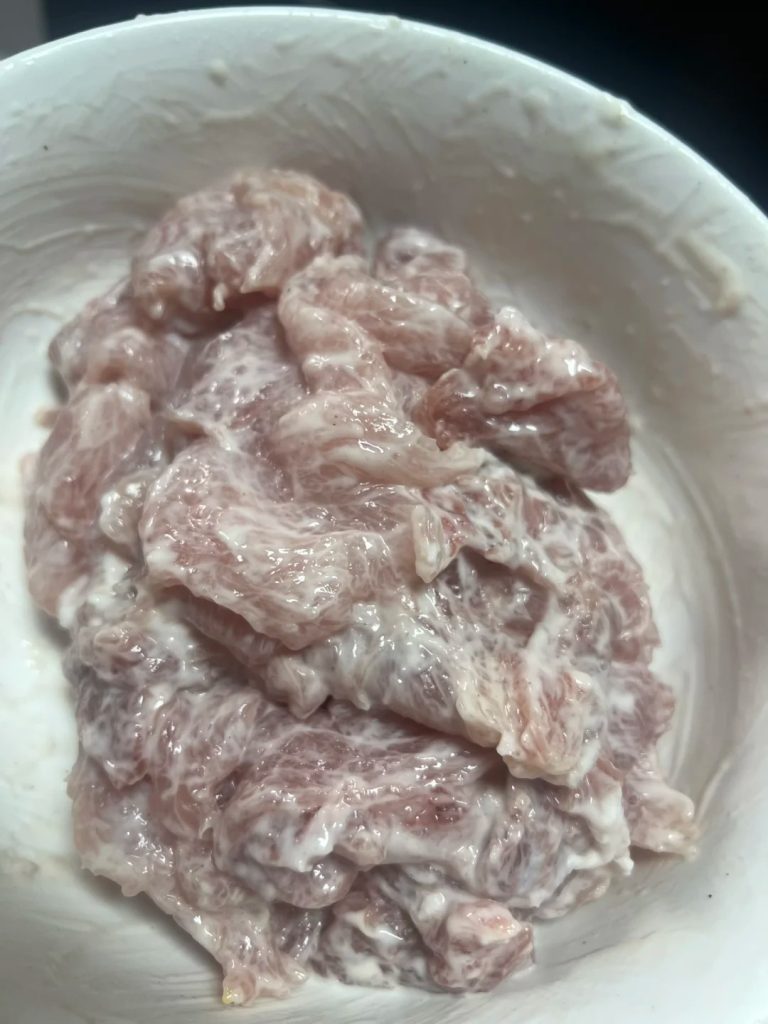
- Baking Soda Ratio: 1/2 tsp per 500g of meat.
- Warning: Do not leave baking soda on for more than 20 minutes, or the meat will develop a “soapy” alkaline taste.
Common Mistakes
- Dull Knives: A dull blade crushes muscle fibers rather than severing them, leading to moisture loss.
- Overcrowding the Wok: If you put too much perfectly sliced meat in the pan at once, the temperature drops, and the meat boils in its own juices rather than searing.
- Slicing with the Grain: If you see “long lines” on your finished slice, you have cut parallel to the fibers. Stop and rotate the meat 90 degrees.
Troubleshooting FAQ
Q: Why is my meat still tough even though I cut across the grain?
Check your heat. If you aren’t using high heat and enough oil to sear instantly, the meat stays in the “danger zone” of 60°C to 70°C for too long, causing the proteins to contract and squeeze out all moisture.
Q: Can I use this for “shredded” meat dishes?
Yes. To make “matchsticks” (often used in Fish-Fragrant Pork Stir-fry), first slice across the grain into sheets, stack the sheets, and then cut into slivers.
Q: Does the grain direction matter for fat?
No, fat doesn’t have a grain. Focus entirely on the lean muscle tissue.
Recommended Skill-Builders
If you’ve mastered the slice, try applying it to these technique-heavy recipes:
- Beef Chow Fun – Requires perfect beef slicing and high-heat wok control.
- Twice-Cooked Pork – A classic Sichuan dish that tests your ability to slice parboiled Pork Belly into uniform pieces.
- Explore more at Woks of Love for detailed Ingredient Guides and expert tips.





Leave a Reply