There is a specific sound that signals comfort in my kitchen: the sizzling hiss of pork belly hitting a hot wok. Growing up in Sichuan, my family often incorporated preserved vegetables into our stir-fries to cut through rich meats. While spicy cabbage (kimchi) is quintessentially Korean, it has been embraced in Chinese home cooking (where we call it pao cai) for the incredible depth and acidity it brings to fatty cuts like Pork Belly.

This recipe is a pure recording of a “freestyle” dinner I threw together that turned out exceptionally well—fragrant, savory, and incredibly appetizing (or xia fan, meaning it goes perfectly with rice). By adding crisp mung bean sprouts and sweet carrots, we create a symphony of textures: the chewy, tender pork, the soft kimchi, and the snap of the fresh vegetables.
About the Author & Recipe Development
I’m Lin, a culinary instructor and former restaurant chef with over a decade of professional experience in Chinese kitchens. My training began in my parents’ humble restaurant in Sichuan and was refined at culinary school, where I learned the science behind the “wok hei” we all crave. This recipe was developed in my home kitchen to bridge the gap between professional technique—like properly rendering fat—and the realities of weeknight home cooking. I’ve tested this on both a high-output gas burner and a standard electric stove to ensure you can achieve that golden sear regardless of your equipment.
What is Kimchi Pork Belly Stir-fry?
This dish is a homestyle stir-fry that marries the richness of pork belly with the fermented tang of kimchi. In Chinese cooking, we often use pickled mustard greens or yardlong beans to balance grease, and using kimchi follows that same culinary logic.
We actually have a similar recipe on the site already: Kimchi Pork Belly Stir-fry. That version focuses heavily on the interplay between the meat and the cabbage. Today’s version, however, introduces mung bean sprouts and shredded carrots. This addition isn’t just for nutrition; it dramatically changes the mouthfeel, adding a refreshing crunch that makes the dish feel lighter and even more vibrant.
If you are ready to make this savory Kimchi Pork Belly Stir-fry but just realized you are out of fermented kimchi, do not worry! You do not need to rush to the Asian grocery store or wait weeks for a new batch to ferment. I highly recommend trying my Easy Quick Kimchi (Instant Spicy Cabbage) recipe. This foolproof shortcut method gives you that authentic tangy, spicy, and crisp texture in just half a day to 24 hours. Using your own homemade, freshly quick-pickled kimchi as the flavor base will instantly elevate this pork belly stir-fry to the next level!
1Easy Quick Kimchi (Instant Spicy Cabbage in 24 Hours)Learn how to make an authentic and easy quick kimchi (Ji Shi La Bai Cai) at home without days of fermentation. A foolproof recipe by Lin from Woks of Love.Check out this recipe
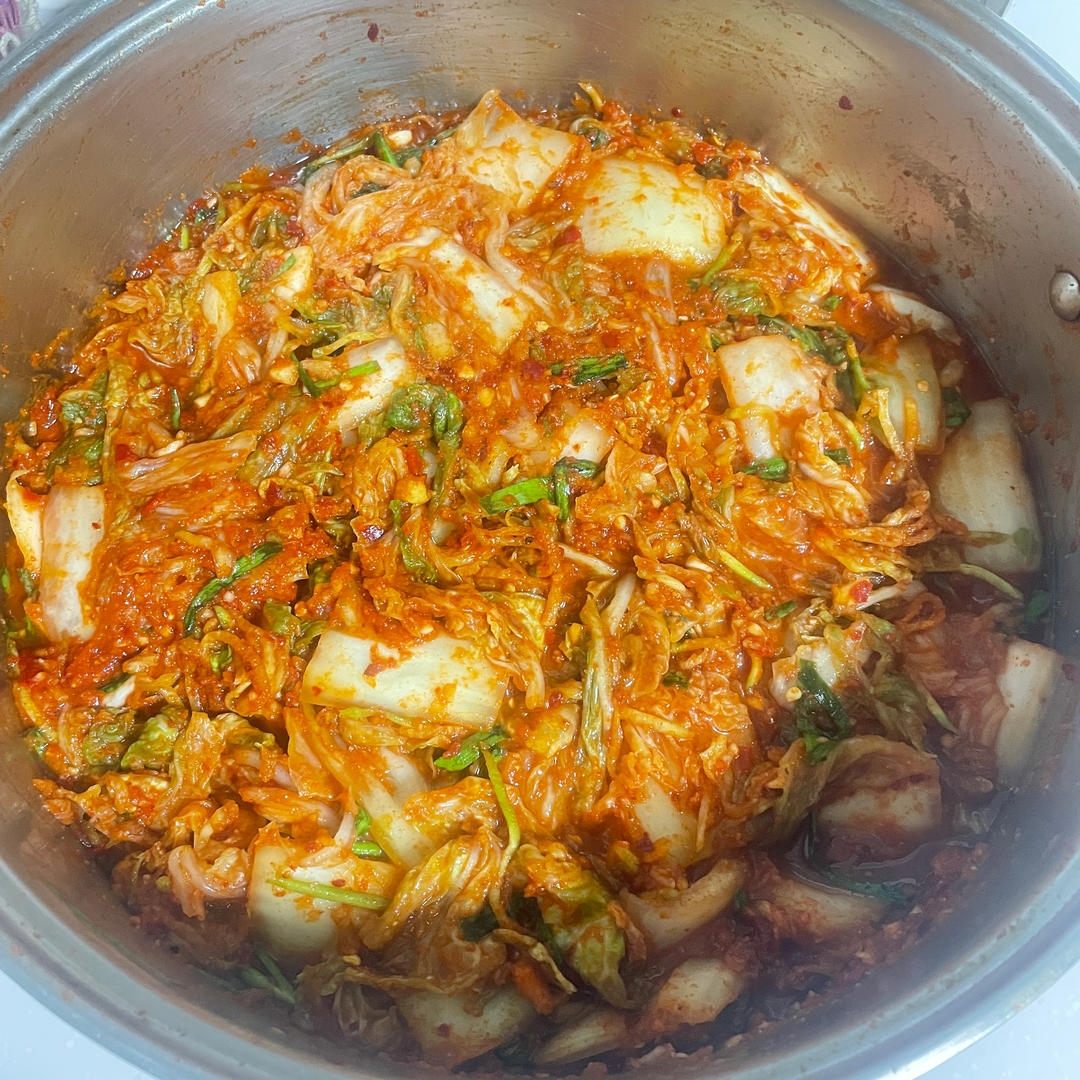
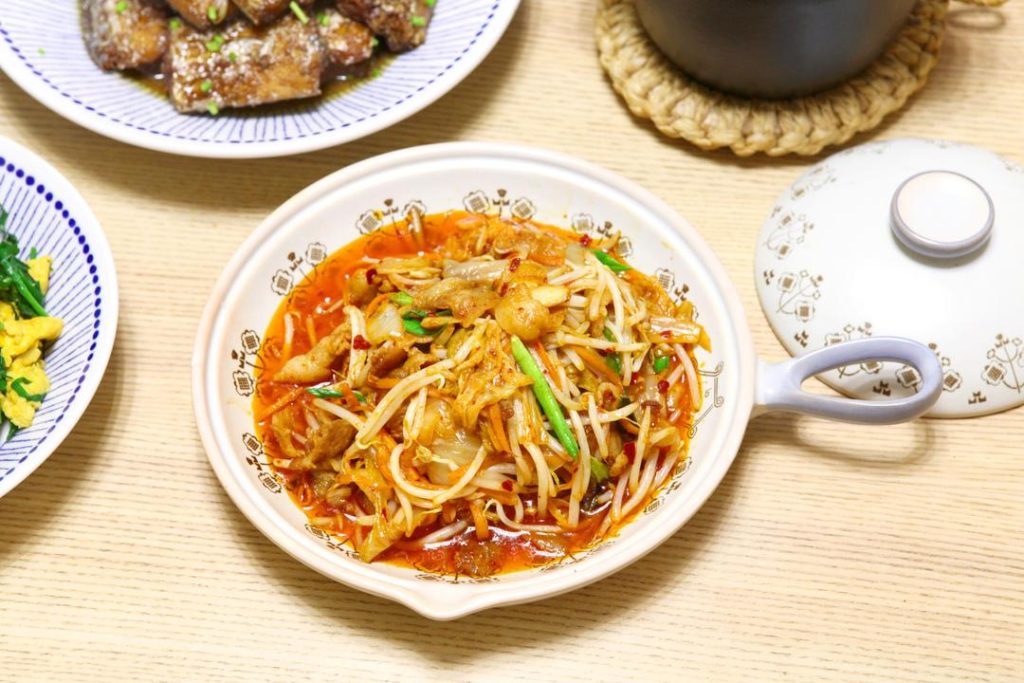
A truly great pork belly stir-fry relies heavily on the quality and acidity of your pickled vegetables. While store-bought works perfectly fine, making your own can completely transform the flavor profile. If you are short on time but still crave that authentic, vibrant crunch, check out my 15-Minute Easy Quick Kimchi (Lazy Homemade Pao Cai). This foolproof, rapid method yields a crisp, refreshing pao cai that cuts through the heavy richness of the pork beautifully.
215-Minute Easy Quick Kimchi (Lazy Homemade Pao Cai)An effortless 15-minute lazy quick kimchi that delivers a crispy, spicy, and tangy crunch with absolutely no tedious fermentation required. Perfect for a quick weeknight side dish.Check out this recipe

Why This Recipe Works
- Fat Rendering: By slowly frying the pork belly first, we render out the excess liquid fat (lard). This prevents the dish from being greasy and concentrates the pork flavor.
- Texture Balance: The combination of soft kimchi, chewy pork skin, and crisp bean sprouts ensures every bite is interesting.
- Acidity Cuts Fat: The lactic acid in the kimchi neutralizes the heaviness of the pork belly, a principle supported by food science to reduce the perception of oiliness.
- Layered Seasoning: We season in stages—aromatics first, then liquid seasonings around the rim of the wok—to build complexity.
Key Ingredients & Substitutions
- Pork Belly (Wu Hua Rou): You want a piece with clearly defined layers of fat and meat. If you can’t find pork belly, pork shoulder (butt) is a decent substitute, though less rich.
- Kimchi (Pao Cai): Use well-fermented (sour) kimchi for the best flavor. If your kimchi is fresh, add a teaspoon of rice vinegar.
- Garlic Sprouts/Leeks: These add a mild oniony sweetness. If you cannot find Chinese garlic sprouts, use scallions or regular leeks.
- Mung Bean Sprouts: Ensure they are fresh and snappy. You can substitute with julienned celery for a different kind of crunch.
- Shaoxing Wine: Essential for removing any gaminess from the pork. Shaoxing Wine acts as a solvent for flavor compounds. Dry sherry is an acceptable substitute.
- Light Soy Sauce: Provides the salty, umami base. Light Soy Sauce creates a savory depth without darkening the dish too much.
Recipe Notes Before You Start
- Slice Thinly: For the best texture, slice the pork belly about 1/8 inch thick. Freezing the meat for 20 minutes beforehand makes this much easier.
- Wok Heat: If using a flat-bottom skillet on an electric stove, preheat it thoroughly. You want the pork to sear, not boil in its own juices.
- Prep Ahead: Stir-frying moves fast. Have your carrots shredded, garlic sliced, and liquids measured before you turn on the heat.
Mise en Place
- Protein: Slice 250g (9 oz) pork belly into thin bite-sized pieces.
- Vegetables: Wash and drain 150g (5 oz) mung bean sprouts thoroughly. Shred a small piece of carrot. Cut 3 stalks of garlic sprouts into segments (separate the white and green parts). Slice 3 cloves of garlic.
- Kimchi: Roughly chop the kimchi into bite-sized pieces.
How to Make Kimchi Pork Belly Stir-fry
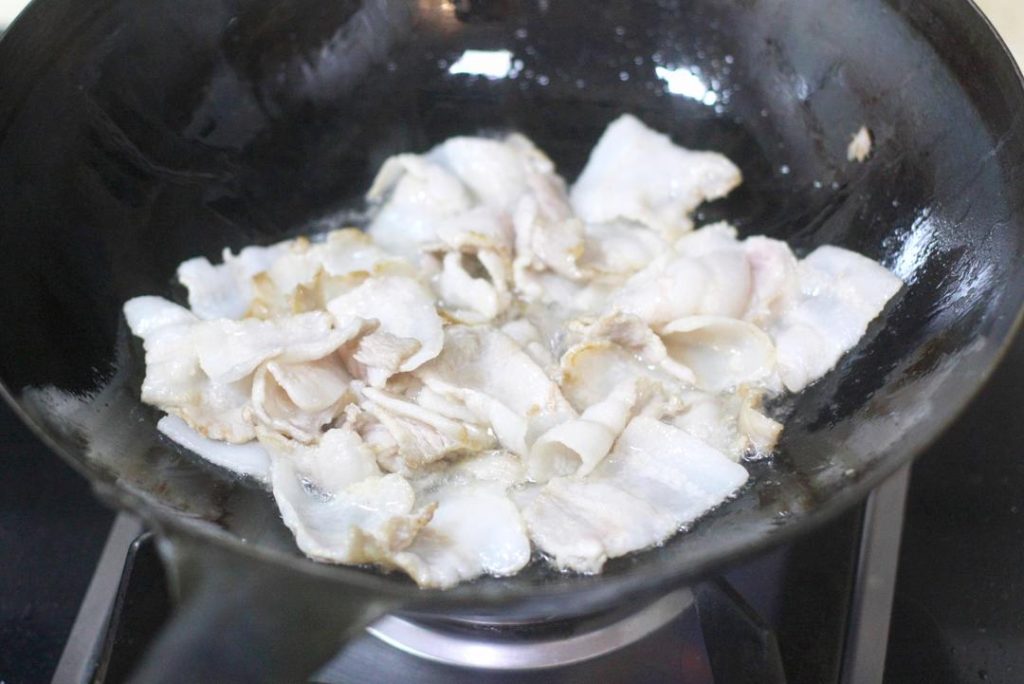
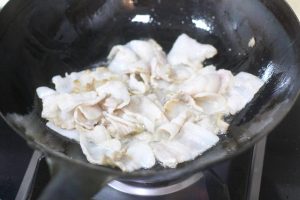
Step 1: Render the Pork Heat your wok or large skillet over medium-high heat. Add the sliced pork belly. Stir-fry until the meat changes color and the edges begin to turn slightly golden.
- Why: This process, similar to how we render lard or start Twice-Cooked Pork, releases the excess fat from the meat, making it chewy rather than flabby.
Step 2: Control the Oil Tilt the pan. If there is excessive oil pooling at the bottom, pour out the extra, leaving about 1 tablespoon in the pan.
- Chef’s Tip: Don’t throw this away! It’s flavorful pork fat that can be used for roasting vegetables later.
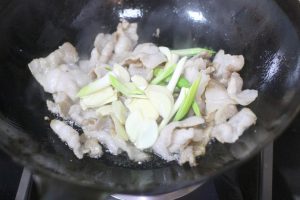
Step 3: Aromatics Add the sliced garlic and the white parts of the garlic sprouts/leeks. Stir-fry for about 30 seconds until fragrant.
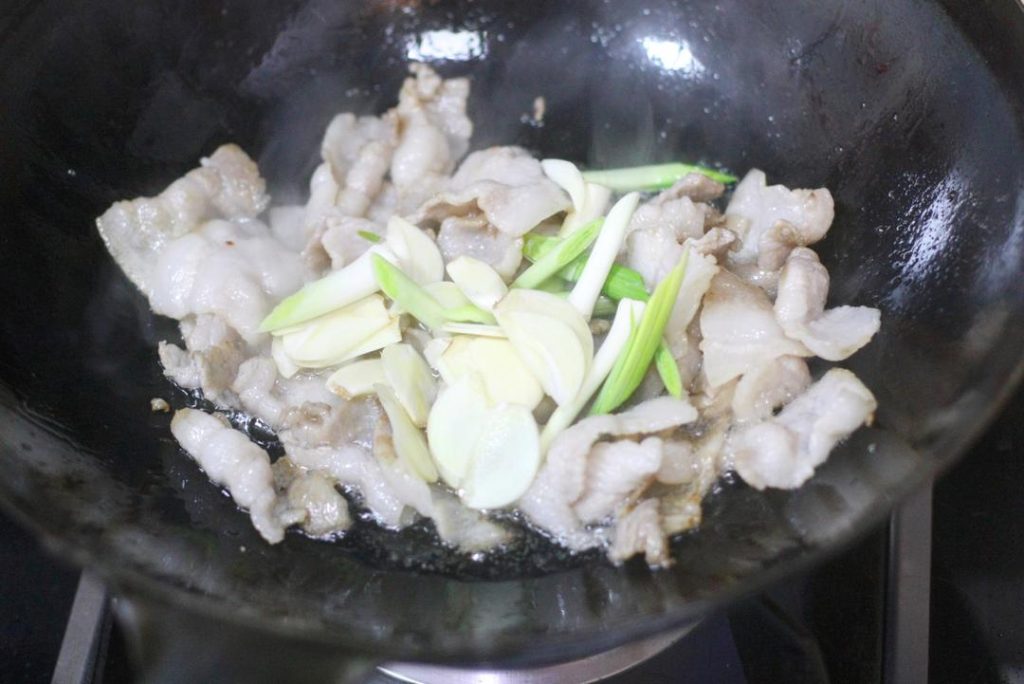
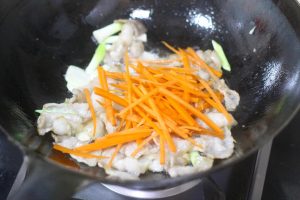
Step 4: Soften Carrots Add the shredded carrots. Stir-fry for 1 minute until they just begin to soften. Carrots take longer to cook than bean sprouts, so they go in first.
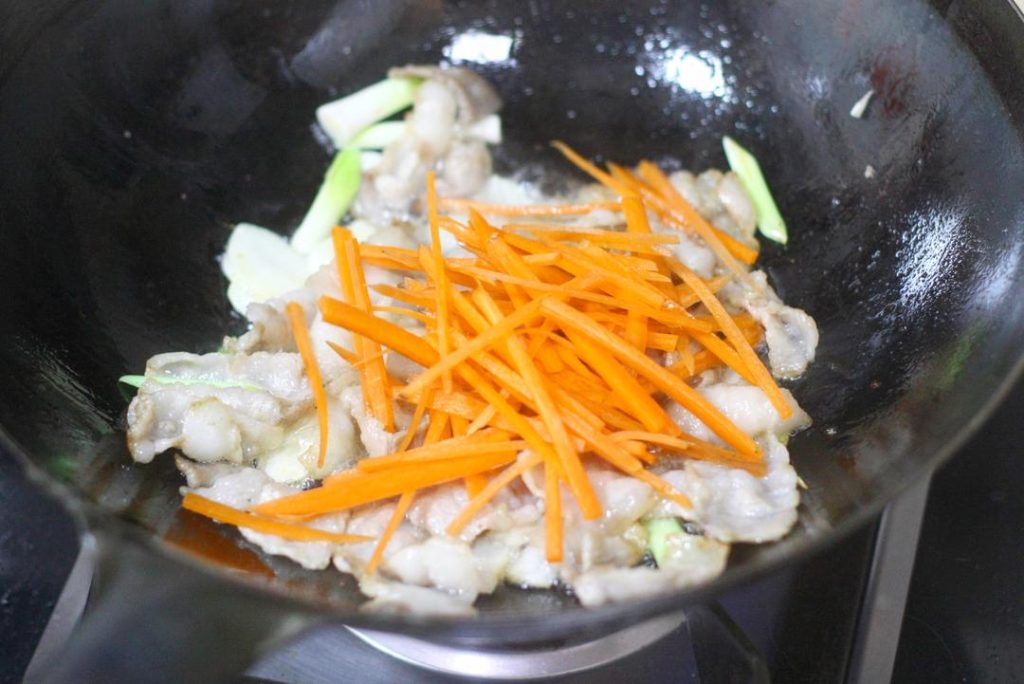
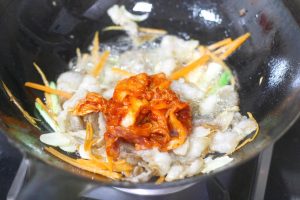
Step 5: Fry the Kimchi Add the kimchi. Stir-fry for about 1 minute.
- Why: Frying the kimchi caramelizes the sugars and mellows the sharp acidity, integrating the flavor with the pork fat.
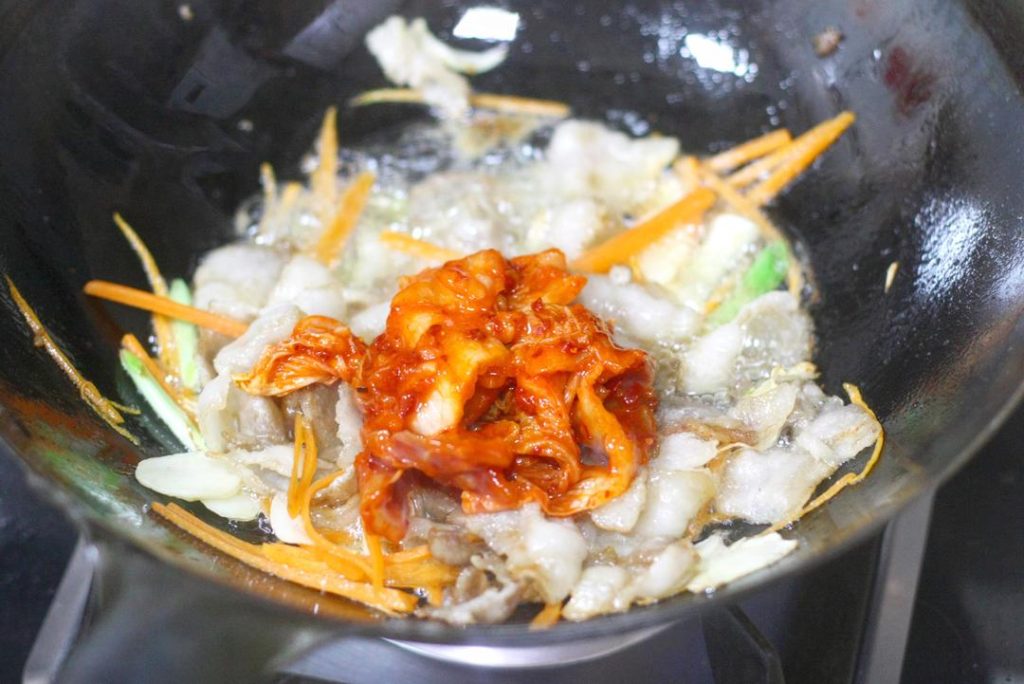
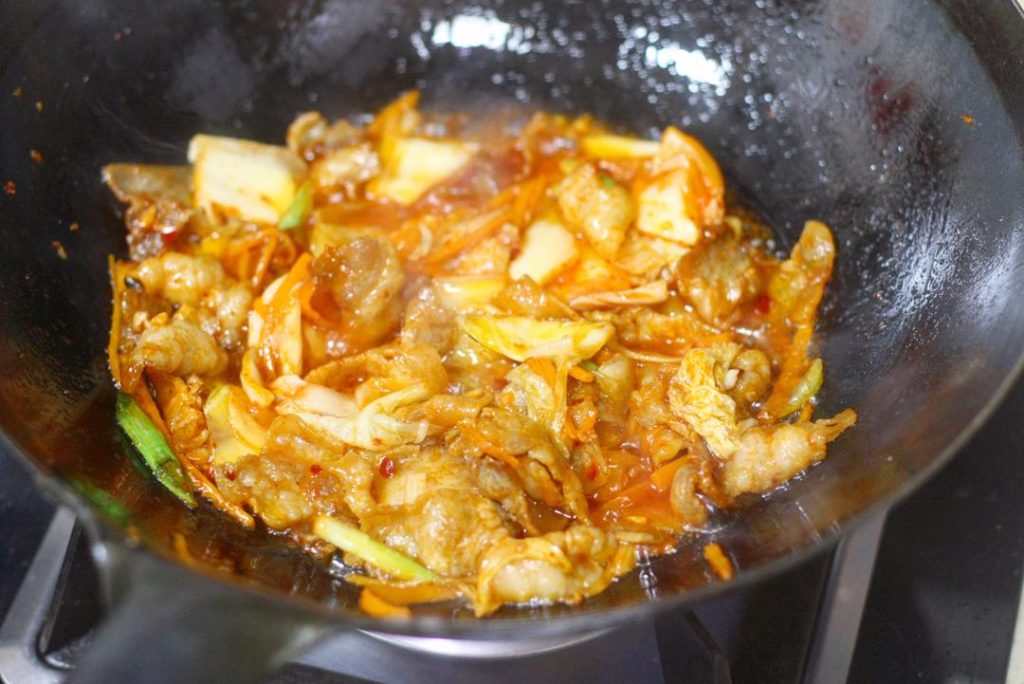
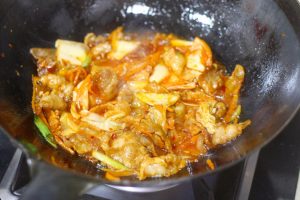
Step 6: Season Pour the Shaoxing Wine and Light Soy Sauce around the perimeter of the wok (not directly on the meat). Toss everything quickly to coat.
- Why: Pouring liquid seasonings along the hot edge of the wok creates a “sizzle” that mimics wok hei (breath of the wok).
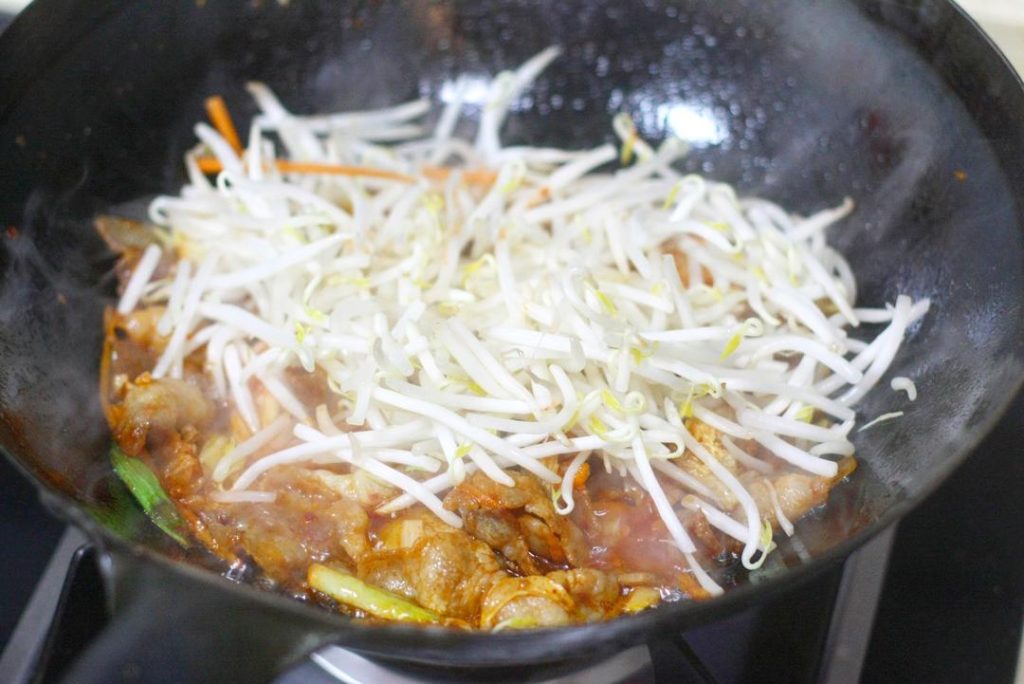
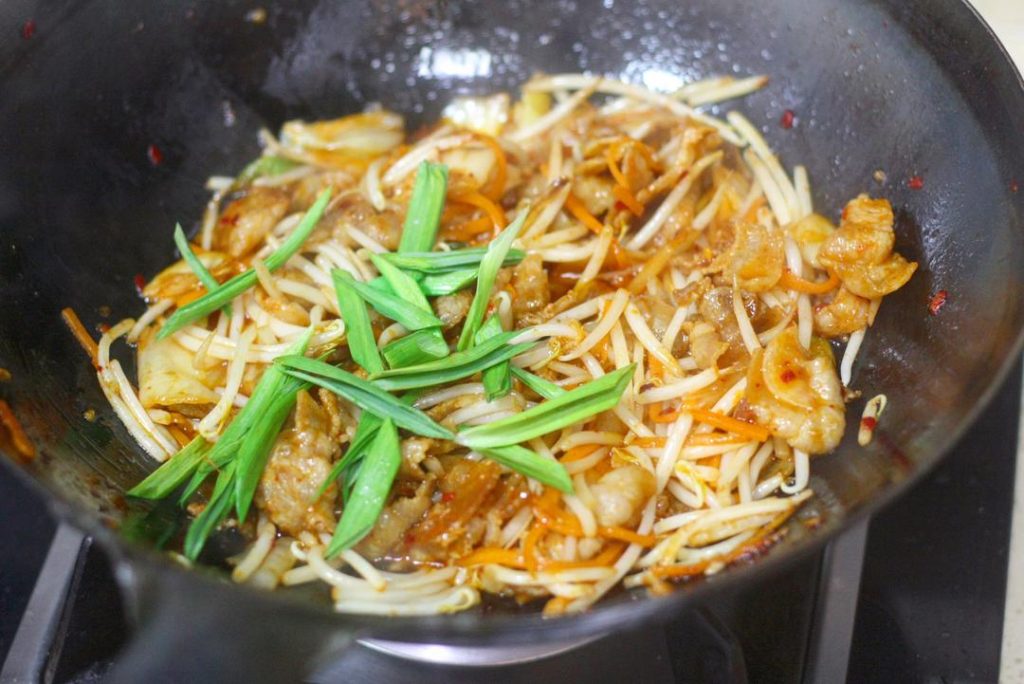
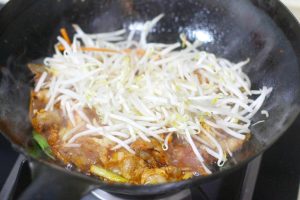
Step 7: Add Crunch Toss in the mung bean sprouts. Stir-fry on high heat for just 1 minute. You want them to heat through but remain crunchy.
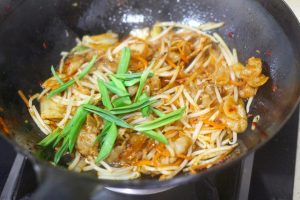
Step 8: Finish Add a pinch of Salt and Sugar to taste. Finally, toss in the green parts of the garlic sprouts. Give it a few quick turns to wilt the greens, then immediately remove from heat and serve.
Common Mistakes When Making This Stir-fry
- Wet Sprouts: If you don’t drain the bean sprouts well after washing, they will release water into the hot oil, steaming the dish instead of frying it. This leads to a soggy result.
- Burning the Garlic: Adding garlic too early (with the raw pork) will cause it to burn before the pork is rendered. Always add aromatics after the meat is browned.
- Overcooking: Both kimchi and bean sprouts lose their signature crunch if cooked too long. Keep the movement fast and the heat high.
FAQ & Troubleshooting
- My dish is too watery. What happened? Likely, the heat wasn’t high enough or the vegetables weren’t dried properly. Next time, ensure your wok is smoking hot and dry your sprouts with a paper towel.
- Can I make this spicy? Absolutely. The kimchi provides some heat, but for a Sichuan kick, add a teaspoon of chili oil or some fresh sliced bird’s eye chilies with the garlic.
- I don’t eat pork. Can I use chicken? Yes, chicken thighs work well. However, you will need to add about 2 tablespoons of oil to the pan initially since chicken won’t render fat like pork belly does.
Authoritative References
- Food Safety: For pork cooking temperatures and safety handling, refer to the USDA Food Safety and Inspection Service.
- Nutrition: To understand the benefits of fermented foods like kimchi, the Harvard T.H. Chan School of Public Health offers excellent resources.
Serving Suggestions
This dish is robust and salty, making it the perfect partner for steamed Jasmine Rice to soak up the sauce. Because the main dish is rich, I recommend pairing it with lighter sides:
- Soup: A mild soup balances the palate perfectly, such as Tomato Egg Drop Soup.
- Salad: A refreshing cold dish like Smashed Cucumber Salad provides a nice temperature contrast.
Similar Recipes
If you enjoyed the texture and flavor profile of this dish, here are a few others from our kitchen you might like:
- Stir-Fried Pork with Peppers – A classic Hunan-style dish that focuses on the heat of fresh peppers.
- Shredded Pork with Potatoes – Another dish that plays with the crunchy texture of vegetables (potatoes) against tender pork.
How to Store & Reheat
- Fridge: Store leftovers in an airtight container for up to 3 days.
- Reheat: Reheat in a skillet over medium heat for the best texture. Microwaving works but may make the bean sprouts soggy. Ensure the pork reaches an internal temperature of 165°F (74°C) when reheating.
Nutrition Information (Estimate)
- Calories: ~350 kcal per serving
- Protein: 12g
- Carbohydrates: 8g
- Fat: 28g
- Sodium: 650mg
- (Disclaimer: Nutrition information is calculated using an ingredient database and should be considered an estimate. In cases where multiple ingredient alternatives are given, the first listed is calculated for nutrition. Garnishes and optional ingredients are not included. Actual values vary based on the specific brand of kimchi and pork used.)
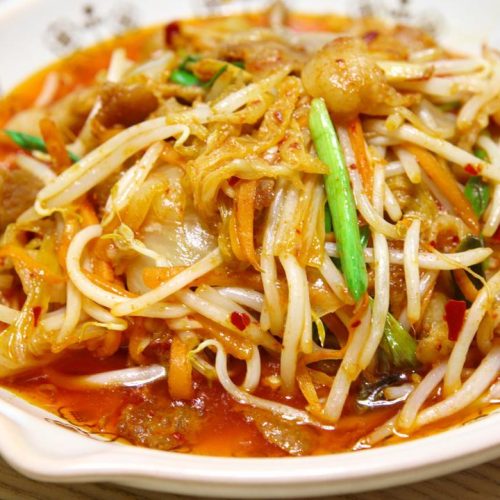
Kimchi Pork Belly Stir-fry with Bean Sprouts

Equipment
- Wok or large skillet Carbon steel preferred for wok hei
- Chef’s knife Sharp knife for thin slicing
Ingredients
Main Ingredients
- 250 g pork belly skin-on or skinless, sliced thinly (approx 9 oz)
- 1 cup kimchi chopped, fermented/sour is best
- 150 g mung bean sprouts washed and thoroughly drained
Aromatics & Vegetables
- 3 cloves garlic sliced
- 3 stalks garlic sprouts or scallions/leeks, cut into 2-inch segments
- 1/4 carrot shredded or julienned
Seasonings
- 2 tsp Shaoxing wine approx 10ml
- 2 tsp light soy sauce approx 10ml
- 1/4 tsp salt to taste
- 1/2 tsp sugar to balance acidity
Instructions
- Slice the pork belly thinly. Slice the garlic. Cut garlic sprouts into segments (separate white and green parts). Shred the carrot. Wash and thoroughly drain the bean sprouts.
- Heat a wok over medium-high heat. Add the pork belly and stir-fry until it changes color and the edges turn slightly golden brown. This renders the fat.

- Pour out excess oil from the wok, leaving about 1 tablespoon. Add the sliced garlic and the white parts of the garlic sprouts. Sauté until fragrant.
- Add the shredded carrot and stir-fry for 1 minute until it begins to soften.
- Add the kimchi and stir-fry for about 1 minute to caramelize the flavors.
- Pour the Shaoxing wine and light soy sauce around the rim of the wok (not directly on the meat) to create a sizzle. Stir well.
- Add the mung bean sprouts and stir-fry on high heat for 1 minute. Keep them crunchy.
- Season with salt and sugar. Add the green parts of the garlic sprouts, toss briefly to wilt, and serve immediately.
Notes
(Disclaimer: Nutrition information is calculated using an ingredient database and should be considered an estimate. In cases where multiple ingredient alternatives are given, the first listed is calculated for nutrition. Garnishes and optional ingredients are not included.) Safety Note: Ensure pork belly reaches an internal temperature of at least 145°F (63°C) during cooking.








Leave a Reply