The dish my city-apartment neighbor braises when the family visits is this one – a whole pork shank simmered for hours, no caramelized sugar, just soy, wine, and aromatics doing the work until the meat slips from the bone. A home cook wrote it in sixteen steps with the “big, no sugar-color” honesty in the title, and the method is the braise that needs no technique and all patience. I made it as written, and it is the dish that fills a kitchen with the smell of a holiday.
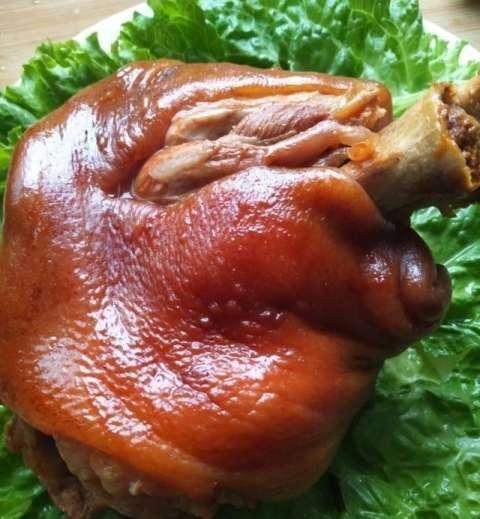
Cheng shi jia chang dun zhu zhou zi (城市家常炖猪肘子) is city home-braised pork shank – a large pork shank blanched, then braised slowly in a sauce of soy, dark soy, wine, and aromatics with spices, without the caramelized-sugar step, until the meat is fall-apart tender. The original is a 16-step recipe from a home cook in the city, with the no-sugar-color method as its signature.
What Is City Home-Braised Pork Shank?
This is a home-style braised pork shank (zhu zhou zi): the big, meaty fore-shank is blanched to clean it, then simmered for a long, slow time in a sauce built from light and dark soy, cooking wine, ginger, garlic, scallion, and a spice bag (star anise, cinnamon, bay leaf), seasoned with sugar and salt, without the caramelized-sugar step that many braises use for color. The shank cooks until the meat is fall-apart, the sauce reduces to a glossy glaze, and the whole thing is served sliced or whole – the centerpiece of a family table.
The method’s honesty is in the title: no sugar-color (不炒糖色). Most red braises start by caramelizing sugar for the mahogany color; this recipe skips it and gets the color from the dark soy and the long reduction instead. It is the city cook’s braise – less fuss, more patience, and the same deep result. The spice bag, the long simmer, and the reduced glaze do the work that a sugar caramel would otherwise do.
For the no-blanch red-braise family, my authentic hong shao rou is the belly version of this shank’s braise.
1Easy Poached Pork Belly with Garlic Sauce (蒜泥白肉)Discover the easiest, most comforting version of the Sichuan classic, Suan Ni Bai Rou. Tender, poached pork belly is served with a fiery, savory garlic-chili dipping sauce.Check out this recipe
Why This Version Works
- No caramelized sugar – by design. The title’s honesty: the dark soy and the long reduction give the color without the fussy sugar step.
- The blanch cleans the big cut. A large shank is blanched first to pull out the impurities – the clean start of a long braise.
- A spice bag does the aromatics. Star anise, cinnamon, and bay in a bag – the depth of a holiday braise without scattering spices in the sauce.
- Long and slow is the method. The shank simmers until the meat slips from the bone – patience, not heat.
- The glaze reduces at the end. The sauce thickens and glazes the shank – the glossy finish that makes the table.
Equipment Needed
- A large pot for the blanch
- A heavy braising pot with a lid
- A spice bag or a cheesecloth square
- A long fork or tongs
Ingredients
- 1 large pork shank (about 1.5-2 kg / 3-4 lb)
- 4 tbsp light soy sauce
- 2 tbsp dark soy sauce
- 4 tbsp cooking wine (Shaoxing)
- 1 tbsp sugar
- Salt, to taste
- Ginger, garlic, and scallion, generous
- Spices: star anise, cinnamon stick, bay leaves, Sichuan peppercorns (in a bag)
- Water, to cover
Ingredient Notes
The shank: One large fore-shank, 1.5-2 kg (3-4 lb) – the big, meaty cut that braises to fall-apart. My hong shao rou is the belly cousin.
The sauces: Light soy for salt, dark soy for the color that replaces the sugar caramel – the recipe’s whole trick. My rice cooker pork ribs use the same soy logic.
The spice bag: Star anise, cinnamon, bay, and a few Sichuan peppercorns – tied in a bag so the sauce stays clean. My poached pork belly with garlic sauce is the unbraised side of the same cut.
Prep & Mise en Place
Blanch the shank in boiling water to clean it, then rinse. Tie the spices in a bag. Prep the ginger, garlic, and scallion.
The sequence: blanch, build the sauce in the pot, add the shank with water to cover, bring to a boil, then simmer low until the meat slips from the bone, reduce the sauce to a glaze, and serve.
Cooking Process
Step 1 – Clean the pork shank, start it in cold water with half porti
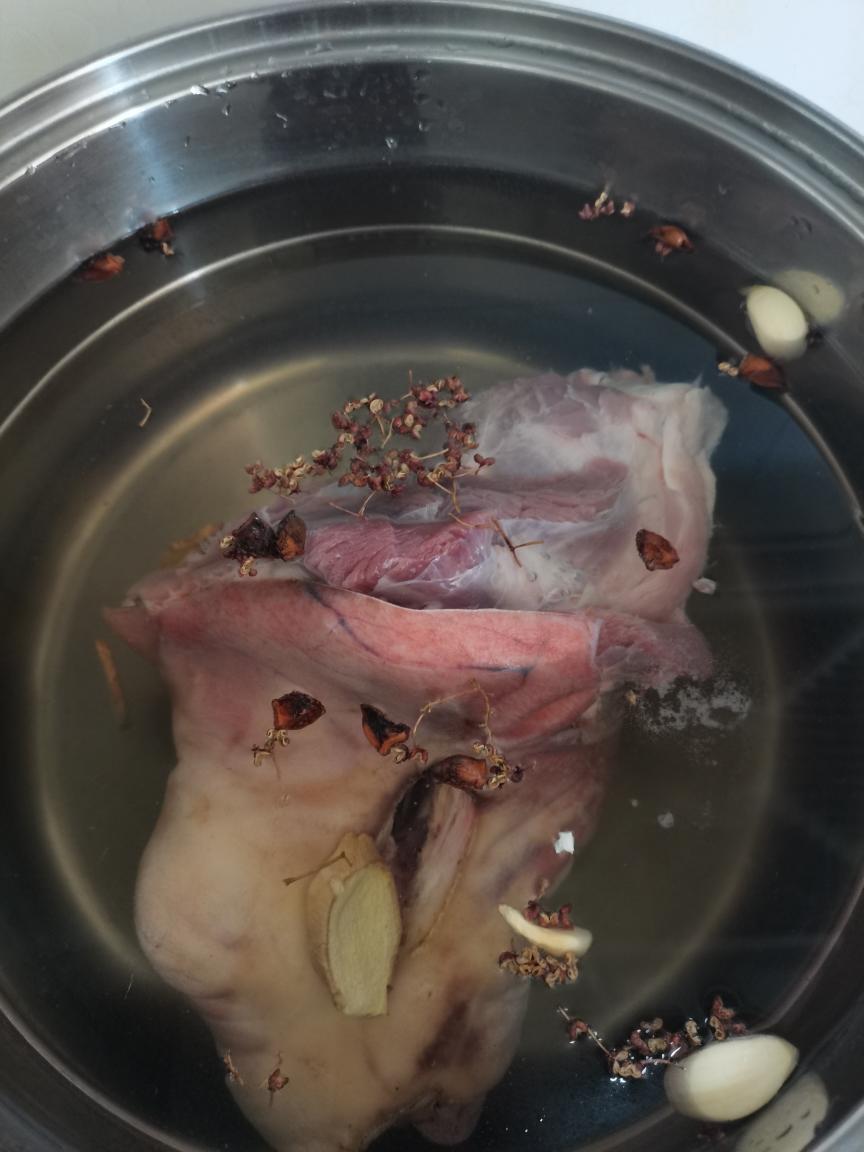
Clean the pork shank, start it in cold water with half portions of Sichuan peppercorns, star anise, and ginger slices. Must start cold – don’t touch it as it comes to a boil; skim the foam once it boils. With good-quality pork…
Step 2 – There’s barely any foam; lift it out – no need to change the
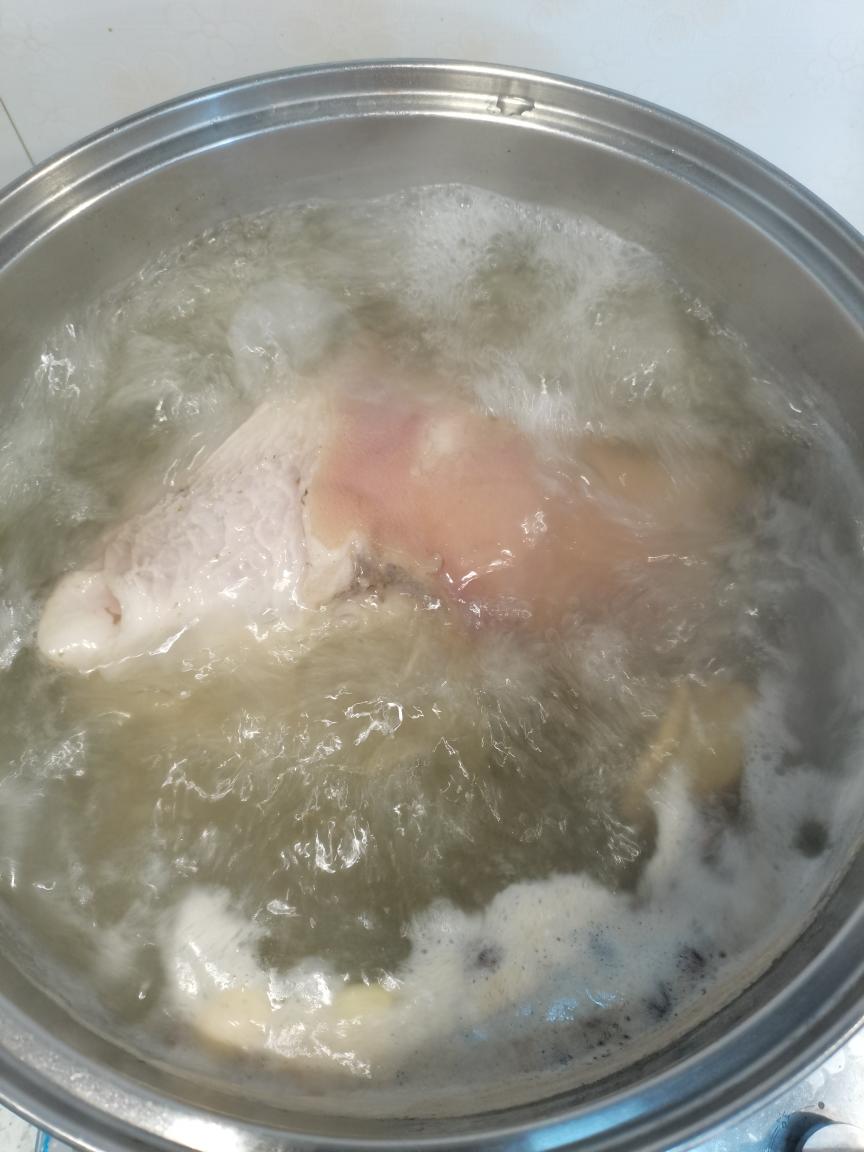
There’s barely any foam; lift it out – no need to change the water.
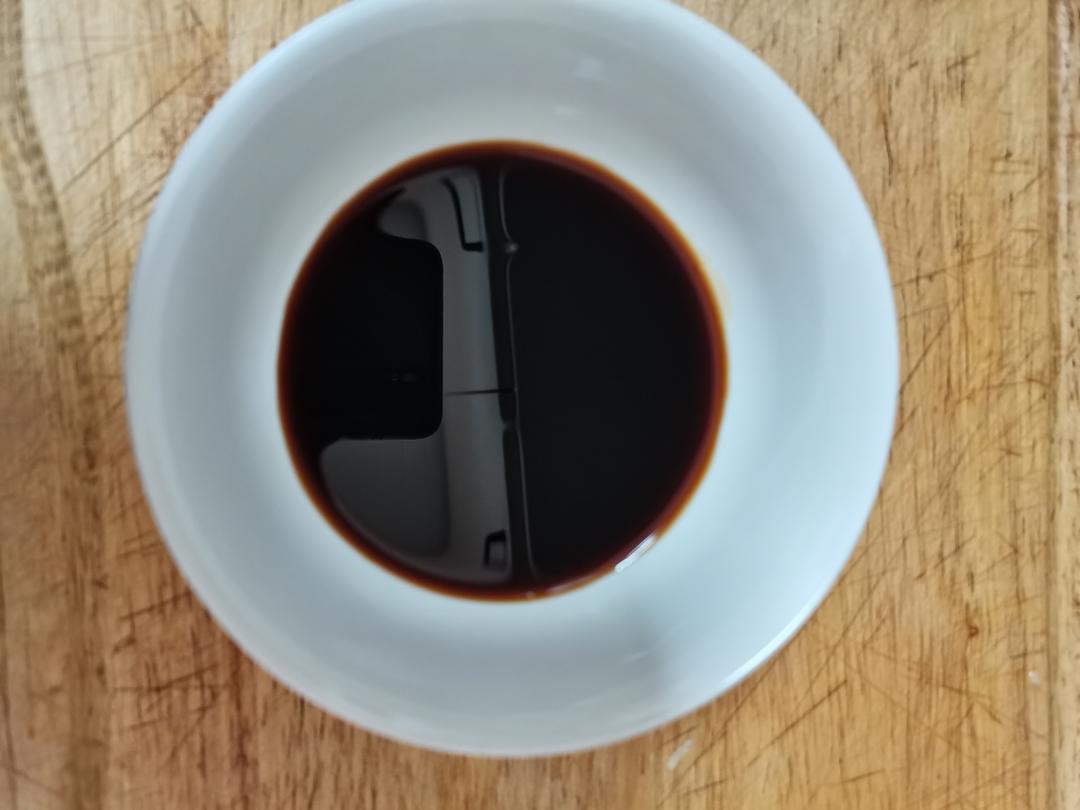
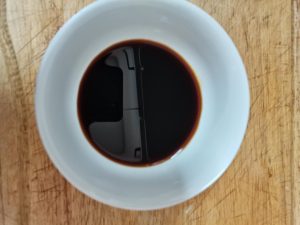
Step 3 – Vinegar + light soy sauce + cooking wine
Vinegar + light soy sauce + cooking wine.
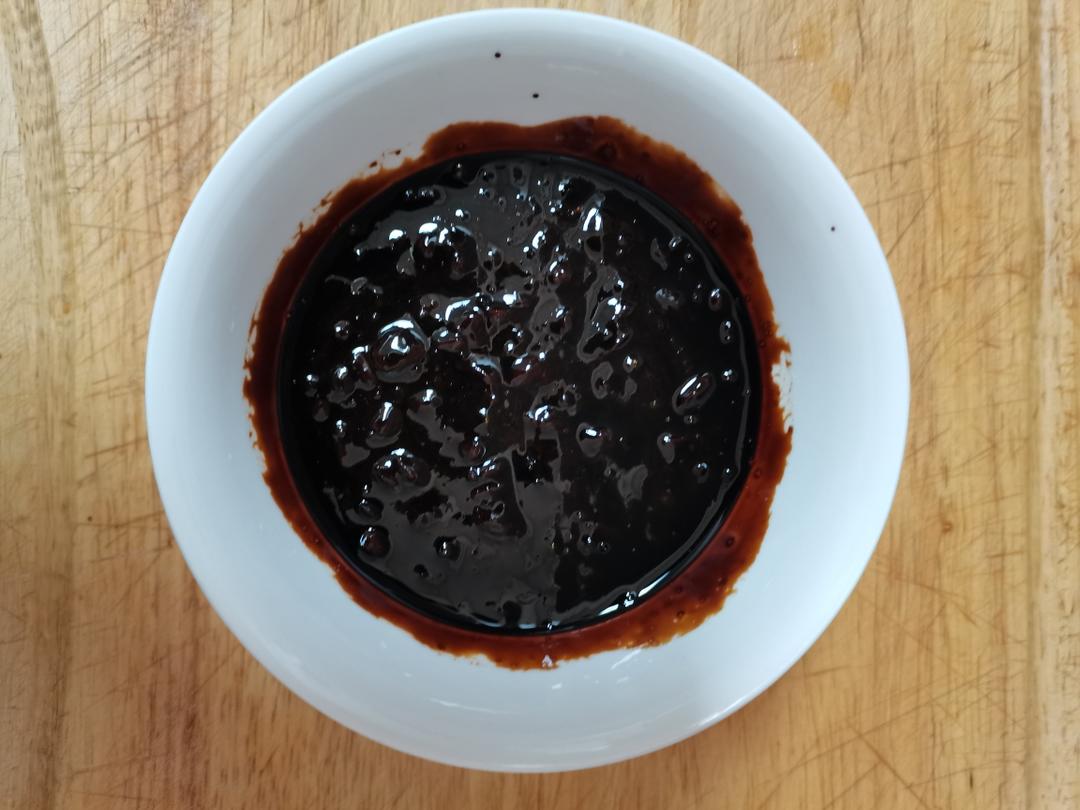
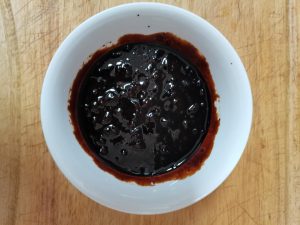
Step 4 – Dark soy sauce + doubanjiang
Dark soy sauce + doubanjiang.
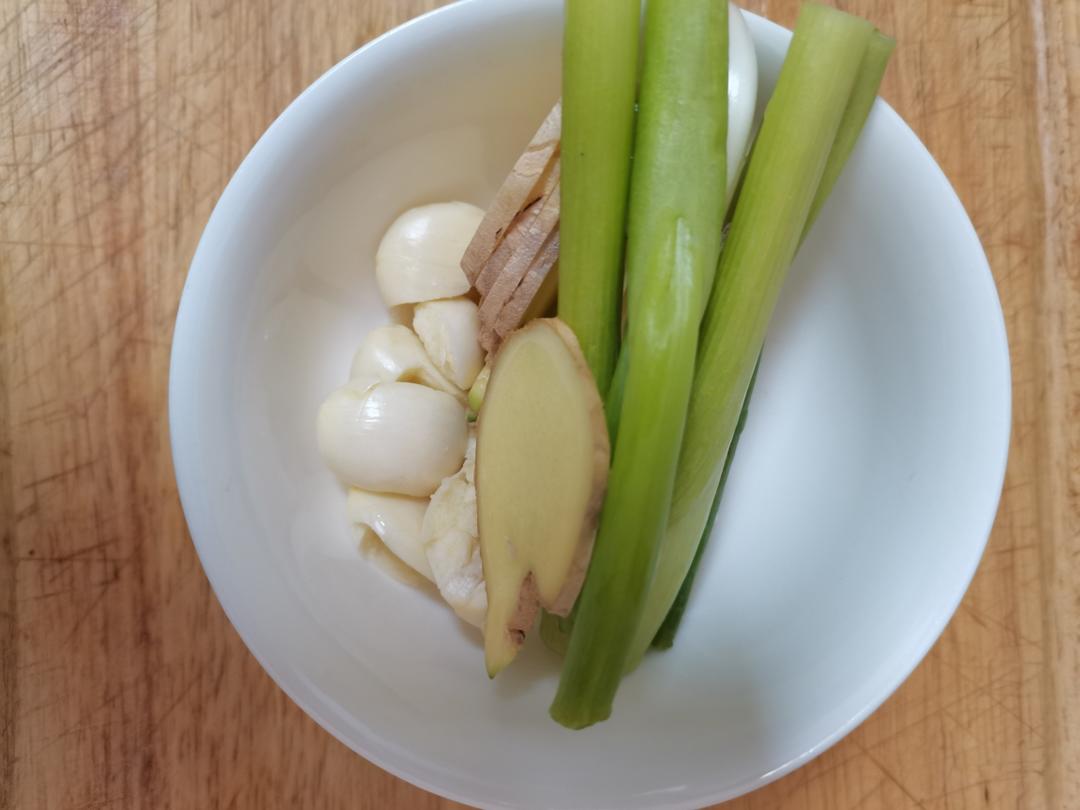
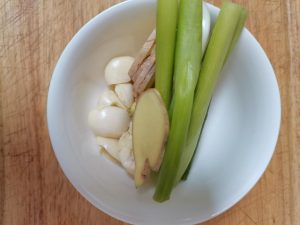
Step 5 – Scallion + ginger + garlic
Scallion + ginger + garlic.
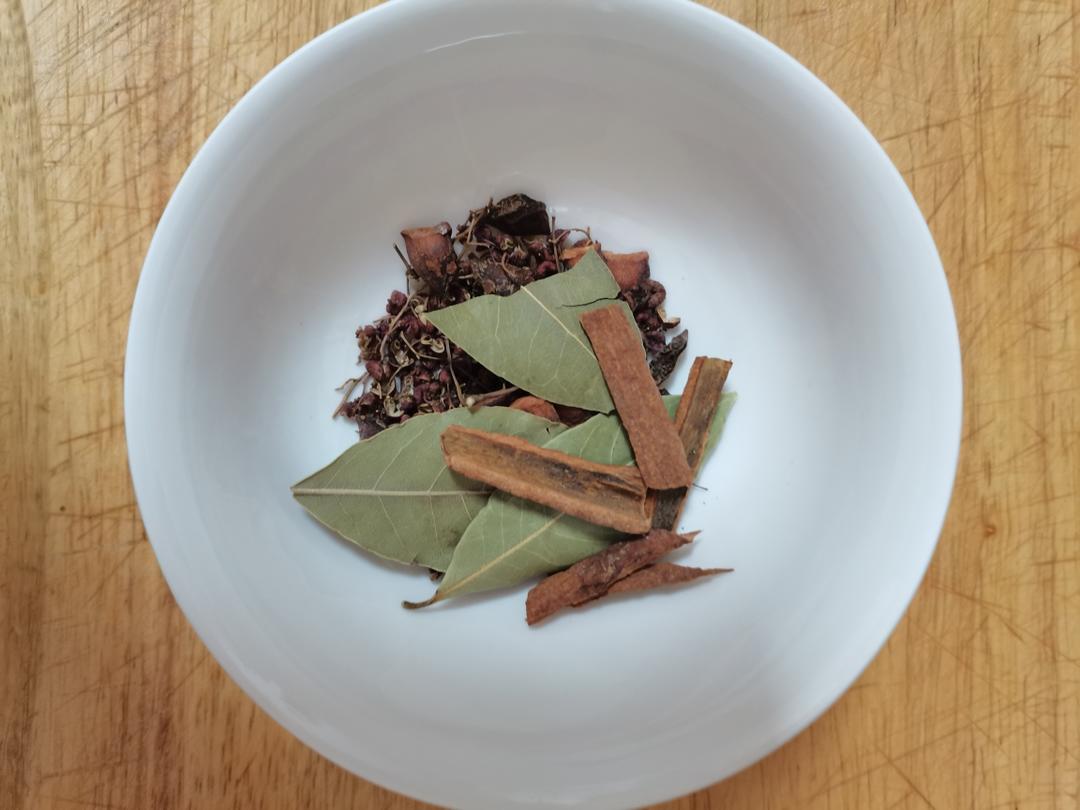
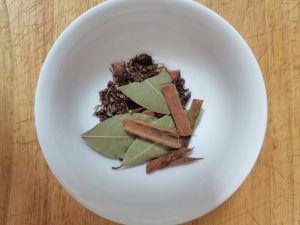
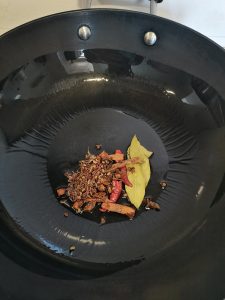
Step 6 – Sichuan peppercorns + star anise + bay leaves + cinnamon + d
Sichuan peppercorns + star anise + bay leaves + cinnamon + dried chilies.
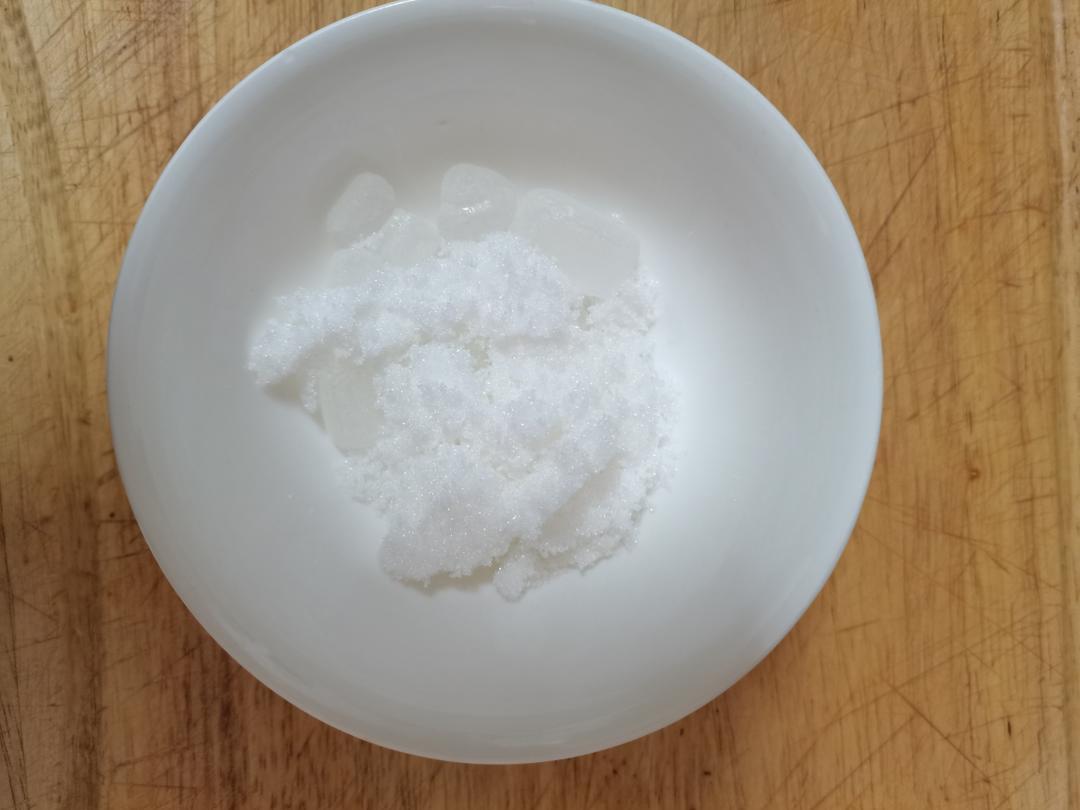
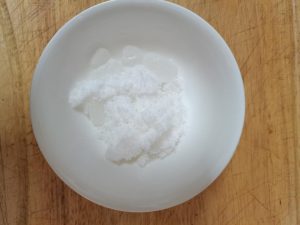
Step 7 – White sugar + rock sugar
White sugar + rock sugar.
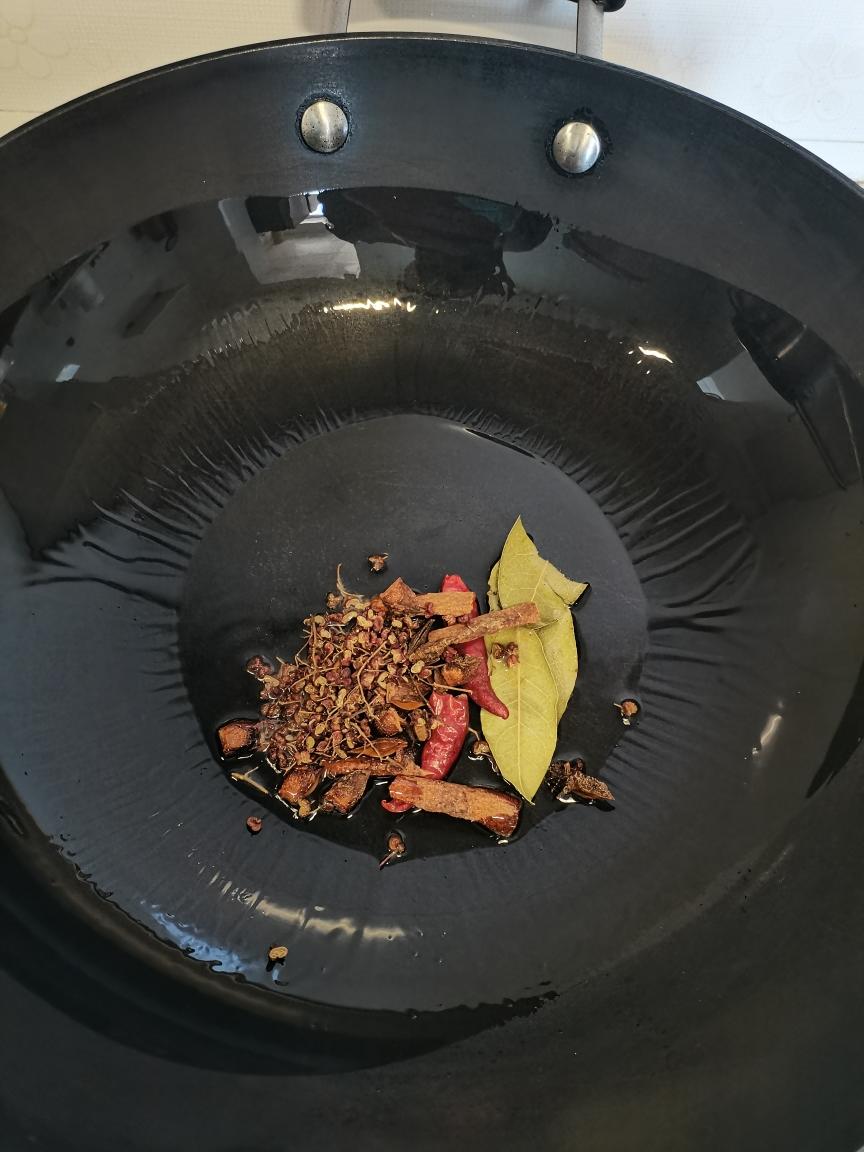
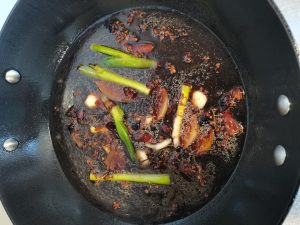
Step 8 – Heat oil, add the dry aromatics when hot, and bloom until fr
Heat oil, add the dry aromatics when hot, and bloom until fragrant.
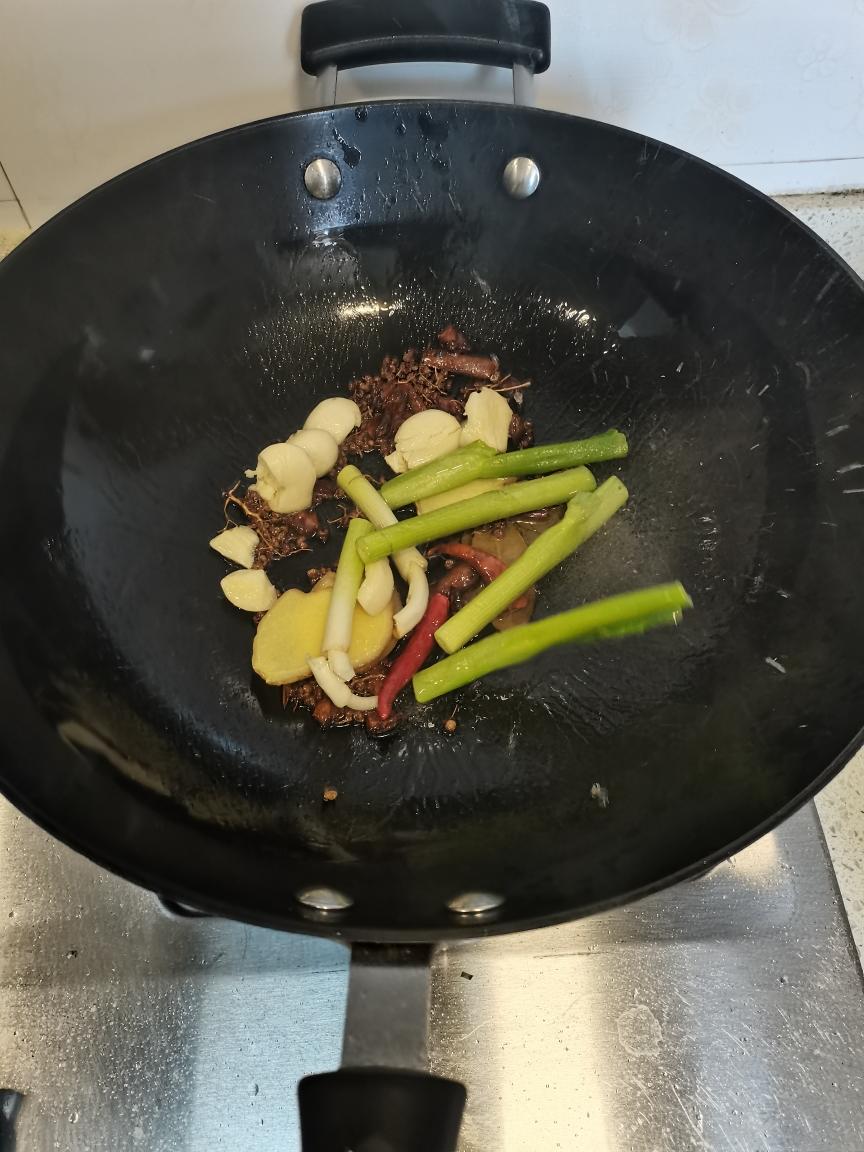
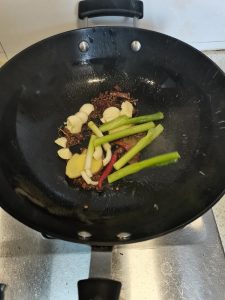
Step 9 – Add the scallion, ginger, and garlic
Add the scallion, ginger, and garlic.
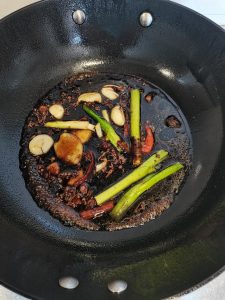
Step 10 – Add the doubanjiang and dark soy sauce, then finally the liq
Add the doubanjiang and dark soy sauce, then finally the liquid seasonings.
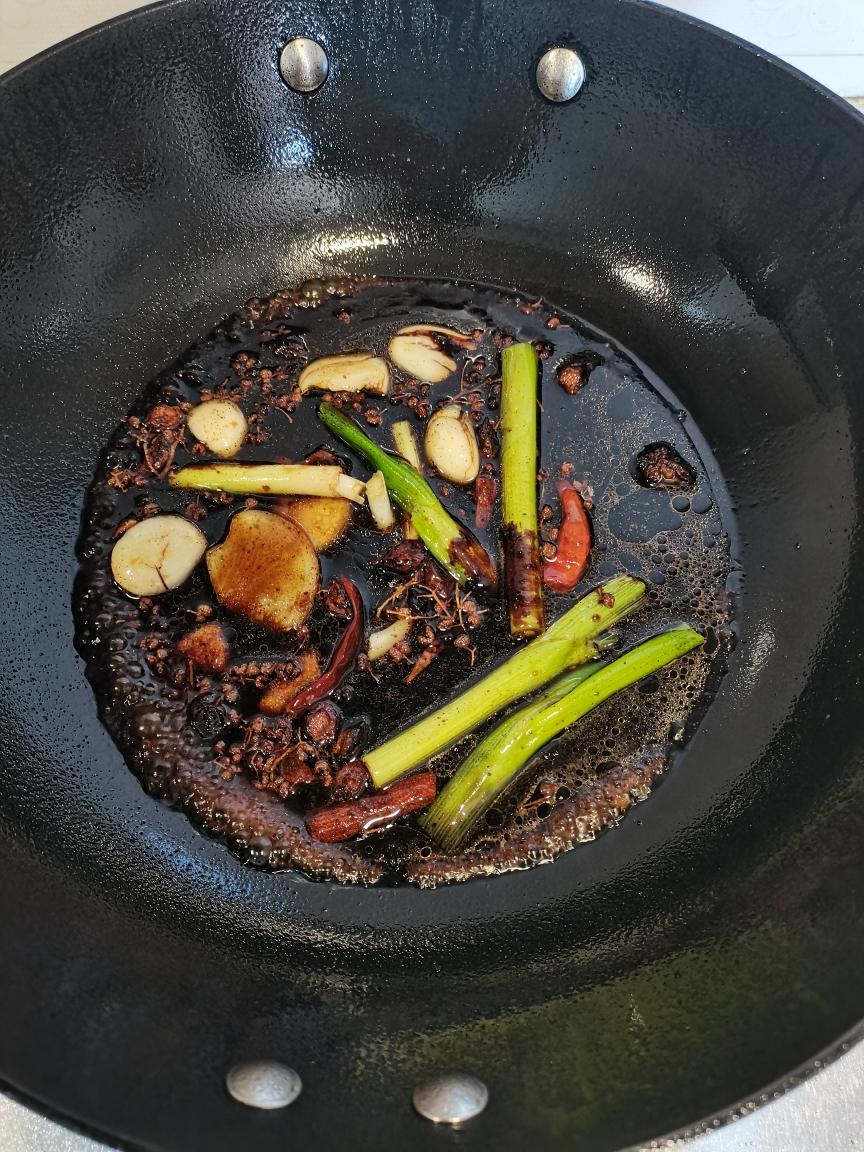
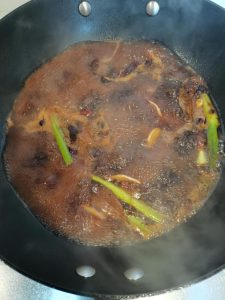
Step 11 – Add enough water and bring to a boil
Add enough water and bring to a boil.
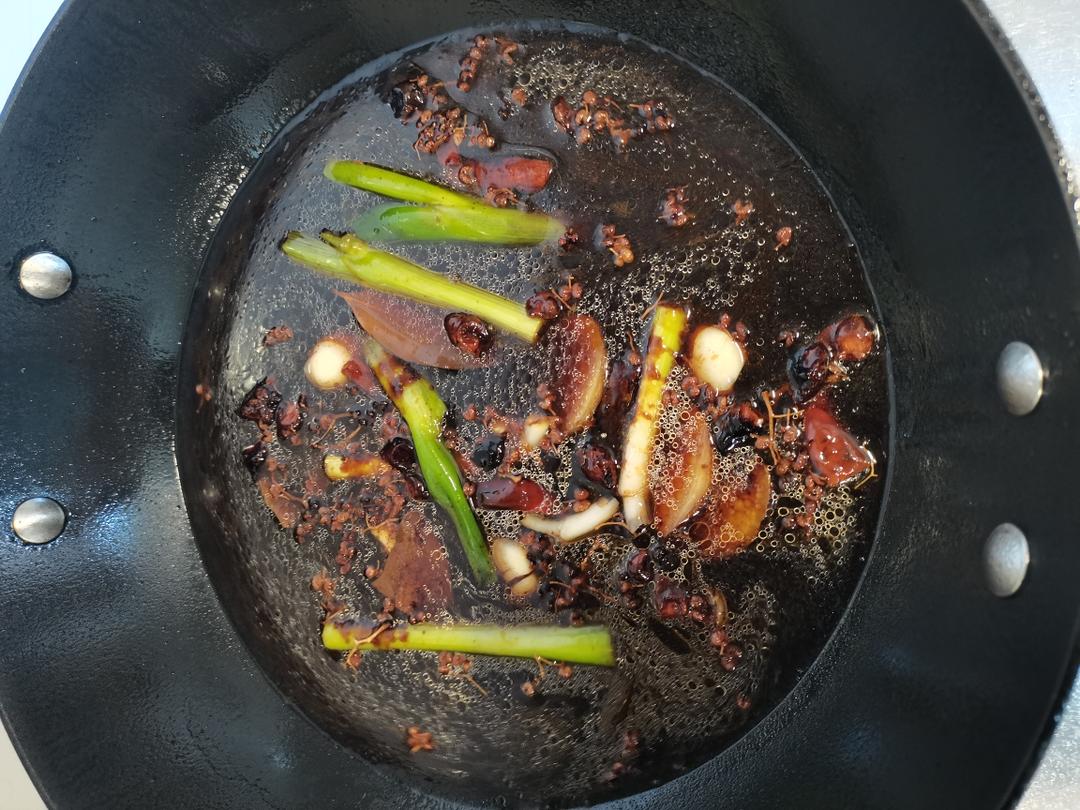
Step 12 – Boiling
Boiling.
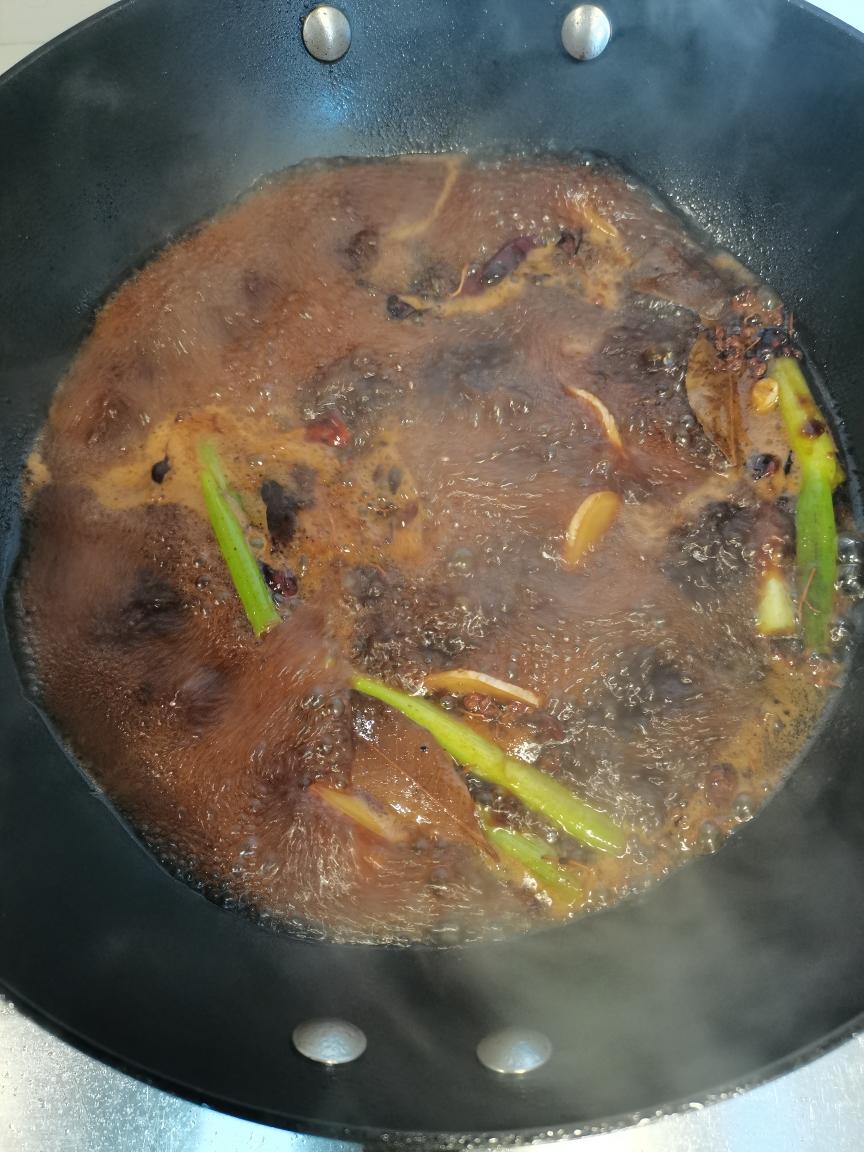
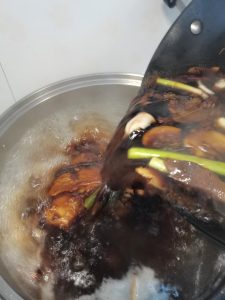
Step 13 – Pour into the meat pot and add the rock sugar and white suga
Pour into the meat pot and add the rock sugar and white sugar.
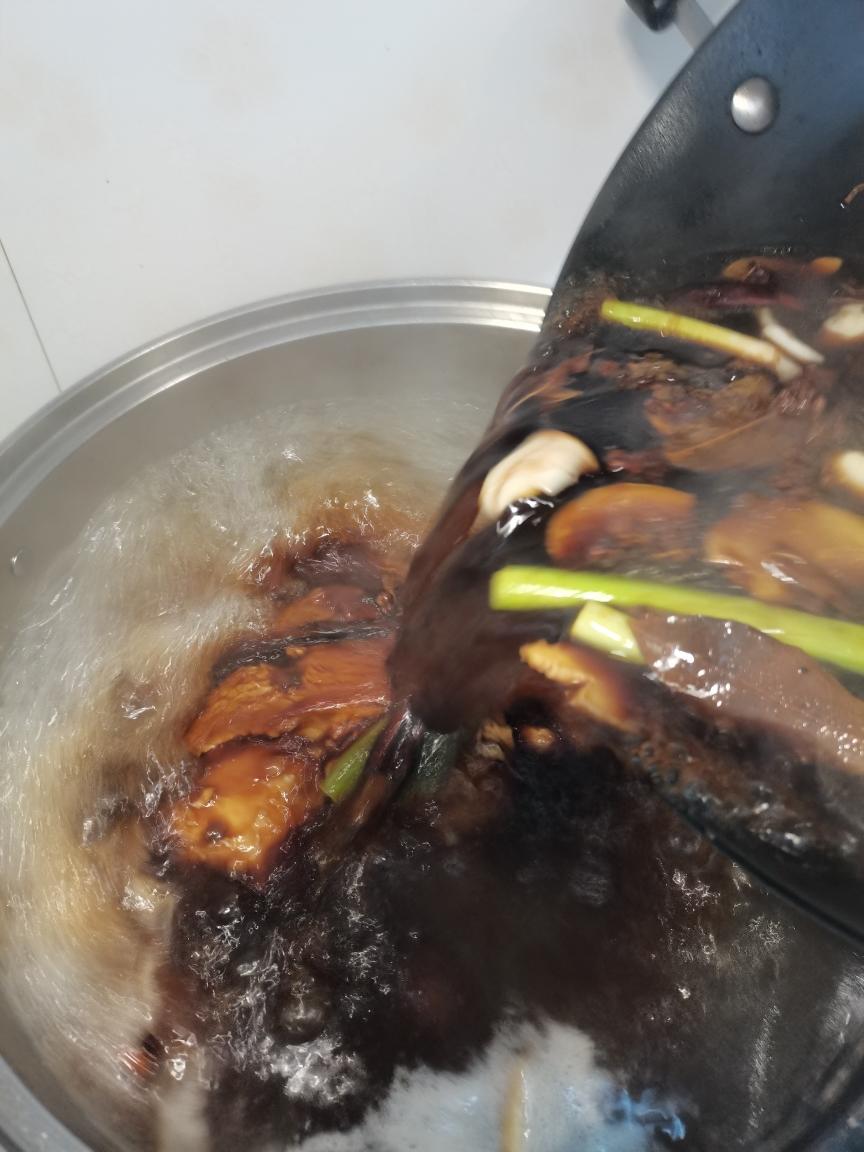
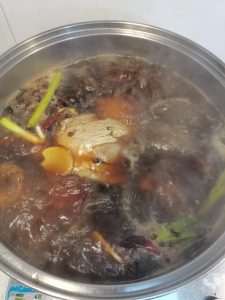
Step 14 – Boil hard about 30 minutes
Boil hard about 30 minutes.
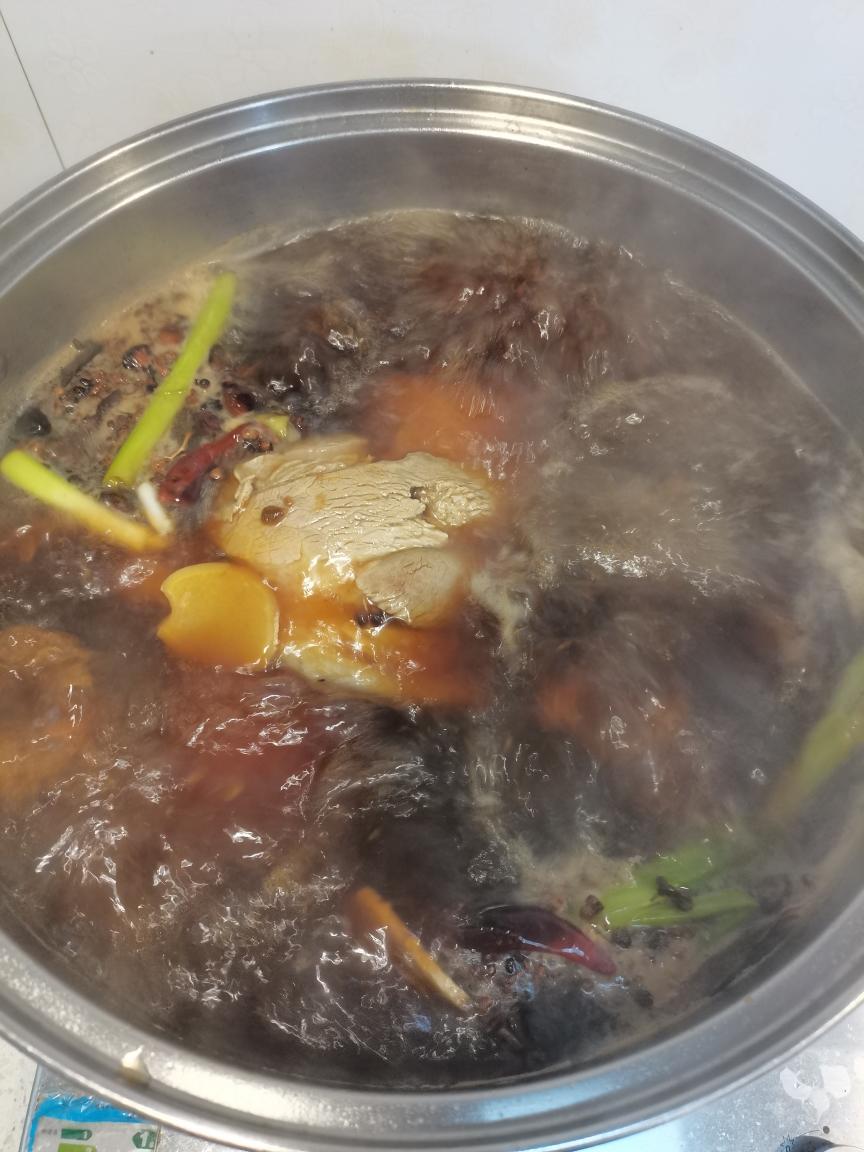
Step 15 – Lower to a simmer 30 minutes
Lower to a simmer 30 minutes.
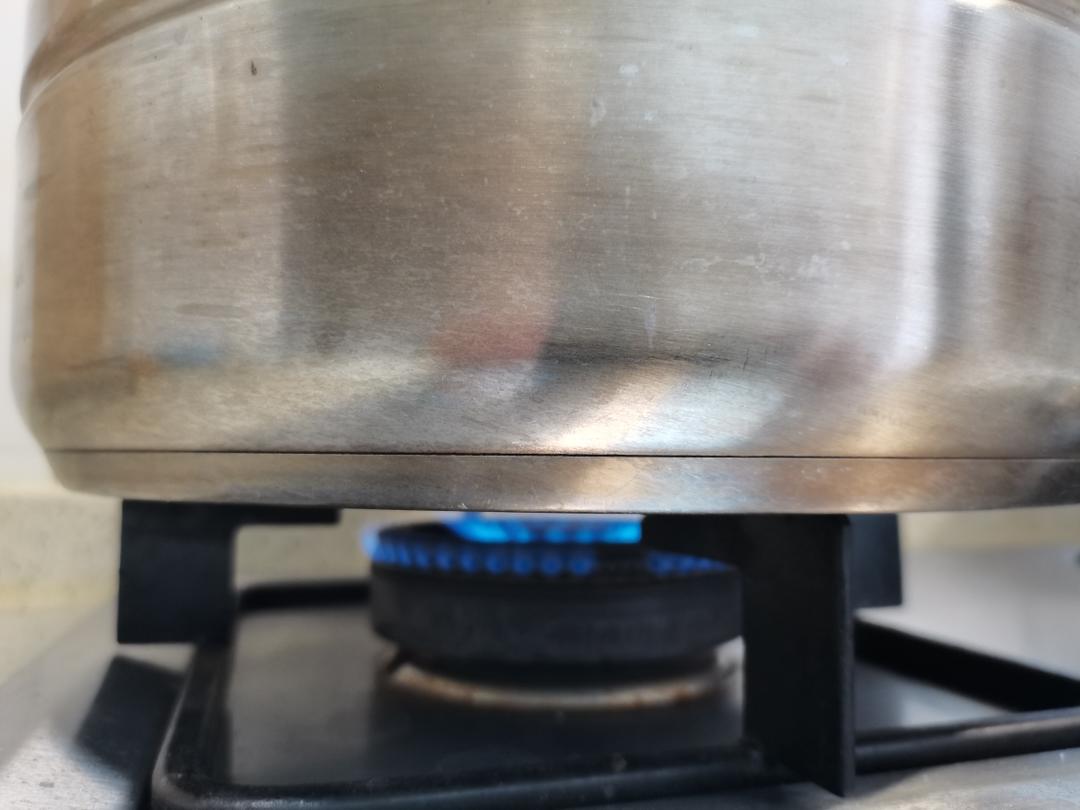
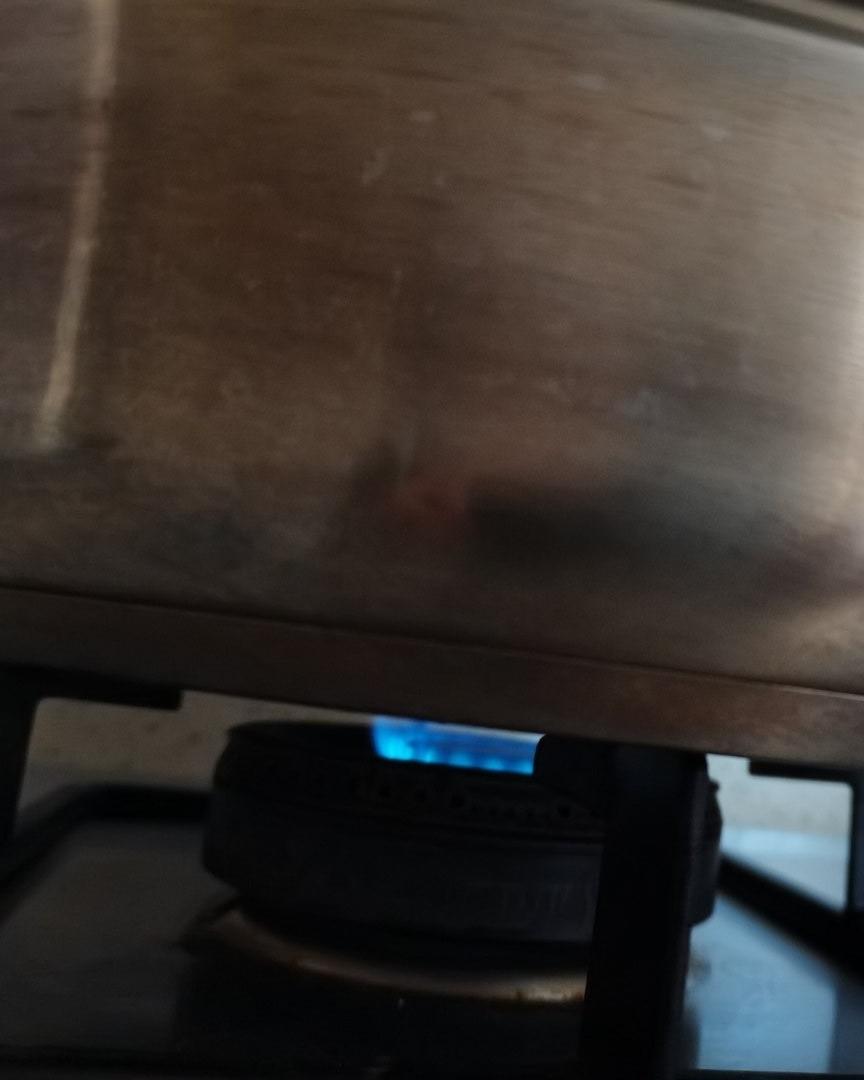
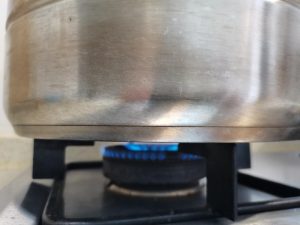
Step 16 – Finally drop to the lowest heat and keep braising
Finally drop to the lowest heat and keep braising. At two hours, test with chopsticks – if they slide through easily, it’s done; taste as you go and add salt anytime.
Common Mistakes When Braising the Shank
1. A tough, stubborn shank. Cause: too little time. Fix: the long, low simmer until the fork slides in – no shortcuts.
2. A bitter sauce. Cause: burnt sugar caramel. Fix: skip the sugar-color entirely – the recipe’s point.
3. A pale, gray shank. Cause: too little dark soy. Fix: the dark soy is the color in the no-sugar method.
4. A greasy, cloudy sauce. Cause: no blanch or boiling hard. Fix: the blanch, then a gentle simmer.
5. A watery glaze. Cause: not enough reduction. Fix: reduce the sauce until it thickens before the pour.
6. Scattered spices in the sauce. Cause: no spice bag. Fix: tie the spices in a bag – clean sauce, deep flavor.
Variations
More spice: Add a dried chili or two to the bag – my hong shao rou is the belly version.
Eggs: Peeled hard-boiled eggs braise in the sauce with the shank – a classic addition.
Potatoes: Add chunks in the last hour – they take the sauce beautifully, and my braised pork belly with potatoes and crispy pork belly are the pork-potato neighbors.
The braise family: With rice cooker pork ribs and poached pork belly, the pork shelf is complete.
Frequently Asked Questions
Why no caramelized sugar? The dark soy and the long reduction give the color without the fuss or the bitter risk – the recipe’s whole point.
How long does it braise? Two to three hours for a large shank, until the fork slides in.
Can I use a pressure cooker? Yes – about 40 minutes at pressure, then reduce the sauce.
What if the sauce is salty? Taste before salting – the soy is already salty.
Can I make it ahead? Yes – braised shank is better the next day; reheat gently.
How to Serve
Serve sliced or whole with rice and the glaze poured over – with hong shao rou and bitter melon pork rib soup for a pork table, or with 10-minute chives and eggs for variety.
Storage & Reheat
Refrigerate 3-4 days; the braise improves overnight. Reheat gently in a covered pot. Never leave it out more than 2 hours.
Allergen Notice
This recipe contains pork and soy (soy sauce). It is free of gluten (if using gluten-free soy), nuts, dairy, egg, fish, and shellfish.
Nutrition Disclaimer
Nutrition information is calculated using an ingredient database and should be considered an estimate. In cases where multiple ingredient alternatives are given, the first listed is calculated for nutrition. Garnishes and optional ingredients are not included.
About the Author & Recipe Development
I am Lin, a professional Chinese chef and food writer with a decade in restaurant kitchens before turning to recipes. This xiachufang cook’s no-sugar-color shank is my neighbor’s family-table dish, and the recipe’s honest method – the blanch, the spice bag, the long simmer – is exactly why it works. I tested it as written. I have not tested the egg or potato variations, so those are your experiments, not my claims.
Authoritative References
USDA Food Safety and Inspection Service – Safe Temperature Chart for pork handling and braising guidance.
City Home-Braised Pork Shank (Cheng Shi Jia Chang Dun Zhou Zi)

Equipment
- Large Pot
- Heavy braising pot
- Spice bag
Ingredients
For the Braise
- 1 large pork shank (1.5-2 kg / 3-4 lb)
- 4 tbsp light soy sauce
- 2 tbsp dark soy sauce the color, replacing sugar caramel
- 4 tbsp cooking wine (Shaoxing)
- 1 tbsp sugar
- to taste salt added at the end
- ginger, garlic, and scallion, generous
- 1 bag spices: star anise, cinnamon, bay, Sichuan peppercorns in a bag
- water, to cover
Instructions
- Clean the pork shank, start it in cold water with half portions of Sichuan peppercorns, star anise, and ginger slices. Must start cold – don’t touch it as it comes to a boil; skim the foam once it boils. With good-quality pork…

- There’s barely any foam; lift it out – no need to change the water.
- Vinegar + light soy sauce + cooking wine.

- Dark soy sauce + doubanjiang.
- Scallion + ginger + garlic.
- Sichuan peppercorns + star anise + bay leaves + cinnamon + dried chilies.
- White sugar + rock sugar.
- Heat oil, add the dry aromatics when hot, and bloom until fragrant.
- Add the scallion, ginger, and garlic.
- Add the doubanjiang and dark soy sauce, then finally the liquid seasonings.
- Add enough water and bring to a boil.
- Boiling.
- Pour into the meat pot and add the rock sugar and white sugar.
- Boil hard about 30 minutes.
- Lower to a simmer 30 minutes.
- Finally drop to the lowest heat and keep braising. At two hours, test with chopsticks – if they slide through easily, it’s done; taste as you go and add salt anytime.













Leave a Reply