Every summer, when the humid heat settles over the basin of my hometown in Sichuan (and now, wherever I am cooking), my body craves something that goes beyond just “cold” drinks. I crave the internal cooling power of Bitter Melon Pork Rib Soup (Ku Gua Pai Gu Tang).

Growing up in a family of chefs, I learned early on that Chinese cuisine isn’t just about flavor; it’s about balance. My father, who spent over 20 years in professional kitchens, often quoted the Traditional Chinese Medicine (TCM) concept that “bitter” foods clear heat (yeet hay) and detoxify the body.
While I admit that as a child, I wrinkled my nose at the bumpy, verdant gourd, I have grown to love its complex flavor profile. It is savory, deeply aromatic, and possesses a clean, bittersweet finish that is incredibly refreshing on a hot day.
If you are hesitant about the bitterness, don’t worry. In this recipe, I will teach you the specific restaurant techniques we use to tame the melon, resulting in a broth that is clear, sweet from the pork and longan, and perfectly balanced.
What is Bitter Melon Pork Rib Soup?
Bitter Melon Pork Rib Soup (苦瓜排骨汤) is a staple in Southern Chinese and Cantonese households. It is a slow-simmered soup (Lao Huo Tang) featuring pork ribs, fresh bitter melon, soybeans, and often dried fruits like longan or dates to provide a sweet counterpoint.
Unlike the heavy, cornstarch-thickened soups found in some takeout spots, this is a clear, broth-based soup. It is meant to be drunk for its restorative properties. The soybeans add a distinct nuttiness and creaminess to the broth, while the ginger warms the stomach, ensuring the “cooling” melon doesn’t upset your digestion.
Why This Recipe Works
- Bitterness Control: We use a two-step method—scraping the white pith and a salt-sugar cure—to draw out the harsh vegetal notes before cooking.
- Clear Broth Technique: By blanching the ribs in cold water first, we remove impurities and myoglobin, ensuring the final soup is golden and translucent, not cloudy.
- Flavor Balance: The addition of dried longan (dragon eye fruit) provides natural fructose that neutralizes the remaining bitterness of the melon.
Key Ingredients & Substitutions
- Pork Ribs: I recommend using pork spare ribs or riblets cut into 1.5-inch segments. They offer the perfect ratio of meat, fat, and bone to create a rich stock. You can substitute with neck bones for a more economical option, but ribs are tastier to eat.
- Bitter Melon: Look for firm, bright green melons with tight bumps. Avoid those with soft spots or yellowing skins (which indicate over-ripeness).
- Soybeans: Dried yellow soybeans add a wonderful savory depth. They need to be soaked, so plan ahead!
- Dried Longan (Gui Yuan): These dried fruits look like small brown balls. They add a musky sweetness. If you cannot find them, you can substitute with 2 red dates (jujubes) or simply omit them, though the flavor will be less complex.
- Ginger: Essential for neutralizing the “gamey” odor of the pork and balancing the cooling nature of the melon.
Ingredients
The Soup Base
- 1 lb (500g) pork spare ribs, cut into chunks
- 1 large bitter melon (approx. 350g)
- ¼ cup dried yellow soybeans (soaked overnight or for at least 4 hours)
- 3 pieces dried longan fruit (optional but recommended)
- 2 inches fresh ginger, crushed (divided usage)
- 8 cups water (for simmering)
The Prep & Seasoning
- 1 tbsp Shaoxing wine (for blanching)
- 1 tsp salt (for sweating the melon)
- ½ tsp sugar (for sweating the melon)
- Salt to taste (for the final soup)
Recipe Notes Before You Start
- Soak the Beans: Dried soybeans are hard as rocks. You must soak them in cold water for at least 4 hours, or ideally overnight, until they expand and split slightly. If you skip this, they will be crunchy in the soup.

- The Spoon Trick: The white pith inside the bitter melon is the source of 80% of the bitterness. Do not just pull the seeds out with your fingers; use a metal spoon to scrape firmly until you see the vibrant green flesh underneath.
How to Make Bitter Melon Pork Rib Soup
Step 1: Prep the Bitter Melon
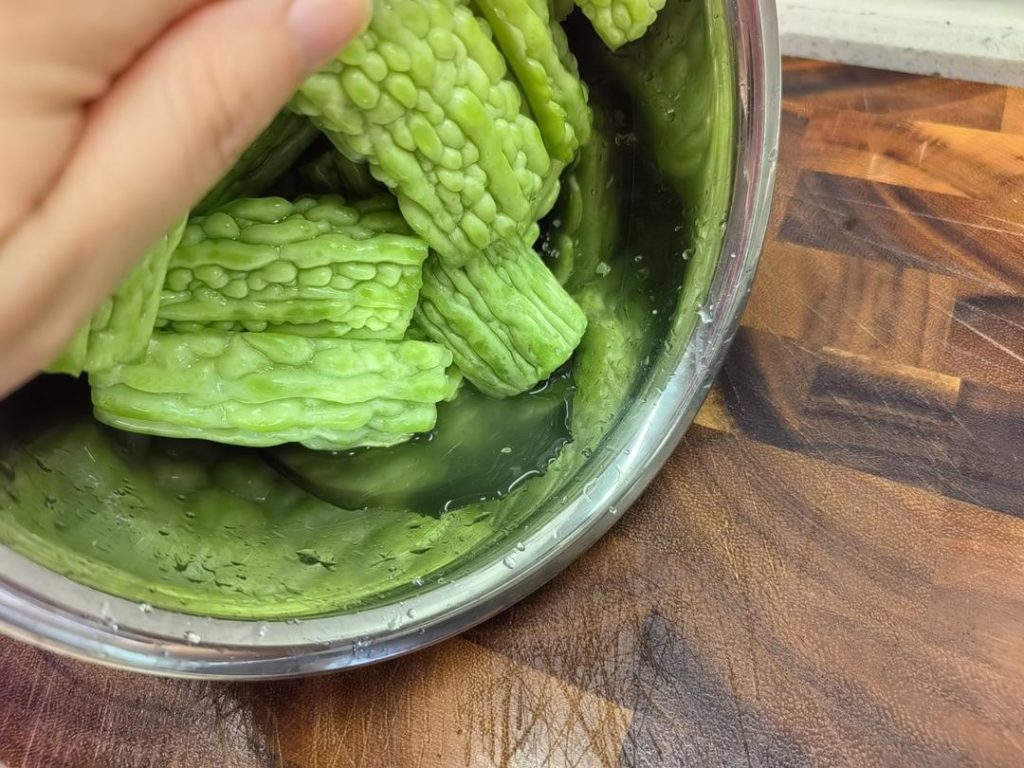
Wash the bitter melon thoroughly. Slice it in half lengthwise. Using a small spoon, scrape out the seeds and the spongy white pith completely. Slice the melon into ½-inch thick crescents.
Place the slices in a bowl and toss them with 1 teaspoon of salt and ½ teaspoon of sugar. Massage gently and let them sit for 15-20 minutes. This process, called osmosis, draws out the bitter liquid (which we will rinse off).
Chef’s Tip: If you are extremely sensitive to bitterness, you can blanch the melon slices in boiling water for 30 seconds after this salting step. However, for this soup, I find the salting method sufficient.
Step 2: Blanch the Ribs
Place the ribs in a pot and cover with cold water. Add one chunk of crushed ginger and the tablespoon of Shaoxing wine. Bring to a boil over high heat.
As the water boils, you will see gray foam (scum) float to the top. Let it boil for 2-3 minutes. Drain the ribs and rinse them thoroughly under warm tap water to wash off any clinging grit.
Why do we do this? Starting with cold water allows the blood vessels to open up and release impurities slowly. If you drop raw meat into boiling water, the proteins shock and trap the blood inside, leading to a cloudy, funky soup.

Step 3: Simmer the Soup
In a clean soup pot (or a clay pot if you have one), add the washed ribs, the soaked and drained soybeans, the dried longan, and the remaining chunk of ginger. Pour in 8 cups of hot water.
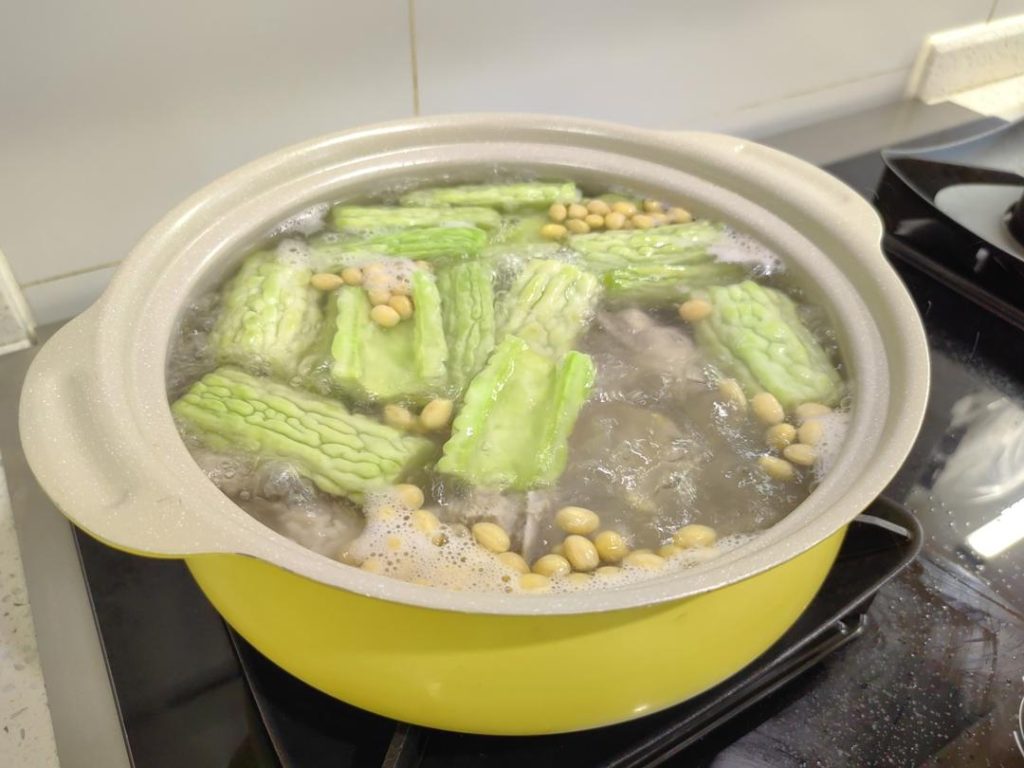
Bring to a boil, then reduce the heat to low. Cover and simmer for 45 minutes to 1 hour. The soybeans should be tender and the pork should be soft.
Step 4: Add Bitter Melon and Finish
Rinse the salt and sugar off the bitter melon slices. Add them to the pot. Continue to simmer for another 15-20 minutes.
Note: We add the melon later so it retains some texture. If you prefer it melt-in-your-mouth soft, add it 10 minutes earlier.
Season with salt to taste. The soup should taste fresh, clear, and slightly sweet with a savory undertone.
Notes:
- Nutrition Disclaimer: Nutrition information is calculated using an ingredient database and should be considered an estimate. Garnishes and optional ingredients are not included.
- Allergens: Contains Soy (soybeans).
FAQ & Troubleshooting
Q: My soup tastes too bitter! Can I fix it? A: If you skipped the salting step or didn’t scrape the pith enough, it might be strong. You can balance this by adding a small rock sugar crystal or another dried date/longan.
Q: Can I use an Instant Pot? A: Absolutely. Put the ribs, soybeans, ginger, and water in. Cook on High Pressure for 20 minutes. Quick release, add the bitter melon, and use the “Sauté” function to simmer for 5-10 minutes until the melon is cooked.
Q: Do I eat the soybeans? A: Yes! They absorb the pork flavor and become soft and creamy. They are delicious.
Serving Suggestions
This soup is traditionally served as a starter to a multi-course meal, but in the summer, I often eat it with just a bowl of rice.
If you are looking to build a complete Cantonese-style meal, I recommend serving this alongside:
- Cantonese Braised Ribs with Bitter Melon (if you really love bitter melon!)
- A simple veggie stir-fry like Corn and Pork Rib Soup (as an alternative for kids)
- Or perhaps Deconstructed Wonton Soup for something lighter.
Food Safety & Preparation
- Raw Meat Handling: Always wash your hands and cutting boards immediately after handling raw pork ribs to prevent cross-contamination.
- Cooling: If you have leftovers, do not leave the soup pot out on the stove overnight. Bacteria thrive in warm broth. Cool the soup quickly and refrigerate within 2 hours.
Authoritative References
- For more on the cooling properties of bitter melon in Traditional Chinese Medicine, you can refer to the National Library of Medicine’s studies on Momordica charantia.
- General food safety regarding pork preparation can be found via the USDA Food Safety and Inspection Service.
Bitter Melon Pork Rib Soup (Ku Gua Pai Gu Tang)

Equipment
- Soup Pot or Dutch Oven
- Small Spoon (for scraping melon)
Ingredients
Soup Ingredients
- 1 lb pork spare ribs cut into chunks (approx 500g)
- 1 large bitter melon approx 350g
- 1/4 cup dried soybeans soaked overnight
- 3 pieces dried longan optional
- 2 inch ginger smashed, divided
- 8 cups water
Prep & Seasoning
- 1 tbsp Shaoxing wine for blanching
- 1 tsp salt plus more to taste
- 1/2 tsp sugar for prepping melon
Instructions
- Soak Beans: Rinse the dried soybeans and soak them in a bowl of cold water for at least 4 hours, or ideally overnight, until they have expanded.
- Prep Bitter Melon: Wash the bitter melon and slice it in half lengthwise. Using a small spoon, firmly scrape out the seeds and the spongy white pith (this reduces bitterness). Slice the melon into 1/2-inch thick crescents.
- Draw out Bitterness: Place the melon slices in a bowl. Toss with 1 teaspoon of salt and 1/2 teaspoon of sugar. Let sit for 15-20 minutes, then rinse thoroughly with water and drain.
- Blanch Ribs: Place the pork ribs in a pot and cover with cold water. Add half of the smashed ginger and the Shaoxing wine. Bring to a boil over high heat. Let boil for 2-3 minutes to release the scum. Drain and rinse the ribs under warm water to clean them.
- Simmer: In a clean soup pot, combine the cleaned ribs, drained soybeans, dried longan, remaining ginger, and 8 cups of water. Bring to a boil, then reduce heat to low. Cover and simmer for 1 hour.
- Finish: Add the rinsed bitter melon slices to the pot. Simmer for another 15-20 minutes until the melon is tender. Add salt to taste before serving.












Leave a Reply